Hiking Tiger Leaping Gorge: A Visual Feast of Yunnan, Measured in Footsteps
Hiking Tiger Leaping Gorge: A Visual Feast of Yunnan, Measured in Footsteps
A Spontaneous Adventure
Some trips are planned. Others are written in the stars.
When I stood at the Lijiang bus station, watching the last ticket to Lugu Lake sell out before my eyes, frustration didn't come. Instead, a strange预感—a premonition—washed over me: fate was arranging a different encounter. And so, on a whim, I changed my itinerary and set out on the world-famous Tiger Leaping Gorge (Hǔ Tiào Xiá) hiking trail. No professional gear. No thorough preparation. Just a 45-liter backpack, a DSLR camera, and a heart ready to conquer the world.
That journey would become the most unforgettable chapter in my "Conquering Yunnan on Foot" series.
Before You Go: Practical Tips for Fellow Travelers
Best Season and Timing
The optimal time to hike Tiger Leaping Gorge is May. This month hits the sweet spot—the rainy season hasn't started, so the mountain paths are safe; the dry season has passed, leaving the river swollen and dramatic. Hiking during the rainy season is extremely dangerous; landslides and falling rocks are a deadly threat. During the dry season, the water level drops, robbing the gorge of its most spectacular views.
Essential Gear Checklist
If you're as impulsive as I was, learn from my mistakes:
- Hiking boots: I wore canvas sneakers the whole way. My soles slipped constantly, and I nearly earned a spot on Tiger Leaping Gorge's hall of shame.
- Waterproof jacket: The temperature swings are brutal—scorching sun during the day, bone-chilling wind at night.
- Sun protection: A hat, sunglasses, and face mask are non-negotiable. I forgot to protect the back of my neck and ended up with a "black collar" tan.
- Trekking poles: Essential for women! I bought a bamboo pole for 10 yuan (about $1.40) by the roadside, and it carried me through the toughest sections.
- Water bottle: There are mountain spring refill stations along the way. Local villagers channel the water through bamboo pipes—it's crisp and delicious.
Luggage Storage

The supermarket at the bridge (Qiáo Tóu) offers luggage storage for 10 yuan per item per day (about $1.40). If, like me, you decide to hike on a whim while traveling from Lijiang to Shangri-La, this service is a lifesaver.
Budget Reference
My total cost for two days was just 544 yuan (about $75): - Accommodation: 150 yuan ($21) — a standard room at Halfway Guesthouse - Transportation: 68 yuan ($9.50) — round trip from Lijiang to the bridge - Food and drinks: 236 yuan ($33) — including water and snacks - Entrance fee: 90 yuan ($12.50) — student discounts available
Day One: From the Bridge to Halfway, an 8-Hour Test of Will
The Start: Bridge → School → Naxi Yage (Nàxī Yǎgé)
The bus from Lijiang to the bridge takes about two hours, passing the First Bend of the Yangtze River (Cháng Jiāng Dì Yī Wān) along the way—honestly, nothing to write home about. On the bus, I met two couples: one planning to hike Tiger Leaping Gorge, the other heading to Shangri-La. As we chatted, I somehow "talked" the Shangri-La couple into joining our hiking group. Six people, three couples, ready for adventure.
The road into the mountains started wide and easy, lulling us into thinking this hike would be a breeze. But soon, when we spotted the sign reading "Tiger Leaping Gorge High Trail," the real challenge began.
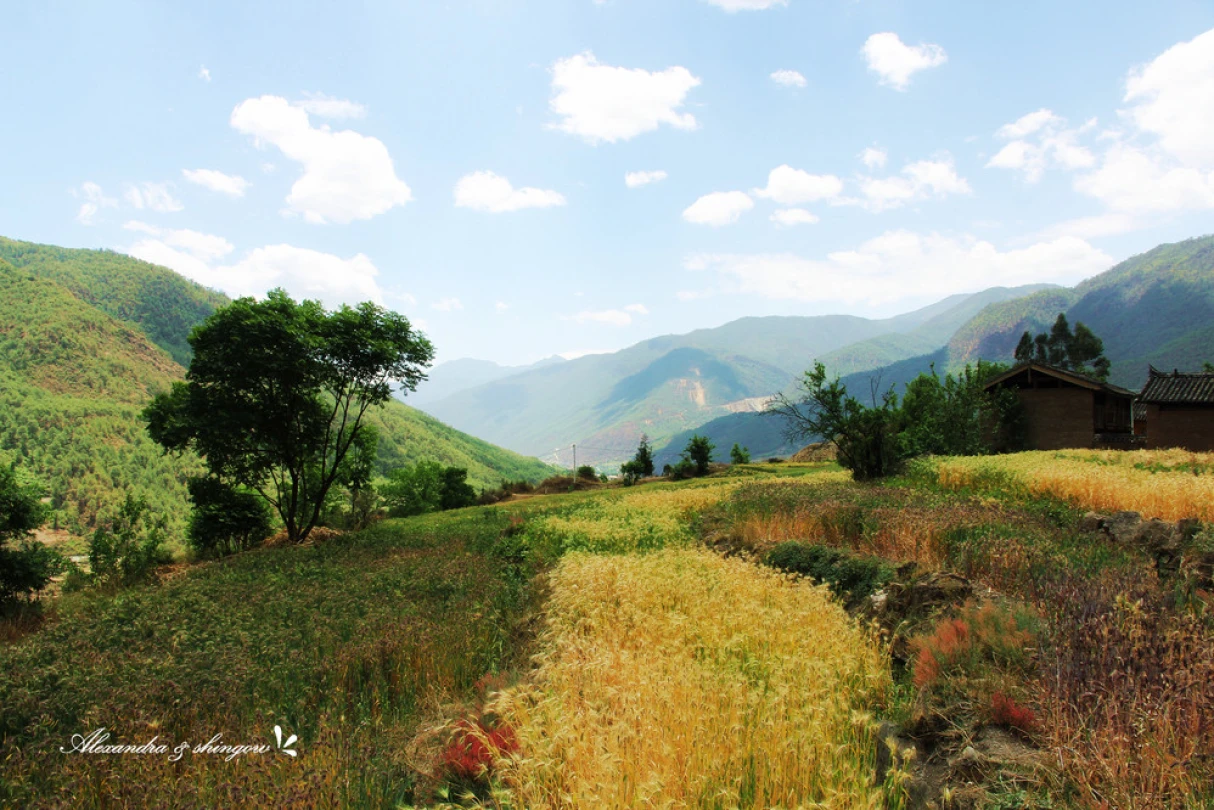
Standing at the trailhead, I looked back—and the view took my breath away. Jade Dragon Snow Mountain (Yù Lóng Xuě Shān) peeked through the mist, while the Jinsha River (Jīn Shā Jiāng) roared through the canyon below. I thought to myself: Thank God I came here.
The walk from the bridge to Naxi Yage took about two hours and was relatively easy. Along the way, the "World's Best Toilet" (Tiān Xià Dì Yī Cè) provided a memorable pit stop—these toilets have only one door, with the other side completely open, so you can enjoy a panoramic view of Upper Tiger Leaping Gorge while... taking care of business. Yes, there's a fee to use them, but if you buy a 5-yuan (70-cent) Coke from the old lady running the place, it's free.
The Challenge: The 28 Switchbacks (Èr Shí Bā Guǎi) — Despair and Hope
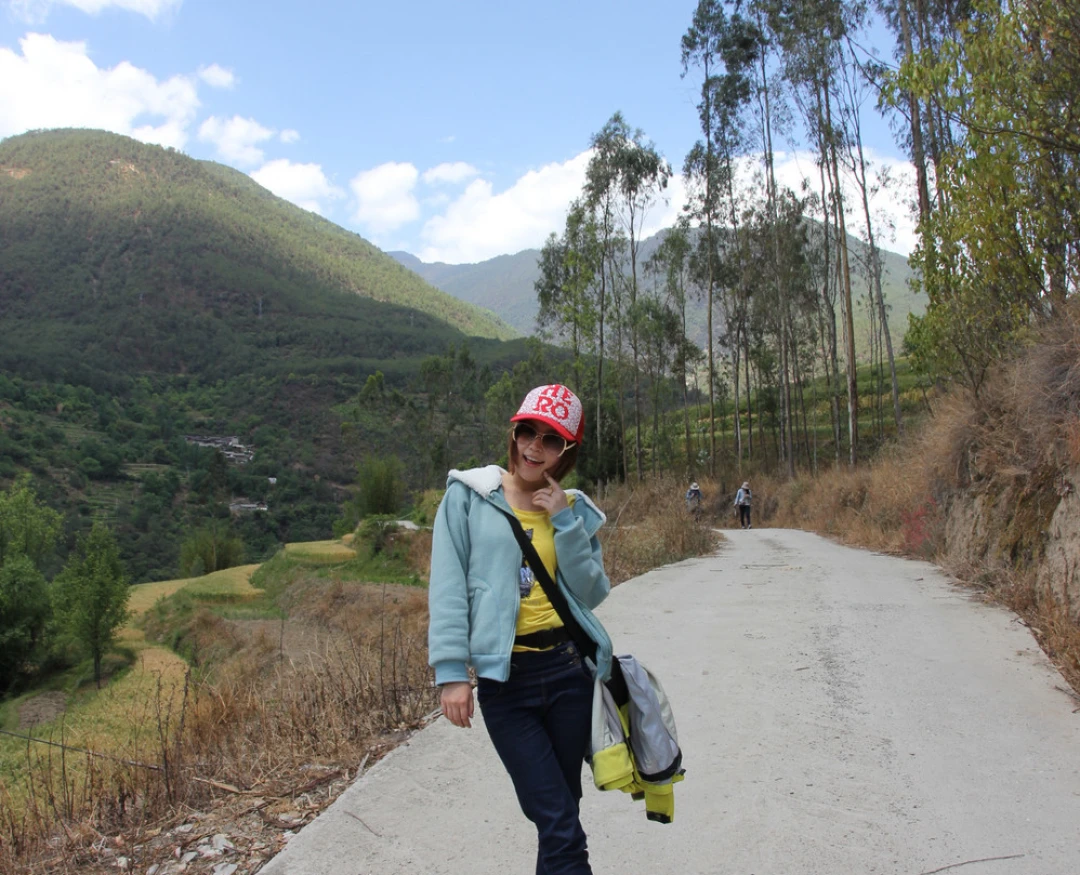
Naxi Yage was the first rest stop and the starting point of the 28 Switchbacks. The courtyard was small, but I still remember the taste of their egg-fried rice (dàn chǎo fàn)—we hadn't eaten since setting out at 10 a.m.
The 28 Switchbacks lived up to their reputation as a self-inflicted ordeal. All uphill, covered in loose gravel, every step demanding caution. I charged ahead, lugging my 45-liter backpack, tripod, and camera. When I finally reached the top, the view erased every ounce of exhaustion—Jade Dragon Snow Mountain loomed within arm's reach, and the Jinsha River snaked far below. That sense of conquest defied words.
The summit marked a turning point—from despair to hope, from climbing up to heading down. Someone once said that the beauty of Tiger Leaping Gorge lies in its inaccessibility, in its remoteness from the human world. I couldn't agree more.
Danger Zone: Fear After Dark
The descent was no easier than the climb. Loose rocks, landslides, sheer cliffs—every step carried risk. By 5 p.m., shadows began swallowing the ridge, and fear crept into my heart. We barely dared to speak, afraid that the sound vibrations might dislodge rocks—silly as it sounds, in that environment, every rustle made our hearts race.
Even creepier: I started seeing "faces" in the rock formations. They say spotting 8 to 10 faces in the natural scenery is normal, 11 is pushing it, and 12 or more means you're hallucinating. I, unfortunately, counted 13.
The Finish: Halfway's Warm Embrace
When I saw the sign reading "Halfway 400 meters," I nearly cried. Those last 400 meters felt like an eternity, but the moment I arrived, all fatigue melted away.
Halfway Guesthouse (Bàn Lù Kè Zhàn) is a sanctuary for Tiger Leaping Gorge hikers. It was packed with backpackers from around the world—Chinese travelers were actually the minority. We booked a standard room with a private bathroom for 150 yuan ($21) a night. Dinner was seven dishes and a soup for six people, costing just 132 yuan ($18)—incredible value.
As night fell, I stretched my aching legs on the small terrace, watching the mountains across the gorge shift shapes in the darkness—now a snarling jaguar, now a sleeping Siberian tiger. Who knows what stories unfold in these endless peaks after dark?
Day Two: From Halfway to Middle Tiger Leaping Gorge (Zhōng Hǔ Tiào), a Trail That Wasn't There
Setting Out at Dawn
Day one's exhaustion had everyone sleeping in—we didn't wake up until 7:30 a.m. Halfway's breakfast is worth recommending: tomato and egg noodle soup (xī hóng shì jī dàn miàn) with hot milk—simple but comforting.
Morning sunlight bathed the mountains, mist still clinging to the air. A new day began with hope. We walked along a cliffside path, every step demanding focus. The abyss below reminded us this was no ordinary trip.
The Trail That Wasn't There
The walk from Halfway to Tina's (Tī Nà's) took about 1.5 hours, but the final stretch was the "least trail-like trail in Tiger Leaping Gorge." A 30-degree slope of loose gravel and sand, my feet slipping constantly. My canvas sneakers finally revealed their fatal flaw—every step felt like dancing on knife blades.
The couple from "Team B" had it worse—one was carrying a single-strap laptop bag, both were overweight, and this was their first hike on such terrain. But they pushed through, proving to me that nothing is impossible.
Middle Tiger Leaping Gorge: The Visual Peak
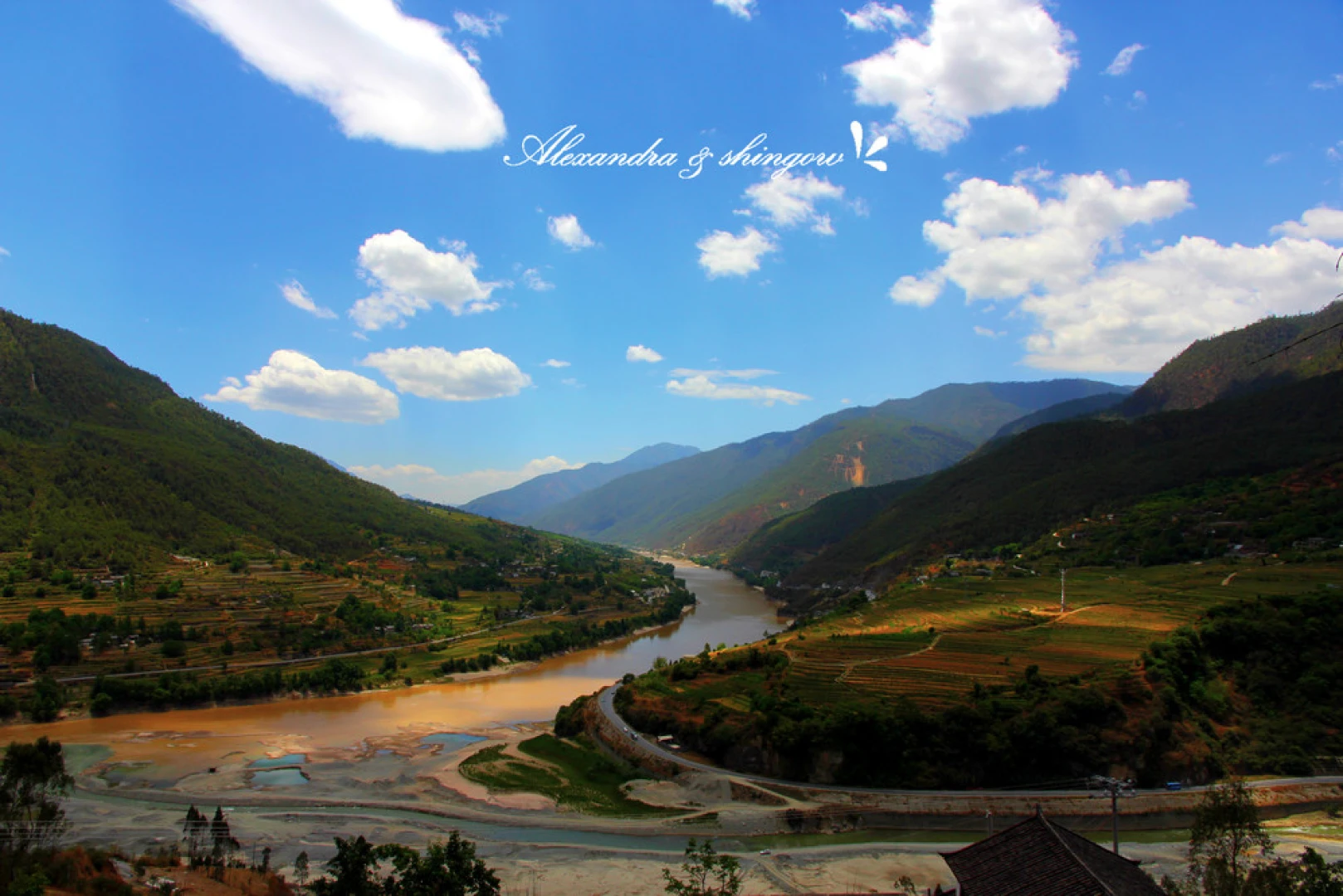
At Tina's Guesthouse, we stored our luggage and set out to explore Middle Tiger Leaping Gorge. This is the gorge's crown jewel—the river roars through the canyon like thunder, while peaks on both sides pierce the clouds with breathtaking grandeur.
I stood at the cliff's edge, watching the Jinsha River surge below, and suddenly understood why people say, "You cannot skip Tiger Leaping Gorge." You can skip Lugu Lake (Lú Gū Hú), but hiking this gorge is a rite of passage for every true traveler.
Final Thoughts: The Meaning of the Hike
Two days of hiking taught me a few things:
First, the most beautiful scenery is always at the hardest-to-reach places. Those who hop off a tour bus, glance at Upper Tiger Leaping Gorge, and leave will never feel the awe of standing on the high trail, looking down into the canyon.
Second, gear isn't everything—determination is. I finished the entire hike in jeans and canvas sneakers. Yes, I paid a steep price (my back still hasn't recovered), but I did it.
Third, the meaning of travel lies not in the destination, but in the people you meet and the moments you share along the way. Three couples, six strangers, became friends through mutual encouragement and support. That bond is more precious than any landscape.
Fourth, some roads you'll never know you can walk until you try. The Tiger Leaping Gorge High Trail made me rediscover myself—I learned I could carry a 45-liter pack for eight hours on mountain paths, that I could stand on a cliff's edge without shedding a tear, that I am stronger than I ever imagined.
If you ask me whether Tiger Leaping Gorge is worth it, my answer is: Yes. And you must go.
But remember: bring hiking boots, a waterproof jacket, trekking poles, and sun protection. Travel light. Most importantly, bring a brave heart to face the unknown.
Because some roads, you only truly live once you've walked them.
Note: This article is based on my personal hiking experience at Tiger Leaping Gorge. All data and advice come from actual experience. If you're planning your own journey, please prepare thoroughly and prioritize safety.
You should also read:
Proceed with Caution! Hiking Around Lugu Lake: A Soul Journey Across the Clouds
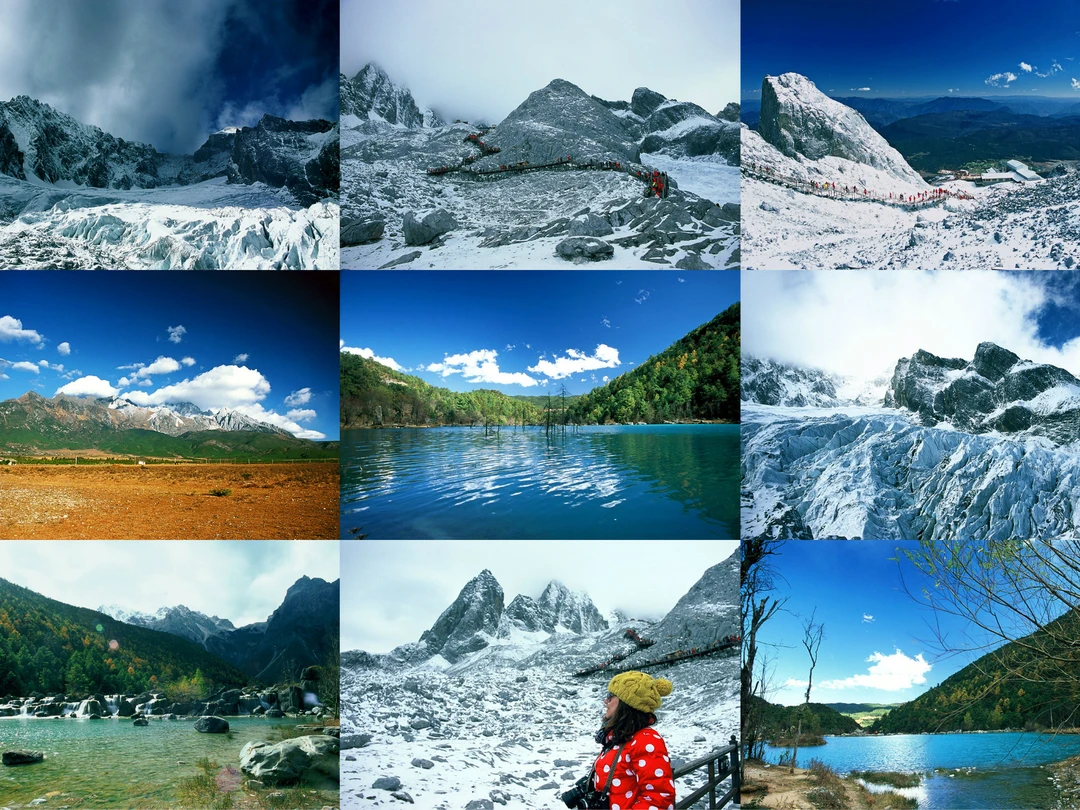
Proceed with Caution! Hiking Around Lugu Lake: A Soul Journey Across the Clouds Shanghai → Chengdu → Lugu Lake → Lijiang → Jade Dragon Snow Mountain → Lashihai Lake → Kunming → Shanghai | Soul Notes · Extensive Photo & Text Documentary Have you ever…
Continue reading...
Take Me to the Distance: Ten Days in Yunnan, a Poetic Journey Through Our Youth
Take Me to the Distance: Ten Days in Yunnan, a Poetic Journey Through Our Youth Prologue: Setting Off, Just to Be Together Some trips are planned for ages, yet always lack that final spark of spontaneity. We were students, with a tight budget but limitless…
Continue reading...
Body in Hell, Heart in Heaven: A Pilgrimage Through Tiger Leaping Gorge — A Dialogue Between Heaven and Earth
Body in Hell, Heart in Heaven: A Pilgrimage Through Tiger Leaping Gorge — A Dialogue Between Heaven and Earth Introduction: When the Gorge Splits Open Beneath Your Feet Some say Tiger Leaping Gorge is the closest place on Earth to the border between "hell" and…
Continue reading...