#Honeycomb Commemoration# First Glimpse of the Land of Clouds: A 5-Day Family Road Trip Through Southeast Yunnan [With Photography Tips]
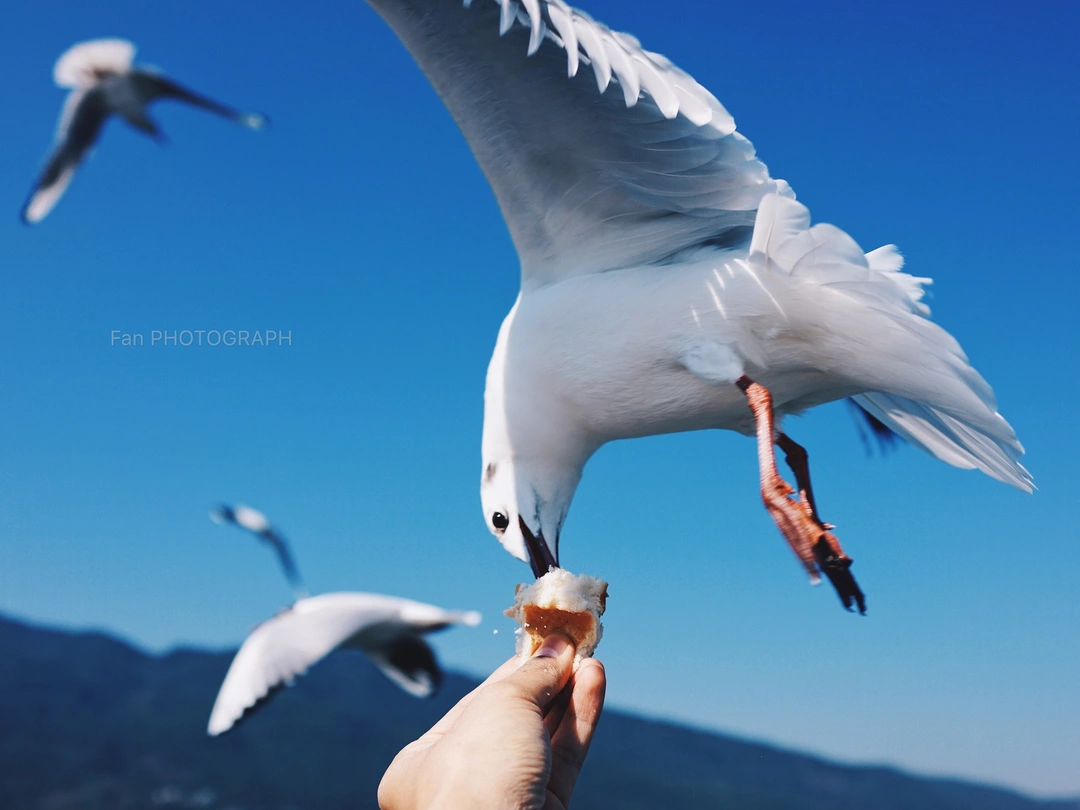
#Honeycomb Commemoration# First Glimpse of the Land of Clouds: A 5-Day Family Road Trip Through Southeast Yunnan [With Photography Tips]
Destination: Yunnan
Travel Dates: February 17–21, 2018 (5 days)
Cost per Person: Approximately 3,000 RMB (including transportation, accommodation, meals, and entrance fees)
Travelers: Family trip (two adults, one child, and grandparents)
First Impressions: Better Late Than Never
Every Spring Festival, our family goes through the same ritual: a brainstorming session about where to go. The north is too cold, overseas trips are too expensive, nearby destinations are too familiar, and faraway places don't fit the schedule—until our eyes landed on that corner of the map we'd never explored: Yunnan.
Since the high-speed rail opened, a ticket from Guangzhou to Kunming costs just 480 RMB—far more affordable than flying. Even better: children under 1.2 meters ride for free. For our family of four, that alone saved us 3,000 RMB on transportation. When I finally secured the tickets, I was convinced all those good deeds I'd done throughout the year had finally paid off.
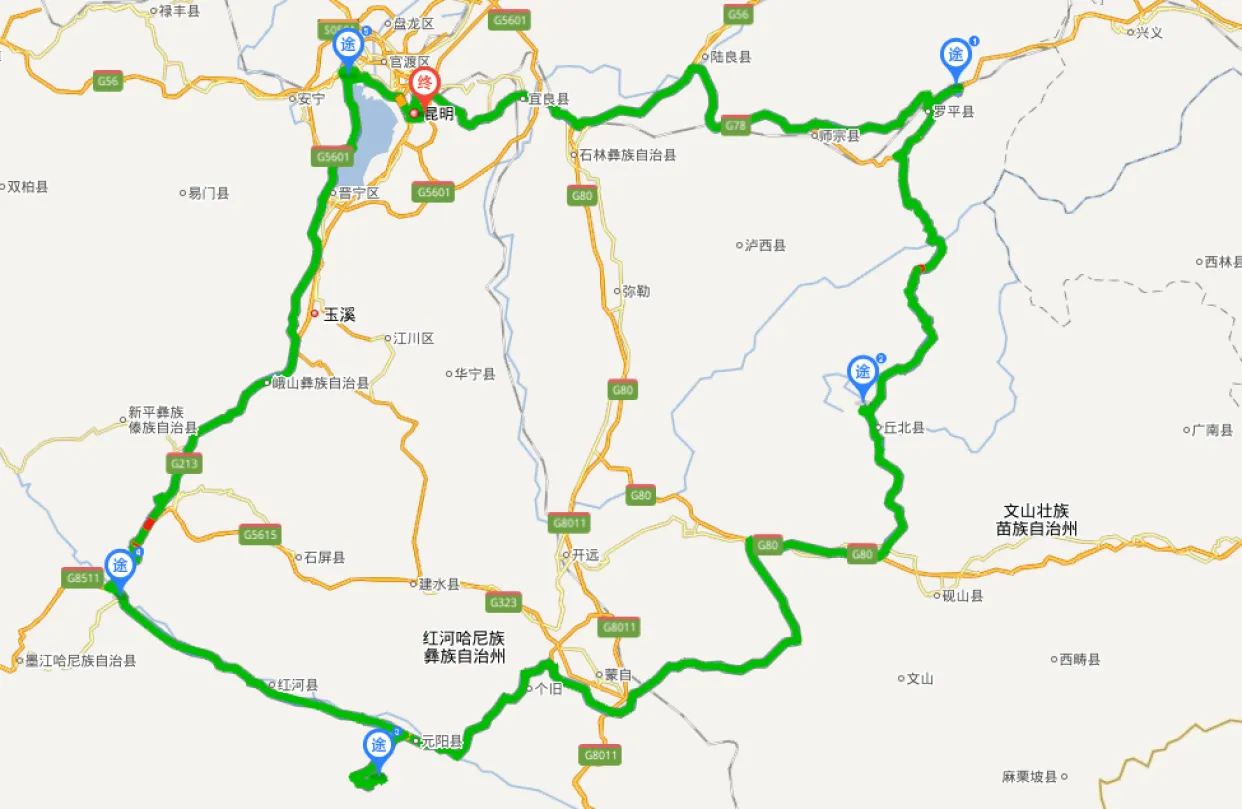
Yunnan is dotted with scenic spots, and the routes are so plentiful it's a "happy kind of headache." With Kunming as the hub, the northwest route (Dali, Lijiang), southwest route (Pu'er, Xishuangbanna), and southeast route (Luoping, Yuanyang) each have their own charm. In the end, we chose the southeast route—the most photogenic and the most seasonal. During Spring Festival, the rapeseed flowers in Luoping are in full bloom, and the Yuanyang rice terraces begin to fill with water. The most brilliant colors of heaven and earth were unfolding before us.
We drove a total of 1,200 kilometers. Aside from a stretch of mountain road between Luoping and Puzhehei, the rest was mostly highway. In five days, we traced a loop through southeast Yunnan, capturing the first gold of spring, the first patch of blue sky, and the first wisps of morning mist—both in our cameras and in our memories.
Golden Sea of Flowers: The First Movement of a Warm-Toned Symphony

Stop One: Luoping · Golden Chicken Peak Cluster
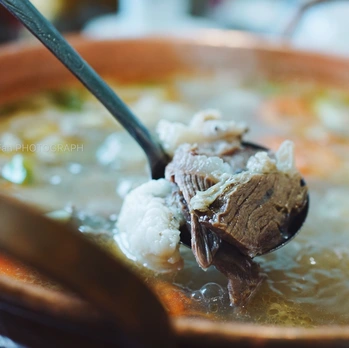
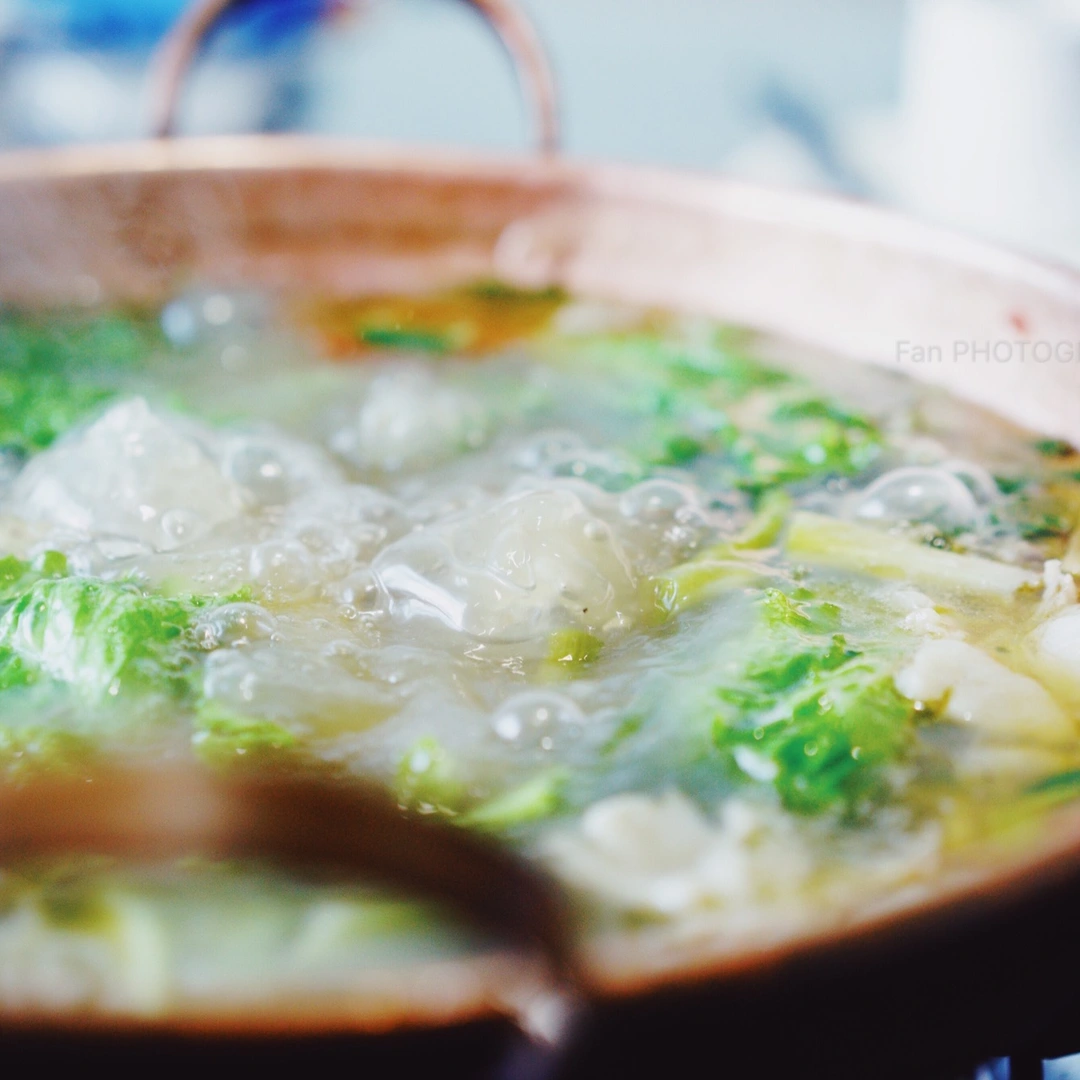
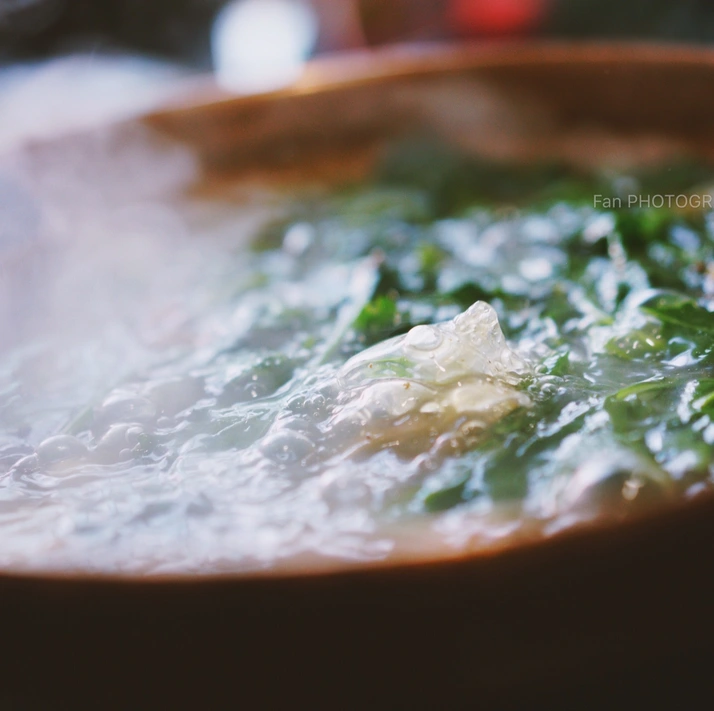
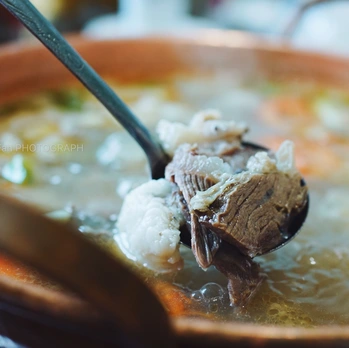
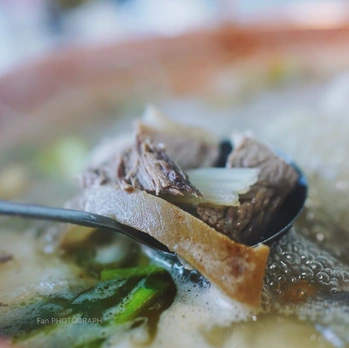
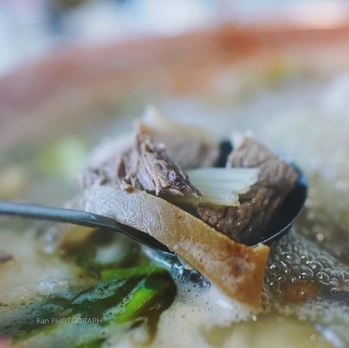
By the time we drove from Kunming to Luoping, it was already afternoon. Famished, we headed straight to the county center and stumbled upon a small eatery called "Hongming Cave Beef Hotpot." The owner didn't bother with a menu. He just asked, "How many?" Then swiftly sliced the beef and brought out vegetables. The meat was tender with just the right amount of fat. Dipped in Yunnan's signature spicy sauce, it exploded with flavor the moment it hit your tongue. Even the beef tripe was stewed until it was as bouncy as jelly, packed with collagen. Four adults and one child ate to our hearts' content, and the bill came to just 208 RMB—easily the best value meal of the entire trip.
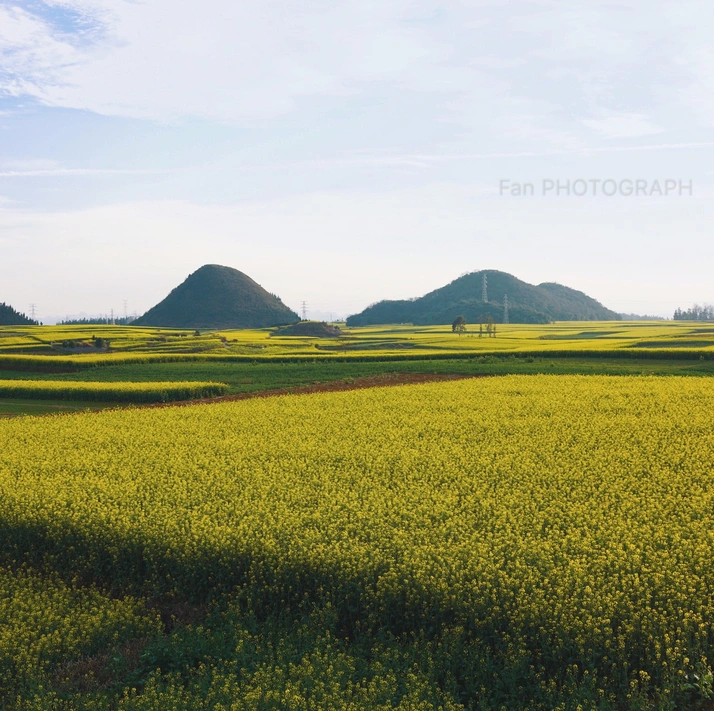
Driving east along G324 toward Golden Chicken Peak Cluster, large patches of rapeseed flowers began to appear along the roadside. Many tourists couldn't resist jumping out to take photos, but utility poles ruined the purity of the landscape. I fought the urge and kept driving until we reached the area marked "Golden Chicken Peak Cluster" on the map—that's where the true, uninterrupted sea of golden flowers stretched for miles.
Even more surprising: this magnificent expanse of flowers was completely free! It turns out the fields belong to local farmers, and with so many entrances and exits, they simply opened them up to the public. We rented a four-person bicycle for 80 RMB with no time limit and rode through the fields freely. The rapeseed flowers grew taller than a person. My niece dove right in, leaving only her cheerful little head visible.
At sunset, we climbed up to the observation deck. As the sun sank, the colors of the fields shifted—from bright yellow to orange-yellow, then to golden yellow, and finally to crimson. It was as if God was tuning His palette, running through the entire warm color spectrum. I hadn't brought a tripod (traveling light), so I had to crank up the ISO and shoot handheld. But with a view like that, even that small regret was worth it.
Accommodation Recommendation: Qujing Heyi Express Hotel
This hotel is just across the road from the scenic area, and you can photograph the flower sea from the terrace. The owner was incredibly kind—not only did he help us plan our route, but he also volunteered, "Next time you come, I'll take you to the fields behind the village. They have more depth and layers." A promise like that makes you want to come back.
Sunrise Rush: All Thanks to a Great Host
Stop Two: Golden Chicken Peak Sunrise
To capture the sunrise, I got up at 5 a.m. Walking downstairs, I found the owner already starting his day.
"Oh, you're up early, young man!" "I'm heading to Golden Chicken Peak for the sunrise." "I'll take you at six. It's too early now." "But the good spots will be taken..." "I'll take you on my three-wheeler."
And so I found myself riding on the owner's little tricycle, bouncing through the darkness. What touched me even more was when we arrived at the ticket booth. Dozens of people were already queuing, but the owner said casually, "Don't worry, I know someone." In less than ten seconds, I was ushered into the scenic area—those ten minutes I saved were just enough to secure a decent shooting position.
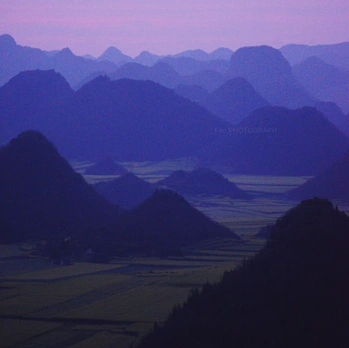
At sunrise, the sun was hidden behind clouds, but the eastern sky was already burning red. The entire scene was a blend of purple and red, warm to the core. Morning mist and smoke from village chimneys added a touch of everyday life to the flower sea. I moved between different angles and captured shots where the mist looked as smooth as silk and as soft as chocolate—like a commercial for hair conditioner or a candy bar. I didn't get a perfect sunrise, but that morning was already moving enough.
Puzhehei Village: Visiting Celebrity Homes, Traveling Through Time by Horse Cart
Stop Three: Puzhehei
Puzhehei is a must-pass stop on the way from Luoping to Yuanyang. Made famous by the reality show Where Are We Going, Dad?, Puzhehei is at its most charming in summer when the lotus ponds are in full bloom. But visiting during Spring Festival has its own quiet appeal.
In a broad sense, "Puzhehei" refers to the entire scenic area (also free of charge). In a narrower sense, it refers to Puzhehei Village and the Immortal Cave Village. We stayed in Immortal Cave Village, which has better infrastructure. Puzhehei Village is closer to Green Dragon Mountain and the filming location of Three Lives, Three Worlds, Ten Miles of Peach Blossoms.
The most fun experience was taking a "horse-drawn carriage taxi." From Immortal Cave Village to Puzhehei Village, it cost 10 RMB per person, with kids riding free. But here's the interesting part: carriages from the two villages can't cross into each other's territory. You have to switch carriages at a "roundabout" three-way intersection. This unspoken rule added a sense of ritual to the journey.
We walked into the house where actor Lin Zhiying and his son had stayed. The entrance fee was just three or four RMB. The interior was still "primitive"—villagers sat around chatting, and a TV played the show's footage on a loop. Climbing the creaky wooden stairs and looking at the bed still wrapped in plastic, I couldn't help but marvel: such an ordinary house, yet it looked so heartwarming on screen. My niece touched everything in sight, probably finally understanding what "roughing it" really meant.
In the evening, we arrived at Green Dragon Mountain Pier. The last rays of sunset spilled across the water, and the sky and water were both dyed in a mix of red and blue. My niece jumped onto a boat, swaying and calling out for me to take her picture. In that moment, the peace and beauty of Puzhehei were frozen in my lens.
Climbing Green Dragon Mountain: A View of Paradise, Pretending to Be at Lugu Lake
Stop Four: Puzhehei · Green Dragon Mountain
The Immortal Residence Ethnic Guesthouse was decorated with strong Yunnan characteristics, and its back door opened directly onto the lotus pond landscape. Every breakfast was rice noodles (米线, mixian), with a little chili pepper—I never got tired of it.
Climbing Green Dragon Mountain taught me that the viewing platforms aren't "one spot to see it all." They're scattered in different directions, and some require using your hands and feet to reach. Standing at the top, Puzhehei Village lay spread out below—the distant lotus ponds, the boats nearby, the scattered houses—all forming a pastoral paradise.
My niece spotted a vine, leaped up, and swung on it like a swing, leaving us adults stunned. That kid's wild streak must have come from her mother.
If you have extra time, you can also visit the Shede Grasslands and Bailong Lake, both said to be popular local attractions.
Bada Sunset: A Secret Spot Without the Crowds
Stop Five: Yuanyang Rice Terraces · Bada
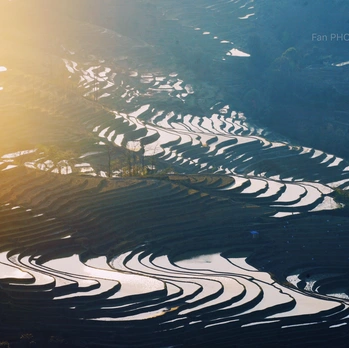
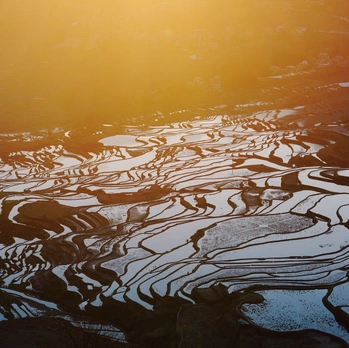
The Yuanyang Rice Terraces are the masterpiece of generations of Hani people and are listed as a UNESCO World Heritage site. During Spring Festival, the terraces begin to fill with water, reaching the peak of their light and color beauty.
I'd done my homework: the four must-see spots in Yuanyang are Duoyishu for sunrise, Laohuzui (Tiger's Mouth) for sunset, Bada for sunset, and Luomadian. Laohuzui is said to have the most spectacular sunset, but when I checked the traffic—a solid red line on the map—I immediately switched to Bada.
But Bada's viewing platform was already packed. I was worrying when my mom called: "Son, I found a spot with hardly anyone. Just walk down the mountain road, and there's a gap in the fence with a wide view of the terraces. No guardrail, though."
I rushed over—and sure enough, there were only three or five people there, with an even wider view than the official platform. Thank goodness everyone was crammed into the main area. I'd lucked out.
Although there weren't enough clouds to make the terraces particularly colorful, I discovered a trick: if you place the sun itself at the edge of the frame, the golden halo becomes especially intense. As the sun changed height, the terraces shifted colors—from golden yellow to orange-red, and finally to deep blue, as if God had overturned His palette.
Duoyishu Sunrise: A Dreamy Symphony of Clouds and Terraces
Stop Six: Yuanyang · Duoyishu
If Yuanyang represents Yunnan's rice terraces, then Duoyishu represents Yuanyang's terraces. To secure a good spot, I once again had a sleepless night. At 5 a.m., I walked a few minutes to the ticket gate, where over thirty people were already waiting. Children selling eggs and villagers selling steamed buns from three-wheeled carts became a warm comfort in the cold night.
Duoyishu's viewing platform was built on the terraces themselves, with several levels. I chose the middle level, where a "master photographer" was telling his students, "This level is the best. The one below is too low and will be blocked by trees." My judgment was spot on.
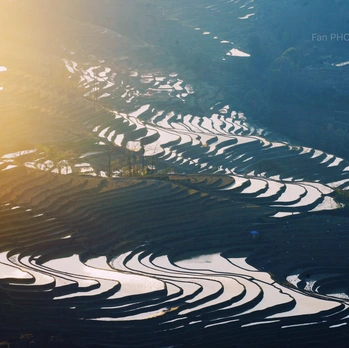
That morning was clear, with a light sea of clouds and a slight chill. The clouds didn't cover the entire terrace area—just a small part—but through a telephoto lens, the scene became breathtaking. As the sun rose, the clouds dissipated, and the terraces began to shimmer with azure blue—a sea of dark, rolling waves, so beautiful it took your breath away.
With photographers, friction is inevitable. Some people argued over spots and nearly came to blows. My advice: if you arrive early, plant yourself firmly and don't move around much. If you come late, keep your distance and wander around to find empty spaces.
Ai Village Terraces: Up Close with the Hani People

Stop Seven: Yuanyang · Ai Village (Hani Village)
After watching the sunrise at Duoyishu, we drove to Ai Village. The terraces here are particularly blue, and you can walk along the ridges between them—an excellent spot to bring kids.
The Hani people share ancient Qiang origins with the Yi people, and Yuanyang is their main聚居地 (settlement area). Near the village, we spotted two Hani kids—little rascals playing with fire. In the terraces, a group of one male and four female ducks swam around. My niece grabbed the camera and said she wanted to photograph them. In that moment, I suddenly felt that the true meaning of this trip might lie in these unplanned, spontaneous moments.
Epilogue: Five Days, a Snapshot of Spring
In five days, we traced a loop through southeast Yunnan. From the golden sea of flowers in Luoping, to the peaceful countryside of Puzhehei, to the dreamlike terraces of Yuanyang—every stop was a painting, every moment a poem.
My deepest realization: a good trip isn't about how many places you visit, but about who you're with and the mindset you bring. Traveling with elderly family members and kids means a slower pace and a calmer attitude—but that doesn't mean you skimp on the photos. Not a single shot can be missed.
Finally, a few practical tips:
- Transportation: High-speed rail is cheaper than flying, and kids ride free. Self-driving is the way to go, but mountain roads are common—drive safely.
- Accommodation: Stay near Golden Chicken Peak in Luoping and near Duoyishu in Yuanyang for easy sunrise access.
- Photography: Bring a tripod! For sunrise and sunset, crank up the ISO—you can still get good shots handheld.
- Entrance Fees: Luoping's rapeseed fields and Puzhehei are free. Yuanyang's terraces require tickets (don't forget them).
- Food: Luoping's beef hotpot, Yuanyang's rice noodles (米线, mixian), and Puzhehei's wild vegetables are all authentic Yunnan flavors.
Yunnan, I'll be back. Next time, maybe it'll be Erhai Lake in Dali or the ancient city of Lijiang. But this trip through southeast Yunnan has already been enough to make me fall in love with this land of clouds.
You should also read:

Body in Hell, Heart in Heaven: A Pilgrimage Through Tiger Leaping Gorge — A Dialogue Between Heaven and Earth
Body in Hell, Heart in Heaven: A Pilgrimage Through Tiger Leaping Gorge — A Dialogue Between Heaven and Earth Introduction: When the Gorge Splits Open Beneath Your Feet Some say Tiger Leaping Gorge is the closest place on Earth to the border between "hell" and…
Continue reading...
Xishuangbanna: Encountering an Ideal and Magical Paradise in the Green Wonderland at 21° North Latitude
Xishuangbanna: Encountering an Ideal and Magical Paradise in the Green Wonderland at 21° North Latitude If you ask me which place in China most resembles Southeast Asia, I would answer without hesitation: Xishuangbanna. This is not Thailand, yet it possesses an even richer Buddhist ambiance…
Continue reading...
Hiking Around Lugu Lake: Measuring This Mysterious Highland Pearl on Foot
Hiking Around Lugu Lake: Measuring This Mysterious Highland Pearl on Foot Introduction: A Date with the Lake At the border between Yunnan and Sichuan provinces lies a highland lake embraced by mountains, embedded like a sapphire in the folds of the Hengduan mountain range. Here,…
Continue reading...