Xishuangbanna: Encountering an Ideal and Magical Paradise in the Green Wonderland at 21° North Latitude
Xishuangbanna: Encountering an Ideal and Magical Paradise in the Green Wonderland at 21° North Latitude
If you ask me which place in China most resembles Southeast Asia, I would answer without hesitation: Xishuangbanna.
This is not Thailand, yet it possesses an even richer Buddhist ambiance than Thailand. This is not the Amazon, yet it boasts the only well-preserved tropical rainforest on the Tropic of Cancer. The moment my plane landed in Jinghong, a sea of green rushed toward me from outside the window, and the air was thick with the moist fragrance of vegetation. I knew I had arrived at "Mengbalanaxi"—the "ideal and magical paradise" in the Dai language.
Traveling southward from the highlands at 1,800 meters above sea level, passing through Yuxi, Yuanjiang, Mojiang, and Pu'er, I finally reached Xiaomengyang, at an altitude of just around 400 meters. Over the course of ten days, I underwent a profound immersion in nature, faith, and cuisine on this land designated by UNESCO as an International Biosphere Reserve.
First Impressions: Everywhere, the Colors of Life
21°08′–22°36′ north latitude, 99°56′–101°50′ east longitude—these are the geographic coordinates of Xishuangbanna. Located in the tropical humid zone south of the Tropic of Cancer, it enjoys year-round warmth and perpetual greenery. "Eternal summer without winter, a rain brings autumn" is the truest description here. There are only two seasons: the rainy season from late May to late October, and the dry season from late October to May of the following year. More than 80% of annual precipitation falls during the rainy season—no wonder every leaf here gleams with an intense green.
The moment I drove out of the airport, I fully understood what it means to be "surrounded by green." Blue sky, white clouds, green trees, red flowers—these words are not rhetorical devices here; they are the simplest records of reality. The air was so fresh that I wanted to take deep breaths, as if each inhale carried the fragrance of plants.
Day One: A Fantastical Drift Through the Plant Kingdom
Menglun Tropical Botanical Garden: A Conversation with 10,000 Plant Species
In 1959, the renowned botanist Professor Cai Xitao established China's largest and most species-rich botanical garden here. Riding an electric cart through the garden, a gentle breeze brushed my face, flanked by endless trees and flowers. Butterflies danced before my eyes, and birds sang overhead. The sky and earth felt so close that I could almost reach out and touch that white cloud.
The wonders here far exceeded my imagination:
Dragon's Blood Tree (Dracaena) —said to live for over a thousand years, its red resin is a precious medicinal material.
King of Cycads That Blooms —shattering the myth that "a cycad never blooms."
Mimosa (Sensitive Plant) —a gentle touch on its leaves makes them shyly fold up, just like a bashful maiden.
Dancing Plant (Telegraph Plant) —sing or play music to it, and its leaves sway gently as if dancing.
Poison Arrow Tree (Antiaris toxicaria) —"see blood, seal the throat," the legendary king of poisonous trees.
And then there was the awe-inspiring strangulation phenomenon: a fig seed lands on a palm tree, slowly grows aerial roots, and eventually wraps around and strangles its host to death. This is the most brutal yet truest survival rule of the rainforest.
The garden also features multiple themed areas: the National Flower Garden, Tropical Flower Garden, Rare Plant Garden, and more. Every spot is a perfect photo backdrop: towering coconut palms, neatly trimmed betel nut groves, fruit-laden Sterculia trees (known for their large seeds used in traditional medicine)... Even the roadside greenery is planted with coconut and betel nut trees.
What surprised me most was frangipani (plumeria) —the national flower of Laos. Its white petals and yellow center emit a fragrance so intoxicating that it makes you swoon. Locals told me that white-centered frangipani is edible, while other colors are poisonous. The ground was carpeted with fallen blossoms, as if nature had laid out a fragrant pathway.
In the late afternoon, I encountered a group of peacocks resting in a bamboo grove. They strolled leisurely, as if this were their kingdom. A giant swallowtail butterfly flew past me, its wing patterns breathtakingly beautiful.
Day Two: Stepping into Dai Life

Dai Ethnic Park: A Paradise Where Doors Are Never Locked at Night
The Dai Ethnic Park is a living Dai village. Entering the village, the first thing that caught my eye was the massive bodhi tree at its center, hung with sachets and red strings—tokens of villagers' prayers. Beside the bodhi tree stood a resplendent golden temple, where young boys from the village serve as novice monks, learning the Dai script and Buddhist scriptures.
Dai bamboo houses are the iconic architecture here. Although many families have replaced bamboo with brick and tile, they still preserve the bamboo-house structure and imitation wood decorations. Every household's yard is planted with coconut, jackfruit, papaya, banana, or pineapple trees, while the fields grow bird's eye chilies, limes, Xishuangbanna mini corn, and rice.
What amazed me most was the safety here—so good that "doors are never locked at night." The Dai people are simple and kind, trusting one another within the community. This warmth between people feels precious in modern society.
Olive Dam (Ganlanba): A Green River Bend, a Dreamy Curtain
Olive Dam is a small town along the Lancang River. A bend of emerald water brings endless vitality to the place. Bamboo houses peeked through the bamboo groves, while bamboo rafts, banana plants, and more bamboo lined the riverbanks. The calls of peacocks echoed in the air—at that moment, I truly wanted to stay, giving up everything else.
There was also a folk performance here: ancestor worship, "releasing ascension" (a traditional ceremony), peacock release, dragon boat races... Every program was steeped in rich Dai culture. The two of us shared a jackfruit, its sweet flesh melting in our mouths—an overwhelming sense of happiness.
Grand Buddha Temple: A Splendid Exotic Buddhist Kingdom
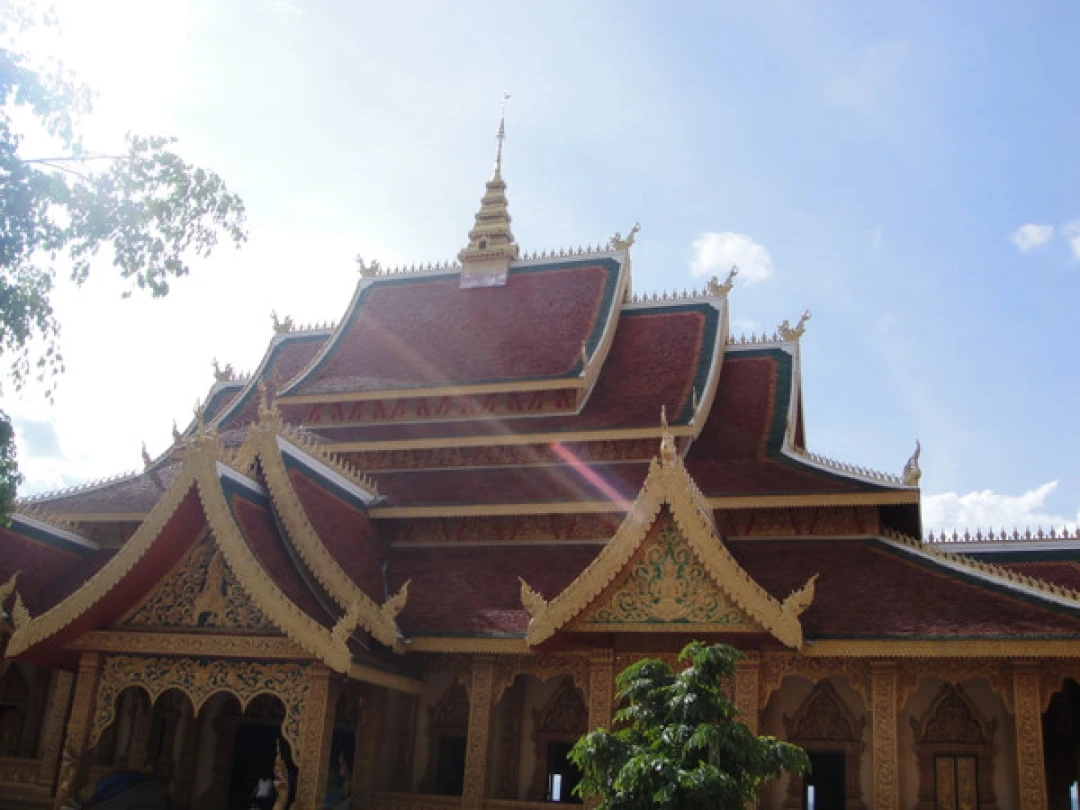
The Grand Buddha Temple is built into a mountainside, with a magnificent golden Buddha statue standing at the highest point, overlooking the entire city of Jinghong. Blue sky, red eaves, green decorations, golden edges, and upturned flying eaves—every detail exuded exotic charm. The lotus flower sculptures in front of the main hall were dramatically exaggerated, breathtakingly beautiful.
Several neighboring countries—Thailand, Laos, Myanmar, and Vietnam—have established their own Buddhist colleges here. Removing my shoes, I entered the main hall, where the interior decoration was nothing short of extravagant. I quietly paid homage to the Buddha, devoutly listened to the monks chanting sutras I couldn't understand, and received a colored string tied around my wrist—a blessing for safety and good fortune.
Stepping out of the hall, the view opened up before me. Overlooking the entire Xishuangbanna region, the Lancang River cut through it, and the small border city lay quietly nestled in the green basin. At that moment, all my worries vanished like smoke.
Day Three: Wild Elephant Valley and the Southern Medicine Garden
Wild Elephant Valley: An Untimely Encounter
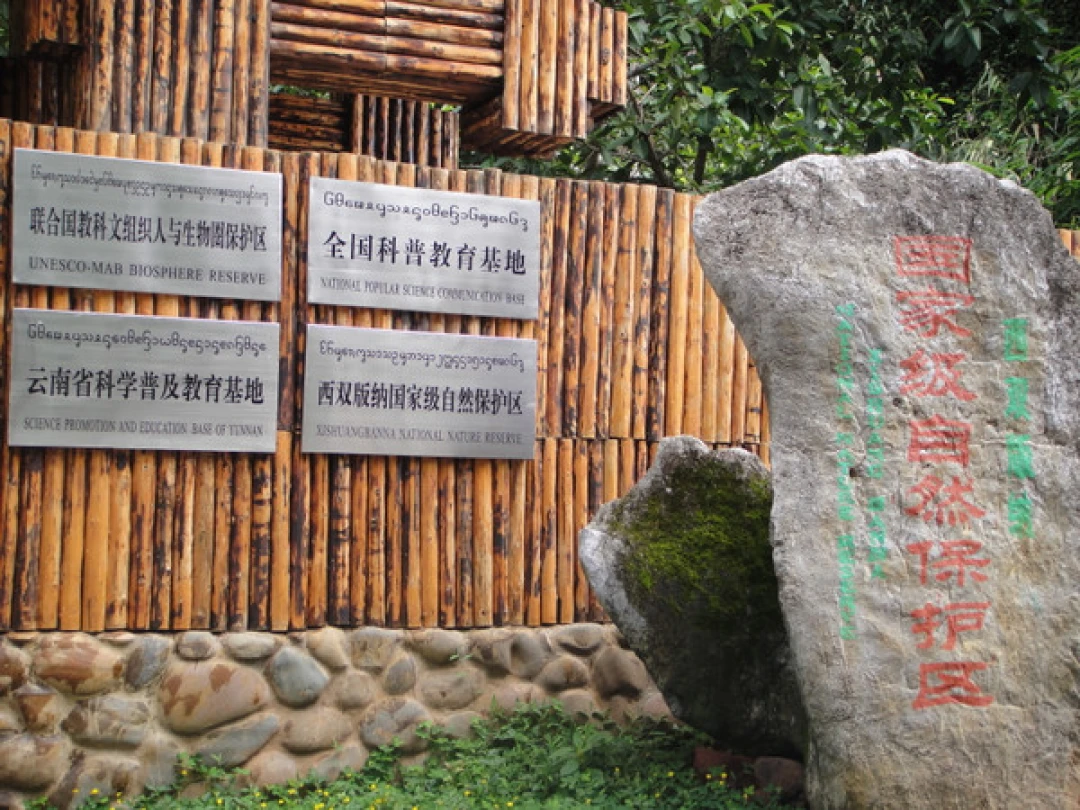
Wild Elephant Valley is a place to see Asian wild elephants. Unfortunately, our timing was off—roads were being repaired to ease human-elephant conflicts. We could only wander around a small park before leaving. Still, we spotted a golden lizard (a monitor lizard species), a nationally protected first-class animal, lazily basking on a rock, utterly indifferent to the tourists.
Southern Medicine Garden: Lush Plants, Fierce Mosquitoes
The Southern Medicine Garden was once the workplace of a friend of my father's. Here, we saw cinnamon trees, Sterculia trees, cardamom, betel nut trees, and poison arrow trees... And there was a banyan tree we mistook for a centuries-old giant—it was actually only 24 years old, planted by my uncle himself. Plants grow so fast here that it leaves you in awe.
But within minutes, my body was covered with seven mosquito bites. The mosquitoes here are as full of life as the plants.
The Following Seven Days: Eating and Playing Across Xishuangbanna
Staying at my sister's place, we enjoyed complete freedom and comfort. The two of us wandered everywhere, ate everywhere, and took photos everywhere.
Dai Cuisine: A Feast for the Taste Buds
Every traditional Dai dish was a revelation:
- Lemongrass Grilled Fish: Tilapia wrapped in lemongrass, grilled until crispy on the outside and tender inside, with an irresistible aroma.
- Grilled Meat: Various meats grilled and dipped in namimi (Dai-style dipping sauce)—so delicious you can't stop eating.
- Banana Leaf Wrapped Grilled Food: Ingredients wrapped in banana leaves and roasted over charcoal, preserving their original flavors.
- Pineapple Rice: Authentic pineapple rice, sweet and tangy, with the fragrance of pineapple infused into every grain.
- Grilled Moss: Crispy, like seaweed but even more fragrant. Wrapped in sticky rice, it's a perfect match.
- Namimi Sauce: The soul of Dai cuisine, available in flavors like sour bamboo shoot sauce and pickled vegetable sauce. Paired with raw baby eggplants, cucumbers, and mint leaves, it's refreshing and appetizing.
- Sticky Rice: Dai people eat with their hands. Pinch a ball of sticky rice, wrap it with grilled moss or meat, and take a bite—pure satisfaction.
And there were dishes I couldn't even name: bitter seed fruit, acanthopanax, sweet bamboo shoots, boat beans... Each one brimmed with tropical character.
Fruit Paradise: Eating Non-Stop
Xishuangbanna is a fruit paradise. Mangosteens, durians, jackfruits, mangoes, pineapples, dragon fruits, tamarinds, eggfruits (also known as canistel), peaches, raw-eating mangoes, coconuts... Every fruit was so fresh it drove me wild. Especially red-fleshed dragon fruit, imported from Vietnam, with an explosively sweet flavor. And eggfruit—its flesh looks exactly like egg yolk, with a dense, creamy texture. My sister's mother specially arranged for me to try it—I was floating on air with happiness.
Night Markets and Night Views: Another Side of Xishuangbanna
In the evening, we went to the south bank of the Lancang River to see the night scenery. Golden lights illuminated the Thai-palace-style rooftops, and a row of bars stretched along the riverbank. The nighttime Xishuangbanna was filled with mystery. The Lancang River shimmered under the lights, like a golden dragon.
The Beautiful Xishuangbanna I Never Wanted to Leave
Ten days—not too long, not too short. On the day of departure, I sat in the car, watching the green fade away in the window, my heart filled with reluctance.
Xishuangbanna, this oasis on the Tropic of Cancer, gave me an ideal and magical dream with its blue skies, white clouds, tropical rainforests, Dai culture, and culinary feasts.
If you also want to visit Xishuangbanna, remember these key points:
- Best Travel Time: The dry season from November to April of the following year, with pleasant weather ideal for travel.
- Must-Visit Attractions: Menglun Tropical Botanical Garden, Dai Ethnic Park, Grand Buddha Temple, Wild Elephant Valley.
- Must-Eat Foods: Lemongrass grilled fish, pineapple rice, grilled moss, namimi sauce, sticky rice.
- Transportation Tips: Drive from Kunming or fly to Jinghong, then rent a car or hire a driver to explore.
- Precautions: Bring mosquito repellent—there are many mosquitoes in tropical areas; respect local Dai customs and traditions.
Xishuangbanna is worth your time. Stay a while.
You should also read:
Autumn Reverie · Ten Days in Northern Yunnan: Wandering Through the Mountains and Waters of Northwest Yunnan in Early Autumn
Autumn Reverie · Ten Days in Northern Yunnan: Wandering Through the Mountains and Waters of Northwest Yunnan in Early Autumn Some journeys are destined to become a beam of light in your life. In the early autumn of 2014, my friend and I embarked on…
Continue reading...
The Hidden Paradise Under the Stars: A Borderland Expedition Through Pu'er, Ximeng, and Xishuangbanna
The Hidden Paradise Under the Stars: A Borderland Expedition Through Pu'er, Ximeng, and Xishuangbanna Introduction: While Everyone Rushed to Lijiang, I Chose Another Path On China's tourism map, Lijiang and Dali have long become pilgrimage sites for "artsy youth"—swarming with tourists and heavy with commercialization.
Continue reading...
Go to the Nujiang River: One Person’s Paradise — Finding the Soul’s Home in Bingzhongluo, Laomudeng, and Zhiziluo
Go to the Nujiang River: One Person’s Paradise — Finding the Soul’s Home in Bingzhongluo, Laomudeng, and Zhiziluo The wind from afar is always farther than the distance itself. When life becomes cluttered with trivialities, when longing surges like a tide, perhaps a spontaneous journey…
Continue reading...