Huize: A Treasure Forgotten by Time
Huize: A Treasure Forgotten by Time
If you ask me whether there's still a place in Yunnan that's "uncrowded, beautiful, and full of stories," I'll tell you without hesitation: Huize.
The name might sound unfamiliar to most people, even a bit awkward to pronounce. But this low-key little town, almost forgotten by tourist maps, hides a dramatic history, a simple and moving way of life, and countless stunning details.
This year during the May Day holiday, we set off from Chengdu, hitting the highway at 4 a.m., heading west. Seven hours later, when the navigation system announced "Huize reached," we could hardly believe it—the entire journey was smooth, with none of the traffic jams we'd dreaded. In an era when everyone is searching for "off-the-beaten-path destinations," Huize seems to have truly remained undiscovered.
First Taste of Huize: The Warmth of a Bowl of Thin Bean Porridge
We arrived in Huize at noon. Instead of rushing to the sights, we headed straight to a breakfast shop recommended by a local friend: Qinghe Garden (清和园).
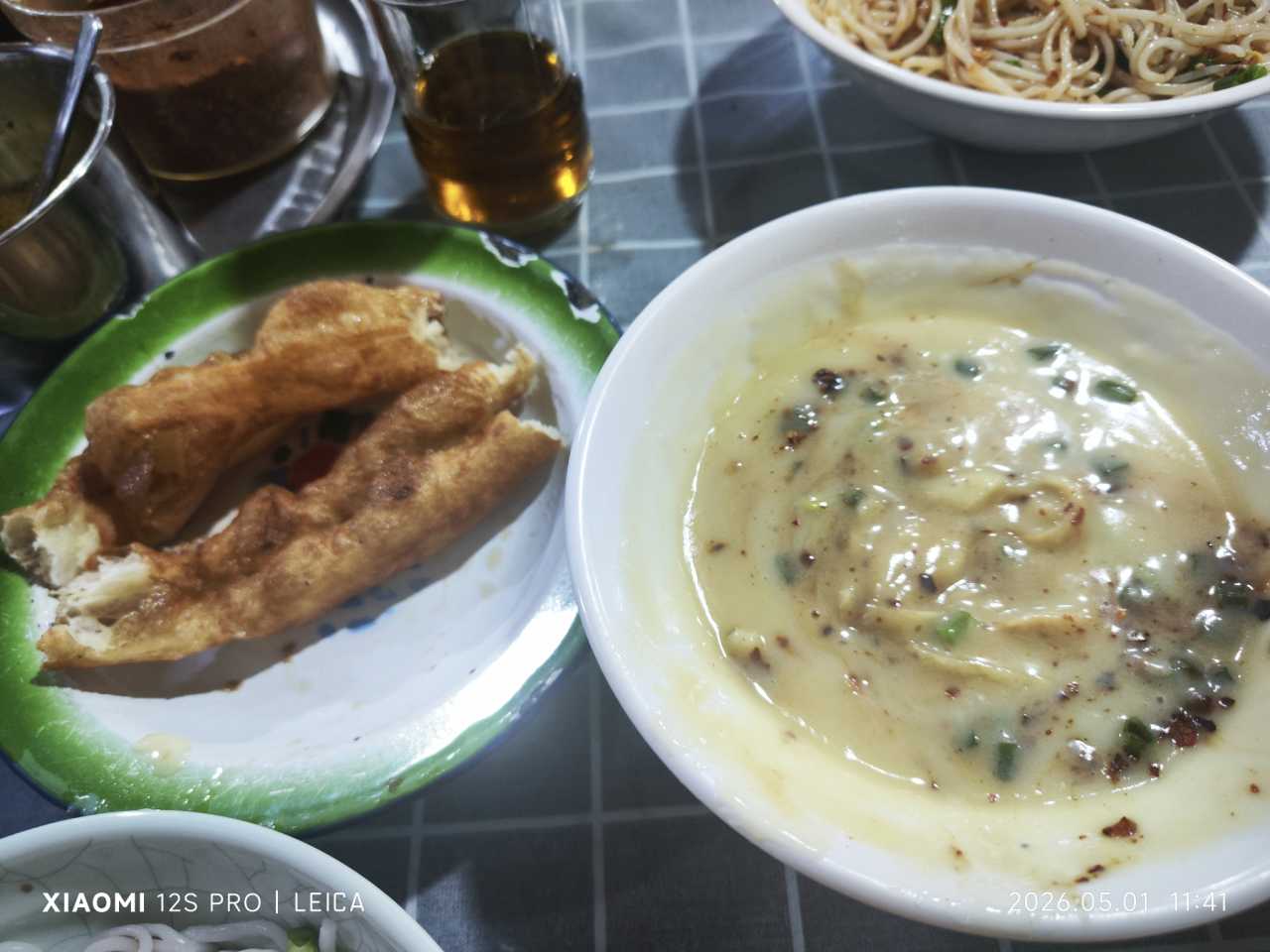
Though it's called a breakfast shop, it's still open at lunchtime. We ordered their signature thin bean porridge (稀豆粉), served with freshly fried mini youtiao (fried dough sticks). When the porridge arrived, the rich aroma of beans was irresistible. The thick bean paste trembled slightly in the bowl. One spoonful—smooth, silky, the bean flavor melting on the tongue. The mini youtiao were golden and crispy, freshly fried. Dipped in the porridge, they were crunchy on the outside, soft on the inside—pure happiness in every bite.
After one bowl, I felt completely revived. The owner smiled and said, "Everyone who tries our thin bean porridge says it's the best." And indeed, I later learned that many people drive hundreds of kilometers just for this one bowl.
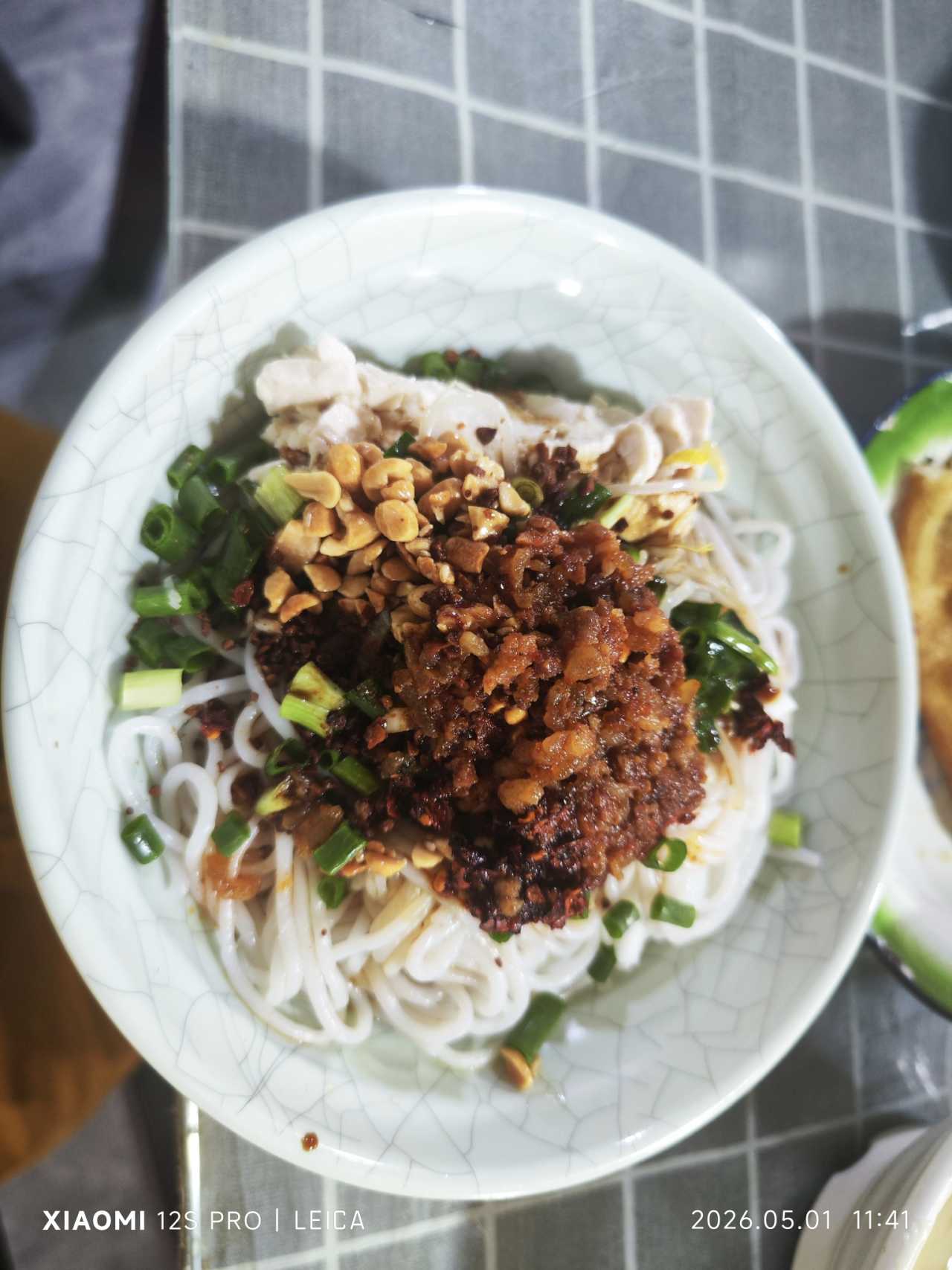
Practical tip: Qinghe Garden's cold rice noodle rolls (凉卷粉) are also famous, but they usually sell out early. If you want to try them, arrive early.
Huize Ancient Town: A Living Old Town

Huize's ancient town is neither too big nor too small. The first feeling upon entering is—this is a real ancient town, not one of those "fake antique streets" rebuilt for tourism.
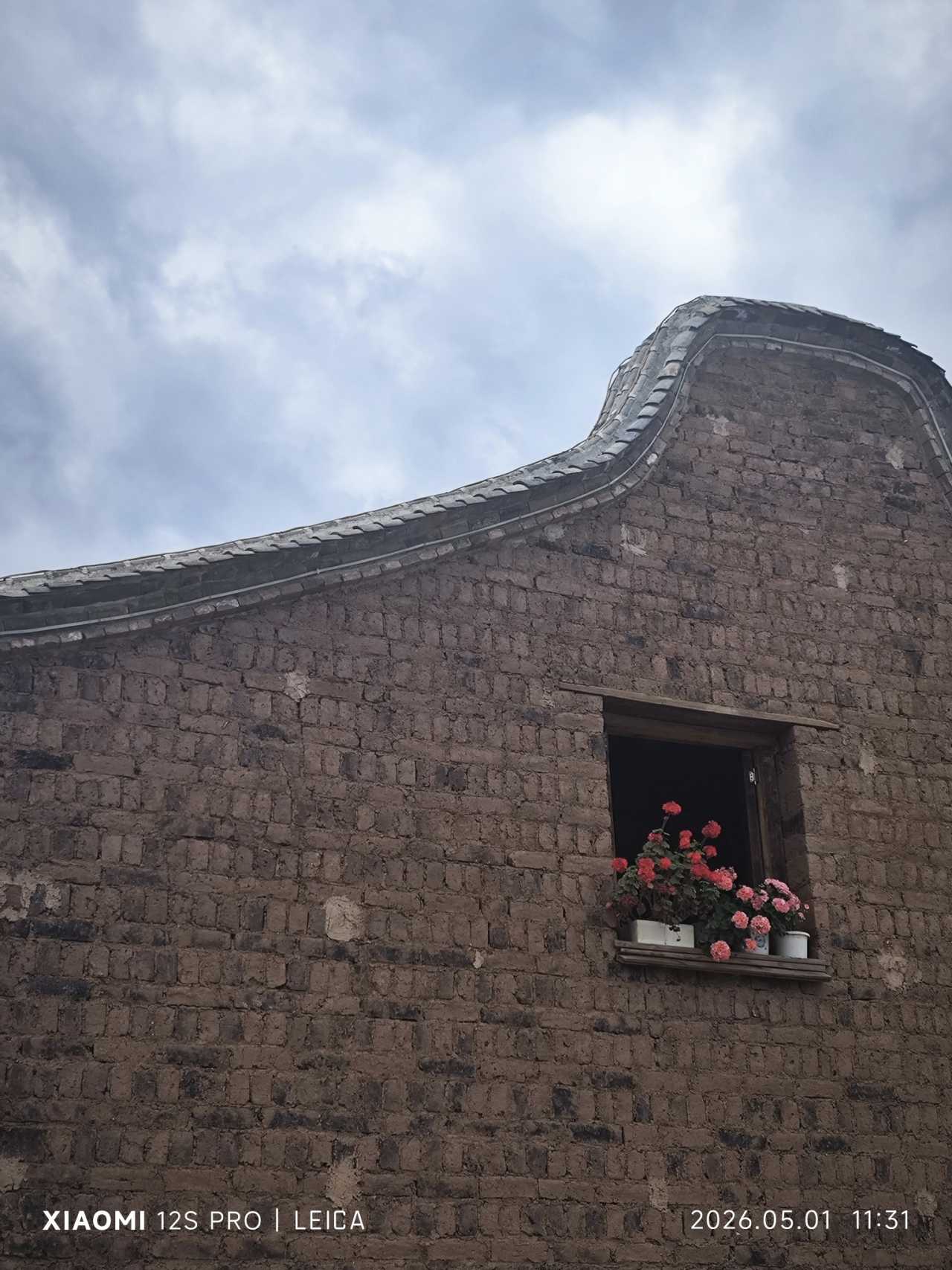
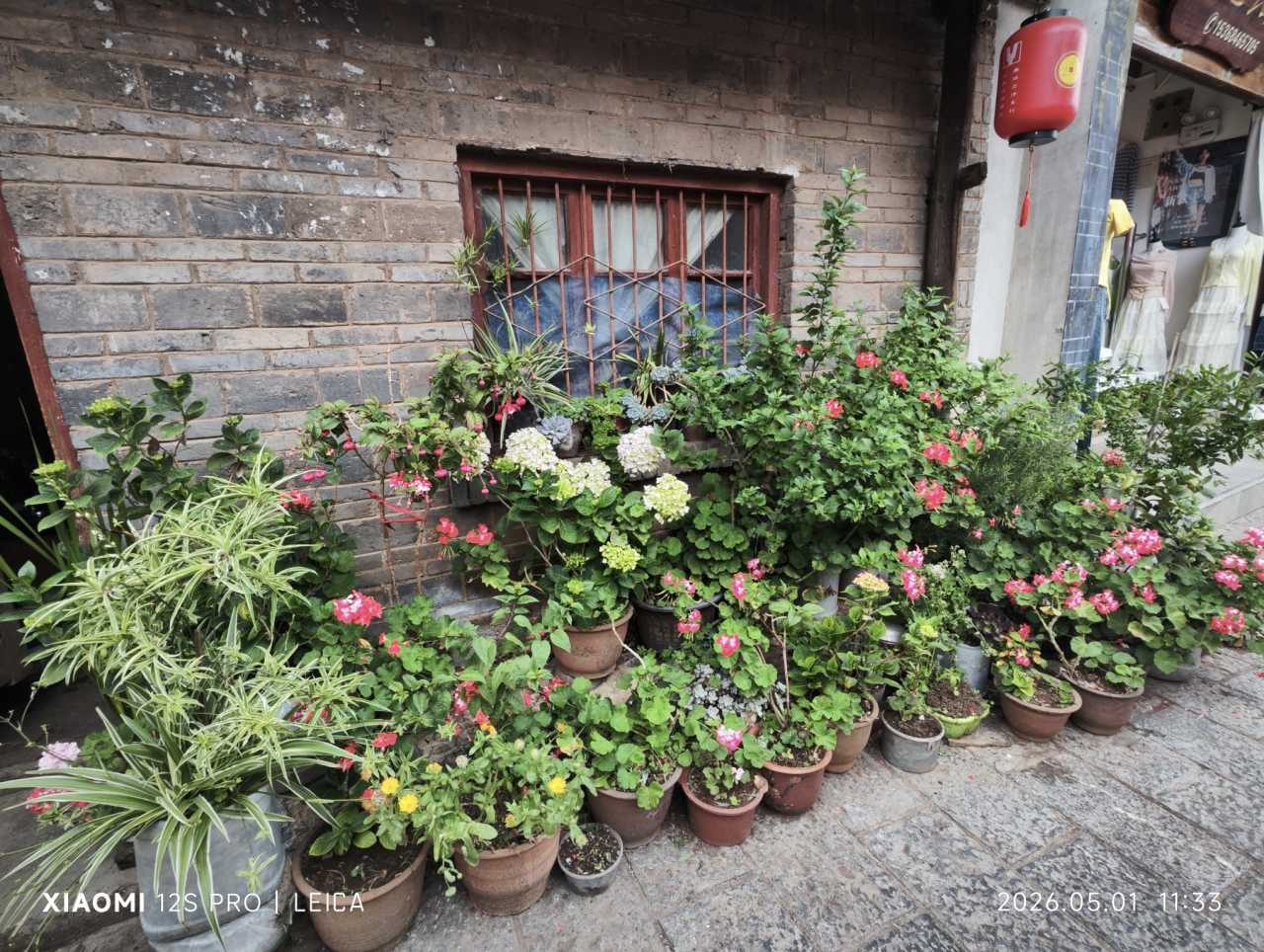
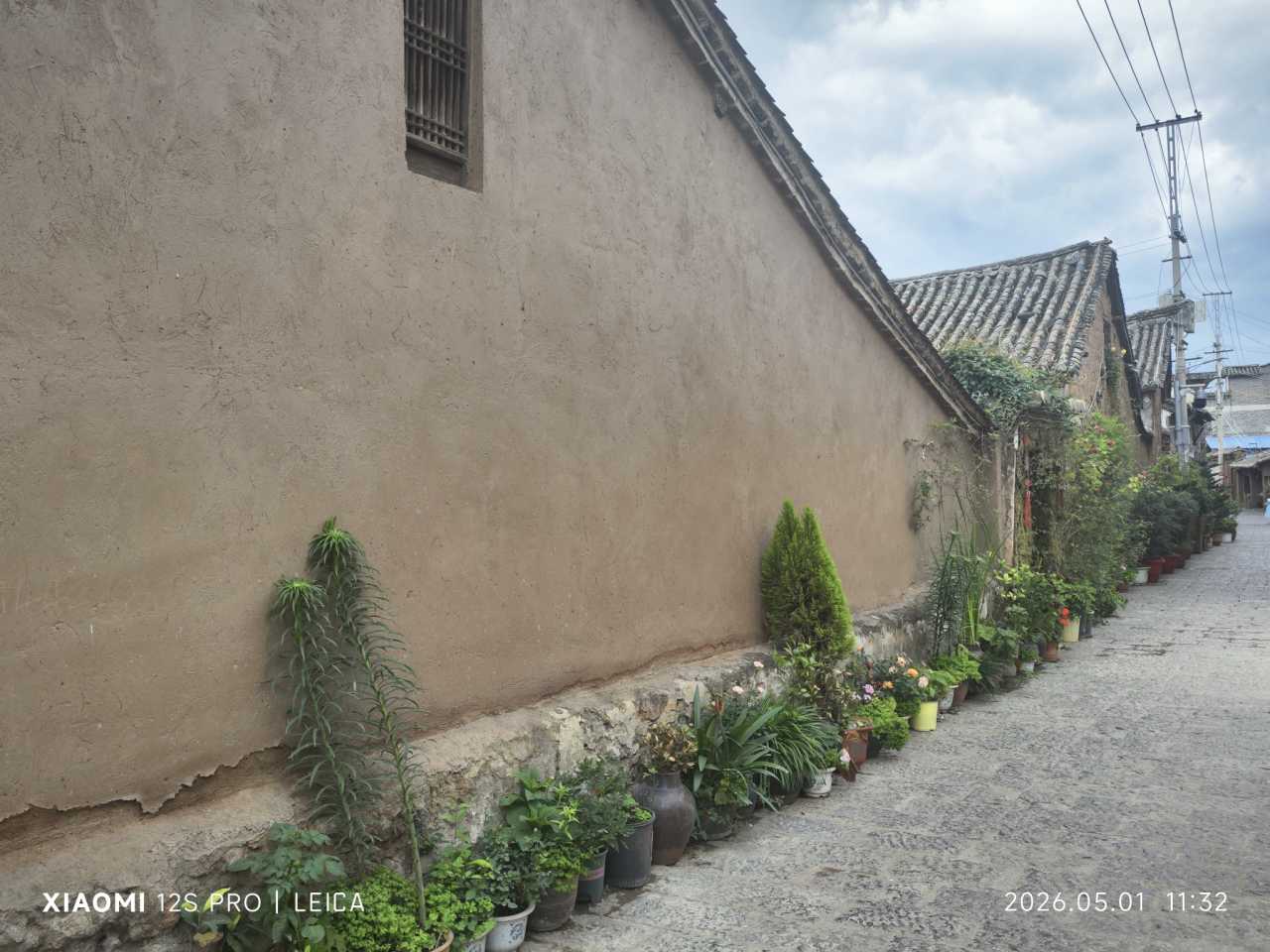
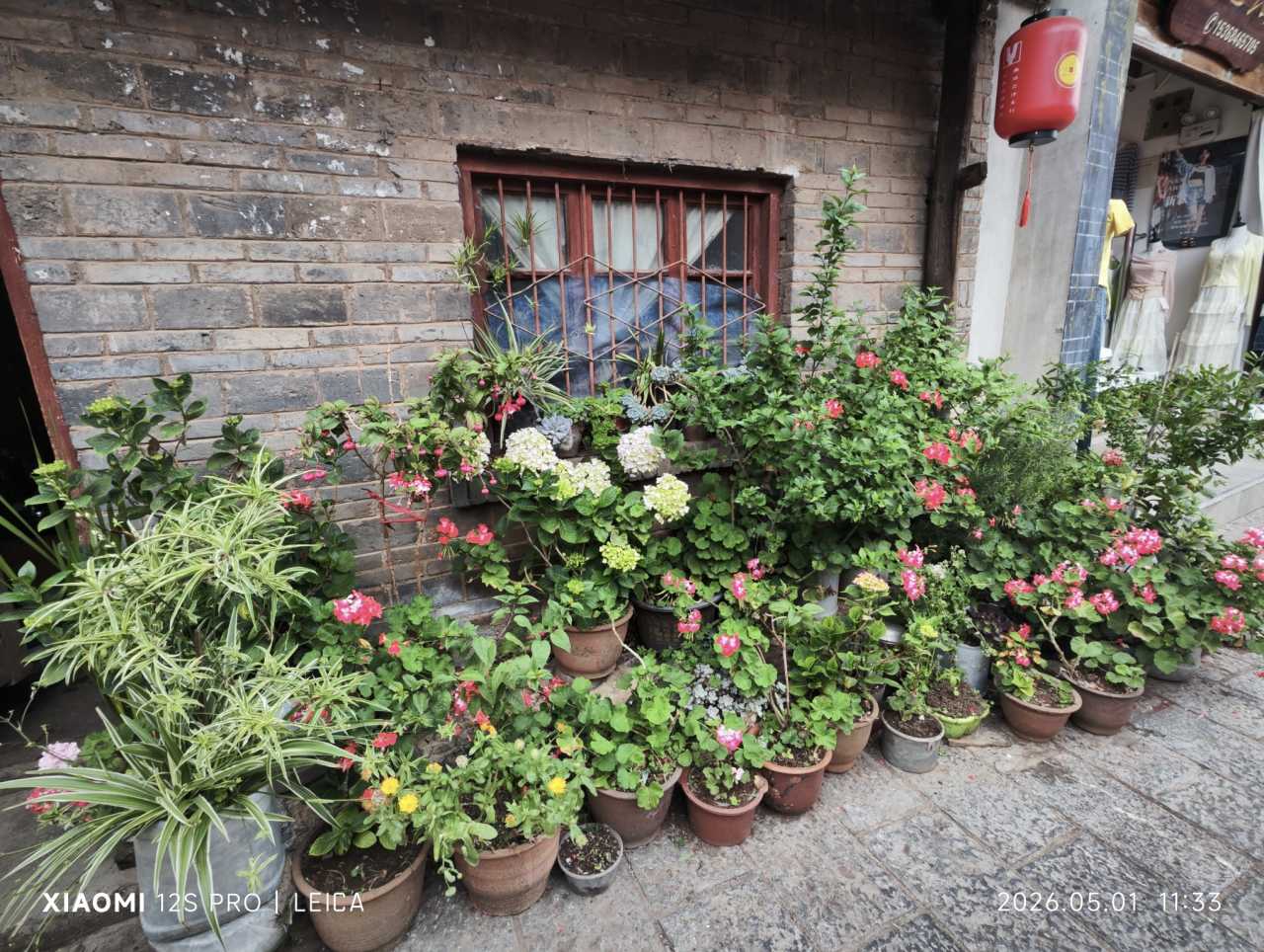
The stone streets have been polished shiny by time. The wooden doors and window lattices of the old houses bear the marks of years of use, every crack seeming to tell a story. But what amazed me most was the flowers at every doorstep. Pots of all sizes, arranged in a natural, haphazard way—some with bougainvillea, some with succulents, others with unknown blossoms. The beauty wasn't deliberate; it was the locals' innate aesthetic—casual, natural, full of life.
In comparison, the refinement of Lijiang or Lizhuang feels like a carefully choreographed performance. Huize's flowers are life itself.
The Glorious Past of the Copper Transport Road
Huize's history is far weightier than its appearance suggests.
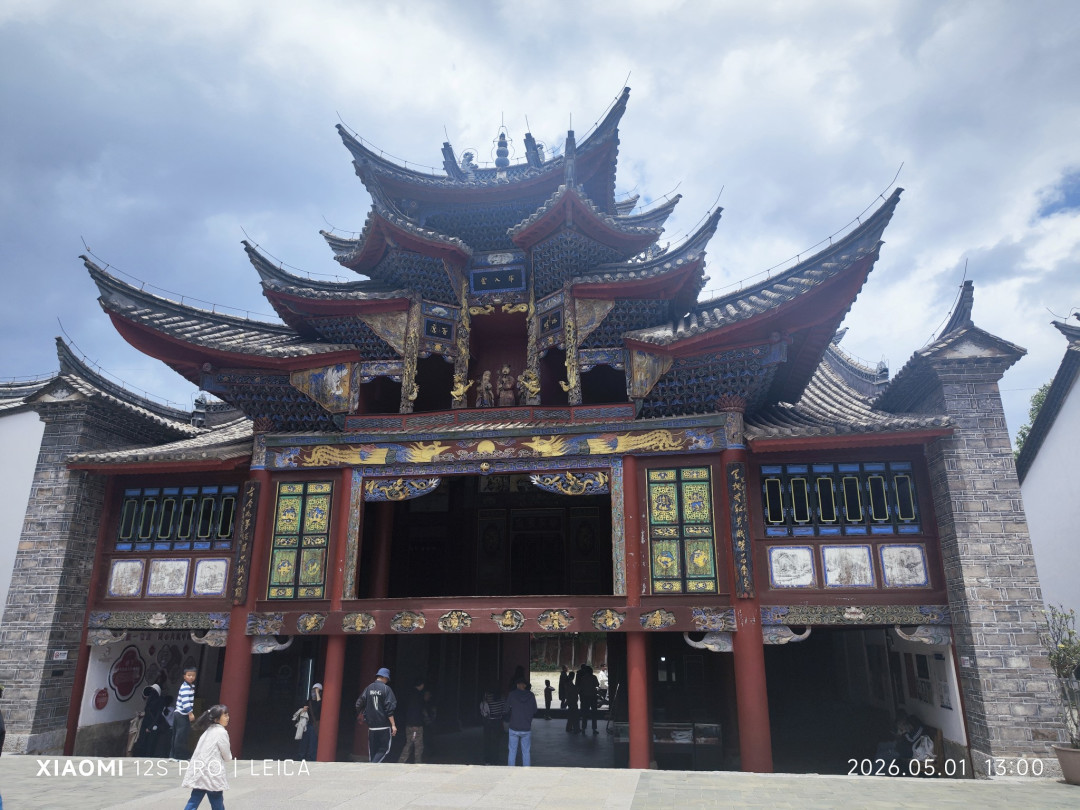
This was the starting point of the Qing Dynasty's copper transport road—the "First Stop for Beijing Copper." After the county was officially established during the Yongzheng reign (1723–1735), Huize's copper production once accounted for nearly 70% of the entire country. Imagine: of every ten copper coins circulating nationwide, seven came from here. Copper merchants gathered, and merchants from various provinces built guild halls, leaving behind exquisite ancient buildings like the Jiangxi Guild Hall, the Huguang Guild Hall, and the Guizhou Guild Hall. From those ornate carvings, soaring eaves, and upturned corners, you can glimpse the former scene of "merchants converging, a hundred goods jostling."
But prosperity is fleeting. In the late Qing, the copper trade declined, and the boom quickly withered. Compounded by mountain barriers and poor transportation, Huize became one of the last places to shed its status as a nationally designated poverty-stricken county. Yet perhaps because of this poverty, urbanization slowed down, and the ancient town was preserved intact, spared from large-scale demolition and reconstruction. It's a classic case of "a blessing in disguise."
Another Side of an Education Powerhouse
While wandering through Huize, I noticed an interesting phenomenon: the schools here—both high schools and elementary schools—were exceptionally well-built. Grand teaching buildings, spacious playgrounds, standing in stark contrast to the surrounding old residential houses.
Later, I looked up the data and understood. Huize is a renowned education powerhouse in Yunnan. In 2023, the rate of students entering first-tier universities from its high schools was nearly 36%, while the provincial average was only 15%. Even more astonishing: over the past decade, this small county has produced more than 200 students admitted to Tsinghua and Peking University.
After reading a report in People magazine, I learned the story behind it. Huize's seven high schools operate on a balanced development model—balanced student allocation, balanced teaching resources, unified management. The education department directly allocates resources to ensure fairness, using a "horse-racing mechanism" to spur competition among schools. Students study from just after 6 a.m. until 11 p.m., with only seven minutes between classes. Even going to the bathroom requires a run. If a teacher runs overtime, students don't even have time to use the restroom.
Most parents here are farmers with meager incomes, but they are willing to spend almost everything they have on their children's education. Because for them, education is the only hope for their children to escape the mountains and poverty.
Walking through Huize's streets, watching students with backpacks hurrying past, I felt a complex sense of respect.
Sunset at Jinzhong Mountain: The Town's Most Beautiful Moment
As evening approached, we climbed Jinzhong Mountain (Golden Bell Mountain). It's not high—you can reach the top in about ten minutes—but the view is excellent.
At the summit stands a Wenchang Temple (Temple of the God of Literature). A Taoist priest was leisurely chanting an ancient melody. I couldn't understand the lyrics, but the distant, profound tune seemed to pull you back to another time. Beside it, on an ancient cypress tree, a small mountain bird hopped around, chirping and foraging; a cuckoo called "bu gui, bu gui" (meaning "don't return") not far away.
The most amusing sight was a little squirrel sneaking down from a tree, preparing to jump to another pine. It noticed me watching, hesitated for a second, then scurried up the trunk, leaping swiftly until it vanished among the branches.
The sun set, casting its golden glow over the entire county. Below were low, modest houses—messy but full of life. In the distance, the new city's high-rises rose, and beyond them, wind turbines slowly turned in the clouds. On an old wall, a little girl leaned against her mother, quietly waiting for the sunset. She saw me looking at her and flashed an innocent smile.
At that moment, time seemed to stand still.
Almost Missed Surprises
After coming down the mountain, we almost missed two places: the Medicine King Temple (药王庙) and the Dekang Coin Bureau (德康币局).
The Medicine King Temple was across from the square, next to a public restroom. The smell was less than pleasant, almost driving us away. But once inside, we found a hidden gem.
The Dekang Coin Bureau was tucked among a cluster of bustling shops. Its entrance was an ordinary residential building; you had to go inside and turn right to find the bureau. The former Martial Temple had been converted into a place to display and sell Yunnan spotted copper (斑铜). The most eye-catching piece was a majestic statue of Guan Yu (the God of War). Ancient tree branches were tied with large and small spotted copper coins, and shelves were filled with various spotted copper items—copper animals, Buddha statues, plum vases, small cups, incense burners... The variety was vast but not cluttered, revealing the owner's refined taste.
The entire shop was tended by a five- or six-year-old child, playing by himself, completely ignoring the tourists. Next to the bureau was a residential building with peeling walls, but the flower beds downstairs were still bursting with blossoms. The window frames on the third floor were carved wood, clearly very old. This kind of unintentional historical detail commands respect.
Nian Lake: A Bird's Paradise, A Human's Sanctuary
The next morning, the sky was overcast. The forecast predicted rain all day, but we decided to take a chance and visit Nian Lake (Lake of Longing) first.
Nian Lake is a wintering ground for black-necked cranes, but by May Day, the cranes had already flown away. Because of this, even during the holiday, the place was empty. We parked the car and walked along the trail into the lake area.
The scene was breathtaking. Wild ducks flew past; purple swamphens chattered noisily in the distance—their conversations echoing from here to there. In the reeds, a gray heron stood motionless, waiting for prey. A crested bulbul, with its punk hairstyle, looked around casually, completely ignoring us as we frantically snapped photos with our phones. The coots were more cautious—when they spotted us while preening on the shore, they panicked and jumped into the water, swimming away.
My biggest regret was not bringing binoculars. I could only squint, take photos with my phone, and zoom in to identify the birds. Luckily, one of my travel companions was knowledgeable about birds. Using location and distinctive features, we managed to identify most species.
The trail around the lake was thoughtfully designed. It approached the shore in many places but made it impossible to go down, leaving a respectful boundary between humans and birds. There were few man-made structures, and most were designed for the birds, not for people. The conservation area's environmental awareness was truly commendable.
Practical tip: Nian Lake is free, but you absolutely must bring binoculars, or you'll end up like me, "sighing at the birds." A waterproof jacket and pants are also essential. Yunnan's rain comes without warning, and once it starts, it can pour for hours.
On the way back, sure enough, the rain came. Fortunately, my jacket was waterproof, but I was still shivering from the cold. We had to cancel the afternoon trip to Baiwu Village and head home.
Baiwu Village: A Historical Slice Hidden in the Mountains
On the third day, the rain finally stopped. We drove to Baiwu Village (White Mist Village).
Baiwu Village was much smaller than I'd imagined, with almost zero commercialization. The main sights were concentrated in one area; beyond them were the villagers' homes. A bridge and a market marked the village's boundary. It didn't feel like a typical "ancient town"—it felt like a living village.
Flowers were still the protagonists here. Every doorstep was bursting with blooms: bougainvillea, roses, hydrangeas... It seemed the people here were born knowing how to live with flowers.
The Earliest Environmental Ruling
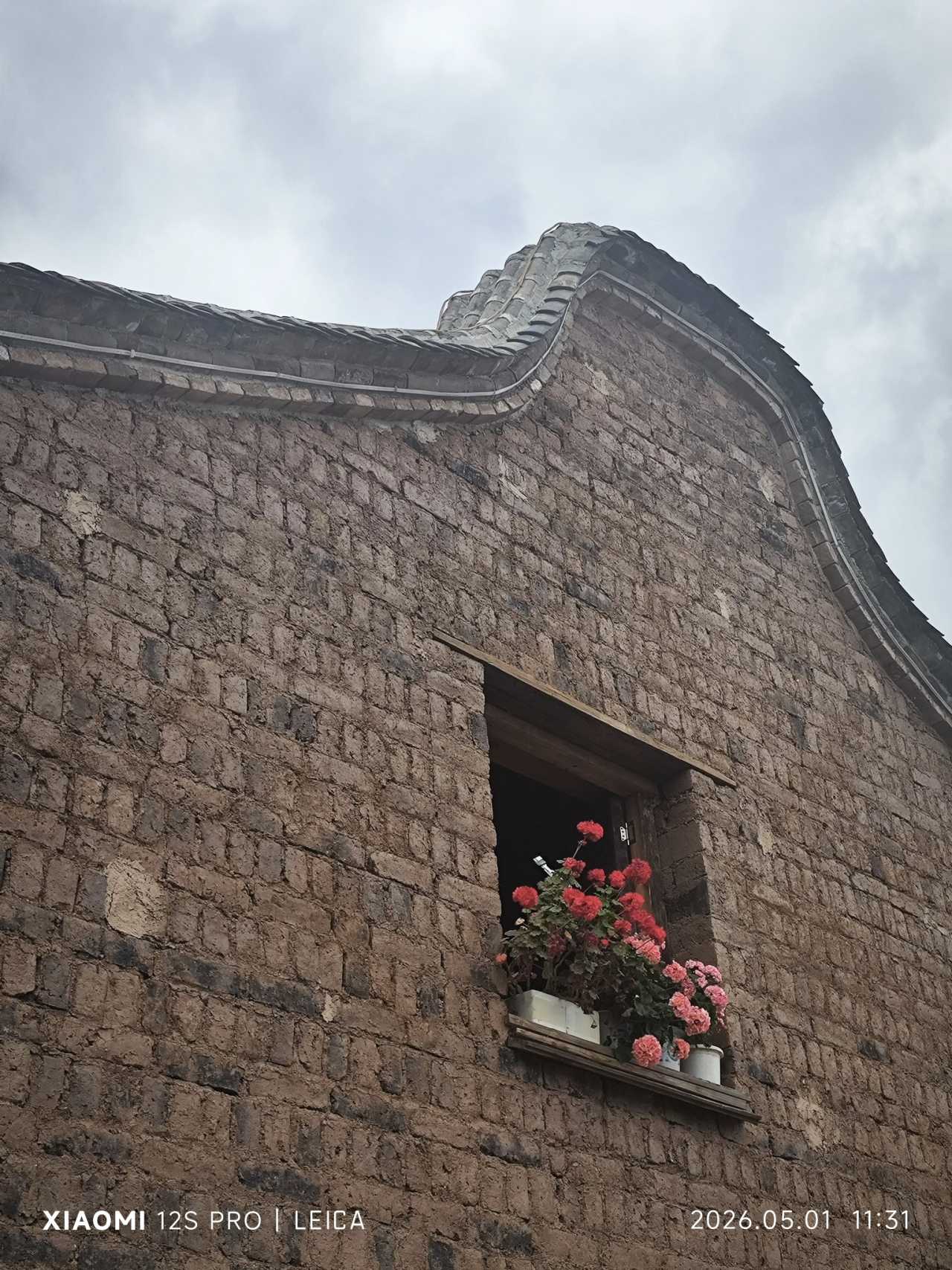
On an unremarkable wall of the Sansheng Temple (Temple of the Three Saints), we found a stone tablet. It is said to be one of the earliest environmental protection rulings in Chinese history. The inscription records: Three villagers, including a man named Guo Yongzhong, privately reclaimed wasteland behind the village and indiscriminately cut down trees, causing soil erosion and flash floods that destroyed farmland and homes. The villagers filed a joint lawsuit at the county magistrate's office. Magistrate Qiu accepted the case and ruled that Guo Yongzhong and his accomplices must confess their guilt, donate 30 mu (about 5 acres) of private land to the public, and permanently plant trees to conserve water and soil. The plaintiffs also donated 5 mu of land to join the reforestation effort. The magistrate erected the tablet to warn the entire township, permanently banning private land reclamation and deforestation as a deterrent.
Three hundred years ago, such environmental awareness in a rural village is truly remarkable.
As we entered the Sansheng Temple, we encountered a Taoist priest performing morning prayers. The sound of bells and chanting mixed together, creating a lively atmosphere. After finishing the prayers, she retreated to a small room, where we heard an older priest scolding a younger one, demanding to know why she had struck the bell in that particular way, over and over. We couldn't hear the young woman's response—only silence, perhaps.
The Chu-Qian Guild Hall and the Chen Family Mansion
The Chu-Qian Guild Hall (for merchants from Hunan and Guizhou) had been taken over by a company, reportedly investing 2 million yuan in renovations. The succulents at the entrance were thriving, making me envious. Inside, there was a small pond, still surrounded by succulents, with occasional bursts of white mist rising, giving the place a slightly otherworldly feel.
The Chen Family Mansion was hidden in a quiet alley. From the outside, it looked ordinary, but inside it was astonishingly large. It's said that the stone bases supporting the pillars were polished with silver, and they felt smooth as a mirror when touched. The original owner must have been a wealthy copper merchant; the scale and grandeur of this mansion give a glimpse of the family's former prominence.
Wisdom in the Village History Museum
The village history museum records a unique custom of Baiwu Village: "Preaching the Sacred Edict." On the first and fifteenth of each month, an elderly, literate villager would use a mix of Yunnan dialect and plain speech, accompanied by Dongjing classical music, to preach the imperial edict and conduct moral education. This form both preserved traditional culture and served to educate the villagers.
The village produced three "Sui Jinshi" (imperial examination graduates), eight "Gongsheng" (tribute students), and one "Juren" (provincial graduate). For such a remote mountain village, this level of cultural achievement speaks volumes about the local emphasis on education.
The Yunnan Guild Hall (also known as the Temple of the God of Wealth) had its doors open, but there was no incense inside. We used the free incense provided at the entrance to pay our respects to the God of Wealth, sincerely hoping he would bless the people here with a prosperous life soon.
Food Recommendations: Huize on the Palate
Old House Impression BBQ (formerly Xiaogang BBQ)
This is the best barbecue I've had in decades. No exaggeration.
Grilled over charcoal, it's not greasy at all. Every skewer carries the fragrance of crushed peanuts. The enoki mushrooms taste like meat. The grilled eggplant is tender and juicy, topped with minced meat so flavorful you want to lick the plate. The grilled chicken legs and meat skewers are simply divine. Take a bite of barbecue, then sip the free rice and shrimp jelly drink (米凉虾) the owner provides—cold and sweet, washing away the day's fatigue in an instant.
Two of us ate for 77 yuan (about $11), and we were very satisfied. I hear the grilled tilapia is also excellent—definitely trying it next time.
Jingchen Garden (靖晨园)
The steamed rice noodles (蒸饵丝) are absolutely delicious! Soft, chewy, and springy, paired with a special sauce—once you start, you can't stop. The fried mushrooms are also fragrant, crispy on the outside and tender inside. However, the fried potatoes were just okay—not fried long enough, not crispy enough.
Potato Xi Shi (洋芋西施)
This place's fried potatoes are a masterpiece. Make sure to ask the owner to give you the well-fried ones—crispy on the outside, soft on the inside, with a secret sauce that makes it impossible to stop eating.
A hard-learned lesson: Don't use the bamboo skewers the owner provides. Just eat with your hands. Don't ask why. Let's just say bamboo skewers can pierce your hand.
Leaving Huize: To Be Continued
On the day we left Huize, the sky finally cleared.
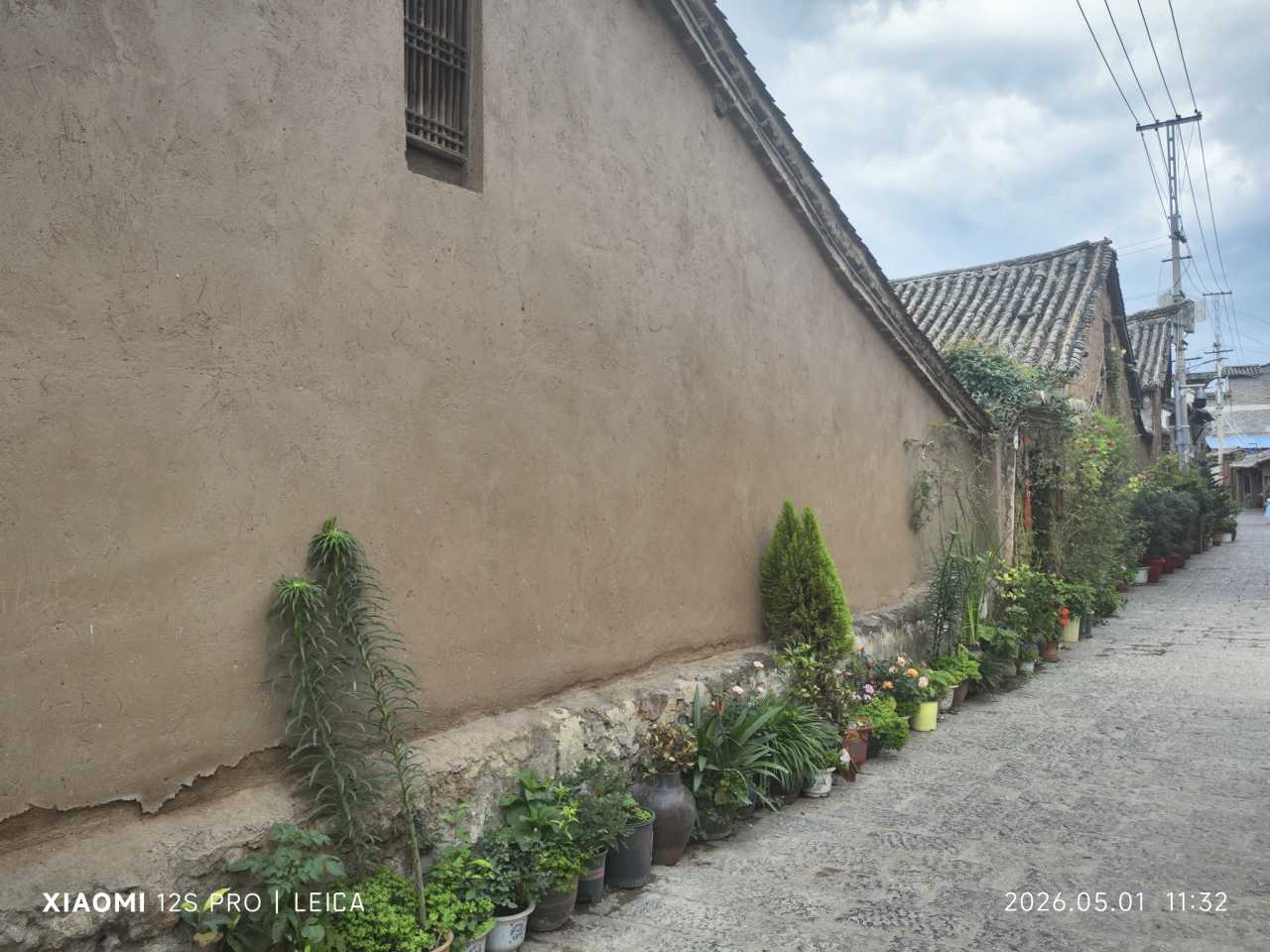
Sunlight fell on the old houses of the ancient town. The mottled walls and ancient wood carvings looked particularly moving in the light and shadow. I suddenly felt that I would probably come back here again.
Next time, I must see the black-necked cranes soaring over Nian Lake. I must climb Dacaohai Mountain and see the legendary alpine meadows. I must go to Qinghe Garden again for a bowl of fragrant thin bean porridge with two freshly fried mini youtiao.
Huize—this unfamiliar, low-key place full of stories—is like a treasure hidden deep in the mountains, waiting for those willing to slow down and discover it with an open heart.
Huize Travel Practical Guide
Transportation: Self-driving is the most convenient. About 7 hours from Chengdu, all highway, with good road conditions.
Accommodation: Recommended: Xinding Hotel (鑫鼎大酒店). Close to the ancient town, spacious rooms, generous breakfast. Best of all, the price stays stable year-round and doesn't skyrocket during holidays.
Best Season: Winter for black-necked cranes; spring and autumn for pleasant weather; summer for cool escapes from the heat.
Essential Items: - Waterproof jacket/down jacket: It can still be cold during May Day - Umbrella/raincoat: Yunnan's rain comes without warning and can last for days - Binoculars: Essential for bird-watching - Comfortable shoes: You'll be walking a lot in the ancient town and around Nian Lake
Suggested Itinerary: - Day 1: Huize Ancient Town (Tang Jiyao's Former Residence, Jiangxi Guild Hall, Huguang Guild Hall, Guizhou Guild Hall) + Jinzhong Mountain sunset - Day 2: Nian Lake (free, for water birds) + Baiwu Village - Day 3: Dacaohai Mountain (if weather permits)
Food Checklist: - Qinghe Garden: Thin bean porridge, freshly fried mini youtiao - Old House Impression BBQ: Various skewers, grilled eggplant, rice and shrimp jelly drink - Jingchen Garden: Steamed rice noodles, fried mushrooms - Potato Xi Shi: Fried potatoes
Huize: a treasure forgotten by time. It doesn't boast, doesn't shout. But with a bowl of thin bean porridge, an ancient town, and a lake of longing, it quietly touches everyone who comes.
If you're tired of crowded tourist traps, come here for a walk. Maybe, like me, you'll fall in love with this low-key place full of stories.
You should also read:
If Life Were Only as Sweet as First Encounter – Immersed in Lijiang’s Gentle Time
If Life Were Only as Sweet as First Encounter – Immersed in Lijiang’s Gentle Time Never forget the things you promised yourself you would do. Never forget the places you promised yourself you would go. No matter how difficult or how far, as long as…
Continue reading...
Tipsy Memories – Kunming: A City That Makes Time Slow Down
Tipsy Memories – Kunming: A City That Makes Time Slow Down 25°02'11" N, 102°42'31" E. Summers here are never scorching, winters never bitter—a truly blessed place to call home. I’ve been in this city for nearly three years now. Whether out of wanderlust, academic pursuits,…
Continue reading...
Complete Guide to Fuxian Lake: A Yunnan Hidden Gem I've Visited Three Times – Ask Me Anything!
Complete Guide to Fuxian Lake: A Yunnan Hidden Gem I've Visited Three Times – Ask Me Anything! Why Fuxian Lake? If you ask me which place in China is worth visiting again and again, my answer isn't Lijiang or Dali – it's Fuxian Lake. In…
Continue reading...