Tipsy Memories – Kunming: A City That Makes Time Slow Down
Tipsy Memories – Kunming: A City That Makes Time Slow Down
25°02'11" N, 102°42'31" E. Summers here are never scorching, winters never bitter—a truly blessed place to call home. I’ve been in this city for nearly three years now. Whether out of wanderlust, academic pursuits, or simply this reason or that, I’ve slowly woven myself through its streets and alleys. Now, on the verge of leaving, I’ve decided to put together a sort of "passerby’s finale" with words and images—a keepsake for myself.
Many travelers to Yunnan treat Kunming as nothing more than a pit stop or a transit hub—rushing in, rushing out. They don’t realize that this city has its own breath and rhythm. If time allows, try staying a day or two. Take it in quietly. Who knows—you might just stumble upon an unexpected delight.
Look Up at the Sky: Kunming’s Clouds Are a Never-Ending Show
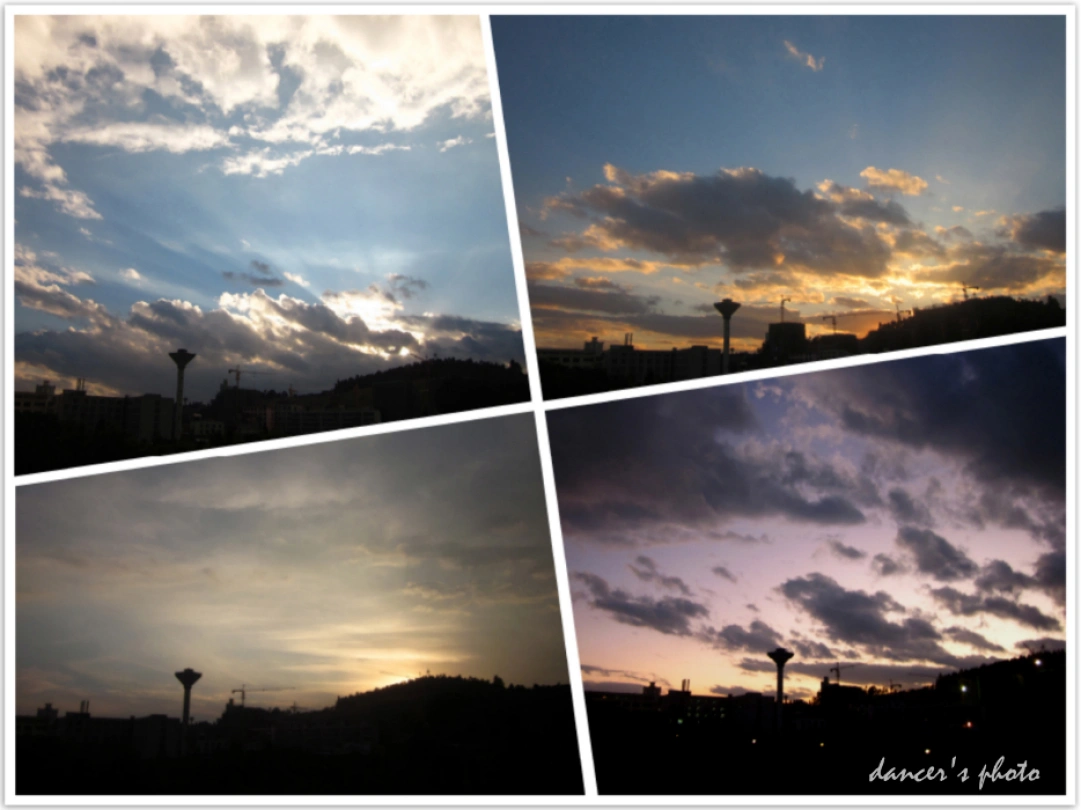
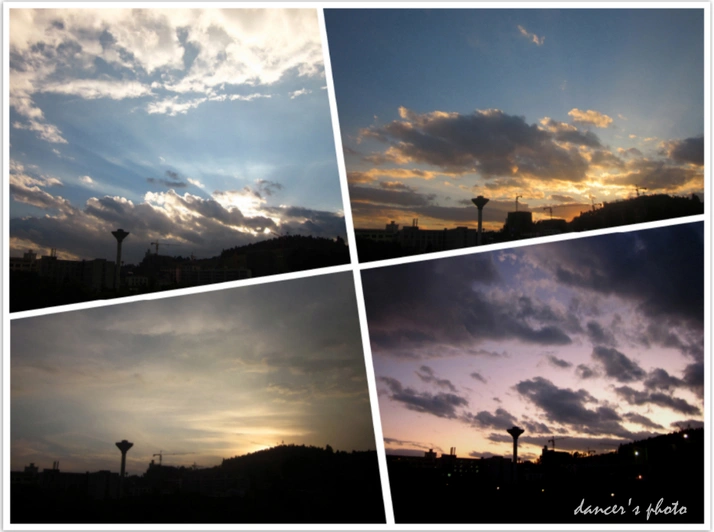
During my years in Yunnan, my favorite thing to do has been to look up at the sky. My computer is stuffed with photos of the heavens, each one holding a different shade of blue.
It reminds me of Mr. Shen Congwen’s essay Watching Clouds in Yunnan:
"Yunnan’s clouds seem to be made from the snow and ice of the Tibetan highlands and the year-round heat waves of the South China Sea, combined through some magical process. Their tones are remarkably pure. And it is precisely this purity that reveals their grandeur."
That’s exactly what Kunming’s clouds are like. At dusk, a patch of dark cloud on the horizon doesn’t feel heavy at all—it’s almost buoyant, as if promising a fine day tomorrow.
Pre-Trip Tips: Travel Smart

Getting Around
Kunming’s bus system is incredibly well-developed. A bus card or some loose change will get you anywhere in the city. Most routes cost 1 yuan, while express buses are 2 yuan. Plan your routes in advance, and you won’t waste time navigating.
Essential Gear
- Google Maps: With it, your mom can stop worrying about you getting lost.
- Umbrella: Kunming’s famous "different weather in every mile" means it can be sunny on one street and pouring on the next. Rain with sunshine is perfectly normal. A compact umbrella is all you need—leave the heavy parasols at home.
Camera
A DSLR is great, but if you’re like me and can’t find anyone to carry your gear, a compact camera will do. I use a Canon IXUS 105. The photos may not be technically perfect, but they capture genuine moments.
Recommended Itineraries: Perfect One-Day and Two-Day Plans

One-Day Tours: Roses Bloom in the Spring City
Route 1: Culture & History National Southwestern Associated University → Yunnan University → Wenhua Lane → Army Lecture Hall → Green Lake (Cuihu) → Nanping Street → Jinma Biji Archways → East Pagoda
Tip: If you’re low on energy, take the bus from Green Lake to Nanping Street. Exit Green Lake’s south gate, turn right for 500 meters to Dongfeng West Road, and you’ll find a bus stop across the street.
Route 2: Ethnic Culture Yunnan Ethnic Village day trip. Follow the recommended route on your ticket—no need for the golf cart. Don’t miss the elephant show and the ethnic dance performance; the two venues are right next to each other.
Route 3: Lakes & Mountains Haigeng Park → Haigeng Dam → Western Hills (Xishan). Buses from downtown to Haigeng are convenient, but Dianchi Road will take about 30 minutes. You can hike up Western Hills or take the cable car—though the cable car has two sections, and the second one requires a separate fee.
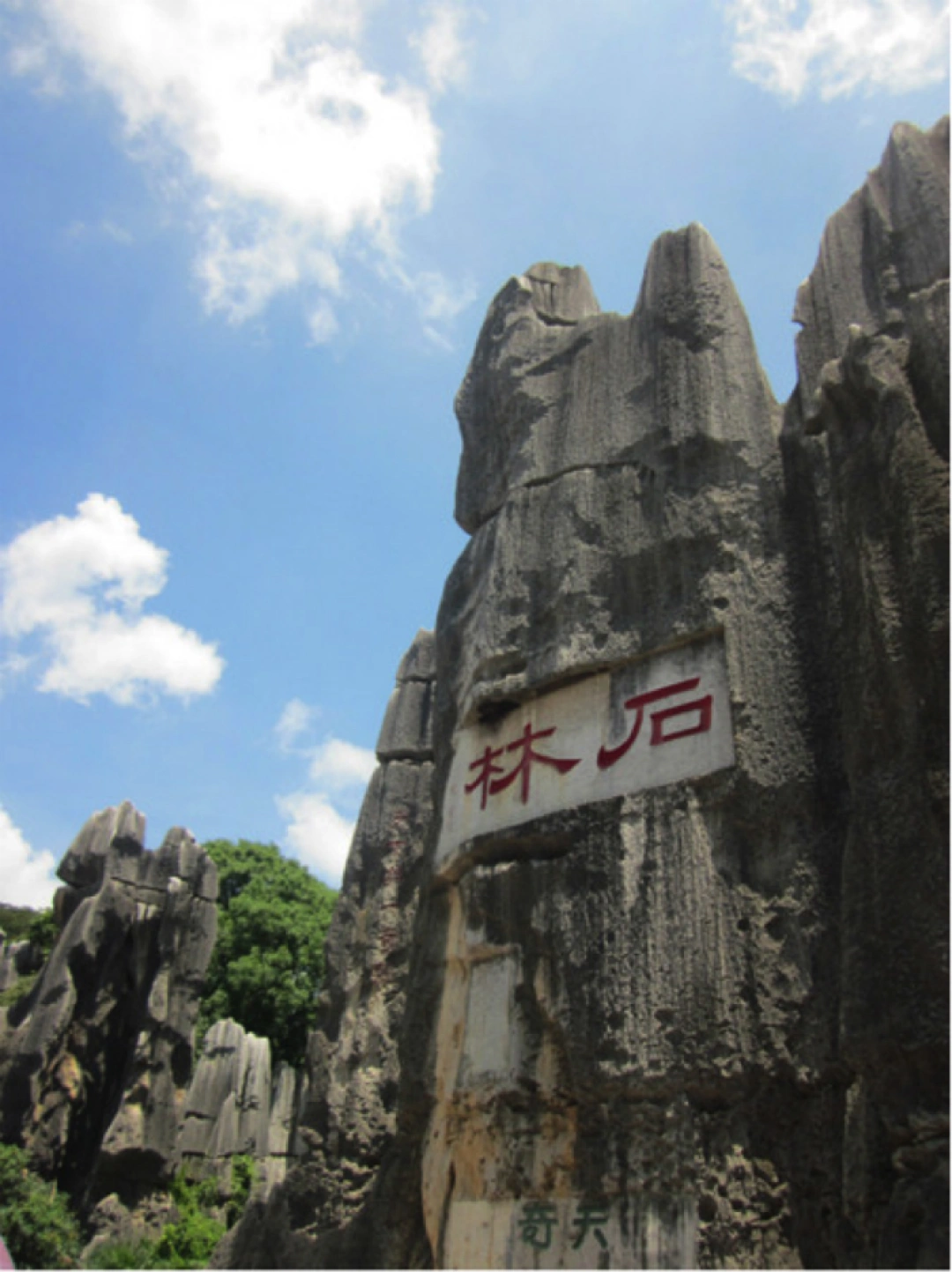
Route 4: Geological Wonders Stone Forest (Shilin) day trip. Depart between 8-9 AM and return by 5-6 PM.
Two-Day Tour: Deep Dive Edition
Day 1: Visit the Ethnic Village, take the cable car up Western Hills, and stay overnight at a farm stay (Mao Mao Qing farm stays cost 30-50 yuan including meals; it gets chilly in November).
Day 2: Wake up early to hike and watch the sunrise, then return to explore the various sights on Western Hills.
In-Depth Attractions: Places Worth Your Time
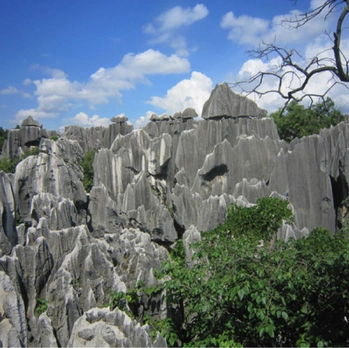
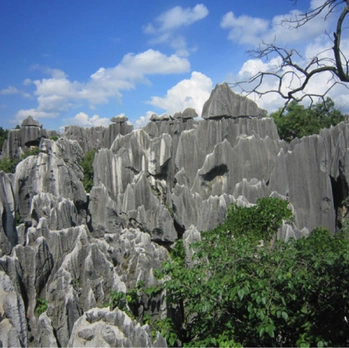
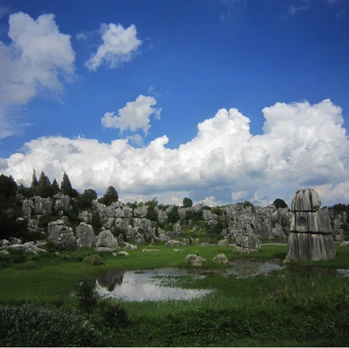
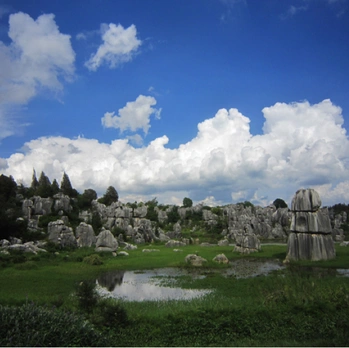
1. Stone Forest (Shilin): The World’s Greatest Wonder
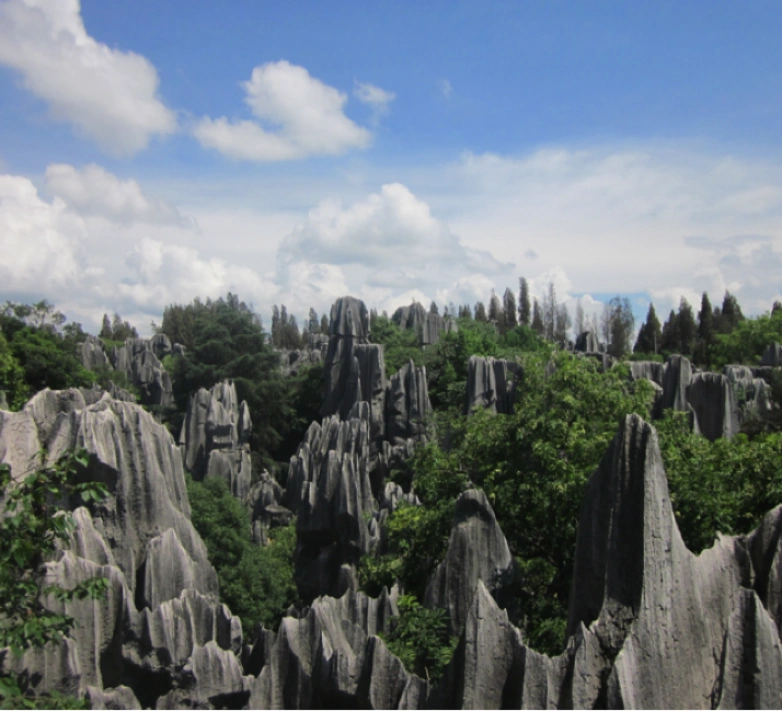
A 5A-rated scenic area, national park, UNESCO World Heritage site, and national geopark—these titles say it all.
Getting There: Take the express bus from Kunming East Bus Station. It takes 1.5-2 hours and costs 27 yuan.
Tickets: Combo ticket 175 yuan (student discounts available), golf cart ticket 25 yuan. The walk from the ticket office to the entrance is considerable, but if you’ve got energy to burn, you can walk it.
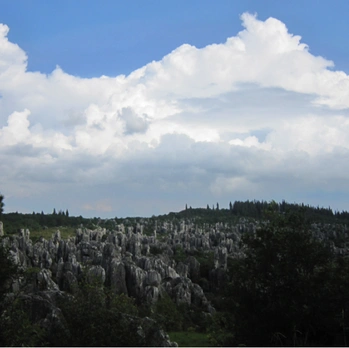
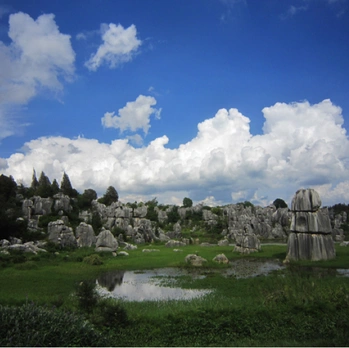
The main Stone Forest area is the most developed. Climb to "Wangfeng Pavilion" (Peak Viewing Pavilion), and all you’ll see is a sea of stone—at that moment, you truly understand what a "national geopark" means. You can take a golf cart for a loop tour; grab the front or back row for the best views. If one round isn’t enough, hop on again—nobody will stop you.
The Small Stone Forest is famous for the "Ashima" rock. In the Yi ethnic group, all women are called "Ashima" and all men "Ahei Ge"—basically their version of "handsome" and "beautiful."
2. Dianchi Lake: Pearl of the Plateau
Yunnan’s largest freshwater lake, known as the "Pearl of the Plateau." Nearby attractions include Western Hills, Haigeng Park, and the Ethnic Village—you’ll need two days to see it all.
Tickets: Haigeng Park 15 yuan (no student discount), Western Hills free, Ethnic Village 70 yuan (student discounts available, including for graduate students).
If you just want to see the lake and catch a glimpse of the "Sleeping Beauty" silhouette of Western Hills, head straight to Haigeng Dam—it’s free! Students go to Haigeng Park mainly for the BBQ area—bring your own food, and you can eat, play, and enjoy the scenery all at once.
From late October to early April each year, red-billed gulls migrate here for the winter. Locals treat them like friends, bringing bread to feed them during morning exercise. Standing on Haigeng Dam, watching flocks of gulls, you’ll feel how impossibly gentle this city is.
3. Yunnan Ethnic Village: A Feast of Ethnic Cultures
Yunnan is home to 52 ethnic groups, 26 of which have populations over 5,000. The Ethnic Village offers a one-stop cultural experience.
Tickets: 70 yuan (student discounts available).
The replica "Manfeilong Pagoda" from Xishuangbanna, the "Three Pagodas of Chongsheng Temple" from Dali, Bai-style houses, the Yi sun calendar—every corner is worth a pause. While the performances aren’t as polished as they used to be, the scenery remains picture-perfect.
4. Jinma Biji Archways: The Iconic Landmark
Located in the city center, these are the quintessential Kunming landmarks. Two ornate archways, paired with some mystical astronomical phenomenon, seem to carry deeper meaning. But as a mere mortal, I just snapped a "been there, done that" photo.
5. Green Lake (Cuihu): An Oasis in the City Center
Nestled at the western foot of Wuhua Mountain, this is the city’s most beautiful park. Morning exercisers, afternoon entertainers, evening strollers—it’s a peaceful retreat within the urban bustle, a slice of everyday Kunming life.
A True City of Flowers: Datura, reeds, lotus blossoms... all year round, a riot of colors takes turns blooming.
Red-Billed Gulls: Like at Dianchi Lake, these birds rule the roost here. They’re not afraid of people and stand with elegant poise. But I have trypophobia—I went once and got goosebumps all over. There are plenty of spectacular photos online; brave souls can see the real thing for themselves.
6. Yunnan University: A Living Fossil of Republican-Era Charm
Right next to Green Lake, this is the earliest comprehensive university established on China’s western frontier, founded by Tang Jiyao.
Must-Sees: - "Nine-Five Steps": Symbolizing imperial authority, revealing Tang Jiyao’s ambitions. - Huize Hall: Republican-era architecture; the interiors look just like movie sets, and TV dramas often film here. - Imperial Examination Hall: A former examination site, now an auditorium where art students rehearse. - Bell Tower & Old Observatory: Attending classes at Wenjin Building, with the chime of bells and dancing shadows of trees, feels like stepping back in time. - Ginkgo Avenue: Said to rival Wuhan University’s cherry blossoms. Though short, it’s breathtakingly beautiful. If you’re lucky, you might spot squirrels—lure them with cookies or bread, and they’ll come right up to you.
7. National Southwestern Associated University Site: The Backbone of Culture
Located on the Yunnan Normal University campus. During the war, Peking University, Tsinghua University, and Nankai University relocated here together, preserving the essence of Chinese education. Famous names once taught here, and future leaders of New China studied here. Standing on this ground, you can feel the warmth of culture.
8. Round Hill Park (Yuantongshan): Cherry Blossom Romance
Not for hiking, animal-watching, or incense-burning—just for the cherry blossoms. Despite my pollen allergy, I went anyway, fulfilling my unfulfilled wish to see the cherry blossoms at Wuhan University.
9. Guandu Ancient Town: A Foodie’s Paradise
Smaller in scale than Dali or Lijiang, but it wins on value for money. From the entrance, shops on both sides sell "Guandu’s Three Treasures"—稀豆粉 (pea flour porridge), 小锅米线 (small-pot rice noodles), and 烧饵块 (grilled rice cakes). A combo set gives you all three, plus some snacks—enough for three people.
Must-Eat: 眼睛粑粑 (literally "eye cakes")—a local pastry. At the central intersection of the old town, there’s always a long line. 2 yuan each, four flavors, and you’ll wait 5-20 minutes to get your hands on them.
The town also has a branch of the Shaolin Temple, where you can see monks practicing kung fu. The pagoda in front of the local temple has a distinctly Xishuangbanna-style look.
10. Golden Temple (Jindian): Bronze Ambition
Located on Mingfeng Mountain, this has been a Taoist sacred site since the Ming Dynasty.
Getting There: Take bus No. 10 from the west end of Nanping Street.
Tickets: 30 yuan.
The so-called "Golden Temple" is actually made of bronze, including the statues inside. Nearby are the city walls built by Wu Sangui—the general who "lost his head for a beauty." His ambitions were hardly modest. The sculpture in the middle of the lake is the legendary "troublemaker" Chen Yuanyuan, gazing across the water at the Golden Temple—a rather poignant gesture of devotion.
11. Yunnan Impression: The Rawest, Most Local Spectacle
Dali has the Three-Course Tea of the Bai People, Lijiang has Lijiang Golden Water and Naxi Ancient Music, and Jade Dragon Snow Mountain has Impression Lijiang. But the earliest and most authentic show is still Yang Liping’s Yunnan Impression. Even after years of touring, every performance still hits you with its primal power.
Final Thoughts: Kunming’s Tipsy Memories
Before leaving, I’ve put together this "passerby’s finale." Kunming is a city that demands you slow down. Its beauty isn’t in the sights—it’s in the everyday. Looking up at the clouds, feeding gulls at ground level, strolling around Green Lake, zoning out on Yunnan University’s Ginkgo Avenue—these are Kunming’s true charms.
If you come to Yunnan, don’t just treat it as a transit hub. Give yourself a day or two. Give yourself a chance to feel this city’s rhythm. Who knows—you might fall in love with it too.
Finally, thank you to everyone who walked these places with me. And thank you to myself, for spending three years packing Kunming into my memory.
May your Kunming journey be just as tipsy and beautiful.
You should also read:
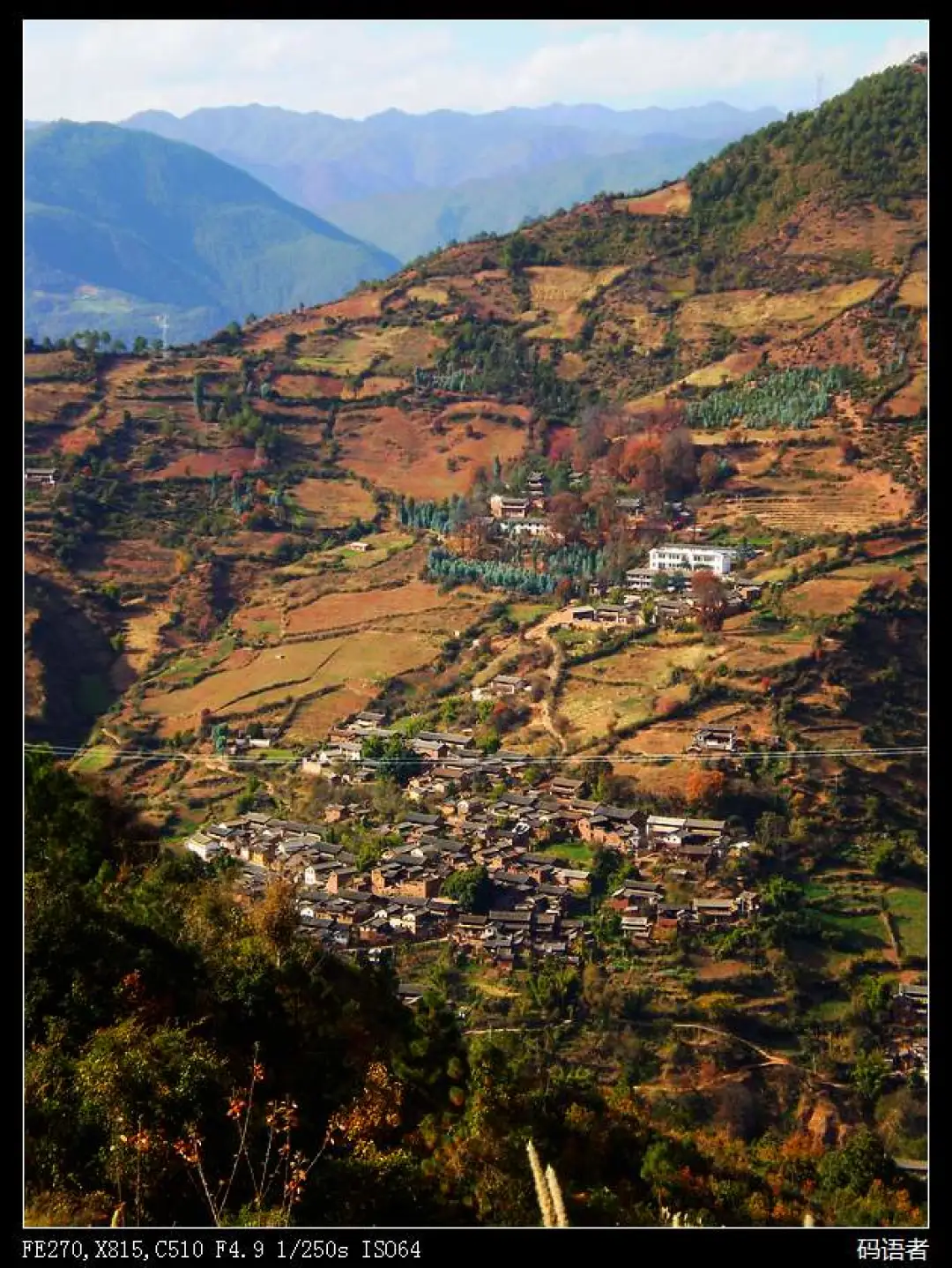
Before the Tongue: Discovering Nuodeng, the Ancient Salt Town Time Forgot
Before the Tongue: Discovering Nuodeng, the Ancient Salt Town Time Forgot There’s a peculiar magic in places that have been left behind by history. They don’t try to impress you. They don’t have polished welcome centers or laminated maps. They just are—worn, quiet, and utterly…
Continue reading...
Slow Sounds, Gentle Steps: My Wandering Journey Through Lijiang
Slow Sounds, Gentle Steps: My Wandering Journey Through Lijiang Prologue: A Spontaneous "Red-Eye" Escape Some journeys begin just like Lijiang itself—with a touch of spontaneity and a hint of laziness. Late one Sunday night, I was scrolling through my phone while lying in bed when…
Continue reading...
Idle Clouds in Autumn, a Moonlit City: A Slow Travelogue Through Lijiang and Shuhe
Idle Clouds in Autumn, a Moonlit City: A Slow Travelogue Through Lijiang and Shuhe When the autumn wind brushes across the ancient city's eaves, when sunlight spills onto the mottled cobblestone streets, when the melodies of folk songs mingle with the aroma of plum wine…
Continue reading...