Impressions of Yunnan: A 12-Day Free-spirited Journey Through Time
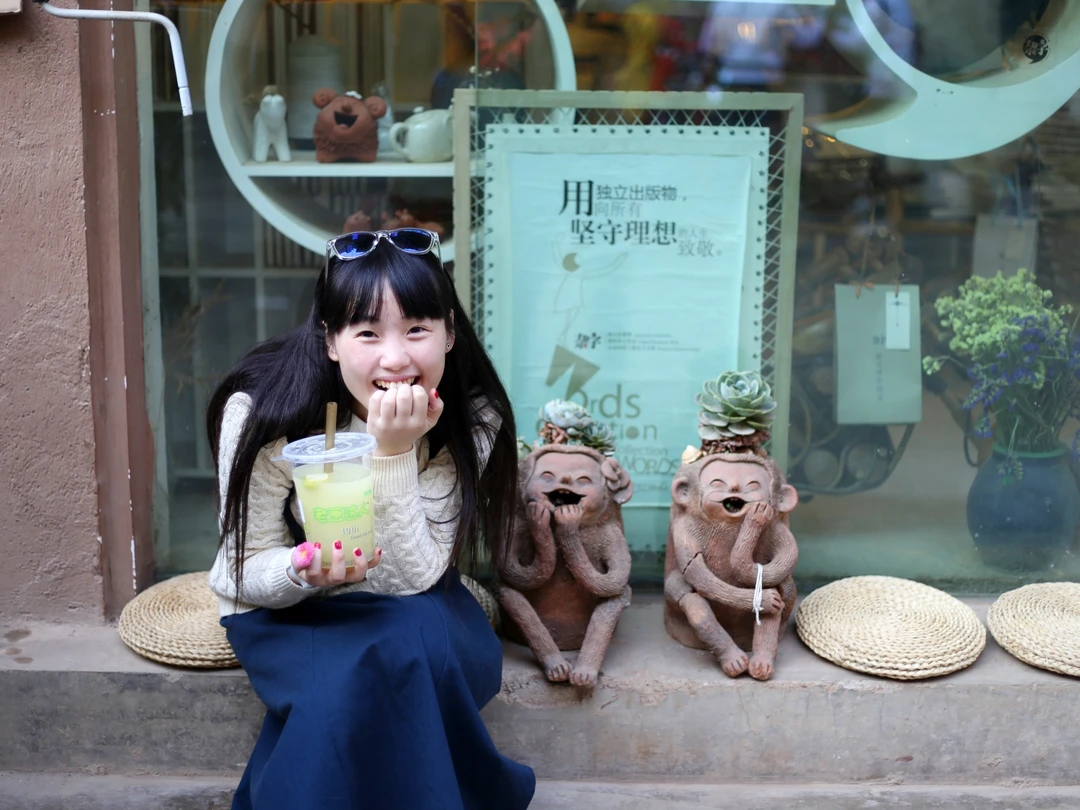
Impressions of Yunnan: A 12-Day Free-spirited Journey Through Time
Pack your bags and set off on an unknown journey. As the train wheels clatter along the tracks and the scenery outside the window flows by like a movie, you'll realize that time never truly ages, and the heart remains forever young. This is not just a trip—it's a ritual of conversation with yourself.
Setting Off: The Courage of Firsts
Life is full of firsts. The first time riding a train. The first time spending the Chinese New Year thousands of miles from home. The first time not being with your parents on New Year's Eve. When all these "firsts" converge into a 12-day journey, it's destined to become an indelible memory in your life.
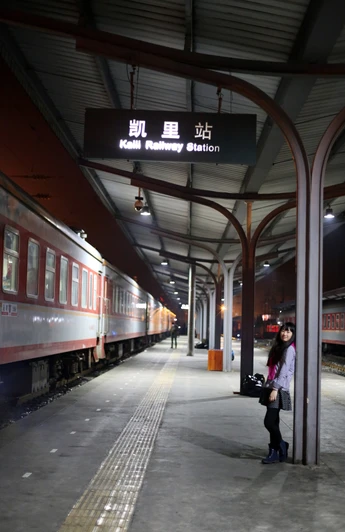
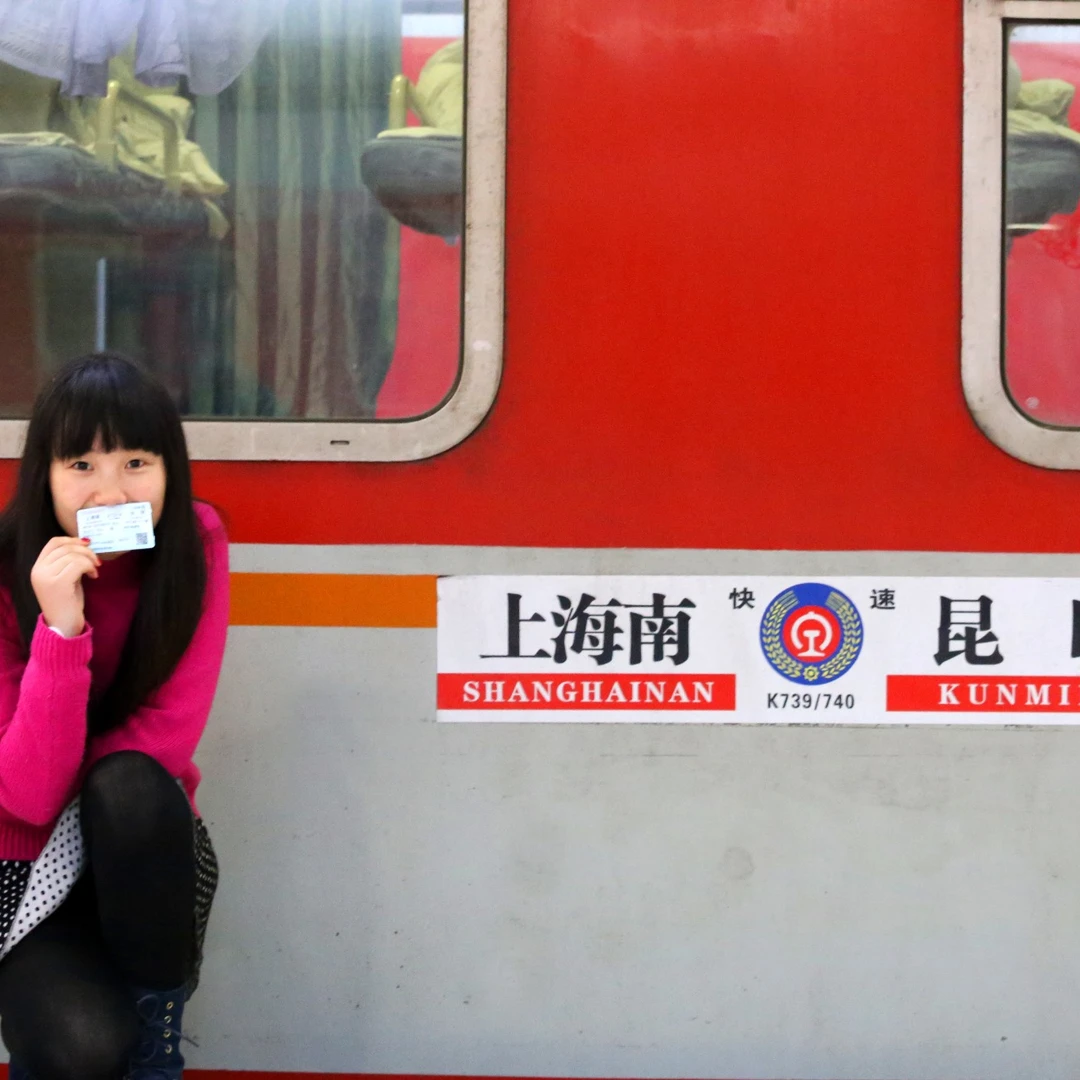
If you have plenty of money but limited time, flying is naturally the first choice. But if you have enough leisure time, I strongly recommend the train—a journey of over 30 hours that condenses a microcosm of society into each carriage. The scenery outside the window keeps changing, from the water towns of Jiangnan to the Yunnan-Guizhou Plateau—every frame is worth treasuring. Of course, that's assuming you get a sleeper ticket; a hard seat will make you deeply understand the phrase "the road is not easy."
Starting from Shanghai, passing through Kunming, Shuanglang, Dali, Lijiang, Lugu Lake, Xichang, and finally arriving in Chengdu before returning to Shanghai—this route connects the most essential scenery of Yunnan and also strings together unforgettable memories.
Kunming: The Gentle Opening of the Spring City
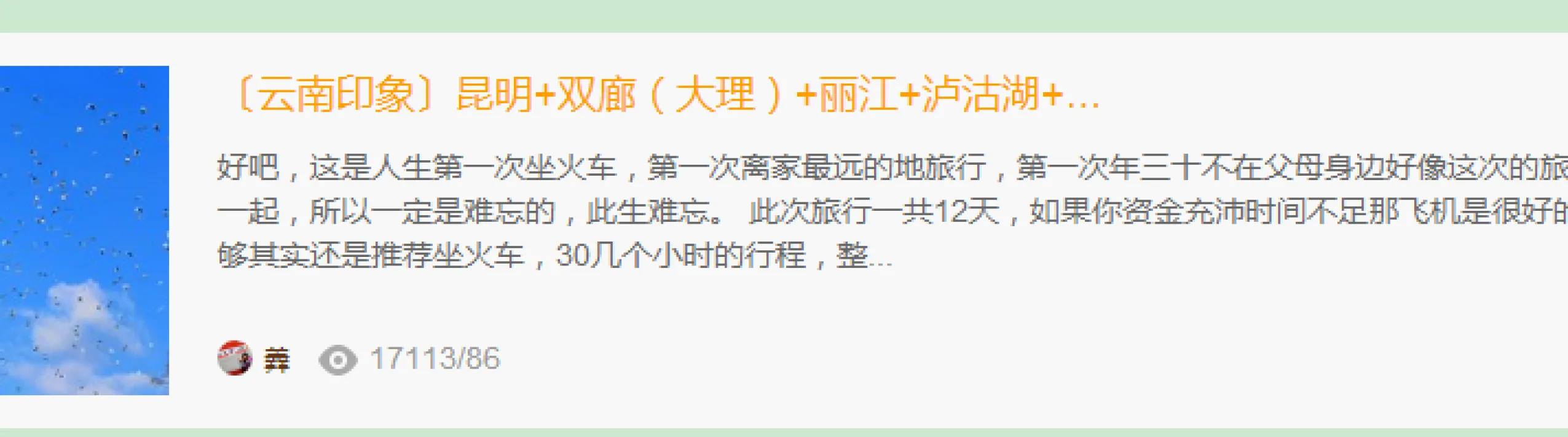
After two days and one night of train jolting, I finally arrived in Kunming. The moment I set foot on the ground, the air was so fresh that I wanted to take a deep breath.
Cuihu Park (Green Lake Park): The Understanding Between People and Birds
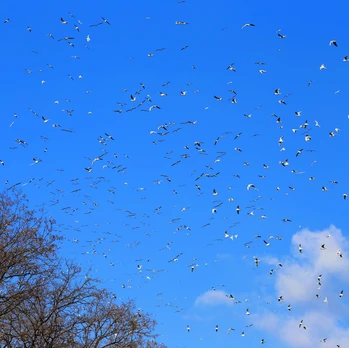
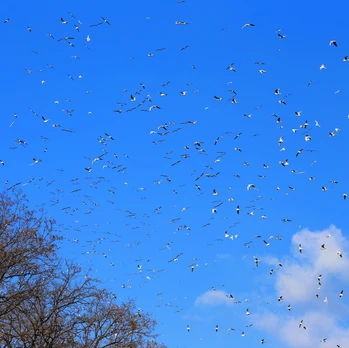
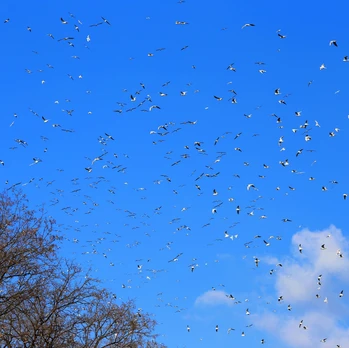
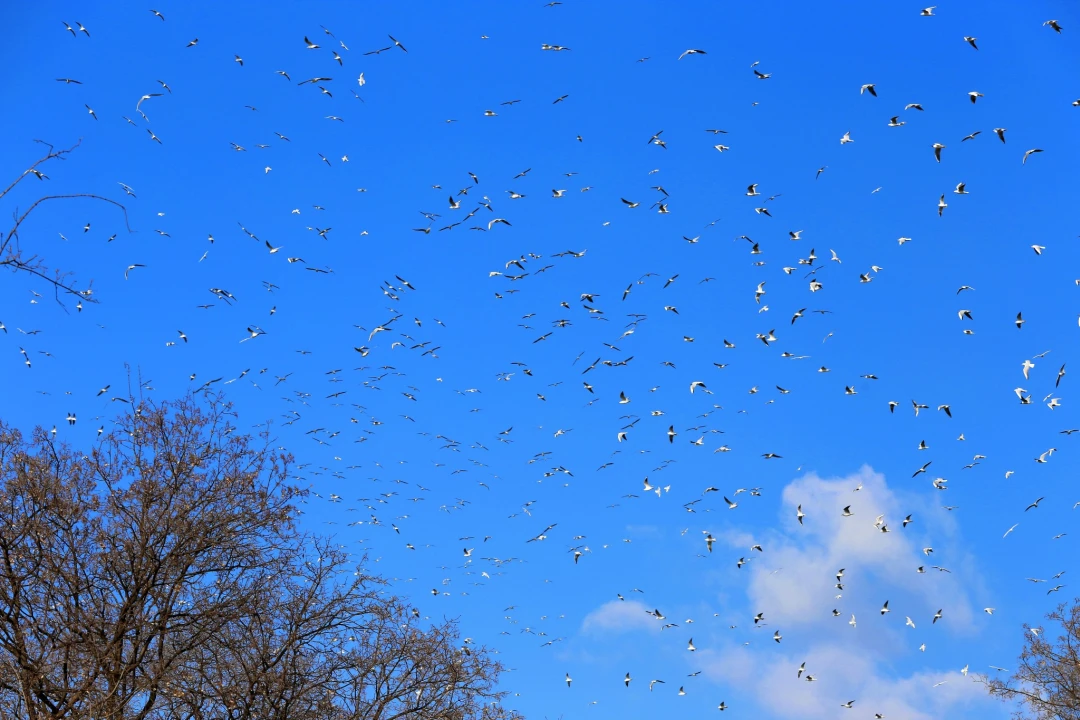
My first stop in Kunming was Cuihu Park. What this place is most famous for is not the lake or the scenery, but the flocks of red-billed gulls soaring in the sky. As soon as I entered the park, hundreds of red-billed gulls circled overhead—a scene so stunning it left me speechless. They were like guardian spirits of the park, obediently swooping down to peck at the food in people's hands. That harmony between humans and nature was deeply moving.
In the park, tulips were in full bloom, red-billed gulls hovered overhead, and as I stood on a bridge admiring the view, I became a model in someone else's camera. This kind of unplanned beauty is precisely the charm of travel.
Yunnan University and Nanping Street
Just across from Cuihu Park is Yunnan University. This century-old institution preserves many old buildings that blend Chinese and Western architectural styles. Walking through the campus felt like traveling back to a vibrant era. I carried a backpack, pretending to be a student, hopping along the stone steps.
Nanping Street is Kunming's commercial center, with lanterns lining the streets exuding the joy of the Chinese New Year. But what's truly worth exploring are the snack stalls hidden in the alleys. Locals would say, "Everything is available in the big malls," but only by venturing into the narrow lanes can you discover real delicacies.
Golden Horse and Jade Rooster Archways: Kunming's Symbol
As night fell, the Golden Horse and Jade Rooster Archways shone even more brilliantly under the lights. These archways, first built during the Ming Dynasty, are a symbol of Kunming. The eastern arch faces Golden Horse Mountain, the western arch faces Jade Rooster Mountain, with intricate carvings and exquisite craftsmanship. Standing beneath them, you could almost feel the city's 400 years of historical沉淀 (sedimentation).
Shuanglang: A Paradise by Erhai Lake
If Kunming was the overture, then Shuanglang was the climax of the entire performance.
Shuanglang left the deepest impression on me. It rests against Cangshan Mountain, facing Erhai Lake, and indulges in fishing and farming. It's quieter than Lijiang and more romantic than Dali. This place feels like a paradise forgotten by the world by the shores of Erhai Lake, where every day is gentle and carefree.
Seaview Room and the Ideal Life

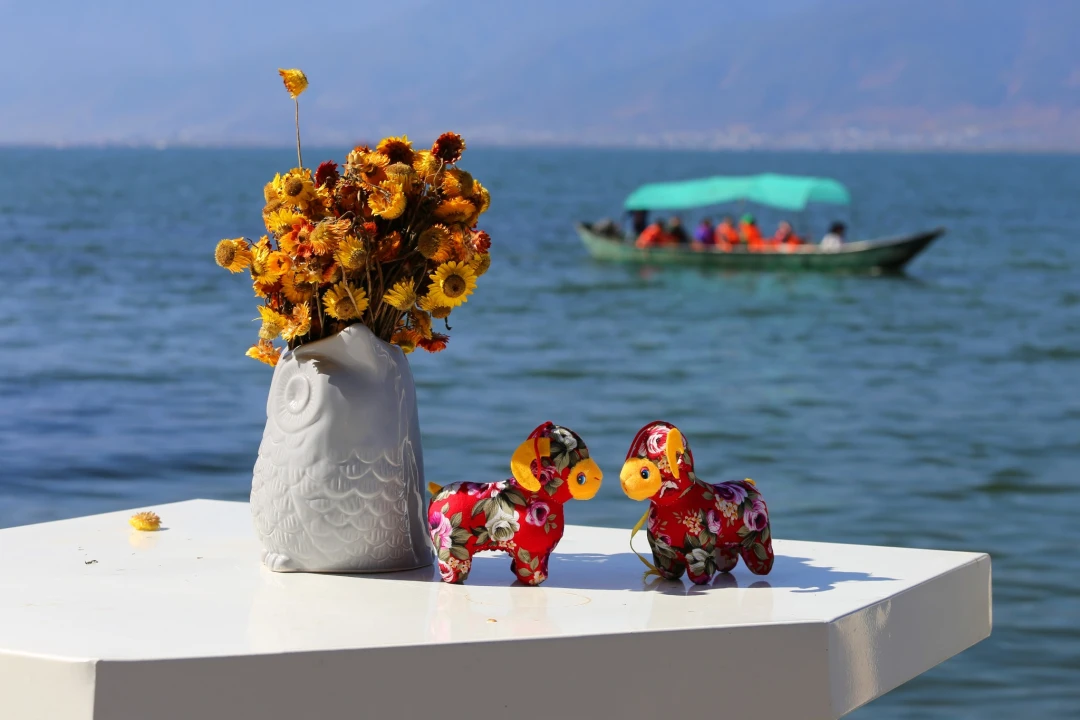
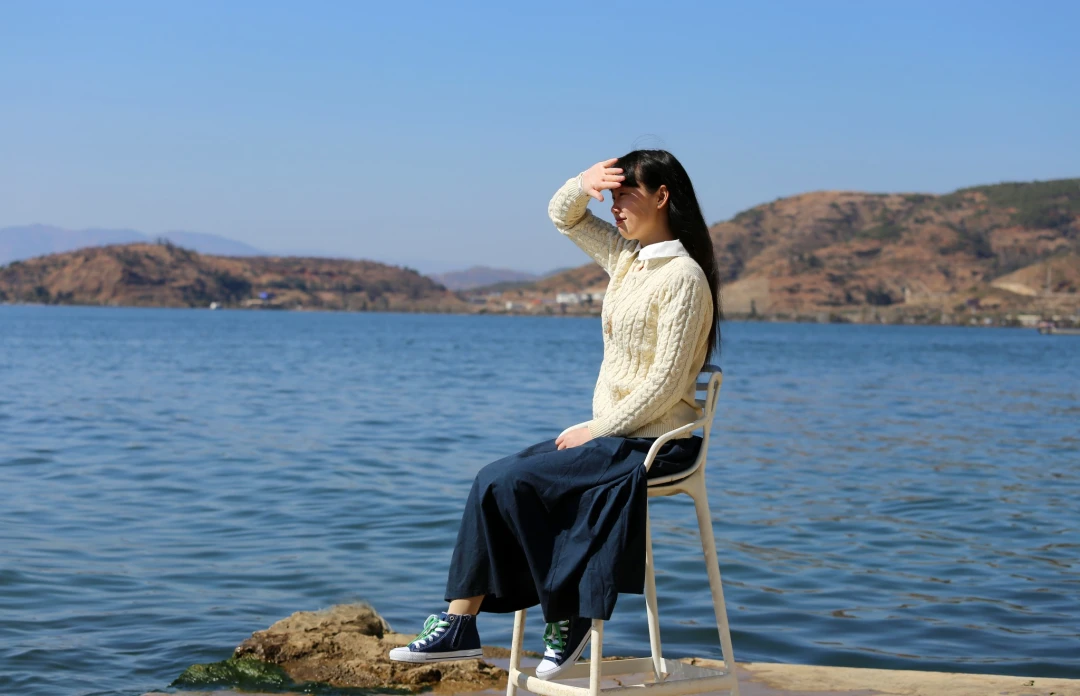
I stayed at the Shuanglang Ideal Life Seaview Resort Inn, which has a waterside terrace where you can directly board a boat. While Shanghai was drizzly and gloomy, here the sun was shining brightly. Sunbathing, daydreaming, and taking photos on the terrace—time seemed to stand still.
I happened to catch a local event. Older women were dressed in ethnic costumes, and incense sticks were lit at every household's doorstep. I mingled with the crowd, even though my clothes didn't quite fit in. That feeling of blending into local life was more precious than any scenic spot.
Haidi (Sea Land): A Must-Visit in Shuanglang
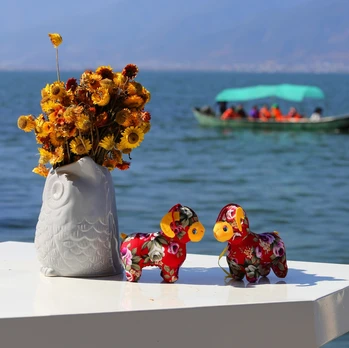
Haidi is a viral photo spot in Shuanglang, but it was packed with people. Waiting in line to take a photo felt like a battle. The two terraces had been reduced to one, making it even more crowded. Still, it's worth a visit. But if you want a panoramic shot, you'll have to put in some effort.
Cycling and Strolling
Many people choose to cycle around the lake in Shuanglang, but with heavy traffic and crowds, we opted for walking. If you're also planning to visit Lugu Lake, the cycling experience there is much more enjoyable. Walking through the alleys of Shuanglang, every old door felt like a piece of art. Unfortunately, these pristine eaves are gradually disappearing. Will Shuanglang still retain its original charm years from now?
Dali: A Fleeting Glance at an Ancient Town
On the way from Shuanglang to Lijiang, I made a quick stop at Dali Ancient Town. To be honest, I didn't develop much fondness for this old town. Perhaps it's because Xiao Jian's longing for Dali in the TV drama "My Fair Princess" was too idyllic, or because the characters of Pigsy and Monkey King in the film "Lost in Thailand" were too vivid. In reality, Dali was bustling with noise, lacking that imagined romance.
Dali has four city gates. Coming from Shuanglang, I entered through the east gate. You must walk through the gate from the inside; otherwise, like me, you'll end up circling the city wall with a big dog, cursing all the way, only to realize you've taken the wrong path.
Foreigner Street is where expats gather, but I never understood why it's called "Foreigner Street." Perhaps it's because it has the highest concentration of foreigners.
Lijiang: The Interplay of Bustle and Tranquility
Lijiang—a place often labeled with words like "romantic encounter," "commercialized," and "crowded." But when I actually set foot here, I found it had an indescribable allure.
A Fairytale Inn
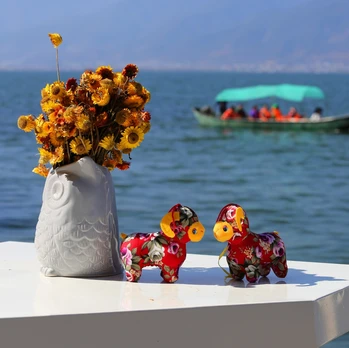
I stayed at the Lijiang Fairytale Boutique Inn (Heshun Branch), which was practically a photo studio in itself. The inn was beautiful, the owner was warm, the butler was attentive, and the view from the upper floor was stunning. There was also a big dog named Huluwa (Gourd Baby), though it ignored me. I later found out it was a foodie.
Drinking tea, daydreaming, and taking photos at the inn—life was leisurely. The landlady warmly invited us for tea. I pretended to brew it, but there was no water, so I just posed for a photo.
Lijiang by Day and Night
Lijiang was indeed crowded, but it was also incredibly beautiful. Many girls were having their photos taken in ethnic costumes—199 yuan per set. I was tempted but found it too much trouble. I imitated them for a photo and ended up looking like a silly fool.
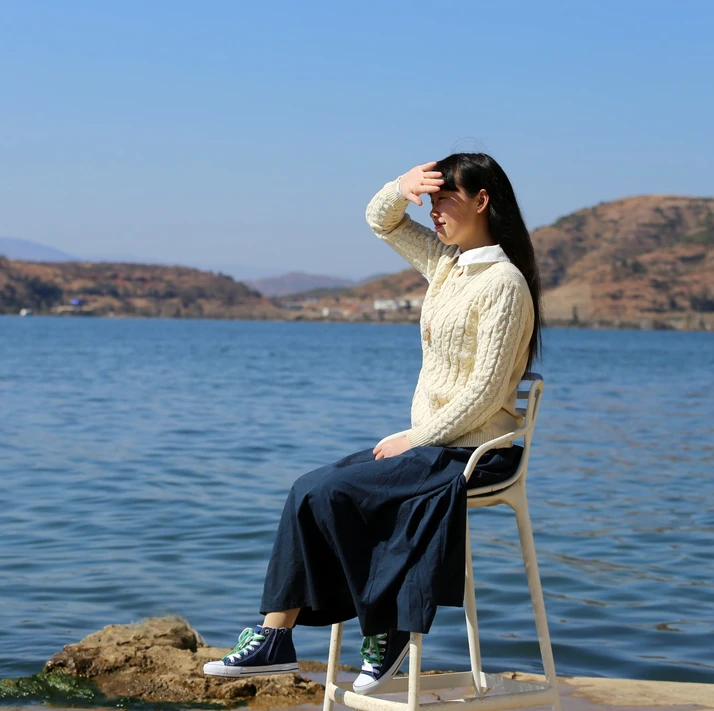
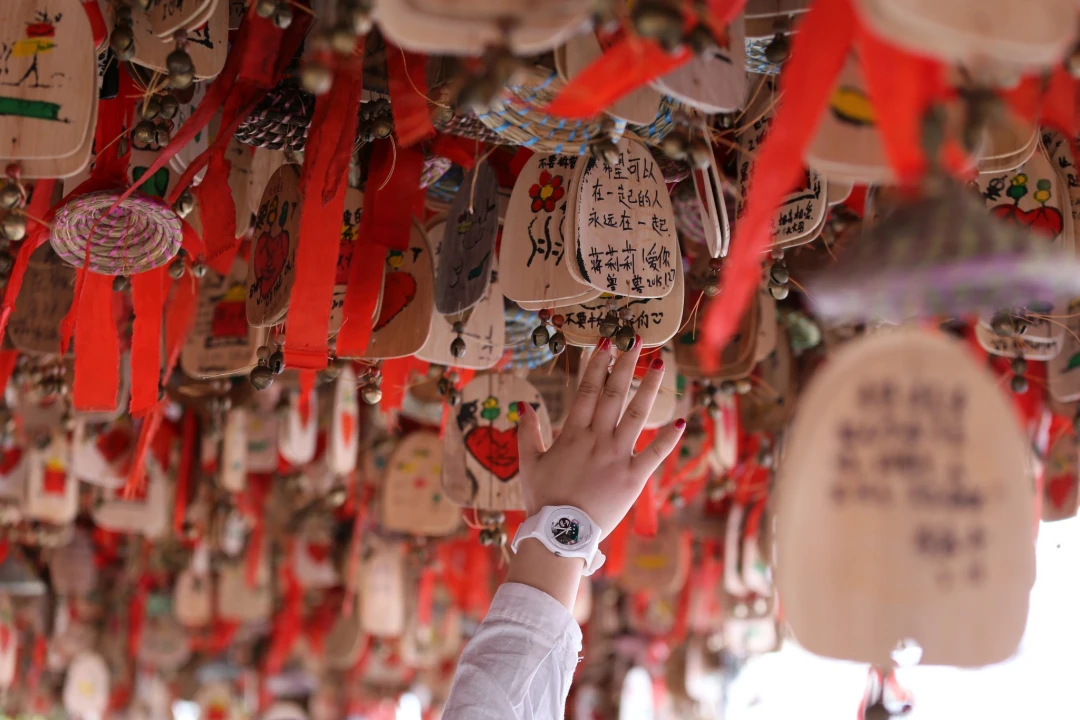
By day, Lijiang was lively. Lollipops, wooden prayer charms, lively parrots—every corner was a scene. But seeing those parrots tied up made me feel a bit uneasy.
At night, Lijiang took on a mystical hue. Unfortunately, due to an upset stomach, I missed out on the bars and night views, and my much-anticipated "romantic encounter" was also ruined.
Lugu Lake: The Shock of a Paradise on Earth
Lugu Lake was the place I was most looking forward to. After enduring a 10-hour bus ride on winding mountain roads, the moment I caught my first glimpse of Lugu Lake, all my fatigue vanished.
First Sight of Lugu Lake

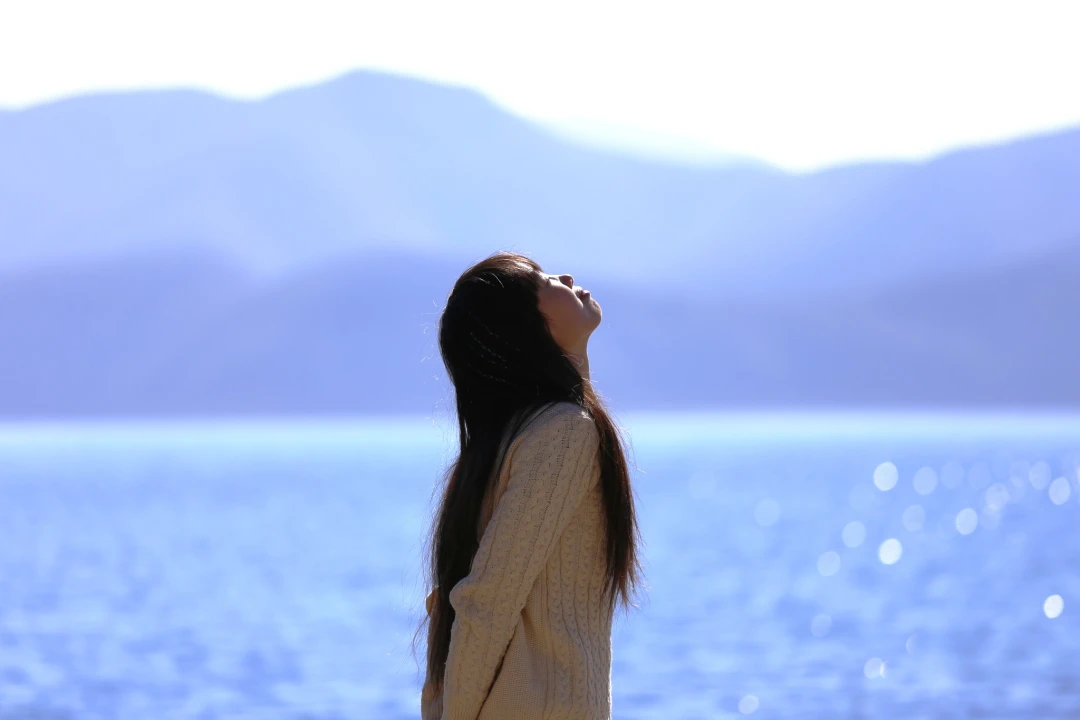
The driver let us off to take photos. It was just a glimpse of Lugu Lake, but my heart already felt expansive. Countless words in books, online, and travelogues describe Lugu Lake, but none compare to even a tenth of what you see with your own eyes. It simply sits there, silently waiting for you. Only one phrase feels fitting: "This is a place worth visiting several times in a lifetime."
Lakeside Cycling: The Taste of Freedom
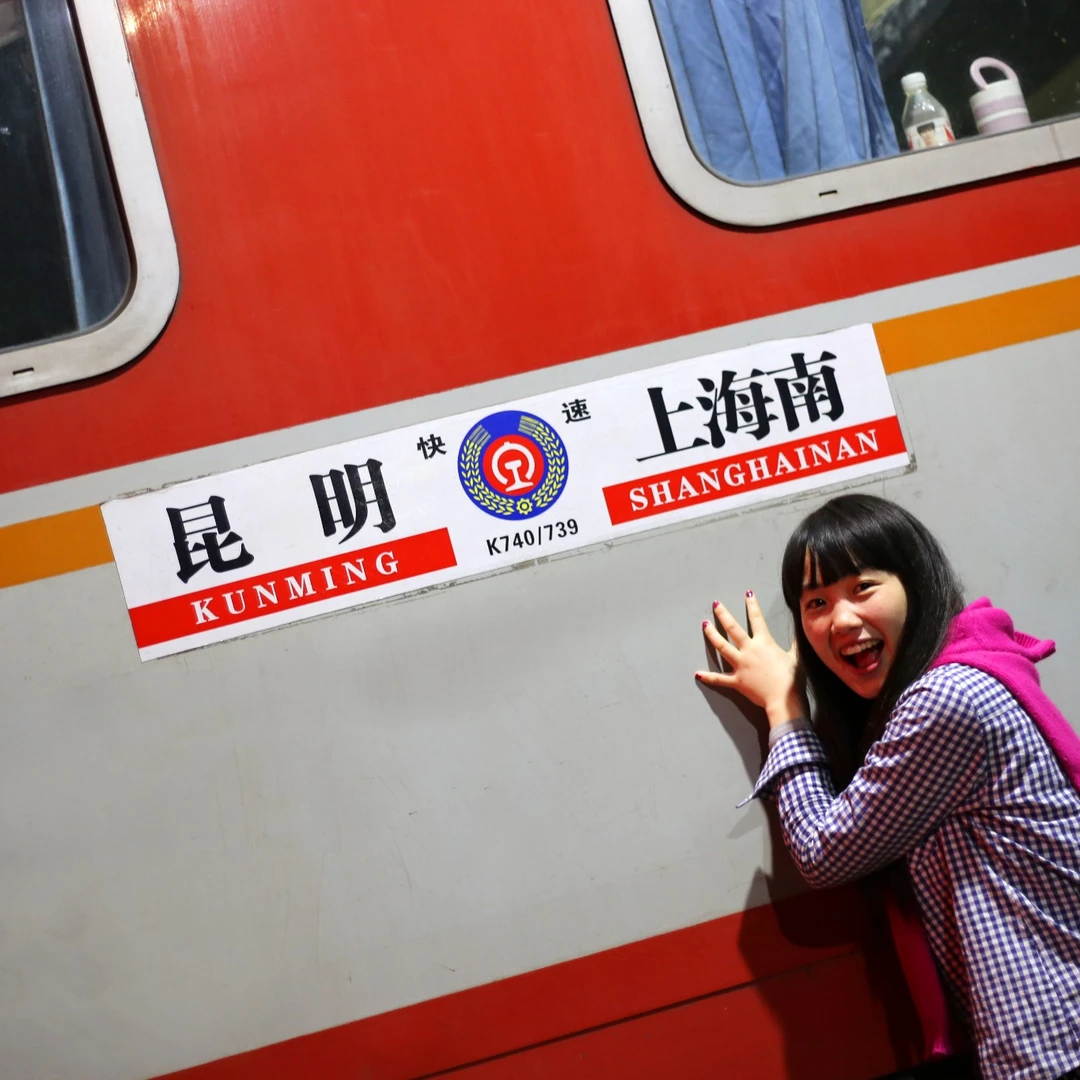
The next day, we began cycling around the lake. The full loop of Lugu Lake is over 60 kilometers. Renting an electric scooter costs 80 yuan per day—faster than a bicycle and safer than a motorcycle. The sun was intense, so sun protection was a must. I wrapped myself in a scarf I bought in Lijiang, looking like an Afghan woman.
Our first stop on the loop was the observation deck, with a giant heart-shaped backdrop. For 20 yuan, you could take 5 photos with a wide-angle lens and print one. We took 7 photos with our own camera, and they turned out breathtakingly beautiful.
We drove and stopped to take photos along the way. No matter who you are, you'll revert to a state of primal simplicity here, and even your smile becomes pure. We passed by Xiaoluoshui (Small Falling Water), which had even fewer people and was quieter. My travel buddy forgot we'd be staying there the next day and kept taking photos for ages.
The Marriage Bridge: A Heavenly Path to Happiness
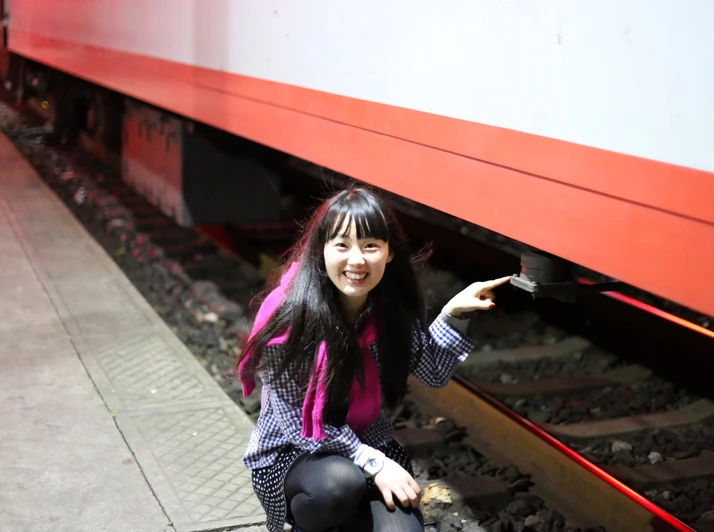
We drove from Yunnan into Sichuan. I joked that I was going to get married, telling my buddy to go play somewhere else. The Marriage Bridge is a famous spot on Lugu Lake. It cuts through a reed marsh, reaching straight to the opposite shore. It's not only a vital passage for villagers on both sides but also a shortcut used by a local chieftain's Han Chinese wife to reach his harem.
Xiaoluoshui: The Last Tranquility
Xiaoluoshui is even more secluded than Lige Village, with fewer people, making it all the more enchanting. The entire lake could feel like yours alone. The innkeeper and his wife were from Northeast China. They fell in love with Lugu Lake during a visit and decided to open an inn here. Like the local residents, they are very protective of this land. But once the planned 3-hour direct road is built and more people come with their noise, they might leave. That's true love—something to be admired.
Chengdu: A Feast of Food and Culture
From Lugu Lake, we took a 6-hour mountain road ride to Xichang, then transferred to a train to Chengdu. A one-day tour of Chengdu, though rushed, was still wonderful.
Kuanzhai Alley and Chunxi Road
Kuanzhai Alley has plenty of food, but it's more expensive than elsewhere. The "Sad Liangfen" (cold jelly noodles) didn't make me sad at all—I was still very happy. A foreign artist was creating sand paintings, and I couldn't figure out why the sand didn't scatter. My buddy, the rascal, secretly took a photo of her and got caught.
Chunxi Road is similar to Nanjing Road in Shanghai or Wangfujing in Beijing—it's Chengdu's commercial center. I had imagined a bustling market, but it turned out to be a modern metropolis.
Wuhou Shrine and Jinli Ancient Street
At noon, we went to the Yulin main branch for chuan chuan (skewer hotpot). It was too oily. Others ate slowly, but my buddy and I finished quickly. Afterward, we visited Wuhou Shrine, which coincided with a temple fair. It cost 30 yuan per person, including entry to Jinli Ancient Street. The temple fair had a great atmosphere—packed with people and incredibly lively. My buddy kept explaining the history of Wuhou Shrine—the Oath of the Peach Garden, Zhang Fei, Liu Bei. I didn't understand a thing, but I kept taking photos, dazzled by everything.
The Return Journey: The Meaning of Travel
A 12-day itinerary, from Shanghai to Kunming, then to Shuanglang, Dali, Lijiang, Lugu Lake, Xichang, Chengdu, and finally back to Shanghai. Every departure is an exploration of the unknown; every return is a rediscovery of oneself.
The meaning of travel isn't about how many places you've been or how many photos you've taken. It's about those moments—the sunrise seen from the train, the afternoon spent daydreaming by Erhai Lake, the freedom of cycling around Lugu Lake, the lively bustle of the temple fair in Chengdu. These moments form the most precious memories of life.
If you're still hesitating, still waiting, remember this: time can always be squeezed out, money can be earned, but youth and passion won't wait forever. Travel is truly wonderful—it shows you a bigger world and helps you discover a better version of yourself.
Practical Guide
Itinerary Overview
- Day 1 (Feb 18): Depart Shanghai, overnight on train
- Day 2 (Feb 19): On the train, overnight on train
- Day 3 (Feb 20): Arrive in Kunming, evening train to Dali, overnight on train
- Day 4–5 (Feb 21–22): Dali → Shuanglang, stay in Shuanglang
- Day 5–6 (Feb 22–23): Shuanglang → Lijiang, stay in Lijiang
- Day 7 (Feb 24): Lijiang → Lugu Lake, stay in Lige Village
- Day 8 (Feb 25): Cycle around Lugu Lake, stay in Lige Village
- Day 9 (Feb 26): Lige Village → Xiaoluoshui, stay in Xiaoluoshui
- Day 10 (Feb 27): Lugu Lake → Xichang, overnight on train
- Day 11 (Feb 28): One-day tour of Chengdu, stay in Chengdu
- Day 12 (Mar 1): Chengdu → Shanghai, overnight on train
Transportation Information
- Shanghai South → Kunming: K739, 19:35–08:08, approx. 36 hours
- Kunming → Dali: K9602, 22:06–06:08, approx. 8 hours
- Dali → Lijiang: K9613, 16:19–18:15, approx. 2 hours
- Lijiang → Lugu Lake: Depart from Gaokuai Bus Station at 8:30, approx. 8 hours
- Xichang → Chengdu: T8899, 21:46–08:04, approx. 10 hours
- Chengdu → Shanghai: K284, 18:37–07:21, approx. 36 hours
Accommodation Recommendations
- Kunming: Stay near the train station for easy transfers
- Shuanglang: Ideal Life Seaview Resort Inn, with a waterside terrace
- Lijiang: Fairytale Boutique Inn (Heshun Branch), beautiful environment
- Lugu Lake: Lige Mood Inn (Lige Village), Yunhu Mountain Villa (Xiaoluoshui)
- Chengdu: Shangpin Self-Service Hotel, near Kuanzhai Alley
Important Notes
- Sunscreen! Sunscreen! Sunscreen! Say it three times—it's that important.
- Be careful with food in Lijiang; I got an upset stomach there.
- For cycling around Lugu Lake, an electric scooter is recommended—faster than a bicycle and safer than a motorcycle.
- For transportation from Shuanglang to Lijiang, buy tickets in advance to avoid scrambling for a ride at the last minute.
Travel is a conversation with yourself. When you hit the road, you'll discover that the world is vast, and your heart can be even vaster.
You should also read:

God’s Abandoned Palette: A Self-Drive Journey Through Yunnan’s Dongchuan Red Land
God’s Abandoned Palette: A Self-Drive Journey Through Yunnan’s Dongchuan Red Land Travel has never been about reaching some distant geographic coordinate. It’s about encountering, along the way, the version of yourself buried beneath the rubble of daily routine. During this May Day holiday, I finally…
Continue reading...
Body in Hell, Heart in Heaven: A Pilgrimage Through Tiger Leaping Gorge — A Dialogue Between Heaven and Earth
Body in Hell, Heart in Heaven: A Pilgrimage Through Tiger Leaping Gorge — A Dialogue Between Heaven and Earth Introduction: When the Gorge Splits Open Beneath Your Feet Some say Tiger Leaping Gorge is the closest place on Earth to the border between "hell" and…
Continue reading...
Cloud Travelogue · Dali of Wind, Flowers, Snow, and Moon: A Three-Day, Two-Night Journey of a Free Spirit
Cloud Travelogue · Dali of Wind, Flowers, Snow, and Moon: A Three-Day, Two-Night Journey of a Free Spirit I am a cultured female foodie with a touch of rogue charm. I slung on my backpack, took my lover's hand, and set off on a spontaneous…
Continue reading...