In the Heart of Daocheng Yading: Finding the Ocean of My Dreams
In the Heart of Daocheng Yading: Finding the Ocean of My Dreams
A 9-Day Journey Through Yading, Shangri-La, and Lijiang (September–October 2014)
Prologue: When a Photograph Changes Everything
There are places that exist in our imagination long before we ever set foot on them. For me, that place was Daocheng Yading.
I first encountered its name in a magazine article about zodiac signs—apparently, Scorpios were destined to love this corner of Sichuan. I was young, impressionable, and mildly offended that a place I'd never heard of was supposed to define my travel destiny. Years passed. Then one afternoon, scrolling aimlessly through travel photos, I stumbled upon an image of Milk Lake. It wasn't like any sea or lake I had ever seen—its turquoise waters seemed to glow with an otherworldly light, framed by jagged peaks that pierced the clouds. I was spellbound.
That single photograph sent me down a rabbit hole of research. I learned about the "last pure land on the blue planet," about three sacred mountains that guard this valley, about a place so remote that until recently, only the most determined travelers could reach it. And I knew, with the certainty that only wanderlust can bring, that I had to go.
The Strategy: Beating the Crowds
Why We Went Before October
Timing was everything. Daocheng Yading had officially opened its airport the previous year, and suddenly, this once-hidden paradise was accessible to everyone. The inevitable commercialization was coming. If we wanted to experience Yading before it became another tourist circus, we needed to act fast.
Our plan: arrive before October 1st, when China's National Day holiday transforms every scenic spot into a sea of selfie sticks. The park announced it would cap daily visitors at 5,050 starting October 1st—a clear signal that crowds would be overwhelming. So we booked our flights for September 28th, gambling that we'd catch the autumn colors at their peak while avoiding the human tide.
The Route: A Reverse Journey
Most travelers enter Yading from Shangri-La (one day by bus). We did the opposite—flying into Daocheng first, then making our way to Shangri-La and finally Lijiang. This reverse route had two advantages: we'd see Yading before the holiday crowds descended, and we'd avoid the astronomical prices that kicked in on October 1st (680 RMB for a basic double room in town, 1,080 RMB in Yading Village).

Total cost for two people over 8 days: approximately 13,500 RMB
| Category | Cost (RMB) |
|---|---|
| Transportation | 8,087 |
| Accommodation | 1,755 |
| Food | 997 |
| Tickets | 1,784 |
| Shopping | 526 |
| Other | ~400 |
Pro tip: Book your bus tickets in advance. We failed to do this and couldn't get tickets from Daocheng to Shangri-La—forcing us to share a car instead. The silver lining? We could stop whenever we wanted for photos or meals.
Getting There: The High-Altitude Arrival
Flying into the World's Highest Airport
Daocheng Yading Airport sits at 4,411 meters above sea level—the highest civilian airport on the planet. Flights from Chengdu or Chongqing take just over an hour, offering breathtaking aerial views of the snow-capped mountains (I'm still not sure whether we saw one of the three sacred peaks or just a particularly majestic cloud formation).
If you're prone to altitude sickness: Don't fly in. Take the bus from Chengdu instead (261 RMB, 22 hours with an overnight stop in Kangding). The gradual ascent gives your body time to adapt. But if you're short on time and confident in your lungs, flying is spectacular.
Current flight routes: Chengdu, Chongqing, Xi'an, and Luzhou. Routes from Hangzhou and Kunming were being planned.
Essential advice: Take altitude sickness medication (like Rhodiola) in advance. Carry oxygen canisters. Walk slowly after landing. Your body will thank you.
Day 1: Exploring Daocheng County
The Airport-to-County Loop
We landed, took the airport bus to town, and checked into our guesthouse. Later that afternoon, we discovered something crucial: the airport road passes through all the major sights. If we'd known, we would have hired a taxi at the airport and toured Haizi Mountain, Shihe (Stone River), Bengpu Monastery, the Red Grasslands, and the White Pagoda on our way into town.
Lesson learned: Plan your route before you land. Don't waste time backtracking.
Haizi Mountain: A Landscape from Another Planet
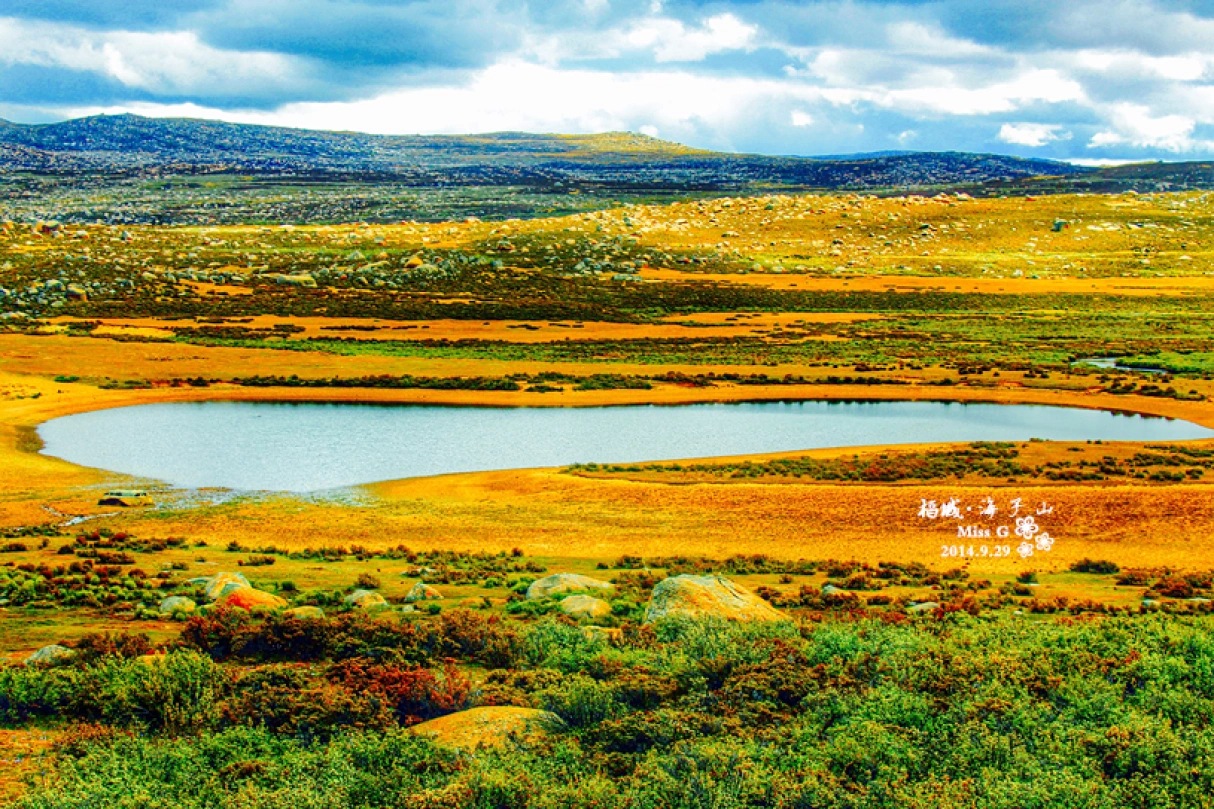
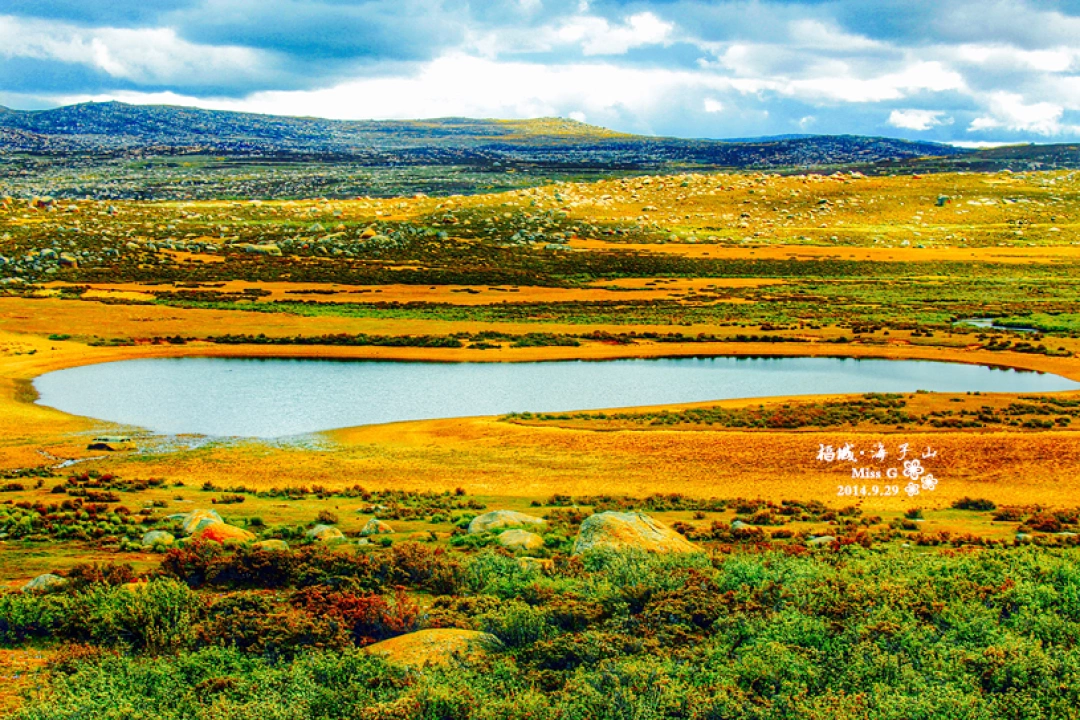
Haizi Mountain is scattered with 1,145 glacial lakes—like diamonds dropped by a careless god. The terrain is so alien that it's been called "a sci-fi movie set on another planet." Walking among these ancient rocks and shimmering pools, I felt like I'd stepped into a geography that predated human memory.
Bengpu Monastery: The Oldest in Daocheng
This 800-year-old monastery sits quietly on a hillside, its white walls glowing against the autumn sky. As we wandered through its halls, the sound of chanting drifted from somewhere deep inside, and for a moment, all the noise of planning and worrying fell away.
The Unpredictable Weather
October in Daocheng is fickle. The sky can be perfectly blue one moment and pouring rain the next. We learned to take shelter when the clouds rolled in—they'd pass within minutes, leaving the world washed clean and glistening.
Red Grasslands and the White Pagoda
The Red Grasslands were stunning, though local villagers had already fenced them off in preparation for the tourist season. We photographed a dandelion seed head instead—its delicate white sphere catching the light like a tiny universe.
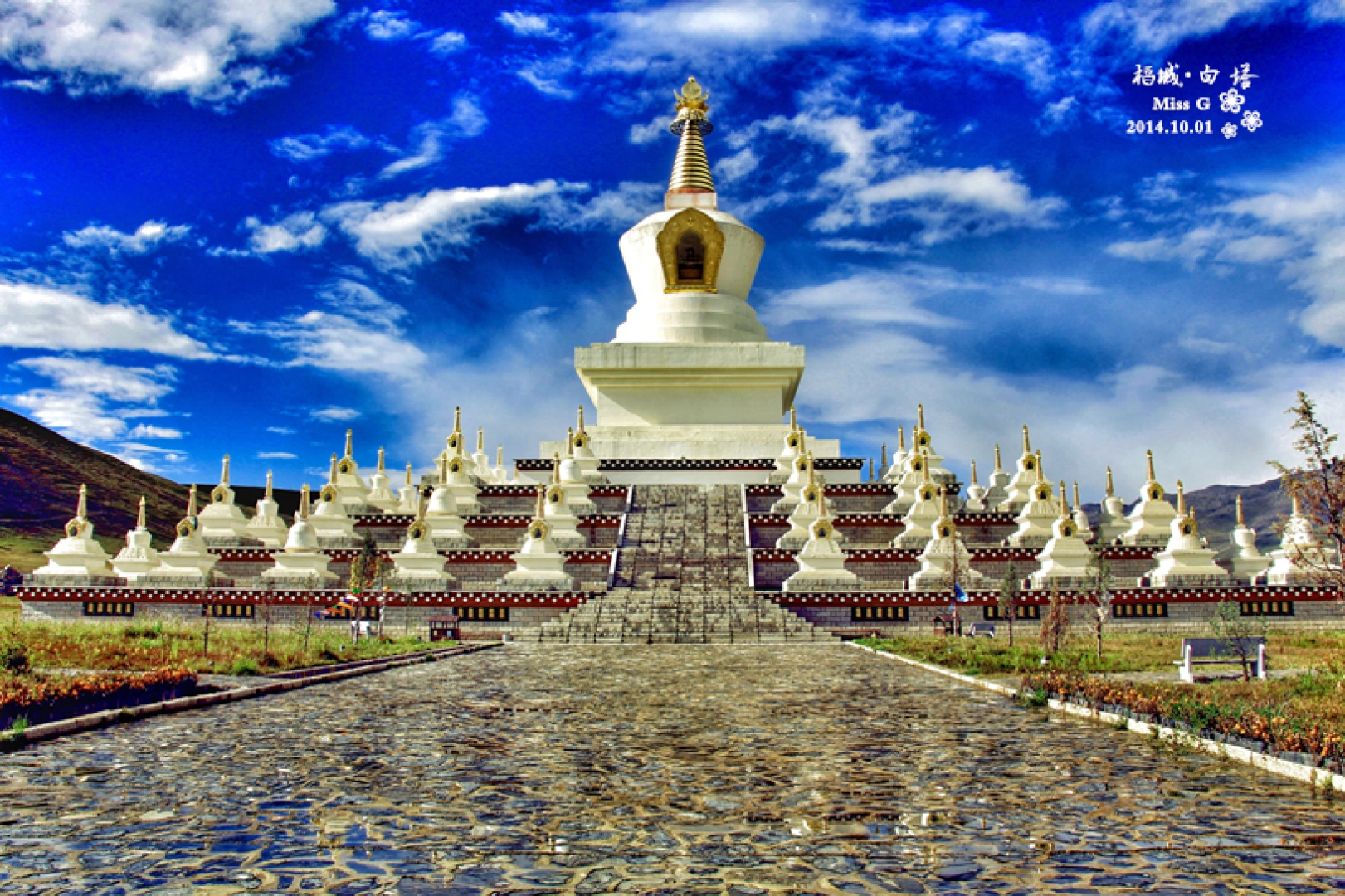
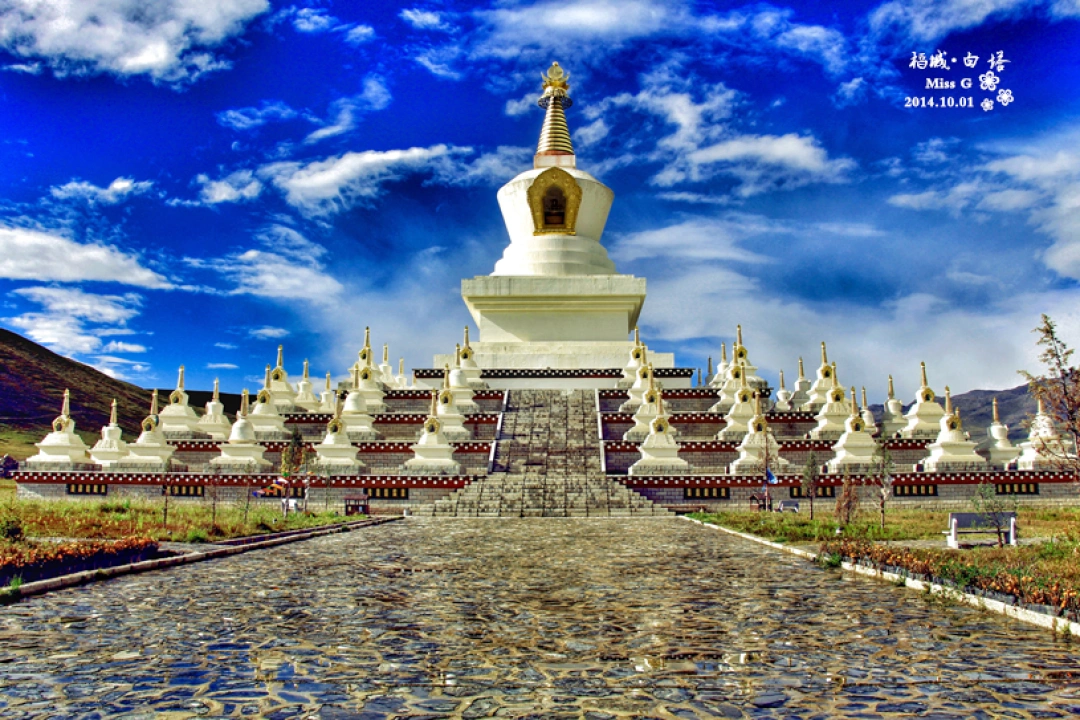
By the time we reached the White Pagoda, the sun had emerged again, casting long shadows across the prayer flags. We met fellow travelers there, including a woman from Lanzhou who cooked the most incredible meals. Travel has a way of bringing people together.
Day 2: Yading—The Main Event
A 10-Kilometer Trek Without Lunch
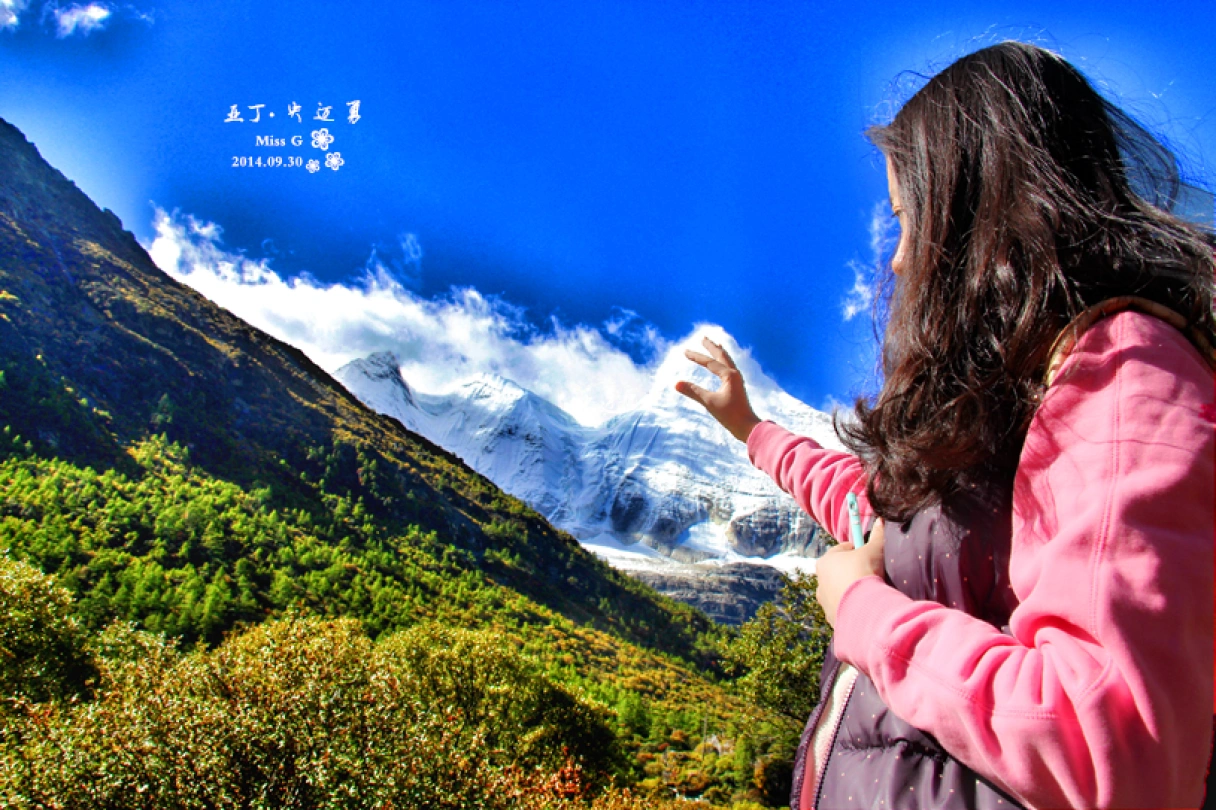
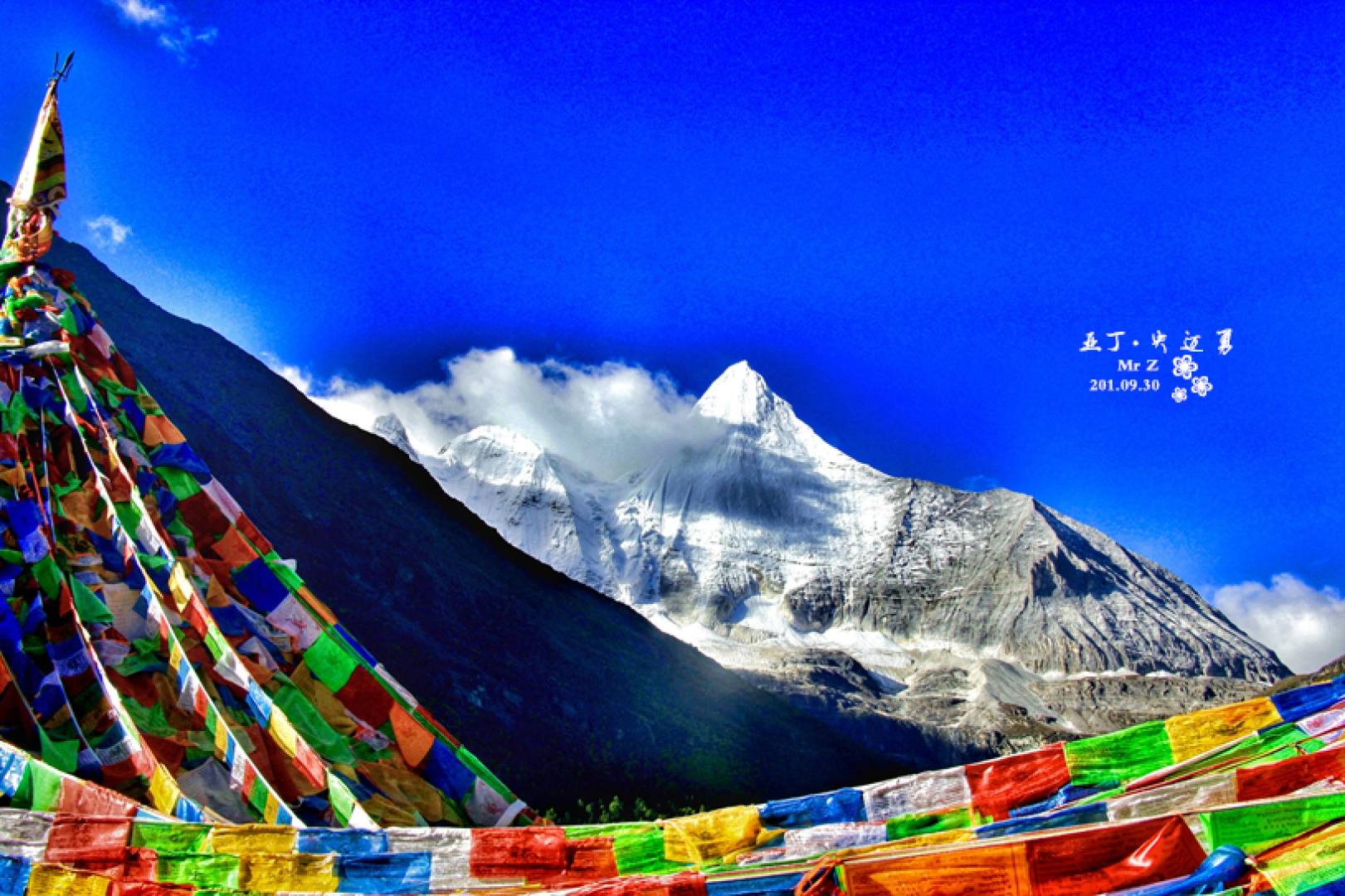
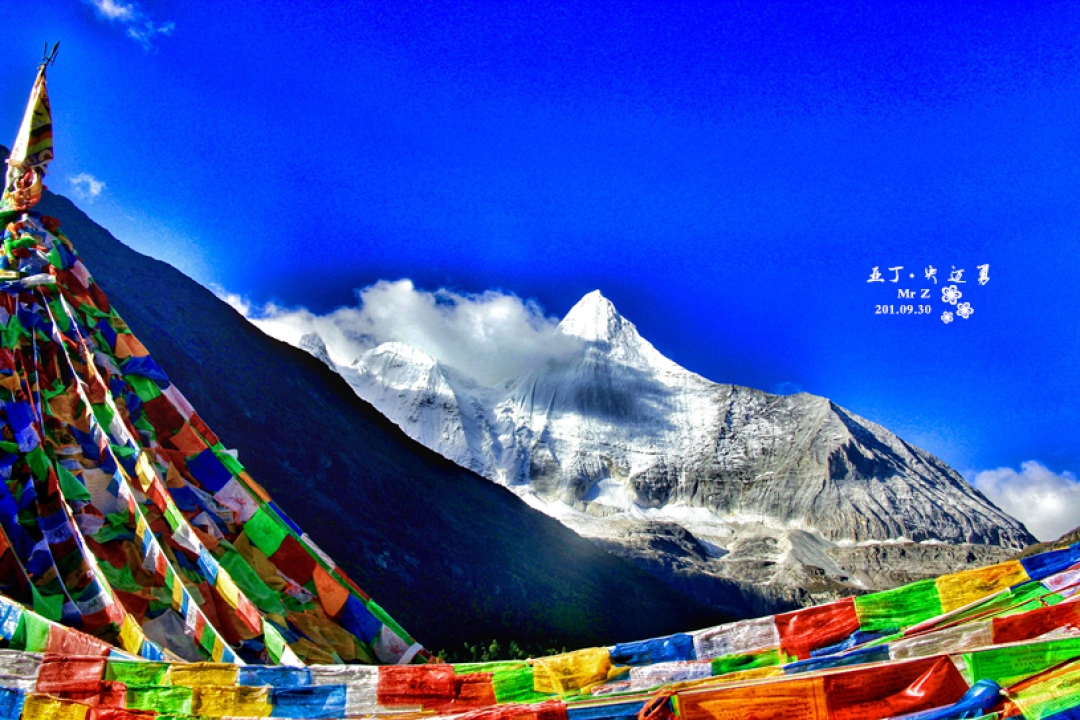
We entered Yading Nature Reserve on a perfect autumn morning. The weather had been rainy for days before our arrival, but today the sky was crystalline, and we caught a glimpse of Xiannairi and Charnadorji—two of the three sacred peaks.
Mistake #1: We didn't pack enough food. The hike to Milk Lake (also known as Wuse Hai, or Five-Color Lake) is 10 kilometers round trip, much of it on narrow paths where you have to step aside for horse caravans. We were hungry, tired, and running on adrenaline.
Mistake #2: We underestimated the physical demand. The altitude, the uneven terrain, the lack of proper snacks—it was harder than we'd imagined.
But then we reached Milk Lake.
The Lake That Changed Everything
Words cannot describe the color of Milk Lake. It's a shade of turquoise that seems to come from another spectrum—more vivid than any photo can capture, more serene than any description can convey. The lake sits at the foot of the mountains, fed by glacial meltwater, its surface perfectly still except for the occasional ripple from a falling pebble.
I had seen this lake in photographs a hundred times. But standing there, breathing the thin, cold air, watching the clouds drift across the mountain peaks reflected in the water, I understood why people call this place sacred.
Where the heart desires, even simple shoes will take you. Life is a journey against the current; a single reed can carry you across.
Days 3–4: Wandering Daocheng
The Golden Poplar Forest
Back in town, we spent a day exploring the Qingyang Forest (a grove of poplar trees) and the Bang River. The trees were just beginning to turn—a transition of colors that felt like watching a painting being made in real time. November would be even better, when the entire forest blazes gold.
The Unknown Building
In the center of Daocheng, construction was underway on a massive, modern building. No one could tell us what it was going to be. A hotel? A government office? A shopping mall? It stood there, half-finished and mysterious, a monument to the rapid changes transforming this region.
Local Flavors
We ate at small family-run restaurants, sampling dishes we couldn't name but will never forget. One evening, we shared a table with hikers from Shanghai who had just come down from a five-day trek. They told us about camping under the stars near the base of the sacred peaks, waking to frost on their tent flaps, and seeing the sunrise paint the mountains in shades of rose and gold. We listened, envied, and made plans to return for a longer trek.
Day 5: The Road to Shangri-La
A Shared Car and Open Road
Without bus tickets, we found a driver willing to take us to Shangri-La along with three other travelers. The road wound through high passes and deep valleys, past nomad tents and yaks grazing on golden grasslands. We stopped for lunch at a roadside stall selling steaming bowls of noodles—simple, warming, perfect.
Crossing Into Yunnan
The landscape shifted subtly as we crossed the provincial border. The Tibetan-style houses gave way to more diverse architecture. The air grew slightly thicker, the vegetation greener. We were leaving the high plateau and descending into the lush valleys of northwest Yunnan.
Arriving in Shangri-La
Shangri-La (formerly known as Zhongdian) felt like a different world. The old town had been rebuilt after a devastating fire in 2014, but it still retained its charm—narrow cobblestone streets, wooden buildings with painted eaves, and the massive prayer wheel at Guishan Park that takes a dozen people to spin.
Day 6: Shangri-La's Treasures
Songzanlin Monastery
We visited Songzanlin Monastery, the largest Tibetan Buddhist monastery in Yunnan, often called the "Little Potala Palace." Its golden roofs gleamed against a backdrop of pine-covered hills. Inside, we watched monks debating scripture in a courtyard, their voices rising and falling in rhythmic cadences that sounded like music.
Pudacuo National Park
We debated whether to visit Pudacuo, Yunnan's first national park, but ultimately decided to save our energy for Lijiang. Instead, we wandered the old town, bought hand-woven scarves from a Tibetan woman, and drank butter tea in a smoky teahouse.
Days 7–8: Lijiang's Labyrinth
The Ancient Town
Lijiang Old Town is a UNESCO World Heritage site, and it shows—every stone, every bridge, every canal has been preserved with care. But it's also a tourist machine, with shops selling the same souvenirs and bars blasting the same pop songs. We found our peace in the early mornings, before the crowds woke up, when the only sounds were water flowing through the canals and birds singing in the willows.
Jade Dragon Snow Mountain
On our last full day, we took a cable car up Jade Dragon Snow Mountain. At 4,506 meters, it wasn't as high as Daocheng, but the views were staggering—glaciers, alpine meadows, and the distant blue of Lashi Lake. We walked along a wooden boardwalk, breathing the thin air and feeling small against the vastness of the landscape.
A Final Feast
That evening, we celebrated with a meal of tender yak meat, wild mushrooms, and local vegetables stir-fried with chili and garlic. We raised our glasses of warm rice wine to the journey, to the strangers who became friends, and to the places that change us.
Epilogue: The Ocean Within
When I first saw that photograph of Milk Lake, I thought I was searching for a place. But now, looking back, I realize I was searching for something deeper—a stillness, a clarity, a connection to something larger than myself.
Daocheng Yading gave me that. Not just in the turquoise waters of Milk Lake, but in the wind that whipped across Haizi Mountain, in the chanting at Bengpu Monastery, in the shared laughter over bowls of noodles with strangers on a mountain road.
They say that in the heart of Sichuan, there is a place where the earth meets the sky, where the mountains hold up the heavens, and where every lake reflects a piece of eternity. I went there seeking an ocean of turquoise water, and instead, I found an ocean of peace.
Some journeys end when you return home. Others continue forever, carried in the quiet chambers of your heart.
Practical Notes for Travelers:
- Best time to visit: Late September to early October for autumn colors; May–June for wildflowers
- Altitude preparation: Start taking Rhodiola one week before departure; bring portable oxygen canisters
- What to pack: Warm layers, waterproof jacket, sturdy hiking boots, sun protection, snacks for long treks
- Accommodation: Book well in advance for October; consider staying in Daocheng County rather than Yading Village for better value
- Transport: Book bus tickets early; shared cars are flexible but more expensive
- Budget: Expect to spend 6,000–8,000 RMB per person for an 8-day trip, excluding flights from your home city
This article was originally published on Mafengwo (mafengwo.cn) and has been translated and adapted for an international audience.
You should also read:
September: Finding Unexpected Warmth in Yunnan (Kunming, Dali, Shuanglang, Lijiang, Lugu Lake)
September: Finding Unexpected Warmth in Yunnan (Kunming, Dali, Shuanglang, Lijiang, Lugu Lake) Foreword: One Person's Journey, A Crowd's Story Before I set off, like every first-time solo traveler, I printed out a thick stack of travel guides and rehearsed countless possible scenarios in my head—getting…
Continue reading...
Tengchong·Heshun: Finding Life as It Should Be in a Border Town Where Time Stands Still
Tengchong·Heshun: Finding Life as It Should Be in a Border Town Where Time Stands Still The long journey of over twenty days was over. On my first day back at the office, I was still in a daze. My fingers couldn't find the keys on…
Continue reading...
Body in Hell, Heart in Heaven: A Pilgrimage Through Tiger Leaping Gorge — A Dialogue Between Heaven and Earth
Body in Hell, Heart in Heaven: A Pilgrimage Through Tiger Leaping Gorge — A Dialogue Between Heaven and Earth Introduction: When the Gorge Splits Open Beneath Your Feet Some say Tiger Leaping Gorge is the closest place on Earth to the border between "hell" and…
Continue reading...