Journey to the Celestial Realm — A Western Yunnan Odyssey: A Soulful Journey Through the Three Parallel Rivers
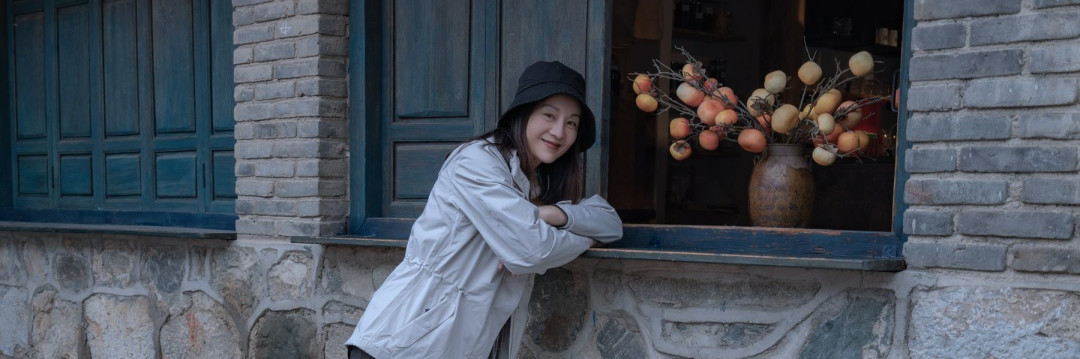
Journey to the Celestial Realm — A Western Yunnan Odyssey: A Soulful Journey Through the Three Parallel Rivers
After returning from Xinjiang, the entire summer seemed to stretch into a languid melody. We counted the days, waiting for October to arrive like an eagerly anticipated grand date. Every journey is a beam of light suddenly illuminating the monotony of everyday life—when routine grows dull, packing your bags becomes the best seasoning. Walking on unfamiliar ground, letting fantasies become reality, carrying no burdens from the past and no anxiety about the future—time simply stays in the present.
Pre-Trip Preparations: Details Define the Quality of the Journey
Hiking Gear and Photography Equipment
This was my first formal attempt at a hiking trail. Before departure, I carefully studied the route map of the Tiger Leaping Gorge scenic area, including parking spots, hiking paths, and the locations of inns along the way. Trekking poles, knee braces, and a well-fitting pair of hiking boots (or comfortable sneakers) are essential. Try to pack only a few items in your backpack, and bring plenty of disposable items—you'll find that as the journey progresses, your bag gets lighter, and your mood becomes more carefree.
For photography, I brought a telephoto lens, a wide-angle lens, a prime lens, and a tripod. As it turned out, the wide-angle and telephoto lenses were used most frequently, though my phone also captured plenty of great moments.
Car Rental and Accommodation Strategy

Traveling after the National Day holiday has a clear advantage: except for popular spots like Tiger Leaping Gorge, most hotels don't need to be booked in advance. You can arrange things flexibly based on your actual itinerary, just booking your first night's stay a day ahead. However, a word of caution: Yunnan has many mountain roads with frequent steep climbs, so it's best to rent a SUV with decent power. This time, we rented a 1.5L SUV, and every time we climbed a slope, I had to floor the accelerator, afraid to brake midway—the struggle of insufficient power is especially noticeable on mountain roads.
Departure: The Long Haul from Nanjing to Lijiang
For most trips, M and I depart from Nanjing airport. But this time, we got tickets from Shanghai Pudong. Pudong Airport is enormous, and our gate was incredibly far away. After finally making it there, we received a gate change notice and had to walk all over again. I couldn't help complaining, "Big airports are such a hassle." M smiled and said, "If you arrive early, there's no panic. When we go abroad for road trips in the future, there'll be even more琐事 (trivial matters) to deal with." He had a point—take things step by step, solve problems as they come, and you might even learn something new along the way. Doesn't that make life richer?
We arrived at Lijiang Sanyi Airport late at night. We contacted the hotel for pickup—hotels near the airport usually offer free shuttle service (just confirm when booking). After riding every mode of transport in a single day, lugging heavy bags around, we collapsed into bed exhausted. Falling asleep in the early hours, we slept surprisingly soundly.
The next morning, we took the airport bus (which stops at Lijiang Old Town and Lantian宾馆 [Blue Sky Hotel]) to the car rental company. Since we planned to stay in Lijiang for a few extra days, we set the rental pick-up point in the city—previously, we'd always rented and returned cars directly at the airport.
Xizhou Ancient Town: A Thousand Years of Bai Culture in Mist and Rain
Along the Erhai Lake ring road around Dali, the three main gems are Dali Ancient Town, Xizhou Ancient Town, and Shuanglang. Xizhou lies north of Dali Ancient Town, bordering Erhai Lake to the east and nestling against Cangshan Mountain to the west. It's an ancient Bai town with a history spanning a thousand years.
After picking up the car in Lijiang, we drove over 100 kilometers to reach Xizhou. A light drizzle accompanied us the whole way. This was M's second visit, and he enthusiastically recounted his first experience. Despite the rain, the ancient town was bustling with visitors, and the aroma from various food stalls was irresistible—喜洲粑粑 (Xizhou-style baked flatbread) and乳扇 (dried milk fan) dominated the scene. I bought a fried乳扇 to try, but with my Jiangnan sweet tooth, I found it overwhelmingly sour and bitter—a bit awkward. Oh well, let's just wander around.
Xizhou's specialty shops were dazzling: accessories, handmade tie-dye, artworks, coffee shops... Three of these crafts are listed as intangible cultural heritage: embroidery, tie-dye, and破酥粑粑 (flaky baked flatbread).
The Corner Tower, built in 1945, is instantly recognizable by its unique corner position. It's now a popular Instagram spot, drawing crowds of people stopping for photos. I wanted to wait for the crowd to thin out, but ultimately lacked the patience.
M led me to find the Sifang Street (Square Street) he remembered—the intersection of four main roads, the town center, the busiest area. Stepping onto Sifang Street, a wave of vibrant烟火气息 (bustling local atmosphere) washed over us.
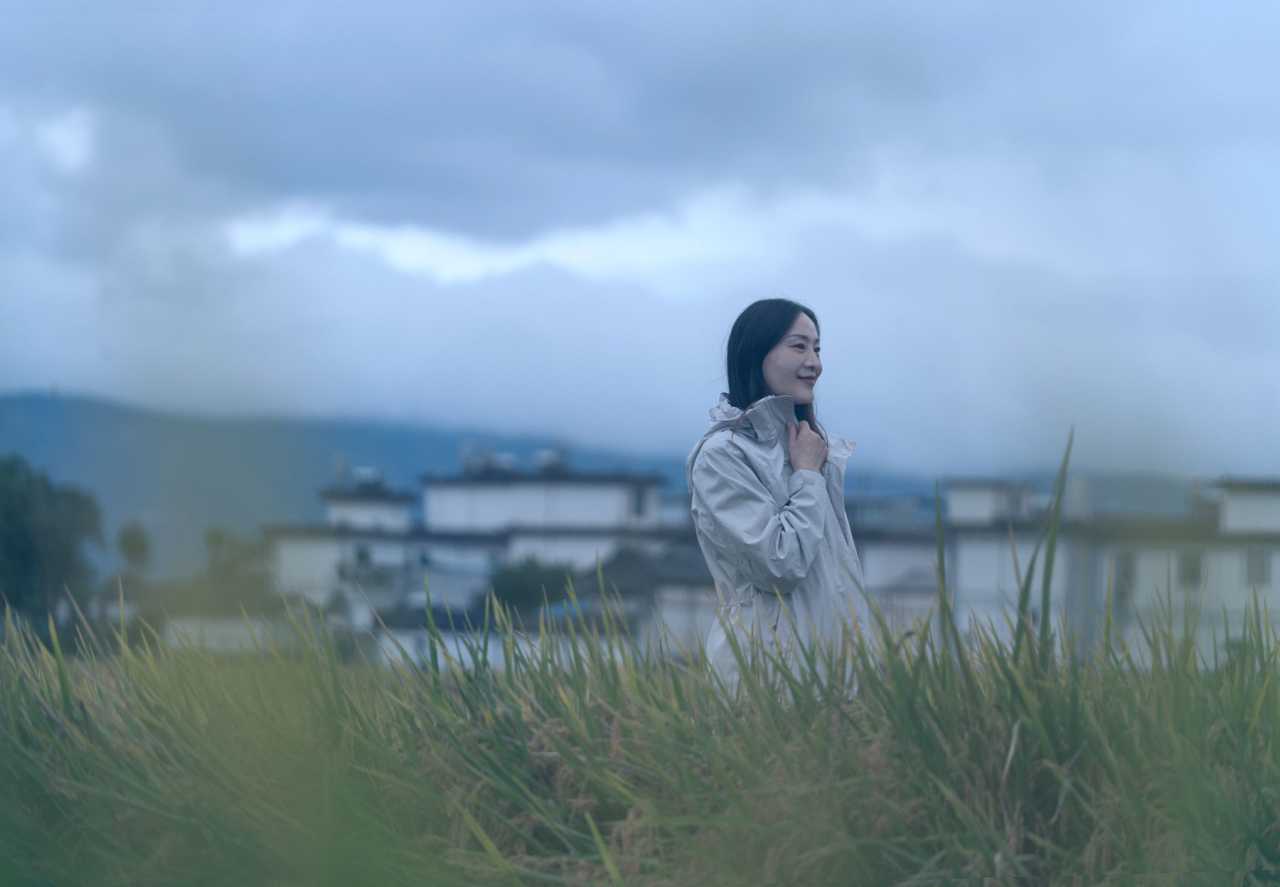
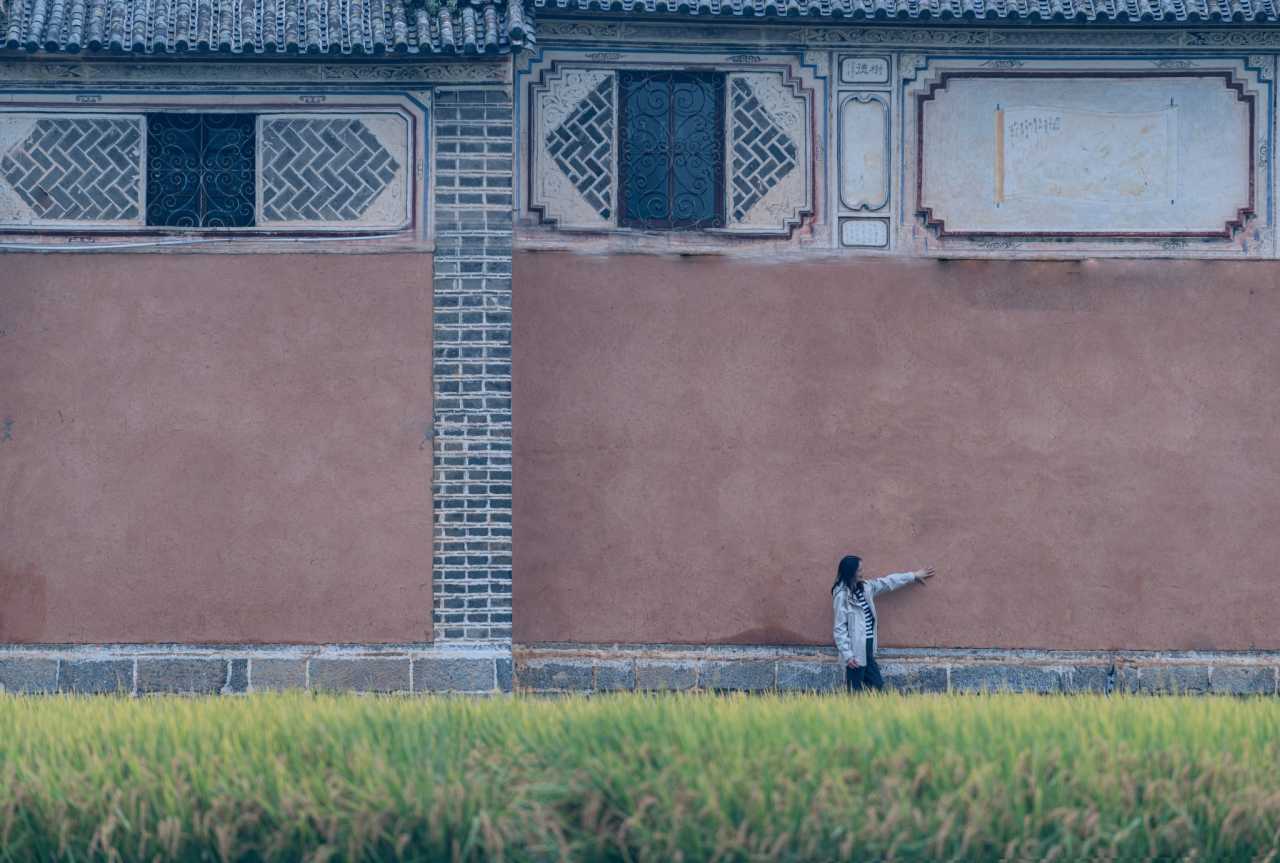
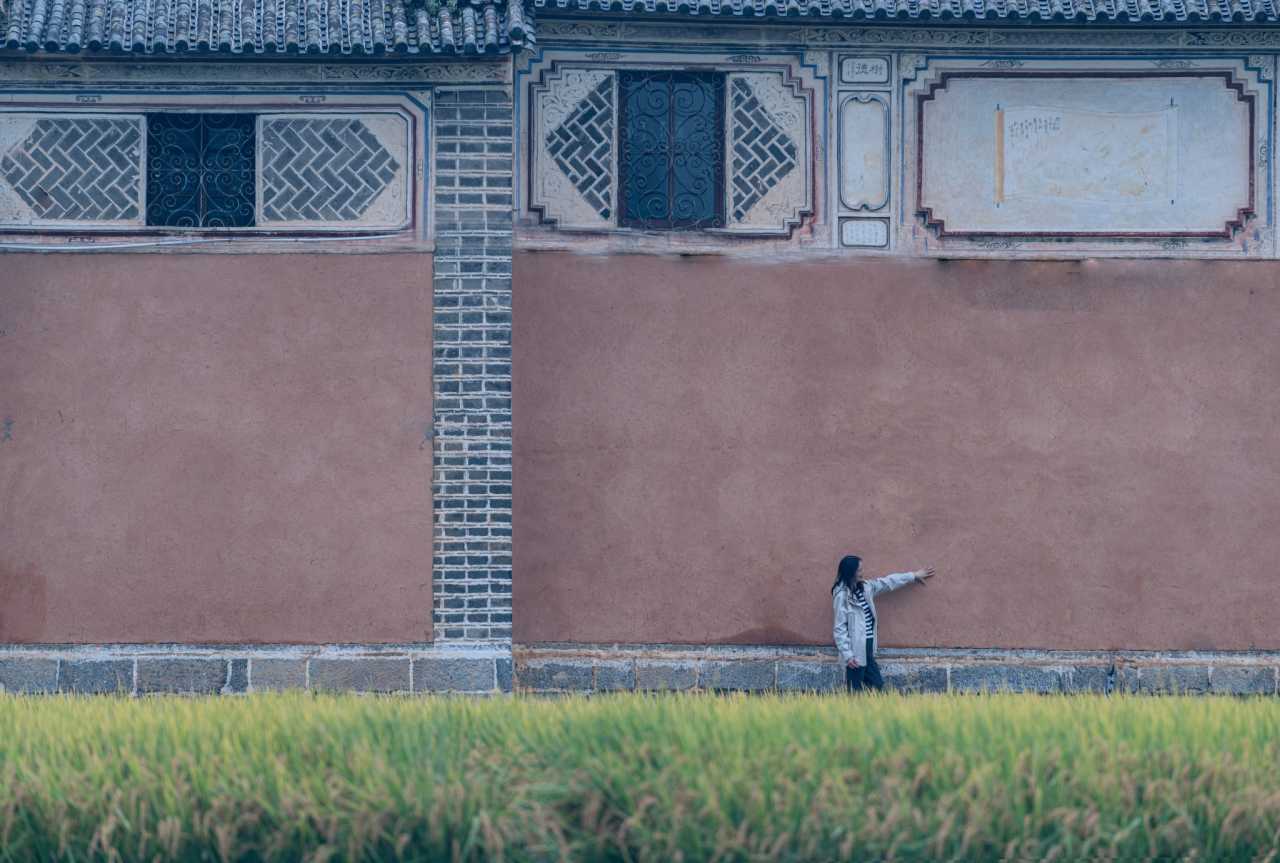
The red-brick wall of Xilin Courtyard is an iconic Xizhou landmark. This courtyard, renovated by a foreign couple, houses accommodation, a restaurant, and a café. They reportedly traveled across China's magnificent landscapes before finally settling here. What drew me most was the rice field surrounding Xilin Courtyard—in October, the rice stalks were golden, the autumn atmosphere deepening. Walking along the field ridges, the earthy fragrance of the farmland filled the air.
Taking a break at a roadside shop, the view of the sky, the houses, and the wind rippling through the wheat fields brought a profound sense of relaxation. I was lost in the gentle caress of the breeze. Strangely enough, just as I was about to photograph the rice fields, the rain suddenly stopped. But the fields were still muddy. A young couple was there too, the girl's white shoes caked in mud. M casually said to the boy, "Her white shoes got muddy." The boy smiled back, "Yeah, she's pretty upset about that." Writing this now, it feels like yesterday—I can clearly see those two young faces, in the drizzling ancient town, taking photos of each other, laughing together...
Erhai Lake: Lakes and Mountains Between the Showers
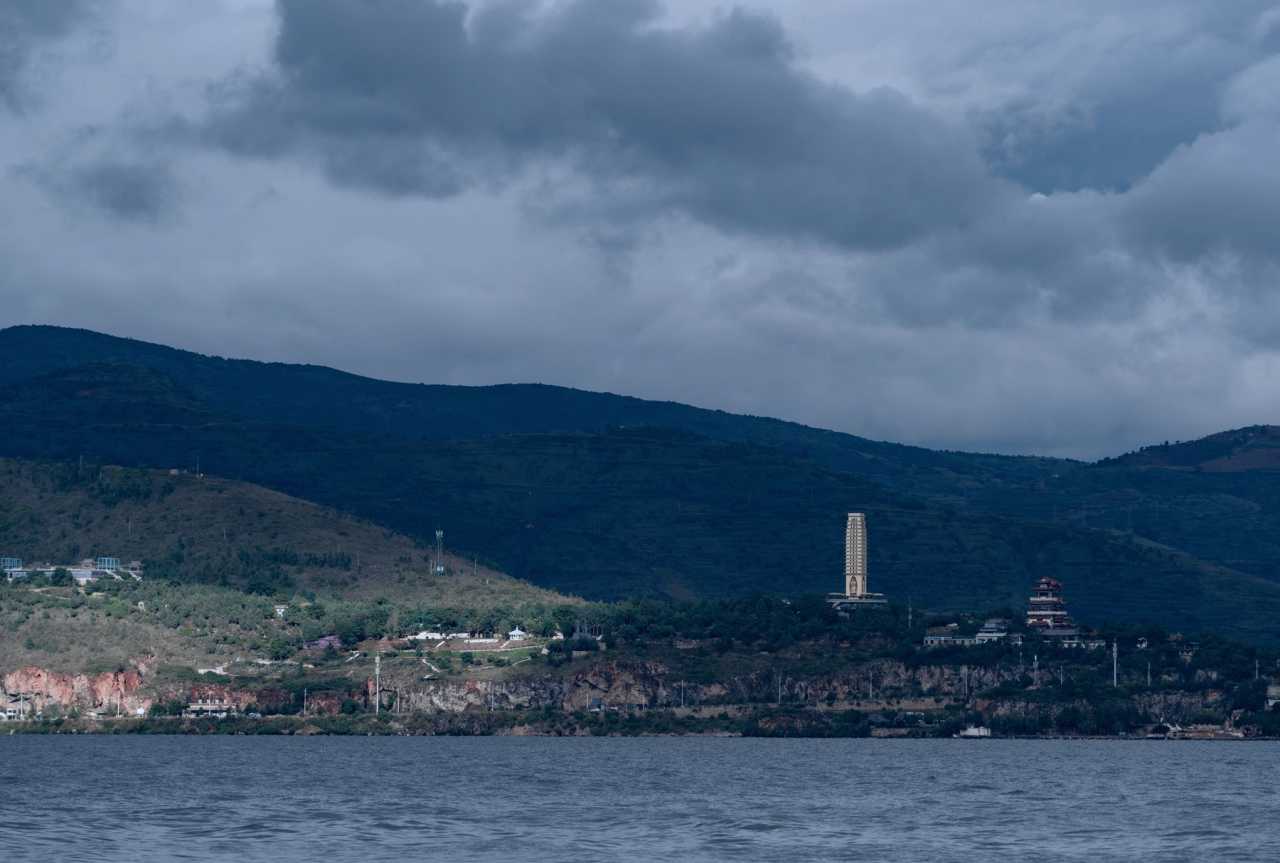
Leaving Xizhou, the rain continued. Our next stop was Erhai Lake, where we planned to stay one night. We hadn't booked accommodation yet. While M drove, I searched online. Finding a nice lake-view room, I figured we could haggle during the off-peak season, so we headed straight for the guesthouse. Following the navigation, I grew puzzled—why were we heading into such a remote area? Would we even see the lake?
Parking the car, the owner warmly led us upstairs. The moment he opened the door, Erhai Lake suddenly appeared before us, taking my breath away—it turned out we had navigated to the back entrance. The front door of the guesthouse opened directly onto the Erhai Lake Ecological Corridor, which is only accessible on foot.
After some bargaining with the owner, we got the lake-view room at a significantly lower price. Remembering the struggle of booking during the peak season in Xinjiang, the current timing felt wonderfully relaxed.
Sitting by the bed, I could see the lake. Opening the door led to a terrace perfect for tea. The rainy weather was a bit of a pity, but since we were here, we made the best of it—perhaps the rain added a unique charm to Erhai Lake.
I used to think Erhai was a sea, but later learned it's a freshwater lake. "Cangshan Mountain, Erhai Lake, wind, flowers, snow, and moon"—whenever people mention Dali, they use this phrase. The wind is from Xiaguan; the flowers are from Shangguan; the snow is from Cangshan; the moon is the reflection on Erhai. Such poetic romance.
After a quick freshen-up, the rain gradually subsided, and we eagerly headed to the lakeshore. The front door of the guesthouse opened onto the Ecological Corridor, connecting the villages along the shore. Clear lake water, birds in flight, lush vegetation,古朴 (rustic) Bai-style houses, and the occasional cyclist—nature, culture, and aesthetics wove together into a moving symphony. M told me that during his last visit, there were red-billed gulls and red cedar trees. I sighed softly—wanting to see the most beautiful scenery, avoid the crowds, and still manage work and vacation schedules—it's never easy. I decided to overlook the small details.
After walking a while, our stomachs grumbled. The restaurant recommended by our guesthouse owner was closed, so we randomly chose another. Neither M nor I have big appetites, so we usually need to dine with others to sample more local specialties.
The braised桂花鱼 (sweet osmanthus fish) in a rich sauce was quite tasty. We finished the fish and were full.
After dinner, the rain stopped, and we strolled along the Ecological Corridor. Walking in a foreign place feels entirely different—on ordinary days, evening walks are for exercise, following a fixed route, and even beautiful scenery only gets a fleeting glance. Here, our eyes were fixed on everything, and time felt like fine wine.
The next morning, the first thing I did upon waking was pull open the curtains. To my delight, no rain! A glimmer of light was visible on the horizon. We quickly washed up, grabbed our cameras, and rushed out.
The fresh air revived us. Up close, Erhai Lake sparkled with ripples; in the distance, clouds drifted softly, and a faint rosy glow was rising. I exclaimed happily, "I thought we wouldn't see the sunrise because of the rain!"
On the Ecological Corridor, people were jogging and taking photos. Loud singing echoed from afar. I was completely immersed in the lake and mountain scenery.
As the sky gradually brightened, we wandered along the lakeshore, the sound of lapping water filling our ears, every step a scenic view. M loves this place and never tires of it, even after multiple visits. He says it's leisurely and peaceful—a cup of coffee here is enough solace.
The cedar trees standing in the water, whether the waves were rough or calm, remained steadfast, dotting the landscape of Erhai.
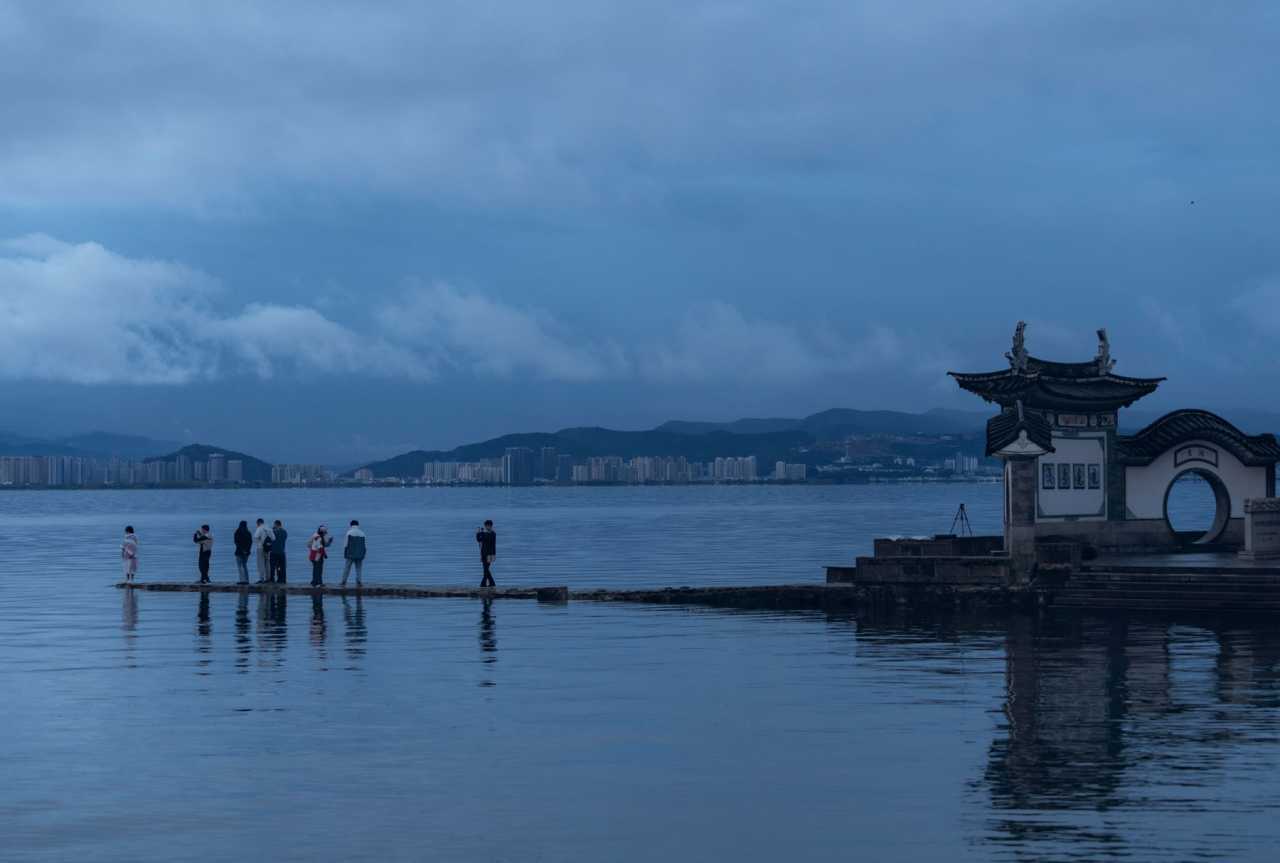
Walking along the Ecological Corridor, we reached the popular Instagram spot "Longkan Ancient Ferry," also known as "Longkan Pier." The scenery here is stunning. Once a historic ferry, it's now part of the scenic Erhai ring road. On the left, a circular archway reads "Heavenly Mirror"; on the right, "Sea Moon." Behind it stretches a boardwalk extending into the lake. Standing outside the archway, the misty waters and sky merged into one. Listening to the wind and watching the lake from the boardwalk, it felt like a harbor for the soul.
The famous S-curve of Erhai—actually, any bend here looks beautiful.
The sky began to rain again. I felt grateful that we had walked through Erhai in the gap between showers.
Lushui: Slow Time by the Nujiang River
Following our route, we arrived at Liuku Town in Lushui City. Lushui is a county-level city in Yunnan, the seat of the Nujiang Lisu Autonomous Prefecture, located in western Yunnan. It's the gateway to the Nujiang Grand Canyon and served as our rest stop before entering Bingzhongluo in Gongshan County. From Liuku Town, we drove onto the Nujiang Beautiful Highway—a section of National Highway 219. This road runs north-south through the entire Nujiang region, accompanying the Nujiang River as it winds through the Grand Canyon, offering endless scenery along the way.
Originally planning to drive straight to the next stop, the rain made us decide to stay overnight in Lushui. This allowed us to relax, explore a bit, and enjoy some coffee.
After lunch, we found a café-book bar. It was very quiet, and the comfortable sofas made me want to linger. I charged my phone, curled up on the sofa, sipped coffee, and flipped through a random book. M was also sprawled comfortably on a sofa, looking at his phone.
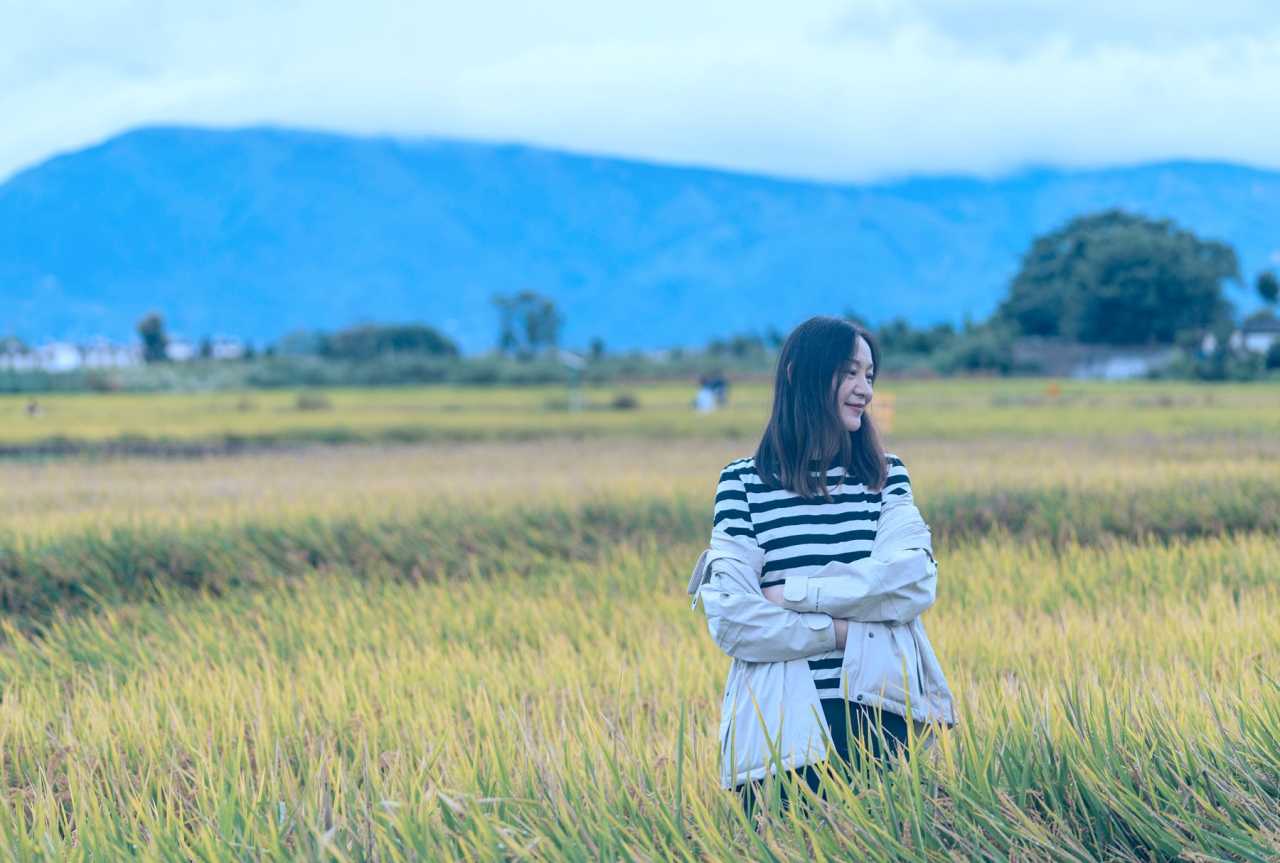
The coffee was a bit weak—perhaps we're used to stronger flavors—but that didn't spoil the leisurely mood. Letting time flow slowly, the book bar was perfectly still. Drinking coffee is also a way to pass time. Sometimes, time is meant to be slowly savored. Life doesn't always need to be fast-paced; pressing a pause button amidst the rush reveals how beautiful life can be.
In Liuku, we even booked a smart hotel. I muttered as we walked, "A smart hotel here?" When we got to the room, I called out to the robot several times, but it only replied, "I'm going to rest now." M laughed, "This robot is always slacking off." Still, the hotel was clean and tidy, and relatively cheap.
After dinner, we asked the front desk and learned there was a nice place nearby for an evening walk. We walked to the west bank of the Nujiang River, and the view opened up—the river was right before us, muddy brown, not yet the blue-green color of the dry season. The water roared like a waterfall. The Nujiang only turns from muddy to blue-green in winter. But winter brings concerns about icy roads and difficult mountain driving; weighing the options, we decided to set off in October.
The west bank of the Nujiang is also one of the liveliest nightlife areas. We chose a romantic café by the window, breathed in the river breeze, and gazed at the opposite Nujiang Grand Canyon—it was incredibly pleasant. As night deepened, the neon lights spelling "Nujiang Grand Canyon" shone brightly, and the nearby cable-stayed bridge glowed with colorful lights.
On one side of the Nujiang River was bustling commerce; on the other, the serene Nujiang Grand Canyon—movement and stillness complementing each other perfectly. If daytime coffee is about killing time, then nighttime coffee is about savoring it. Surrounded by so many romantic elements, my spirits were slightly elevated.
Laomudeng Church: Serenity in the Clouds
Laomudeng Village is located on the eastern side of Pihe Nu Ethnic Township in Fugong County, Nujiang Prefecture, on a gentle slope halfway up Bilo Snow Mountain. It's a mixed village of Nu, Lisu, Dulong, and Bai ethnic groups. Laomudeng Church is located within the village. Opposite it stands the Crown Mountain, the northern section of the Gaoligong Mountain range, so named for its unique crown-like shape.
We drove from Lushui along National Highway 219 towards Bingzhongluo, passing by Laomudeng Village along the way. The name is quite distinctive—"Laomudeng" is a transliteration of the Nu language, meaning "a place people like to come." Since we were passing by, we decided to take a look at this legendary beautiful village.
Laomudeng Village is right next to National Highway 219, with a large sign marking the turn-off. Following it, we headed in. The road narrowed as we drove deeper into the village. We worried about getting stuck when meeting oncoming traffic, but luckily there were very few cars. Not seeing a parking lot, we parked in a large paid yard.
Following the navigation, we arrived at Laomudeng Church. The church was very conspicuous—blue brick walls, red-framed windows, a white iron sheet roof—simple and plain. The church was reflected in the water, with mountains behind it, appearing especially serene amidst the green hills and clear waters.
M said that walking a bit further up the village road would give us a view overlooking the church and its surroundings. We walked up and came across a guesthouse under renovation. The guesthouse had a large terrace, which provided a perfect vantage point to view the church from afar.
The weather had started to improve when we left Lushui, but the sky was still cloudy. On the terrace, we searched for traces of Crown Mountain, but this large "crown" was hidden by the clouds. Standing on the terrace, looking down at the village below and gazing at the distant peaks, I drifted into a trance. A worker doing renovations nearby said that on clear days, you can see Crown Mountain.
Wanting to reach Bingzhongluo before dusk, we didn't stay long. Retracing our steps, the village felt serene and tranquil. The image of clouds rolling and unfolding lingered in my mind.
Bingzhongluo: A Paradise Where Gods and Men Coexist
We continued along the Beautiful Highway, always accompanied by the Nujiang River. Many sections of the highway had a 40 km/h speed limit, so we couldn't drive fast. We took turns driving; while one drove, the other could quietly enjoy the scenery.
The Beautiful Highway offered endless views along the way. There was a section with a colorful slow-trail path—seeing a fitness trail in the city is nothing special, but seeing one amidst towering mountains and deep valleys evoked a sense of wonder. Building such a trail here must have been incredibly difficult. If we had more time, I would have loved to run on it, beside the canyon's rushing rapids, and experience the unique feeling it offers.
We arrived at Bingzhongluo around 5 PM. This last town in northwestern Yunnan is known as "a place where gods and men coexist." It's the starting point of the "Bing-Cha-Cha" route, China's most beautiful road into Tibet, and the final stop along the Nujiang River.
The First Bend of the Nujiang River is located south of Bingzhongluo. It's not the first bend geographically, but rather where the surging Nujiang River carves out a nearly 360-degree curve. The first viewing platform is right next to the national highway, with a stone inscribed "First Bend of the Nujiang River." However, the viewing angle from this spot is relatively low, and the full curve isn't visible. We decided to go to our guesthouse first, settle in, and then ask the owner for directions to the second viewing platform.
The guesthouse owner told us the locations of the second and third viewing platforms. We drove up the mountain road; the slope was quite steep, and I worried about the car's power. M drove the winding mountain road with intense focus, and soon we reached the second viewing platform. Mistaking it for the third, we stepped onto the platform and looked down—no, where was the big curve?
Stepping onto the glass-bottomed viewing platform, we saw terraced fields, villages, the river, and meadows stretching out below. I said it was beautiful here too, but M was a bit disappointed—he had his heart set on seeing that horseshoe-shaped bend.
We stood on the platform for a while, gazing into the distance, feeling very relaxed. M thought we wouldn't find the third platform and planned to stay one night in Bingzhongluo, then head towards Meili Snow Mountain early the next morning. I insisted we get up early and search again, so we booked another night in Bingzhongluo. The guesthouse owner told me that when fog sets in, the mountains look stunning, like a fairyland—but the fog shouldn't be too thick, or it would obscure the full view of the First Bend.
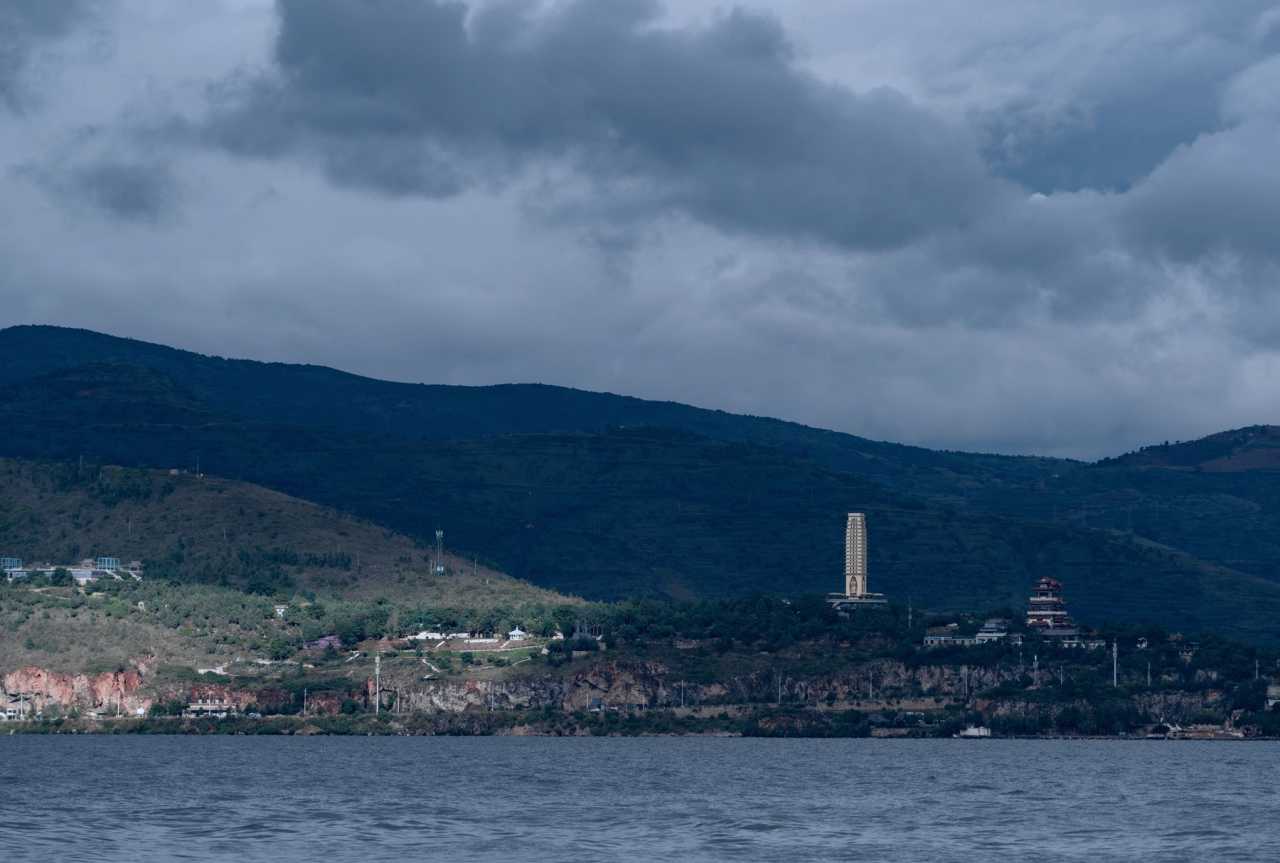
The next morning, M looked out the window and called out excitedly. Outside, clouds and mist swirled, giving the scene an ethereal,仙气 (immortal aura). From our room window, we could see Peach Blossom Island—another scenic spot in Bingzhongluo. The island appeared and disappeared in the pale blue mist. M, suddenly energized, quickly packed up, ready to go.
I found a video and followed the directions to drive directly to the third viewing platform. Some sections of this uphill road were very narrow, allowing only one car to pass, so driving required extreme caution. When we reached the second viewing platform, the early morning sun shone through the clear blue sky onto the village, making it look incredibly picturesque. I couldn't resist taking another look around.
Around 8 AM, we arrived at the third viewing platform. Looking down, fog was rising, blurring everything. Only a middle-aged man was there, exercising. He said, "You have to wait. When the fog clears, you'll be able to see it. Just don't know how long that'll take." We replied, "No rush, we'll wait here."
And so we waited for two hours. There was nowhere to sit, and the platform was very small. Most tourists go to the first or second viewing platform; few come here, usually only outdoor travel enthusiasts. In those two hours, we hardly met anyone, but M and I were both excited—it felt like waiting for a mystery to be revealed as the fog lifted.
As the morning mist appeared and disappeared, the villages, houses, and trees visible through the fog were scattered across the green fields. Cooking smoke rising from rooftops mingled with the clouds and mist, bathed in the morning sun. Looking down at the First Bend of the Nujiang River, surrounded by drifting clouds and mist, it felt otherworldly,飘飘欲仙 (as if floating among immortals). Light and shadow played across the landscape, natural and soft.
When the clouds and mist gradually receded, the ethereal fairyland feeling faded. But the cloud finally lifted from M's heart—he had seen the scenery he'd been longing for.
In the afternoon, we drove to the border point between Yunnan and Tibet for a quick look, passing through Shimen Pass and Wuli Village along the way. The boundary marker between Yunnan and Tibet is a popular Instagram spot.
The next morning, we walked to Peach Blossom Island in Bingzhongluo. Peach Blossom Island is a small village at the northernmost end of the Nujiang Grand Canyon, at the very end of the Nujiang Beautiful Highway. At first, I mistook Peach Blossom Island for the First Bend of the Nujiang River—the two places look very similar in shape. Later, M told me, "Look closely. There's a bridge crossing the bend at Peach Blossom Island." Indeed, it looked like a fork in the road. It's said that when the peach blossoms bloom, the island is covered in flowers, an incredibly beautiful sight.
The Degong Highway: A Magnificent Canvas of the Three Parallel Rivers
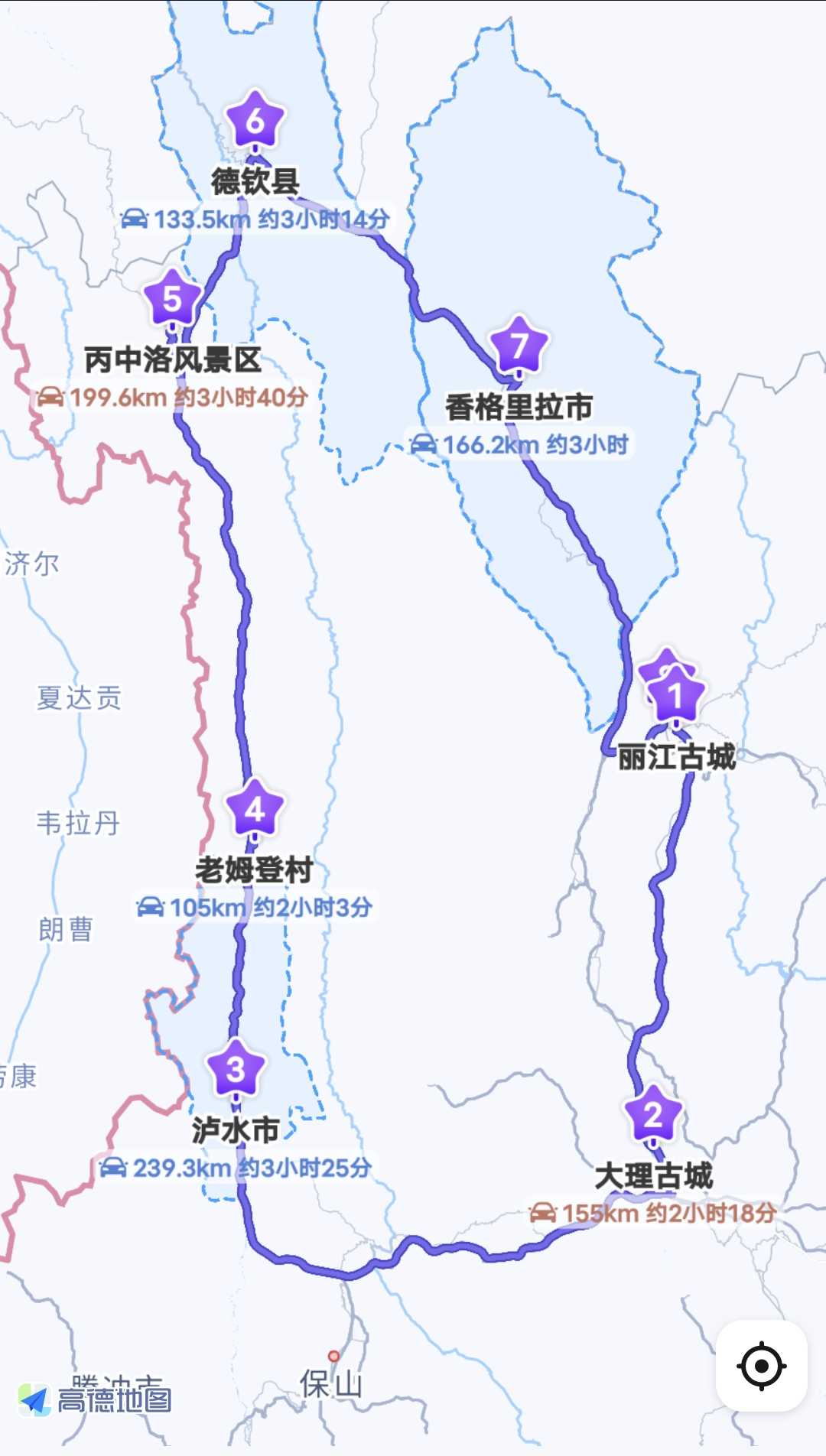
The Degong Highway is an east-west road connecting Deqin County in Diqing to Gongshan County in Nujiang. It's 95 kilometers long and took 15 years to build. Since it had only recently opened, we called ahead to confirm it was passable before setting off, which allowed us to plan this loop road trip. Driving the Degong Highway was truly a "尝鲜 (first taste)" experience.
The Degong Highway connects the Nujiang and Lancang (Mekong) Rivers and is considered the most beautiful self-driving route in the Three Parallel Rivers area. The Three Parallel Rivers refer to the Nujiang (Salween), Lancang (Mekong), and Jinsha (Yangtze) rivers, all originating on the Tibetan Plateau. In Yunnan Province, they flow roughly parallel from north to south, creating a rare natural geographical phenomenon where three major rivers run side-by-side without converging.
This road winds through high mountains and deep valleys, with frequent falling rocks and occasional landslides. In areas with severe landslides,棚洞 (shed tunnels), similar to regular tunnels, have been built. There are countless 360-degree turns. Although the road is a bit challenging to drive, the scenery along the way—the Nujiang Grand Canyon, Gaoligong Mountain, Peacock Mountain, Bilo Snow Mountain—is exceptionally magnificent.
Once we passed the sign for the Dewei Line (one direction to Deqin, the other to Weixi), the scenery became even more breathtaking. This was so different from the small bridges and gentle streams I'm used to seeing. Driving the Degong Highway this time made up for the regret of not driving the Duku Highway during our last trip to Xinjiang.
Meili Snow Mountain: A Sacred Appointment with the Snowy Peaks
Coming off the Degong Highway, we headed towards Meili Snow Mountain. Meili Snow Mountain is located in Deqin County, Diqing Tibetan Autonomous Prefecture, Yunnan Province. It's a vast north-south trending snow mountain range. Thirteen peaks average over 6,000 meters in elevation, known as the "Thirteen Princes' Peaks." It's one of the four sacred mountains in Tibetan Buddhism and is revered as the "God of Snow Mountains."
Our visit to Meili Snow Mountain this time was because the Three Parallel Rivers loop自驾 (self-driving) route passed through here, not specifically to see the "Golden Mountain" sunrise. Generally, to see the Golden Mountain, you need to choose the right season, check the weather, calculate the sunrise time accurately, and stay nearby for several nights to ensure a sighting.
The two best viewing spots are Feilai Temple Viewing Platform and Wunongding Viewing Platform. There are more accommodations near Feilai Temple, so we chose to stay at a guesthouse nearby. It was only a few minutes' walk from the guesthouse to Feilai Temple, allowing us to walk over early the next morning to watch the sunrise. The weather forecast showed cloudy skies for the next day, and I silently prayed to witness that dazzling moment.
We walked from the guesthouse towards Feilai Temple. Entry to Feilai Temple was free—I heard it used to be a paid attraction. When we arrived at Feilai Temple, the light was very strong, and the snow mountains appeared faintly. Thirteen white pagodas stood in a row in front of the mountains, and some people were prostrating themselves in worship beside them. Learning that Meili Snow Mountain is still a virgin peak, with no successful summits, made the mountains feel even more sacred.
The Feilai Temple viewing platform is very large. Standing on the platform and looking into the distance, the snow mountain range lay horizontally. Sunlight streamed through the gaps between the white pagodas, the intense beams almost blinding. Hello, Meili Snow Mountain, I've arrived! In this sacred place, I felt an incredible purity of spirit.
The guesthouse owner told us that there was a viewing platform upstairs with a direct view of the snow mountains. We ran up, and the owner enthusiastically explained, pointing out the glacier and the location of the main peak, Kawagebo Peak (elevation 6,740 meters). M was astonished to see that, under the current light, the snow peaks looked translucent. I squinted and looked through my camera's viewfinder—indeed, the translucent snow peaks appeared crystal clear, smooth, and flawless.
That evening, I set my phone alarm and checked the weather forecast repeatedly, hoping for cloudy skies to clear by morning. I went to bed early but tossed and turned, too excited to sleep.
The next morning, before dawn, we headed out towards the Feilai Temple viewing platform. The temperature was very low. Wearing all our clothes, we were still shivering. As we rounded a corner and looked up, we were instantly drawn by a white glow—the snow mountains stood out vividly against the dark sky, glowing white. Wow, it was blindingly bright! We almost forgot to take out our cameras, staring dumbfounded at the mountains.
As the first light of dawn appeared, more people gradually arrived. Everyone waited in the cold, queuing for the sunrise. Many stood in the bottom row closest to the mountains, but I set up my tripod on the upper row—the best shooting position is usually the upper row. By now, more clouds had gathered in the sky, drifting around. I checked the sunrise time for that day: 7:22 AM. Seeing the large cloud system, I silently pleaded, "Hurry up and drift away. Don't block my view."
As sunrise approached, there were still many clouds. I knew then that we wouldn't see the sunrise—the "Golden Mountain" phenomenon only lasts a few minutes.
When the golden sunlight streamed through the gaps in the clouds and fell upon Meili Snow Mountain, I caught a glimpse of the Golden Mountain. For a moment, everything else seemed to lose its color—the summit of Kawagebo Peak was bathed in gold. I held my breath, hoping the clouds would all part and unveil the mountain's hazy veil.
The viewing platform was full of people, yet utterly silent. Everyone was hoping for the sun's radiance. Minute by minute passed, but we still didn't get it. I felt a twinge of disappointment. M said...
Afterword: The Meaning of Travel
This journey through western Yunnan—from the misty rain of Xizhou to the lake and mountain scenery of Erhai, from the roar of the Nujiang River to the clouds and fog of Bingzhongluo, from the rugged Degong Highway to the sacredness of Meili Snow Mountain—every step was a scenic view, every moment worth treasuring.
Travel teaches us that the most beautiful scenery often requires patience, and the most precious experiences are often hidden in the details. Whether it was the sunrise over Erhai glimpsed between showers, the First Bend of the Nujiang River revealed after two hours of waiting for the fog to clear, or that fleeting glimpse of the Golden Mountain through a crack in the clouds—these moments are enough to illuminate the ordinary days of our lives.
If you're also planning to embark on this celestial journey, remember a few key points: choose a SUV with sufficient power, travel during off-peak times to enjoy tranquility, and maintain a flexible mindset to cope with weather changes. Most importantly—bring your curiosity and anticipation for the unknown. Because on this road, every turn might reveal an unexpected surprise.
You should also read:

Body in Hell, Heart in Heaven: A Pilgrimage Through Tiger Leaping Gorge — A Dialogue Between Heaven and Earth
Body in Hell, Heart in Heaven: A Pilgrimage Through Tiger Leaping Gorge — A Dialogue Between Heaven and Earth Introduction: When the Gorge Splits Open Beneath Your Feet Some say Tiger Leaping Gorge is the closest place on Earth to the border between "hell" and…
Continue reading...
Cloud Travelogue · Dali of Wind, Flowers, Snow, and Moon: A Three-Day, Two-Night Journey of a Free Spirit
Cloud Travelogue · Dali of Wind, Flowers, Snow, and Moon: A Three-Day, Two-Night Journey of a Free Spirit I am a cultured female foodie with a touch of rogue charm. I slung on my backpack, took my lover's hand, and set off on a spontaneous…
Continue reading...
The Meaning of Travel – A Tengchong Story: A Journey of the Heart and Personal Growth
The Meaning of Travel – A Tengchong Story: A Journey of the Heart and Personal Growth Setting Out, Only to Return a Better Self Some say travel is nothing more than leaving a place you're tired of, only to go to a place where others…
Continue reading...