Journey to the West: The Kingdom of Women — A 7-Day Independent Tour Through Dali, Shuanglang, Lijiang, and Lugu Lake
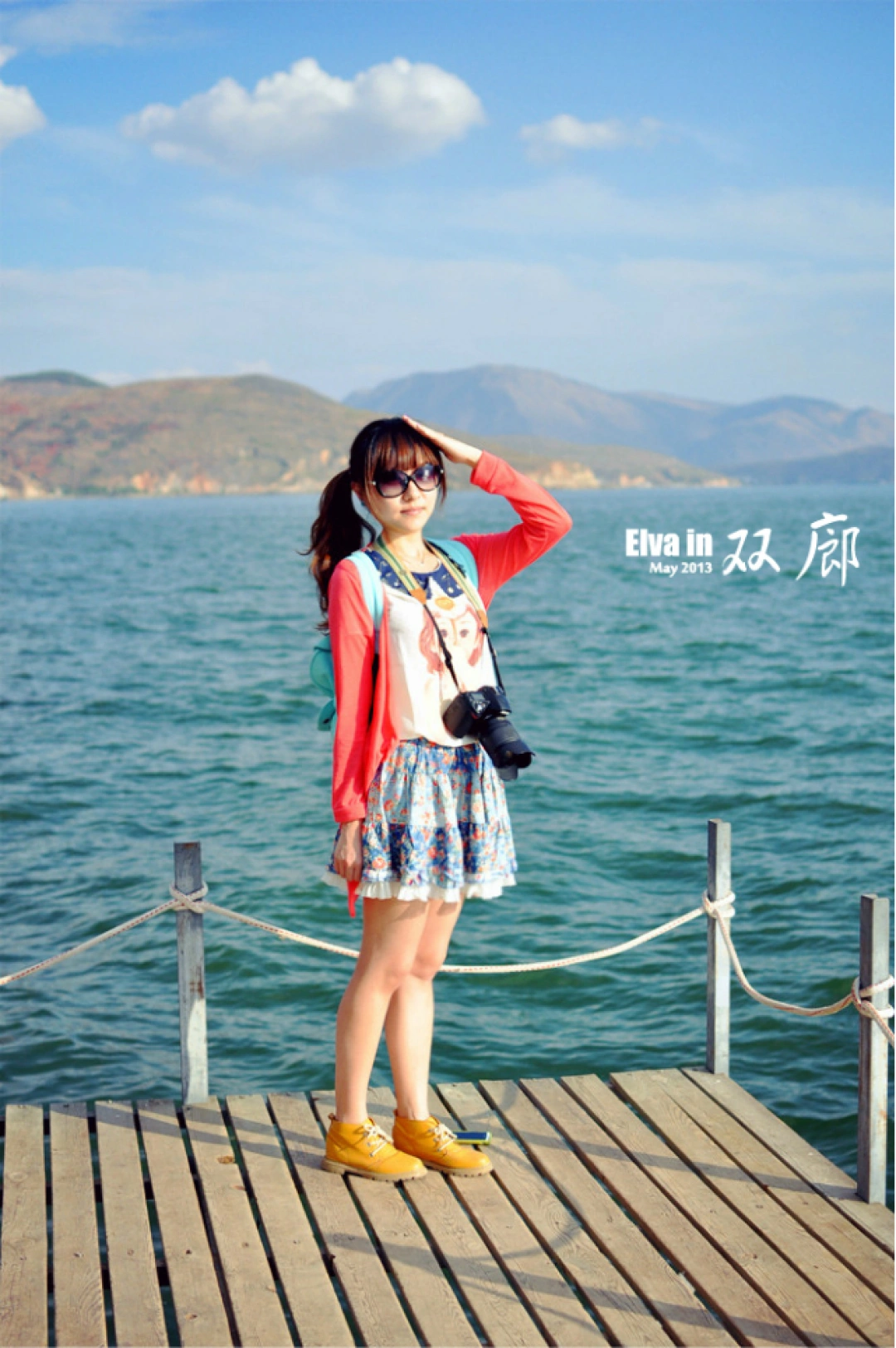
Journey to the West: The Kingdom of Women — A 7-Day Independent Tour Through Dali, Shuanglang, Lijiang, and Lugu Lake
Prologue: A Belated Journey
Some trips begin with the temptation of a single photograph; some distant places lie hidden in the heart for years, until one day courage awakens them.
In late April 2013, I embarked on this long-overdue Yunnan journey. I had planned to go the year before, but since I missed the start, there was no point in forcing it — until I saw countless stunning photos of Lugu Lake on my screen, none of them my own. I knew deep down that if I didn't move soon, that legendary "Kingdom of Women" would grow old in time as well.
Some say Tibet is the dream everyone dreams, while Yunnan is where the dream begins. This time, I brought my camera, my best friend, and a heart full of anticipation as I headed west.
Even when I arrived at Lugu Lake after a six-hour drive, with rain falling from the sky, I still believed — I had the ability to capture her beauty at any moment.
Itinerary Overview: 7-Day Independent Route
Dates: April 29 – May 5, 2013
Route: Ningbo → Kunming → Dali → Shuanglang → Lijiang (Shuhe) → Lugu Lake → Lijiang → Kunming → Ningbo
Travelers: Elva (me), Miao, Yunzi, Little C
Average Cost: Approximately 4,360 RMB per person
Camera Gear: Nikon D90 kit lens + 35mm f/1.8 prime
Pre-Trip Preparation: What You Absolutely Need to Know
Climate & What to Wear

Yunnan is known for its "spring-like weather year-round," but the temperature difference between day and night is extreme, especially in May. You'll need to dress in layers:
- Dali & Shuanglang: Hot during the day — summer clothes are fine; add a light sweater in the evening
- Lijiang & Lugu Lake: Chilly at night, especially when it rains. Bring a windbreaker or a light leather jacket. For those who get cold easily, pack a sweater — interestingly enough, in May you can still see locals in Lijiang wearing down jackets
Practical Tips
- Bring a small flashlight: Many guesthouses in Shuanglang are tucked away in narrow alleys. Even during the day, I, a directionally challenged person, got completely lost — never mind at night. In Lugu Lake, power outages are common in the morning, and you'll be washing up in the dark
- Moisturize, moisturize, moisturize: Yunnan's climate is dry, and the afternoon winds are strong. I exfoliated and applied hydrating face masks almost every day. It was so dry that even my nose crust increased, and the skin around my fingernails cracked and peeled
- Don't skimp on sunscreen: At high altitudes, UV rays are strong even on overcast days
Transportation Guide (Bookmark This)
Kunming Airport → Western Bus Station: About 110 RMB by taxi (30 km, half an hour without traffic)
Kunming → Dali: Express buses from the Western Bus Station depart every 30 minutes, last bus at 19:30. Ticket price: 142 RMB, journey time: 4 hours
Dali → Shuanglang: Small buses from the North Bus Station depart every 40 minutes, last bus at 17:30. Ticket price: 13.5 RMB, journey time: 1 hour. Highly recommend hiring a private car (about 180 RMB) to take the eastern coastal road around Erhai Lake — the scenery is far superior to the western Dali Highway
Shuanglang → Lijiang: Take a minivan to the Jiangwei junction, then transfer to a shuttle bus. Cost: about 40-50 RMB per person, journey time: 3 hours
Lijiang → Shuhe: Take bus 11 then transfer to bus 6, or take a blue minivan for 2 RMB per person
DAY 1: Kunming Transit, Heading to Dali
I arrived at Kunming Changshui Airport at noon — this new airport is enormous. It took a full fifteen minutes just to walk from the plane to the exit. As planned, we took a taxi straight to the Western Bus Station and headed for Dali.
The Western Bus Station was a bit chaotic. After buying regular bus tickets, finding the right bus relied entirely on a small blackboard with license plate numbers. During peak season, extra departures are frequent. The difference between express and regular buses is just the model of the vehicle; the journey time is the same — just over four hours. Our bus was scheduled for 13:01 but didn't leave until 13:30 — the driver wouldn't go until all passengers were on board.
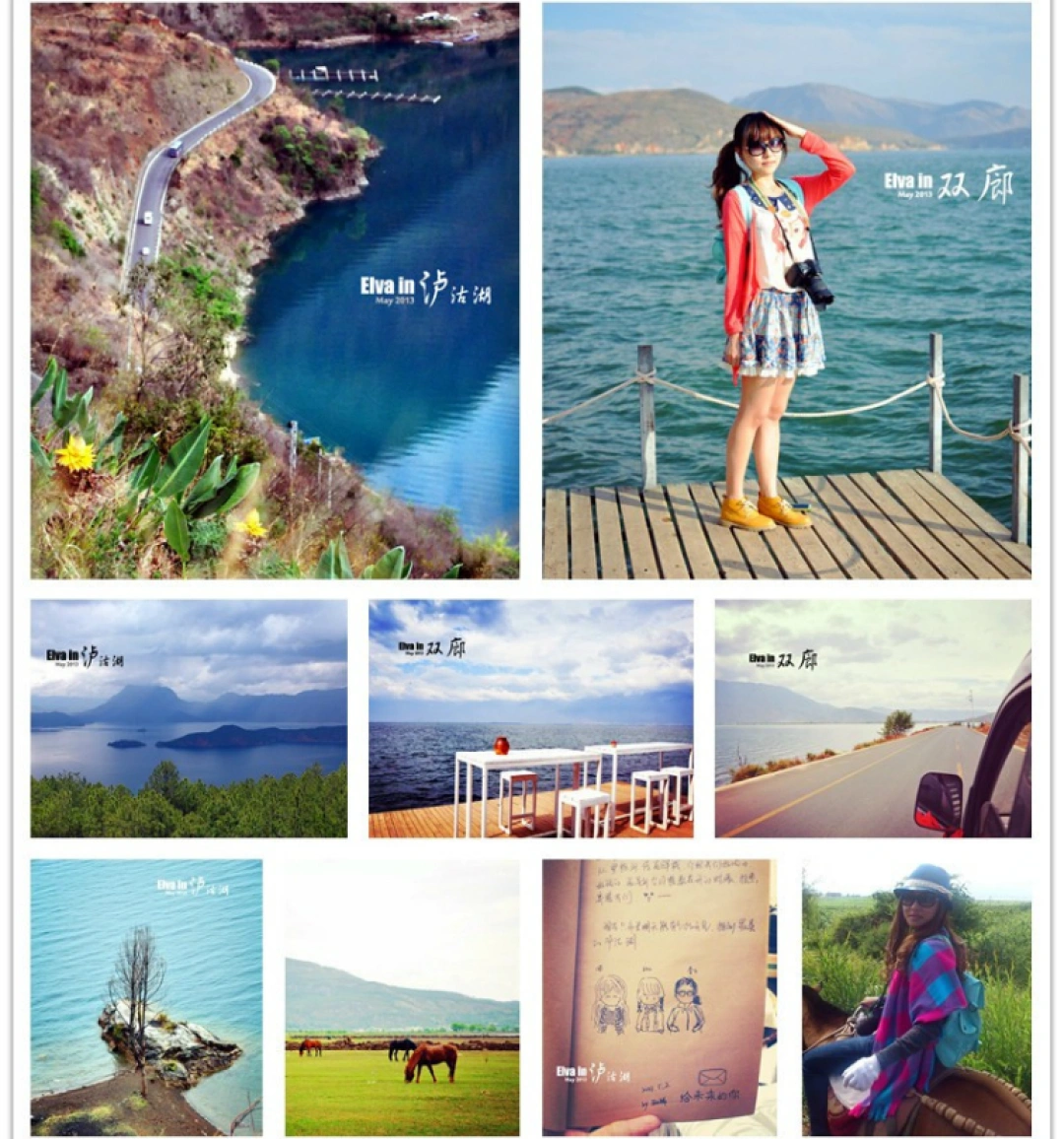
Between Dali and Shuanglang, we chose to rest for a night in Dali's ancient town first. After all, three hours by plane plus four hours by bus meant we needed to recharge. Taking a taxi from the bus station was inconvenient, so we took bus No. 8 from across the street directly to the ancient town — although the map showed 27 stops, the distances between them were short, and we arrived in half an hour.
At around 7 PM, the sky wasn't completely dark yet, and I finally pulled out my camera to take my first photo. A quick tip: dragging a suitcase over cobblestone streets in Lijiang and Dali is a disaster. Use a large backpack instead, or do what I did — carry it for a while, rest for a while, feeling like a "hermaphrodite" in terms of strength.
We checked into Cat and Fruit Guesthouse (猫猫果儿客栈) on Renmin Road (booked through Qunar). The tatami-style room was cozy and warm, and when morning light streamed through the window, my mood instantly brightened. However, soundproofing in these guesthouses is poor — dogs barking, birds chirping, and footsteps are bound to disturb your sleep.
DAY 2: Slow Time in Dali's Ancient Town
Morning in Dali, with gentle sunshine. We strolled along Renmin Road, where bougainvillea bloomed lushly. I happened to glance up and saw the "Cat and Fruit Guesthouse" sign — so this was where we were staying. It was beautiful.
Vegetable prices in Dali aren't cheap — a single dish of "相思菜" (a local green vegetable) cost 25 RMB — but the stir-fried tree bark with eggs was refreshing and tasty. After lunch, I finally got the HANA hand-painting I'd been dreaming of — using Indian dye to draw patterns on my hands, which would last about two weeks. It cost 60 RMB and took ten minutes. The shop owner was a slender, fair-skinned girl, and the store also sold saris and jewelry she'd brought back from her travels abroad.
During the day, we passed a coffee shop with a six-month-old Old English Sheepdog outside. It was adorably clueless. It accidentally knocked over its bowl of kibble, scattering it everywhere. A stray dog passing by started eating happily, and the sheepdog, along with a nearby Schnauzer, started barking at the intruder — united in their indignation.
DAY 3-4: Shuanglang — The Erhai of Dreams
We hired a private car from Dali to Shuanglang for 150 RMB. The driver had just bought his Sagitar two months ago and was very friendly. The car could only park at the lot; we had to walk to the guesthouse, following signs along the way.
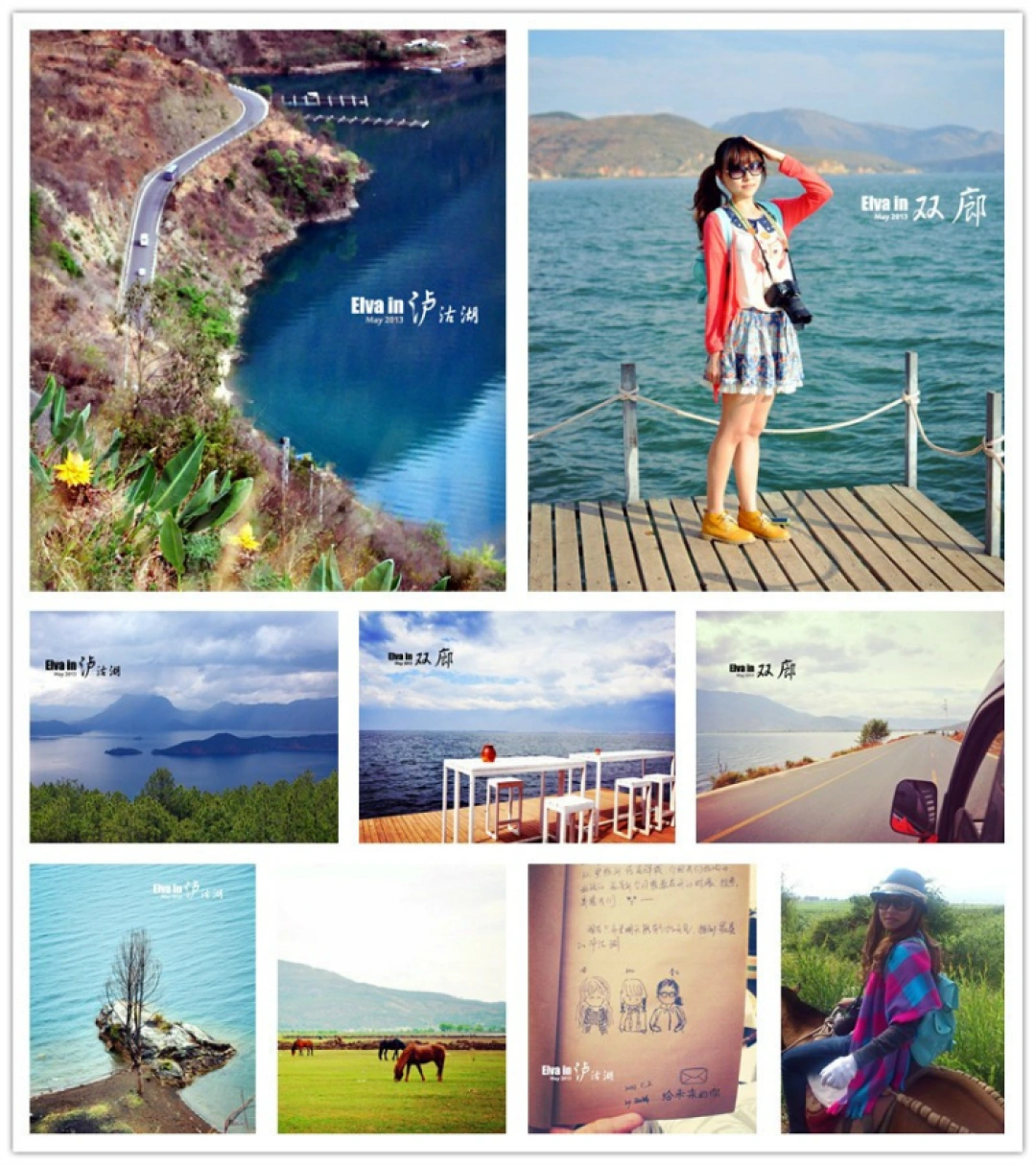
The overwhelming urge to go to Shuanglang came from Haidilife (海地生活) — their Building No. 4 had an exclusive seaside terrace, the epitome of luxury. We "ordinary girls" could only stay in the other buildings, but we were still content. Those white high-backed chairs by the edge of Erhai Lake — how many people have dreamed of them, and how many have captured them in photos?
We booked the "Star Room," which was supposed to have a sea view, but a wall had been built in front, so we could only glimpse a sliver of the lake. Falling asleep to the sound of waves was incredibly romantic — though there were no toothbrush cups in the room. How did we manage? Use your imagination.
Haidilife Photo Spot Guide
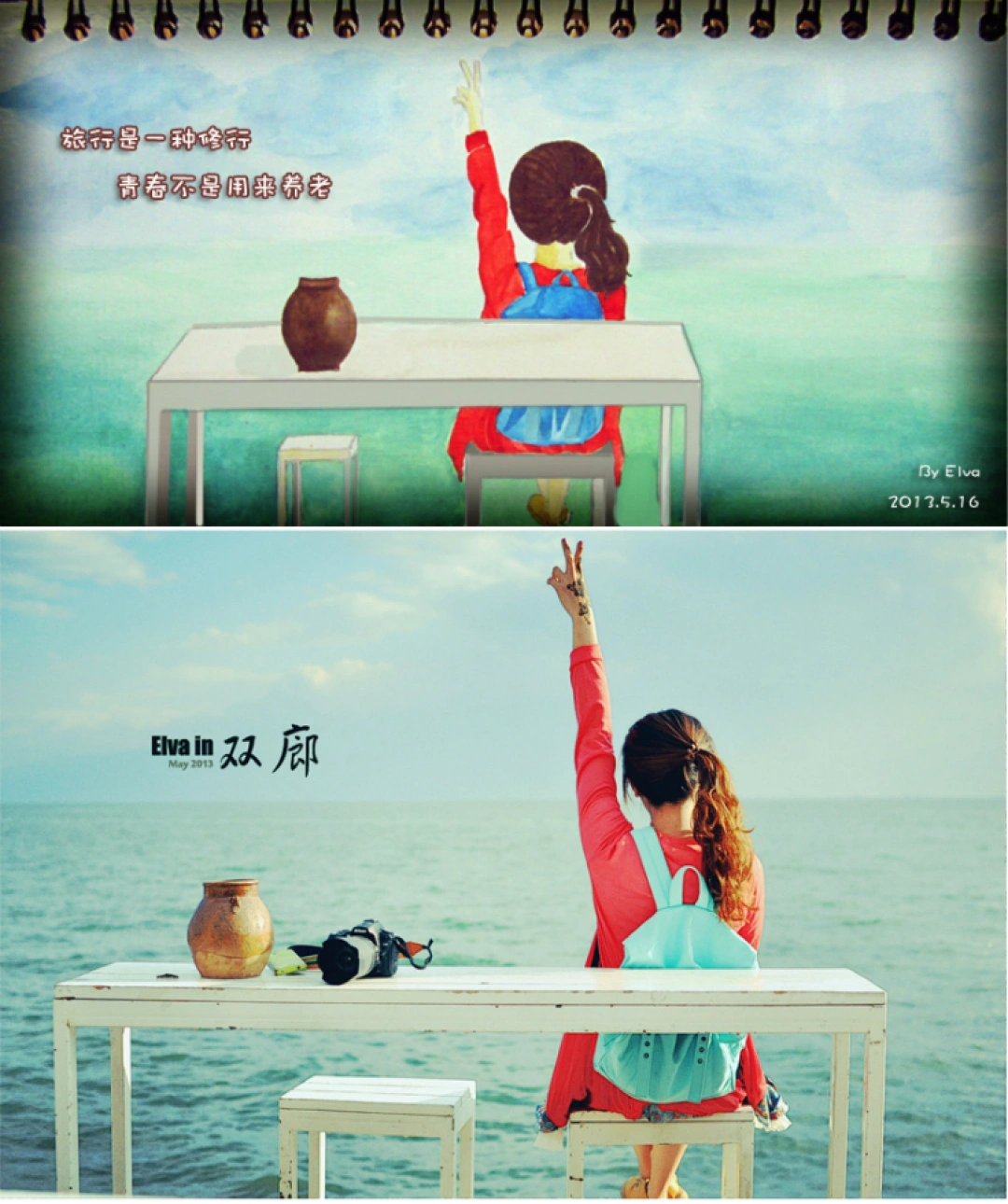
The iconic white tables and chairs are a must-photograph, but you have to "fight for your turn." Luckily, we managed to snap a few shots in the golden afternoon light on our first day, because the next day it was overcast. The colors of the lake water looked very different between the Nikon kit lens and the prime lens — the prime made it appear grayer, while the kit lens rendered it bluer.
Next to the Haidilife courtyard was a Bai ethnic home-style restaurant. The service left much to be desired, but the food was decent. 乳扇 (milk fan) and 饵块 (rice cake) are highly recommended — 饵块 has a texture like mochi, and 乳扇 is made from milk, delicious whether pan-fried or grilled. However, eating outdoors meant dealing with quite a few flies.
Bonfire Party & Unexpected Surprises
That evening, we happened to catch a bonfire party, which was supposedly held irregularly each week — either we were incredibly lucky, or they just said that to make it seem special. Under the flickering firelight, the scene had a slightly "pyromaniac" vibe.
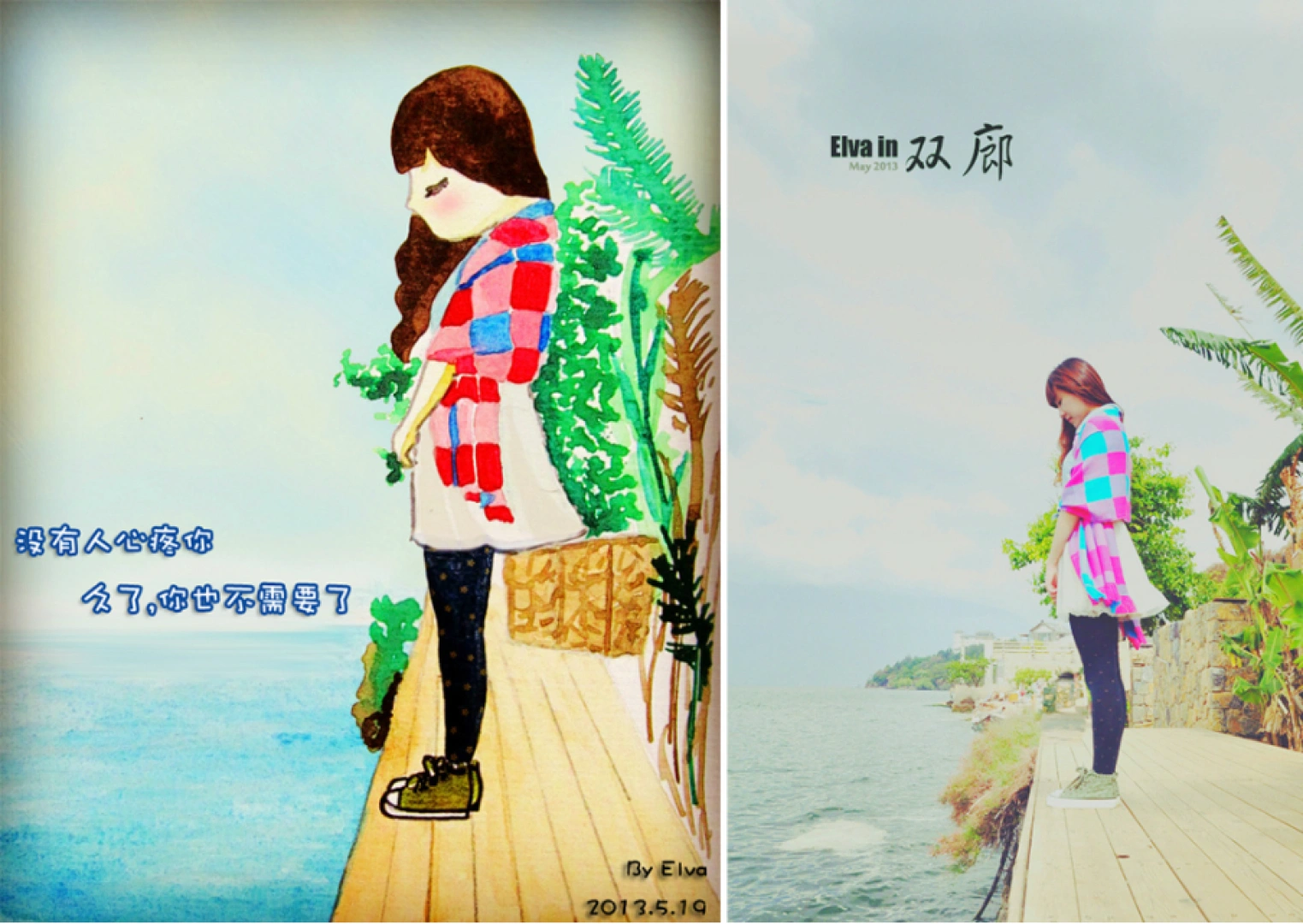
The morning was a bit chilly, so a shawl was perfect for both keeping warm and looking good in photos. Following the coastline from Haidilife's white chairs, you can reach Yuji Island and Nanzhao Customs Island. On Yuji Island, there was a cat-themed coffee shop with postcards for forwarding in the window. I drew a postcard of a fat cat-dog hybrid and mailed it to a celebrity Samoyed named MOMO in Shanghai. Across the way, Nanzhao Customs Island required an entrance fee and looked boring, so we didn't go.
DAY 4-5: Lijiang & Shuhe — A Brief Stop
At 3 PM, we set off for Lijiang with three girls from Hubei who shared our carpool. The coastal road offered the most beautiful scenery, and the saturation in the afternoon backlighting needed no adjustment — the original photos were already perfect.
Knowing that Lijiang's Dayan Ancient Town was overly commercialized, and with the May Day holiday upon us, we had booked our accommodation in advance at Doumi Youth Hostel (豆米青旅) in Shuhe Ancient Town. When we took the car from Shuanglang to Lijiang, the driver said the hostel was at the northernmost edge and charged us an extra 30 RMB, which we paid gratefully. Later, we discovered that taking a blue minivan from Shuhe to Lijiang cost only 2 RMB per person.
Although Shuhe was quieter than Dayan, it was no longer truly peaceful. That evening, we ate at Grandma's House (奶奶家) , famous for its three-ways salmon: fried skin, sashimi, and hot pot. The salmon were raised in a pond outside the restaurant, supposedly fed with water from the snow-capped mountains. You point out the fish you want, and they catch it on the spot. The taste was fresh and absolutely satisfying.
DAY 5-6: Lugu Lake — The Rain and Tears of the Kingdom of Women
From Lijiang to Lugu Lake, you can choose between a state-run bus or a tourist shuttle. I bought a round-trip ticket for the tourist shuttle on Taobao for 140 RMB per person. The shuttle was flexible, allowed stops for photos, went directly to Lige Island, and the driver doubled as a guide. When our plans changed later, we got a refund of 60 RMB per person.
On the bus, I dozed off. An hour later, I saw the Jinsha River, with its winding mountain roads, yellow flowers on the cliffs, and the turquoise river below — a stunning contrast of colors that took my breath away.
The Legend of Goddess Gemu
Lugu Lake was once called "Luku Haizi," half in Yunnan and half in Sichuan. The lake sits at an elevation of about 2,690 meters and covers an area of roughly 48 square kilometers. The Mosuo people still maintain a matrilineal marriage system.
My favorite legend about Lugu Lake is The Tears of Goddess Gemu:
Goddess Gemu was a clever and beautiful young woman. Her gentle charm attracted mountain gods from near and far. One time, a mountain god from a distant land came to meet her secretly. The two were deeply in love, lost in each other, when dawn crept up unnoticed. The male god quickly mounted his horse, needing to return to his domain before sunrise. The horse neighed three times. Gemu, who was combing her hair, heard the sound and immediately gave chase, but she only saw the giant hoofprints left by the divine horse. By the time she arrived, the sky was already bright. Missing her lover, she stood by the hoofprints and wept. Her tears overflowed the prints, forming a flat lake — the Lugu Lake we see today. The distant male god heard her crying and turned back to gaze at her. He threw pearls and flower seeds toward Gemu. The pearls became the small islands in the lake, and the flower seeds grew on the shores, blooming into different flowers every year, surrounding the woman he loved.
Lugu Lake in the Rain
Perhaps my expectations were too high. When I finally saw the Lugu Lake I had longed for, it was raining.
The rainy season is usually June to July, but it hadn't rained here since last September. This was the "first rain." If it didn't rain soon, the crops would be ruined — so we were the "rain gods" after all.
On the first day, we stayed at Lugu Lake Legend Inn (泸沽湖传说驿栈) on the Sichuan side, near the Grass Sea. The tourist shuttle ended at Lige, so we found a carpool to take us there. The driver was the owner of the Wetland Inn, and he was good friends with the owner of the Legend Inn. He even helped us with our luggage and returned an umbrella we had left in his car. When we said we wanted to see the cosmos flowers (格桑花), he promised to send us photos when they bloomed in September.
The Legend Inn was at the deepest part of the Grass Sea, so quiet that all we could hear was the rain. Two young girls were in charge of cooking and housekeeping, a bit slow and shy. There was a nice lounge upstairs where you could flip through magazines and have tea without being disturbed.
The Marriage Bridge & Lover's Beach
The next day, the rain hadn't stopped. We asked the Wetland Inn owner to arrange a car for a lake tour — 200 RMB per car for five people, starting from The Marriage Bridge (走婚桥) .
"Walking marriage" is the unique marriage custom of the Mosuo people — "men don't marry, women don't wed, union is voluntary, separation is free." Both men and women remain part of their own families. The man visits the woman's home at night and returns to his own family in the morning. Children take their mother's surname, and the father generally has no responsibility for raising them. At any given time, a person can only have one "Axia" (partner), and the relationship can only be ended if feelings fade.
The Grass Sea was still beautiful in the rain, with pig trough boats scattered haphazardly like art installations. Lover's Beach (情人滩) looked especially clear and pure in the rain, with a single small boat floating on the water. On the slope of Bo'ao Peninsula, two pine trees grew straight up, then curved left and right at the halfway point, intertwining with each other — perhaps this was "in heaven we wish to be birds flying together, on earth we wish to be branches intertwined."
The viewing platform at Lige Peninsula — everyone has a photo from that spot. But truly, it's only at its most beautiful in clear weather.
An Early Return
We decided to go back a day early. From Daluoshui to Ninglang to Lijiang, it cost 90 RMB per person. First, a minivan to Ninglang, then a bus. Seeing children walking home from school along the roadside, I felt a pang of sadness.
But the rain had its gifts too — the mountains were shrouded in mist and clouds. Visibility was low, but it was breathtakingly beautiful, like a fairyland.
Epilogue: Thoughts on Travel
Seven days is far too short for Yunnan. But it was precisely this brief encounter that made me understand:
Travel is not about escape; it's about encounter. Meeting different people, different landscapes, and also meeting that version of yourself who longs to set out.
People often ask me what camera I used for my photos, and I always feel a mix of happiness and frustration. Happy that I managed to fool everyone with my humble kit lens, frustrated that the response is often, "Oh, it's a DSLR. Maybe I should get a XX lens too." The truth is, even if you give someone the most powerful gear in the world, on the same road, if they don't use the head behind the camera, if they don't engage their heart, all they'll ever see is the most ordinary scenery — forever stuck in the "I came, I shot, I left" mode.
The meaning of travel is not how far you've gone, but how many stories you bring back.
And my story has only just begun.
Practical Summary: 7-Day Independent Tour Essentials
| Category | Details |
|---|---|
| Best Season | April-May (avoiding the rainy season, but still prepare for rain) |
| Average Cost | Approximately 4,360 RMB per person |
| Essential Items | Small flashlight, moisturizing products, sunscreen, windbreaker |
| Transportation Tips | Dali → Shuanglang: hire a car for the eastern route; Lijiang → Lugu Lake: take the tourist shuttle |
| Recommended Stays | Dali: Cat and Fruit Guesthouse; Shuanglang: Haidilife; Shuhe: Doumi Youth Hostel |
| Must-Try Foods | 乳扇 (milk fan), 饵块 (rice cake), three-ways salmon, stir-fried tree bark with eggs |
One last honest word: Yunnan's beauty is worth measuring with your steps and feeling with your heart. Don't wait until the scenery has grown old to regret not having set out.
You should also read:

God’s Abandoned Palette: A Self-Drive Journey Through Yunnan’s Dongchuan Red Land
God’s Abandoned Palette: A Self-Drive Journey Through Yunnan’s Dongchuan Red Land Travel has never been about reaching some distant geographic coordinate. It’s about encountering, along the way, the version of yourself buried beneath the rubble of daily routine. During this May Day holiday, I finally…
Continue reading...
Body in Hell, Heart in Heaven: A Pilgrimage Through Tiger Leaping Gorge — A Dialogue Between Heaven and Earth
Body in Hell, Heart in Heaven: A Pilgrimage Through Tiger Leaping Gorge — A Dialogue Between Heaven and Earth Introduction: When the Gorge Splits Open Beneath Your Feet Some say Tiger Leaping Gorge is the closest place on Earth to the border between "hell" and…
Continue reading...
Cloud Travelogue · Dali of Wind, Flowers, Snow, and Moon: A Three-Day, Two-Night Journey of a Free Spirit
Cloud Travelogue · Dali of Wind, Flowers, Snow, and Moon: A Three-Day, Two-Night Journey of a Free Spirit I am a cultured female foodie with a touch of rogue charm. I slung on my backpack, took my lover's hand, and set off on a spontaneous…
Continue reading...