Journey to Yunnan's Clouds | Seeking a Dream Above the Clouds Between Jingmai, Yuanyang, and the Ailao Mountains
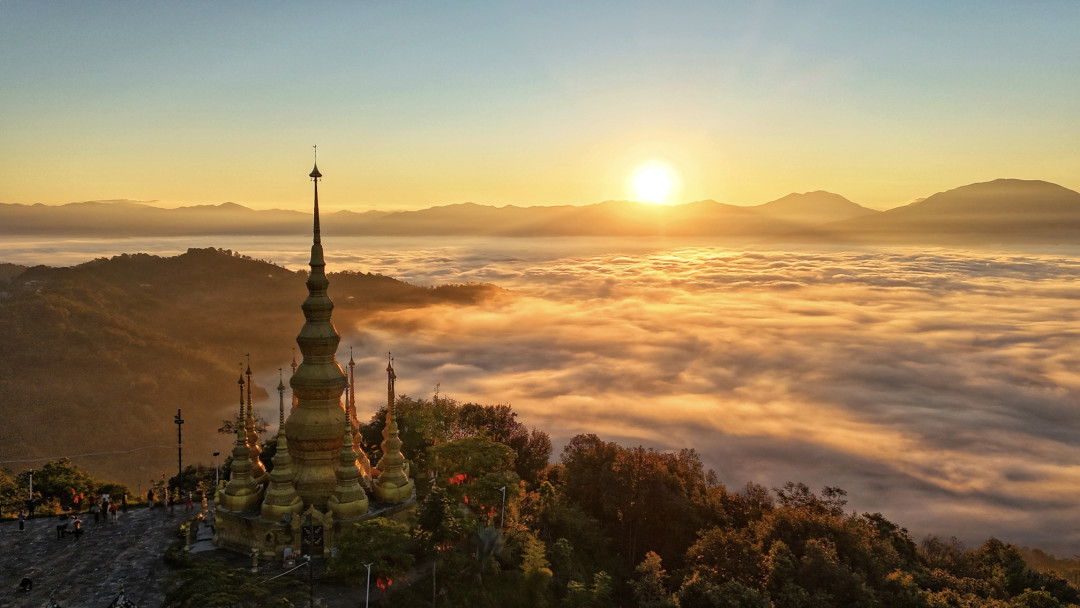
Journey to Yunnan's Clouds | Seeking a Dream Above the Clouds Between Jingmai, Yuanyang, and the Ailao Mountains
Time waits for no one. Before I knew it, the calendar had flipped to the end of November 2025. I had originally planned to head to western Sichuan, chasing the symphony of snow-capped peaks and autumn colors. But the snow on the plateau was falling more frequently, icy roads made self-driving nerve-wracking, and hidden gems like Lengga Cuo could close at any moment. After much deliberation, I spread out a map, and my eyes finally settled on Yunnan.
Yunnan is vast, but familiar names like Lijiang, Dali, Shangri-La, and Meili Snow Mountain had already been measured by my tires. It was now late autumn and early winter—the prime season for rolling seas of clouds. Why not take a relatively less-traveled path among the clouds?
My destinations were set on Jingmai Mountain in Pu'er and the Yuanyang Rice Terraces in Honghe Prefecture. The former was entering its most beautiful cloud sea season of the year; the latter, though not at its peak for photography, had the advantage of few tourists, and the terraces had already been steadily irrigated. I added a flexible backup to the list: the Ailao Mountains. Xishuangbanna and Jianshui Ancient City would serve as transit stops along the journey.
Preview: The Scenery Along the Way
- Xishuangbanna: A place with no off-season. The air is thick with Southeast Asian languor and warmth, everything feels so distinctly "Banna."
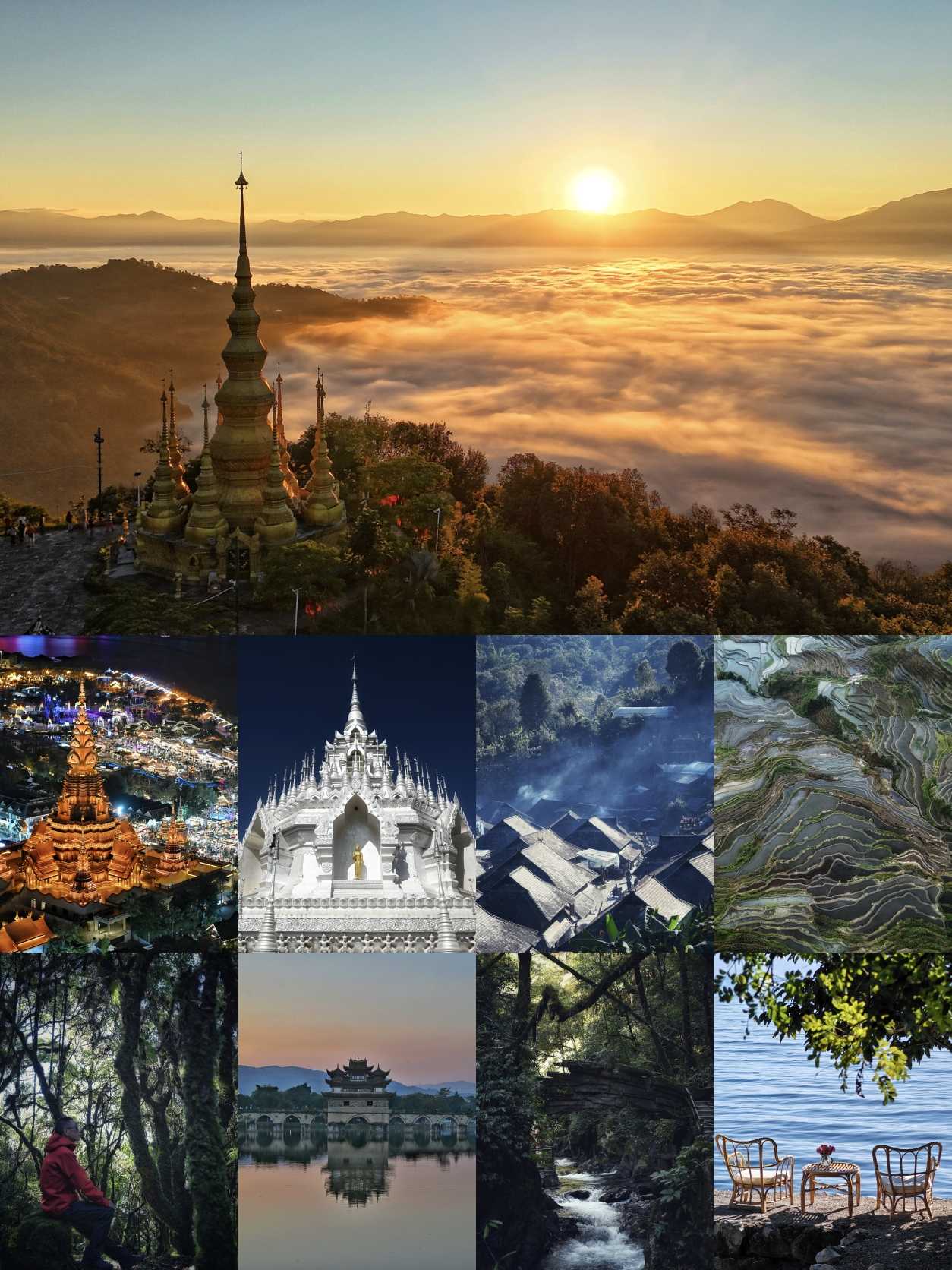
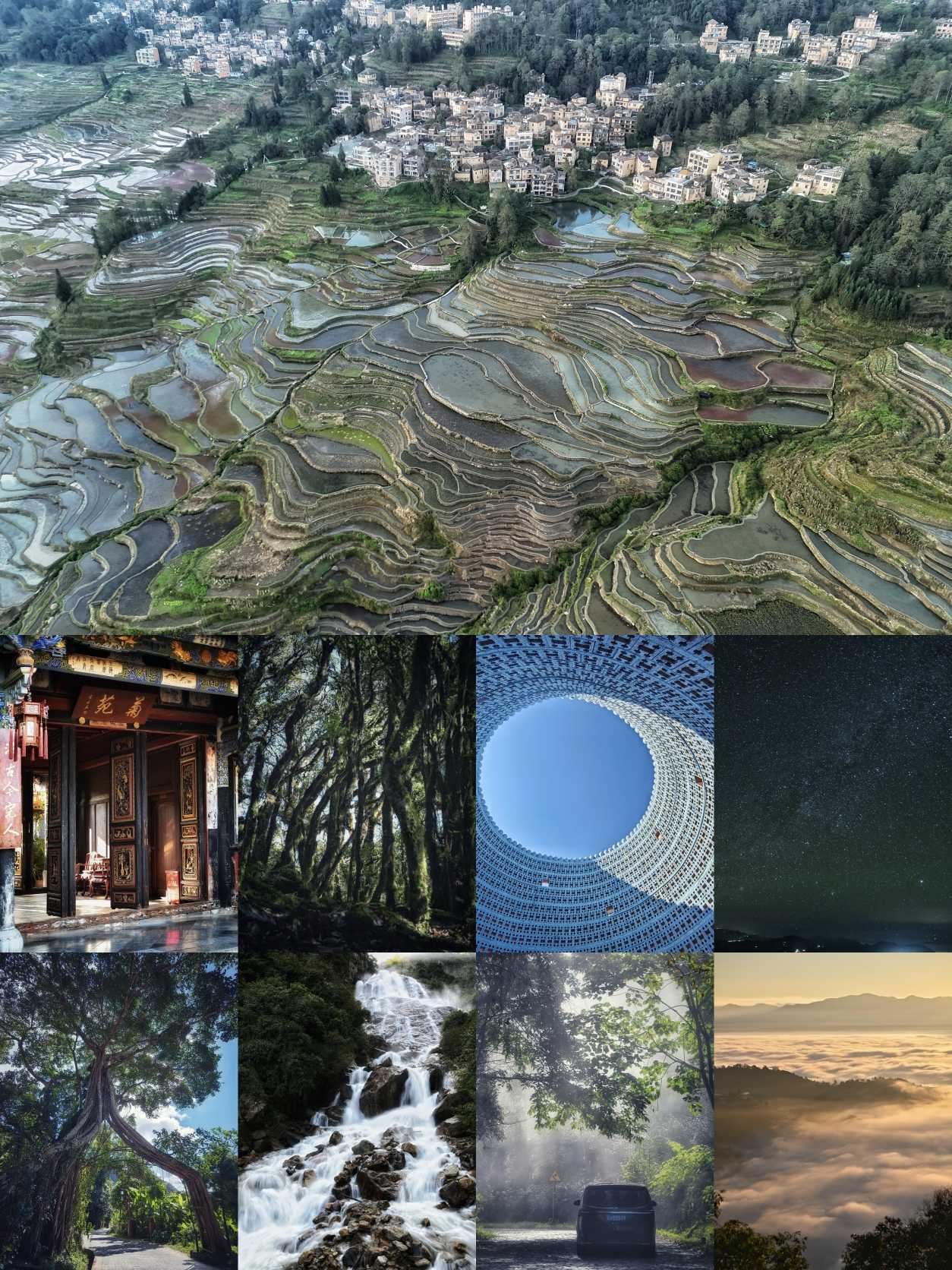
- Jingmai Mountain: The world's only World Heritage site themed around tea culture. Cloud seas and ancient villages embrace here, like a paradise beyond the mortal world.
- Yuanyang Rice Terraces: A masterpiece of land art carved by the Hani people over a millennium. A miracle of agricultural civilization and a pilgrimage site for photographers.
- Jianshui Ancient City: Historically known as the "Land of Literature" and "Zoulu of Southern Yunnan," it boasts a thriving literary tradition and numerous ancient buildings, with the Zhu Family Garden as its highlight.
- Ailao Mountains: Beyond the sunrise, cloud seas, sunset, and starry skies, the most breathtaking is the primeval forest known as the "Forbidden Zone of Life."
- Fuxian Lake: Kunming's backyard garden. Though not as famous as Erhai Lake, it harbors an undisturbed, artistic slow life.
Ideal vs. Reality: Two Men's Journey Through Southern Yunnan
It was the end of the year. As a struggling office worker, I was bogged down with trivial matters at work. My family couldn't get time off, so this trip was just my friend and me. No female models, no travel photography—we'd just treat it as a relaxing getaway.
An eight-day, seven-night itinerary was set in stone due to annual leave constraints. I love photography and prefer a slow pace. My initial plan: one night each in Xishuangbanna and Jianshui, two nights each in Jingmai Mountain and Yuanyang. Since the drive from Jingmai Mountain to Yuanyang takes over seven hours, we'd stop for a night in Pu'er city center. We'd rent a car for the entire trip, keeping the schedule flexible. I'd thought that if we could save a night from Jingmai or Yuanyang, we'd add a day in Mile. But in the end, I underestimated the travel pace of a non-photography enthusiast—when we left Yuanyang, we had two extra days, which led to the later trip to the Ailao Mountains.
Actual Itinerary Overview
- Nov 22: Hangzhou → Xishuangbanna, arrived at noon. Afternoon: visited Boruo Temple and Manting Park. Stayed overnight in Gaozhuang Xishuangjing, visited Jinghong Grand Golden Pagoda and the Starry Night Market.
- Nov 23: Xishuangbanna → Jingmai Mountain, arrived at noon. Afternoon: explored from Mangjing Village to Wengji Ancient Village. Stayed overnight at a guesthouse in Mengben Village.
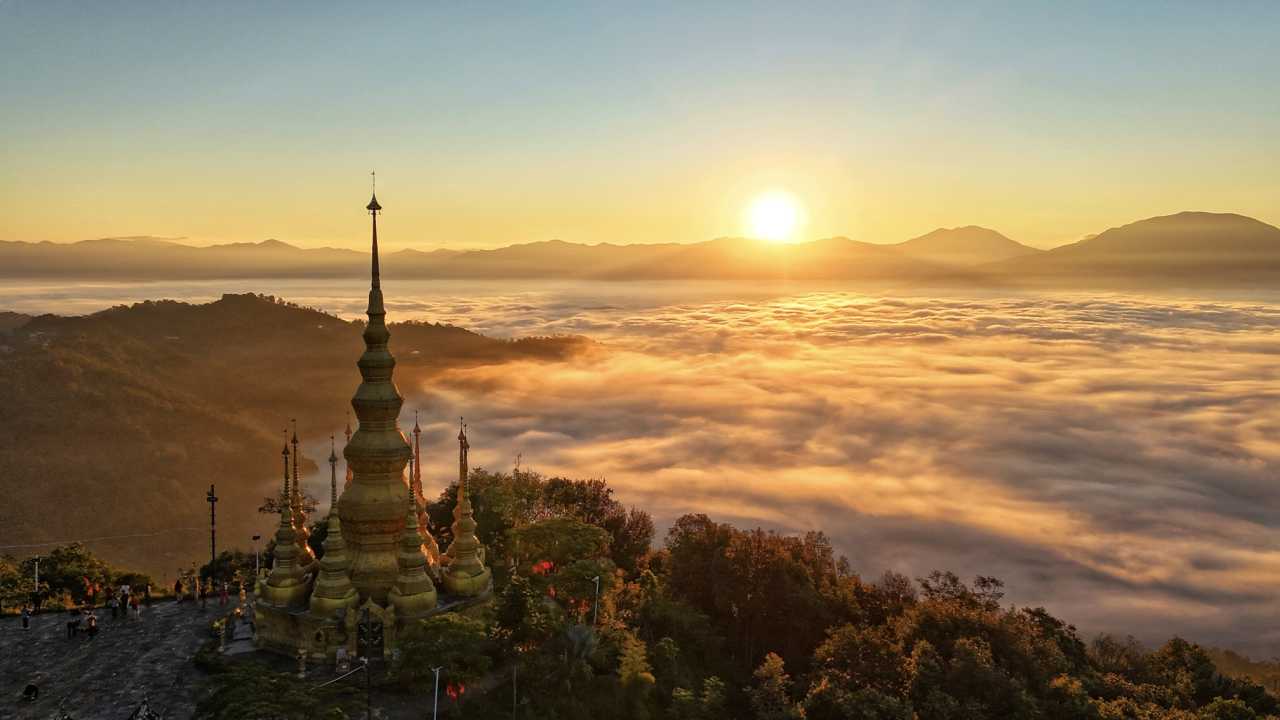
- Nov 24: Jingmai Mountain → Pu'er city center. Early morning: watched the cloud sea sunrise at Jingmai Grand Golden Pagoda. Visited Nuo Gan Ancient Village. After lunch, headed to Pu'er.
- Nov 25: Pu'er → Yuanyang Rice Terraces. Arrived in the afternoon. Took photos at Laoyingzui Terraces before checking in. Evening: watched sunset at Dawazhe, visited Azheke and Hadanpu Terraces along the way.
- Nov 26: Yuanyang Rice Terraces → Jianshui Ancient City. Early morning: sunrise at Duoyishu. Morning: Aichun Blue Terraces. Arrived in Jianshui at noon. Afternoon: explored the small train and Ant Workshop. Evening: saw the Seventeen-Arch Bridge. Night tour of the ancient city.
- Nov 27: Jianshui Ancient City → Ailao Mountains. Morning: visited Zhu Family Garden and Lin'an Government Office. After lunch, departed. Stopped at Nan'en Waterfall en route. Checked in during the afternoon, experienced the Ancient Tea Horse Road, waited for sunset, and photographed the stars.
- Nov 28: Ailao Mountains. Morning: hiked the Ancient Tea Horse Road at Jinshanyakou. Afternoon: visited Shimen Gorge. Stayed another night in the Ailao Mountains.
- Nov 29: Ailao Mountains → Kunming. En route, visited Fuxian Lake's Luchong Scenic Area and Red Sand Beach. Flew back to Hangzhou at 7 PM.
In the end, this route became a north-south line through southern Yunnan: from Xishuangbanna all the way north, passing through Pu'er, Honghe, Yuxi, and finally Kunming.
Some Photography Advice
This wasn't a solo photography trip; I had to consider my companion's feelings. So, sightseeing took priority, with photography secondary. One camera body, two lenses, plus a DJI Mini drone—that was my entire kit.
The 24-70mm lens was my main workhorse, while the 70-300mm was reserved for the Yuanyang terraces and cloud seas. Drones have become standard travel gear. If you're not a photography enthusiast and only take photos for social media, there's really no need to lug a camera—a smartphone with a good telephoto lens plus a drone will suffice. Add other equipment only if you have video needs. Take your time to observe more; the travel experience will be much better. After all, we don't set out just for social media.
One more thing: if you have specific photography needs, a tripod is essential, an ultra-wide-angle lens is best (for shooting the stars), and a telephoto lens is a must—70-200mm is still a bit short; ideally, the telephoto end should be around 300-400mm.
Accommodation Recommendations
Below are reviews of the seven hotels or guesthouses we stayed at on this trip. They're all basically safe choices. If you're exceptionally picky, look elsewhere.
Xishuangbanna · Yueying Fuxing Hotel
Pros: Located in the core area of Gaozhuang Xishuangjing, affordable. The 29th floor has an observation deck with a fantastic view, where you can have dinner while overlooking the Jinghong Grand Golden Pagoda and the Starry Night Market. Cons: The building houses multiple hotels, and the underground parking is a bit chaotic. It's advisable to have the front desk guide you to parking.
Jingmai Mountain · Dayucang · Twenty-Four Tea Sea Cloud Lodge
Pros: Located in Mengben Village, easy parking, spacious rooms with good facilities. Excellent for watching the morning cloud sea, not far from the Jingmai Grand Golden Pagoda. Cons: Can't enjoy the sunset. About 10-20 minutes' drive from Wengji and Nuo Gan ancient villages.
Pu'er · Deting Garden Hotel (Simao District, Tea Horse Ancient Town Branch)

Pros: As a transit hotel, over 400 RMB a night is already a bit of a splurge. Good location, not far from the Ancient Tea Horse Road scenic area and Daijia Alley historic buildings. Free breakfast, lunch, and late-night snacks. The breakfast is especially rich, even including sushi, pizza, and freshly grilled pork chops. Cons: None for someone as undemanding as me.
Yuanyang Rice Terraces · Xiang Yunduan Terrace View Guesthouse
Pros: Newly opened in 2025, a 3-5 minute walk from the Duoyishu viewing platform. You can see the Duoyishu terraces directly from the room, and the rooftop has a viewing deck. Many restaurants nearby with reasonable prices. Cons: The rooftop platform's view of the terraces is slightly obstructed by trees, but you can capture both Pugaolao Village and Duoyishu in one frame—something impossible from the official viewing platform. Picky photographers might prefer the Duoyishu Banshan Resort Hotel, whose angle is almost identical to the official platform, but at a higher price.
Jianshui Ancient City · Guyueli Courtyard Villa (Jianshui Ancient City Branch)
Pros: Located inside the ancient city, right by the North Gate, with an underground garage. Not far from the Zhu Family Garden and Lin'an Government Office. Has its own café, and check-in includes a free afternoon tea. Cons: Breakfast is served at the café with limited seating, on a per-serving basis, not a buffet. But it's not a major issue.
Ailao Mountains · Yunshang Shexia Forest Guesthouse (Jinshan Forest Park Branch)
Pros: Adjacent to Jinshan Forest Park, about a 10-15 minute drive from Shimen Gorge. Has a strong artistic vibe. Across the street from the guesthouse is a sunset viewing platform, with a short section of the Ancient Tea Horse Road below it. Behind the guesthouse is the free Ancient Tea Horse Road at Jinshanyakou. The rooftop is great for shooting the stars. The owner is an experienced hiker and can arrange guided hikes for a fee into the primeval forest. Cons: Hot water supply is a bit unstable, and the water temperature isn't very high. The mountain gets cold at night; I didn't dare shower for fear of catching a chill.
Ailao Mountains · Yilan Shanfang 180-Degree Mountain View Boutique Resort
Pros: We stayed here the second night because we didn't want to backtrack after visiting Shimen Gorge. A livelier location, just one kilometer from the Cloud Sea Sunrise Viewing Platform. Large rooms, new facilities, closer for the return trip, and affordable. Cons: The view from inside the hotel is average; for sunrise and cloud seas, it's better to go to the viewing platform. Lacks artistic taste. If price isn't a concern, nearby options like Yunzhu Bojing or Shuji Shan she are better.
Main Text: The Cloud Journey Begins in Xishuangbanna
Xishuangbanna: An Unexpected Encounter
To be honest, Xishuangbanna wasn't originally in the plan. The initial plan only included Jingmai Mountain and the Yuanyang Rice Terraces. But as I delved deeper into travel guides, I discovered there are two main routes into Jingmai Mountain: from Pu'er City or from Xishuangbanna. Entering from Lincang is shorter, but there are fewer flights, and renting a car is inconvenient.
If we entered Jingmai from Pu'er, after finishing our visit, whether heading to Yuanyang or the Ailao Mountains, we'd have to drive three hours back towards Pu'er city center. So, we finally decided to enter from Xishuangbanna.
Xishuangbanna is divided into three areas: Menghai in the west seems to have few attractions, but Jingmai Mountain happens to be on the border between Menghai and Pu'er; Jinghong in the center is the main tourist area, home to Manting Park, Gaozhuang, and Wild Elephant Valley; Mengla in the east basically has just the Xishuangbanna Tropical Botanical Garden. A three-day itinerary is reasonable.
We took an early morning flight and landed in Xishuangbanna four hours later, at 11 AM. We only had half a day and one night. Although neither my friend nor I had been to Xishuangbanna before, this trip wasn't specifically for it. After picking up the car at the airport, we arranged to visit Boruo Temple and Manting Park in the afternoon, and the Grand Golden Pagoda and Starry Night Market in the evening.
A Thousand-Mile Landscape Painting from the Plane
A 6:50 AM flight is hardly friendly for someone from a third-tier city. We set out after 3 AM, still bleary-eyed when we arrived at Xiaoshan Airport. The flight took off on time, and I dozed off, only to be woken up by the flight attendant's sales pitch—I'd almost forgotten this was a budget airline flight. Bored, I opened the window shade and was greeted by a real-life version of "A Thousand Li of Rivers and Mountains."
Distant mountains were a deep indigo, layer upon layer of peaks. At that moment, the four-hour flight no longer felt tedious.
The plane landed on time at Gasa Airport. The airport is small, and our luggage came out quickly. The car rental process with eHi was also fast. The weather was clear, with not a cloud in the sky, and the temperature was around 25-26°C.
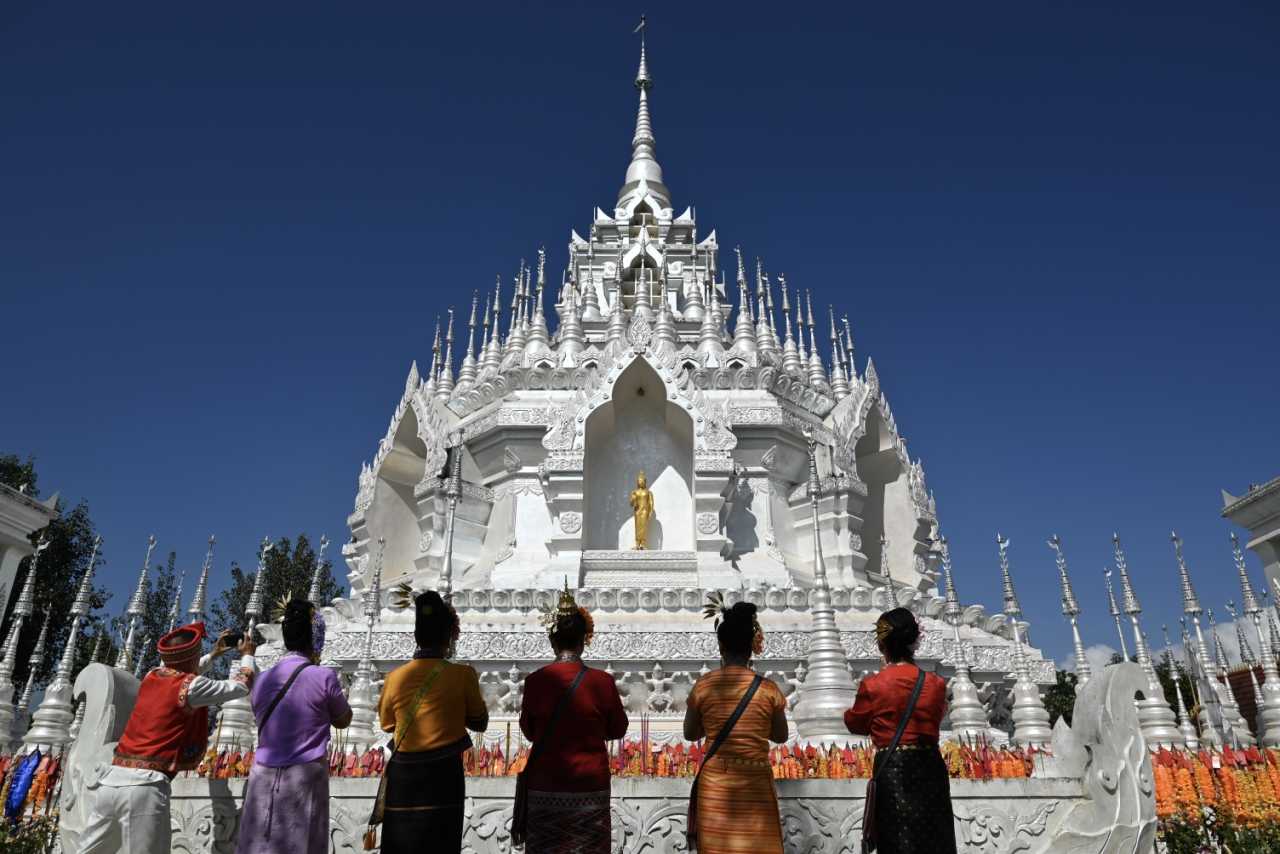
Boruo Temple: A Silver Silence
Budget airlines don't serve meals, so we were hungry after landing. We drove out, passed a residential area with many small eateries along the street, but none were particularly Yunnanese. We randomly went into a Lanzhou beef noodle shop and had two bowls of beef noodles for 40 RMB. They were surprisingly delicious.
Boruo Temple is not far from the airport, about a ten-minute drive. We treated it as a post-meal digestive stroll.
This historic temple in Manzhen Village, built in 833 AD, is known for its silver-white pagoda complex and Theravada Buddhist culture. The main pagoda houses a relic of the Buddha. It's free to enter, no reservation needed. The overall architecture is unique and worth a visit. There weren't many tourists, so it was quite peaceful. The temple is very small; it doesn't take long to walk around. If you have photography needs, it's best to come in the early morning or late afternoon—we arrived at noon when the sun was harsh.
Manting Imperial Garden & General Buddhist Temple: The Soul Garden of a Millennium-Old Kingdom
Ticket price: 40 RMB, includes the General Buddhist Temple. Opening hours: 8:00 AM – 5:30 PM.
Manting Imperial Garden is the oldest park in Xishuangbanna. It was once the imperial garden of the Dai kings, with a history of over 1,300 years. In the Dai language, it's called "Chun Huan," meaning "Garden of the Soul." As a classic treasure spot, it's also the most crowded with tourists. With our limited time, we basically only arranged this one major attraction.
Entering from the northeast gate, the first thing that caught our eye was a bronze statue of Premier Zhou Enlai. Dressed in Dai clothing, holding a water bowl in his left hand and an olive branch in his right, it recreates his participation in the Water Splashing Festival in the 1960s. Behind the statue is the Zhangha Pavilion. Further in, the golden-yellow buildings of the Dai King's Palace shone brilliantly in the sunlight, exuding royal grandeur.
The entire park was filled with people taking travel photos. If you need travel photography, it's best to enter either early in the morning or after 4 PM; otherwise, you can only shoot small scenes. The Chengxin Pagoda is one of the high points; it's said that climbing it offers a panoramic view of the tropical garden, but we didn't go up. The White Pagoda is a replica of the "Manfeilong White Pagoda," with a pure white, gourd-shaped body, a representative structure of Theravada Buddhism. Under the wear and tear of time, its surface is no longer pristine white.
We wandered aimlessly and eventually arrived at the General Buddhist Temple, which is connected to the back gate of the Imperial Garden. Although the General Buddhist Temple is free, you need to keep your Manting Park ticket, as it's checked again here.
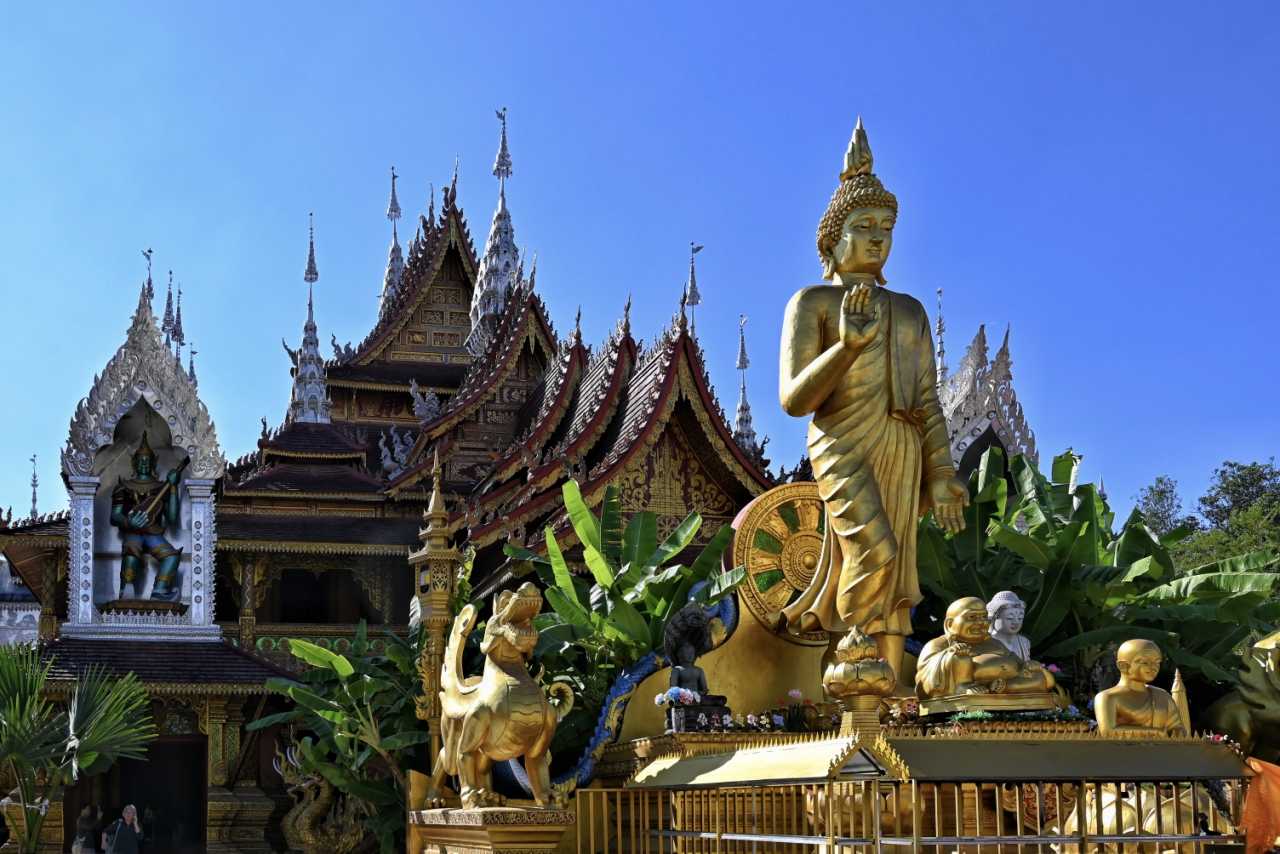
The General Buddhist Temple is the highest-ranking Buddhist monastery in Xishuangbanna. In the Dai language, it's called "Wa Ba Jie," meaning "Quiet Forest Monastery." Built in 615 AD, it was once the royal monastery of the Dai kings and is now a pilgrimage center for Theravada Buddhists. The main building, "Xiong Han"—the Buddha Hall—is imposing, with a resplendent interior. The overall architecture blends Dai and Southeast Asian styles, with golden spires, red walls, and white pagodas, truly beautiful.
For a standard visit, two to three hours is enough. But if you want to savor it, you could easily spend a whole day—you can walk and look around, and when you're tired, find a place to sit and have a coffee. Despite the crowds, Manting Park left a good impression on me.
Jinghong Grand Golden Pagoda & Starry Night Market: Exotic Charm Under the Lights
Deep down, I'm a hardcore nature lover. With limited time, I had to say a quick goodbye to Manting Park. We drove across the Lancang River and headed straight for our accommodation for the night—the Yueying Fuxing Hotel in Gaozhuang Xishuangjing.
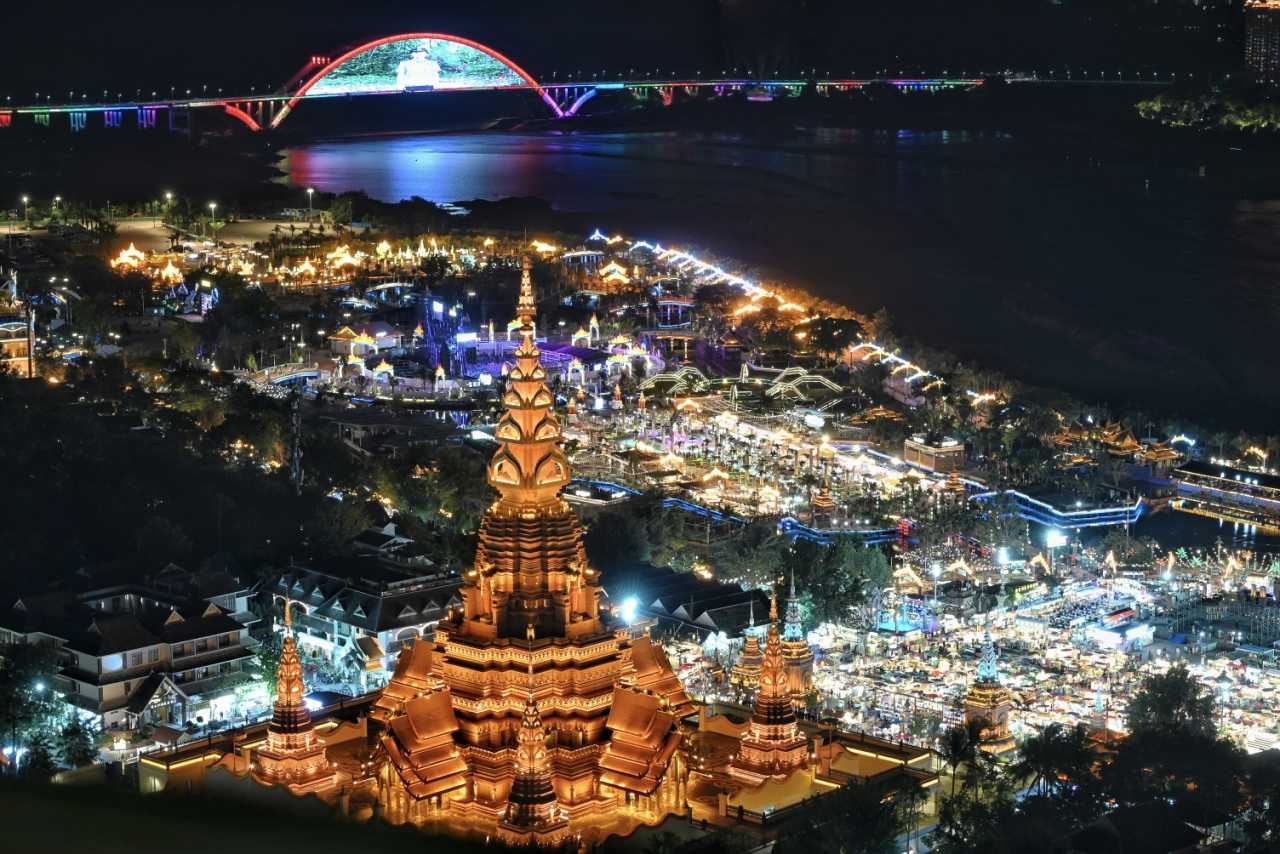
The hotel is on the 29th floor of Building 1 in Jingkuangzhai, offering an excellent view. From the restaurant and observation deck, we could see the Jinghong Grand Golden Pagoda and the Starry Night Market in their entirety, with the Lancang River flowing through the city, giving a strong exotic feel.
For dinner, we chose a nearby "Dai Princess Peacock Feast," a set meal for two at 182 RMB. It included lemongrass grilled fish, pineapple rice, grilled chicken, and more, which was quite abundant, but the taste wasn't particularly impressive. We just went with the local custom.
After dinner, it wasn't dark yet. We strolled back to the hotel and went up to the 29th floor to see the night view. The Grand Golden Pagoda's lights came on quite late, and the sky on that side was almost completely dark, but the Starry Night Market below was a sea of lights. Actually, the hotel's observation restaurant is quite good. If you don't absolutely have to check out a high-rated restaurant on Dianping (a Chinese review app), you could just eat here—great view, beautiful scenery.
While wandering through the market, my friend was excited, but I wasn't particularly interested. Still, "since we're already here," I accompanied him for a walk. Up close, the Grand Golden Pagoda didn't seem that impressive. The entire market was either food stalls or souvenir shops, yet it was called the "Mekong River Starry Night Market"—we only have the Lancang River; the Mekong is its name after it enters Myanmar and Laos. I don't know what the local tourism authorities were thinking.
The grilled insects on sticks were unique, but after looking for a while, I still didn't dare try them. Looking down at the market from the Grand Golden Pagoda, it was a cacophony of voices and a sea of people, with beautiful women in Dai costumes everywhere taking travel photos. Enough of that. We went back to the hotel early to rest. Tomorrow, we had to enter Jingmai Mountain, with a four-hour drive ahead of us.
Jingmai Mountain: A Paradise Above the Clouds
If there's still a hidden gem in Yunnan that ordinary tourists can easily reach, besides the Dulong River in the Three Parallel Rivers area, Jingmai Mountain is definitely one.
Jingmai Mountain has no entrance fee but requires a reservation, which can be made through the WeChat mini-program "Jingmai Mountain Reservation Service." It's located in Huimin Township, Lancang Lahu Autonomous County, Pu'er City. It borders Menghai County in Xishuangbanna to the east and Myanmar to the west. It comprises 14 traditional ancient villages, belonging to two administrative villages: Jingmai and Mangjing. The most famous are Wengji Ancient Village and Nuo Gan Ancient Village. In 2023, the "Cultural Landscape of Old Tea Forests of the Jingmai Mountain in Pu'er" was inscribed on the World Heritage List, becoming China's 57th World Heritage site.
Jingmai Mountain Guide
- Cloud Sea Season: From November to March of the following year, cloud seas appear almost daily, lasting from sunrise until about 11 AM at the latest.
- Scenic Area Scope: From the checkpoint in Huimin Town, passing through Jingmai Dazhai, Nuo Gan, Wengji, Mangjing, all the way to the highest village, Manghong, it's only about a 40-minute drive. The area to explore isn't very large.
- Accommodation Recommendations: Personally, I think the three best places to stay are Manghong Village, Wengji Ancient Village, and near Jingmai Dazhai.
- Characteristics of Each Village:
- Manghong: Good for staying, not for sightseeing. The village itself doesn't have much to offer, except an octagonal pagoda. High altitude, excellent for watching sunrise, sunset, and cloud seas.
- Mangjing: Good for sightseeing, not for staying. Princess Banyan Tree and the Bee King Tree are both here.
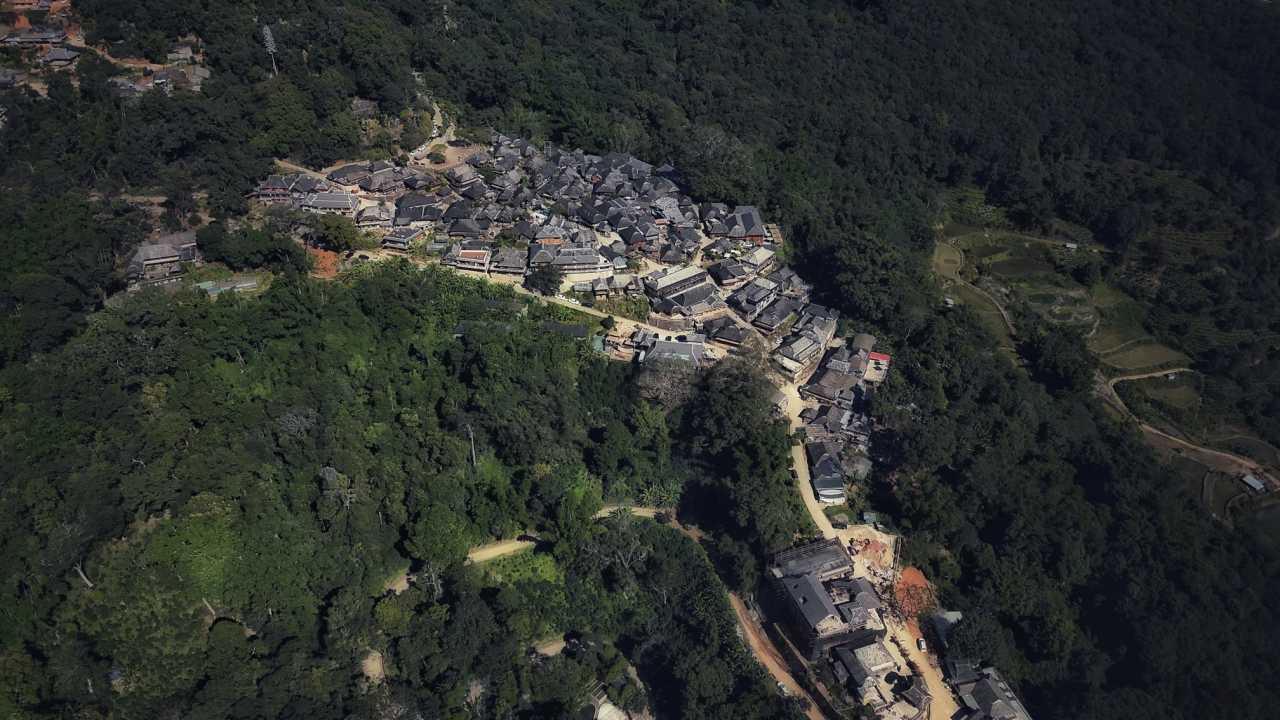
- Wengji: Good for both sightseeing and staying. One of the most famous ancient villages on Jingmai Mountain. You can see the sunset but not the sunrise. Accommodations are mostly guesthouses within the village, parking is inconvenient. If not possible, you can stay in neighboring Wengwa.
- Nuo Gan: Only suitable for sightseeing. It's the most beautiful village on Jingmai Mountain, but because it's located in a valley, you can't see the sunrise or sunset.
- Jingmai Dazhai: Not much to see, but it has the Jingmai Grand Golden Pagoda, which is perfect for shooting the sunrise and cloud sea. You can stay in nearby Mengben Village, which has good conditions and also offers nice views of the cloud sea.
Entering Jingmai Mountain
The main attractions of Jingmai Mountain are the cloud seas, tea forests, and ancient villages. Places like Aileng Mountain and Dapingzhang are very famous ancient tea gardens. My purpose this time was only two things: visit ancient villages and see the cloud sea. I had no interest in exploring the ancient tea forests.
We left Xishuangbanna around 8 AM. Three to four hours later, after passing the Jingmai Mountain checkpoint, the concrete road turned into a cobblestone road. It's said that they don't pave it with concrete to protect the environment of the tea culture's origin. Fortunately, the road surface was relatively flat and didn't affect the tires much.
We arrived at Manghong Village around noon—it's essentially the deepest village on Jingmai Mountain. Originally, I planned to stay two nights on Jingmai Mountain, one of them in Manghong. The plan was to explore Manghong and the Mangjing area in the afternoon, then go to Wengji Ancient Village to catch the sunset, return to Manghong for the night, watch the sunrise and cloud sea the next morning, then visit Nuo Gan Ancient Village, stay in Mengben Village at night, and watch the cloud sea sunrise at Jingmai Grand Golden Pagoda one more time on the third morning.
But my companion wasn't quite used to this laid-back, slow pace. He preferred to visit more places within a limited time. I didn't mind; after all, I was accompanying him on this trip. We finally decided to compress the itinerary: visit Manghong, Mangjing, and Wengji this afternoon, stay in Mengben Village tonight; watch the sunrise at the Grand Golden Pagoda tomorrow morning, visit Nuo Gan Ancient Village in the morning, and after lunch, head to Pu'er city center for a transit night.
We had a simple lunch in Manghong and took a quick look around. Like Wengji, when shooting the cloud sea sunrise here, you can use the ancient village as a foreground—the black rooftops against the white cloud sea would look stunning. On the Jingmai Dazhai side, the Grand Golden Pagoda is the only possible foreground, and you'd need a drone. So photography enthusiasts are advised to stay one night in each location.
The Manghong Octagonal Pagoda wasn't very impressive. The Princess Banyan Tree is located between Upper and Lower Mangjing villages. This large banyan tree forms a natural village gate, quite peculiar. The Bee King Tree is also in Mangjing, but perhaps due to the time or lighting, what we actually saw was very different from the photos online. There were indeed many beehives, but they were dark in color, not the almost translucent orange-yellow you see in pictures. Perhaps others shot them at sunset against the light; we were there at the wrong time.
Wengji Ancient Village: A Blang Village Frozen in Time
Wengji is a Blang ethnic village that has completely preserved its traditional stilted houses and village layout. It's free to visit.
We arrived around 2 PM and had to park outside the village. Walking first to a platform, the village was below us. On the other side, higher up, were the Wengji Ancient Temple and a thousand-year-old cypress tree. The platform wasn't high enough, and the view was limited. It was impossible to get a panoramic view of the entire village, even from the ancient temple side.
We climbed the steps of the ancient temple. The temple was indeed quite old, but very small. The thousand-year-old cypress tree beside it was enormous. Without an ultra-wide-angle lens, I couldn't capture it all. We looked around the temple for a good vantage point but couldn't find one, so we had to cross the square and enter the ancient village.
The village is small, very rustic, and not crowded with tourists. It felt nice to stroll slowly. At the village center, there was a totem; we saw a similar one later in Nuo Gan. The rooftops here are definitely a distinctive feature.
Actually, the best way to experience Wengji Ancient Village is to find a tea house, brew a pot of Pu'er tea, and wait for a peaceful, timeless sunset.
We did a quick tour, returned to the square, and launched the drone to get a bird's-eye view of the ancient village. If there had been a sea of clouds in front, I imagine it would have been breathtaking.
We left Wengji just before 4 PM. The cloud sea season on Jingmai Mountain was just beginning to show us its first light. Ahead, the terraces of Yuanyang and the dense forests of the Ailao Mountains were still waiting for us.
Conclusion: Above the Clouds, the Traveler Has No Boundaries
Eight days and seven nights, from the tropical charm of Xishuangbanna to the cloud sea and ancient villages of Jingmai Mountain; from the millennium-old agriculture of the Yuanyang Rice Terraces to the pristine mystery of the Ailao Mountains; from the long cultural heritage of Jianshui Ancient City to the tranquil serenity of Fuxian Lake—along this journey, we traveled through southern Yunnan, above the clouds, conversing with the mountains and rivers, walking with time.
Perhaps the meaning of travel lies not in how many scenic spots you check off, but in the unexpected landscapes you encounter and the moments of slowed-down time. Whether you're alone or with company, whether you carry a camera or just a phone, as long as your heart is on the road, every place is a scenic spot.
If you also want to take a road among the clouds, remember: the cloud seas on Jingmai Mountain are at their best from November to March; the irrigation period for the Yuanyang Rice Terraces begins at the end of November; and the primeval forest of the Ailao Mountains deserves a full day. Most importantly, set aside enough time to feel, to daydream, and to become part of the scenery.
After all, the traveler has no boundaries.
You should also read:

Body in Hell, Heart in Heaven: A Pilgrimage Through Tiger Leaping Gorge — A Dialogue Between Heaven and Earth
Body in Hell, Heart in Heaven: A Pilgrimage Through Tiger Leaping Gorge — A Dialogue Between Heaven and Earth Introduction: When the Gorge Splits Open Beneath Your Feet Some say Tiger Leaping Gorge is the closest place on Earth to the border between "hell" and…
Continue reading...
Cloud Travelogue · Dali of Wind, Flowers, Snow, and Moon: A Three-Day, Two-Night Journey of a Free Spirit
Cloud Travelogue · Dali of Wind, Flowers, Snow, and Moon: A Three-Day, Two-Night Journey of a Free Spirit I am a cultured female foodie with a touch of rogue charm. I slung on my backpack, took my lover's hand, and set off on a spontaneous…
Continue reading...
The Meaning of Travel – A Tengchong Story: A Journey of the Heart and Personal Growth
The Meaning of Travel – A Tengchong Story: A Journey of the Heart and Personal Growth Setting Out, Only to Return a Better Self Some say travel is nothing more than leaving a place you're tired of, only to go to a place where others…
Continue reading...