Let the Knight's Soul Take Flight in Shuanglang
Let the Knight's Soul Take Flight in Shuanglang
Prologue: Yunnan, a Journey of the Soul
Some places, once you set foot in them, take root in your heart and grow. Yunnan is that kind of place for me. Two years ago, I set foot on this land for the first time—Lijiang's ancient charm, Dali's leisurely pace, like an unfinished poem, deeply engraved in my memory. Those blue skies and white clouds, green mountains and clear waters, and the slowly flowing time later quietly seeped into my music, becoming an indispensable undertone in my melodies.
In 2012, I set off again, heading toward the colorful clouds of the south. This time, my destination was Shuanglang—a small fishing village nestled against mountains and waters, so serene it felt as if time had forgotten it. Here, I would let my soul take complete flight.
Departure: From Chengdu to Kunming, Unexpected Surprises Along the Way
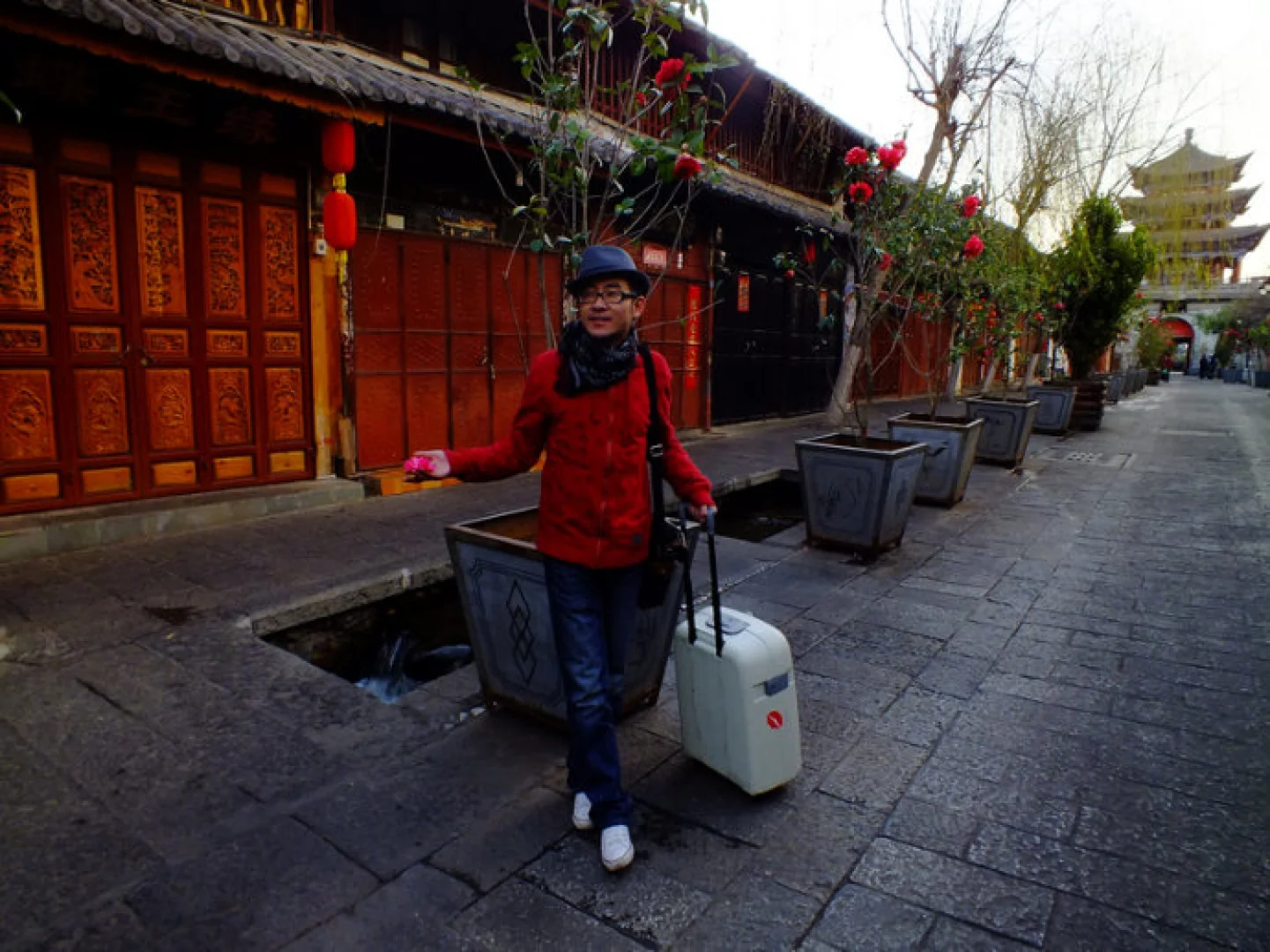
On February 9th, my plane landed in Kunming from Chengdu. Dragging my suitcase, I headed straight to Qiaoxiangyuan (Bridge Fragrance Garden) and ordered a steaming bowl of cross-bridge rice noodles (过桥米线) and a pot of steam-cooked chicken (汽锅鸡). After a hearty meal, I wandered aimlessly through the streets of Kunming. In the evening, in an unremarkable little shop, I unexpectedly found two pairs of shoes I loved and bought them without hesitation. When I travel, I can never resist making my luggage heavier, as if every item is a souvenir of the journey.
Kunming's bus system was a bit chaotic, and taxis were even harder to find—refusals to pick up passengers were common. Outside a shop near the train station, a loudspeaker looped a catchy advertising jingle: "Everything in this store is 9.90 yuan, all 9.90 yuan... 9.90 yuan isn't much, it won't get you to Hong Kong or Singapore..." Standing by the roadside waiting for a ride, I found myself unconsciously memorizing it—this was the ultimate masterpiece of contemporary Chinese street performance!
That night, I boarded the train to Dali. A short seven-hour journey, just enough for a half-awake, half-asleep dream. In the early hours, before dawn, I stood in the darkness of Dali station. The bus to Shuanglang wouldn't depart until nine in the morning, so I took the No. 8 bus straight to Dali Ancient Town.
Dali Ancient Town: Morning Tranquility and a Reunion

The ancient town was silent, shops shuttered, with only a few foreign joggers brushing past me. A shy, budding sunrise and a lingering moon hung in the sky at the same time. In that moment, I felt once again that disorienting sense of not knowing where I was. The wind brushed my face—still so familiar. On Fuxing Road, my suitcase slid over the bluestone slabs, making a crisp sound. I revisited the Longju Inn where I had once stayed, now renamed "Tai Chi"; on Renmin Road, I ate those familiar rice noodles (饵丝) again. In my mind, the song from the band Painkiller quietly played: "The rain falls softly over the ancient town, Renmin Road holds my good mood..."
As the sky brightened, I boarded the bus to Shuanglang at the North Bus Station. About an hour later, under the blazing midday sun, I arrived at my destination.
Shuanglang: A Drop in the Ocean, Facing Erhai Lake
I headed straight to the inn I had booked in advance, "Canghai Yisu" (A Drop in the Ocean). As soon as I entered, a big black dog barked and lunged at me—having been afraid of dogs since childhood, I nearly turned and ran, but thankfully the owner called it off. Looking up, I saw a notice on the door: "Big dog inside, don't be afraid." I couldn't help but smile. My room was on the second floor, small but cozy; opening the door, the blue waters of Erhai Lake came into view. The inn had a courtyard with a lawn, a swing, and colorful flowers planted by the sea-viewing platform. The moment I stepped in, I fell in love with its quiet purity—the feeling was exactly like its name: "A Drop in the Ocean."
I changed into my pajamas, sat in a rattan chair by the door, brewed a pot of hot tea, lit a cigarette, listened to the wind and waves, and gazed at the blue sea and sky. In that moment, I truly understood what it meant to "face Erhai Lake, with spring flowers blooming." The inn had two dogs, one black and one white—were they best buddies or a couple? I couldn't tell. A neighbor's dog charged into the yard, and a little girl raised a watering hose to defend her territory. This adorable battle added a touch of liveliness and fun to the peaceful courtyard.
Shuanglang on the Tongue: Food and Slow Time
After gazing at Erhai Lake to my heart's content, my stomach began to protest. Shuanglang's food scene was dazzlingly diverse, with most restaurants serving authentic Bai ethnic cuisine. At "Kanghai Xiangcai Guan" (Kanghai Fragrant Vegetable Restaurant), I ordered a fried dried meat dish (炸干巴) I'd never seen before—unique in flavor and reasonably priced, paired with spicy mapo tofu (麻辣豆腐), I ate to my heart's content.
In the afternoon, I strolled casually through the fishing village. Shuanglang isn't big; no map needed. Just walk along the streets, and as long as your sense of direction isn't terrible, you can explore every corner. At roadside stalls, Bai aunties were selling grilled fish and shrimp—all caught fresh from Erhai Lake, cheap and delicious: small fish for two yuan a skewer, small shrimp for one yuan a skewer, and a shrimp cake (虾饼) covered in tiny shrimp for three yuan. I bought a few skewers and ate as I walked—what a treat!
Haidi Life: A Frozen Album Cover
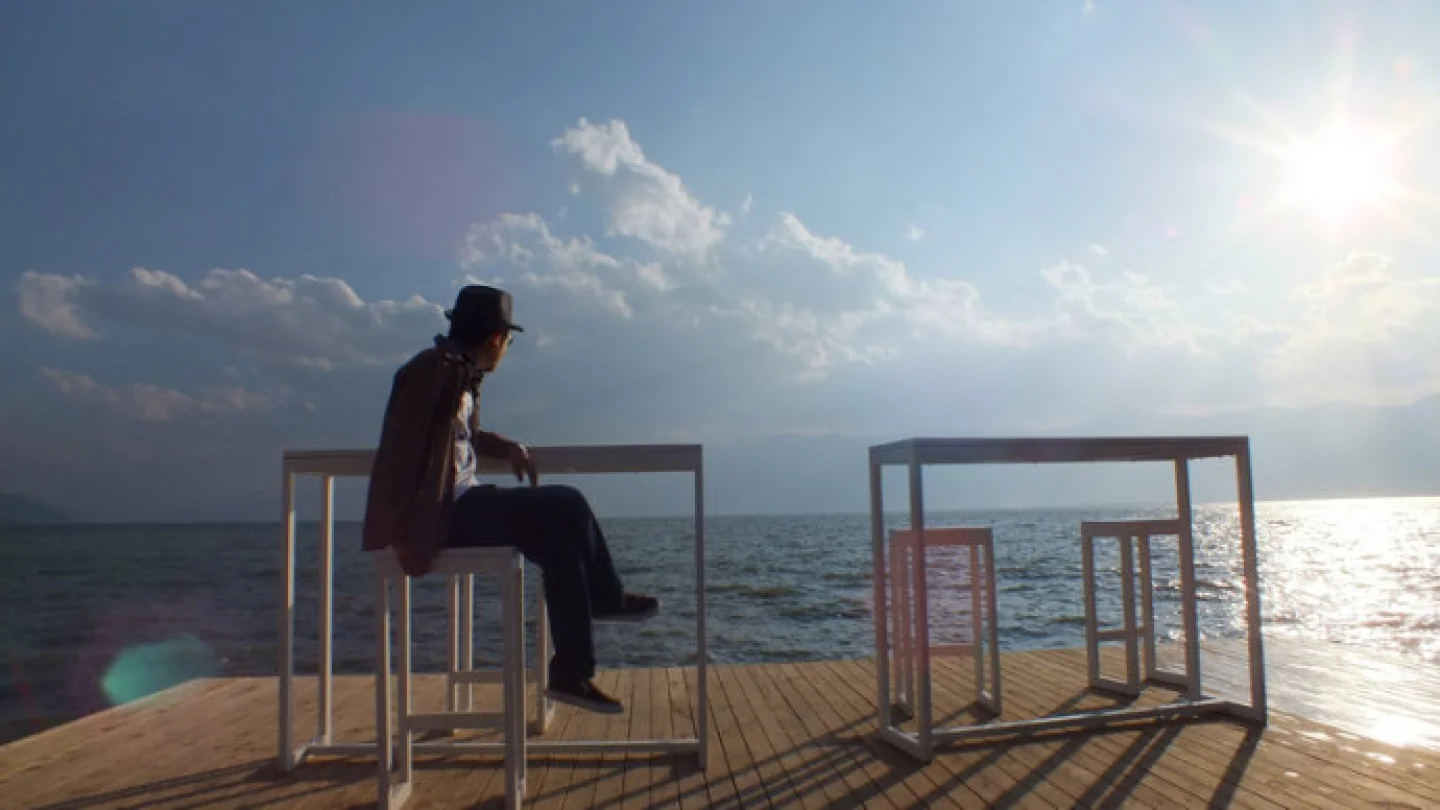
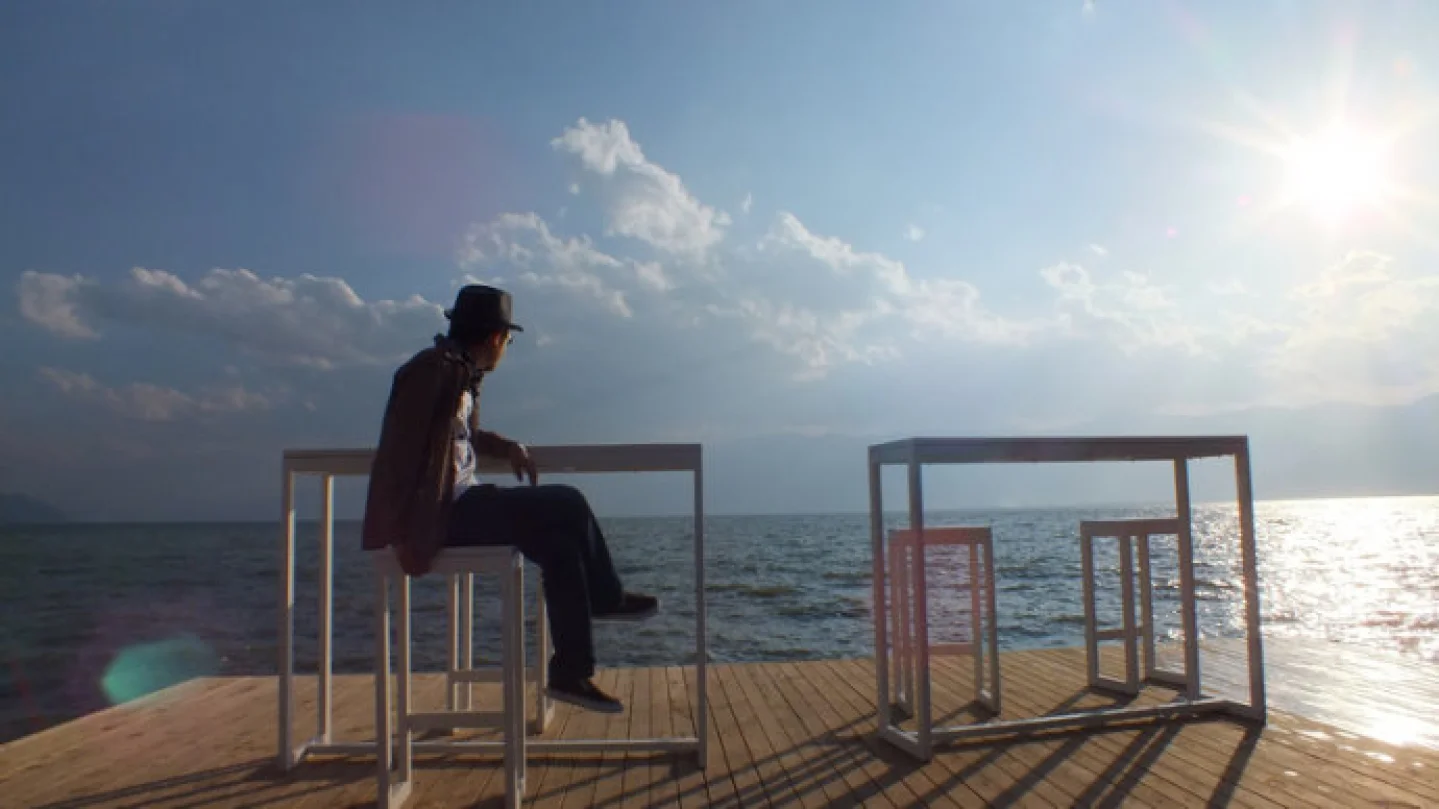
I wandered slowly into the alleys, twisting and turning, and unexpectedly ran into a little donkey. The end of my walk was Shuanglang's famous inn, "Haidi Shenghuo" (Seafloor Life). Across from the inn lay the endless scenery of Erhai Lake. On a platform built by the lake, a few white tables and chairs seemed naturally placed, like a frozen album cover. I lingered there, unable to leave, taking many memorable photos. The courtyard also had a big black dog that loved to play with a brick—full of personality—and a gentle little golden retriever. I mustered my courage to shake hands with it.
On my way back, dusk arrived unexpectedly. Standing by Erhai Lake, watching the sunset slowly descend, the impurities in my heart gradually settled. Nature's beauty always surpasses all human artistry. The beauty and tranquility of Erhai Lake were breathtaking.
Evening Melodies: Ji Xiang Hong and Xu Fei's Song
That evening, I went to the Ji Xiang Hong (Auspicious Red) restaurant. A lovely Bai大姐 (older sister) recommended a few signature dishes, and I ordered an incredibly smooth papaya plum wine (木瓜梅子酒). The restaurant played a loop of pleasant songs—"Because of Love," "Can't Help Falling in Love," "Dimples," "Days of Being Wild," and even Jason Mraz. Suddenly, a Chinese song with great feeling came on. The female singer's voice sounded familiar, and the lyrics went: "We will eventually travel hand in hand, the sunlight tilts, bringing this melody, forgive the air for being too sweet, only I can speak and you listen..." It's rare to hear such tender, indie music in a stir-fry restaurant; it felt as if time had stopped. A few days later, back in Xi'an, I looked up the song and found it was Xu Fei's "We Will Eventually Travel Hand in Hand." I think I'll cover it at the right time. The food at this restaurant was truly delicious. On my last night in Shuanglang, I came back for dinner again, ordered the papaya plum wine again, and heard that song again.
Back at the inn, in the courtyard's public book lounge, friends from all over were playing on their computers, watching TV, reading, or chatting over tea. The warm lighting made the whole inn feel cozy. I played a round of the board game "Three Kingdoms Kill" with a friend, and to the sound of Erhai Lake's waves lapping outside the window, I quietly drifted off to sleep.
Cycling Around Erhai Lake: Rainbows and Postcard-Perfect Scenery
On February 11th, I slept so soundly I dreamed I was playing guitar at a gig in Xi'an. When I woke up and pulled open the curtains, there was the blue sky and green lake, silent and still—it felt like I had time-traveled. I took a shower, sat by Erhai Lake with a pot of tea, and felt completely content. Heading out again to wander, Erhai Lake showed different colors under different sunlight, intoxicating me. My playful spirit always gets lured by beautiful things; surrounded by boundless scenery, I felt a long-dormant urge to dance—I dedicate this gesture to my beloved Michael Jackson!
A friend recommended "Bai Ethnic Private Kitchen" (白族私房菜) on Weibo, so I went for lunch: braised chicken with potatoes (土豆焖鸡), stir-fried lettuce (烧莴笋), and pea shoot tofu soup (豌豆尖豆腐汤)—a feast. In the afternoon, I rented a bike and cycled around Erhai Lake. It drizzled at first, then cleared up. The scenery along the way was sometimes splendid, sometimes melancholic, stirring up thoughts. I recalled Xu Wei's song "Warmth" that I love so much: "I love the blue Erhai Lake, scattered with white sails, my heart beats slowly with the wind, under the golden sunset, among the green fairy grass, your smile is so warm..."
I rode to an empty road, got off to enjoy the view and take photos. This stunning nature made every casual click of the shutter produce postcard-perfect images. On the way back, I even saw a rainbow—hanging beneath the blue sky, forming two rings of light, incredibly beautiful. By the time I raised my camera, one ring had already faded, and before I could take more shots, the rainbow disappeared.
That evening, I ate at "Jingji Ban Xiaoshi" (Economy Half-Bite) and had sour-spicy fish (酸辣鱼) and a secret-recipe Lao Gan Ma eggplant dish (秘制老干妈茄子)—also tasty. Since I hadn't renewed my booking for the second-floor room, I decided to sleep in a tent—cheaper, no need to move luggage, and a chance to experience sleeping by the shores of Erhai Lake. The innkeeper warned me it would be windy at night, but the tent was surprisingly warm, and I quickly fell asleep.
A Lazy Person's Paradise: Life in Slow Motion
On the third day, I woke up and unzipped the tent's door. The morning sunlight shimmered on Erhai Lake, and a group of ducklings bobbed in and out of the water, playing—my mood soared! Completely free from time, pressure, or purpose—just going out to soak up the sun and wander—this was the life I loved. Compared to the eternally calm and peaceful Erhai Lake, our busy, hurried lives seemed so rushed and urgent. We truly need to slow down our pace, to experience things slowly and deeply.
While wandering, I came across a Bai man with braided hair walking toward me. A friend told me this was Shuanglang's village chief, also Yang Liping's brother-in-law. He and his wife had built a hotel called "Fensi" (Powder Four) in Shuanglang, reportedly designed by the chief himself—what an impressive guy!
At noon, I ate at Haiyun Renjia (Sea Cloud Home), and their secret-recipe roasted pork belly (秘制烤五花肉) was absolutely divine—crispy and fragrant, a plate that was gone in minutes! In Shuanglang, doing nothing at all made my appetite grow day by day. This place was truly a lazy person's paradise!
After lunch, I stopped for a while at "Mumian Tiandian" (Kapok Dessert), ordered homemade yogurt and mango sago (芒果西米露), flipped through "City Pictorial" magazine, and basked in the warm sun. Time slipped away quietly, unnoticed. Why can't we slow down our time like this in big cities? How long had it been since I read a magazine so carefully, instead of flipping through pages rapidly, turning words into fast food? Perhaps the meaning of travel for me lies in constantly experiencing another rhythm of life, teaching me to be as delicate and grounded as I was in my youth.
At dusk, I took a stroll to Yuji Island. The island was tiny. Outside Yang Liping's famous villa "Moon Palace" (月亮宫), I watched another magnificent sunset.
Farewell: Taking Away More Than Memories
On February 13th, it was time to leave Shuanglang, and I really didn't want to go. After four days and three nights here, I had grown accustomed to waking up and seeing Erhai Lake, to emptying my mind and soaking up the sun. Sitting in the small inn courtyard for an entire day, I barely felt time passing—I only knew the time by my hunger or the angle of the sunlight.
Before leaving, I sat in the book lounge and wrote two postcards to friends. I also took a photo with the owner of Canghai Yisu, thanking her for her hospitality. As I left, the morning Erhai Lake was as serene as ever, a gentle morning breeze brushing my face. I etched this scene into my mind.
On the bus back to Dali Ancient Town, I stopped in Xizhou, a Bai ethnic settlement, and tried the most famous local snack, "Posu Baba" (破酥粑粑, a flaky baked pastry). The buildings here were pure Bai style—simple yet beautiful. Back in the ancient town, perhaps because it was the eve of Valentine's Day, roses of all colors lined the streets, and the town was filled with the scent of couples. I found the sweet-grilled rice cakes (甜味儿烤饵块) I had been craving, sat by the roadside to rest, and watched the joyful expressions on tourists' faces—each of them, in their own way, was harvesting the happiness of travel. People should be on the road, crossing paths with different individuals, briefly intersecting with their different lives.
That night, I took the train to Kunming. Perhaps because I was reluctant to leave, I barely slept. On Valentine's Day, I flew back to Xi'an. I had hoped for a beautiful woman as my seatmate, but ended up with a dark, chubby monk. The airline served fish ball rice for lunch. I ate while sneaking glances, wondering if the monk would secretly eat the meat, only to find he just ate the rice—oh, what a petty mindset I had!
Epilogue: The Value of Travel
The entire twelve-day journey was over, and I felt as if I had been filtered from head to toe. I always feel this way after returning from a trip, but this time it was deeper. From youth to adulthood, from naivety to worldliness, we are driven forward by an invisible whip in reality, constantly accelerating, hoping for an idealized life in the future. But when we stop abruptly and look back, what truly is an ideal life? And how many people can still define it accurately? We work, study, recharge, and earn money frantically, maximizing our youth and squeezing every moment of time—what exactly are we trying to gain from life?
I still can't fully answer these questions. But every time I return from a trip, I get a step closer to the right answer.
If I have to assign a so-called value to a journey, this is the value I'm looking for.
Practical Tips
Choosing an Inn: Shuanglang has many inns, such as Haidi Shenghuo (Seafloor Life), Bandao 63 (Peninsula 63), Fengxinzi (Hyacinth), Fensi (Powder Four), and Chong'er (Insect Two). The inn I stayed at, Canghai Yisu (A Drop in the Ocean), offers great value: second-floor sea-view standard room 150 yuan, first-floor standard room 120 yuan, first-floor basic room 80 yuan, and dormitory beds at 40 yuan per person per day. Tent camping is 30 yuan per day. Remember to book by phone in advance, or you may find it fully booked.
Yuji Island: Admission is 20 yuan, but it's free after 5 PM, so go then. The nice views are blocked by villas, so it's not worth paying for.
Nanzhao风情岛 (Nanzhao Scenic Island): The boat ticket is 50 yuan. The island is very small; it looks beautiful from afar but may disappoint up close. Not recommended.
Food Recommendations: At Ji Xiang Hong (Auspicious Red), try the apple braised chicken (苹果焖鸡), lemon herb fish (柠檬香草鱼), and papaya plum wine (木瓜青梅酒). At Haiyun Renjia (Sea Cloud Home), the roasted pork belly (烤五花肉) is a must. Next to Haidi Shenghuo, there's a Bai ethnic private kitchen (白族私房菜馆). Vegetable dishes cost 10-15 yuan, meat dishes 20-25 yuan, and signature dishes 40-50 yuan—very affordable.
Bike Rental: About 20 yuan for half a day. Ask your innkeeper to arrange it for a better price.
Weather and Gear: Winter is warm, but there's a big temperature difference between day and night—shirt at noon, sweater in the evening. Strong sunlight during the day, so bring sunscreen and sunglasses.
Transportation: Take a bus from Dali North Bus Station to Shuanglang, about 16 yuan per person. From Dali Ancient Town, you can flag down a bus along the road for about 10 yuan, but you may have to stand.
You should also read:

A Journey Through Shuanglang's Guesthouses: Finding Life as It Should Be on the Shores of Erhai Lake
A Journey Through Shuanglang's Guesthouses: Finding Life as It Should Be on the Shores of Erhai Lake Prologue: When Life Hits the Pause Button Have you ever had one of those moments? When the city's towering buildings press down on your chest, when you're swept…
Continue reading...
September: Finding Unexpected Warmth in Yunnan (Kunming, Dali, Shuanglang, Lijiang, Lugu Lake)
September: Finding Unexpected Warmth in Yunnan (Kunming, Dali, Shuanglang, Lijiang, Lugu Lake) Foreword: One Person's Journey, A Crowd's Story Before I set off, like every first-time solo traveler, I printed out a thick stack of travel guides and rehearsed countless possible scenarios in my head—getting…
Continue reading...
Dreaming of Lijiang, Dreaming of Shangri-La: A Journey That Lets Your Soul Breathe Deeply
Dreaming of Lijiang, Dreaming of Shangri-La: A Journey That Lets Your Soul Breathe Deeply Life is like a long trek. We're always rushing through the concrete jungle, searching for a glimmer of light in the monotony of our days. Then one autumn, I heard the…
Continue reading...