Lijiang Is Still Lijiang, But I Am No Longer Who I Was
Lijiang Is Still Lijiang, But I Am No Longer Who I Was
Some places you return to again and again—not for the scenery, but to see how much you've changed.
For me, Lijiang is that kind of place. It's like a mirror that never lies. Every time I step onto its ancient cobblestone streets, I see a different version of myself staring back.
1. When Life Becomes a Ledger That Needs Careful Balancing
In the spring of 2012, I settled down in Dali. It sounds romantic, but the reality was a messy financial battle. Internet, phone, furniture, appliances, pots and pans—these everyday necessities drained almost all my savings and even left me in debt. To avoid starving to death in this land of wind and flowers, I started keeping a small notebook to track every expense, setting quotas for each category as strictly as if I were managing a small country on the verge of bankruptcy.
Getting paid at the beginning of the month should have been a joy. But when I realized the fresh money couldn't even cover last month's overdraft, the world went terrifyingly quiet. Not peaceful—dead silent.
Living somewhere else, being a nobody—that's the dream of so many young souls inspired by Sanmao (the beloved Taiwanese writer who roamed the world). But the reality is that the only way to recover financially was pitifully simple: stay home after work, spend nothing extra. So I had plenty of time to be still, and stillness invited胡思乱想 (random, spiraling thoughts), which in turn triggered a crisis of self-awareness. Those trains I missed years ago came roaring back, bearing down on me.
On those trains were the beautiful, unattainable visions of the life I wanted. They flaunted themselves before me but never let me board, just mocking me relentlessly. All my emotions twisted into a hopeless struggle. So this spring, I decided to erase them from my fond memories and reclassify them as nightmares. Next time they come strutting by, I won't let them affect me anymore.
Later I understood that what truly "bleeds you dry" isn't financial hardship—it's the old and new wounds in your heart. Wang Xiaobo (the renowned Chinese writer) was right: all human suffering is essentially anger at one's own powerlessness.
Clutching the tail end of spring, dragging along the nightmares that had haunted me for years, I boarded a train to Lijiang. It wasn't a carefully planned trip—just a friend calling to say she had arranged her days off, and we should go to Lijiang together. So off we went.
I can't remember the last time I spent a night on a train—probably seven or eight years ago. Back then, I was still in that dazed phase of youth, earnestly pondering questions that weren't really questions at all. Everything was still possible back then; if I wanted something, I could achieve it through effort. But I didn't know that seven or eight years later, there would be one or two things I could no longer manage, and that I would be saddened and wounded by that.
The train still swayed, but I could sleep soundly. I brought my own pillowcase, so my eyes no longer felt irritated. My phone was full of games to play until my fingers cramped. Things seemed better, but I felt less happy than before. Why was that?
2. I Love Lijiang's Oversized Roses
I've been to Lijiang three or four times.
The first time was a noisy trip with a group of friends. Every little shop looked beautiful, and I bought plenty of useless trinkets. We also had headaches over not agreeing on the itinerary. When I was feeling down, a boy gently lifted my chin and said, "It's okay"—and a romance began.
The second time was with my parents. We enjoyed the premium routes, the food, the song and dance performances, but I missed the fun of messing around with people my own age.
The third time was just a stopover—I didn't even enter the old town.

The fourth time was this one. I foolishly dragged a rolling suitcase and carried a heavy DSLR camera. The uneven cobblestones nearly killed the suitcase. I picked it up and carried it for a few steps until I was about to die myself, then I gave up and just dragged it along.
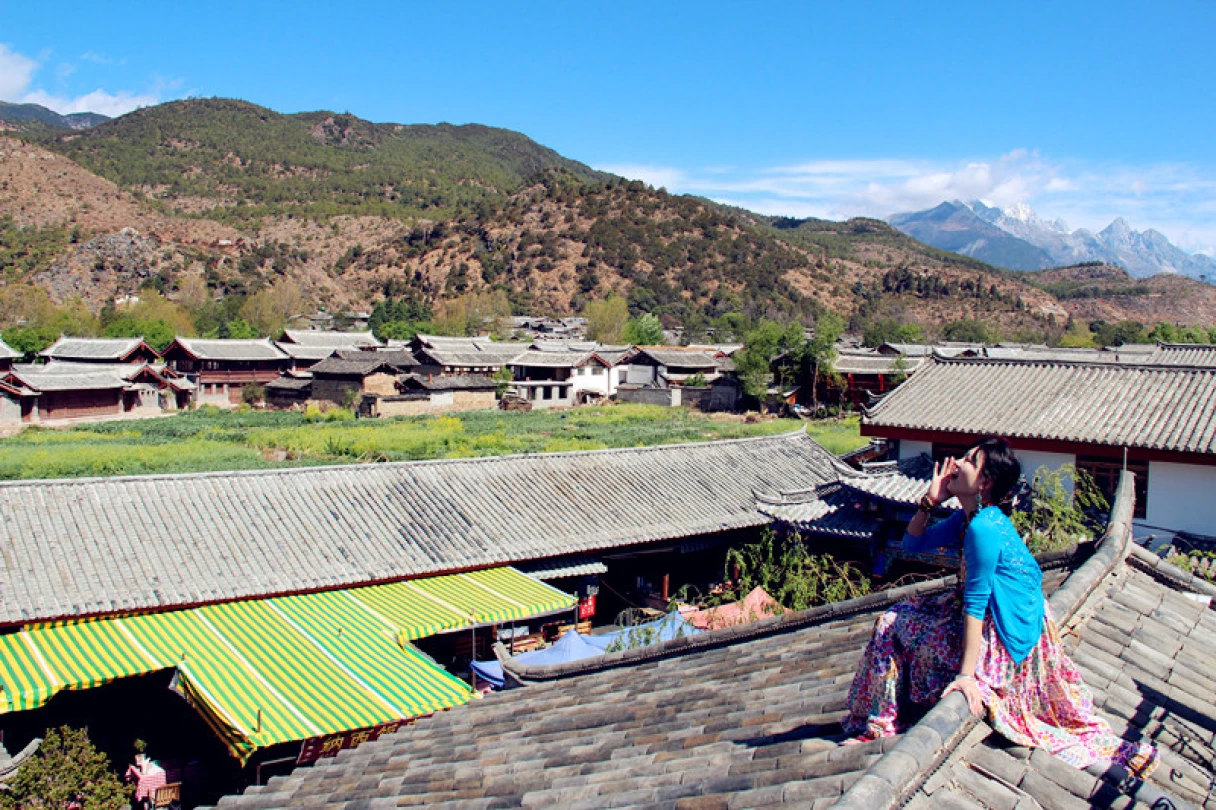
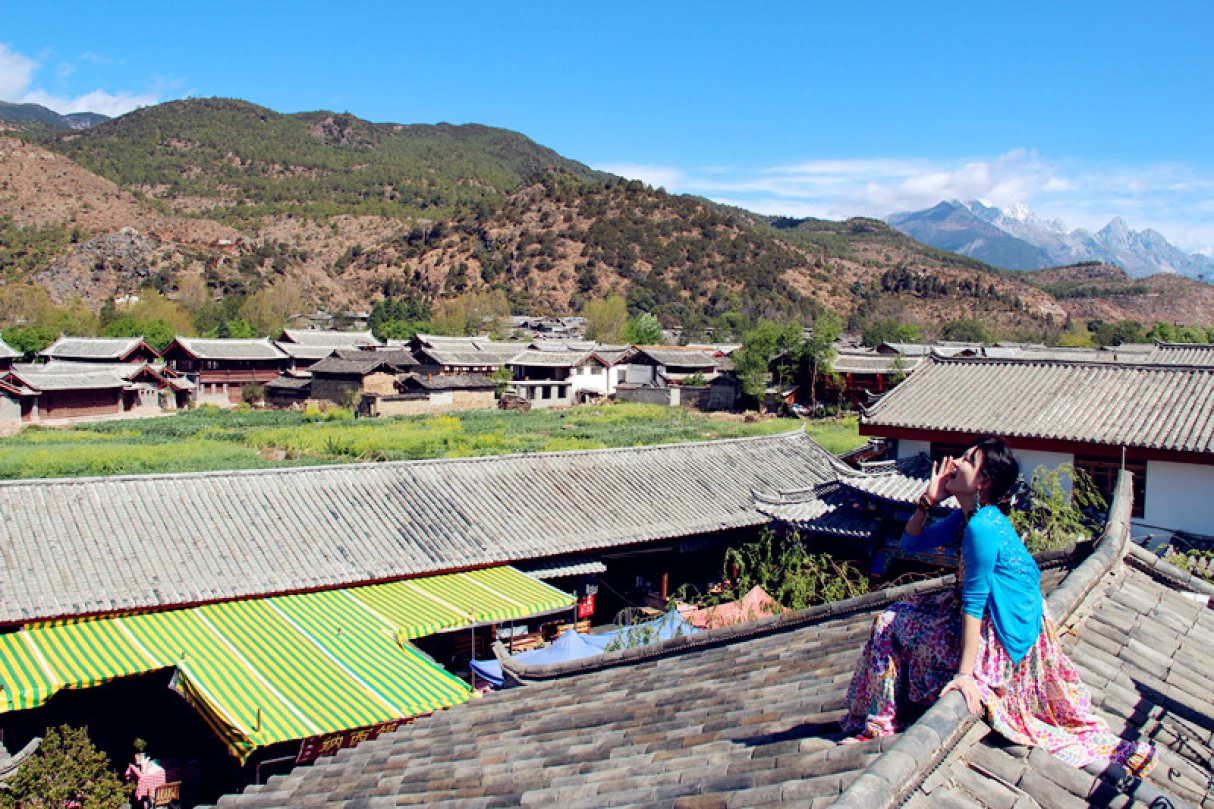
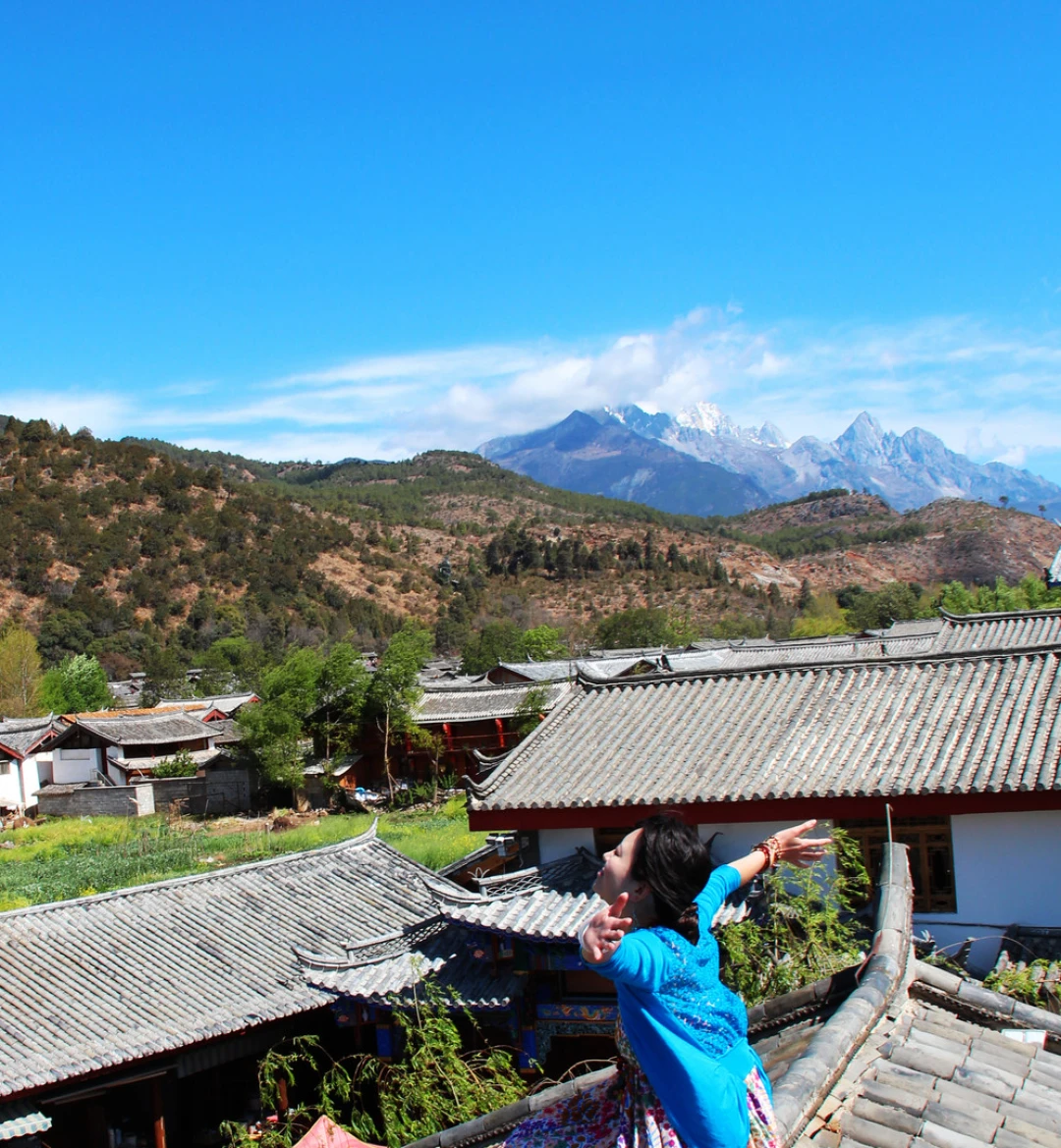
I entered the old town at eight in the morning, dazzled by the endless choices of inns. I wanted a courtyard full of blooming flowers, decorated with exotic charm, where I could spend all day drinking coffee, daydreaming, reading, and soaking up the sun. But such places were usually expensive, far beyond my budget. By noon, when my thighs were trembling and my calves cramping from searching, I would have settled for any inn. Fortunately, I ended up in a room with a view. When the wind blew, the dragon-and-phoenix bells hanging from the eaves chimed softly, and the layered rooftops of the old town stretched out below. The morning bustle, the evening calm, the midnight music and dancing—the entire daily life of the old town was laid out before me.
The courtyard was full of flowers—something only possible for someone who truly loves life. Without daily care, plants won't reward you with abundance. From this perspective, plants are the most honest judges. Whether you love life or not, just look at your plants.
Walking through the old town, what delighted me most were the oversized roses climbing over the walls of every house. I remember once saying I liked roses, and my in-laws said I was "born with a cheap fate." I don't know if a cheap fate makes a good daughter-in-law—maybe it means strong vitality and easy blooming. Either way, I really do love roses. They bloom for most of the year, their colorful buds and dark green leaves creating a distinctly European feel.
I grow roses at home too. After I returned from my honeymoon last year, my roses were just bare sticks, and the holly bonsai was just a shape with not a single leaf left. But three months later, the roses were lush again, and three months after that, they burst into full bloom. The holly, however, never recovered.
Maybe that's why I love roses more and more. Covered in thorns that make people keep their distance, yet bursting with flowers that catch everyone's eye. Proud and showy, stubbornly and fiercely alive.
3. She Called Me a "Different Kind of Girl"
Sometimes taking off my shoes and socks and walking on the cobblestones is a strange pleasure. Direct contact with the earth boosts happiness—that's what yoga taught me.
I shared my new feminist thoughts with my travel companion: I absolutely refuse to be a "three-around woman"—one who revolves around the stove, around her husband, and around her children. I must be independent, the master of my own destiny. Getting married after thirty is perfectly fine—why should I marry just because my family pressures me? We're not sows; why should my belly have to swell just because my husband wants a child?
She clearly didn't agree, but she didn't tell me her thoughts. She just said I was a "different kind of girl." When I pressed her on how, she said, "Eccentric."
To many people, I am indeed a weirdo. Sometimes I'm like I have ADHD—being content with the status quo feels like death. Even with a stable job and a happy family, I still can't stop stirring things up. Other times I fiercely resist the gender roles set by traditional society, becoming a stubborn feminist warrior. Sometimes this is a good thing; other times it's the root of all imbalance and unhappiness.
She called me a "different kind of girl"—so how do the "same kind of girls" live? Work, marry, have children, then stop on their life track for forty or fifty years, and then truly grow old? What's the difference between that and dying right after giving birth?
But to be fair, no matter what kind of life you choose, there is definitely joy and meaning in it—it just depends on whether you have the eyes to see it.
4. No Shopping—Just Friends, Coffee, and Books
My plan to spend a whole day sunbathing in the courtyard was disrupted by my travel companion. She was dead set on shopping in Lijiang and had to enter every single store. Making her stay in the inn and drink coffee all afternoon would have been torture for her—she would definitely ask, "Why not just do this at home?"
I decided to accompany her. During our two days in the old town, we spent all our time shopping. We didn't have a single cup of coffee or a single moment of stillness. Maybe that was for the best—because when you don't get to do what you want, you never realize how boring it actually is.
But honestly, I don't agree with filling the old town with so many shops. If I were in charge, I would rather restore its peace and antiquity. I'd place only a few inns, cafes, book bars, and bars in suitable spots. If you love a place, stay for three to five days, even half a month. In the morning, go to the market with the locals, carrying a bamboo basket, chop some firewood. At noon, listen to music, read a book. In the afternoon, meet new people at a cafe, learn about their lives, spark new ideas. At night, go to a bar and play guitar and sing with everyone. Occasionally play basketball, go cycling, or hike with friends.
If Lijiang were mine, there would be no shopping—only friends, coffee, and books.
5. The Responses Between People
While I was posing for photos on a bridge, two foreign tourists came over uninvited to take a picture with me. This kind of uninhibited behavior—Chinese people would call it showing off, people from Kunming would call it being a busybody. But I love this way of interacting; it shrinks the distance between people. I'll probably never meet them again, but their smiling faces are saved in my photo album.
It reminded me of many things: in bars abroad, someone might announce that today is their anniversary with their partner, and everyone would cheer and watch the couple kiss. On the Tower Bridge in London, I shouted "hi" to passengers on a boat sailing toward me on the Thames, and everyone shouted back a warm "hi."
I love this kind of response between strangers—friendly, warm, generous. But in Asia, especially Japan, a stranger's approach can scare people off. I remember when I was learning Japanese, I ran into a group of Japanese tourists while shopping in Jinli (an ancient street in Chengdu). I approached them and showed off a few sentences I had just learned. Their response? They shrank back, lowered their heads, and ran away. Imagine if that approach had succeeded—how many pleasant conversations could have happened. But the refusal to respond cut off that exchange.
6. The Creatures I Met
Why do people think Lijiang is full of romantic encounters? Those with no destiny will search the ends of the earth and still miss each other. The bonds between people are inexplicable. You think you'll never cross paths again, and then you meet in the next second. You think someone is your true love, and then they vanish without a trace.
Many things that happened in recent years have convinced me that there is fate between people. The emotional debts you owe will one day be paid back in full; the emotional wounds you suffer will one day be compensated with interest. You don't need to deliberately seek an encounter—just walk, and the answer will come.
As a married person, I have no emotional entanglements or need for romantic encounters. But meeting friendly cats and dogs still brings me great joy.
Overall, my closeness with dogs far exceeds that with cats. Those creatures that think they're gods are never as endearing to me as those that think I'm a god. So my communication with cats always ends up in a loop of me meowing and them meowing back. Cats are the coolest friends in the world.
At an inn in Shuhe (an ancient town near Lijiang), I met two incredibly cute poodles. They were naturally friendly, unguarded even with strangers. Maybe in their life experience, they had never been hurt by humans—they always believed humans existed to pamper them. What a worldview, so enviable in its simplicity and purity.
There was also a giant poodle, an "employee" at a youth hostel, who brought joy to many travelers. The day I walked in, it was napping in a dark corner. A young couple didn't see it and accidentally tripped over it. It woke with a start, its expression saying, "Oh my god, you scared me! Watch where you're going, buddy—someone's trying to nap here."
7. I Love Youth Hostels—I Choose to Stay in Dorms

Sharing a room with strangers, chatting about each other's lives. Through these conversations, I realized how vast the world is and what others are doing with their lives.
8. In the End
On the day I left Lijiang's old town for Shuhe, I finally couldn't bear the heavy luggage anymore and hired a three-wheeled cart used for transporting goods in the old town. I'm an easy person to please—when the biggest worry in front of me is solved, I can be as happy as if all other worries had vanished too.
But worries are like dark clouds—parting them is always temporary. The heavy thoughts I brought with me came back untouched. The lightness and joy of travel are only temporary. I think the way to deal with confusion isn't through travel, but through unraveling the confusion itself.
Every three to five years, I revisit Lijiang. Lijiang is still Lijiang. But the changes in me over these years are impossible to fully articulate. As a girl rooted in Yunnan, revisiting Lijiang is easy. But next time, what state of mind will I bring to those cobblestone streets? And how much of the sadness I felt here, the gossip I shared about this person and that, will I still remember?
Lijiang is still Lijiang, but I am no longer who I was. Maybe that's the true meaning of travel—not to escape, but to see how far you've come in the passage of time.
Travel won't solve any of your problems. But it will help you stand a little steadier in the face of them.
You should also read:
A 9-Day Yunnan Journey: From Lijiang to Dali to Tengchong – A Trip Toward Self-Reconciliation
A 9-Day Yunnan Journey: From Lijiang to Dali to Tengchong – A Trip Toward Self-Reconciliation Some say travel is simply going from a place you're tired of to a place other people are tired of. It stings to hear, but it's painfully true. Yet there's…
Continue reading...
Dreamland – Lijiang: A Talking Comic Travel Guide
Dreamland – Lijiang: A Talking Comic Travel Guide Prologue: When Lijiang Takes Root in Your Heart Some places leave a mark on you forever. They're like an old song on repeat, suddenly playing in your mind on an ordinary afternoon. For me, Lijiang is that…
Continue reading...
Escaping Nanning, Falling Under Lijiang's Spell: Our Four-Person, Ten-Day Yunnan Dream
Escaping Nanning, Falling Under Lijiang's Spell: Our Four-Person, Ten-Day Yunnan Dream Before We Set Off: No Pain, No Obsession Have you ever had that impulse—suddenly tired of the office fluorescent lights, the crush of the subway, the endless parade of identical takeout boxes, and just…
Continue reading...