Lincang: A Warm Winter Paradise Forgotten by Time, Where Life Slows Down
Lincang: A Warm Winter Paradise Forgotten by Time, Where Life Slows Down
When the northern lands are covered in ice and snow, and southern cities sink into damp, cold winters, have you ever wondered if there exists a corner of southwest China where the sun is gentle, the air is filled with the fragrance of tea, and a warm haven quietly waits for those who know how to slow down?
That place is called Lincang. If, like me, you initially only knew it as the hometown of "Ice Island Pu'er tea" (Bingdao Pu'er), this article will help you rediscover this deeply underestimated land.
Why Is Lincang Worth Your Visit?
Before I decided to go to Lincang, my friends' warnings came thick and fast: "The transportation is too inconvenient," "The attractions are scattered and infrastructure is poor," "It's close to northern Myanmar—not safe." These reasons certainly gave me pause. But driven by my love for Ice Island tea (Bingdao tea), I set foot on this land anyway.
As it turned out, that decision was absolutely right.
Lincang is located near the Tropic of Cancer, at a moderate altitude, and enjoys a unique low-latitude plateau monsoon climate. While the north is frozen and the south is bitterly cold, here the sun shines brightly and it feels like spring. The air carries a faint scent of tea and the moist aroma of soil, making you want to take a deep breath.
There are no grand tourist experiences here, no crowded Instagram-worthy spots. But there is the ethereal beauty of tea mountains shrouded in clouds, the diverse cultures of the Wa and Dai ethnic groups, the deep historical积淀 of ancient towns, and the wild vitality hidden in the borderland atmosphere.
If you come to Lincang just to save money, you might be disappointed—its "shabbiness" and "inconvenience" will sting your eyes. But if you're looking for a pace of life that allows you to slow down, then Lincang is your destination. It's perfect for putting down your phone, zoning out in a tea garden, listening to stories in an ancient village, strolling along stone-paved roads marked by horse hooves, and letting the mild climate and simple warmth of its people slowly thaw your winter weariness.
Wengding Village: Stepping into "China's Last Primitive Tribe"
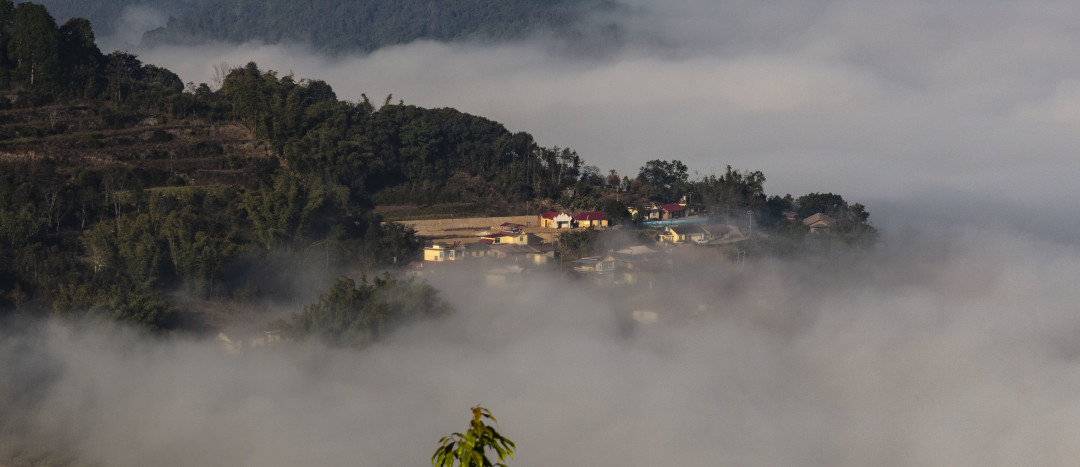
Setting out from Lincang city and driving to Wengding Village in Cangyuan Wa Autonomous County, the scenery along the way is already refreshing. As the car winds into the mountain roads, mist swirls among the peaks, as if entering a secluded, otherworldly realm.

"Wengding" means "a place shrouded in clouds and mist" in the Wa language—a name that fits perfectly. This nearly 400-year-old Wa village is known as "China's last primitive tribe" and is the best-preserved original ecological Wa village in the country.
Entering the village, you'll see thatched houses made entirely of wood, divided into stilted and ground-level types, forming a complete Wa architectural system. These buildings, called "fork houses," have living quarters above and livestock below, rich in ethnic character. Each house is low and simple, requiring you to bow your head and stoop as you enter—a humble posture that seems to hint at the harmonious relationship between the Wa people and nature.
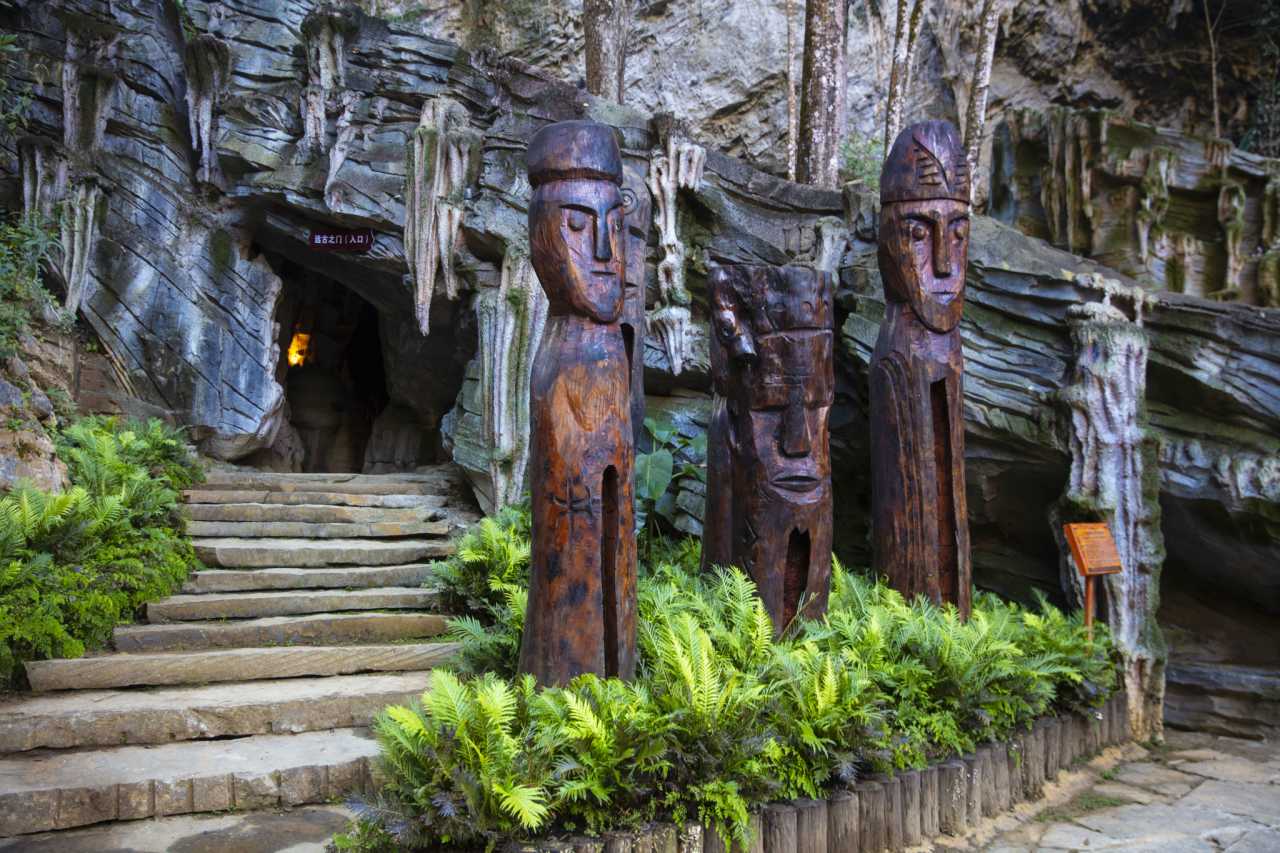
The village pillar, sacred grove, and fire pit at the village entrance serve ritual and festival functions for the Wa people. The Wa practice an animistic primitive religion, with traditional festivals including the Spring Festival, Village Protection Festival, and New Rice Festival. The wooden drum is considered a tool for communicating with the gods, with male and female drums used in rituals and celebrations. The once-feared "head stake"—a core implement of the ancient "headhunting for harvest" ritual—no longer serves a sacrificial purpose but stands as a relic showcasing the history and culture of the Wa primitive tribe for visitors to learn about past customs.
It's worth noting that in 2021, a fire destroyed 104 houses in Wengding Village, which were later rebuilt and reopened. Today, no villagers live in the old village—as early as 1998, the government built a new village two kilometers away, where all original residents moved, each family receiving a spacious house. The old village now operates as a scenic area, allowing tourists a glimpse into the life of the Wa primitive tribe.
In the village, you'll encounter Wa villagers dressed in ethnic costumes, greeting visitors with song and dance at the entrance. The sight of Wa women weaving, the kind smiles of Wa elders, and the innocent eyes of Wa girls will make you feel the warmth and simplicity of this ethnic group. The strong, sturdy Wa men are very friendly to tourists—though they may not be talkative and their Mandarin pronunciation is imperfect, they are happy to pose for photos.
Not far from Wengding Village is the China-Myanmar Yonghe Port. Standing at the border, you can see the mountains of Myanmar on the other side. The new Wa village near the port has uniform houses, creating an interesting contrast with the primitive style of the old village.
Ice Island Tea (Bingdao Tea): The "Queen" of Pu'er Teas
The name "Ice Island tea" often leads people to mistakenly think it comes from Iceland in Northern Europe. In fact, it originates from Ice Island Village (Bingdao Village) in Mengku Town, Shuangjiang County, Lincang City—a Dai ethnic village.
In the history of Pu'er tea, there is a saying: "Banzhang is the king, Ice Island is the queen." Ice Island tea refers to Pu'er tea produced in Ice Island Village, which is the birthplace of the nationally recognized fine variety, Mengku large-leaf tea. Today, Ice Island is divided into five villages: Ice Island (Old Village), Dijie, Nanpo, Bawai, and Nuowu, and tea from all of them is called Ice Island tea.
The story of Ice Island tea is inseparable from a man named Rong Jiasheng. In the early days of reform and opening up, although Ice Island tea was of exceptional quality, its remote location and treacherous roads meant few outside buyers came, and the tea couldn't fetch high prices. Rong Jiasheng grew up around tea and had a firm belief in the history and quality of the ancient Ice Island tea mountains. He contracted the "Gunshangshan" primary processing facility, used a "high pull, low pressure" purchasing strategy to improve raw material quality, and later contracted the burned-down primary processing facility in Baka Village of Ice Island, becoming the first private primary processing facility in Ice Island after the reforms.
He brought electricity to local villagers, built roads, and arranged medical insurance, improving local infrastructure. The stone tablet at the entrance of Ice Island Village was erected by the villagers in gratitude for his kindness. In 1993, he founded the Mengku Tea Manufacturing Plant, and in 1999, he acquired the bankrupt Shuangjiang County Tea Factory, establishing Yunnan Shuangjiang Mengku Tea Co., Ltd. and creating the "Mengku Rong Family" brand. Finally, he brought this hidden gem of a tea to the world.
Ice Island tea uses no chemical fertilizers or pesticides; it is purely natural, pollution-free, and ecologically grown. Its sweet aftertaste is long-lasting, the liquor is bright and clear, and the leaves are soft and uniform. Compared to the tea "king" Laobanzhang, Ice Island tea's sweetness is richer and more delicate, making it particularly popular among women. Observe its liquor—uniform, bright, and thick as oil; taste it—complex and lingering on the palate; after drinking, the cup retains a dense honey fragrance that lasts for a long time.
Friendly reminder: Ice Island tea and Banzhang tea are both newly popular aged Pu'er teas. Due to market speculation and other factors, prices are generally high, leading to a proliferation of counterfeit tea producers. So when purchasing, examine the quality and understand the market before making a decision.
Today, to protect the environment, tea farmers from all five villages have moved to the newly built Ice Island Town villas. Each house is a tea merchant, and each merchant owns their own tea garden. It is said that outside capital is not allowed into this town, ensuring the purity and heritage of the tea industry.
Lushi Ancient Town: A Time Tunnel on the Ancient Tea Horse Road
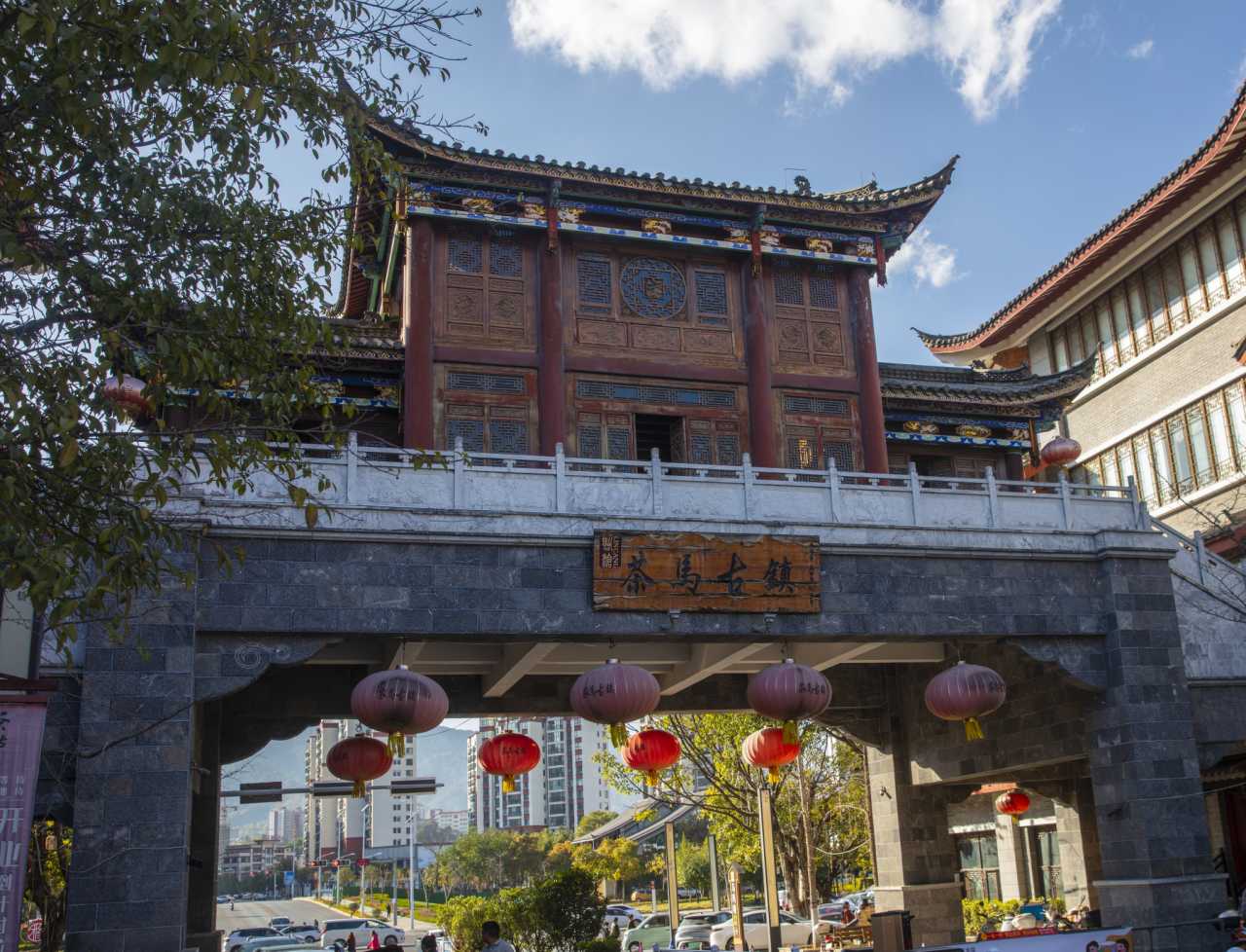
Lushi Town is located northeast of Fengqing County in Lincang City, between the Lancang River and the Heihui River, historically known as "Jiajiang" (Between Rivers). Due to its unique geographical position, it was once a key hub on the western Yunnan section of the Ancient Tea Horse Road, earning the title "First Town of the Ancient Tea Horse Road."
Starting from Fengqing County, after exiting the highway, there are 82 kilometers of mountain roads with poor conditions that are difficult to navigate. But when you finally step into Lushi Ancient Town, you'll find that all the bumps were worth it.
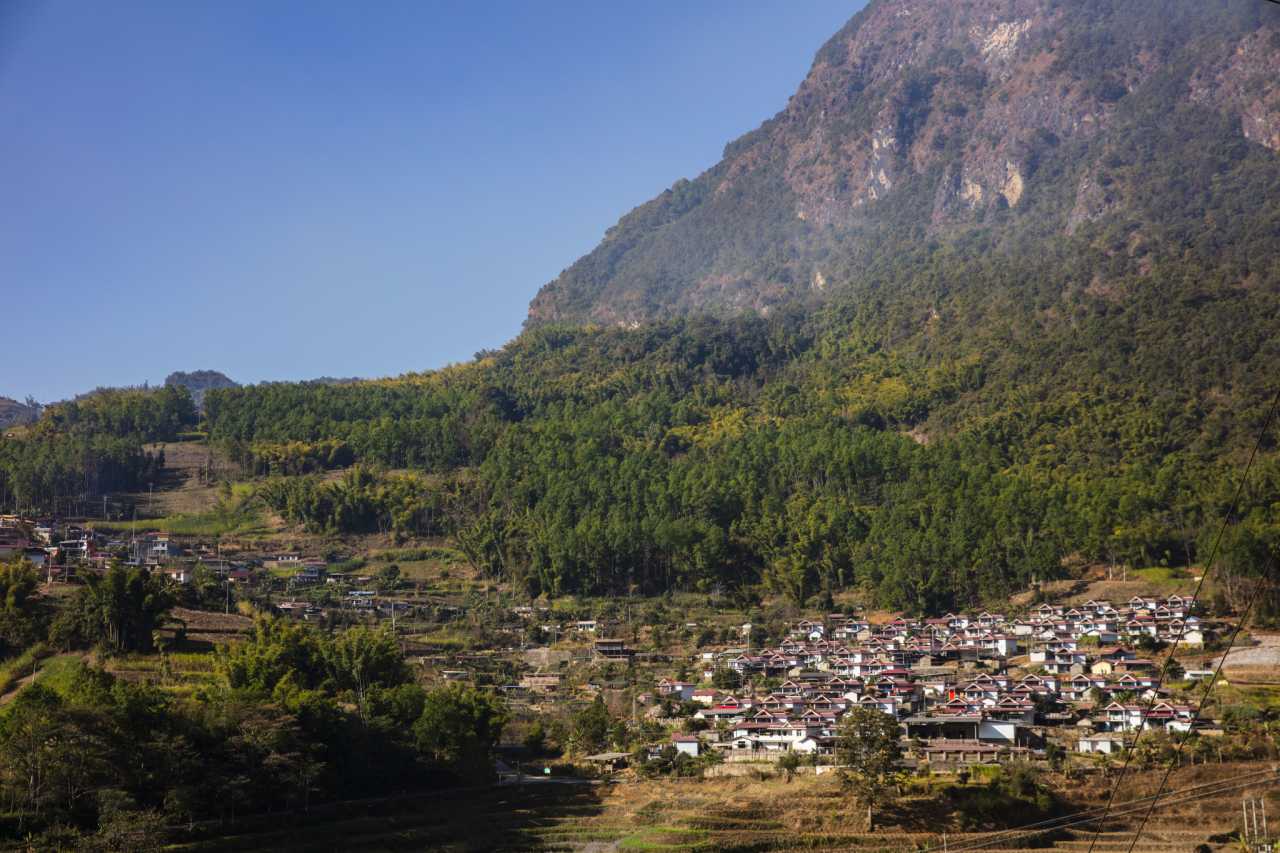
Lushi Ancient Town is remarkably well-preserved, without excessive commercial development—authentic and unspoiled. The town is laid out with the central square (Sifang Street) as the axis point, forming a circular pattern with a unique layout of "three streets, seven lanes, and one square." Residential buildings primarily imitate northern-style courtyard houses and Jiangsu-Zhejiang-style three-sided courtyard houses, with one floor, one attic, three main rooms, and three side rooms, topped with clay tiles and fireproof walls. Courtyard houses have gardens, while three-sided courtyards have flower terraces, adorned with murals, poems, and couplets, seeking harmony, feng shui, warmth, and prosperity for the home.
Walking on the stone-paved roads of the ancient town, you'll see deep and shallow hoof prints—traces left by horse caravans on the Ancient Tea Horse Road, as if you can still hear the fading sound of horse hooves. The owner of the Luo Family Courtyard, Luo Yingcai, was the first person in Lushi to grow tea and opened the "Junchanghao" tea house, engaging in long-term tea trade. The Luo family was once the wealthiest in Lushi Ancient Town. Today, the courtyard still retains its original appearance, with shops facing the street and living quarters in the back.
The houses in the ancient town are densely packed, and each one is inhabited. The mottled walls, though aged and in need of maintenance, give a sense of historical weight. With few tourists, you can wander quietly here, feeling the prosperity and bustle of the past.
The ancient town is adjacent to the current town center, offering convenient accommodation and dining at reasonable prices. Seeing the cured meats hanging under the eaves and smelling their tempting aroma, you'll definitely want to try the local cuisine.
Fengqing: The World's Home of Yunnan Black Tea (Dianhong)
Fengqing County is a county under Lincang City, known as the "World's Home of Yunnan Black Tea" (Dianhong). Within its borders stands the Xiangzhuqing cultivated ancient tea tree, over 3,200 years old—Jinxiu Tea Zun, recognized by the Shanghai World Records as the oldest cultivated ancient tea tree on Earth.
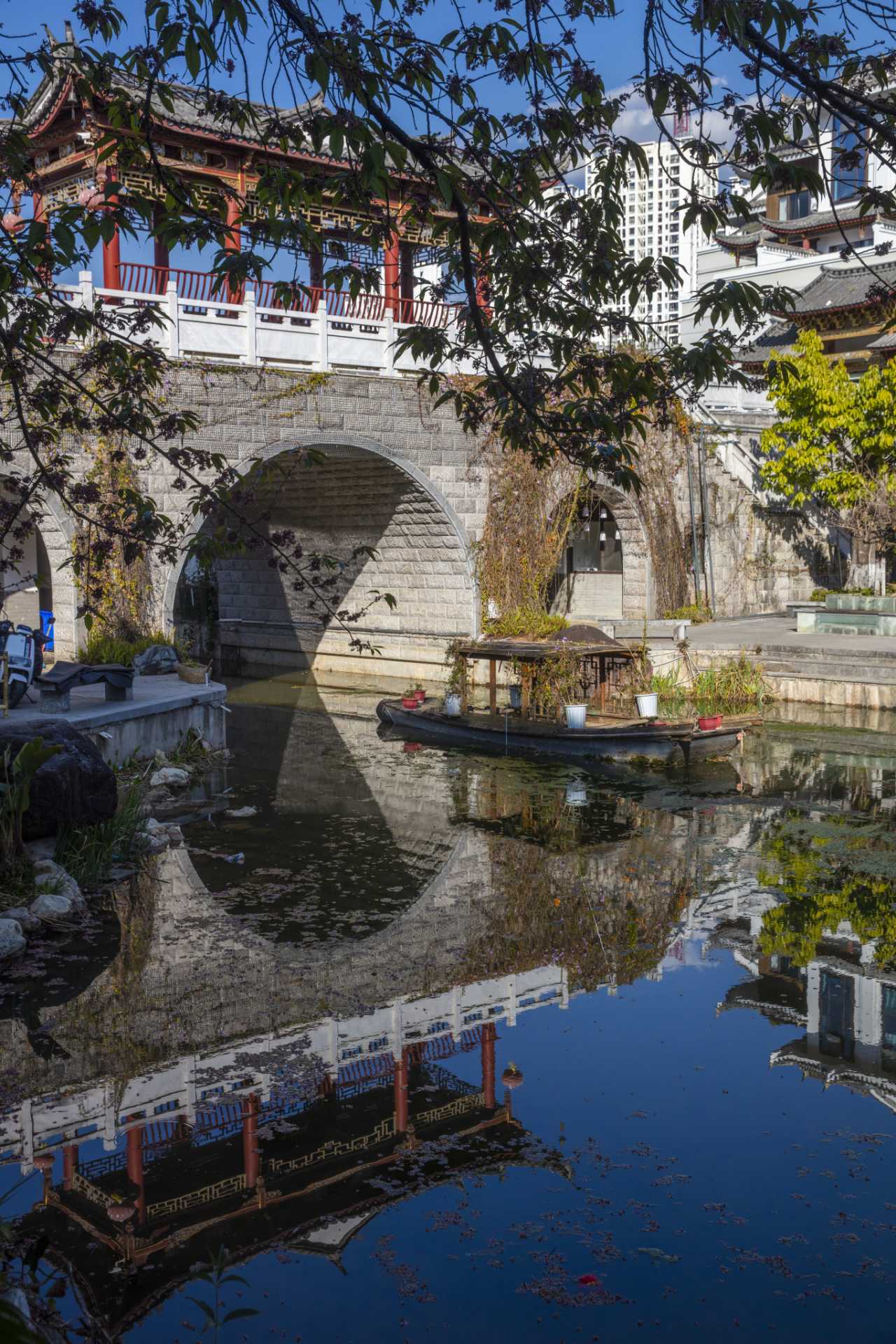
Fengqing Dianhong (Yunnan black tea) was born during the War of Resistance Against Japan in 1938, created by the team led by Feng Shaoqiu. At that time, Feng Shaoqiu came to Shunning (Fengqing's former name), selected fresh leaves in Anshi Village, and successfully produced the first batch of Dianhong on-site, pioneering the production of refined black tea from Yunnan's large-leaf variety. In 1939, he established the Shunning Experimental Tea Factory (now Anshi Tea Factory). That year, the trial-produced Dianhong was exported to London via Hong Kong, where its exceptional quality shook the international tea market, and Dianhong became world-famous.
Today, Anshi Village has developed into a national AAAA-level tourist attraction, known as "China's First Village of Dianhong." Entering Anshi Tea Factory, you'll see Soviet-style architecture that still retains its original appearance from when the factory was built. After touring the factory and tea gardens, head to the product showroom, where you can enjoy a cup of authentic Dianhong black tea while a tea master explains the factory's history and tea knowledge. The comfort and pleasure are unmatched by any high-end café.
Fengqing Dianhong has been presented as a national gift to foreign dignitaries, including the Queen of England and the President and Prime Minister of Sri Lanka. In 2023, the craftsmanship of Fengqing Dianhong was successfully inscribed on UNESCO's Representative List of the Intangible Cultural Heritage of Humanity.
Final Thoughts: Lincang Offers More Than Just Warmth
My few days in Lincang made me fall completely in love with this place. It's not perfect—it's even a bit "primitive": inconvenient transportation, scattered attractions, and basic infrastructure. But it's precisely this imperfection that preserves its most genuine charm.
What Lincang gives you is a sun-warmed winter, tea-scented mornings, the innocent smiles of Wa girls, the deep and shallow hoof prints on ancient town stone roads, and the ever-burning warmth of the fire pit.
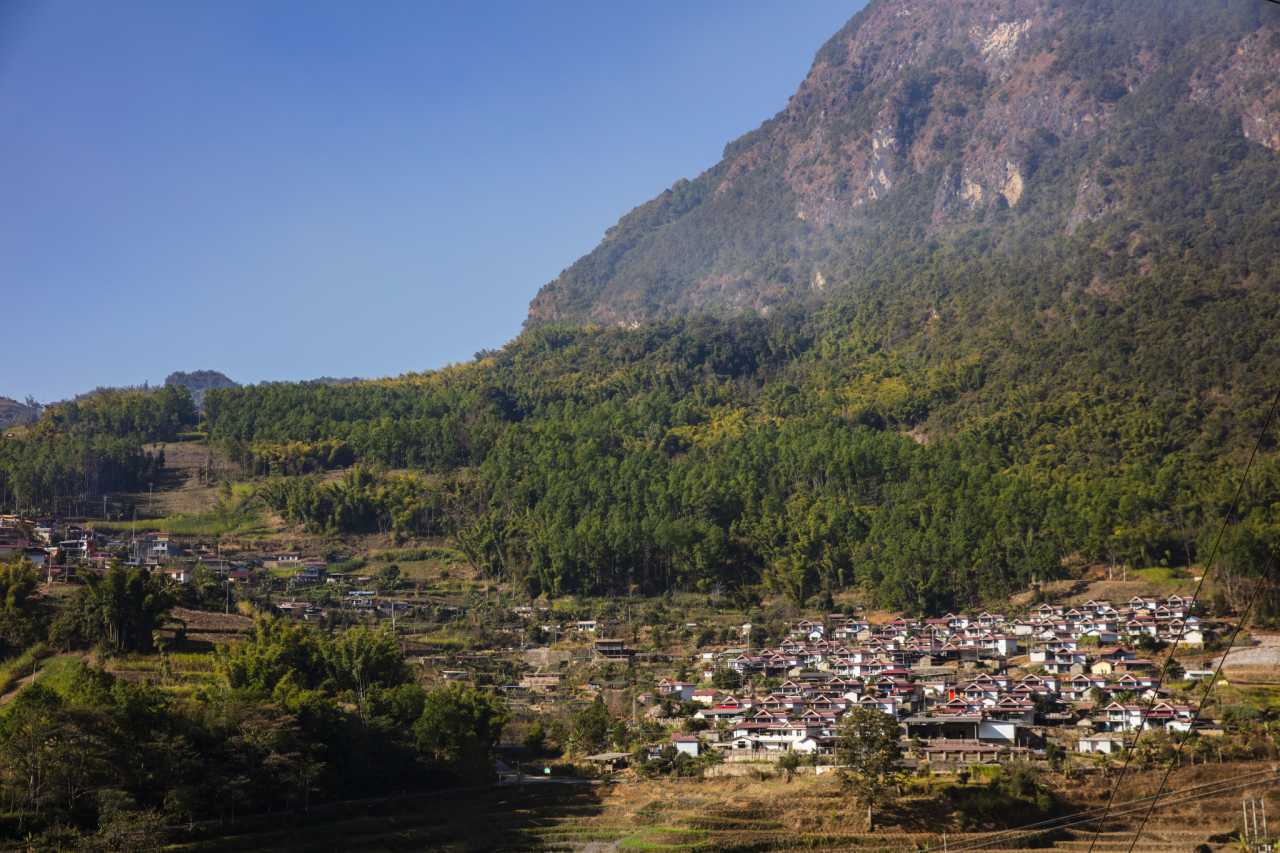
It's not suited for a whirlwind, checklist-style trip. It's better for slowing down and feeling with your heart. If you, like me, are tired of the city's hustle and fast pace, and want to find a place to slow down this winter, then come to Lincang.
Remember: Don't expect it to give you a spectacular experience. It will only use its gentle climate and simple warmth to slowly thaw your winter weariness.
Practical Tips: - Best Season: November to March—warm and comfortable, ideal for escaping the cold - Transportation: Self-driving or hiring a car is recommended, as attractions are scattered and public transport is inconvenient - Accommodation: Lincang city and Fengqing county have good hotels; ancient towns and villages offer guesthouses - Things to Note: In border areas, follow local regulations and respect ethnic minority customs - Must-Do Experiences: Wa culture in Wengding Village, hiking in Ice Island tea mountains, strolling through Lushi Ancient Town, and tasting Fengqing Dianhong black tea
This article is compiled based on real travel experiences, with some data referenced from official sources. Please contact the author for reprint requests.
You should also read:

A Journey Through Shuanglang's Guesthouses: Finding Life as It Should Be on the Shores of Erhai Lake
A Journey Through Shuanglang's Guesthouses: Finding Life as It Should Be on the Shores of Erhai Lake Prologue: When Life Hits the Pause Button Have you ever had one of those moments? When the city's towering buildings press down on your chest, when you're swept…
Continue reading...
September: Finding Unexpected Warmth in Yunnan (Kunming, Dali, Shuanglang, Lijiang, Lugu Lake)
September: Finding Unexpected Warmth in Yunnan (Kunming, Dali, Shuanglang, Lijiang, Lugu Lake) Foreword: One Person's Journey, A Crowd's Story Before I set off, like every first-time solo traveler, I printed out a thick stack of travel guides and rehearsed countless possible scenarios in my head—getting…
Continue reading...
Yunnan! Paradise on Earth – The Yubeng Chapter: A Soul-Cleansing Journey into Seclusion
Yunnan! Paradise on Earth – The Yubeng Chapter: A Soul-Cleansing Journey into Seclusion Prologue: Why Yubeng? If you ask me which place in Yunnan is most worth hiking to, I would answer without hesitation: Yubeng. This is not an answer I give lightly. As a…
Continue reading...