Living Up to the Reputation of a Romance Capital: This is What Lijiang Really Looks Like
Living Up to the Reputation of a Romance Capital: This is What Lijiang Really Looks Like
Public WeChat: BaiChensArt
Stay true to your original heart. May we never let each other down, always like the first time we met.
I love the scenery on the road — tired but happy.
WeChat: 1505312400
Weibo: @骆小洛的世界
Travel together | Photography together | Drink together
Destination: Lijiang
Travel Dates: May 15, 2017 · 4 Days
Cost per Person (RMB):
Travel Companions: Solo
In everyone's youth, there was once a longing for travel, an impulse to just go, and a desire to visit Lijiang — perhaps for a romantic encounter.
Some say it's good, some say it's bad. Still, it's Lijiang.
Walking through the lively Sifang Street (Square Market), weaving through the endless streams of people in the alleys, settling into a bar with a decent view — the night is filled with neon lights.
Nighttime is when Lijiang truly begins.
The darker it gets, the more beautiful it becomes. The darker it gets, the more stories unfold.
My Lijiang trip had no romantic encounter, but it did have the Eternal Love show. Floods and rain curtains, the jingling of horse bells on the ancient tea route, spectacular stage design, and thunderous applause — it was an unexpected visual feast.
The dappled light of sunrise cast a mysterious aura on the wall covered in pictographic script.
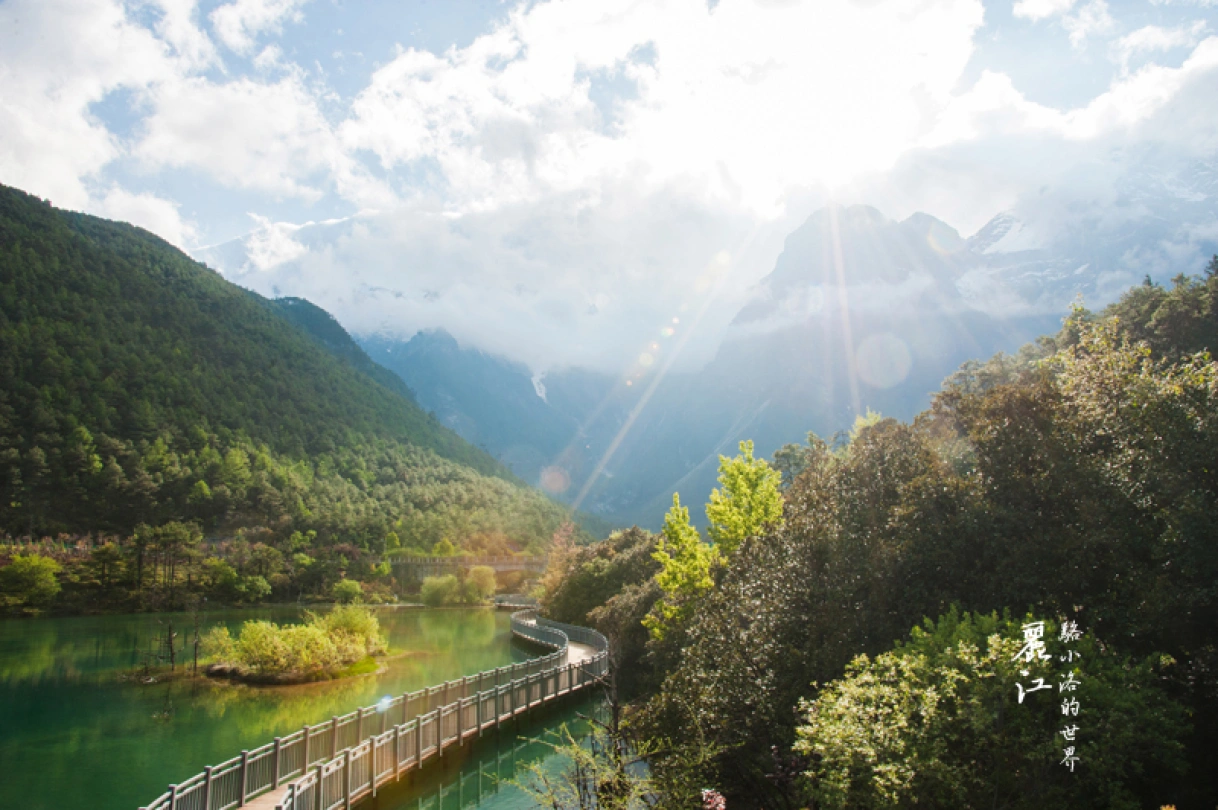
Sunlight pierced through the thick clouds, passed over Jade Dragon Snow Mountain, and spilled onto Blue Moon Valley — a pure pleasure.
The legendary tales of the horse caravans came to life on this wall. There was no road originally, but once enough people walked it, the Tea Horse Road was born.
This time I set out from Xi'an; last time it was from Chengdu. All for the land "South of the Clouds" (Yunnan).
Planned Itinerary
Day 1: Morning flight Xi'an → Lijiang. Stroll through the old town, visit Black Dragon Pond, Shuhe Ancient Town, etc.
Day 2: Lijiang Eternal Love Scenic Area.
Day 3: Jade Dragon Snow Mountain & Blue Moon Valley.

Day 4: Lashi Lake. Evening return flight.
In reality, due to weather changes, almost the entire itinerary was altered. In the end, things worked out — I managed to visit my planned spots in the best weather. So yes, good weather is crucial for a Lijiang trip.
Wandering Through Lijiang Old Town
I woke up at 4:30 AM just to catch the 7:30 flight. I booked a car for 5:10 AM, but since we had to pick up other passengers along the way, my patience wore thin with those who weren't on time.
One girl was 15 minutes late; a guy was over 20 minutes late. They had no idea how anxious I was. I've missed a flight before, and it hurt.
All the way, I kept muttering to myself: Please, no traffic jams. Please, no red lights. My palms were sweating.
Luckily, the driver kept his word. We made it to Terminal 3 by 6:35 AM. My heart finally settled.
Security at Xianyang Airport had been upgraded — we had to take off our shoes. This used to be a special treatment only in Xinjiang, but now it seems to be nationwide. The same happened on my return flight.
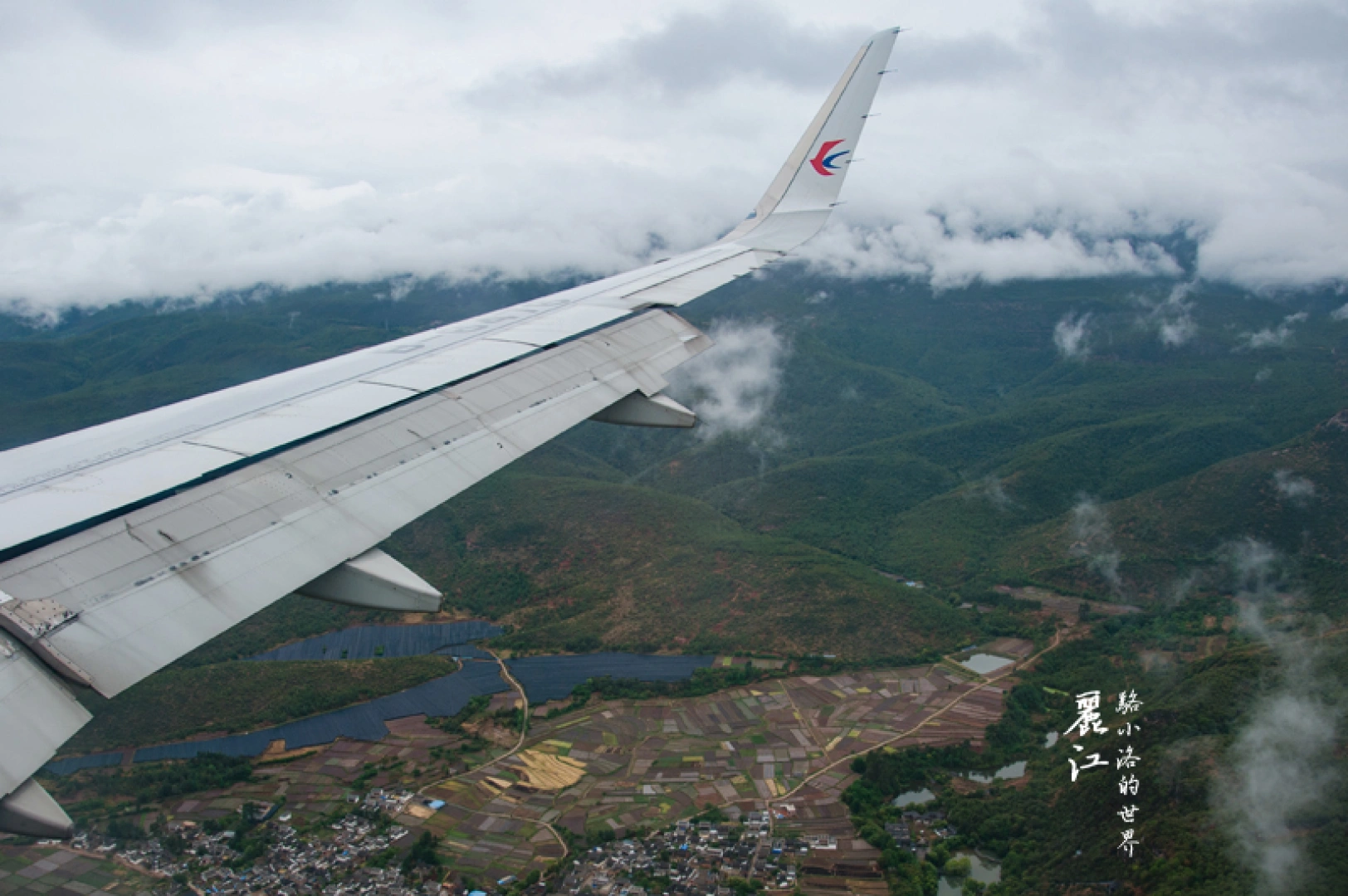
I always love sitting by the window, never wanting to miss those views from above. But this time, due to the clouds, there was nothing breathtaking. Two hours later, the announcement came: we were landing at Sanyi Airport. The view looked like this.
Seeing the weather, I worried a bit about whether I'd get any good photos.
When I landed, I wasn't particularly excited. Maybe it was the weather, haha.
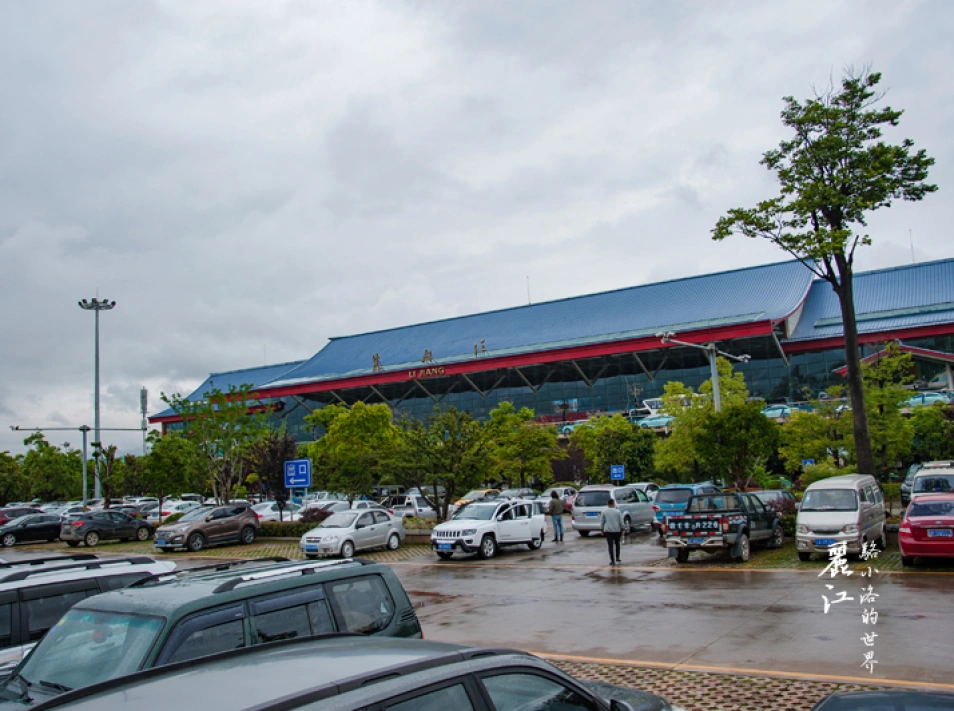
The square in front of Lijiang Sanyi Airport isn't very big. Without an ultra-wide lens, it's hard to capture the whole scene.
From the airport to Lijiang Old Town, the airport bus is very convenient — about an hour, costing 25 RMB.
I soon arrived at the South Gate of the old town. I navigated to the inn I'd booked, thinking it wasn't far and I could walk. But it was raining, so I thought maybe the innkeeper could pick me up. I made a tentative call. But because of that call, I ended up wandering for half an hour in what should have been a short distance!
Reason one: The innkeeper didn't explain that the same coordinate had two different points — old and new.
Reason two: The inn's coordinates weren't for the actual location I'd booked. He didn't tell me it was a branch. When I found out later, I felt a bit cheated. If you explain things clearly, people understand. But this felt like deliberately hiding the truth.
Later I discovered that at least half the places in Lijiang have multiple branches, all using the same name online.
After all that hassle, I was exhausted. I finally got to the inn, dropped my luggage, and the innkeeper immediately said: "Mr. Luo, could you please give us a five-star review?" I was dumbfounded: "Isn't that usually done after checkout?" "Oh, I'm just worried you'll forget!"
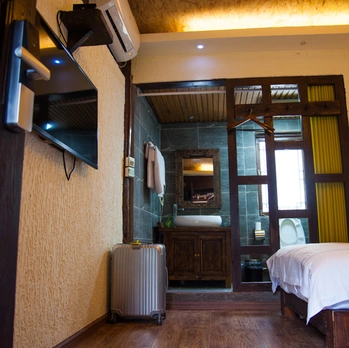
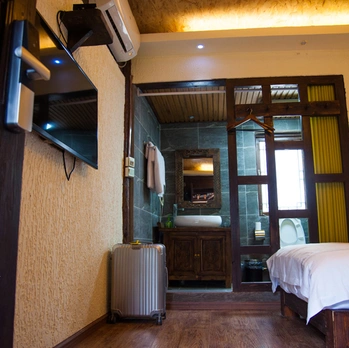
Since the room was satisfactory (though a bit small), and the innkeeper, despite being misleading, was still friendly, I gave a five-star review.
But it didn't end there. That very night, he kept asking if I wanted to extend my stay. The next afternoon, he was chasing me for a review — yes, literally chasing! Knocking on my door, sending messages, calling!
I didn't give in. I couldn't "mislead others"! After all, I'd chosen this place because of its high ratings.
The next day, I switched inns.
That's how the game works. Those inns with super high ratings might have begged for them! So when choosing an inn, make sure to read the reviews carefully and spot any that might have been coerced.
The rain showed no signs of stopping, so I stayed in and rested.
My plan to randomly explore the old town was completely ruined. I only managed a short walk in the evening when the rain eased up a bit. Later, I found time to walk the romantic cobblestone streets, climb up and down, and discover the best of Lijiang.
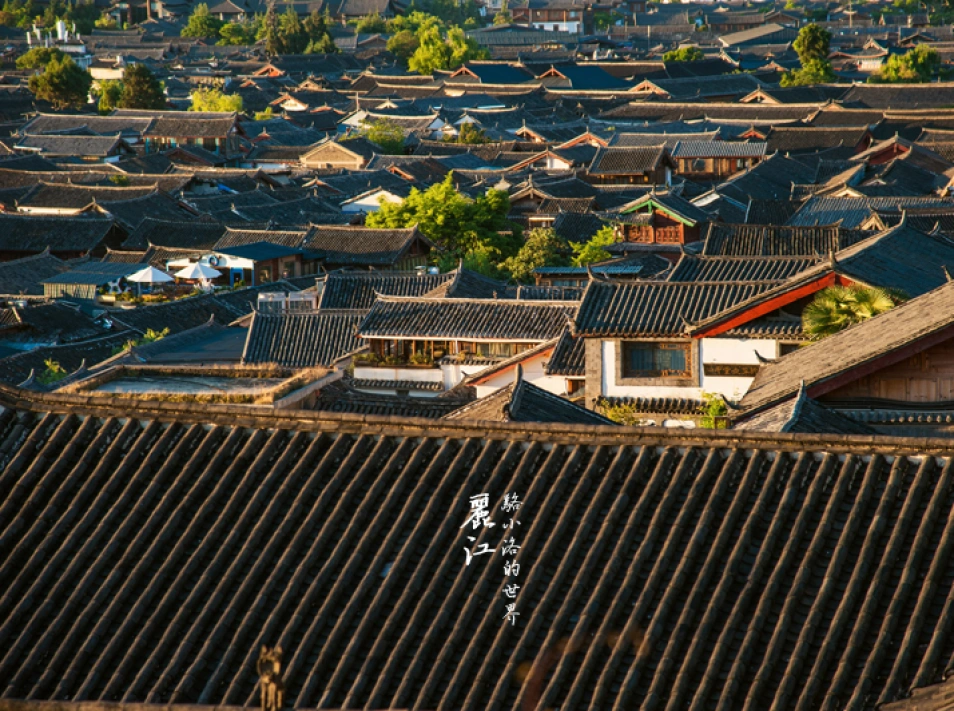
The Old Town Maintenance Fee is 80 RMB, and they're strict about it now. Almost every entrance has staff on duty.
Fee hours: 8:00 AM – 7:00 PM. Exits don't check tickets.
Two ways to avoid paying:
- Enter before 8:00 AM.
- Enter after 7:00 PM.
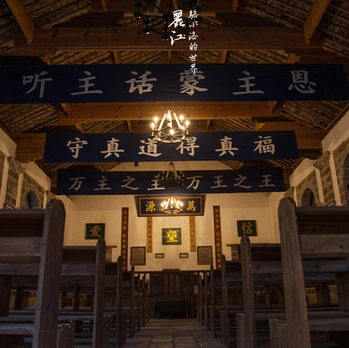
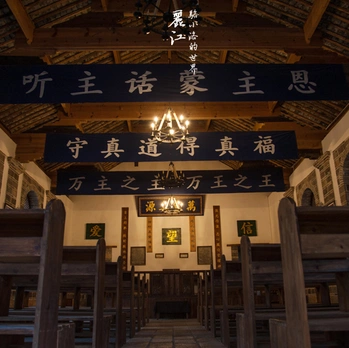
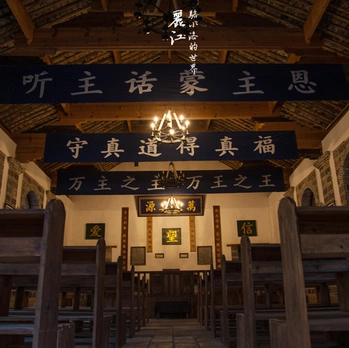
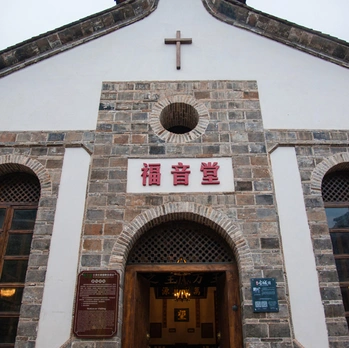
A church near the North Gate, not far from the Former Residence of Fang Guoyu, caught my attention. Probably because of the weather, there were no devout worshippers inside.
The alleys in the old town are incredibly maze-like. Legend has it there are two reasons: First, the Naxi chieftain's surname was Mu (木). Adding a "mouth" enclosure (口) around "Mu" makes "kun" (困), meaning "trapped" — a major taboo. So the Mu chieftain didn't build city walls. Second, the old town is surrounded by green hills forming natural "walls," with natural passes at all strategic points for defense.
The streets and buildings follow the terrain and waterways, forming a radial system with Sifang Street as the center and four main streets — Xinhua Street, Wuyi Street, Qiyi Street, and Huangshan Road — as the main arteries.
So, if you're not careful, you'll get lost.
By this time, it was past the fee-checking hours. The quieter alleys were nearly empty.
Passing by Sifang Street and Bar Street, they were still packed with people.
I headed toward Lion Hill, a high point I'd visited three years ago. It's a bit hidden. Back then, you could take photos without buying anything for just 1 RMB. Now it's 5 RMB. The place was almost empty — just a few people including me. Very quiet.
The photo below was taken at another bar. The guy at the door was enthusiastically calling out: "No charge for the view! You can sit or just come in and look around." I shamelessly went in.
The view wasn't the best, but I still got a few good shots.
Later, I used an early morning to visit the famous high point — Lion Hill. That day happened to be International Tourism Day, so it was half price — 25 RMB. Lucky, because otherwise it wouldn't have been worth it.
But honestly, while it's a high point, the shooting angle isn't ideal. So don't bother spending 50 RMB on a regular day. I'll mention a better free viewing platform later.
On the way to Lion Hill, you pass through Sifang Street. While most tourists were still dreaming, tour groups had already taken over a large part of the square. Crowds everywhere.
Sifang Street is synonymous with Lijiang Old Town. First came Sifang Street, then Lijiang Old Town.
And here's a little pickup tip for Sifang Street. Grab a notebook and write this down. Don't say I didn't tell you!
The line: "Excuse me, how do I get to Sifang Street?"
- If she says, "I just arrived in Lijiang, I don't know," look her in the eye sincerely and say, "You don't know Sifang Street? I'll take you there, and show you around the old town too."
- If she gives you directions, look at her with a dumb, innocent expression and say, "Why don't you just take me there? I have no sense of direction."
They say as long as you're not too creepy, this trick works every time.
A seemingly naive girl climbed up and down, and when she got tired, she just sat down.
I was focused only on Lion Hill, ignoring everything else. I marched straight to the top floor of Wangu Tower.
But the view disappointed me. There was a bit of PM2.5 haze affecting visibility, and the foreground was too cluttered. Since there was no good angle, I went back down.
Mu Mansion is the common name for the Lijiang Mu Chieftain's government office, located at the foot of Lion Hill. It's considered the "Grand View Garden" of Lijiang Old Town culture.
"In the north, there's the Forbidden City; in the south, there's Mu Mansion." Mu Mansion is a magnificent architectural art garden, fully reflecting the style of Ming Dynasty central plain architecture while retaining the rustic boldness of Tang and Song architecture. Its west-facing-east orientation, with jade-like canals crisscrossing the courtyard and flowing water everywhere, also embodies the spirit of Naxi traditional culture.
However, what you see now is a reconstruction after the devastating 7.0-magnitude earthquake in February 1996. Such fatal natural disasters always leave us heartbroken.
I only got a glimpse of Mu Mansion's grandeur from this angle. Regular ticket price: 60 RMB.
After leaving Wangu Tower, I took the second left turn downhill.
I'd overheard a local telling other tourists that there was a free viewing platform along this path, so I decided to give it a try.
If that sounds vague, just navigate to Wenchang Palace.
I saw a great view of the old town through a doorway and slipped in. It was a hillside morning tea shop with a nice view and decent atmosphere.
I ordered a bowl of rice noodles (米线) for 15 RMB, which came with a fried egg. Good value.
Enjoying the food, feeling the breeze, and gazing at the old town scenery — it was a happy moment.
Later, I found an open space near the North Gate and tried to fly my drone. But it kept saying "No GPS signal." I flew briefly, then packed up.
One clear morning, I passed by Mu Mansion again around 6:10 AM.
The tea shop from the day before wasn't open yet.
I walked straight to the gate of Wenchang Palace — this is another free public viewing platform besides that hillside shop, located on the slope behind the Big Waterwheel. When I arrived, no one was there. A few minutes later, two middle-aged men and a girl joined me.
About 20 minutes later, the long-awaited sun finally showed its face, shining brightly.
God said, "Let there be light," and there was light.
Light is the soul of photography. Same place, same angle — with light and without light, it's like night and day.
I went down to a small alley, took a photo to the right, then to the left. The light was beautiful.
Following the alley on the left, I arrived at the Big Waterwheel Square. It was just before 7:00 AM, and almost no one was there.
This might be the quietest moment of the day in Lijiang Old Town.
The Big Waterwheel is an iconic landmark of Lijiang. Anyone who's been here will have taken a photo of it.
This photo was taken the day before at noon, on International Tourism Day. The place was packed, with flyers everywhere.
Dongba Wind Chimes originated from the horse caravans on the Tea Horse Road over 600 years ago. Lijiang Old Town was an important town on the western Yunnan Tea Horse Road. As the saying goes, "The sound of bells in the mountains signals the arrival of the horse caravans." It was the horse caravans that brought prosperity to the old town.
You can see Dongba wind chimes everywhere in Lijiang.
Lijiang Eternal Love: Exceeding Expectations
I'd heard about Eternal Love for a long time, but this was my first time experiencing the Lijiang version. And it proved to be absolutely stunning — both the performers and the stage design. You can't understand the震撼 (shock) until you've seen it. As the slogan says: "Eternal Love: a must-see performance in a lifetime."
My travel companion kept saying that of this entire Lijiang trip, Eternal Love was the most memorable.
Before this, whether from taxi drivers or inn staff, I'd heard people say Eternal Love was good. But when you hear that too often, your first reaction is that it's a marketing trick. Then I heard from friends who'd seen it that it was truly震撼. So I decided to go see for myself.
According to the Songcheng Tourism official WeChat account, the park opens from 2:00 PM to 9:00 PM.
I booked a combo ticket through the Mafengwo platform, which included a VIP ticket for Eternal Love, the live performance Lijiang Love Song, and entry to the Lijiang Love Song Amusement Park. There was also a shuttle bus from designated points in the old town — very convenient. Pickup points included the old town area and Shuhe. Felt like a good deal.
The official combo ticket price at the gate is 340 RMB; online it's 320 RMB. You can also book through the official WeChat account or website.
The park shuttle buses run on a fixed schedule from fixed locations. Check the Lijiang Eternal Love official WeChat account for details.
The Lijiang Eternal Love scenic area mainly consists of two parts: the Eternal Love theater and the Lijiang Love Song Amusement Park.
Besides the main Eternal Love show, there are numerous interactive performances throughout the day. The amusement park lets you relive your childhood fun. If you get hungry, there's a food street. So it's enough to keep you entertained from opening to closing.
I highly recommend entering as soon as the park opens — you'll feel it's totally worth it. That's what I did. I spent the entire afternoon until closing time, and it was absolutely worth the combo ticket.
If you're lucky, you might even be chosen as the son-in-law of the Mu Mansion princess. Then your life would be set!
Lijiang was built and flourished because of the Tea Horse Road. So they created a living Tea Horse ancient town: walk through the Tea Horse Street, Horse Caravan Square, Lisu Village, and Dai Village. Along the way, you'll see workshops for brewing, tofu-making, tobacco-roasting, tea-making, and blacksmithing. The distant jingling of horse bells, the clanging of the blacksmith's hammer, the shouts of traders — all fill the air. The aroma of yak butter tea, crispy grilled meat, and sweet flower cakes (鲜花饼) wafts around you. It's a time-traveling Tea Horse journey.
My Eternal Love show was scheduled for 4:30 PM. To catch the smaller interactive performances, I arrived at the park around 2:00 PM.
As soon as I got off the bus, the grand entrance came into view — already promising a good time. Probably because I arrived early, there weren't many people at the gate.
Less than 100 meters in, the words "Lijiang Songcheng Tourism Zone" were prominently displayed. This was the ticket hall.
To the left of the entrance was a map of the Lijiang Eternal Love scenic area. For first-time visitors, a quick glance helps you get your bearings and have more fun. Directly opposite the entrance were the ticket windows. The number of online ticket pickup windows matched the regular ones — showing how online booking has become the norm.
I quickly exchanged my SMS confirmation for paper tickets and entered smoothly.
Past the ticket gate, a huge white pagoda hung with prayer flags looked especially beautiful against the blue sky.
Tiny floral patterns everywhere, bathed in sunlight, gave off a girly, pink vibe.
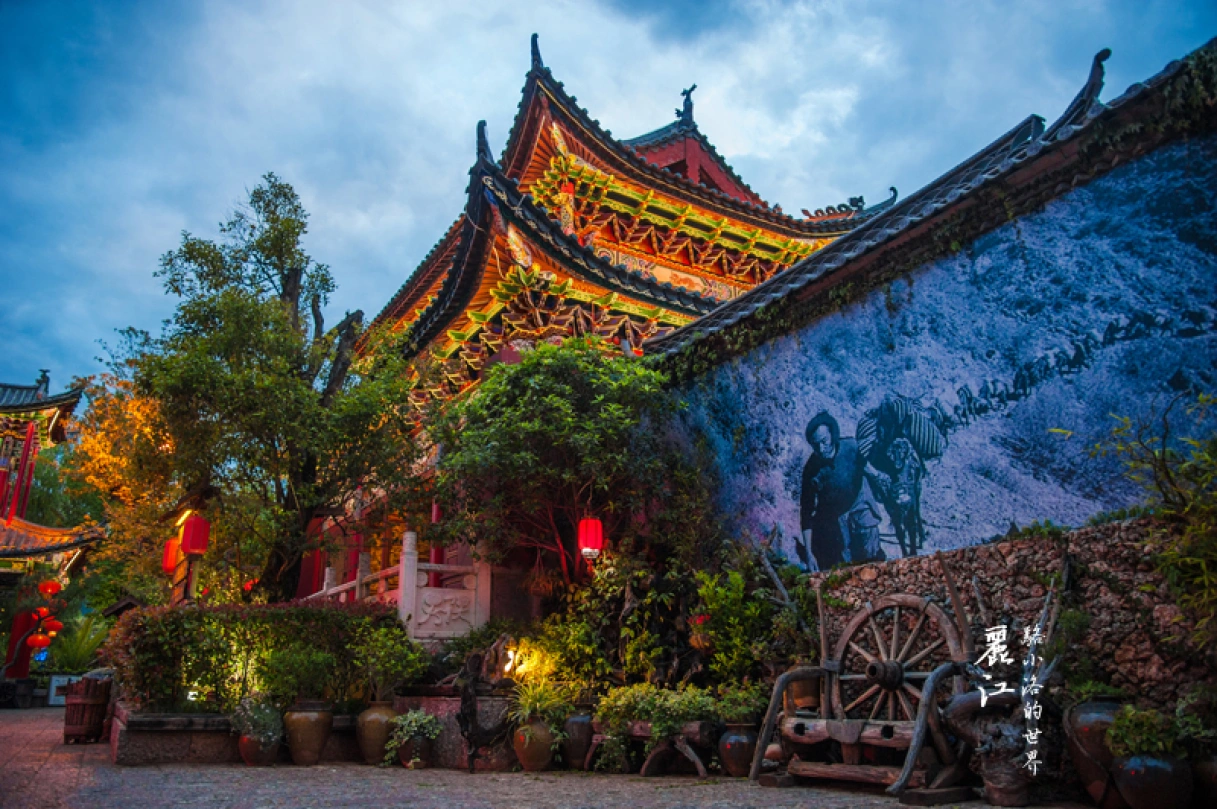
A massive mural of the Tea Horse Road.
The Tea Horse Road originated during the Tang and Song dynasties from the "tea-horse trade." The Yunnan-Tibet Tea Horse Road took shape around the late 6th century. It starts from Yiwu and Pu'er City in southern Yunnan's main tea-producing region, passes through today's Dali Bai Autonomous Prefecture, Lijiang City, and Shangri-La, and reaches Lhasa.
Since the Eternal Love show was still a while away, I started wandering.
Snow Mountain Beach: As they say, as long as you have a beach in your heart, anywhere can be the Maldives. Sitting under a thatched shelter in the blazing sun, eating watermelon and gazing at the distant snow mountain — it was wonderfully relaxing.
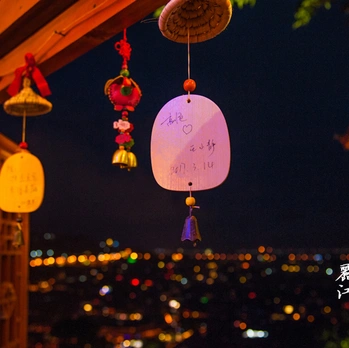
The Walking Marriage Bridge (走婚桥) has a Mosuo-style charm from Lugu Lake. I walked across it holding my own hand — awkward!
The Dongba wishing wind chimes made a crisp, pleasant sound in the wind, as if announcing the return of a horse caravan.
Beside the beach was Lacuo Lake. In ancient times, the people of Lijiang yearned for the sea, so they called lakes "seas." Lacuo Lake is one such example.
Back at the Eternal Love Culture Square, a lively "time-travel flash mob" was underway, earning rounds of applause. The light, cheerful dance was naturally relaxing, and eventually, tourists were invited to join in.
The scene changed so fast I couldn't keep up.
Just as that ended, around the corner at the Horse Caravan Square, the "Mu Mansion Recruiting a Son-in-Law" show began.
You might just get hit by the embroidered ball and become the Mu family's son-in-law!
Right opposite the Mu Mansion show was the Along the River During the Qingming Festival movie hall. Some say Lijiang Old Town is a modern version of this famous painting. The movie hall shows a "living" version of Along the River During the Qingming Festival on a nearly 100-meter-long screen, depicting the bustling urban life of the Song Dynasty. Step inside and feel like you've traveled back a thousand years.
Besides the movie hall, there's also the "Ancient Road Ghost House," a "Peeping Wall," a "Storm Eye," a "Strange Street," and a "Listening Room" at the Chama Inn.
The legendary "Beauty Bathing" scene — I had a hard time getting a shot without any wardrobe malfunctions.
There are many more indescribable scenes that you'll have to see for yourself.
The dynamic movie hall with Along the River During the Qingming Festival — truly lifelike.
A few minutes before the show started, I jogged in. Wow, the venue was huge.
Almost every seat was taken.
Lijiang Eternal Love is the soul of Lijiang culture. Directed by Huang Qiaoling, it uses IMAX 3D-style visuals to recreate the Naxi Genesis, Lugu Lake's Land of Women, Legends of the Horse Caravan, Glory of the Mu Mansion, and The Third Kingdom of Jade Dragon — spanning thousands of years of Lijiang history and legend. It takes the audience through snow mountains, from the primitive wilderness, to the Mosuo love huts by Lugu Lake, to the wind-and-rain-swept Tea Horse Road, to the golden Mu Mansion, to the romantic and tragic Third Kingdom of Jade Dragon, and to the paradise-like Shangri-La — a romantic encounter, a beautiful moment.
Prologue: The Naxi Genesis
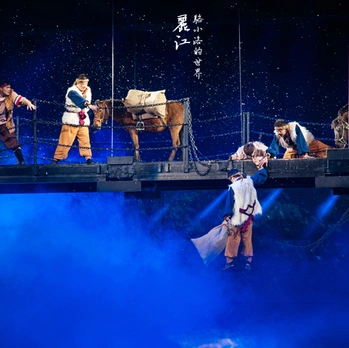
The Naxi are an ancient and wise people. In harsh ancient environments, they created the brilliant Dongba civilization.
Act One: Lugu Lake's Land of Women
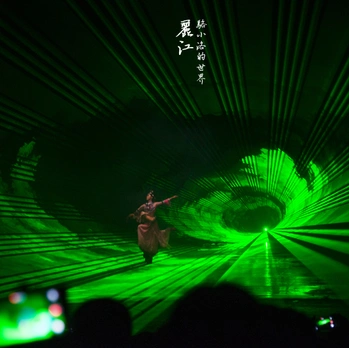
The serene and beautiful Lugu Lake, the ancient and mysterious Land of Women — a dreamlike paradise on earth. The Mosuo people living here are a branch of the Naxi and the only ethnic group in the world that still maintains a matrilineal clan system. They still practice the "walking marriage" custom where men don't marry and women don't marry.
This act was absolutely震撼. They say 3,000 tons of floodwater were released in an instant, drawing screams from the audience.
This was the rain curtain over the audience seats, synchronized with the flood.
Act Two: Legend of the Horse Caravan
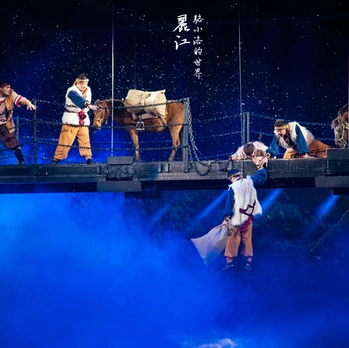
Lijiang became famous because of the Tea Horse Road. In a sense, Lijiang's glory was forged by horse hooves. For thousands of years, on the rugged Tea Horse Road, the horse caravans performed epic, heart-wrenching life stories every day. On this day, the caravan tasked with transporting goods for the imperial court and the Mu Mansion set out again.
The scene stirred people's blood. Eye-opening!
How much love and separation there is in the world. For live performances, it tugs at your heart.
The sound of horse hooves echoed in your ears. The caravan was about to embark on another unknown journey on the Tea Horse Road. Thunderous applause filled the venue.
Act Three: Glory of the Mu Mansion
Lijiang flourished because of the tea-horse trade. During the 471 years of Mu Mansion rule, they maintained friendly relations with neighboring ethnic groups and countries like Myanmar, Nepal, and India. Lijiang became a hub of economic and cultural exchange in southwestern China. In 1382 AD, the Ming Dynasty imperial court, recognizing the Lijiang chieftain's loyalty and diligent governance, bestowed the surname "Mu" upon him. The news came, and various ethnic groups and friendly neighbors came to celebrate!
Persian beauties descended slowly on flying carpets, their graceful figures exuding intoxicating charm.
Their elegant backs made you lose focus for a moment.
...
Two girls performed an acrobatic routine. I was amazed at their flexibility — unbelievably supple.
And that balance — their cerebellum must be highly developed.
Act Four: The Third Kingdom of Jade Dragon
The Naxi are a people who cherish free love. In the transition from the walking marriage system to "arranged marriages by parents," they paid a heavy price for love. American scholar Joseph Rock said that historically, over 30,000 Naxi young men and women died for love — committing suicide together. For love, they fearlessly rushed to the pure and icy "Third Kingdom of Jade Dragon."
When the lights came up, the applause was thunderous. The stage design was absolutely stunning!
Epilogue: Searching for Shangri-La
Seasons change, stars shift. We come from history. The snow mountain remains; the old town is like a song. Every year, millions of visitors gather in Lijiang, shocked by the "love suicides" of the past, inspired by the belief in free love. They search here for their own Shangri-La!
A voiceover asked everyone to stand and face the white pagoda for a sincere blessing prayer. Everyone stood up, hands together, praying devoutly.
At this time, the Dai Village was performing the thrilling "Climbing a Mountain of Knives and Walking Through a Sea of Fire."
Just watching made my palms sweat. Those were real knives! They even invited tourists onstage to verify.
Tourists couldn't help but give thumbs up — it was genuine, not a boast.
The square was full of non-stop entertainment. At the Eternal Love Culture Square, another heart-stopping performance was underway.
I had to admire the performer's calmness. If it were me up there, I'd be trembling. This was real kung fu — no exaggeration. One slip and it would be serious trouble.
Lijiang Love Song Amusement Park is a high-altitude amusement park. It gathers thrilling rides like the giant pendulum, flying chair, free fall, wave swinger, and flume ride, along with various tech projects and interactive adventure performances. It's a paradise for adventurous youth to challenge themselves and release their passion.
Whether you're an adult, a child, or a family, this is a great amusement park. Prices are similar to regular amusement parks.
The flume ride was super thrilling. Too bad I had my camera with me and couldn't go on it. A bit of a regret.
The carousel — fun for both kids and adults.
Lijiang Love Song tells the tragic and beautiful love story of Abuda, a Tibetan young man, and Gajimi, a Naxi girl.
In this age of fast love, how many people still believe in love at first sight? Various social platforms have made love seem less important. But in Lijiang back then, young men and women didn't talk about love all the time, yet they were practitioners of love at first sight.
Because of Gajimi's singing, this Tibetan young man set his heart on her. At the Torch Festival, Gajimi's enchanting dance made Abuda fall deeply in love.
But this is a tragedy. If you're easily moved to tears, you'll definitely cry.
Mountains crumbled, volcanoes erupted, flash floods burst forth. Their love was forever etched in people's memories.
The performance ended, but the interaction didn't. Everyone gathered around a bonfire for the Guozhuang dance. This is originally a Tibetan folk dance, but it has spread throughout western Sichuan for festivals and gatherings — a way to strengthen bonds between people.
In Lijiang of that era, the Torch Festival was a perfect opportunity for young men and women to flirt with each other.
By this time, the second Eternal Love show had already started. The park suddenly became quiet. As the lights came on, I walked around, experiencing Eternal Love under the night sky.
The Gate of Time — neon lights flickering.
This was the final activity at Eternal Love Square. Audience members who had just watched the show held hands, experiencing the joy of the bonfire and Guozhuang dance. At this moment, you must have felt a sense of belonging. Familiar or not, everyone danced together. The host's passionate voice infected every visitor. At that moment, you were definitely happy.
A joyful day ended with singing and dancing. The most fulfilling and happiest day at the Eternal Love scenic area.
So many beautiful memories to slowly recall.
Shuhe Ancient Town in the Misty Rain
Years ago, on a rushed Lijiang trip, I missed Shuhe Ancient Town, which I'd always wanted to visit.
Last time, it was raining and I was in a hurry. This time, I braved the rain to go.
Everyone says Shuhe is less noisy than Lijiang. After seeing it, I agree. No Bar Street, no crowds — just a leisurely, peaceful atmosphere.
Since June 1, 2016, Shuhe Ancient Town has also started charging an entrance fee of 40 RMB. When we went, the driver said, "They're still collecting it, but they're not strict. I can take you another way." A wave of warmth washed over me, lightening the damp mood. I was so grateful.
This made me feel that Lijiang isn't as bad as the rumors say. There are still many good people.
My first glimpse of Shuhe — misty and rainy.
A happy couple's back view — a devastating blow for a single person.
Two people sharing one umbrella — even if one side gets wet, their hearts are warm.
A shop with Lijiang-style decor. I just passed by, didn't go in. Such shops are common in Lijiang Old Town too.
This water street felt like the most Shuhe-like spot, with a Jiangnan misty-rain vibe. Sitting by the street with a drink, listening to the patter of rain, daydreaming, thinking about things, or writing some "little yellow stories" — I mean, small, beautiful words.
Or just basking in the sun and feeling the breeze.
A yak meat restaurant with Tibetan-style decor at the entrance. Looked very appealing.
From the outside, it seemed like a large shop selling cups and pots. The interior was surprisingly spacious.
Nine-Dragon Dragon Pool (Jiuding Longtan): To the west lies Longquan Mountain, to the east is Qinglong River. It consists of two semi-circular stone pools, one above the other, with a pavilion in between — the best spot to view the pool.
Legend says this place is very spiritual.
I knelt and paid my respects inside. The next day, the weather cleared up.
This was basically the end of Shuhe. I didn't retrace my steps but took a different path back to the main gate. The alleys were still unfamiliar to me, so...
You should also read:
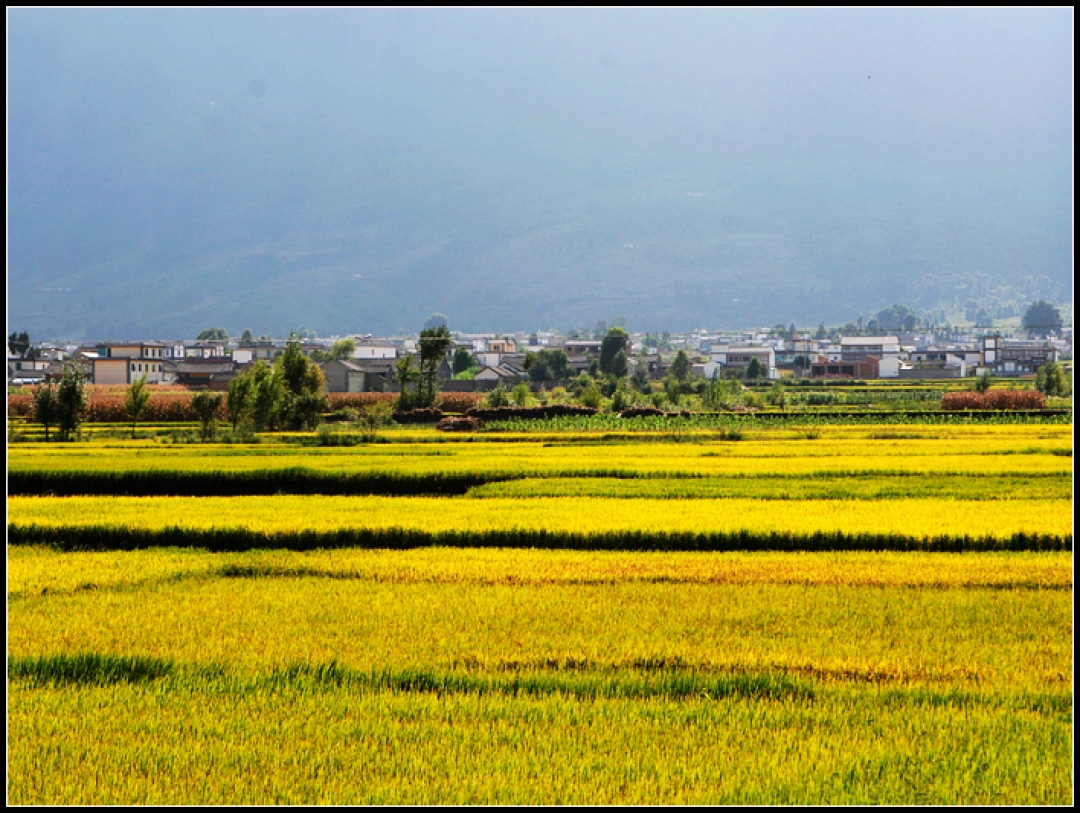
A 9-Day Yunnan Journey: From Lijiang to Dali to Tengchong – A Trip Toward Self-Reconciliation
A 9-Day Yunnan Journey: From Lijiang to Dali to Tengchong – A Trip Toward Self-Reconciliation Some say travel is simply going from a place you're tired of to a place other people are tired of. It stings to hear, but it's painfully true. Yet there's…
Continue reading...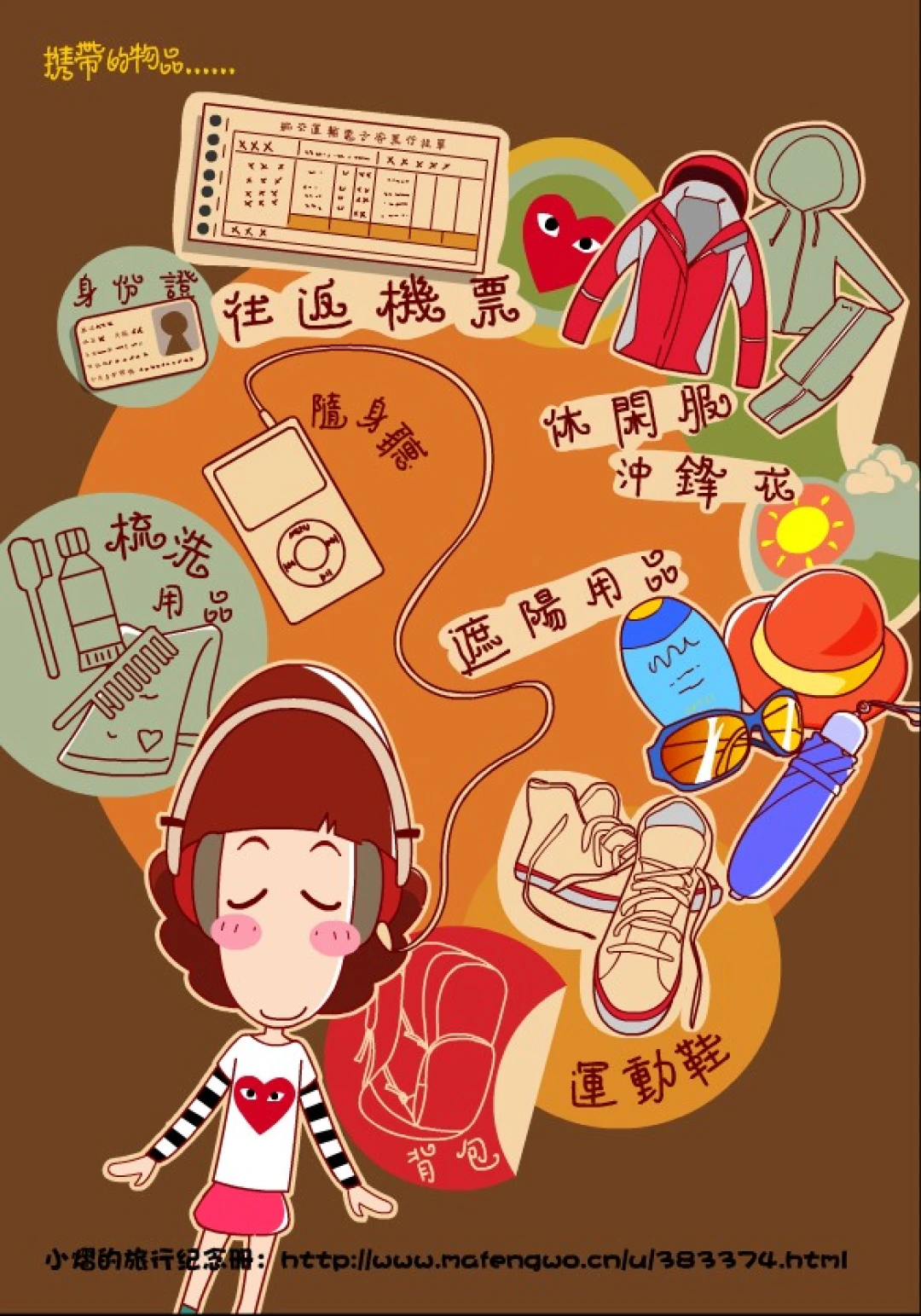
Dreamland – Lijiang: A Talking Comic Travel Guide
Dreamland – Lijiang: A Talking Comic Travel Guide Prologue: When Lijiang Takes Root in Your Heart Some places leave a mark on you forever. They're like an old song on repeat, suddenly playing in your mind on an ordinary afternoon. For me, Lijiang is that…
Continue reading...
Escaping Nanning, Falling Under Lijiang's Spell: Our Four-Person, Ten-Day Yunnan Dream
Escaping Nanning, Falling Under Lijiang's Spell: Our Four-Person, Ten-Day Yunnan Dream Before We Set Off: No Pain, No Obsession Have you ever had that impulse—suddenly tired of the office fluorescent lights, the crush of the subway, the endless parade of identical takeout boxes, and just…
Continue reading...