Love Songs of Yunnan, Composed on Autumn's Staff

Love Songs of Yunnan, Composed on Autumn's Staff
Prologue: A Dream that Leaps from Summer into Autumn
A friend who has traveled the world once told me that Lugu Lake is the only place in China that can rival Lake Baikal. That sentence became a key, unlocking me from the sweltering summer heat of Guangdong and tossing me directly into the autumn of Yunnan.

As the plane cut through the clouds, mountain winds rushed to meet me. Crossing ridge after ridge deep into Yunnan's heartland, I was astonished to discover that this autumn held winter's chill yet concealed spring's scenery. In this place that felt like a fairyland, bringing the one you love and composing Yunnan's love songs on this autumn staff—that must be the most romantic thing of all.
Shuhe: A Morning Song in Sunlight

Returning to "Where the Dream Began"

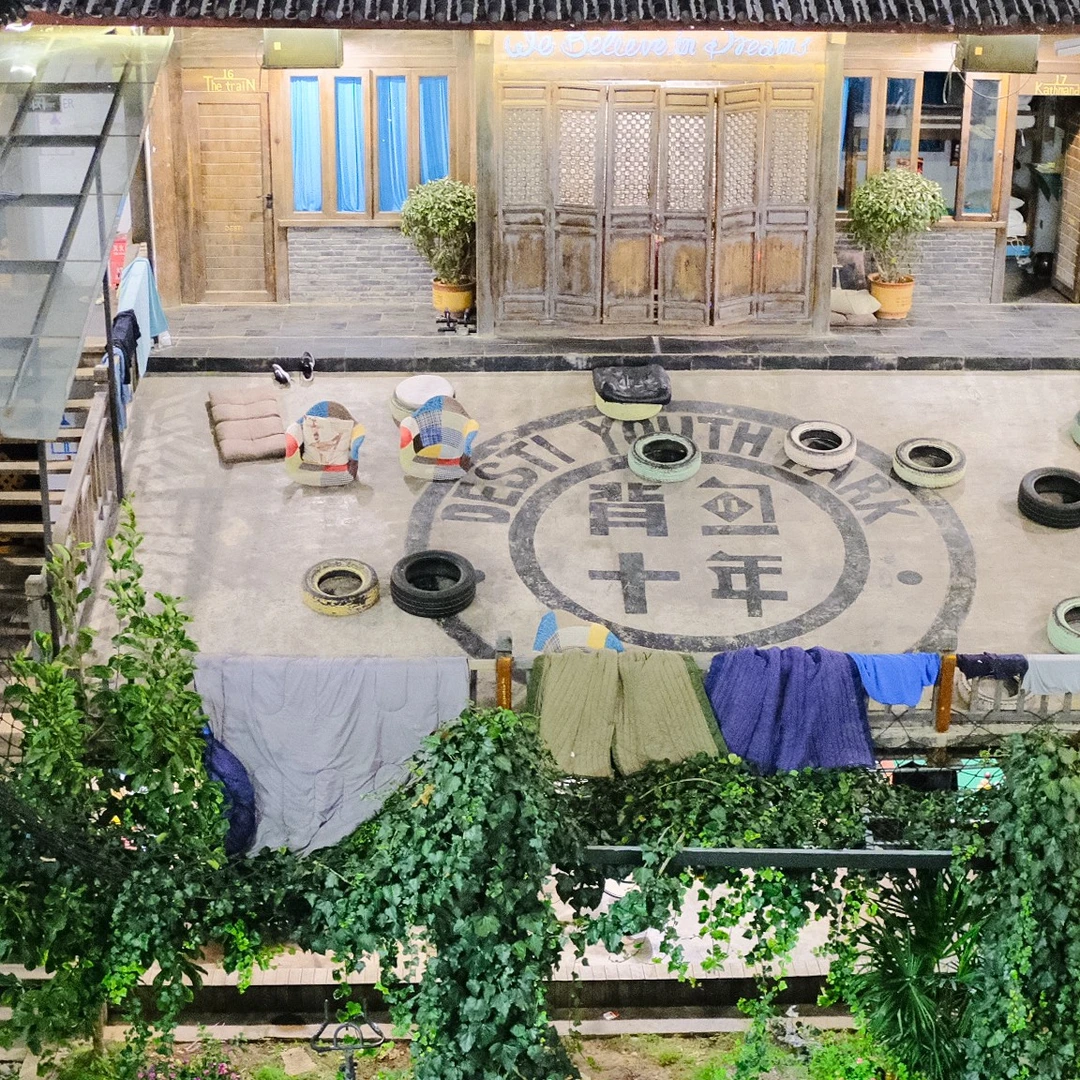
I first walked into "Backpack Ten Years" youth hostel in the summer of 2014, right after my high school graduation exams. Back then, the founder, Brother Xiaopeng, was live-blogging on Weibo about every brick he laid for this hostel—drawing designs, pouring foundations, doing renovations, hauling building materials on a tricycle. Watching it take shape day by day, I quietly decided: my graduation trip had to be Yunnan, to see with my own eyes how a traveler builds his dream utopia.

The second time I came was when I traveled the Sichuan-Yunnan route solo. From Daocheng Yading through Shangri-La, I found myself back here again. In the off-season, Shuhe was eerily quiet under overcast skies, with only "Backpack Ten Years" buzzing with life. Friends from all corners of the country played Texas Hold'em in the courtyard, watched outdoor movies at night, listened to Xiaopeng share travel stories, or curled up quietly in the Geography Café with books in the afternoon. Back then, I thought to myself: I hope every hostel I stay in from now on feels like this.
This time was my third return. I took his hand and said, "See this? This is where my dream began."
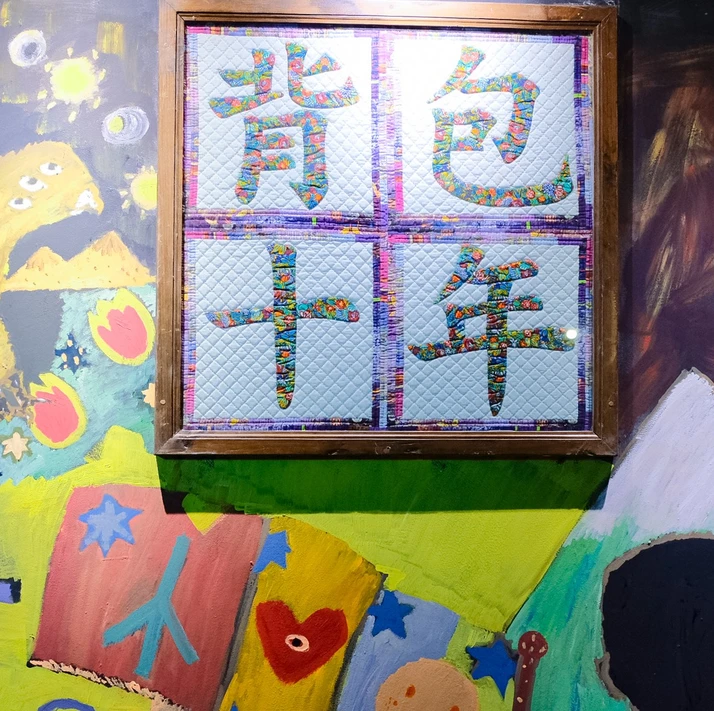
I didn't need a staff member to guide me. I knew every corner by heart—every room named after a place Xiaopeng had visited, every postcard in the café captured by his lens, every trinket in the Geography Café carried back from flea markets around the world. As I introduced each piece, I realized that everything here had its own story. Like the "Backpack Ten Years" tapestry hand-stitched by Sister Zhang from Taiwan, which had crossed the ocean to get here.
Lijiang was still the commercialized Lijiang, but "Backpack Ten Years" was still the same as ever. I once thought one visit would satisfy the longing, but instead, the yearning only grew stronger. Pushing open the window, walking through the corridor, stepping into the Geography Café—everything felt so familiar. Turns out, utopia is a kind of spiritual nourishment.
Wandering Shuhe, Feeling Autumn's Spring
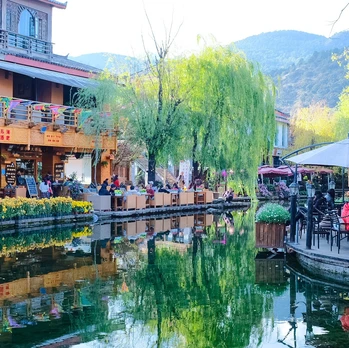
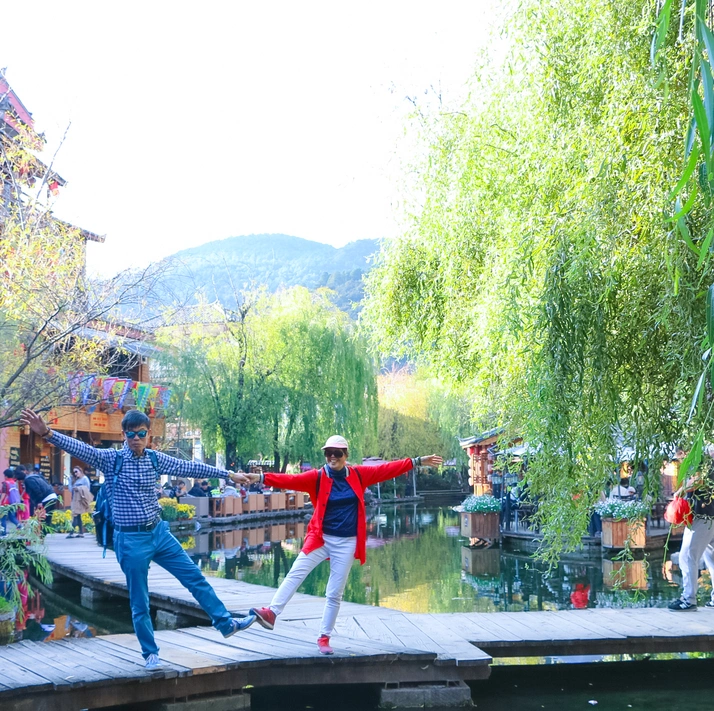
I have a soft spot for strolling through Shuhe Ancient Town. It lacks the noise and crowds of Dayan Old Town. The off-season weather was especially kind. In four years, I've visited Lijiang three times. The background music on the streets changed from Ticking and That Moment to Little Baby, but the laid-back atmosphere never shifted.

In Lijiang's autumn, I felt a vitality that belonged to spring. The most beautiful season turned out to be the off-season. Skip the early autumn overcast days, and when the sun shines bright, your mood practically blooms.
Once, in a taxi, I asked the driver out of curiosity: "Why is it that among the Naxi and Mosuo people here, women do all the work and support the family while men just take it easy?"
He smiled and explained: "Back in the day of the Ancient Tea Horse Road, men had to transport tea to Tibet. The journey was long—seven or eight months at a time. The family had to be managed by the women, so they gradually became independent. By the time the men returned, after months of grueling travel, what energy did they have left to go out and earn money? They'd rest at home for a while, then set off again."
No wonder one of Yunnan's "Eighteen Oddities" says: Women butcher pigs faster than men. These days, the Tea Horse Road no longer carries goods, and Naxi and Mosuo men don't all stay home living the easy life—many go out to work and support their families too.
Time in the Scent of Coffee
Did you know? Yunnan is the earliest place in mainland China to cultivate coffee. In 1904, French Catholic missionary Tian Deneng arrived in Zhukula Village, Binchuan County, Dali Prefecture to spread his faith and built a church. Because he loved coffee, he carried not only a Bible, clothes, and tools but also a coffee seedling from France. He planted that seedling outside the church, letting it take root in Yunnan over time.

More than a hundred years later, when all this was nearly forgotten, the name "Tian Deneng" began telling China's coffee story in a new way.
Compared to the bustle of Dayan Old Town, I prefer Shuhe's quiet. If you're staying in Lijiang, Shuhe is the better choice. In the early morning, before the town wakes up, grab a Naxi-style breakfast. At noon, dine at a riverside restaurant serving home-style dishes. In the afternoon, bask in the sun at your inn, sipping coffee and daydreaming. At night, head to the square to watch the bars come alive with dancing under the stars—this is how I choose to enjoy myself in Shuhe.
You come to this world once—you should see the sun, and walk the streets with the one you love.
Lige Peninsula: The Blue of a Clear Sky
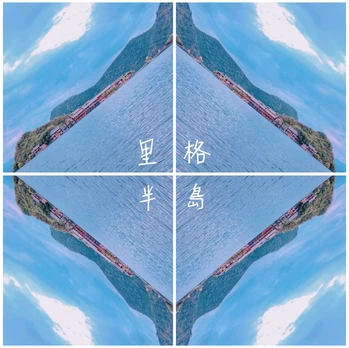
Lugu Lake: A Fairyland in the Mountain Valley

In the Naxi Mosuo language, "Lu" means mountain valley, and "Gu" means inside—together, "Lugu" means "lake inside the valley." It sits on the border between Yanyuan County in Sichuan and Ninglang County in Yunnan, about 207 kilometers from Lijiang. The old road used to take eight hours, but the newly built Lining Highway has cut the drive to four.
Practical Tips: - Bus: The Lijiang bus station has coaches to Luoshui Village. They don't make stops—buy your ticket at the station. The ride takes about 5 hours, one-way around 70 yuan. - Tourist Shuttle: Picks up from Dayan Old Town and Shuhe Ancient Town. Round trip is about 130 yuan per person. We booked through Mafengwo and got it for 110 yuan round trip with a coupon. The driver was great—he'd stop whenever we spotted beautiful scenery for photos. - Tickets: Both the Yunnan and Sichuan entrances sell tickets. 100 yuan per person (half price for student ID, senior cards for ages 60-69, and disability cards; free for active military, military disability cards, seniors over 70, and press cards).
Lugu Lake's geography is unique. The natural scenery is mainly on the Yunnan side. Going clockwise from Luoshui to Dazui Village, you'll pass Lover's Beach, Crocodile Island viewpoint, Lige viewpoint, Lover's Tree, and Luyuan Cliff. Many visitors just rent a room—"enter to sleep, go out to see the lake"—but that's such a waste. You have to circle the lake to appreciate its beauty. At different times and from different positions, the water changes color endlessly. The Sichuan side is mostly reed marshes, where the lake's outlet forms a shallow wetland covered in aquatic plants. Watching the sunset from Mukua Pier and the Walking Marriage Bridge is especially stunning.
Circling the Lake: Meeting Lugu at Its Finest
We stayed at Lugu Lake for three nights and two days, but we booked the day's lake tour directly with our shuttle driver. We'd checked the weather forecast—tomorrow would be overcast. To see Lugu at its most beautiful, we decided to circle the lake today and explore at our own pace tomorrow.
Lugu Lake originally had four ways to circle it: private car, e-bike, bicycle, or on foot. But due to frequent accidents, e-bikes and bicycles have been banned. You can only hire a car or walk. The driver told us: "Tourists break their hands one day, their legs the next. Injured people can't get compensation from the rental guys, so they go to the local government. The government then asks the tourism management committee to ban e-bikes."
If you're staying in Luoshui, there are still some "black cars" you can rent—about 70 of the 80-plus local households have their own vehicles. They've formed a fleet: 300 yuan per car, or 70-80 yuan per person if you share. Luoshui also has two "holdout" families renting bicycles. The management committee has tried to shut them down many times, but to no avail.
Arriving at the "Blue Kingdom of Women," I finally saw Lige Peninsula, famous from countless photos. They say the water and scenery here are even better than in Luoshui, so we chose to stay here.
As we entered Lige Village, we passed the "Flower Tower Love Song" performance venue and spotted a bunch of professional cameras. I was wondering what kind of show required such equipment, when I turned and saw a face I knew well. I stared at him, searching my memory, and only after he passed me did it hit me—wasn't that "Village Chief" Li Rui from Hunan TV?
The Romance of Mosuo Culture
Lugu Lake seems to fall asleep in autumn and winter, but the lake I'd spent my whole life dreaming of—it was right here. It's a romantic place that brings lovers closer. Breathing the cool, thin highland air together, holding each other's heartbeat as you walk every step, every boardwalk—it feels like you could slowly grow old together this way.
Some come to Lugu Lake for the natural scenery, some to learn about Mosuo matriarchal culture, hearth culture, and walking marriage culture, and some come straight for the "walking marriage" itself. In this stunning landscape live over 50,000 Mosuo people. This ancient ethnic group still follows the tradition of "honoring the mother as supreme, valuing women as noble."
"Walking marriage" means a man visits his lover's flower tower after midnight to drink and talk, then must leave before dawn. Once the relationship stabilizes, it can be made public, and the man can enter the woman's home openly—but he still lives a life of "meeting at dusk, parting at dawn."
The driver told us: "I'm from the upper village in Luoshui. Two girls from our village have had children with out-of-town tourists. One of my buddies even walked-married a girl from Guangzhou. Their kid is eight now. They run a guesthouse next to Luoshui called Green Tile Flower Tower. That's a successful example of an outsider walking-marrying at Lugu Lake."
Mosuo Home Visit Experience: - Afternoon Tea: Butter tea, buckwheat cakes, and "guangdang" liquor. Reputable Mosuo home visits no longer sell products—they purely introduce the culture. - Walking Marriage Feast: A dozen specialty dishes including fish, shrimp, wild mushrooms, and pork belly. The pork belly, also called "pipa" (lute) meat, is made by deboning a pig, seasoning it with salt and Sichuan pepper, and air-drying it. - Bonfire Party: A venue for Mosuo men and women to choose partners. In the old days, there were "three treasures of walking marriage." Now it's all about China Unicom and China Mobile—if two people like each other, they exchange contact info and make plans: "I'm already downstairs at your place. Hurry up and tie up the dog—I'm coming in."
Stories on the Pig-Trough Boats
We took a pig-trough boat from Nisai Village to a nearby island. The sun had quietly slipped behind the mountains. The lake surface no longer sparkled but was as clear as glass. The boatman's face was etched with the marks of time, but his arms moved the oars with powerful rhythm as he told us the story of "water-natured flowers" (a local aquatic plant).
The Mosuo people have a touching legend about the pig-trough boat: Long ago, Lugu Lake wasn't a lake but a low basin. A mute shepherd discovered a giant fish in a cave. Every day he cut meat from it, and the fish would heal itself. Greedy villagers tried to take the fish, using nine oxen to pull it out. Water burst from the cave, flooding every village. Only a woman who was feeding her pigs survived by jumping into a pig trough. To remember her, later generations kept using these trough-shaped dugout canoes.
Today, pig-trough boats aren't just for fishing and catching shrimp—they're also vessels for "Ashiao" (courtship). Young men and women in love ride together, talking and expressing their feelings.
From a distance, Lugu Lake's water is as blue as the sky. Up close, it's emerald green. Maybe no single color can fully capture Lugu Lake's beauty. American scholar Joseph Rock once marveled: "Truly a place fit for gods to live."
Dusk was like wine, warming my cheeks. The car drove to Luyuan Cliff at 2,722 meters elevation. The driver said you can see Lugu Lake's gradient colors from here.
The Walking Marriage Bridge and Reed Marsh Sunset
The Walking Marriage Bridge is the only bridge on Lugu Lake, a meeting place for Mosuo lovers. Men call their lovers "Axia," women call theirs "Azhu." As night falls, the bridge fills with "Azhus" heading to their dates. On this side of the bridge is Yunnan; on the other side is Sichuan.

Our driver urged us toward the reed marshes, afraid we'd miss the sunset. From the viewpoint across from the Walking Marriage Bridge, you can see the full panorama.
That night, we walked under the stars. At the entrance to Lige Peninsula, a clear, moving male voice drifted out from "Taliuren Family." We stayed to enjoy a night of song and drink.
Lost on a Path, Stumbling Upon Paradise
Hiking to Camel Island
I was swinging in the inn's courtyard when the owner spotted us with nothing to do. "If you're free today," he said, "you can hike to Camel Island. Take the small path from Lige Peninsula. Walk along the quiet mountain trail with the calmest lake beside you. I go up there whenever I have nothing to do."
I grabbed my camera, put on a straw hat, took his hand, and started our leisurely journey. The pig-trough boats weren't all the same color—they were dressed in colorful coats, dotting the lakeshore.
This autumn, my hometown Guangdong was still in summer, while I was at Lugu Lake, which had winter's temperature and spring's scenery. If not for the yellow leaves on the trees, you'd think Lugu Lake was still lingering in spring's vibrant colors.
We passed a restaurant called "Manshan Xinqing" (Lige main branch) and were drawn in by its chic decor. The chef, apparently from Yibin, Sichuan, served food that lived up to the romantic, artistic exterior. About 70 yuan per person. Four-star rating!

The mountain path was narrow. I didn't know how many more turns we'd need to reach Camel Island. Starting from the trail beside Lige Peninsula, the farther we walked, the more I felt the lake's stillness. There were a few homes by the lakeshore, with sheep and wild boar raised in a mountain meadow—like stepping into a peach blossom paradise "ignorant of Han or Wei dynasties."
I didn't know how much farther we had to go, but we accidentally came upon a flat expanse. No Camel Island in sight, but we found exactly what we were looking for: grassland, a wooden cabin, goats, wild boar, and the lakeshore. There was no one else here.
We looked up at the sky from the valley. From halfway up the mountain, we heard what sounded like a car climbing, but it was as elusive as the wind. The green grass on the slopes, the small flock of sheep wandering through the meadow—this nameless little valley had a unique kind of peace.
Someone once wrote: "I've seen a lake with grass, where all dreams fall asleep; I've seen a calm lake, reflecting my own face; I've seen a lake with birds, turning everything into a painting under the sun; I've seen a lake with tree shadows, where spring freezes in the green."
Just as we were about to head back, I spotted a "lazy camel" floating on the lake's surface—so this was Camel Island.
Lige Island is a beautiful sandbar-island in the northern bay of Lugu Lake, surrounded by water on three sides, embraced by green mountains, and standing beside Goddess Gemu. Legend says the lake is the goddess's tears, or perhaps her mirror. Its scenery changes endlessly, full of mystery.
Potatso: An Autumn Painting
Departing from Shangri-La
The bus headed toward Diqing Shangri-La. As we climbed the mountain road, clouds and mist rolled in, and the driver slowed down. Outside the window, everything was white, with hints of yellow and red autumn colors peeking through. Leaving the switchback road, the weather improved, revealing patches of blue sky through the clouds. Beneath this ever-changing sky lay fields and small villages. By evening, I couldn't tell whether the smoke was rising from chimneys or drifting down from the sky.
Important Note: Due to the Bita Sea's thick-lipped fish protection project, the Bita Sea area has been fully closed since August 18, 2017. The current tour route is: Shudu Lake, Militang, and a distant viewing platform for Bita Sea.
Transportation: The Shangri-La bus station runs four daily buses to Potatso (8:00, 8:30, 9:30). Return times are 14:00, 14:30, 15:00, and 16:30. One-way fare is 15 yuan per person, about half an hour's ride.
Tickets: Combo ticket 130 yuan (84 yuan for the sightseeing bus + 46 yuan entrance fee). Student ID only gets a discount on the entrance fee.
Opening Hours: 8:00-17:00 (April-October), 8:30-16:00 (November-March).
Meeting You in the Most Beautiful Season
At the Shangri-La bus station, a bearded uncle in an old uniform asked where we were going. When he heard we wanted Potatso, he said: "The last bus left at 9:30. You can go to the ticket office and buy tickets to Luoji." Hearing an unfamiliar place name, I was confused. The ticket clerk said the bus to Luoji passes through Potatso. I asked: "Will the driver drop us at Potatso?" She pointed at the bearded uncle who'd helped us buy tickets: "He's the driver." Turns out the kind uncle wasn't a security guard—he was the driver. Compared to the people we'd met in Lijiang and Lugu Lake, I liked the locals in Shangri-La more—they quietly offer help without being asked.
Potatso National Park is mainland China's first national park, a 5A-rated scenic area. Even with two sections closed, there were still plenty of visitors. The leaves had been painted with autumn colors, giving the season a slightly melancholic air. Walking along Shudu Lake's boardwalk, everything was dreamlike colors and poetic scenes.
I'd missed Potatso on my two previous visits to Shangri-La. Maybe fate had arranged it so I would meet it in its most beautiful season.
The alpine lake reflected trees of uneven colors, hazy mountains, and a high-saturation blue sky. I slowed my pace, letting this beautiful mirror refresh my eyes. Yellow leaves suddenly bloomed with unparalleled grace. Through the extraordinarily blue sky, I realized that the world above was far more beautiful than the one below.
The little squirrels showed no fear of people, holding sunflower seeds and eating happily. In the distance, a mountain peak showed its creamy white top like an ice cream cone—a view that could cure any bad mood.
After finishing the boardwalk, we got on the sightseeing bus back to the parking lot. Finding our bus in the vast lot wasn't easy. We asked a young man, who said the bus was there but he didn't know which one. We went by instinct—the first bus we found was ours, but the people inside said the driver had disappeared. After the departure time passed, a young man in a cowboy hat appeared, smoking. Before we could even buy our tickets, he gestured for us to get on. When we got off, he didn't collect the fare—we'd hitched a free ride.
Xiangcheng: Coffee and Moonlight
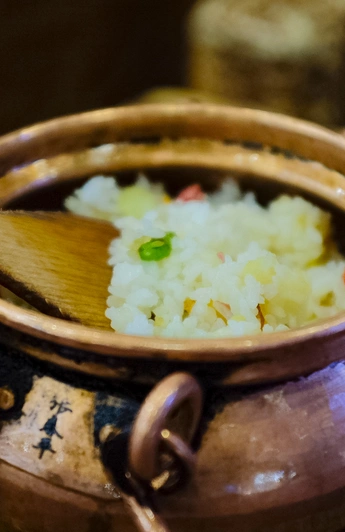
The Story of a Yunnan Coffee
Back in Dukezong Ancient Town, we stumbled upon a "Xiangcheng Coffee Shop" while wandering. Drawn in by the aroma of coffee beans, we went in for a cup of Yunnan small-bean round coffee. While I was examining the beans and the espresso machine, the staff brought over a small pot and said: "We made too much—the rest is for you."
We walked around and came back to find a similar coffee shop. Looking inside, it was the same manager again. Turns out he'd opened two branches in the ancient town because the first one ran out of seats from May to October. He invited us to sit and try another, better Yunnan coffee. The manager was from Hubei. He'd spent seven years working in coffee technology in Yunnan before opening his own shop.
The Prayer Wheel of the Moonlight City
Shangri-La's Moonlight Square sits at the foot of Turtle Mountain Park, next to Dukezong Ancient Town. On the square, people lead yaks and Tibetan mastiffs for tourist photos. Flanking the square are the Red Army Long March Museum and the Diqing Museum. Above stands the world's largest prayer wheel, weighing 60 tons, made of gilded pure copper. Inside are 1.24 million sutras and six-syllable mantras, plus 16 tons of various Buddhist treasures. Locals say it takes three strong men to turn it.
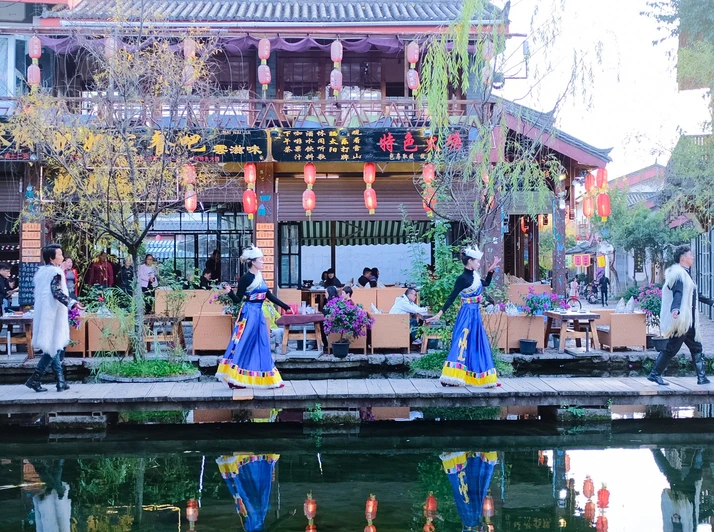
On the way up, there are some small temples. If you don't go inside, you can continue from either side. In Tibetan areas, clockwise means good fortune, so it's best to take the left path, and turn the prayer wheel clockwise as well. When we arrived in Shangri-La, a great fire had already gutted Dukezong Ancient Town. From above, we could see the town being rebuilt.
On my first visit, the ancient town was desolate and quiet, with most buildings still under reconstruction. Tourists worked together to turn the prayer wheel. I felt this was the most meaningful thing to do in the Moonlight City—expressing devotion and wishes. As we pushed with all our strength, it felt like our wishes were infused with mysterious power.
My second visit was after the 2016 National Day holiday. There were very few tourists. I couldn't turn the prayer wheel alone. Just as I was about to leave, I ran into Brother Qiangzi, whom I'd met at the hostel. He was traveling around China at the time, carrying a notebook to collect postmarks and leave marks from everyone he met. One of his lines stuck with me: "You've got the car, the house, the wife, the kids—what excuse do you have not to see the world?"
Epilogue: An Autumn Love Song
Yunnan's autumn is short, but long enough to write a love song.

From the morning song in Shuhe's sunlight, to the blue dream of Lugu Lake, to the autumn painting of Potatso, and finally ending under Shangri-La's moonlight—each stop is a melody, each moment a note.
If you ask me what Yunnan's autumn looks like, I'd say: It has winter's temperature but conceals spring's scenery. It lets those far from home find their place, and brings lovers closer together. And those love songs composed on the staff—they'll softly ring out in every autumn wind.
Final Tips: - Autumn is Yunnan's off-season. Skip the overcast days—the scenery is most beautiful when the sun is out. - You must circle Lugu Lake. Hiring a car is the most hassle-free way. - The Shudu Lake boardwalk at Potatso is the highlight. Bring some nuts to feed the squirrels. - The locals in Shangri-La are very genuine. Chat with them—you'll gain unexpected rewards. - If time allows, stay in Shuhe for two or three days to experience the true meaning of slow living.
You come to this world once—you should see the sun, and walk the streets with the one you love.
You should also read:
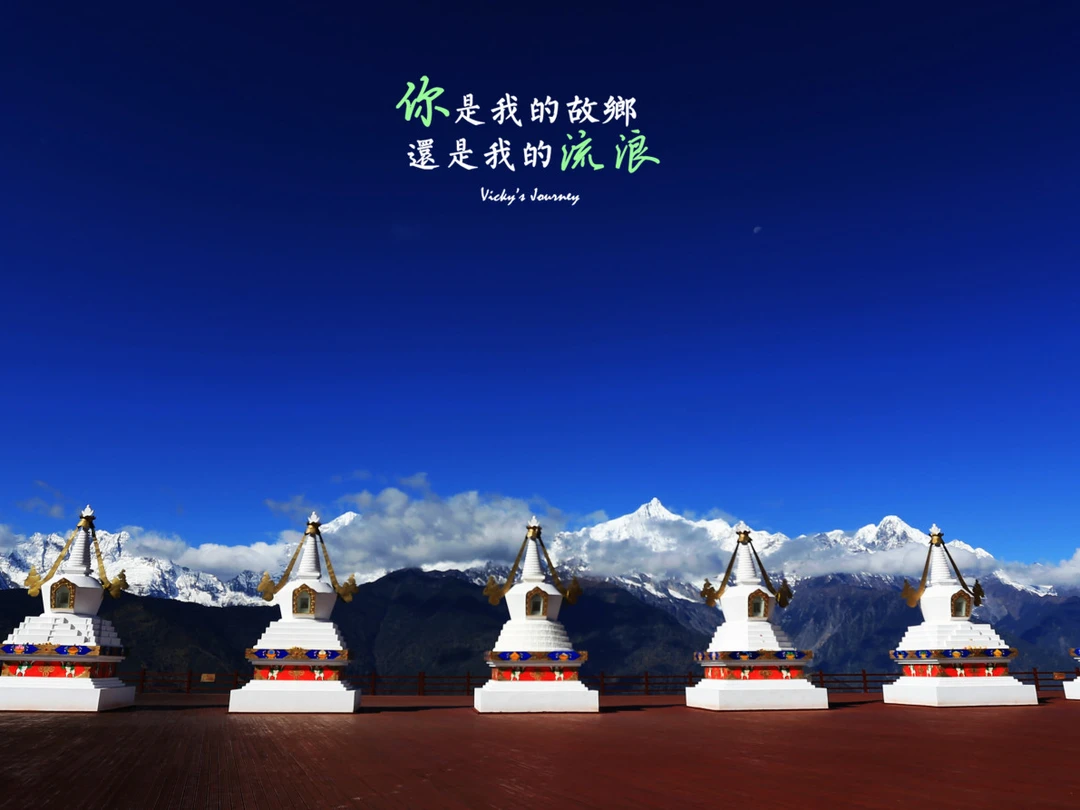
Grant Me a Love Affair with Kawagebo: In Yubeng, I Found What Heaven Looks Like
Grant Me a Love Affair with Kawagebo: In Yubeng, I Found What Heaven Looks Like Prologue: The Reason for Setting Out "Don't forget why we started, just because we've gone too far." The moment the plane broke through the clouds, the roar of the engines…
Continue reading...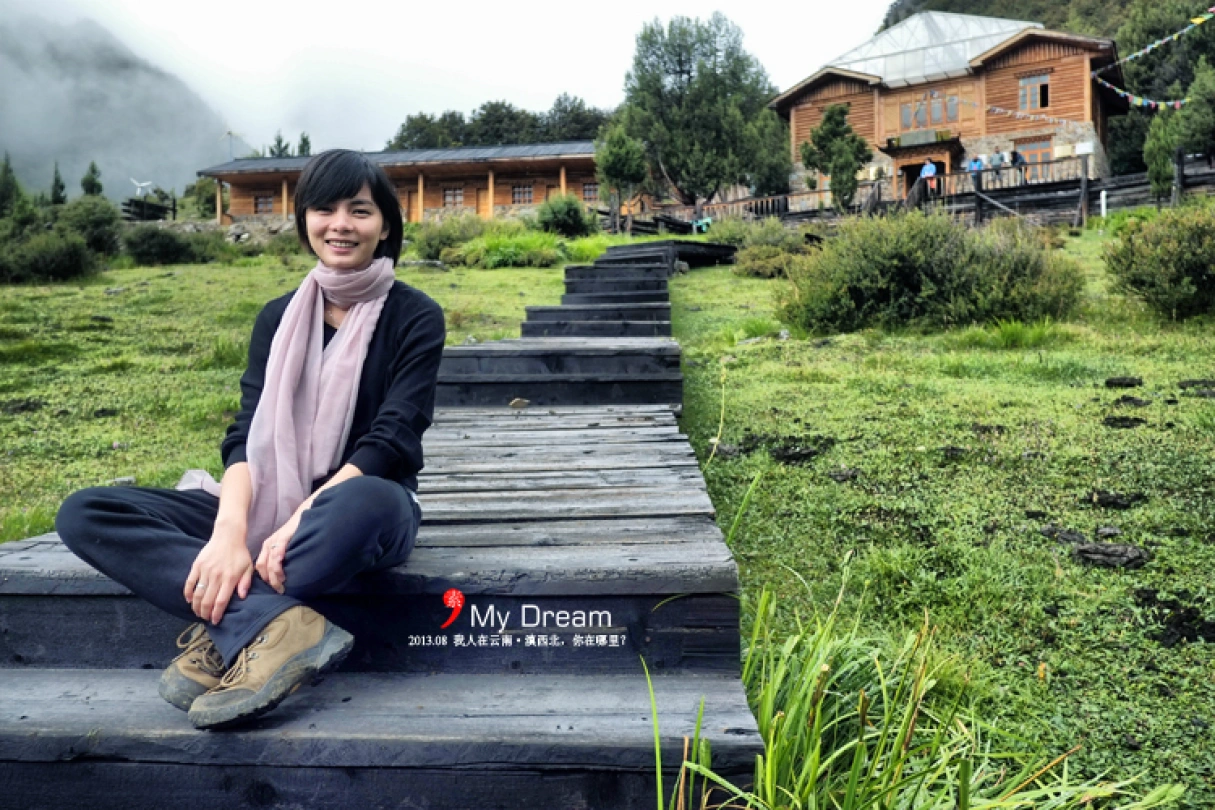
From Resignation to Return: Northwest Yunnan, A Journey of Magical Realism
From Resignation to Return: Northwest Yunnan, A Journey of Magical Realism When "Leaving on a Whim" Meets "The Inevitable Return" For those who love to travel, there's always a restless wind living in their hearts. A few months ago, I quit my job, threw on…
Continue reading...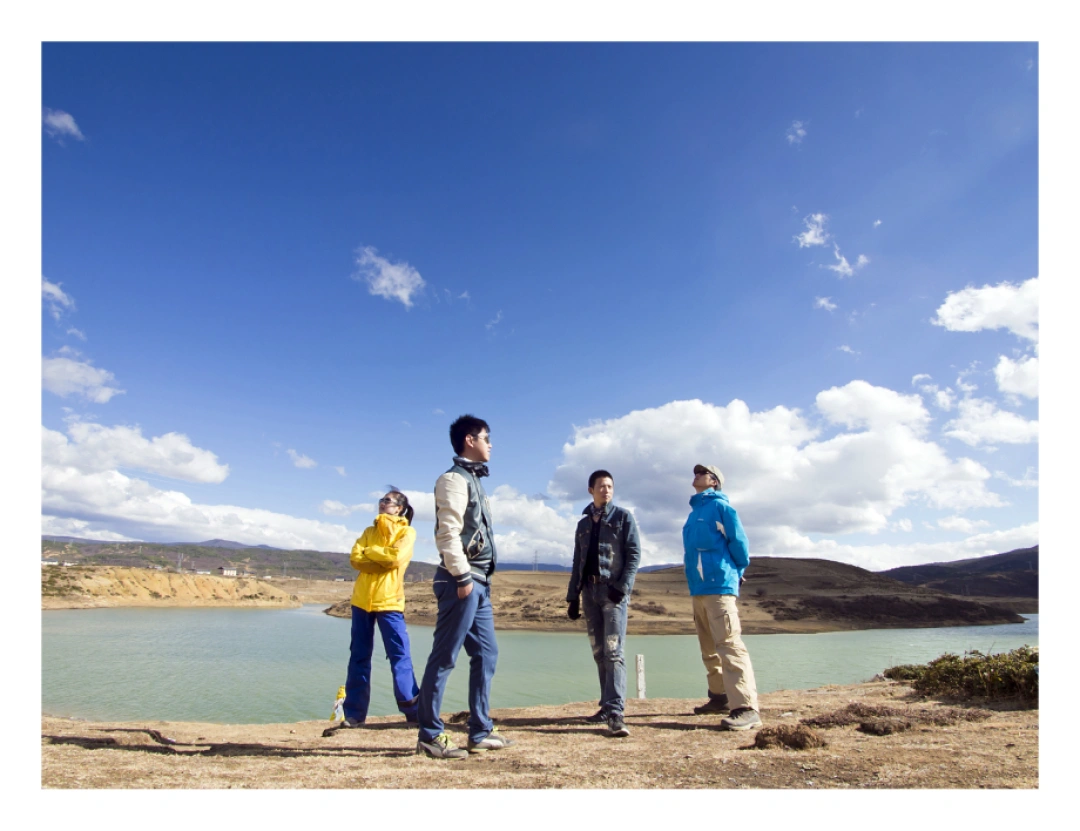
Under the Clouds, a Sweet Secret: A Honeymoon Journey for Love and Hiking
Under the Clouds, a Sweet Secret: A Honeymoon Journey for Love and Hiking Before We Set Off: From Mount Kailash Pilgrimage to Yubeng Trek In May 2012, I boarded a bus bound for Ngari Prefecture alone, driven by a single obsession—to perform the sacred circumambulation…
Continue reading...