[Lucky Honeymoon · New Zealand] A Complete 17-Day South Island Road Trip Guide: From Starry Skies to Glaciers, Every Frame Is a Wallpaper
[Lucky Honeymoon · New Zealand] A Complete 17-Day South Island Road Trip Guide: From Starry Skies to Glaciers, Every Frame Is a Wallpaper
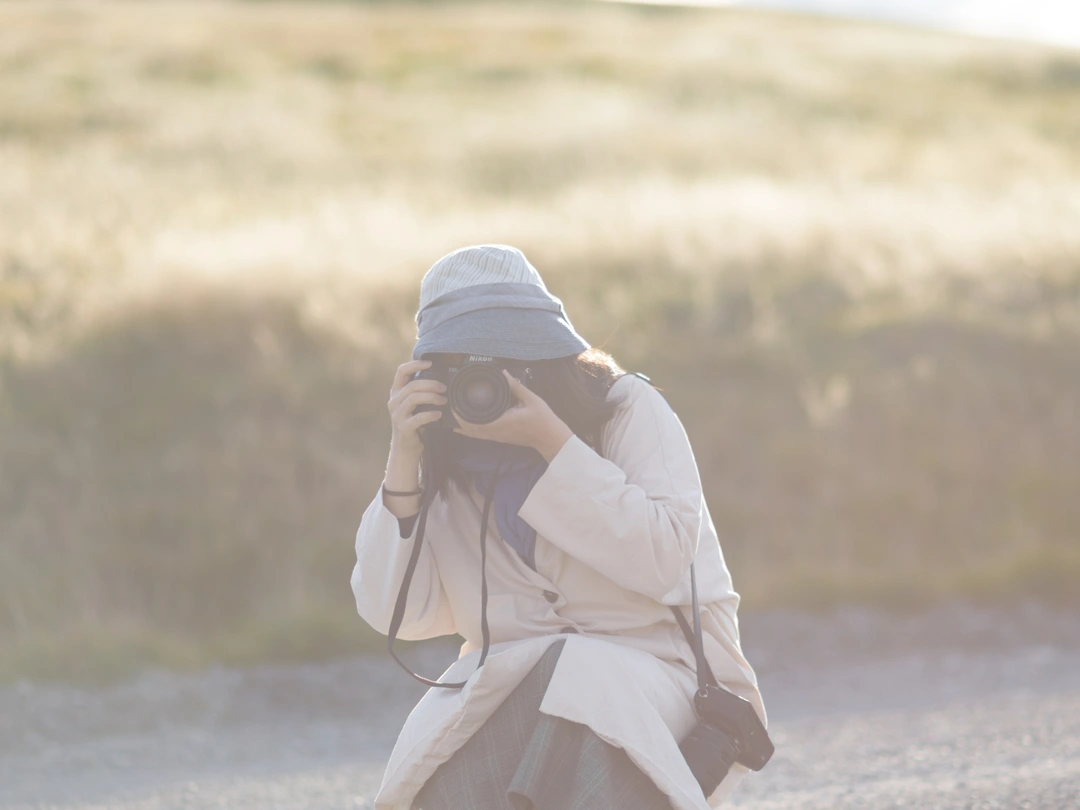
Who says living life to the fullest isn't a form of effort? When Xiao Wang and Xiao Qu, a newly married couple, decided to combine their honeymoon with their wedding photoshoot, they chose the purest country on Earth—New Zealand. At 28 and 27 years old, they brought two cameras, four suitcases, a rice cooker, and hearts full of anticipation. In the autumn of New Zealand's South Island, they wrote their own fairy tale set in Middle-earth.
This travelogue is both a heartfelt guide and a love letter to New Zealand. If you also dream of pastures beneath starry skies, milky-blue lakes, and snow-capped mountains, then please accept this travel journal from April 2018.
Before Departure: A "Spur-of-the-Moment" Accident
The original plan was Hokkaido. Xiao Wang said excitedly, "Let's go to Hokkaido for our wedding photoshoot!" Xiao Qu agreed without hesitation. But three months later, when Xiao Qu actually started planning, she realized Hokkaido's most beautiful season was winter, and they could only travel in spring.
"Either we go now, or we wait another year."
"Wouldn't it be too cold to shoot wedding photos in winter?"
"What about... New Zealand?"
"Isn't that a bit extravagant?"

"If we start preparing now, April is exactly New Zealand's autumn—it's stunning!"
Xiao Wang paused for three seconds: "Then I'd better go buy a few more lenses."
And just like that, they met New Zealand.
Cost per person: Approximately 20,000 RMB (excluding shopping)
Trip length: 17 days
Travelers: Newlyweds
Primary transport: South Island road trip, rental car was a Toyota Corolla hatchback
Day 1: Stepping Into Middle-earth
Air New Zealand's Boeing 787, with its black-and-white livery, looked stunning. Shanghai → Auckland → Christchurch, round-trip tickets cost less than 5,500 RMB per person, and they even earned over 4,000 Air China miles—essentially a free short-haul ticket.
The most surprising thing on the plane was the dimmable windows—5 brightness levels, which kept them entertained the whole way. The self-service meal system in front of the seats was also thoughtful: during the 15-hour flight, they could order snacks and drinks anytime, most of which were free. Before landing, Xiao Wang reviewed New Zealand's driving rules video, only to find that the instructor in the video had a very "Chinese-looking" face.
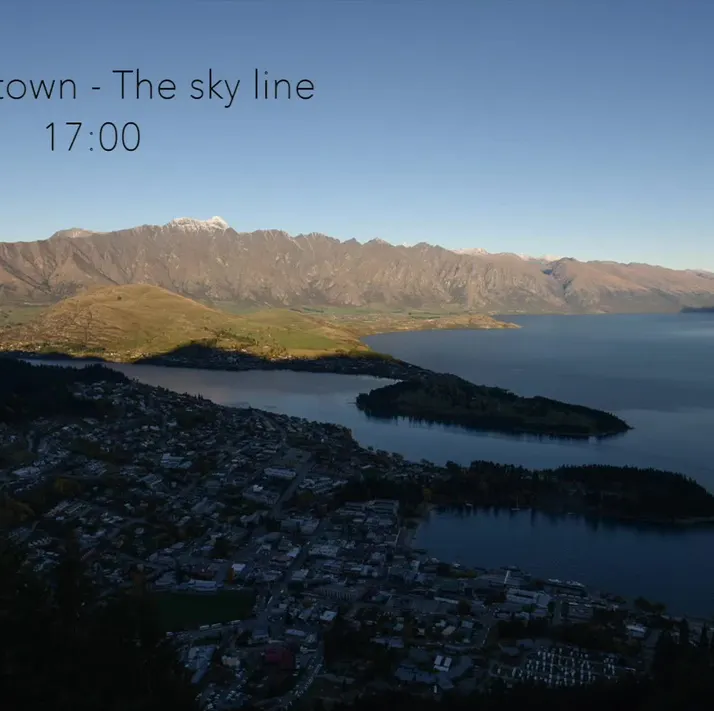
Auckland Airport isn't large, and transfers were convenient. They didn't stop on the North Island, heading straight for the South Island. As the plane approached Christchurch, the view outside already took their breath away—modest mountains topped with snow, glittering under the autumn sun.
At Christchurch Airport, the rental company APEX sent a car to pick them up. After getting the silver Corolla hatchback, Xiao Wang took only 3 minutes to get used to right-hand drive. Following their guide, they skipped the unremarkable State Highway 1 and took the scenic 72 Mountain Road instead. Driving in a foreign country for the first time, right-hand drive for the first time, entering such magnificent scenery for the first time—because the flight was delayed and their guide said actual driving time would be double the navigation time, they barely stopped and drove straight to Tekapo. Along the way, they kept muttering, "Mark this spot—we'll come back later." But after spending 5 days in Tekapo, they never did return.
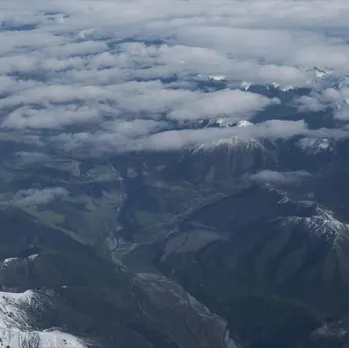
When Lake Tekapo first came into view, they couldn't help but pull over. The setting sun cast golden light across the lake. Standing by the roadside, they greedily tried to capture everything.
That night, they checked into "Flat Rock Cottage," booked through Airbnb. A three-bedroom, two-living-room house with a yard—a single-story standalone home. After years of living in a 40-square-meter apartment, they almost cried. Although it felt a bit extravagant for two people to stay in such a large house, they were incredibly satisfied with this impulse purchase later.
They went to Fresh Choice supermarket for supplies: beef, vegetables, snacks, yogurt. Xiao Qu said, "Give me a kitchen like this, and I'd cook every day." Xiao Wang replied, "I'd give that comment 82 out of 100." New Zealand beef has a rich flavor; every meal afterward was basically one vegetable dish and one meat dish, with the meat almost always being steak—capitalist beef is just too delicious.
A practical tip: during travel, digestion can get upset. Mix yogurt with barley grass powder (da mai ruo ye) brought from home—one packet if not enough, use two—and your whole trip will be smooth.
That night, they couldn't resist going to the Church of the Good Shepherd to photograph the stars, but they failed. This was only the beginning of the story.
Day 2: Rejected by Mount Cook, Embraced by a Sky Full of Stars
Staying in Tekapo for 5 days was specifically to ensure clear skies at Mount Cook and a perfect starry night with no regrets. However, their first attempt at Mount Cook ended in failure.
The weather was clear when they left Tekapo, but soon they hit a heavy rainstorm with visibility under 10 meters. By the time they reached Lake Pukaki, the rain had stopped, but the overcast sky robbed the lake of its signature milky-blue color. Still, the layered clouds gave it a magical, Middle-earth feel.
They continued on, and a rainbow appeared. Later, they realized that in New Zealand, rainbows are almost an everyday sight.
Mount Cook National Park: the only grassland without fences on the entire trip. Everywhere else, the pastures were private property, so anyone who loves meadows must come here. They took a very satisfying road photo—tripod with timer, camera placed far across the road. If staged photography had an Oscar, they would have won long ago.
However, when they drove into the Hooker Valley Track parking lot, light rain turned into sleet. Their first attempt at Mount Cook was a failure. They ate the boxed lunch they'd made that morning in the car and turned back. But the road back was equally beautiful, giving them a chance to take more photos.
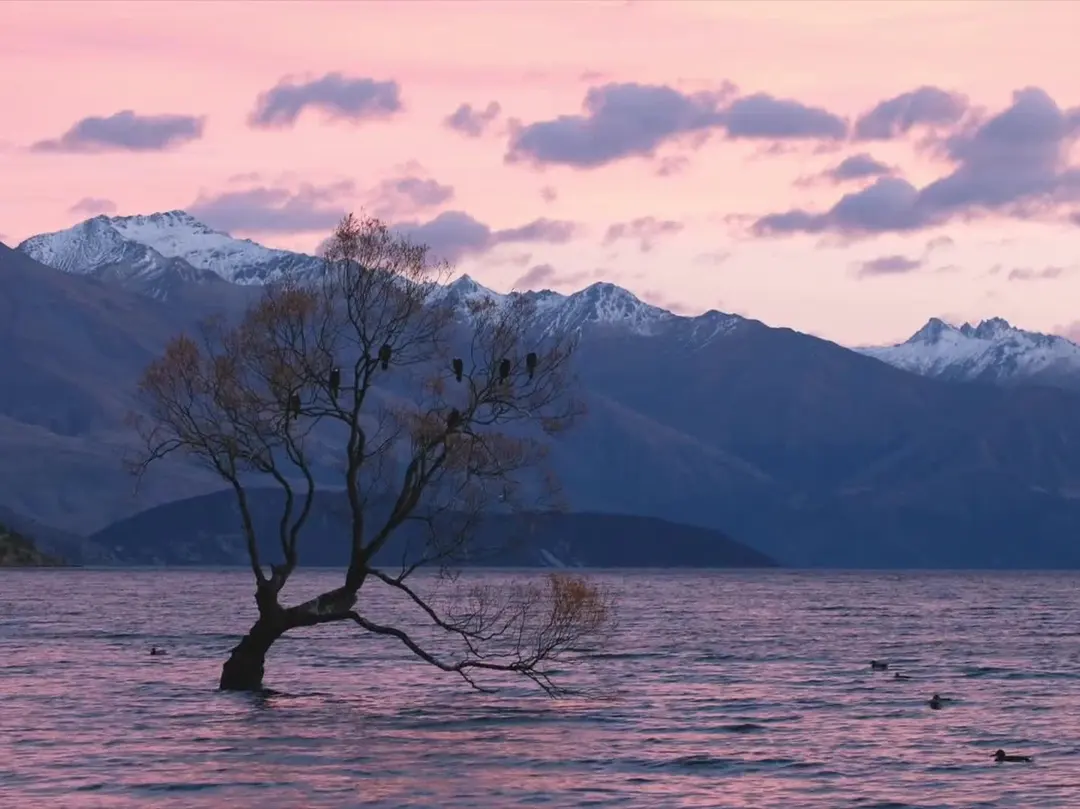
As soon as they drove out of Mount Cook National Park, the rain stopped, and the sky in the distance cleared. In New Zealand, weather forecasts aren't very reliable; locals check real-time weather maps.
Driving a bit further, it was completely sunny. They stopped at a high point for a panoramic shot. Why rent a hatchback? Precisely for these kinds of road photos.
At The Peter's Lookout, they captured the classic view of Mount Cook—the foreground with grass, road, and trees, the milky-blue Lake Pukaki in the middle, and Mount Cook in the distance. However, Xiao Wang later realized that shooting from across the road opposite the lookout gave a better angle. Timing was also important: the light at around 4 PM was too harsh; early morning or evening would have been ideal.
They didn't pack up until there was no light left on the hillside. Before leaving, they took another shot—the light was slightly better than before. As they drove back toward Tekapo, the sun reappeared from behind the mountains—they were driving faster than the shadows spread, a unique experience. So they quickly found another spot to continue shooting, capturing the sunset. They had only about 10 minutes; the beautiful light was fleeting.
After dark, when they could no longer take any photos, they drove back to Tekapo. After dinner, they continued their yogurt-barley grass routine. Then, undeterred, they made a second attempt at the Church of the Good Shepherd. The sky was full of stars. They shot greedily for 3 hours and composited a star trail. The star trail was a bit too dense to look good—because there were simply too many stars—but the individual star shots were very satisfying. Totally worth it!
Day 3: Rejected by Mount Cook Again—So Let's Shoot Wedding Photos
The next day, they tried Mount Cook again. The weather was decent when they left in the morning, but by the time they reached the trailhead, it was raining heavily. After waiting half an hour with no sign of the rain stopping, their second attempt at Mount Cook was a failure.
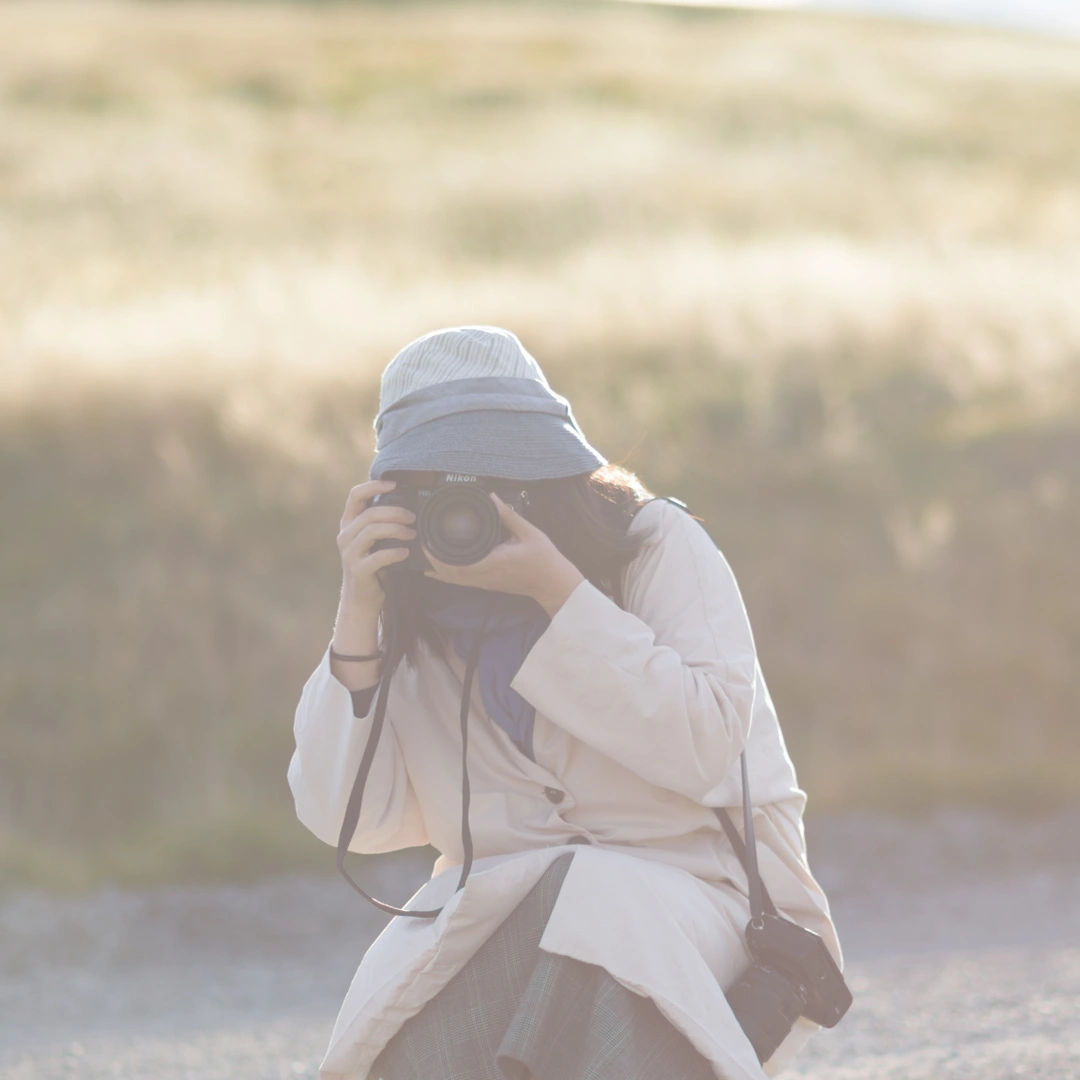
Leaving Mount Cook, they still had time. Checking the map, they decided to pass through Twizel and head toward Lake Ohau to try their luck. After passing Twizel, they spotted a nice stretch of barren land, pulled over, and started experimenting with wedding photos.
It was full sun the whole time, with no fill light equipment—they relied entirely on brightening shadows during editing. When Xiao Wang worked on the photos later, he was moved to tears by the camera's high dynamic range.
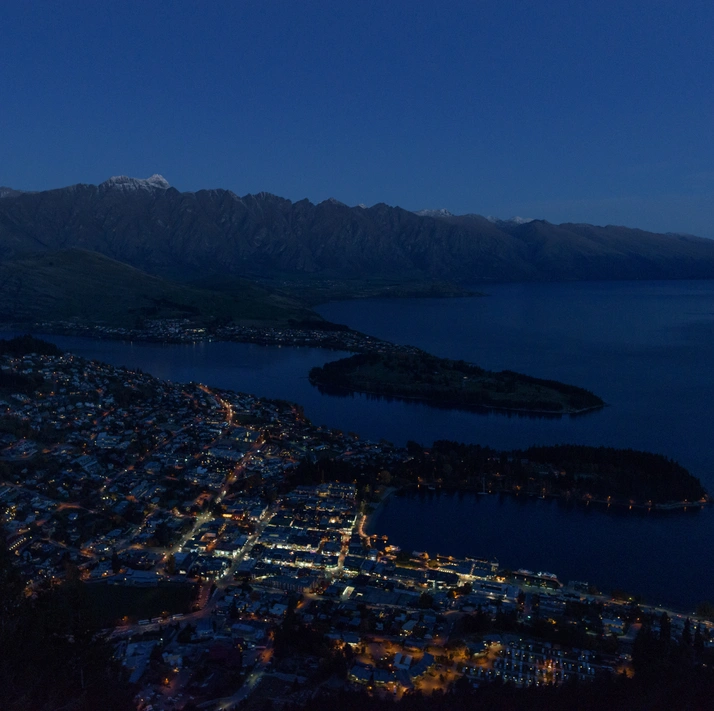
They spotted a nice lake in the distance, drove over, and took a couple of shots. Then, thinking the hillside behind the lake looked good, they circled around and continued shooting. After a while of spontaneous shooting, they headed further toward Lake Ohau. But within 5 minutes, they saw another particularly beautiful lake and stopped again. In New Zealand, you don't really need to go to specific attractions—you can have a direction, but the scenery along the way is wonderful. Stop as you go; it doesn't matter if you never reach your destination.
When they turned off the main road onto Lake Ohau Road, they immediately saw a flock of sheep grazing in beautiful light. A real-life version of "when the wind blows, the grass bends low, revealing cattle and sheep." The road conditions on Lake Ohau Road were a bit rough—sharp turns, steep ups and downs—making for an exciting drive. By the time they reached Lake Ohau itself, it was almost dark, and the wind was so strong they felt weightless. The destination was far less impressive than the journey there, so they headed back.
Dinner was beef again. At first, they were afraid they wouldn't cook the steak properly—New Zealand stoves don't use gas—so they chopped the steak into pieces and stir-fried it. Only later did they realize they had been completely wasting those few days' worth of good meat.
Day 4: Misty Lake Tekapo and Snow-Dusted Mount Cook
They had gone to bed early the previous night, so they woke up very early today. Their only goal: to capture sunrise at Lake Tekapo.
At 6 AM, Lake Tekapo was actually a bit late for sunrise photography. The sun was blocked by the mountains, and by the time it climbed over the hills, it was already very bright. Lake Tekapo isn't really ideal for sunrise shots because it's surrounded by mountains—such is life.
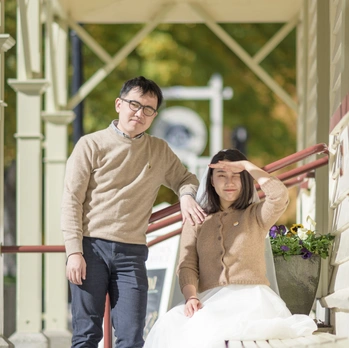
It was very cold, and a layer of mist, neither thick nor thin, floated over the lake. This doesn't happen every morning—you need good luck. Xiao Wang came back every morning afterward but never saw it again. He took a few shots with a medium telephoto lens, but they weren't as good as those taken with a longer lens. Xiao Qu captured a photo of Xiao Wang bundled in a thick down jacket; he was incredibly glad he had gotten up on that freezing morning.
After an hour by the lake, the mist had mostly dissipated, the sun had risen, the soft light was gone, and the lakeside was getting crowded. They continued their journey to Mount Cook, taking photos of sheep and pinecones along the way.
Because the previous night had been very cold, it had snowed on Mount Cook. But today the weather was excellent, and they were incredibly lucky to see Mount Cook blanketed in white—their third visit was finally rewarded!
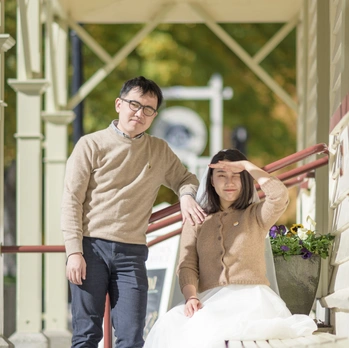
The trail was gravel all the way up, easy to walk normally but a bit slippery in the snow. They climbed while shooting, passing three evenly spaced suspension bridges that helped them gauge their progress. On the way back, Xiao Wang used an ND1000 filter for a long exposure shot. The position was a bit low, but the composition was great—the sandy beach was beautiful, the water had a milky tint, and the long exposure gave it a silky, silver feel.
They reached the end of the Hooker Valley Track, where floating ice in the lake looked pretty cool. Coming down from Mount Cook before evening, they photographed the scenery of Mount Cook National Park. The grassland, rocks, and low shrubs—such a beautiful place, and yet they were the only ones shooting wedding photos there. It didn't make sense! Passing cars saw them taking self-portraits in wedding attire and waved enthusiastically, as if sending them countless blessings.
On the way back, they stopped to shoot again—it was the entrance to an Airbnb. They hadn't managed to book an Airbnb on the shores of Lake Pukaki, and they were too afraid to stay by the lake alone, but they highly recommend it—it's not even expensive and offers an experience no hotel can match.
Finally, they took a series of road photos. The setting sun tinged the mountain peaks red—it was stunningly beautiful. After compression, the images lost that on-site feeling; it's beyond words. Under such a sunset, they drove back to Tekapo. Day 4 was incredibly productive: they captured the morning mist, checked off Mount Cook, and shot their favorite wedding photos in the most beautiful evening light.
Day 5: I Can Still Recall That Evening on Mount John
Staying 5 nights in Tekapo was to ensure they could photograph the starry sky and Mount Cook. They had accomplished everything in the first four days, so Day 5 was for resting in Tekapo—very leisurely.
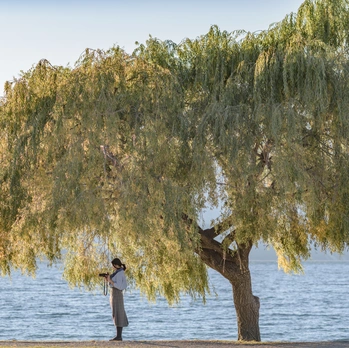
In the morning, they wanted to capture a dreamy, misty lakeside wedding photo, but there was no mist. There was, however, a red glow in the sky, which was fine. They took a photo with the sheepdog statue at the Church of the Good Shepherd—too many people were taking photos with the church itself. Then they went back to their accommodation for a nap, had lunch, took some private photos, and finally took a proper photo with the house.
At 3:30 PM, they set out to explore, hoping to stumble upon a beautiful evening. And they got incredibly lucky.
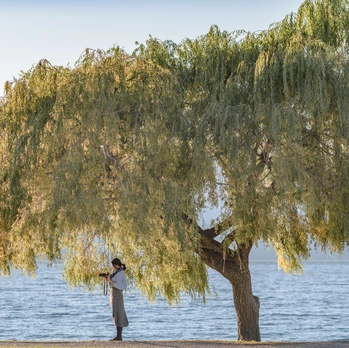
They chose Mount John, near the town of Tekapo. The wind was so strong that day that Xiao Wang couldn't stand steadily at the summit—he started to doubt his own weight. But despite the gale, he managed to take some photos; the scenery was truly beautiful. Xiao Qu lasted only 3 minutes outside before retreating to the car; Xiao Wang, being "heavier," held out for 5 minutes.
On the way down, they thought the scenery near the exit of Mount John looked great and stopped to shoot for a while. All the photos were taken with a telephoto lens—for landscape photography in New Zealand, a telephoto lens is essential. After exiting Mount John, instead of turning left back to Tekapo, turn right toward the mountains—the scenery is wonderful. The sunlight started appearing and disappearing, and Xiao Wang felt something big was coming.
And then came an evening with incredible sunlight. That backlit photo was practically an accidental shot—the light was just too perfect.
Day 6-7: The Regret of Nugget Point Lighthouse—See You Next Time
There are two routes from Tekapo to Nugget Point. Having spent several days in the Canterbury region seeing mountains, they wanted to take the coastal route and chose State Highway 1—essentially New Zealand's equivalent of a major highway, but with only two lanes in both directions and occasional passing lanes. Xiao Wang felt the New Zealand government must be incredibly poor.
The coastal scenery was rather average; the road was actually a bit far from the coast, relatively flat, and quite boring. But given the choice again, Xiao Wang would still take this route because it passes through Dunedin, New Zealand's second-largest city on the South Island, and medium-sized towns like Oamaru offer decent experiences along the way.
The map showed today's drive would take 5 hours and 9 minutes, so they packed up early in the morning. Before leaving, they took one last photo of their Tekapo house—three bedrooms, two living rooms, a large kitchen, a yard, a single-story standalone home, worth about 2 million RMB, with a nightly rent of about 1,000 RMB. Just think about that rental yield.
The pinecones by the house's entrance were about the size of a small watermelon. The trunk wasn't big enough for all their luggage; they had to put a suitcase in the back seat. If four people were traveling, they'd need to think twice about such a small car.
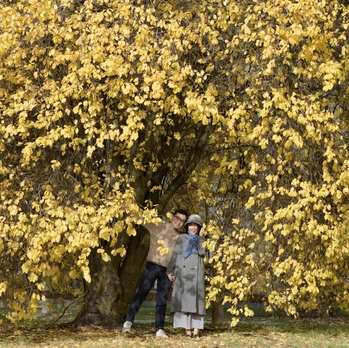
They drove for 4 hours on State Highway 1 and only saw 2 factories. There were quite a few speed cameras on this road. A month after returning home, Xiao Wang suddenly found a letter in his mailbox with a big "POLICE" stamp that made him panic. Opening it, he found out he had been speeding near Oamaru that day—a fine of about 200 RMB, plus a penalty for paying a couple of weeks late. The fine could be paid online through the URL on the bill, which wasn't blocked by the Great Firewall and supported VISA credit cards. Don't ask how he knows—it felt like another life experience checked off.
They arrived in Dunedin at noon and had a late lunch. There was even a KFC, confirming it was a real city. They parked at KFC and walked across the street to eat at McDonald's—KFC had much more spacious parking. They wandered around Dunedin and visited the famous Dunedin Railway Station, which was very average—they had no idea why it was so famous. On the street, they saw a Deloitte office, further confirming Dunedin's big-city status. Overall, though, they really liked Dunedin—it struck the perfect balance between quiet and lively.
By evening, they reached Kaka Point, and further in was their destination, Nugget Point. They had booked the closest accommodation to Nugget Point—Nugget Point Lodge, a seaside guesthouse that's very popular; getting a reservation was pure luck. Most people visiting Nugget Point don't stay overnight, or they stay in Kaka Point.
After getting the keys, they immediately drove to Nugget Point. They encountered sea lions by the roadside—the ecosystem here was remarkably good. Halfway up the hill, there was a spot to see New Zealand's unique yellow-eyed penguins. The host had thoughtfully left a telescope in the room; Xiao Qu said wearing a telescope around her neck made her look very Japanese. But after waiting for over ten minutes, they didn't see any yellow-eyed penguins—it's very much a matter of luck.
They had just parked at Nugget Point and taken a few steps when it started raining. They could only take a quick, rushed photo and hoped for good weather the next morning. Back in the car, they couldn't resist a selfie. By the time they returned to the guesthouse, the rain had stopped, but it was already dark. They took another photo of Nugget Point from the balcony—it was quite close.
They cooked dinner: pan-fried sausages, stir-fried eggplant, and two cups of black tea. They were very disappointed about not photographing Nugget Point. That night, they tried their luck shooting stars, but the weather still hadn't improved—there were too many clouds. For the first time, they experienced a seaside room—in a foreign land, with wind and rain, looking out into pitch darkness toward the sea, with only a few scattered houses around, all their lights off. The only visible light in the distance was Nugget Point Lighthouse blinking on and off... Xiao Wang said he regretted it deeply that night.
The next morning, they set off for the famous Queenstown. They made a stop in Gore—chosen because it had a McDonald's for lunch, and visiting lesser-known places often brings good experiences. The morning sea looked much better, and Xiao Wang felt the seaside room wasn't so bad after all.
Before leaving, they tried Nugget Point one more time. Same story: as soon as the car arrived, it started raining. Ultimately, Nugget Point was declared a failed mission. Every trip has its regrets. See you next time.
They arrived in Queenstown in the evening. There were too many cars, making driving very difficult—if you drove too slowly, the car behind would honk. After some hassle, they found their Airbnb—just one room with a private bathroom, a shared kitchen, and not as spacious or free as their previous accommodation. The upside was that at dinner, they met two Australians in the restaurant. They told the Australians about Shanghai's lottery-based home-buying system and divorce-for-home-purchase stories, which the Australians found fascinating, admitting they had never been to China, only Hong Kong.
They went to bed early. Two days without taking many photos—they planned to make up for it tomorrow.
Day 8: Glenorchy, as Magical as Its Name
Having gone to bed early the previous night, they were at a spot 40 minutes from Queenstown by 6:30 AM to shoot sunrise—halfway to Glenorchy. Actually, before that, Xiao Wang had already spent half an hour shooting stars in the guesthouse yard. Landscape photographers = getting up before dawn and staying out after dark.
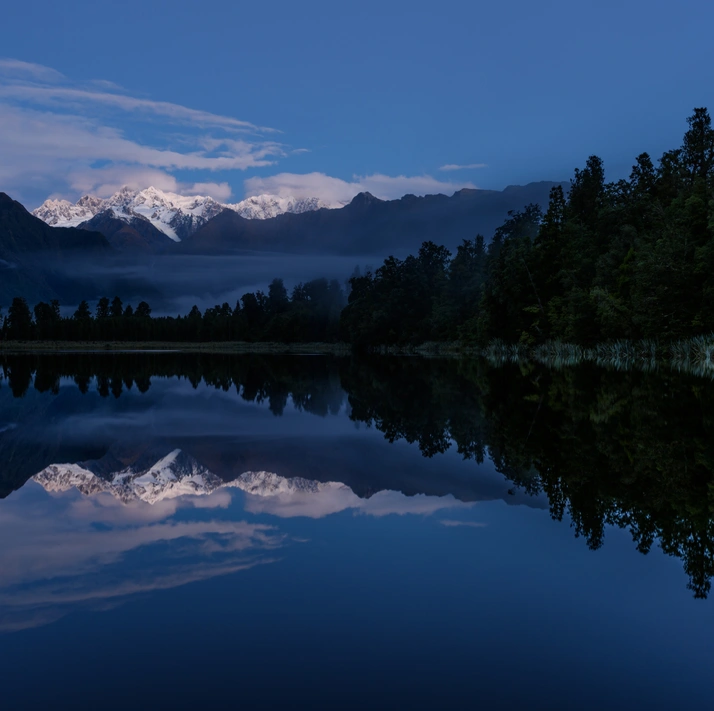
Xiao Qu, waiting in the cold wind for him to finish his time-lapse, was wearing two down jackets. They reached Glenorchy a little after 7 AM. Glenorchy is a small town, with the pier as its center. When they arrived, there wasn't a soul around, so they happily shot for a while. Soon, foreigners started flying drones overhead—a national pride product, DJI.
They continued taking photos around the pier and got a shot with the famous Glenorchy red shed. The crowd started to grow, so they moved on to their next stop—Kinloch, across from Glenorchy.
In Conclusion: What New Zealand Taught Us
17 days on the South Island road trip—from the morning mist of Lake Tekapo to the snow-capped peaks of Mount Cook, from the tranquility of Glenorchy to the regret of Nugget Point—every frame is a wallpaper, every step is a memory.
A few practical tips: 1. Car rental: A hatchback is sufficient, easy to park, and great for road photos 2. Accommodation: Airbnb offers a far better experience than hotels, especially standalone houses 3. Time: Actual driving time is usually 1.5 to 2 times the navigation estimate 4. Gear: A telephoto lens is essential; bring a tripod for star photography 5. Weather: Weather forecasts aren't very reliable; real-time weather maps are more accurate 6. Fines: Speeding tickets can be mailed to your home country—remember to check your mailbox
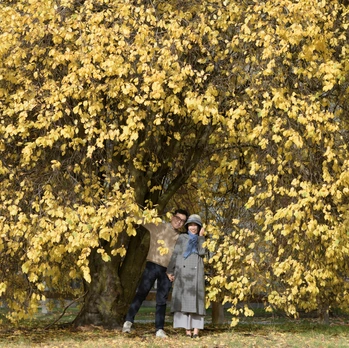
But most important are the things that can't be recorded in a guidebook: the nervousness of driving right-hand drive for the first time, the persistence of pressing the shutter in a gale, the stubbornness of being rejected by Mount Cook three times, and the happiness of smiling at each other in wedding attire under the setting sun.
Xiao Wang said, "Who says living life to the fullest isn't a form of effort?"
And Xiao Qu said, "After visiting New Zealand, I truly felt how beautiful it is."
Perhaps that's the meaning of travel—not how many attractions you've checked off, but the roads you've walked together, the views you've shared, the surprises and joys you've experienced together, all of which eventually become your story.
New Zealand, see you next time.
You should also read:
Xishuangbanna Self-Drive Tour: Into the Tropical Wonderland at the Edge of the Sky (Complete Guide)
Xishuangbanna Self-Drive Tour: Into the Tropical Wonderland at the Edge of the Sky (Complete Guide) Introduction: A Dream Fulfilled Thirty Years Early Some journeys are destined to happen at a specific moment in time. For me, a self-drive trip to Xishuangbanna was originally the first…
Continue reading...
South of the Clouds: A Spontaneous Lijiang Wanderlust
South of the Clouds: A Spontaneous Lijiang Wanderlust Prologue: When the Soul Meets Freedom Some places have names that alone stir the heart with longing. Lijiang is one such place. It exists like an unfinished poem, a melody left hanging in the air, echoing softly…
Continue reading...
A 9-Day Yunnan Journey: From Lijiang to Dali to Tengchong – A Trip Toward Self-Reconciliation
A 9-Day Yunnan Journey: From Lijiang to Dali to Tengchong – A Trip Toward Self-Reconciliation Some say travel is simply going from a place you're tired of to a place other people are tired of. It stings to hear, but it's painfully true. Yet there's…
Continue reading...