"Mang" and "Li" for Leisure, "Chong" to the Beautiful "Li" Landscape: A Slow Journey Through Western Yunnan
"Mang" and "Li" for Leisure, "Chong" to the Beautiful "Li" Landscape: A Slow Journey Through Western Yunnan
Preface: Escaping the Heat, Heading for a Borderland Rendezvous
When the notice about the high-temperature holiday popped up in the group chat, the melody of "Good Luck Comes" automatically started playing in my head. Beijing had been sweltering under relentless heat for days, leaving everyone gasping for air. I had originally planned to go to Yinchuan and traverse the Five Lakes, but after careful calculation, the itinerary couldn't fill such a long vacation. What I needed was a place where I could completely unwind and slowly "lie flat."
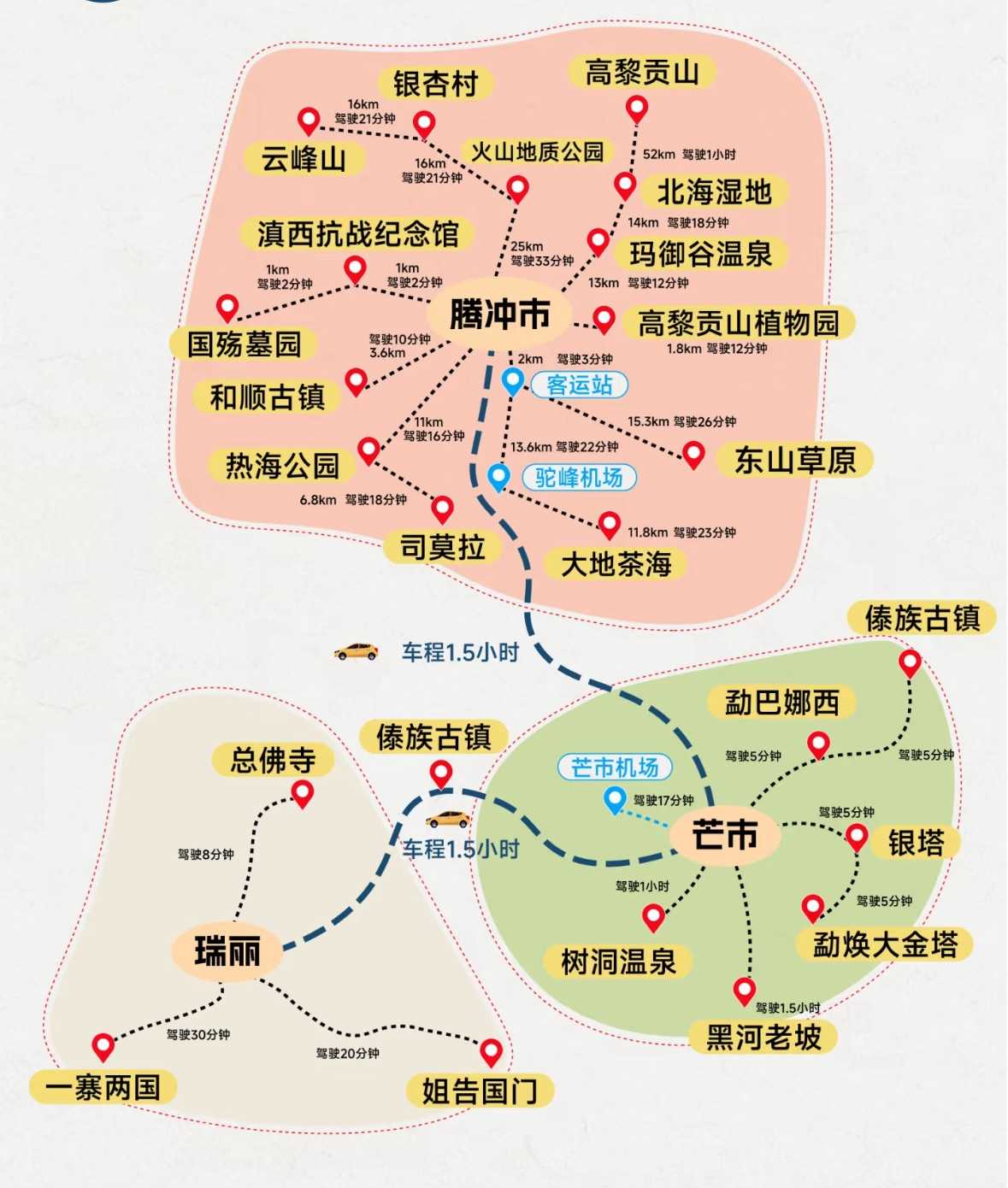
Tengchong, Mangshi, Ruili—these names are like pearls scattered across western Yunnan, strung together by a hidden route. They lack the hustle and bustle of Dali and Lijiang, the commercialization of Xishuangbanna, yet they harbor the most authentic Dai culture, the most breathtaking natural wonders, and the most soul-soothing everyday烟火气 (the vibrant energy of daily life). As the lyrics of Mayday's song go: "Looking forward to a trip, full of excitement, you shouldn't wait any longer."
So, I brought my family, rented a white Bora, and embarked on this nine-day road trip through western Yunnan. Starting from Mangshi, the "City of Dawn," we headed west, passed the border city of Ruili, then turned back to Tengchong, finally ending with the sunset over Erhai Lake in Dali. Self-driving the entire way, we followed our whims, making every stretch of road a part of the scenery.
Pre-Trip Essentials: Transportation and Itinerary Planning in Western Yunnan
Key Tips
Dehong Dai and Jingpo Autonomous Prefecture (abbreviated as "Dehong Prefecture") is located in western Yunnan, bordering Baoshan to the east and surrounded by Myanmar on its north, west, and south sides. There are no high-speed rail stations here; the most recommended mode of transportation is self-driving or renting a car. If you don't want to drive the whole way, you can take a bullet train to Baoshan first, then transfer to a bus to reach the various small towns.
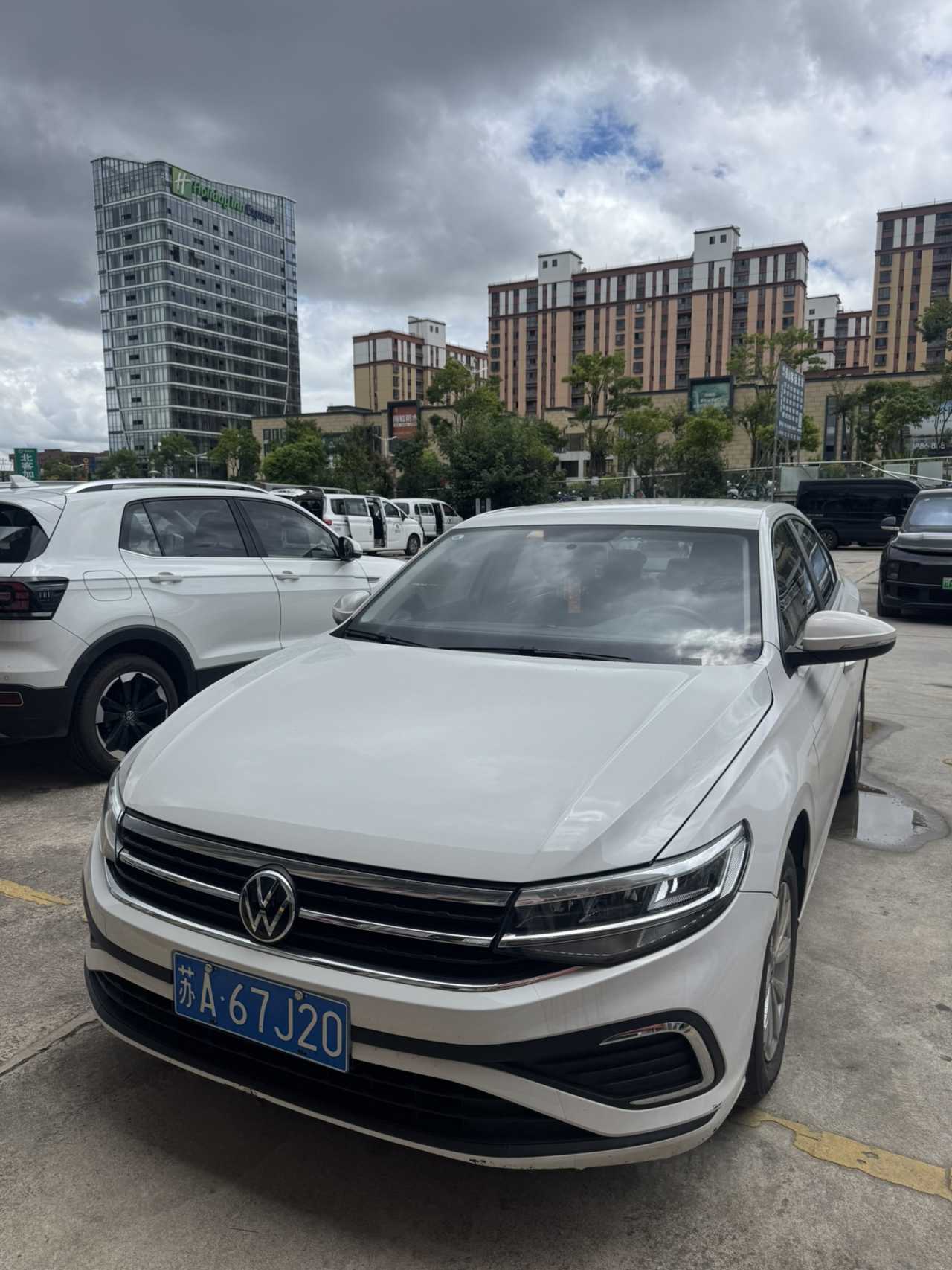
For this trip, we rented a car for the entire journey, except for the final leg from Baoshan to Dali, where we switched to the bullet train. We rented a 1.2T new model Bora—the power was more than sufficient, and it came with CarPlay and a backup camera. Just plug in a USB cable for navigation and music; it was very convenient.
Itinerary Overview
- Day 1: Beijing → Mangshi, night tour of the Dai Ancient Town
- Day 2: Meng Huan Silver Pagoda + Great Golden Pagoda, Dai costume and makeup experience
- Day 3: Single Tree Forest, Tree-Wrapped Pagoda, Bodhi Temple, in-depth tour of Mangshi
- Day 4: Mangshi → Ruili, General Buddha Temple, Jiegao Border Gate
- Day 5-6: Ruili → Tengchong, Heshun Ancient Town, Dadi Tea Sea
- Day 7-8: Tengchong → Baoshan → Dali, slow life by Erhai Lake
- Day 9: Dali → Beijing
Trailer: Moments That Make Your Heart Skip a Beat

I didn't take many photos because I was completely immersed in Yunnan's slow pace—I didn't even have the energy to post on social media. But a few scenes still bring a smile to my face when I think about them:
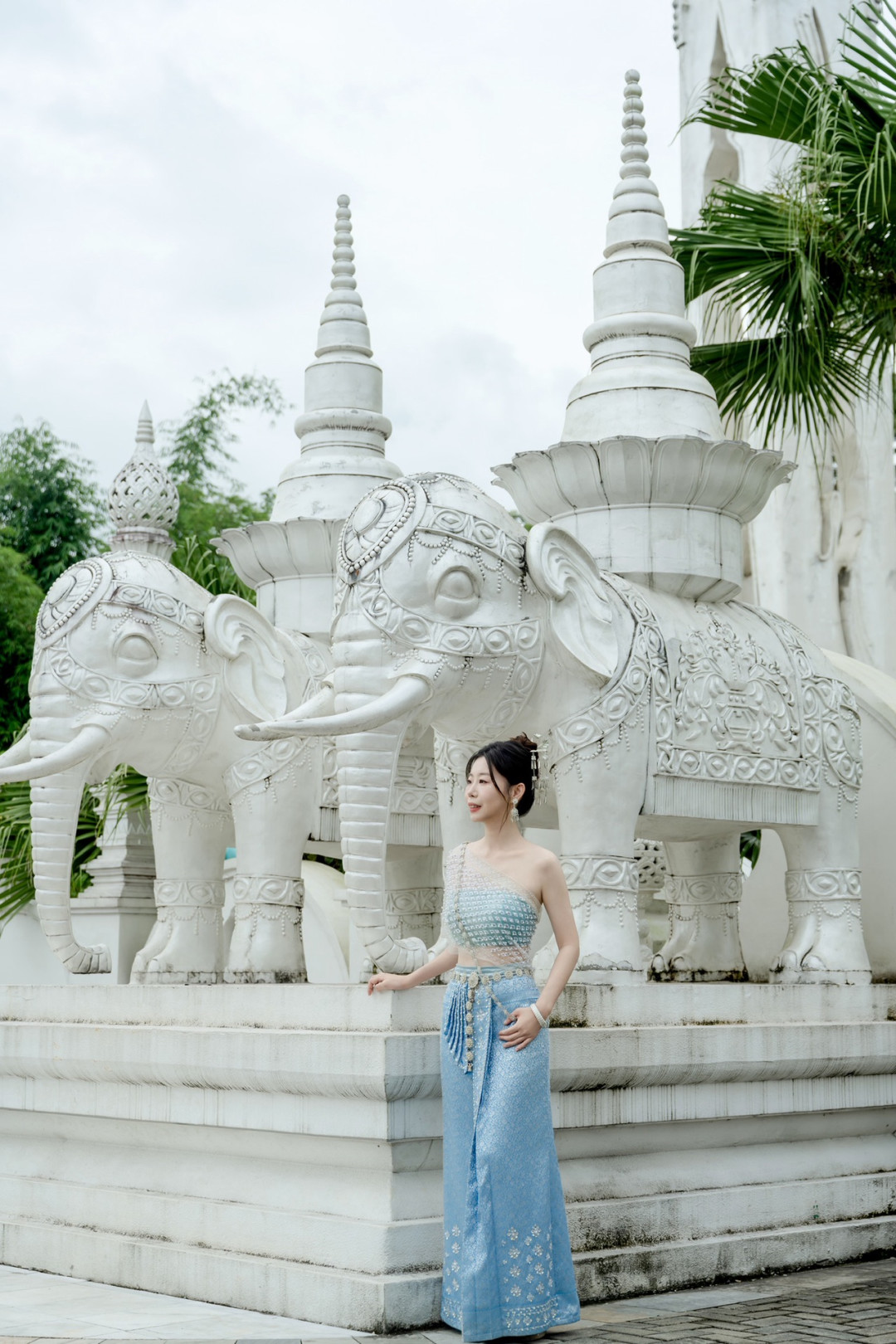
- Standing before the pure white, sacred Silver Pagoda, dressed in Dai attire, feeling like I was in Southeast Asia
- In the border town of Mangshi, time seemed to slow to a standstill; "Mang"shi really isn't "busy"
- At the "One Village, Two Countries" site in Ruili, stepping into two countries with one foot, swinging across two nations with one swing—two worlds separated by a border gate
- In the alleys of Heshun Ancient Town in Tengchong, hiding six hundred years of stories
- By Erhai Lake in Dali, having lunch in the breeze, watching the sunset and sea of clouds paint the evening sky
Day 1: Beijing → Mangshi, From "Grind City" to "City of Dawn"
Departures are always beautiful, especially on a sun-drenched morning. Even though we had to drag ourselves out of bed before 4 a.m. to head to Daxing Airport, the thought of the border town awaiting us made all the exhaustion worthwhile.
After a three-and-a-half-hour flight, we landed in Dehong. We were an hour earlier than the scheduled car pickup time, but after a quick call, the car was delivered in about ten minutes. It was my first time renting a car independently, and the process was clear and straightforward—a thorough inspection of the vehicle, connecting CarPlay, adjusting the seat and mirrors. The moment I pressed the accelerator, a wave of freedom washed over me.
First Impressions of Mangshi: The Hustle and Bustle of the City of Dawn
"Meng Huan" is the Dai name for Mangshi, meaning "City of Dawn." Legend has it that when Sakyamuni was spreading Buddhism in Dehong, he arrived here just as dawn was breaking, hence the name. Not far from the airport, a small golden pagoda on a traffic circle caught my eye—a first greeting from the city.
Mangshi is really small; it only takes about ten minutes to drive from the airport to the city center. Our first stop was Ruili Live Crab (瑞丽活螃蟹). The aroma of the crabs was irresistible, the claws packed with meat. Paired with a local drink, it was both appetizing and satisfying.
After the meal, my friend's sister recommended a flower pastry shop called Mangli Huapu (芒里花圃). Their dark rose-flavored pastries were rich and sweet, far superior to the common flaky rose pastries. So, afternoon tea was naturally arranged.
Burmese Hair Wash: A Head-to-Toe Relaxation
If you come to Mangshi and don't try a "Burmese hair wash," you'll regret it. We went to Taiyangfeng Leisure Salon (太阳风休闲沙龙), which had a great environment with private cubicles, unlike other places that felt like sleeping in a communal dormitory.
The whole process was like a full-body SPA: washing hair while lying down, shoulder and neck massage, head acupressure, facial cleansing and mask, ear cleaning and ear picking, and finally, a back-walking session. The Burmese masseuse was gentle yet firm. Although the back-walking almost crushed me, I felt refreshed and rejuvenated afterward, all the fatigue from the flight gone.
An Evening Stroll in the Dai Ancient Town After Rain
We checked into Fanshi Hotel (梵诗酒店), located right next to the Dai Ancient Town. The hotel had a strong Southeast Asian vibe, with few rooms and a very quiet atmosphere. Shortly after arriving, a heavy downpour began, holding us captive in the room for two hours. We only ventured out after the rain stopped.
The Dai Ancient Town is a free, man-made attraction with a parking lot, mostly filled with restaurants and snack stalls. First, we grabbed a Zhang Bian Avocado Drink (张变牛油果), which was incredibly rich and filling. For dinner, we went to Pinde Hong (品德宏) and ordered a small "Peacock Feast"—though each dish had a strange and unusual flavor, it was still a fun way to experience local specialties.
After eating, we walked to the Xinwan Factory Night Market (新玩厂夜市), where we found all sorts of tropical fruits, Burmese fried pancakes, and neon lights with a trendy vibe—full of lively烟火气. By the time we returned to the hotel, the Dai Ancient Town was lit up, creating a wonderfully atmospheric scene.
My first day in Mangshi taught me one thing: stepping out of a "grind city," in this border town, you have more freedom than in a big city. E-bikes can ride in the car lanes, the streets aren't congested, and there are parking spots everywhere you can pull into. Mangshi is very "borderland," and Mangshi is not busy.
Day 2: Meng Huan Twin Pagodas, A Symphony of Gold and White
The hotel breakfast wasn't lavish but it was sufficient. A bowl of rice noodles with a splash of soul-reviving mint, and I felt completely energized. After breakfast, I took a stroll around the courtyard, enjoying the comfortable temperature and the gentle morning breeze.
Meng Huan Silver Pagoda: A Pure White, Sacred Mirror Heaven
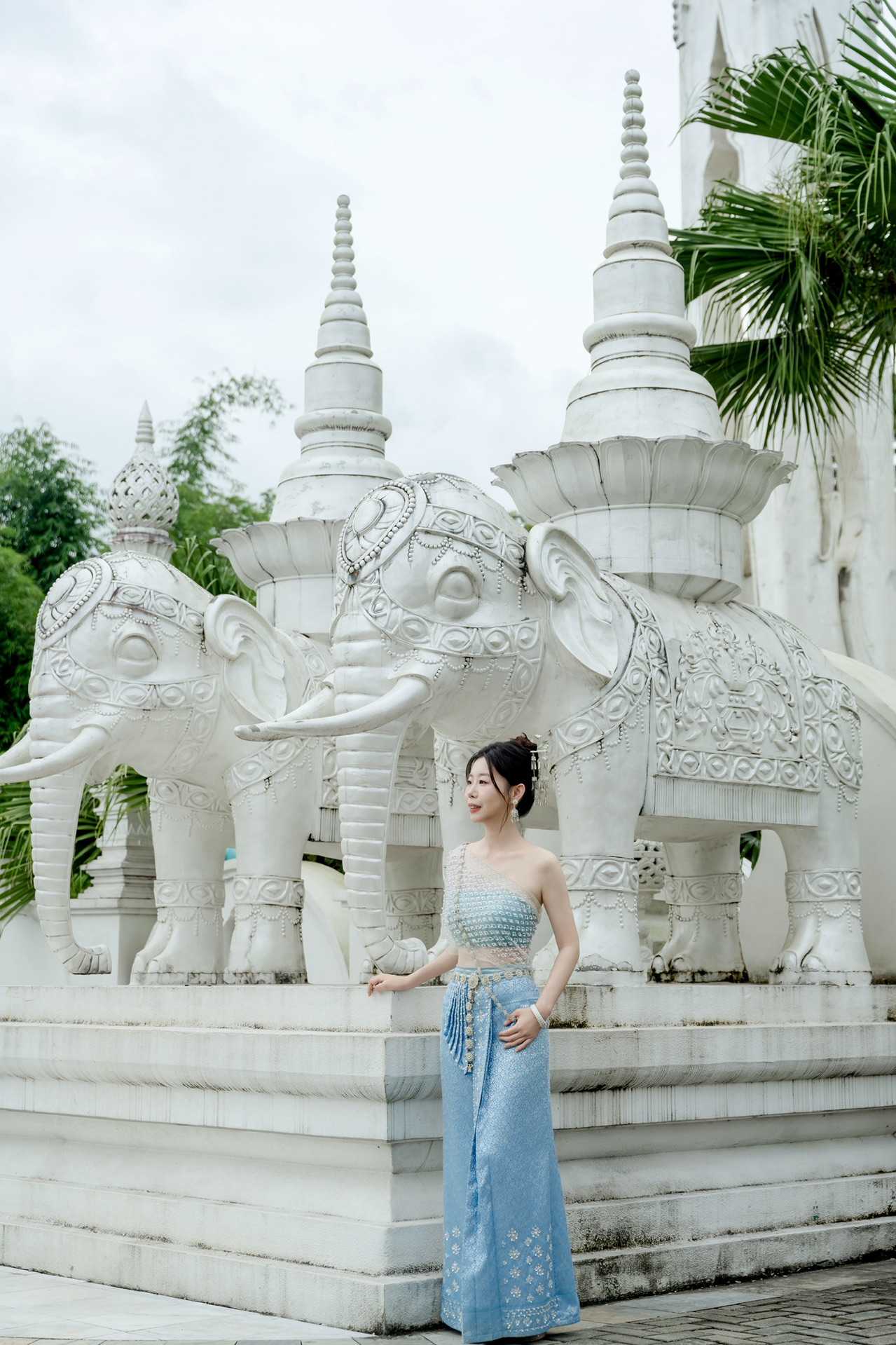
The highlight of today was to take a set of Dai costume photos. We had our makeup and styling done at a shop near the Silver Pagoda. The makeup artist was very meticulous, taking over an hour to finish. It cost 399 yuan for one outfit, 10 retouched photos, and all the raw files. False eyelashes were an extra 10 yuan (you can bring your own).
The moment I entered the Silver Pagoda, it felt like I had instantly traveled to Southeast Asia. The pure white pagoda and sculptures, set against the overcast sky, created a scene of ethereal whiteness, shrouded in a misty, celestial aura. The Silver Pagoda is like a reserved maiden, pure and dignified. Perched on the summit of Lei Ya Shan, overlooking Kongque Lake, you can see the entire city of Mangshi.
Walking down a bit from the top platform, you get a view of the Great Golden Pagoda—the best spot for photographing it. Since the photographer was up on the mountain, we took the electric cart up, had our photos taken, and were then asked to go back down to continue. As a result, we didn't really explore the area properly, and ended up buying tickets to go up again for another look, wasting a lot of energy. In the end, we gave up on entering the Great Golden Pagoda, only taking a couple of photos at the entrance.
Meng Huan Great Golden Pagoda: A Glittering Buddhist Paradise
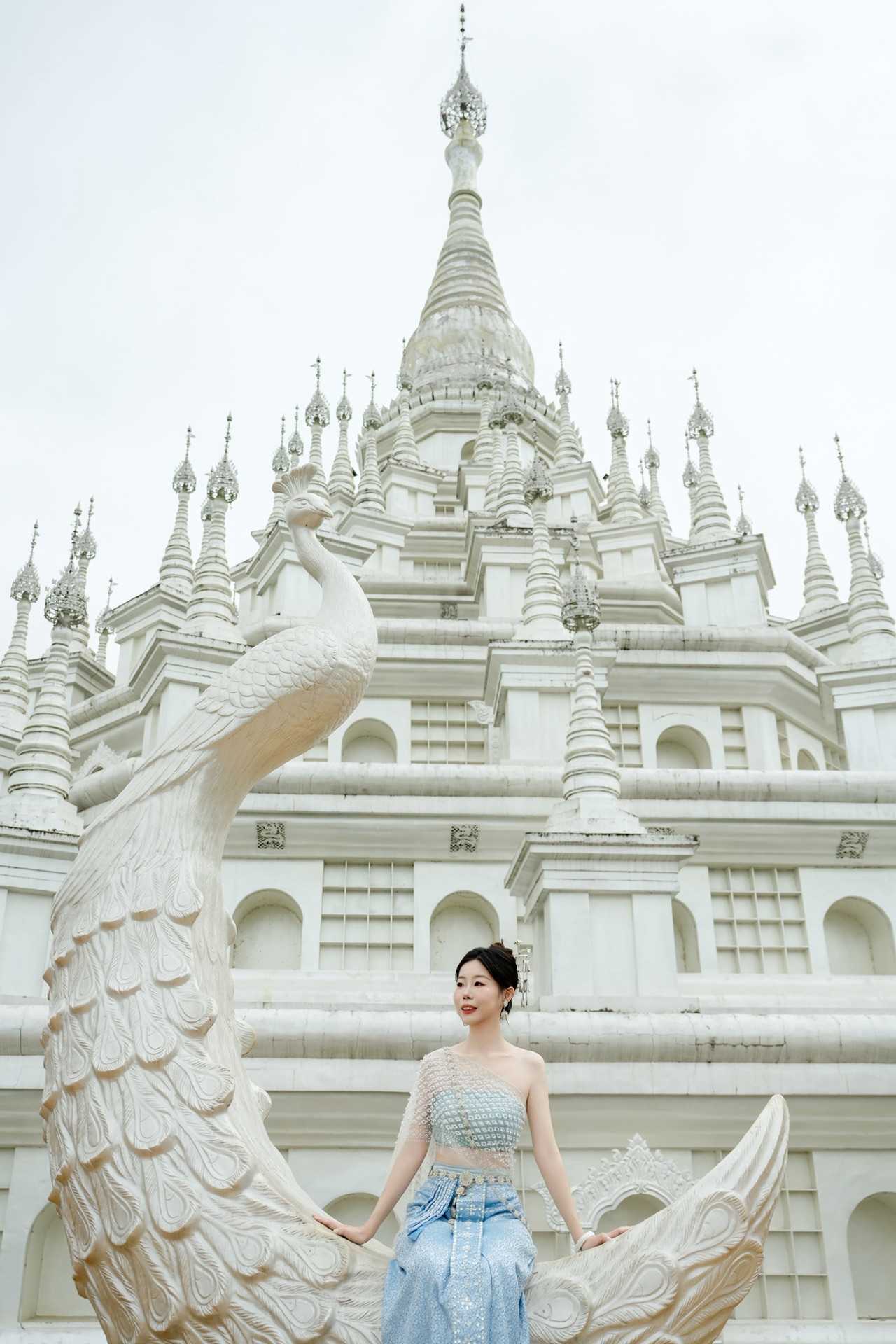
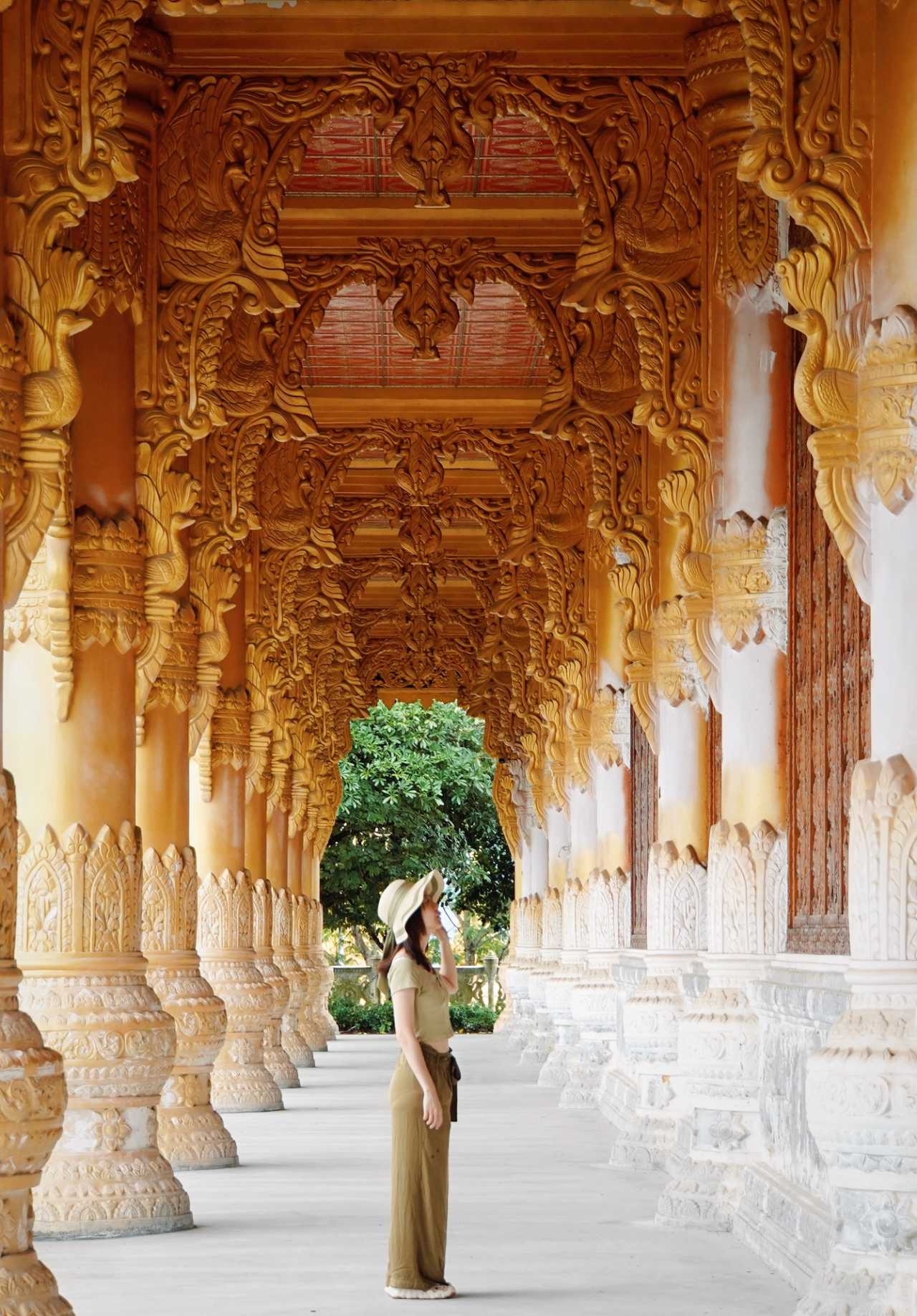
The Golden Pagoda sits atop Lei Ya Rang Shan, with the Silver Pagoda at a slightly lower elevation. The gold is dazzling and brilliant, while the silver is pure and sacred, like the sun and moon complementing each other. The chanting from the prayer wheel corridor hides a thousand years of Dai faith. Unfortunately, it was too hot and we were hungry, so we ultimately didn't enter.
Hidden between the two pagodas is Lei Ya Rang Bookstore (雷牙让书店). If you have time to spare, you can sit by the window with a cup of coffee; the view is fantastic.
Lunch and Coffee: The Flavors of Mangshi
After coming down from the mountain, we tried to go to a stir-fry restaurant that was supposed to close at 2 p.m., but when we arrived at 1:30, they refused service. We turned around and went to Xiao Wacha (小瓦碴) instead. The atmosphere was great, and it was packed—a good sign.
Lemon salad, lemongrass ribs, fish, and shrimp—every dish was full of local flavor. Paired with some mango juice, it was a wonderful lunch. Afterwards, we went to A He Coffee (阿喝咖啡), but it was too crowded and didn't leave much of an impression. I did notice a girl at the next table posing for photos and snuck a shot of her. Unexpectedly, the sun came out later—the weather in Mangshi is truly unpredictable.
Baiste Food Court: A Night Market of People and Flavors
When we got back to the hotel to rest, it started raining again just as we walked in. We waited for it to lighten up a bit, then went out for a stroll and to buy some souvenirs. Xingmei Store (兴梅商店) had a great selection of imported goods from Thailand and Myanmar, and the owner was very honest. However, if you're going to Ruili, things are even cheaper there.
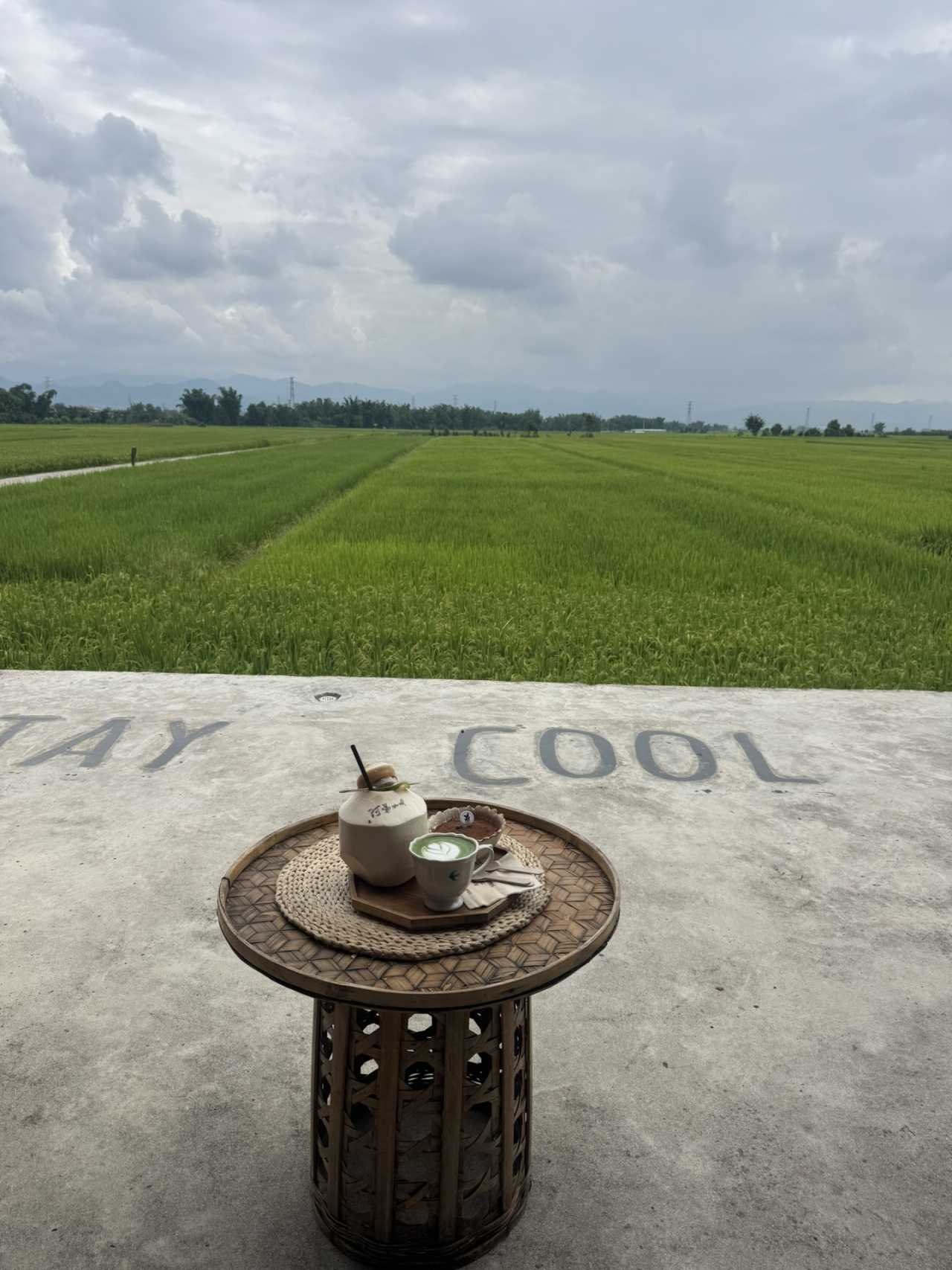
In the evening, we went to Baiste Food Court (百思特美食城). It wasn't big, but it had a wide variety. The famous chicken feet were three yuan each, with so many flavors it was hard to choose. The pot rice noodles were comforting and satisfying. To top it off, we had a juice called "Mangshi Not Busy" (芒市不忙)—a perfect ending.
From the hotel's top floor, we could see the Golden Pagoda. After the rain, it was shrouded in mist, adding a touch of magic. On our second day in Mangshi, we saw the most famous Golden and Silver Pagodas. They stand like loyal, silent guardians, quietly protecting this border town.
Every trivial excuse confines our freedom. Why not escape the cage called daily routine?
Day 3: A Leisurely, Rainy Day in Mangshi
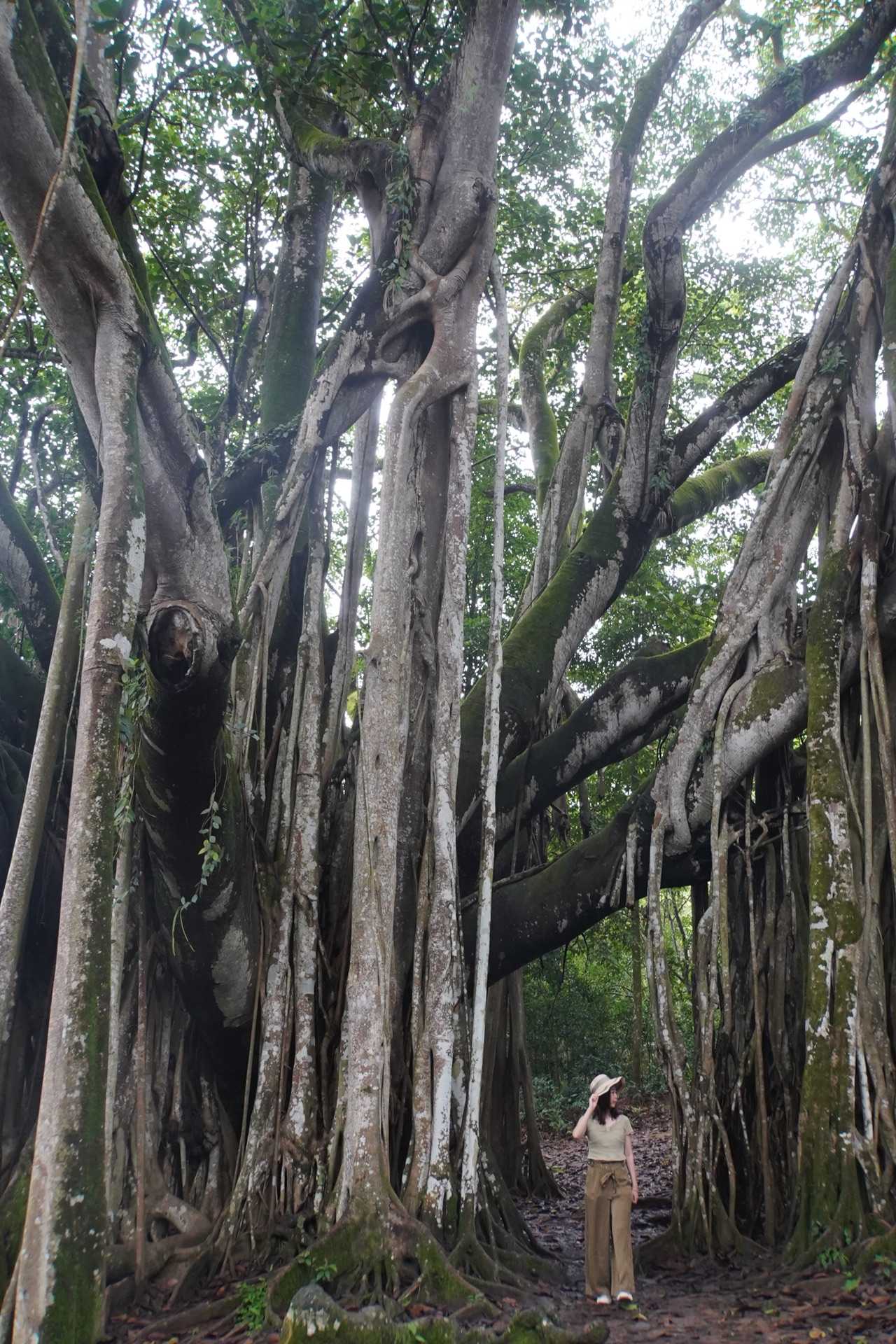
The morning was heavily overcast, looking like it could rain at any moment. Mangshi is small, and we still had a few nearby attractions to see, so we decided to visit the farthest one first—the giant banyan tree.
Single Tree Forest: One Tree Makes a Forest
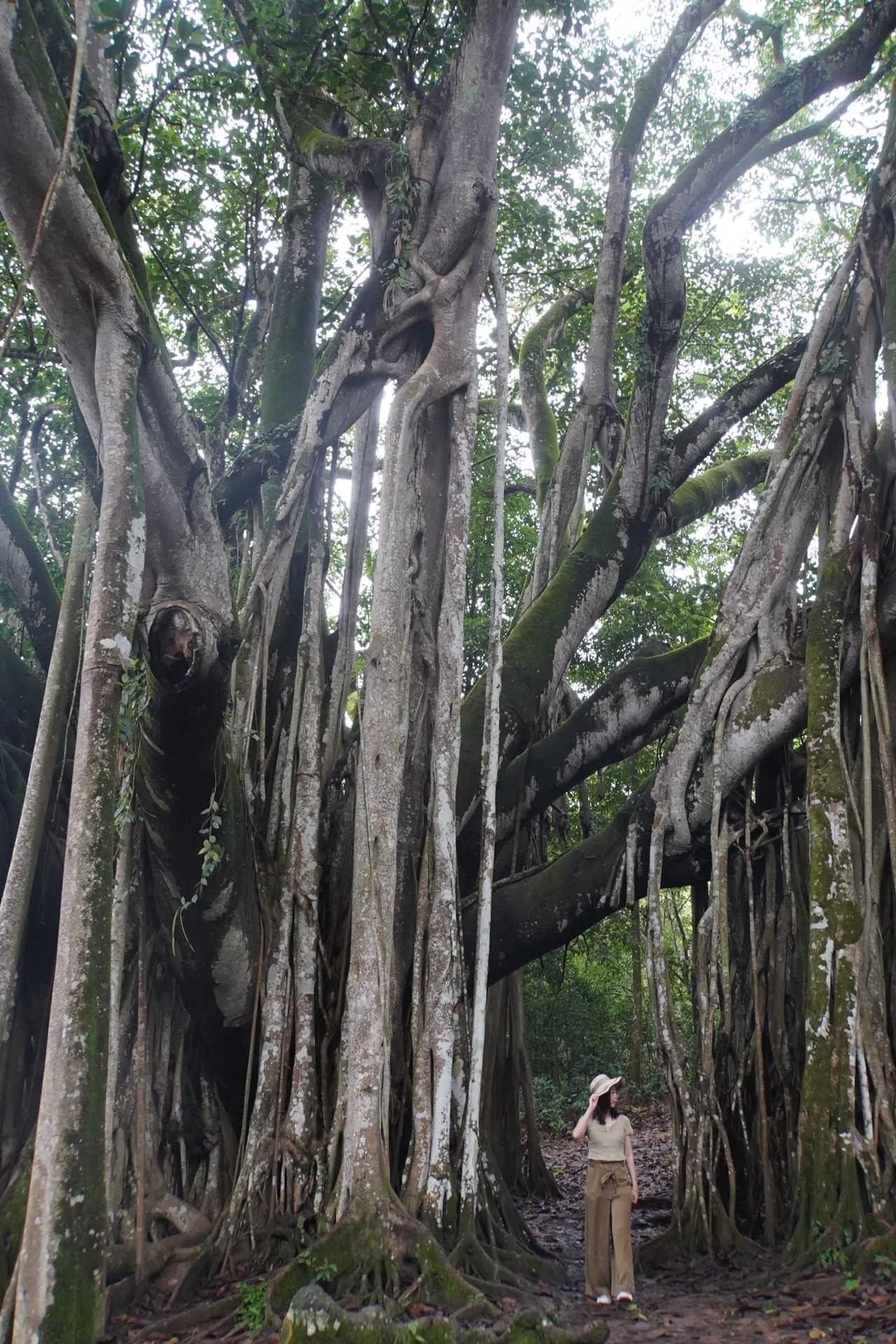
Navigate to "Mangshi Fengping Town Shangjingkan Village" (芒市风平镇上井坎村); it's about a half-hour drive from the city center. As we entered the mountainous area, the drive felt uncertain—the rainy, gloomy mountain road was eerie, and there was no one around. But once we arrived, the sight before me instantly erased my fear.
This 460-year-old golden banyan tree king stands over 50 meters tall. Its trunk is so thick that it would take ten people holding hands to encircle it. Countless aerial roots have dropped down to form new trunks, creating a forest, with a canopy covering 2.7 mu (about 0.18 hectares). Legend has it that a Dai prince once tied his horse here while waiting for his lover. Today, the ancient tree still silently witnesses the peaceful passage of time in the village. Standing before this colossal tree, I understood the saying, "Many forests are born from a single tree."
Tree-Wrapped Pagoda: A 200-Year-Old Wonder of Tree and Pagoda Symbiosis
Back in the city, it started to rain. But Yunnan's rain, though it looks heavy, is actually fine and soft, unlike Beijing's torrential downpours that sting.
The "Tree-Wrapped Pagoda" was originally called Tiecheng Buddhist Pagoda (铁城佛塔), built during the Kangxi reign of the Qing Dynasty. Legend says that seeds from bird droppings fell into the crevices of the pagoda. Over time, the banyan tree grew, eventually enveloping the pagoda tightly, creating the unique spectacle of "a tree within a pagoda, a pagoda within a tree."
Lunch and Rainy Leisure
We skipped the very popular A Miao Restaurant and went to Meng Huan Dai Jia (勐焕傣家). The stir-fried sour bamboo shoots with pork had a funky smell, just like luosifen (snail rice noodles). The "Old Lady Potatoes" (老奶洋芋) were surprisingly delicious, especially with the chili. The mint ribs were also very good. After a satisfying lunch, it continued to rain heavily outside. We rested in the restaurant for a long time, but there was no sign of it letting up.
Meng Banaxi Rare Garden and Dehong Museum
In the rain, Meng Banaxi Rare Garden (勐巴娜西珍奇园) was filled with towering bamboo, banyan trees of various shapes, and a few peacocks that were molting. After wandering through the garden, we decided to go back to Taiyangfeng (太阳风) for a foot massage—soaking our feet, wrapping our knees in ginger slices, and a full-body massage left us feeling light as a feather.
We managed to squeeze into the museum just before it closed and even picked up a refrigerator magnet. On the way, we passed Foguang Temple (佛光寺), a golden temple hidden among residential buildings, with a unique charm.
Dinner: Amazing Jianshui BBQ
The beef at Xiuhua Jianshui Chrysanthemum BBQ Restaurant (秀华建水菊花烧烤店) had a flavor I couldn't have imagined—it was an explosion of taste. The pig's tail was crispy, and paired with a small pot of rice noodles, it was absolutely divine. We ordered a tamarind lemon tea to cut the richness, which was very refreshing.
On our last day in Mangshi, we truly experienced the slow pace of this small town. Before leaving, because the food in Mangshi was so good, I had arranged to stay for three nights. It turned out to be a wise decision—traveling to a city for its cuisine.
What people call absurd is my idea of heaven. Although it rained on and off for three days, all storms become part of life's scenery.
Day 4: Mangshi → Ruili, The Surreal Border City
Today we set off for Ruili, our first short road trip since renting the car. For breakfast, we went to Chan Jiemei Beef Breakfast & Dinner Spot (馋姐妹牛肉早晚点). The clear broth beef noodles, paired with homemade condiments, were excellent, and the black version of the banana fried pancake was especially crispy.
After filling our stomachs, we drove to Ruili. Yunnan's expressways are full of twists and turns, and with constant rain—some sections were practically torrential—the drive took about an hour and a half.
Ruili: A Surreal City on the China-Myanmar Border
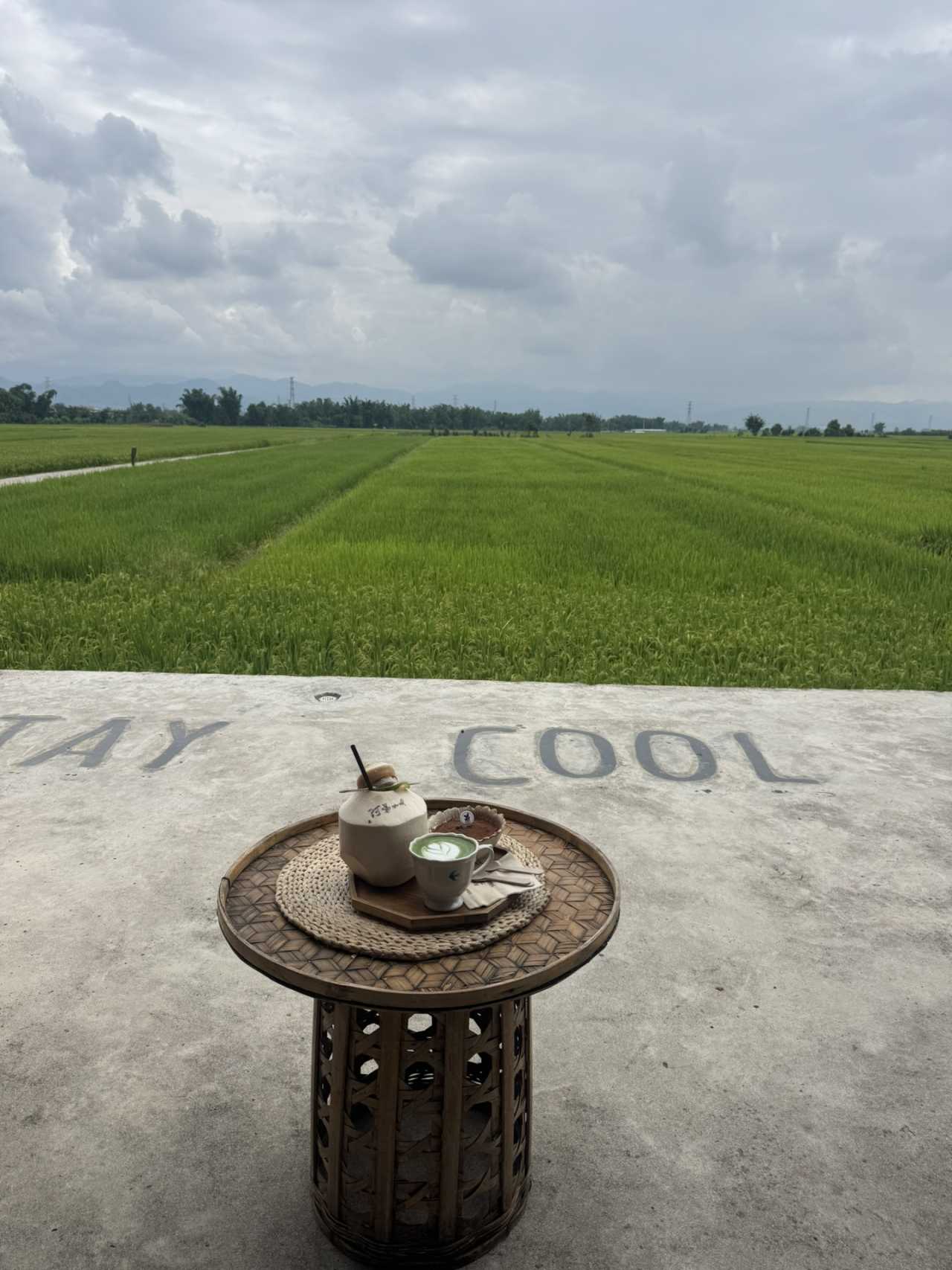
Ruili, historically known as "Mengmao" (勐卯), is the birthplace of Dai culture and one of the earliest and most developed border trade areas in southwest China. Here you'll find "One Village, Two Countries," Jiegao Border Gate, the General Buddha Temple, as well as the jade night market and rainforest trails.
General Buddha Temple and Dai King's Palace: Facing Myanmar Across the River
The General Buddha Temple, the Dai King's Palace, and a Buddhist college are all located together. This area is remote, situated on a high hill, making it suitable for self-driving. The weather was gloomy, with occasional drizzle.
Climbing the stairs from the side of the Buddhist college leads you to the main area of the General Buddha Temple. It's near the Ruili River, and across the river is northern Myanmar. You can see the former scam compound—Rongjiang International Hotel (荣江国际酒店)—now abandoned. One side of the temple features a golden pillar corridor; on a sunny day, the light and shadow effects would be absolutely stunning.
Jiegao Border Gate: One Foot in Two Countries
There were many tour groups near the border gate, and traffic was terrible. We quickly turned around to find a parking spot and walked over. This is a port for commercial and personnel exchanges between China and Myanmar. To the left of the gate are two stone monuments marking "Tianya Dijiao" (天涯地角, the End of the Earth) and "Terminus of National Highway 320." With the rain falling fast, we took a quick photo and left.
Mianmianwang Specialty Market and Burmese Cuisine
Things were even cheaper here than in Mangshi, and it was a fantastic place to shop. All kinds of Thai daily necessities and small ointments were irresistible.
For lunch, we went to Mandeli Tea Restaurant (蔓德里茶餐厅). The Burmese dishes had a very authentic Southeast Asian flavor, leaning towards sour and spicy, perfect for cooling down in the summer. The chicken rice and bean salad had very unique tastes.
We checked into Vienna International Hotel (维也纳国际酒店), which became my mom's favorite hotel of the trip—great value for money, large and clean rooms, plus hot springs and small drinks.
Conclusion: Western Yunnan, A Place Worth Slowing Down For
Over nine days, from the "slowness" of Mangshi to the "borderland" feel of Ruili, from the "tranquility" of Tengchong to the "beauty" of Dali, each stop was unforgettable.
If you also want to escape the city's noise, come and explore western Yunnan. Here, you can: - Experience a Burmese hair wash in Mangshi for a head-to-toe relaxation - Take a set of Dai costume photos in front of the Silver Pagoda, feeling like you've traveled to Southeast Asia - Stand before the Single Tree Forest and feel the marvel of nature - Step into two countries with one foot in Ruili and experience the surreal border reality - Search for six hundred years of stories in Tengchong's Heshun Ancient Town - Enjoy a romantic lunch by Erhai Lake in Dali, with the breeze in your hair
Take off the mask of the long day, and rush towards the dreamlike borderlands. Western Yunnan is waiting for you.
You should also read:

Body in Hell, Heart in Heaven: A Pilgrimage Through Tiger Leaping Gorge — A Dialogue Between Heaven and Earth
Body in Hell, Heart in Heaven: A Pilgrimage Through Tiger Leaping Gorge — A Dialogue Between Heaven and Earth Introduction: When the Gorge Splits Open Beneath Your Feet Some say Tiger Leaping Gorge is the closest place on Earth to the border between "hell" and…
Continue reading...
Cloud Travelogue · Dali of Wind, Flowers, Snow, and Moon: A Three-Day, Two-Night Journey of a Free Spirit
Cloud Travelogue · Dali of Wind, Flowers, Snow, and Moon: A Three-Day, Two-Night Journey of a Free Spirit I am a cultured female foodie with a touch of rogue charm. I slung on my backpack, took my lover's hand, and set off on a spontaneous…
Continue reading...
The Meaning of Travel – A Tengchong Story: A Journey of the Heart and Personal Growth
The Meaning of Travel – A Tengchong Story: A Journey of the Heart and Personal Growth Setting Out, Only to Return a Better Self Some say travel is nothing more than leaving a place you're tired of, only to go to a place where others…
Continue reading...