Miao's Production || A Look at Lijiang Through Miao's Eyes || A Slow Journey Without Rushing
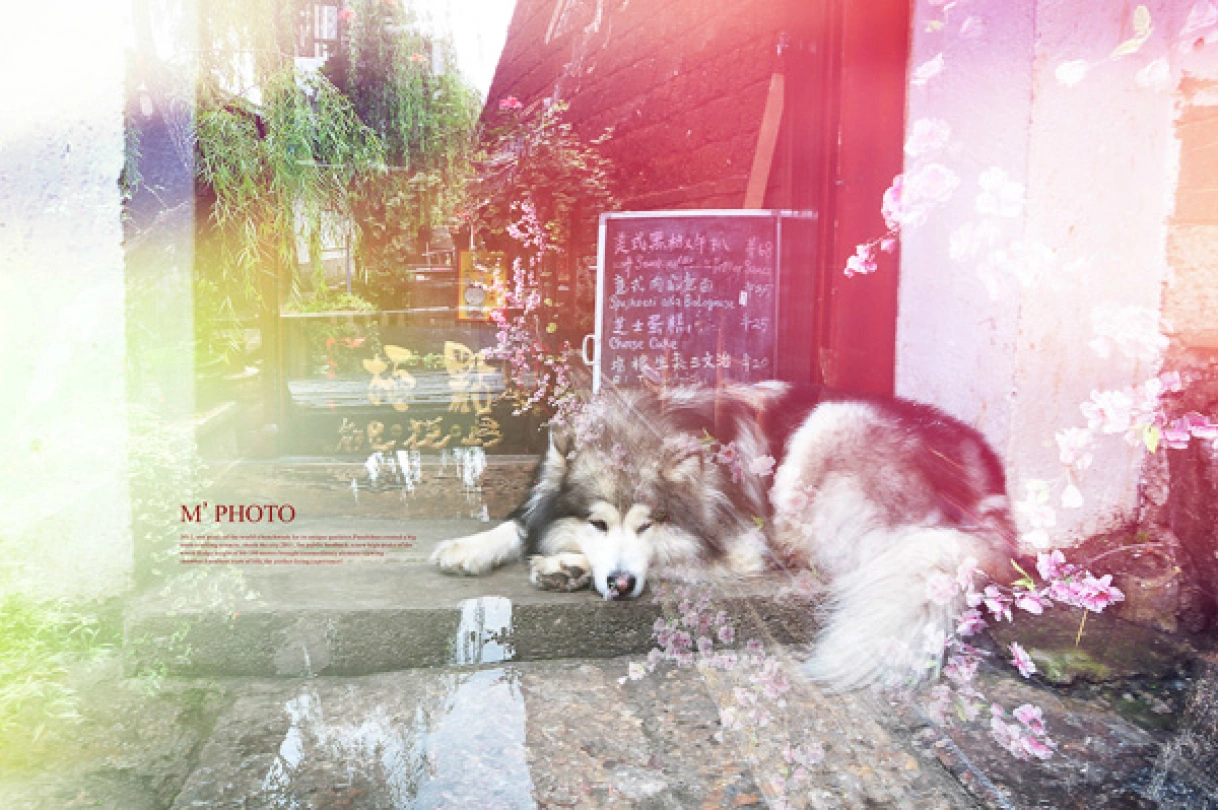
Miao's Production || A Look at Lijiang Through Miao's Eyes || A Slow Journey Without Rushing
Foreword: Why Am I Rewriting About Lijiang?
To be honest, this travelogue was born out of a bit of "jealousy."
A few months ago, I published a piece about Guizhou. Within four days, its readership had already surpassed my previous post about Lijiang. When I dug up that old article, I couldn't help but frown—the photos were sloppy, the writing was loose, nothing like what a "professional travel chronicler" should produce. But the Guizhou piece? I had put real effort into the layout, the image selection, the polishing of every sentence. The results were immediate.
It suddenly hit me: Lijiang—a place that's been written about, photographed, and complained about by countless people—had I subconsciously half-assed it simply because it felt too "mainstream"?
It's like those period dramas that are always playing on TV, or the blue skies and white clouds that someone in your social feed is always showing off—so familiar it numbs you. But think about it: everyone who goes to Lijiang sees a different scene. And I, too, have my own pair of eyes.
So I decided to recompile this collection about Lijiang and Tengchong. It records a three-day trip I took from July to August 2012, a stopover for work. It wasn't pure travel, not even a "spur-of-the-moment getaway"—but precisely because of that, it carried a certain spontaneity and authenticity.
I'm not going to write it chronologically. Instead, I'll unfold it by location. Because Lijiang is a place best measured by footsteps, not by an itinerary.
Dayan Ancient Town: That Place Everyone Calls "Tacky" Actually Hides Countless Alleys
First Impressions: From the Airport to the Old Town

From Lijiang Airport to Dayan Ancient Town is about 20-something kilometers. A taxi usually costs 100 yuan per car. If you're charming, you can haggle it down to 80.
The old town has two main entrances: the North Gate and the South Gate. The North Gate is close to Bar Street, bustling like a market. The South Gate is quieter, and accommodation is cheaper. If you're not traveling during peak season, there's no need to book a room in advance—there are so many guesthouses in the old town that you'll be spoiled for choice. Especially if it's your first time, you might end up dragging your suitcase over the cobblestone streets and getting lost. My advice: on the first day, find a place to stay near the North or South Gate. Drop your luggage, spend half a day wandering about half the town to get your bearings, and then consider moving to an area you like better.
Room rates are mostly between 100 and 150 yuan per day, and the quality is decent. The area around Wuyi Street is quieter and pricier, around 200 to 300 yuan a night.
North Gate Square: Wishing Bells and the Memorial Arch
Entering from the North Gate, you're greeted by a square filled with wishing bells. When the wind blows, they clink and clatter, as if whispering secrets for everyone. Pass through the alley beside the memorial arch, and you'll reach Bar Street.
Bar Street: From 68 Yuan to 198 Yuan, All in Your Negotiation Skills
Bar Street is lively at night, but their nightlife hours caught me off guard—people start hitting the bars at 7 PM, and by 11 or 12, most places are closing up. Even stranger was the drink pricing: on the first day, I ordered a dozen beers for just 68 yuan. Later, people coming in got the same beer for 98, 168, or even 198 yuan. The pricing is murky, but you can negotiate—even at the more famous joints.
Sifang Street: The Heart of the Old Town
Heading downhill from Bar Street, you'll find a small square that serves as the town's center. It's crowded, with many branching paths. By the river, there's a path leading uphill for a panoramic view; other branches lead to Qiyi Street, Wuyi Street, and Tongzhi Alley. After two days of wandering, I had basically figured out the layout. Occasionally, locals perform ethnic dances. On rainy days, the cobblestones glisten, adding a special charm.
The Little Shops Hidden in the Alleys
The shops on the main streets are pretty much the same, selling identical goods. The truly interesting stores are tucked away in the inconspicuous alleys.
Take Wenzhi Alley on Wuyi Street, for example. Foot traffic is sparse, but every shop is exceptionally refined. There's a small bar, tiny and exquisite, with warm yellow lighting that makes it feel like a fairy-tale cottage. Another shop has a toilet covered in graffiti, which has become a photo-op spot. If you have patience, threading through alley after alley, you'll always find a little store that speaks to you.
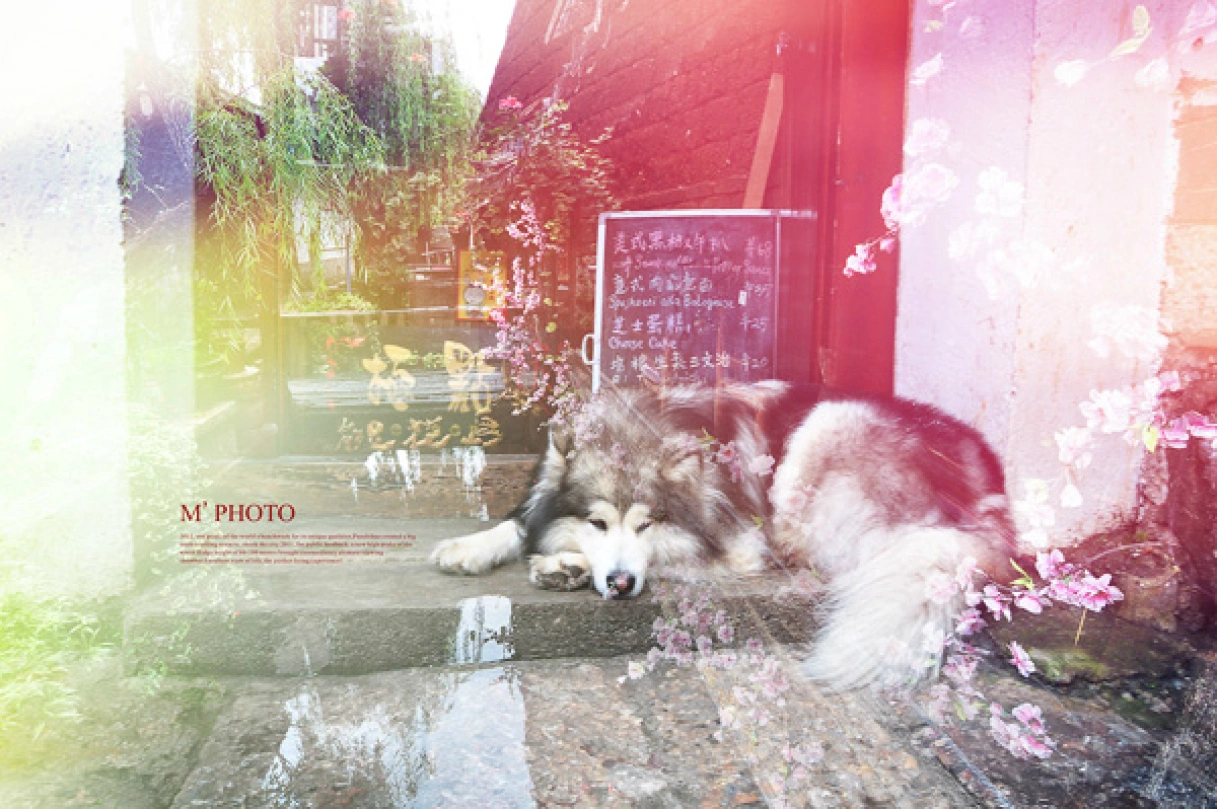
As you reach the edges of the old town, the crowds thin out. A dog sits by the roadside, lost in thought. A foreigner sits sketching a waterwheel—his drawing isn't great, but I admire his attitude. I thought about how I studied art for years but haven't picked up a brush since graduating.
Panoramic Views: Two Best Lookout Points
To get a full view of the old town, there are two main directions: one is to take the alley from Bar Street (near Sifang Street) and climb up to Lion Hill; the other is to enter through the North Gate arch and head up to Wenchang Palace. Wenchang Palace is probably the highest vantage point. I took photos of the old town's panorama at different times, from dusk to nightfall, as the lights flickered on one by one, like stars falling to the ground.
Little Treasures That Stole My Heart

There are two shops I particularly loved.
One specializes in bells. I had bought a pair of bells in Tengchong and thought they were quite exquisite, but after seeing this shop, I understood what "exquisite" really means. The price, however, isn't cheap—at least 400 to 500 yuan a pair.
The other sells ethnic-style decorative items, much more refined than others, with a deep cultural vibe. If you're moving into a new home, picking up a couple of pieces from here would definitely show off the owner's taste.
Street Food: Don't Get Your Hopes Too High
Most street snacks in the old town cost 10 yuan for three, and with some haggling, you can get four for 10 yuan. There's something like a translucent rice cake—looks great, but tastes bland. It's filling, but don't bother for the flavor. Bamboo rice is pretty bad, and the stuffed tofu is just average. Grilled chicken wings are decent, but they taste the same everywhere in China.
The only thing that truly impressed me was the snow mountain fish (雪山鱼), tender and flavorful, at 80 yuan per fish. As for Lijiang's famous "salmon" (三文鱼), it's actually local trout (golden trout and rainbow trout). The most popular dish is "three ways with salmon"—soup, sashimi, and sliced fillets—priced between 98 and 158 yuan per catty. But honestly, the place we tried was just okay. I later learned that for real salmon, you need to go to Huama Street, not inside the old town.
Cured pork ribs (腊排骨) are good—the vegetables in the pot are wild and flavorful, and the broth is fragrant. We had a pot for 98 yuan, though there are also options for 50 to 60 yuan.
Lashi Lake: The "Haggling Battlefield" on the Ancient Tea Horse Road
Lashi Lake is mainly about horseback riding on the Ancient Tea Horse Road and boating. The pricing here is murky—not the water, but the prices.
We didn't join a tour group; we went on our own. The staff recommended a route: boating plus horseback riding, around 650 yuan per person, with a "free" 180-yuan boat ride. Seeing we weren't interested, they offered a discount: 400-plus yuan per person. After some back-and-forth, we chose the 400-yuan route but skipped the boating, settling at 150 yuan per person.
Later, I found out the boating was always free—it came with the ticket. And the ticket price itself wasn't fixed; it all depended on your haggling skills. The most aggressive negotiators got the same route for 100 yuan per person, including round-trip transportation.

So, the rest is up to your own skills.
The horse-riding trail is rough, especially in the rain. I recommend renting shoe covers, 20 yuan a pair. Our guide was a young boy from Dali. I took a photo of him and gave it to him as a gift. The riding posture of one of my companions ended up becoming my "cover photo."
The boating itself was nothing special—the loop was over quickly.
Advice: If you're planning to transfer to Lugu Lake from Lijiang, skip Lashi Lake—compared to Lugu Lake, there's really nothing to see here. If you're just hanging around Lijiang for a very relaxed time, then go ahead.
Shuhe Ancient Town: Quieter Than Dayan, Younger Than Dayan
Shuhe Ancient Town is much smaller than Dayan, and it feels like the people here are younger. However, the goods sold in the shops are much rougher. It's quieter than Dayan, less commercialized. Walking through it, you really get a sense of being away from the city.
Guanyin Gorge: Looks Mediocre, Photographs Well
To be honest, the attractions around Lijiang are just okay. Guanyin Gorge costs 80 yuan for entry and 40 yuan for the cable car. You can finish the entire scenic area in an hour. If the weather is bad, I wouldn't recommend going. If the weather is good and you're confident in your photography skills, you can selectively visit.
This place is a classic example of "looks mediocre in person, but turns out pretty good in photos." The highlight is on the way down—you can see the entire panorama below, which is stunning.
Tengchong: Heshun Ancient Town and Rehai Hot Springs
Remember Shen Bing from the TV drama "Beijing Love Story"? Her hometown is Heshun Ancient Town in Tengchong. Tengchong also has volcanoes and hot springs. This trip was rushed, so I only saw the old town, soaked in the hot springs, and left.
Rehai Hot Springs is genuinely good—recommended.
Souvenirs I Brought Back: Bells and Elephants
From Lijiang, I brought back some exquisitely crafted metal elephants, 10 yuan each (some sell for 15). After wandering all of Lijiang, I only found three shops selling them.
From Tengchong, I brought back the famous Dragon-Phoenix Bells (龙凤铃), the love tokens from "Beijing Love Story." I had orders for many pairs before I even went. The original TV show version of the bells is sold at only one shop, 60 yuan a pair. Later, I found them in a more remote spot for 50 yuan for two pairs, with similar craftsmanship.
I bought a pair of silver ones for myself to hang in my car. The prices for silver bells are a rip-off—anywhere from six or seven hundred to over a thousand yuan. I finally chose a shop with fine craftsmanship, and after some bargaining, got them for just over 200 yuan.
Final Thoughts: Why Bother to Record Carefully?
In the past, when I wrote travelogues, I only cared about the quality of the photos; everything else was casual. But then I realized that the meaning of travel has become part of my bloodstream. Plus, when people asked me about details from trips half a year ago, I couldn't remember most of them—that's when I decided to start recording these memories seriously.
Moreover, I noticed that some people were imitating my article titles, structure, and logic. I don't mind, but to set myself apart, all future travelogues will carry the prefix "Miao's Production" (缪出品), as a reminder to myself to take them seriously.
Lijiang—this place has probably been written to death, photographed to death, and complained about to death. But for me, it's not a destination. It's a place to relax, to rest, to soak up the sun, or to use as a transit point for a Yunnan trip.
It's not perfect. It's even a bit "tacky." But tacky things are often the most real.
Travel Tips: - Lijiang is for slow travel—don't rush from one attraction to another - At Lashi Lake for horseback riding and boating, you must haggle - For salmon, go to Huama Street, not inside the old town - Don't get your hopes up for street food; grilled chicken wings and snow mountain fish are worth trying - If you're short on time, skip Lashi Lake and Guanyin Gorge - Tengchong's Rehai Hot Springs is worth a dedicated trip
About the Author: Sina Weibo: @叫我小缪
WeChat: miaophoto
Photography book "Perfect Travel Map" (完美旅图) is available on Dangdang, Amazon, JD, Tmall, and Interactive.
This travelogue is copyrighted by @叫我小缪. Any form of reproduction requires the author's permission.
You should also read:

God’s Abandoned Palette: A Self-Drive Journey Through Yunnan’s Dongchuan Red Land
God’s Abandoned Palette: A Self-Drive Journey Through Yunnan’s Dongchuan Red Land Travel has never been about reaching some distant geographic coordinate. It’s about encountering, along the way, the version of yourself buried beneath the rubble of daily routine. During this May Day holiday, I finally…
Continue reading...
Body in Hell, Heart in Heaven: A Pilgrimage Through Tiger Leaping Gorge — A Dialogue Between Heaven and Earth
Body in Hell, Heart in Heaven: A Pilgrimage Through Tiger Leaping Gorge — A Dialogue Between Heaven and Earth Introduction: When the Gorge Splits Open Beneath Your Feet Some say Tiger Leaping Gorge is the closest place on Earth to the border between "hell" and…
Continue reading...
Cloud Travelogue · Dali of Wind, Flowers, Snow, and Moon: A Three-Day, Two-Night Journey of a Free Spirit
Cloud Travelogue · Dali of Wind, Flowers, Snow, and Moon: A Three-Day, Two-Night Journey of a Free Spirit I am a cultured female foodie with a touch of rogue charm. I slung on my backpack, took my lover's hand, and set off on a spontaneous…
Continue reading...