Misty Rain in Puzhehei: A Solitary Journey Through Idyllic Landscapes
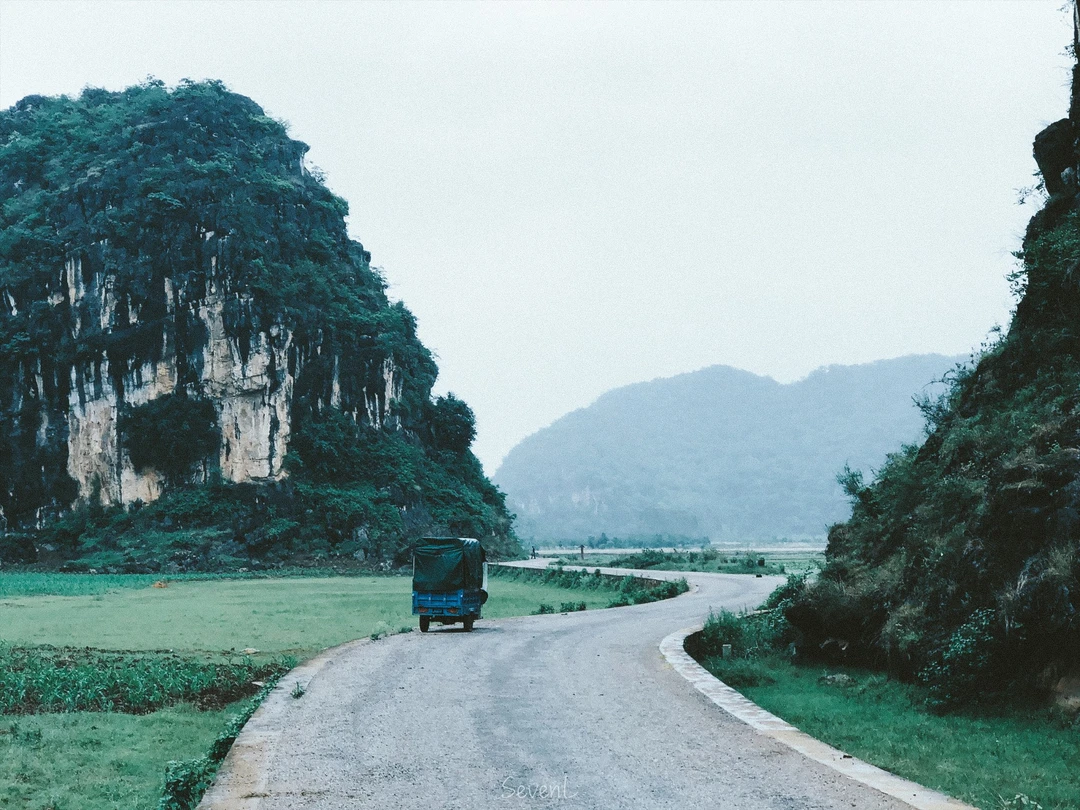
Misty Rain in Puzhehei: A Solitary Journey Through Idyllic Landscapes
A Serendipitous Encounter
Some places you never actively seek out, yet they find you when you least expect it. Puzhehei was exactly that for me.
In late May 2018, I set foot on Yunnan soil for the third time. I had previously taught here as a volunteer and traveled the classic routes through Dali, Lijiang, and Shangri-La. But Puzhehei—a place that gained fame from the Chinese reality show Where Are We Going, Dad?—had never made it onto my travel list. Then one day, I stumbled upon a flash sale ticket to Wenshan and clicked "buy" without a second thought.
Four days and three nights, traveling solo. No detailed itinerary, no rigid plans—just a restless heart yearning to wander through mountains and waters. And Puzhehei, with its misty rains and pastoral poetry, gave me an unexpected dose of healing.
Quick Facts at a Glance

- Destination: Puzhehei Scenic Area, Qiubei County, Wenshan Prefecture, Yunnan
- Travel Dates: May 26–29, 2018 (4 days)
- Budget: Approximately 1,000 RMB per person (including transport, accommodation, meals, and tickets)
- Travel Companions: Solo traveler
- Best Season: June–August (lotus flowers in bloom, but crowded); late May (off-peak, fewer tourists, beautiful scenery)
First Glimpse of Puzhehei: Sunset at Qinglong Mountain
The Long Journey from Airport to Village
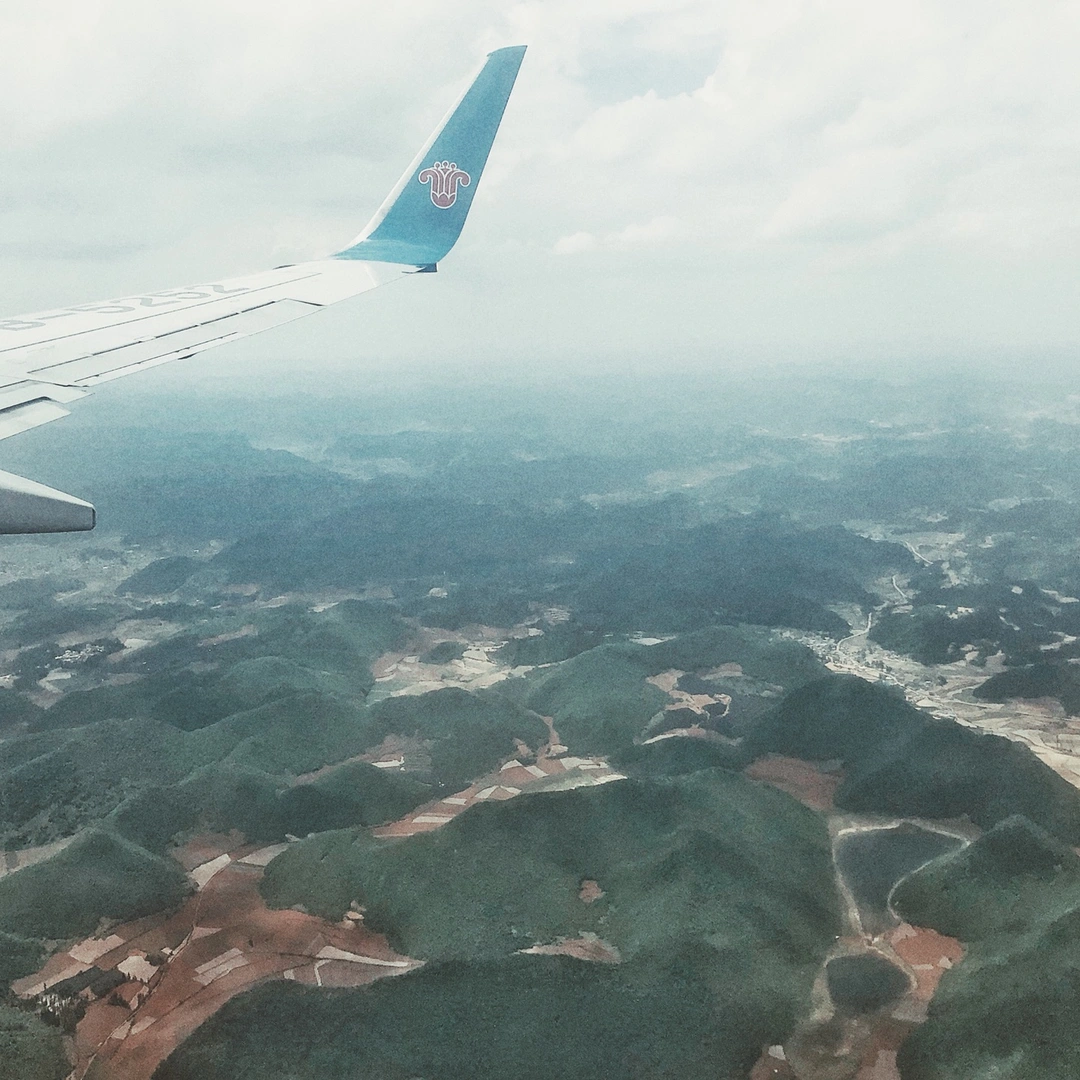
Flying from Shenzhen to Wenshan Puzhehei Airport was just the first leg of the trip. This small airport sits between Wenshan and Yanshan—functional but modest in size. Getting from the airport to the scenic area was my biggest pre-trip concern. Online information was scarce, but after doing it myself, I realized it's not that complicated.
My route: Airport → Taxi to Yanshan Bus Station (30 RMB/car) → Bus to Qiubei High-Speed Rail Station (29 RMB) → Transfer to public bus to Puzhehei Village (5 RMB). The whole journey took about three hours, but the pastoral scenery along the way was already a feast for the eyes.
When the bus finally pulled into Puzhehei Village, a group of locals in traditional ethnic attire swarmed around, offering accommodation or horse-drawn carriage rides. I'm used to this by now—in fact, I'd find it strange if it didn't happen.
The First Stunning View from the Bridge
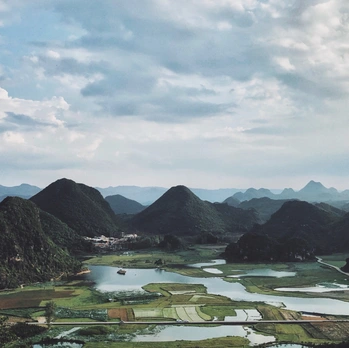
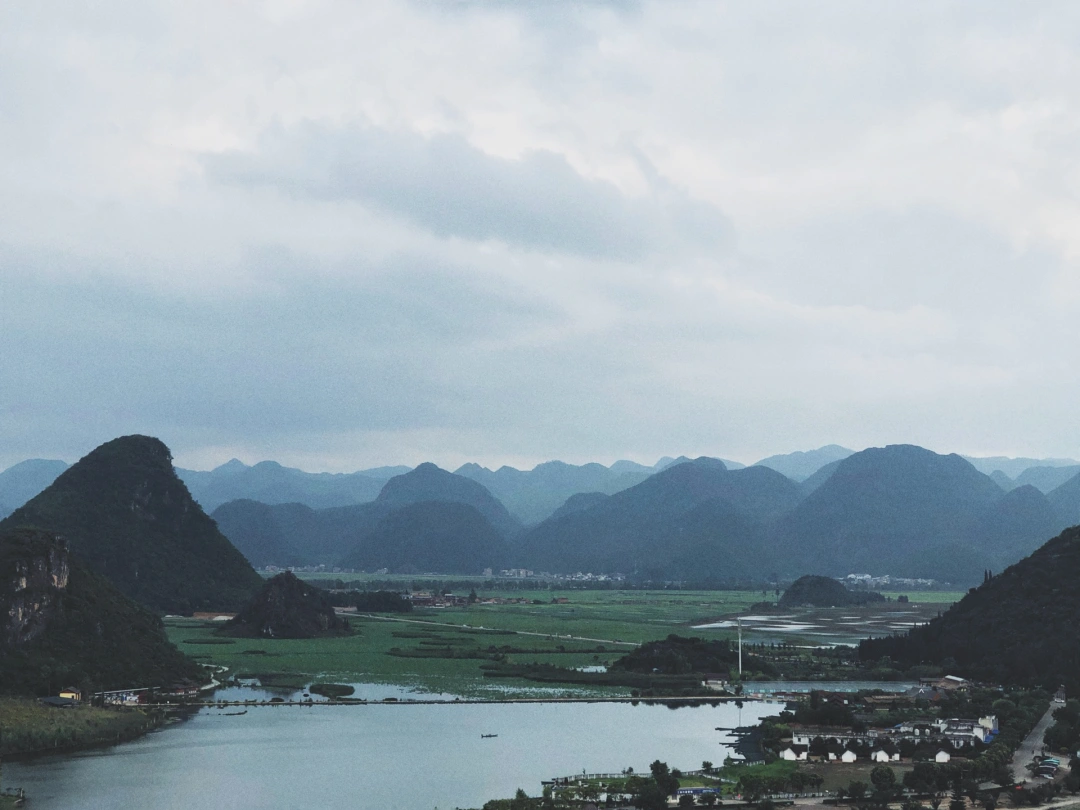
The moment I crossed Puzhehei Bridge, I froze. The calm lake mirrored the blue sky and white clouds, with the occasional boat gliding by, leaving ripples in its wake. In the distance, green mountains loomed like ink wash paintings; closer to shore, lotus leaves stretched out in abundance—this was exactly how I'd imagined Puzhehei. All my travel fatigue melted away in an instant.
Climbing Qinglong Mountain: A View of Paradise
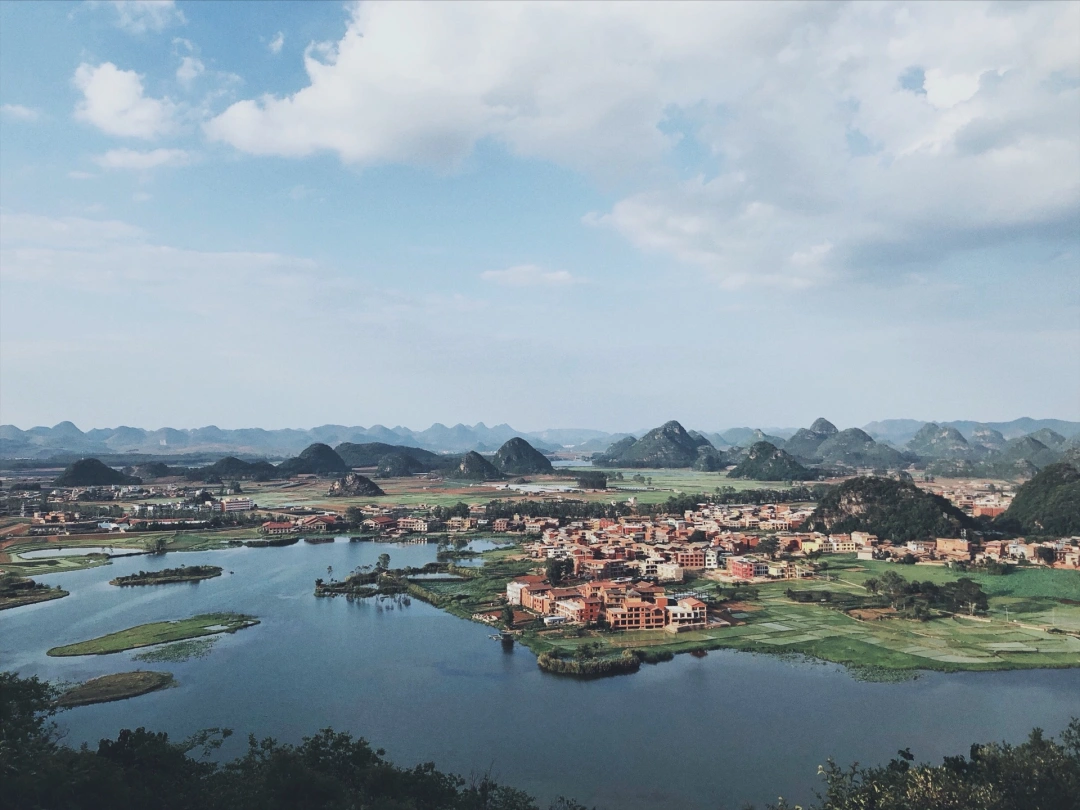
After settling into my guesthouse, I headed straight for Qinglong Mountain, determined to reach the summit before sunset. The climb is easy—about 20 minutes to the top, with well-maintained paths. There are four viewing platforms, each offering a different perspective. The sunset viewing platform is a bit tricky to find—you have to descend from the summit and climb back up on the other side, almost like conquering another small hill.
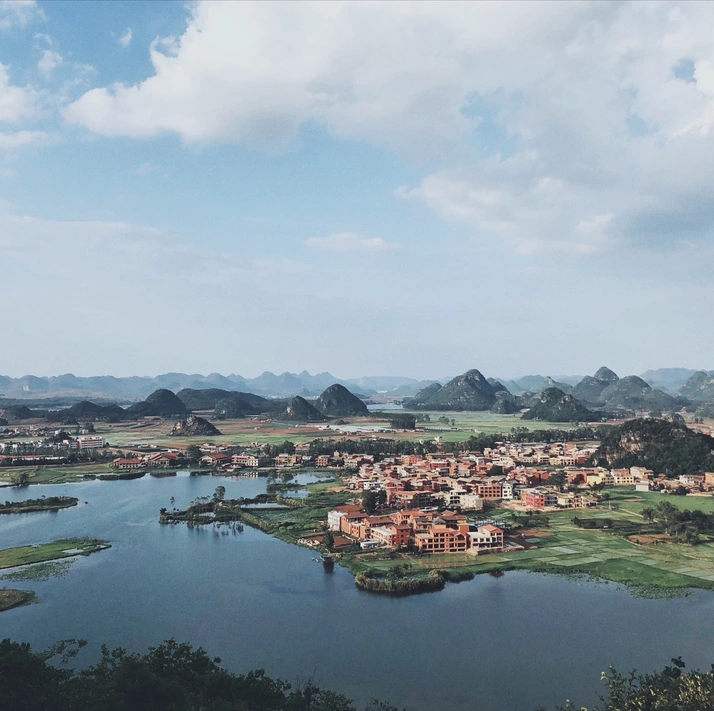
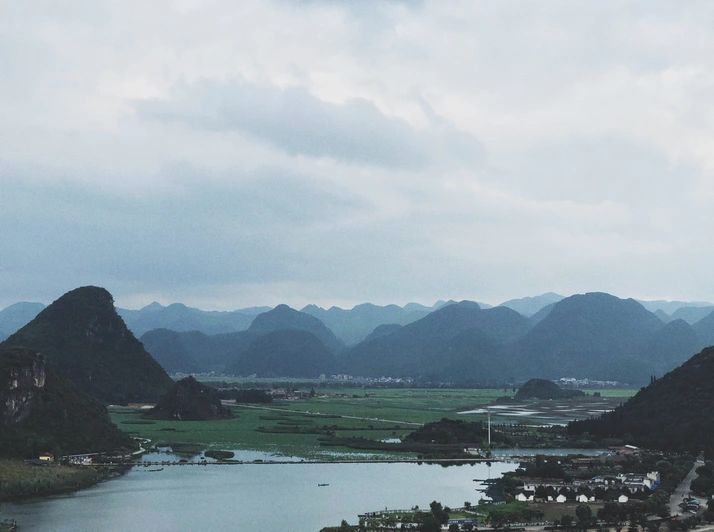
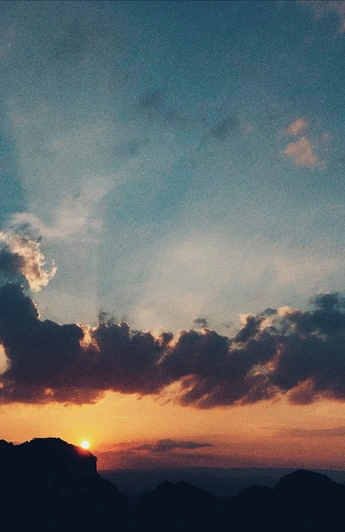
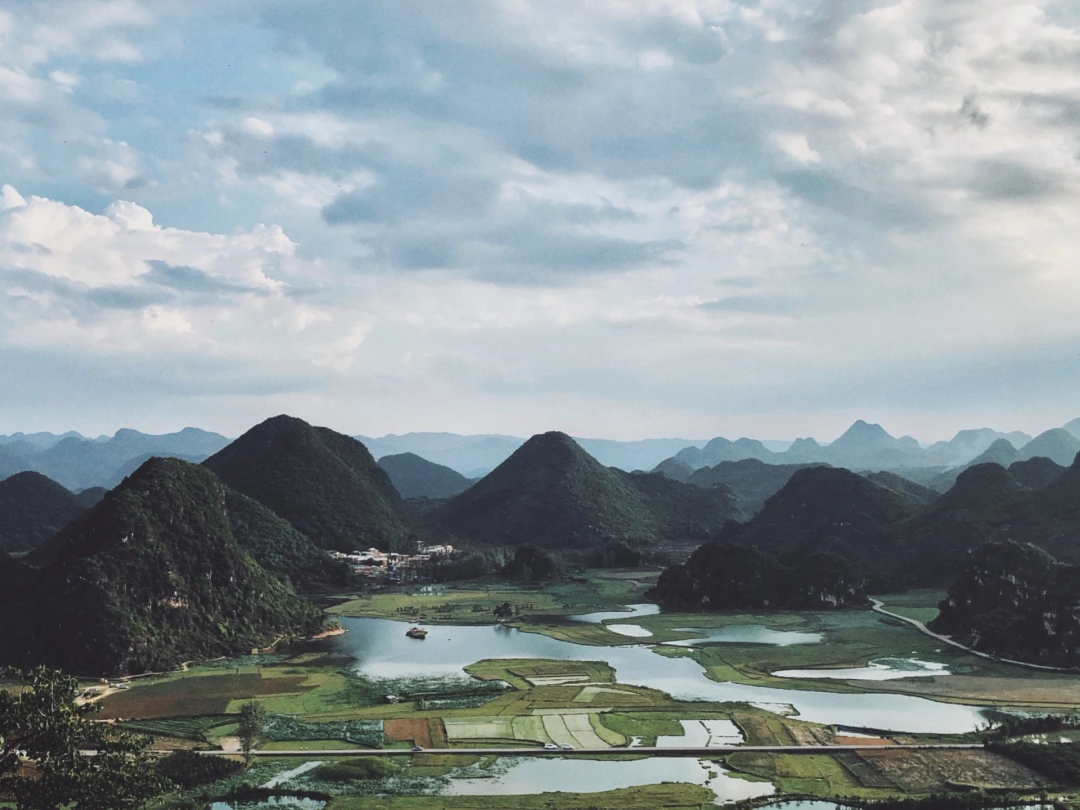
Standing at the top, with the cool breeze brushing my face, the view took my breath away: lakes and mountains intertwined, village smoke curling upward from chimneys; in the distance, layer upon layer of hills stretching endlessly; toward the sunset, the wind turbines of Shede Grassland faintly visible. At that moment, one thought filled my mind: No matter how many beautiful sights I've seen in my life, nothing compares to this.
The iconic shot of Puzhehei—the one that looks like an official tourism poster—was taken right here. A fellow traveler joked, "Everyone who comes to Qinglong Mountain takes the exact same photo." But when you're actually standing there, feeling the wind on your face and taking in this peaceful scenery, you realize: photos can be replicated, but the emotion of that moment is one of a kind.
Wandering in the Rain: A Personal Landscape Scroll
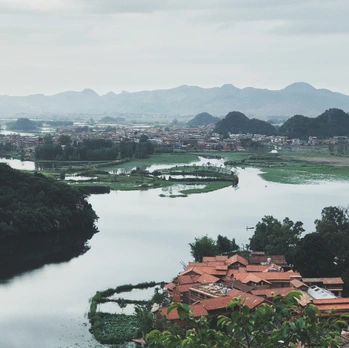
Missed Shede Grassland, Unexpected Countryside Hike
I had planned to visit Shede Grassland the next morning—this vast meadow, known as "Wenshan's Little Shangri-La," was my most anticipated stop. But a torrential downpour at 5:30 AM shattered all plans. The driver canceled, fellow travelers left one by one, and my date with Shede Grassland was not meant to be.
Every trip leaves a few regrets, I suppose. At least now I have another reason to come back.
Once the rain eased up, I decided to explore on foot. The roads in Puzhehei Village were under construction, and with the intermittent rain, the paths were muddy and messy. But for someone used to smooth city pavement, this became a strangely fun experience—tiptoeing around puddles, careful not to slip, like a kid again.
From Puzhehei Village to Xianrendong Village
Walking from Puzhehei Village to the scenic area entrance, I encountered few vehicles—just the occasional horse-drawn carriage and fruit vendors calling out their wares. Peach, pear, and bayberry trees along the road were heavy with fruit, and the prices were temptingly low.
I passed a bougainvillea garden, its purple blooms looking especially fresh after the rain. A female traveler immediately whipped out her phone and started snapping photos.
Near the lake at the scenic area entrance, I spotted several fishermen. Locals told me the lake is famous for a fish called "huang la ding" (yellow catfish), known for its tender meat. I made a mental note to try it for dinner.
Xianrendong Village is more developed than Puzhehei Village, with neat rows of modern ethnic-style houses, guesthouses, restaurants, and souvenir shops lining the streets. The roads here are fully paved. I suspect Puzhehei Village will look like this someday. Commercialization is inevitable, but at least for now, it still retains some of its rustic charm.
The "Three Lives, Three Worlds" Filming Location: Where Fantasy Meets Reality
After taking a taxi back to Puzhehei Village, I headed to the filming location of Three Lives, Three Worlds, Ten Miles of Peach Blossoms. It's about a 15-minute walk from the village, passing through "Qingqiu Flower Sea"—a field of purple blossoms that looks beautiful from a distance, but costs 10 RMB to enter for photos. I snapped a picture through the fence and moved on.
Fun fact: The song Liang Liang (Cool Cool) from the drama was playing on loop here. A friend I met on the road joked, "Maybe that's why this place never really took off—it's always playing 'Cool Cool'!"
Even though I knew the peach blossoms were fake, standing on the "Qingqiu" rock with the background music playing, I could still feel a hint of that ethereal, otherworldly atmosphere. Most tourists lingered around the Peach Blossom Island area. I chose to take the longer route through Caihuaqing, a hiking trail where I barely saw another soul. The scenery changed with every step, and I walked without feeling the least bit tired.
Caihuaqing is a tiny Miao village, with simple, humble houses and tough living conditions. Farmers working in the fields under the drizzle looked like they had stepped out of a landscape painting—the most vivid brushstrokes in this pastoral masterpiece.
A Solitary Cave Experience: The Quiet of Huoba Cave
Puzhehei has three well-known karst caves: Xianren Cave (Immortal Cave), Guanyin Cave, and Huoba Cave (Torch Cave). Xianren Cave, near Xianrendong Village, requires a boat ride to enter and costs 30 RMB. I skipped Guanyin Cave after reading reviews that visitors are "cornered into making donations" once inside.
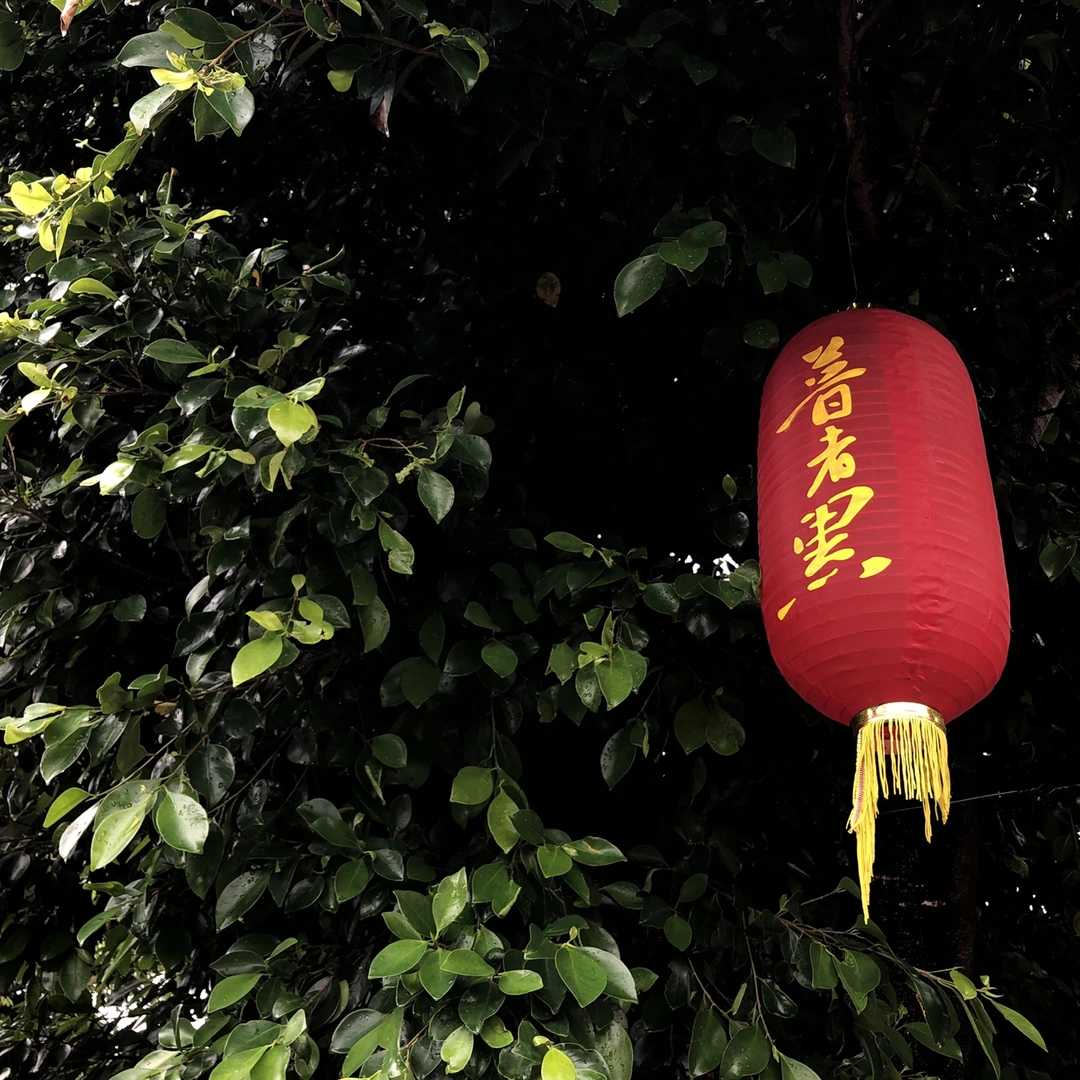
The only cave I explored was Huoba Cave, at the foot of Qinglong Mountain, with a ticket price of just 15 RMB. Word has it you can walk through it for half an hour. On the day I visited, I had the entire cave to myself.
Inside, the silence was broken only by the sound of dripping water. The water in the cave was incredibly clear, reflecting the stalactites above like a mirror. I was lost in the tranquility until a cluster of golden coins on the cave floor snapped me back to reality. I have no idea who started the trend of tossing coins here, but now a small fortune had accumulated, creating a bizarre "attraction" of its own.
There was also a peculiar sculpture inside—I couldn't tell if it was a turtle or a mythical creature. What was amusing wasn't the paper money plastered all over it, but the coins jammed into its body. A perfect example of herd mentality in action.
Following in the Footsteps of Where Are We Going, Dad?
Like many others, I first learned about Puzhehei from Where Are We Going, Dad? The houses featured in the show are still standing, preserved in their original condition—even the interior decorations haven't changed.
These houses are clustered near the Ox Head Square, with signposts pointing the way. A small fee of 2–3 RMB is charged for entry, which I think is reasonable—after all, who wants strangers wandering through their home for free?
I only visited the house where celebrity dad Tian Liang stayed. A lazy dog was napping at the doorstep, even in broad daylight. Inside, an elderly grandmother—the same one who handed out snacks to Cindy on the show—greeted us with a warm smile and let us in for free. The walls were covered with photos from the show. Looking at those familiar images, it felt like those five years had passed in the blink of an eye.
Exploring Puzhehei by E-Bike: Maomaochong and Mizhi Mountain
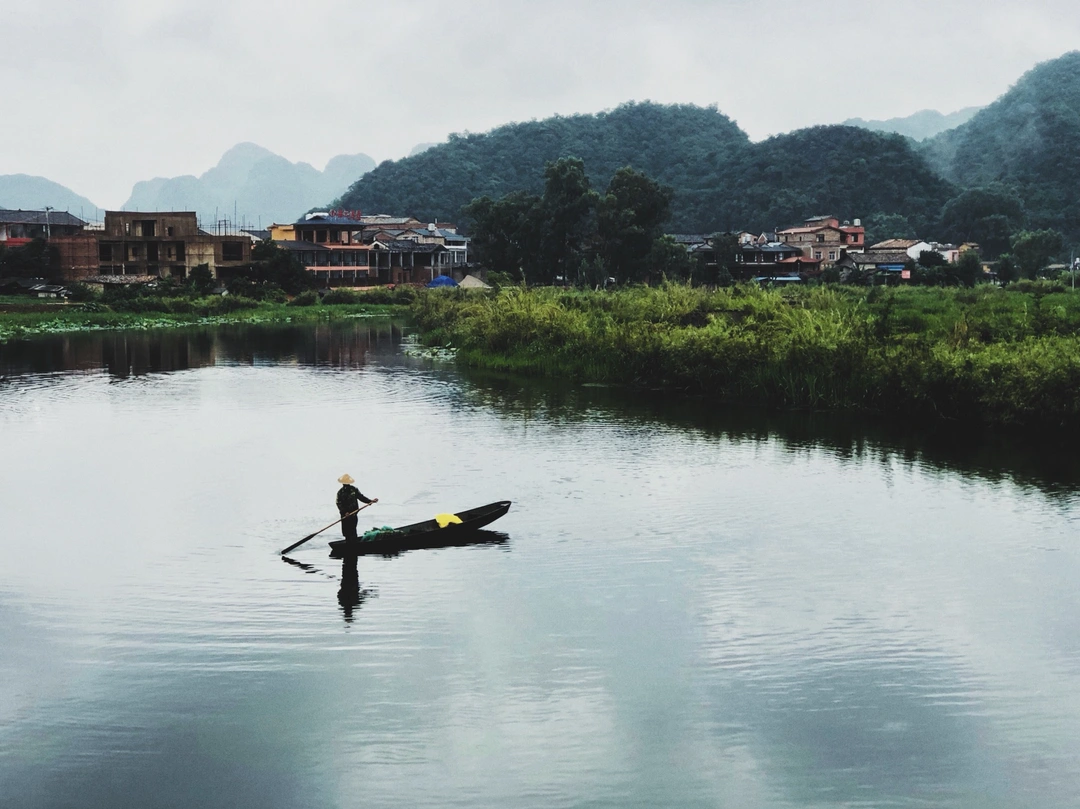
Cycling Through the Countryside
In the afternoon, I rented an electric bike for 50 RMB at the village entrance and set off on a two-wheeled adventure. The roads were in excellent condition, with very little traffic. Cycling through the fields with the breeze in my hair was pure bliss.
I skipped the Rose Garden (20 RMB entry, not my thing) and headed straight for Maomaochong. This tiny village near Puzhehei has a wetland park across from it that's perfect for sunset viewing. Expanses of lotus flowers and lakes complement each other beautifully, and there's even a "largest music fountain in Asia"—though it only operates at certain times to avoid disturbing the birds.
Unfortunately, the weather wasn't cooperating, and there was no sunset to be seen. I decided to turn back to Xianrendong Village and climb Mizhi Mountain, whose views rival those of Qinglong Mountain.
Mizhi Mountain: A 360-Degree Panorama
The trailhead is at a fork near the village entrance—you won't find it on any map, so it's best to ask a local. There's a free parking lot at the base where you can leave your e-bike.
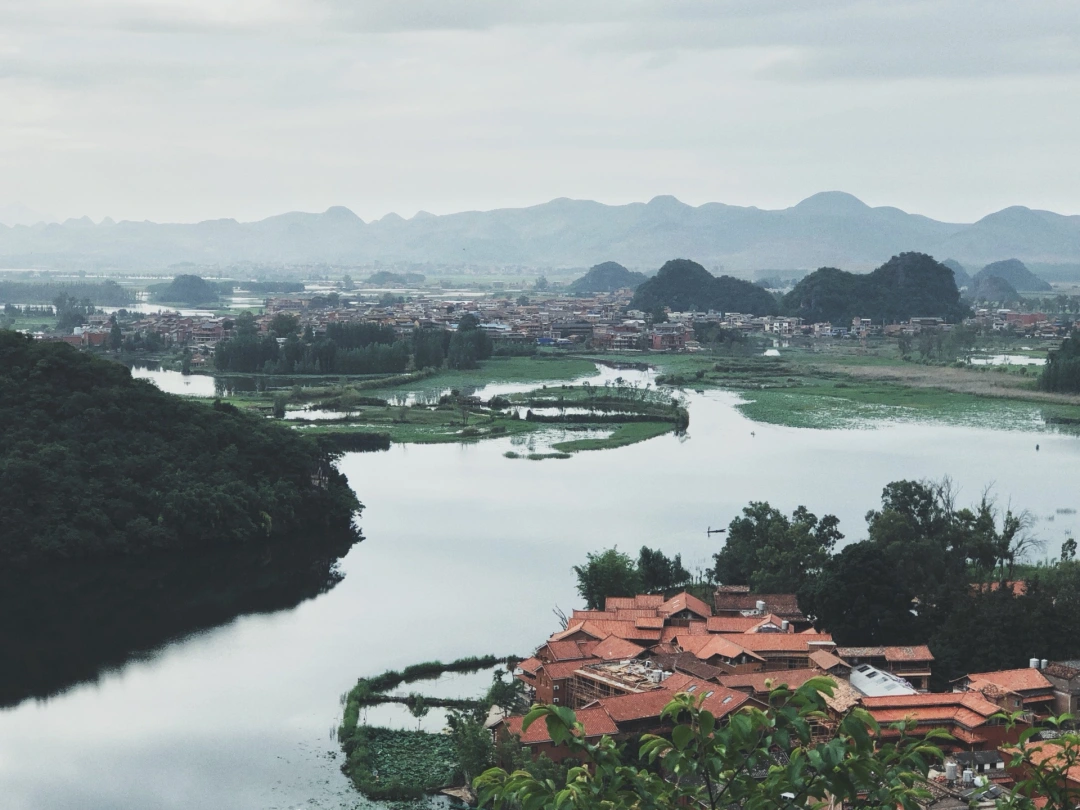
The mountain isn't tall, but few people make the climb, so I had the path mostly to myself. At the summit, a 360-degree observation platform revealed the entire Puzhehei landscape. Distant mountains, mirror-like lakes, picturesque villages—I forgot to take photos. I just stood there, soaking in the scene, thinking of the line "the sky is gray, waiting for the rain."
Unexpected Adventures: Nighttime Shrimp Hunting
In the Yi language, "Puzhehei" means "a pond full of fish and shrimp." The water here is crystal clear, and the fish and shrimp taste completely different from what you'd find elsewhere—especially the crayfish.
At 8 PM, I joined a "shrimp hunting squad" with friends from the nearby hostel and the owner. Armed with flashlights and nets, we headed into the pitch-black ponds. The conditions were rough, but everyone was in high spirits. One of the women rolled up her sleeves and got straight to work.
Once we cleared a spot of crayfish, it would take a while for new ones to appear. We kept moving, trekking through the night with the chorus of frogs around us and various insects drawn to our flashlights. All I could think of was Jay Chou's song Rice Fragrance (Daoxiang).
In the end, we caught quite a haul. There's a mobile market in Puzhehei Village where crayfish sell for 15 RMB per catty. We bought some, had them cooked at the hostel, and couldn't stop eating.
Another surprise: a rainbow appeared at the village entrance just before I left. After days of misty rain and blue skies, this rainbow felt like Puzhehei's farewell gift to me.
A Taste to Remember: The Restaurant I Visited Three Times
I tried two restaurants recommended on Dianping (China's Yelp). The first one, "Red Mud Small Stove," had a nice atmosphere but terrible service and mediocre food—not recommended.
The second one, "Xia Yu Lu Xuan," I visited three times! Every dish was a hit:
- Sanqi Stewed Chicken (three-seven ginseng chicken): Tender, flavorful, generous portions
- Lotus Leaf Omelette: Incredibly fragrant, polished off in seconds
- Pickled Vegetable with Lotus Root: Super addictive—I ate three bowls of rice thanks to this dish
- Vegetable Spring Rolls: Crispy, savory, and light
- Fried Zongzi Slices (glutinous rice dumpling slices): A friend from Guangxi said they have this too—great as a staple
At around 50 RMB per person, the price was reasonable, and the service was excellent. The tea served here was brewed from wild herbs picked in the mountains—refreshing and aromatic.
For my last breakfast before leaving, I had a bowl of rice noodles—12 RMB for a huge bowl, spicy and satisfying. I still remember the taste.
Practical Guide: Transportation and Route Details
Getting There
By Air (my choice): - Wenshan Puzhehei Airport → Taxi to Yanshan Bus Station (30 RMB/car, or walk 1.6 km to the main road and catch a passing bus for 5 RMB) - Yanshan Bus Station → Qiubei High-Speed Rail Station (29 RMB, waiting time for passing buses may vary) - Qiubei High-Speed Rail Station → Puzhehei Scenic Area (5 RMB by public bus, stops at Xianrendong Village and Puzhehei Village in that order) - Return trip: Buy a ticket from Yanshan Bus Station to the airport entrance (5 RMB), inform the driver in advance
By High-Speed Rail: Direct buses from Qiubei High-Speed Rail Station to the scenic area. You can also take the high-speed train to Guangnan Station for a trip to Bamei.
By Car: Simply navigate to Puzhehei Scenic Area.
Recommended Routes
Hiking Route 1 (about 6 km): Maomaochong → Rose Garden → Puzhehei Village. Great scenery, ideal for cycling or hiking.
Hiking Route 2: Three Lives, Three Worlds filming location → Caihuaqing → Qingqiu Flower Sea. A loop trail with few people and beautiful views.
Must-Visit Spots: Qinglong Mountain (sunset), Mizhi Mountain (360-degree panorama), Huoba Cave (quiet and uncrowded), Maomaochong Wetland (birdwatching and lotus viewing)
Final Thoughts
During my four days in Puzhehei, I experienced misty rain, blue skies, and a rainbow. I climbed Qinglong Mountain alone to watch the sunset, had an entire cave to myself, hiked through the countryside in the rain, went shrimp hunting at midnight, and felt the freedom of the wind on an e-bike.
There was no noise, no crowds—just the purest landscape of mountains and waters, and the most genuine warmth of everyday life. If you're longing for a trip where you can have a conversation with yourself, come to Puzhehei during the off-season. Be the "king of the mountain"—claim a field, a hilltop, a cave for yourself. And claim a piece of slow, peaceful time that's all your own.
Travel Tips: - Off-season (late May): Fewer tourists, beautiful scenery, but some facilities may be closed - Peak season (June–August): Lotus flowers in full bloom, plenty of activities, but crowded - Stay at least 3 days for a deeper experience - E-bikes are the best way to explore the area - Mobile payments are widely accepted, but bring some cash just in case
Puzhehei, this little village in the clouds of Yunnan, taught me something in its own unique way: some places are worth dropping everything for, just to wander alone.
You should also read:
Into the Hidden Valley: A Solo Journey Through the Mysterious Dulong River
Into the Hidden Valley: A Solo Journey Through the Mysterious Dulong River Deep in the northwestern corner of Yunnan Province, tucked away from the modern world, lies a place that feels like a secret whispered among mountains. The Dulong River Valley is not just a…
Continue reading...
God’s Abandoned Palette: A Self-Drive Journey Through Yunnan’s Dongchuan Red Land
God’s Abandoned Palette: A Self-Drive Journey Through Yunnan’s Dongchuan Red Land Travel has never been about reaching some distant geographic coordinate. It’s about encountering, along the way, the version of yourself buried beneath the rubble of daily routine. During this May Day holiday, I finally…
Continue reading...
Body in Hell, Heart in Heaven: A Pilgrimage Through Tiger Leaping Gorge — A Dialogue Between Heaven and Earth
Body in Hell, Heart in Heaven: A Pilgrimage Through Tiger Leaping Gorge — A Dialogue Between Heaven and Earth Introduction: When the Gorge Splits Open Beneath Your Feet Some say Tiger Leaping Gorge is the closest place on Earth to the border between "hell" and…
Continue reading...