My 2017: A Memorial for What’s About to Be Forgotten
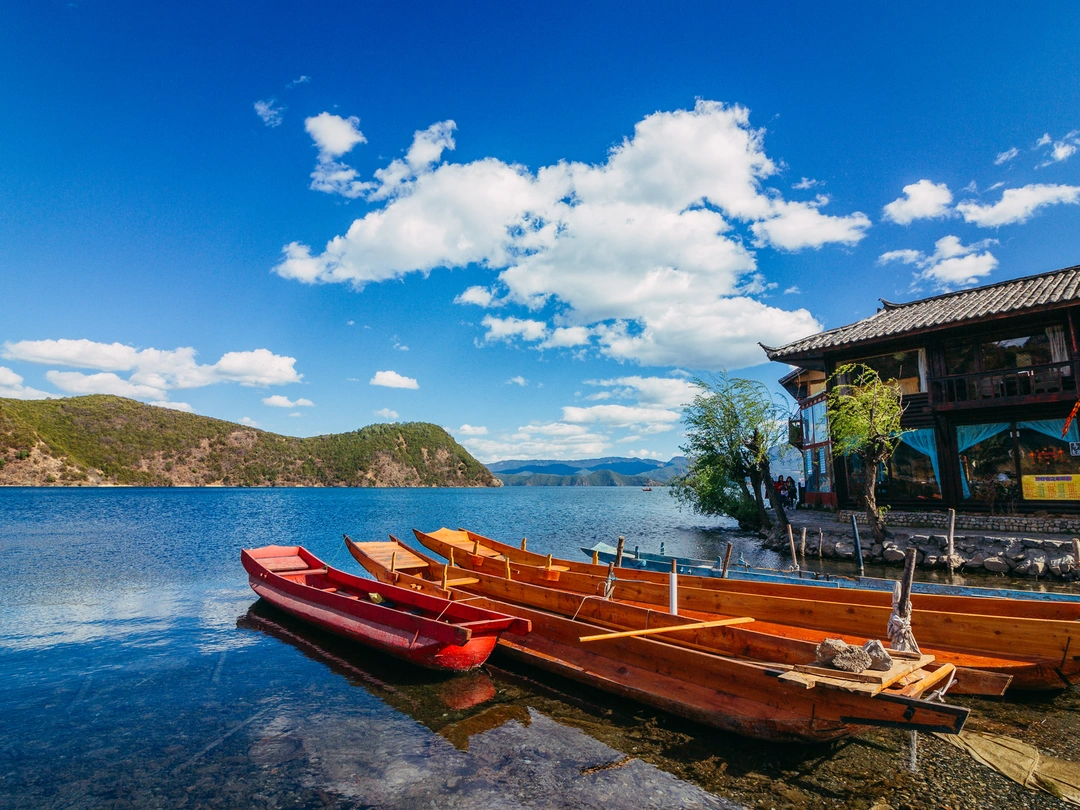
My 2017: A Memorial for What’s About to Be Forgotten
And just like that, 2017 came to an end. Flipping through my calendar, it suddenly hit me: I had completed another full cycle of seasons.
This year brought tears in the dead of night and laughter under the sun. I hit rock bottom, lost and confused, then slowly found my rhythm again through the grind of daily life. I thought I was still that young dreamer with fire in my eyes, but the person staring back from the mirror had clearly taken on the weariness and silence of middle age.
We’re all walking this road, going further and further. We say goodbye to some people, welcome others. Fate pushes us forward, and none of us can stop. The past fades like old photographs, joy and sorrow eventually settling into stillness. But life goes on—flowers bloom and wither—and the one thing we must never lose is the heart we started with.
I think back on those days in Yunnan. They were wonderful. But those solitary moments of watching mountains and seas are growing hazy in my memory, much like my longing for faraway places, slowly, quietly fading away…
So I want to write it all down. Not as a summary, but as a keepsake for the memories that are slipping away.
Don’t Say Everything Turns to Nothing—Even Before It Does, It’s Already a Dream
I came across this line from Su Shi the other day, and it struck me right in the chest. I’ve walked a little over half my life, thinking I’ve been through so much, but when I really stop to think, it feels like I’ve been through nothing at all. Eventually, I understood: life’s ups and downs are nothing but a dream. When you wake up, you realize it was all empty.

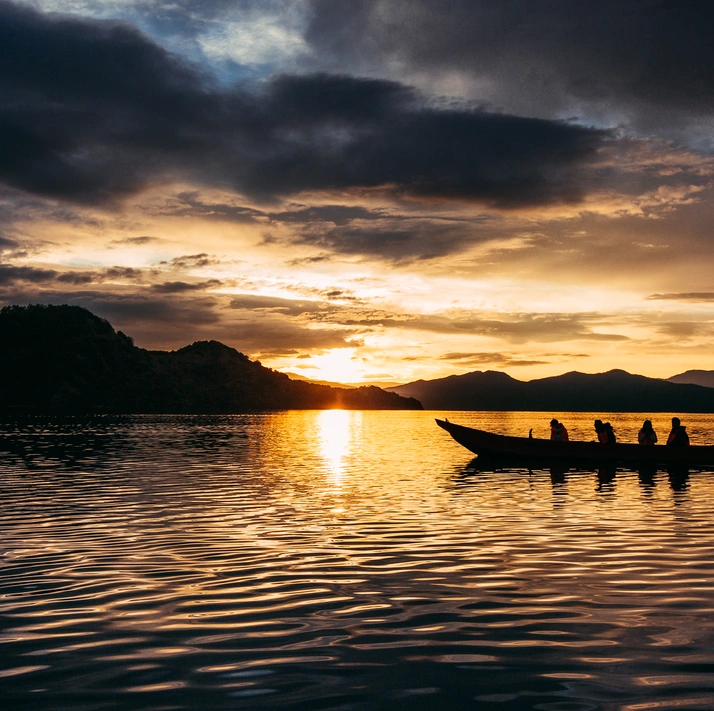
We’re all the same. In the end, we’ll all be forgotten.
Lugu Lake: The Most Beautiful Encounter
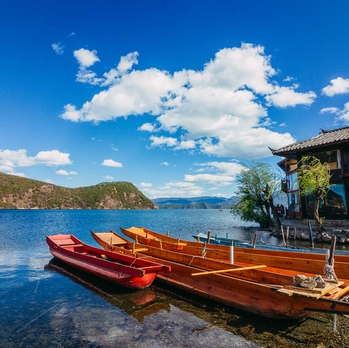
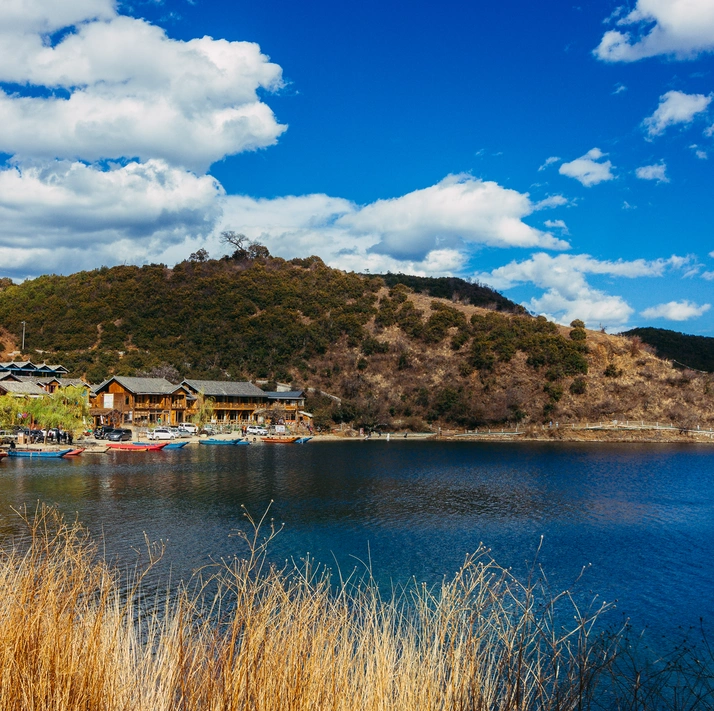
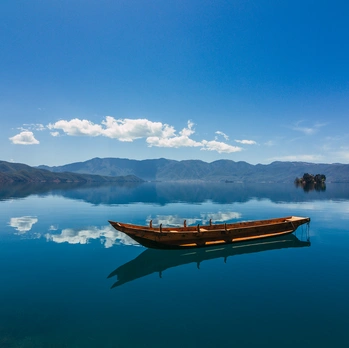
I’ve seen Lugu Lake at its most beautiful. At least, in my heart, it is.
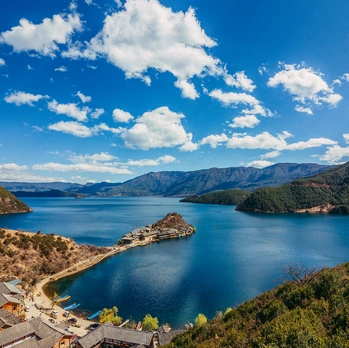
Can you believe it? When you finally lay eyes on something you’ve longed for, it almost feels unreal. Back then, I often wondered if this beauty was just a bubble, ready to pop at the slightest touch. I thought about it for a long time and never found an answer—only more worries. Now, I don’t overthink it anymore. Instead of fretting over what I might lose, I’d rather cherish the people in front of me and let the rest go.
The older you get, the less you can afford to fail. I’ve noticed that I’m losing the courage to take risks. The outcome of a decision determines its nature—if it works out, it’s called bravery; if it doesn’t, it’s called recklessness. Like when I quit my job to travel—I still don’t know if it was right or wrong. But I made it through.
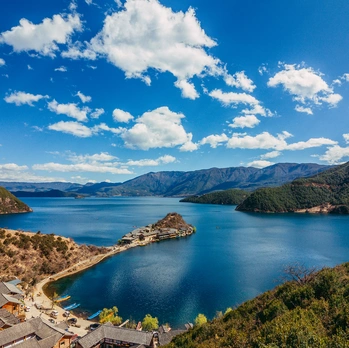
Thankfully, I saw Lugu Lake at its finest. That alone makes me grateful I still had the courage to make that choice.
When I reached the Grass Sea (Caohai), a golden expanse stretched before me. It was the edge of Lugu Lake, the turning point of the seasons. Just as summer brings lush green, winter brings withered yellow; only after enduring autumn’s decay can spring’s vitality emerge. The Grass Sea is Lugu Lake’s other face—no azure waters, only endless mountains telling tales of grandeur and time.
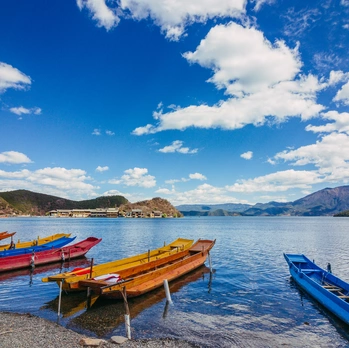
I stood by the Grass Sea, on the Walking Marriage Bridge (Zouhun Qiao), listening to locals tell the story of the Mosuo people’s Azhu and Axia—lovers who meet under the stars. And those stars—Lugu Lake’s night sky was so dazzling it made you want to cry. A couple lay by the shore, gazing up. My flashlight disturbed them, and I quickly apologized. Looking back, I envy them—that sky, that night, with shooting stars streaking across.
A song came to mind, "Achu Girl" (Achu Guniang):
Your scent drifts through the village breeze The wind-kissed lipstick can’t hide the truth Achu girl Time’s tearful eyes tear down my disguise Do you still remember me as I was young? Tonight, will you be far away, Building a bonfire, waiting for me?
Tonight, will you be far away, waiting for me?
Dali: A City to Grow Old In
I still love writing late at night, pouring out thoughts that may or may not matter. But I’ve realized that when feelings fade, the words dry up, and all that’s left is rambling.
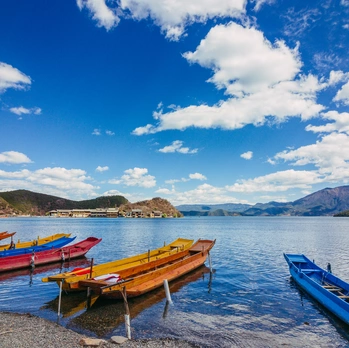
One night, I thought of the wind by Erhai Lake and the romance beneath Cangshan Mountain. The scenery along the lake is still vivid in my mind. Dali is still there. I left, but I know I’ll go back.
In March, Dali’s cherry blossoms are in full bloom. The stories under those cherry trees happened long ago. I regret not saving a single petal, only picking up scattered fragments of memory, turning them into longing, into poetry, humming softly on a windy day. Next March, the blossoms will return, but I wonder who will be beneath them, and what new encounters await.
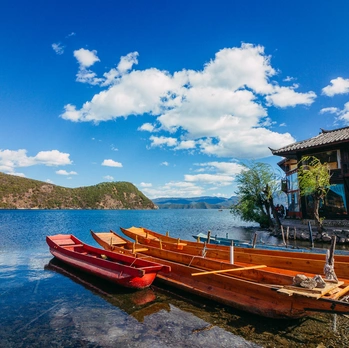
Hidden in the Cangshan Mountains is a graceful nunnery called Jizhao Nunnery (Sizhao Nunnery). Shady trees, ancient timbers, and courtyards full of flowers—it has a charm all its own. I’ve often thought that when I’m old, I’d like to find a quiet place, build a small courtyard, fill it with plants, and open the door to green hills and clear waters. I’d brew a pot of tea, read a book, and grow old slowly.
Jizhao Nunnery—encountered on that journey, it was a moment that stole time itself.
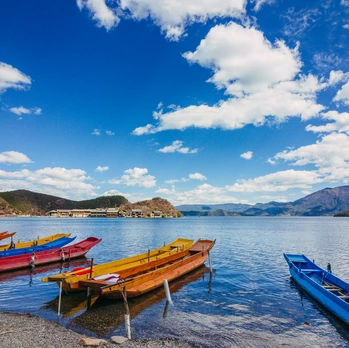
Your attitude toward life is your life. I love Shaxi (Shaxi Ancient Town) because I love its attitude. By eight in the evening, the town falls silent. At nine in the morning, you can still catch the early market. Living for the sake of living—how enviable. Tucked away in a quiet corner, unlike those famous ancient towns, it feels like a hidden paradise.
Those days in Dali were a rare time in my life, undisturbed by the noise of the world. I sat lazily in a courtyard, watching clouds change shape in the sky, letting sunny days turn into rain and back again, carefree.
If I had to choose a city to grow old in, it would be the land of colorful clouds—Yunnan.
Suzhou: The Unforgettable Sunshine and Rain
Suzhou’s gardens are truly unique. Just the Humble Administrator’s Garden (Zhuozheng Yuan) is enough to feel the refined elegance of Jiangnan (the region south of the Yangtze River). The wealthy families of ancient times really knew how to live. Walking through the garden, I admired the ingenuity of the craftsmen even more.
During my days in Suzhou, the sun shone all the way. I had hoped to experience a rain shower in the city of Gusu (ancient name for Suzhou), but it never happened. That sunshine and rain of Gusu—unforgettable, yet a dream I could never reach.
I am deeply in love with Jiangnan. I love the white walls along the canals, stained by time into a dusky gray. Those mottled marks are like stories told by the water townspeople. The water towns in Jiangsu are different from those in Zhejiang—the rivers here are narrower, more down-to-earth. From Mudu to Pingjiang Road, though famous, they don’t feel overly touristy. I actually prefer places like this; walking through them, you can sense a more intimate flavor.
I remember one evening, strolling through the crisscrossing canals and alleys of Pingjiang Road. The aroma of home-cooked meals drifted from the houses. To the locals, it was just an ordinary evening, but to me, it became a unique memory of Jiangnan.
Sword Pond (Jianchi) and Tiger Hill (Huqiu)—one yin, one yang. Most people see the gleaming Tiger Hill Pagoda and call it Suzhou’s symbol, unaware that the true soul of Tiger Hill lies in the imperial tomb buried beneath the water. All gone—the glory of emperors, reduced to dust. True history should remain sealed in time. Not disturbing it is the greatest respect.
The Suzhou Museum (Suzhou Bowuguan) is I. M. Pei’s final masterpiece. It blends Jiangnan’s artistic conception with modern style—truly excellent. But in terms of its collection, after seeing the Nanjing Museum, I found it somewhat lacking.
I also visited Hanshan Temple (Cold Mountain Temple), the one from Mooring by Maple Bridge at Night (Fengqiao Yebo). After a thousand years, it still stands. The temple bell still rings, but I wonder if there are still lonely travelers mooring by Maple Bridge, lost in thoughts of past and present.
In early autumn, I visited Suzhou again on a business trip. It was rushed, and I didn’t have time for the gardens or water towns. My state of mind was completely different. Gusu hadn’t changed—it was me who had.
Nanjing: Amid Lantern Shadows and Oar Sounds, Lamenting a Lost Kindred Spirit
It was my first time in Nanjing, umbrella in hand, walking through a drizzle.
Nanjing is a city of history. Its character carries the ancient charm of Jinling (old name for Nanjing) and the elegance of the Republic of China. You can feel its weight, its understated grace. In my memory, it was always raining at the Presidential Palace (Zongtong Fu).
Zhongshan Mountain (Zijin Shan) was a must-see. The next day, the sun was bright, and the crowds were manageable. We always go out of our way to visit famous attractions, queue for ages, wait forever, and when we finally see them, it’s a relief—but also a little bittersweet. In contrast, some overlooked corners hold a charm worth savoring.
I love wandering with a purpose but no fixed destination. I know there are places I want to go, and I look forward to them, but I also stumble upon unexpected surprises along the way. The road that blends anticipation and discovery—that becomes our own path.
Traveling alone is a form of self-cultivation. After this trip, I entered a new chapter in life, and it’s been nearly half a year. Life has changed a lot—some for the better, some for the worse, hard to put into words. What hasn’t changed is my desire to see the world and my reflections on life.
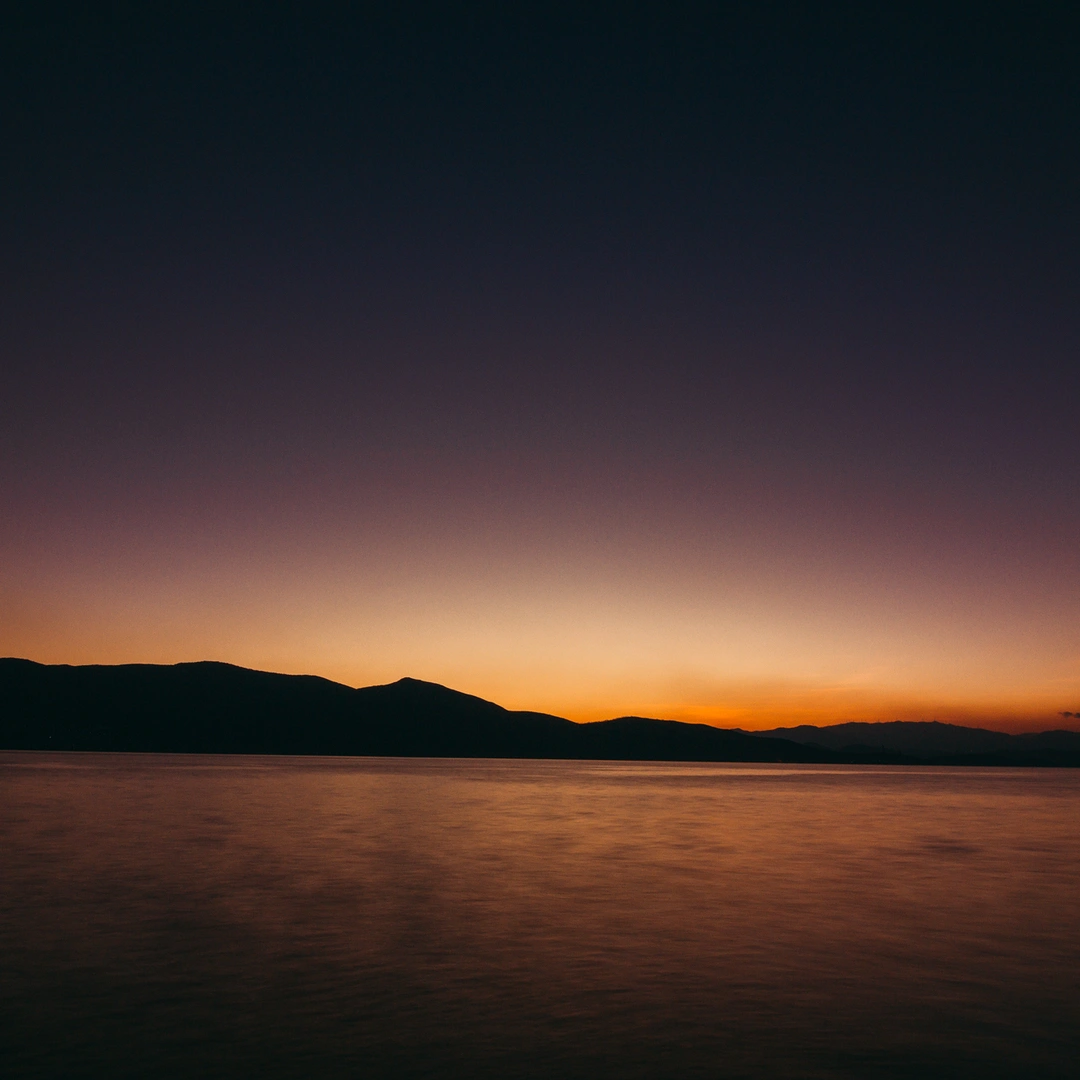
The pigeons at the Music Stage (Yinyue Tai), the trees at Meiling Palace (Meiling Gong)—mid-summer, mid-winter, I wonder if they’re still there.
Walking along the Qinhuai River at dusk, I always think of one thing. During the Republic of China era, Zhu Ziqing and Yu Pingbo once boated together on the Qinhuai River. Each wrote an essay, both titled The Qinhuai River in the Sound of Oars and Shadows of Lanterns (Dengying Jiangsheng Li de Qinhuai He). Different styles, each brilliant. I envy that—to travel with a friend, write separately, yet share the same title. I’ve thought about it many times, but it never happened. Even now, it remains a regret.
When the song is too high, the audience is few. A kindred spirit is hard to find.
Nanchang: Youth Is a Glass of Wine a Thousand Miles Away
I don’t drink, so I always felt like a man without stories. But this glass of wine—I had to fly a thousand miles for it. Because it was a wedding toast.
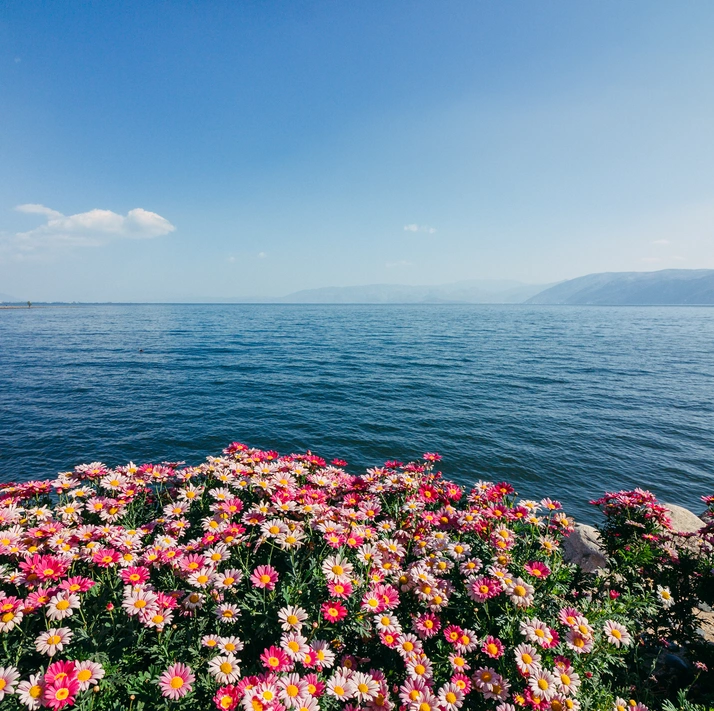
These past few years, I’ve attended plenty of weddings. Most of my friends have settled down. Some are already fathers, ahead of me in life. I think back to those wild, youthful days—still vivid, yet gone in a hurry, without warning. This time, I took the chance to gather with old friends over this glass of youth, chat freely, and explore Nanchang.
Nanchang’s symbol is the universally known Pavilion of Prince Teng (Tengwang Ge). Everyone who comes here softly recites, "A lone wild duck flies with the sunset clouds; the autumn river merges with the vast sky." But the pavilion has been rebuilt several times, now surrounded by high-rises, losing some of its heroic spirit. Climbing the tower, I thought of the line, "I loved climbing towers, I loved climbing towers, forcing sorrow to write new poems." I still don’t know what sorrow truly tastes like, yet I’ve already fallen silent.
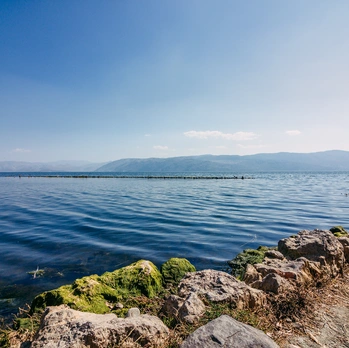
Towers mislead the young; freedom troubles the restless.
The Nanchang Uprising (August 1 Uprising) fired the first shot, giving this city a revolutionary aura. I visited the museums and memorial halls, gaining a clearer picture of that history. Times change, history is sealed, but the drive to move forward remains.
On the wide surface of the Gan River, the Nanchang Star (Nanchang Zhi Xing) Ferris wheel shone brightly at night. Maybe because I’m used to the Tianjin Eye, I didn’t even ride it—just admired it from afar. Nanchang isn’t a tourist city, with few major attractions. I didn’t approach it as a traveler. I casually wandered around Shengjin Pagoda (Shengjin Ta) without any specific plan—which suits my style.
Those few leisurely days in Nanchang brought a touch of relaxation to a busy life. Most importantly, I met old friends I hadn’t seen in ages, and the newlyweds, carrying my blessings.
We Never Met Before the Mountain; Let’s Not Meet After
I should write something hopeful for the new year, but I can’t go on.
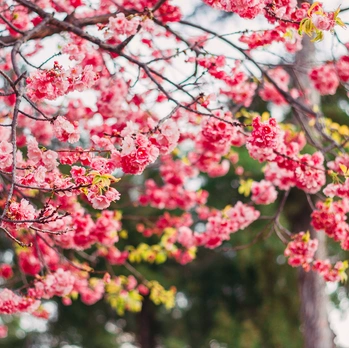
Whether I look forward to it or not, tomorrow will come like the tide, day and night, ebbing and flowing. What’s fated comes and goes beyond our control. Think too much, and you’re left empty-handed; stop dwelling, and unexpected joys surprise you. So I keep an ordinary heart and walk as usual.
I once said, "If you never forget, there will always be an echo." Now I see the shallowness of obsession. I only sing: "We never met before the mountain; let’s not meet after."
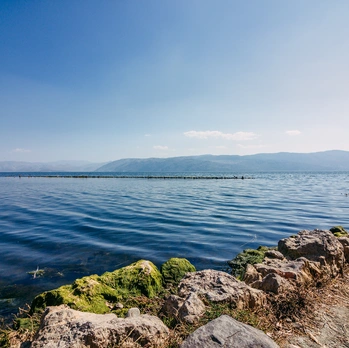
December 30, 2017
Afterword:
This year, I traveled to many places and met many people. Some scenery stayed in my camera; some stories stayed in my heart. Life goes on, and the road is still under my feet. These memories, on the verge of being forgotten—once written down, become eternal.
May your 2018 also find you on the road, meeting a better version of yourself.
You should also read:

Off-the-Beaten-Path Destinations | 68 Days Into My Slow Travel in Dali, I Collected 8 Secrets About Wind, Flowers, Snow, and Moonlight
Off-the-Beaten-Path Destinations | 68 Days Into My Slow Travel in Dali, I Collected 8 Secrets About Wind, Flowers, Snow, and Moonlight Ten years ago, I was still sitting in front of the TV watching My Fair Princess (a beloved Chinese period drama), listening to them…
Continue reading...
Solo Travel in Northwest Yunnan: Rediscovering the Forgotten Self Through Nature's Poetry
Solo Travel in Northwest Yunnan: Rediscovering the Forgotten Self Through Nature's Poetry Bai Jugang once said: "We live under high pressure, running too fast. So many things get hidden away, and you can no longer feel the joy that simple things bring." These words hit…
Continue reading...
Southeast Yunnan: A Spring-Like Paradise and the Forgotten Corners of Time
Southeast Yunnan: A Spring-Like Paradise and the Forgotten Corners of Time If you think Yunnan is only about the romantic encounters in Lijiang, the poetic landscapes of Dali, or the tropical vibes of Xishuangbanna, then you've missed Southeast Yunnan. This land, hidden in the southeastern…
Continue reading...