Solo Travel in Northwest Yunnan: Rediscovering the Forgotten Self Through Nature's Poetry
Solo Travel in Northwest Yunnan: Rediscovering the Forgotten Self Through Nature's Poetry
Bai Jugang once said: "We live under high pressure, running too fast. So many things get hidden away, and you can no longer feel the joy that simple things bring."
These words hit like a needle, piercing straight through the weak spot of modern life. We've gotten used to measuring life by efficiency, defining our worth by KPIs, forgetting how to stop and listen to the wind, watch the clouds—or simply walk alone into the mountains and waters of Northwest Yunnan, letting nature piece together our shattered hearts.
This time, I chose to go solo. No itinerary, no travel companion—just a camera and a soul desperate to be healed. From the everyday warmth of Baisha Old Town, to the purifying trek through Yubeng, to the slow days by Erhai Lake, I threw myself into nature's embrace and discovered that the deepest satisfaction never comes from external approval. It comes from the most primal stirring within.
Baisha Old Town: Laughter by the Door, Spring Behind the Hills
Ten years ago, I treated Lijiang as nothing more than a transit point, rushing through. A decade later, I decided to stay—to find that corner untouched by commercialization, still carrying the faint warmth of everyday life.

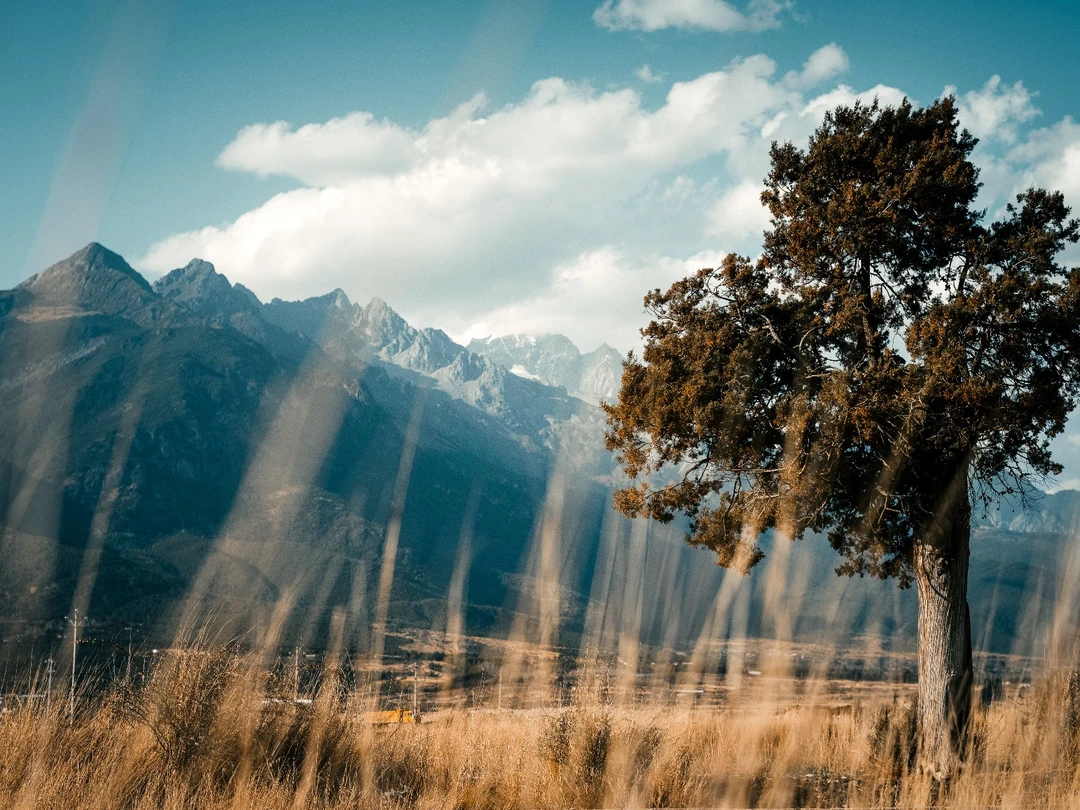
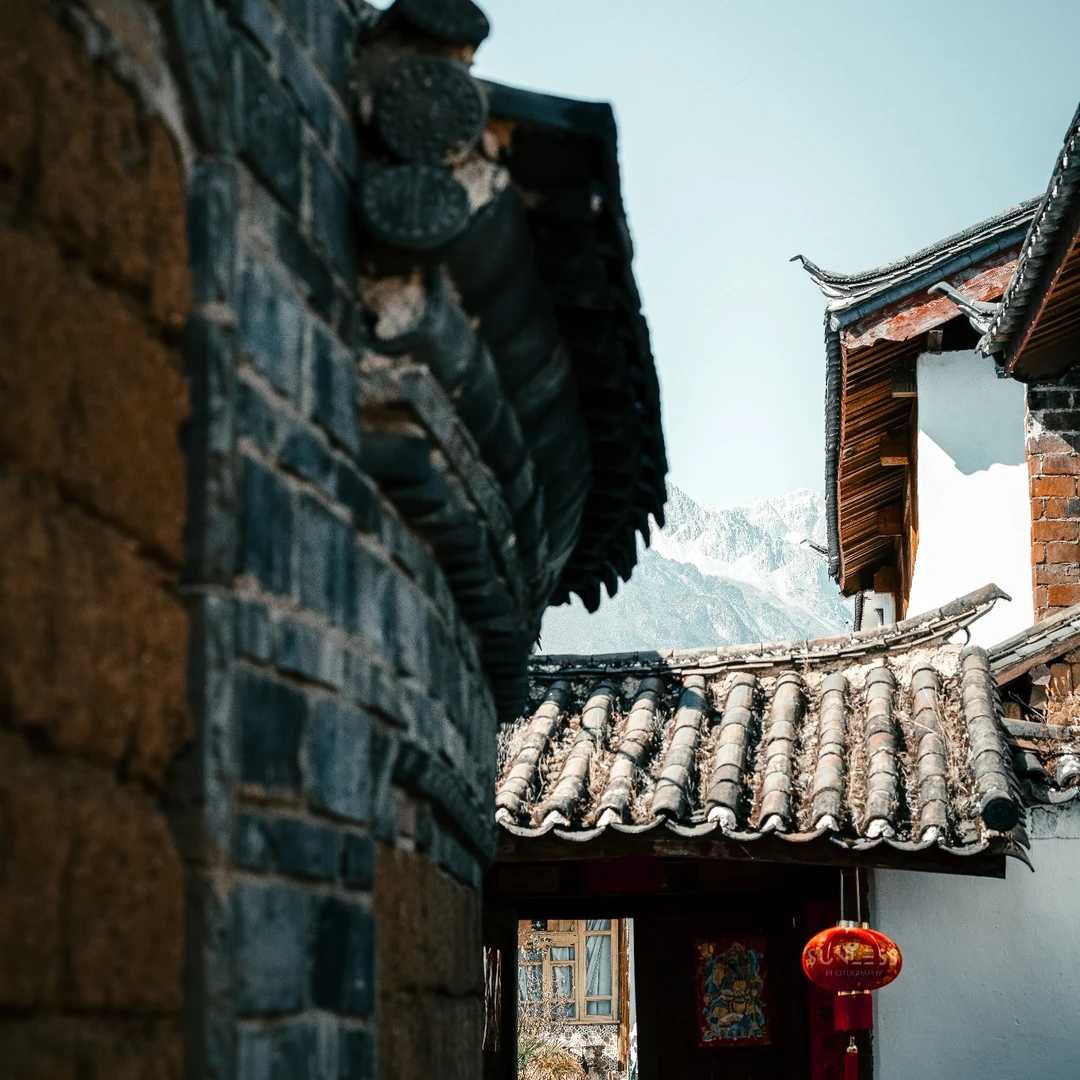
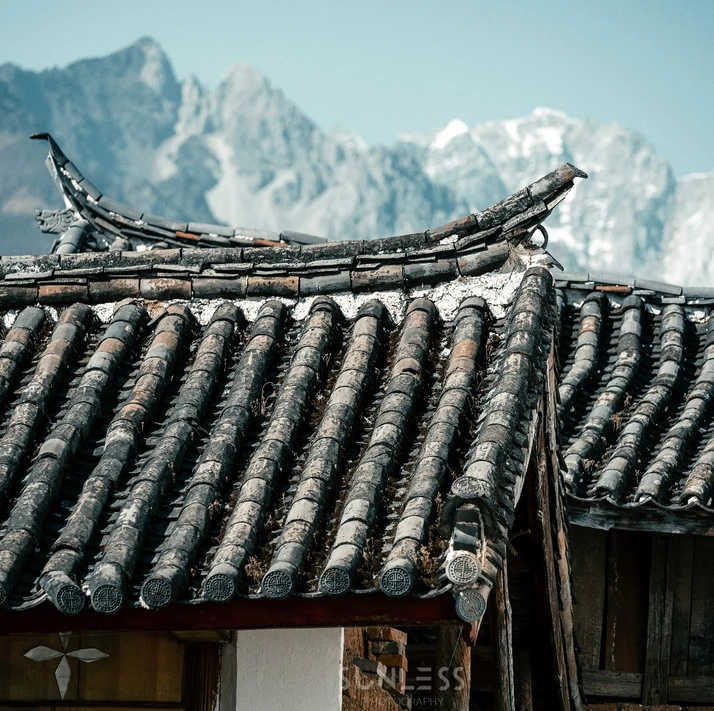
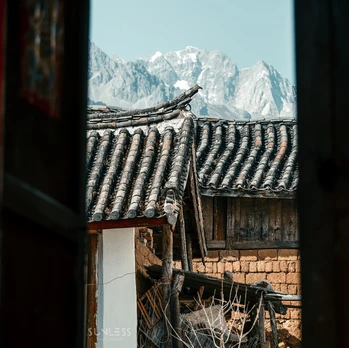
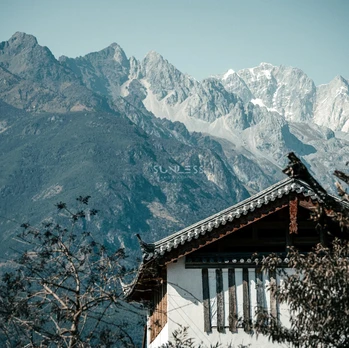
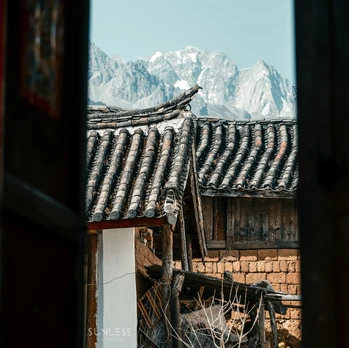
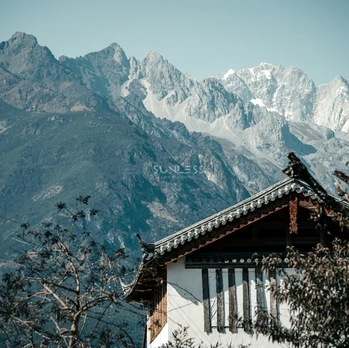
Lijiang has many ancient towns, but I chose Baisha—the one closest to Jade Dragon Snow Mountain. No crowds, no deafening bar music. Just wooden buildings, cobblestone streets, flowing water, flowers, and that ever-silent mountain.
Alone, Doing Whatever I Want
I don't enjoy checklist-style travel. While tourists jostled for photos at the city gate, I preferred slipping into narrow alleyways, pushing open a half-closed wooden door, and stepping into a local's courtyard. I'd meet an elderly villager, communicating with smiles and hand gestures—we couldn't understand each other's words, but that simple "hello" was warmth enough.
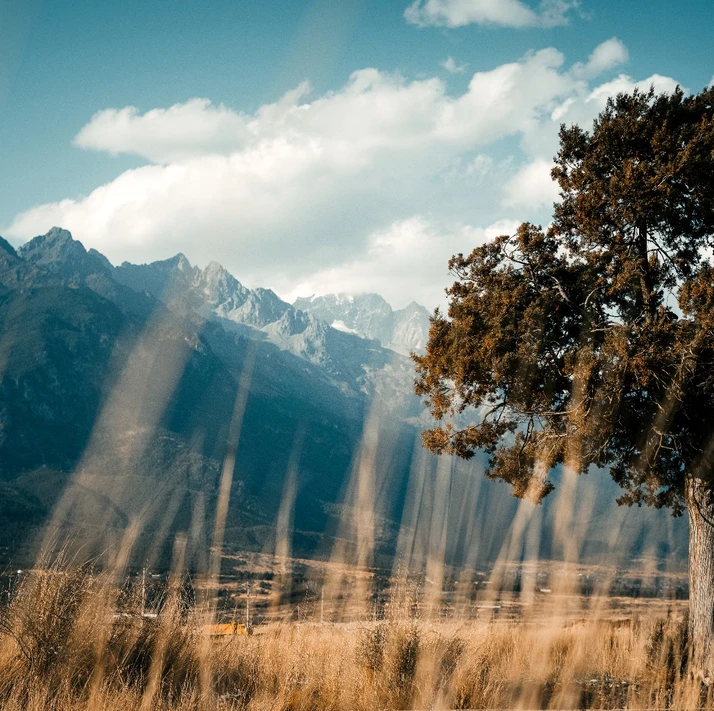
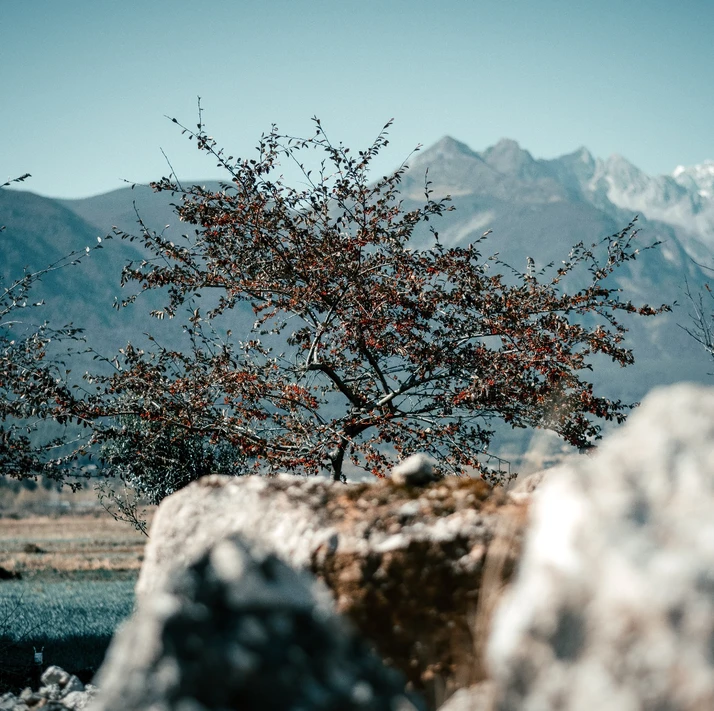
Walking through the town and into the fields, the snow mountain drew closer—so close I didn't need to look up. It greeted everything around it with an approachable ease: the rice paddies not yet lush, the freshly sprouting haystacks, the quietly standing ancient town, horses basking in the sun and amusing themselves, and that solitary little tree standing apart from the rest.
I met a young horse. I raised my camera—it dodged away. I lowered it—it trotted back and posed. The moment I lifted the camera again, it hid its head. What a clever creature.
The Erhu That Refuses to Fade
Walking along the uneven stone path, I heard the sound of an erhu (a traditional Chinese two-stringed fiddle) drifting through the air. I followed it into an old courtyard filled with potted bonsai. The elderly man playing the erhu wasn't surprised by my sudden arrival—he greeted me warmly instead.
He was a member of the local music ensemble, and his house was filled with ancient instruments. He sighed: "The young people don't want to learn anymore. It's just us old folks left. I'm afraid there will be no one to carry on."
In that moment, I realized that something was disappearing—and there was nothing we could do about it.
The Tree That Scored 85
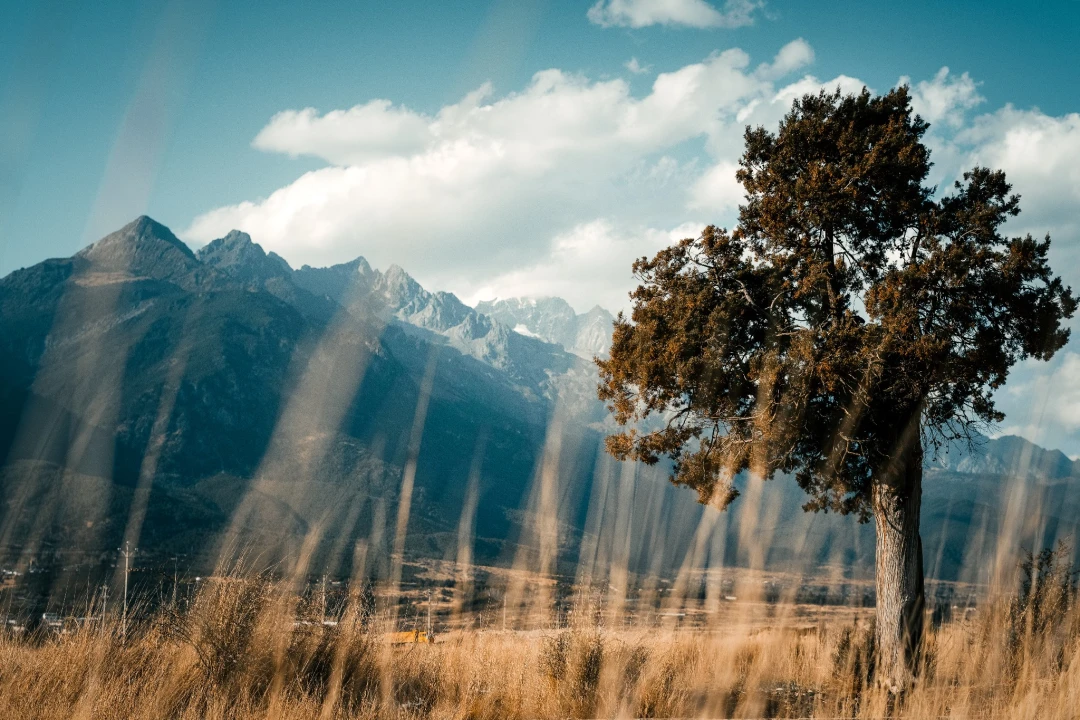
The next morning, I walked along the ridges of the rice fields and found an old tree. Within a radius of dozens of meters, it was the most striking—as if the most beautiful trees are always the ones that stand alone. I pushed deeper into the outer villages, walking for half an hour, and spotted another solitary tree through my telephoto lens. Rice paddies in front, snow mountain behind—it claimed the entire landscape, except for one missing figure beneath its branches.
I gave that tree a score of 85 out of 100. If I could live again, I'd choose to be a tree—standing on the path you must pass.
Goodbye, Meili Snow Mountain: The Golden Dawn, a Decade Apart
The first time I saw Meili Snow Mountain, I had just started my career. A decade later, after leaving my job, I returned. The mountain still towered over everything with the same pride—but my state of mind had changed completely.
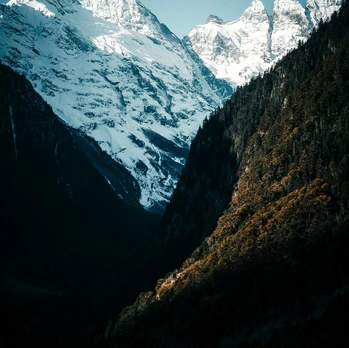
They say that 65 million years ago, the tectonic collision that created the Himalayas also triggered a dramatic confrontation in the southeastern corner of the Tibetan Plateau. The resulting folds formed seven parallel mountain ranges—the Hengduan Mountains. The small portion left for Yunnan is Meili Snow Mountain.
A 15-Minute Spectacle
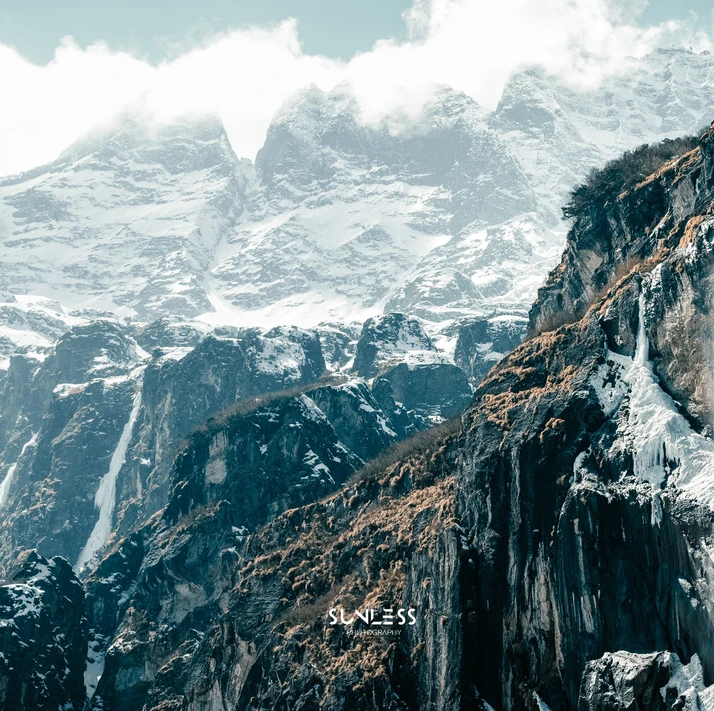
From Lijiang to Deqin, then a shared ride to Feilai Temple—it was already 4 PM. The view from my hotel terrace wasn't great, and I didn't want to settle for the ordinary. After studying the map, I went into trail-running mode. Two kilometers of stumbling later, I found a wild viewpoint much closer to Meili.
At that moment, the peaks were shrouded in thick clouds. I started worrying about the next morning's sunrise—would the wind be strong enough to blow those clouds away?
The next morning, I rushed back to the viewpoint. Prayer flags at the entrance made a perfect foreground, but the sky was cloudless—a bit too plain. Humans are greedy creatures: when there are clouds, we fear they'll block the sun; when there's nothing, we complain it's boring.
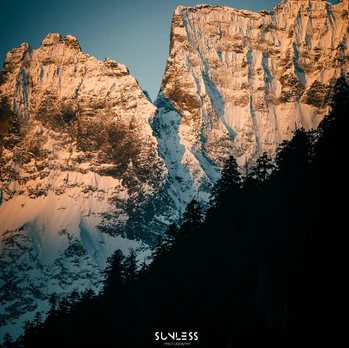
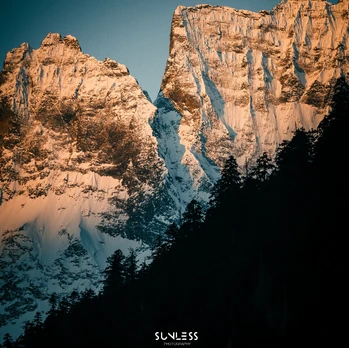
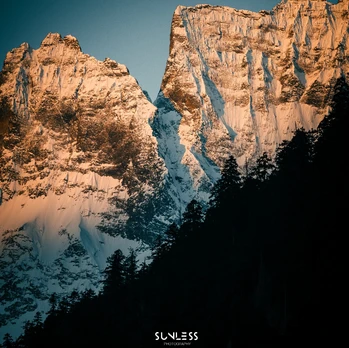
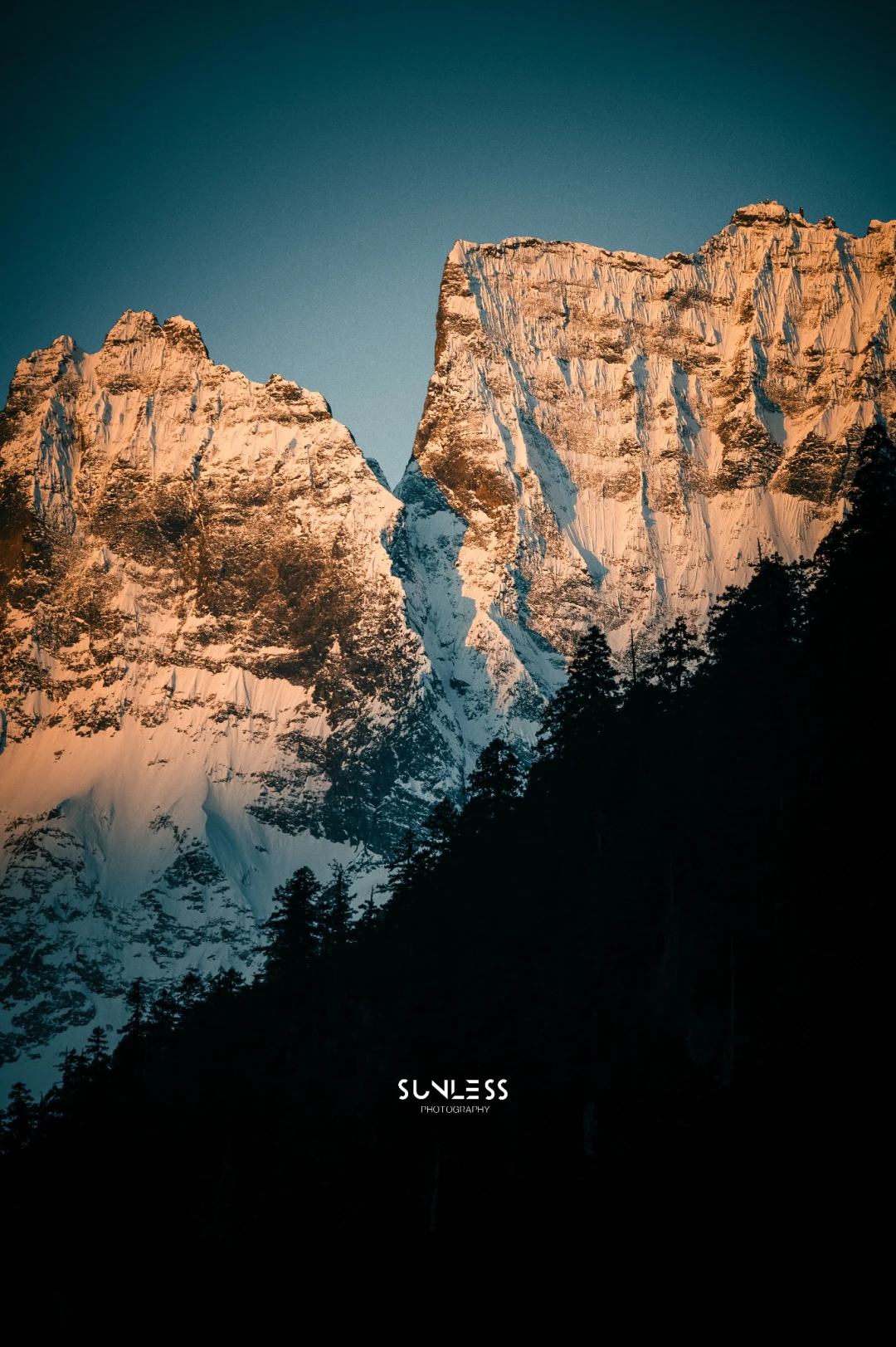
Meili Snow Mountain consists of more than ten peaks over 6,000 meters, with the main peak, Kawagebo, standing at 6,740 meters. As the sun rose, its light touched Kawagebo's summit, then cascaded downward. The entire mountain shifted from pink to orange-red, then blazed into brilliant gold. Those 15 minutes were pure awe—and the lingering feeling of wanting more.
Glaciers and Tibetan Pilgrims
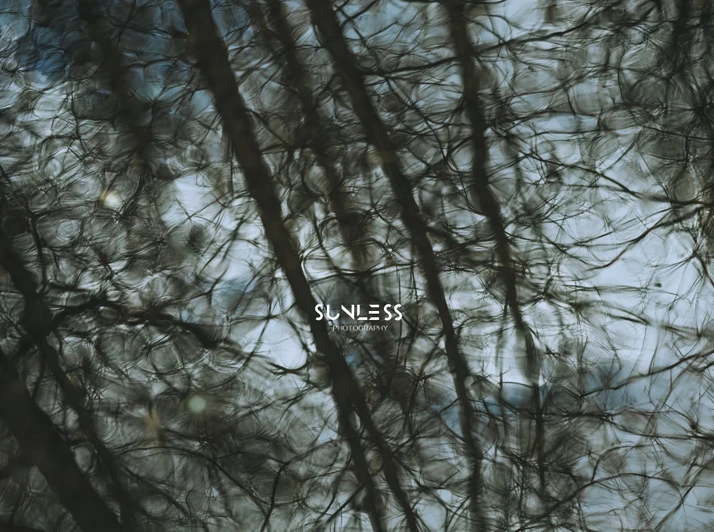
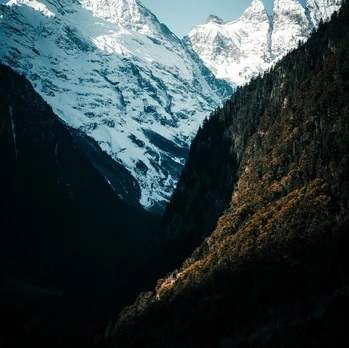
Beyond the golden sunrise, the glaciers descending from the mountain's peak straight into the forest are another wonder. Warm, moist air from the Indian Ocean rides northward until it meets Meili Snow Mountain. Unable to cross, the moisture freezes here. The immense elevation difference and the imperceptible movement of the ice create this breathtaking spectacle. Sometimes, the sound of ice cracking and grinding echoes through the entire valley.
Along the way, I met many Tibetan pilgrims—these were their days for offering incense. After the sunrise, I found a shared ride near the viewpoint heading to Yubeng. The real show was about to begin.
Trekking Yubeng: Prayer Flags Howling, Soul Drifting Away
The highlight of this Northwest Yunnan trip was Yubeng. It's nature's paradise—snow mountains, jungles, glacial lakes, and sacred waterfalls surround you, while spirits and local families keep you company. When you gaze into nature, listen to the howling of prayer flags, and feel your soul scatter, you meet yourself.
Upper Yubeng: A Bowl of Fried Rice and a Perfect Shot
From Feilai Temple, I took a shared ride to Xidang Village, then a 4x4 to Upper Yubeng—200 RMB per person. The road is all uphill with no scenery, so I strongly recommend spending the money for comfort. One girl insisted on hiking five hours into the village—she was completely wrecked and turned into a limp noodle the next day. Why bother?
By the time I reached the guesthouse, exhaustion and hunger hit me all at once. I quickly ordered a bowl of fried rice. Fluffy, chewy, fragrant without being greasy—it was the best fried rice I'd had since entering Yunnan. A bit pricey, though—30 RMB a bowl.
But the real surprise came from the view. The scenery outside the window was already stunning, and when it reflected off the tabletop, the vastness was extended in a clever way. I spent more than one meal just playing with the composition. I even told the owner, half-jokingly, that he could turn this spot into an Instagram-worthy attraction. He laughed heartily and added extra meat to my next bowl of fried rice.
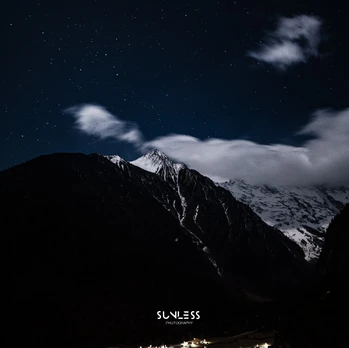
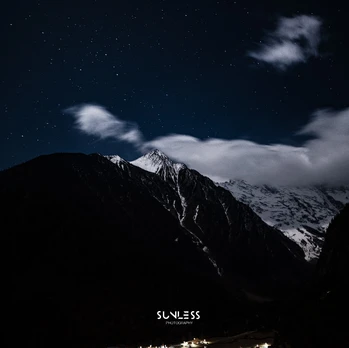
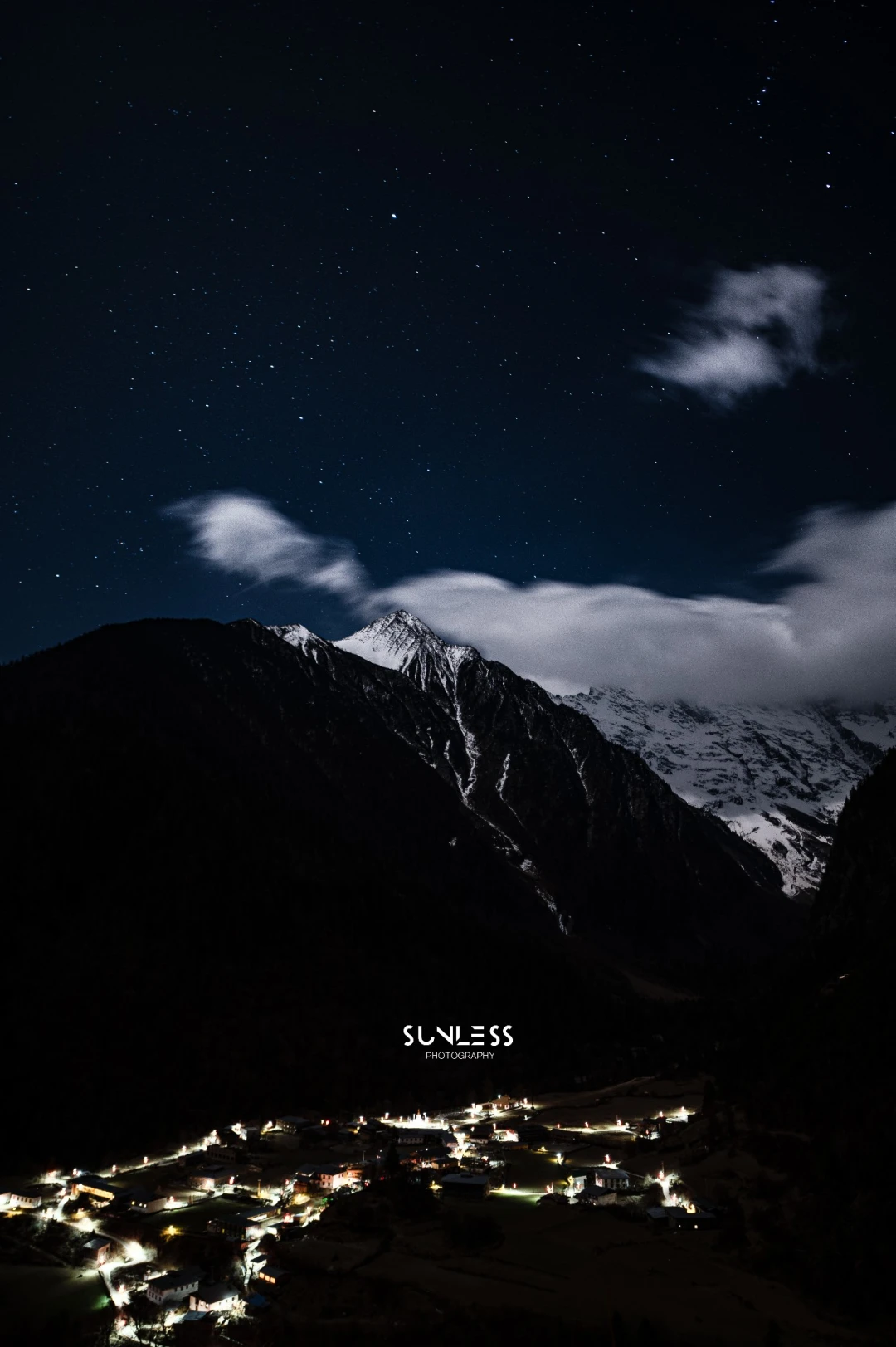
Back in my room, I watched the snow mountain through the window. Meili truly has no bad angles. At night, I set my camera on the windowsill for a long exposure of the stars, gazing at the lights of Lower Yubeng. I knew it wasn't far from becoming another Shangri-La—once the concrete road is laid, tour buses will pour in, and the peace will be gone forever.
Ice Lake Jungle: A Cat That Saw Me Off, and a Sigh
When I left the guesthouse, that cat was incredibly clingy. I slung on my backpack and walked out—it followed me, refusing to leave no matter how I shooed it away. When I finally walked far and looked back, it was still standing on the slope, watching me. That evening, when I returned, it was rolling and jumping on the ceiling until I opened my door—then it slipped right in.
Later, I moved to Lower Yubeng and ran into it again while wandering through the village. In a place so full of spirit, animals absorb the essence of heaven and earth every day, and they start to develop personalities.
Once I entered the forest, there was no one in sight. Cell signal came and went. The trail was lined with massive trees that would take several people to encircle—tall, ancient, untouched. The silence was overwhelming. Except for the rustling of squirrels jumping between branches, it felt like a black hole had swallowed every sound in the forest. I only felt safe walking in the sunlight.
After a continuous climb from the base of the mountain over a pass, I reached the viewpoint an hour later. From here, I could see Kawagebo's flank, covered in denser snow, with the Ice Lake below. I sat there, lost in thought, remembering the story of the Sino-Japanese mountaineering team and Meili Snow Mountain. Kawagebo, worshipped as a deity by the local villagers, became the focus of outrage when climbers attempted to summit. In 1991, as a joint Chinese-Japanese team made another attempt, an avalanche wiped out every single member. The tragic disaster shocked the world, and Meili Snow Mountain was forever closed to climbing.
I stared silently at the forest. All I could do was sigh.
Sacred Waterfall: A Soul Scattered by the Wind
On the third day in Yubeng, I moved from Upper to Lower Yubeng. The path to the Sacred Waterfall was all uphill, but it was a well-paved concrete road. Along the way, I passed mani stone piles—stacked by passing Tibetans as offerings for safety.
I sat under a tree eating a chicken leg, and a donkey spotted me. It shoved its head toward me, and its companion came galloping over, pressing its massive face into mine and then sticking its head into my bag looking for food. A Tibetan villager shooed them away, but they still followed me for a while. Remember: mountain animals, big or small, are all foodies. Be careful with any snacks you bring.
Legend says that the Yubeng Waterfall is the sacred water that Kawagebo brought back from heaven—it can divine your fate and cleanse your misfortunes. I stood beneath the waterfall. A gust of wind scattered the falling water, and the snowmelt splashed onto me. I quickly raised my camera and captured the moment.
I tilted my head back, letting my face get soaked. Time stood still. My mind was completely empty. In that instant, not only was my body cleansed—my soul was healed too. The sacred water slid down my cheek to the corner of my mouth, carrying a faint sweetness.
The howling of the prayer flags drowned out everything else. I sat down on a rock, staring up at the endless cascade of water, shimmering like the Milky Way. I wanted to say to the sacred mountain: Let me stay here forever.
Nilong: The End of the Legend
Entering from Xidang Village and exiting through Nilong—that's the full loop. After crossing the bridge beside the white pagoda in Lower Yubeng, I followed a dirt path for about two kilometers until I hit concrete. The scenery was unremarkable, so I walked at full speed—after all, I was alone.
Soon I reached the famous "Secret Realm Guesthouse." It was the off-season, so few tourists came. The owner had simply closed up shop and left, leaving behind only a dog that begged for food, a few free-range black pigs, and some chickens. I looked at the handwritten messages hanging on the wall—so many people dream of coming but never set out; so many come and go. In the end, how many have the courage to stay?
The road ahead was straightforward. As long as you don't jump around or wander off the path, there's basically no danger. When I saw the concrete bridge crossing the river, I knew I'd reached the end. It took three and a half hours.
The Yubeng trek was complete—the part of this Northwest Yunnan journey I was most reluctant to leave behind. Emotions that had been building for a long time finally found their release.
Wandering Dali: The Days That Slowed Down
Coming out of Yubeng, I carried the scent of the mountains with me. My mind and body, already purified, felt a restless stir the moment I arrived in Dali. I thought two days would be enough—I ended up staying for five.
Every day, I rode a little scooter, feeling the lake breeze, humming: "No destination, no matter where—just leaning on you like this."
Light Takes Shape
I'd heard that spring in Dali this year had seen very few sunny days. And indeed, during my time there, the sky was almost always locked in a thick, unbreakable layer of clouds.
But a certain kind of light—shaped, tangible—often fought its way through the cloud curtain, pouring down in beams. Jesus light (crepuscular rays) became the most common natural spectacle here. For Dali, an open-air photography studio, this was the kind of lighting that even the best cinematographer couldn't replicate.
In a flash, shafts of light scattered downward. A patch of the lake surface shimmered, its brightness sharply distinct from the surrounding water. Clouds were edged in gold, painting a blissful horizon. Mountains were outlined, layer upon layer. Shorebirds paused in the shallows, dancing with their own reflections.
I realized that light has so many textures. Only by seeing it with your own eyes can you be stunned by its transformations.
The Wind Rises
Recently, on the stage of Sisters Who Make Waves, the song "The Wind Rises" (Qi Feng Liao) was revived by a powerful performance: "When I first saw this world, I lingered in every wonder. The horizon seemed within reach, and I was willing to go through fire and water to explore it all. Now that I've walked through this world, I still linger—turning over the different faces of time, until your smile catches me off guard."
The "wind" in Dali's famous "Wind, Flower, Snow, Moon" is the wind by Erhai Lake. It sways the branches, ripples the water, and weaves textures into ink-wash paintings. Unlike the deeper meanings of worldly engagement, I don't prefer landscapes that stay the same every time I see them. I like staying in one place for days, watching it at different hours. The wind's strength changes each day, bringing different scenes and fleeting moments.
Searching for the Loneliest Tree
Sanmao once wrote in Talking to Myself: "If there is a next life, I want to be a tree, standing still for eternity. Without joy or sorrow—half resting peacefully in the dust, half flying in the wind; half casting shade, half basking in sunlight. Very silent, very proud. Never relying on anyone, never searching."
By Erhai Lake, you can find trees of every shape. Most plunge their roots into the water—some shoot straight toward the sky, others bend low and crawl across the surface. Many stand alone, growing in solitude; some gather in groups, yet each remains distinct. Because of the strong winds, some have fallen, even been uprooted. Others stand unmoving, like small islands rooted in the lake.
Silent, proud, independent—these are their trademarks. I want to become a tree too, standing between these Cangshan Mountains and Erhai Lake.
Being a "Gleaner" by Erhai Lake
Inspired by the 19th-century French painter Jean-François Millet's masterpiece The Gleaners, a documentary portrays modern-day scavengers in France. In director Agnès Varda's view, scavengers fall into three categories: those forced by circumstance, those who are artists, and those who simply enjoy it.
Erhai Lake is vast—its circumference is 129 kilometers. Rent a car, start from Dali Old Town, and head to Panxi Ferry to unlock the famous S-curve that's taken the internet by storm. Arrive at Xizhou Ancient Town and pick a café facing the rice fields. Then go to Haishé Park and shoot a French-style photo session under the "Couple Tree." Turn onto the eastern lakeside road, reach Shuanglang Ancient Town, continue to Xiaoputuo to see the seagulls, and finally go to Libang (Ideal State) to feel the romance of the Aegean Sea.
But as a "gleaner" riding a little electric scooter by the lake, a full loop around Erhai wasn't for me. So I stayed two days in Dali Old Town and two more in Shuanglang, trying to get as close to the lake as possible while finding quiet, uncrowded spots. Wase Pier was one such place—during my two days in Shuanglang, I came here every afternoon to watch the sunset. When I got hungry, I just ordered takeout and took it easy.
An old local told me those rusty iron boats were bought over a decade ago, costing several thousand yuan each. Now that fishing is banned on Erhai, they've been left abandoned on the beach. Soon they'll be moved elsewhere for storage. Regretful, the old man was writing names on the hulls as a keepsake.
Watching "Earth Art" at Yang Liping's Grand Theater
Yang Liping's Grand Theater is very close to Dali Old Town—just a five-minute scooter ride. I went there on a whim and was stunned by its unique architecture, which seems to intertwine with the earth itself.
The theater was designed by Zhu Pei, a renowned contemporary Chinese architect who advocates for natural architecture. According to him, the design draws from the yin-yang philosophy of traditional Chinese cosmology. The soft, floating roof resembles the reflection of the Cangshan Mountains in Erhai Lake. The undulating roof and the rising and falling丘陵 (hills) shape both an outdoor and an indoor theater, creating a natural landscape where the virtual and the real, the interior and exterior, give life to each other. The horizontal line captures the very "skyline" where the mountains and the lake meet.
Zhu Pei praised Dali as a city that moves people—with the Cangshan Mountains, Erhai Lake, and encircling hills, everything feels just right.
Final Thoughts: Leaving Your Soul in Nature
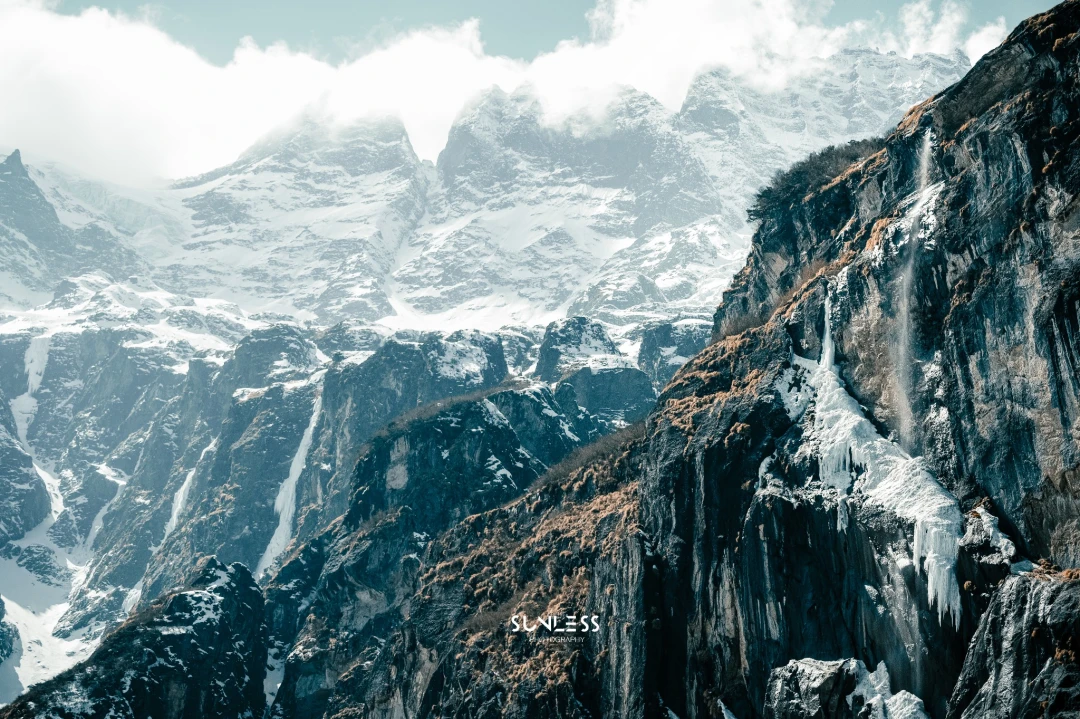
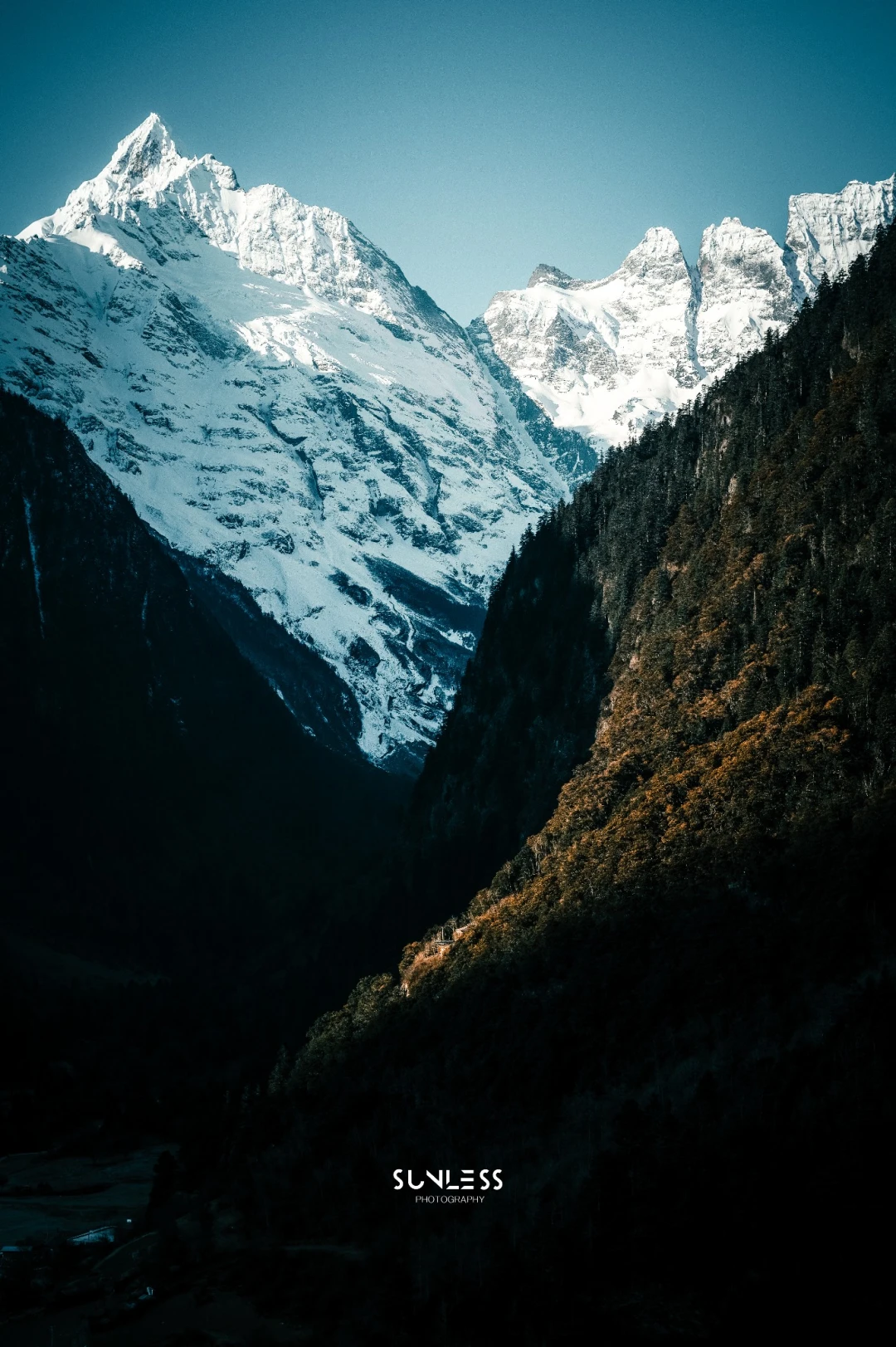
This journey through Northwest Yunnan took me through the everyday warmth of Baisha Old Town, the golden sunrise of Meili Snow Mountain, the soul-scattering wonder of the Yubeng trek, and finally, the slow days of Dali—where I found the forgotten version of myself.
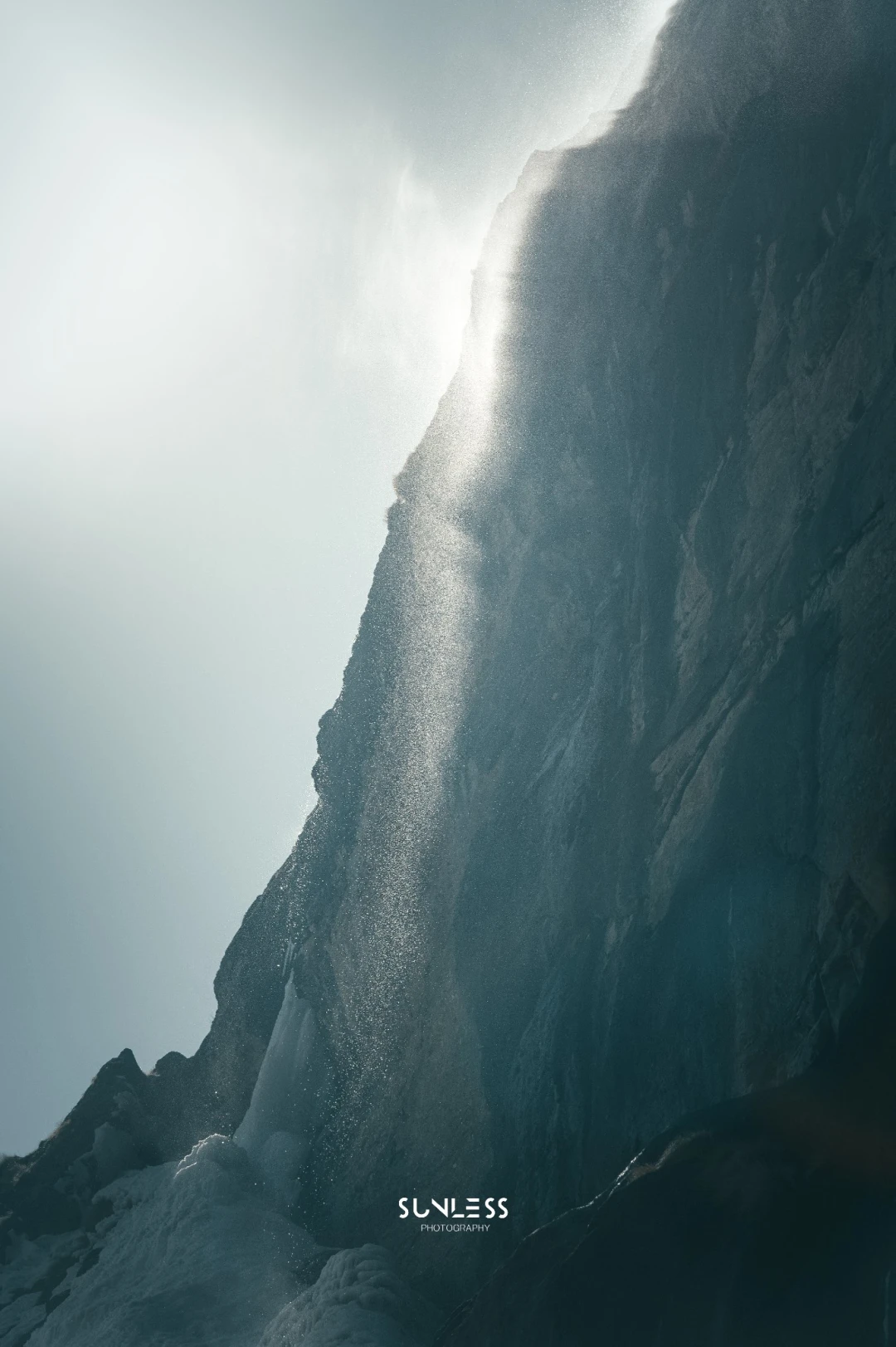
Bai Jugang was right. We live under high pressure, running too fast, and so many things get hidden away. But when you stand beneath a snow mountain and gaze at the stars, feel the sacred water wash over you at a waterfall, or chase the Jesus light by Erhai Lake, you realize: the greatest satisfaction comes from the simplest stirrings within your own heart.
Nature has written poem after poem. I am simply the lucky reader.
If you, too, feel exhausted, give yourself a chance. Walk alone into the mountains and waters of Northwest Yunnan. There, you will meet your truest self.
You should also read:

Solo in Yunnan: A Wanderer’s Guide to the Land of Eternal Spring
Solo in Yunnan: A Wanderer’s Guide to the Land of Eternal Spring There’s something magical about traveling alone. No compromises, no schedules to keep, no one to please but yourself. I’ve been on the road for nearly three months now, and not once have I…
Continue reading...
Into the Hidden Valley: A Solo Journey Through the Mysterious Dulong River
Into the Hidden Valley: A Solo Journey Through the Mysterious Dulong River Deep in the northwestern corner of Yunnan Province, tucked away from the modern world, lies a place that feels like a secret whispered among mountains. The Dulong River Valley is not just a…
Continue reading...
God’s Abandoned Palette: A Self-Drive Journey Through Yunnan’s Dongchuan Red Land
God’s Abandoned Palette: A Self-Drive Journey Through Yunnan’s Dongchuan Red Land Travel has never been about reaching some distant geographic coordinate. It’s about encountering, along the way, the version of yourself buried beneath the rubble of daily routine. During this May Day holiday, I finally…
Continue reading...