My 2017: Lake Tales from Yunnan – An Unexpected Encounter with Four Lakes
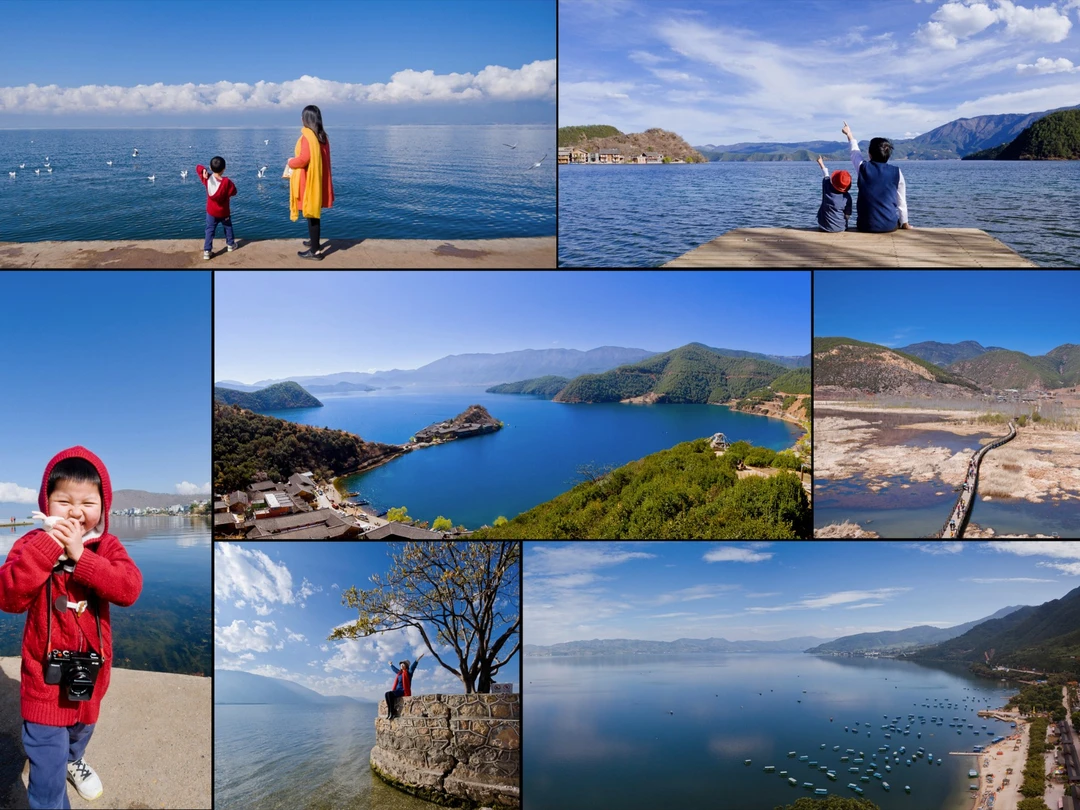
My 2017: Lake Tales from Yunnan – An Unexpected Encounter with Four Lakes
Origin: A Spontaneous Journey
Some trips are meticulously planned; others are happy accidents born from chaos. In 2017, my family stumbled upon Yunnan’s lakes by chance—from Lugu Lake to Erhai Lake, from Fuxian Lake to Dianchi Lake—kicking off what can only be called a "full-course lake feast."
Originally, Yunnan wasn’t on our New Year’s itinerary. Last year’s magical Disney experience had left our son Pipi obsessed, and my husband (Pipi’s dad) had carefully crafted a family trip to Singapore or Taiwan. But reality loves a joke: my wife (Pipi’s mom) had to work on the 1st, ruling out any overseas travel. Our holiday fell right on April Fool’s Day, and our plans were completely upended.
Left with no choice, we turned our gaze to domestic destinations. By sheer luck, we found flights from Nanning to Lijiang at 70% off. And just like that, we stumbled upon Yunnan’s lakes, embarking on an unforgettable journey.

In September, when we were scratching our heads over where to go for the ASEAN holiday break, a friend recommended Fuxian Lake. The stunning photos on WeChat Moments had already won us over, so we gladly headed there. Unfortunately, the black-headed gulls had already migrated by then. Pipi, still holding a grudge, pushed for a December trip to Dianchi Lake. Though that plan never materialized, our family ended 2017’s "lake tales from Yunnan" with a "three-out-of-four" score.
When traveling in Yunnan, there’s no need to over-plan or cram your schedule. Here, spontaneity is the key to enjoyment. The most important thing is to sort out your round-trip tickets and intercity transport. During peak season, you’ll need to book popular inns in advance, but we traveled in the off-season, booking most places on the fly—no problem at all.
Oh, and one more thing: our days by Yunnan’s lakes were almost always a mix of rain and sunshine. So if you hit bad weather in Yunnan, don’t get discouraged—just stay an extra day!
The Four Lakes of Yunnan: A Family of Distinct Personalities
Lugu Lake, Erhai Lake, Fuxian Lake, and Dianchi Lake are arguably Yunnan’s most famous lakes. These four are so different in character that comparing them feels a bit forced. Lugu Lake and Erhai Lake are clearly tourist attractions, Dianchi Lake leans more toward an urban park, and Fuxian Lake is clearly trying hard but still finding its footing.
In terms of altitude: Lugu Lake sits at 2,690 meters, Erhai at 1,970 meters, Dianchi at 1,880 meters, and Fuxian at 1,720 meters. Within this range, altitude mainly affects scenery—no need to worry about altitude sickness.
Activities: The Unique Charms of Each Lake
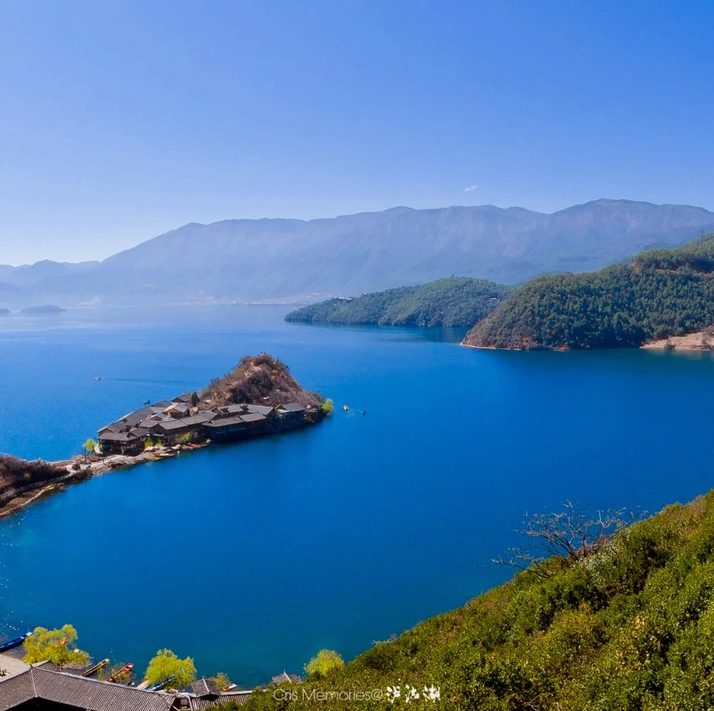
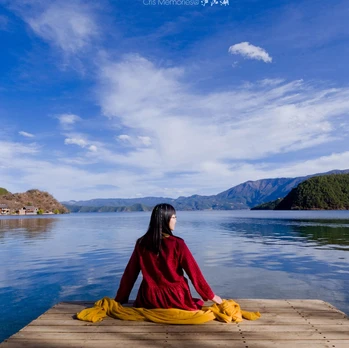
Lugu Lake (★★★★★): A cold, aloof beauty with a wild, untamed spirit. Here, people often feel like intruders in the frame. The pure blue hue is so pristine it feels disrespectful to disturb.
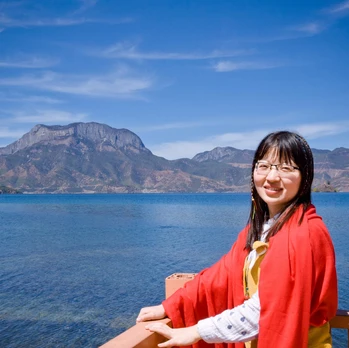
Erhai Lake (★★★★): Everywhere you look, there’s an artsy, fresh vibe. Without people in the picture, the scenes feel oddly empty. Every frame looks like a carefully designed postcard.
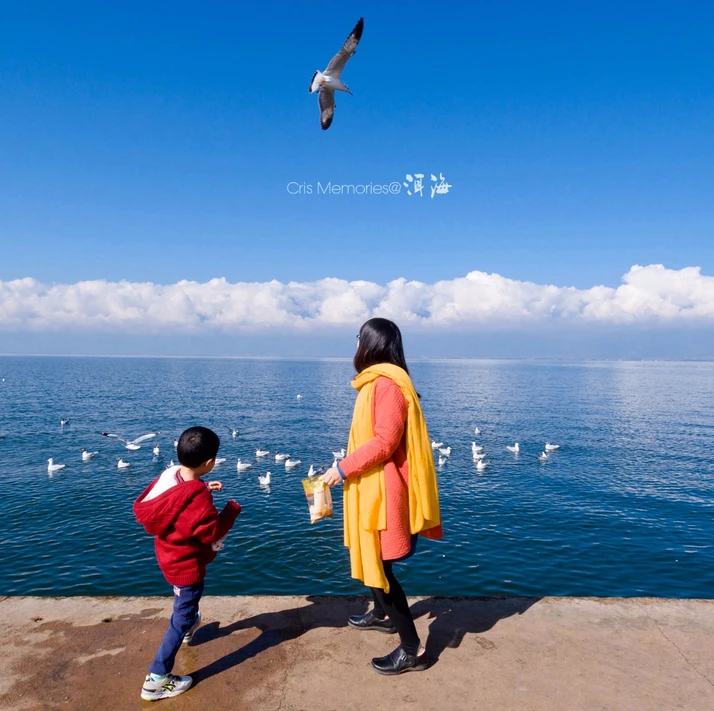
Dianchi Lake (★★☆): Locals jokingly call it "the ruined lake." It’s not that bad—though it lacks the blue of Lugu and the depth of Fuxian, its seagulls are a standout.
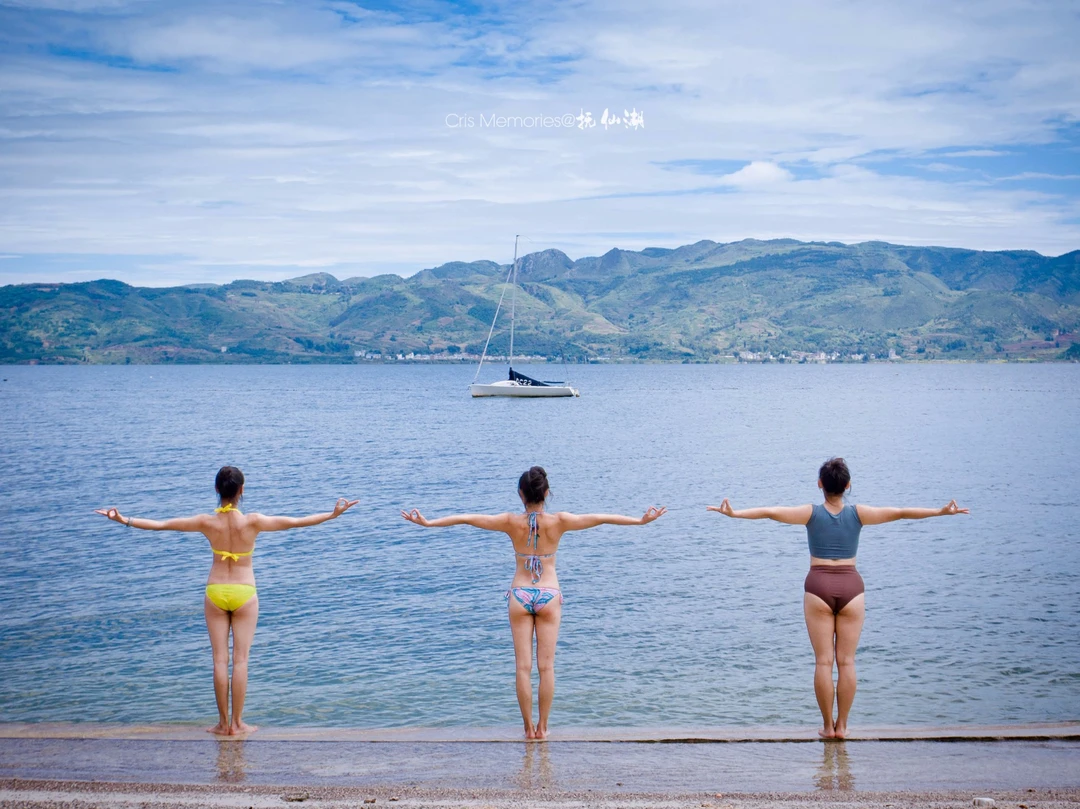
Fuxian Lake (★★★): A jack-of-all-trades, always trying to dress itself up as a tropical beach. Diving, windsurfing, even bikinis—everything’s here.
Transport: A Comparison of Convenience
Dianchi Lake (★★★★★): Located right in Kunming city center, hands down the most convenient.
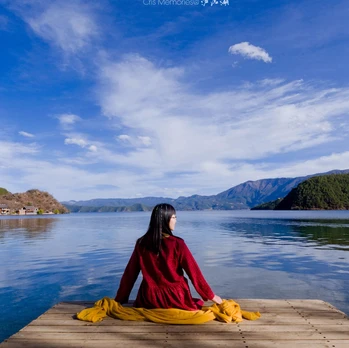
Fuxian Lake (★★★): Only 50 kilometers from Kunming, easily reachable by Didi (ride-hailing). But there’s no car rental service locally—only chartered cars for the lake loop.
Erhai Lake (★★★★): Right in Dali city center, with well-developed rental/charter services for the lake loop.
Lugu Lake (★★): The toughest to reach. The drive from Lijiang to Lugu takes over four hours of bumpy roads—motion sickness pills are a must. The electric cars are tiny and can’t complete the lake loop, and cars from Lige Village and Daluoshui Village aren’t allowed to cross.
Accommodation: Different Strokes for Different Folks
Accommodation near Dianchi and Fuxian Lakes is very convenient and affordable. Our non-lakeside stay at Lugu Lake was also cheap and offered a great experience. Erhai Lake’s lodging is decent but offers the worst value for money among the four.
Food: Culinary Memories
Pipi’s dad has a "wooden tongue"—as long as the food isn’t inedible, he’s happy with a bottle of Coke. We didn’t have grilled meat at Lugu Lake, didn’t try milk fans (a local dairy snack) at Erhai, and skipped the anti-wave fish at Fuxian Lake. We did, however, eat crossing-the-bridge noodles (a classic Yunnan dish). Overall, Lugu Lake has decent dining options, and inns can provide meals. Erhai Lake is very convenient for food. At Fuxian Lake, you’re mostly stuck with copper pot rice and clear water fish.
Lugu Lake Chapter: A Dramatic Encounter
Setting off for Lugu Lake was a drama in itself.
Even after deciding to go to Yunnan, whether to visit Lugu Lake remained up in the air until the day before departure. The legendary "Eighteen Bends of Lijiang," the hours-long drive, altitude sickness—too many horror stories. My wife was worried, and when colleagues heard we were taking a kid to Lugu Lake, they gave us strange looks: "Be careful!"
Plus, Yunnan’s March weather was a mystery: the forecast showed nothing but clouds or rain almost every day. If the journey was tough, we could handle it, but bad weather was a dealbreaker. The common wisdom was that Lugu Lake’s inns had no air conditioning! Even our Lijiang innkeeper said the weather there wasn’t suitable for visiting.
But after reading a stunning travel post titled "Dragging the Family and Dog," my wife made Lugu Lake her top priority for the trip, unwilling to give it up unless absolutely necessary.
Lijiang: Destined to Be a Transit Point
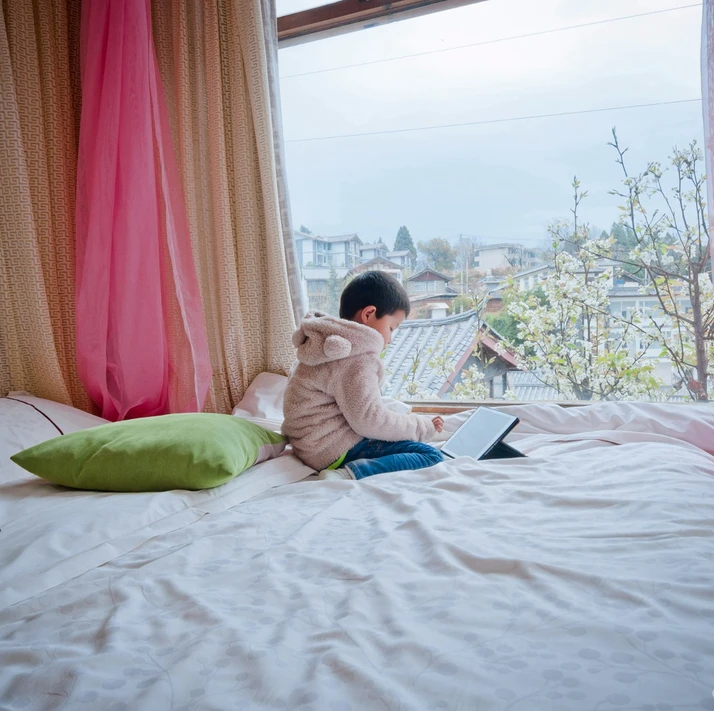
We chose the Huaman Inn near the North Gate of Lijiang Old Town, just as a temporary stop. Though we hadn’t planned on it, our first inn experience blew us away: a 270-degree floor-to-ceiling window by the tatami, with blooming pear blossoms outside. The innkeeper was a fun, chubby guy who kept many dogs—perfect for Pipi, who was in a pet-crazy phase.
Though Lijiang was just a transit point, we still tried to sneak into the old town for a look. But until 7:30 PM, all the entrances and alleys still had the Old Town Maintenance Fee collectors on duty. As the sky darkened and the cold set in, we unanimously decided to head back. It was then that we finally booked our tickets to Lugu Lake—gambling on tomorrow’s weather!
Lugu Lake: A Winning Bet on the Weather
My wife booked our round-trip bus tickets from Lijiang to Lugu Lake on Lvmama (a travel platform), including the entrance fee for 199 yuan—a fair deal, we thought. The bus required us to gather at the North Gate parking lot of the old town by 7:50 AM, meaning an early start. The Huaman Inn’s owner was great: he didn’t mind being woken up early and even drove us to the parking lot.
Despite his usual morning grumpiness at home, Pipi was wide awake when we left. Up at 6:30 AM, out the door by 7:30, full of energy. While waiting for the bus, he goofed around with his mom.
The bus finally arrived at 8:10. The driver was a funny, impatient guy. Pipi’s dad had worried unnecessarily—the driver didn’t try to sell anything. When we reached Lugu Lake, a "guide" came on board to explain logistics and collect sign-ups for the bonfire party. Not joining was fine and didn’t affect the return trip.
Pipi was lively at first, playing rock-paper-scissors with his mom, but soon fell asleep.
The legendary "Eighteen Bends of Lijiang" are no longer on the new route (which takes only 4 hours). But when passing through the area, the driver usually stops to let everyone appreciate the hardships of the old Lugu journey.
A long stretch of the road follows the Jinsha River, whose green water reminded us of Guangxi’s rivers. Funny enough, Pipi thought the mountains beside us were the "Jinsha River"—he only remembered the word "sand" (sha), not "river" (jiang). Near Ninglang, he was still asking, "Why is this Jinsha River following us?"
Just before reaching Lugu Lake, you cross several bridges, each named after a fruit—Big Apple, Big Walnut? The people of Ninglang must really love fruit!
First Sight of Lugu Lake: Awe and Mistakes
At the Lugu Lake viewpoint, the guide said politely, "Please look to your right—this is Lugu Lake!" A chorus of gasps followed.
The weather that day was perfect: blue sky and blue lake reflecting each other, with fluffy white clouds in between. Cameras clicked furiously. We thought this blue sky would stay with us forever, but we were dead wrong.
We stayed at Jinse Inn in Lige Village, booked only on the way to Lugu Lake. My clueless husband didn’t think to call the inn after getting off the bus, so he dragged his suitcase over Lige’s cobblestone paths, clattering all the way. The gaps between the stones were so deep that the suitcase got stuck and wouldn’t budge. Luckily, the innkeeper heard and came out with a small tricycle to rescue him.
From Huaman to Jinse, the accommodation was a quantum leap. No worries about hot water, food, or keeping Pipi entertained. And the best part: it had air conditioning! Air conditioning! Air conditioning! Even though we didn’t really need it. Looking back after the entire March holiday, Jinse was the most comfortable inn of the trip.
Confident in the weather, we decided to take a good nap first—only to find it was getting dark when we went out. Even so, the pig-trough boats (traditional wooden boats) in Lige Bay left a lasting impression. Our plans for stargazing and sunrise watching evaporated in the lazy pace of travel.
Lake Loop: An Adventure Full of Surprises
We woke up naturally the next day, and Jinse was still peaceful and serene. After breakfast at the inn, I sneaked out. The pig-trough boats lay quietly, swaying with the morning ripples.
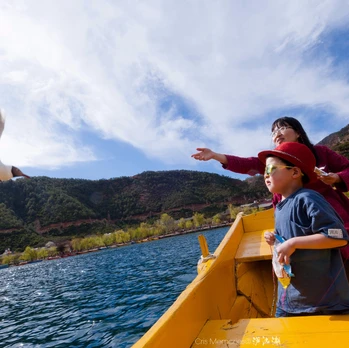
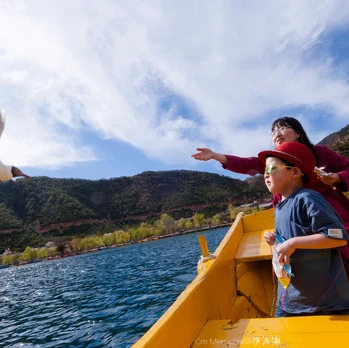
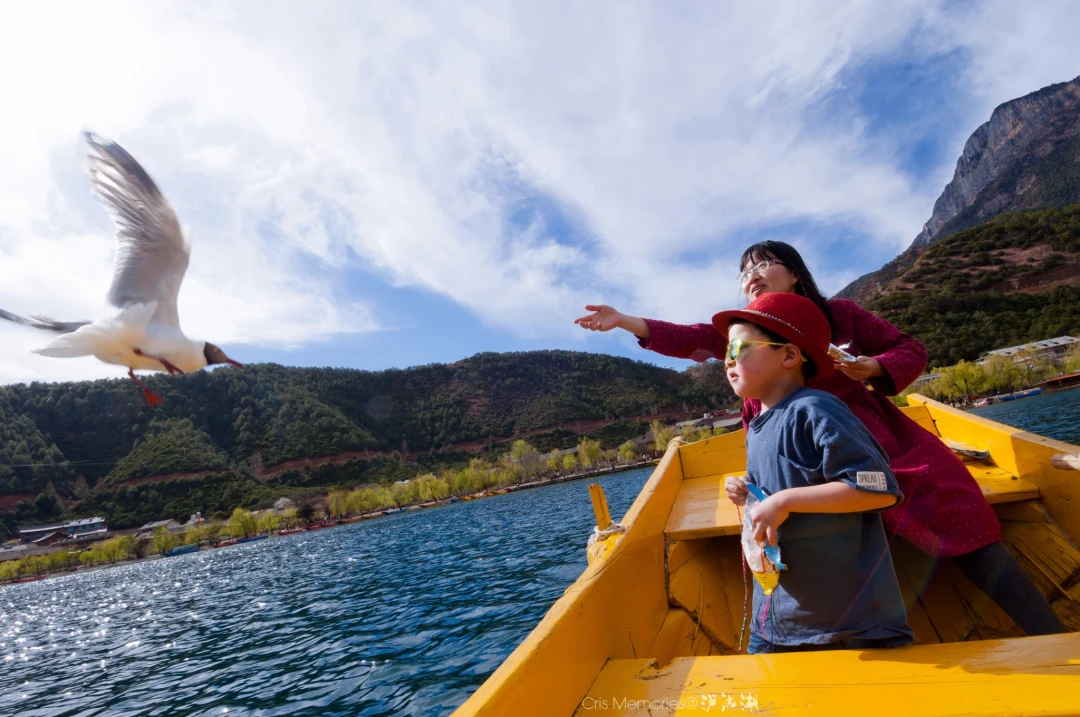
We didn’t notice the weather gradually changing, so before heading out for the lake loop, we rented a pig-trough boat to feed the seagulls. Yes, you read that right—there were still seagulls here in April! A pleasant surprise for Pipi. A boat cost 50 yuan for a trip around the peninsula. Pipi had a blast, learning for the first time how to interact with seagulls.
I have to praise the boatman’s taste. When we couldn’t decide on a boat color, he said confidently, "Yellow—it looks best in photos." And he was right!
After feeding the seagulls, the sky turned gloomy. We quickly rented a four-wheeled electric car for the lake loop. The rental spot was at the end of the village, at the foot of the hill leading to the Lige viewpoint. This rental experience was full of laughs:
The car was tiny, and my husband’s feet were big. He wasn’t used to it at first. During reverse practice, he accidentally stepped on both the accelerator and brake. Strangely, the car sped up! It nearly rolled into a ditch. The rental guy panicked and stomped on my husband’s foot. With a yelp, the car stopped, and they stared at each other.
The rental guy repeatedly warned: "After leaving the village, go right toward Nisai Village, not toward Daluoshui." When asked why, he said, "Otherwise, the electric car will be confiscated by them." The Lover’s Beach was also off-limits, and Daluoshui’s cars couldn’t come over either.
Whether it was bad luck or the car’s design, the gear shift on our four-seater was very loose. Any significant bump while accelerating would knock it out of gear. The uphill road out of Lige had many speed bumps, so every jolt caused the car to stall. Worse, it was an uphill slope, so it would roll backward! This led to the funniest scene: we kept a rock in the car. Every time it stalled, my husband braked, my wife got out to wedge the rock, he restarted, she retrieved the rock, and then sprinted to catch up with the car.
Once we finally made it up the hill, my husband couldn’t take it anymore and called the owner, who explained the car’s quirk: release the accelerator before bumps, then press it again after. Finally, we could drive smoothly!
Lugu Lake Under Dark Clouds: A Different Beauty
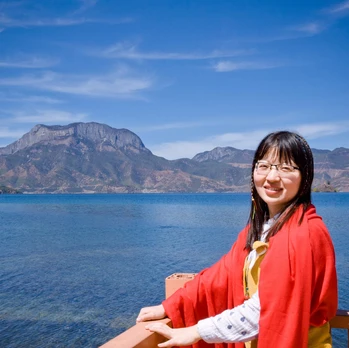
Bad weather ruins most scenery, but Lugu Lake under dark clouds was still stunning—even more mirror-like than usual. If we’d had an ND filter for a long exposure, it would have been breathtaking.
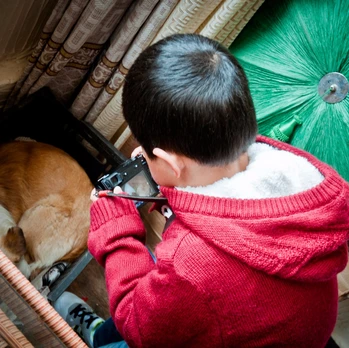
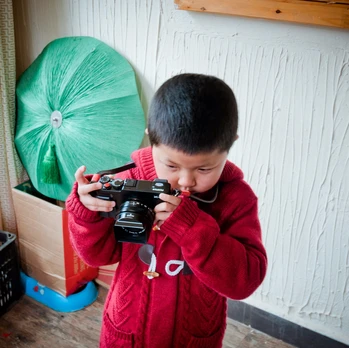
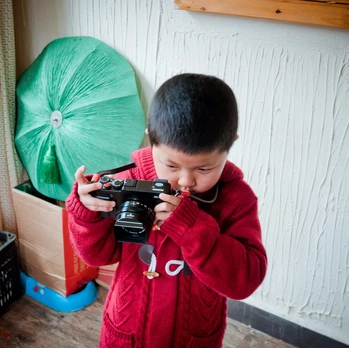
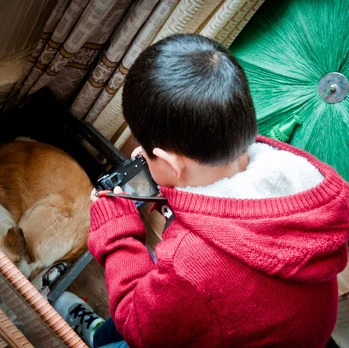
At a corner near Nisai Village, the view was so beautiful that even little photographer Pipi got out to take a picture of his mom. But this corner was the most dangerous section of the Lige-Grass Sea route: a steep slope with a sharp 90-degree turn. A group of people was doing car drifting nearby—were they the legendary "Akina Mountain God"?
Because Nisai Village was under road construction, cars could barely get in, and the village felt deserted. We seemed to be the only three tourists until we ran into a cheerful group of aunties at lunch, which made us feel less lonely.
The famous "Lover’s Tree" didn’t look blue that day, and the tree had no leaves, so it wasn’t as photogenic as the yellow-blue contrast in Baidu photos. I compared online images—none had stone barriers around them, but ours did. Had we found the wrong tree?
The Sichuan Side: A Pleasant Surprise
Lugu Lake is shared by Yunnan and Sichuan provinces. After passing Xiaoluoshui, you’ll see a large statue marking the "Sichuan Border." The first bay after entering Sichuan was very elegant, but I never learned its name.
Overall, the villages on the Sichuan side seemed better equipped and offered more food options than those on the Yunnan side. I’m not sure why they were less popular.
But then it started raining and didn’t stop. We didn’t make it to Goddess Bay, only glimpsed the Grass Sea briefly, and hurried back. Driving in the rain, we dared not go fast, so it was nearly dark when we returned to Lige. The poor rental guy had been waiting for me—I felt terrible.
The April rain in Lugu was freezing, so we quickly found a restaurant to warm up. It was a wild mushroom and free-range chicken hotpot place at the village entrance, which my wife said was famous. Awkwardly, we were the only customers the whole meal. The owner was very chatty, telling us about local customs, complaining about "how hard it is to make a living," and even gave us a free bottle of Sulima wine (a Lugu Lake specialty). It was genuinely delicious—like sweet rice wine but not as cloying. Highly recommended!
Chartered Lake Loop: From Conflict to Resolution
Yunnan’s weather is fickle—sunshine one moment, rain the next. On our third day at Lugu Lake, the sun came out again, and the post-rain atmosphere was incredible. After breakfast, we decided to switch things up and not drive ourselves. The innkeeper arranged a chartered car (the driver was reportedly Mosuo) for 300 yuan, plus 50 yuan extra to go to Goddess Bay.
First stop: the Lige viewpoint. After the rain, this was the postcard-perfect Lugu Lake! Even a 12mm wide-angle lens couldn’t capture the full double-heart shape of Lige Bay—I’d recommend at least 16mm.
The stone steps below the viewpoint were lined with prayer flags, a beautiful sight. These flags carry hopes for the future and prayers for fate, deeply rooted in Buddhist tradition. Every time the wind flutters a flag, it’s said to be equivalent to reciting a sutra.
If there was one thing that went wrong that day, it was the driver. In the first half, he was extremely impatient, constantly urging us to hurry. He didn’t want to go to Nisai or Goddess Bay, and even complained when we lingered at the viewpoint. We tried to accommodate him at first. But when we reached the Marriage Bridge (Zouhun Bridge) and he rushed Pipi for just putting on his shoes, my husband finally snapped: "We’re here to have fun, not to rush for you!"
After a loud outburst, the driver was stunned. So was an auntie trying to sell ribbons nearby, who quickly stepped in to mediate. But after that, the driver never rushed us again and spoke much more gently. Of course, we remained polite with him—there’s no point in making yourself unhappy on vacation.
The Marriage Bridge and Langfang: Pure Blue
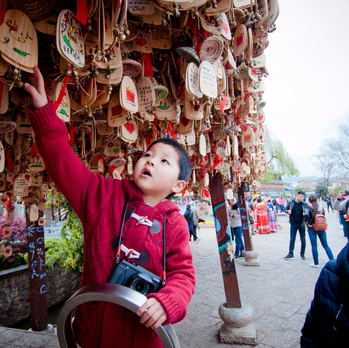
The legendary Marriage Bridge. If Lugu Lake’s pure scenery lacked something, customs like the "Marriage Bridge" and the "Kingdom of Women" add rich local flavor. The Grass Sea is another unique sight here, not for its blue water and sky, but for its vast expanse of withered yellow reeds.
After the Marriage Bridge, there was a long stretch without lake views or beauty. It wasn’t until we reached Langfang that we saw the purest blue. Langfang’s viewpoint doesn’t face the Gemu Goddess Mountain like Daluoshui, but its blue is more pristine than anywhere else at Lugu Lake—so pure it feels unreal.
A little aside: after parking at Langfang, we were surrounded by women selling apples, from old grandmothers to young girls. My wife couldn’t resist and bought some from an elderly woman. She thought she could then pose for photos in peace, but a little girl rushed over, muttering, "You bought from her, why not from me?" Soon, another car arrived, and the apple sellers abandoned us for fresh prey. After a satisfying photo session, we got back in the car. The driver took an apple and said, "It’s inedible—rotten, see?" We didn’t know whether to laugh or cry.
Daluoshui and Lover’s Beach: Final Surprises
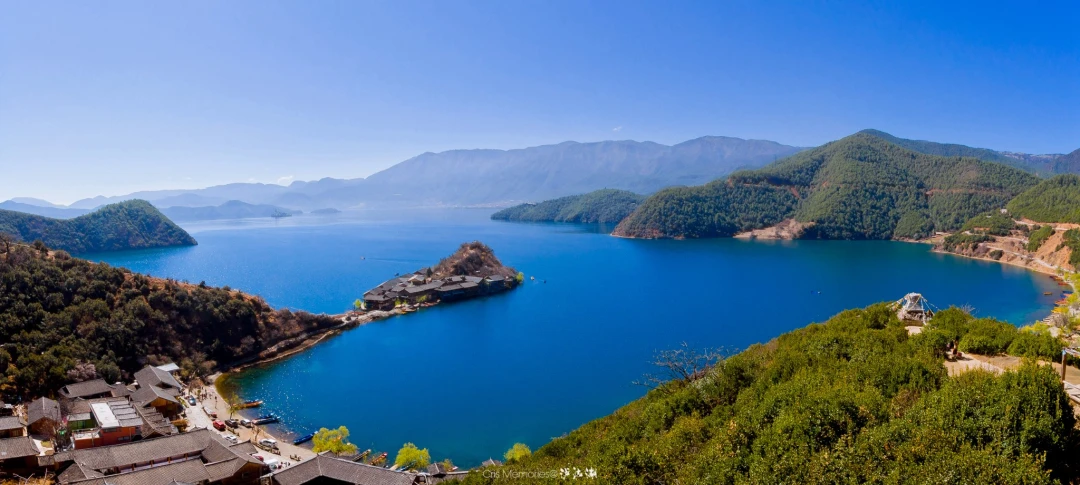
Daluoshui is the earliest developed village at Lugu Lake and the most well-equipped. Though it lacks the panoramic views of the Lige viewpoint, it faces the Gemu Goddess Mountain directly, and its pier is larger than Lige’s. If I had to choose again, I’d still pick Lige for lodging.
The last stop before completing the lake loop was the Yunnan-side Lover’s Beach, which had been the first spot to wow me when we entered Lugu Lake by bus. Unlike other places, its pebble beach is white, forming three bright color bands with the blue sky and water and the yellow slope behind, dotted with a few bare trees. The lake here was exceptionally calm, second only to Langfang. In hindsight, I chose the chartered car over renting one just for Lover’s Beach, not Daluoshui.
The clear, still water made even a single pebble’s ripples stand out. The sparse bare trees, not as tall as the Lover’s Tree at Nisai, leaned toward you as if trying to tell a story. An old boat was placed there for photo ops, and the young man charging for it was so lazy he just dozed on the beach.
Epilogue: Reflections on Lake Tales from Yunnan
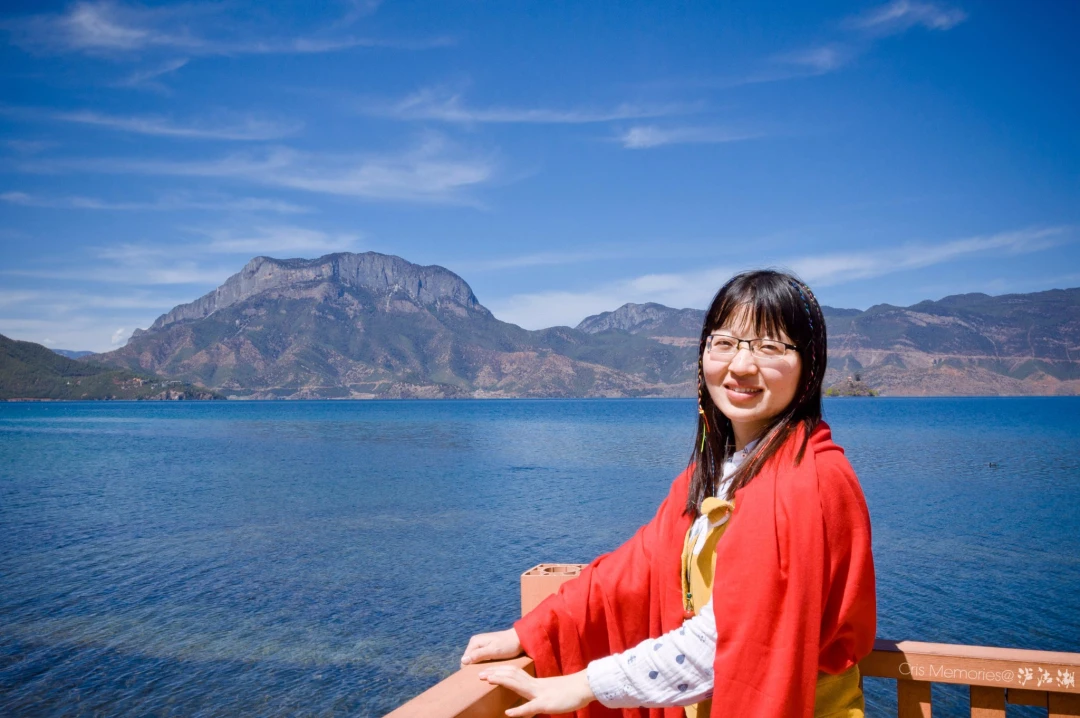
Our 2017 "lake tales from Yunnan" ended on a note of regret, with a "three-out-of-four" score. The Dianchi Lake plan never came to fruition, but a solo outing by Pipi’s dad left him with some impressions of Dianchi.
Looking back on this year’s encounters with Yunnan’s four lakes, my biggest takeaway is this: the best part of travel isn’t always the perfect plan, but those unexpected encounters and spur-of-the-moment decisions. From the dramatic departure for Lugu Lake to the spontaneous detour to Fuxian Lake, and the missed chance at Dianchi—every choice made this journey more real and unforgettable.
Yunnan’s lakes each have their own personality. Lugu Lake is cold and wild, Erhai Lake is artistic and fresh, Fuxian Lake is versatile and striving, and Dianchi Lake is urban and warm. They don’t need to be compared, because every body of water has its own unique language.
If you ask me which lake to recommend, I’d say: visit them all. But remember, in Yunnan, spontaneity leads to enjoyment. Bring a relaxed heart and let the lakes’ language speak to you slowly.
Finally, a tip for anyone planning to see Yunnan’s lakes: stay an extra day. Because Yunnan’s weather is fickle—sunshine one moment, rain the next. With one more day, you might just encounter the most beautiful scenery.
You should also read:

God’s Abandoned Palette: A Self-Drive Journey Through Yunnan’s Dongchuan Red Land
God’s Abandoned Palette: A Self-Drive Journey Through Yunnan’s Dongchuan Red Land Travel has never been about reaching some distant geographic coordinate. It’s about encountering, along the way, the version of yourself buried beneath the rubble of daily routine. During this May Day holiday, I finally…
Continue reading...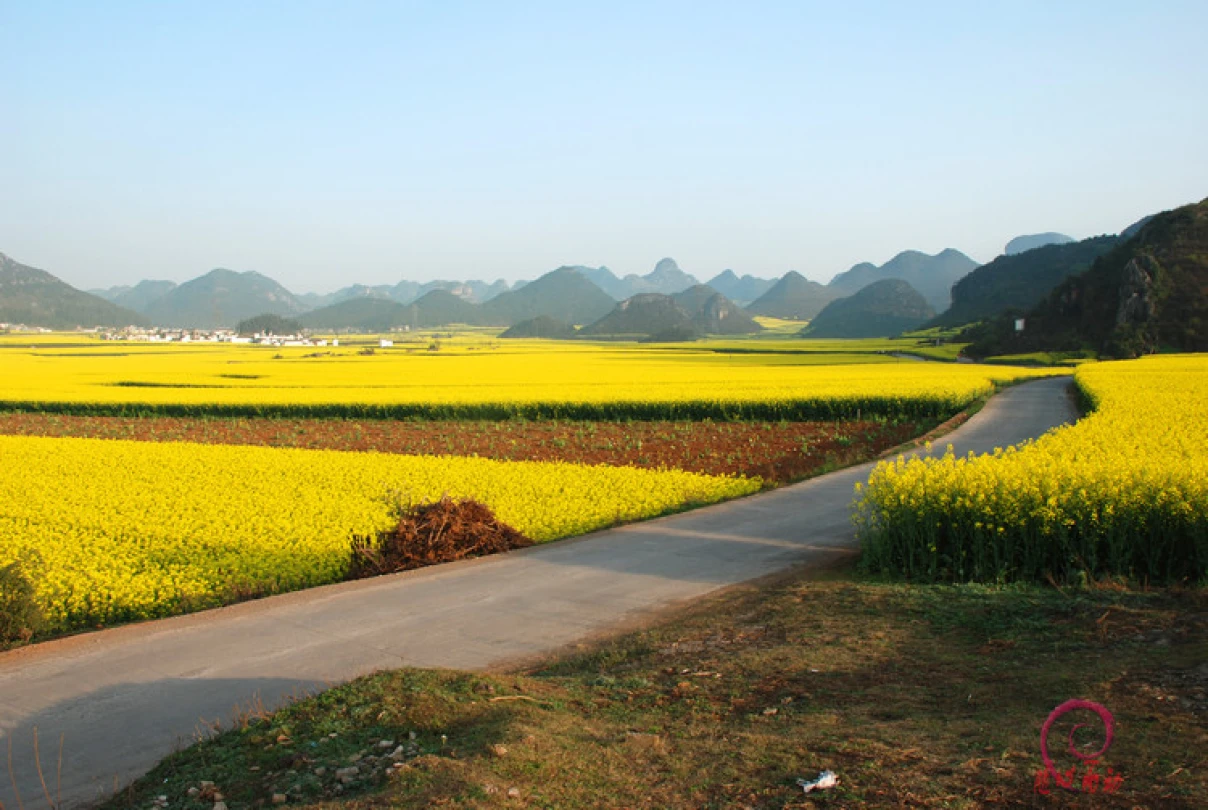
Golden Luoping: A Romantic Encounter with Sunshine and Seas of Flowers
Golden Luoping: A Romantic Encounter with Sunshine and Seas of Flowers Introduction: The Third Time's the Charm Some landscapes are destined to be seen at the right moment. For me, that was exactly the case with Luoping's rapeseed flowers. On February 22, 2011, the Luoping…
Continue reading...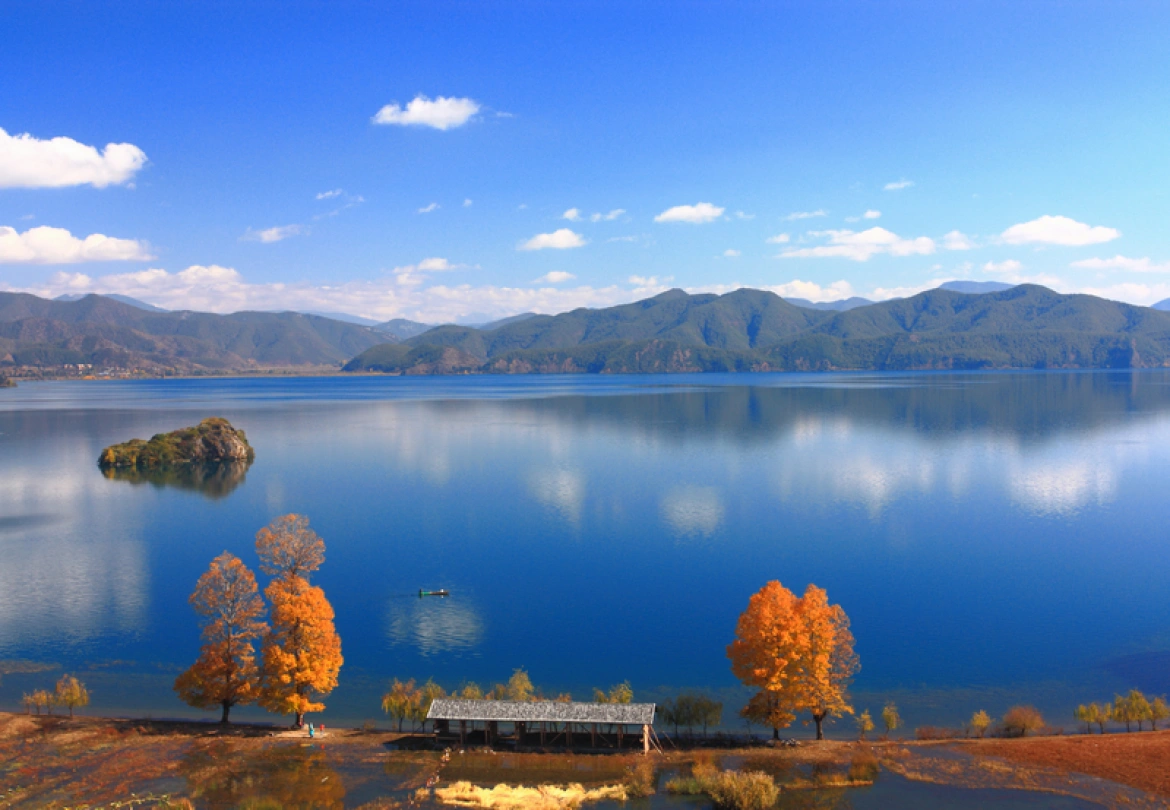
A Spiritual Journey to Lugu Lake in Lijiang: Experiencing the Legend of the Kingdom of Women! (Reproduction and Hotlinking Prohibited)
A Spiritual Journey to Lugu Lake in Lijiang: Experiencing the Legend of the Kingdom of Women! (Reproduction and Hotlinking Prohibited) Off-road自驾, food, hotel and民宿 reviews, Featured Traveler, Tank 300 owner, 200,000 km of self-driving experience. WeChat: y01294987 Ninglang Yi Autonomous County 2010.11.08 · 7 days…
Continue reading...