Nine Days in Southern Yunnan: From Mirror-Like Rice Terraces to Crimson Earth Sunsets – A Deep Journey Through Yuanyang, Jianshui, and Dongchuan
Nine Days in Southern Yunnan: From Mirror-Like Rice Terraces to Crimson Earth Sunsets – A Deep Journey Through Yuanyang, Jianshui, and Dongchuan
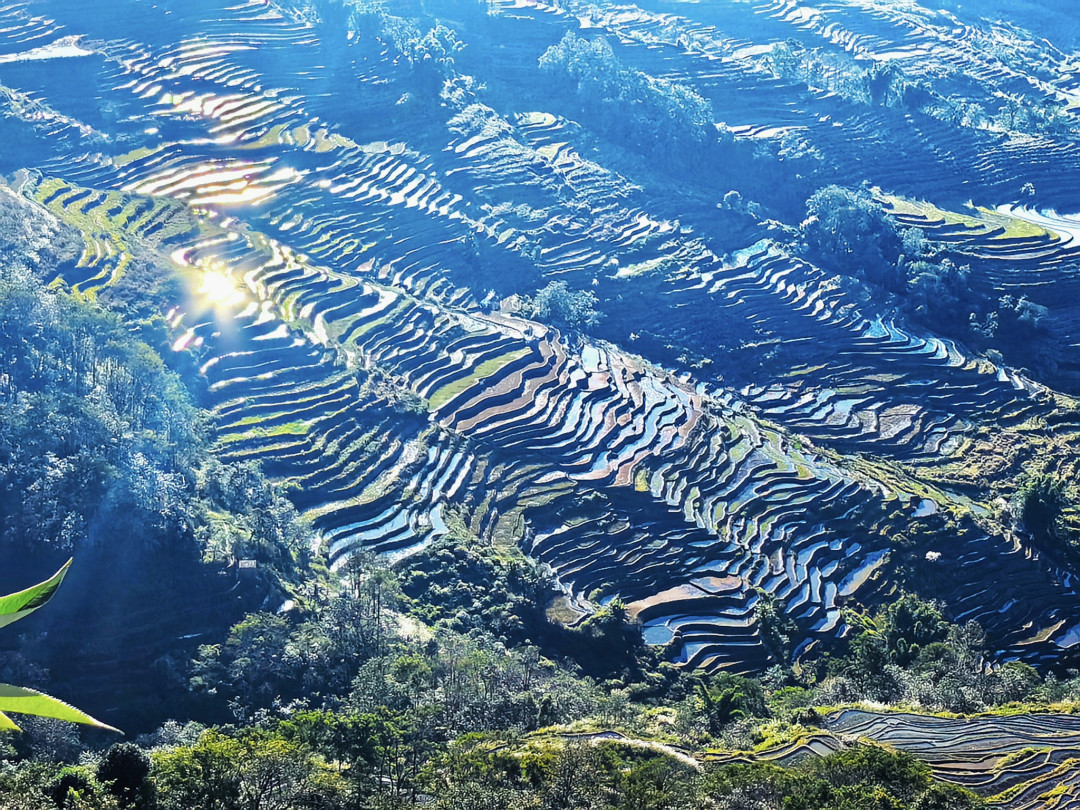
Some journeys are long-cherished dreams; others are spontaneous heartbeats that pull you forward. While the crimson leaves of persimmon trees and the scent of autumn persimmons still lingered in my memory from the Dabie Mountains, the image of Yuanyang's rice terraces—layer upon layer of mirror-like water fields—suddenly burst into my vision: clouds rolling, light shifting, the entire world seemingly unfurled into billions of shimmering mirrors. In that moment, I knew I had to go.
From November 27 to December 5, 2025, nine days long, I traveled south from Chongqing with the "Colorful Yunnan" tour group, embarking on a grand tour of southern Yunnan that spanned Yuanyang, Jianshui, and Dongchuan. This journey was originally meant to fulfill a dream of seeing "mirror-like terraces," but along the way, I harvested far more than expected: the vibrant, smoky vitality of the Pingbian Railway Market, the echoes of time沉淀 on the old tracks of Bisezhai, the breathtaking gold-melting sunset at Jianshui's Seventeen-Arch Bridge, the blazing, fiery glow of Dongchuan's Red Land, and the ancient wonders of Yuanmou's Earth Forest, carved by wind and rain over eons.
Crimson earth reflecting sunset glow is the land's passionate gift; terraced fields hiding clouds are the gentle response of the mountains and waters. This travelogue is the complete record of that heart-stirring journey. May the courage born of longing, the awe and emotion felt on the road, be shared with you through these words, conveying the romance and depth of this land.
I. Departure: Heading West by High-Speed Rail, Answering a Highland Call
From Chongqing to Kunming: The Scenery Outside the Window Changes, the Anticipation Within Grows
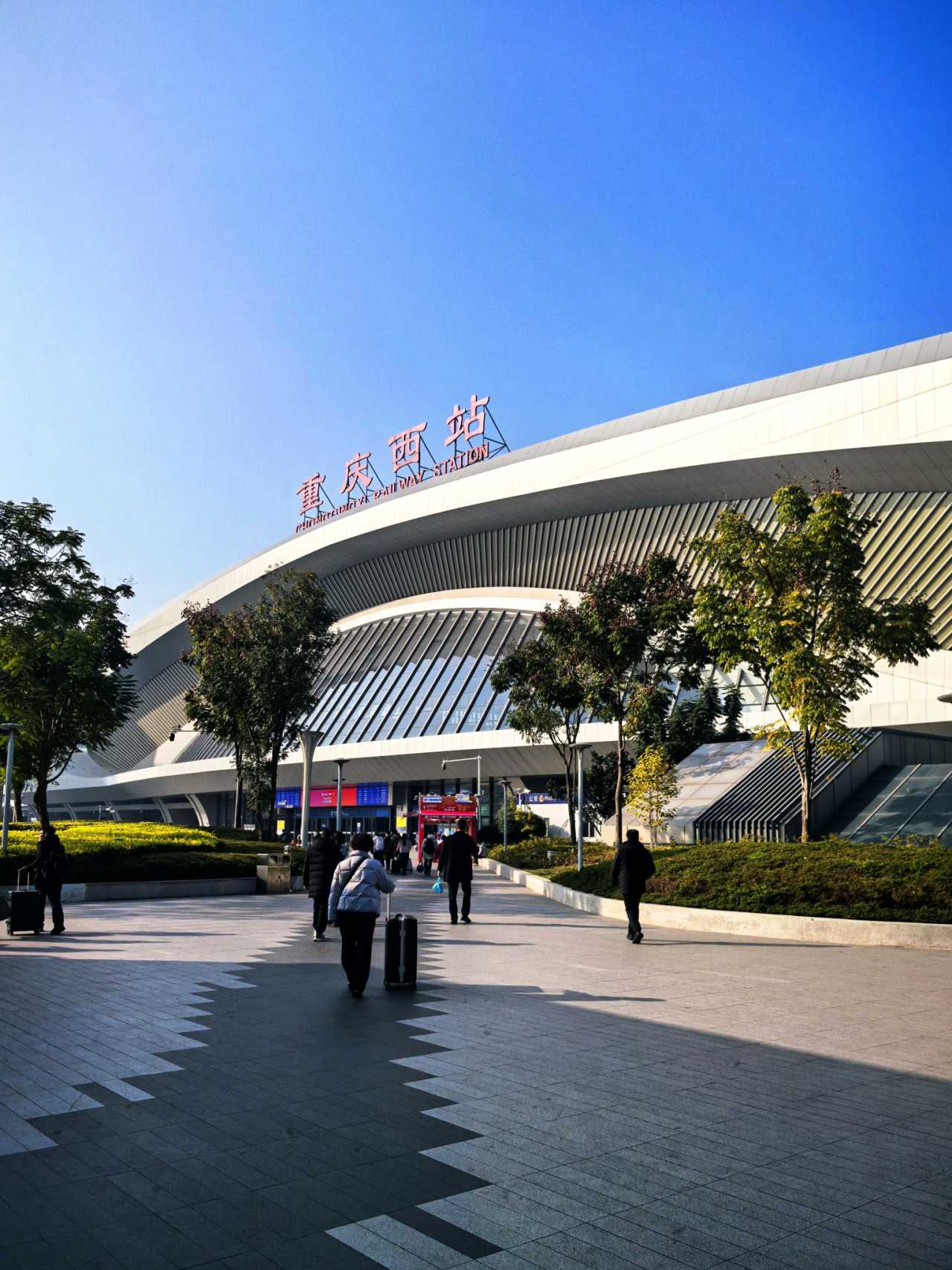
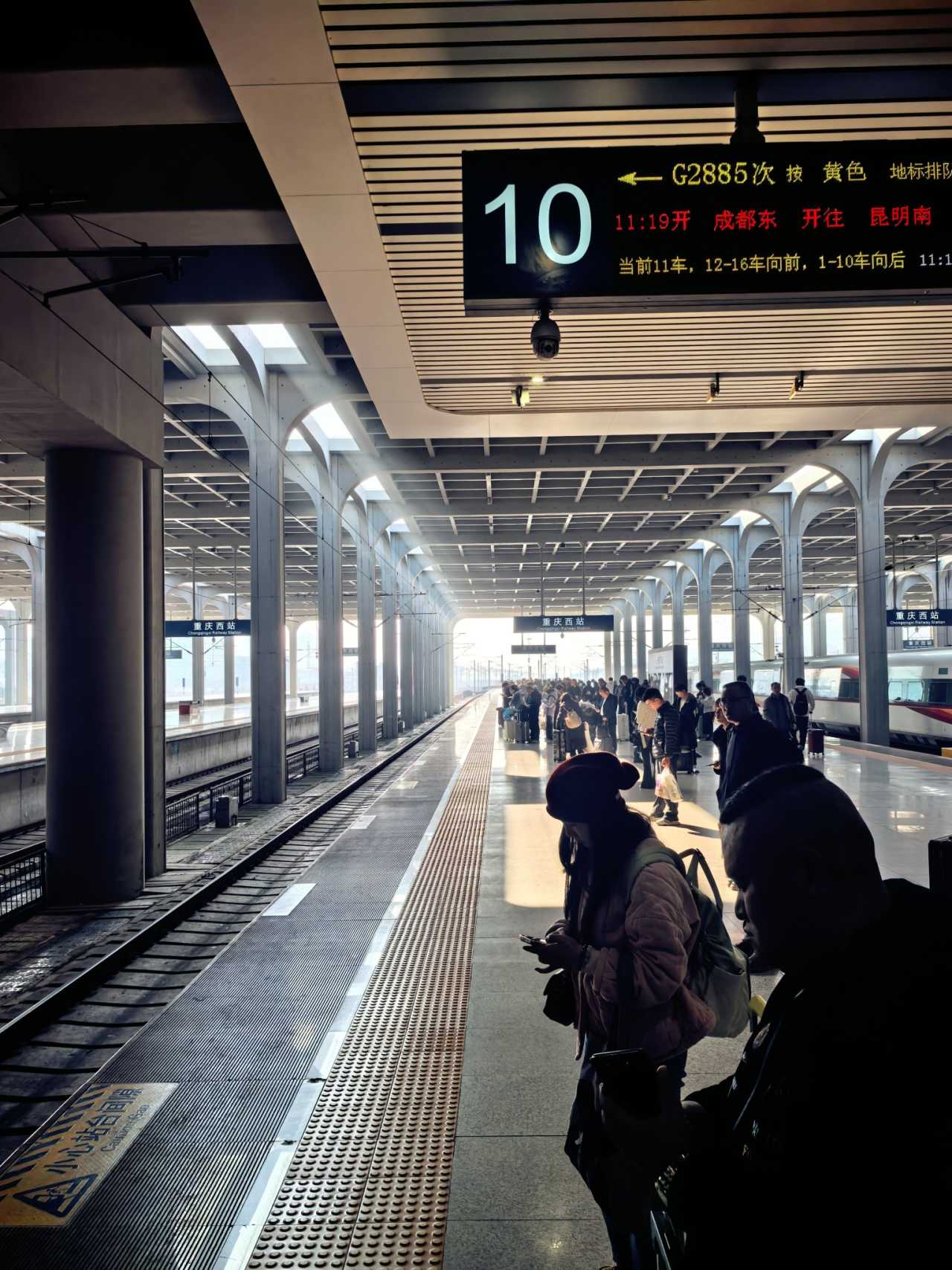
On November 27, I boarded the G2885 high-speed train at Chongqing West Station, heading west toward Kunming. Departing at 11:19 and arriving at 16:26, the five-plus-hour journey saw the landscape outside the window gradually transition from the rolling hills of Sichuan and Chongqing to the open valleys and basins of Yunnan. The humidity in the air subtly dropped, replaced by the crisp, dry clarity unique to the highlands—a reminder that southern Yunnan was drawing near.
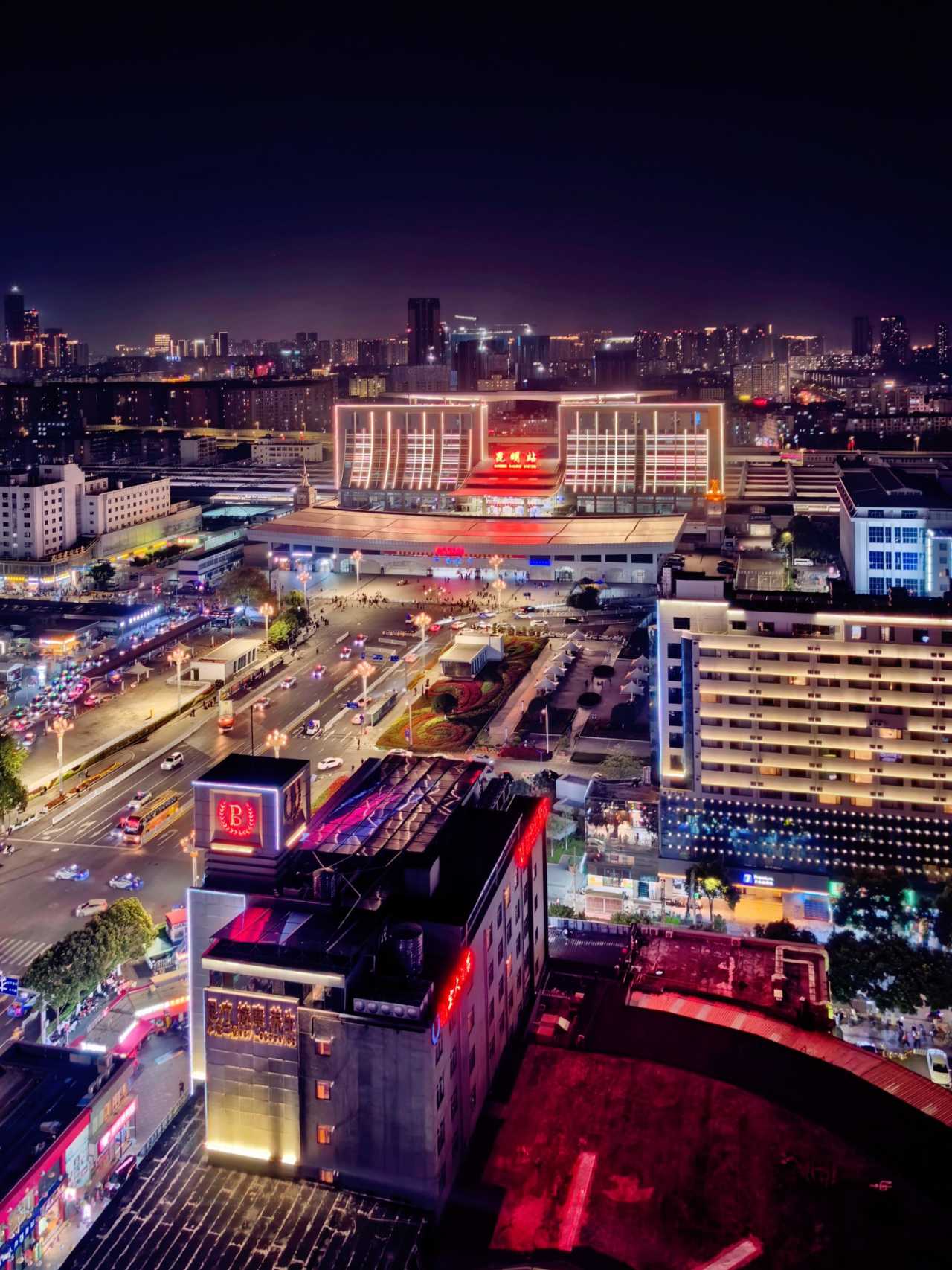
After arriving at Kunming South Station, I needed to transfer by subway to Kunming Station. At 17:50, I checked into the Kunming Jinhua International Hotel (near Kunming Railway Station, Huancheng South Road Metro Station). Dropping my luggage, I hurried to Haigeng Park, hoping to catch a glimpse of the red-billed gulls before dark. Unfortunately, by the time the taxi was halfway there, the sky had already darkened, so I had to turn back.
At 8 PM, a group meeting was held at the hotel. Our group of 18 came from all corners: 4 from Beijing, 2 from Xi'an, 2 from Hangzhou, 1 from Shandong, 2 from Guangzhou, 2 from Chengdu, 1 from Chongqing, along with 3 Chinese-Americans and 1 Chinese-Canadian. Though we had never met before, we were united by a shared longing for southern Yunnan. After the meeting, we turned in early to rest and recharge, eagerly anticipating the long-awaited encounter with the Yuanyang rice terraces the next day.
II. Yuanyang Rice Terraces: Clouds and Mist Over the Fields, The Awe of Mirror-Like Reflections
First Encounter: A 337-Kilometer Journey from Kunming to Yuanyang
On November 28, after breakfast at the hotel at 6:30 AM, we departed promptly at 7:20. The journey from Kunming to the Yuanyang Rice Terraces scenic area covered 337 kilometers, taking approximately 4 hours and 20 minutes. At 12:00 PM, we arrived at the Yuanyang Rice Terraces Visitor Center. Here, we needed to purchase tickets before entering the scenic area. Since we planned to spend two days in Yuanyang, we opted for the three-day pass (70 RMB/person), which included core areas like Duoyishu, Bada, and Laohuzui (Tiger's Mouth), allowing multiple entries. Other options included a single-day pass (100 RMB/person, single entry) and a ten-day pass (180 RMB/person, unlimited entry to core attractions).
After buying tickets, we drove for another 1 hour and 50 minutes to reach the farm stay within the scenic area—Yuanyang Yinyuan Hotel. Lunch and check-in were completed in quick succession. The afternoon's schedule included a visit to Azheke Ancient Village and watching the sunset at Laohuzui.
Azheke Ancient Village: A Fairytale World of Mushroom Houses and Terraces
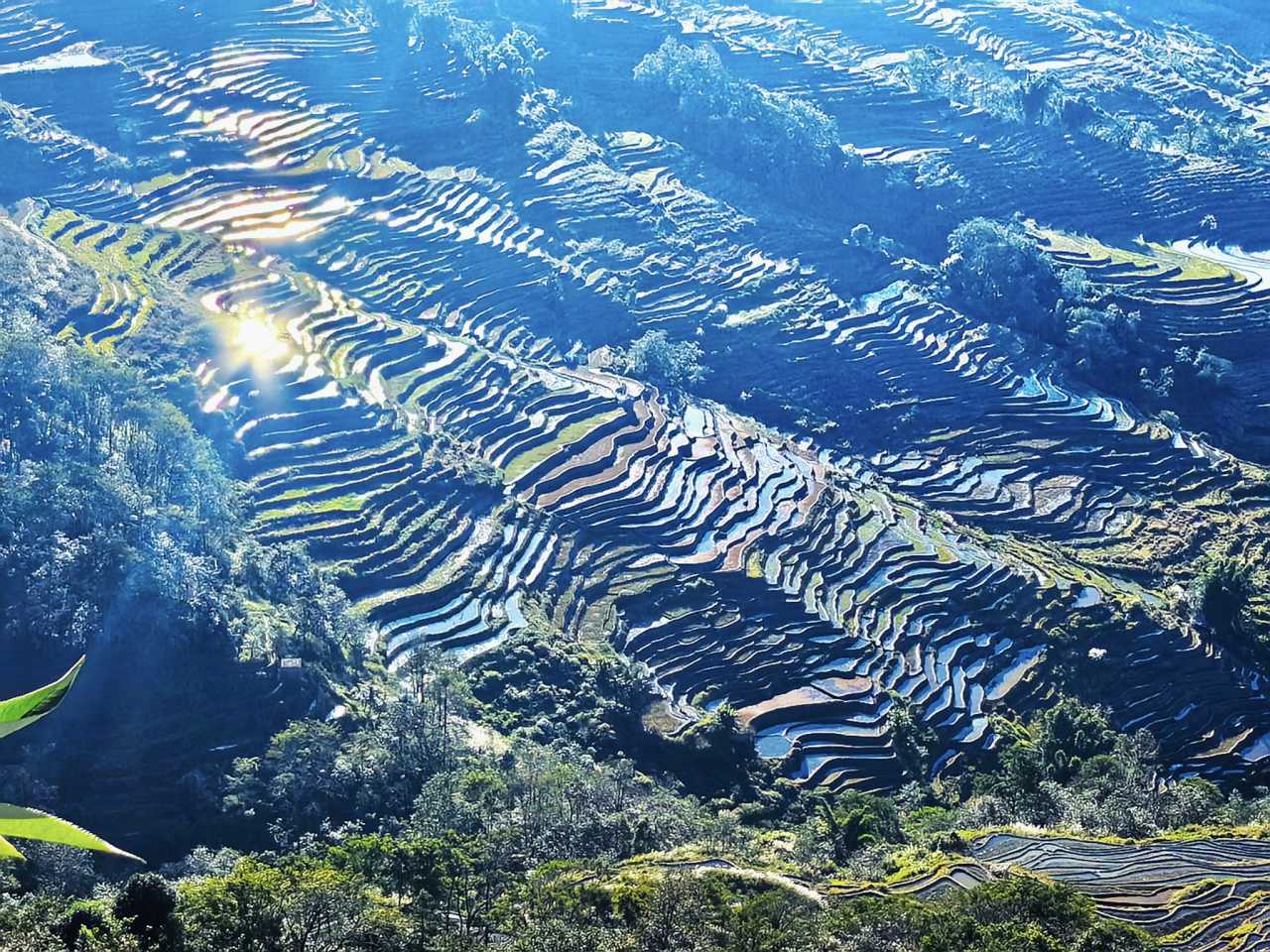
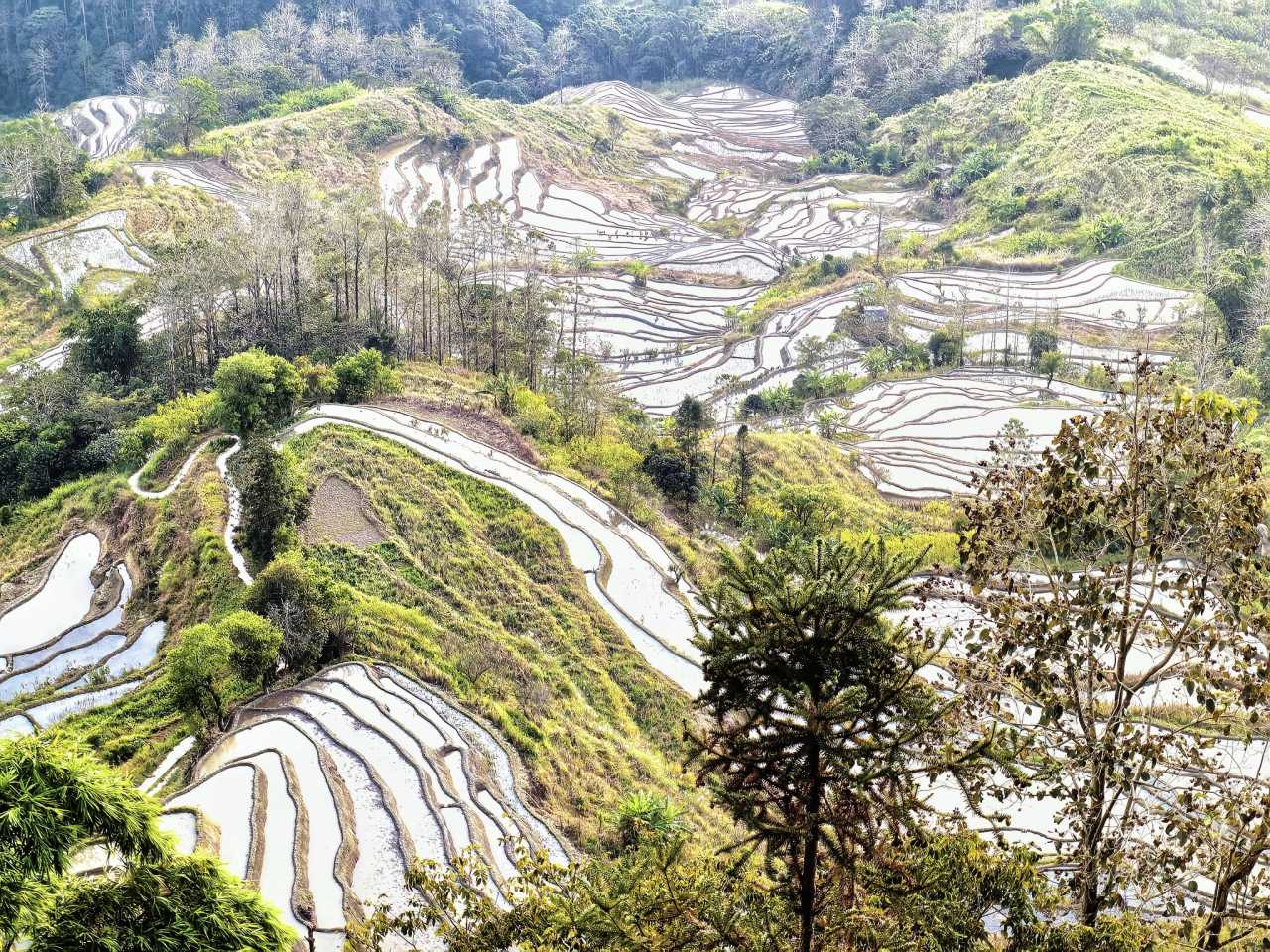
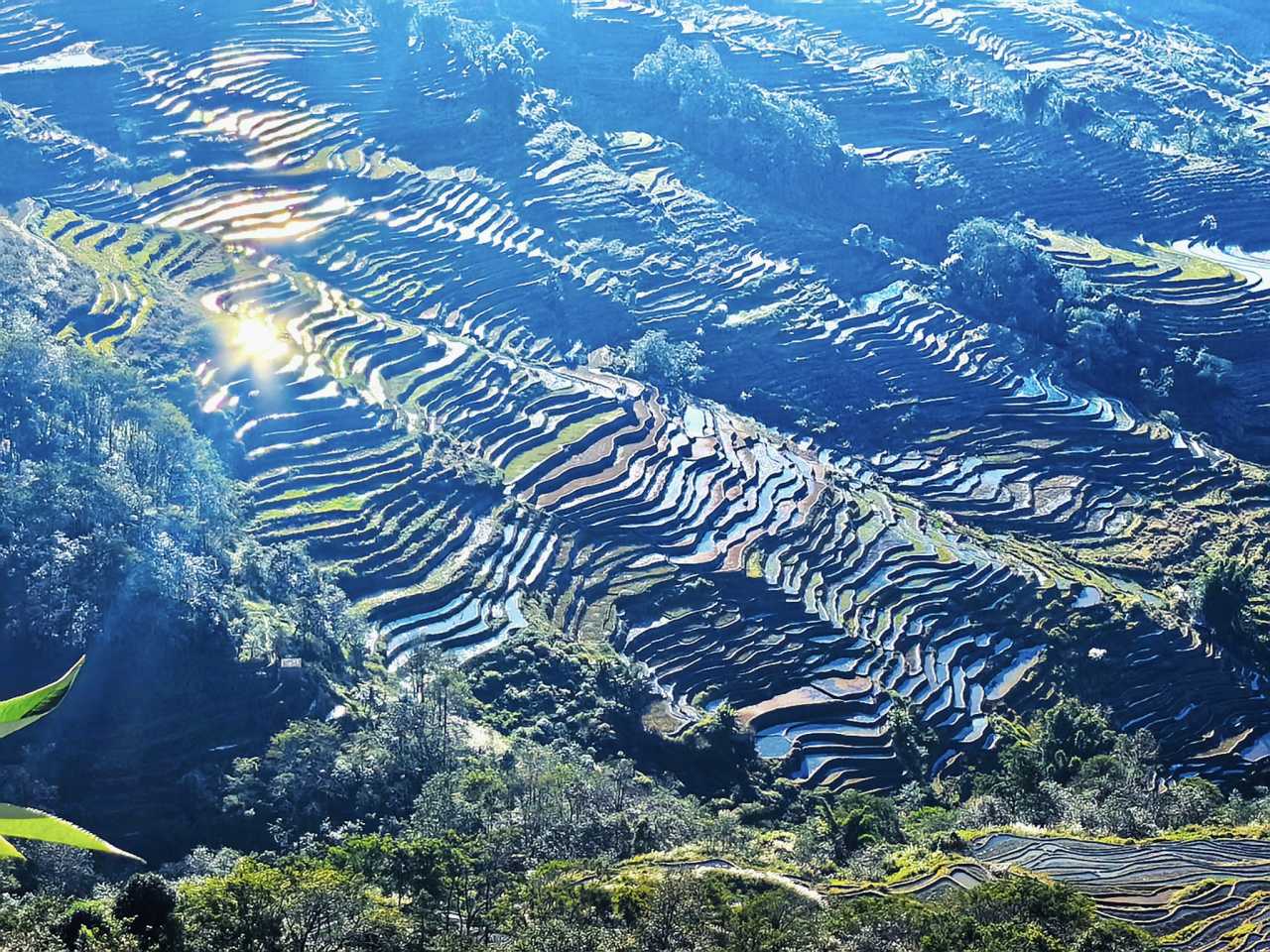
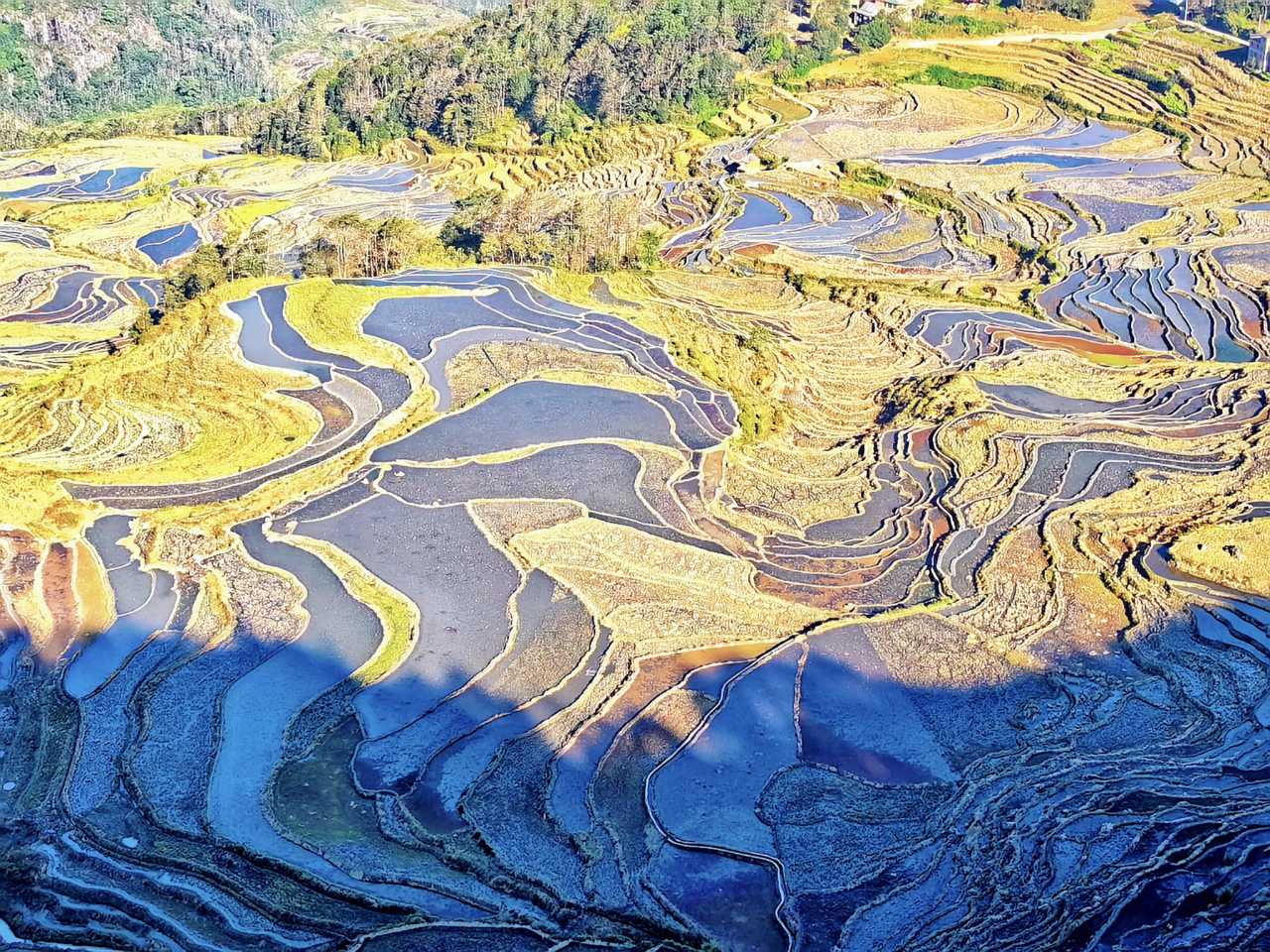
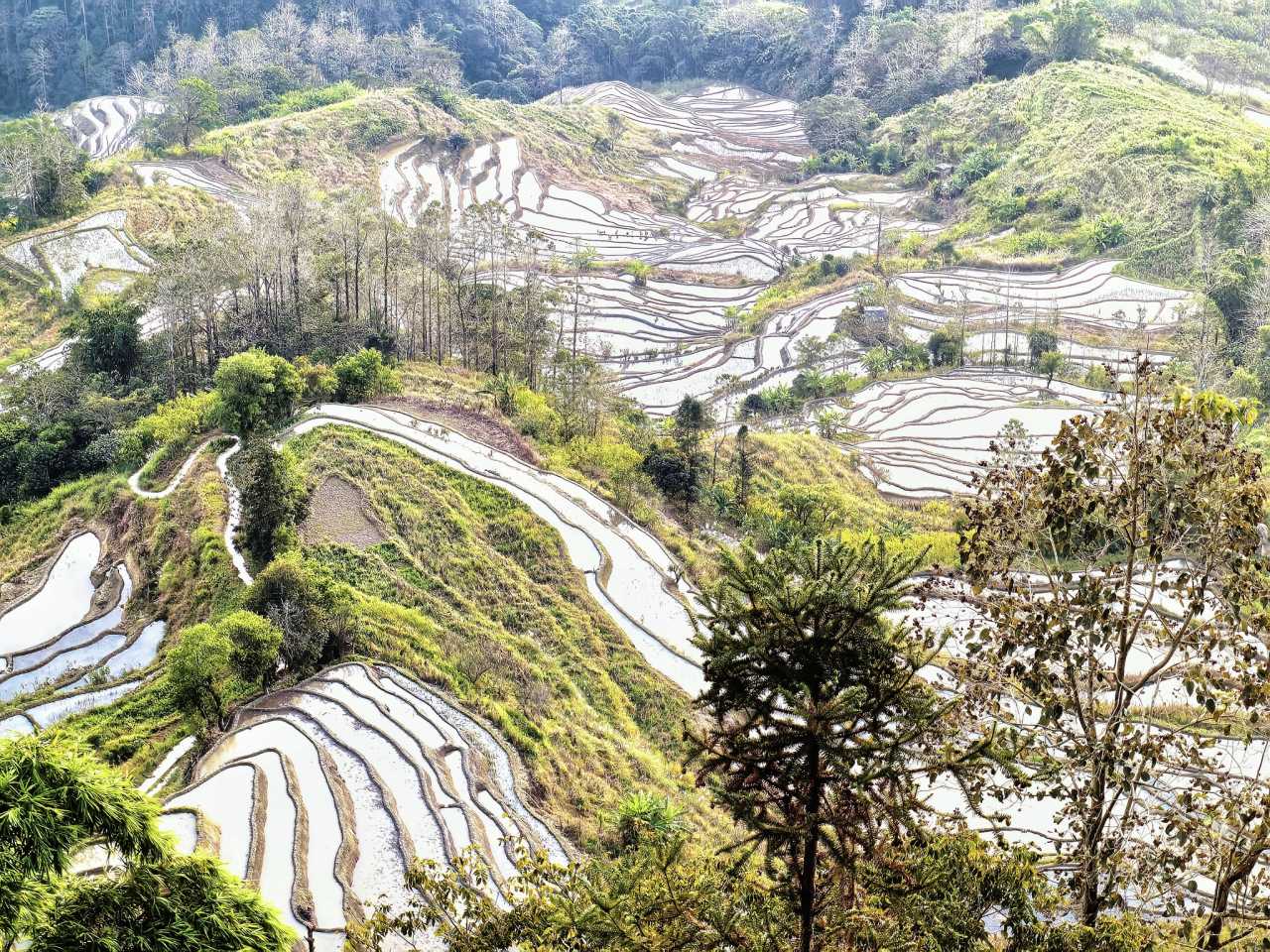
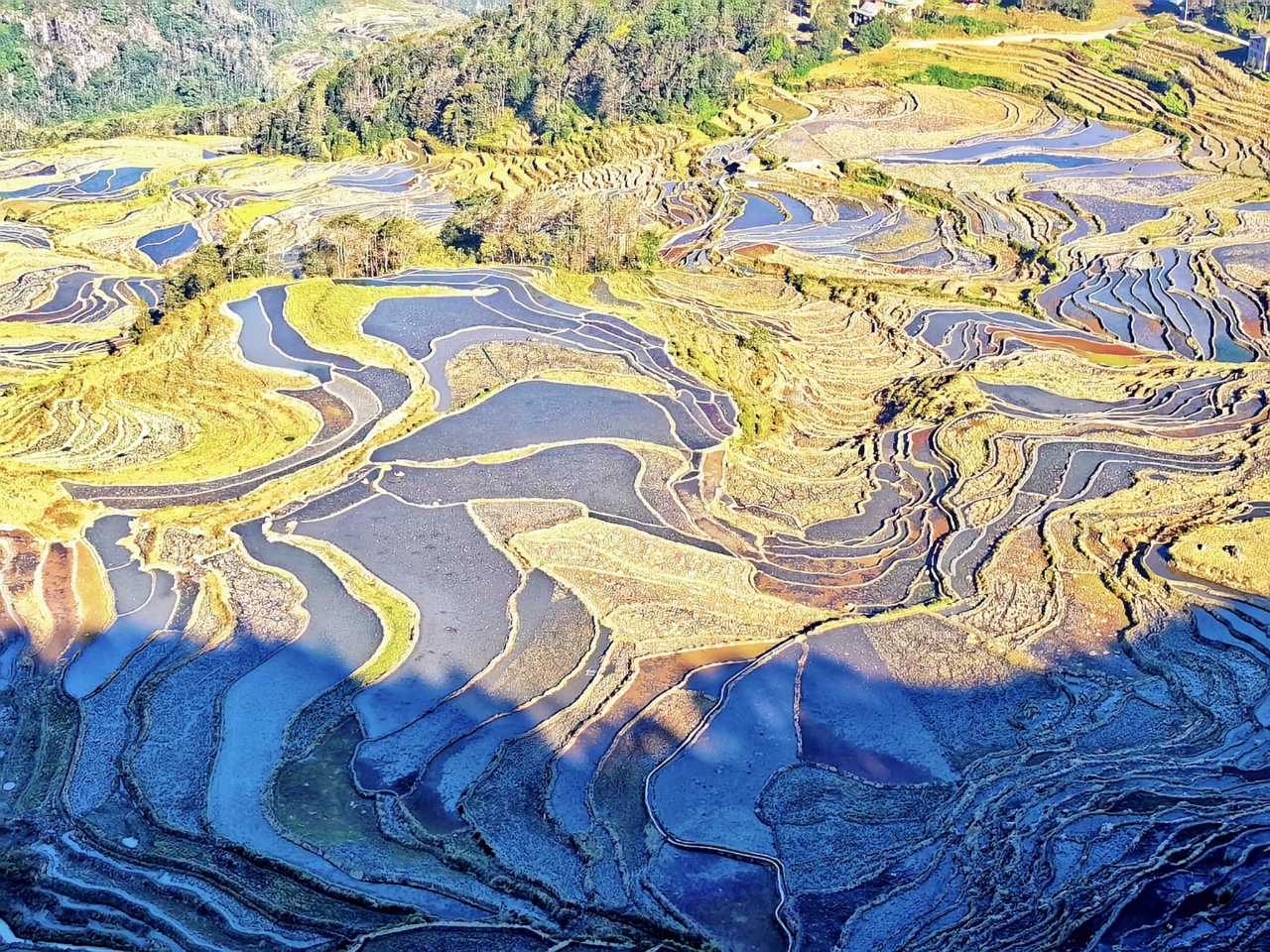
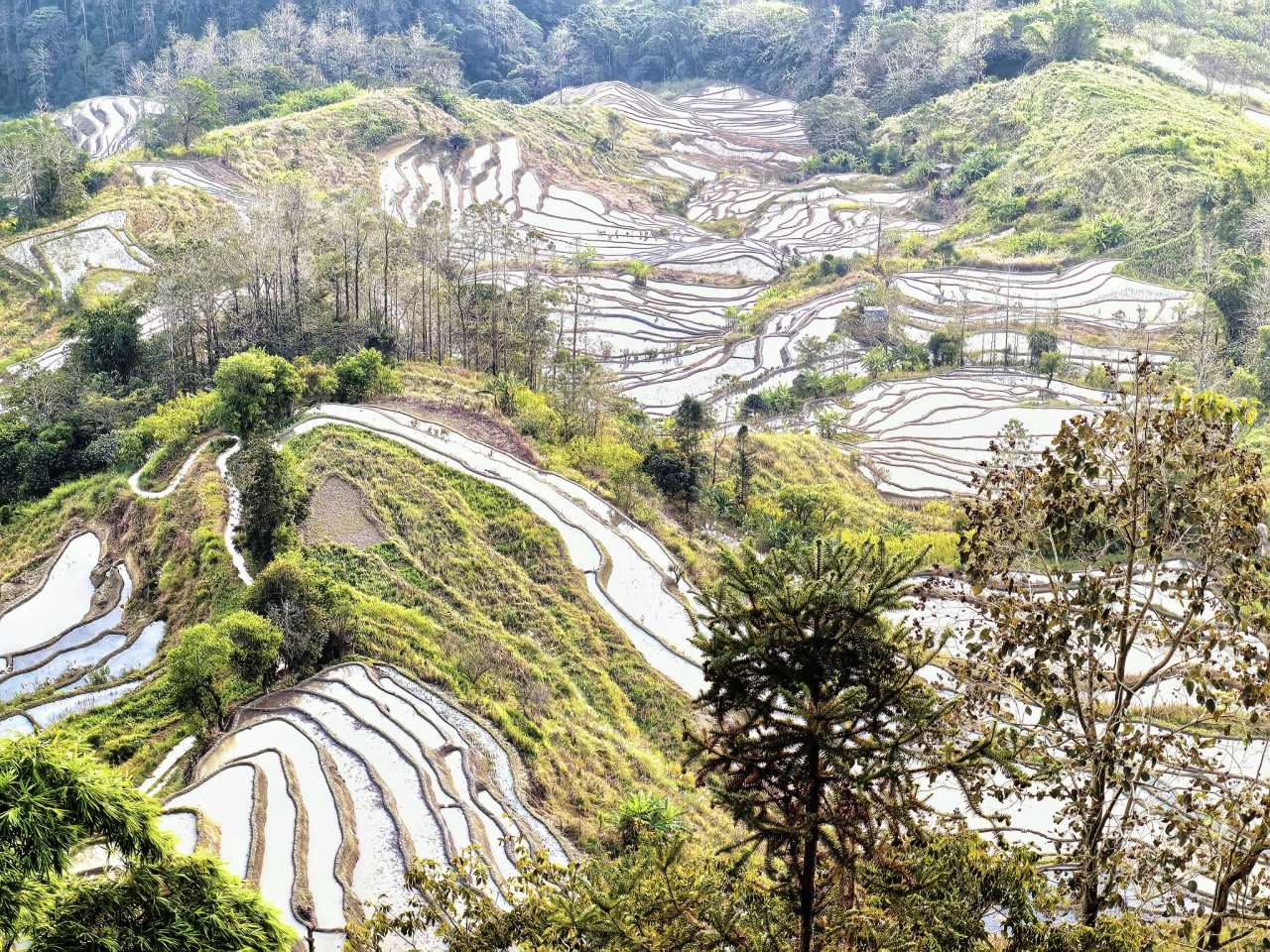
At 2:00 PM, we drove to Azheke. The afternoon sun filtered through the clouds, casting light on the field ridges. The water-filled terraces, like billions of tiny mirrors, captured the blue of the sky, the white of the clouds, and the green of the vegetation, shimmering with a brilliance that dazzled the eyes. The winding field ridges, like the veins of the earth, stretched from the foot of the mountain all the way to the summit, perfectly arranged and naturally formed.
What makes Azheke most captivating are the well-preserved Hani "mushroom houses"—their fuzzy thatched roofs, framed against the layered terraces, create scenes straight out of a Studio Ghibli film with every snapshot. Time here moves slowly, measured by footsteps along the field ridges. The afternoon sun falls on the drying racks, warming the corn cobs with a golden hue. Hani elders brew a rich, aromatic tea in earthenware pots. There's no need to chase the scenery; just sit on the stone steps, watch the cooking smoke rise gently, see the terraces reflect the sky and clouds, and let your restless heart be gently soothed by this land.
Practical Information: - Location: Azheke Village, Yuanyang County, Honghe Hani and Yi Autonomous Prefecture - Admission: 30 RMB/person; half-price for ages 60-69; free for ages 70+ - Special Experience: Traditional Hani costumes available for rent for photos (20-50 RMB/set) - Opening Hours: 08:00-18:00
Laohuzui (Tiger's Mouth) Sunset: Glowing Clouds Reflected, A River of Stars Flowing
Leaving Azheke, we headed to Laohuzui at 16:30. This spot requires claiming a good vantage point early, as it gets extremely crowded during sunset. The viewing platform is about a 1-kilometer walk away, involving stone steps and boardwalks—a taxing climb down and back up—but the sight of 12,000 mu (approx. 2,000 acres) of terraces spreading out before you makes it all worthwhile.
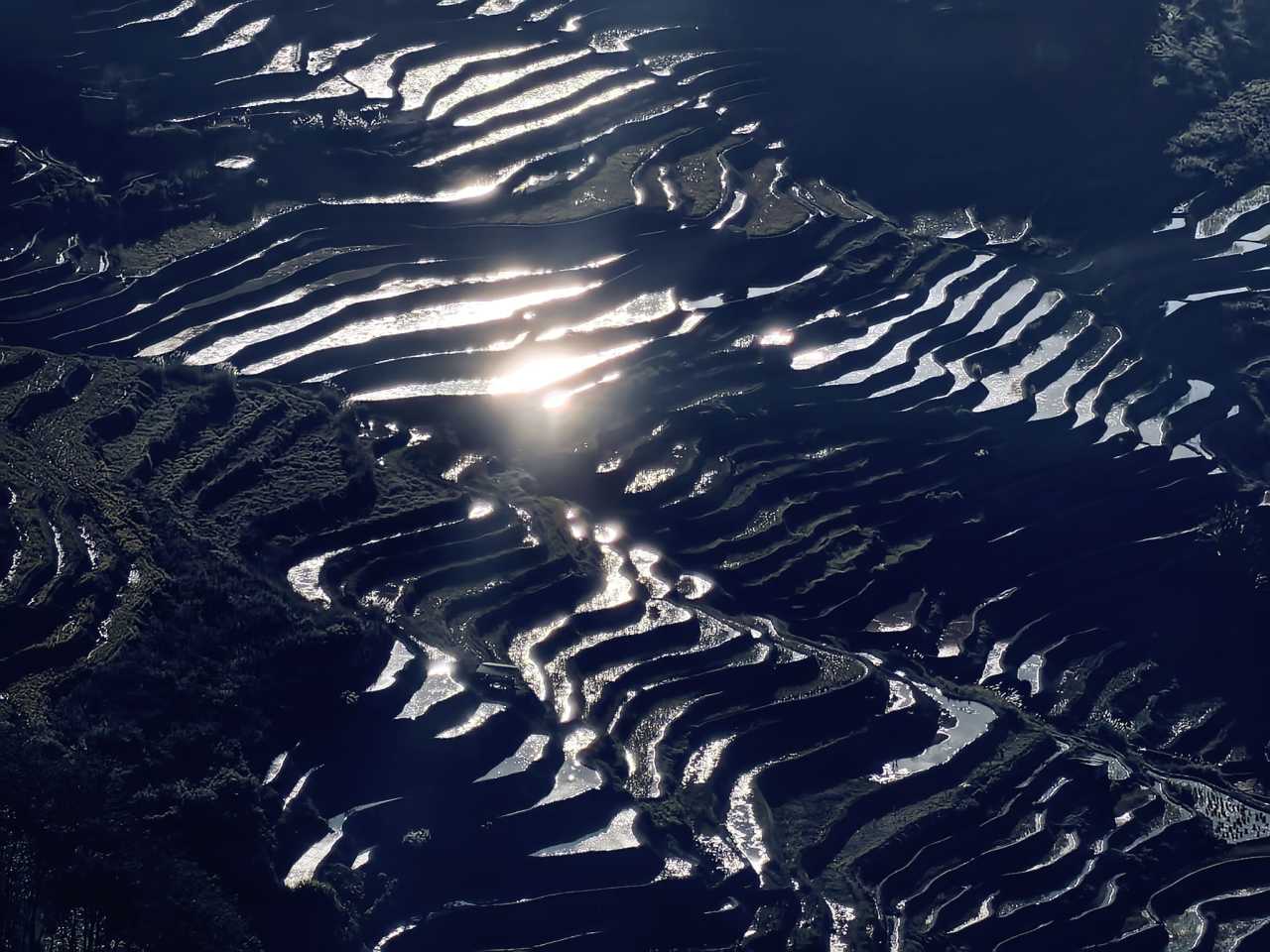
As the sun slowly sank, the sunset glow painted the sky in hues of gold and red, and the terraces transformed in color accordingly—from clear, emerald green to pale gold, and then to a deep rouge, each moment offering a different charm. Clouds and mist rolled through the valley, connecting with the terraces, creating a vast, boundless scene between heaven and earth. Standing here, you truly understand what it means for "water and sky to merge in magnificent, dynamic beauty."
Practical Information: - Location: 50 km south of Yuanyang County town, Honghe Hani and Yi Autonomous Prefecture - Admission: Included in the Yuanyang Hani Rice Terraces combo ticket - Best Viewing Time: 17:00-19:00 - Note: Temperatures drop in the evening; bring a jacket.
III. A Stroll of Light and Shadow: Chasing the Sun Across Yuanyang's Terraces
Our two days in Yuanyang were almost entirely spent chasing light and shadow across the terraces. The sunrise at Duoyishu, the sunset at Bada, the blue terraces of Aichun, the colorful terraces of Hadanpu... each place was deeply captivating. The beauty here lies not only in the grandeur and dynamism of the natural scenery but also in the profound cultural heritage of harmonious coexistence between humans and nature. Through generations of dedication, the Hani people have transformed this barren mountainous land into a paradise on earth.
Duoyishu Sunrise: The First Light of Dawn Illuminates the Valley
On the second day, we woke up at 4:50 AM, collected our breakfast boxes at 5:45, and departed for the Duoyishu scenic area at 5:50. It was still dark when we arrived at the viewing platform, our goal being to secure a good spot early. The morning was bitterly cold; everyone wore thick down jackets or fleece jackets, gloves, and masks as we waited in silence. The Duoyishu viewing platform is right by the roadside, requiring no long walk, but crowds quickly swarmed in, and arguments over camera positions were not uncommon.
As the sky gradually lightened, a pale glow appeared in the east. Clouds and mist surged through the valley like a fairyland, ethereal and misty. Then, suddenly, the first ray of sunlight pierced through the clouds, striking the terraces and instantly illuminating the entire valley. The glow in the water grew increasingly intense, a tapestry of red, orange, yellow, and purple interwoven, dazzling and brilliant—a moment of such overwhelming awe that it etches itself into a lifetime of memory.
Aichun Blue Terraces: A Winter-Only Sapphire Gem
At 8:50, we arrived at the Aichun Blue Terraces. The water-filled field ridges lay embedded in the mountainside like sapphires. The clarity of the sky blended with the朦胧 morning mist, giving the blue of the terraces a crystalline quality. Standing on the viewing platform and looking into the distance, the continuous expanse of blue spread along the mountain contours, the field ridges outlined like silver threads. Each terrace was like a clear mirror, absorbing the light of the sky and the shadows of the clouds.
If you want to walk down to the edge of the terraces for photos, the villagers charge a fee of 5 RMB/person. This "winter-only" sapphire landscape is best viewed between 9-11 AM, when the light is perfect. The interplay of blue sky, white clouds, and blue terraces creates an atmosphere that is simply perfect for photos.
Hadanpu Colorful Terraces: A Photographer's Hidden Gem

Not far from Aichun Blue Terraces lies Hadanpu, which requires about a 1-kilometer walk, passing through villagers' houses. Along the way, trees sway gently, free-range chickens, ducks, and geese peck for food, and water buffaloes amble lazily in the sun. The clean, tidy houses and courtyards line the path like paintings. There is none of the hustle and bustle of over-commercialization, only the scent of earth and the smoke of daily life.
Hadanpu has a two-story viewing platform that overlooks the layered curves of the terraces—the most graceful brushstrokes on the earth's canvas. The winter water fills the field ridges, which cascade one after another. When sunlight falls, the surfaces reflect light and shadow of varying depths—reds, yellows, blues, and greens interweave into patches of color, creating what looks like a three-dimensional, colorful oil painting.
Quanfuzhuang Terraces and Bada Sunset: The Most Moving Moments of the Day
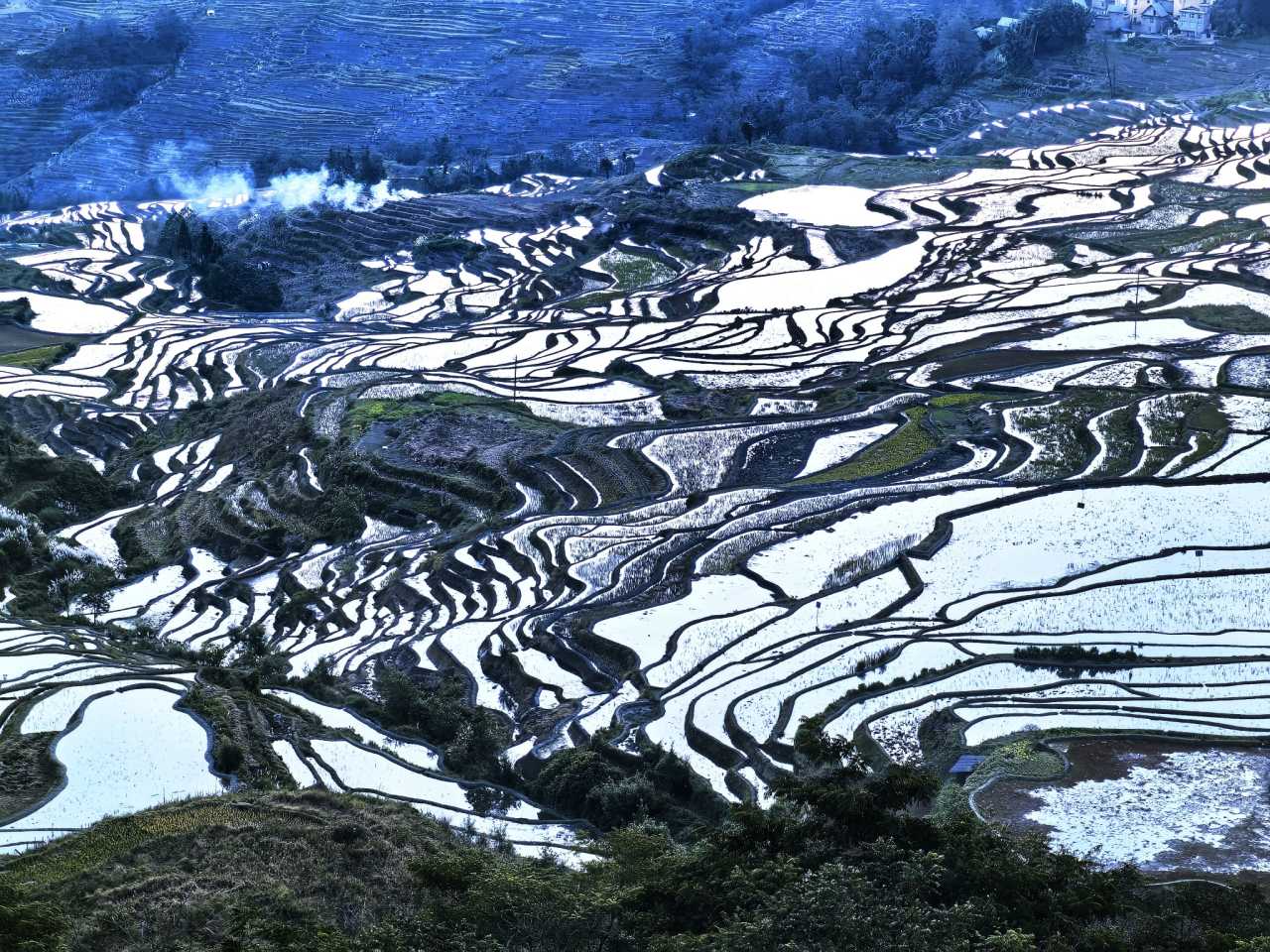
At 3:00 PM, we arrived at the Quanfuzhuang Terraces, located right by the roadside. The field ridges stretched endlessly, following the mountain contours all the way to the horizon, blending with the distant clouds, mist, and villages. Standing on the viewing platform, the curves of the ridges wound gracefully, and light and shadow flowed across the field surfaces, creating varying shades of green. We walked down along the field ridges, getting close enough to touch the clear water, feeling the warmth and depth of this land.
At 4:00 PM, we hurried to Bada Terraces—the largest and most layered viewing point in Yuanyang, often hailed as the pinnacle of Yuanyang sunsets. 16,000 mu (approx. 2,600 acres) of terraces stacked layer upon layer. The setting sun reflected on the water's surface, light dancing like scattered gold. Again, we needed to claim our spots early. We set up our tripods and waited in silence. After 5 PM, the sunset glow grew increasingly intense, dyeing the sky gold and red. The terraces shifted from emerald green to golden yellow, then to rouge red, each moment offering a different charm. We didn't leave until the sky was nearly dark at 18:30, reluctantly tearing ourselves away.
Yuanyang Yinyuan Hotel: Excellent Value Accommodation in the Terraces
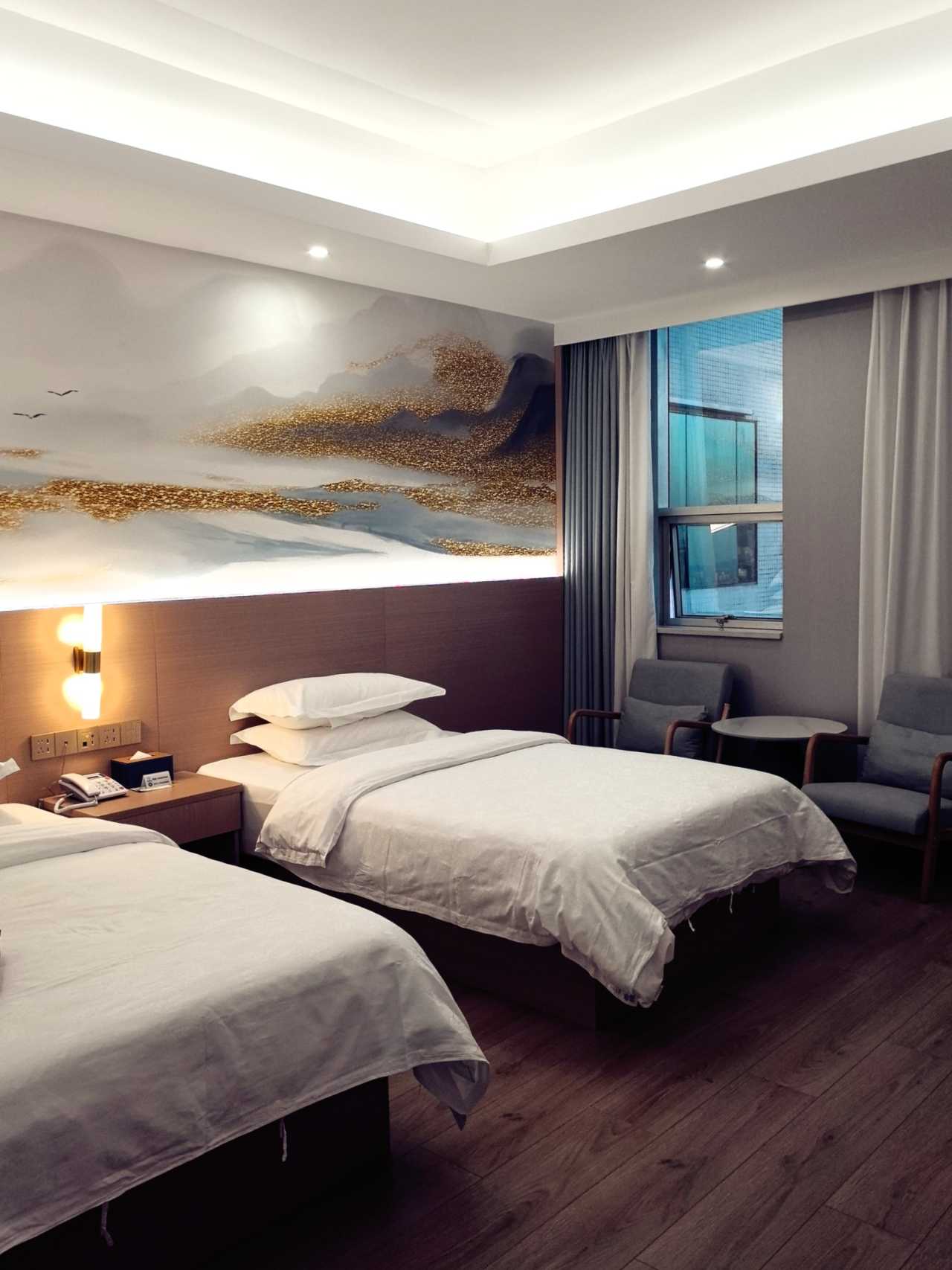
We stayed at the Yinyuan Hotel within the Yuanyang Rice Terraces scenic area for two nights, having all our meals at the hotel. The rooms were simply decorated but spacious, featuring two beds and a mahjong table, with 24-hour hot water and free WiFi. Located in the core terrace area of Sheng Village, the hotel is just a few minutes' drive from surrounding viewpoints, and only about ten minutes to Azheke, Laohuzui, Duoyishu, and Bada.
All ingredients were locally sourced fresh vegetables, paddy field fish, and free-range pork. Meals consisted of 9 dishes and 1 soup, with a hearty mix of meat and vegetables. The Hani-style stir-fried wild ferns with cured pork and the sour cabbage fish were very authentic. Breakfast included eggs, mixed sauce rice noodles, and braised duck. We had 4 main meals and 2 breakfasts here, and were very satisfied.
Practical Information: - Location: Sheng Village Section, Xinjie Town, Yuanyang County, Honghe Prefecture, Yunnan - Price: Standard room 280 RMB/night (includes breakfast, lunch, and dinner for 2 people, 10 dishes + 1 soup standard) - Cost per person: Only 140-160 RMB/day, including all meals and accommodation.
IV. Morning Farewell to the Terraces, Heading for the Vibrant Smoke of Pingbian
Qingkou Village: One Last Morning View of the Terraces
On the morning we left Yuanyang, we woke up at 6 AM and had breakfast at the Yinyuan Hotel at 7 AM—a warm bowl of rice noodles with local pickled vegetables, which dispelled the morning chill. We departed promptly at 7:40. As the car slowly pulled away from the scenic area, I couldn't help but look back. The terraces were still shimmering with sparkling waves in the morning light.
Soon, we arrived at the main gate of the Yuanyang Rice Terraces scenic area—Qingkou Village. The early morning sun had just risen over the mountain tops, gently casting its light on the village and the terraces. Morning mist, like a light veil, lingered in the valley. The terraces reflected the morning light, glowing with a faint gold and red. Ducks frolicked in the water paddies, and occasionally, the figures of early-rising farmers could be seen working on the field ridges. We got out of the car for a moment, using our cameras to capture this final morning scene of the terraces, thus drawing a perfect close to our Yuanyang journey.
The next 3 hours were spent driving along winding mountain roads, covering 193 kilometers. Outside the window, the landscape gradually transitioned from the layered terraces to lush, dense forests. The road was mostly winding mountain passes with tight curves, but it also offered views of the pristine scenery of southern Yunnan's mountainous region—dense forests blocking out the sky, mountain springs flowing down the slopes, the air filled with the fresh scent of vegetation and damp earth.
Pingbian Yunti Hotel: A Restful Stop with Miao Charm
At noon, we arrived at our pre-booked hotel, the "Pingbian Yunti Hotel." We were immediately drawn to its architecture—layered, upturned eaves, grey tiles, and lattice windows, highly aesthetically pleasing. The hotel incorporated local Miao ethnic elements, creating a rich cultural atmosphere. The lobby was spacious with a rustic charm and thoughtfully provided complimentary fruits, candies, and coffee, making us feel welcome from the moment we entered.
The guest rooms were spacious and comfortable, each with a balcony offering views of the scenery outside. Breakfast was a buffet, featuring not only fruits, bread, pastries, fried dough sticks, steamed buns, and soy milk, but also local specialty rice noodles—a wide variety. During our full day in Pingbian, we also had lunch and dinner at the hotel. The dishes were abundant, with a large table full of food that we couldn't finish.
Practical Information: - Location: Kunhe Road, Yuping Town (opposite the County Finance Bureau) - Price: 168 RMB/night
Dishui Miao City: An Immersive Miao Cultural Experience
At 3:00 PM, we headed to Dishui Miao City. The sun was bright, flowers and trees were fragrant, and a gentle breeze carried the refreshing scents of vegetation and Miao herbal medicine, brushing past the yellow walls and grey tiles. The iconic landmark of Dishui Miao City is a bridge over the road—a giant gate shaped like a Miao ox-horn reed pipe (lusheng), with golden totems and Miao patterns, perfect for capturing ethnic-style photos.
Walking along the bluestone path into the Miao village, we saw green-tiled stilted houses built against the mountain, the yellow walls contrasting beautifully with the green trees. The Mu Yang River flowed with clear, emerald water. We strolled along the path, watching the reflections of the stilted houses in the clear water and observing the rushing waterfall beneath the covered bridge. The city also houses a Yunnan Miao Medicine Museum, which is free to enter and displays specimens like half-a-person-tall lingzhi mushrooms and flowering notoginseng. Climbing to the highest point of the Miao city, the Miao King's Mansion, offers a panoramic view of the entire "One Heart, Eight Villages" layout.
Practical Information: - Location: Yuping Town, Pingbian Miao Autonomous County, Honghe Prefecture, Yunnan - Admission: Free - Recommended Route: Miao City Gate → Mu Yang River Wetland → Yunnan Miao Medicine Museum → Miao King's Mansion → Fengqing Street Food
V. Tracing the Tracks: Echoes of Time at Bisezhai and Jianshui
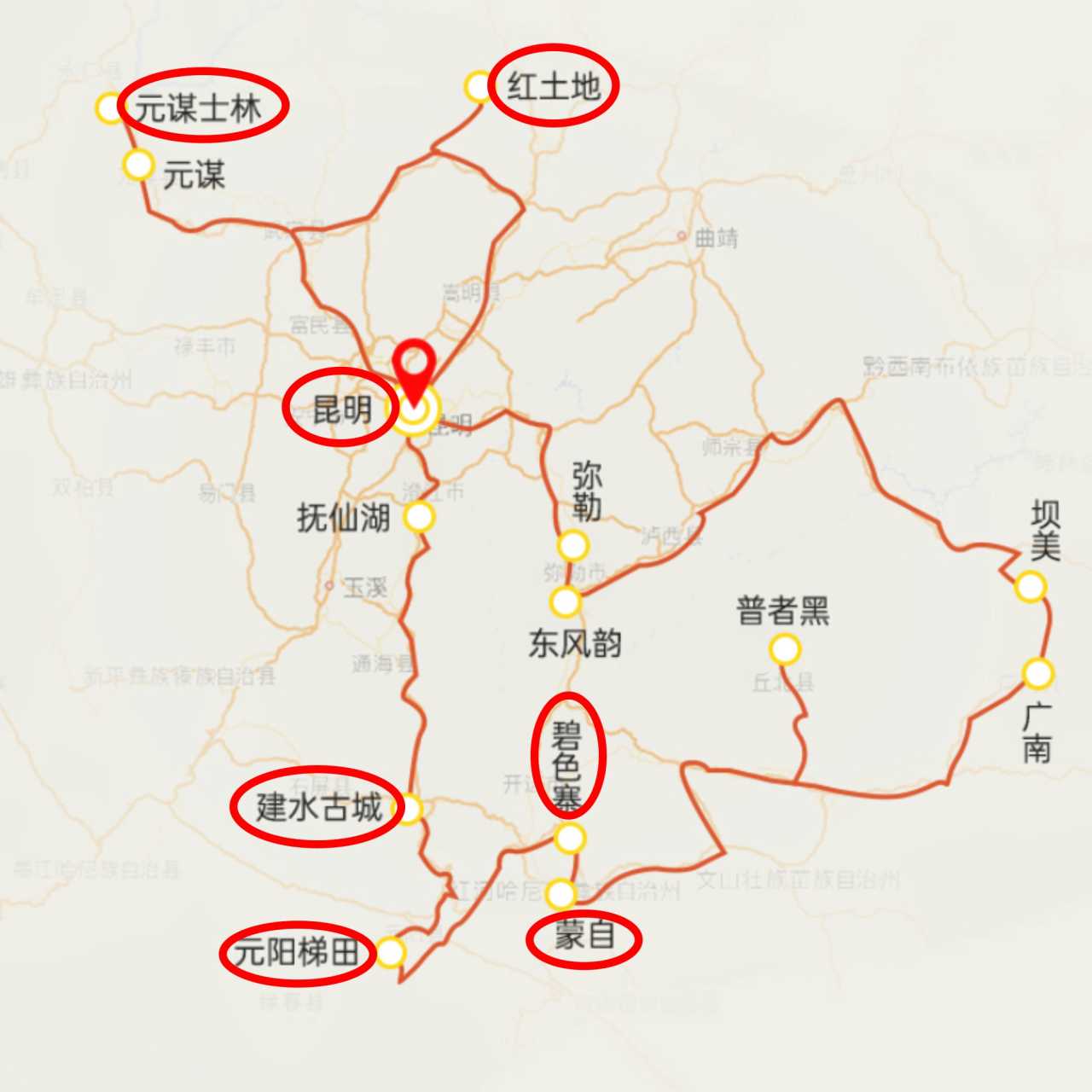
This day's itinerary was packed and exciting: first to the Baiheqiao Railway Market, then to Bisezhai, Jianshui Seventeen-Arch Bridge, and Jianshui Ancient Town—a total distance of about 170 kilometers.
Baiheqiao Railway Market: China's Only Train Market
We woke up at 6:00 AM, had breakfast at 7:00, and departed at 7:30 for the Baiheqiao Railway Market, about an hour's drive away. When we arrived, the market was already bustling. Miao people from all around were starting their weekly market day.
The Baiheqiao Railway Market is located in Baihe Town, deep in the mountains of Pingbian. It is China's only train market. Every Monday, Miao and other ethnic minorities carry their homegrown produce and livestock to set up stalls along the Yunnan-Vietnam Railway. This railway, opened in 1910, once witnessed the prosperity of a "station for every market." Today, only this place still adheres to the tradition of "the railway track as the street, the train as the neighbor."
The morning sun cast a golden layer over the market. Black Miao grandmothers in indigo headscarves, Flowery Miao aunties in colorful embroidered aprons—their ethnic costumes flowed through the crowd, mingling with eggs strung together, piles of wild mushrooms, and sweet five-colored sticky rice, creating the most vivid folk painting. The most touching sight was the默契 "dance between people and train"—a freight train's whistle cut through the noise, villagers skillfully moved their goods aside, and as the train slowly passed, the stalls were instantly back in place, and the lively chatter resumed.
Practical Information: - Location: Baihe Town, Pingbian City - Opening Hours: Every Monday, 7:00 AM - 12:00 PM (busiest in the morning) - Best Time: 8:00 AM - 10:30 AM - Admission: Free
Bisezhai: Stepping Back in Time to the Retro Era of "Youth"
After returning to the Pingbian Yunti Hotel for lunch, we drove to Bisezhai, arriving at 2:00 PM. Admission was free, but we needed to take a sightseeing bus to enter, costing 30 RMB/person.
The wind of southern Yunnan swept across the century-old tracks of Bisezhai. This is the classic filming location for the movies "Youth" and "Forever Young," holding the retro charm of a "Little Paris." The yellow-walled, red-tiled French-style station building stands quietly. The mottled three-faced clock and green metal seats bear the marks of time. The meter-gauge and inch-gauge tracks intertwine, extending into the distance. Sunlight slanted onto the wooden station sign and the red clay tennis court, casting soft, retro shadows.
Walking along the tracks in simple clothing, the hem of our garments fluttering, it felt like recreating the platform sentiments from "Youth." There was no noise here, only the gentle sound of wind passing over the tracks. Every mottled wall, every intersecting track, every French-style window frame was a footnote to time and cinema.
Practical Information: - Location: Bisezhai Village, Caoba Town, Mengzi City, Honghe Hani and Yi Autonomous Prefecture, Yunnan - Admission: Free, sightseeing bus 20 RMB/person - Parking: 10 RMB/vehicle
Jianshui Seventeen-Arch Bridge: The Perfect Moment of Golden Light Piercing the Archways
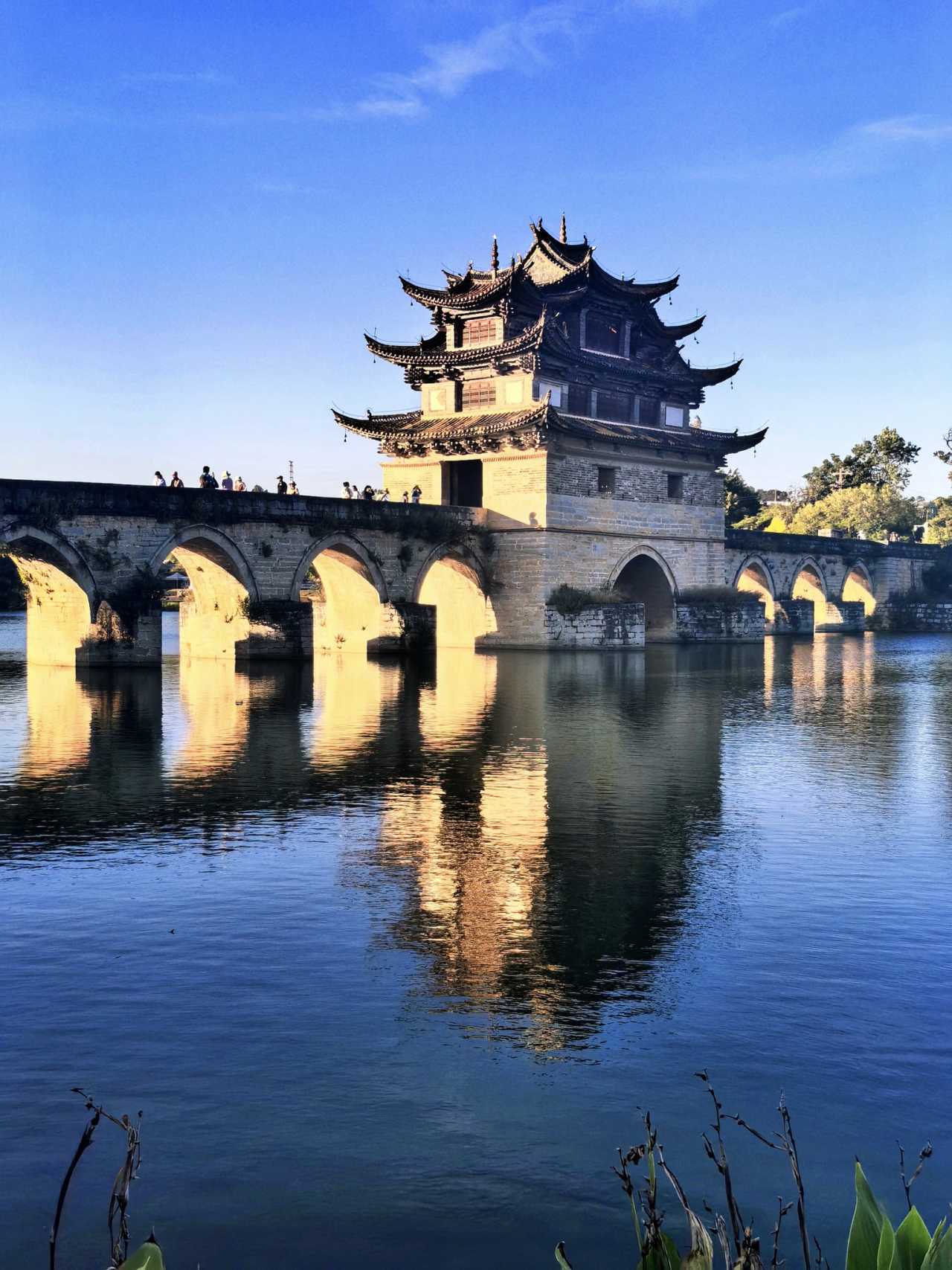
Leaving Bisezhai, our car sped along the road, arriving at the Jianshui Seventeen-Arch Bridge (Shuanglong Bridge) at exactly 17:15, just in time for the golden hour before sunset.
This bridge, first built during the Qing Dynasty, spans the confluence of the Lujiang and Tangchong Rivers. Along with the Seventeen-Arch Bridge in Beijing's Summer Palace, it represents the pinnacle of ancient Chinese bridge architecture from the north and south. Northern bridges are known for their simple, robust grandeur, while southern bridges are more ornate and visually striking.
November and December are the best times to witness the "Golden Light Piercing the Archways" phenomenon. When we arrived, the setting sun was slowly descending, and it was the peak moment. The 17 archways, together with their reflections in the water, formed a perfect arc. The red and orange sunset glow bathed the bridge, dyeing the bluestone slabs a warm gold. Even more surprising, the sunlight not only passed through the archways but also streamed through the windows of the pavilions on the bridge, creating an even more enchanting effect. The reddish river surface shimmered with ripples. The stone carvings on the bridge became clearer in the twilight, each carved line holding stories dating back to the Qianlong era.
Practical Information: - Location: Baituan Highway, Jianshui County, Yunnan (4-5 km west of Jianshui Ancient Town) - Opening Hours: All day (best light is 30 minutes before and after sunset) - Admission: Free - Best Photo Spot: The riverbank on the east side of the bridge
Jianshui Ancient Town and Xishandu Inn: Resting Amidst Ancient Night Charm
As night fell, we drove 10 minutes to Jianshui Ancient Town and checked into our pre-booked "Xishandu Inn." Tucked away in the ancient town, the inn's whitewashed walls and grey tiles complemented the town's charm perfectly, with decor that exuded elegance and tranquility. After dropping our luggage, we strolled along the ancient town's bluestone paths, feeling the quietude and gentleness of this thousand-year-old city in the night.
Conclusion: A Grand Tour of Southern Yunnan, A Lifetime of Unforgettable Memories
The nine-day journey through southern Yunnan—from the morning and evening lights of the Yuanyang rice terraces to the smoky, vibrant life of the Pingbian railway market, from the century-old tracks of Bisezhai to the golden light piercing the archways of Jianshui's Seventeen-Arch Bridge, and finally to the blazing sunset glow of Dongchuan's Red Land and the eons-old wonders of Yuanmou's Earth Forest—every scene was like a meticulously painted scroll, unfolding slowly in my memory.
This trip made me deeply realize: the beauty of Yunnan lies not only in its famous attractions but also in the daily life and烟火气息 hidden in the deep mountains. The grandeur of the Yuanyang terraces is the fruit of the Hani people's wisdom cultivated over generations. The lively bustle of the Baiheqiao market is a ritual of life passed down through millennia by ethnic minorities. The weathered沧桑 of Bisezhai is the silent narrative of a century of history.
If you, too, yearn for a spontaneous grand tour of southern Yunnan, I highly recommend adding this route to your itinerary. Starting from Kunming, head south. Watch the clouds and mist roll over the terraces in Yuanyang. Feel the pulse of daily life at the market in Pingbian. Wait for a golden, molten sunset on the ancient bridge in Jianshui. Witness the blazing, boundless sunset glow on the Red Land in Dongchuan. Trust me, this land, with its passion and gentleness, will gift you a journey you will never forget.
Crimson earth reflects the sunset glow; terraced fields hide the clouds. The beauty of southern Yunnan is worth traveling a thousand miles to see.
You should also read:

God’s Abandoned Palette: A Self-Drive Journey Through Yunnan’s Dongchuan Red Land
God’s Abandoned Palette: A Self-Drive Journey Through Yunnan’s Dongchuan Red Land Travel has never been about reaching some distant geographic coordinate. It’s about encountering, along the way, the version of yourself buried beneath the rubble of daily routine. During this May Day holiday, I finally…
Continue reading...
Body in Hell, Heart in Heaven: A Pilgrimage Through Tiger Leaping Gorge — A Dialogue Between Heaven and Earth
Body in Hell, Heart in Heaven: A Pilgrimage Through Tiger Leaping Gorge — A Dialogue Between Heaven and Earth Introduction: When the Gorge Splits Open Beneath Your Feet Some say Tiger Leaping Gorge is the closest place on Earth to the border between "hell" and…
Continue reading...
Cloud Travelogue · Dali of Wind, Flowers, Snow, and Moon: A Three-Day, Two-Night Journey of a Free Spirit
Cloud Travelogue · Dali of Wind, Flowers, Snow, and Moon: A Three-Day, Two-Night Journey of a Free Spirit I am a cultured female foodie with a touch of rogue charm. I slung on my backpack, took my lover's hand, and set off on a spontaneous…
Continue reading...