Returning to Tengchong: A Solo Journey Through Yunnan on Wheels
Returning to Tengchong: A Solo Journey Through Yunnan on Wheels
Some places linger in your mind long after you've left. Some journeys make you want to hit the road again the moment they're over. Yunnan is exactly that kind of place for me — a magnetic pull I can't resist.
As the end of 2024 quietly approached, I looked back on the year and realized I hadn't taken a single proper long-distance trip. After endlessly comparing flight prices and checking high-speed rail schedules, I finally settled on my destination — Dali and Tengchong — and made a bold decision: I would complete my first-ever solo road trip.
From Beijing to Dali, then Dali to Baoshan, and finally driving into Tengchong, the route wound like a ribbon, stitching together all my anticipation for this land. Once every booking was locked in — flights, accommodation, rental car, train tickets — the remaining days became nothing but restless, agonizing waiting.
Departure: The Road Home from Dali to Tengchong
Day One: A Small Mishap and a Bowl of Rice Noodles
I met up with my travel companion at Terminal 2 early in the morning, and the plane touched down smoothly in Dali. We were still cheerfully discussing where to grab lunch while waiting for our luggage — until we walked out of the airport and I made a fool of myself. I instinctively patted my pocket for my phone and found nothing. My heart dropped. Could there really be pickpockets here? Then it hit me: my pants had no front pockets, so I'd casually slipped the phone into my back pocket and completely forgotten. A false alarm, but it gave the trip an unexpectedly dramatic start.
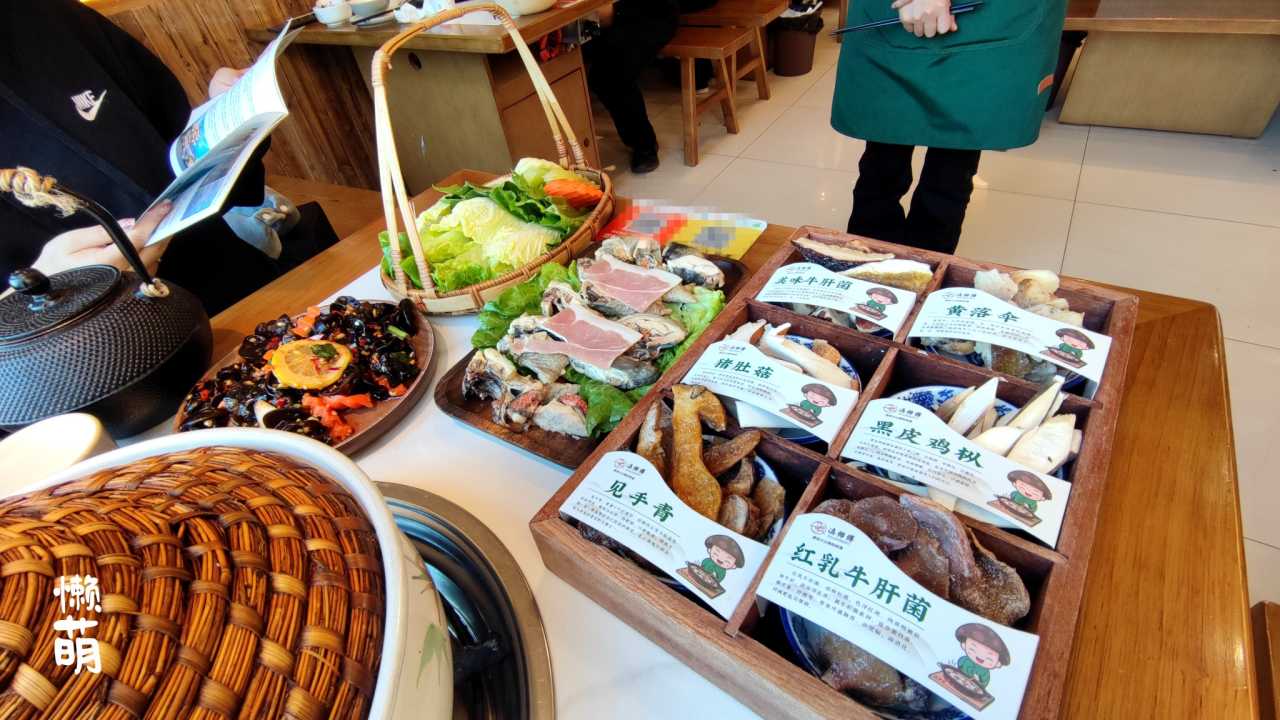
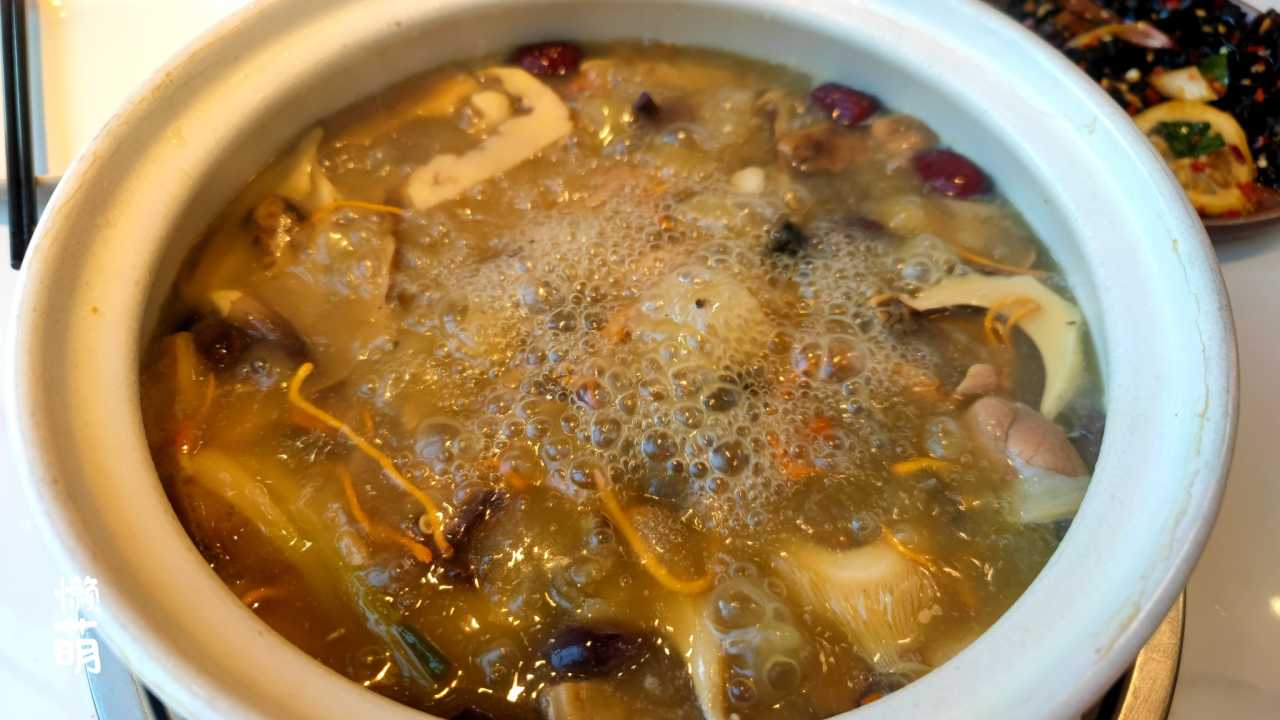
For lunch, we picked a hotpot restaurant near the Dali train station specializing in wild mushrooms. It wasn't mushroom season, so the frozen ones lacked some freshness, but the broth was still delicious — a nice warm-up for my taste buds.
An afternoon high-speed train took us to Baoshan. Picking up the rental car was seamless, and we headed straight for Tengchong. As the wheels rolled over familiar roads, I couldn't help but shout inside: "Tengchong, I'm back!"
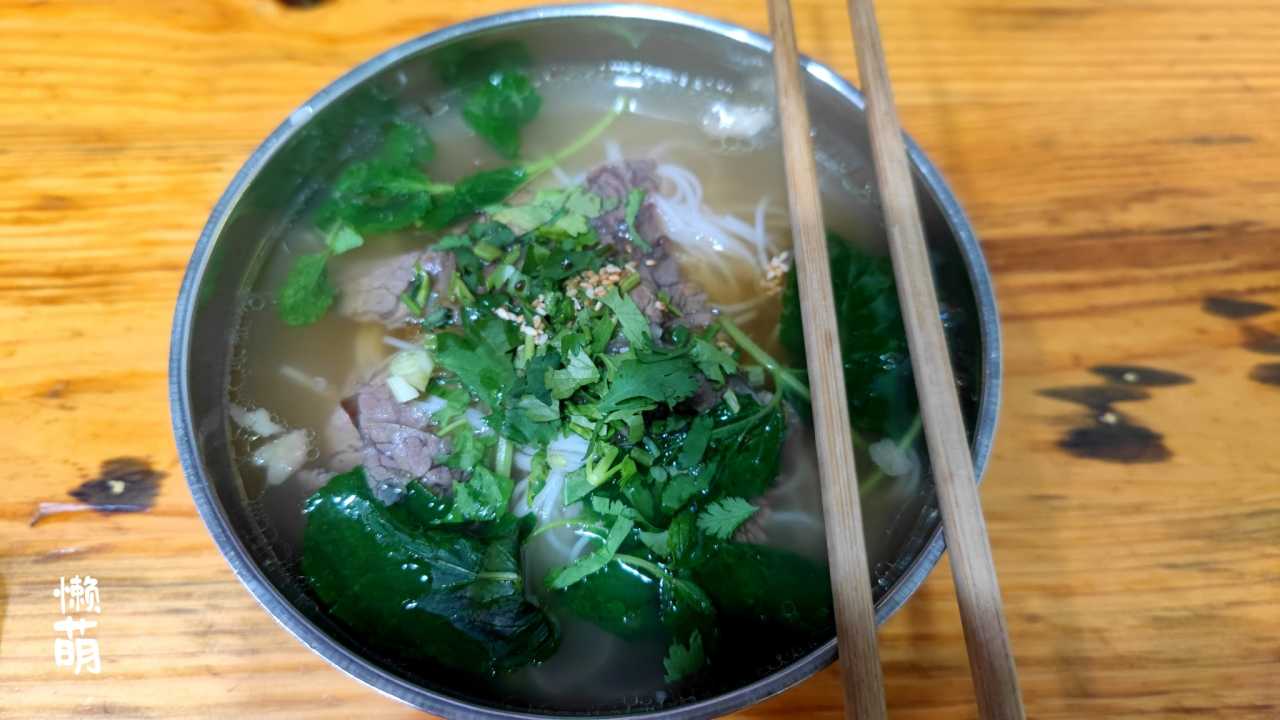
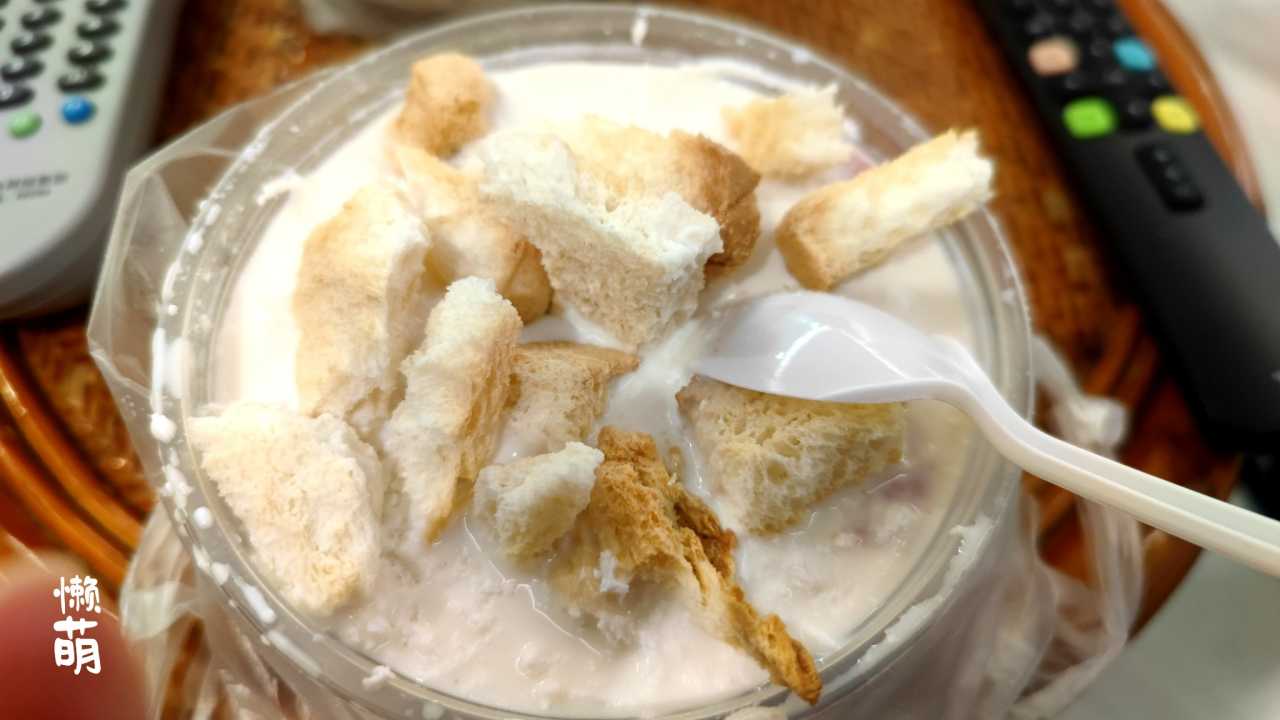
By seven in the evening, we arrived at our booked guesthouse. After a quick rest, we ventured out for dinner. A small rice noodle shop on the street caught our eye, and the fragrance of fresh mint instantly awakened our appetites. Near the school next door, there was a stall selling 泡鲁达 (a sweet coconut-milk drink with bread and tapioca pearls). We grabbed two to-go cups and headed back to the guesthouse — sweet without being cloying, just perfect.
Tengchong Days: Morning Markets, Hiking, and Hot Springs
Day Two: From Qiluo Morning Market to Gaoligong Mountain
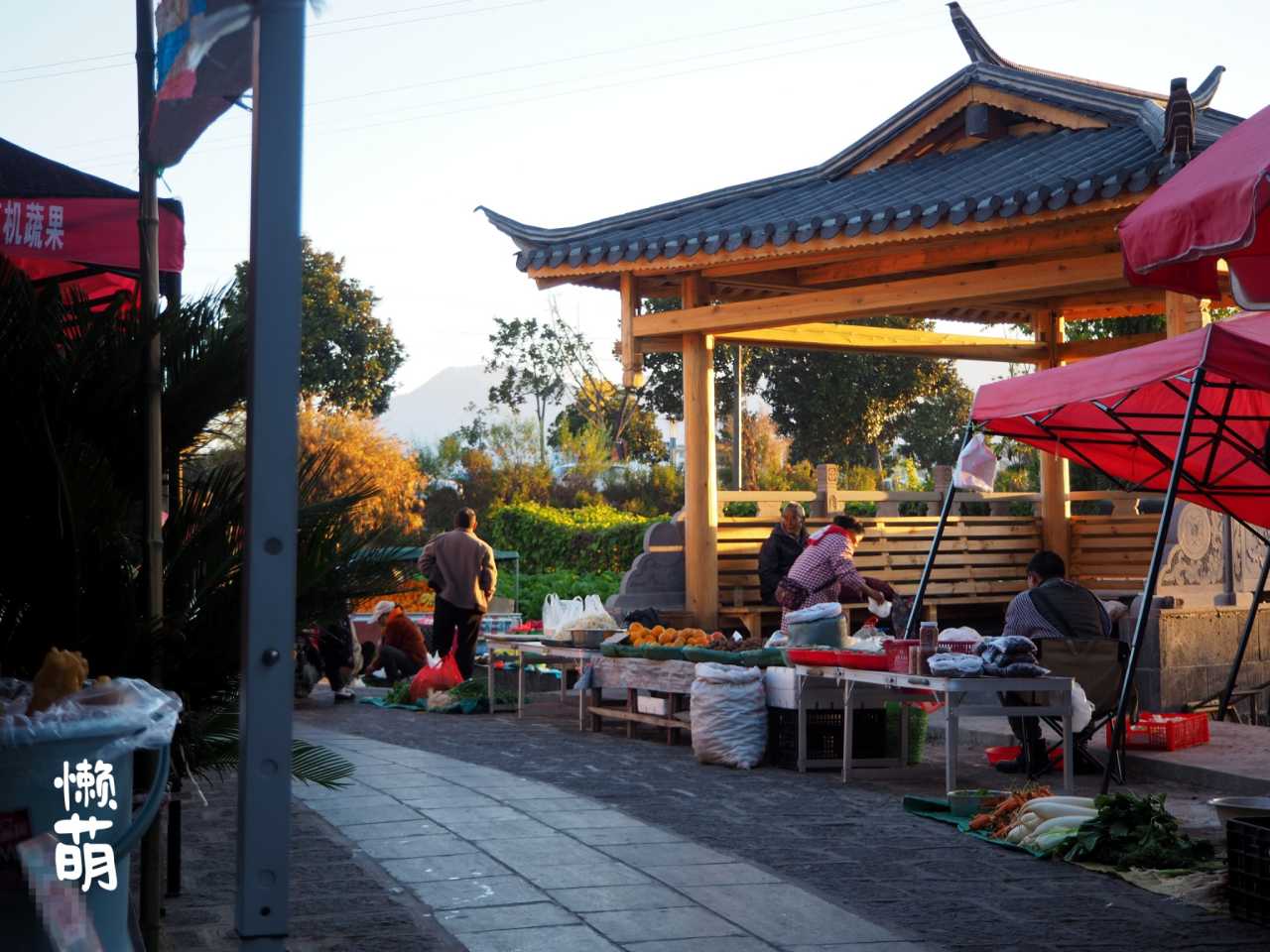
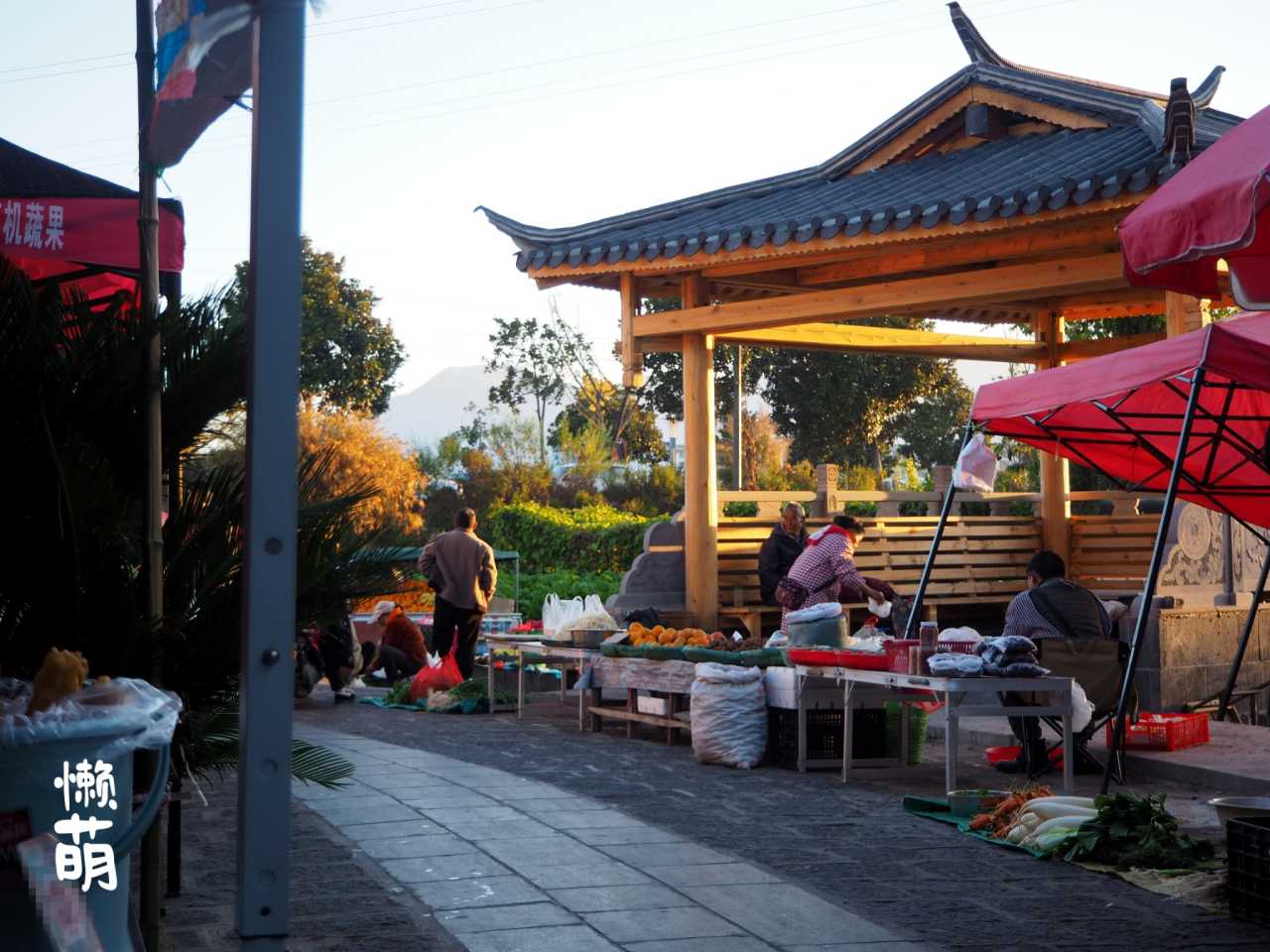
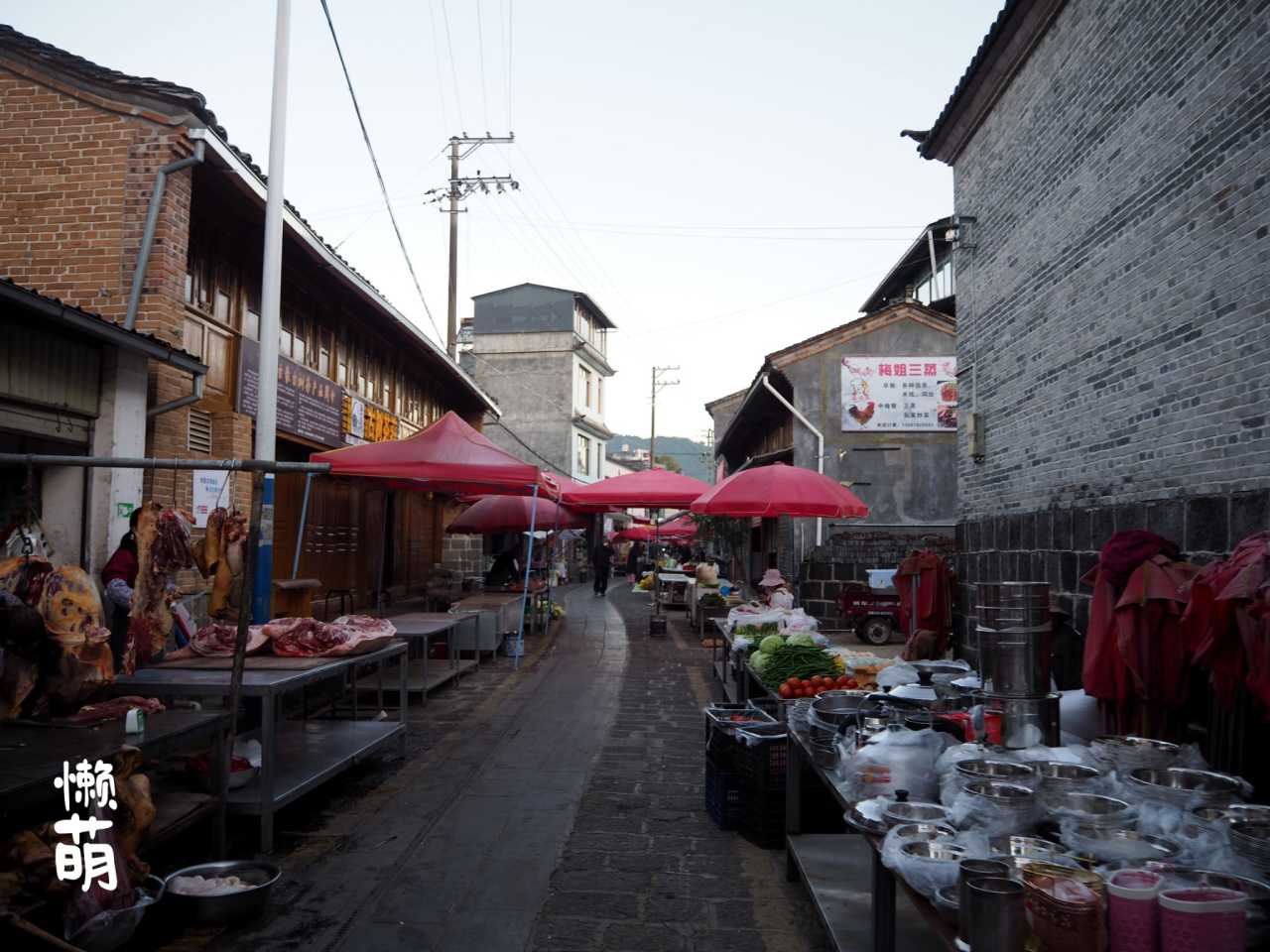
The Qiluo morning market at dawn was nearly empty, as if the entire ancient town was still asleep. We strolled along the main street as the sun just peeked over the horizon, casting warm, slanting light on the pavilions — peaceful and serene.
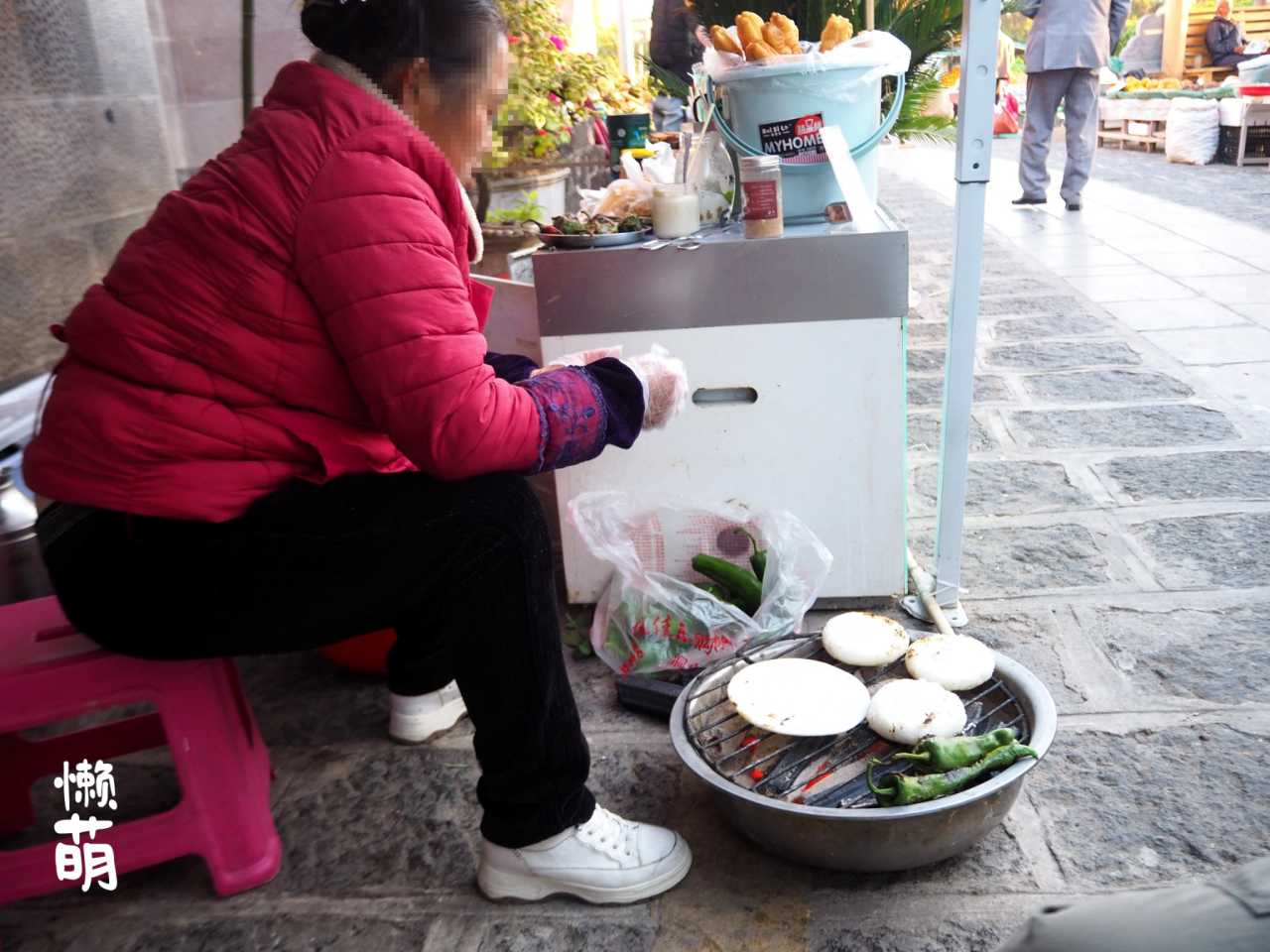
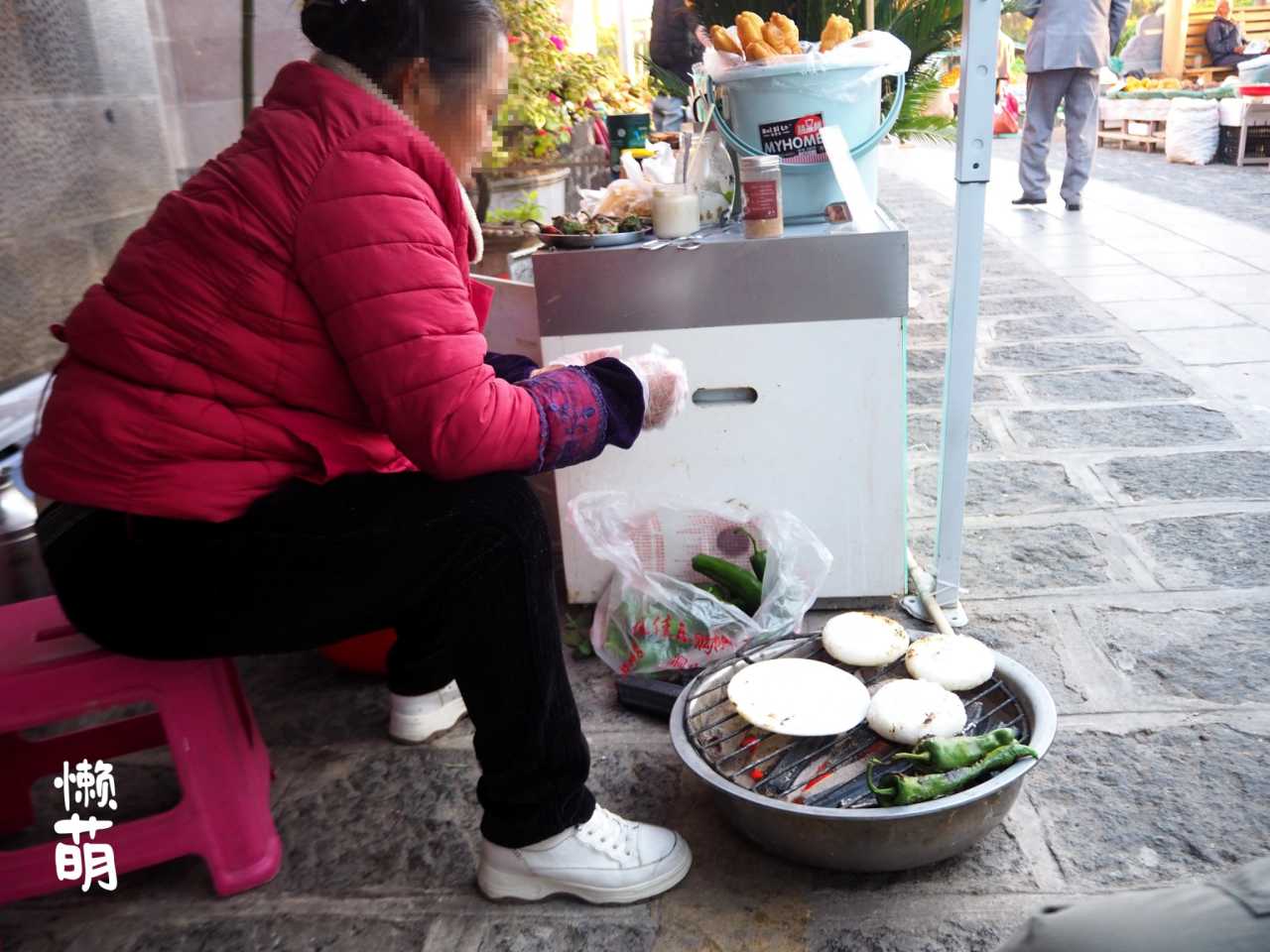
"Auntie, one grilled rice cake, please." The hot 饵块 (grilled rice cake) wrapped in sweet sauce was soft, chewy, and fragrant. Then we tried 稀豆粉 (thin pea flour porridge) with 饵丝 (rice shreds). At first I thought it was soybean flour, but it turned out to be pea flour — silky smooth with a nutty aroma. The Qiluo Library across from the stall was still closed, so I'll have to save that for next time.
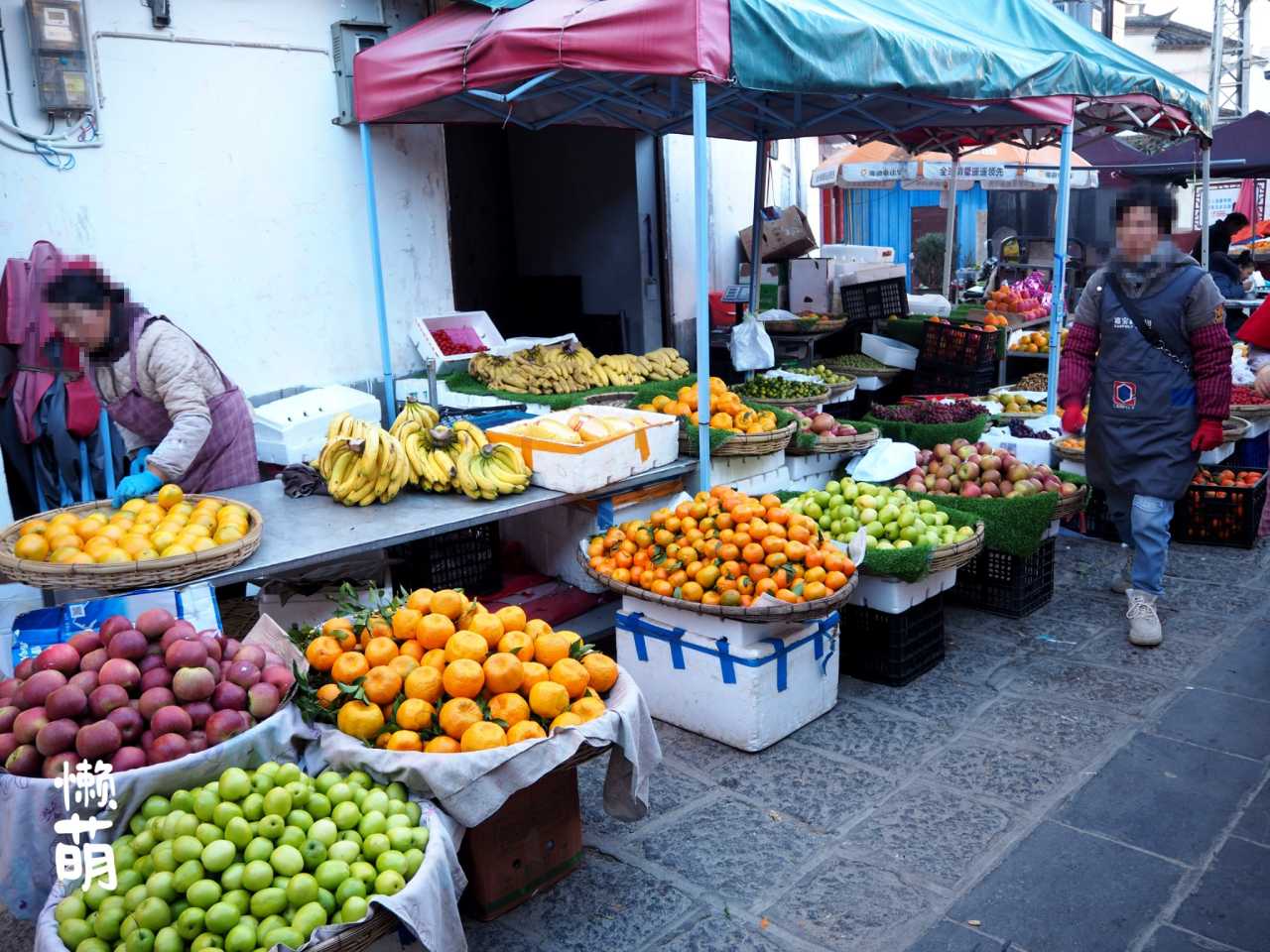
The woven rattan items at the market were beautiful, but after thinking hard about what I'd do with them back home, I gave up. The tomatoes were temptingly red, so I bought some — but they just didn't taste like the ones from my childhood. The 油柑 (Chinese olive) was a pleasant surprise: puckeringly sour and astringent at first, but after swallowing, a slow sweetness spread through my throat. An indescribably wonderful sensation.
Back at the guesthouse, we packed up, checked out, and headed straight for Gaoligong Mountain. On the way to Baihualing, we had to drive down a steep slope and immediately turn right. The incline made me nervous — I worried the rental car wouldn't have enough power for the return trip. Even more dramatic: in the middle of a village road, we encountered a massive snake lying motionless across the path. I carefully adjusted the steering wheel, hoping I hadn't run over it.
Near Gaoligong Mountain, tunnel construction had turned the road into a nightmare of loose gravel. The parking lot was inaccessible, so we had to park on the roadside next to a ditch. My driving confidence was already shaky, and the car's weak engine made me terrified of sliding into the ditch. Just as I panicked, an SUV pulled up. I swallowed my pride and asked the driver for help. He was incredibly kind — not only did he park my car straight, but he also left space in front so I could drive out without even needing to reverse.
Entering Baihualing, we paid the admission fee (really just a forest fire prevention fee). The staff handed us trash bags, explained the route, and we began our hike. The trail was 5 kilometers long with no forks and two restrooms along the way — perfect for beginners. But I quickly realized this was nothing like the "hike" I'd imagined.
It started flat enough, but soon turned into endless uphill and downhill stretches. The waterfall in the distance was our first destination, but as the saying goes, "the mountains laugh at the horseman from afar." Branches kept reaching out to block the path, testing my patience. After the flat sections ended, I was greeted by an endless staircase — for me, climbing stairs is a nightmare.
The staff said it would take an hour to reach the waterfall; I made it in about an hour and a half. After a short rest by the falls and a quick snack, I pushed on. From the waterfall to the hot spring, the staff said 20 minutes; I took under 40. It was a wild hot spring — no shower facilities, just a stone changing room. The water was hot, with a faint sulfur smell. Sitting by the pool, soaking my feet, drinking tea, and basking in the sun — it was so blissful I didn't want to move.
The return trip felt shorter, though I was nearly in despair by the time I spotted the exit. I entered the mountain at 12:35 PM and finished the 5-kilometer "hike" — I'd rather call it "mountain climbing" — in about 3.5 hours. If I ever get another chance, I'll definitely choose the gentler, longer route.
On the way back, the snake was gone — probably gone home. I floored the accelerator and charged up that steep slope. Then came another hour-plus drive to the Rehai (Hot Sea) Beautiful Lady Pool for check-in. Entering the Rehai scenic area through the staff passage, I drove along a winding mountain road with no streetlights, terrified the whole time that I'd slide off the cliff.
After checking in, we went straight to the hotel restaurant for dinner. Simple fare: a bowl of rice noodles or 饵丝 (rice shreds), plus a plate of stir-fried greens. Here, they call this vegetable "油菜" (rapeseed greens) — the same plant that gives us rapeseed flowers. Back home, what we call "油菜" is what Shanghai calls "上海青" (Shanghai bok choy), and here it's called "条儿白" (striped white). After eating, we headed back to the room, freshened up, and went to soak in the hot springs.
Day Three: Rehai, Laifeng Temple, and Heshun Ancient Town
I soaked in the hot springs again in the morning. Before checking out, I went to see the Big Boiling Pot one more time. This time, I took the hotel's shuttle to the entrance, saving myself the bumpy walk from the parking lot like last year. The familiar sulfur smell hit me; the Pearl Spring still had little water. By the Pregnancy Well, an auntie was drinking the well water on behalf of her child — a strangely amusing scene.
The Big Boiling Pot really only looks impressive on sunny days. Last year, we could steam our own eggs there; this year, the scenic area staff handle it all — apparently because some people got into a fight... awkward.
Leaving Rehai, we headed to Laifeng Temple. A few ginkgo trees still lined the road, their leaves golden. Laifeng Temple was first built during the Nanzhao period (8th-9th century) and expanded and renamed in the Ming Dynasty. It's one of Tengchong's most famous temples. Yunnan's succulents grow exceptionally well — I couldn't stop admiring them. Inside the temple grounds, there was a pagoda not open to the public; wind chimes on the eaves chimed softly in the breeze, a lovely sound.
I'd planned to visit Wenbi Pagoda too, but the roadside was lined with local graves, and my companion started feeling uneasy, so we gave up. We headed straight to Heshun Ancient Town, only to find that the Shizi Road community parking lot had raised its prices — last year it was 20 yuan for overnight parking, now it's 30. I decided to park at Parking Lot No. 1 instead — free, with charging stations and a self-service car wash.
The main archway at the scenic area entrance reads "World Tengchong, Peaceful Heshun" on one side and "Inner Harmony, Outer Accord" on the other. What a beautiful wish. We had the guesthouse owner pick us up from the parking lot, settled in, and headed out early for dinner and a stroll.
We went back to "Mom's Flavor" restaurant. The owner gave us three complimentary glasses of house-brewed liquor. The stir-fried rice cakes clumped together into a big lump if left too long; the lemon-and-chili fish tasted just as good as before, though the fish seemed bigger than last year. The pork skin in the braised dish was the best part. Even though we hadn't had a proper lunch, we couldn't finish three dishes — maybe I'm getting older, with eyes bigger than my stomach.
After dinner, it wasn't even six o'clock and still light out. We went to take photos at Mi Long's house (a filming location from the TV drama "The团长"), then visited the Thousand-Hand Guanyin Ancient Tree Cluster — seven century-old camphor trees growing in a straight line, looking from afar like a thousand-armed Guanyin. Three adorable little kid statues made me smile. Finally, we went to Xiao Zui's house. Last year someone was still living there; this year, the door was locked tight. Peering through the crack, I could see the dilapidated interior. Fans of the drama had covered the door with quotes and blessings.
In the evening, we went to a bar. It wasn't crowded — perfect for zoning out.
A Day in Heshun: Slow Life in an Ancient Town

Day Four: Ancestral Halls, Temples, and 30,000 Steps
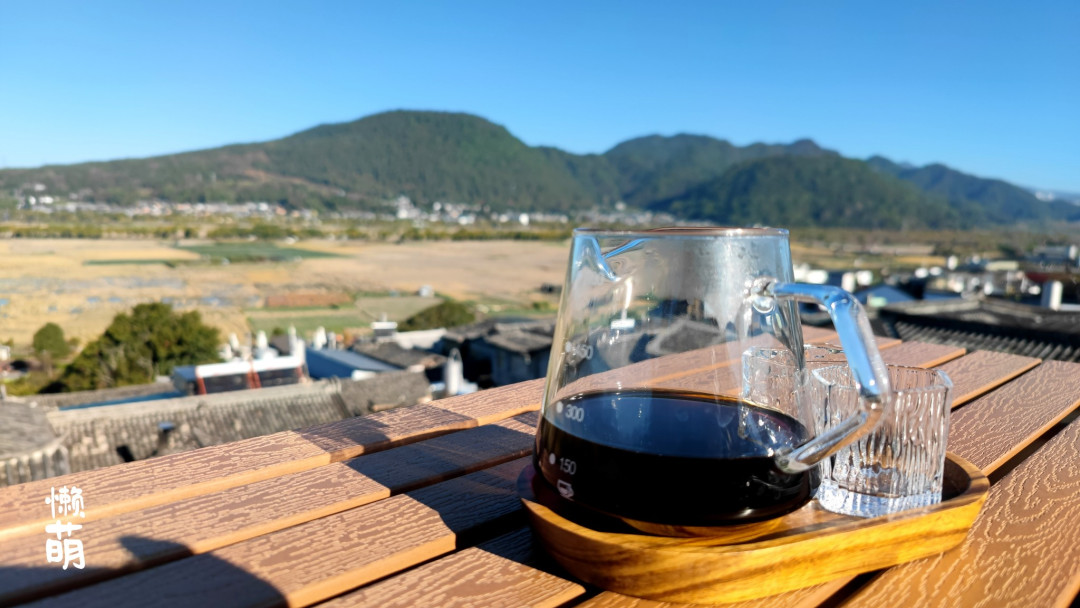
A good day starts at the morning market. A bowl of 稀豆粉 (thin pea flour porridge) with fried dough sticks — the sticks were toasted over fire, crispy — my absolute favorite combo. After eating, we returned to the guesthouse for a pour-over coffee. Yunnan coffee really is good — even I, someone who doesn't usually like coffee, found it delightful.
Starting from the Cun Family Ancestral Hall, we walked slowly along the outer roads. Every small alley had its corresponding archway. The Yin Family Ancestral Hall was the second after the Cuns, once used as a school. The Jia Family Ancestral Hall was closed; the Zhang Family Ancestral Hall wasn't open to the public but was still crowded — because it was a filming location for "The团长."
Passing the lotus pond at Zhangjia Slope, we left the town and headed to Kui Pavilion. Along the way, washing pavilions dotted the landscape — Heshun's most tender public architecture. Kui Pavilion was first built in the Ming Dynasty; Li Genyuan, a former acting premier of the Republic of China, lived here for six months, leaving behind a wealth of inscriptions and poems. Outside the pavilion stands a 500-year-old osmanthus tree — imagine the history it's witnessed.
From Kui Pavilion, we went to Zhongtian Temple. Following the navigation, we took a mountain path lined with more graves. It was hot in the sun, but cold the moment we stepped into shade. Zhongtian Temple was first built in 1635 during the Ming Dynasty and has been renovated multiple times. The temple even offers free bottled water.
In front of the God of Wealth Hall, I thought about how Heshun men, before leaving for Southeast Asia ("走夷方" — going to barbarian lands), would not only worship their ancestors but also come here to pray to the God of Wealth, then set off from the ancient post road in front of the hall. We came across a stall selling 卷粉 (rice noodle rolls) and bought two — basically cold rice noodles wrapped around vegetables.
Wild Duck Lake got its name from its excellent ecology. The lake, surrounded by green mountains and trees, with residential buildings reflected in the water, formed a beautiful painting. Walking along the cultural family corridor by the lake, I spotted a lovely cat — and saw it again the next day.
The old Twin Rainbow Bridge was first built in the early Jiajing period of the Ming Dynasty (1522-1566); the new bridge was built in 1921. Together, they look like a pair of rainbows lying across the water. A stone tablet by the bridge reads: "When the bridge collapses, repair the tablet; when the tablet collapses, repair yourself." Legend says leftover funds from the bridge's construction were buried nearby, but a traveling merchant figured out the riddle and stole the silver.
The Heshun Library, established in 1928, is the largest rural library in China. According to a tour guide, elderly villagers used to come here every afternoon to read books and newspapers. Now with more tourists, that tradition may have faded somewhat. The Wenchang Temple enshrines the Wenchang Emperor, who governs literary fortune and scholarly success. Heshun Alley runs along the Sanhe River, featuring the General's Mansion, the Great Horse Caravan Museum, and the Shadow Puppet Hall.
The General's Mansion was originally the home of Zhang Songlin, a late-Qing general from Tengyue, and has been converted into a guesthouse. The Great Horse Caravan Museum showcases the history of horse caravans on the Southern Silk Road, displaying 571 artifacts. Heshun locals call their entrepreneurial ventures to Southeast Asia "走夷方" (going to barbarian lands). Over 400 years, this made the area one of southwest China's most famous overseas Chinese hometowns.
The Shadow Puppet Hall's collection is the private collection of a local named Jia Zhiwei. The washing pavilions, though no longer used for laundry, have become photography hotspots. The "Water Impression" area is located in the Xianhe Wetland, with a well-maintained ecosystem. The Ai Siqi Memorial Hall was built in 1918 by Ai Siqi's father, Li Yuegai, and donated to the Tengchong county government by Ai Siqi's wife in 1980.
Yuanlong Pavilion was originally the Guanyin Hall and is a Taoist temple integrating Confucianism, Buddhism, and Taoism. That day, I walked nearly every corner of the ancient town — close to 30,000 steps!
Unfortunately, my companion came down with gastroenteritis, and we ended up at Tengchong City Hospital that night. The emergency doctor said it was indigestion from the 稀豆粉 (thin pea flour porridge). Despite the urgency, the doctor was in no hurry at all — he even chatted with other patients while I anxiously waited. There was no queuing system; you just had to wait your turn in person. Small-city life really moves at a slower pace — I guess I need to adjust my mindset.
Day Five: Farewell to Heshun, Moving On to Dali
After an early breakfast, I took my companion for one more stroll around the ancient town. The Li Family Ancestral Hall was built in 1920, featuring couplets by Republican-era elders Tan Yankai and Li Genyuan. The Liu Family Ancestral Hall was built in 1855. After the walk, we returned to the guesthouse to check out. On the way, we passed a Shiba Inu that looked thoroughly unhappy.
For lunch, I chose 烧肉米线 (roast pork rice noodles) — absolutely delicious! I ended the Tengchong section of my travel diary with some "团长" (The团长) photo ops: Xiao Zui, I've come to secretly visit you; Where are my keys?; I said I quit!; Look, do I imitate Krupp well or not?
Practical Guide: For Those Who Want to Visit Tengchong
Transportation Options
There are several ways to reach Tengchong: fly directly to Tuofeng Airport, though plateau weather is unpredictable — thunderstorms might force a diversion to Baoshan or Mangshi; fly to Baoshan or Mangshi and then drive or take a bus; or take the high-speed train to Baoshan Station, then either drive (there are two major rental companies — Shenzhou and Yihai — at the bus station across from Baoshan Station) or use the "Baoxingtong" mini-program to book a direct shuttle.
In my opinion, renting a car locally is the most convenient. Tengchong's attractions are spread far apart, and relying on public transport will cost you a lot of time.
Food Recommendations
After two trips to Tengchong, I've tried: 大救驾 (the "Great Rescue" stir-fried rice cakes), 饵块 (grilled rice cakes), 破酥包 (flaky steamed buns), 稀豆粉 (thin pea flour porridge), 松花糕 (pine pollen cake), 烧肉米线 (roast pork rice noodles), 饵丝 (rice shreds), 卷粉 (rice noodle rolls), and 铜瓢牛肉火锅 (copper-pot beef hotpot). My favorites are 稀豆粉 (thin pea flour porridge) and 烧肉米线 (roast pork rice noodles). But be warned: some people can't tolerate 稀豆粉 (thin pea flour porridge) and may experience diarrhea or bloating — in severe cases, gastroenteritis. If you feel unwell, stop eating it immediately.
Heshun Ancient Town Tips
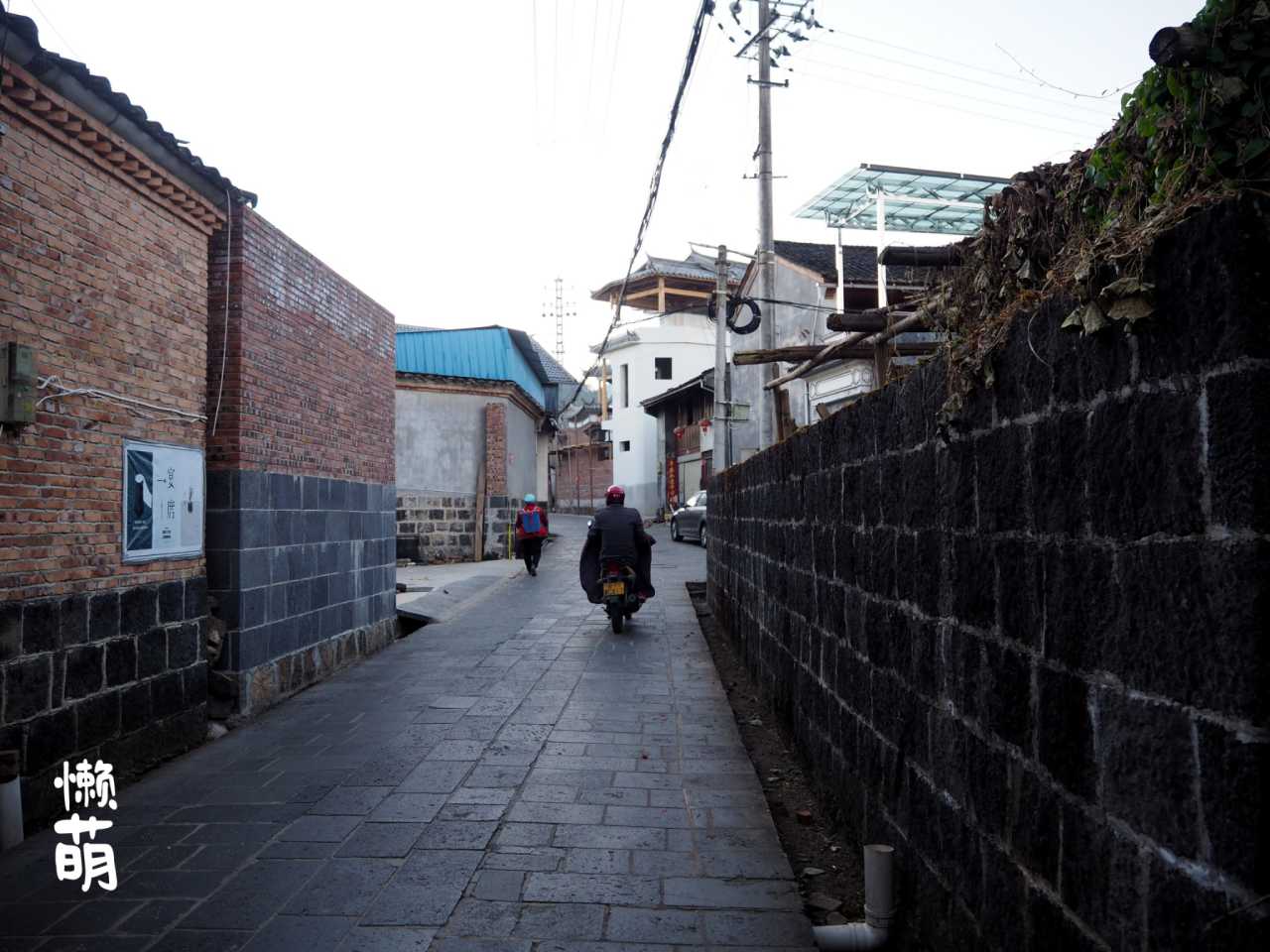
Admission is 55 yuan per person, valid for 7 days with unlimited re-entry — but bring your ID. The ancient town nestles against mountains and water. Where you stay matters. I recommend areas A or B — better facilities and easier access to attractions. To explore the town efficiently, follow a map that avoids backtracking and covers all major sites.
Hot Spring Choices
Tengchong sits on a volcanic and geothermal zone, with countless hot springs. They mainly fall into two categories: carbonated springs and sulfur springs. Sulfur springs, represented by Rehai and Huangguajing, have a distinct "rotten egg" smell and leave your skin silky smooth. Last year, I visited Lotus Hot Spring (carbonated) — many pools, nice environment, but you have to climb stairs between pools. This year, I stayed at Rehai Beautiful Lady Pool (sulfur spring), where the room rate includes unlimited hot spring access, scenic area tickets, and shuttle service — great value. Next time, I'd like to stay at Huangguajing for a proper health retreat.
Final Thoughts
This trip went mostly according to plan. I skipped Ginkgo Village because netizens said all the leaves had fallen. As for Dali's Fengyangyi Village, Wuwei Temple, and the Three Pagodas of Chongsheng Temple — we were too exhausted after coming down from Cangshan Mountain to visit them. Some regrets to save for next time.
My budget was 5,000 yuan — I went slightly over. If four people travel together, the car rental cost would be halved, and the budget wouldn't be exceeded.
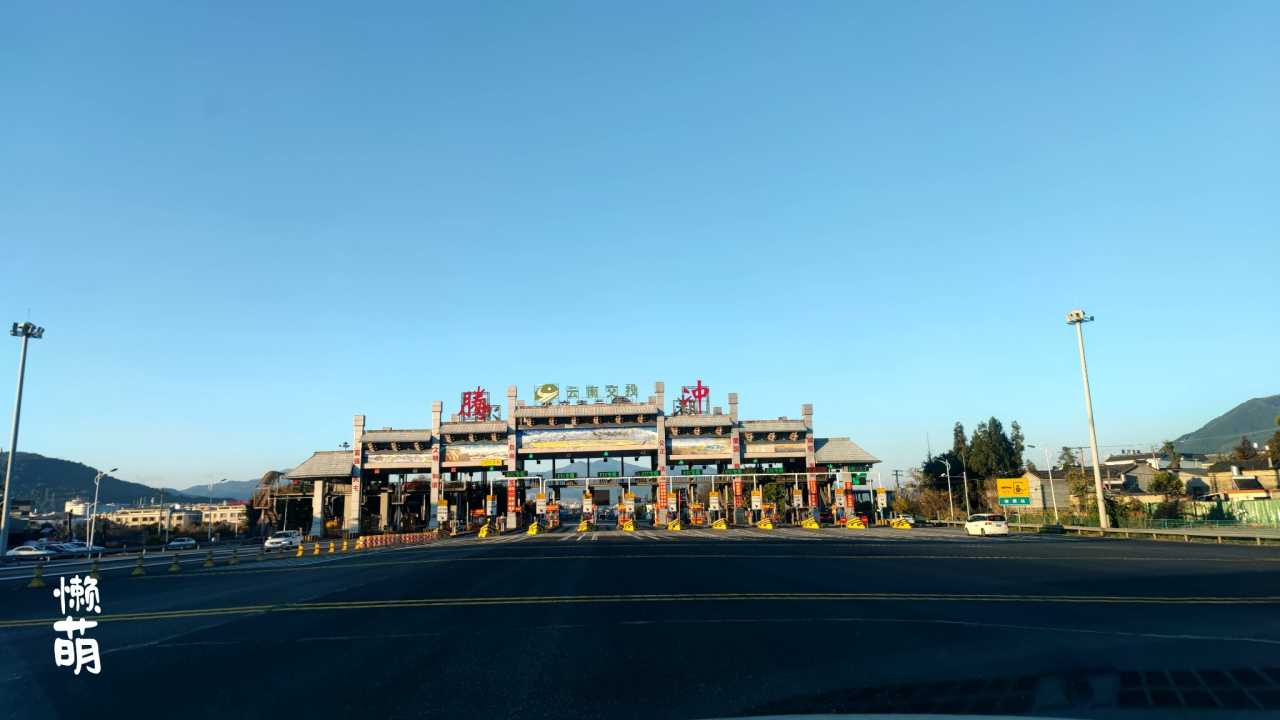
Looking at the driving route, you can see there's only this one highway in and out of Tengchong. It reminds me of the old saying: "To get rich, build roads." When the roads are open, the world gets closer.
Tengchong, I'll be back.
You should also read:

Body in Hell, Heart in Heaven: A Pilgrimage Through Tiger Leaping Gorge — A Dialogue Between Heaven and Earth
Body in Hell, Heart in Heaven: A Pilgrimage Through Tiger Leaping Gorge — A Dialogue Between Heaven and Earth Introduction: When the Gorge Splits Open Beneath Your Feet Some say Tiger Leaping Gorge is the closest place on Earth to the border between "hell" and…
Continue reading...
Cloud Travelogue · Dali of Wind, Flowers, Snow, and Moon: A Three-Day, Two-Night Journey of a Free Spirit
Cloud Travelogue · Dali of Wind, Flowers, Snow, and Moon: A Three-Day, Two-Night Journey of a Free Spirit I am a cultured female foodie with a touch of rogue charm. I slung on my backpack, took my lover's hand, and set off on a spontaneous…
Continue reading...
The Meaning of Travel – A Tengchong Story: A Journey of the Heart and Personal Growth
The Meaning of Travel – A Tengchong Story: A Journey of the Heart and Personal Growth Setting Out, Only to Return a Better Self Some say travel is nothing more than leaving a place you're tired of, only to go to a place where others…
Continue reading...