Reunion with Yunnan: Summer Whispers in Dali, Autumn Love Songs in Lijiang
Reunion with Yunnan: Summer Whispers in Dali, Autumn Love Songs in Lijiang
Some places are destined to be visited again and again, in different seasons, before you can truly unlock all their secrets. For me, Yunnan is exactly that kind of place.
The third time I set foot on this land, I suddenly understood something—our connection with a city is never a one-time encounter, but a promise of repeated reunions. From a decade-long bond with Chongqing to now embracing Yunnan once more, it feels like a gentle reconciliation—with my past self, with those unspoken expectations.
My partner served in the military in Dali for two years, with Cangshan Mountain and Erhai Lake forming the backdrop of his youth. I always tell him he's enviably lucky—how many people get to spend two whole years surrounded by such scenery? As for me, I had already traveled across nearly every inch of Yunnan with my girlfriends on two previous trips. When I was young, Yunnan was a distant dream, the most cherished color in my heart; now, it has become an ordinary city I can fly to on a whim for a weekend getaway.
This June and October, we spent two completely different seasons in Dali and Lijiang. In the prelude of summer and autumn, I recorded two distinct states of mind, which I call "the joy of the ordinary"—those little-known pleasures and quiet touches that radiate a soft glow in memory. Now, I've finally picked up my pen to gather them all.
Summer in Dali: A Pale Blue Dream
Early summer in Dali has the face of a light blue shirt and a white cotton skirt. Sunlight is like scattered gold, the wind moves in adagio, and everything is just right.
Haishé Park: Whispers of Sunlight and Wind
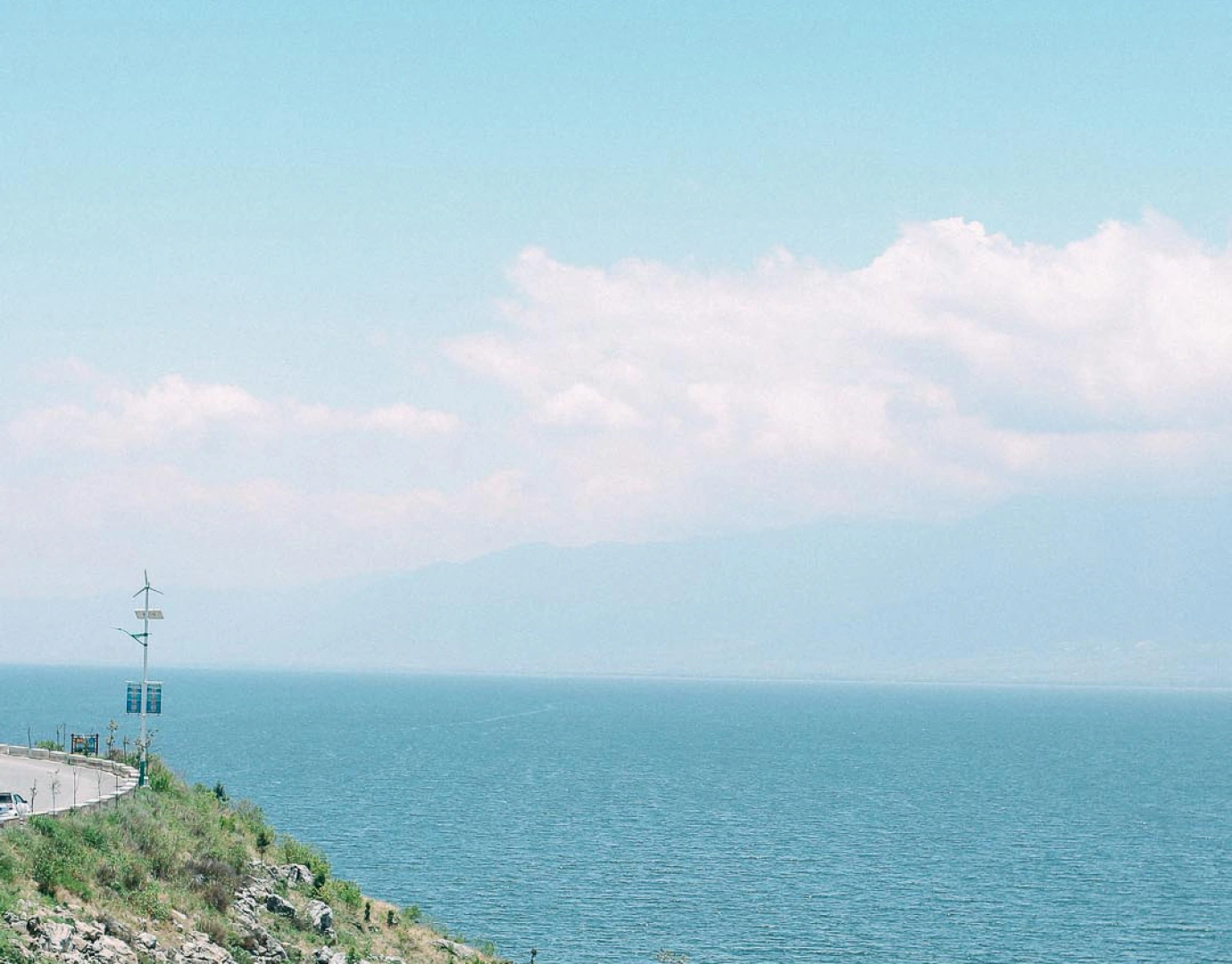
If there's one place in Dali that can instantly quiet me, it's Haishé Park. This long sandbar on the western shore of Erhai Lake, next to Xizhou Ancient Town, was formed by the Wanhua Stream from Cangshan Mountain flowing into the lake, combined with the slow, gentle pressure of Erhai's waters—creating a three-sided peninsula stretching nearly three kilometers into the lake. From above, it looks like a tongue slowly extending into Erhai, hence its name.

Haishé Park holds my most beautiful memories of Dali. It's like a boundary between fast and slow, casting a veil over this little island. There aren't many visitors—just scattered groups here and there, as if they've all silently boarded a train heading to a fairy tale world, ancient and enchanting.
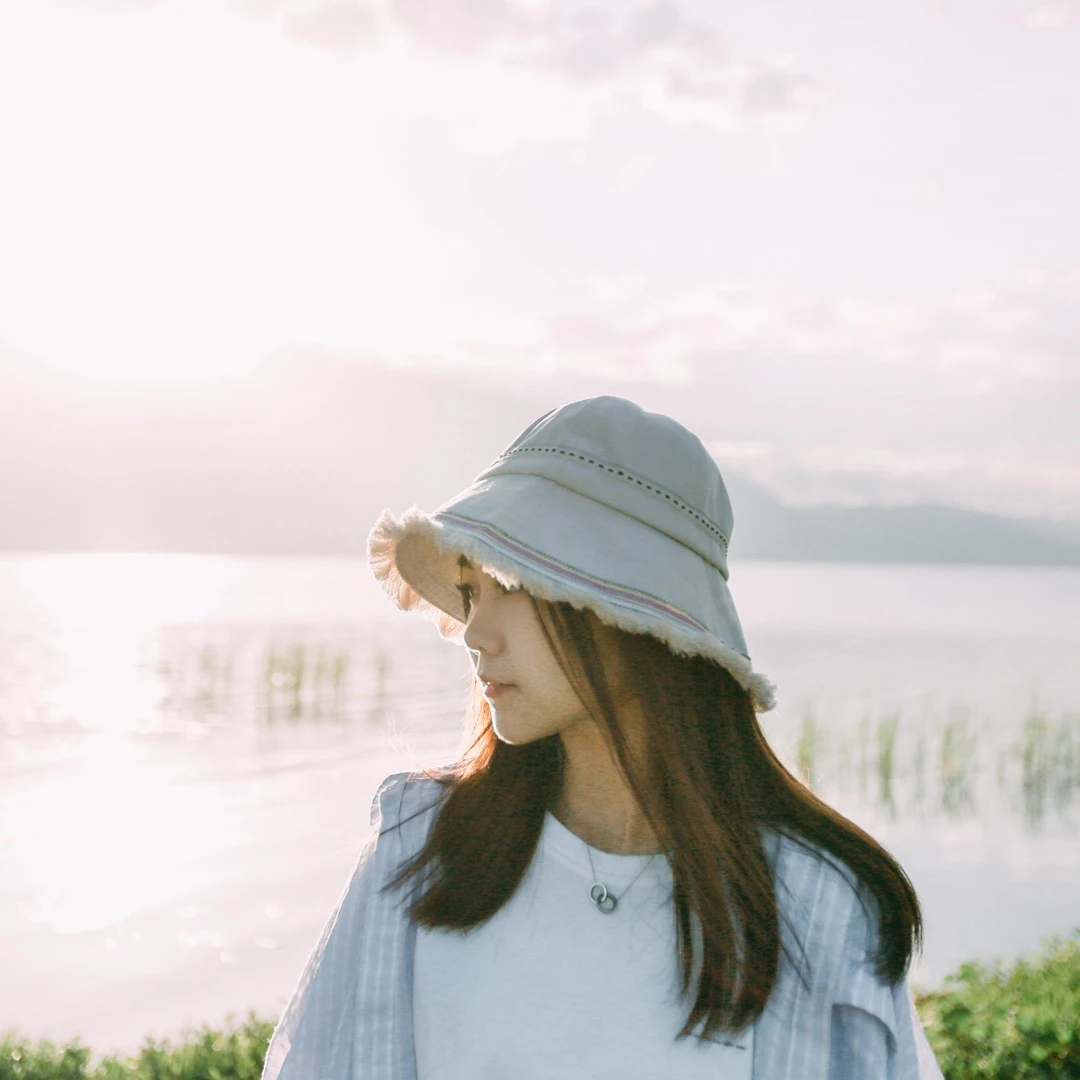
The sunlight is fragmented, the wind sometimes slow, sometimes brisk. I can't remember how long I stayed there, only that I sat on the sandbar at the very end until sunset. The west side of Erhai is completely different from the east—dense groves of trees grow in the water, wetlands spread everywhere, and dead trees are half-submerged, half-exposed to the sun in all kinds of shapes, carrying a kind of desolate beauty. To my left, water so bright it hurt my eyes; to my right, tall, lush forests. The sunlight was lazy and indulgent, the sound of wind barely audible—like walking into a hazy, shifting maze.
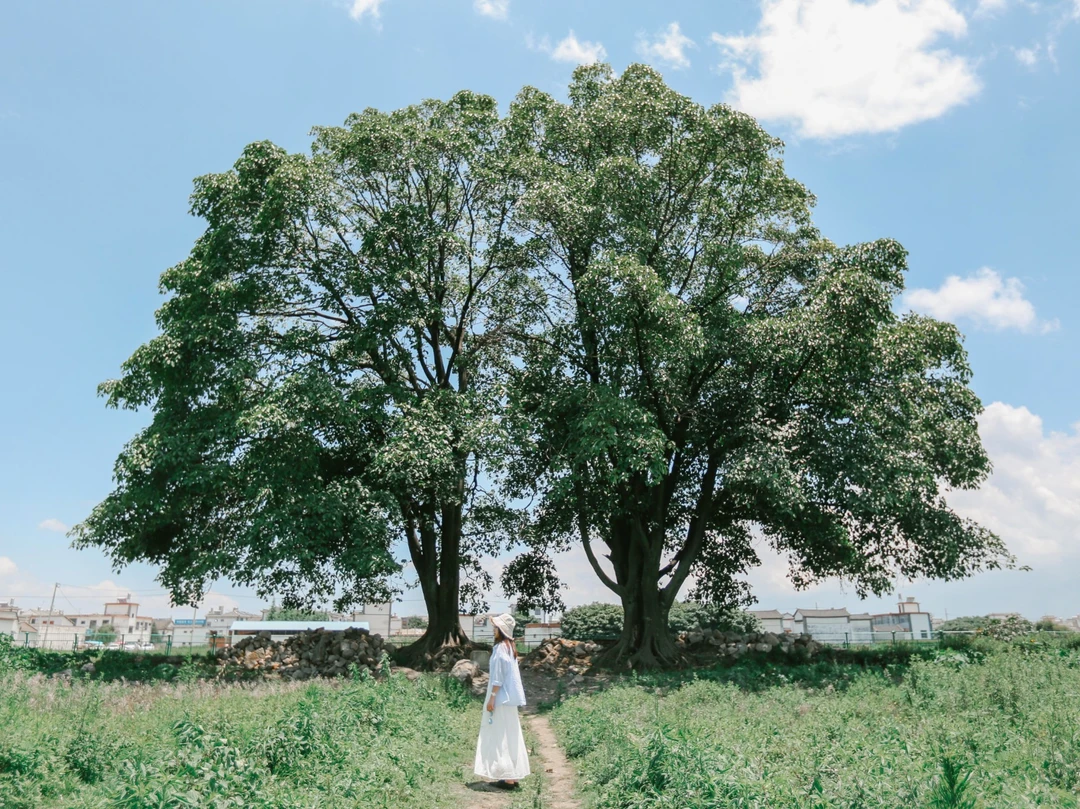
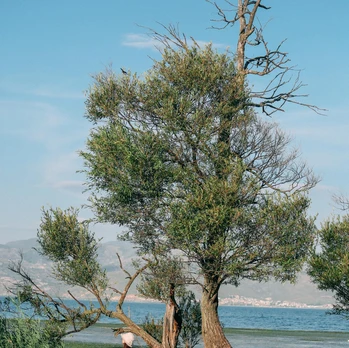
From the parking lot to the deepest part of the park, the road is narrow and uneven. Horse-drawn carts shuttle back and forth, and along the way you'll encounter locals wearing headscarves. I initially set out to find the famous "husband and wife tree," but reached the end with no luck. Later, I discovered it grows quietly at the park's entrance, accessible via a small path from the parking lot. From a distance, it's especially spectacular—a few sheep and cows grazing in the grass, birds chirping sporadically, nothing like the crowds I had imagined.
How could I let such scenery go to waste? I ran back and forth tirelessly, watching horse-drawn carts appear in the distance and then fade away. Communication with my partner was mostly by shouting. Only when I was completely exhausted and swapped spots with a couple riding a scooter did I finally nod in satisfaction—no regrets on this trip. Time to move on to the next stop. In a daze, I felt like I was back in Chiang Mai, back to my carefree teenage years before I had a job.
Xizhou Ancient Town: Time Wandering Through Rice Fields
I prefer Xizhou seen from the car window rather than deep within its alleys. The mud from road construction gets filtered out, leaving only the lush greenery on both sides and the sky—pure and beautiful.
The writer Lao She once described Xizhou: "I can't recall seeing such a decent town in any remote place in China. Entering the town felt like being in Cambridge, England—running water flowed everywhere along the streets... There were grand courtyards like royal palaces, all with carved beams and painted rafters. A town like this set among mountains and waters—truly a paradise on earth."
Today's Xizhou would struggle to recreate that former glory. But the Bai-style courtyards surrounded by rice fields, with their white walls and black tiles half-hidden, and the antique round buildings, still retain that simplicity and purity. The town is small—if you don't love it, it's just a mediocre attraction to kill time; but if you do love it, even a full day and night wouldn't be enough.
With Sifang Street (Square Street) at its center, all the ancient buildings and shops cluster around it. Buy a posu baba (flaky stuffed flatbread) and a milk popsicle, and you've got yourself a luxurious day. The flowers and plants on the rooftops are beautifully tended, and even the clean laundry basks in the sunlight.
When it comes to Xizhou's architecture, besides having the largest collection of Bai-style buildings in the area, its most unique feature is how it absorbs both the characteristics of Western town architecture and the artistic flair of Jiangnan water towns. That's why this ancient town earned the nickname "the Cambridge of the East." The people of Xizhou were shrewd merchants, once called "the Jews of Yunnan," with businesses spread across China, Southeast Asia, and even reaching Europe and North America. They valued both culture and commerce, and as commercial capital accumulated, the word "decent" came to define the town.
Beyond Sifang Street, there are many eateries. The posu baba is a must-try snack in Dali. The savory version is filled with chopped scallions, Sichuan pepper, and minced pork; the sweet version uses diced ham and rose sugar paste for flavor. Both are crispy and delicious. Freshly baked flatbreads are laid out roughly on wooden boards, with a thin layer of oil seeping through the absorbent paper. I was still hesitating over which to choose when my partner bought two and asked the vendor to cut them into smaller pieces. Under the summer eaves, with one in each hand, this was the only way to do justice to such a delicacy.
The milk popsicles weren't that fancy either. Someone recommended Qingliang Xiaowu (Cool Little House), but the town under construction had signs scattered everywhere. I bought one at random, and it was surprisingly delicious—the texture of flowers blended with the richness of milk. For someone like me, who had been to Yunnan multiple times but only knew about flower cakes, this was quite a revelation.
Garden Meadow: That Cloud, That Sea
Ever since I unlocked the skill of driving this year, my quality of life has skyrocketed. My living radius has gradually expanded to two hours or more, and the scenery I encounter has started leaning toward "serendipity." The flower meadow we stumbled upon is nothing unusual by Erhai's shores, but with the white ladder facing Cangshan Mountain and the rare lack of crowds, it earned the top spot on my serendipity list—when I checked the navigation, the location wasn't even on the map yet.
Over the years, the garden meadows around Erhai have ranged from purple verbena to vibrant red roses, always full of creativity. Glass spheres and white buses occupy all the major photo spots. At my age, I genuinely can't bring myself to jostle for position with everyone else. But this patch of purple became the most striking and precious touch along the Erhai loop. I'm sharing it with you with a sense of possessiveness—secretly, we spent at least three hours here shooting.
This place deserves every piece of equipment you have—drone, tripod, mid-range lens, telephoto lens, prime lens. We were also joined by my partner's army buddy, who served in Dali for years and took leave to hang out with us. He said he never knew photography could be done like this—which meant, in all his years in Dali, he'd never played like this. My partner has always had a knack for making close friends; the two of them took better couple shots together than actual couples.
Practical Tips: - Entry fee: 20 yuan. The main flowers are verbena, with a small amount of hydrangeas and roses - Address: Near the town government of Wanqiao Town, Dali Town (drive north along Dali Road) - Driving tip: Make sure your speakers are good! Renting a car with built-in music is crucial—we really felt this when we went on trips around Hangzhou afterward—it's like the difference between version 1.0 and 2.0.
Dali University: I Came to Your City
Returning to the old town around dusk, tree shadows surged past the car window. The distant mountains turned a deep purple—this is the most comfortable time of day in Dali.
The campus far exceeded my expectations. Sitting atop the thousand-plus steps, you can gaze at the azure Erhai Lake, so soft it brings back countless memories. The Tyndall light scattering behind the teaching building is still etched in my mind—I treat it as a special gift this city gave me.
It was during vacation, so the campus was empty. I saw a girl wearing headphones, sitting on the steps, bathed in golden light—so beautiful it felt unreal. There were also young men walking together in the wind, making me a little envious.
My partner's military unit was right at the foot of Dali University. During his two years of service, he didn't have much time to appreciate the city's beauty. He said every day was routine—no phone in his pocket, no need for much money. He thought he'd just go through the standard two-year process, until one day he got injured during training and was sent to recuperate at a grassroots unit. There, he started dabbling in journalism—half-studying, half-learning, half-practicing—and eventually abandoned medicine for writing. For him, this time here felt like a fated turning point, every step a memory.
As night fell, we agreed without discussion to have dinner at the barbecue street outside the school gate. A bowl of xiaoguo mixian (small-pot rice noodles) and a plate of sizzling barbecue was enough to soothe the day's fatigue. It seems every school has such a street, nicknamed "trash street" or "degenerate street," carrying the simplest and most delicious food memories of student life.
My partner and his buddy rushed to pay the bill, while I was in charge of finding a seat. But we underestimated how busy the barbecue place was—waiting an hour was normal. The barbecue here is different from elsewhere; perhaps because of the region, it had a hint of Thai and Burmese influence. Green leaves served as plates, and skewers fresh off the grill sizzled with steaming hot aroma. Cumin and chili powder gave the juicy lamb a new soul, conquering every inch of flavor. I had already eaten the rice noodles and thought I had no room left, but I still couldn't resist polishing off quite a bit, letting out a satisfied burp. A life that doesn't cut corners on food—that's probably a sign of taking life seriously.
Shuanglang Town: An Old Friend in Dreams of Mountains and Rivers
On the second day of our Erhai loop tour, after much hesitation, I still chose to visit Shuanglang—a place that could already be called a "ghost town." Having seen Shuanglang in its heyday, I was still shocked by its desolation. The only consolation was that the water of Erhai was still clear.
The natural photo studios by the lakeside were still there, but no longer attached to hotels. The privately managed props—glass spheres, white tables, swings—still had fierce competition. Twenty to thirty yuan per person got you in to shoot for a long time. Each area was cordoned off, some even offering tripod rentals and wedding dress and red skirt rentals, enthusiastically calling out for you to come take photos—this is the best view of Erhai!
My partner found these photo services pointless, but he couldn't win against me and reluctantly gave in. Exposed to the sun by the lakeside for too long, the floor was scorching. Walking on it barefoot, I felt like the barbecue I'd eaten the night before, but without any happiness. I couldn't bring myself to smile; I felt I wasn't even dressed right—the yellow dress I'd prepared for a trip to Myanmar this year felt completely out of place here.
When lunchtime came, we tried to find a restaurant, but all the reviews online were useless—there weren't enough restaurants to choose from. At a roadside stall at the intersection, we ordered a plate of small shrimp, a vegetable dish, and a serving of fried noodles. Maybe because we were hungry, it was incredibly satisfying. On a journey, the happiness that a staple food brings gets magnified many times over.
I can't give more recommendations, because I don't know if the little shops and restaurants I visited are still open, or what Shuanglang's future holds, or how those dusty lakeside inns will revive. In my heart, Shuanglang's beauty probably only lives forever in memory.
Wase Town: The Vanished Water Path
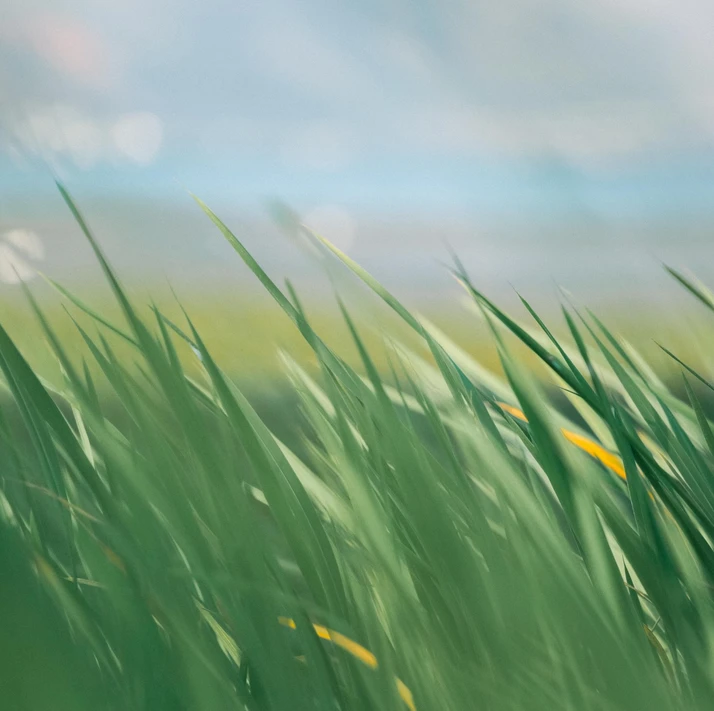
Wase, anciently called Luchuan, is backed by mountains on three sides and faces the lake on one, bordering Shuanglang to the north. It's not only one of the birthplaces of Bai indigenous culture in the Erhai region, but also a religious and cultural center on the eastern shore. In winter, seagulls by the water add a spiritual touch to Wase, while in summer, the water path brings lively crowds.
Unfortunately, when we arrived, the water level was low, so dry that I had no interest in taking photos. Since last year, the Wase water path was closed for a time due to safety concerns at the location. Even now, you can still see locked iron gates, as if ready for the next alert at any moment.
As one of the more popular stops on the eastern shore, Wase was filled with small wedding photo groups, scattered in pairs along the lake. Not far from the water path, there's a small grove of trees and some upside-down colorful boats—if the weather is good, it can make for great photos. The village was bustling with people, and quiet paths stretched from one village to another, with ancient Bai-style houses lining the water. It's said that Wase holds a big market on the 5th and 10th of each month, drawing villagers from near and far—a great opportunity to observe Bai customs up close. If you happen to be there, don't miss it.
Zhoucheng Village: A Couple's Photo at the Tie-Dye Workshop
Zhoucheng is the home of Bai tie-dyeing, and the colorful printed fabrics along the streets create a dazzling spectacle. The most common pattern is blue flowers on a white background, made by hand-stitching and then dyeing. Legend has it that this craft dates back to the Qin and Han dynasties, and today, the ancient techniques still survive in the hands of the older generation in the village.
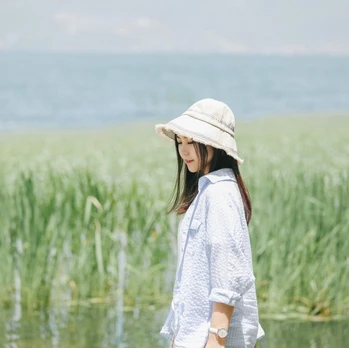
Tie-dye workshops can be found everywhere in Zhoucheng. Even if you wander aimlessly, one or two Bai grandmothers will call out to you: "Come sit in the dye workshop for a while." The Duan Lidong Tie-Dye Workshop is at the end of the village, reached by driving through a field and past a lively market. The square courtyard was already filled with visitors, forming a loop from the dyeing process to the sales area. Fortunately, even if you don't buy anything, you're free to take photos. This confusion lasted until we left—when we stepped out, another workshop owner invited us in, and I realized that perhaps tourism in this secluded village isn't thriving. The hustle and bustle that popularity brings had become rare in this world-withdrawn place.
At the entrance of the workshop was a small alley of printed fabrics. I took a closer look: a perfect photo spot! Even without a tripod, I propped up a red brick on the steps a meter away, and it held steady.
Actually, the market we missed in Wase was more than made up for in Zhoucheng. Besides the authentic Bai culture, Zhoucheng's market was the liveliest stop on the loop—all kinds of local snacks, locals in ethnic costumes carrying bamboo baskets as they walked back and forth. At the entrance to the village, there was an ancient stage and two big banyan trees. Although the village was also under renovation, this market diluted all my negative judgments. It felt like a hybrid—while the outside world was being consumed by commercialization, this place still retained a unique simplicity. In this semi-open village, you won't see the ubiquitous glass spheres and swings, but you can feel the vibrant longing behind the ancient village.
At the village entrance, we saw a stall selling shredded chicken cold noodles. Three yuan a serving. My partner ordered two, and they were explosively delicious—I still think about them to this day. The pea jelly comes in yellow and white varieties. When no one's buying, it's covered with a white cotton cloth; when a customer arrives, the vendor lifts the cloth and lets you judge the portion as they cut it. If one serving isn't enough, you can add noodles, ensuring you get to taste everything.
Jizhao Nunnery: The Zen of a Bowl of Vegetarian Food
On our last stop in Dali, we finally made it to Jizhao Nunnery.
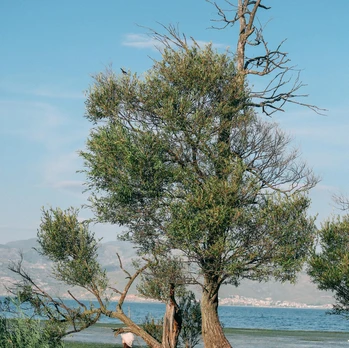
Located on Gantong Mountain in Cangshan, besides the lush greenery and ancient cypress and bamboo, most people come here for a bowl of vegetarian food that's served only during a specific window, and for the garden full of succulents. How good was it? I ignored the warnings and went back for seconds, turning a blind eye to the sign that said "Don't waste a single grain of rice"—that's probably the highest praise I can give this meal. Subconsciously, vegetarian food always feels light and healthy, like it won't make you gain weight, but you can't help eating too much.
The courtyard was packed with visitors holding ceramic bowls, a massive crowd. I once heard that vegetarian food can be made to taste like meat, with rich layers that satisfy your cravings for different flavors. At the very least, after my trip to Dali, I gained a whole new understanding of vegetarian food—food without meat can be so wonderful, achieving a kind of balance on the palate.
Ending the trip at Jizhao Nunnery was a fantastic experience for someone about to leave. If a city can keep you with its flavors, that impression can't be bad. Back in Hangzhou, I often think of that bowl of vegetarian food—it might not be top-tier ingredients, and there was no fancy dining environment, but it represents our most unique experience in Dali. Especially when I think about how the mountain road was narrow and winding, how as a novice driver I was on edge, and yet there was the anticipation of a bowl of food waiting for me—it felt truly magical.
Practical Tips: - Opening hours: All day - Admission: Free - Lunch time: 11:00-12:00, Dinner time: 18:00 - Free vegetarian meals on the 1st and 15th of each lunar month and on weekends; 20 yuan at other times. Alipay and WeChat Pay accepted. Reservations can be made in advance. - Plan your timing carefully, as the queues for the meal can be very long.
Autumn in Lijiang: Summer's Colors Fade, Autumn's Leaves Sing
As the lingering notes of summer stretch on, autumn follows close behind. Neither my partner nor I had ever imagined that we'd return to Yunnan this autumn, completing the chapters of two seasons.
Late autumn in the old town is still warm during the day and cold at night. Step into the shade of a tree, and within moments, a chill sets in. I've always remembered that the "old town" refers to Dayan Old Town, while Shuhe is Shuhe. Years later, after traveling through countless mountains and rivers and returning to Lijiang, I found that what fills me with memories isn't the blue-stone alleys or the suffocating climb up Jade Dragon Snow Mountain, but that slightly warm and radiant "one meter of sunlight."
Xinge was the manager of our guesthouse. From our casual contact with her, it was clear this trip would break the mold. The driver picked us up at the airport, and she was waiting at the north gate of the Ancient City Management Committee, cracking sunflower seeds, like a neighbor's little sister waiting at her doorstep. We wound through a few alleys and within minutes arrived at this small courtyard with Naxi characteristics. Since it was the off-season, there were few guests at the inn, giving us a rare sense of tranquility.
The courtyard was full of flowers and plants. On the rooftop, there was a balcony with flowing curtains, a swaying swing, and clear weather—more than enough for me. Long time no see, Lijiang.
Not far from the inn was the former residence of Fang Guoyu, and a few steps away, a creative goods store that offered slow mail and sold dream catchers, keychains, and other Lijiang-related trinkets. Every time I passed by, I couldn't help but step in for a look, even if I bought nothing. During the day, it was a vintage market-style shop; push through the curtain, and it turned into a café and bar. Sometimes there was a live singer, but there were few customers—hidden away, as if waiting for you to discover it.
Snow Mountain Road: A Fragrant Journey
Before leaving, we had considered making it just a weekend trip, not wanting to rush through attractions—I'd already visited many of the usual spots years ago. So when we started our proper loop on the second day, we ended up with an atypical Lijiang itinerary: drive wherever the road takes you. If you like, you can call it "unlocking more offbeat Lijiang experiences."
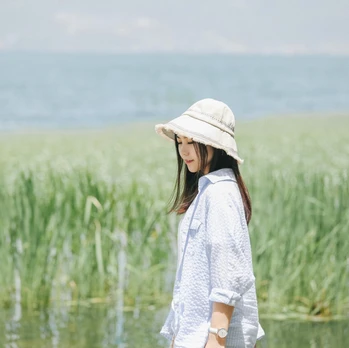
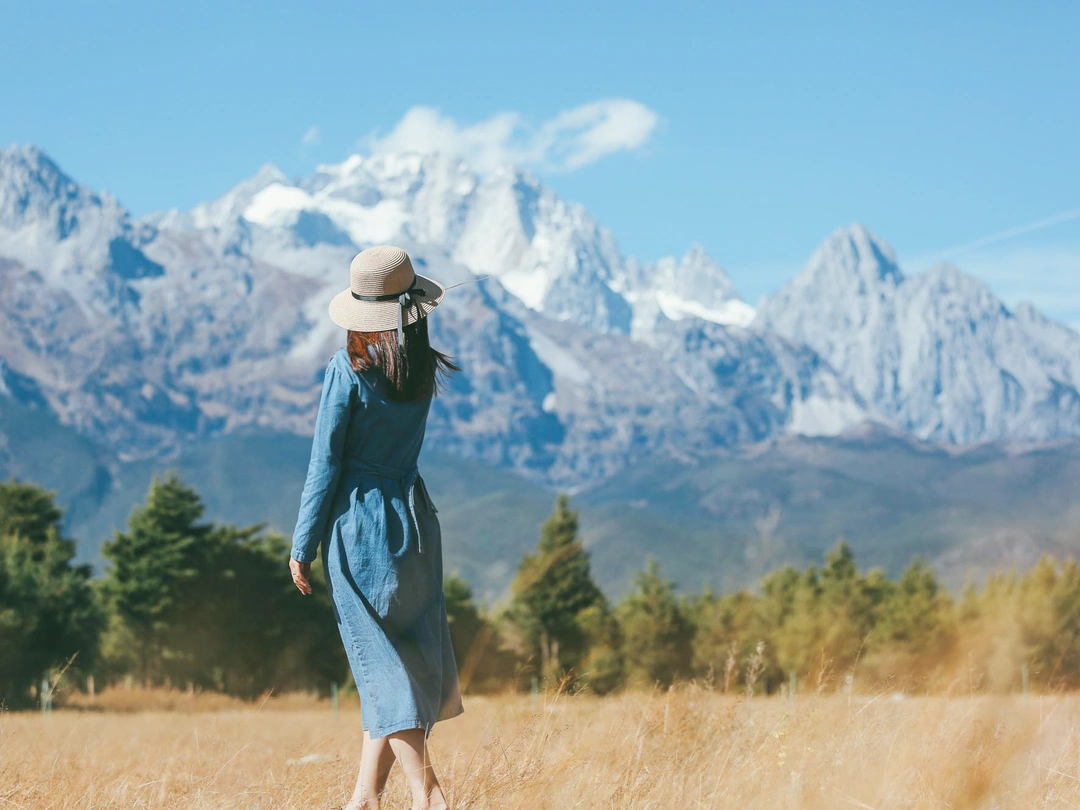
Snow Mountain Road is a road in Lijiang where you can see the mountain. It runs straight from the old town toward Jade Dragon Snow Mountain. Cherry blossoms in spring, snow-capped mountains year-round—along the way, you'll encounter forests, reeds, rivers, and all the beauty of getting close to nature. On this trip, the best part wasn't the city, but the endless road.
Stopping wherever we wanted was the advantage of self-driving, and it forced us to focus on the scenery outside and discover different beauties. But sometimes, we just rolled down the windows, chatted idly, and let things happen.
At the midpoint of Snow Mountain Road, there was an open space. In fact, if you drive in this direction, you'll easily spot such a clearing—there might be a sign for a wedding photography base by the roadside, but with barely anyone around, just the occasional car passing by. The snow-capped mountain was right there, and in the distance, a strip of green vegetation formed a layered three-dimensional painting. We probably spent over an hour shooting here. I even felt we stayed longer than the wedding photo group nearby. When we drove further on to look for more spots, I still felt without a doubt that this was the best shooting location of the day.
Thank you, Xinge, for taking our photos. In that moment, I felt I should dig out my dusty Polaroid from home—leaving a paper record like this from every trip. I won't tell you that we ran out of battery here, and had no choice but to drive back first, carrying many regrets in my heart.
Wenchang Palace: The Most Beautiful Rooftops
Wenchang Palace is the second place in the old town, after Wangulou, where you can see a panoramic view of Lijiang. Leaving from Sifang Street, we followed a narrow path and arrived out of breath. The Qing Dynasty architecture was truly antique, and the Naxi script on both sides of the road added some ethnic character. Walking along, you face Jade Dragon Snow Mountain. It's said this was also the main filming location for the TV series "One Meter of Sunlight."
The small square at the entrance is a high point with a full view—neat rooftops, the faint morning light, the entire old town laid out before you, as beautiful as the first time you see it.
Practical Tips: - Price: Free - Hours: 8:00-18:00 - Transport: Take bus route 16 to Qixing Street, then walk 1,000 meters
Qingxi Reservoir: Let's Go on a Date
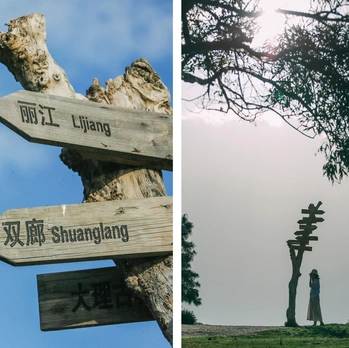
Qingxi Reservoir is probably where school kids go on dates after class. Across the lake, you can see Jade Dragon Snow Mountain. It's also Lijiang's drinking water source, and the clear water reflects the surrounding mountains and grass, offering an especially open view.
Xinge told us that when she was studying in Lijiang, she would come here to stroll after school and never thought it was particularly beautiful. It wasn't until she left Lijiang that she started to miss the sunshine and air here, which is why she came back to become a local again. The reservoir isn't far from the old town, and along the way, you can see the snow-capped mountain wrapped in clouds from a distance.
Final Thoughts: The Joy of the Ordinary, Most Moving of All
From summer in Dali to autumn in Lijiang—two seasons, two states of mind. I often wonder why certain places stay with us. The answer, perhaps, lies not in the famous attractions, but in those small, fleeting moments—the sunset at Haishé Park, the wind through the rice fields of Xizhou, that bowl of vegetarian food at Jizhao Nunnery, a pause on Snow Mountain Road.
This is what I call "the joy of the ordinary"—those little-known pleasures and quiet touches that radiate a soft glow in memory. They don't need to be dramatic or deliberately embellished. They just exist, quietly, waiting for you to remember them on some afternoon or late at night, and then smile to yourself.
What Yunnan has taught me, perhaps, is to discover surprise in the ordinary and to find difference in repetition. Every reunion is a new beginning.
If you're also planning a trip to Yunnan, here are a few tips: 1. Self-driving is the best way—especially around Erhai Lake in Dali and along Snow Mountain Road in Lijiang. It gives you freedom and lets you stop anytime to discover surprises. 2. Season matters—Summer in Dali and autumn in Lijiang each have their own charm, and both are excellent travel seasons. 3. Don't just focus on popular spots—Places like Haishé Park, Zhoucheng's tie-dye workshop, and Jizhao Nunnery are relatively off the beaten path and can offer you the most unique experiences. 4. Slow down—Yunnan's beauty lies in the details, in those unexpected little moments of happiness.
May you also find your own "joy of the ordinary" on your journey.
You should also read:
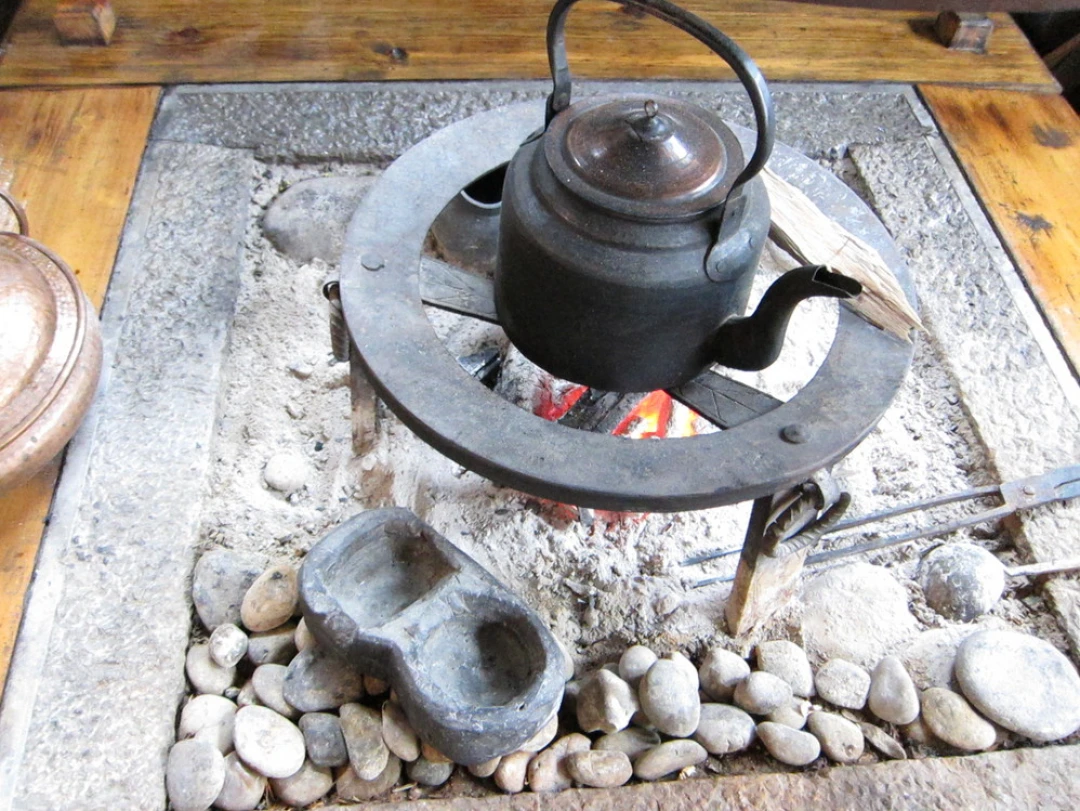
Dreaming of Lijiang, Dreaming of Shangri-La: A Journey That Lets Your Soul Breathe Deeply
Dreaming of Lijiang, Dreaming of Shangri-La: A Journey That Lets Your Soul Breathe Deeply Life is like a long trek. We're always rushing through the concrete jungle, searching for a glimmer of light in the monotony of our days. Then one autumn, I heard the…
Continue reading...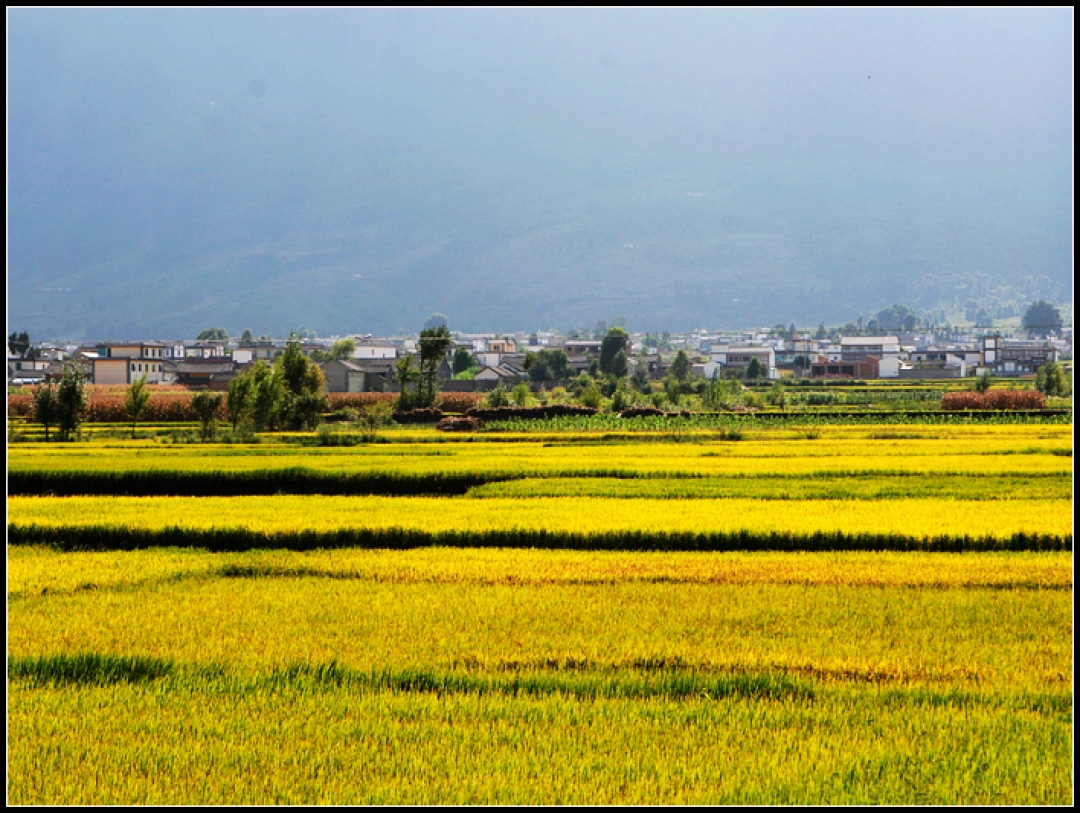
A 9-Day Yunnan Journey: From Lijiang to Dali to Tengchong – A Trip Toward Self-Reconciliation
A 9-Day Yunnan Journey: From Lijiang to Dali to Tengchong – A Trip Toward Self-Reconciliation Some say travel is simply going from a place you're tired of to a place other people are tired of. It stings to hear, but it's painfully true. Yet there's…
Continue reading...
Dreamland – Lijiang: A Talking Comic Travel Guide
Dreamland – Lijiang: A Talking Comic Travel Guide Prologue: When Lijiang Takes Root in Your Heart Some places leave a mark on you forever. They're like an old song on repeat, suddenly playing in your mind on an ordinary afternoon. For me, Lijiang is that…
Continue reading...