Reverse Travel Guide: Self-Driving the Shangri-La Eastern Loop – A Spring Symphony of Snow Mountains, Flower Seas, and Tiger Leaping Gorge
Reverse Travel Guide: Self-Driving the Shangri-La Eastern Loop – A Spring Symphony of Snow Mountains, Flower Seas, and Tiger Leaping Gorge
When the city's clamor becomes suffocating and the usual tourist routes are packed with crowds, perhaps it's time to try "reverse travel" – avoid the masses, take a lesser-known route, and encounter true poetry and distant lands. At the end of April 2024, I embarked on a self-driving route locals call the "Shangri-La Eastern Loop," starting from the opposite direction and chasing the grandeur of snow mountains, flower seas, and gorges. Over four days and three nights, as wheels rolled through the dawn and dusk of the plateau, I felt like a wandering poet passing through the Tibetan spring.
Why Choose Reverse Self-Driving?
Most people traverse the Shangri-La Eastern Loop from Tiger Leaping Gorge northward. I chose to go the other way – starting from Shangri-La city, first exploring the Alpine Botanical Garden and Napahai Lake, then crossing the Face-Washing Basin Pass (Xilianpen Yakou), passing through Baishuitai (White Water Terrace) and Haba Snow Mountain, before finally reaching Tiger Leaping Gorge. The advantages of this reverse route are clear: sparse traffic allows you to enjoy scenic viewpoints alone; more importantly, the lighting is better – snow mountains in the morning and gorges in the afternoon reveal their most enchanting faces.
Itinerary Overview
- Day 1: Alpine Botanical Garden → Sky Gate (Napahai) → Face-Washing Basin Pass Flower Sea → Jiuxian Peak Viewpoint
Accommodation: Baishuitai Hotel - Day 2: Baishuitai → Lower Tiger Leaping → Distant View of Haba Snow Mountain → Middle Tiger Leaping → Upper Tiger Leaping
Accommodation: Lexi Homestay (香格里拉乐兮民宿) - Day 3-4: Wandering in Dukezong Ancient Town
Accommodation: Lexi Homestay
First Stop: Alpine Botanical Garden – A Spring Rendezvous of Tulips and Napahai
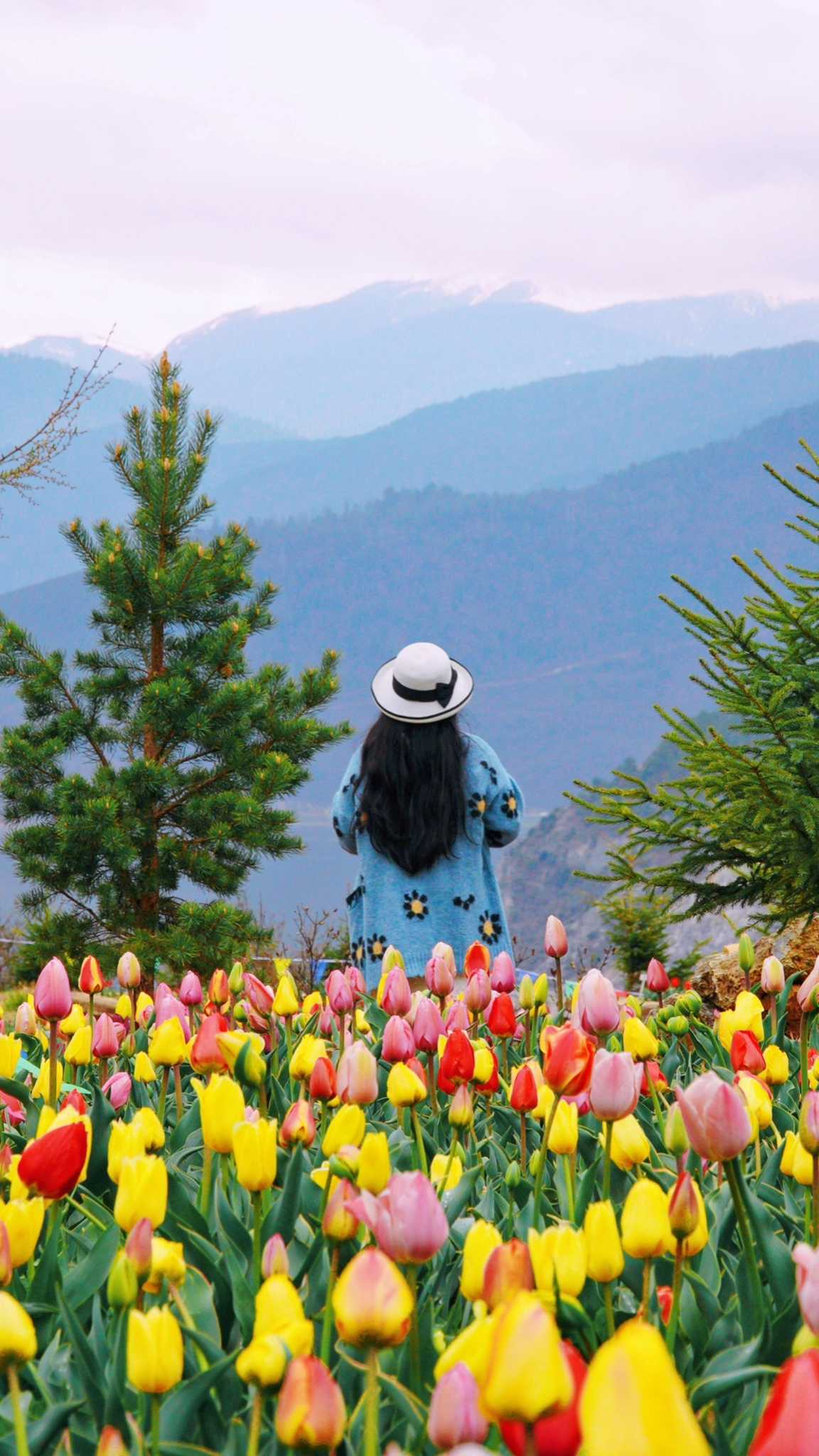
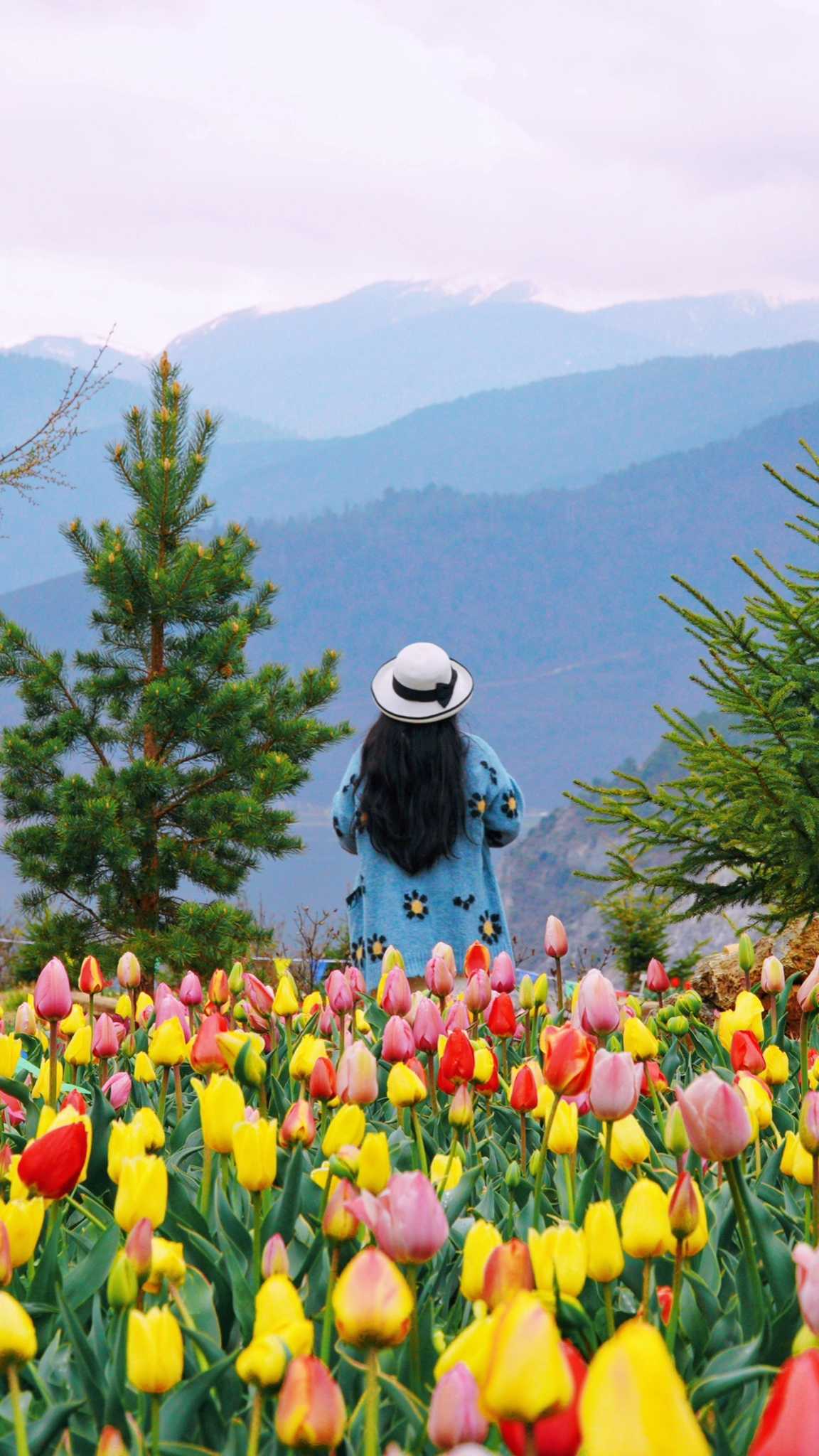
Five years since my last visit to Shangri-La, this time I came for the Tibetan spring. It coincided with the "World's Shangri-La Flower Journey" and the 10th Open-Air Bulb Flower Exhibition at the Alpine Botanical Garden, and I was fortunate to witness this grand event. Located 10 kilometers north of Shangri-La city on the northern slopes of Napahai Mountain, at an altitude of 3,300 meters, this is the world's highest professional botanical garden and the first public-interest botanical garden in China's Tibetan regions.
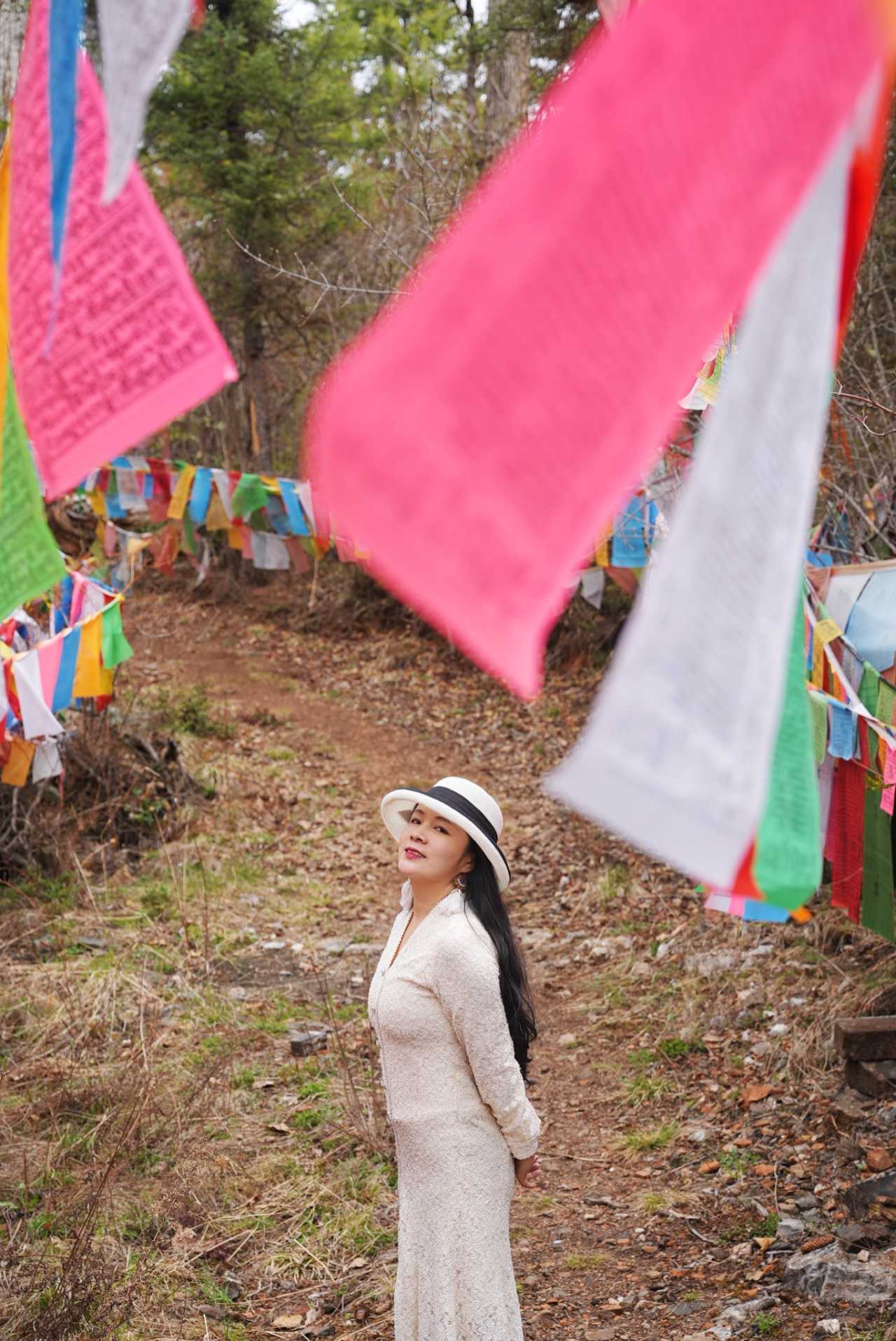
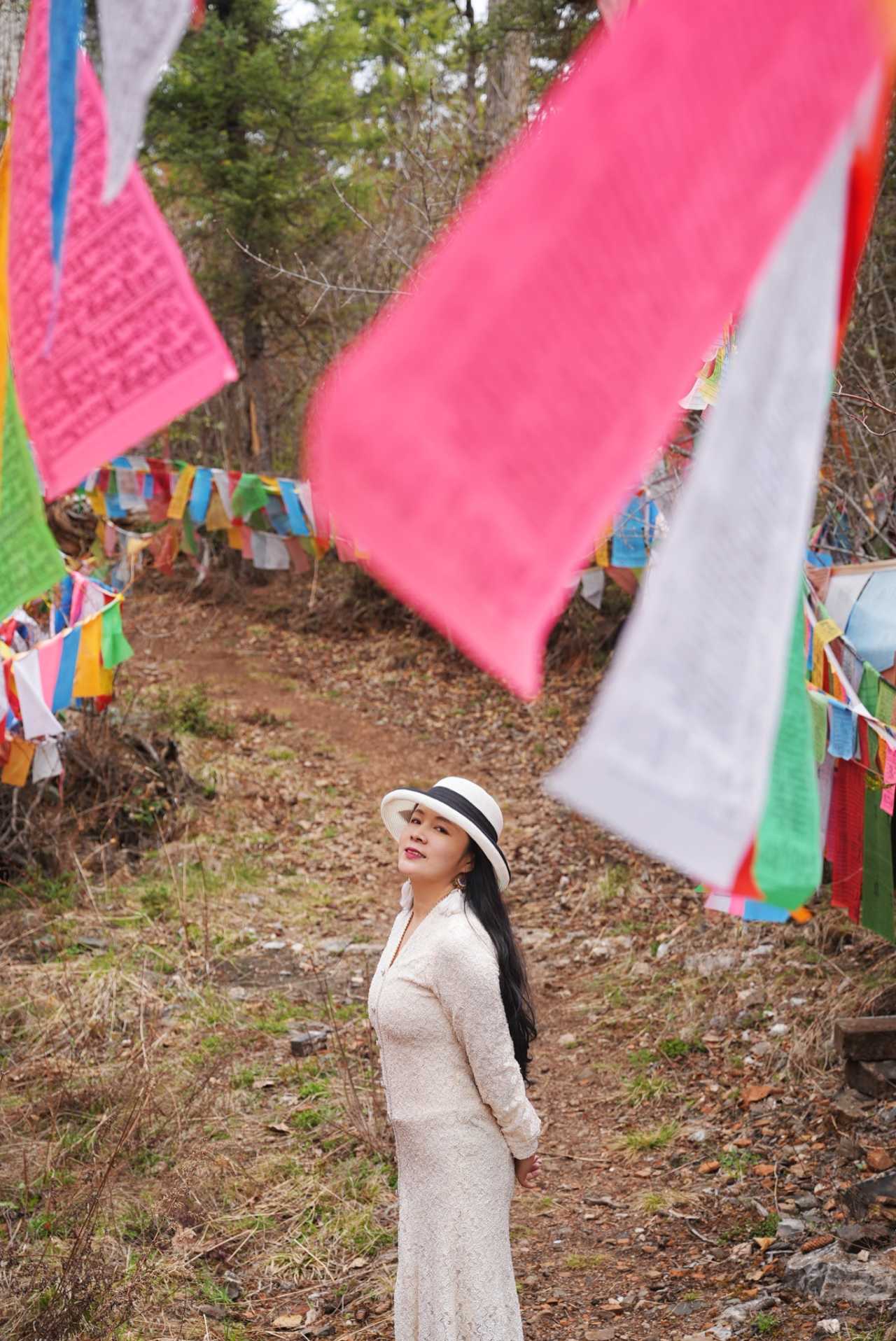
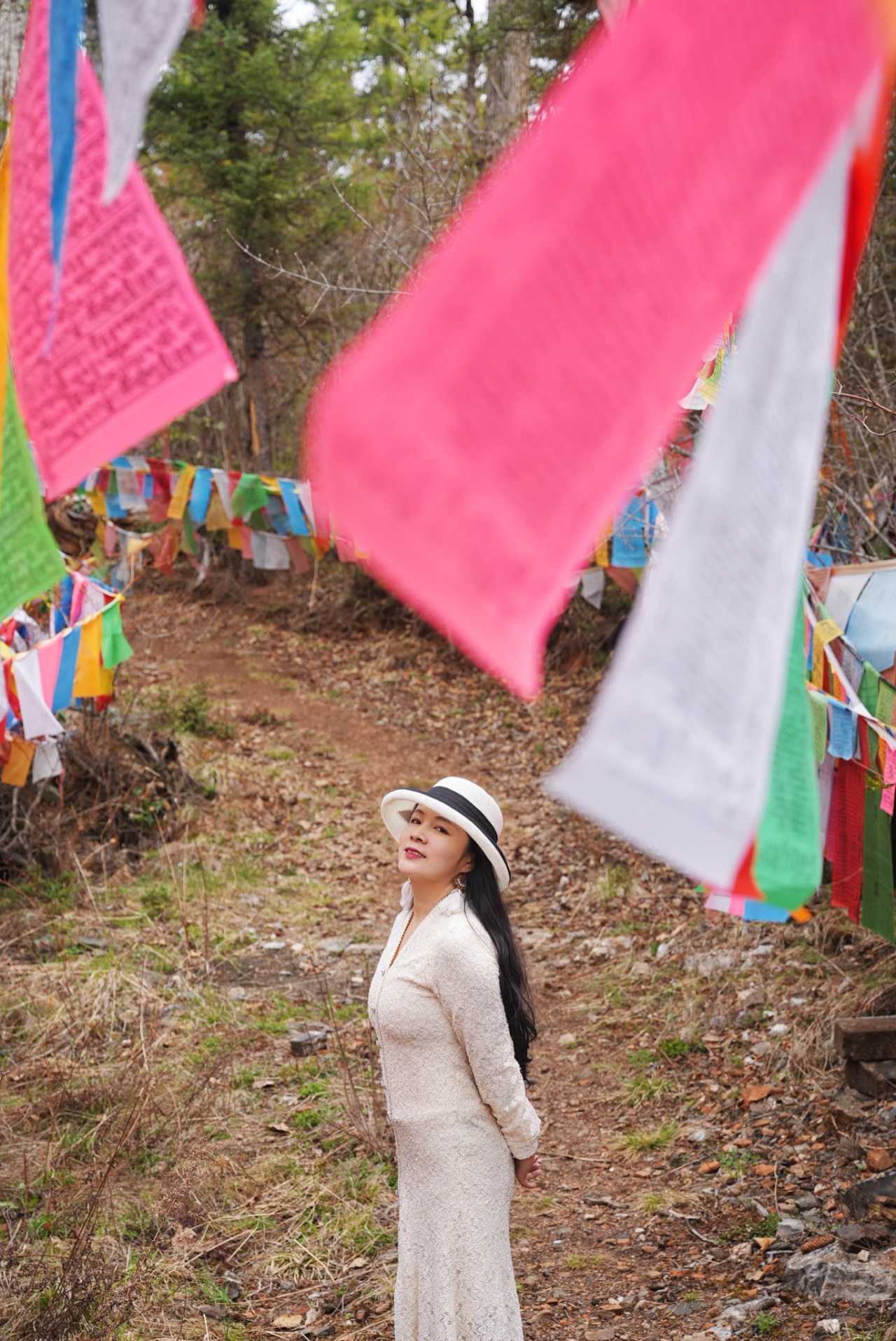
Walking along the forest path draped with prayer flags, I heard the wind and birdsong, while the air carried scents of earth and flowers. Covering 67 hectares, the garden not only showcases tulip seas but also undertakes scientific missions like protecting alpine plant germplasm resources and breeding rare species. For ordinary visitors, however, the most moving sight is the blooming tulips – red, yellow, purple – like a spilled palette spread across the plateau under blue skies and white clouds.
After exploring the garden, don't miss the nearby "Sky Gate." Standing here, you have a panoramic view of Napahai Lake, its mirror-like surface reflecting the sky and clouds. On clear days, this is also an excellent spot to watch the sunset. The adjacent café offers a stunning view – order a hot coffee and gaze at the lake, indulging in the most luxurious moment of your journey.
Second Stop: Face-Washing Basin Pass – Chasing the First Wave of Azalea Blooms
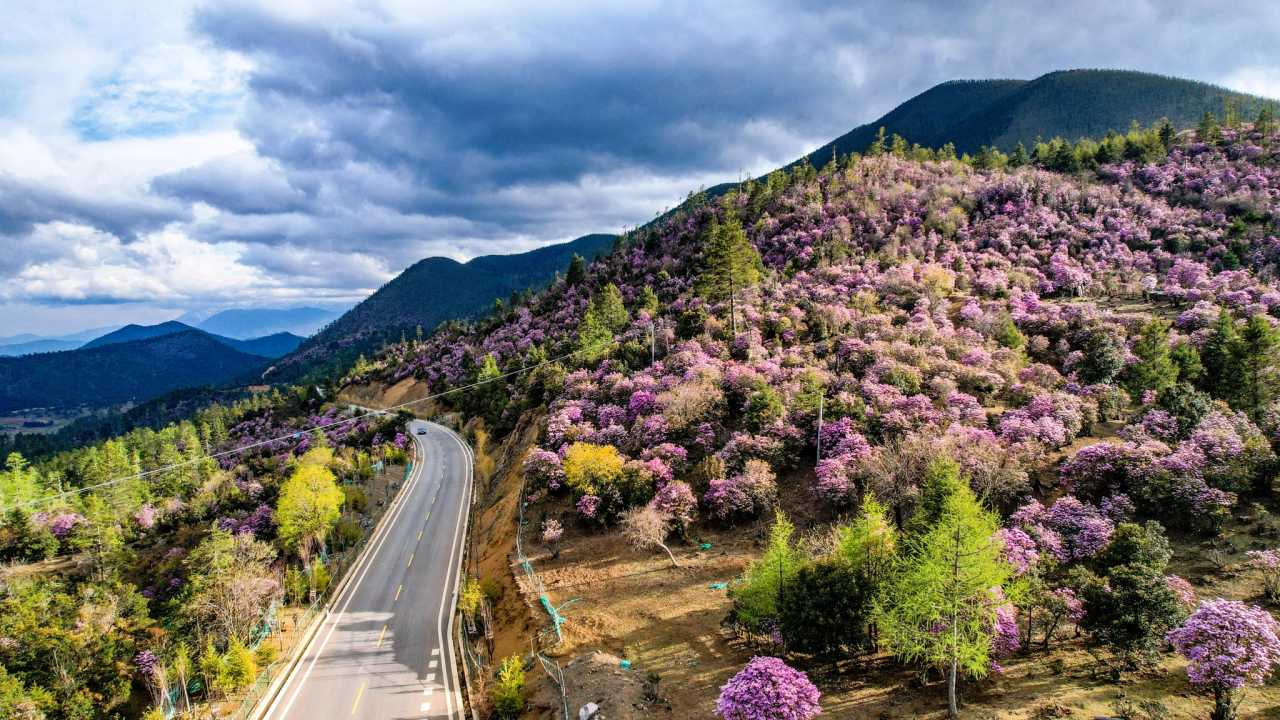
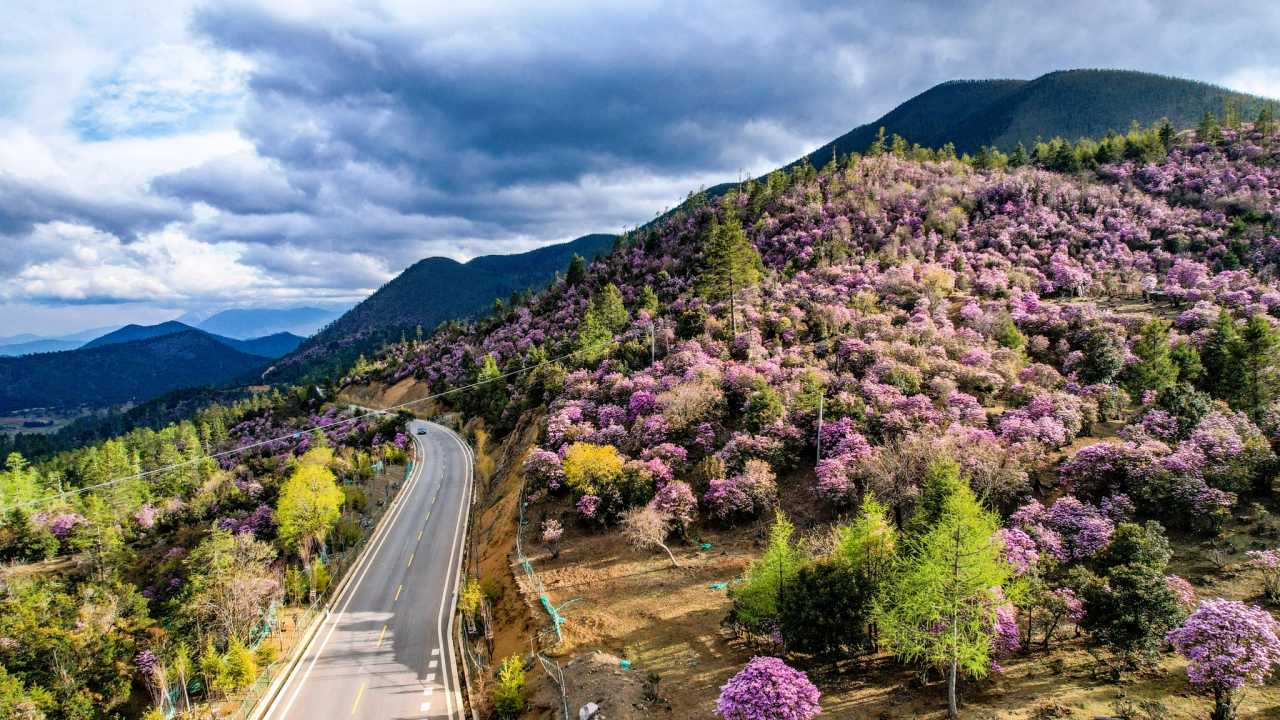
In May, azaleas are the absolute stars of Shangri-La. We were likely the first wave this year to successfully chase the flower sea! Departing from Shangri-La city, we drove along the road toward Sanba Township (Baishuitai). After crossing the Face-Washing Basin Pass, azaleas along the roadside were quietly blooming.
This road is the legendary "Tiger Fragrance Highway" (Hu Xiang Highway), stretching 170 kilometers and connecting Tiger Leaping Gorge Town, Sanba Township, Luoji Township, Jiantang Town, and finally linking with the old Shangri-La Eastern Loop. Along the way, gorges, snow mountains, colorful forests, and villages appear in abundance – and best of all, few people! Multiple viewpoints line the road, making it easy to stop and capture your own unique scenery with your camera.
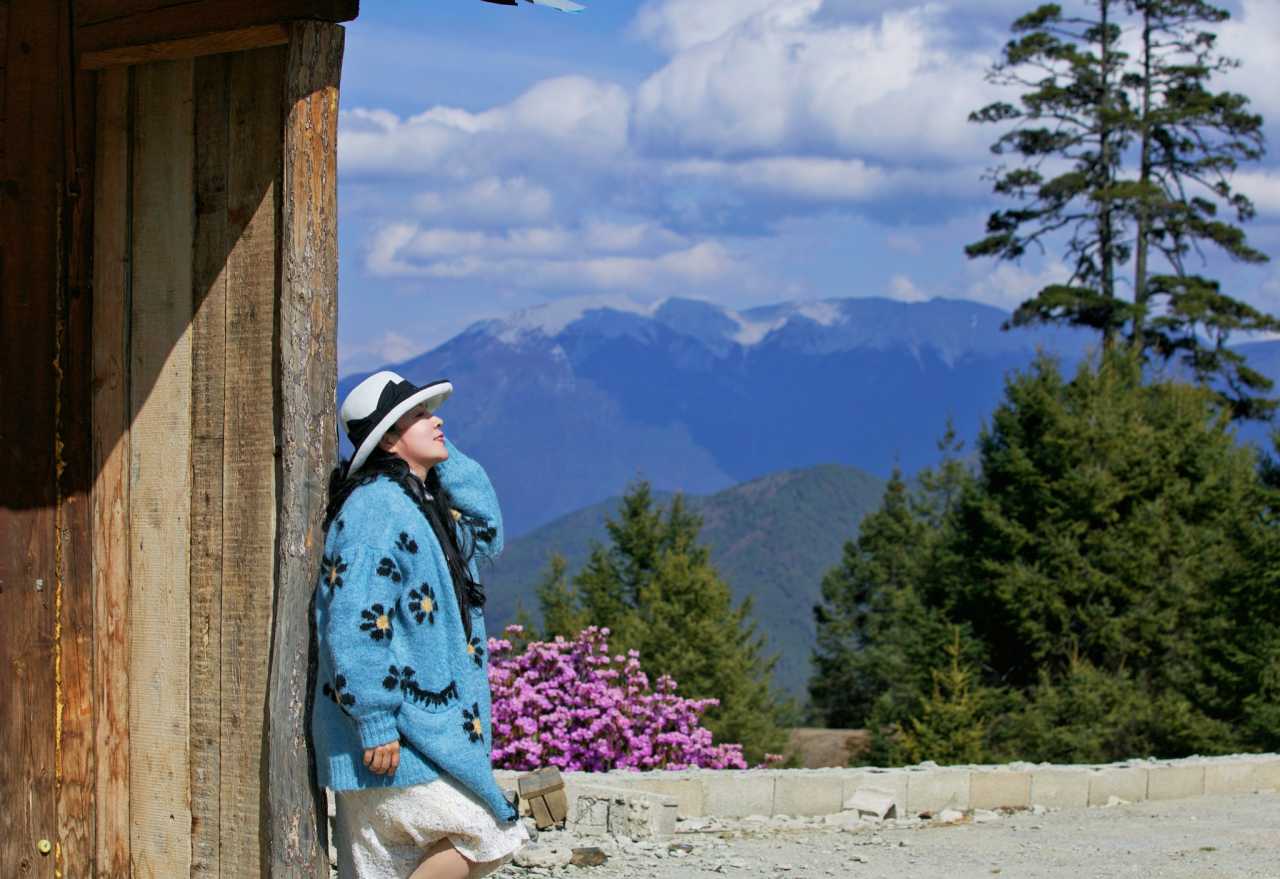
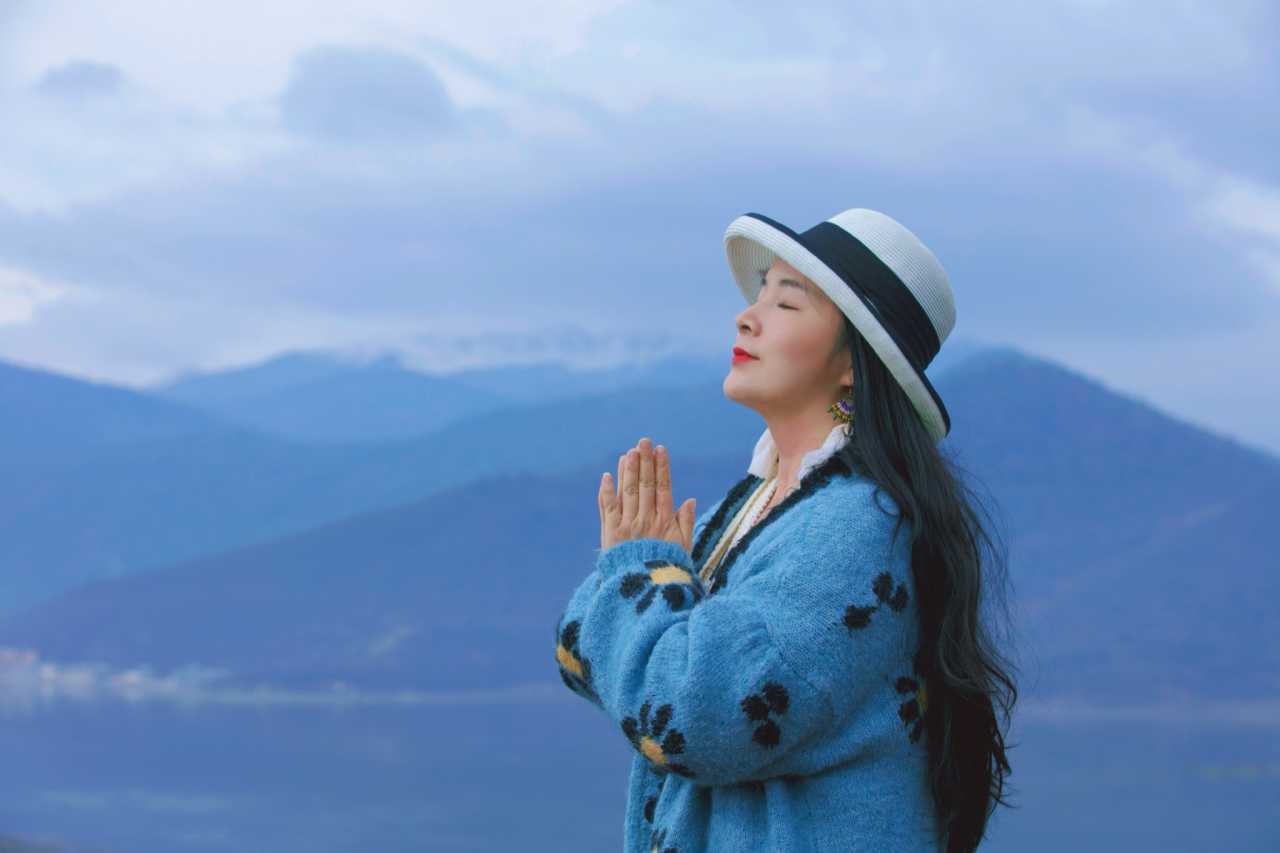
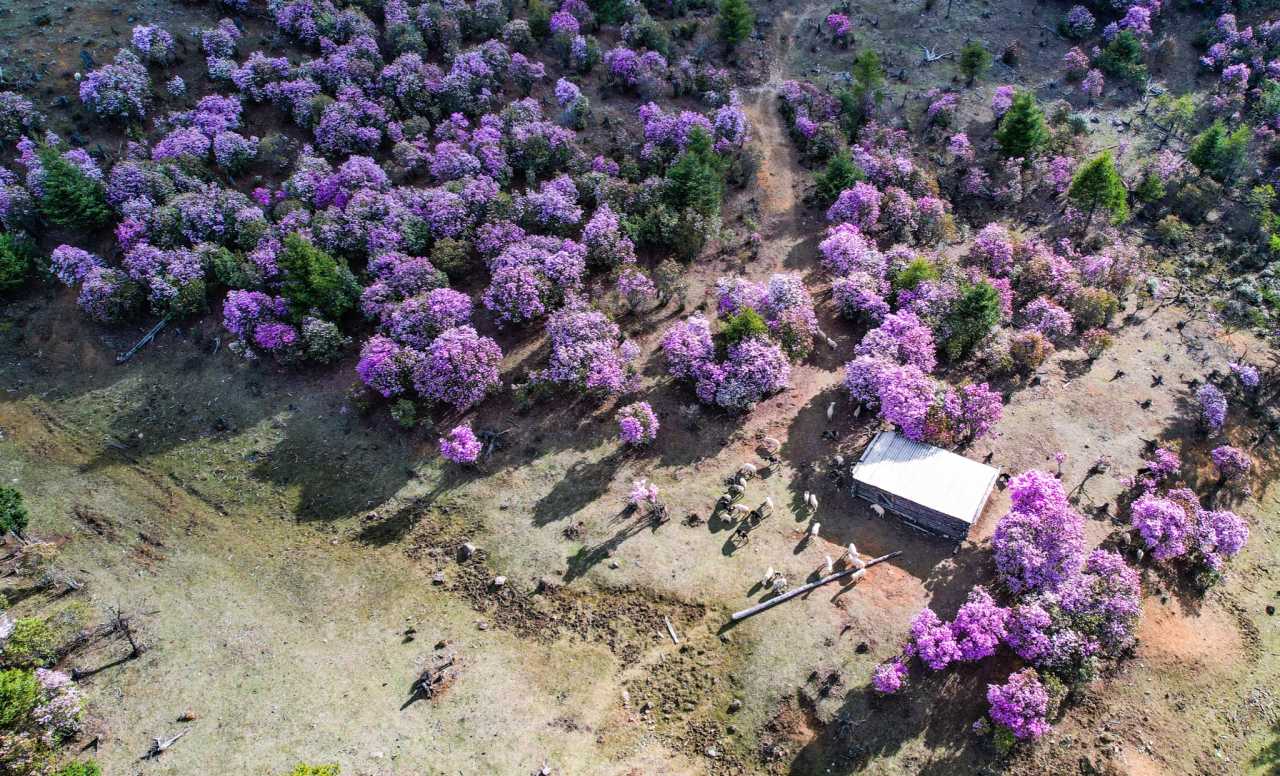
Continuing onward, rounding a bend, the sight before me left me breathless: vast stretches of azaleas bloomed in the woods and along the winding road, as if forming a true "flower path." Distant snow mountains stood majestic under blue skies and white clouds, while nearby forests and meadows resembled a green carpet dotted with clusters of pink azaleas. This beauty defies words – only by standing amidst the flower sea can you feel the tenderness and power of the plateau's spring.
Flower-Chasing Tips: Shangri-La's azalea havens aren't limited to Face-Washing Basin Pass. Other spots include Baima Snow Mountain, Potatso National Park, Bugu Heavenly Lake, and Shika Snow Mountain. May to June is the best viewing period – check bloom forecasts in advance.
At dusk, we reached Jiuxian Peak Viewpoint. Standing on the platform, distant peaks, varying in height and distance, echoed one another, forming a magnificent tableau. Looking back at Haba Snow Mountain, it was shrouded in mist, appearing and disappearing like a fairyland.
That night, we stayed at Baishuitai Hotel. While the accommodation was modest, the local free-range chicken was astonishing – truly free-range on the plateau, with firm, chewy meat and incredible flavor, an unexpected highlight of the trip.
Third Stop: Baishuitai – The Pristine Beauty of the "Immortal's Abandoned Fields"

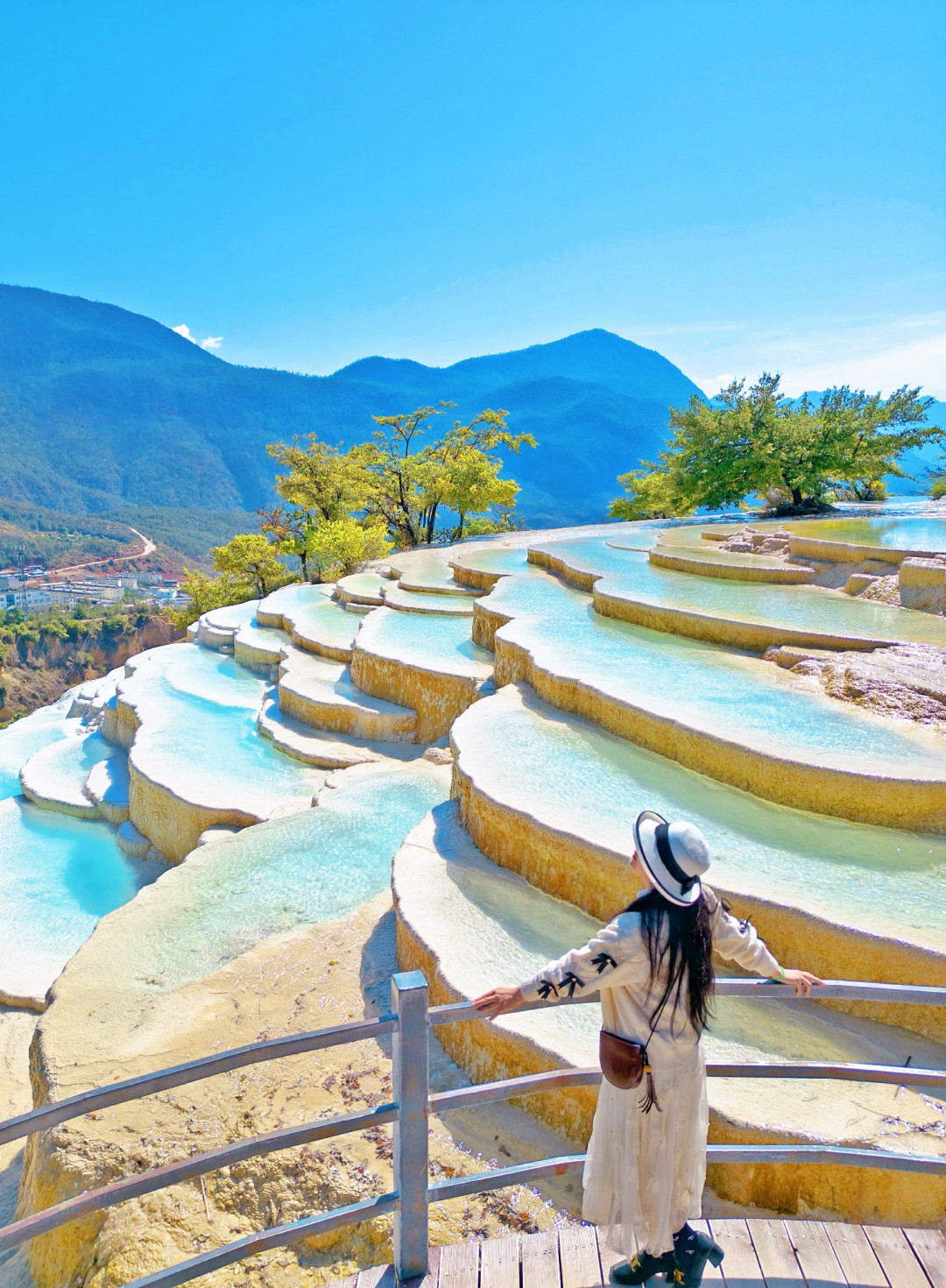
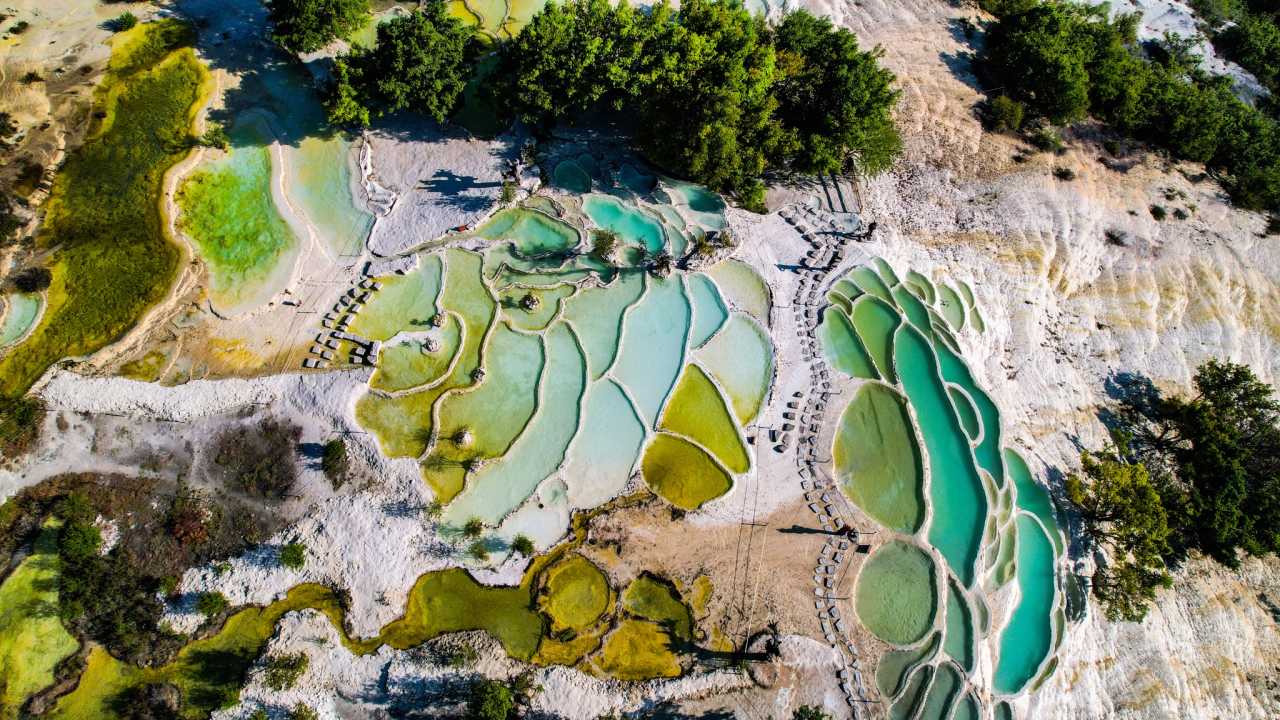
The next morning, we headed straight to Baishuitai, located above the hotel. This is one of the birthplaces of the Naxi Dongba religion and a natural wonder formed by calcium carbonate dissolving in spring water. As calcium-laden water flows slowly downward, calcium carbonate gradually precipitates, over millennia creating layered terraces that spread across the earth like white silk ribbons.
You must use a drone! From a bird's-eye view, Baishuitai resembles "immortal's abandoned fields" – a white world where layered calcium carbonate terraces shimmer under sunlight, like countless white jade stones stacked together. Each terrace has a unique shape, yet they harmonize perfectly, as if nature had meticulously crafted a work of art.
Approaching Baishuitai, clear spring water gurgles over the white terraces, producing a pleasant sound. Pools between the terraces are crystal clear, reflecting blue skies and white clouds. Climbing to the highest viewpoint, the entire Baishuitai unfolds below, with distant peaks appearing and disappearing in the mist, creating a stark contrast with the pristine white.
Fourth Stop: Haba Snow Mountain – The Watch of the "Golden Flower"
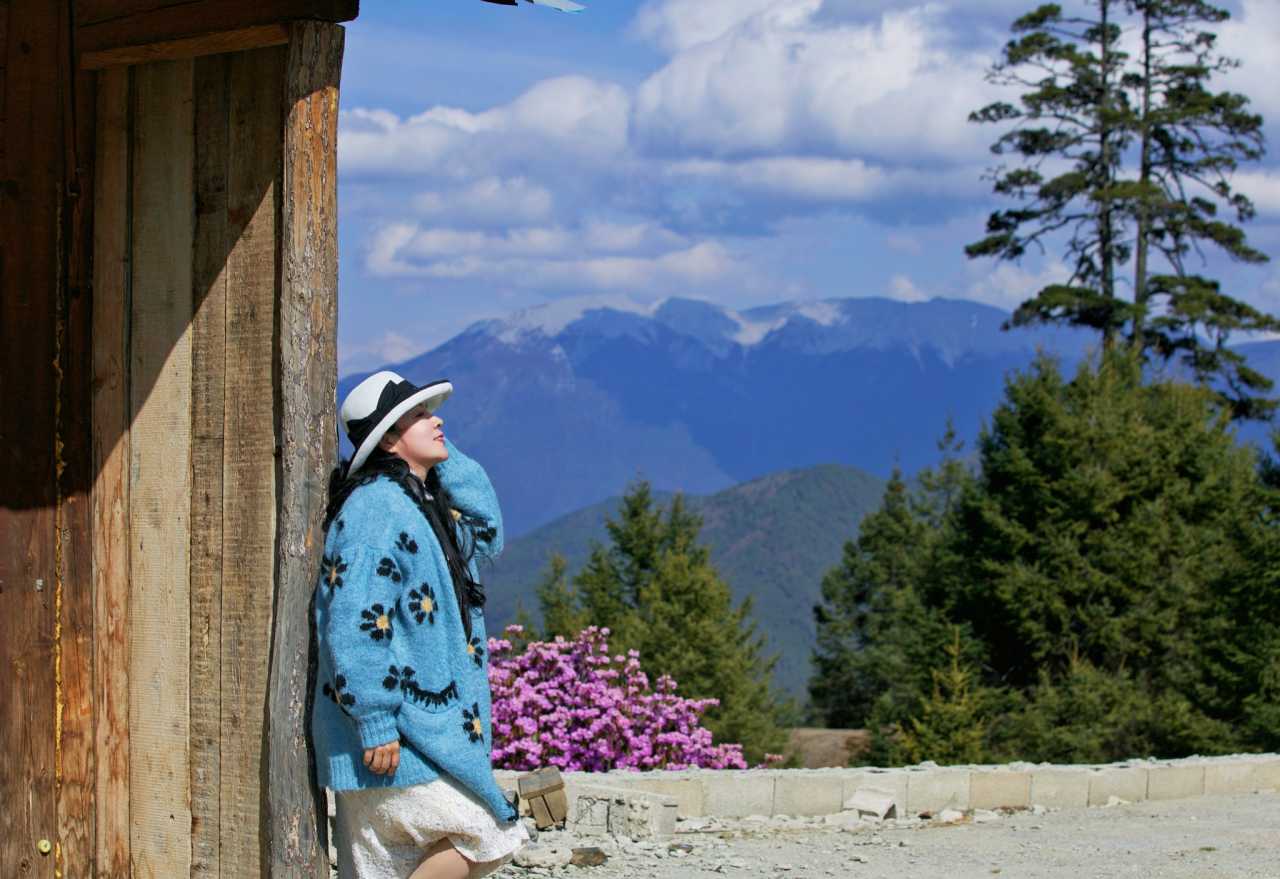
Continuing along the Tiger Fragrance Highway, Haba Snow Mountain stands quietly in the distance. "Haba" in the Naxi language means "golden flower." This snow mountain faces Jade Dragon Snow Mountain across Tiger Leaping Gorge, with its highest peak at 5,396 meters and the lowest river surface at just 1,550 meters. The upper slopes are relatively gentle, while the lower sections are steep and precipitous, appearing both rugged and majestic, yet mysterious and beautiful.
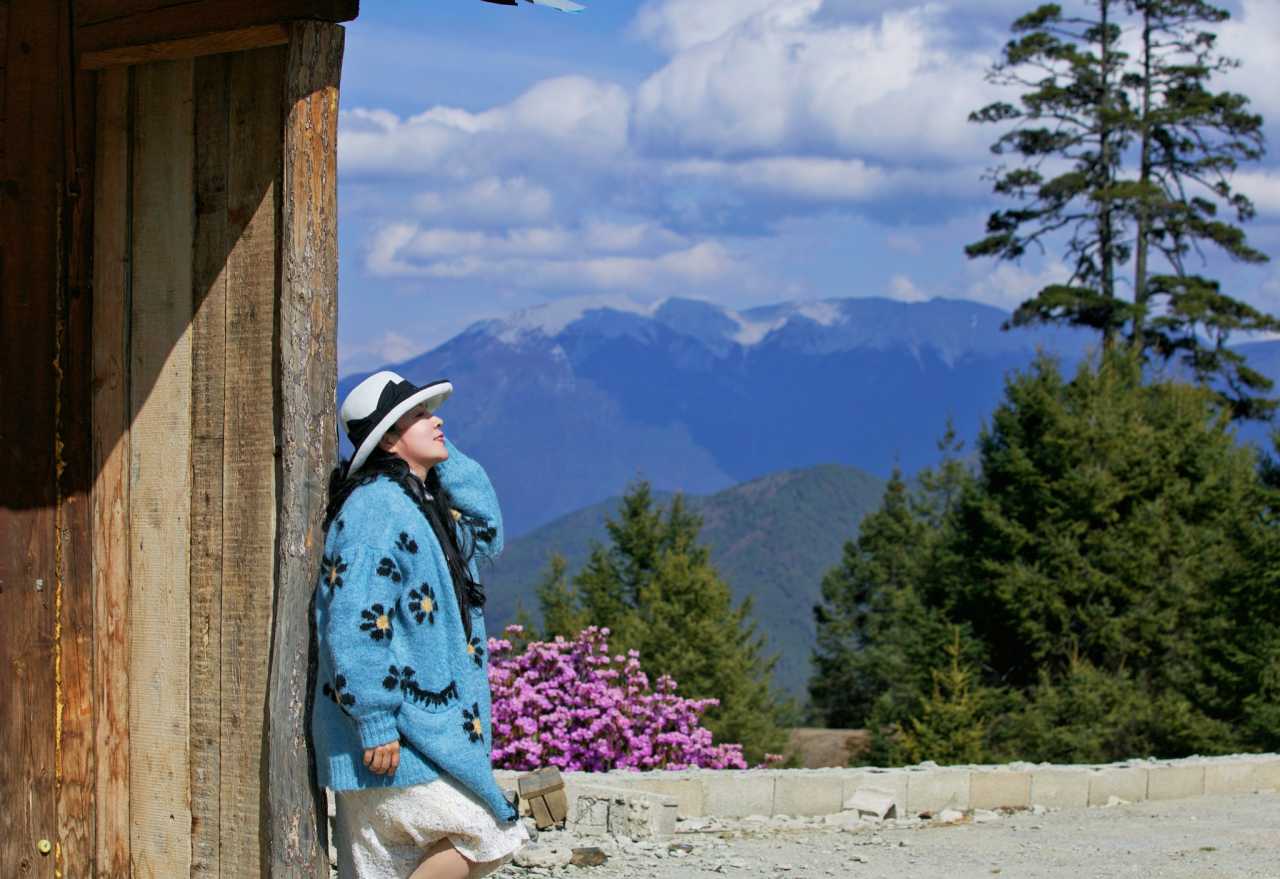
At the Haba viewpoint, you can enjoy an unobstructed view of the snow mountain's pristine whiteness. Ancient villages at the mountain's base echo the peak, as if in a fairyland. Standing here, a sense of awe and reverence wells up – this towering peak, like the earth's guardian, stands between heaven and earth, protecting this pure land.
Fifth Stop: Tiger Leaping Gorge – A Self-Driving and Hiking Adventure from Bottom to Top
Returning to Tiger Leaping Gorge after many years, this time I chose a combination of self-driving and hiking, starting from Lower Tiger Leaping, through Middle Tiger Leaping, to Upper Tiger Leaping, experiencing the breathtaking gorge scenery along the way.
Driving up from Lower Tiger Leaping, layers of mountains and deep gorges unfold. At Middle Tiger Leaping, the scenery changes dramatically. Find a restaurant with a view, enjoy lunch overlooking the gorge – the blend of magnificent scenery and culinary satisfaction is a highlight of the journey.
Then head to Upper Tiger Leaping. Today, an escalator takes visitors directly to the gorge floor, a blessing for those who don't want to hike too much. Descending to the bottom, you're greeted by the famous Tiger Leaping Rock – a massive boulder lying in the Jinsha River, said to have been used by a tiger to leap across. Standing beside the rock, feeling the surging river, you can almost hear nature's breath.
The Jinsha River Grand Canyon is truly awe-inspiring. Deep and narrow, with steep cliffs on both sides, the river roars through, forming a spectacular gorge. Standing on the viewing platform overlooking the entire canyon feels like being inside a giant painting. The deafening roar of water and the sheer, skillfully carved cliffs create a majestic atmosphere that leaves you speechless for a long time.
Important Reminder: I've heard that a reservoir is planned for Tiger Leaping Gorge, which may alter the landscape's current grandeur. So if you haven't visited yet, go now and cherish the scenery while it lasts.
Sixth Stop: Dukezong Ancient Town – Three Days of Relaxation at Lexi Homestay
After completing the Eastern Loop, exhausted, I just wanted to rest in Dukezong Ancient Town for two days. This time, I chose the right place – Lexi Homestay. Stepping inside, you're immediately enveloped in rich Tibetan atmosphere. Rough stone walls, exquisite carvings, vibrant colors, plus a hearth, musical instruments, a fireplace, solid wood furniture, soft fabrics... every corner reveals the owner's care, making you feel at home.
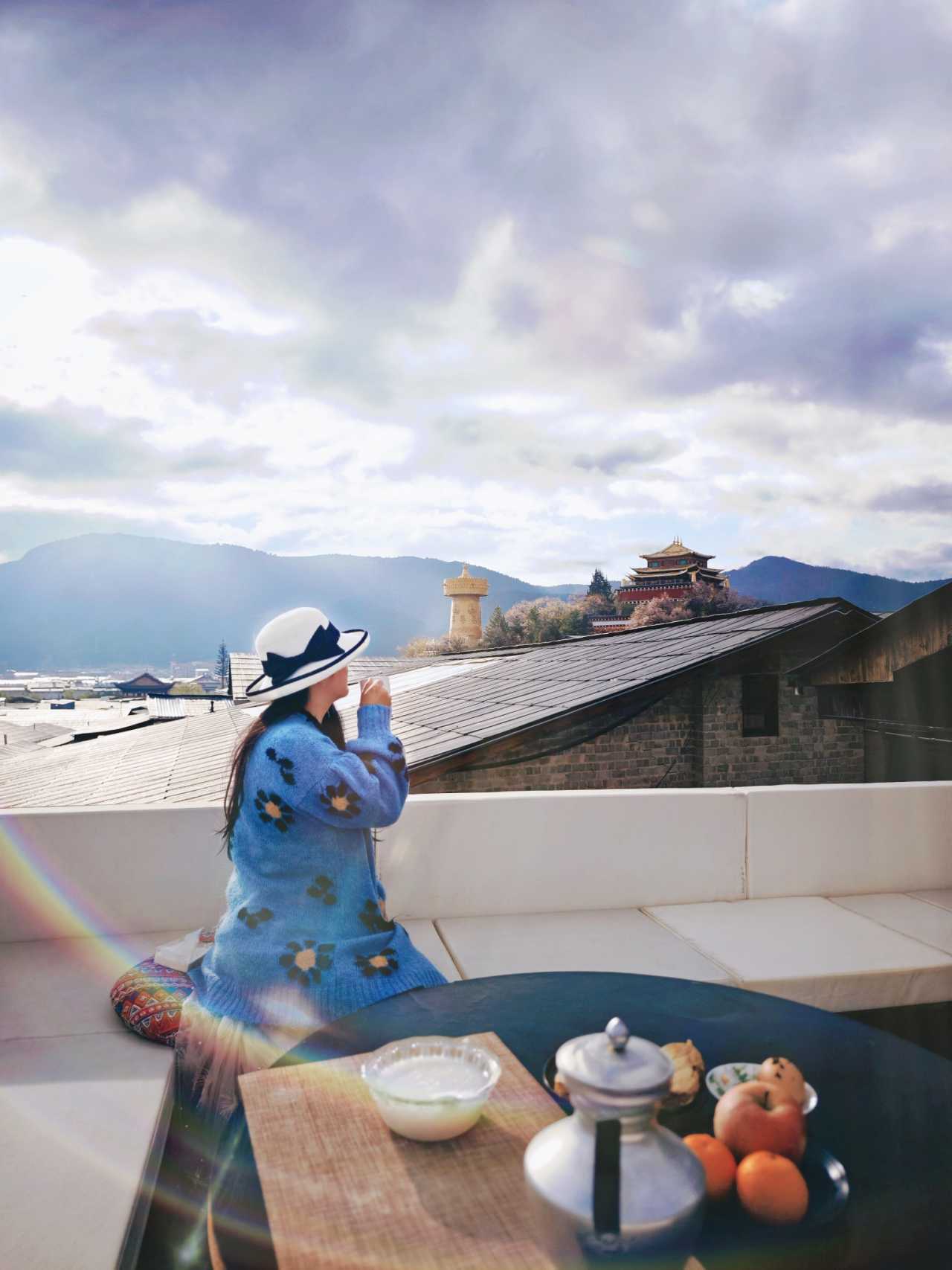
The rooftop observation terrace is a standout feature. From here, you can overlook the entire Dukezong Ancient Town: distant mountains, ancient temples, bustling streets – all unfold like a painting. The adjacent sunroom is also cozy, where I had breakfast, enjoyed afternoon tea, and read for hours.
Because I extended my stay by two days, I stayed in three different room types: a triple room, a star-gazing room, and a sunny duplex suite. All rooms are well-equipped with separate wet and dry areas, dining tables, TVs, bathtubs, smart toilets, and custom plant-based toiletries. The natural botanical scent left my hair smooth and silky – a pleasant surprise.
The owner and front desk staff were incredibly warm and hospitable. Breakfast could be enjoyed in the room, living room, or on the terrace. For lunch and dinner, if they saw I was alone, they'd invite me to join them. In short, every moment at Lexi Homestay was wonderfully comfortable.
Convenient Location: Less than a 5-minute walk from the North Gate (luggage can be transported by the homestay's vehicle). Just a short walk away is Sifang Street Square. From 8 to 9 PM, rain or shine, the lively Guozhuang dance (Tibetan "square dance") takes place. Nearby, there are supermarkets, restaurants, and photography studios, making life convenient.
Final Thoughts: There's a Life Called Yunnan
This self-driving journey allowed me to witness the purity of Baishuitai, the grandeur of Jiuxian Peak, the majesty of Haba Snow Mountain, and the power of Tiger Leaping Gorge. These landscapes not only captivated me but also made me feel nature's charm and strength. Everyone I met in Shangri-La's ancient town was simple and warm. The nightly Guozhuang dance, rain or shine, and the sight of a little girl's blooming smile made me reflect on the simplicity and innocence here.
Key Recommendations: 1. Best Time: Late April to June, when azaleas are in full bloom and weather is clear, ideal for self-driving. 2. Route Choice: Reverse self-driving (Shangri-La → Baishuitai → Tiger Leaping Gorge) avoids crowds and offers better lighting. 3. Essential Gear: Sunscreen, sunglasses, warm jacket (large temperature differences on the plateau), comfortable hiking shoes. 4. Accommodation Recommendations: Baishuitai Hotel (must-try free-range chicken), Lexi Homestay (excellent ancient town views).
Indeed, there's a life called Yunnan. And the spring of Shangri-La is a poem that can never be finished.
All content in this article is original and may not be reproduced without permission.
You should also read:

Cloud Travelogue · Dali of Wind, Flowers, Snow, and Moon: A Three-Day, Two-Night Journey of a Free Spirit
Cloud Travelogue · Dali of Wind, Flowers, Snow, and Moon: A Three-Day, Two-Night Journey of a Free Spirit I am a cultured female foodie with a touch of rogue charm. I slung on my backpack, took my lover's hand, and set off on a spontaneous…
Continue reading...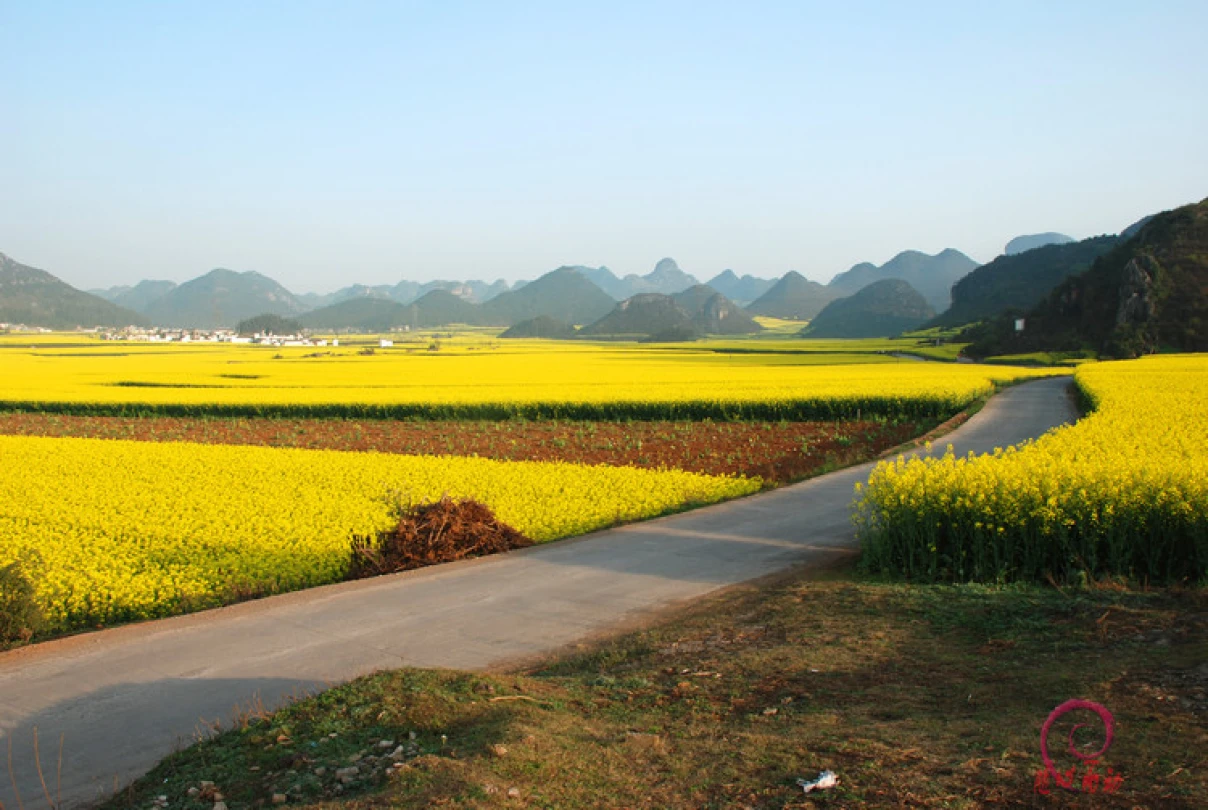
Golden Luoping: A Romantic Encounter with Sunshine and Seas of Flowers
Golden Luoping: A Romantic Encounter with Sunshine and Seas of Flowers Introduction: The Third Time's the Charm Some landscapes are destined to be seen at the right moment. For me, that was exactly the case with Luoping's rapeseed flowers. On February 22, 2011, the Luoping…
Continue reading...
The Meaning of Travel – A Tengchong Story: A Journey of the Heart and Personal Growth
The Meaning of Travel – A Tengchong Story: A Journey of the Heart and Personal Growth Setting Out, Only to Return a Better Self Some say travel is nothing more than leaving a place you're tired of, only to go to a place where others…
Continue reading...