Revisiting Yunnan: A Five-Day Journey Through Time and Space
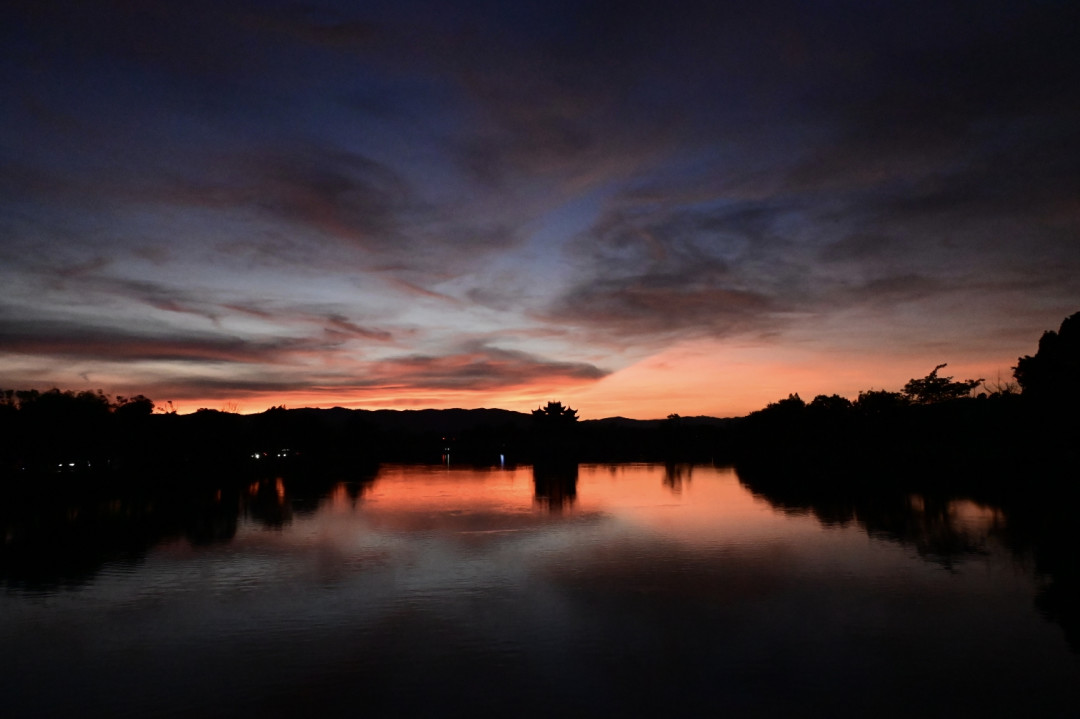
Revisiting Yunnan: A Five-Day Journey Through Time and Space
Eight years ago, I first set foot on Yunnan’s soil. The impression Dali left on me was like a long pastoral poem—sunlight lazily spilling over Cangshan Mountain and Erhai Lake, the air filled with a tranquil sense that made you want to simply stop and stay. That feeling of being in a place "perfect for retirement" remains vivid in my memory.
Yunnan’s beauty is raw and untouched—unadorned yet breathtaking. Even more remarkable is that this land has never given me an unpleasant experience. So when my friend of over a decade and I discussed where to go next, Yunnan was almost an instinctive choice.
After ten years, friends who will still pack their bags and set off with you at a single phone call are truly rare. This little boat of friendship has sailed steadily for so long without ever capsizing.
Last year, I first had the idea of traveling the "Kunming—Jianshui—Mengzi" route, but it never materialized. When we decided to take a long trip this time, having a ready-made plan to pull out and use was a welcome convenience.
Kunming: The Underrated "City of Cultural Heritage"
On many travelers' maps, Kunming is often just a transit hub. Compared to Dali's romantic landscapes, Lijiang's ancient charm, or Shangri-La's mystical heights, this city can seem rather "mediocre." But in my view, the most remarkable city in Yunnan is precisely Kunming.
It was here, during a turbulent era of war, that China preserved its "cultural lifeline." The National Southwestern Associated University (Lianda)—a name that shines brilliantly in history—nurtured countless talents who later contributed immensely to the development of modern China. Walking the paths that Lianda once trod was another expectation I had for this trip.
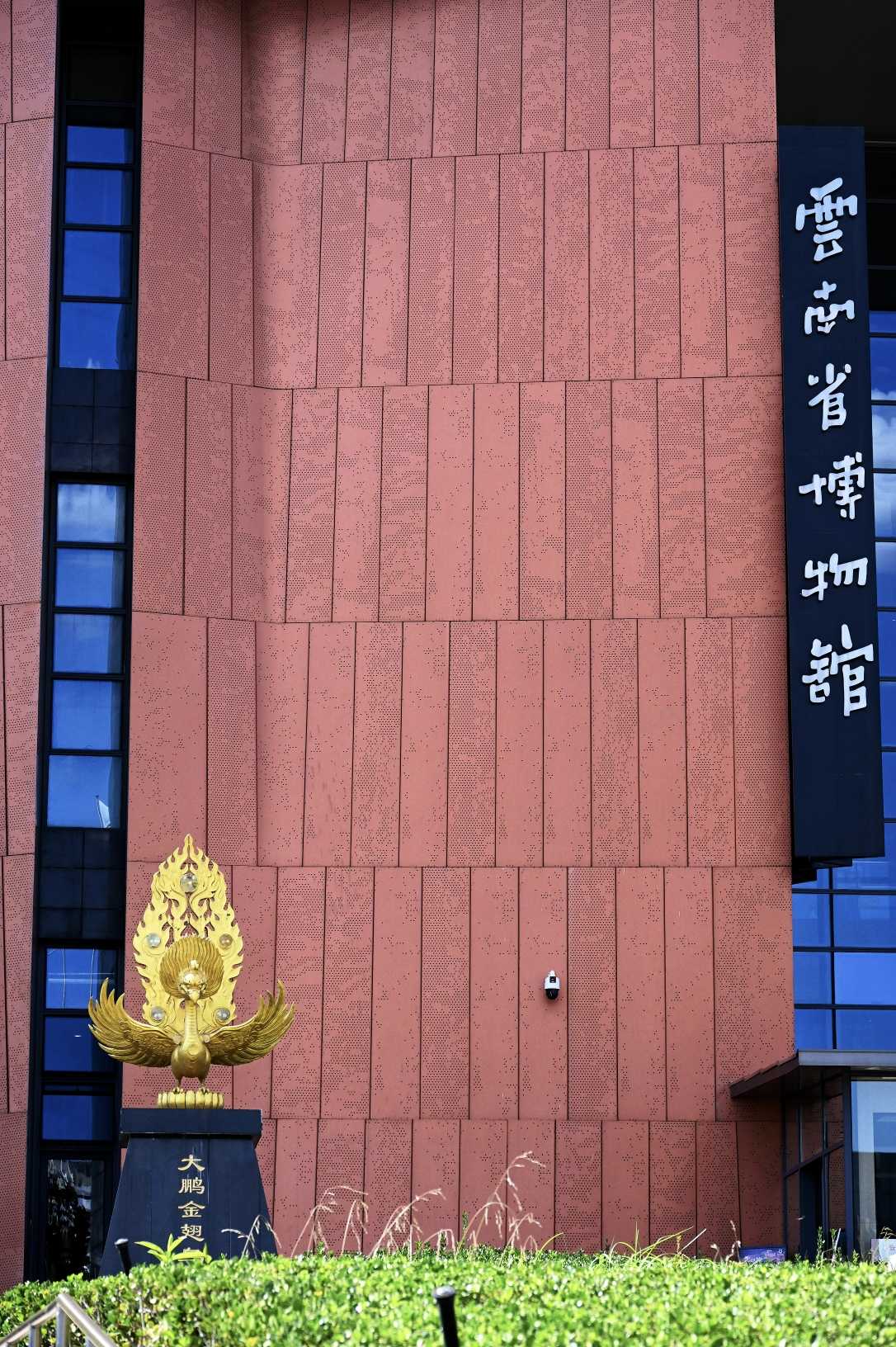
Yunnan Provincial Museum: Understanding Yunnan in the Shortest Time
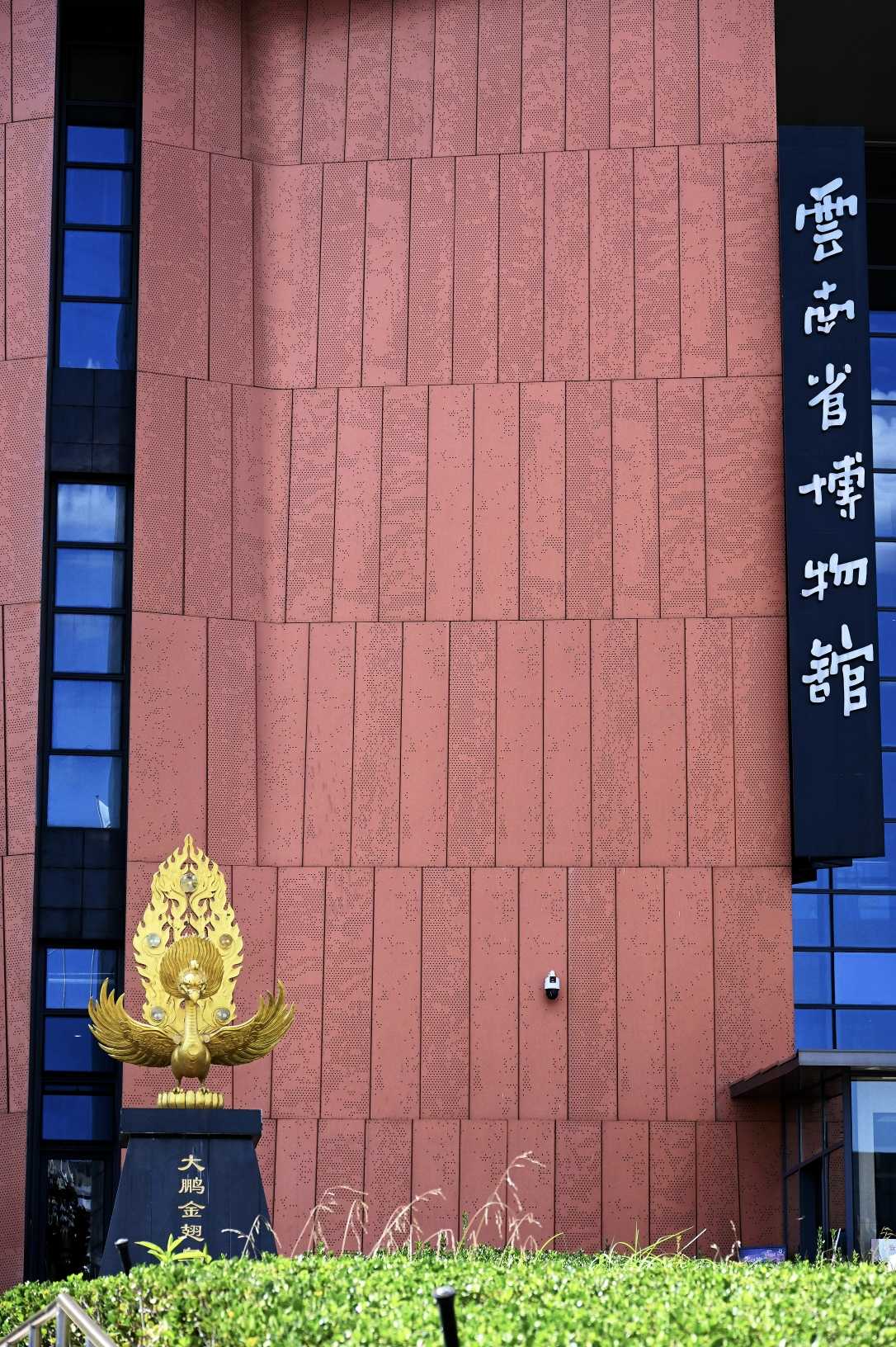
My friends always tease me, saying that no matter where I go, I can't escape museums. It's true—museums are the best way to quickly understand a place's history, customs, and culture. Moreover, the museum's treasures themselves are captivating enough.
Practical Information
Follow the "Yunnan Provincial Museum" (云南省博物馆) official WeChat account and reserve your visit through "Digital Yunnan Museum" (数字云博). Closed on Mondays, reservations can be made up to three days in advance. Outside of holidays and school vacations, reservations are generally not tight. The museum is in Guandu District, a bit far from the city center—about a 30-minute taxi ride.
Visit Suggestions

The museum has three floors. Start from the second floor, then go to the third, and finally return to the first floor (where the café and文创 (cultural creative) shop are concentrated). If you explore on your own, the logical order might get confusing, so I strongly recommend hiring a guide. The guide I booked this time gave a full two-hour tour, from ancient times to the modern era, weaving in interesting facts and anecdotes—never boring.
Treasures That Make You Stare in Awe
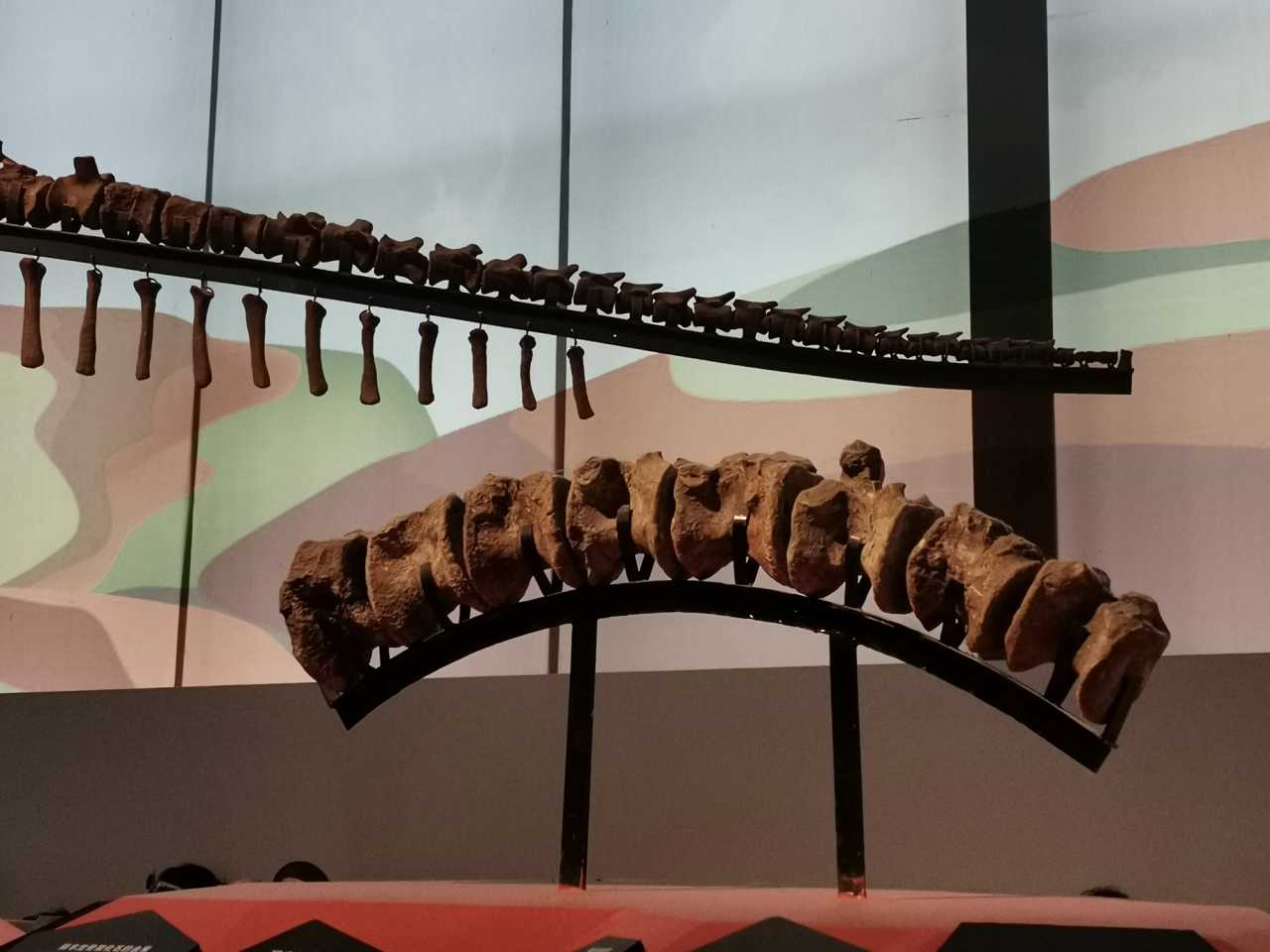
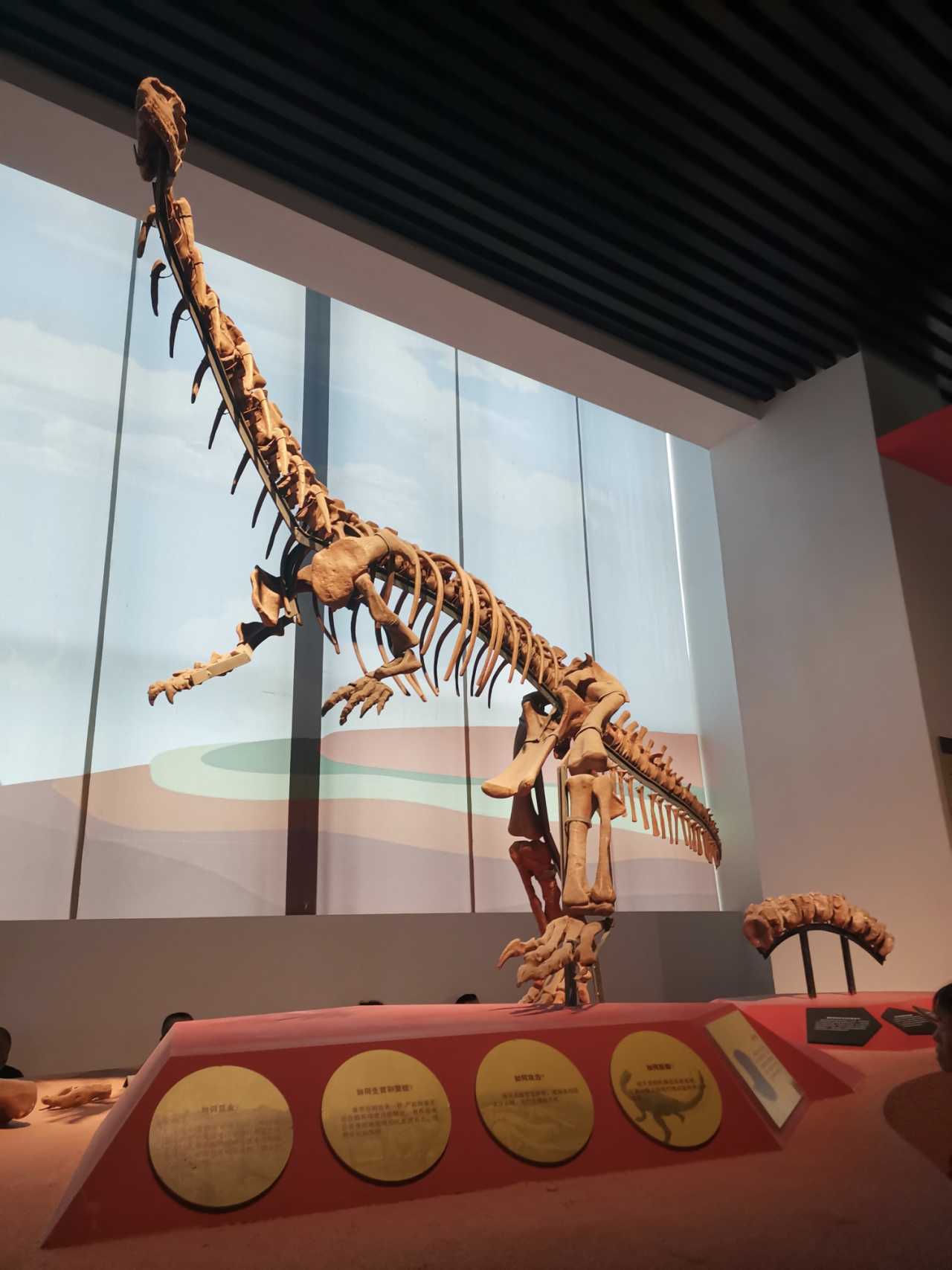
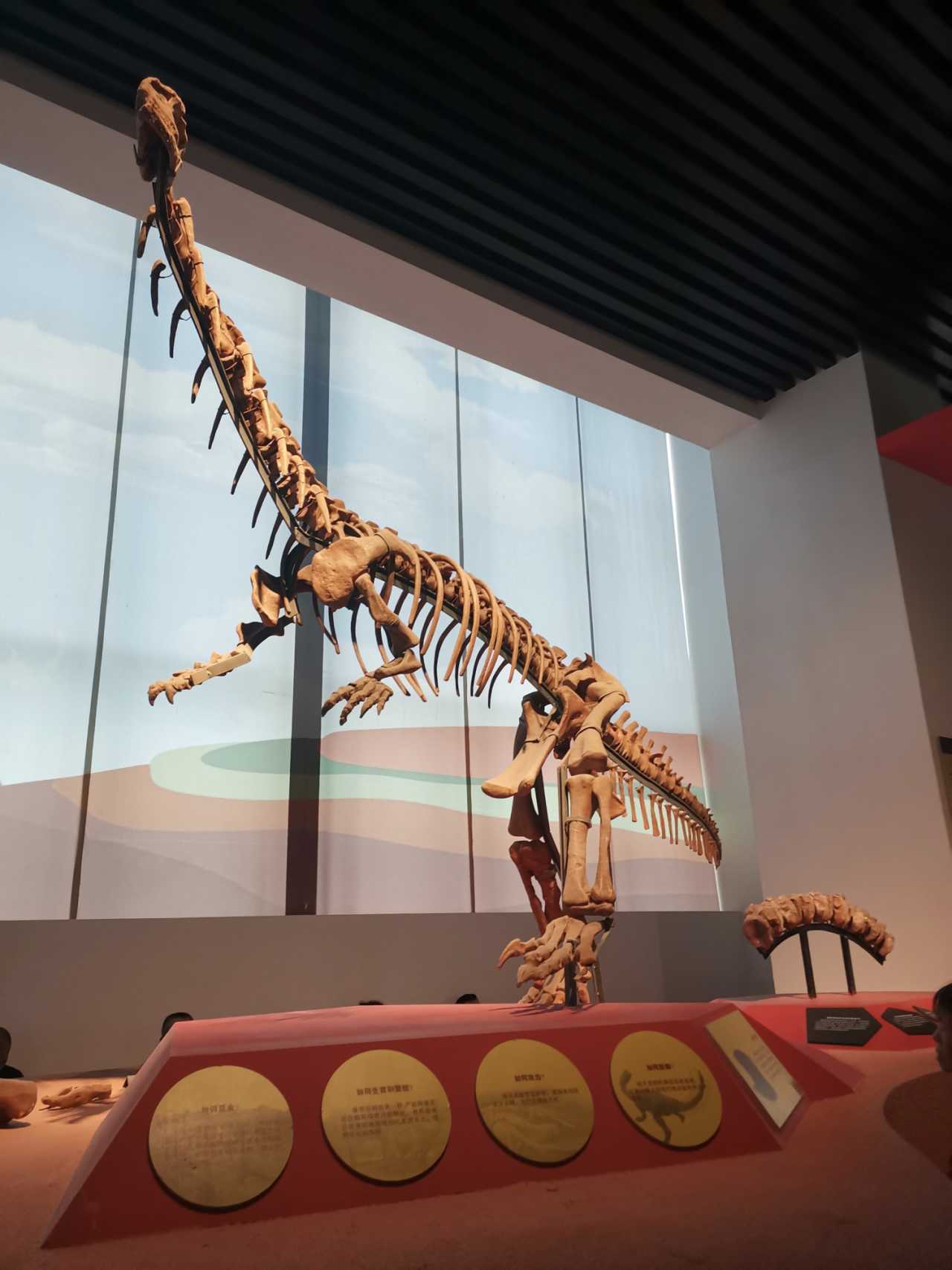
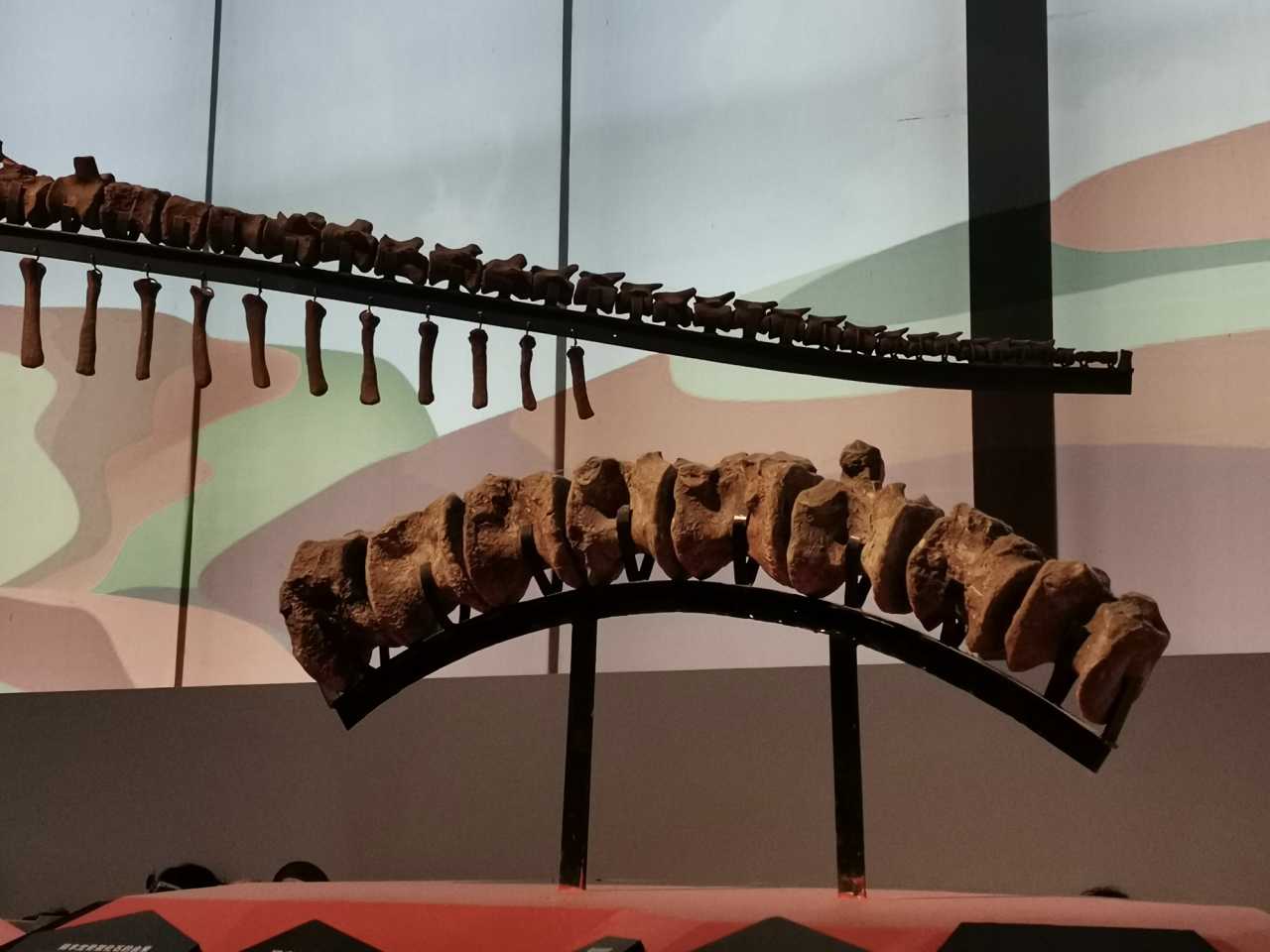
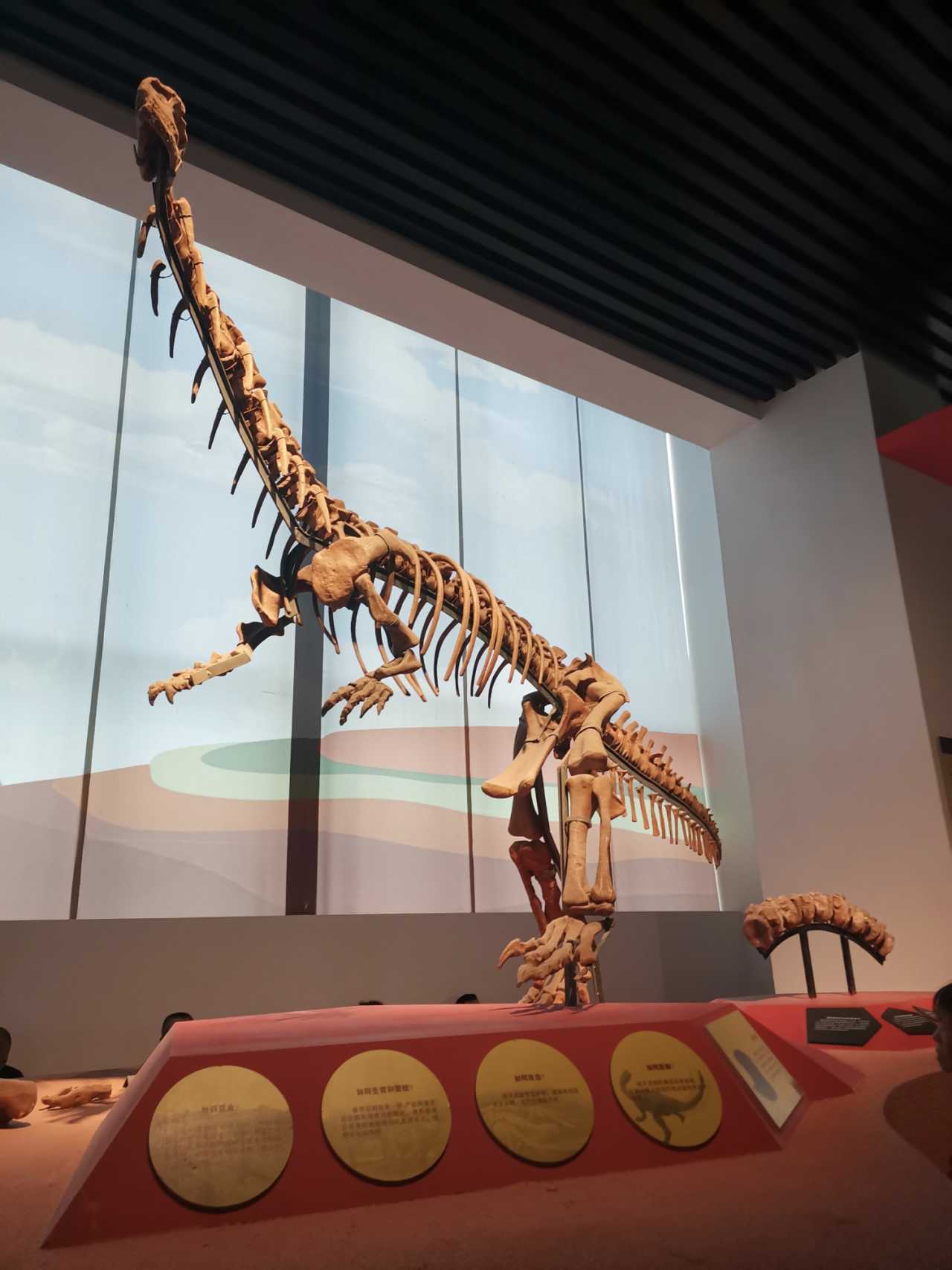
Lufengosaurus (许氏禄丰龙) — In 1938, Yang Zhongjian, the founder of Chinese paleontology, excavated China's first dinosaur skeleton fossil specimen, known as "China's First Dinosaur." The complete dinosaur skeleton on display is a 1:1 replica, but one section of the excavated skeleton is genuine. The guide also revealed an intriguing eternal mystery: dinosaur remains have been found throughout Yunnan, but never any dinosaur egg fossils. The two dinosaur eggs in the museum were borrowed from elsewhere.
Chicken-shaped Pottery Vessel (鸡形陶壶) — Excavated from the Dadunzi site in Yuanmou County, this was a child's burial object. Its most captivating feature is its adorable shape: the raised part is the tail, the three dots on the head form the comb, and there are a pair of eyes. The body is decorated with patterns representing chicken feathers, making it a relatively fine piece of pottery from its era.
Four-Oxen Gilt Knight Shell Container (四牛鎏金骑士贮贝器) — A bronze artifact from the ancient Dian Kingdom during the Western Han Dynasty. These "shell containers" were used to store currency—at that time, cowrie shells circulated as money in coastal Southeast Asia, and Yunnan had trade ties with foreign regions, hence such vessels. This treasure was also featured on the program National Treasure (国家宝藏).
Bronze Shell Container with Sacrificial Scene (杀人祭柱场面铜贮贝器) — A national-level cultural relic that reflects the mysterious sacrificial culture of the ancient Dian Kingdom. Although the craftsmanship is rough and the facial features are not clearly defined, the figures' movements and expressions are remarkably vivid. Considering this was handmade thousands of years ago, it's truly awe-inspiring.
Ox-Tiger Bronze Case (牛虎铜案) — A Warring States period bronze ritual vessel from the ancient Dian Kingdom. The design of two oxen and one tiger forms a stable three-legged structure, both beautiful and balanced. The tiger bites the tail of one ox, while a calf hides beneath its mother's belly, embodying parental affection. Such subject matter is rare in typical bronze ritual vessels, making it exceptionally precious.
Nie Er's Violin (聂耳的小提琴) — Nie Er was not only a famous musician but also holds a pivotal place in every Chinese person's heart. His violin is, without dispute, one of the museum's greatest treasures.
Guandu Ancient Town: A "Little Yunnan" Spanning a Thousand Years
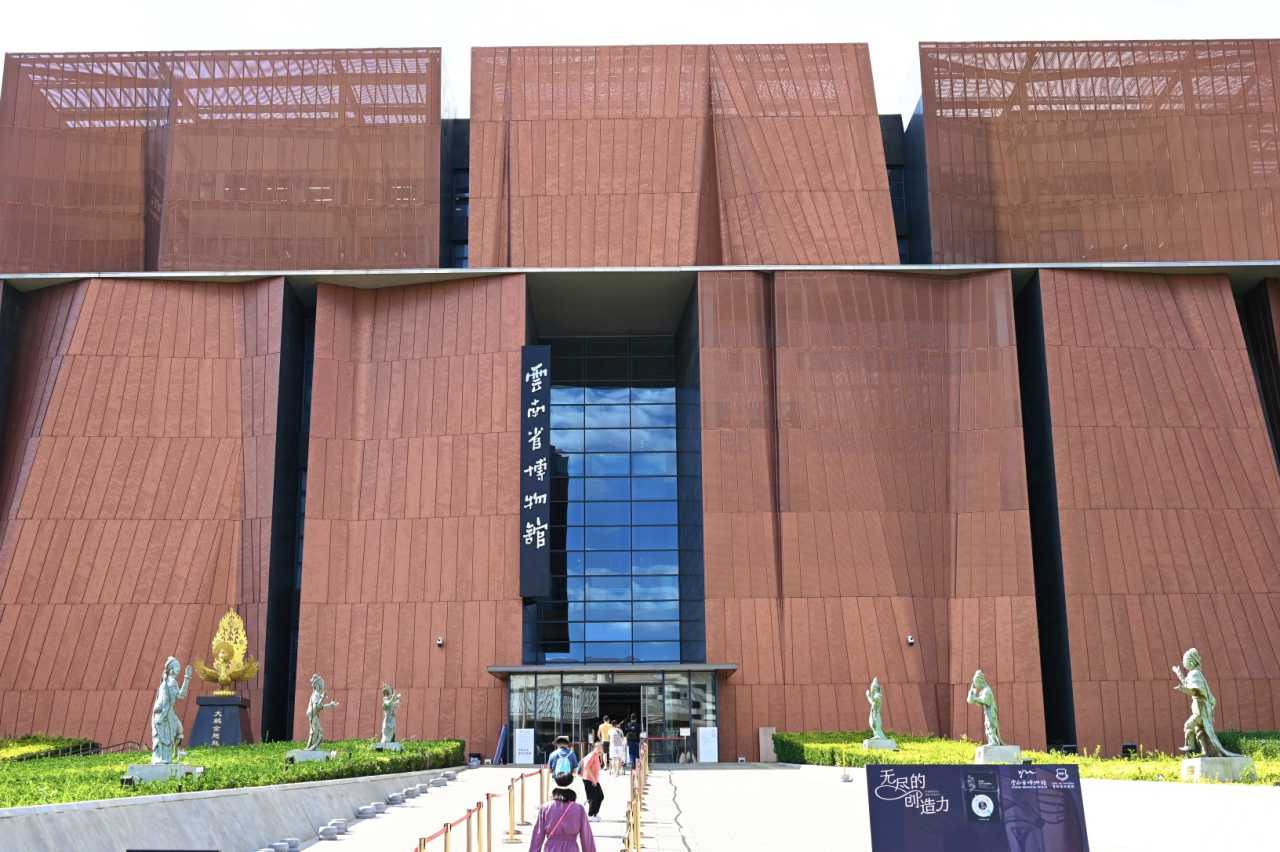
Exit the museum, cross one street, and you'll arrive at Guandu Ancient Town. I highly recommend visiting.
This ancient town isn't large, but it has over a thousand years of history. It's one of the birthplaces of ancient Dian culture, a renowned ancient ferry port in central Yunnan, and a Buddhist sacred site. Within an area of less than 1.5 square kilometers, you'll find "Five Mountains," "Six Temples," "Seven Pavilions," "Eight Shrines," and other scenic spots from the Tang, Song, Yuan, Ming, and Qing dynasties, along with hundreds of well-preserved "seal-impression-style" (一颗印式) traditional residences. In ancient times, it was known as "Little Yunnan."
Eating in Guandu
The town is filled with a dazzling array of snacks. When you can't decide, go for a platter. At the restaurant "Liuhuan Snacks" (留焕小吃), I ordered a platter at different price points. The smallest, at 48 yuan, covered most of the famous local snacks. The auntie also recommended a drink made from tamarind juice (酸角汁)—sweet and sour, a bit like hawthorn flavor, refreshing and appetite-stimulating. Not the best drink I've had, but very distinctive.
Must-See Historical Sites
Diamond Throne Pagoda (金刚塔, also known as 穿心塔) — China's only diamond-throne-style pagoda built entirely from sandstone, weighing about 1,350 tons. First built during the Ming Dynasty over 500 years ago, the base has four arched gateways (east, west, south, north) that cross through the center. However, for conservation reasons, passage is no longer open.
Miaozhan Temple Twin Pagodas (妙湛寺双塔) — Built during the Yuan Dynasty, these are 13-story, multi-eave, solid brick square pagodas. During an earthquake in the Daoguang era of the Qing Dynasty, the western pagoda was destroyed, leaving only the eastern one. The western pagoda has now been rebuilt. Together with the Diamond Throne Pagoda, they form a majestic triad. Between the three pagodas stands an ancient stage, the main venue for local folk performances like flower-drum opera (花灯) and Yunnan opera (滇戏).
Miaozhan Temple is the foremost of Guandu Ancient Town's "Six Temples." In 2008, it was taken over by the Shaolin Temple, becoming its first subordinate temple in southwest China. The reception hall has a small cultural creative shop, and you can even enjoy a cup of temple coffee.
Up the Mushroom Mountain: A Taste of Yunnan on the Tongue
On my first trip to Dali, I randomly picked a restaurant in the ancient city for wild mushrooms (菌子), and the flavor has lingered in my memory ever since. So returning to Yunnan, another mushroom feast was a must.
Perhaps the most delicious mushrooms are hidden in restaurants frequented by locals, but as a tourist, choosing a chain restaurant is relatively safe. Kunming has many mushroom chain restaurants. I picked one with high ratings, and the taste was indeed excellent.
A crucial tip: make sure the mushrooms are fully cooked before you start eating. While I couldn't identify most of the varieties, the only one I knew was the toxic "Hand-Turning Blue" (见手青, Boletus venenatus). But the flavor was incredibly savory. When the pot first boils, drink the soup—it's so delicious it'll make your eyebrows drop, and you'll keep wanting more. The restaurant takes a sample and records guests' names and phone numbers, a reassuring procedure.
Kunming Accommodation: Ans House (Cuihu Branch)
When choosing accommodation, convenient transportation is key. Areas near subway stations like Wuyi Road (五一路) or Tangzi Alley (塘子巷) are good choices. Cuihu (Green Lake) area is a bit more off the beaten path but quieter, and close to Cuihu Park, Yunnan University, and Yunnan Normal University.
This time I stayed at Ans House (Cuihu Branch) (安舍). The overall environment was pleasant. The toiletries were from the Israeli niche brand AHAWA. The backyard even housed a local trendy coffee shop called "Li Shuixian" (李水仙), and there was a barbecue restaurant next door. I arrived early, and my room wasn't ready yet, so the front desk upgraded me to a family room—a great experience.
Going Up the Mountain for Tea: A Surprise from Local Milk Tea
"Going Up the Mountain for Tea" (上山喝茶) is a local Kunming milk tea brand. In my opinion, it's remarkably good, completely on par with certain famous national brands. Unfortunately, you can only get it locally. I tried several teas and none disappointed, but my favorite was the Dianhong Latte (滇红拿铁, Yunnan black tea latte). I even had another cup at Changshui Airport—after security for domestic flights, you'll find the shop. It's the only one in the entire airport, so don't miss it.
Yunnan University: One of China's Most Beautiful Universities
It's no exaggeration to call Yunnan University one of China's most beautiful campuses. With a century-long history, the campus preserves a large number of historic buildings, lush vegetation, and picturesque scenery at every turn. Being there, you can't help but be swept up by the atmosphere and feel a strong urge to study. I joked with my travel companion that with such an ambiance, it would be hard not to study hard.
Visit Information
 The campus is open to the public for free. Make a reservation through the official WeChat account "Ping An Yunda" (平安云大) or enter with your ID card. Visiting hours: 09:00–14:00, 14:30–17:00. During summer break, the campus is quiet, perfect for photography and strolling.
Must-See Buildings
Huize Hall (会泽院) — The main building featured in Yunnan University's emblem, a classic French-style structure. During the War of Resistance Against Japan, scholars like Feng Youlan and Fei Xiaotong taught here, and it also served as a base for anti-Japanese propaganda. When the Japanese bombed Kunming, Huize Hall was hit twice but remained standing.
Zhigong Hall (至公堂) — During the Ming and Qing dynasties, this was part of the Yunnan Provincial Examination Hall (贡院, for the imperial civil service exams). Lin Zexu once presided over the provincial examination here. It was also the venue where Wen Yiduo gave his last speech before being assassinated.
Yingqiu Hall (映秋院) — Originally a female dormitory for Yunnan University, funded by Gu Yingqiu, wife of Long Yun (the then governor of Yunnan). The design was commissioned from the renowned architect couple Liang Sicheng and Lin Huiyin.
Former Residences of Xiong Qinglai and Li Guangtian (熊庆来、李广田故居) — The former homes of two Yunnan University presidents, one in the sciences and one in the humanities. These residences have been rated as "the most beautiful former residences of eight great masters on Chinese university campuses." The yellow buildings exude both the vitality of spring and a touch of French romance.
The Site of the National Southwestern Associated University (Lianda): The Most Brilliant Page in China's Educational History
The National Southwestern Associated University (Lianda) is a magnificent chapter in history. There's so much to say, but it's hard to know where to begin. Before my trip, I watched documentaries about Lianda (I recommend The National Southwestern Associated University (西南联大) and One Day When We Were Young (九零后)) and the film Forever Young (无问西东), hoping to gain a deeper understanding of this university established during a special era—how it transformed from China's last cultural lifeline into a pillar that supported the country's resurgence after the founding of New China.
Visit Information
Closed on Mondays. Open Tuesday to Sunday, 09:00–16:30. Make a reservation through the mini-program "Southwest Associated University Site and Museum Visit Reservation" (西南联大旧址及博物馆参观预约). Free guided tours are available at two times: 10:30 and 15:30. If you're not familiar with this history, I highly recommend booking a time slot with a guided tour.
Stories That Stir the Soul
Just look at Lianda's faculty, and you'll understand what an extraordinary university this was: the Chinese Literature department had Shen Congwen, Zhu Ziqing, and Wen Yiduo; the History department had Chen Yinke, Zhang Yinlin, and Wu Han; the Philosophy department had Feng Youlan, Tang Yongtong, and He Lin... It was these master-level professors who, during Lianda's eight years of operation, nurtured countless legendary figures.
In those eight years, among the over 8,000 students enrolled, the university produced two Nobel laureates (Yang Chen-Ning and Tsung-Dao Lee), three recipients of China's Highest National Science and Technology Award, six "Two Bombs, One Satellite" (两弹一星) founding fathers (Tu Shou'e, Guo Yonghuai, Chen Fangyun, Wang Xiji, Zhu Guangya, and Deng Jiaxian), as well as 80 academicians of the Chinese Academy of Sciences and 12 academicians of the Chinese Academy of Engineering.
After Lianda moved to Kunming, conditions were extremely harsh. With insufficient funds, there weren't even materials to build classrooms and dormitories, causing great distress for Liang Sicheng, who was tasked with the design. In the end, on the 124-acre campus, only the library and laboratories could have green-tile roofs; classrooms had to make do with iron sheets, and dormitories were simply thatched. By 1944, due to severe financial deficits, the school had to sell the iron sheet roofs to cover teaching expenses.
During Yunnan's rainy season, raindrops pattered loudly on the iron roofs, severely disrupting classes. This led to the famous scene from the film Forever Young—a teacher writing four characters on the blackboard: "静坐听雨" (Sit Quietly and Listen to the Rain). This was a true story; that professor was from Lianda's School of Law and Commerce.
A Final Note
This five-day journey, from Kunming to Jianshui and then to Mengzi, felt like a wander through time and space. Conversing with artifacts thousands of years old in the museum, touching the traces of the Tang, Song, Yuan, Ming, and Qing dynasties in Guandu Ancient Town, feeling the heritage of a century-old institution on Yunnan University's campus, and listening to the stirring history at the site of the National Southwestern Associated University.
Yunnan's beauty lies not only in its natural landscapes but also in the cultural depth it carries. Kunming may lack Dali's romance or Lijiang's charm, but it possesses China's final cultural lifeline—those scholars who persevered through wartime, and those passionate young people who served their country with knowledge.
This trip allowed me to rediscover Kunming. It is not a transit hub but a place worth stopping to savor. Like that cup of Dianhong Latte—perhaps plain at first taste, but with a lingering aftertaste that makes you think of it long after.
Practical Tips Summary: - Yunnan Provincial Museum: Closed Mondays; reserve three days in advance via "Digital Yunnan Museum" (数字云博); guided tour recommended. - Guandu Ancient Town: Free entry; adjacent to the museum; try the snack platter at Liuhuan Snacks (留焕小吃). - Yunnan University: Free entry; reserve via "Ping An Yunda" (平安云大) WeChat account; visiting hours 09:00–17:00. - Site of the National Southwestern Associated University (Lianda): Closed Mondays; reserve via mini-program; free guided tours at 10:30 and 15:30. - Going Up the Mountain for Tea (上山喝茶): The Dianhong Latte (滇红拿铁) is the signature drink; there's a shop after security at Changshui Airport. - Eating Wild Mushrooms (菌子): Choose chain restaurants for safety; never touch undercooked mushrooms.
You should also read:

God’s Abandoned Palette: A Self-Drive Journey Through Yunnan’s Dongchuan Red Land
God’s Abandoned Palette: A Self-Drive Journey Through Yunnan’s Dongchuan Red Land Travel has never been about reaching some distant geographic coordinate. It’s about encountering, along the way, the version of yourself buried beneath the rubble of daily routine. During this May Day holiday, I finally…
Continue reading...
Body in Hell, Heart in Heaven: A Pilgrimage Through Tiger Leaping Gorge — A Dialogue Between Heaven and Earth
Body in Hell, Heart in Heaven: A Pilgrimage Through Tiger Leaping Gorge — A Dialogue Between Heaven and Earth Introduction: When the Gorge Splits Open Beneath Your Feet Some say Tiger Leaping Gorge is the closest place on Earth to the border between "hell" and…
Continue reading...
Cloud Travelogue · Dali of Wind, Flowers, Snow, and Moon: A Three-Day, Two-Night Journey of a Free Spirit
Cloud Travelogue · Dali of Wind, Flowers, Snow, and Moon: A Three-Day, Two-Night Journey of a Free Spirit I am a cultured female foodie with a touch of rogue charm. I slung on my backpack, took my lover's hand, and set off on a spontaneous…
Continue reading...