Ruili: A Forgotten Southeast Asian Paradise on the Border, a Hidden Gem Surrounded by Myanmar on Three Sides
Ruili: A Forgotten Southeast Asian Paradise on the Border, a Hidden Gem Surrounded by Myanmar on Three Sides
Last May, I set off alone on a journey to Yunnan. When my friends heard I was going to Ruili, they almost unanimously asked me, "Is it safe there?" To be honest, I hesitated before leaving too. After all, the news from northern Myanmar always makes one's heart tighten. But when I actually stood in this small city surrounded by Myanmar on three sides, what I saw was a completely different scene — towering border walls, orderly streets, and locals with warm smiles. There was no chaos here, only a kind of tranquility and mystery forgotten by time.
Ruili, called "Mengmao" in the Dai language, means "auspicious and beautiful." Unlike the towering mountains of the Yunnan-Guizhou Plateau, this place sits at an altitude of just 800 meters, with a tropical monsoon humid climate. Dense rainforests, spring-like weather year-round, and the air perpetually filled with the moist scent of vegetation. On Yunnan's tourism map, Ruili was once a star city on par with Lijiang. But its remote location, inconvenient transportation, and the recent turmoil in Myanmar have gradually pushed it off travelers' radars. Today, it has become the most off-the-beaten-path and most stunning tourist city I've visited in two years.
If you're tired of the crowds in Xishuangbanna or the Instagram-famous spots in Mangshi, Ruili is definitely worth a day of your time. Prices are affordable, tourists are scarce, yet it boasts an exotic Southeast Asian charm that rivals any destination. It's a severely underestimated border treasure, waiting for the right traveler to discover it.
One Village, Two Countries: A Dai Village on the Border, Two Worlds a Step Apart
Near the China-Myanmar Border Marker No. 71 in Ruili, there's a peculiar village. The border cuts through like an invisible knife, splitting the village in two — the Chinese side is called Yinjing, and the Myanmar side is called Mangxiu. For the locals living here, the border is just a railing in their daily lives. They cross back and forth as if moving between their own courtyards, without any sense of separation.
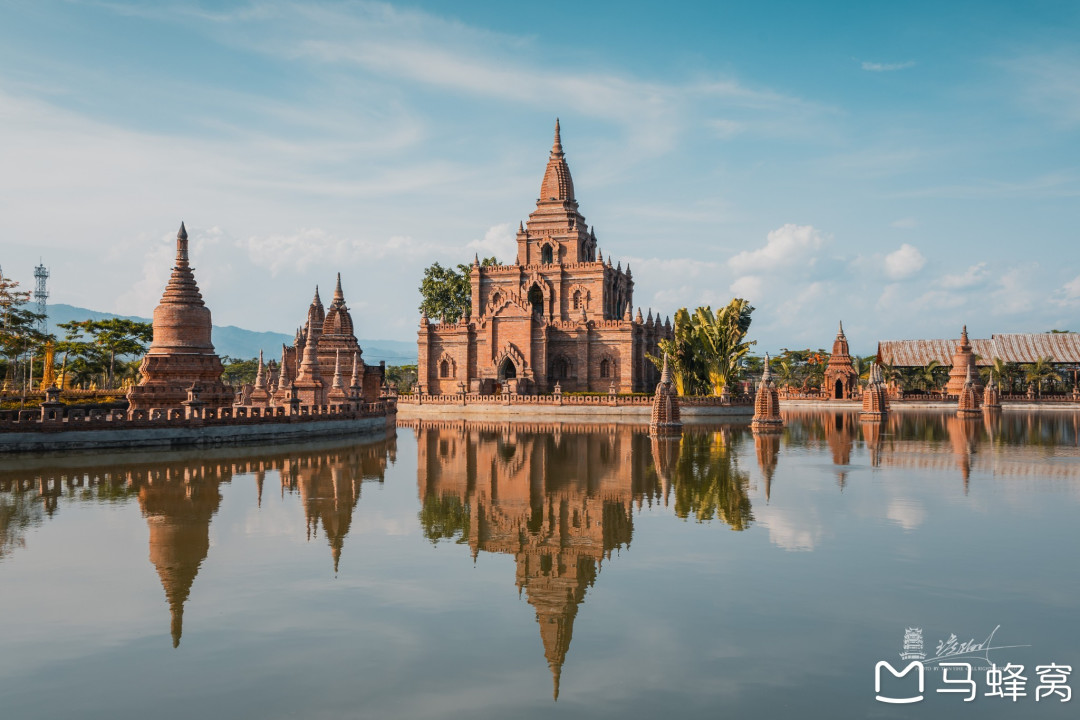
Walking into the "One Village, Two Countries" scenic area, you can't even feel like you're in two different countries. Not only does it offer a complete display of Myanmar's customs and culture, but you can also see unique Myanmar-style pagodas that are one-of-a-kind in China. They stand quietly in the tropical rainforest, as if telling stories that span across time and space.
The Mysterious Bagan Pagoda: Exotic Beauty in a Replica Structure
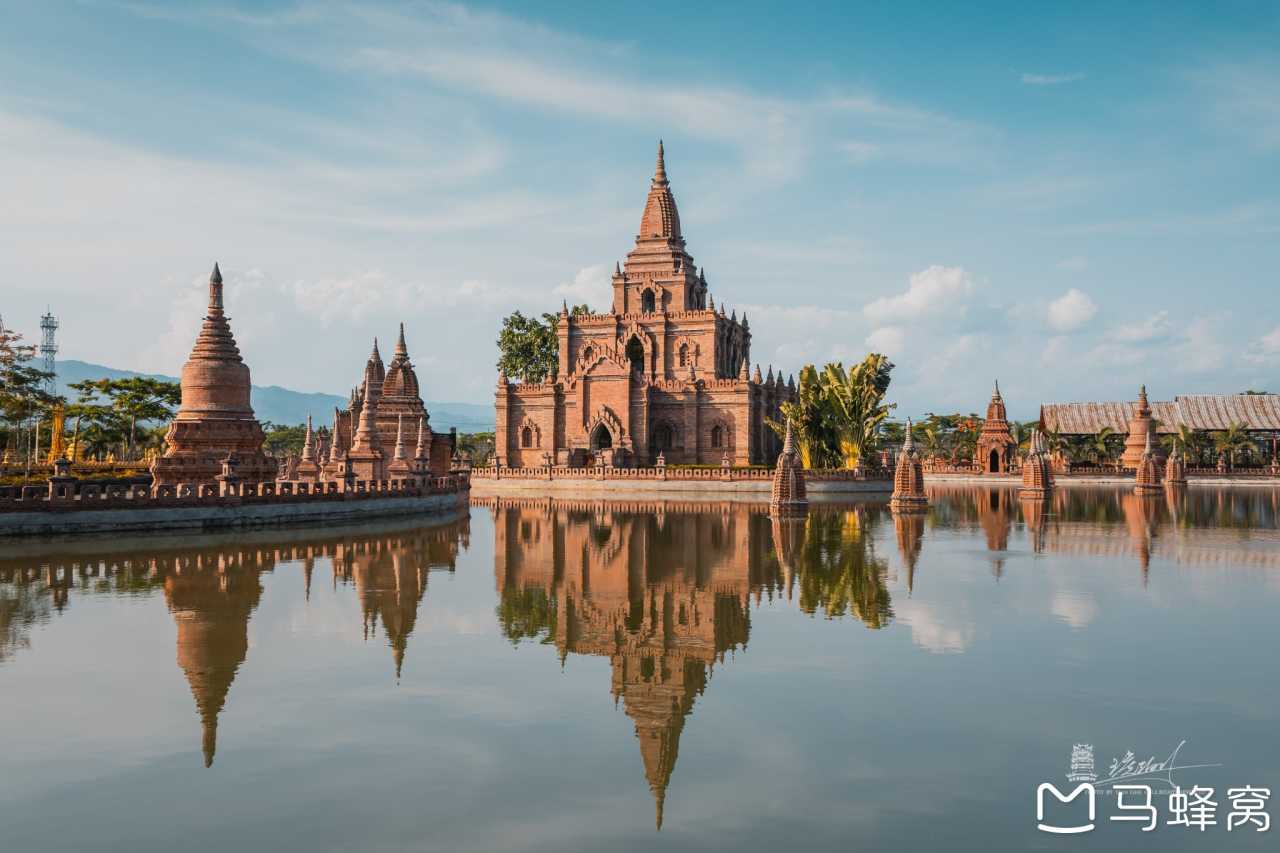
The most stunning feature of One Village, Two Countries is undoubtedly the replica Bagan pagoda. Although it's a modern reconstruction, its rare beauty still catches your eye. From a distance, it looks like a miniature version of the Bagan pagoda forest in Myanmar, instantly transporting you to Southeast Asia. The pagoda was built by a Myanmar designer to replicate the distinctive features of the Bagan region's pagodas.
Bagan, located in central Myanmar, is world-famous for its rich Buddhist heritage. Over 3,000 pagodas remain there today, earning it the title "City of Ten Thousand Pagodas." In 1044, the King of Bagan established the first unified feudal dynasty in Myanmar's history — the Bagan Dynasty. This replica pagoda pays homage to that glorious history.
Immersive Myanmar Cultural Experience
Beyond the pagoda, the scenic area is dotted with many Myanmar-style houses. They resemble thatched huts in Southeast Asian rainforests, intimately connected with nature, as if transporting you back to a slash-and-burn agricultural civilization. What's even more noteworthy is that many of the staff here come from Myanmar. Without leaving the country, you can experience authentic Myanmar culture.
Every day, locals perform at One Village, Two Countries. While the performances aren't spectacular, the unique costumes and attire still satisfy visitors' curiosity. You can also see the yellowish-white "Thanakha" on Myanmar people's faces — a natural sunscreen made from ground bark of the Thanakha tree, used for over 2,000 years for its beauty and cooling effects. Additionally, women of the Kayan tribe in Myanmar are known for elongating their necks with brass coils, earning them the name "Long Neck Tribe." In reality, the coils compress the collarbone rather than lengthening the neck, a custom rooted in ancient totemic beliefs that has now become a tourist attraction.
Real Myanmar Beyond the Border
If the performances showcase local customs, then beyond the border, you can glimpse the real Myanmar. To the west of One Village, Two Countries lies the China-Myanmar border, where the famous Border Marker No. 71 stands. Through the iron fence, you can clearly see the Mangxiu village on the other side. Many Myanmar villagers used to sell cigarettes, but such transactions are now banned. Standing here, you can truly feel the震撼 of "a step apart, fates divided."
One Village, Two Countries Travel Tips: - Ticket Price: 40 yuan, can be explored in 2 hours - Transportation: Recommend taking a taxi; bus route Ruili Line 1 goes to the scenic area entrance, runs every 20 minutes - Best Time to Visit: Come after 3:00 PM — fewer tourists, and you might catch the sunset, adding to the atmosphere
Ruili Port: A Sense of Security and Bustling History on the Border
Contrary to the chaotic rumors online, what I saw at Ruili Port was a scene of order. The streets were filled with Myanmar people crossing back and forth through the port. Standing in the square, you could even clearly see the streets of Myanmar on the other side. Without a visa, I couldn't go over to Myanmar — and honestly, I wouldn't dare go alone anyway.
Jiegao Port: The Evolution and Witness of the Gateway
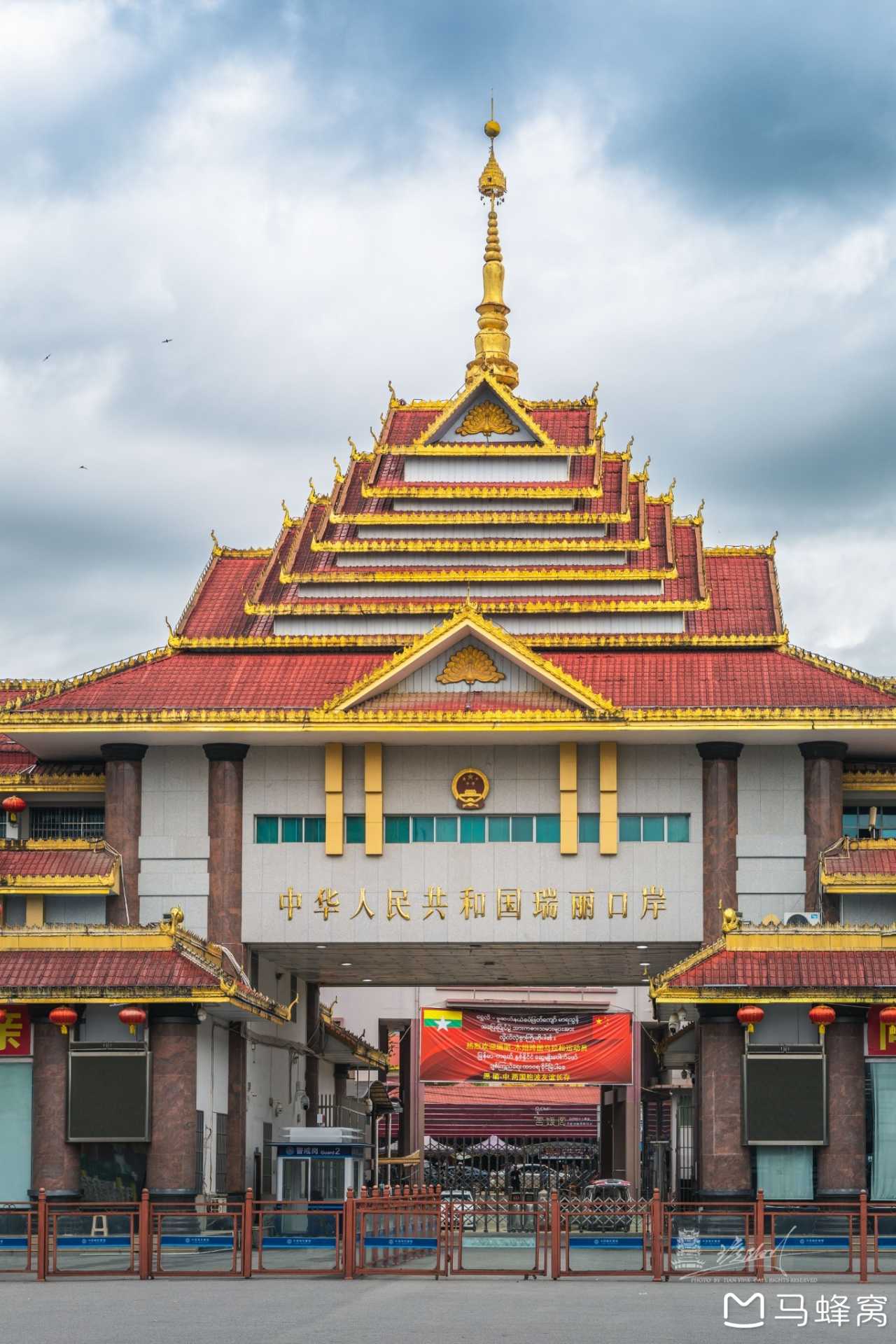
Jiegao Port borders the Myanmar town of Muse on three sides and is China's earliest border trade port to implement the "special supervision within the border but outside the customs" model. The bridge built in 1989 across the river enabled direct land connection to Myanmar. The national gate is grand and majestic, bearing witness to the changes and development of Ruili Port.
Since the first thatched-roof national gate in 1978, Jiegao Port has undergone multiple constructions and renovations. In 2006, to preserve history and culture, Ruili's Jiegao national gate was completely renovated, drawing inspiration from the architectural style of the late Yuan Dynasty Luchuan Sinan Palace, eventually becoming the third-generation national gate we see today. The border consists of rows of over ten-meter-high barbed wire fences and iron railings, with border troops stationed everywhere, making you feel incredibly safe.
China-Myanmar Commercial Street: Past Prosperity and Present Decline
Between Border Markers No. 81 and 82 on the China-Myanmar border lies a wide China-Myanmar commercial street. Here you can buy duty-free Southeast Asian goods, with rows of daily necessities and unique handicrafts on display. But compared to six years ago, it's far more desolate. Many shops deep in the street have their doors tightly shut, with only a few scattered tourists wandering around. Standing here, you can feel the passage of time — the former prosperity and the current decline, both flowing quietly along this street.
The End of National Highway 320: The Significance of "Tianya Dijiao" (End of the Earth)
Starting from Shanghai and heading west along G320, the终点 (final point) is here. "Tianya Dijiao" (End of the Earth) not only has geographical significance but also symbolizes the connection between China and Myanmar due to its link to Myanmar's road network. Standing here, you feel a奇妙 (wonderful) sense of time and space intertwining — from the bustling eastern metropolis to this remote border town, all the dust and stories of the journey converge at this small border marker.
Gazing Beyond the Border: The Destroyed "KK Park" and the Real Northern Myanmar
Ruili and Myanmar are separated by only a river, with the town of Muse on the other side, administratively part of Myanmar's Shan State. Standing on the hilltop of Ruili's General Buddhist Temple, you can see everything clearly, lifting the veil to reveal the real Myanmar in the frame.
The once-notorious "KK Park" was located in Muse town. It was said that at its peak, up to 40,000 people were there, with prices higher than in Hong Kong. The park has now been dismantled, but traces of its past can still be seen in the remaining buildings. Standing on the hilltop looking into the distance, it's hard to imagine that such a seemingly peaceful land once witnessed so many heart-stopping stories.
Southeast Asian Pagodas: Lost Historical Relics and Hidden Rainforest Treasures
Unlike Xishuangbanna and Mangshi, Ruili's Buddhist temples are sparsely populated, visited only by a few locals. They feel more like lost relics in the tropical rainforest, carrying a mysterious and desolate beauty. Walking into those golden and silver pagodas gives you a sense of Angkor Wat.
Ruili General Buddhist Temple and Dai King's Palace: The Beauty of Decay Amidst Splendor
Ruili General Buddhist Temple is the largest Buddhist temple on the China-Myanmar border, initially funded by the Myanmar government. Next to the temple is a scenic area called the Dai King's Palace, now abandoned, leaving only grand buildings and golden pagodas in the wilderness. Although it's "gold on the outside, decay on the inside," its unique exotic charm still holds a strong appeal for me.
If time permits, I recommend coming in the evening. Watch a magnificent sunset in front of the Great Buddha at the General Buddhist Temple, as the golden rays of the setting sun bathe the golden architecture, creating an atmosphere full of exoticism. At that moment, you'll forget you're in China, as if you've traveled to some ancient Southeast Asian kingdom.
Jiele Golden Pagoda: The Oldest Buddhist Structure in Dehong
Jiele Golden Pagoda, called "Guangmu He Mao" in the Dai language, meaning "the pagoda at the head of Ruili city," is one of the oldest Buddhist structures in Dehong Prefecture, Yunnan Province. It was built during the period of the ancient Mengmao Kingdom, surrounded by 16 smaller pagodas in a unique "stars surrounding the moon" layout. The Dai scripture "Guangmu He Mao" records the connection between the pagoda and the origin of the name "Mengmao." As a famous Buddhist holy site in Southeast Asia, it attracts worshippers from China, Myanmar, and Thailand during the Water Splashing Festival each year.
Other Attractions: The Decline of Jewelry Street and the Call of the Tropical Rainforest
Mori Tropical Rainforest: A Missed Natural Wonder
Mori Tropical Rainforest is Ruili's treasure of a natural scenic spot. Here, the primeval tropical rainforest is so dense it blocks out the sun, featuring century-old vines, thousand-year-old ferns, the tropical cold-blooded killer "strangler fig," and even a waterfall straight out of a fairy tale. I really wanted to go, but since I was traveling on short notice and couldn't find anyone to share a ride, I didn't make it. If you go, I recommend renting a car or driving yourself, as it's remote and you'll struggle to get a taxi back.
Ruili Jewelry Street: From Bustling to Deserted

In the city center, Ruili Jewelry Street was once the city's largest jewelry market, but now it's deserted, with most shops closed. It must have been bustling six years ago. Nearby, there's a street mostly inhabited by Myanmar people — if you want to experience exotic culture and take photos, it's worth a visit.
In addition, Ruili has some lesser-known attractions like Bianzhai Hansha and Ruili Ancient City. But these places are either overhyped or desolate and lacking in atmosphere, so I wouldn't recommend them.
Ruili Local Cuisine: A Food City Blending Five National Flavors
Beyond its strong Southeast Asian vibe, Ruili is also a true food city. It brings together cuisines from China, Myanmar, Laos, Thailand, and Vietnam. Drinks like Paoluda (coconut milk drink with bread and jelly), Ruili live crab, Dai-style hand-grabbed rice, pounded chicken feet, Myanmar fried flatbread, and Lao-style iced coffee are all must-try experiences!
One-Day Ruili Itinerary: How to Make the Most of This Border Town
Recommended Route: - Morning: (Mori Tropical Rainforest) - General Buddhist Temple/Dai King's Palace - Jiele Golden Pagoda - Afternoon: Jiegao Port - China-Myanmar Street - One Village, Two Countries
I recommend taking taxis or renting a car, as public transportation isn't very convenient. Ruili can be explored in a day, and if you're coming from Mangshi, you can easily return the same day.
How to Get to Ruili
- By Plane: Fly from Kunming to Mangshi, then take a bus from Mangshi South Bus Station to Ruili. The drive from Mangshi to Ruili takes about an hour, with the earliest bus departing at 8:50 AM and the last bus returning from Ruili at 5:30 PM (ticket price: 40 yuan per person).
- By High-Speed Rail: Take a high-speed train to Baoshan, then transfer to a bus from Baoshan North Bus Station (next to the high-speed rail station), arriving in Ruili in about 3 hours. For details, check "Baoxing Bus Ticketing."
- Return to Mangshi: Although the last bus from Ruili Bus Station departs at 5:30 PM, there are intercity buses to Mangshi Airport in the evening, with the last one at 8:00 PM — a good option for the return trip.
Final Thoughts: Ruili, a Border Town Worth Rediscovering
Ruili, this border town surrounded by Myanmar on three sides, lacks the hustle of Lijiang, the artistic vibe of Dali, and the liveliness of Xishuangbanna. But it has its own unique character — a tranquility forgotten by time, a奇妙 (wonderful) intersection on the border, and an authentic Southeast Asian flavor.
Here, you can stand on the border and feel the convergence of two worlds; you can walk into pagodas hidden in the rainforest and listen to the ancient chants; you can taste the flavors of five countries and satisfy your culinary journey. Most importantly, there are no crowds, no high prices — only the most genuine border life.
If you're looking for an off-the-beaten-path,小众 (niche), and exotic travel destination, then Ruili will not disappoint you. Bring your curiosity and embark on your own adventure in this border town.
You should also read:
Three Days in Lijiang: A Gentle Encounter in Passing
Three Days in Lijiang: A Gentle Encounter in Passing Prologue: First Sight Above the Clouds As the plane pierced through the cloud layer and the jagged silhouette of snow-capped peaks suddenly emerged outside the window, I truly realized—Lijiang, I have arrived. This wasn't a meticulously…
Continue reading...
Complete Guide to Fuxian Lake: A Yunnan Hidden Gem I've Visited Three Times – Ask Me Anything!
Complete Guide to Fuxian Lake: A Yunnan Hidden Gem I've Visited Three Times – Ask Me Anything! Why Fuxian Lake? If you ask me which place in China is worth visiting again and again, my answer isn't Lijiang or Dali – it's Fuxian Lake. In…
Continue reading...
Yunnan! Paradise on Earth – The Yubeng Chapter: A Soul-Cleansing Journey into Seclusion
Yunnan! Paradise on Earth – The Yubeng Chapter: A Soul-Cleansing Journey into Seclusion Prologue: Why Yubeng? If you ask me which place in Yunnan is most worth hiking to, I would answer without hesitation: Yubeng. This is not an answer I give lightly. As a…
Continue reading...