Searching for Shangri-La: Half a Dream Cradled by Sacred Mountains
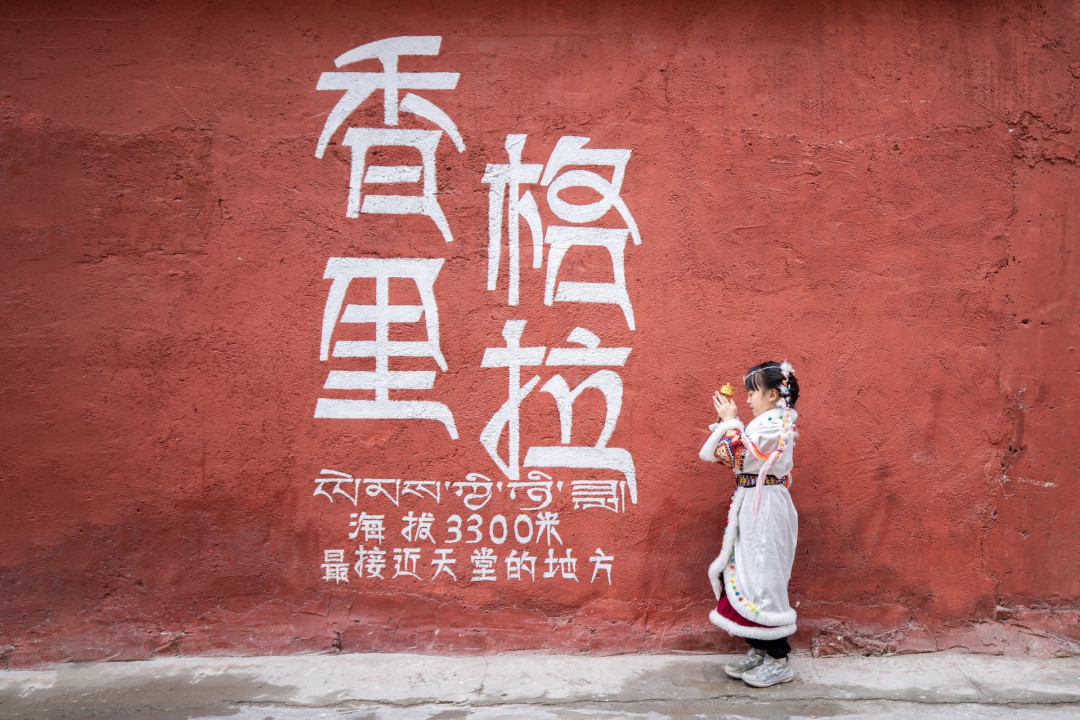
Searching for Shangri-La: Half a Dream Cradled by Sacred Mountains
Prologue: When the City's Heartbeat Meets the Mountain's Breath
Have you ever had that moment—when you've spent too long in a concrete jungle, so long that you've forgotten the true color of the sky? When anxiety wraps itself around every morning like creeping vines, when the pace of life becomes so frantic that you can barely catch your breath, and that buried call from somewhere distant grows clearer and more insistent?
Shangri-La. The name itself carries a kind of magic. In Tibetan, it means "the sun and moon in the heart." In the imagination of countless travelers, it is the last pure land, a place where you can finally meet yourself when the gesang flowers bloom. But does Shangri-La truly exist? Perhaps the answer depends on who you ask. Until I came across this line: "One day, you will find your reason to come to Shangri-La, and then you will become a child of the sacred mountains—or you will become yourself."
So when the pressures of life surged like a tide, when anxiety and confusion found no outlet, I decided to bring my family and search for our own Shangri-La. After discussing it with my wife, we were in instant agreement—our daughter Niuniu had grown up, and the high altitude was no longer off-limits for her. My parents had also long dreamed of visiting this land. And so, a "five-person team" set off on a journey to Yunnan at the end of April 2025.
Starting from Lijiang, we drove north along National Highway G214, known as "the most scenic thoroughfare." Snow-capped mountains, meadows, rivers, gorges, temples, yaks... everything before our eyes was so pure it felt like it could cleanse the soul. In that moment, I suddenly understood that Shangri-La was never just a place name. It is the utopia within each of us, everything beautiful about life that we choose to believe in.
Chapter One: Baisha Ancient Town—Mottled into Poetry by Pigment and Time
Meeting Leisurely Freedom
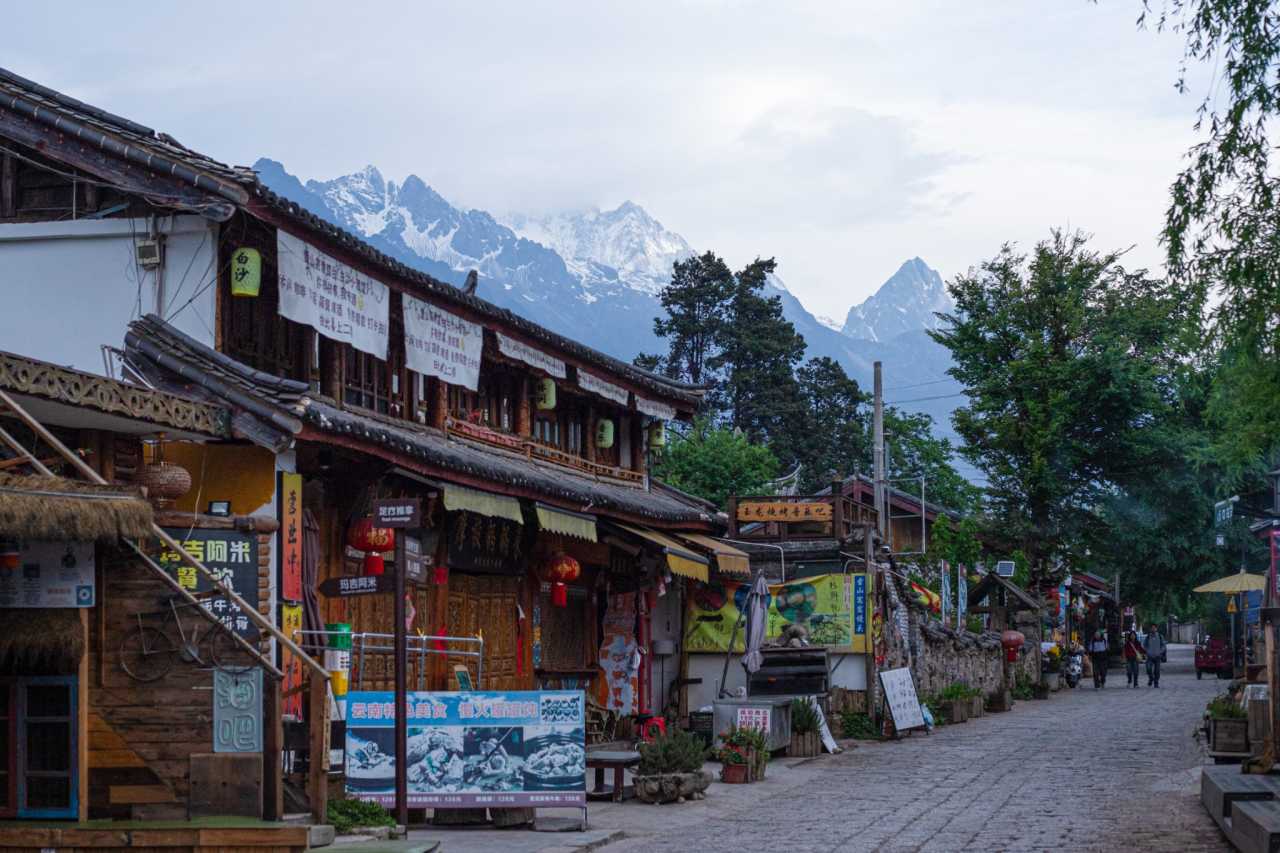
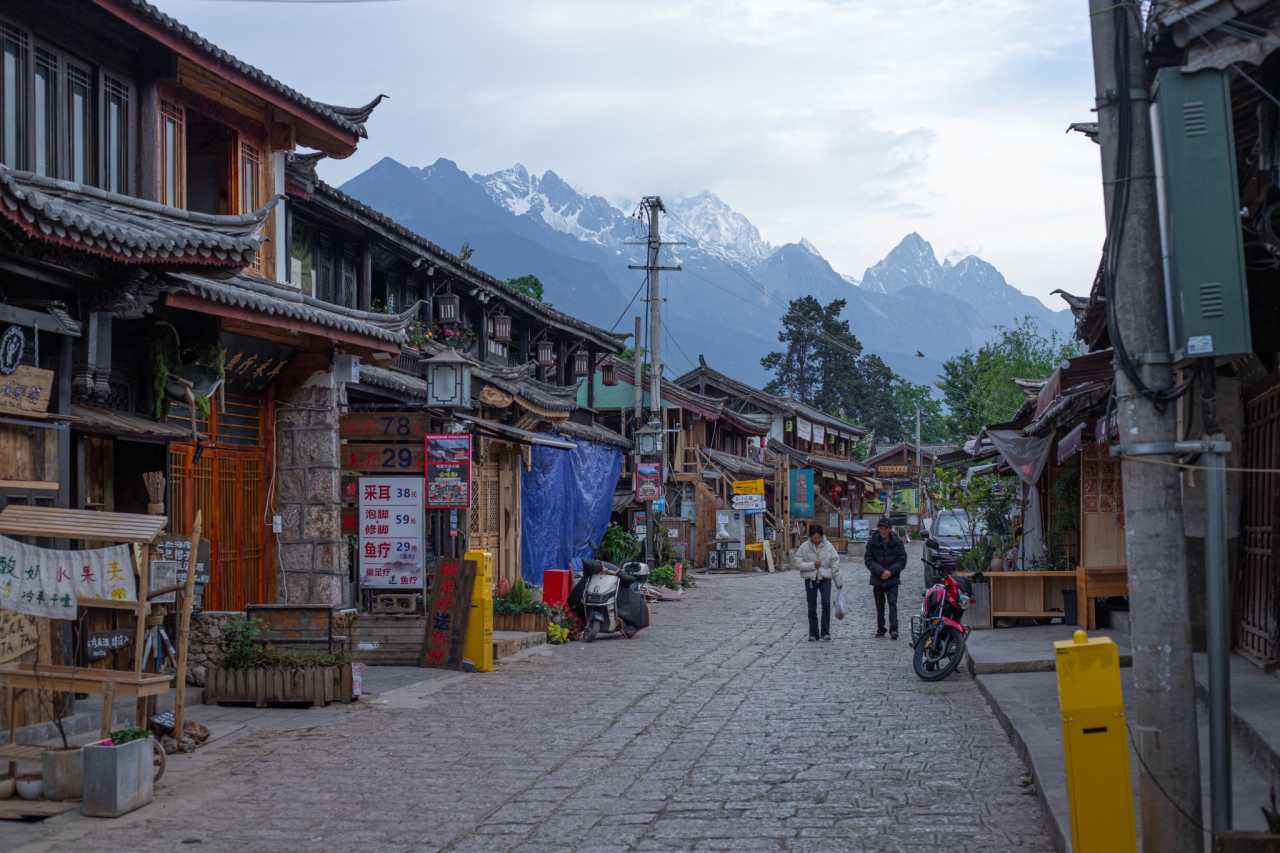
Six years had passed since my last visit to Lijiang. But when I set foot on this land again, the traces of memory were still vivid. This time, I chose not to stay in the bustling Dayan Old Town but instead settled into the quieter, less-visited Baisha Ancient Town.
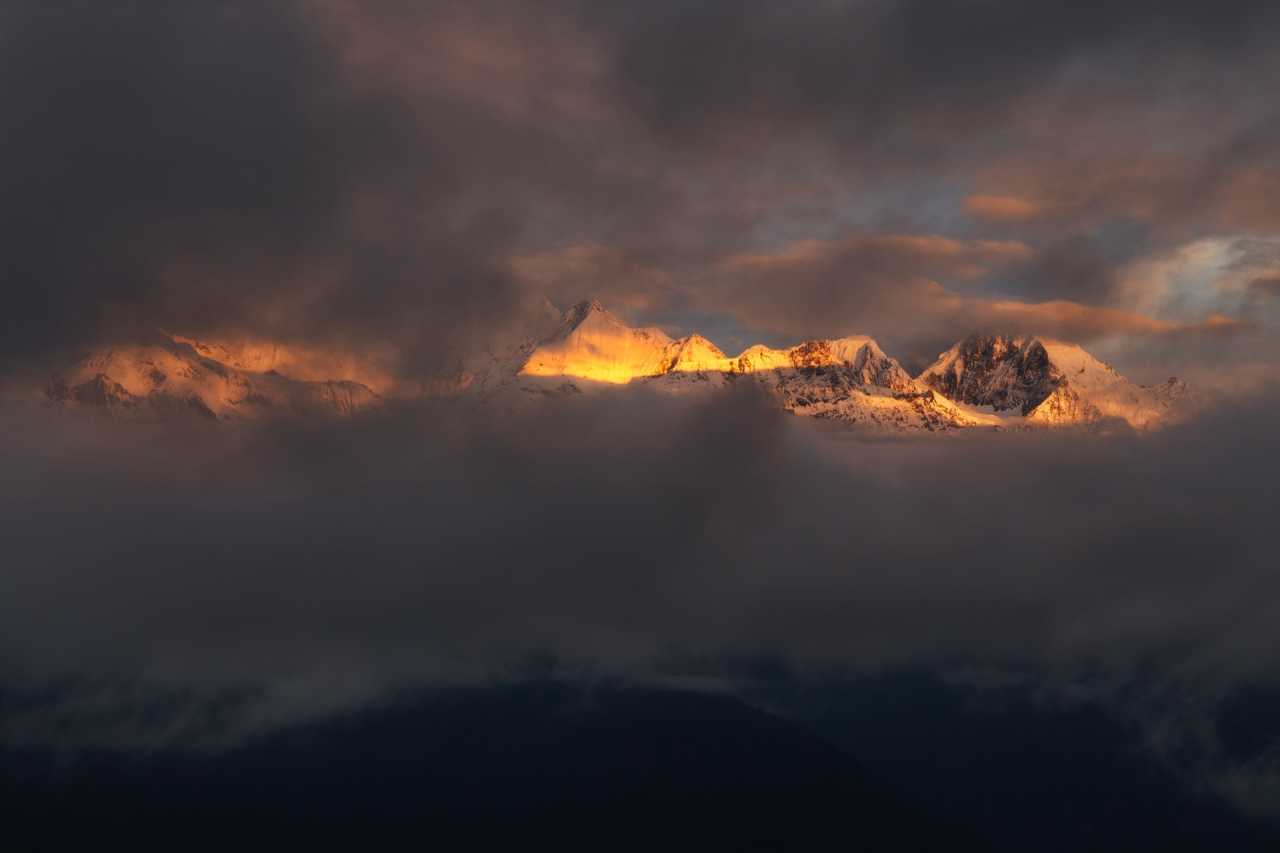
We rented a car and drove from the train station toward Baisha. For some reason, the scenery along the way exuded a sense of laziness and freedom. As the car passed beneath the Jade Dragon Snow Mountain, a golden gap suddenly split the clouds, as if the mountain had lifted a corner of its veil. Baisha Ancient Town lay quietly in this play of light and shadow, its few wooden houses with eaves curving into the shape of time itself, like an old photograph crumpled by the years.
A Pot of Yak Meat Hotpot, Opening the Flavor Memory of the Plateau
After parking in Baisha, we walked into the old town. As expected, it was much quieter than Dayan, and more rustic. Niuniu was hungry, so we found a restaurant nearby. It specialized in 牦牛肉火锅 (yak meat hotpot), decorated in a Naxi style. The copper bells on the eaves chimed softly in the wind, making us relax involuntarily.
When the yak meat and Yunnan's unique variety of wild mushrooms came together under the catalyst of the hotpot, the resulting umami was simply irresistible. One mouthful of hot broth, and the fatigue of the journey seemed to melt away.
Baisha Murals: An Unfinished Work of Time
After lunch, my parents showed great interest in the Baisha Murals. The scenic area is not large, but the moment you step inside, you can feel a distinctly different atmosphere. The ancient wooden architecture clearly reveals the historical weight behind it.
Walking through the wooden door of the Glazed Hall, the unique scent of wood mixed with the warm dust of sunlight filled the air. Light streamed through the carved lattice windows, weaving cobweb-like patterns of light on the murals. When I first saw those colors, I felt a bit dazed—brown mountain ranges layered over stone-blue clouds, cinnabar-dotted lotus petals, and the flowing ribbons of celestial beings that seemed to pass through six hundred years of time. In that moment, I believed these murals were alive, pulsating with vitality.
As the Naxi Dongba scripture says: "All things become themselves through change." These murals have never stopped growing—the cracks torn by earthquakes, the tea-brown stains from incense smoke, the mottled textures worn by wind and rain—all are brushstrokes completed by heaven, earth, and all things. Perhaps the Baisha Murals are still an unfinished painting, and we, inadvertently, have become the mottled traces within it.
Chapter Two: Hutuwo Ranch—"Playing Dumb" is the True Wisdom of Life
Meeting Monet's Palette at the Foot of the Snow Mountain
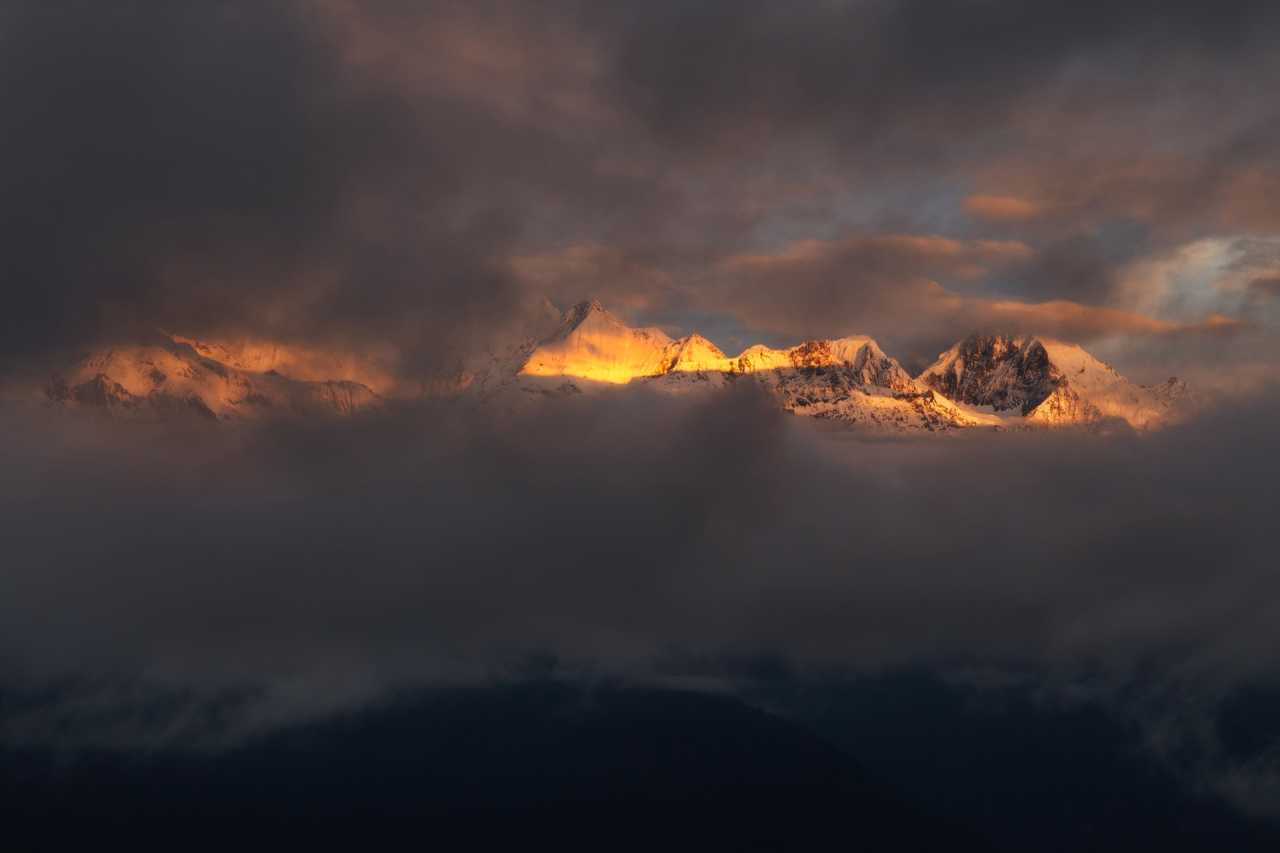
It was nearly evening when we left the Baisha Murals, but because the sun sets late in Lijiang, the sky was still bright. The Jade Dragon Snow Mountain gradually revealed its true face, and Niuniu said she wanted to go somewhere closer to the mountain. Coincidentally, I had bookmarked a niche destination—Hutuwo Ranch, a grassland nestled at the foot of Jade Dragon Snow Mountain.
When I first heard the name "Hutuwo" (which means "Fool's Nest" or "Confused Den"), I imagined it must be a place shrouded in clouds and mist. But as we drove into this valley, I realized the name was more like a piece of soft malt candy, melting on the tongue into a sweetness of milk and grass. At an altitude of nearly 2,300 meters, the sky seemed pressed low, low enough to see the reflection of clouds in every dewdrop on the meadow.
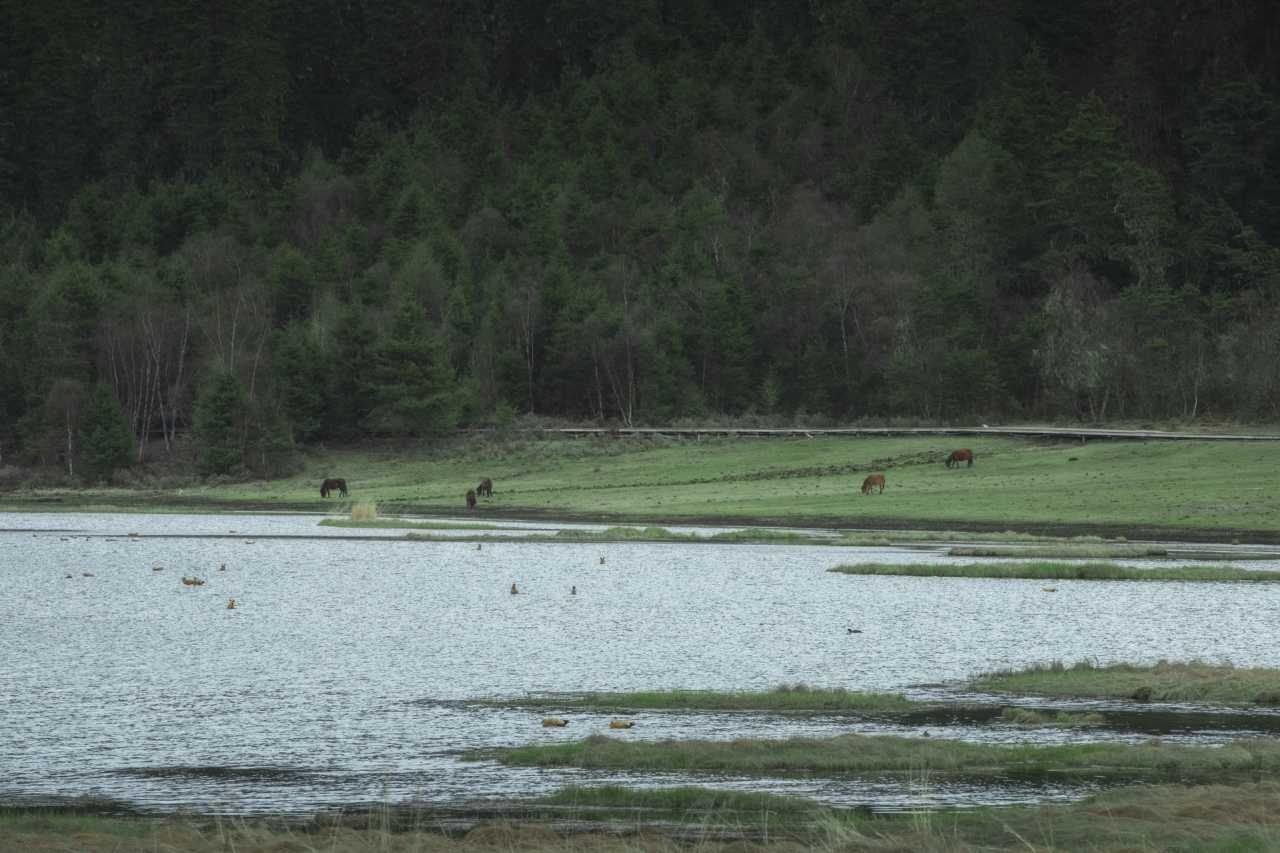
There were many small animals grazing on the grassland: horses, sheep, alpacas... Niuniu was overjoyed. She has loved animals since she was little, and now she was practically dancing with excitement.
Gazing from the Little Cabin: The Wind Can Enter, and So Can Stories
In the center of the grassland stood a small log cabin. Though slightly rustic, it was quaint and cozy. Through its window, you could see the full view of Jade Dragon Snow Mountain. I couldn't resist stepping closer and gently pushing open the half-closed wooden door—it creaked open, as if to say, "The wind can enter, and so can stories."
Inside, looking out the window, a horse was grazing on the emerald meadow. In the distance, the Jade Dragon Snow Mountain would occasionally disappear into the drifting clouds, then reappear. The scene before me seemed like a spilled Monet palette—waves of jade-green grass rolled with lemon-yellow patches of light, a brown horse stood in the cobalt shadows, and the distant mountain used titanium white and ultramarine brushstrokes to carve cold, sharp lines across the sky.
The True Meaning of "Playing Dumb"
A staircase on the side of the cabin led to the roof. The roof's slope faced directly toward the main peak of the snow mountain, clearly a viewing angle designed for contemplation. Standing there, I could see the entire meadow spreading out at the foot of the mountain. Jade Dragon Snow Mountain was so close that I could see the main peak, Shanzidou, its snow walls glowing with a faint blue light, and even the thousand-year-old snow embedded in the glacier's crevices.
I bought some carrot sticks for Niuniu to feed the animals. The little girl ran among them, her face beaming with pure, simple joy. My wife and I sat on the grass, watching Niuniu, feeling time slow down.
At first, this aimless pace made me uncomfortable, even a little panicked—my hand would instinctively reach for my phone. Having lived in the city for so long, I was used to living with goals, turning myself into a straight line, demanding that I get from point A to point B as quickly as possible. But in this moment, I realized that a winding path might be what life is truly about.
"Playing dumb"—it's not about muddling through life. It's about finding the folds in the mountain's sharp edges and the meadow's softness where your soul can relax. When we stop insisting on numbering every blade of grass or measuring every rain, we can hear the poetry that nature has written in the wind across the meadow.
Chapter Three: Freezing Time—Photography is a Magic of Time Travel
The Most Romantic Definition of Photography
"Humans lack the divine ability to freeze time, so they invented photography. When millions of silver halide grains condense into an image, when cold digital signals arrange themselves into a stable picture, when a casual glance one day triggers a Proustian effect, and you suddenly recall the taste, sound, light, and humidity of that day—in that second, you have completed a journey through time at its smallest unit."
This is the most romantic description of photography and its meaning I've ever come across online. Before every trip, I ask myself whether it's necessary to carry all this heavy camera gear. But in the end, I always bring it without exception. I admit that there have been times when I've felt exhausted and regretted it while lugging the equipment over long distances. But every time I finish editing the photos after a trip, I'm incredibly grateful that I persisted.
The Time Magic of Black Dragon Pond
Six years ago, when Niuniu was just a toddler learning to walk, I brought her to Black Dragon Pond Park and took some interesting photos. This time, I didn't think much of it when we returned. But as I was taking Niuniu's picture by the pond, looking through the viewfinder, our eyes met—and in that instant, memory and image overlapped. The same location, the same composition, even the same exposure of the Jade Dragon Snow Mountain in the background. The only difference was that Niuniu had grown so much.
Perhaps only in moments like these can you truly feel the magic of time. In one corner of the park, there was a stall offering guidance on making traditional Naxi handicrafts. Niuniu saw it and couldn't move. We sat down and watched her focused expression, and my mind drifted back to when she was a baby—marveling at time, marveling at how these six years felt like yesterday yet had flown by in an instant.
The Meaning of Photos and Words
We are all travelers on the road of life, but the essence of life is not about rushing; it's about feeling. Those fleeting glimpses along the way exist only for an instant, and they inevitably fade with time. The meaning of photography and writing is to turn these transient moments into eternity.
As evening fell, we left Black Dragon Pond Park. The weather turned from overcast to clear, and the Jade Dragon Snow Mountain finally revealed its full form. The setting sun painted the horizon pink, and a gentle breeze brushed against us, cool and refreshing. Everything felt familiar and beautiful, just like six years ago.
"Time knows the flavor; years carry the fragrance." — Lin Qingxuan
Chapter Four: Tiger Leaping Gorge—Hearing the Wishes of Time in the Canyon's Roar

A Crack Split by Two Bronze Axes
Leaving Lijiang and following National Highway G214, with the Jinsha River on the left and snow-capped mountains on the right, the scenery outside the window changed like a slideshow. About two hours later, beneath the连绵 mountains, the Jinsha River surged forward, and two bridges—one red, one blue—spanned the gorge. We had arrived at Tiger Leaping Gorge.
Tiger Leaping Gorge is divided into upper, middle, and lower sections. The upper section is a developed scenic area with good facilities. The middle and lower sections are undeveloped, suitable for hikers, and offer even more spectacular views. I had originally planned a light hike in the middle section, but before the trip, I learned that some of the best spots were closed for safety during the rainy season. With my family in tow, I decided to visit the upper section and stay overnight at a guesthouse in the middle section.
When we arrived at the upper section, clouds were resting on the shoulders of Jade Dragon Snow Mountain. From afar, Haba Snow Mountain and Jade Dragon Snow Mountain looked like two giant bronze axes, splitting the Jinsha River into an unfathomable crack. Although it wasn't the flood season, we could still hear the roar of the river, as if it could pierce through the layers of mountain mist and send fine tremors vibrating against our eardrums.
Eight Characters on a Wish Plaque
The scenic area has an escalator, which is very convenient for the elderly and children. As we descended, the sound of the surging Jinsha River grew clearer. On the cliffs, moss and lichen grew tenaciously in the crevices, adding a touch of life to the hard rock.
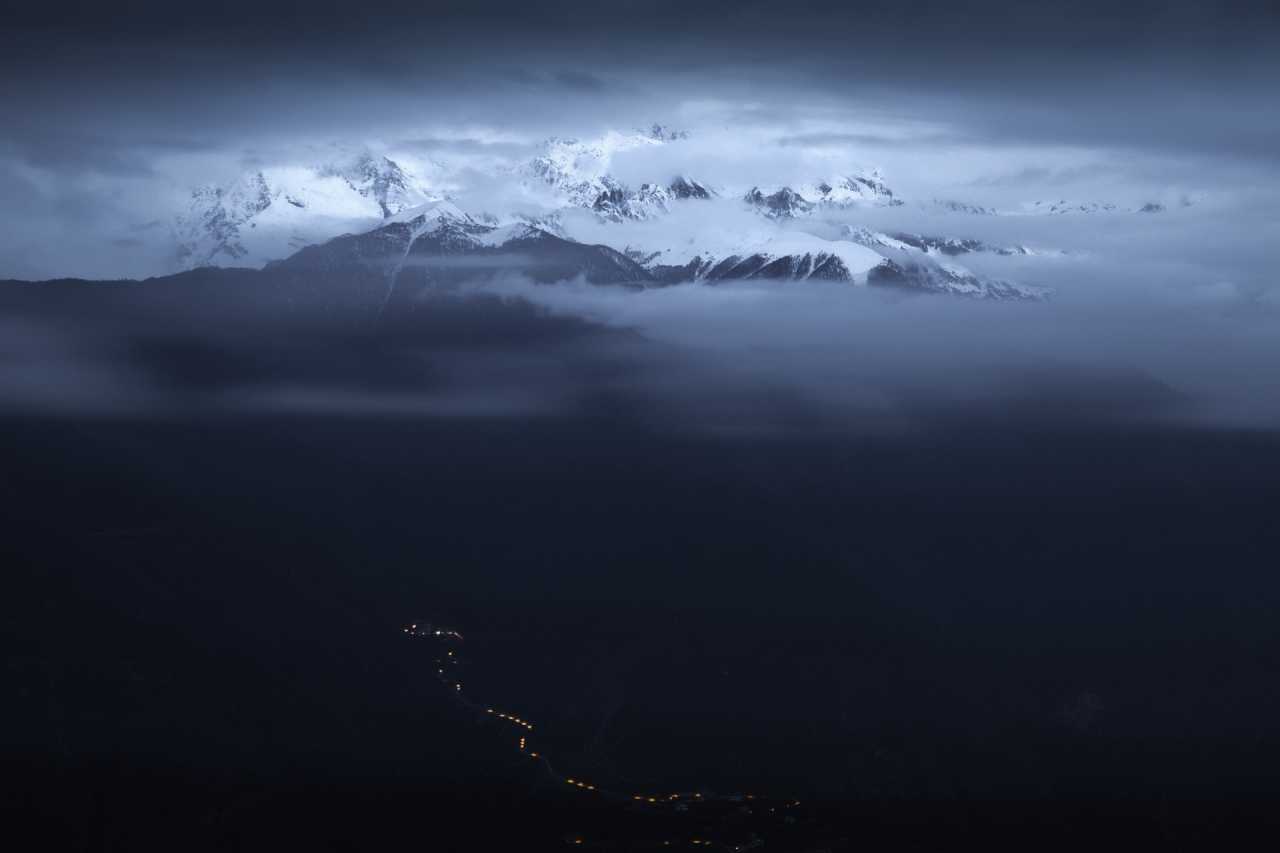
At the very bottom, we finally saw Tiger Leaping Gorge up close. A solitary rock stood in the middle of the river, letting the water rush past on both sides. The river, like an enraged beast, slammed violently against the rock, sending white spray several meters high into the air, which turned into a fine mist that blew toward us.
We passed a long corridor along the riverbank. Its railings were covered with wish plaques of all colors, gently swaying in the wind. Niuniu suddenly wanted to write one. I was curious about what wish she would make. The result took everyone by surprise: "May my family never grow old, and may I never grow up."
The softest part of my heart was gently touched. Wishes about time often come from an understanding of life and an emotional dependence, which usually requires life experience. That this little girl, at such a young age, could already contemplate time was both surprising and moving.
An Unexpected Golden Sunset on the Mountain
We left the upper section of Tiger Leaping Gorge in the afternoon. After driving along a long, steep, winding mountain road, we arrived at the middle section's viewing platform. Compared to the upper section, the mountains here were even more magnificent, reaching straight into the sky.
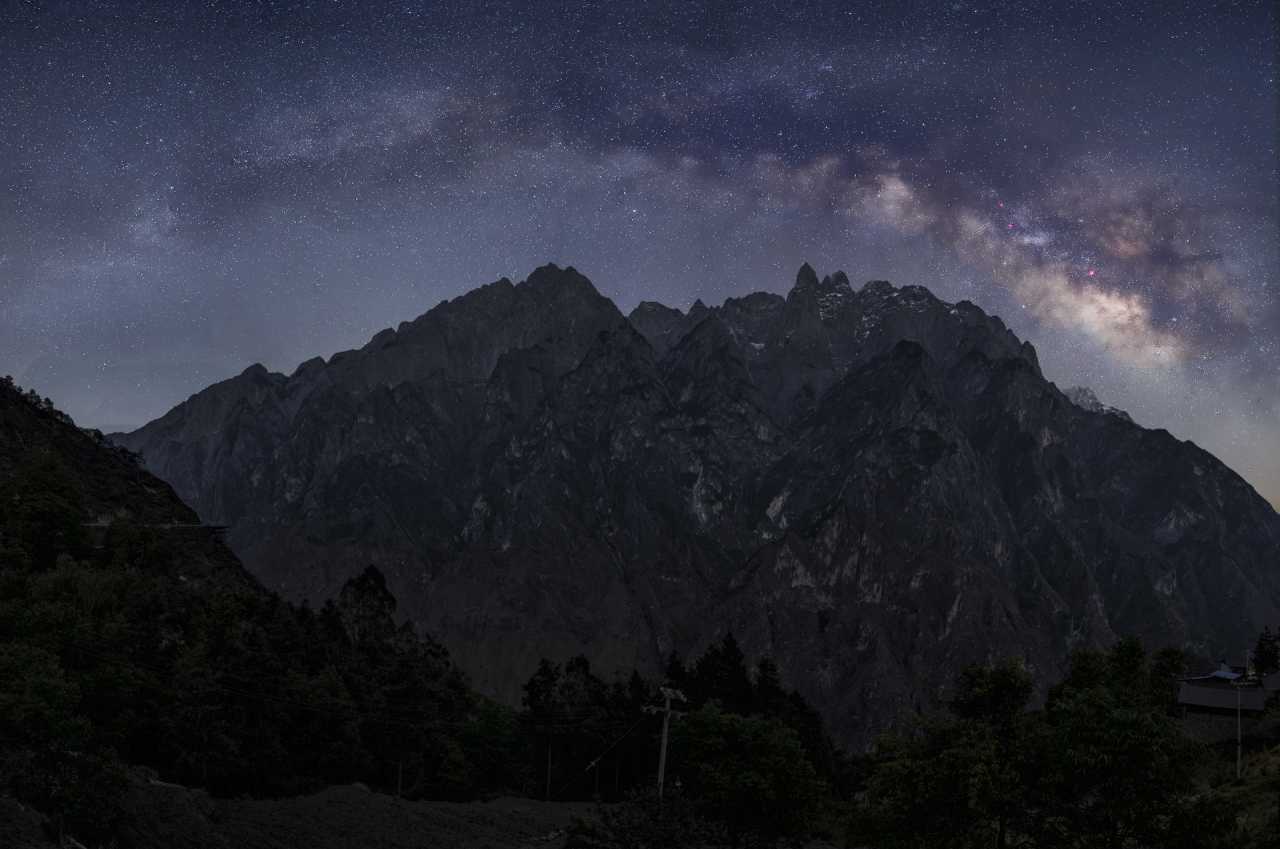
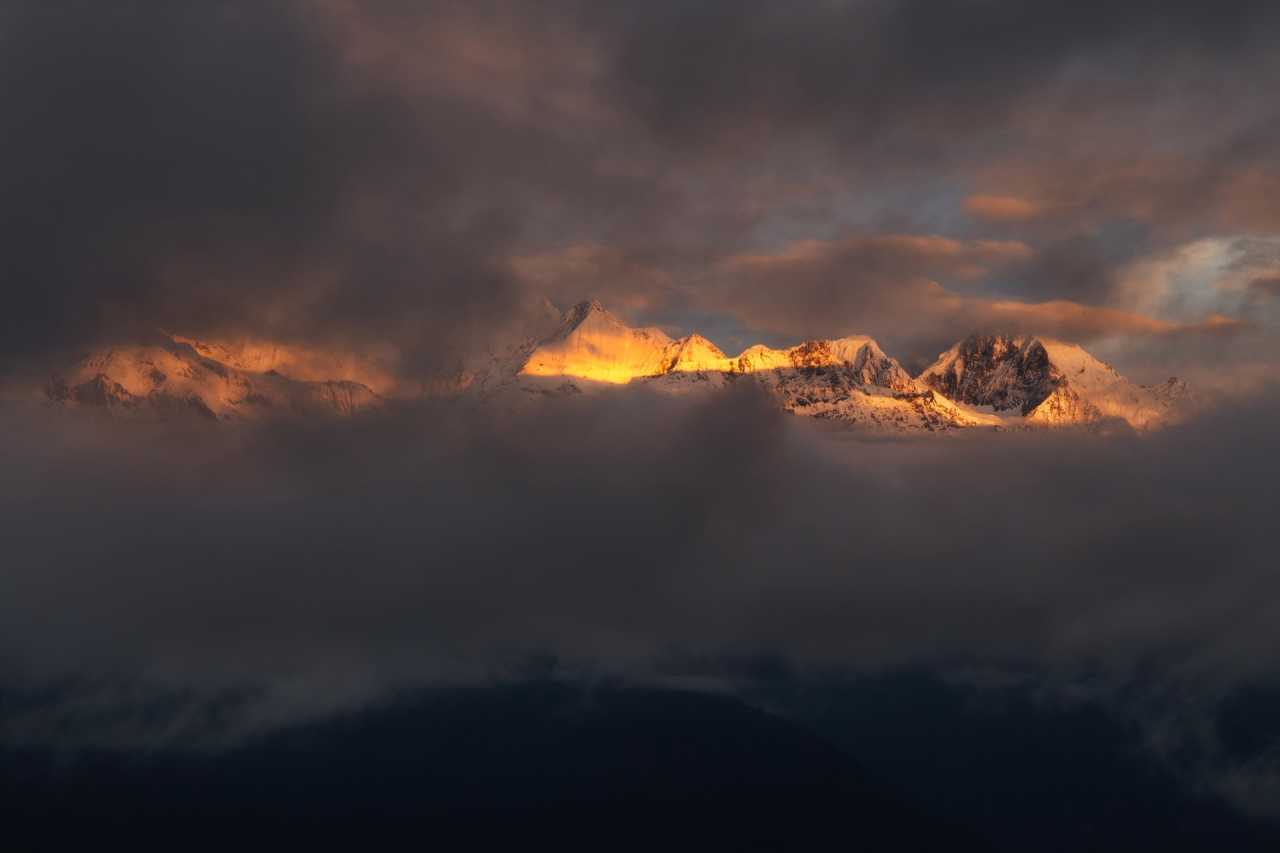
After resting for a while at the guesthouse, it was nearly dusk. I sat on the rooftop terrace, which served as a natural viewing platform. Fortunately, as dusk approached, the weather gradually cleared. The thick clouds thinned, and the orange-yellow sunlight hit the mountain, turning it a brilliant gold. Without any expectations, I was unexpectedly treated to a golden sunset illuminating the mountain.
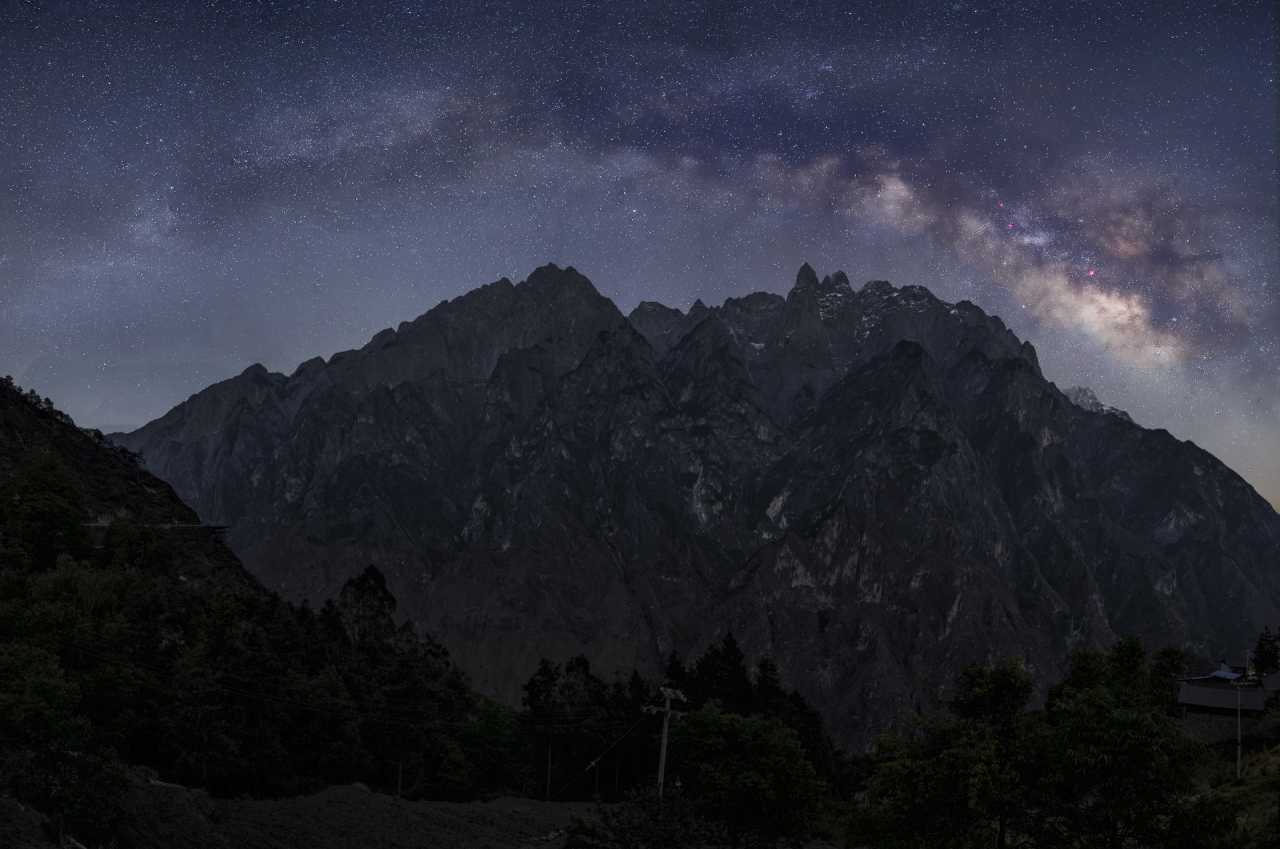
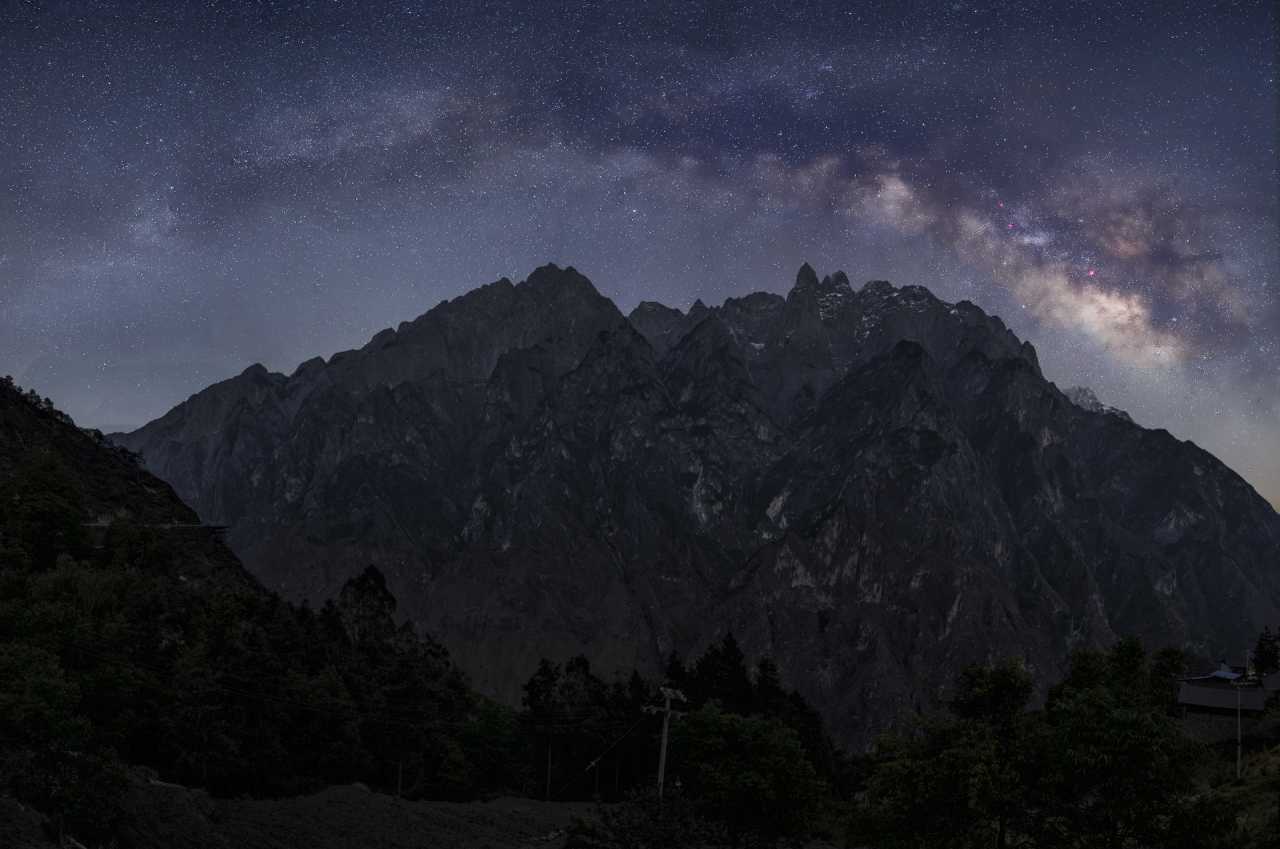
By night, the sky was completely clear. The middle section of the gorge has almost no light pollution, and the stars were brilliant. I sat on the viewing platform, looking up at the starry sky, doing nothing, thinking nothing. All that remained inside me was a profound sense of awe and an unprecedented peace.
Chapter Five: Xiaozhongdian Meadow—Listening to the Meadow's Song in the Highland Green
Unlocking the Stunning Scenery of the Highland Meadow
Driving from Tiger Leaping Gorge to Shangri-La, if you take National Highway G214 instead of the expressway, you can unlock a stretch of absolutely stunning scenery featuring highland meadows and snow-capped mountains. In May, the meadow grass has just sprouted, turning the entire grassland green and full of life. Although it's not the most beautiful time of the year—a local Tibetan told me that in June and July, the meadow would be covered in colorful flowers—it was still breathtaking enough.
Herds of cattle and sheep could be seen everywhere on the meadow, leisurely grazing on the tender grass. The highland wind, carrying the scent of freedom, swept over us, instantly blowing away all the worries in our hearts.
The Little Girl Chasing the Sheep
Passing by a meadow, a herder was herding sheep. Niuniu had never seen such a large flock of sheep before. From a distance, they looked like drifting white clouds. We stopped the car, and the little girl couldn't wait to run toward them—but her hurried footsteps startled the sensitive flock. What followed was an incredibly funny scene: a group of sheep ran away bleating, with Niuniu chasing after them, muttering, "Don't run away, little sheep..."
Niuniu tried every method but couldn't get close to the sheep and was a little disappointed. But the sight of a horse-riding sign nearby instantly revived her spirits. The horse handlers were all Tibetans, very warm and welcoming. While they were preparing the saddles, they even invited us into their home. The Tibetan house was very distinctive, with many copper pots stacked layer upon layer in the living room cabinet—a traditional custom passed down through generations.
The Purple Flower Sea Gazing at Haba Snow Mountain
Once on the horse, the Tibetan handler held the reins, and the horse ambled forward unhurriedly. Niuniu gently stroked the horse's back and whispered, "What a good horse."
We arrived at a nearby purple flower sea and were stunned by what we saw—it felt like stepping into a purple fairy tale. A gentle breeze blew, creating waves of color across the flower sea. The scent of the flowers was sweet and clear, mixed with the fragrance of earth and grass.
Along the G214 section of Xiaozhongdian, snow-capped mountains accompanied us all the way. Haba Snow Mountain lay like a silent old man, stretched across the horizon. Unfortunately, the clouds were thick that day, and Haba was wrapped in mist, showing only half of its silver-white ridge, like a silver hairpin fallen from heaven. At the Haba Snow Mountain viewing platform, the wildflowers in the foreground swayed gently in the mountain breeze, gazing into the distance at the snow mountain. A line of poetry suddenly popped into my head: "So close are we, yet destined not to be together."
A local herder told me that "Haba" means "flower of gold," and the snowmelt from the peak turns into streams that nourish the entire meadow. The silver threads sparkling in the sunlight are all the lifeblood of the mountain.
Chapter Six: Potatso—Making Peace with Yourself at 3,600 Meters
A Difficult Choice
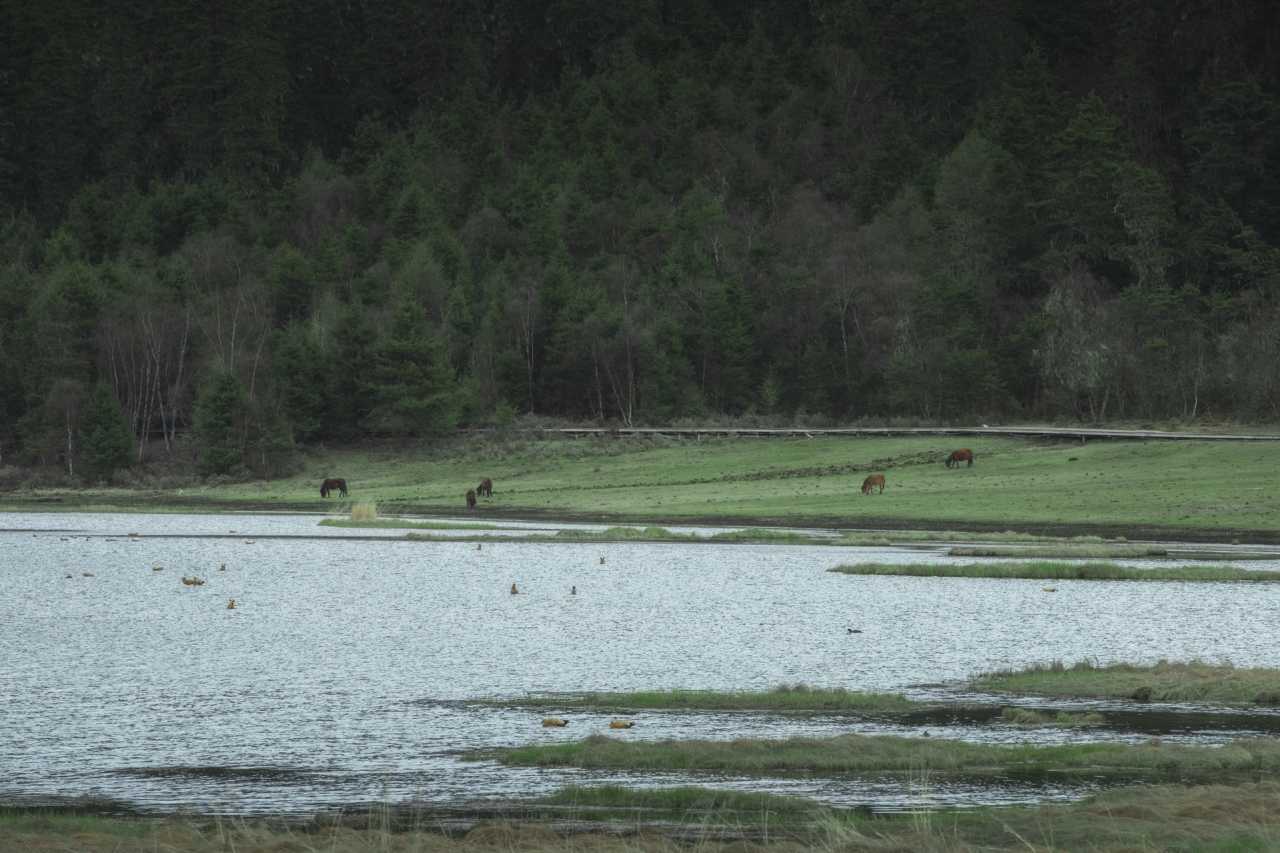
Potatso was probably the most纠结 scenic spot of this trip. Many friends told me it was beautiful, with极致 highland lakes and meadows. But May is not the best time—the meadow was just beginning to turn from yellow to green, without the点缀 of colorful wildflowers, so it might look a bit barren.
After much hesitation, I decided to go anyway. Upon arriving in Shangri-La, without taking time to acclimatize, we headed straight for Potatso—as it turned out, this was probably not a wise decision.
A Lesson from the Highland
When we arrived at Potatso National Park and got out of the car, it felt noticeably colder. I didn't feel much effect from the altitude gain, but my wife said she felt a bit tight in the chest. At first, none of us paid much attention.
We got off at the first stop, "Leisurely Trail." It wasn't so much a trail as a nearly primitive gravel path that followed a stream. Initially, I walked quickly, worried about not having enough time, as if I were still carrying the anxiety of the city in my chest. But after walking a short distance, I found my heart racing and my breathing so rapid that my chest felt like it was going to explode. It was then that I realized we were at an altitude of over 3,500 meters, and this was our first day on the plateau.
Turning around, I saw my parents following with Niuniu, while my wife, breathing heavily and looking pale, had fallen to the back. So I started to slow down. I stopped walking just for the sake of walking and began to appreciate the scenery along the way: the green of the meadow, the sound of the stream, the contentment of the yaks...
The Forest's Cycle of Rebirth
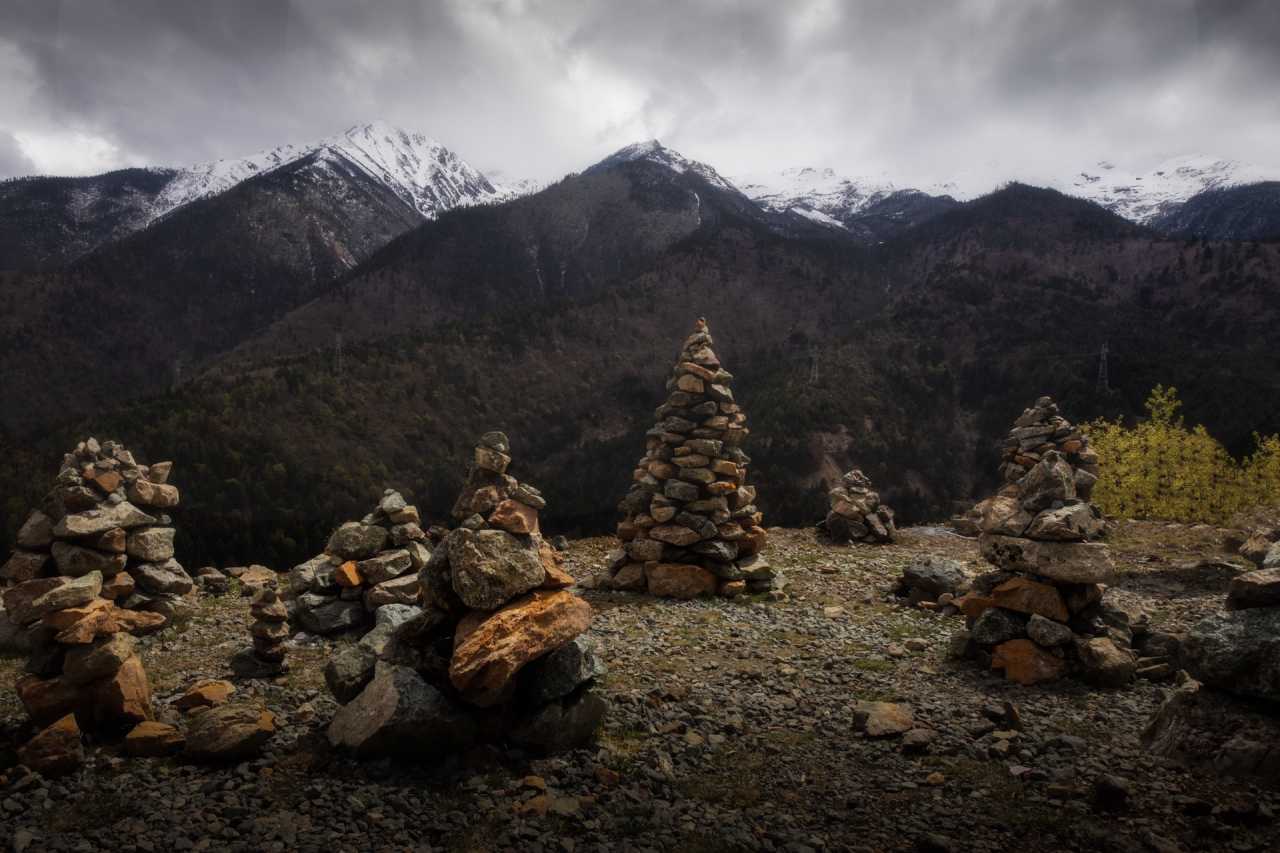
This place was like a primeval forest. The scent of pine trees swept over us overwhelmingly. Fallen tree trunks were covered in fungi, their caps edged with dewdrops, like tiny lanterns held aloft. These dead trees were nourishing new life; the decaying bark contained the entire forest's code of rebirth. Looking up at the canopy, sunlight filtered through the gaps in the leaves, weaving golden patches of light on the ground.
I felt a sudden realization—perhaps withering is never an end, but life continuing in another form. In the distance, a herd of yaks moved with excruciating slowness, like punctuation marks strolling across the earth. And I, finally, in this slow rhythm, let my racing heart return to calm.
The Clarity of Shudu Lake
When we arrived at the second stop, Shudu Lake, clouds were pressing down on the water's surface. The lake wind carried an icy chill that stung my face, but it also awakened the nerves that had been numbed by city life.
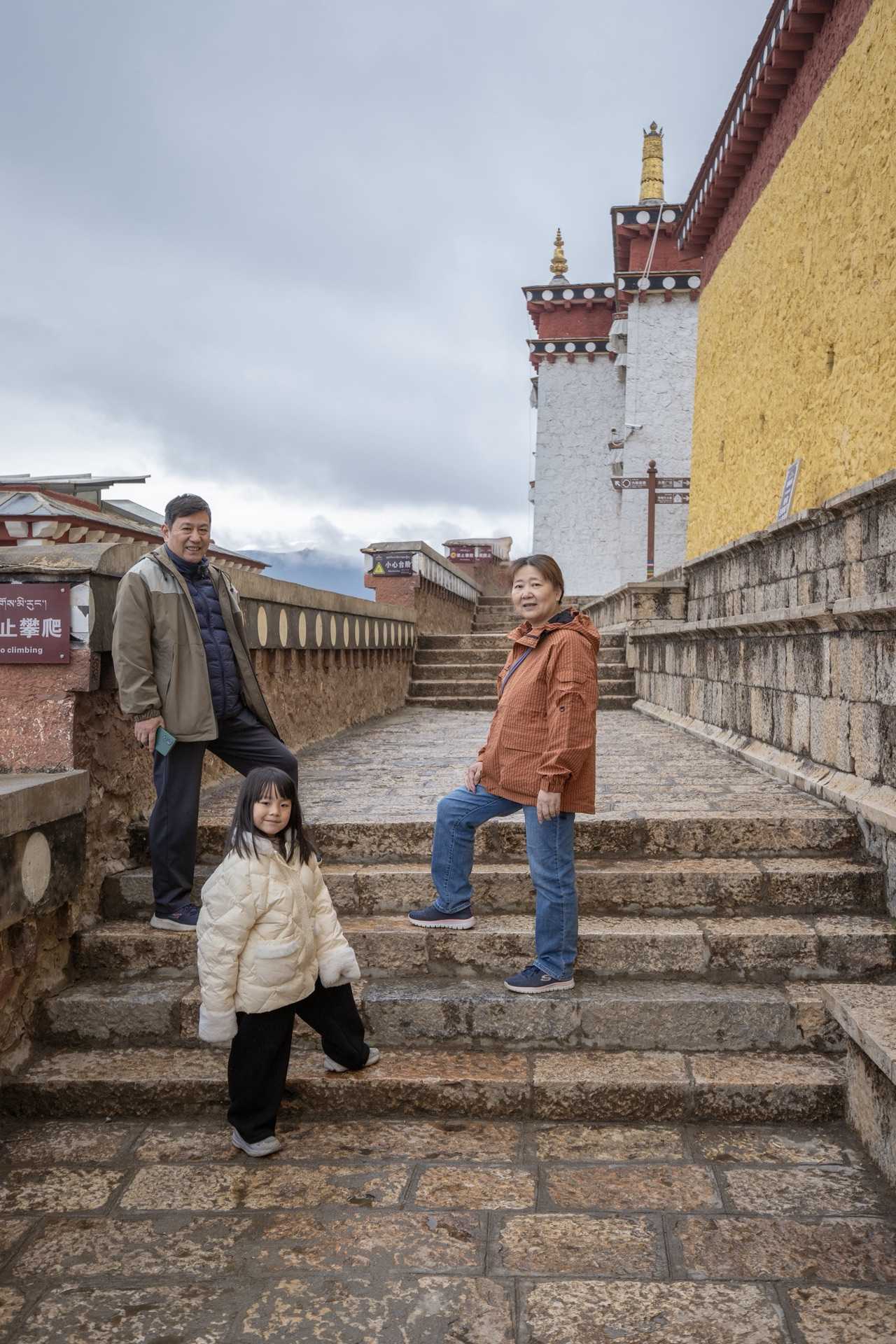
I wanted to continue along the boardwalk, but my wife called out to me—her altitude sickness was getting worse. We decided to take a boat back to the meeting point and then return to the old town. Although taking the boat meant we couldn't深入 the forest like hiking, the beauty of Shudu Lake and the green meadow was still fully revealed during the boat ride.
The lake was calm and clear. Gazing at its surface, I felt as if it were gazing back at me with its clearest eyes, letting me see the stories hidden in my own eyes, the vulnerability beneath my tight-lipped expression, and the self deep within that had not yet been tamed by the world.
Chapter Seven: Dukezong—A City Woven by Moonlight
The Test of Altitude Sickness
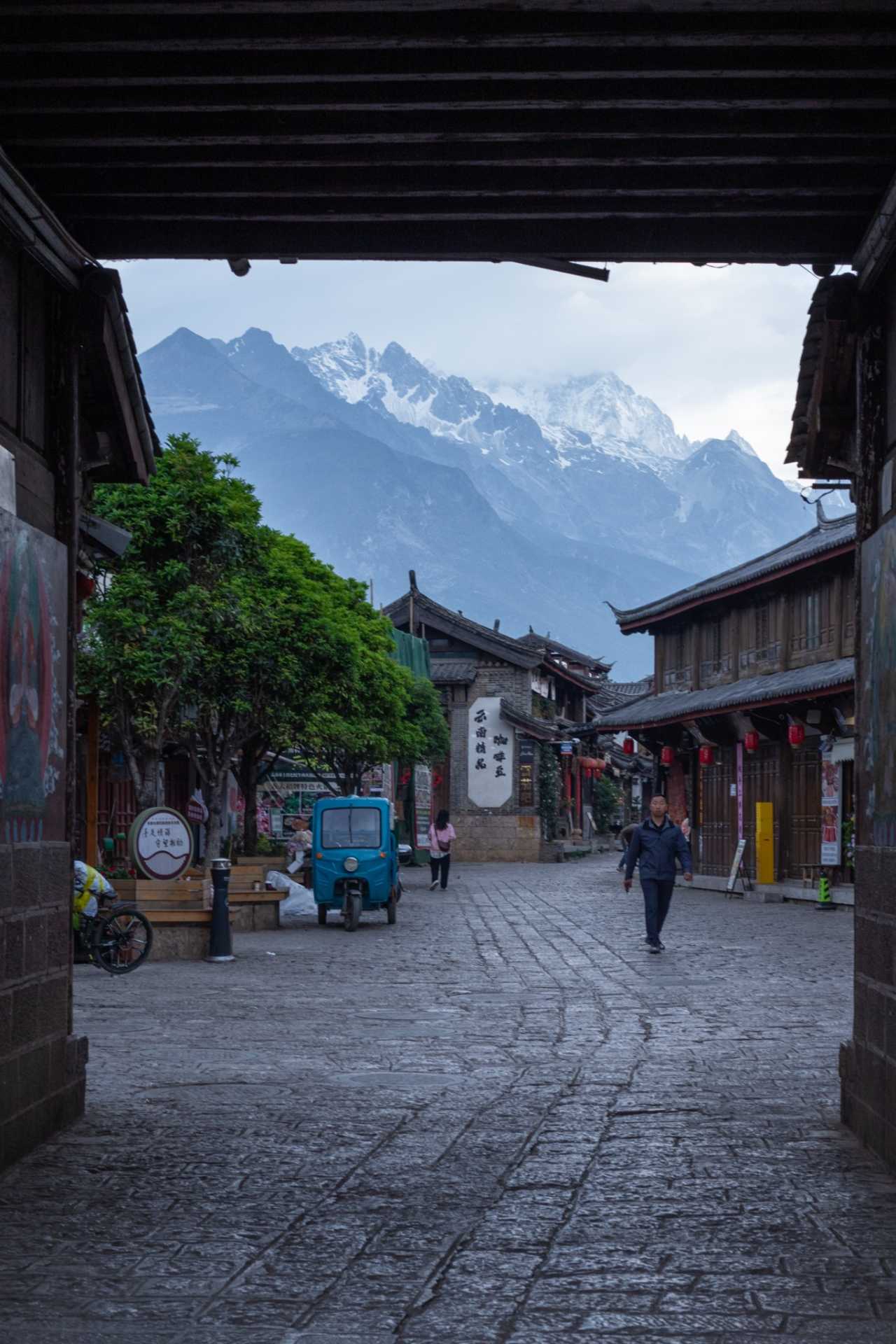
It was afternoon by the time we returned from Potatso to Dukezong Old Town. My wife's altitude sickness was getting worse—she felt tightness in her chest and a splitting headache. Looking back, going directly to hike at 3,600 to 3,800 meters without acclimatizing after arriving on the plateau was clearly not a good idea.
There was nothing to do but take her back to the guesthouse first. Fortunately, the guesthouse had an oxygen machine, which helped her feel a bit better. Before the trip, I had been worried that Niuniu would get altitude sickness, but it turned out my wife had the worst reaction, while the little girl had no symptoms at all.
Memories in Tibetan Costume Under the Moonlight City
After resting for a while, my parents said they wanted to go out for a walk on their own. My wife was asleep in the room, and Niuniu had nothing to do, so she suggested wearing a Tibetan costume and taking photos in the old town.
I took Niuniu for a stroll through the old town. The weather had just rained and then immediately cleared up—that's how unpredictable the highland weather is. The blue stone streets were washed shiny by the rain, and the air was filled with the moist scent of earth. Niuniu, dressed in her Tibetan costume, ran back and forth through the old town's alleys, like a happy little butterfly.
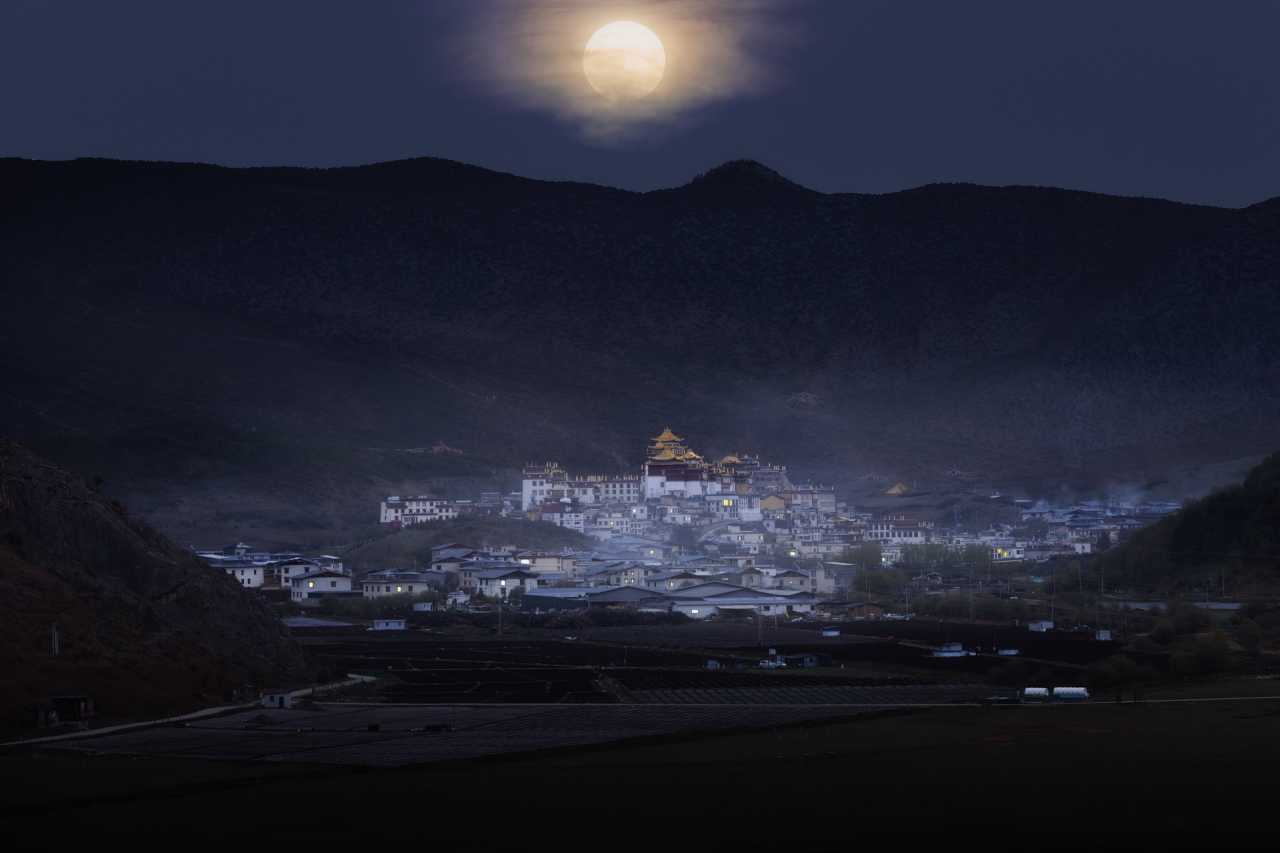
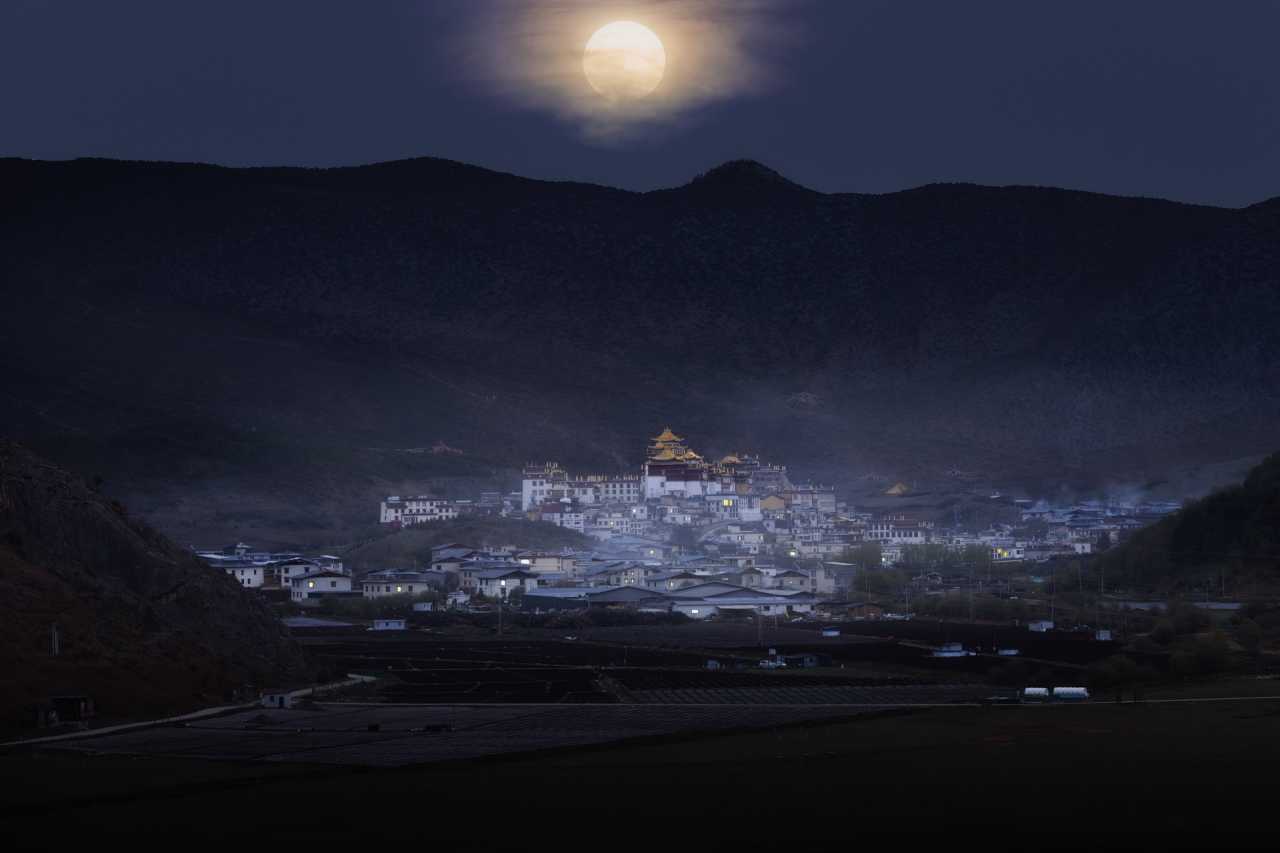
Dukezong, in Tibetan, means "City of Moonlight." This ancient town, built according to the Buddhist concept of the Shambhala ideal kingdom, felt especially serene under the moonlight. The giant prayer wheel at Guishan Park turned slowly in the night, emitting a heavy sound, as if telling a thousand-year-old prayer.
Epilogue: Become Yourself, or Become a Child of the Sacred Mountains
A seven-day journey—not too long, not too short. From Lijiang to Shangri-La, from 2,400 meters to 3,600 meters above sea level, we traveled through different landscapes and different states of mind.
At Hutuwo Ranch, I learned the wisdom of "playing dumb." At Tiger Leaping Gorge, Niuniu taught me, with eight characters, to cherish the present. At Potatso, altitude sickness taught me the importance of slowing down.
Does Shangri-La really exist? Perhaps it was never a specific place, but all the beauty we are willing to believe in within our hearts. It can be the meadow beneath the snow mountain, the roar of the gorge, the starry sky over the plateau, or the smiles on our family's faces.
"One day, you will find your reason to come to Shangri-La, and then you will become a child of the sacred mountains—or you will become yourself." I think each of us can become ourselves, as long as we are willing to slow down and listen to the voice within.
May time be gentle, and may family always be by our side.
Practical Tips (From Personal Experience)
| Item | Suggestion |
|---|---|
| Best Season | June-July for meadow flowers; September-October for autumn colors |
| Altitude Sickness Prevention | Rest for half a day after arriving in Shangri-La; don't go directly to high-altitude scenic spots |
| Transportation | Self-driving along National Highway G214 is recommended; the scenery along the way is stunning |
| Accommodation | Baisha Ancient Town is quieter than Dayan Old Town, suitable for families |
| Must-Eat | 牦牛肉火锅 (yak meat hotpot), wild mushrooms |
| Photography Gear | Wide-angle lens for snow mountains, telephoto lens for animals, tripod for starry skies |
| Things to Note | Bring sunscreen, lip balm, and warm clothing; temperature differences on the plateau are significant |
You should also read:
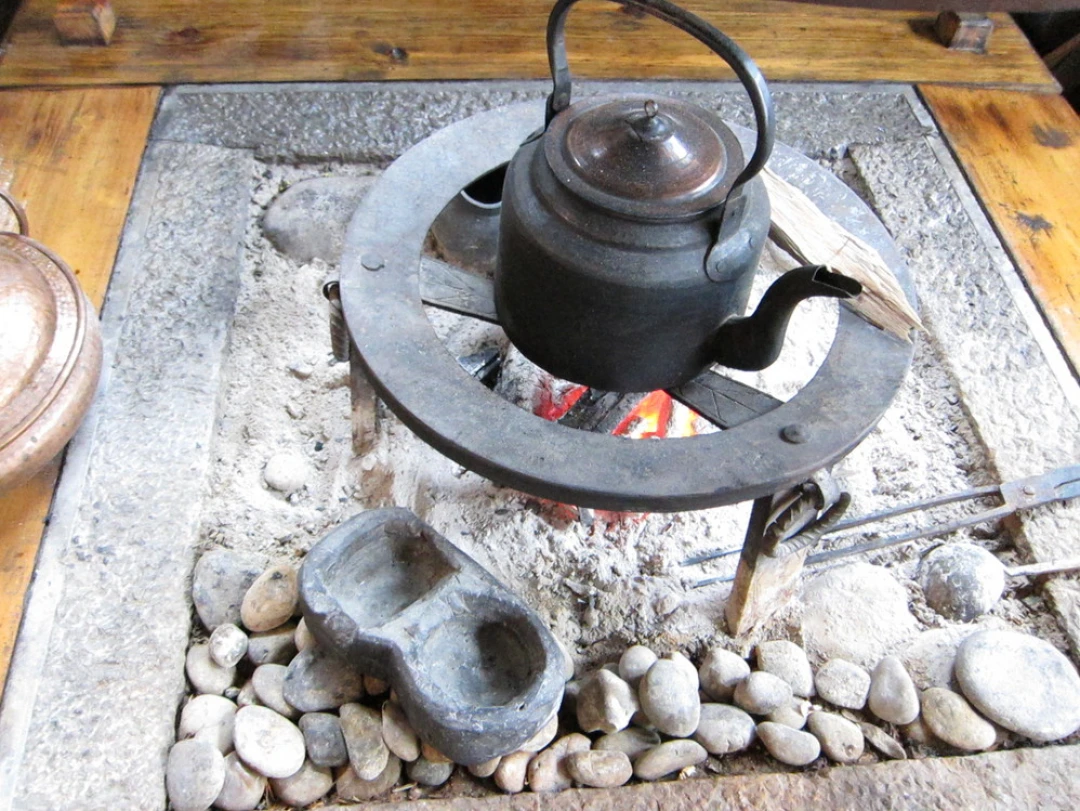
Dreaming of Lijiang, Dreaming of Shangri-La: A Journey That Lets Your Soul Breathe Deeply
Dreaming of Lijiang, Dreaming of Shangri-La: A Journey That Lets Your Soul Breathe Deeply Life is like a long trek. We're always rushing through the concrete jungle, searching for a glimmer of light in the monotony of our days. Then one autumn, I heard the…
Continue reading...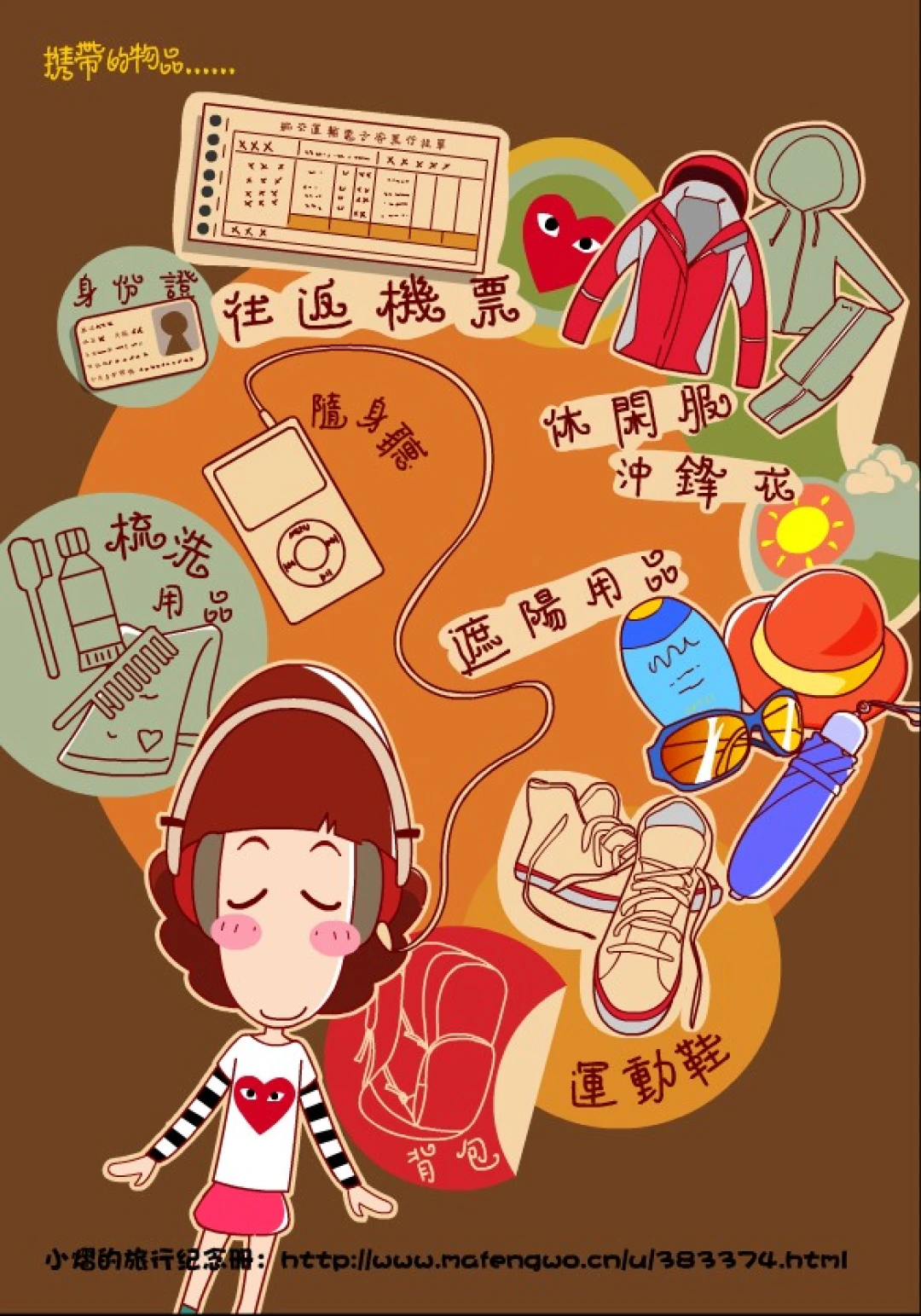
Dreamland – Lijiang: A Talking Comic Travel Guide
Dreamland – Lijiang: A Talking Comic Travel Guide Prologue: When Lijiang Takes Root in Your Heart Some places leave a mark on you forever. They're like an old song on repeat, suddenly playing in your mind on an ordinary afternoon. For me, Lijiang is that…
Continue reading...
Escaping Nanning, Falling Under Lijiang's Spell: Our Four-Person, Ten-Day Yunnan Dream
Escaping Nanning, Falling Under Lijiang's Spell: Our Four-Person, Ten-Day Yunnan Dream Before We Set Off: No Pain, No Obsession Have you ever had that impulse—suddenly tired of the office fluorescent lights, the crush of the subway, the endless parade of identical takeout boxes, and just…
Continue reading...