Second Trip to Yunnan: How to Navigate Spring Festival Crowds in Xishuangbanna and Still Have a Blast
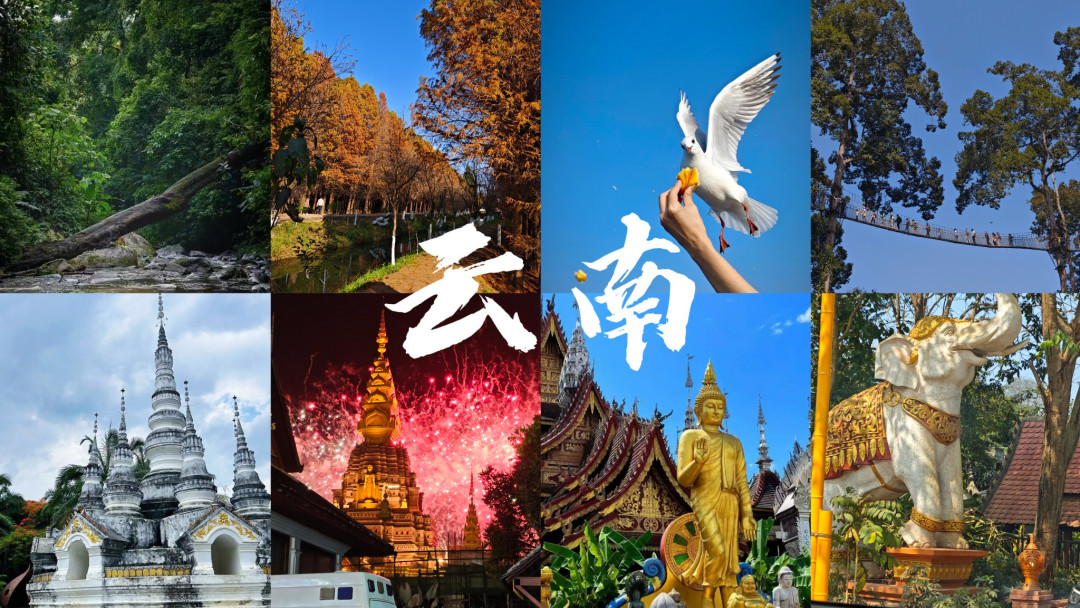
Second Trip to Yunnan: How to Navigate Spring Festival Crowds in Xishuangbanna and Still Have a Blast
Before We Start: Why Would I Dare Visit Xishuangbanna During Spring Festival?
If you're asking whether it's crazy to visit Xishuangbanna—one of China's hottest tourist destinations—during the Spring Festival holiday, my answer is: it might be a little crazy, but absolutely worth it.
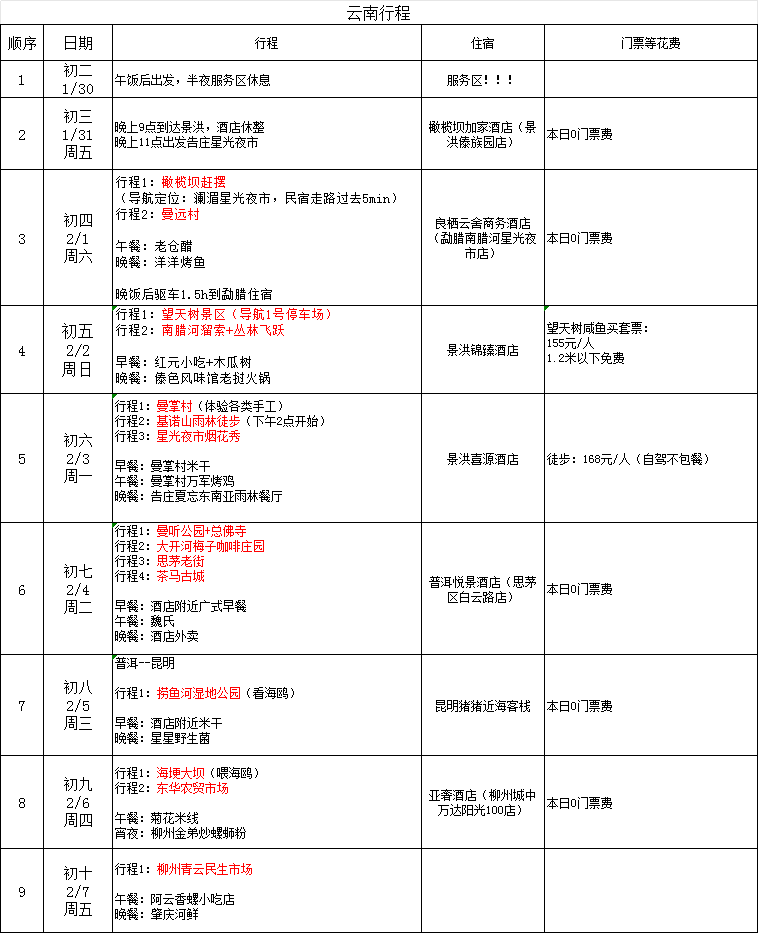
During the 2025 Spring Festival, my family of ten—spanning three generations—set off from Guangdong by car, covering 1,842 kilometers over nine days for an in-depth tour of Xishuangbanna, Pu'er, and Kunming. Before leaving, I scoured every social media platform, and my feed was flooded with complaints about Spring Festival in Xishuangbanna—"wall-to-wall crowds," "traffic gridlock," "like a giant construction site." Honestly, my enthusiasm was half-dampened.
But here's the thing about travel: never just believe other people's complaints. We set off with a "we'll just avoid the crowds" attitude and ended up with an unexpectedly smooth trip. The key boils down to three words: stay away from Gaozhuang.
Yes, staying away from Gaozhuang will solve 90% of your problems. The remaining 10% comes down to choosing the right time, the right route, and the right mindset.
Part 1: Why Drive? Because "the Best Is on the Road"
A lot of people ask me: with only nine days, driving from Guangdong to Yunnan, which takes three days just for the round trip, can you really have a good time?
My answer is: if you're bold enough to set out, you'll have a great time.
Last summer, we completed the Dali–Lijiang–Shangri-La route in Yunnan and came away with an overwhelmingly positive impression of the province. When discussing destinations for Spring Festival, everyone agreed to head back to Yunnan, and Xishuangbanna became the top choice. Despite the online complaints, we firmly believed that with proper planning, even popular destinations can offer off-the-beaten-path experiences.
The beauty of self-driving is that you can adjust your route at any time and discover unexpected surprises. For example, on National Highway 213, we stumbled upon a spectacular dragon fruit field—under the night lights, the vast expanse of dragon fruit plants glittered like stars, more breathtaking than any scenic spot. This kind of "unplanned beauty" is something you can't experience on a guided tour or by flying.
Part 2: Itinerary Planning: Core Principles and Pitfall Avoidance
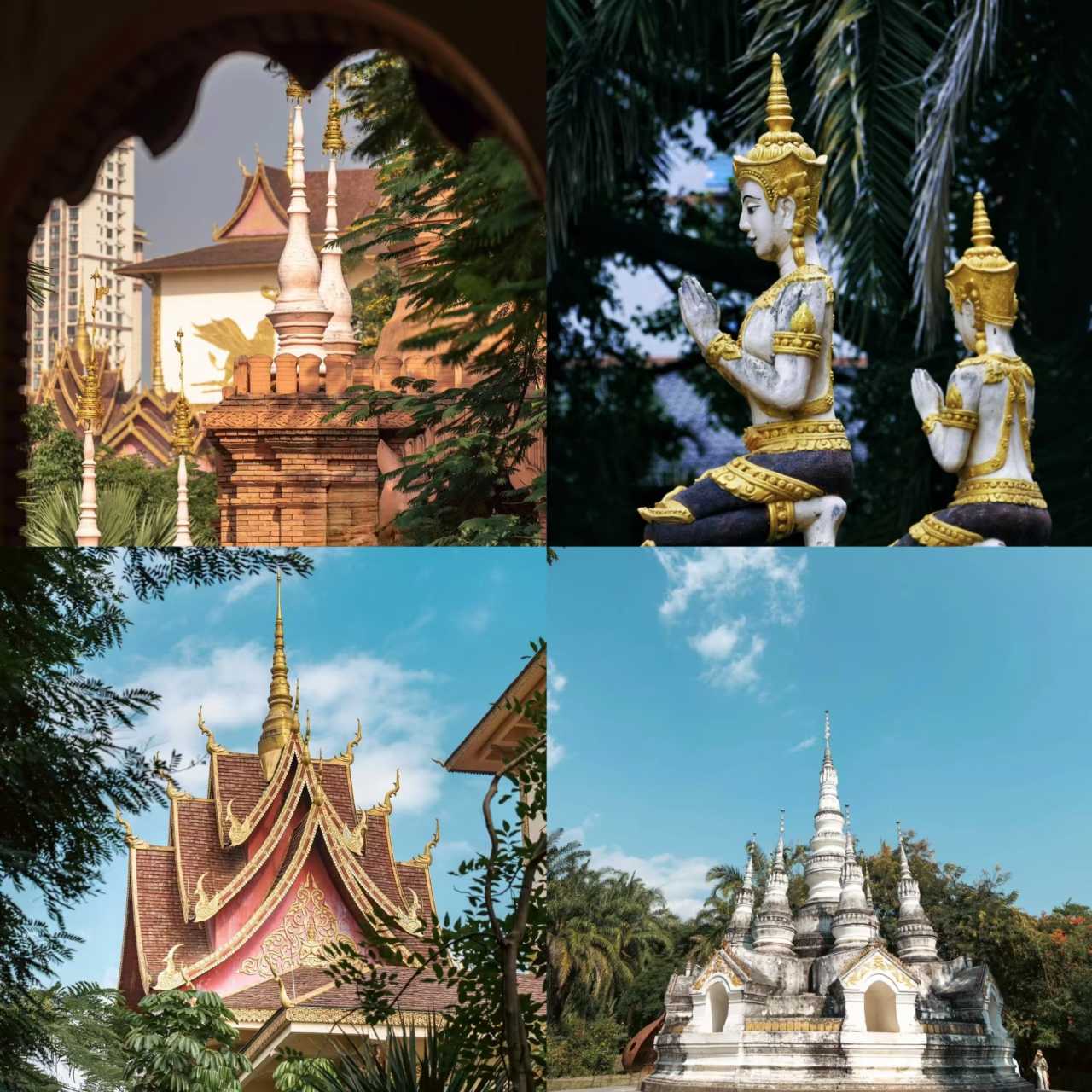
Our Core Principles
- Skip the big tourist-trap attractions: For instance, we completely passed on Wild Elephant Valley.
- Refuse scenic area shuttle buses: We also skipped places like the Xishuangbanna Tropical Botanical Garden and Dai Ethnic Garden, which require riding shuttle buses to explore.
- Stay outside Gaozhuang: During Spring Festival, Gaozhuang is plagued by traffic jams. We stayed near the Dai Ethnic Garden, which was a 40-minute drive from Gaozhuang but with smooth traffic all the way.
Itinerary Adjustment Tips (Based on Our Real-World Experience)

If I were to plan again, I'd make these changes:
- Definitely go to a market fair, but choose the right location: We went to the Ganlanba Market Fair, which was lively but felt a bit commercialized. I've heard that the Manlongle Market Fair in Mengla is the most "authentic," but we were too exhausted to make it there on our first stop. If you have time, head straight to Manlongle.
- Don't miss the Nakuili Service Area: This is a magical place where you can walk directly from the highway service area into the Nakuili Scenic Area. We missed it because our son got sick, and we've been kicking ourselves ever since.
- Pu'er's Simao Old Street and Daijia Alley: Great for relaxing in a coffee shop, but not suitable for families with kids. If I could do it over, I'd skip these two spots. In the morning, after feeding elephants at Manting Park in Xishuangbanna, I'd take the kids to the Xishuangbanna Zoo (after all, Xishuangbanna is a kingdom of animals, and we only fed elephants—such a waste!). Then in the afternoon, head to a coffee estate in Pu'er.
- Book hotels with free cancellation: Our itinerary changed three times due to unexpected events (our son getting sick, road condition changes), so always choose hotels that allow free cancellation.
Part 3: Days 1-2: The Journey Itself Is the Scenery
Departure: Instant Noodle Party and Late-Night Driving
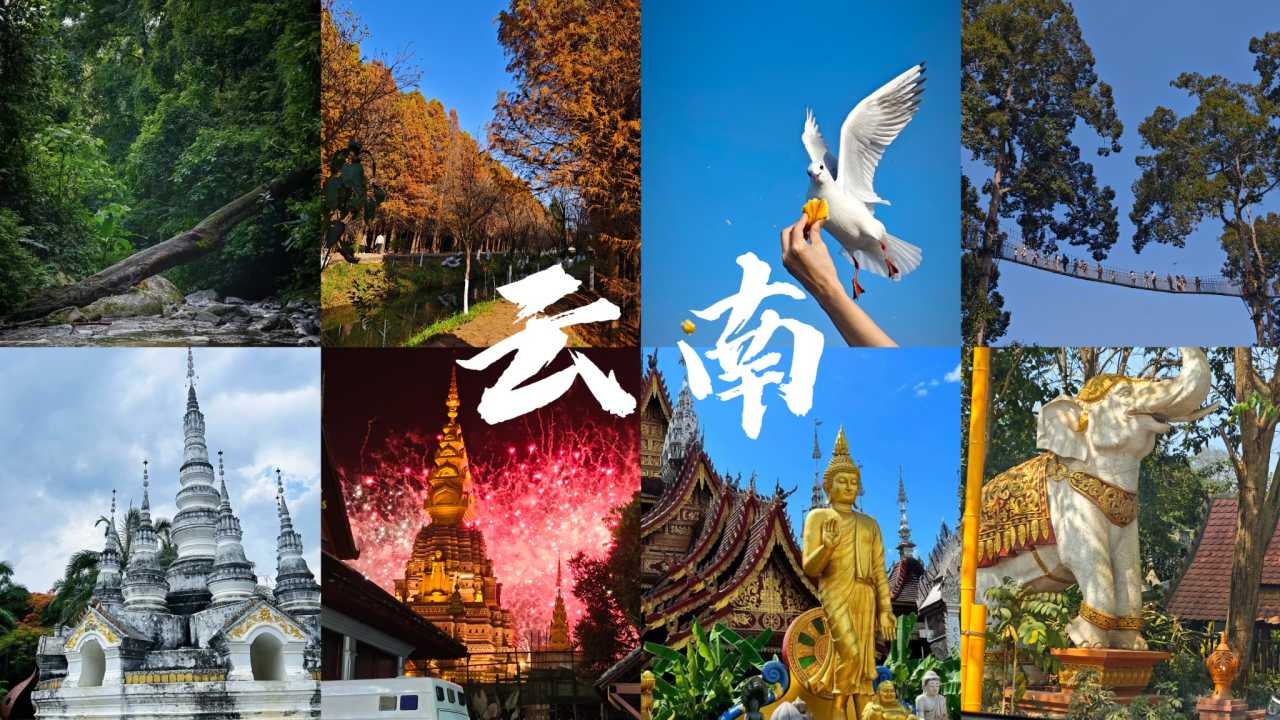
We set off at 1 PM on the second day of the Lunar New Year, after finishing our New Year's greetings. Two cars, five people each, with the trunk neatly packed—coffee brewed, slippers on, long-distance gear ready.
As expected, holiday traffic meant an inevitable jam. Just 1.5 hours into the trip, we hit our first traffic jam. At 6:30 PM, we held an "instant noodle party" at the Yunfu Fucheng Service Area—upgraded noodles with top-tier background music, and the kids were over the moon.
Our original plan was to rest overnight in Baise, Guangxi, but because we needed to catch Saturday's market fair, we decided to drive through the night. We pulled into a service area at 2 AM, slept for three hours, and hit the road again at 5 AM. Personal experience: driving nonstop is really tough—I felt groggy the entire next day. Seeing the tents set up on the roofs of service station attendants' cars, I was insanely jealous—that's my ideal retirement life!
Surprises on the Road: An Ding Restaurant and Dragon Fruit Fields
At 9 AM, we left Guangxi, passed through Wenshan in Yunnan, and entered Honghe. The winter scenery was different from the lush green of summer—bare vegetation and exposed yellow soil had a unique, rugged beauty.
When we got off the highway for lunch, we discovered that the navigation showed a closure ahead at the "Dayakou Tunnel"—a tunnel with a very high accident rate. We had lunch at a farmhouse near the highway exit, ordering eight dishes for just 365 yuan. The stir-fried chicken made from free-range chicken was the real deal, and the cured pork and ribs drying in the yard were excellent.
At 3 PM, the tunnel reopened. By 6 PM, we arrived at the "Nakuili Parking Area"—that magical service area where you can walk directly into the Nakuili Scenic Area. But we were in a hurry and couldn't stop.
At 7 PM, we finally entered Xishuangbanna! Even the trees along the highway looked special. Half an hour later, we passed a border checkpoint. When I showed my ID, it finally hit me: we had truly traveled over a thousand kilometers to the border of our country.
The Kunming–Mohan Expressway was heavily congested, so we decisively switched to National Highway 213. As soon as we got off the highway, we saw a row of fruit stalls. I had the vendor peel a pineapple on the spot—it was very sweet. Even more surprising: while driving along the section of Highway 213 that passes through Wild Elephant Valley, we saw a massive, spectacular dragon fruit field. Under the night lights, it glittered like stars—beautiful beyond words. If you're driving yourself, I strongly recommend taking the national highway for the final stretch, just for this dragon fruit field.
Part 4: Late Night on Day 2: Gaozhuang and the Starlight Night Market—Another Way to Experience It
Why Go to Gaozhuang Late at Night?
We originally planned to head straight to the Gaozhuang Starlight Night Market as our first stop, but the navigation showed Gaozhuang in deep "liver red"—traffic delays had extended by two hours. Real-time updates from netizens said the main road in Gaozhuang was closed to traffic.
We decisively decided: first, head back to our hotel near the Dai Ethnic Garden to rest, then set out again at 11 PM.
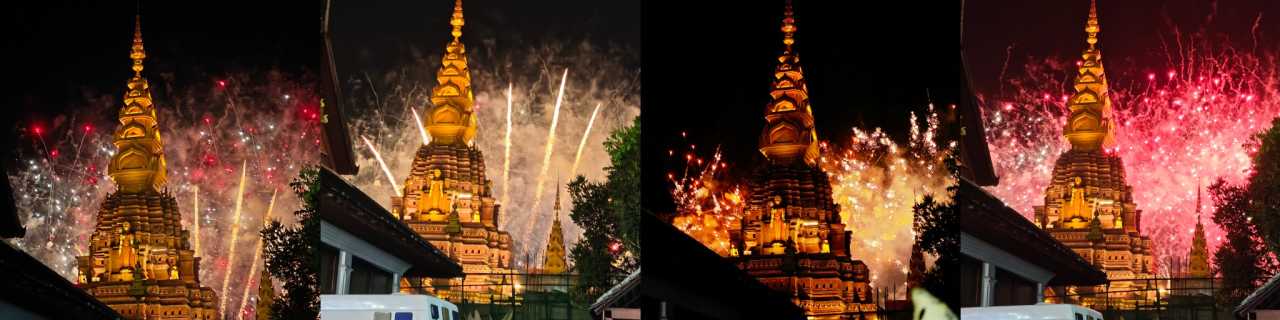
Why this timing? Because during Spring Festival, the Starlight Night Market's Golden Pagoda Temple puts on a fireworks show every night at 10:30 PM. We planned to wait until the fireworks ended before heading over, expecting no traffic jams or crowds. That meant giving up the fireworks show, but travel is all about trade-offs—compared to a fireworks display, I'd rather avoid terrible traffic and overflowing crowds.
(Later, while eating at a restaurant called Gaozhuang Xiawang, we accidentally caught the fireworks show—an unexpected bonus.)
The Starlight Night Market in the Dead of Night: A Dazzling Dream
At 11:30 PM, there were very few cars on the road. When we saw the brightly lit buildings of Gaozhuang in the distance, we couldn't help but exclaim: no wonder Gaozhuang has such a reputation! The dazzling nightscape was incredibly vibrant and beautiful. Two days of driving fatigue melted away in that moment.
We chose the newly built East Gate parking lot of the Starlight Night Market—it has the most spaces, and when we arrived, it was more than half empty. It was probably because it was so late that there were very few tourists. Even the much-criticized rule requiring a Douyin QR code scan for entry had become a mere formality.
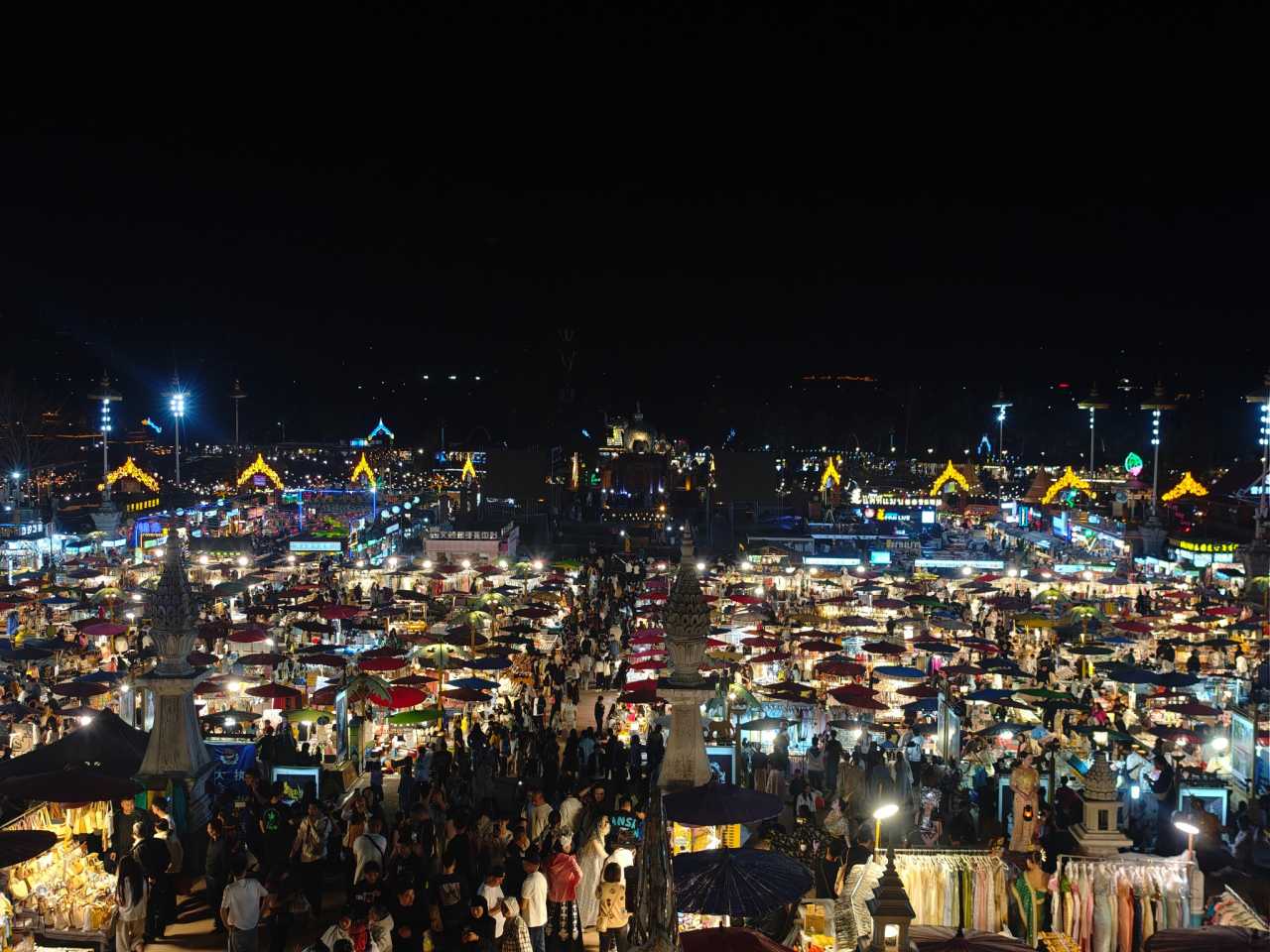
The path from the entrance to the night market was lined with lantern displays, and the kids spent ages examining each shape. The Mekong River Starlight Night Market is billed as the largest night market in Southeast Asia, and even close to midnight, the streets were still bustling with people. Along both sides of the riverbank, groups of "Hani princesses" stood in thin traditional clothing, posing for photos. I was wearing a windbreaker and still felt cold, but the princesses seemed to enjoy it—when you look this good, who cares about the cold!
The Golden Pagoda Temple is the best spot for an overhead view of the Starlight Night Market. This Thai-style golden pagoda stands 66.6 meters tall, symbolizing the connection of six countries along the Mekong River. As I climbed the stairs, thousands of stalls shimmered with golden lights below, like stars fallen to earth—dreamlike and surreal.
But I have to complain: "Top-tier nightscape, bottom-tier stalls." After walking the entire circuit, I had zero desire to buy anything, especially from the barbecue stalls. In the end, I spent 10 yuan on four small pineapples—they were okay.
Even when we left at 12:30 AM, the streets of the Starlight Night Market were still packed with people. So, if you're visiting during a major holiday and want to avoid traffic jams and crowds, come close to midnight—you'll have plenty of freedom. But the catch is, you have to be willing to give up the 10 PM fireworks show.
As we left, looking back at Gaozhuang from the opposite bank of the Lancang River, the dazzling scene gave me the illusion of being in Macau.
First BBQ in Xishuangbanna: The Joy of Oil-Drenched Dishes
For our first Xishuangbanna BBQ, we chose the Qingdao Beer Youxiang Food Plaza. Even at this hour, every stall in the plaza was packed, and some even said they had run out of ingredients!
We ordered a few random items, and the taste was decent. What really blew me away was the oil-drenched series—oil-drenched beef aorta and oil-drenched squid. They were so fragrant and delicious that I overlooked how heavy the oil and spice were. However, the cold dishes from a cart across from our stall were a letdown—28 yuan per portion, with ridiculously small servings and barely any chicken feet.
We finished our late-night snack at 2 AM and didn't get back to the hotel until nearly 3 AM. What a marathon!
Part 5: Day 3: Market Fair, Villages, and Tropical Vibes
Ganlanba Market Fair: Not "Authentic" Enough, but Still Lively
Market fairs are a unique cultural tradition in Xishuangbanna, held almost exclusively on Saturdays. Because we went to bed so late the previous night, we didn't leave the hotel until 11 AM. But the moment we stepped outside, we were stunned by the view—the roadside was lined with coconut trees! I'd only ever seen them in Hainan before; I didn't expect to find them in Xishuangbanna.
It was just a three-minute walk (188 meters) from our hotel to the Ganlanba Market Fair (Lancang-Mekong Tourist Night Market). This turned out to be the right call—there was absolutely no parking at the fair, and traffic police were enforcing restrictions.
The Ganlanba Market Fair is held under a bridge, starting at 7-8 AM every Saturday and lasting until 6 PM. We arrived after 11 AM, and it was already packed. Two rows of vendors were shouting out their wares, with a dazzling array of local specialties: lemongrass grilled fish, grilled chicken, grilled ribs, pounded chicken feet, pounded eggplant, sticky rice, pineapple rice, bamboo tube rice…
I highly recommend pork jerky, 15 yuan per skewer—even better than beef jerky! We bought one skewer and finished it in no time, then turned back to grab two big bags as snacks, which lasted us two days.
But honestly, the Ganlanba Market Fair still felt a bit too commercialized and lacked unique character—it gave me the impression of a market tailored for tourists. I've heard that the Manlongle Market Fair in Mengla is the most "authentic," and I hope to experience it someday.
Old Vinegar Rice Noodles: The Taste of Xishuangbanna
We didn't buy any filling food at the market fair, so afterward, we went to a chain restaurant called Old Vinegar Rice Noodles. The cooking process looked simple: first, boil the broth in a small pot, add minced meat, then add rice noodles or rice sheets, cook until done, and finally pour into a bowl for customers to add their own toppings.
Once in Xishuangbanna, I developed a preference for rice sheets. The broth rice noodles came with a topping of pork from the front and hind legs—very tender and smooth. Paired with a bottle of passion fruit juice, the flavor reminded me of the mango juice I had last summer at a village eatery on the road in Diqing—a taste I've been longing for ever since.
Manyuan Village: Drawn by the 21st Grilled Chicken
After eating, we chose to take the provincial highway, enjoying the unique tropical rainforest vegetation along the way. I absolutely love the roadside plants in Xishuangbanna—tall and lush green, making you feel like you're in a massive tropical rainforest.
Today, our destination was Manyuan Village—all because of the 21st Grilled Chicken. Along the way, we passed many villages, each with distinctive gateways. Many people online recommend Mankongdai Village, which has preserved its original village character well and isn't overly commercialized, giving it a very pleasant vibe. Unfortunately, we didn't have time to include it in our itinerary.
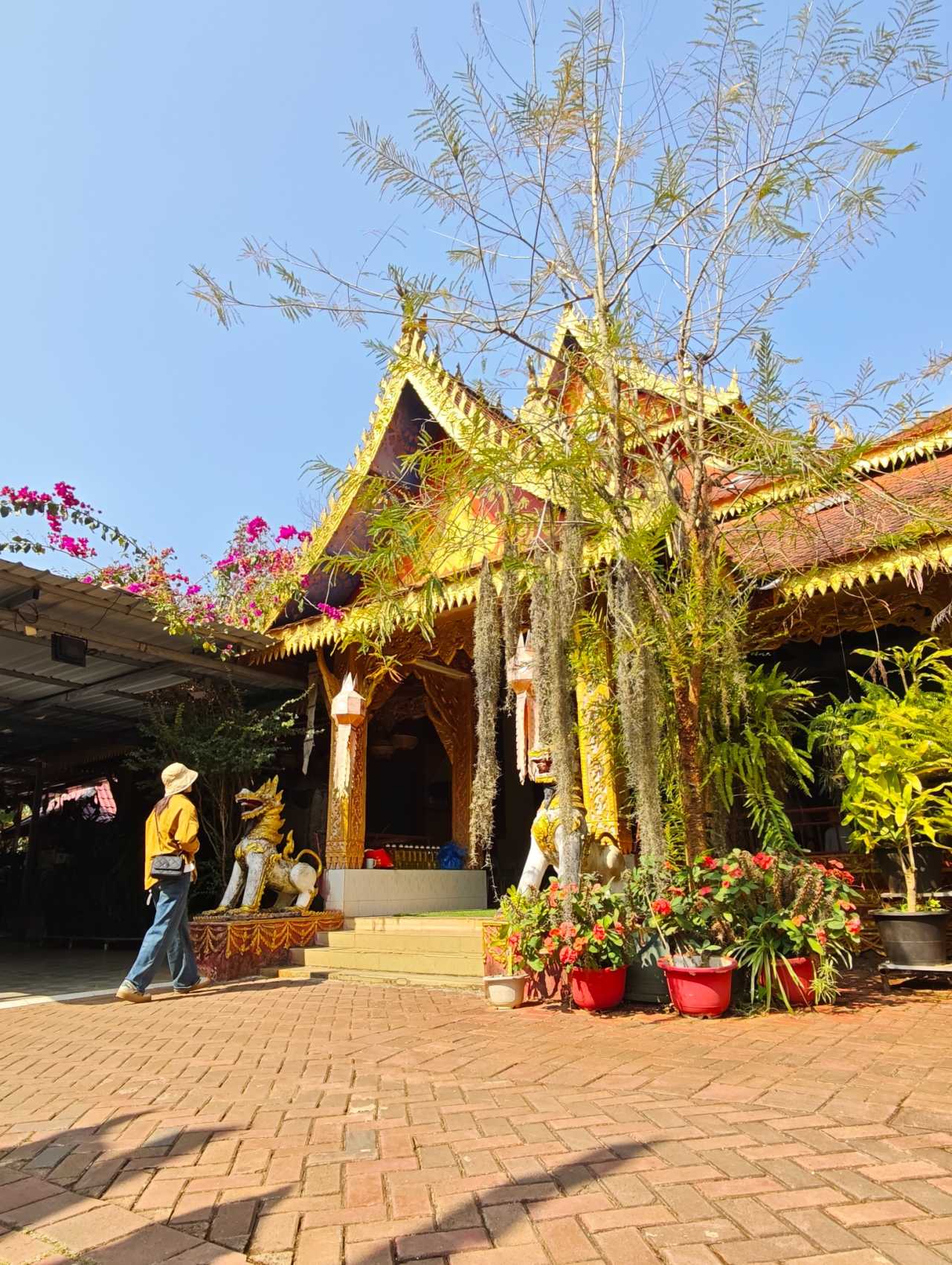
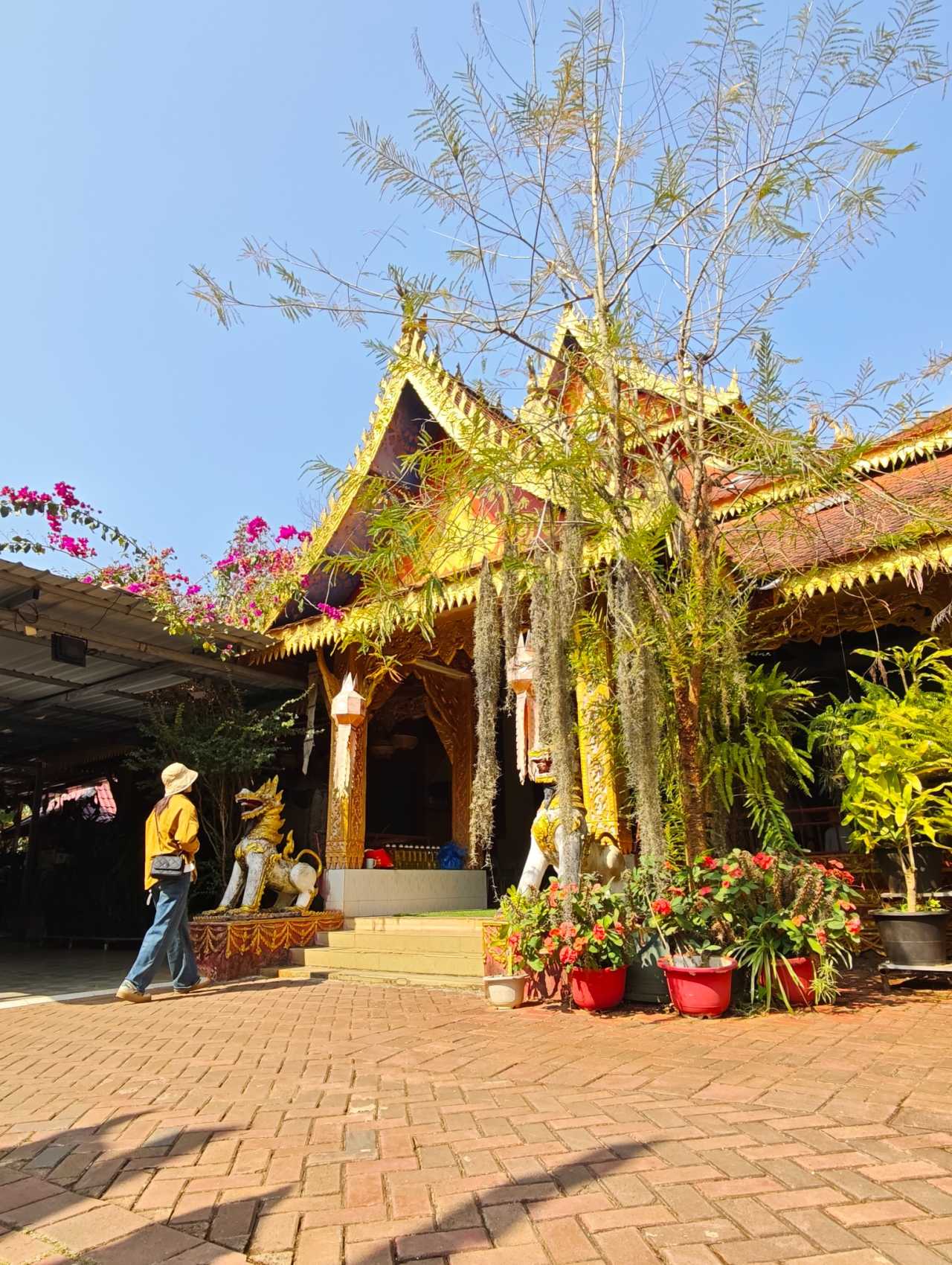
The building opposite the entrance to Mankongdai Village was particularly striking—red walls with gold trim, radiating an air of prosperity and exuding a strong Dai-Thai cultural flavor. Without even leaving the country, you can soak up the atmosphere of Southeast Asia—that's one of the reasons people love visiting Xishuangbanna.
Part 6: Accommodation Recommendations: Incredible Value for Money
Every hotel I chose on this trip offered amazing value for money! Because our itinerary changed, we switched hotels three times, but all were booked with free cancellation.
Key tip: During Spring Festival, never book a hotel in Gaozhuang—just getting in and out by car every day is a huge headache. We stayed near the Dai Ethnic Garden, which was a 40-minute drive from Gaozhuang, but the roads were almost empty, making for a very relaxing experience.
I won't list specific hotel names and prices due to space constraints, but the principle is: choose a location outside Gaozhuang, near the attractions, and with free cancellation.
Part 7: Summary: The Right Way to Experience Xishuangbanna During Spring Festival
Core Takeaways
- Stay away from Gaozhuang: Avoid it for accommodation, dining, and sightseeing—it'll eliminate 90% of your headaches.
- Visit the night market late at night: If you must go to the Starlight Night Market, go close to midnight—fewer people and no traffic jams.
- Choose lesser-known attractions: Places like Manyuan Village, Manzhang Village, and Jinuo Mountain Rainforest offer more authentic experiences than popular spots.
- Drive on national highways: The dragon fruit fields along Highway 213, roadside fruit stalls, and tropical vegetation are all unexpected delights.
- Be flexible with your itinerary: Book hotels with free cancellation so you can adjust if road conditions or unexpected situations arise.
Final Thoughts
After this trip, we didn't experience the unbearable Spring Festival crowds that others complain about. We had a very pleasant time and felt no urge to vent on social media.
Of course, our itinerary wasn't perfect. We skipped major attractions like the Xishuangbanna Tropical Botanical Garden, and we didn't visit popular restaurants like Chunwuli, Mamalao, or Luoluo Ice House. But based on our two principles—avoid tourist-group hotspots and avoid scenic areas that require shuttle buses—this kind of itinerary is perfect for anyone driving to Xishuangbanna during Spring Festival.
Travel is like that—imperfection is the norm. But as long as you're bold enough to set out, bold enough to make choices, and bold enough to discover surprises along the way, you're guaranteed to have a unique experience.
I hope this travelogue gives you some inspiration. Maybe one day, you'll just go for it without planning, following my route exactly? That would be pretty cool.
A Final Word: If you're like me—short on vacation time but still wanting a trip with incredible value for money (driving with the whole family really saves a lot!)—then follow my approach for a Xishuangbanna trip that works even during Spring Festival.
Remember: the best is on the road. Sometimes, what draws us in isn't the so-called attractions, but the unexpected encounters with people and scenery along the way.
Go for it—Yunnan won't let you down.
You should also read:
Xishuangbanna Self-Drive Tour: Into the Tropical Wonderland at the Edge of the Sky (Complete Guide)
Xishuangbanna Self-Drive Tour: Into the Tropical Wonderland at the Edge of the Sky (Complete Guide) Introduction: A Dream Fulfilled Thirty Years Early Some journeys are destined to happen at a specific moment in time. For me, a self-drive trip to Xishuangbanna was originally the first…
Continue reading...
A 9-Day Yunnan Journey: From Lijiang to Dali to Tengchong – A Trip Toward Self-Reconciliation
A 9-Day Yunnan Journey: From Lijiang to Dali to Tengchong – A Trip Toward Self-Reconciliation Some say travel is simply going from a place you're tired of to a place other people are tired of. It stings to hear, but it's painfully true. Yet there's…
Continue reading...
Solo in Yunnan: A Wanderer’s Guide to the Land of Eternal Spring
Solo in Yunnan: A Wanderer’s Guide to the Land of Eternal Spring There’s something magical about traveling alone. No compromises, no schedules to keep, no one to please but yourself. I’ve been on the road for nearly three months now, and not once have I…
Continue reading...