Secrets of Southern Yunnan: A Deep Investigation into Warm Winters, Tea Mountains, and the FIRE Lifestyle
Secrets of Southern Yunnan: A Deep Investigation into Warm Winters, Tea Mountains, and the FIRE Lifestyle
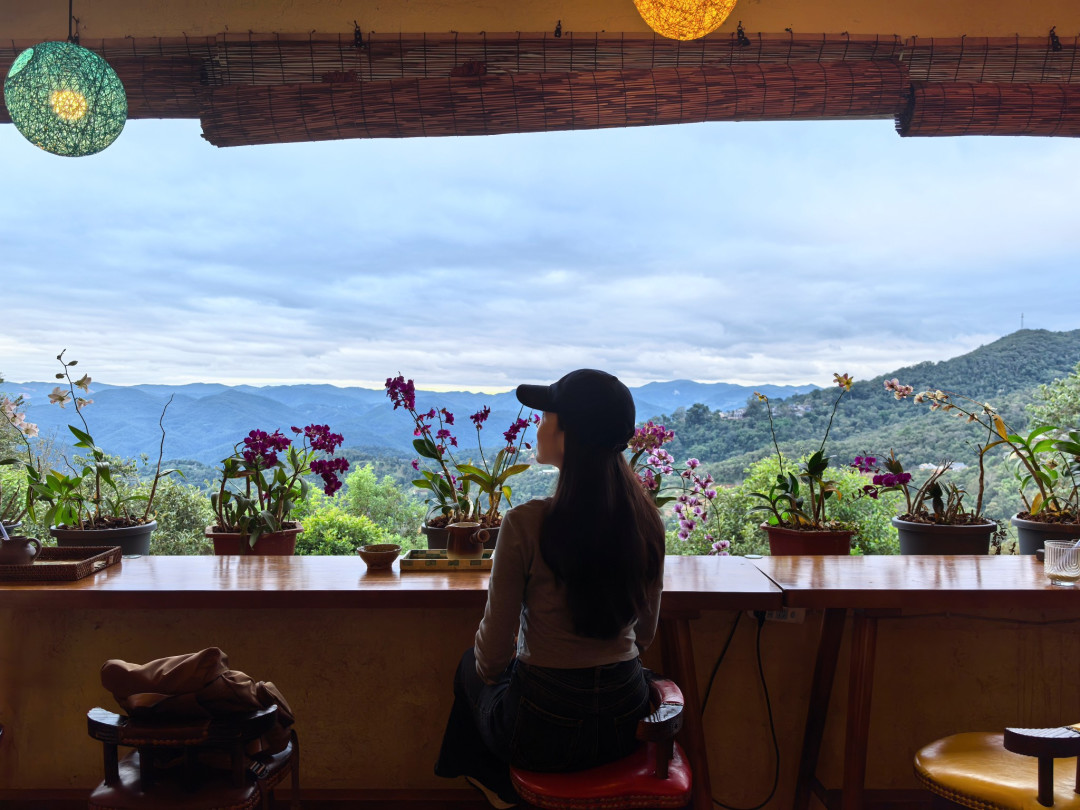
Winter in the north always arrives without warning. The bare branches outside the window, the stubborn haze that refuses to lift, the biting wind that cuts through everything—every morning becomes a small battle. On one particularly freezing morning, staring at the remaining annual leave days on my phone, I made a decision that even I found a little crazy: I was going to Yunnan. But this time, I wouldn't chase the trendy winds of Dali or the snows of Lijiang. I was diving headfirst into the warm winter of southern Yunnan, searching for a place where I could anchor my future.
A Long-Planned Escape
Behind this decision lay two things: a greedy craving for warmth, and a selfish desire for what comes next. As someone planning for FIRE (Financial Independence, Retire Early), I've been searching for a place with pleasant weather, reasonable living costs, and a pace that actually lets you slow down. Pu'er, that city famous for its tea, had been sitting on my shortlist for a long time. Instead of reading travel guides online or listening to other people's stories, I decided to go myself—to measure the place with my own feet and feel it with my own body.
In the end, I settled on a relatively off-the-beaten-path route: Xishuangbanna → Pu'er → Jingmai Mountain. And Jingmai Mountain was the deepest obsession of this trip. The first time I heard its name, my mind painted a picture of ancient tea forests, rolling seas of clouds, and quiet ancient villages. From that moment, I told myself: no matter how winding the mountain roads or how bumpy the journey, I had to see this hidden corner of southern Yunnan.
Nine days of travel—there were regrets, but far more unexpected surprises: the tropical plants along the roads in Banna whose names I didn't know, the breeze brushing through my hair deep in the Pu'er tea mountains, the cup of Pu'er tea warmly offered by a Bulang sister on Jingmai Mountain. Every moment felt like a gift life had quietly slipped into my hands.
First Sight of Banna: The Second Hometown of Northeasterners, My Tropical Dream
From Airport to Hotel: License Plates from the Northeast and a $30 Luxury Hotel
Xishuangbanna truly lives up to its reputation as "the second hometown of Northeasterners." On the way from the airport to the hotel, I lost count of how many cars I saw with license plates from Heilongjiang, Jilin, and Liaoning. Strangely enough, my first impression of this "second hometown" wasn't bad at all—maybe because I'm so used to the bare, lifeless winter scenery up north. Suddenly hitting that wall of vibrant green felt like a shot of adrenaline straight to the heart.
The benefits of traveling in the off-season become crystal clear when booking a hotel. For just over $30, I checked into a luxury hotel in Gaozhuang, complete with a complimentary airport pickup. That price during peak season wouldn't even get you a basic guesthouse.
Starry Night Market: A Miniature Chiang Mai, But More Down-to-Earth
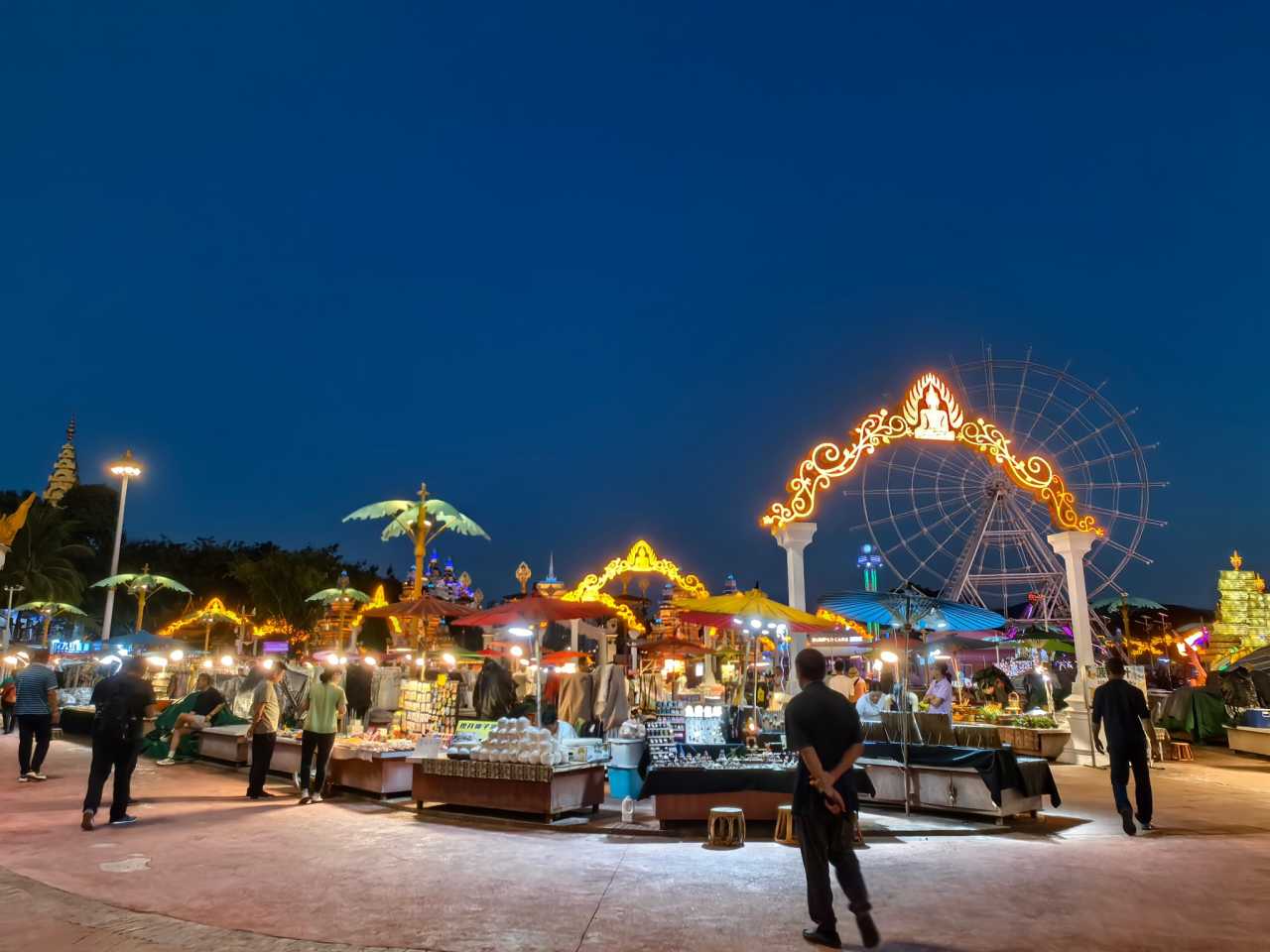
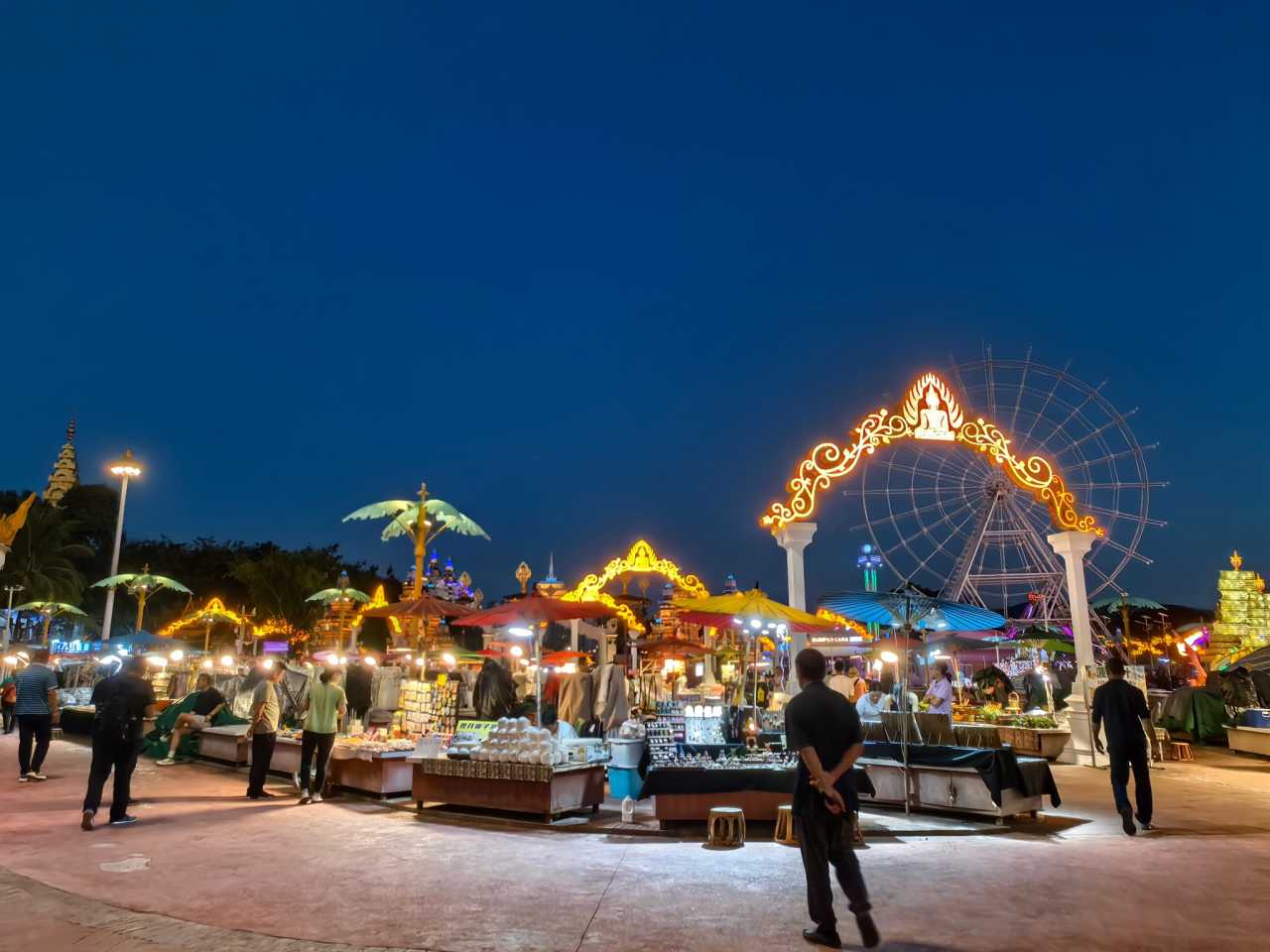
The hotel was right in the center of Gaozhuang, just a few hundred meters from the Starry Night Market. As dusk fell and the sky hadn't fully darkened, the market was already waking up. Walking through the streets, I had a fleeting feeling of being in Chiang Mai—the same tropical vibe, the same golden temple spires, the same lively烟火气 (the vibrant energy of everyday life).
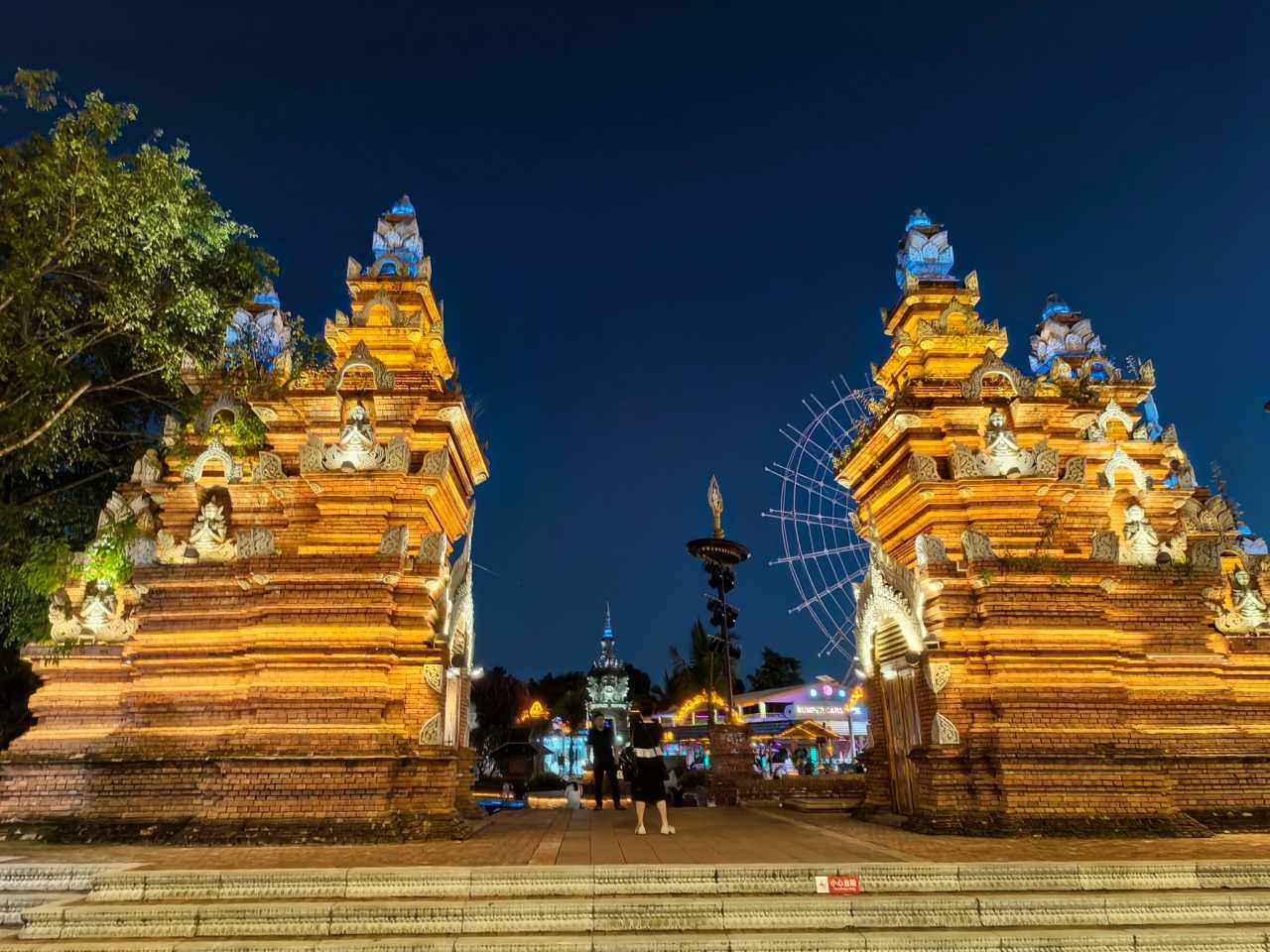
The Golden Pagoda is the absolute landmark of the market. It's closed at night, but when the lights come on, it's already stunning enough for photos. The market is full of young women getting professional photos taken—the same assembly-line heavy makeup and retouched images. Honestly, after a while, it gets a bit tiresome. I preferred the hidden corners tucked away in the alleyways—a nondescript lane with dim lighting and barely anyone around, carrying its own kind of quiet beauty.
When it comes to food, the market's offerings are similar to Southeast Asian cuisine, and the prices are reasonable. But following local advice, we skipped the main meals at the market and found an unassuming Dai-style barbecue joint instead. The flavor? Let's just say it suited my palate even more than Northeastern barbecue—bold, heavy on the spices, every bite like a dance on your tongue.
Street Encounters: Fire Gourd Fruit, Demon Fruit, and a Traveling American Shorthair
In Banna, even the streets are full of surprises. I saw fire gourd fruit for the first time—orange-yellow skin, like a little planet. And "demon fruit," scientifically known as Kadsura coccinea—I admit my ignorance; I'd never heard of it before. But what really got me was meeting a traveling American Shorthair cat. It sat calmly next to its owner, its gaze steady, as if to say, "See? This is my world." In that moment, I genuinely envied it—able to see the world with its mom. How wonderful.
Xishuangbanna Tropical Botanical Garden: 14,000 Plant Species and a Navigation Mishap That Almost Sent Us to Pu'er
Renting a Car: Dirt Cheap in the Off-Season, But Navigation Nearly Ruined Everything
The Chinese Academy of Sciences' Tropical Botanical Garden is located in Menglun Town, Mengla County, about 60 kilometers from Jinghong. Founded in 1959 by renowned botanist Professor Cai Xitao, the garden covers 1,125 hectares and houses over 14,000 living plant species, making it the largest and most biodiverse botanical garden in China.
I originally planned to take a ride-sharing service, but after waiting forever with no one picking up, I decided to rent a car instead. Renting in the off-season is absurdly cheap—so cheap it's hard to believe. But I didn't expect a navigation glitch to nearly derail the whole trip. Thanks to the upgraded HarmonyOS system, Baidu Maps sent us off course, almost all the way to Pu'er. We ended up driving an extra 100 kilometers one way. By the time we reached the garden, it was already noon. The sun was directly overhead, the light was harsh, and photo quality suffered badly. My advice: come in the morning when the light is softer.
The Garden's "Stars": Banyan Trees, Flame Flowers, and Sausage Trees
The botanical garden itself is a living museum. The banyan tree's plank-like roots act like giant supports holding up its massive canopy, revered in Dai culture as a "sacred tree." The hanging red torch ginger looks like a bunch of little parrot beaks—locals call it "lobster claw." The pink bracts of the Mussaenda were my favorite—those pink "petals" are actually modified leaf-like calyces, with the real flowers hidden inside, tiny golden five-pointed stars. They're the garden's "beauty queens."
Then there's the "strangler fig" phenomenon—a seed lands on another tree, takes root, and its aerial roots gradually wrap around and eventually "strangle" the host, taking over as an independent tree. It's one of nature's most brutal and most spectacular survival strategies.
Hot Air Balloons and Pineapples: A Return to Childhood Memories
The garden has hot air balloons, but they're significantly more expensive than the one I rode in Turkey. To be honest, I've never been that interested in riding hot air balloons—the sight of dozens of balloons rising into the sky from the ground is far more beautiful and spectacular than the view from inside one.
What really struck me was seeing pineapples growing on the ground. When I was very young, my mom took a photo in Banna standing next to a pineapple field, and that's how I first learned pineapples grow on the ground. Seeing it with my own eyes now, that "aha" feeling connected my childhood memory to the present moment like a thread.
Pu'er: A Hidden Gem of a City Soaked in Tea Fragrance
From Banna to Pu'er: A 40-Minute High-Speed Train, a Quarter-Full Carriage, and Lao Language Announcements

From Banna to Pu'er, the high-speed train takes just 40 minutes. The carriage was only a quarter full—so empty it felt like we had it to ourselves. This line is part of the China-Laos Railway, and the train has announcements in Lao. Hearing that unfamiliar language suddenly gave me the strange feeling of stepping just outside the country. If I ever get the chance, I must take this train all the way to Laos.
Simao Old Street: The Taste of Pu'er Hidden in the Alleys
Pu'er City administers one district and nine counties, with the main urban area called Simao District. It's not a typical tourist destination, but in recent years, its warm, humid winters have attracted many people from the north looking to retire or settle here. The other nine counties are all ethnic minority autonomous counties, home to 14 ethnic groups, with minority populations accounting for 61%—giving the area a strong, exotic atmosphere.
During the off-season, Simao Old Street has almost no tourists. Walking on the stone-paved paths, there's a sense of peaceful contentment. First stop: "Yangji Sour Vinegar Rice Noodles," tucked away in an alley. We arrived around 1 PM, finished eating just as the shop was closing for its break. When we passed by again at 4 PM, there was already a long line outside. The ordering process is simple—you add your own chives and green onions. I recommend the lean meat rice noodles. Next to it, there's a vat of fruit vinegar, free for the taking. Add ice, and it's incredible. The only lesson learned: if you eat the noodles too slowly, the broth gets absorbed, and it feels like there's more and more.
Daijia Lane: Cafes in Historic Buildings and a Graffiti Wall
Daijia Lane was built during the Qing Dynasty and the Republic of China period, preserving Pu'er's historic architectural complex. Today, these protected old buildings house a collection of unique shops—handicraft stores, vintage bookshops, independent cafes. The whole street exudes a charming烟火气 (vibrant everyday atmosphere) shaped by history.
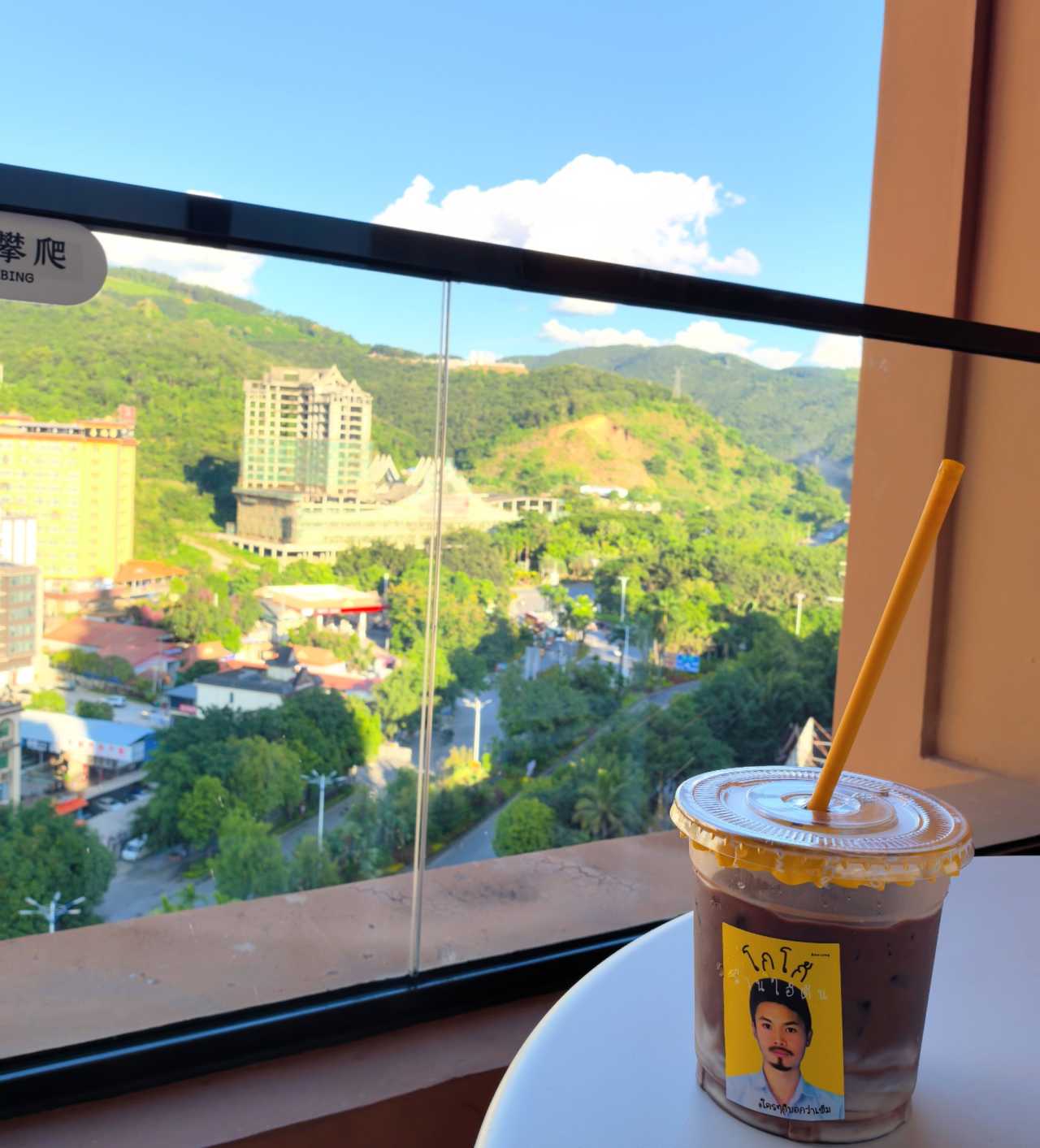
What surprised me most was a graffiti wall—it was so adorable that I spent ages taking photos there. I finally settled on "Yicao Xiangzi" (A Grass Alley) for afternoon tea. The view from the window was lovely. I ordered a coffee cherry tea—my first time trying it, and it was delicious. It has less caffeine than coffee and is said to promote blood circulation and aid weight loss.
Ximahe Park: A "Tourist Spot" with Only a Handful of Locals
Within the city, besides Simao Old Street and Daijia Lane, there aren't many real attractions. So we headed to Ximahe Park near our hotel, where only a few locals were taking a stroll. This feeling of "no tourists" turned out to be Pu'er's most charming quality.
Taiyanghe National Forest Park: Red Pandas Are the Real Stars
97.45% Forest Coverage and a "Facial Mist" Rain
The more interesting attractions in Pu'er aren't in the city, so we booked a day tour with a private driver on Fliggy, choosing Taiyanghe National Forest Park and Da Kaihe Meizi Coffee Estate. Taiyanghe has a forest coverage rate of 97.45%, covering 216 square kilometers, and is known as "the largest oasis on the Tropic of Cancer."
You have to take a shuttle bus from the main gate to get inside. Just as we got on, it started drizzling. Riding in the open electric cart felt like getting sprayed with facial mist. Luckily, the trees are a natural umbrella—walking on the boardwalk, we didn't need one at all.
Red Pandas vs. Raccoons: A Lesson in Taxonomy
The park has rhinos, macaques, raccoons, and the legendary capybara. To be honest, capybaras are huge—I didn't find them cute at all. The most educational moment was seeing a comparison chart of red pandas and raccoons. It turns out red pandas are a distinct taxonomic family, completely different from raccoons.
Red pandas are absolutely the park's biggest draw. You can pay extra to feed them under staff supervision. The funny part? I heard a staff member tell a kid, "You can't feed this one anymore—it's already eaten too much. Feed the other one instead." The tone was like scolding a greedy child.
Farmhouse Food: No Menu, Just Whatever Vegetables Are Fresh That Day
For lunch, we asked our driver to recommend a farmhouse restaurant he frequents. There was no menu—they just cooked whatever vegetables were fresh that day. The food was amazing. It turns out real cuisine only needs the simplest cooking methods.
Da Kaihe Meizi Coffee Estate: From Seed to Cup
Moon Meditation House: A Viral Photo Spot Built from Coffee Waste
Da Kaihe Meizi Coffee Estate is located in Da Kaihe Village, Nanping Town, Simao District. It has over 30 years of cultivation history, covering more than 7,000 mu (about 1,150 acres). Entry is free, and visitors can walk into the coffee groves and pick fresh coffee cherries themselves.
The most eye-catching feature is a "Moon Meditation House" built from recycled coffee husks. Its brown, mottled surface has a striking texture, like an alien base—a hugely popular photo spot.
Coffee Cherries Are Sweet? Breaking Stereotypes About Coffee
Coffee cherries are edible, and the skin is actually sweet. During the tour of the coffee factory, the guide was so passionate that I was fully engaged, asking questions the whole time—I don't think I paid this much attention in school.
Two key takeaways: First, caffeine content has nothing to do with the roasting level or processing method. Second, between natural and honey processing, it's a matter of personal taste—I personally prefer honey-processed beans. The estate also sells various coffee beans, mostly for pour-over, at fair prices—stuff you can't find on Taobao.
The Coffee Plantation: Up Close with the Raw Material
Right across from the estate is a large coffee plantation. The owner kindly let us walk along the paths for a closer look. Being this close to an organic coffee plantation was a rare experience.
Nake Li: The First Stop on the Ancient Tea Horse Road
A Town Whose Dai Name Means "Little Bridge, Flowing Water"
Nake Li was an important post station on the ancient Pu'er Tea Horse Road. It's located in the south of Ning'er County, about 25 kilometers from downtown Pu'er. Since the road involves some mountain driving, I don't recommend self-driving—hitching a ride-sharing service is much more convenient.
"Nake Li" is a Dai phrase meaning a good place with little bridges, flowing water, and fertile soil. It was the "first stop" for Pu'er tea heading to Southeast Asia, once a bustling驿站 (post station) where horse caravans came and went. Today, it preserves relatively intact remnants of the Tea Horse Road, the century-old Rongfa Inn, and historical artifacts like the horse lanterns and stone water troughs used by the caravans.
Beigui Coffee House: Strangers from All Over Gathering to Chat
I discovered a hidden gem of a cafe in the old town—Beigui Coffee House. It brought together people from all over the country, chatting away in a wonderful atmosphere. Beigui is a local Pu'er coffee brand focusing on specialty coffee culture, with multiple branches in Pu'er and Jingmai Mountain. They have a wide selection of beans, from Yunnan small-grain coffee to specialty beans from major global产区 (producing regions).
Ancient Tea Horse City: Bonfire Party and Square Dancing
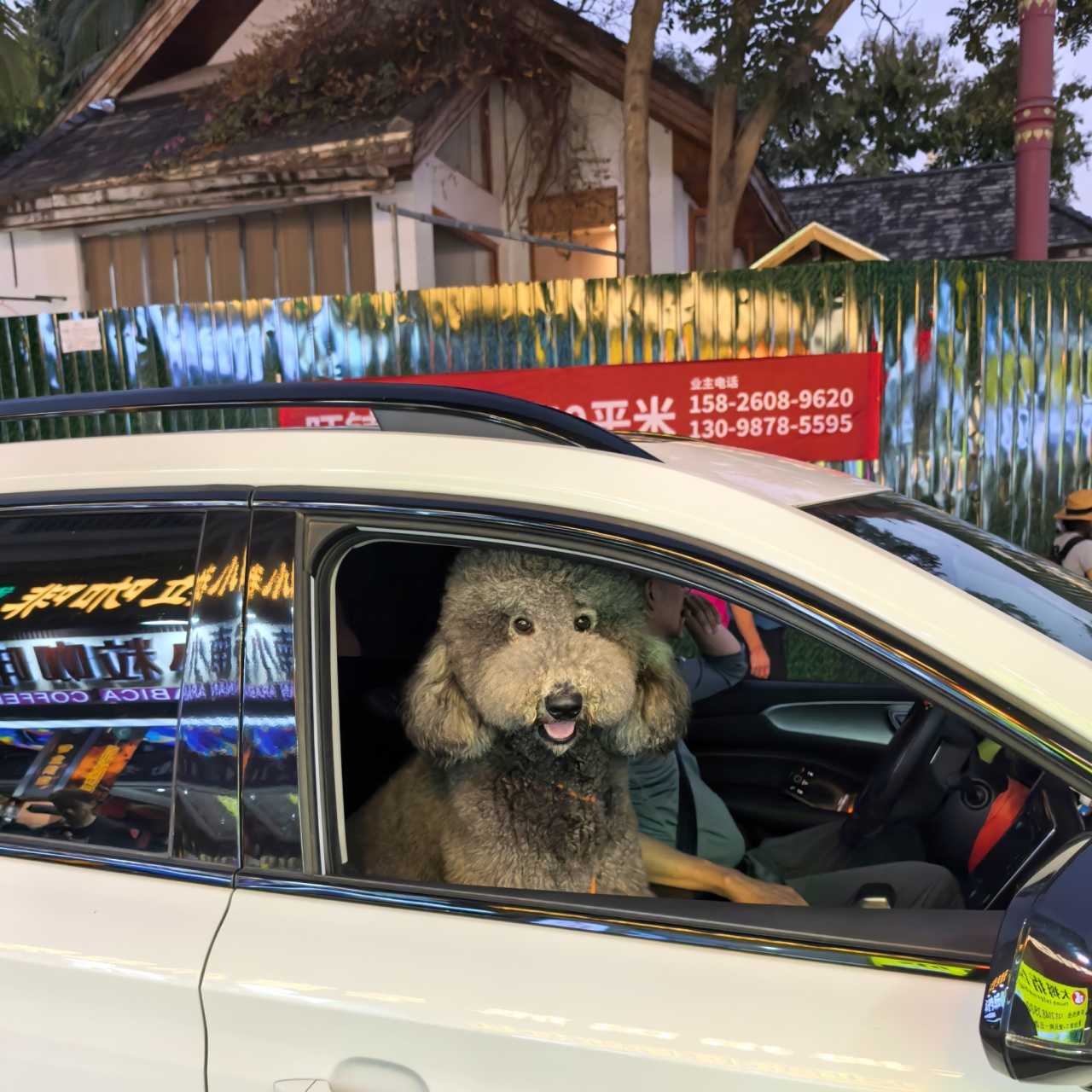
The Ancient Tea Horse City is a later-built tourist attraction with free entry, best visited at night. The area has the standard snack street, but since it's the off-season, there aren't many visitors. The bonfire party in the square, however, is worth experiencing—there are girls in ethnic costumes leading the dance, and everyone forms a circle and joins in. I remember doing this kind of square dancing in Shangri-La back in 2012—and getting altitude sickness right after. This time, thankfully, I didn't repeat that mistake.
Jingmai Mountain: Retreating into the Tea Mountains, Listening to the Wind, Sipping Tea, Watching the Sea of Clouds
From Pu'er to Jingmai Mountain: Three Hours of Highway, Half an Hour of Gravel Road
During my three days in Pu'er, it was overcast and drizzly the whole time. The damp cold hit me hard—I think Pu'er might be getting crossed off my relocation list.
I took a business van from Pu'er to Jingmai Mountain (booked through a mini-program), which I highly recommend. The first three hours on the highway were smooth sailing, but the last half hour on gravel road had me bouncing around so much I questioned my life choices. If you're driving yourself, the tire wear isn't worth it. This road was originally built this way to protect the ancient tea forest ecology and avoid asphalt pollution. And precisely because of this, Jingmai Mountain remains isolated, preserving its古朴 (primitive simplicity) and tranquility—a perfect retreat from the world.
Jingmai Mountain: 28,000 Mu of Ancient Tea Forest, Over a Dozen Villages
Jingmai Mountain covers 28,000 mu (about 4,600 acres) and is famous for its Pu'er tea. Ancient tea trees grow alongside primary forest. Over a dozen natural villages—Jingmai Dazhai, Mang Geng, Nuo Gan, Mang Hong, Weng Ji, and others—cluster here, recording the mountain's past and future through their tea trees.
Mang Hong Ancient Village: Sunrise Over the Sea of Clouds and Pot-Roasted Milk Tea
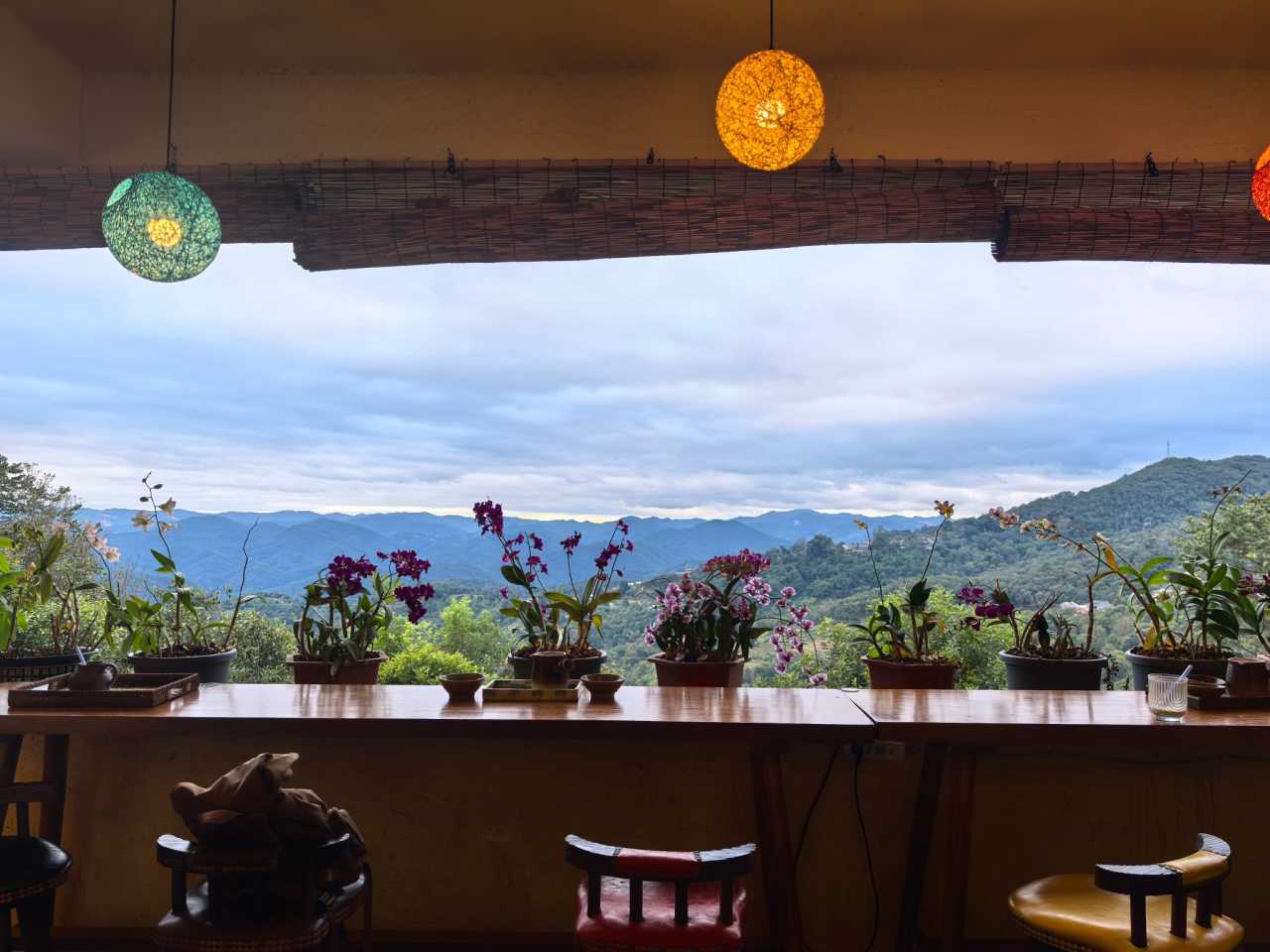
Staying in Mang Hong has one major advantage: it's the highest point on Jingmai Mountain, making it the best spot for watching sunrise and sunset over the sea of clouds. Waiting for dawn, watching the clouds churn beneath your feet—it feels like standing at the edge of the world.
The local specialty afternoon tea is "pot-roasted milk tea"—milk, tea, and sugar boiled together in a clay pot. No artificial additives, no tricks. Naturally, it can't compare to commercial milk tea brands, but it's all about being wholesome. Tea-leaf scrambled eggs are a classic Jingmai Mountain home-style dish—slightly bitter, but very fragrant. The specialty grilled chicken is a must-try.
Nuo Gan Ancient Village: Becoming a Dai Girl
To explore the villages more freely, we made a bold decision—renting an electric scooter to ride to Nuo Gan. Twelve kilometers. Not that far, you'd think. But the gravel road along the way was brutal. I gained a whole new level of respect for my companion's driving skills.
Nuo Gan is a Dai ancient village on Jingmai Mountain, over a thousand years old. Legend has it that 500 years ago (by the Dai calendar), Dai ancestors followed a white elephant here, found the environment ideal, and settled down, beginning their co-existence with tea. This village was also a filming location for the movie Coffee or Tea?.
On a whim, I rented a set of Dai ethnic clothing in the village and wandered around taking photos myself. No assembly-line influencer makeup, no retouched images—just light makeup and a simple updo. But it allowed me to truly immerse myself in the slow life here. I happened to run into an uncle from Beijing who had come to Jingmai Mountain on the same van as us. Turns out he's an amazing photographer—he took some incredible photos of us.
The Bulang Sister: Without Desire, You Find More Happiness
At a small shop next to our guesthouse, I ordered a grilled plantain and ended up chatting with the owner for a long time. Born in the 80s, she got married young, and her daughter is already in her 20s. She never formally learned Mandarin, but she still tried her best to communicate with me. Before the road to Jingmai Mountain was built, they had to walk up and down the mountain. And yet, she was perfectly content with her peaceful life.
I thought to myself: without greedy desires, you can find more happiness. The days on Jingmai Mountain truly quiet the heart.
Weng Ji Ancient Village: Sealed Village, Traffic Jams, and Mist Like a Fairyland
Village Sealed for Rituals: No Entry Until the Day We Left
Weng Ji Ancient Village had experienced a few accidental deaths recently, and starting from the afternoon we arrived at Jingmai Mountain, the village was sealed off for ritual ceremonies (the guesthouse owner said it was for superstitious reasons). No one could enter. It wasn't until the morning of our departure that it finally reopened. Since our bus wasn't until 1 PM, we had enough time and decided to go check it out.
We ran into a massive traffic jam—turns out a market day in Mang Jing had taken over the already narrow road, making it impossible for cars to pass. After about an hour of crawling, we finally made it to Weng Ji.
At the Edge of the Sea of Clouds, 1,700 Meters High
Weng Ji Ancient Village sits at an elevation of 1,700 meters, on the edge of the sea of clouds, preserving the original Bulang ethnic character. It's home to about 90 households and just over 300 people—the smallest of the four villages. Because of its lower elevation and the heavy morning fog, the entire village seemed wrapped in mist. It felt like stepping into a fairyland.
Because of the two-day closure, there were almost no tourists when we arrived, and very few shops were open. We finished exploring in about half an hour—but that silence became the most precious experience.
Bean Pod Doll DIY: The Last Wish Before Leaving
Before leaving Jingmai Mountain, my final wish was to make a bean pod doll. The finished product got unanimous praise. Goodbye, Jingmai Mountain—goodbye to those days soaked in tea fragrance.
Back to Banna: Peacock Feast, Riverside Night Market, and the Home from Ice and Fire
Peacock Feast: The Luxury Version of Dai-Style Barbecue
After a four-and-a-half-hour drive, we were finally back in Banna. The benefits of off-season travel showed again—a hotel room for just over $30 a night.
I tried the Peacock Feast, which is essentially a platter of various barbecued items and staples. The portions were huge, but the overall taste was good. Dai cuisine really suits me. The best thing about Jinghong is its inclusiveness—it's full of tourists and businesspeople from all over. Besides Yunnan food, you can also find authentic Sichuan and Northeastern cuisine.
Riverside Night Market: More Down-to-Earth Than Starry Night Market
The Riverside Night Market is cheaper than the Starry Night Market and has fewer tourists, making it feel more integrated into local life. The most popular performer there was a guy playing the African drum—not only was he good at drumming, but he also sang beautifully and knew how to work the crowd.
In the evening, we went to "bump Dai disco"—make sure to reserve a spot in advance. The place doesn't really heat up until after 11 PM, with acrobatic performances and dance interactions. The DJ was really handsome—great bone structure.
Lanyue Tea & Coffee: Visiting Chen Yu's Home from Ice and Fire
My last wish before leaving was to visit Chen Yu's home from the TV drama Ice and Fire (Bing Huo Yu). It's now a café called "Lanyue Tea & Coffee." Apart from a few stills from the show, there aren't many traces left. Sitting where Chen Yu once sat, drinking a cup of coffee—it felt like a fitting end to the journey.
Final Thoughts: Southern Yunnan, a Place Worth Exploring Again and Again
Nine days of travel. I walked through the tropical rainforests of Banna, tasted the thousand-year tea fragrance of Pu'er, and stayed in the misty ancient villages of Jingmai Mountain. This investigation into warm winters, tea mountains, and the FIRE lifestyle didn't give me an immediate answer—the damp cold of Pu'er gave me pause, the remoteness of Jingmai Mountain made me think—but it gave me one answer: southern Yunnan is a place worth exploring again and again.
The vitality of Banna, the unhurried ease of Pu'er, the quiet stillness of Jingmai Mountain—each has its own captivating quality. Perhaps the true meaning of the FIRE lifestyle isn't about finding a perfect place. It's about having the right to choose, and the courage to just go.
Free as the wind, fearless in love. That, I think, is the meaning of travel. And the meaning of life.
You should also read:
A Solo Journey to Yunnan: Shuanglang Chapter — Meeting Your Truest Self by the Erhai Lake
A Solo Journey to Yunnan: Shuanglang Chapter — Meeting Your Truest Self by the Erhai Lake Introduction: When a Dream Finally Becomes Reality Some say Yunnan is a place meant for solo travelers. It took me three full years to truly understand that. Two years…
Continue reading...
Xishuangbanna Self-Drive Tour: Into the Tropical Wonderland at the Edge of the Sky (Complete Guide)
Xishuangbanna Self-Drive Tour: Into the Tropical Wonderland at the Edge of the Sky (Complete Guide) Introduction: A Dream Fulfilled Thirty Years Early Some journeys are destined to happen at a specific moment in time. For me, a self-drive trip to Xishuangbanna was originally the first…
Continue reading...
September: Finding Unexpected Warmth in Yunnan (Kunming, Dali, Shuanglang, Lijiang, Lugu Lake)
September: Finding Unexpected Warmth in Yunnan (Kunming, Dali, Shuanglang, Lijiang, Lugu Lake) Foreword: One Person's Journey, A Crowd's Story Before I set off, like every first-time solo traveler, I printed out a thick stack of travel guides and rehearsed countless possible scenarios in my head—getting…
Continue reading...