Seven Days in Yunnan: A Healing Journey Through Wind, Flowers, Snow, and Moonlight
Seven Days in Yunnan: A Healing Journey Through Wind, Flowers, Snow, and Moonlight
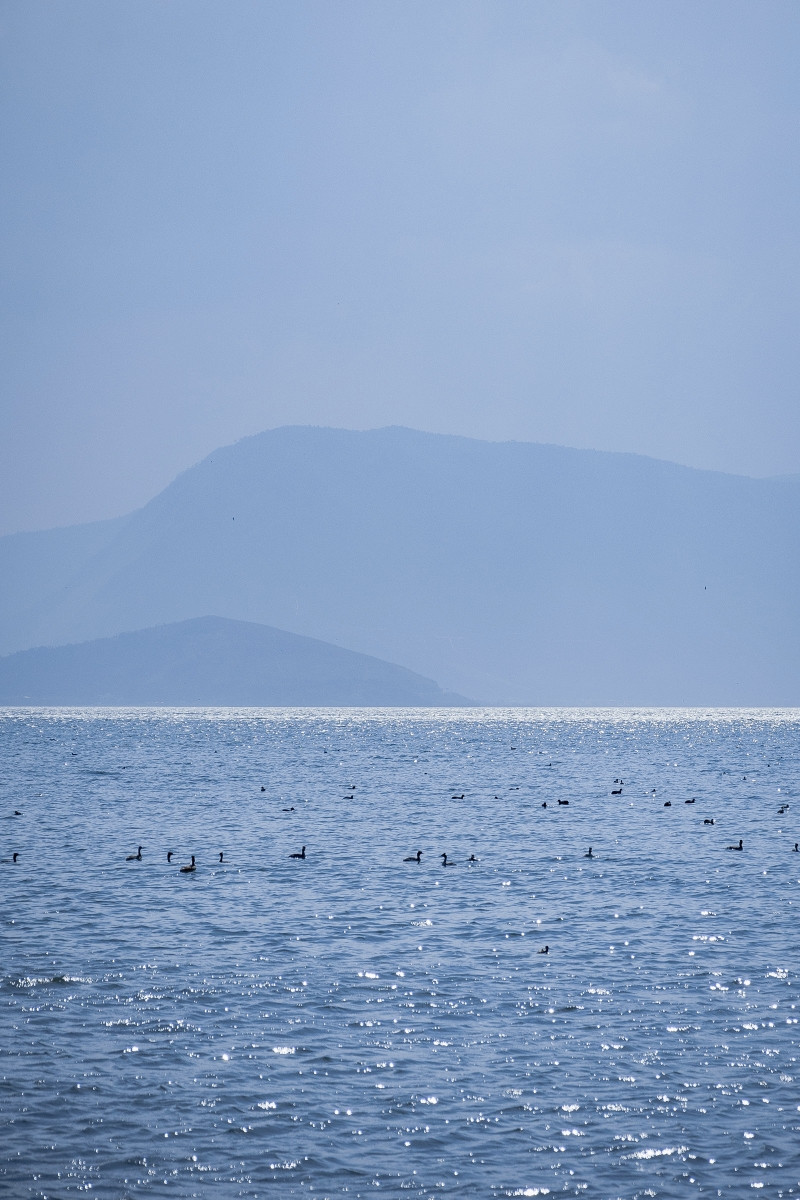
A week ago, I was anxious about the weather forecast for Yunnan—every time I opened my phone, the screen was filled with icons of light rain and clouds. On the day of departure, I had even mentally prepared myself for a "stroll in the rain." But who would have guessed that fate had a surprise in store for me: Cangshan Mountain and Erhai Lake under a clear blue sky, Jade Dragon Snow Mountain emerging from the mist, the golden glow of sunrise painting the peaks, and snowflakes dancing in the air over Shangri-La. This journey, starting from Kunming and heading west through Dali and Lijiang, finally arriving in Shangri-La, felt like a carefully choreographed film—every frame too beautiful to be real.
If you're also planning a trip to Yunnan, or simply want to experience the magic of this land through words, then follow me as I relive this seven-day adventure.
Itinerary at a Glance: Seven Days, Four Cities, One Dream
Day 0: Arrival at Kunming Changshui Airport
Day 1: Kunming Botanical Garden (Fuli Palace) → Kunming Old Street → Green Lake → Yunnan Military Academy → Haigeng Dam → Haigeng Park → Nanqiang Night Market
Day 2: Kunming → Dali, Shuanglang Ancient Town → Xiaoputuo Island → Dali Ancient City
Day 3: Dali → Lijiang, Xizhou Ancient Town → Haishe Park → Yan's Grand Courtyard → Dali Ancient City → Lijiang Ancient City
Day 4: Lijiang → Shangri-La → Lijiang, Songzanlin Monastery → Dukezong Ancient Town → Guishan Park
Day 5: Lijiang, Jade Dragon Snow Mountain (Yak Meadow, Blue Moon Valley, Spruce Meadow) → Lijiang Ancient City
Day 6: Lijiang, Black Dragon Pool → Baisha Ancient Town → Baisha Murals → Lijiang Ancient City → Departure
Day 1: Kunming — First Impressions of the Spring City
Arrival in the Early Hours: A First Handshake with the Spring City
My flight was delayed until one in the morning. By the time I landed at Kunming Changshui Airport, any drowsiness had been swept away by excitement. I had booked a hotel near the airport in advance, and within ten minutes of calling, a car came to pick me up. The driver was a warm-hearted middle-aged man who chatted all the way about how "fickle" Kunming's weather could be—hot as summer during the day, cool as autumn at night. After a quick wash, I lay in bed, and through the window, I could faintly hear birds chirping. I thought to myself: So this is the Spring City.
Fuli Palace: The Secret Garden of the Plant Kingdom
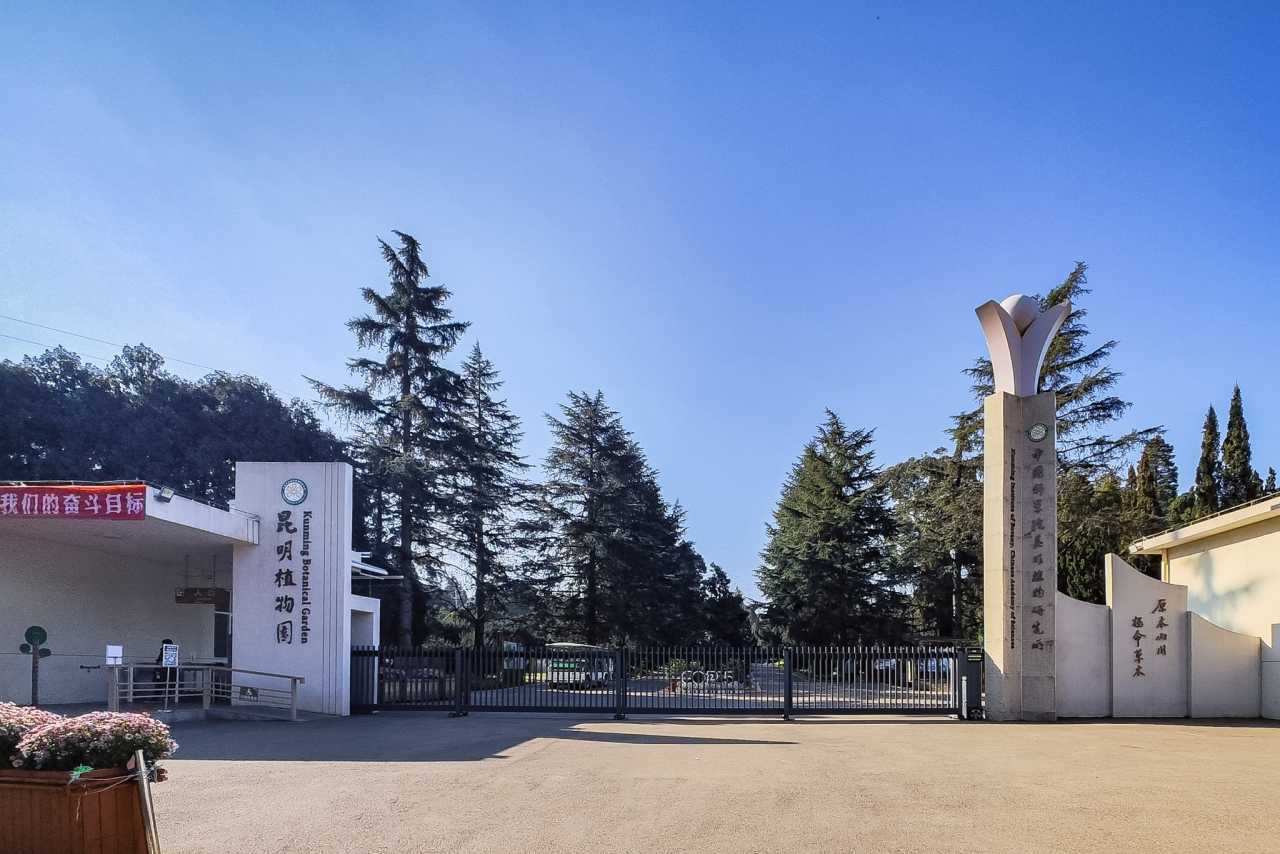
Leaving at eight in the morning, it took over an hour by subway and taxi to reach the Kunming Botanical Garden. The entrance fee was ten yuan, and the Fuli Palace greenhouse cost eighty—but those eighty yuan were absolutely worth it.
Fuli Palace—the name sounds like a hidden realm from a martial arts novel. In fact, it has a legendary history: during the reign of Emperor Wu of the Han Dynasty, the Shanglin Imperial Garden housed a "Fuli Palace" dedicated to cultivating rare fruits and exotic plants from the south. In 1986, botanist and academician Wu Zhengyi borrowed this historical reference to name the new greenhouse complex at the Kunming Botanical Garden. Today, it preserves over 2,500 species of distinctive plants and serves as the core of the COP15 Biodiversity Experience Park.
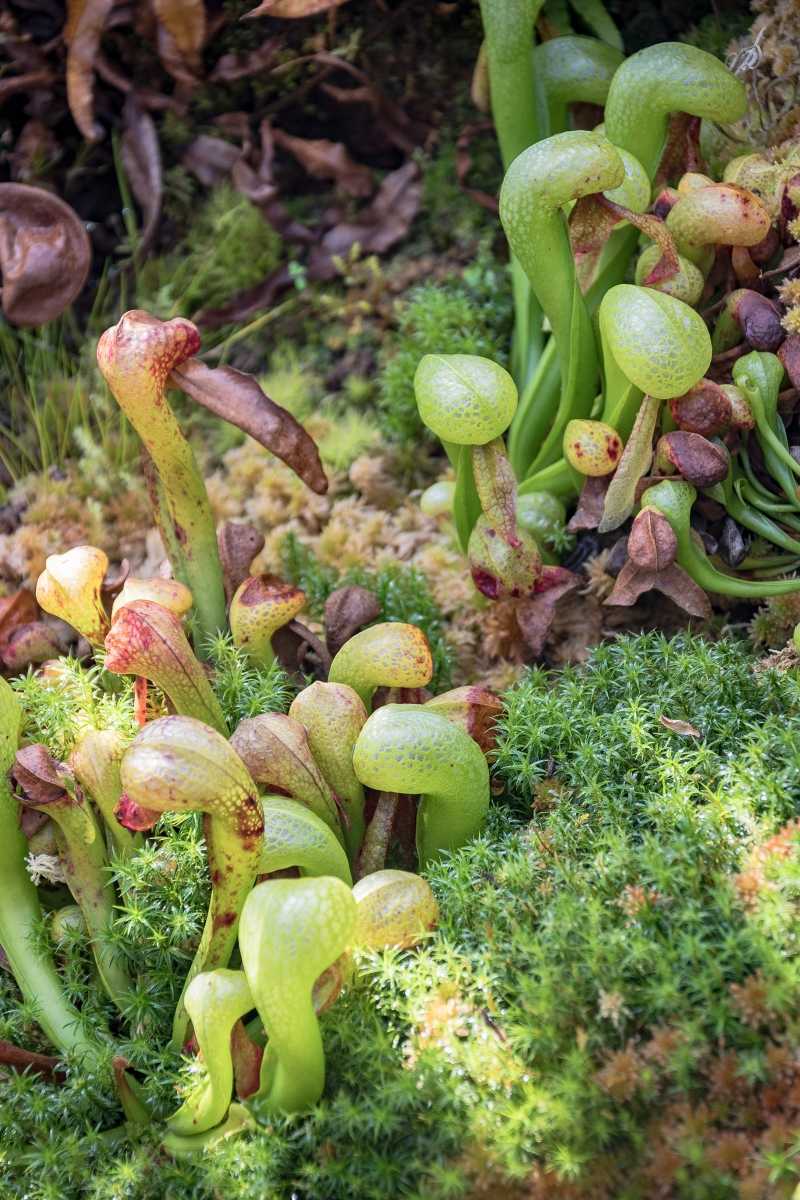
Following the guide through five halls, the one that captivated me most was the carnivorous plant hall. Those pitcher plants and Venus flytraps stood like silent hunters, waiting for prey to fall into their traps. The guide mentioned that March and April are the peak season for orchids, so there weren't many flowers in bloom now, but the carnivorous plants alone were already astonishing. Afterward, I wandered through the botanical garden, taking in the plants unique to Yunnan—this was my first impression of the region: vibrant with life, yet shrouded in mystery.
Kunming Old Street and Green Lake: Where History Meets Everyday Life
From the botanical garden, I took a taxi to Kunming Old Street for lunch. This is the best-preserved historic district in downtown Kunming, first built in 1119—over 900 years old. Guanghua Street is the most atmospheric stretch, with its cobblestone paths, traditional residential buildings, and boutique craft shops, flower studios, and cafes—trendiness and history collide here, like a cup of Pu'er tea topped with a milk cap.
After lunch, I bought a local specialty—sticky rice lemonade—and queued up for freshly baked flower cakes. On my way to Green Lake, I passed a small square where locals were dancing to ethnic minority music, their movements lively and smiles radiant. In that moment, I suddenly understood what "Spring City" truly meant—not the temperature, but the people, living life with such warmth and energy.
Green Lake is Kunming's "emerald in the city," and in winter, the seagulls are a spectacular sight. Tens of thousands of black-headed gulls migrate here from Siberia to spend the winter. They frolic in the water, squabble over food, and bring endless vitality to the lake. Unfortunately, by the time I arrived, the gulls had already left—they stay from November to mid-March, and I came a little too late.
Yunnan Military Academy and Haigeng Dam: Echoes of History and Sunset over Dianchi Lake
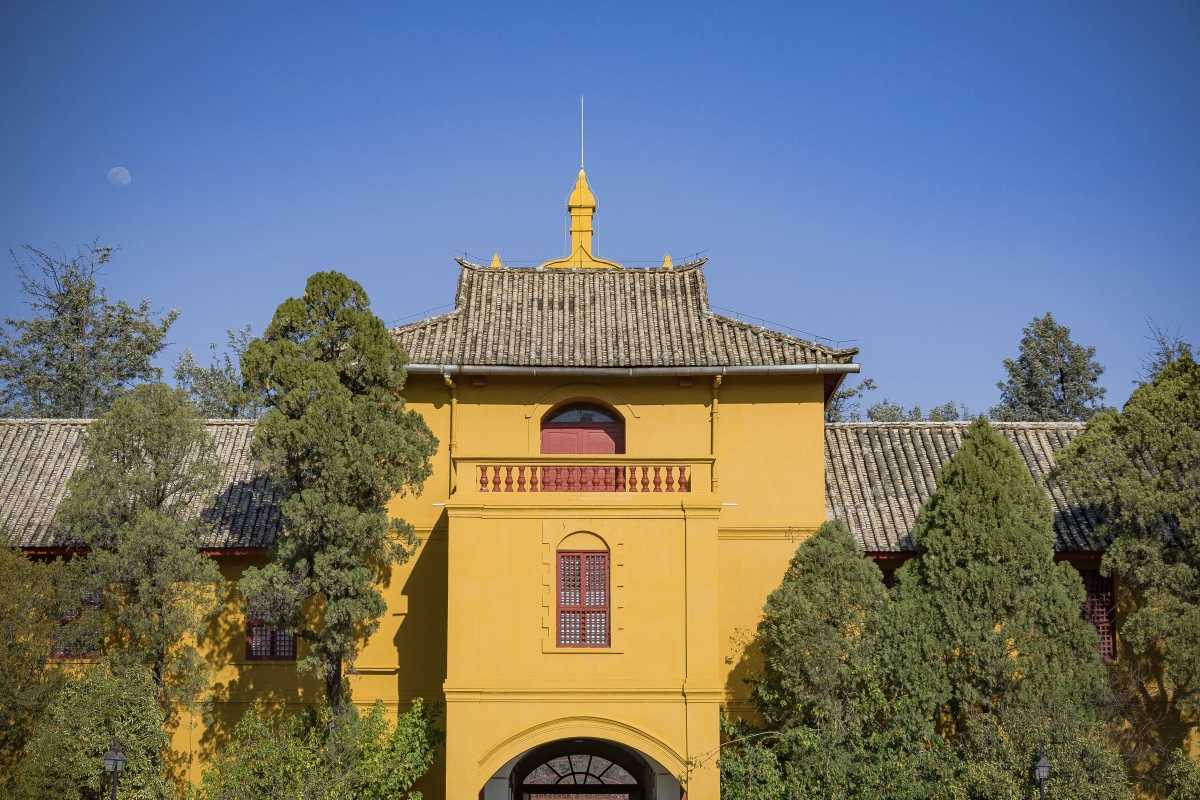
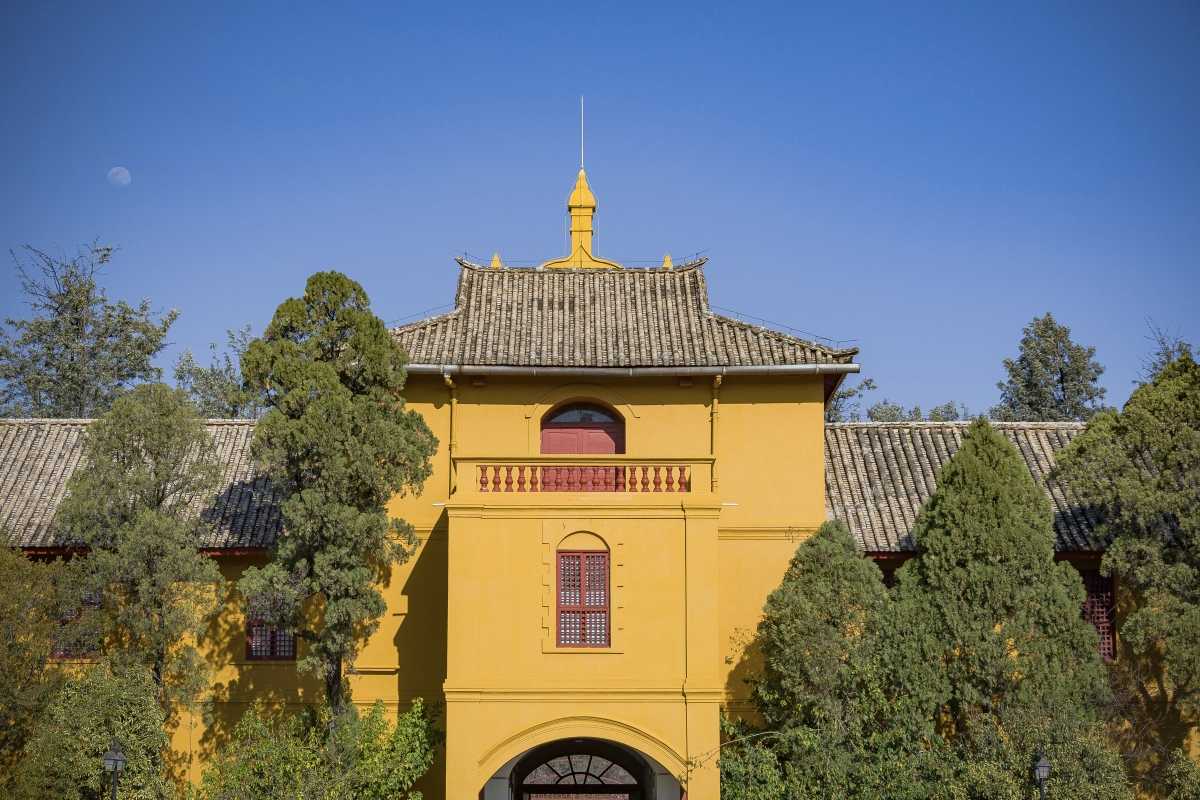
The Yunnan Military Academy, built in 1907, is located near Green Lake. It was one of the most prestigious military schools in modern Chinese history, where generals like Zhu De and Ye Jianying once studied. The architecture itself is distinctive—Chinese-style gabled roofs combined with Western-style arched windows, a fusion of East and West, like an old gentleman in a long robe wearing a top hat.
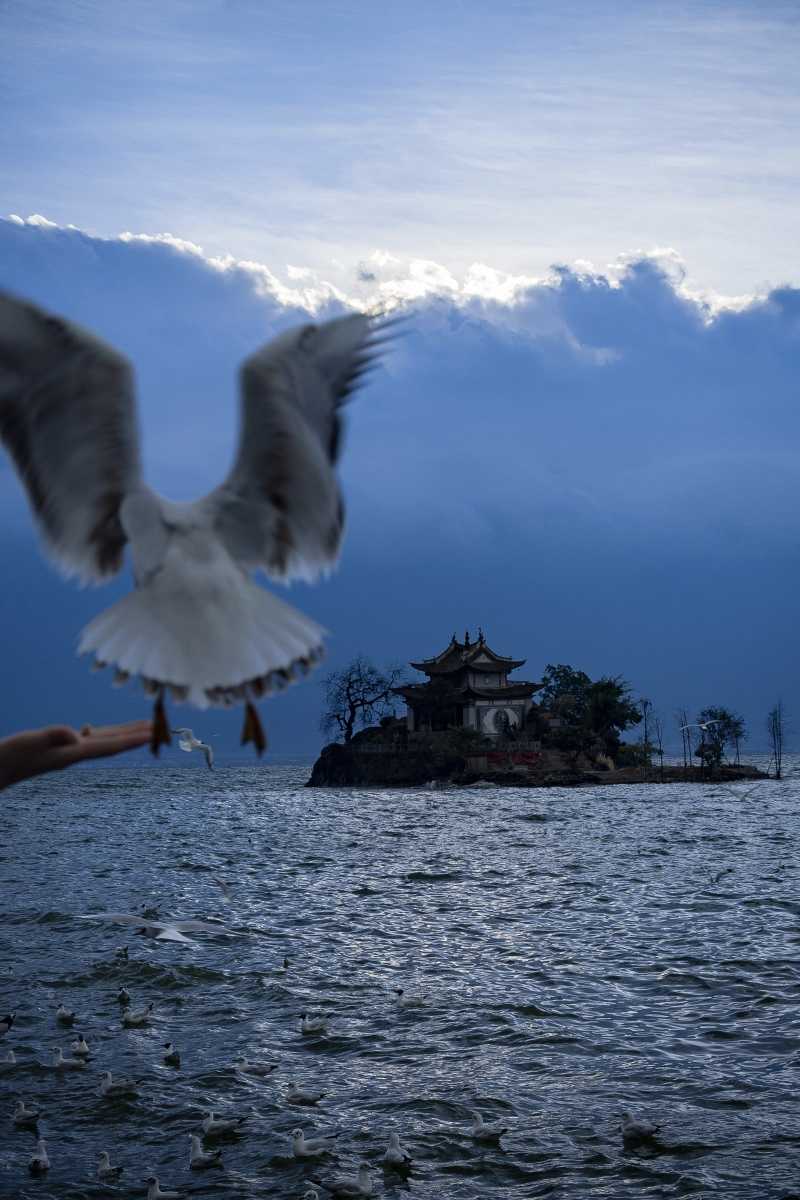
After touring the academy, a large flock of seagulls flew overhead, like a rehearsed orchestra playing the prelude to their return home in the sunset.
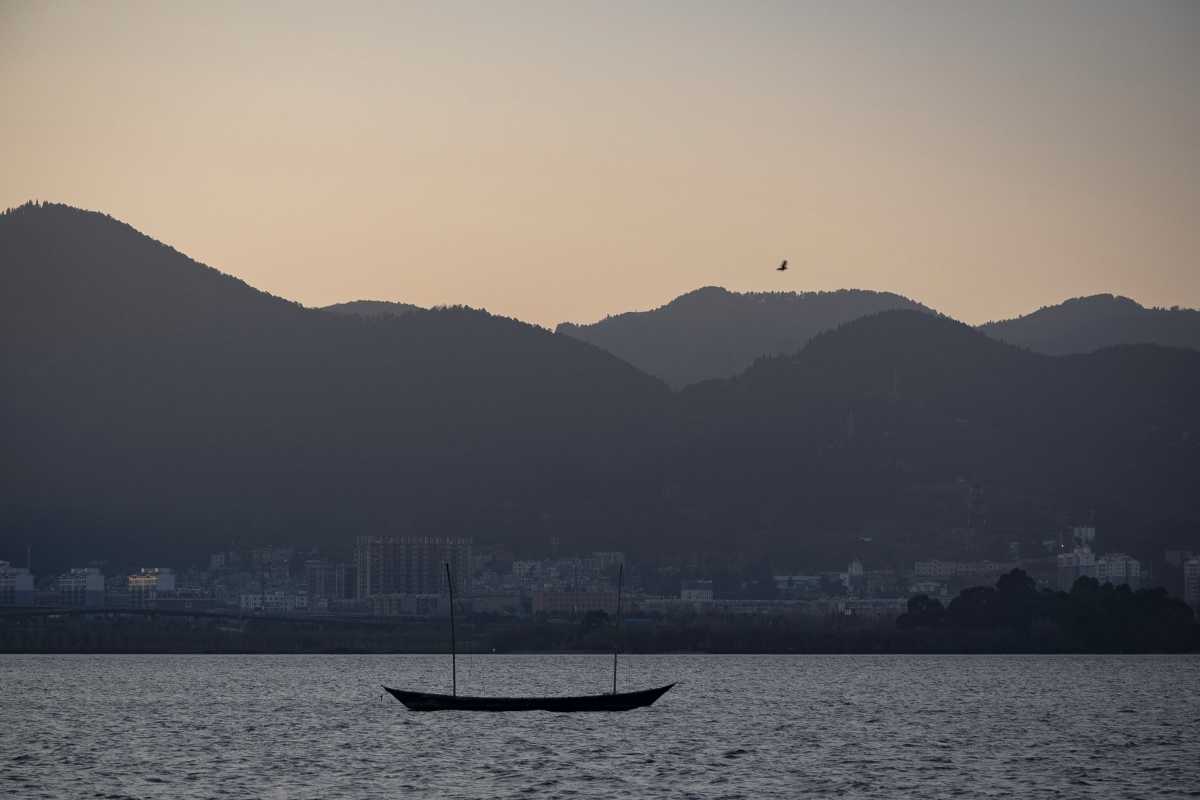
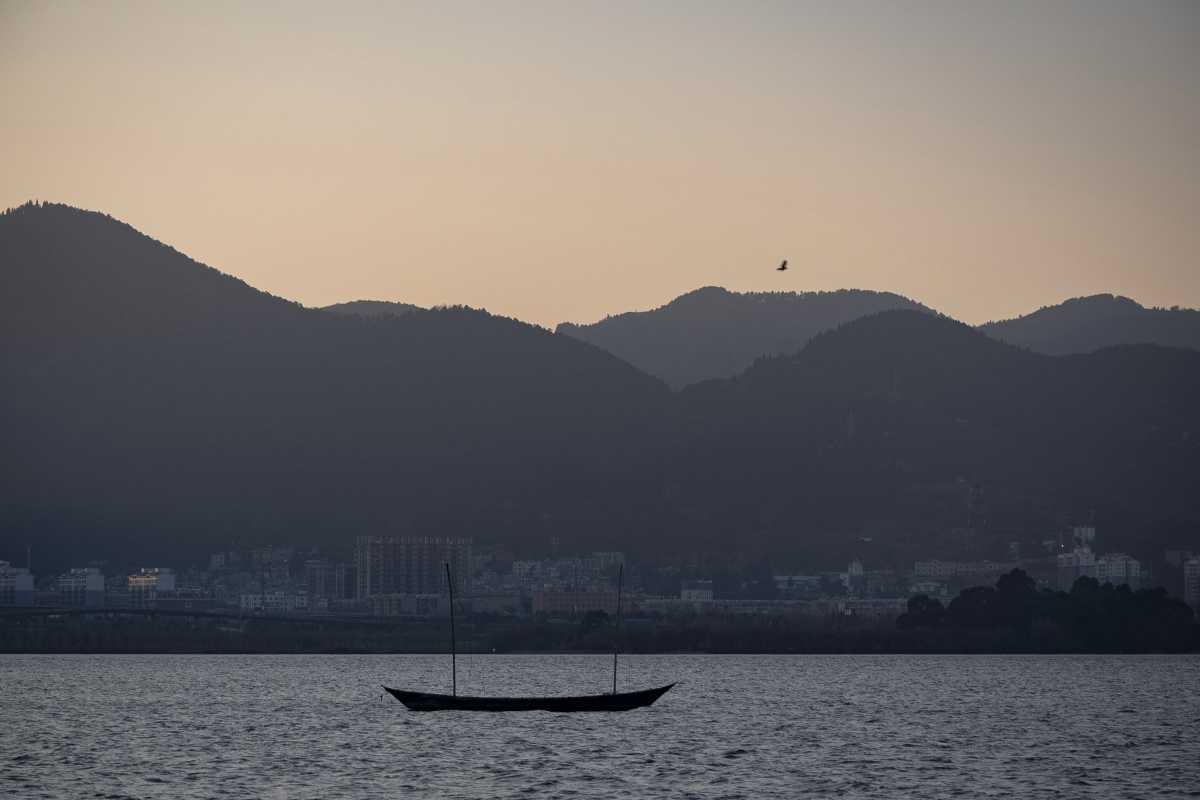
I took the subway to Haigeng Dam and walked 1.5 kilometers, passing a villa neighborhood where real flowers climbed the courtyard walls—Kunming truly is a Spring City, even its fences are romantically alive. The dam stretches 2.8 kilometers and offers the best view of Dianchi Lake. I walked along it, watching the sunset. The wind grew stronger, and the seagulls had all returned home—I didn't see a single one. At the end, I continued to Haigeng Park, where the wind was even fiercer and the waves more turbulent. Dianchi Lake looked vast and majestic in the twilight.
That evening, I visited Nanqiang Night Market and tried the famous Nanping Flavor Garden, a long-established local eatery. Their various potted snacks were sour, spicy, and aromatic—much like Kunming's character: straightforward yet gentle.
Day 2: Dali — Wind, Flowers, Snow, and Moonlight by Erhai Lake
From Kunming to Dali: Two Hours, Traversing a Millennium
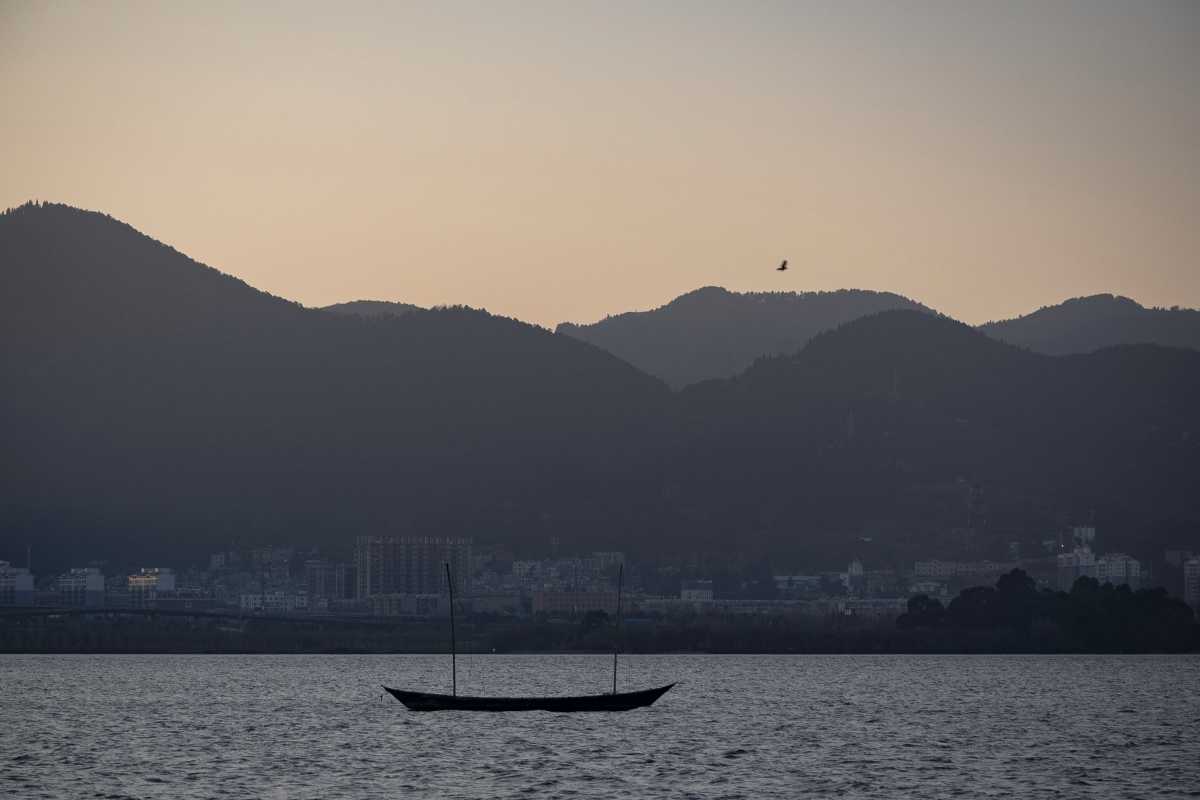
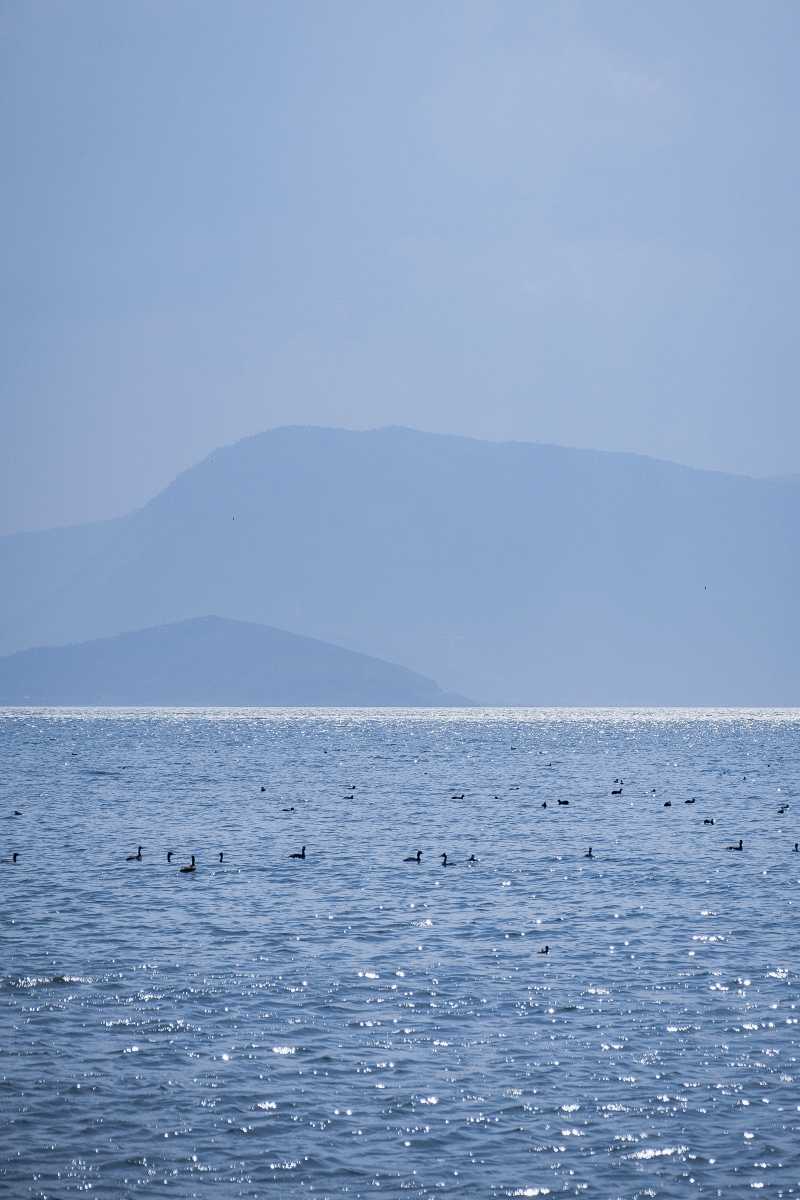
The bullet train from Kunming to Dali takes only two hours. Along the way, vast fields of rapeseed flowers were in full bloom, golden yellow like the earth's palette. When the silhouette of Cangshan Mountain appeared on the horizon, I knew Dali had arrived.
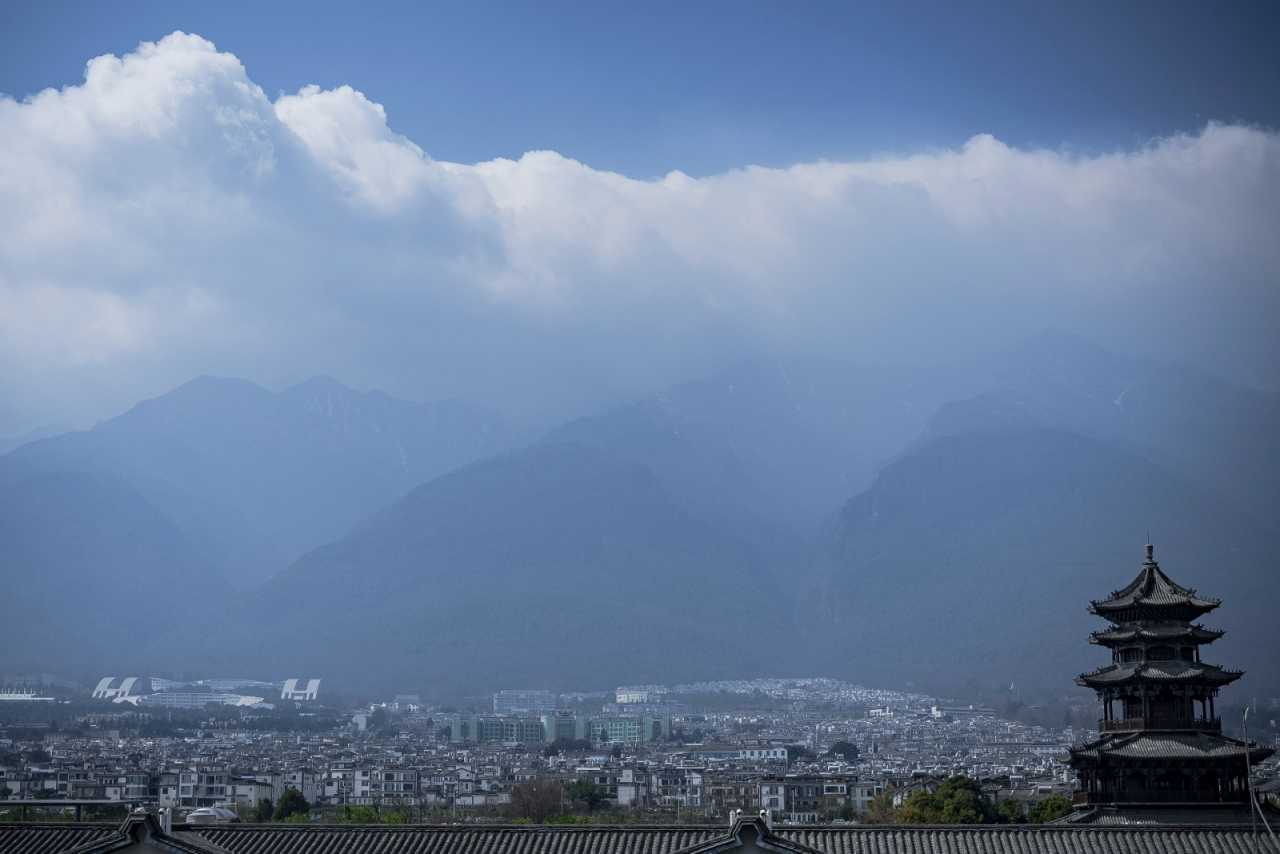
After getting off, I took a tourist bus to the South Gate of Dali Ancient City, about half an hour's ride. The guide on the bus introduced the attractions and shared tips to avoid tourist traps—she explained that Dali's famous "wind, flowers, snow, and moonlight" refer to the wind of Xiaguan, the flowers of Shangguan, the snow of Cangshan, and the moon over Erhai. I wondered how many of these I would actually see.
I booked a guesthouse near the South Gate, located in a villa area. Every courtyard had a blooming alpine rhododendron, and from my room, I could see Cangshan Mountain. Little did I know then that this would be the clearest view of Cangshan I would have over the next two days.
Shuanglang Ancient Town: Half Everyday Life, Half Erhai Lake
At one in the afternoon, I took a tourist bus to Shuanglang Ancient Town. Passing by the Three Pagodas of Chongsheng Temple—three pagodas arranged in an equilateral triangle, with the main "Qianxun Pagoda" standing 69.13 meters tall, one of the tallest ancient pagodas in Yunnan. They stood like three silent guardians watching over the land.
Shuanglang Ancient Town was much larger than I had imagined. Entering through the main gate, I walked along a long street, with small alleys branching off at intervals—each alley leading to Erhai Lake. I made a mistake: thinking I could explore the town in an hour or two, I only covered half of it before realizing the bus was about to depart. I sprinted all the way back and just managed to catch it—otherwise, the rest of my itinerary would have been ruined.
In Shuanglang, I tried "water-natured flower soup" (a local dish made from a water plant in Erhai Lake). The name sounds a bit suggestive, but it's actually a type of aquatic plant with a smooth, tender texture, like a cross between seaweed and okra. Over the following days, I ate it almost every day.
Xiaoputuo Island: Seagulls and Sunset, an Unexpected Romance
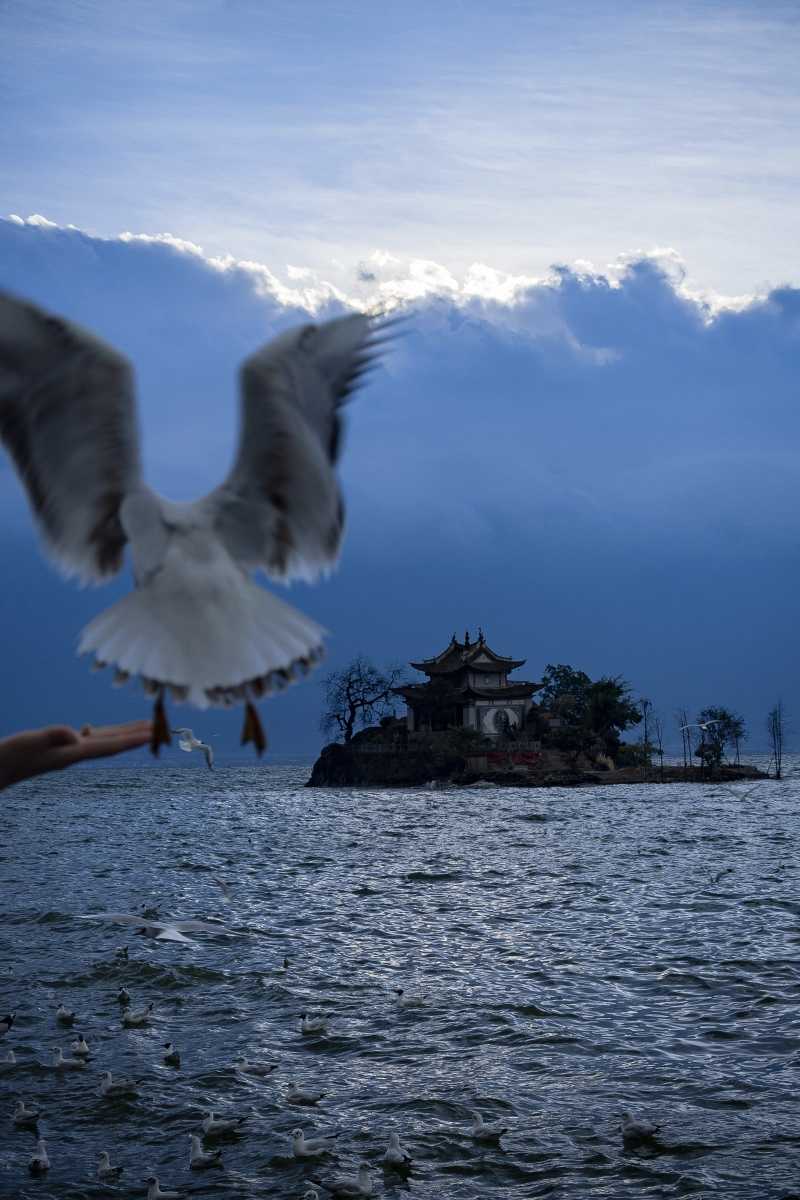
The drive from Shuanglang to Xiaoputuo Island normally takes half an hour, but due to traffic, it took an hour. Xiaoputuo is a small limestone island about twenty meters from the shore, with a Guanyin Pavilion on it. It's said that in the early morning, when mist hangs over the water, the pavilion looks like a fairy's abode.
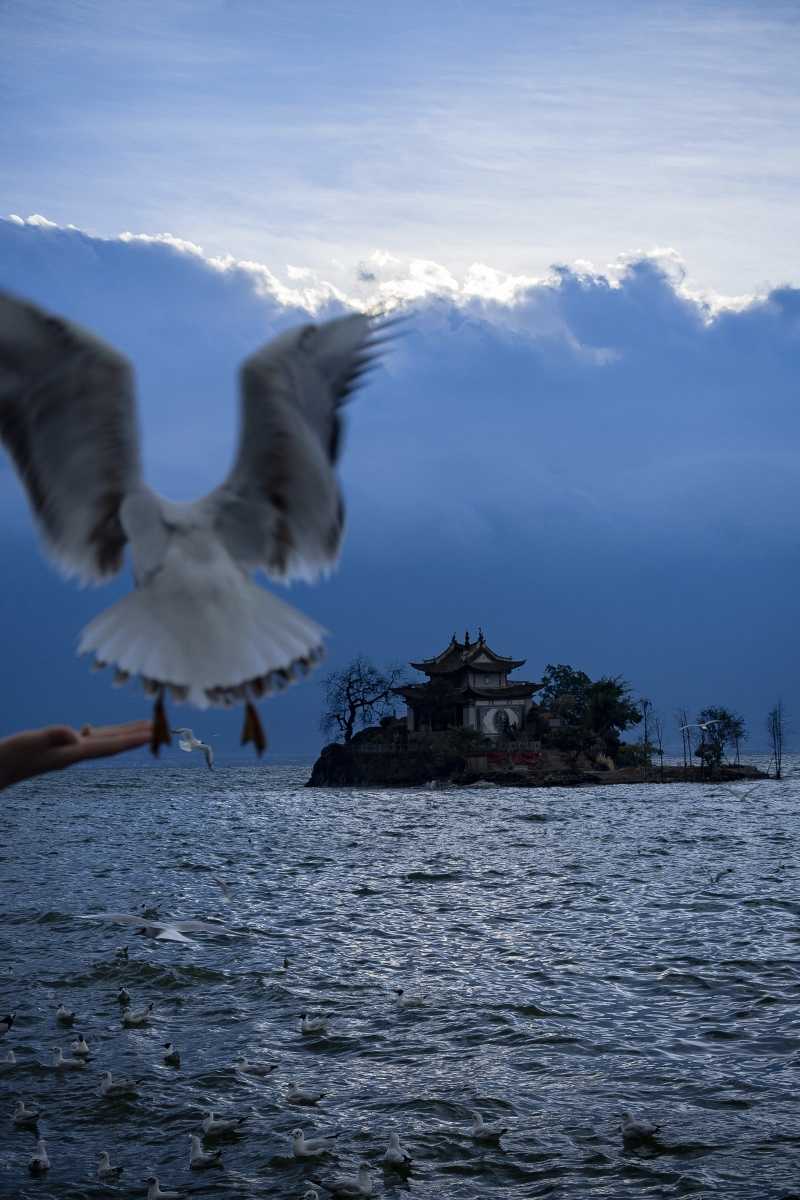
I arrived at dusk. Before the sun set, flocks of seagulls circled along the shore. I bought some feed and held out my hand—they weren't afraid of people and would even fly right up to snatch food from my palm. With Cangshan Mountain and Erhai Lake as the backdrop, the small island and pavilion standing alone in the lake, and seagulls soaring by, the scene was like a painting.
After dark, I took a sightseeing bus back to Dali Ancient City. Looking out the window, I felt as if I were on a cruise ship sailing across the lake. Erhai Lake is so vast, and the traffic was heavy—when touring Erhai, you must allow plenty of time for travel.
Dali Ancient City: Mushroom Hotpot and Night Scenes
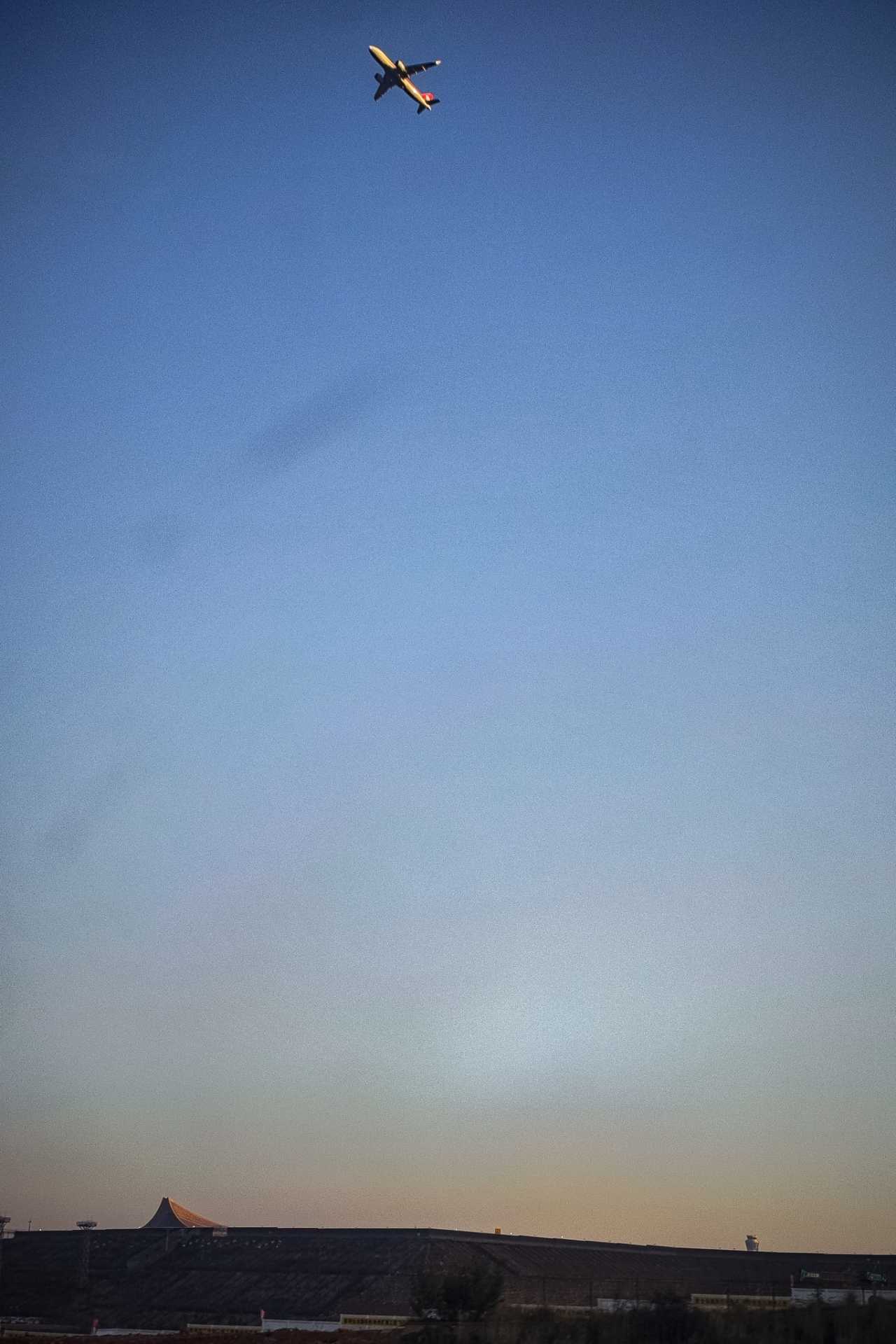
For dinner, I had mushroom hotpot. Since it was out of season, the mushrooms were all frozen and not as impressive as I had imagined, though the sour tamarind juice was quite refreshing. Afterward, I strolled through the ancient city. Dali Ancient City serves as a hub for tourism in the area, with most people heading out early and returning late. At night, the city lost its daytime bustle and gained a sense of tranquility.
Day 3: From Dali to Lijiang — From Erhai Lake to Jade Dragon Snow Mountain

Xizhou Ancient Town: Bai Ethnic Architecture and Xizhou Flatbread
I woke up early and went to the hotel rooftop to watch the clouds—true enough, they were thick, but there was a hint of dawn color on the horizon. After breakfast, I took a tourist bus to Xizhou Ancient Town.
Xizhou is located 18 kilometers north of Dali Ancient City, with Erhai Lake to the east and Cangshan Mountain to the west. The Bai ethnic residential buildings here are exceptionally well-preserved, mostly following the typical Bai courtyard layout of "three rooms with a screen wall" and "four courtyards with five skylights." Carved beams, painted rafters, overlapping brackets, and upturned eaves—every detail reflects the architectural talent of the Bai people.
The center of the town is Sifang Street, paved with stone slabs and lined with various shops. I tried authentic Xizhou flatbread—crispy on the outside and soft on the inside, somewhat like a northern Chinese baked flatbread but with a touch of sweetness. I also had grilled rice cakes and roasted milk fan (a dairy product made from cow's milk, crispy and fragrant after roasting, with a subtle milky flavor).
Haishe Park: The Soul of Erhai, the End of Romance
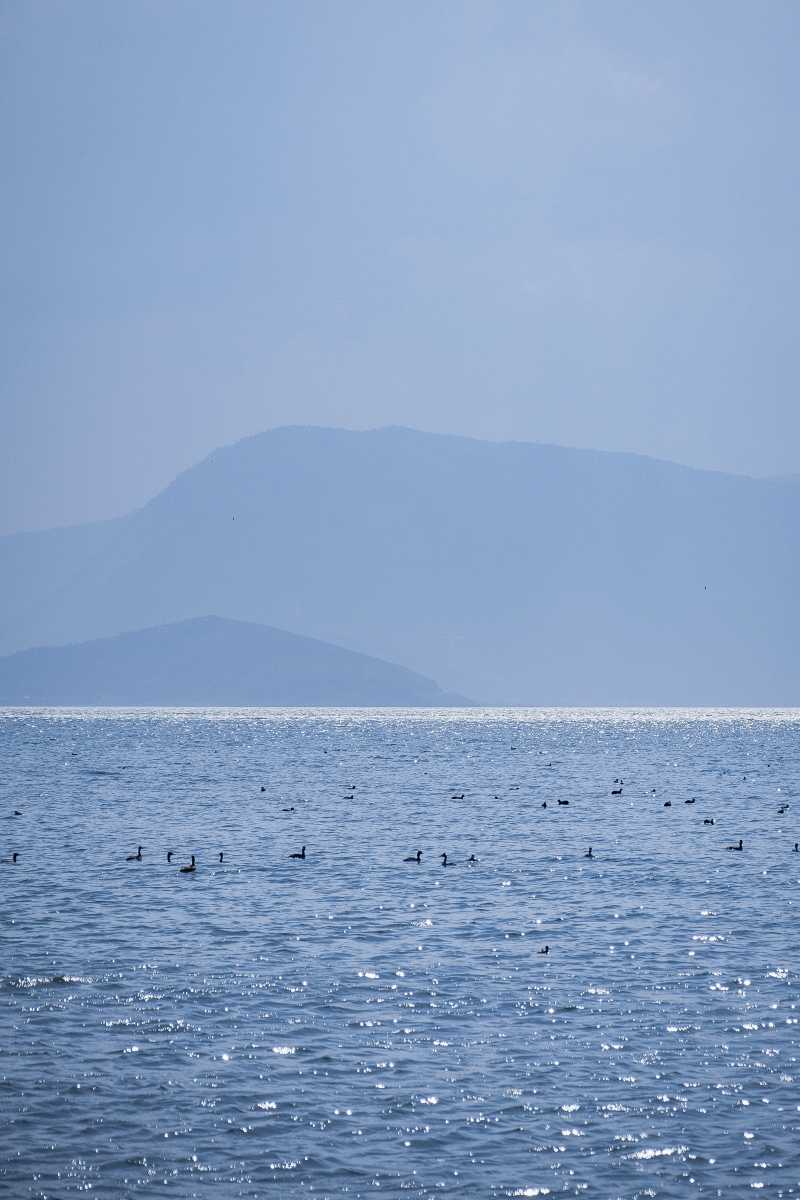
Haishe Park is located northeast of Xizhou Town. It is the only peninsula on Erhai Lake that allows you to "stand within the scenery while viewing it." The Wanhua Stream winds down from Cangshan Mountain and flows into Erhai here. Known as the "soul of Erhai," it is the best spot to watch the sunset over Cangshan and the moonrise over Erhai.
Walking from the Erhai ecological corridor to the entrance of Haishe Park is exactly 520 meters. From the entrance to the tip of the peninsula extending into the lake is exactly 1,314 meters—numbers that carry a romantic connotation. Standing at the tip, you can enjoy a 270-degree unobstructed view of Erhai Lake and the sky. It is said that only by visiting Haishe and experiencing the soul of Erhai from its tip can you truly feel no regret.
Yan's Grand Courtyard: The Century-Old Legacy of a Bai Merchant
Yan's Grand Courtyard was the residence of Yan Zizhen, founder of the "Yongchangxiang" trading company. Built in 1907, it has 103 rooms covering an area of 2,478 square meters. The architecture is primarily in the traditional Bai style, with some Han influences. The most striking features are the wall murals and wood carvings—every corner exudes artistry.
Yan Zizhen was a wealthy Bai merchant during the Republic of China era, with his business empire spanning across China and Southeast Asia. Yan's Grand Courtyard bears witness to the glorious history of a family and reflects the social, economic, and cultural conditions of Yunnan at the time.
From Dali to Lijiang: Shared Car Is Smarter Than the Bullet Train
At four-thirty in the afternoon, I canceled my bullet train ticket from Dali to Lijiang and opted for a shared car via the expressway instead. The guesthouse owner in Lijiang was right: taking the train meant wasting too much time going to and from the station, while a shared car could pick me up directly from my hotel—more convenient and reasonably priced.
The drive took about three hours. Along the way, the scenery shifted from the gentle beauty of Erhai Lake to the majestic grandeur of Lijiang. By the time I arrived at the North Gate of Lijiang Ancient City, it was already dark.
Day 4: Shangri-La — A Snowy Hidden Realm
Songzanlin Monastery: The Majesty of the "Little Potala Palace"
The drive from Lijiang to Shangri-La took about three hours. Along the way, the weather changed from cloudy to overcast, and eventually, it began to snow. By the time I reached Songzanlin Monastery, the snowflakes were already large and heavy.
Songzanlin is the largest Tibetan Buddhist monastery in Yunnan, often called the "Little Potala Palace." Built on a hillside, its golden roofs gleamed through the falling snow. Stepping inside, the air was filled with the scent of butter tea and Tibetan incense. Monks in red robes walked through the snow, like a living painting.
Dukezong Ancient Town: The Prayer Wheel and Guishan Park
Dukezong Ancient Town is the heart of Shangri-La and one of the best-preserved and largest Tibetan residential communities in China. Within the town, Guishan Park houses a giant prayer wheel—reportedly requiring over a dozen people to turn it. I joined a group and spun it three times, silently making wishes.
The snow fell heavier, making the stone streets slippery. I ducked into a Tibetan teahouse for a cup of butter tea to warm myself. Outside, snowflakes swirled, and the ancient town looked extraordinarily serene in the white blanket.
Day 5: Lijiang — The Four Seasons of Jade Dragon Snow Mountain
Jade Dragon Snow Mountain: Yak Meadow, Spruce Meadow, and Blue Moon Valley
Jade Dragon Snow Mountain is the symbol of Lijiang and the highlight of this trip. I chose three routes: Yak Meadow, Spruce Meadow, and Blue Moon Valley.
Yak Meadow, at an altitude of 3,700 meters, offers the best view of the snow mountain. Standing there, the peak seemed close enough to touch. Spruce Meadow is a high-altitude meadow surrounded by dense spruce forests, like a green ocean. The water in Blue Moon Valley is a turquoise blue, crystal clear, like a giant piece of jade.
Sunshine on the Golden Mountain: A Miracle at Black Dragon Pool
At six in the morning, I rushed to Black Dragon Pool to wait for the sunrise over the snow mountain. The sky was still dark, but the pool's edge was already crowded with photography enthusiasts. At six-thirty, the first rays of sunlight hit Jade Dragon Snow Mountain. The peaks shifted from dark red to golden, then finally to dazzling white—the entire process lasted only a few minutes, but it was enough to leave a lifetime impression.
Day 6: Baisha Ancient Town — Murals and Time
Baisha Ancient Town: The Roots of Lijiang
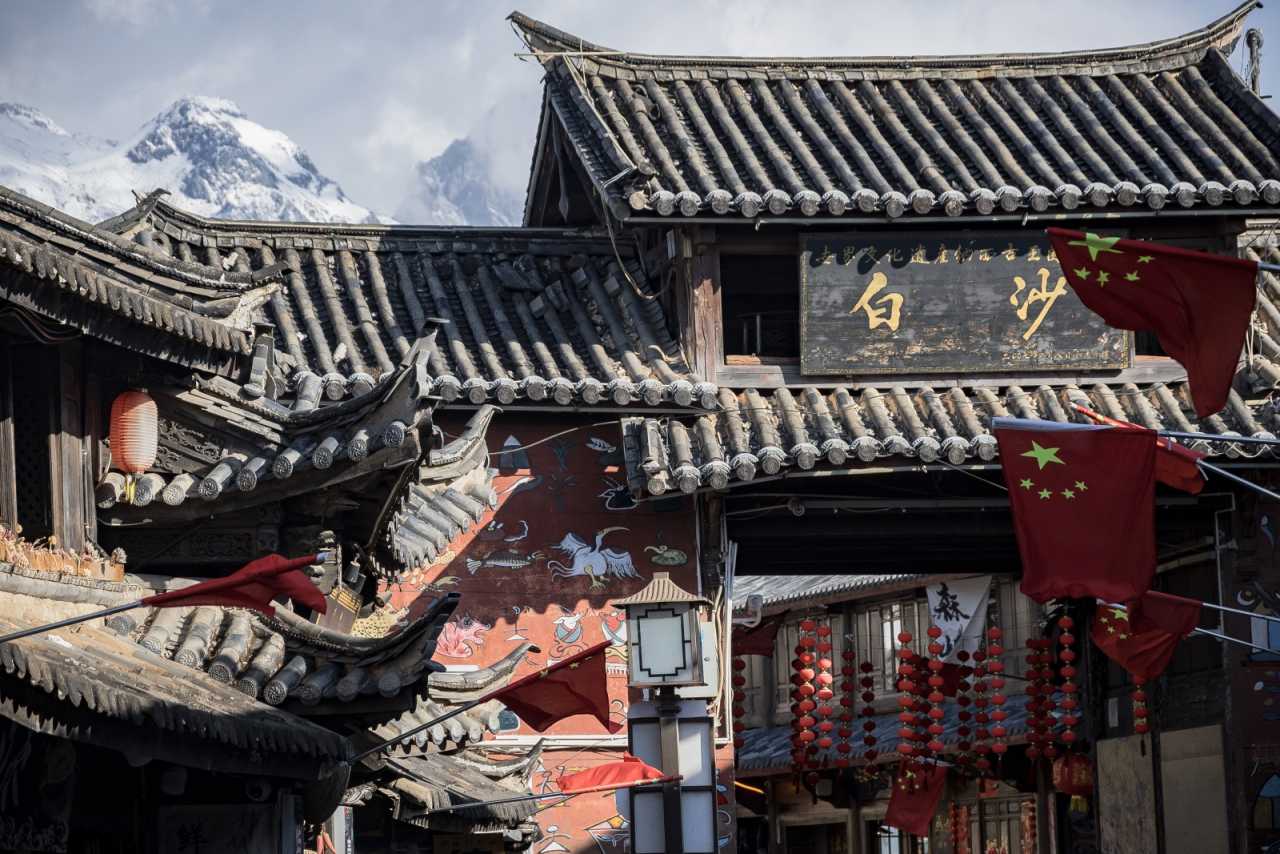
Baisha is the oldest ancient town in Lijiang and the birthplace of Naxi culture. Unlike the bustling Dayan Ancient City, Baisha is quieter and more古朴 (ancient and unadorned). The Baisha Murals Museum, recently restored and reopened, houses the murals of Dabaoji Palace, which took four years to restore. The colors remain vibrant, the lines still fluid. These murals blend Han, Tibetan, and Naxi painting styles and are considered cultural treasures of Lijiang.
Departure: Carrying Memories Home
In the afternoon, I departed from Lijiang Sanyi Airport. As the plane took off, I looked out the window one last time at Jade Dragon Snow Mountain. It stood there silently, like a guardian watching over this land and its people.
Final Thoughts: Some Practical Tips
- About the weather: Yunnan's weather is unpredictable; forecasts are for reference only. Bring clothes for all four seasons, and sunscreen and rain gear are essential.
- About transportation: Shared cars between Dali and Lijiang are more convenient than the bullet train—they pick you up and drop you off at your hotel, and the price is reasonable.
- About touring Erhai Lake: The sightseeing bus around Erhai is convenient, but be sure to book in advance and allow plenty of travel time—Erhai is huge, and traffic jams are common.
- About food: Water-natured flower soup, Xizhou flatbread, roasted milk fan, and mushroom hotpot—each one is worth trying.
- About altitude sickness: Jade Dragon Snow Mountain and Shangri-La are at high altitudes. Prepare oxygen canisters and medication in advance, and take it slow to acclimatize.
This trip to Yunnan taught me one thing: some landscapes can only be truly appreciated when seen with your own eyes. And Yunnan is exactly that kind of place—it won't let you down; it will only leave you longing for more.
You should also read:

Into the Hidden Valley: A Solo Journey Through the Mysterious Dulong River
Into the Hidden Valley: A Solo Journey Through the Mysterious Dulong River Deep in the northwestern corner of Yunnan Province, tucked away from the modern world, lies a place that feels like a secret whispered among mountains. The Dulong River Valley is not just a…
Continue reading...
God’s Abandoned Palette: A Self-Drive Journey Through Yunnan’s Dongchuan Red Land
God’s Abandoned Palette: A Self-Drive Journey Through Yunnan’s Dongchuan Red Land Travel has never been about reaching some distant geographic coordinate. It’s about encountering, along the way, the version of yourself buried beneath the rubble of daily routine. During this May Day holiday, I finally…
Continue reading...
Body in Hell, Heart in Heaven: A Pilgrimage Through Tiger Leaping Gorge — A Dialogue Between Heaven and Earth
Body in Hell, Heart in Heaven: A Pilgrimage Through Tiger Leaping Gorge — A Dialogue Between Heaven and Earth Introduction: When the Gorge Splits Open Beneath Your Feet Some say Tiger Leaping Gorge is the closest place on Earth to the border between "hell" and…
Continue reading...