Slow Sounds, Gentle Steps: My Wandering Journey Through Lijiang
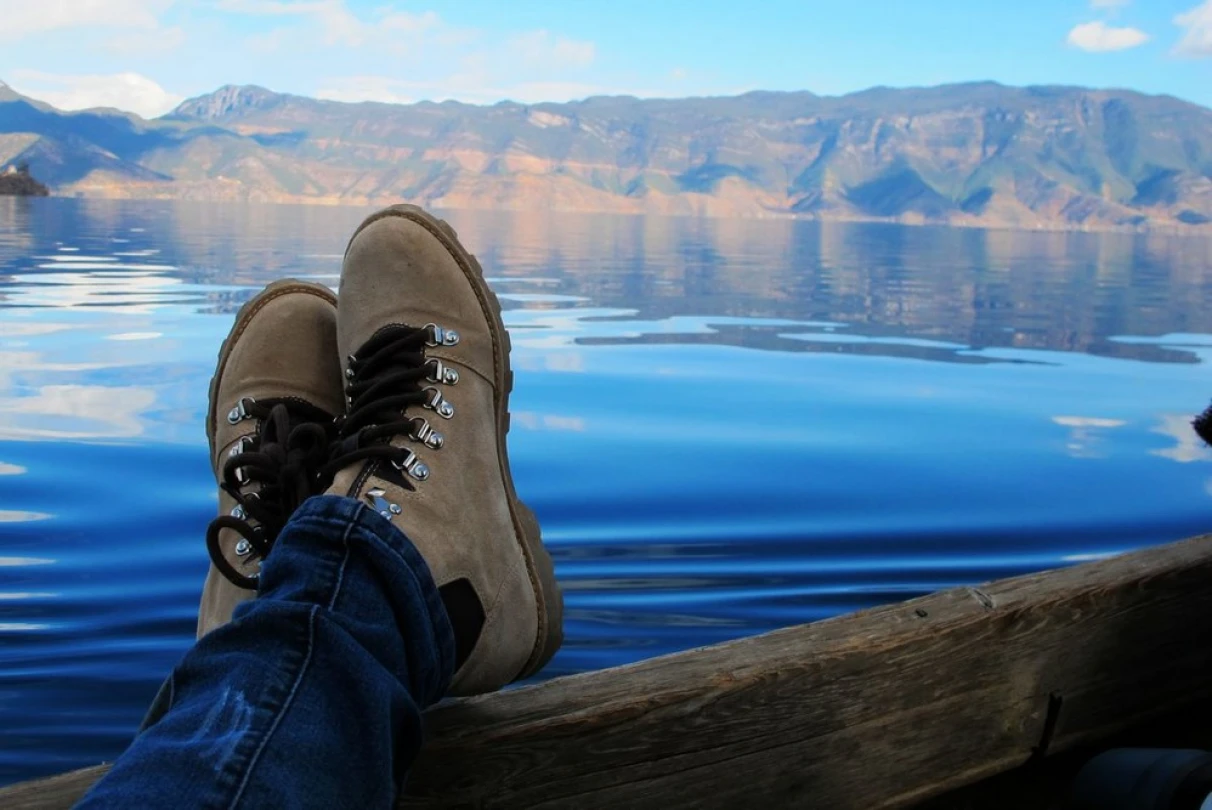
Slow Sounds, Gentle Steps: My Wandering Journey Through Lijiang
Prologue: A Spontaneous "Red-Eye" Escape
Some journeys begin just like Lijiang itself—with a touch of spontaneity and a hint of laziness. Late one Sunday night, I was scrolling through my phone while lying in bed when a sudden thought flashed through my mind—let's go to Lijiang. The next morning, I charged into the office like I'd been injected with adrenaline, burning through three days of work with feverish intensity while my heart had already flown off to the land "South of the Colorful Clouds." When my colleagues asked about my weekend plans, I smiled and said: "Today's a great day—I can handle anything you throw at me. Tomorrow's an even better day—whoever calls me, I'm turning off my phone!"
And so, I embarked on my "red-eye flight" journey from Beijing to Chengdu, and then from Chengdu to Lijiang. During that brief layover in Chengdu, I dragged my bloodshot eyes to a street-side skewer restaurant and devoured a feast of chuan chuan xiang (skewers boiled in spicy broth). The next morning, with eyes now turning green from exhaustion, I landed in Lijiang. With the Spring Festival approaching, I imagine many of you are also planning a trip to this ancient town, so I decided to document this experience in detail, hoping it might serve as a useful reference for your own journey.
Before setting off, I put together an "essential checklist" for your reference:
- Hat, thin gloves, UV-protective sunglasses, oversized scarf, lightweight backpack, comfortable walking shoes
- Sunscreen, sheet masks, basic skincare products, toothbrush and toothpaste (some inns don't provide them), portable water bottle
- A high-quality suitcase—those cobblestone streets are the "killer" of wheels
Special reminder: The UV rays in Lijiang are extremely intense. If you have a history of allergies, be extra careful. By the third day, my face was "ruined"—red, swollen, and covered in bumps. It's also incredibly dry here, so hydration needs to come from both inside and out.
Chapter One: Starting from a Fairy Tale
First Glimpse of the Ancient Town—Everything Slows Down

Just after eight in the morning, the plane touched down smoothly at Lijiang Sanyi Airport. The flight from Chengdu to Lijiang was only 50 minutes—barely enough time to finish the small bread roll handed out by the flight attendants before the young woman's soft voice announced, "We will arrive in Lijiang in 20 minutes." I joked that I had "flown by plane" to get here—if you laughed at that, you're definitely not a pure-minded person!
Before the trip, I booked an inn through Mafengwo (a Chinese travel platform). The inn arranged a minivan to pick us up—it's about 50 kilometers from the airport to Dayan Ancient Town, and there's currently no direct airport bus. So for two or more people, chartering a car directly for 80 yuan to Dayan or Shuhe Ancient Town is a wise choice. The female driver enthusiastically introduced Lijiang's local customs and scenery along the way. Even though my eyes were green from exhaustion, seeing the mountains, waters, and local life along the route turned all my fatigue into floating clouds.
The minivan dropped us off at the nearest intersection to our inn, where a young man from the inn was already waiting at the alley entrance. Although it was past nine in the morning, there was hardly anyone to be seen in the ancient town. We dragged our suitcases over the bumpy cobblestone streets, making a "clatter-clatter" sound that broke the town's tranquility—I wonder how many people still asleep cursed us under their breath. The young man settled us into our room, advised us to rest well, and then yawned as he took his leave. Ah, Lijiang—you lazy place!
Twilight City: A Room with a Story
Our room had a romantic name—"Twilight City." I'm not a fan of the Twilight series; in fact, I think it's the most pretentious vampire movie franchise out there. But I fell in love with this room's large wooden bed, the tatami seating area, and a terrace where you could bask in the sun. Most inns in Dayan and Shuhe follow this "folk charm meets petty bourgeoisie" style, with well-equipped rooms costing between 200-400 yuan during the off-season. This inn wasn't exactly cheap, but I was thoroughly satisfied with the details—when you're on vacation, a woman should treat herself well!
Please note: This is not an advertisement post, really, it's not. Every person, every scene, every object in this inn has been etched into my memory along with my Lijiang experience.
Lijiang mornings are still a bit chilly. I wrapped myself up like a zongzi (sticky rice dumpling) and sat cross-legged on the bed "preserving warmth." Only later did I discover that the bed had an electric blanket, the room had an electric heater, and on the bedside table there was a humidifier and a pot of delicious Pu'er tea! Turns out, escaping poverty and achieving comfort—everything requires a bit of "discovery."
The terrace also had a seating area perfect for sunbathing, drinking tea, and piling up all sorts of things—very cozy. Downstairs in the small courtyard, guests who weren't afraid of the cold could sit in the sun and brew tea—all complimentary.
Let me also introduce a new friend—"Chubby White." This was a "surprise" my wife painstakingly prepared to avoid getting scolded for buying it. Before the trip, she kept mentioning the 70-300mm "bull-head" lens, and I of course dismissed it: Want to buy it? Go sell some blood yourself! Then, when we got to T3 Airport, she held up a bag with a sly grin and said, "For you to photograph the snowy mountains and the birds." Holy crap! Chubby White! Wife, to avoid my nagging, criticism, obstruction, and tantrums, you really went all out!
After resting in the room for a while, it was past noon with the sun high overhead, and my stomach was growling. Xiao Ke—the young man I mentioned earlier—marked several good restaurants on a map for us. I diligently noted them down and quickly dragged my wife off to find food.
Chapter Two: The Starving Ghost Goes Out
Since the green-eye flight started at 5 AM, besides that tiny bread roll that disintegrated at a touch on the plane, my stomach had only Pu'er tea scraping the oil from its walls. By past noon, I was ferociously hungry.
Xiao Ke recommended a restaurant called "Chef's Home Cooking" (Chu Niang Si Fang Cai), specializing in Naxi home-style dishes. I was too hungry to care about appearances anymore—each dish was wiped out as soon as it arrived. By the time I remembered to take photos, the first three dishes had already "fallen in battle," and the fourth was "charging into the fray." The braised fish and cured pork ribs were nothing but remnants, with only the oily soy-braised eggplant representing Naxi cuisine, waving hello to the audience.
I know the photos aren't convincing, but I honestly couldn't get used to Naxi food. However, besides those four dishes, my wife and I finished an entire bucket of rice—three bowls each, three bowls, bowls... Rice buckets! The waitress who brought the dishes was astonished: What are you looking at? Do I have "rice bucket" carved on my forehead?
Getting sleepy after a full meal is the absolute truth. For the first time, I experienced Lijiang's sunlight up close—warm and soft. Through half-closed eyes, I caught a glimpse of the restaurant staff downstairs sneaking a look at me, probably because the legend of the "rice bucket" had already shocked everyone. That look must have been approving, because I could hear his inner voice exclaiming: "Miss! You're really something!"
Chapter Three: First Encounter with Lijiang
"Walk slower, I ate a bit too much... burp..."
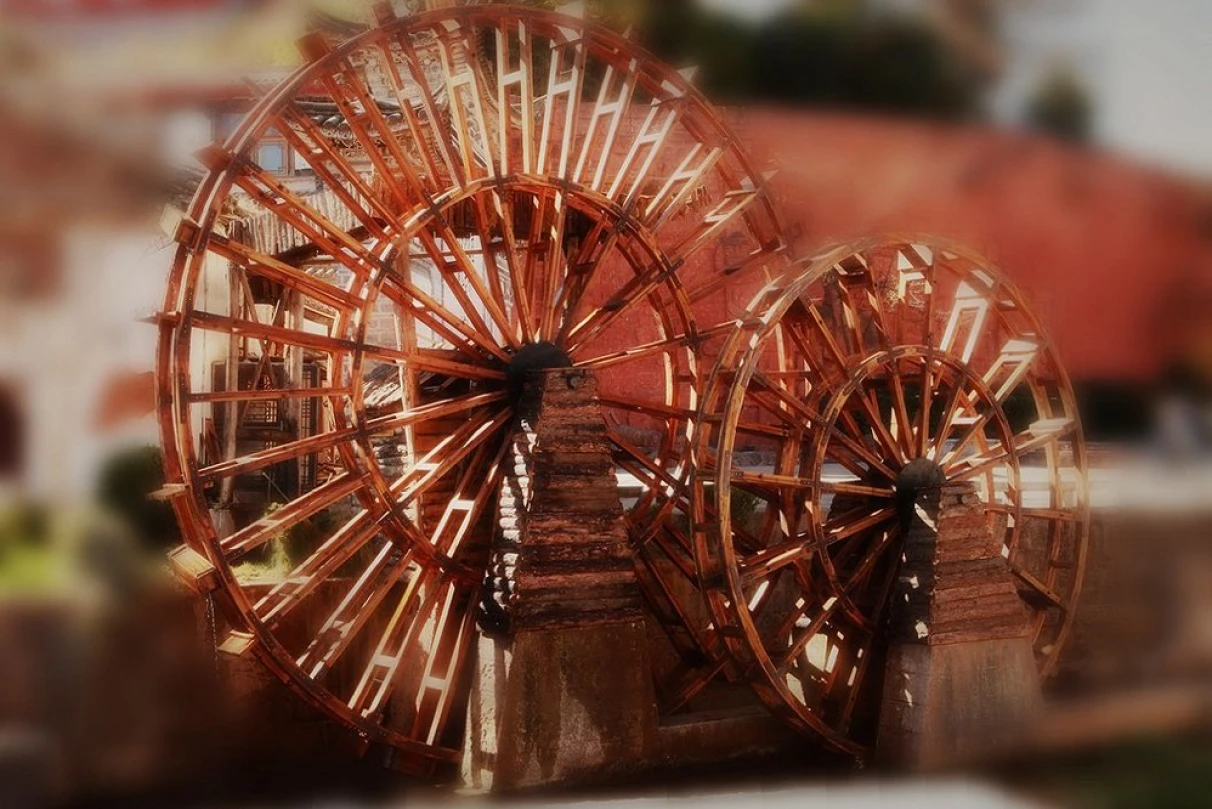
We strolled leisurely to the Big Waterwheel—two large wooden wheels, Lijiang's iconic image. But seriously, some people just have to leave their mark everywhere they go. Why can't you learn from the wandering poets and write something artistic? Scribbling plain words on plain white walls—what's the point?
The Big Waterwheel area was bustling with activity—mythical beasts, sacred eagles, divine horses, all present. To the north of the ancient town was Jade Dragon Snow Mountain, surprisingly close. After the summer and autumn sun exposure, only a little snow remained. When we got tired, we found a step to sit on and let out a satisfied burp. The sun made my big face feel warm, so I quickly geared up fully—this sunburn, you won't realize its severity until evening. Every day after that, my big face was red and painful from the sun.
The water quality in Lijiang is exceptionally good—cool and clear. When we reached Sifang Street (Square Street), folk music filled the air, and villagers dressed in ethnic costumes were singing and dancing. Dancing is my weakest skill, but I love shamelessly challenging my shortcomings—what's there to fear? No stage is too big for me to command! My feet stumbled, my elbows seemed to spasm—I looked like I was pumping air into a bicycle tire. The elderly woman carrying her grandchild nearby—was it really necessary to keep glancing at me just because I danced so badly?
Wandering Alleys, Burning Buns and Bottles
Aside from the peaceful atmosphere before ten o'clock, Dayan Ancient Town is a lively commercial street. Shops are everywhere, and although it's heavily commercialized, it's still endearing. Passing by a clothing store, the shop's guardian beast—a dog—rushed out and threw itself into my arms, giving me an enthusiastic lick—your cute act really reminds me of my younger days.
Lijiang Ancient Town is a place that's cute, petty-bourgeois, commercial, and decadent all at once. Any spot facing an alley is bound to have some kind of storefront. If you didn't have time to stock up on gear at home, don't worry—Lijiang has everything. On Minzhu Road, north of Dayan Ancient Town, there are rows of shopping malls, supermarkets, markets, and brand-name stores: Columbia, Jack Wolfskin, Nike, Adidas—you name it, with a good selection, both new and old styles on discount, even cheaper than in Beijing! Even mass-market brands like Baleno and Jack & Jones are available. I bought a tacky Nike bag, picked up sunscreen from a mall, found a nail clipper at the market, and my wife chose a dog-paw hat.
Two songs play on repeat in Lijiang's streets—Di Da (Tick Tock) and Yi Shun Jian (A Moment). The first time you hear them, they sound like heavenly music, stirring my restless heartstrings; but after hearing them ten times within half a day, you'll demote them to the ranks of Love Trade (a notoriously cheesy Chinese pop song). Then suddenly, a guitar chord rang out—a masculine-voiced singer sat on a sun-drenched balcony belting out a song, and I stopped, captivated, looking up at him with shameless admiration. There were also places where my wife stopped, equally captivated—so embarrassing!
After walking all afternoon, we stopped to rest at "A'an Desserts" (A'an Tian Pin). Their yogurt is particularly delicious—every day in Lijiang, I would stop by for a bowl and pack another to go. I highly recommend the fruit yogurt—10 yuan a bowl, and the amount of fruit is shocking! By the day before we left, I had consumed a total of 16 cups of yogurt from A'an's! And it's so thick—how dare they call it yogurt?
Back at the inn, I sat on the terrace, quietly enjoying that "one meter of sunlight" with a cup of fragrant tea. But as good as the sun is, don't overindulge—by the third day, I had a full-blown allergic reaction: bumps of all sizes on my face, redness everywhere, and mysterious swelling!
Chapter Four: The Ancient Town at Night
The ancient town at night is a completely different world from the ancient town at dawn. Night had fallen, yet crowds were bustling, with lights and wine everywhere. In Lijiang, scarves aren't worn around your neck—they're draped over your shoulders. Big Yuanyuan (my nickname) demonstrates personally—please hold back your eggs and tomatoes!
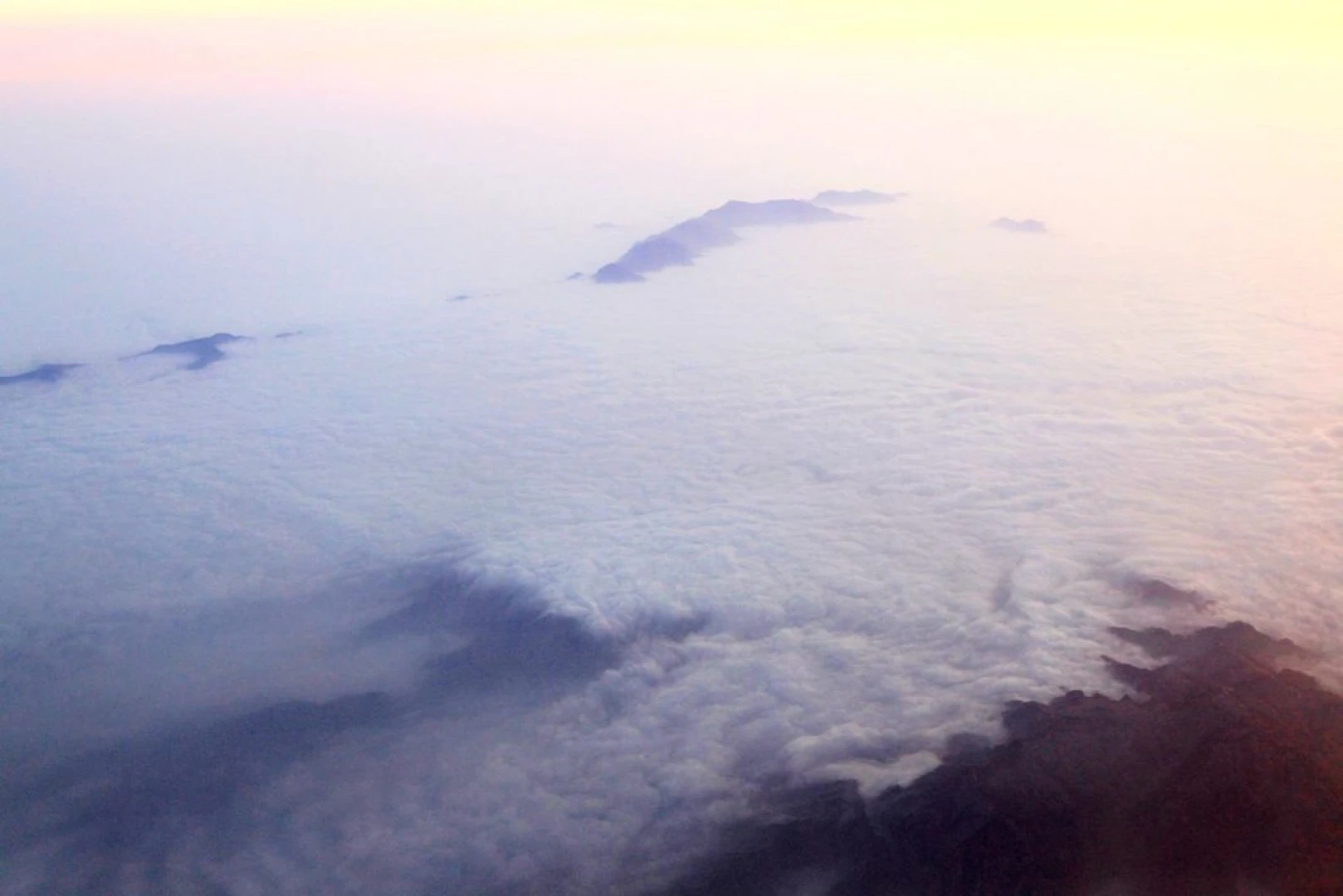
The view from Lion Hill at night was quite spectacular. By candlelight, even my fierce-looking face was softened. At the entrance to Guanmen (the Gate Pass), we encountered a stone lion with enormous nostrils. Lion: "Who are you?" Big Yuanyuan: "Your sister!" Lion: "Damn, your sister..."
The ancient alleys were filled with various trinkets that were overwhelming. We went to a famous bar called "Encounter" (Jian Yu), but since it was New Year's, the bar was hosting a music festival and there wasn't even standing room, so we had to leave dejectedly. Feeling down, I started "busking" by the small river—no paper money or coins came my way, but thankfully no eggs or stones either.
After the dinner rush, we found a place to eat. The greasiness from lunch hadn't worn off yet, so I specifically asked the staff to go light on oil and salt, and the food was finally palatable. Although there were no famous singers performing, two young guys sang with great effort. The riverside restaurant had an elegant atmosphere, though the prices weren't cheap—you're paying for the ambiance. Christmas had just passed, and the New Year's atmosphere was thick. The restaurant had singers performing, but it also had a quiet and refined side.
Chapter Five: Mu Palace, the Friendly Naxi People
We didn't get out of bed until noon the next day. My wife's friend in Lijiang treated us to a meal as a gesture of hospitality. Since we weren't familiar with each other, even though the table was full of delicious food that made my mouth water, I had to force myself to act ladylike and speak gracefully. The friend recommended a good fish restaurant called "Long Ji" (Dragon Success), which I made a mental note to visit.
We went back to the inn to grab the camera, ready to head to Mu Palace—which is actually inside Dayan Ancient Town. But we still got lost. We asked two Naxi children for directions, and they were practically willing to personally escort us there. Mu Palace is the palace of the Naxi "local emperor," with enthusiastic young Naxi men providing free guided tours. The official ticket price is 60 yuan, 30 yuan through the inn, and 40 yuan from scalpers outside the gate. I quite liked this place—behind the noisy commercial streets of Lijiang lies the quiet Mu Palace, telling the story of Naxi culture.
The relationship between the Naxi people and the Han Chinese has been harmonious from ancient times to the present. All Naxi people have Han-style surnames; the surname "Mu" (木) was bestowed upon the Naxi chieftain by a Ming Dynasty emperor. "Mu" originates from "Zhu" (朱), said to be the "backbone" of the character "Zhu." Every Naxi friend I met afterward was incredibly friendly and genuine.
Inside Mu Palace, you must not step on the wooden thresholds—wood represents the "head" of the local emperor! Walking frequently in Mu Palace, how could you avoid "exposure"? Oh, and Naxi culture greatly respects women—the phoenix is above the dragon—how progressive! Wait, did I just time-travel?
Coincidentally, the TV series Mu Palace Storm (Mu Fu Feng Yun) was filming inside. Extras were running around everywhere. Wasn't that Lin Pinye (a famous actress) sleeping over there? Jackpot! I even managed to snap a candid photo of actress Choo Ja-hyun.
There was a Taoist temple on the back hill. Because the Ming Dynasty revered Taoism, a Taoist temple was built within Mu Palace. The temple itself is real, but the "monks" inside are a different story. Our lovely guide advised us not to go in unless necessary—even if you had problems, these fake monks couldn't help you. But if you made an excuse about not being able to donate incense money, they could magically pull out a POS machine for you to swipe your card.
Legend has it that Comrade Li Ruihuan once said, "In the north there is the Forbidden City, in the south there is Mu Palace." Well, okay, okay, okay. Every scene and object in Mu Palace, though simple, is meticulous. Naxi culture and Han culture "hybridized in a dubious manner" within Mu Palace culture—or rather, let's say "merged and passed down" for propriety's sake. From the heights of Mu Palace, you can overlook the entire Dayan Ancient Town.
In the evening, we kept our appointment with "Long Ji." Big black fish, 38 yuan per jin (half a kilogram), with 5 complimentary side dishes and a plate of pickled radish. The fish slices were tender and smooth, the skin crisp and chewy. For just over 100 yuan, the two of us ate until we were warm and full, and then started thinking about other pleasures.
Chapter Six: No Luck with Jade Dragon, Drowning in a Vinegar Jar
We booked a small group tour to Jade Dragon Snow Mountain through the inn, including round-trip transportation, entrance fees, and cable car—300 yuan per person. I'm not sure how the price compares, but booking through the inn gave me peace of mind. From my first day in Lijiang, I had developed a good impression of the people here, and I was very satisfied with our inn.
We set off just after eight in the morning. Since the ancient town's roads are treacherous and getting lost is perfectly normal, the young guide came to pick us up at our door. We were led onto a minivan, picked up a young couple, and headed toward Jade Dragon. It only takes about half an hour by car from Dayan to Jade Dragon Snow Mountain, and the mountain was always right in front of us. I whispered to my wife: "Seriously, after visiting Tibet, every snow mountain looks like a little hill—not impressive at all." As the saying goes—show off and you'll get struck by lightning. The young guide answered a phone call and passed a bolt from the blue to everyone: "Strong winds today—the cable car is closed. Wait here for 30 minutes. If the wind gets stronger, we'll turn back."
I was utterly disheveled in the strong wind—my curls from the night before were a complete mess in the gale. Even worse, I had paid the Ancient Town Maintenance Fee for both of us! 160 yuan! I silently chanted: "Dragon, I was wrong, forgive me; Dragon, you look fine, really, even bald you look fine; Dragon, what's wrong with you, wake up, stop having a fit, Dragon."
My wife looked at me and said, "With your luck, the wind won't stop even if we wait three hours—you've dragged down our whole group!"
The result was predictable—we went back. To not waste the 80 yuan per person maintenance fee, we asked the driver to drop us off at Black Dragon Pool Park. But we found it pretty boring and wanted to go back to the inn to see if we could find transport to Lashihai. We got lost in the park, where a group of chattering little girls were having a group activity. I sent my wife to ask for directions, but she got enthusiastically pulled into a conversation by the little girls, chatting about everything under the sun. My wife pretended she couldn't refuse—if my eyes could still see you, let me blink hard enough to crush you, you little rascal! I was reeking of jealousy, while my wife was smugly pleased. Truly, the mountain flowers are fragrant!
Chapter Seven: Lashihai—It Is a Sea
We hurriedly set off for Lashihai. The road was very, very narrow—only wide enough for one car. Although it wasn't far, due to the narrow roads, it took over an hour to get there. The Lashihai tour cost 200 yuan per person, but it was well worth it—you'll see why later.
Lashihai is located in the middle of Lashi Dam, 10 kilometers west of Lijiang county town. It is the first nature reserve in Yunnan Province designated as a "wetland." "Lashi" comes from ancient Naxi language—"La" means barren land, "Shi" means new—so it means "new barren land."
When visiting Lashihai, you absolutely must go horseback riding—to travel the famous Ancient Tea Horse Road. Our horse handler's surname was Yang, and we called him Uncle Yang. Uncle Yang was a talkative old man who communicated with the horses entirely in English—"come on," "quickly," "be careful," "stop"—he used them all naturally, and the horses obeyed him well. Riding the horses, we passed through Naxi villages and climbed the rugged Ancient Tea Horse Road. After two hours of riding, forget the horse handler and the horse—I was almost jolted to pieces myself.
Halfway through, we bought two portions of feed for the horses—5 yuan a bowl of various grains, and we got two bowls for 8 yuan. The horses ate happily. The villagers there aren't well-off; besides raising horses for work, they rely on growing low-price crops like potatoes and corn. So when I initially said 5 yuan a bowl was a bit expensive, the auntie immediately said, "Two bowls for 8 yuan then," afraid I wouldn't buy.
Baptized by wind, sand, and sun, my big face was completely chapped. Girls visiting Lijiang can go without a hat, but they absolutely must have a versatile scarf—wrap yourself up like an auntie stealing potatoes.
After finishing the Tea Horse Road, Uncle Yang took us to a small dock in the middle of Lashihai. The 200 yuan per person fee included a grilled lake fish at the dock—absolutely delicious. By the way, I'm a cat who absolutely loves eating fish. I expected things at the dock to be expensive, but such grilled fish were only 15 yuan each, and beer was 5 yuan a bottle—the Naxi people are so friendly! There were also grilled potatoes.
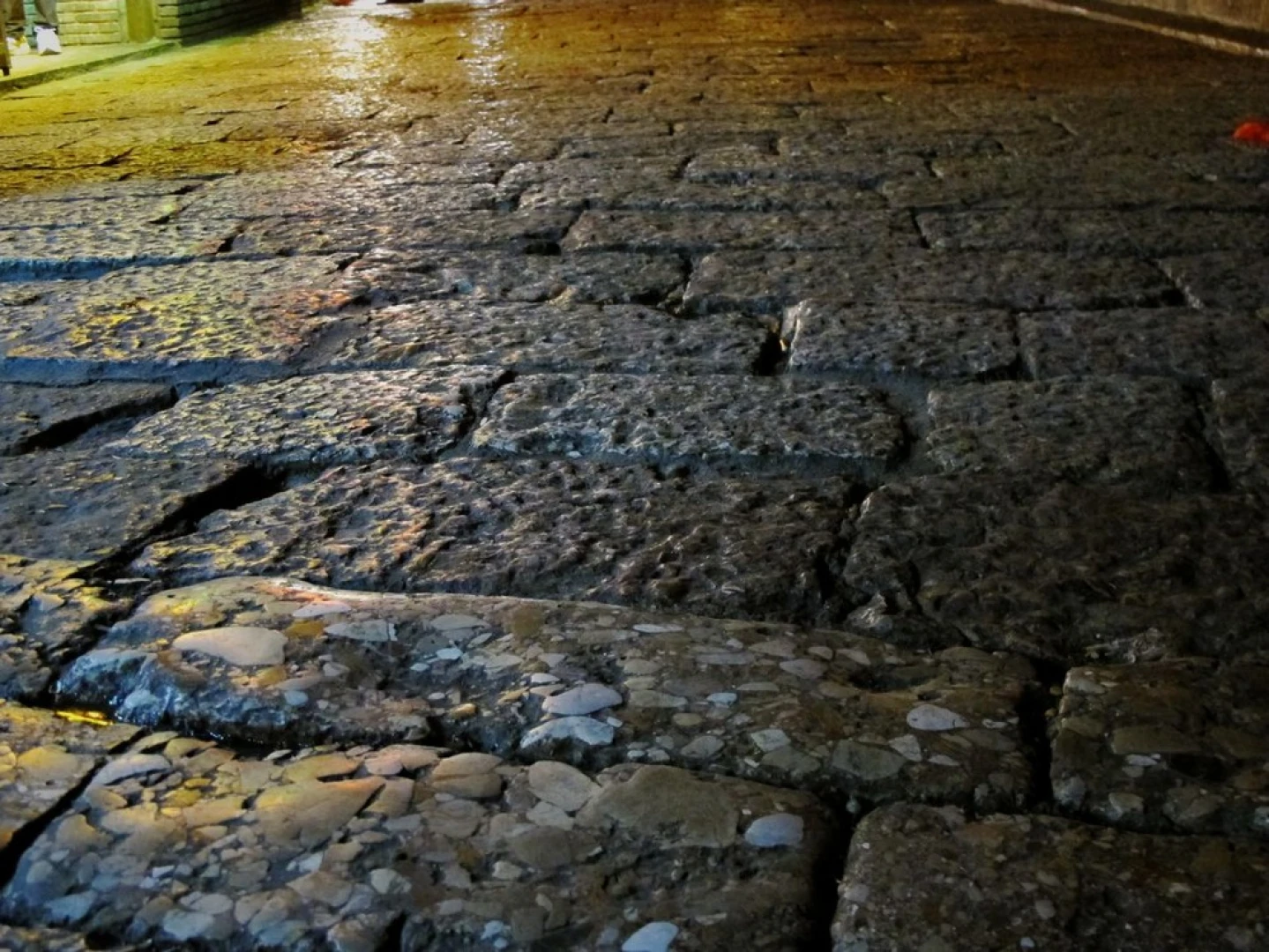
After resting at the dock, Uncle Yang took us onto a small boat and rowed toward the center of the lake. Lashihai—it is like a tranquil and clear sea. Happy migratory birds thrive and multiply here.
From this day on, showing my face became difficult—my face was severely allergic: bumps everywhere, redness and swelling everywhere, chapped and peeling skin. And this was despite daily sheet masks and ultra-moisturizing lanolin cream! My poor, pitiful face—every time I looked at it, my heart broke a little.
Back on shore, we mounted the horses again, rode back to the stables, and followed Uncle Yang to eat "Horse Caravan Food" (Ma Bang Cai). My entire body was aching! I whined to my wife: "Are we still eating? It doesn't sound good." My wife said, "We already paid, why wouldn't we eat?"
On the way to the restaurant, a little dog kept following me, refusing to leave no matter how I shooed it away, as if I were its owner—did it know I was going to eat? This little rascal was indeed clever; it followed me all the way to the table and sat underneath, waiting for food with me. Its demeanor, expression, sitting posture... were remarkably similar to my wife's!
The Horse Caravan meal turned out to be hotpot—mushrooms, greens, tofu, several servings, in a traditional Beijing copper pot, but no fatty lamb or beef to be seen. Just as I expected, nothing to look forward to. But when I looked at the broth base, I got excited—chicken and cured pork ribs in a big pot! Dog, you're truly an old hand! Look, with one scoop, it's all meat! Then I finished all the vegetables, and the dog handled all the meat—we each got what we wanted. My poor wife, on the other hand, couldn't drink the chicken broth and ended up eating nothing—which is also why we never ate Crossing-the-Bridge Rice Noodles during our entire trip; the smell of chicken broth makes her nauseous. She's harder to please than me! She deserves to be sent to North Korea!
The total cost for the two of us was 400 yuan. Since Uncle Yang worked hard, was about the same age as our fathers, and we got along so well, we gave him a 100 yuan tip—when you're on vacation, the most important thing is to be happy.
We returned to the inn in the evening. My jolted-apart bones couldn't find their joints anymore. Skipping dinner, I took a long shower to wash off the day's dust and sand, then collapsed into bed and fell asleep.
Chapter Eight: Lugu Lake—A Place Close to My Heart
Lugu Lake was a place I was determined to visit.
My wife and I splurged on chartering an off-road vehicle. Our driver was a lovely Naxi man—Master Yang, a well-known off-road driver. He was very talkative, with dark, sun-kissed skin and an ever-present simple smile. He was an off-road enthusiast himself, and taking travelers on trips was his joy. His longest journey was starting from Lijiang with photography enthusiasts, passing through Zhangmu, completing the Nepal Great Loop, and arriving in Kathmandu—48 days in total. Master Yang's driving skills were superb—no drifting antics; he knew the roads well, provided free guided commentary along the way, and charged reasonable daily rates. Our three-day chartered trip from Lijiang to Lugu Lake—if you're interested in the price, feel free to ask me privately. I highly recommend Master Yang—compared to taking a tour bus to Lugu Lake and then chartering cars to various attractions, if three people travel together, the cost would easily exceed 1,000 yuan anyway. Renting his car offers great value and is much more convenient and flexible.
After interacting with several Naxi friends—the enthusiastic schoolchildren, the fiery little girls, the guide Xiao He, the horse handler Uncle Yang, the driver Master Yang—I genuinely came to love this ethnic group.
The road to Lugu Lake was extremely rugged. Because you have to pass through a quarry area, there are about 15 to 20 kilometers of dirt road, full of potholes and bumps. The bones that had lost their joints the day before were once again thrown into chaos. Friends driving sedans—give up the idea now: a severely bottomed-out Audi A6 had already served as a warning example.
After passing through the rugged quarry area, you encounter the eighteen hairpin turns of the mountain road. Master Yang drove very cautiously, honking the horn at every curve. I'd like to give Master Yang a slogan: "Your carefulness, my peace of mind." The mountain roads here really do have eighteen bends—I could hardly believe we had crawled our way up from such roads.
Epilogue: Lijiang, I Will Return
Coming back from Lugu Lake marked the end of my Lijiang journey. Those days of getting lost in the ancient town, the clattering sound of dragging suitcases over cobblestones, the sunburned and allergic face, the jolted-apart bones on the Ancient Tea Horse Road—all of it has become the most vivid fragments of my memory.
Lijiang is not a place to be seen with your eyes; it's a place to be measured with your steps, felt with your skin, and tasted with your palate. It's lazy, spontaneous, commercial, and petty-bourgeois, yet it hides surprises around every corner. Those friendly Naxi people, those warm strangers, those unexpected moments of warmth that wander into your life—these are the true charm of this city.
I returned to Beijing with a "ruined" face, a backpack full of stories, and a heart that had been healed. Before leaving, I went to A'an's for one last cup of yogurt—the sixteenth cup. The owner smiled and said, "Come again next time." I replied, "Definitely."
Key Tips Summary:
- Sun protection is priority number one: Lijiang's UV rays are no joke—those with allergies should be especially careful.
- Choosing the right inn means half the battle won: A good inn not only provides comfortable accommodation but can also help plan your itinerary, book tickets, and arrange transportation.
- Eat authentic local food on Huama Street: Salmon and spotted fish cost 33-38 yuan per jin there, compared to 88 yuan in the ancient town.
- Chartering a car offers more freedom than group tours: For 3-4 people, chartering a car offers excellent value, especially for trips to Lugu Lake, Shangri-La, and other surrounding attractions.
- Bring a versatile scarf: Sun protection, warmth, and style—three uses in one.
- Horseback riding at Lashihai is worth the price: 200 yuan includes horseback riding, grilled fish, and Horse Caravan meal—an authentic experience of the Ancient Tea Horse Road.
- Lugu Lake deserves at least one overnight stay: The mountain roads from Lijiang are rugged, and you need at least three days to truly appreciate it.
Slow sounds, gentle steps—praise be to Lijiang. This ancient town, I will come again.
You should also read:

God’s Abandoned Palette: A Self-Drive Journey Through Yunnan’s Dongchuan Red Land
God’s Abandoned Palette: A Self-Drive Journey Through Yunnan’s Dongchuan Red Land Travel has never been about reaching some distant geographic coordinate. It’s about encountering, along the way, the version of yourself buried beneath the rubble of daily routine. During this May Day holiday, I finally…
Continue reading...
Body in Hell, Heart in Heaven: A Pilgrimage Through Tiger Leaping Gorge — A Dialogue Between Heaven and Earth
Body in Hell, Heart in Heaven: A Pilgrimage Through Tiger Leaping Gorge — A Dialogue Between Heaven and Earth Introduction: When the Gorge Splits Open Beneath Your Feet Some say Tiger Leaping Gorge is the closest place on Earth to the border between "hell" and…
Continue reading...
Cloud Travelogue · Dali of Wind, Flowers, Snow, and Moon: A Three-Day, Two-Night Journey of a Free Spirit
Cloud Travelogue · Dali of Wind, Flowers, Snow, and Moon: A Three-Day, Two-Night Journey of a Free Spirit I am a cultured female foodie with a touch of rogue charm. I slung on my backpack, took my lover's hand, and set off on a spontaneous…
Continue reading...