Slow Time in Western Yunnan | A Five-Day, Four-Night Self-Drive Trip Through Mangshi and Tengchong – A Feast for the Senses and the Soul
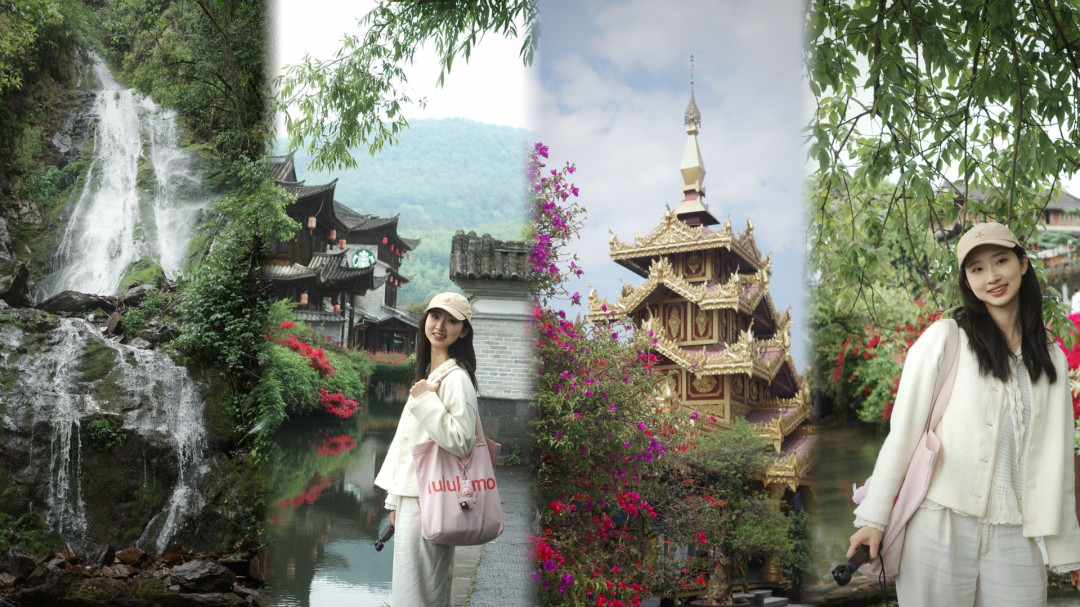
Slow Time in Western Yunnan | A Five-Day, Four-Night Self-Drive Trip Through Mangshi and Tengchong – A Feast for the Senses and the Soul
When people talk about Yunnan, the romantic winds and snow of Dali and the ancient canals of Lijiang are usually the first things that come to mind. But this time, I chose a less-traveled, wilder route—heading to the borderlands of western Yunnan to explore two small cities wrapped in the gentle passage of time: Mangshi and Tengchong.
There’s no vast expanse of Erhai Lake here, nor the majestic beauty of Jade Dragon Snow Mountain. But what you’ll find is the most authentic烟火气 (everyday hustle and bustle), the truest borderland flavors, and a lazy rhythm that makes you instinctively slow down. During this May Day holiday, I packed my bags, avoided the crowds, and set off on a five-day, four-night self-drive adventure. Along the way—scenery, food, hot springs, hiking—every moment made me sigh: This is what life is supposed to be.
Highlights: What I Gained Along the Way
- Soaked in Southeast Asian vibes at the Golden Pagoda in Mangshi, and captured exotic, Instagram-worthy shots in front of the Silver Pagoda
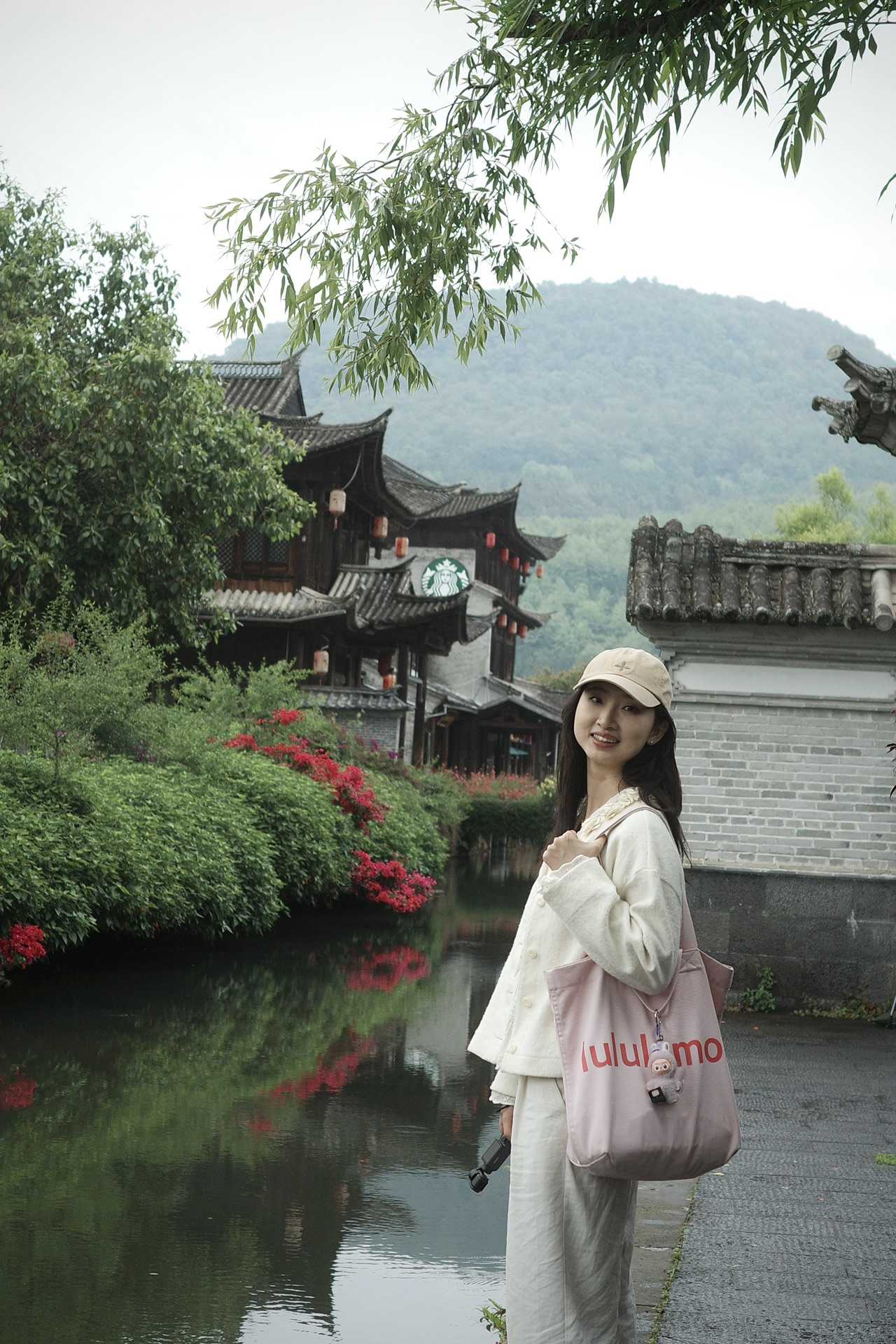
- Wandered through Heshun Ancient Town in the rain, touching a century of cultural heritage in its library
- Took a light hike through the Gaoligong Mountains, with the smoky charm of a wilderness kitchen
- Soaked in sulfur hot springs at Lotus Hot Spring, washing away all fatigue
- Devoured copper-pot beef hotpot, fire-grilled rice noodles, live crabs… ate until I could barely walk
Itinerary Overview: Five Days, Four Nights, Self-Driving Western Yunnan
Day 1 Guangzhou → Mangshi | Golden Pagoda, Silver Pagoda, Live Crabs
Day 2 Mangshi → Tengchong | Yin Family Breakfast, Heshun Ancient Town
Day 3 Tengchong | Gaoligong Mountain Hike, Wilderness Kitchen, River Drifting
Day 4 Tengchong | Qiluo Morning Market, Lotus Hot Spring, Second Visit to Heshun Ancient Town
Day 5 Tengchong → Mangshi → Return | Bingwu Street, Hongli Market, Departure
Day 1: Mangshi – A Carnival of Southeast Asian Flavors
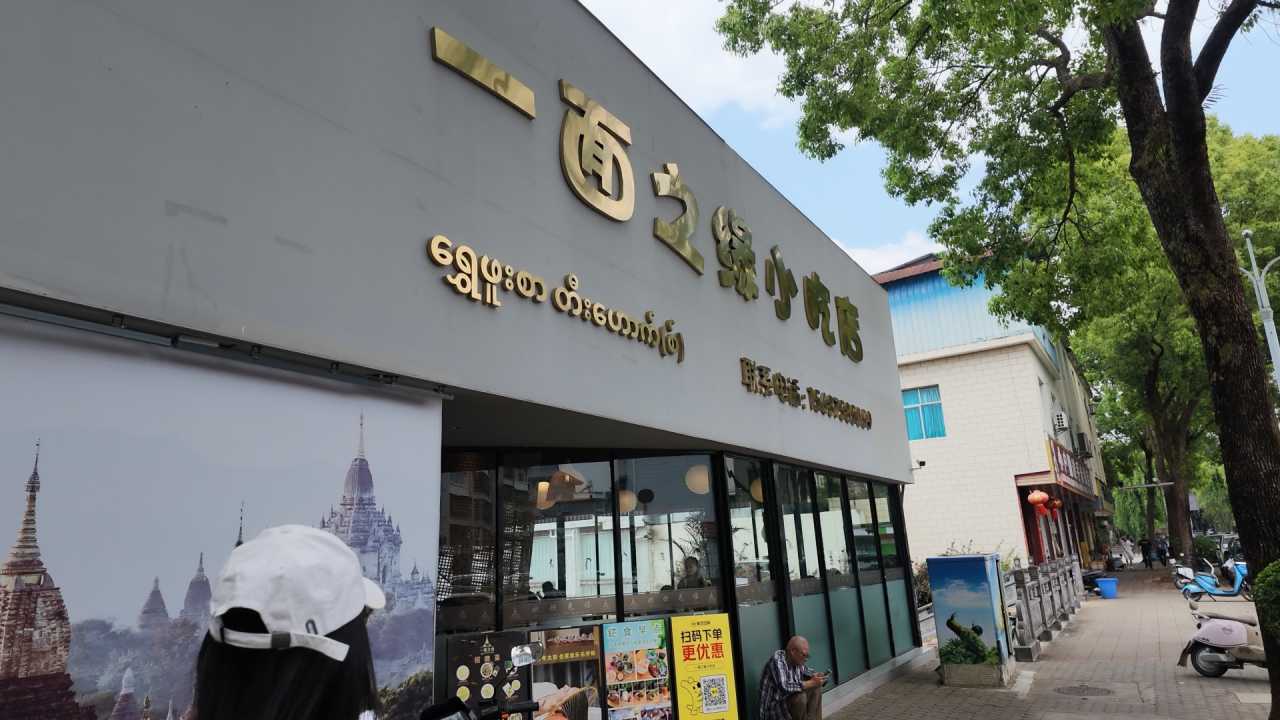
At seven in the morning, I flew out of Guangzhou. Two and a half hours later, I was standing on the soil of Mangshi. This border town’s air is thick with the fragrance of tropical plants and spices—like stepping straight into Southeast Asia.
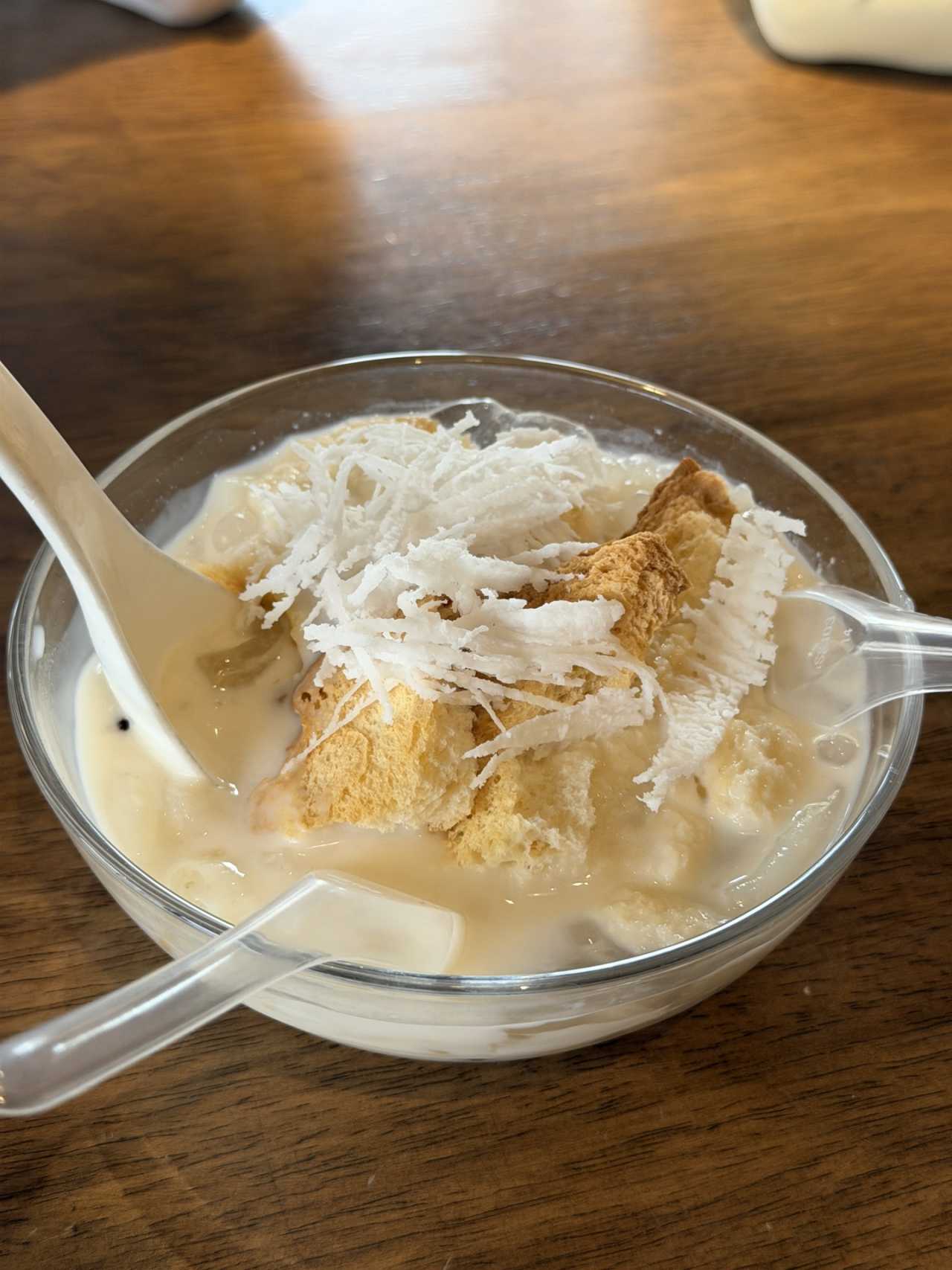
泡鲁达 (Paoluda): Love at First Sip
After dropping my bags, the first order of business was finding food. A local friend recommended 泡鲁达—a creamy milk drink packed with tapioca pearls, tiny dried shrimp, and coconut flakes. One sip, and the crunch and creaminess intertwined, instantly awakening my taste buds.
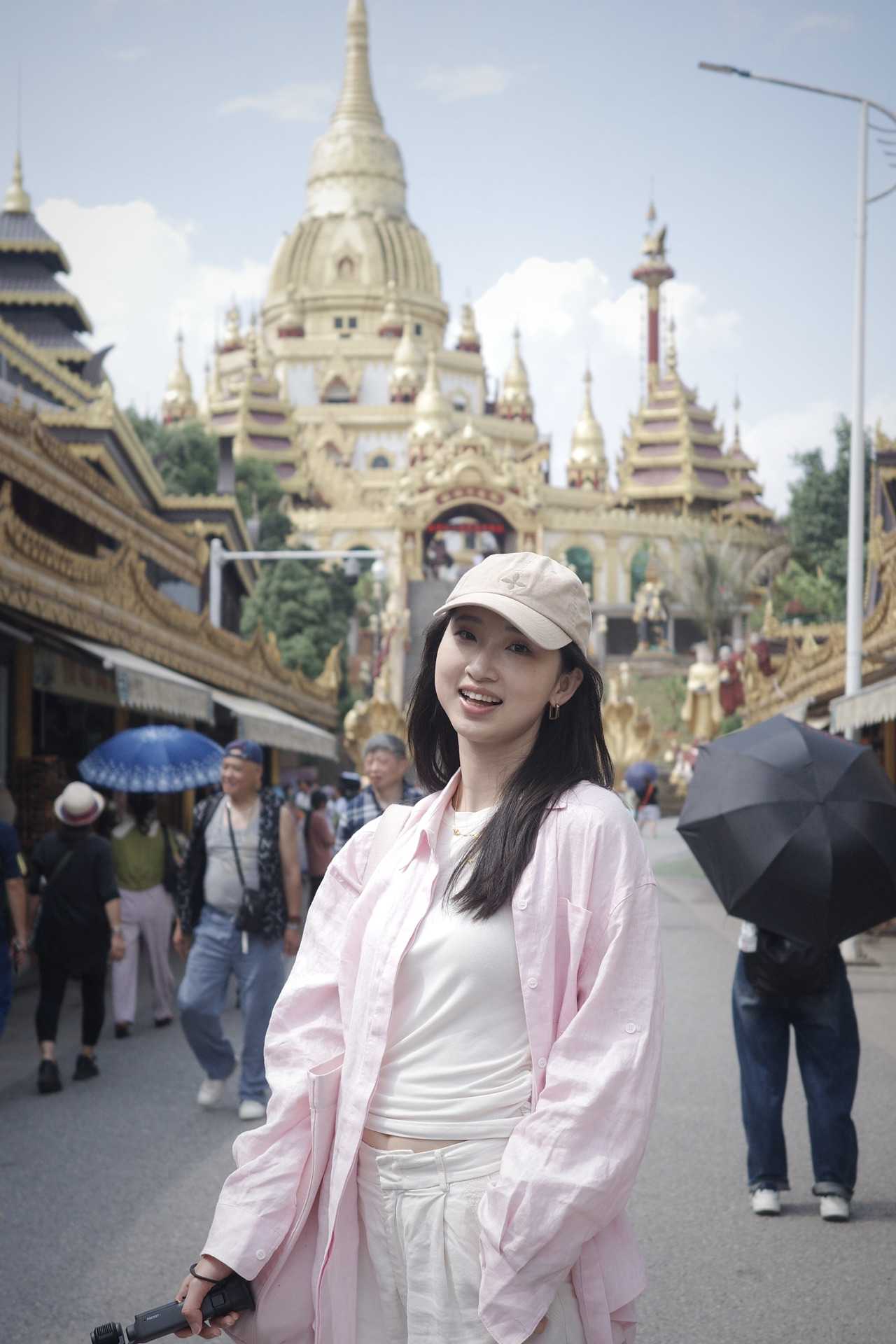
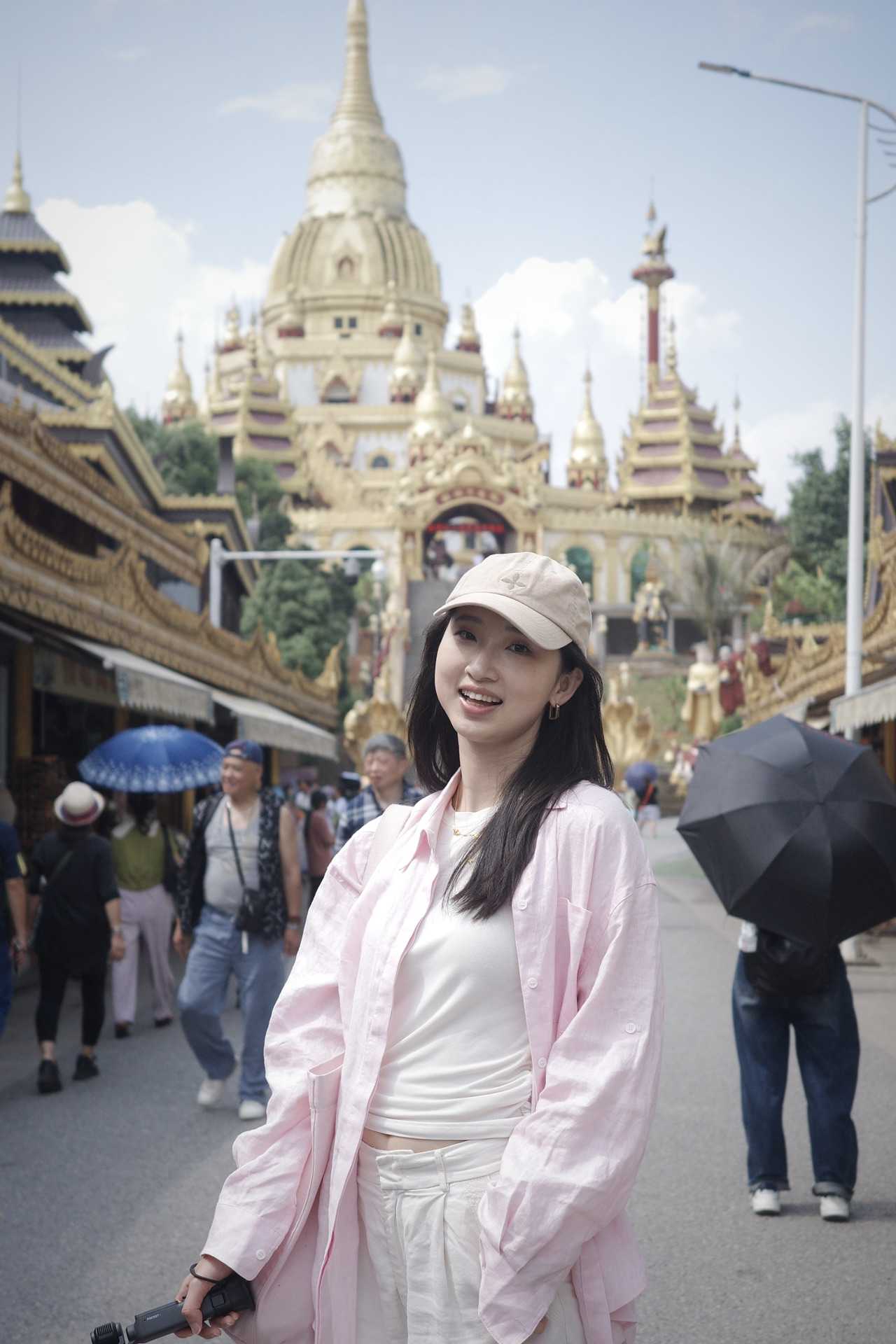
勐焕大金塔 (Menghuan Golden Pagoda): Asia’s Largest Hollow Stupa
After lunch, we drove up to the top of Leiyarang Mountain. The crowd was light today, with plenty of parking for just 5 yuan. The Golden Pagoda’s entrance fee was 50 yuan. As Asia’s largest hollow stupa and a sacred site of Theravada Buddhism, it’s not just Mangshi’s landmark—it’s a monument of faith.
The sun was perfect, and the pagoda gleamed against the blue sky. I circled it twice as a silent prayer. There wasn’t much to explore inside, but just standing there, feeling the breeze, was deeply satisfying.
Leiyarang Coffee Shop: Slow Time on the Hilltop
It was too hot, so after coming down from the pagoda, I ducked into Leiyarang Coffee Shop. This trendy café has a massive outdoor terrace overlooking all of Mangshi. I ordered an iced coffee and just sat there, staring at the drifting clouds. Time seemed to stretch.
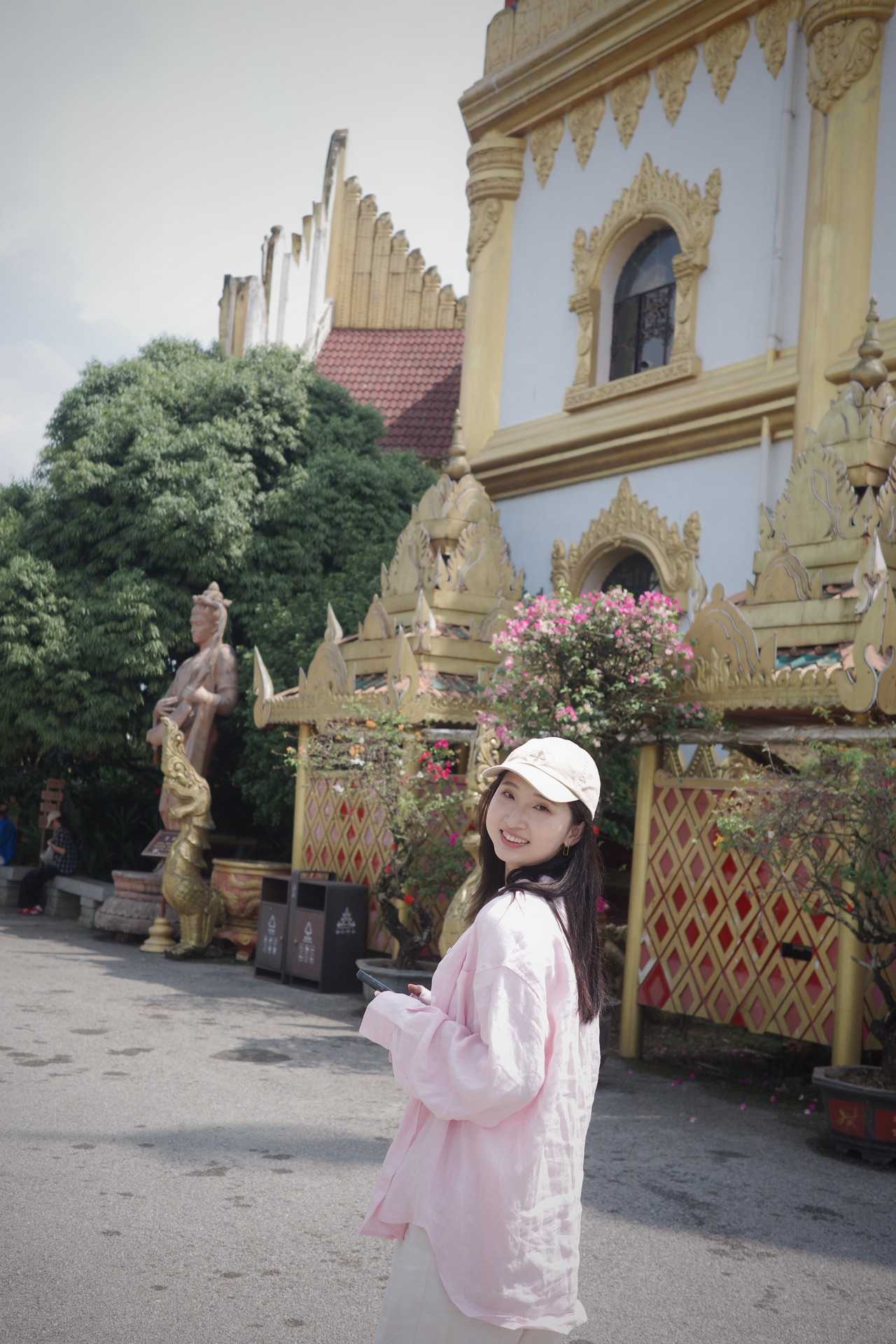
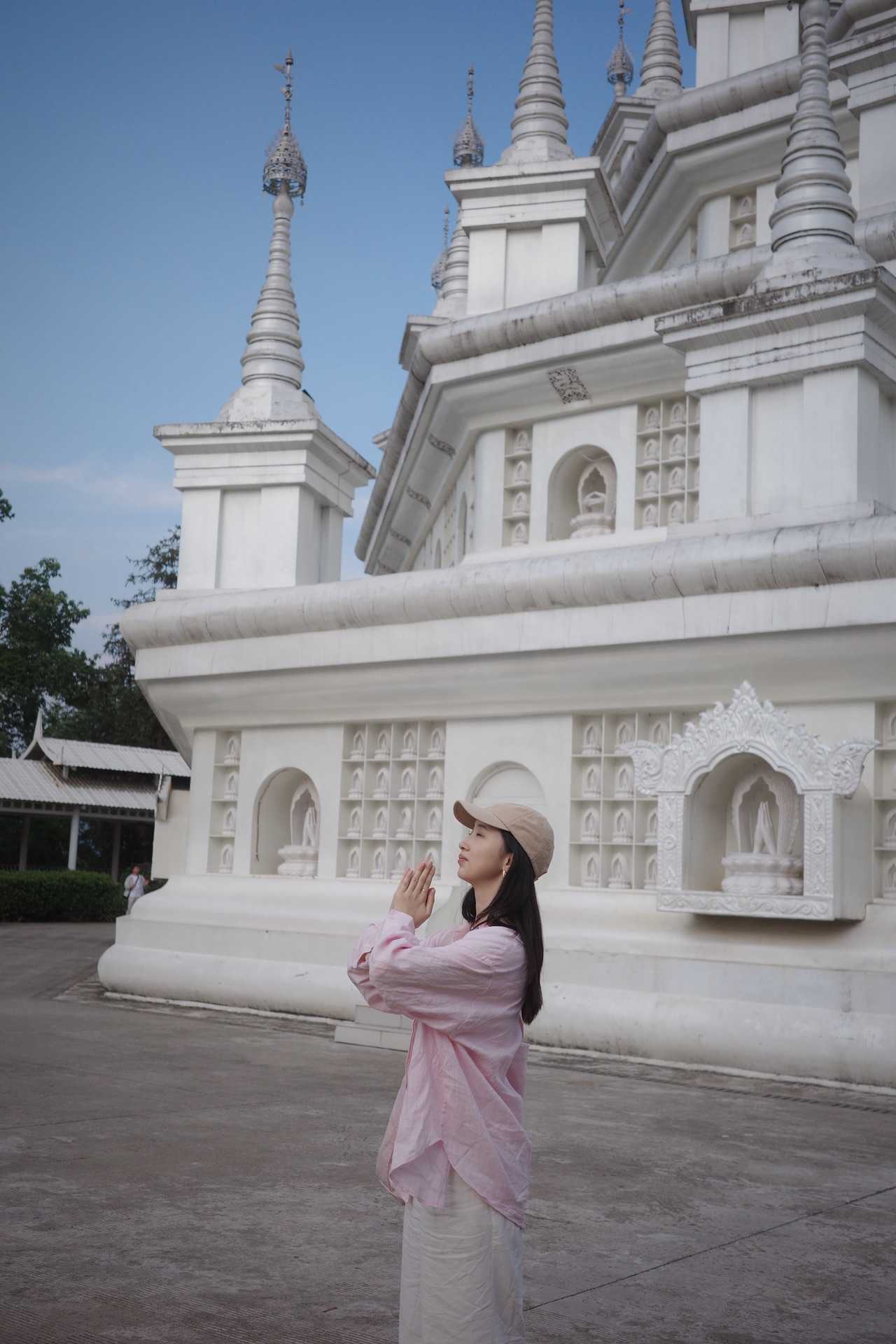
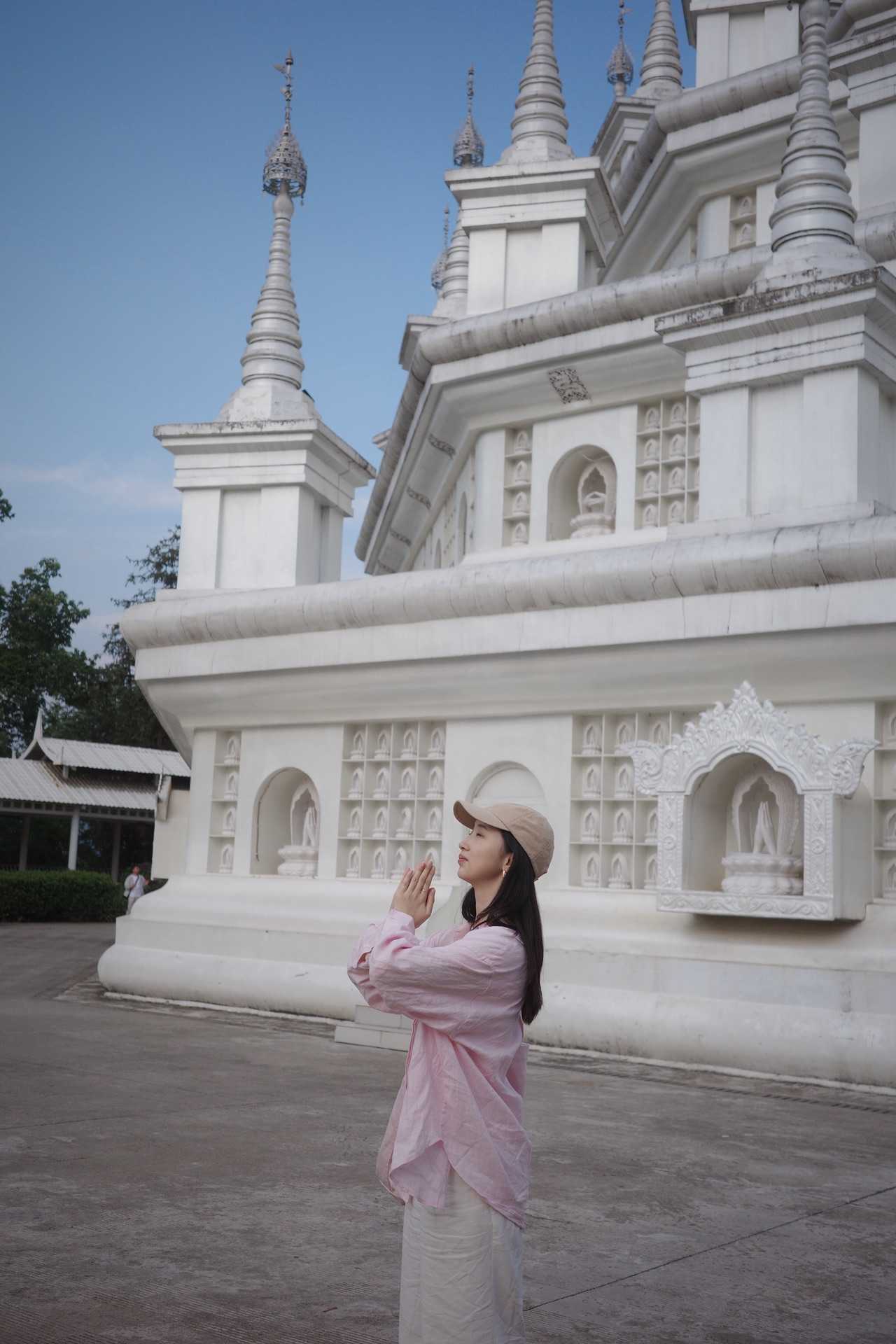
The Silver Pagoda: A Photographer’s Paradise
Around 5 p.m., we moved on to the Silver Pagoda. Entrance was 40 yuan, with a 10-yuan shuttle ride—I opted for the ride to save energy. The Silver Pagoda doesn’t have deep historical roots, but its beauty is undeniable. Many young women in traditional Dai costumes were posing for photos; every shot felt like an exotic postcard.
天然活螃蟹 (Natural Live Crabs): Mangshi’s Late-Night Kitchen
From the Silver Pagoda, we headed straight to the wildly popular 天然活螃蟹. Tucked away in a narrow alley, the place looked unremarkable, but the flavor was stunning. We ordered two styles: spicy and ginger-scallion. The crabs were chosen live and killed on the spot—still struggling when they hit the wok. The meat was sweet and tender, the spicy flavor deeply infused. I licked every last drop of sauce off my fingers.
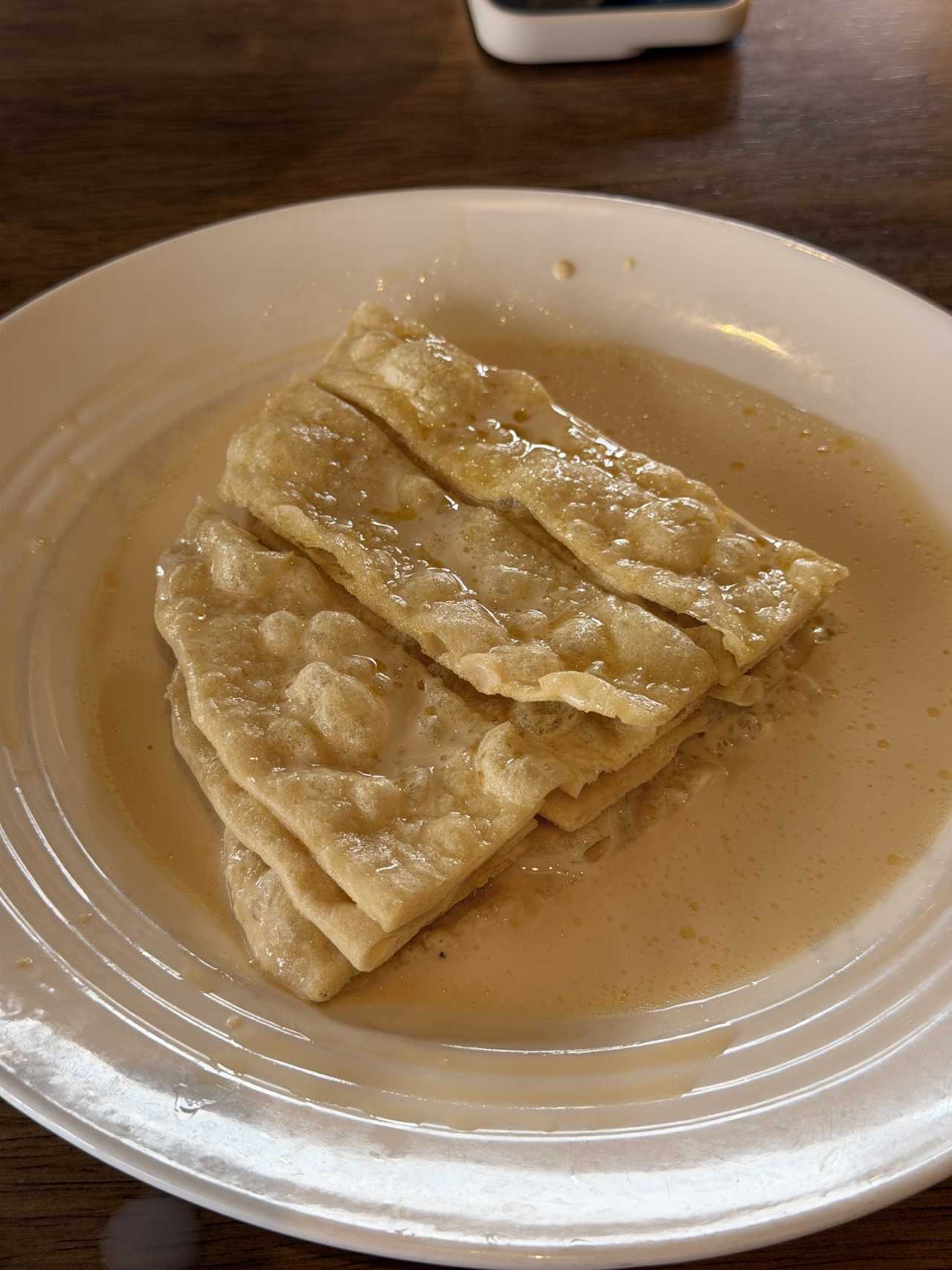
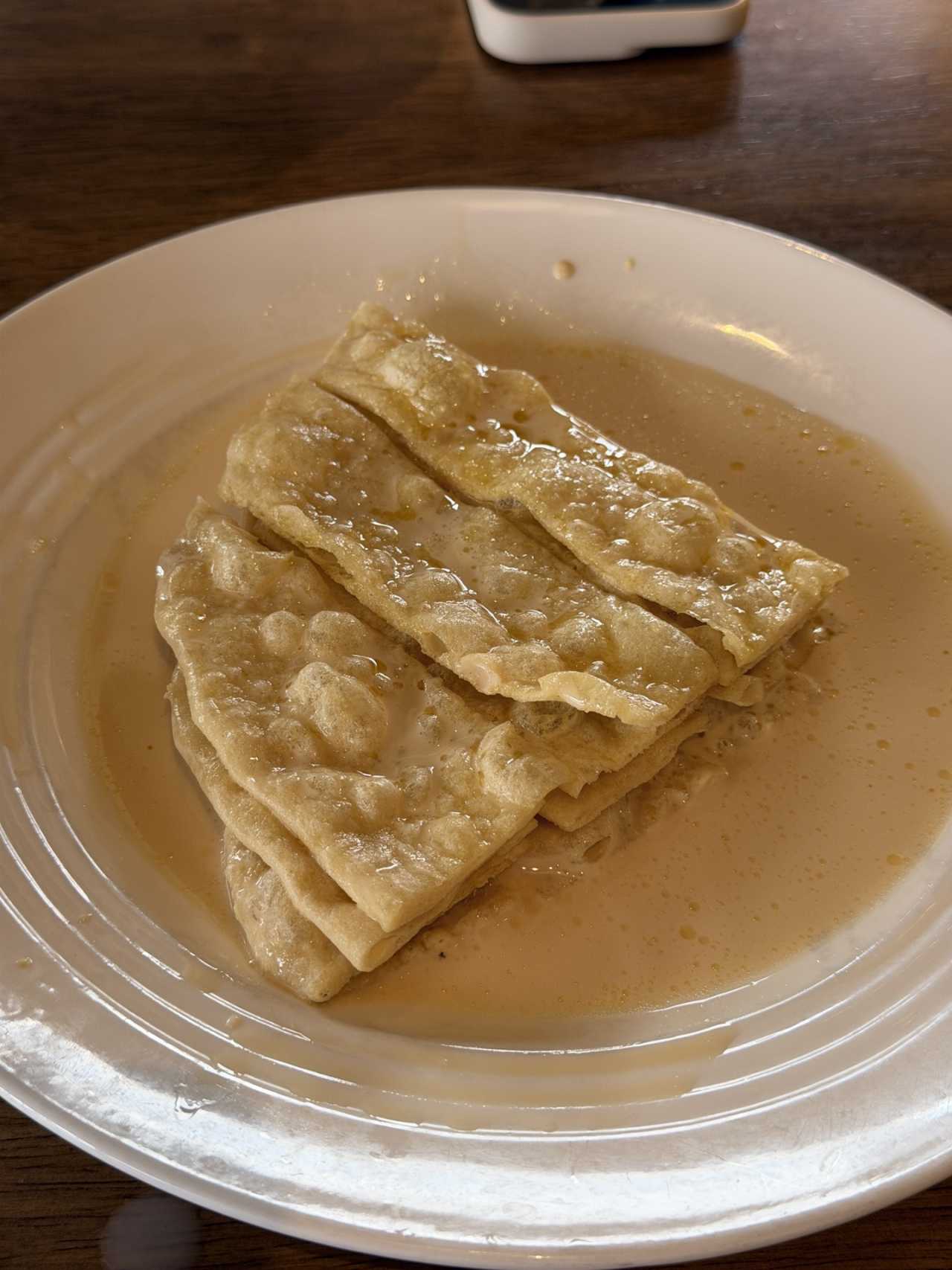
Outside the restaurant, a street stall served 甩粑粑 (fried flatbread) —a happy surprise. Crispy on the outside, sweet but not cloying—the perfect finish.
Day 2: From Mangshi to Tengchong – A Journey Across Mountains and Waters
银家早点 (Yin Family Breakfast): Starting the Day with Rice Noodles
At 7 a.m., we arrived at 银家早点. The place only stays open until 1 p.m., but there was already a line. I ordered the most basic bowl of sour soup beef rice noodles. The broth was rich, and adding mint and cilantro elevated it to another level. Even more surprising: free sides like mung bean porridge and yellow millet porridge—just 10 yuan for a bowl of noodles. What more could you ask for?
Self-Drive to Tengchong: Over the Mountains
After breakfast, we set off for Tengchong. The road wound through mountains, and the scenery shifted from tropical rainforest to highland meadows. Tengchong’s streets are beautiful—lined with tall, straight trees in varying colors, all reaching upward. It was a joy to behold.
Heshun Ancient Town: Romance in the Rain
After checking into our hotel, we found a nearby farmhouse restaurant specializing in snow chicken. We ordered a set meal for three to four people—the portions were enormous, and the price was a steal. Stuffed and satisfied, the rain stopped, and we finally entered Heshun Ancient Town.
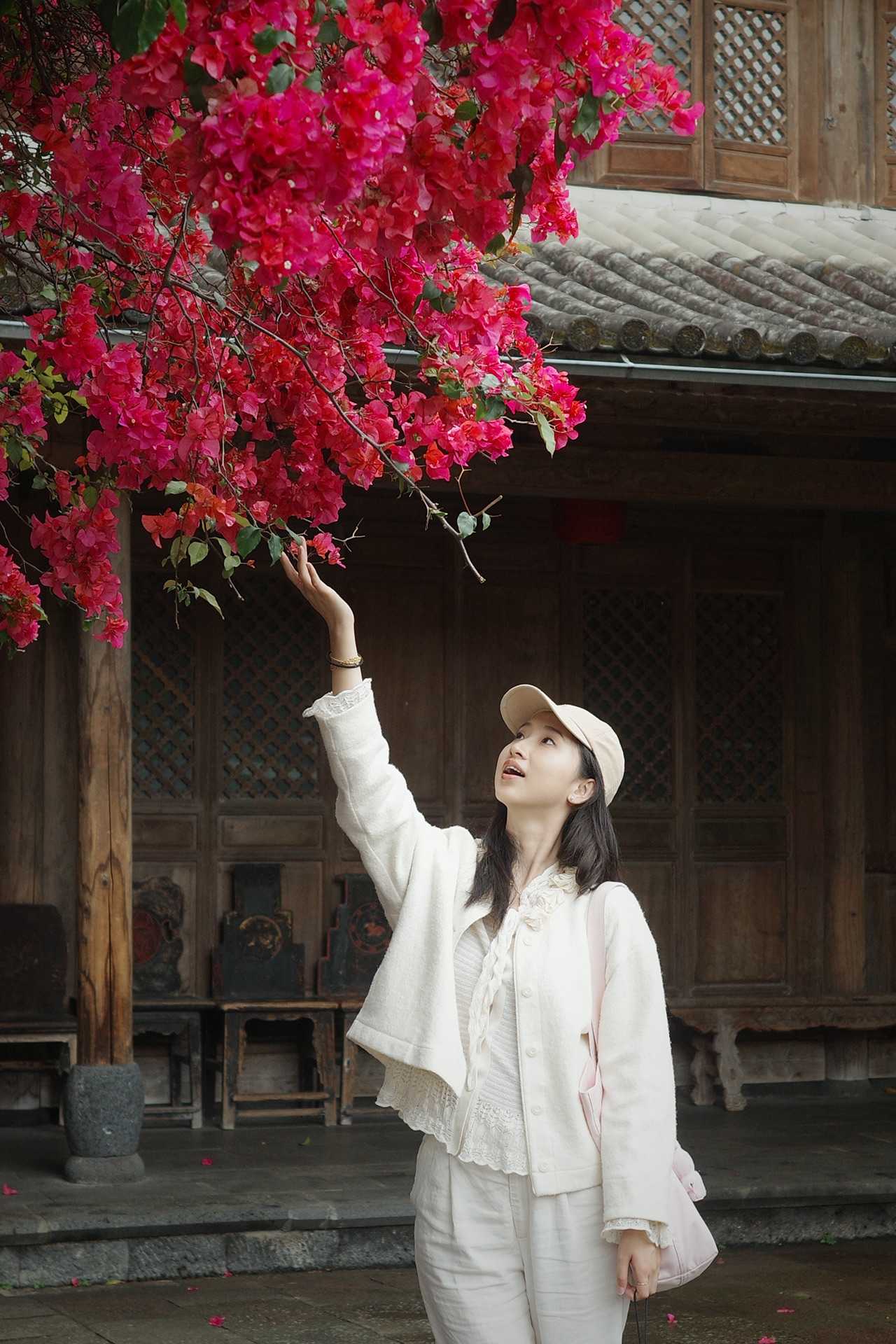
The entrance fee was 70 yuan. The stream under the Twin Rainbow Bridge was crystal clear, and the bougainvillea was in full bloom. Every shot was wallpaper-worthy. The Heshun Library is a must-visit—founded in 1928 by overseas Chinese in Myanmar, it’s the largest and oldest rural library in China. The architecture blends Chinese and Western styles, elegant and refined, housing both ancient texts and modern works. It’s a testament to the region’s deep respect for education.
But soon, it started raining again, so we took shelter. The raindrops shattered the surface of the Dragon Pond, creating a poetic scene.
马东清真铜瓢牛肉火锅 (Madong Halal Copper-Pot Beef Hotpot): Tengchong’s Soul Food
That evening, we went to 马东清真铜瓢牛肉火锅. I can’t recommend this place enough—definitely order the cooked beef. The meat was tender and fragrant, and the dipping sauce was pure magic. We ate in silence, heads down, focused entirely on the food. We went back again later, and it was just as incredible.
Day 3: Gaoligong Mountains – Hiking, Wilderness Kitchen, and Drifting

Today, we joined a day tour: a 5-kilometer light hike in the Gaoligong Mountains, a wilderness kitchen experience, and banana boat drifting.
A private car picked us up from the hotel, and after an hour, we reached a village at the foot of the mountain. The weather wasn’t cooperating—it had been raining all the way—but by the time we arrived, the rain had stopped. Our guide handed out raincoats and shoe covers, and we set off into the mountains.
The first half was a bit tiring. After passing a small waterfall, we started climbing. Then came a larger waterfall, followed by a steady descent. The mountain air was so fresh it felt washed clean—every breath smelled of grass and earth. It was a natural oxygen bar.
Wilderness Kitchen: The Joy of Being Fed
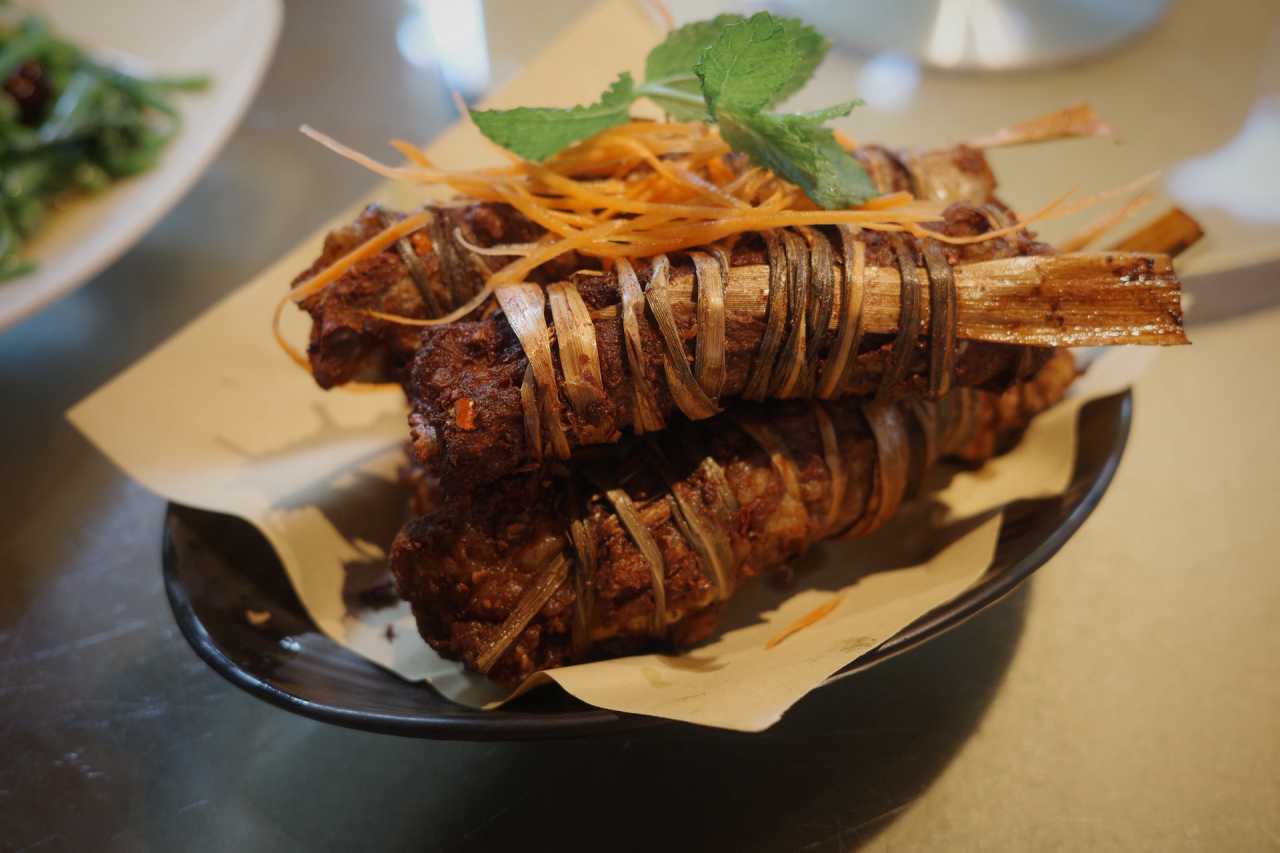
After the hike, the driver took us to the wilderness kitchen. No sooner had we sat down than we were handed skewers of grilled pork—rich, smoky, and delicious. But it was filling; after a few skewers, I was stuffed. The place also had sheep, ostriches, turkeys, rabbits, and ducks—like a mini zoo.
The highlight was the foot-soaking activity. After eating, we grabbed disposable foot basins, ladled hot water from a giant cauldron filled with mugwort, and soaked our feet for ten minutes. The relief was immediate.
Banana Boat Drifting: A Bonus Joy
The last stop was banana boat drifting—a gentle float down a calm river for less than ten minutes. Short, but since it was free, why not?
火烧米线 (Fire-Grilled Rice Noodles): Charcoal-Grilled Soul
Back in town that evening, we tried 火烧米线. The chef grilled pork over charcoal right at the entrance, filling the air with aroma. The tomatoes in the seasoning were also grilled, with a slight charred flavor. Mixed with the rice noodles and meat, it was pure bliss.
Day 4: Hot Springs and Morning Market – The Ultimate Slow Life
Qiluo Morning Market: Sister Fang’s Flaky Buns
After breakfast at the hotel, we headed to Qiluo Morning Market. Our main goal was 芳姐破酥包 (Sister Fang’s Flaky Buns) —the rose-flavored one was indeed delicious. But the market felt a bit too commercialized, and we lost interest after a while.
Lotus Hot Spring: Sulfur Pools in a Tropical Rainforest
We arrived at Lotus Hot Spring just as it opened at 10:30. After parking, we took a shuttle halfway up the mountain. The facilities were a bit dated, but the service was thoughtful—the slippers were comfortable and didn’t smell.
The hot spring area was terraced on the mountainside, three or four levels, each with open-air and indoor pools. The environment was very Southeast Asian, like stepping into a tropical rainforest. The water was sulfur-rich, leaving my skin silky smooth. The fatigue from yesterday’s hike melted away completely.
After soaking, we enjoyed the buffet—five or six home-style dishes, all hearty and satisfying.
Second Visit to Heshun Ancient Town: Making Up for Yesterday
With nothing else to do in the afternoon, we returned to Heshun Ancient Town to explore the parts we missed. We walked a long way to find the trendy 椿野咖啡 (Chunye Coffee) , but the line was too long, so we gave up. On the way back, it started raining again—it rained every evening during our time in Tengchong. Still, most of our outdoor time had been cloudy or sunny, so we considered ourselves lucky.
That night, we had copper-pot beef hotpot again. The second time was just as amazing.
Day 5: Wandering Mangshi – One Last Feast
Today was all about relaxation. We woke up around 9 a.m., ate breakfast at the hotel until 10:30, then packed up and drove back to Mangshi.
品滇边境食堂 (Pin Dian Borderland Canteen): The Surprise of Mango Beef
For lunch, we went to 品滇边境食堂, waiting in line for over half an hour. The sticky rice was fragrant and soft, with a hint of pineapple—slightly sweet but not cloying. The star of the show was the sour mango stir-fried beef. The beef was rich and full of wok hei (breath of the wok), and the tangy mango made it incredibly appetizing.
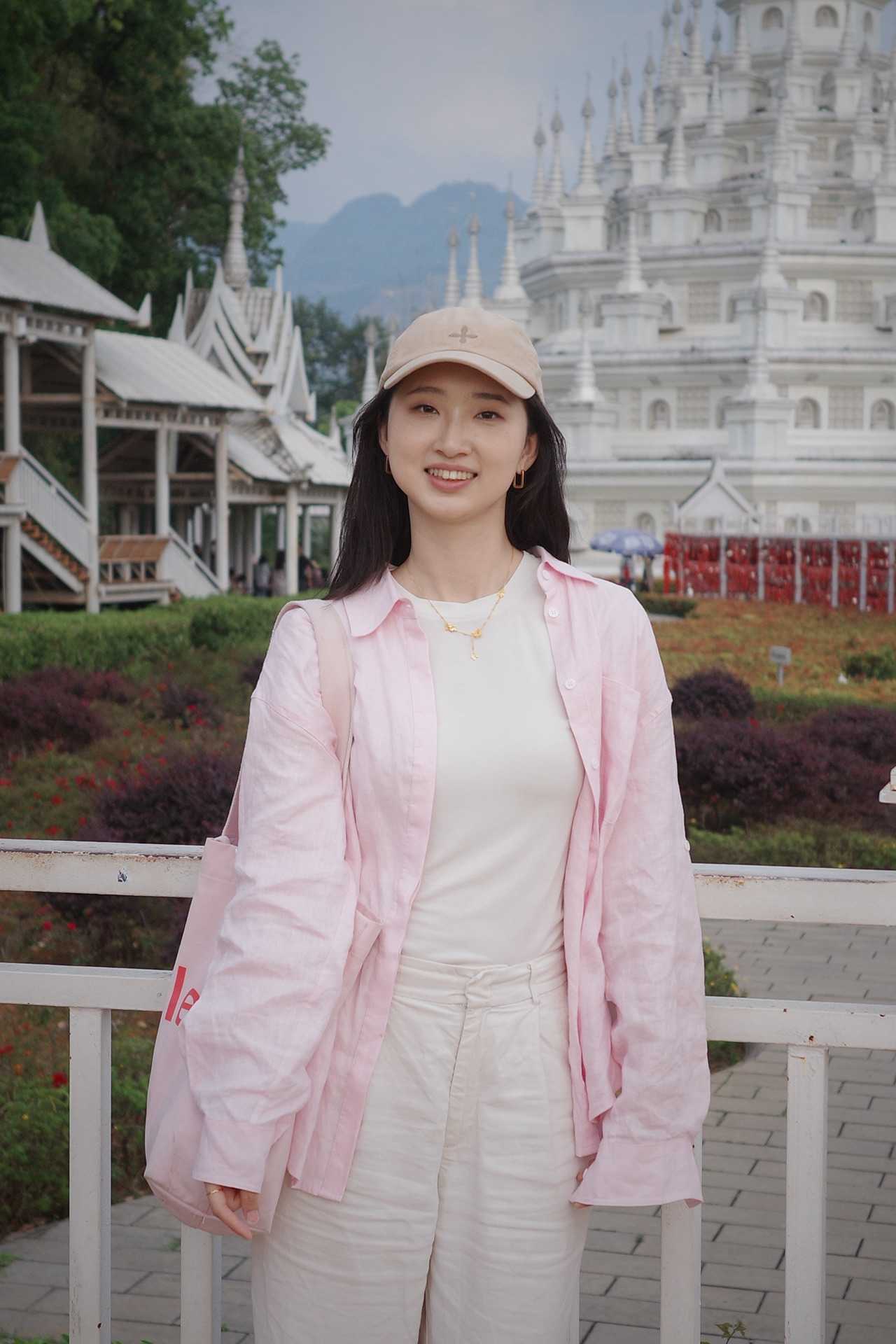
Bingwu Street and Hongli Market: Fruit Paradise
In the afternoon, we first went to Bingwu Street to buy some bean pods for friends, then headed to Hongli Market for fruit. The selection was vast, and we sampled a lot. The mangoes were the best. The 燕窝果 (bird’s nest fruit) was sweeter than dragon fruit, while the 鸡蛋果 (egg fruit) was dry and cloyingly sweet—one bite was enough.
Relaxing at a Massage Parlor
Since our flight was in the evening, we found a massage parlor to kill time. The staff kindly cut up the fruit we’d just bought. The massage was good, and the rice noodles they served were tasty too. Recommended.
Food Guide: Eating Until You Can’t Walk
Mangshi Must-Eats
小瓦碴 (Xiao Wacha) ★★★
First meal after arriving. Nice ambiance; the ribs and pineapple rice were good, but the cold dishes were too sour. Average overall.
品滇边境食堂 (Pin Dian Borderland Canteen) ★★★★★
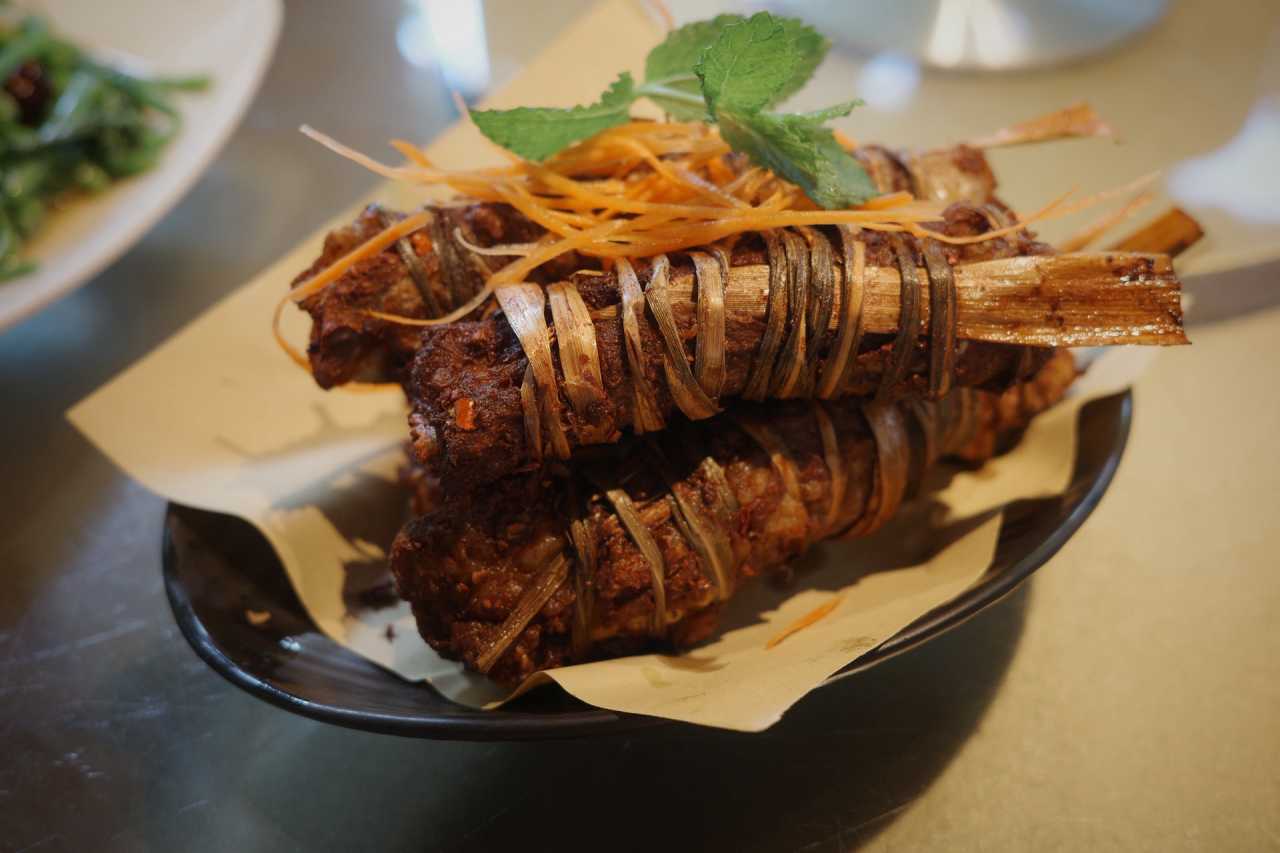
The mango beef had great wok hei, tangy and appetizing, with rich beef flavor.
银家早点 (Yin Family Breakfast) ★★★★★
A Mangshi essential. Ten yuan for a bowl, rich broth, free toppings, and free sweet porridge.
天然活螃蟹 (Natural Live Crabs) ★★★★★
Hidden in an alley. The crabs were fresh and flavorful—so good I forgot to take photos.
雪鸡庄园 (Snow Chicken Farm) ★★★★
Located in the mountains; you need a car. Generous portions, and the chicken spring rolls were excellent.
Tengchong Must-Eats
马东清真铜瓢牛肉火锅 (Madong Halal Copper-Pot Beef Hotpot) ★★★★★
Ate here twice. The beef was tender and fragrant, and the dipping sauce was divine.
火烧米线 (Fire-Grilled Rice Noodles) ★★★★★
The grilled pork was aromatic, the grilled tomato sauce tangy, and the red rice noodles unique.
Hotel Guide: Comfortable Stays Make for Better Trips
Wanda Meihua Hotel (Mangshi) ★★★
Budget-friendly, nothing special. The bedding was decent.
Tengchong Wyndham Supreme Hot Spring Hotel ★★★★★
Newly opened. Spacious rooms with balconies, generous breakfast. The public areas are beautiful and photogenic. The basement has a gym, yoga room, billiards, steam room, swimming pool, and hot spring area—perfect for a vacation. Make sure to choose a south-facing room; north-facing ones have an odor.
Final Thoughts
This five-day, four-night self-drive trip through western Yunnan made me fall in love with Yunnan all over again. There’s an innate sense of relaxation here, endless delicious food, and warm, welcoming people. Every small city has its own unique charm, and Mangshi and Tengchong are undoubtedly two of the most underrated gems.
If you, too, want to escape the crowds and find a place to live slowly, come to western Yunnan. Eat a bowl of rice noodles in Mangshi, soak in a hot spring in Tengchong, take a deep breath of fresh air in the Gaoligong Mountains—you’ll discover that life can be this simple, and this beautiful.
Come to Mangshi for a slow life and enjoy the peaceful moments.
You should also read:
Two Girls' Graduation Trip: Dali and Shuanglang – A Poetic Farewell to Mountains and Sea
Two Girls' Graduation Trip: Dali and Shuanglang – A Poetic Farewell to Mountains and Sea Preface: Catching the Tail of Youth, Heading South During our senior year of college, my roommate and I – two girls studying in Beijing – decided to bid farewell to…
Continue reading...
Body in Hell, Heart in Heaven: A Pilgrimage Through Tiger Leaping Gorge — A Dialogue Between Heaven and Earth
Body in Hell, Heart in Heaven: A Pilgrimage Through Tiger Leaping Gorge — A Dialogue Between Heaven and Earth Introduction: When the Gorge Splits Open Beneath Your Feet Some say Tiger Leaping Gorge is the closest place on Earth to the border between "hell" and…
Continue reading...
The Meaning of Travel – A Tengchong Story: A Journey of the Heart and Personal Growth
The Meaning of Travel – A Tengchong Story: A Journey of the Heart and Personal Growth Setting Out, Only to Return a Better Self Some say travel is nothing more than leaving a place you're tired of, only to go to a place where others…
Continue reading...