Solo in Dali: Rediscovering the Warmth of Life Between Cangshan Mountain and Erhai Lake
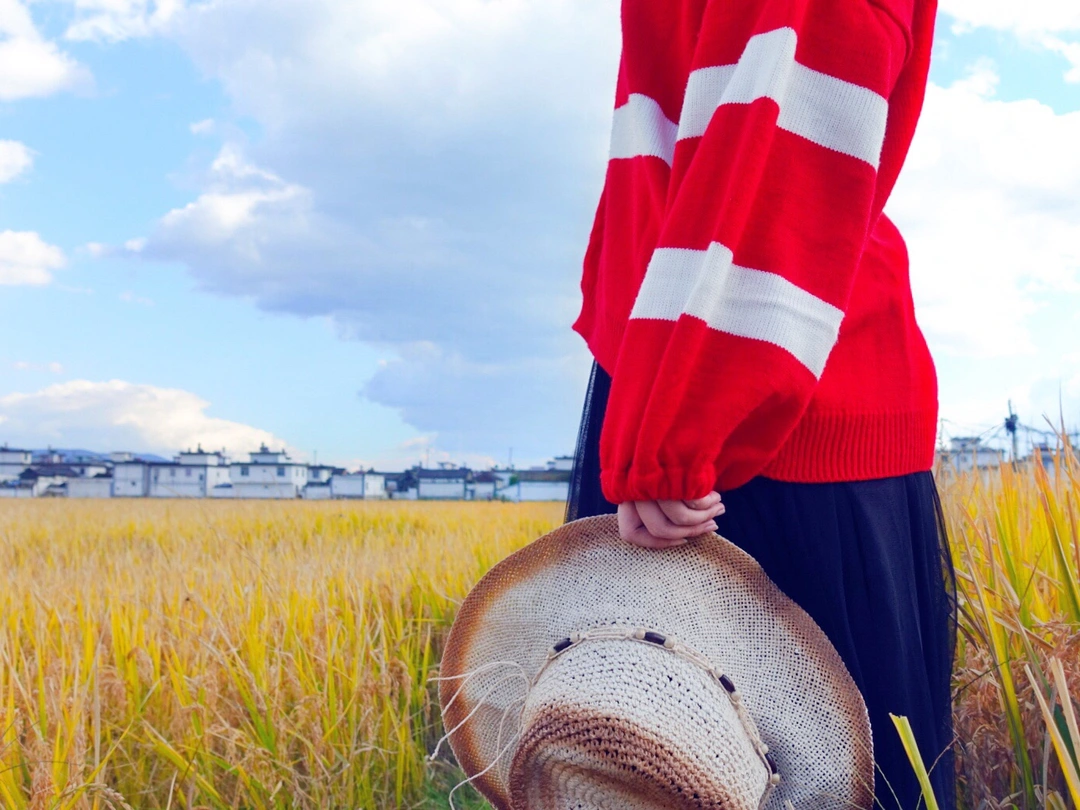
Solo in Dali: Rediscovering the Warmth of Life Between Cangshan Mountain and Erhai Lake
Preface: Go Far While You're Young
In my twenties, life taught me one thing: no path you take is wasted—every step counts. My sister once said something to me that's still etched in my heart—"In this life, you have to go through things. Better to endure hardship early and enjoy sweetness later than to wait until you're old to bear those burdens. Everyone's path is already written." Yeah, who can escape fate? There are so many things I want to do. Before life completely ties me down, I need to get them done. Not to prove anything to anyone—just so I don't leave myself with too many regrets.
So I booked a flight to Kunming and set off on a journey with myself.
Chapter One: First Impressions of Kunming—Setting Out Alone, Between Nerves and Excitement

The Day I Left, My Feelings Were a Rollercoaster
November 1st. Clear skies.
The 4 AM alarm went off. At 4:15, the driver was already calling to hurry me up. I dragged my luggage out the door and made it to the airport smoothly. After checking my bag and passing through security, I sat in the waiting hall. Nearby, a mom was on a voice message: "Baby, Mommy's at the airport now~ Be good at home~ Stay safe on your way to school~ Bye-bye~" At that moment, my nose suddenly stung, and my eyes felt hot.
Boarding was at 6:45 sharp. We were supposed to take off at 7:25 but got delayed by over half an hour. I was exhausted, but my mood wasn't affected—except for the fact that someone on the plane quietly passed gas. In that enclosed space, the smell lingered forever. I really wanted to ask: "Have you considered the people around you?"
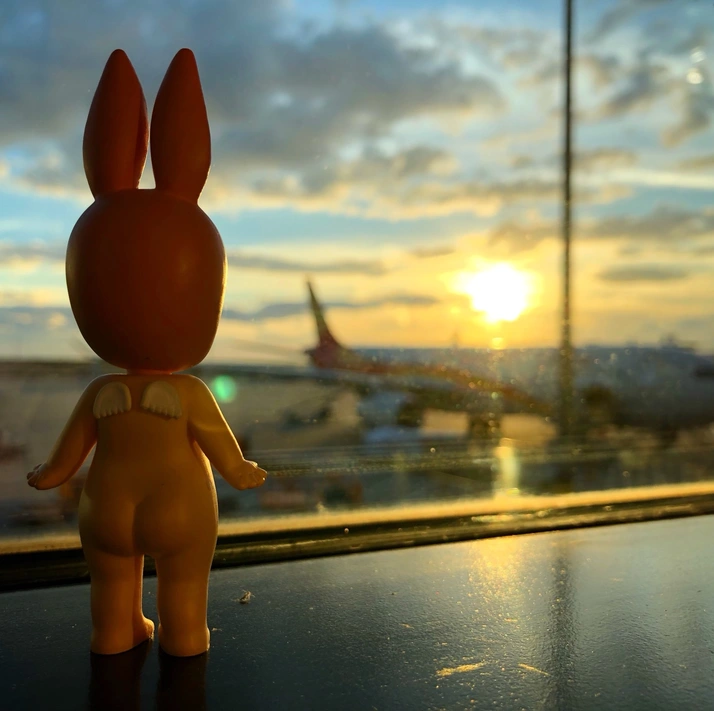
In the waiting hall, I unexpectedly watched a complete sunrise. Sunlight spilled across the runway, as if saying: a new journey has begun.
Kunming, the First Taste of Warmth
When the plane landed at Changshui Airport, a colleague working in Kunming picked me up and took me straight to lunch. I insisted on going to a small local joint that only locals know about. So he took me to "Wenshan Breakfast Spot." Hmm... that couldn't be the Wenshan, could it? Haha.
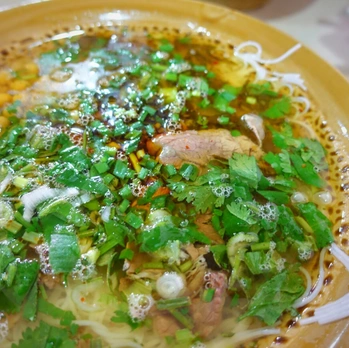
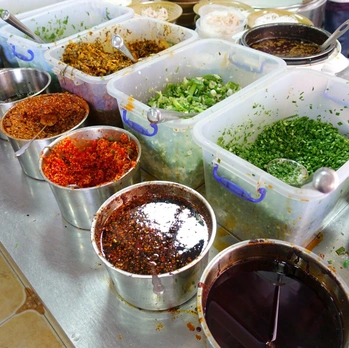
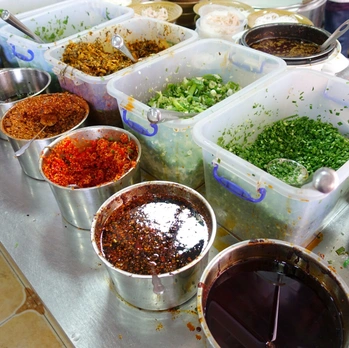
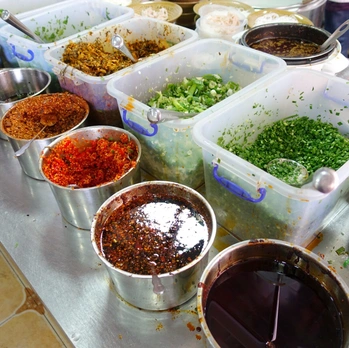
After paying, I walked to the ingredient station. An auntie handed me a bowl of rice noodles (米线), piled high with beef and lamb. You add your own toppings. I later learned that in many places here, it's self-service. After adding my toppings, I asked the uncle or auntie to ladle a scoop of boiling hot beef-and-lamb broth over it. One bowl down, and my whole body felt warm.
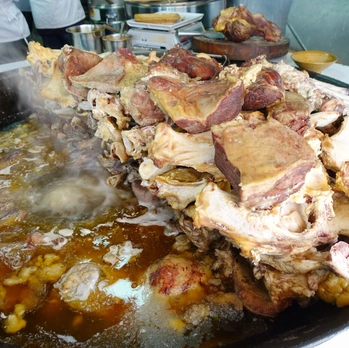
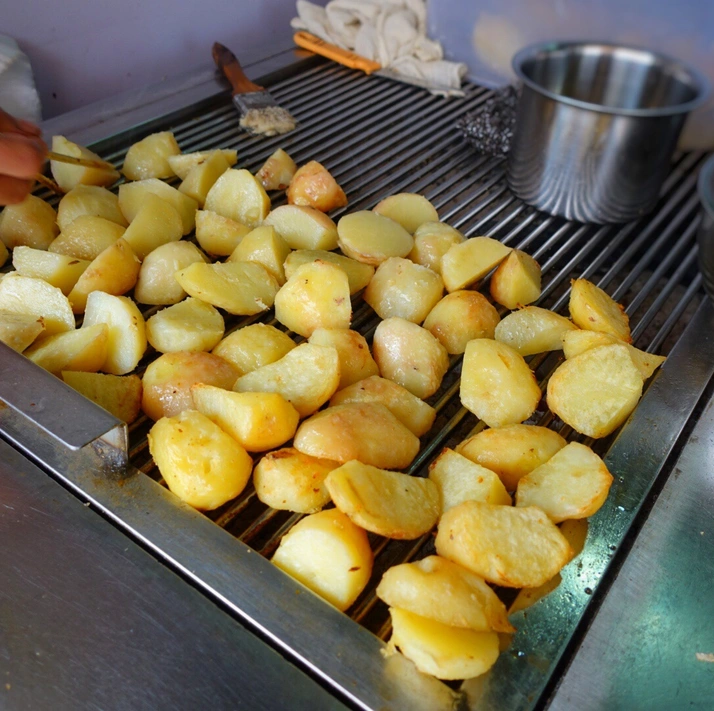
There were also roasted potatoes and tofu, dipped in spicy sauce—so fragrant. My colleague said, "Most girls can't handle this level of spice." I shoved food into my mouth and said, "This isn't spicy at all!"
"So it's good enough for you?" he asked.
"Yeah~ Easy to please, right?" I laughed back.
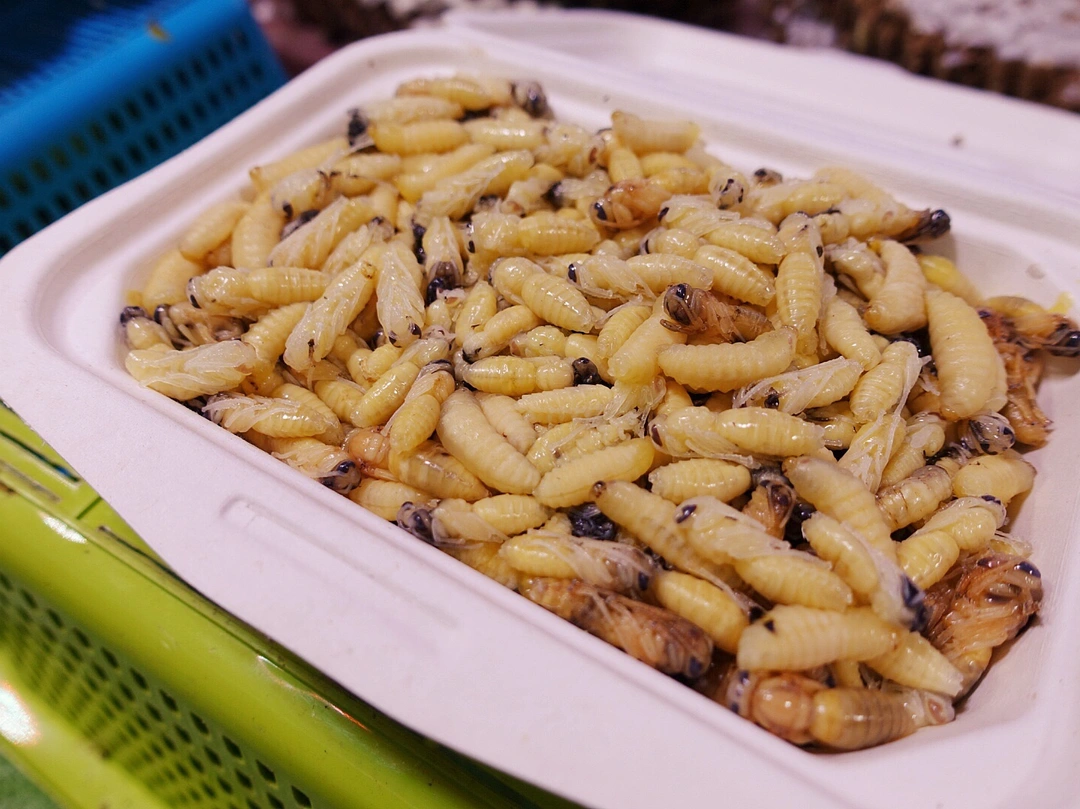
After eating, we passed a market. I saw lots of vegetables I couldn't name, and a stall selling wild giant hornets—kind of gross to look at. The老板娘 (shop owner) said you can eat them raw, and they taste sweet, or deep-fry them. Hmm... I'll pass.
Squirrels in Green Lake Park and Sunset at Yunnan University
Back at the hotel, I sent my colleague back to work, freshened up, and headed to Green Lake Park (翠湖公园). I'd heard the seagulls had already flown back for the winter, but I walked around for ages and barely saw any. Entering from the south gate and exiting from the east, I finally spotted a sparse few. Okay, I'll pin my hopes on Dianchi Lake.
I kept walking along the road, trying to photograph a seagull that was close to me. The further I went, the more off the beaten path I got. My legs felt like they weren't mine anymore. Kunming is a lot like Chongqing—hills everywhere, constant climbing. When I finally made it to Yunnan University, I had to climb again. Both sides were lined with tall, dense plants. There wasn't a single person on the road. I walked nervously.
Breathless, I reached a flat stretch. A middle-aged man jogged past me effortlessly—people here are really fit.
Past this area were the teaching buildings. Lots of girls were posing for photos. It was getting late, and I wanted to see the campus before the sun went down, so I didn't take any pictures myself. That's life—plans always change, but those unexpected little moments are the ones you remember most clearly.
Yunnan University is huge. When I got tired, I found a place to sit. A middle-aged man nearby looked at me for a while, then walked behind me. My heart raced—I didn't know what was happening. Gradually, I felt more and more people gathering behind me. I stood up and gasped—right in front of me was a real squirrel, so close, so incredibly close. It was timid but not afraid of people, and it ate very skillfully. Some students told me this man often comes to feed it. When it was full, it climbed back up to the treetop. Later, a friend told me that when she visited Yunnan University four years ago, she also saw a squirrel. I wonder if it's the same one, or its offspring.
Leaving Yunnan University, I found myself on Wenhua Lane—a street every generation of students loves to browse. I found a matcha shop, sat down to rest, and wrote a bit. On the second floor, there were lots of wishes left by students. Almost every one was about love. That's probably the little hopes that twenty-somethings have for the future. It's only when you grow up that you realize... many things... once they're gone, they're gone... wishes... can only ever be wishes.
Kunming's Night, a Little Warm
That day was a mix of joy and worry. I met two locals who were very friendly and helped me solve the problems that always plague directionally challenged people like me. That gave me a bit of fondness for Kunming.
In the evening, I ordered takeout—tofu rice noodles (豆腐米线). I realized that rice noodles are something I can never get tired of. So many varieties, and every one is delicious.
Chapter Two: The Seagulls of Dianchi and the Warmth of Kunming
Seagulls, Finally Found You
November 2nd. Clear skies.
Today's plan was to go to Dianchi Lake to see the seagulls. I had to transfer twice, and the second bus went from one terminal to the other. Before I even got off, I saw flocks of seagulls. I immediately pulled out my phone to record a video—such a rare sight! Every single one was huge, right next to you. If you brought a net, you could scoop up several at once. But please, be environmentally conscious~
Lots of people were feeding them, and feed was sold nearby. There were also photographers offering tourist photos, 20 yuan each. I didn't really want one, but I couldn't manage to take a good selfie, so I coughed up the 20 yuan. Honestly... the photo was terrible. Not post-worthy. And you could only get a printed, laminated copy—no digital file. Kind of a rip-off. The photographer uncle's aesthetic was... questionable. I ended up just taking pictures of my own hand—so close, so incredibly close!
An elderly man was feeding the seagulls corn buns. Being thick-skinned, I went up to chat. He broke off a piece for me, and the seagulls snatched it instantly. Hah, how hungry are you guys? You could really spend a long time at Dianchi. Just photographing the seagulls could take hours. If you're not afraid of getting hit by bird droppings, come here and let loose.
Chrysanthemum Rice Noodles, a Taste That's Not from a Trendy Shop
Across from Dianchi Lake, there's a chrysanthemum rice noodle (菊花米线) shop. It's not a trendy internet-famous place. The老板娘 (shop owner) was very polite and pretty. She treated young customers like her own kids, giving all sorts of advice while we ate—very thoughtful. I'm someone who doesn't eat fried pork fat, but I finished every bit in my bowl. It reminded me of the cross-bridge rice noodle shop near my university—that was my little canteen. The taste of nostalgia.
Kunming's Old Street and an Afternoon at Starbucks
In the afternoon, I went to Kunming's Old Street. It's pretty similar to Shanghai's City God Temple. So I found a Starbucks and started writing my travel journal, also trying a new beer-flavored drink.
Personally, I don't think Kunming has much to do. As someone from a big city, I felt like I was at home—tall buildings and cars everywhere, nothing new. But people always say the outside world is dangerous, while the locals I met were all very warm-hearted. There aren't many traffic lights here—only on major roads. Cars stop well in advance when they see pedestrians. In Shanghai, that rarely happens. When I asked for directions, people not only told me the route but also reminded me not to miss my stop. When I didn't have enough change, the driver still let me on. This place was so much better than I had imagined before coming.
Chapter Three: Dali—A Place You Never Want to Leave
From Kunming to Dali, a Bumpy Ride
November 3rd. Clear skies.
Finally, I set off for Dali. After breakfast at the hotel, I called a Didi and made it to Kunming Station smoothly. Honestly, I panicked a bit getting out of the taxi—it was packed with people, all kinds of people. I felt very unsafe. After getting my ticket and passing security, I went straight to the waiting area. It felt like the Spring Festival rush. Organized boarding? Didn't exist. When the train came, everyone pushed forward. I was getting crushed, rolling my eyes. All my "padding" was useless. I don't get it—are you afraid of being left behind?
Exiting Dali Station, the bus stop is on the right. Take bus #8 straight to Dali Ancient Town. Once on board, I recommend just going to sleep—it's over twenty stops, and it takes a long time. At every stop, lots of people got on. Some leaned directly on my luggage; others used my suitcase handle as a handrail. It's fine, it's fine—we're all Chinese, we should stick together. They were probably locals coming from the ancient town to buy supplies in the city, carrying daily necessities.
⚠️ You have to yell when you want to get off! Otherwise, the bus won't stop! And the drivers don't hear very well, so even if you yell, they might not hear you. Yep, lots of people have missed their stop.
Sunny Days Inn, a Warm Little Nest
Getting off the bus, it wasn't what I expected. The stretch from the Wind, Flower, Snow, and Moon Hotel stop to Dali Ancient Town was hard to walk—both sides were under renovation.
I stayed at "Sunny Days Inn" (有晴岁月客栈). It wasn't easy to find. Forget nighttime—even at high noon, this road was eerily quiet. Better to get back early in the evening; it's a bit scary.
The rooftop terrace didn't have much, but it was great for photos. Even though it wasn't very high, you could still see the entire Dali Ancient Town. The only downside was the bathroom—no separate wet and dry areas. The water was either scalding hot or freezing cold, with almost no middle ground. I was on the third floor; the fourth floor had the water heater boiler. Every night, there was a rumbling sound until past midnight. Luckily, I sleep late.
The third-floor viewing platform was nice. I imagine lounging there in winter would be very leisurely. Right now... it's still a bit hot.
Fat Ding on Renmin Road and Dali's Laid-Back Vibe
Starting from the inn, my first stop was "Fat Ding in Dali" (胖丁在大理) on Renmin Road. The owner wasn't there; his father and an employee were packing orders. The shop was tiny. From their accents, they weren't locals. The uncle was from Xiamen. He said his son had been traveling around China, ended up here, and stayed. He found a local girl and opened this shop.
The uncle said, "Dali is a place you never want to leave. But this street is too noisy now. Last year, there weren't this many people. It was very quiet. The people who came were intellectuals. Now it's all bars. It's going to turn into a bar street, hahaha~"
The uncle was very kind. When he heard I'd just arrived and couldn't ride a bike, and that he lived near the Three Pagodas, he offered to give me a ride there and also have hotpot with his son, Fat Ding. But my plan was to try all the food on my list, so I said, "Let me take a walk around first. If you're still here when I get back, I'll go with you. Let's see how it goes."
The uncle was particularly polite and funny, and he treated his employees well. Speaking of the employee, this young woman was also very laid-back. When asked why she came to Dali, she said, "It was just a whim. I was also a kid who never left home. I thought my whole life would be about finding a stable job, marrying a man from a similar background, and that's it. The men in my hometown work nine-to-five, then play cards with friends after work. I thought all men were like that. But after I came out here, I realized how exciting the outside world is. My salary now isn't even half of what it was before. I could afford things before that I can't now. So yeah~ life isn't just poetry and distant lands; there's also the daily grind, haha~"
But she still seemed happy—being able to do what you love is really great.
Their rose milk tea is delicious. If you come, I recommend trying it. It's on Renmin Road.
Street Stalls, the Best Flavors
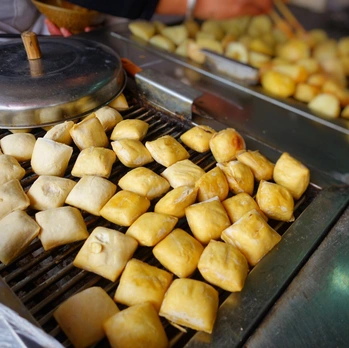
The best food is from street stalls. I tried grilled milk fan (烤乳扇) and bursting tofu (爆浆豆腐).
Grilled milk fan is made from cow's milk and is incredibly tasty. The skin is very chewy, with a strong milky flavor. It's filled with sweet rose-flavored bean paste. But... one is enough. More than that, and it gets greasy.
Jianshui tofu (建水豆腐) is grilled until slightly charred on the outside, with a soy milk-like center. I'm someone who doesn't eat soy milk, but this was really, really good.
"Looking Back Again" (再回首)'s cold chicken rice noodles (土鸡凉米线) looked very spicy but tasted sweet. So good~ I really can't get tired of rice noodles... The flavor is similar to the cold-skin noodles we eat.
Before I came, everyone told me that flower cakes (鲜花饼) are terrible, but freshly baked ones are really delicious. I bought one yogurt-flavored and one rose-flavored. Even the yogurt one, when it cooled down, was still good. The ones you've eaten might not be the real deal.
There are lots of twisted doughnut (麻花) sellers on Renmin Road. The young men handing out samples are very enthusiastic, with honeyed words. But the most eye-catching things were her and another smaller one—haha, unbearably cute.
I sent a postcard. Whoever receives it is lucky.
I didn't go up Wuhua Tower. Sister Ying said that from the top, looking down at the people coming and going, you feel like you've traveled through time. I didn't get to experience it, so I'll leave it for you all to travel through time.
The day I arrived was Saturday. I'd done my research beforehand—every Saturday, there's a Four Seasons Market (四季街市), and this week it was a dog matchmaking event. I walked through the ancient town to the market. It was super lively. I noticed that the cats and dogs in Dali are all huge. Is it because of the altitude?
Sea-Scooter Fish and Dali's Starry Sky
On my way back from the ancient town, I tried sea-scooter fish (海稍鱼). The老板娘 (shop owner) said sea-scooter fish is made from black carp (青鱼), available steamed or spicy-sour. "Sea-scooter fish" isn't a type of fish, just a cooking method. Since I was alone and couldn't finish a whole black carp, I ordered a bow fish (弓鱼). She said, "I'll steam it for you and give you a spicy-sour sauce on the side. You can try both flavors."
Honestly, it was just okay. And super expensive. I heard bow fish is the best fish in Erhai Lake, but who knows—maybe it's just the way it's cooked.
The老板娘 said it's getting colder now, and it gets dark earlier—around 7 PM. I thought to myself, it gets dark at 5 PM where I'm from... haha~ She said when the ginkgo trees here turn yellow, that's when real winter arrives.
After my shower, I went up to the rooftop. Dali's starry sky wasn't as beautiful as I imagined. I heard Shangri-La has the most beautiful sky. Yes! I! Want! To! Go!
Chapter Four: Xizhou's Tie-Dye and the Warmth of the Bai People
Sister Ying and the Electric Blanket Story
November 4th. Clear skies.
Last night, when I got back to the inn, I chatted with the owner's mother downstairs. We called her Sister Ying (英姐). She's from Guangzhou, super cute, and loves to talk. The inn was opened by her daughter. She said her daughter loves to travel, ended up here, and decided to stay. Usually, the daughter runs the place, but she's inherited her mother's love for adventure and took off again, leaving Sister Ying to look after things for a couple of days. I initially thought Sister Ying was the owner. She joked, "I'm the owner's mother, not the owner herself, hahahaha."
Before I went upstairs to sleep, Sister Ying said, "If you get cold at night, you can turn on the electric blanket." I thought... probably won't need it... hah... I ended up cranking the electric blanket to maximum—it was really cold at night. See, Dali is a place you never want to leave.
Sunrise from the Rooftop
Everywhere I go, I love to watch the sunrise and sunset. If I miss the sunset, I watch the stars and moon. Luckily, I've managed to see them all most of the time.
I got up at 7 AM and went to the rooftop. Just in time—the sun was getting ready to come out. Before coming to Dali, I read travel guides saying the temperature difference between day and night is huge. They weren't kidding. I was wearing a sweater and a scarf, but I was still shivering on the rooftop. My knees were freezing too. But getting to photograph such beautiful scenery made it all worth it—though I started coughing as soon as I got back to my room.
As the sun slowly rose, the mountain across from me changed from black to orange to green. There was a large cloud on the mountaintop, so even when the sun was higher, the peak remained black. At the same time, I could feel the warmth gradually increasing with the sun. Ah~ The morning air was just so good~ So blissful~
Sister Ying said this land is very good for succulents. Just toss a leaf anywhere, and it grows everywhere. If only I had a garden like this.
Braised Meat Rice Cakes and Xizhou's "Blue Continuation"
The advantage of staying in the ancient town is that there's good food right outside. I tried braised meat rice cakes (扒肉饵丝). The texture was a bit like rice cakes. I wasn't a big fan.
After breakfast, I took a Didi to "Blue Continuation" (蓝续) in Xizhou—a traditional tie-dye experience shop. The young woman inside first showed me how different plants become dyes and what colors they produce. Then she taught me how to dye and showed me the effects of different techniques.
I chose a long scarf made of cotton-linen. You can pick from their existing patterns or draw your own. You place the pattern under the fabric, use iodine to outline the design, and then start stitching. After all the stitching is done, you pull the threads, then boil the fabric to remove the iodine. Then it goes straight into the dye vat. Their dye needs sugar and alcohol added every day or two to keep it fermenting. After dyeing, it's left outside to oxidize. The blue color when it first comes out is actually green. It turns blue through oxidation in the air. After it turns blue, it needs to be washed several times. Once the excess blue is gone, it goes through a fabric softener, dries in the shade in the wind, and then it's ready to wear.
While waiting for it to dry in the shade (about two hours), I took a walk around Xizhou Ancient Town and tried rolled rice noodles (卷粉). I feel like all the various rice noodles in Dali taste pretty similar.
Following my little notebook plan, I also got a rose ice cream—delicious again.
I stumbled upon the internet-famous photo spot—the round building, a former telephone booth. This year's wheat hasn't been harvested yet, vast fields of golden yellow. I regretted not bringing my drone. It was absolutely beautiful.
When I got back from the ancient town, the young woman had already packed my scarf. I was very satisfied with my work and even more satisfied with Blue Continuation. I highly recommend trying this kind of ethnic craft. It's something that needs to be preserved. The patterns sold on the street can be replicated many times, but coming here and making your own unique piece—what's not to like? I love one-of-a-kind things.
Hand-drawn pattern, hand-dyed fabric, hand-removed threads—no matter how ugly, I love it.
(Later, in the second season of Happy Trio, Gina and Lang Lang also visited this shop. They've come up with many new techniques.)
The Beauty of Getting Lost and the Bai Auntie's Love Story
Happy and proud of my work, I headed back to Dali Ancient Town. Hah, with no sense of direction, I walked the wrong way and ended up in a Bai village. A Bai elderly auntie pointed me toward the main road. Well... I still didn't recognize it... and there was no ride back. An electric tricycle auntie gave me a lift back. Half an hour, cold wind blowing all the way, my nose got stuffy.
The scenery I accidentally stumbled upon was truly beautiful.
The auntie told me about how she met her husband. They weren't from the same village. She was on one side of the ancient town, he was on the other. When he came to her village to see her, the local boys beat him up. Her mother didn't like him either, thought he was too poor. In the end, the auntie stood her ground and said to her mother, "I'm going to marry him!" Listening to her, I almost cried.
Now, her husband washes her clothes every day. It's her way of proving to everyone that she didn't choose wrong. How wonderful~ Isn't that what life is about?
Dropped back at the ancient town, I went to sit at Fat Ding's again. I originally wanted a hot milk tea to warm up, but I was tempted by the rose yogurt—iced. I told the owner's father about my day's adventures. They were in stitches. You know what? Fat Ding's shop is like a late-night diner. You can come here with your joys or sorrows and talk about them.
Anywhere in Dali Ancient Town is nice for a stroll, but I don't recommend Fuxing Road—it's all clothes, pants, and bags.
Chapter Five: Wase's Starry Sky and Stories by Erhai Lake
The Bai Brother's Yearning
November 5th. Clear skies.
I got up in the morning, had breakfast, and headed to Haisho Park with my luggage. The Didi driver loved to chat. He said the Bai people are the only ethnic group in China that eats raw pork, and only the meat from under the pig's armpit. For them, serving raw pork to honored guests is the highest form of hospitality. Hmm... not a great mental image... Also, they can't marry Hui girls. Why? Because they can't eat together! Haha~
When I arrived in Xizhou, I stored my luggage at Blue Continuation. The Bai brother was incredibly kind. The road was bumpy, and he said my luggage would be hard to pull, so he carried it on his shoulder all the way to the door of Blue Continuation. I didn't know how to express my feelings. I felt like crying again.
The Bai brother really yearned to go to Shanghai. In his mind, Shanghai is a very prosperous place, with tall buildings, heavy traffic, and endless dazzling sights. In his understanding, Shanghainese people don't eat spicy food. I told him that now in Shanghai, you can find every kind of cuisine. Young people eat hotpot every few days, and it has to be spicy enough. The Bai brother was very surprised—clearly someone who "hasn't seen much of the world." I told him to come and see Shanghai. The world is big; you should come and see it.
Haisho Park, Overrated
The road to Haisho Park was closed for renovation. So I had to take a Bai auntie's electric tricycle. The ride was so bumpy, I thought I'd end up in the rice fields... It was really scary... The Bai auntie's mother was very hospitable and gave me a "baba" (粑粑)—where I'm from, we call it a steamed bun, but theirs was sweet. The Bai auntie said, "The crispy baba you eat is different from this." Hmm... Whatever makes you happy.

While I was scared of falling into the rice fields, I bravely ate the sweet bun. Yes, I wasn't afraid of poison. The Bai people are truly simple and kind. They are uncomplicated, without all the scheming of city folks.
Honestly, Haisho Park wasn't as beautiful as the internet says. A local Bai person told me that no one used to go there. It only became popular because of tourism. Although it's free, going there specifically, like I did, is really not necessary. If I'd known it was like this, I would have just taken a quick stroll yesterday afternoon and saved some money today—I spent over 200 yuan on Didi alone.
On the way back to Xizhou Ancient Town, I saw the "husband and wife trees." The Bai auntie said many people think the tree in Xizhou Ancient Town is the husband and wife tree, but it's actually the "yin-yang tree." When a Bai person dies, they walk around this tree three times. So in the eyes of the Bai people, the yin-yang tree is very unlucky.
Wase's White House and the Starry Sky
On the way to Wase, the driver uncle started chatting again. Is it because I look like I love to talk, or is it just that everyone I meet happens to be chatty? Everyone told me a lot about local specialties and their views on the government, as well as their own family stories.
If you're staying in Dali Ancient Town and want to go to Wase, you can also take bus #8 and transfer to bus #4. But it seems you have to go back to the city center first. Didi is more convenient, just... expensive.
Speaking of Manshan White House (缦山白舍), it was recommended by a friend. I only found out after booking that Wase is a fishing village. It seems I have an unbreakable connection with fishing villages.
The owners of White House were very nice. They're from Guangzhou. I kept changing my itinerary before coming, going back and forth several times, but they never got impatient. Their daughter is very pretty. Her name is Yanran, but we all call her Duoduo. She's super cute and very likeable. She started playing with me as soon as I arrived, not shy at all, and even asked to see photos of me as a child. The owners have raised her well—don't go with strangers, don't eat food from strangers, etc. Living in a busy inn, you inevitably meet all kinds of people, and you can't be sure none of them have bad intentions.
The front desk guy was also quite handsome. He'd also moved there from Shanghai, but he wasn't Shanghainese. Very polite. I felt like there should be a girl working there too.
Everything was great here, except for one thing—it's right by the road, so cars driving by at night are very loud. For someone like me with sleep issues, it was awkward.
The front desk guy told me that today was Friday, and there was a market in town. He said it was very lively and I should check it out. The market in Wase town wasn't what I expected. There weren't many young people. Instead, the elderly locals came with fruits, handmade clothes and shoes, and some daily necessities to sell. Of course, not many people were buying. There were also some food stalls. I tried their potato pancake, pea flour jelly, and crispy baba. Personally, I didn't like the baba. It's just a baked dough ball. I don't know why it's so popular.
I originally planned to take my drone to shoot the sunset—Wase is said to have the most beautiful sunsets. I took a shower and rushed to the rooftop... The sun had already set. I didn't even see a single patch of fiery clouds! So annoying.
I was probably too tired. I fell asleep around 7 PM. I woke up around 2 AM and debated whether to go up to the rooftop to photograph the stars. My technique isn't great, and I always want to practice, but I'm afraid of the dark. I paced around my room, torn. Finally, I steeled myself, put on my down jacket, and went up—after all, the whole reason I came to Wase was to see the starry sky.
This place hasn't been developed. There's nothing. The sky is perfectly clear, incredibly beautiful. But I was so nervous, I forgot to take a video. The stars were even more beautiful than in the ancient town. They were right in front of me, so close. Ah~ My technique is still not good enough... The photo was shaky. I need to bring a DSLR next time. My Sony RX100 is too light; it moves when the wind blows.
Chapter Six: Chance Encounters in Shuanglang and the Truth of Life

Sister Zhang's Story
November 6th. Clear skies.
Early morning in Wase town. Clean and tidy. The air was especially good.
While having breakfast at the inn, I met a Sister Zhang from Hunan, and we started chatting. I initially thought she was just a retired worker on vacation. It turned out she was working on the Yunnan Central Water Diversion Project—diverting water from Erhai Lake to Lijiang, Kunming, and other places...
You should also read:

Body in Hell, Heart in Heaven: A Pilgrimage Through Tiger Leaping Gorge — A Dialogue Between Heaven and Earth
Body in Hell, Heart in Heaven: A Pilgrimage Through Tiger Leaping Gorge — A Dialogue Between Heaven and Earth Introduction: When the Gorge Splits Open Beneath Your Feet Some say Tiger Leaping Gorge is the closest place on Earth to the border between "hell" and…
Continue reading...
A Spiritual Journey to Lugu Lake in Lijiang: Experiencing the Legend of the Kingdom of Women! (Reproduction and Hotlinking Prohibited)
A Spiritual Journey to Lugu Lake in Lijiang: Experiencing the Legend of the Kingdom of Women! (Reproduction and Hotlinking Prohibited) Off-road自驾, food, hotel and民宿 reviews, Featured Traveler, Tank 300 owner, 200,000 km of self-driving experience. WeChat: y01294987 Ninglang Yi Autonomous County 2010.11.08 · 7 days…
Continue reading...
Hiking Around Lugu Lake: Measuring This Mysterious Highland Pearl on Foot
Hiking Around Lugu Lake: Measuring This Mysterious Highland Pearl on Foot Introduction: A Date with the Lake At the border between Yunnan and Sichuan provinces lies a highland lake embraced by mountains, embedded like a sapphire in the folds of the Hengduan mountain range. Here,…
Continue reading...