South of the South, Embracing the Spring: A Spring Festival Road Trip Through Xishuangbanna, Jianshui, and Fuxian Lake
South of the South, Embracing the Spring: A Spring Festival Road Trip Through Xishuangbanna, Jianshui, and Fuxian Lake
Before We Set Off: What Spring Should Look Like
The spring of 2023 arrived with an anticipation like no other. After a long wait, everything finally began to awaken, and the seed of travel quietly sprouted in our hearts. Some say that travel for adults is about temporarily setting aside the trivialities of life, taking your family along to find familiar warmth in unfamiliar places. And Yunnan, the "Colorful Clouds South of the Mountains," a neighbor to the mountains and waters of Sichuan, never fails to surprise us with its ever-changing landscapes.
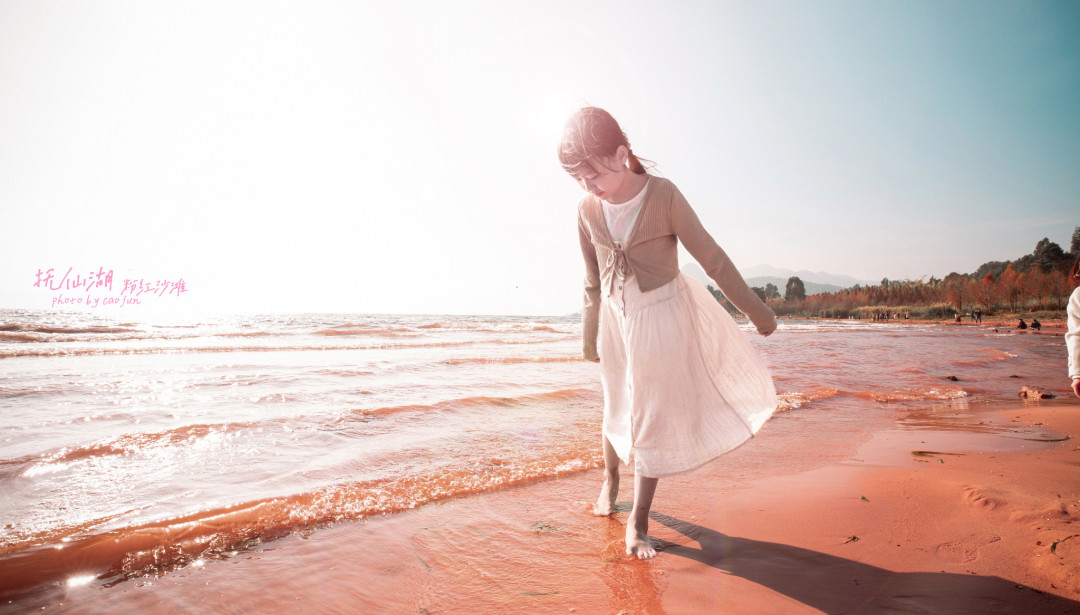
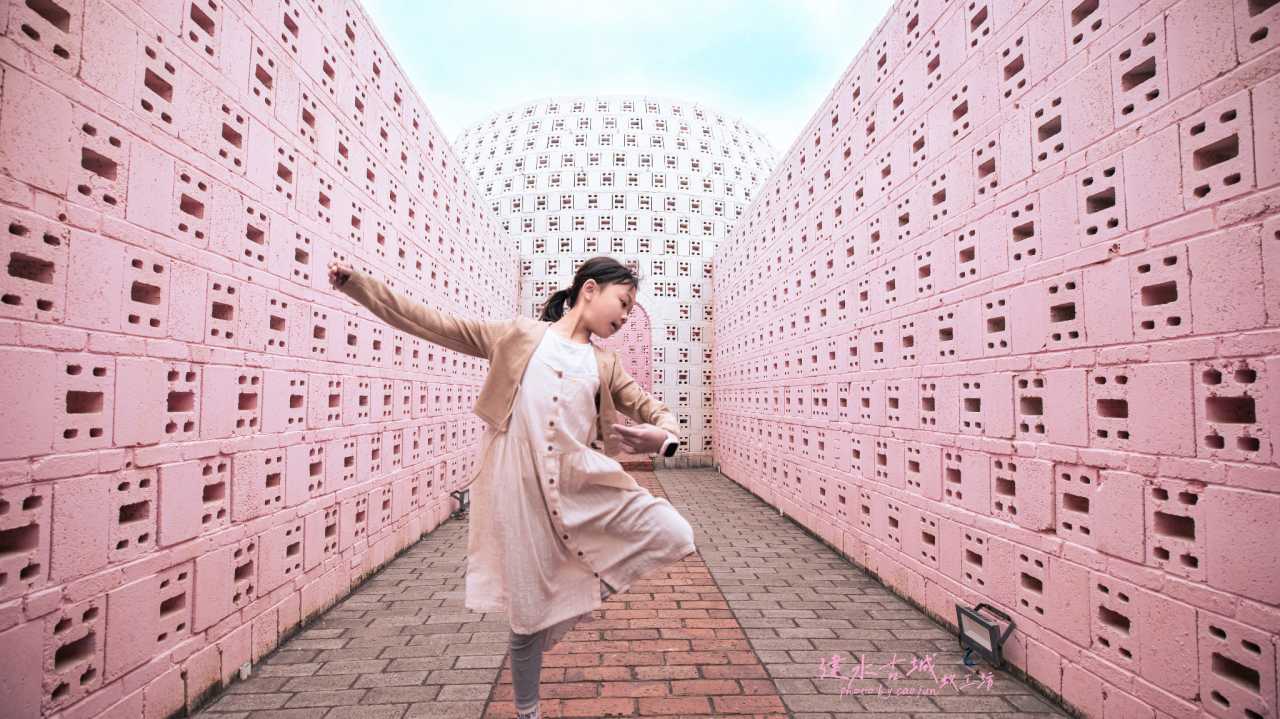
From the wind, flowers, snow, and moon of Dali, the majesty of Jade Dragon Snow Mountain, the seagulls of Kunming, to the vibrant hues of Mile—Yunnan is like a versatile magician, pulling out a different trick every time we meet. This time, we decided to head all the way south, letting our wheels carry us through three distinct landscapes: first, the tropical warmth of Xishuangbanna; then, the scholarly charm of Jianshui Ancient Town; and finally, a romantic pink encounter by the shores of Fuxian Lake.
Xishuangbanna: A Tropical Extravaganza
Wild Elephant Valley: Up Close with the Giants
Starting from Chengdu, our first stop was Wild Elephant Valley. Arriving at 1 PM, we found the winding mountain road already lined with cars—the festive buzz of the Spring Festival was palpable here. If you set off in the morning, I recommend driving straight to the South Gate parking lot, as you'll enter right next to the Elephant Cafeteria and the Rainforest Theater, saving you a lot of walking.
At the Elephant Cafeteria, a small fruit basket (cucumbers) costs 30 yuan, while a large one (cucumbers and bananas) costs 80 yuan. A tip from experience: the bananas were too green, and the elephants completely ignored them. We bought two small baskets and, amid the dense crowd, struggled to find a good spot to snap a few photos of our kid feeding the elephants. We also took a quick stroll through the Butterfly Garden and the Lizard Garden. As for the much-touted "Rainforest Elephant Walk," we skipped it since spotting real wild elephants requires a fair bit of luck.
Gaozhuang Xishuangjing: Living in a Postcard
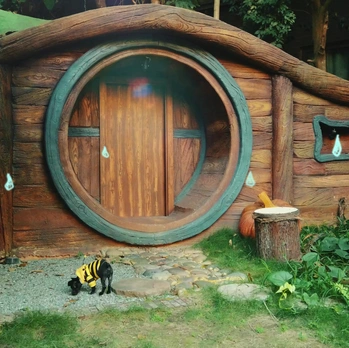
For the night, we checked into the Prague Light Luxury Hotel in Gaozhuang, styled after a Turkish cave hotel—pure white cave walls, pink curtains, and even the corridor leading to the restaurant looked like a painting. Our daughter took plenty of "glamour shots" here, and the pumpkin-shaped wooden cabins outside the hotel were straight out of a fairy tale.
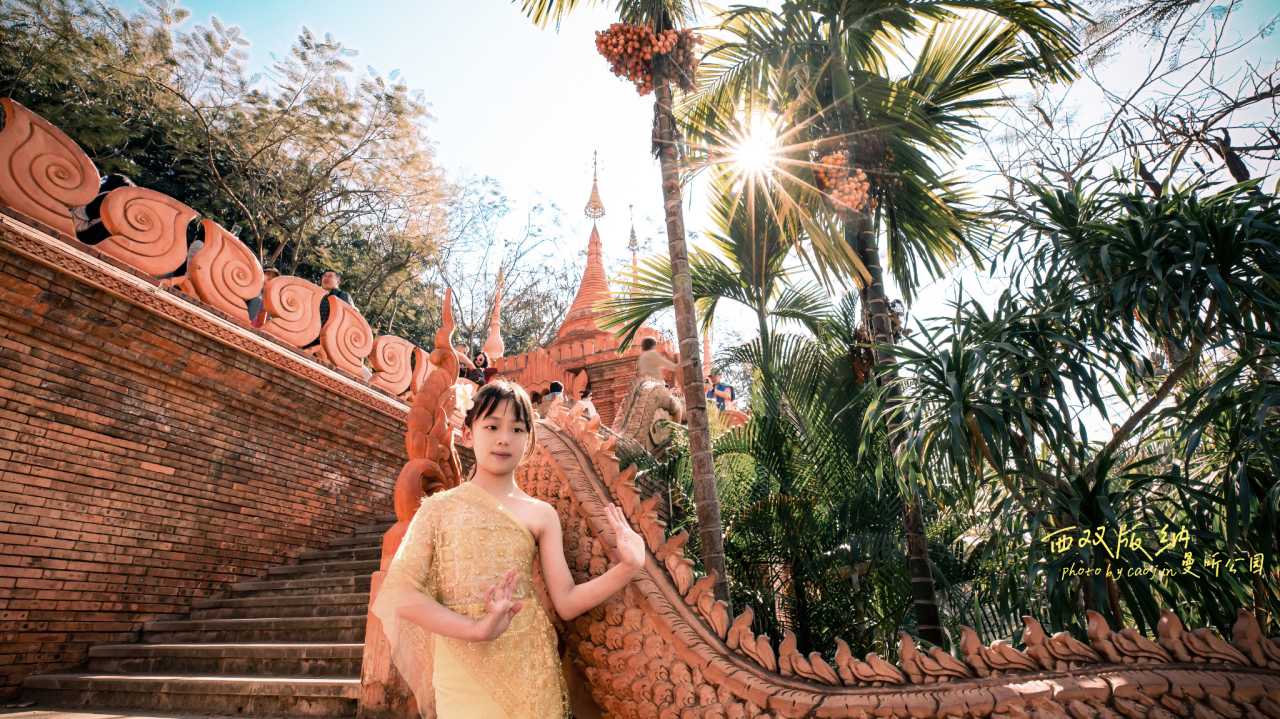
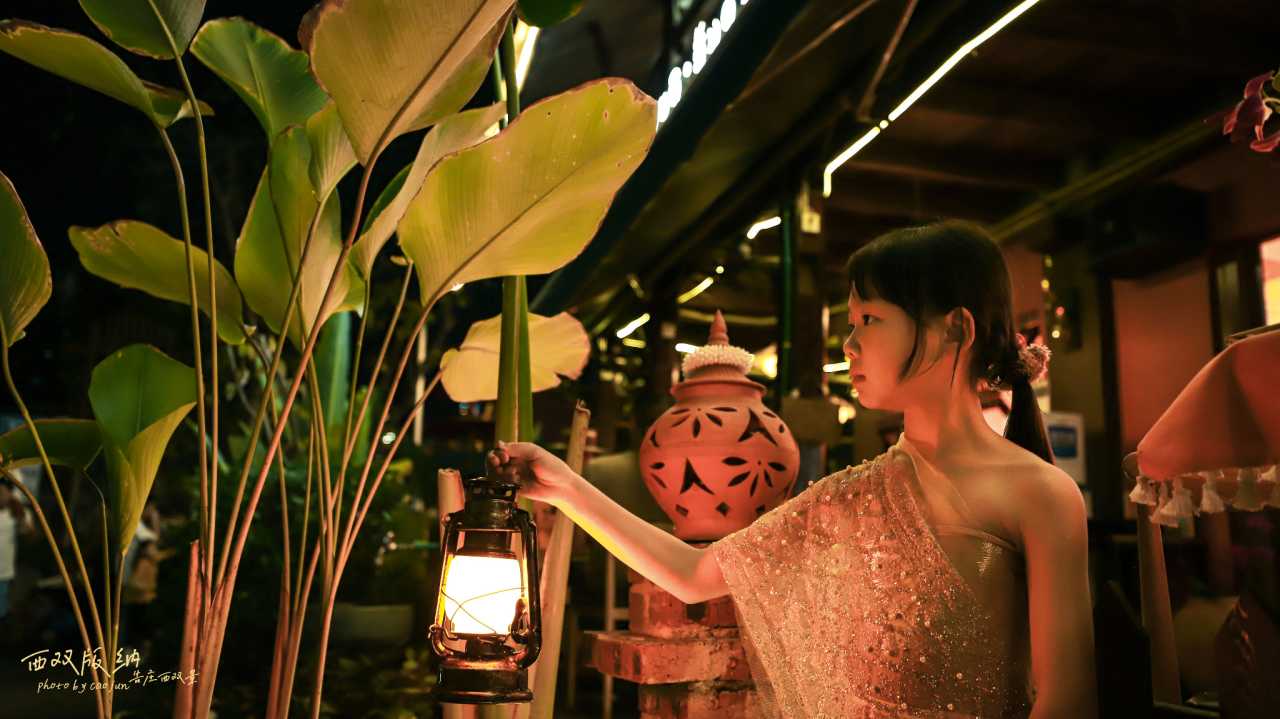
As night fell, the Gaozhuang Night Market came alive. Dai-style shops lined the streets, with photography studios and restaurants splitting the scene. Our daughter couldn't resist a Dai ethnic costume shop, so we quickly got her a set. After changing into it, we snapped a few photos, and the little girl was absolutely thrilled.
The Grand Golden Pagoda and Starry Night Market: The Warmth of Everyday Life
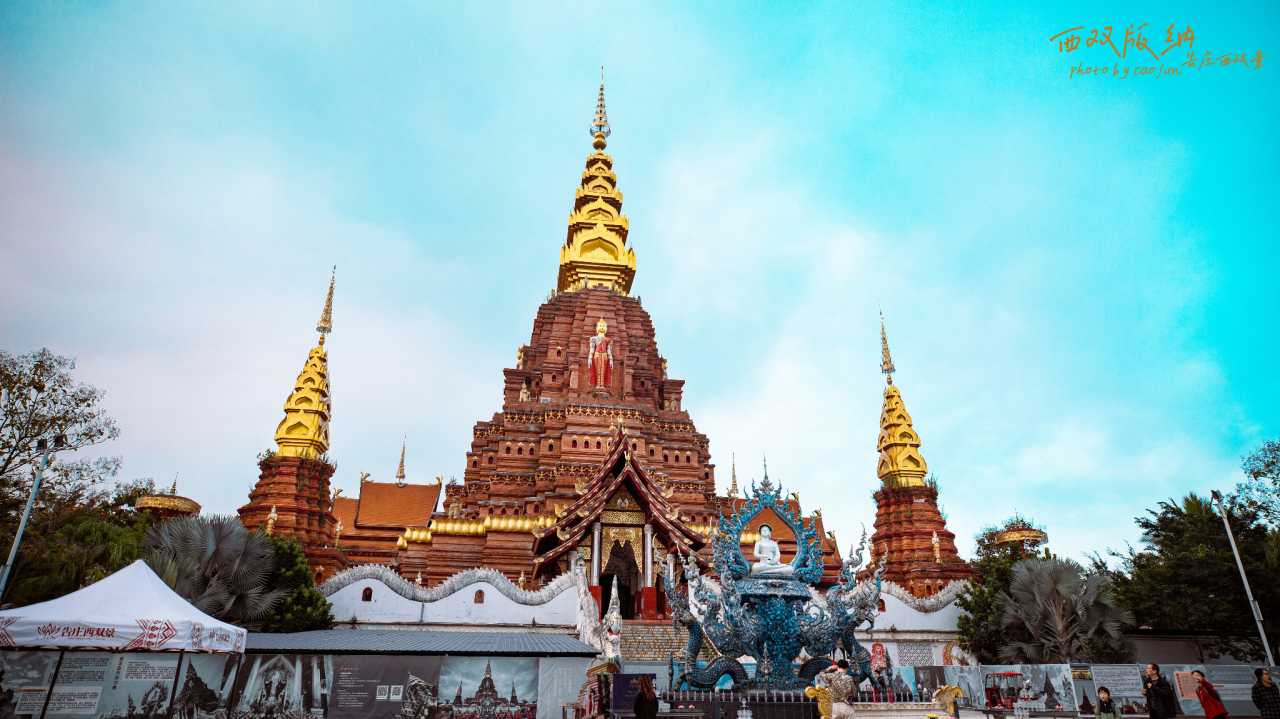
The Grand Golden Pagoda is the centerpiece of Gaozhuang, stunning when lit up at night. Remember, no revealing clothing is allowed inside the temple, so bring a T-shirt to throw on over your outfit. After visiting the pagoda, we found a Southeast Asian restaurant in a nearby alley—Sabai Dee Exotic Cuisine. Every table had a little kerosene lamp as a prop, and the curry shrimp was so delicious that we came back the next day.
The Starry Night Market, billed as the largest night market in Southeast Asia, was packed with travel photographers and live-streamers on the steps of the Golden Pagoda. Yunnan tea, Dai accessories, Southeast Asian handicrafts—the selection was endless. Our daughter bought a full set of Thai-style jewelry. Chatting with the vendor, we learned that business had been terrible during the two years of the pandemic, with the entire street empty of customers. Now, finally, the clouds had parted and the moon shone bright—a reminder that life, too, has its lows, but things always get better.
Manting Park: Tropical Vibes in a Royal Garden
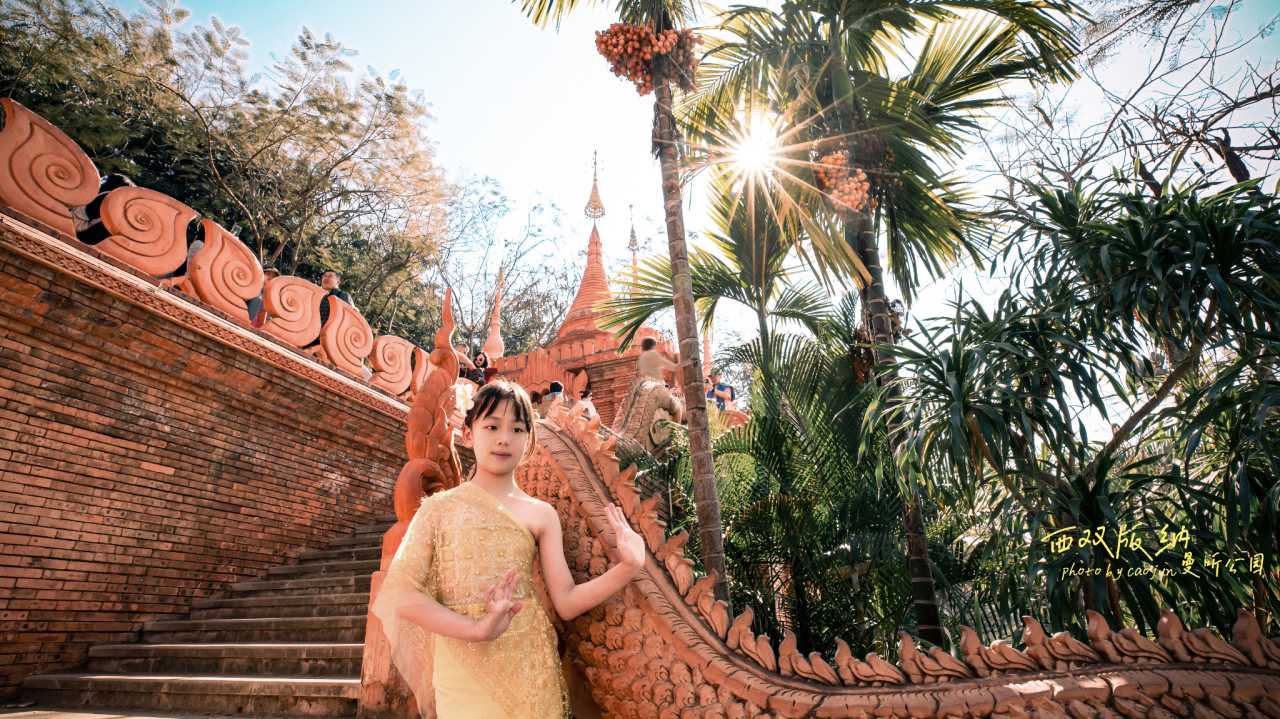
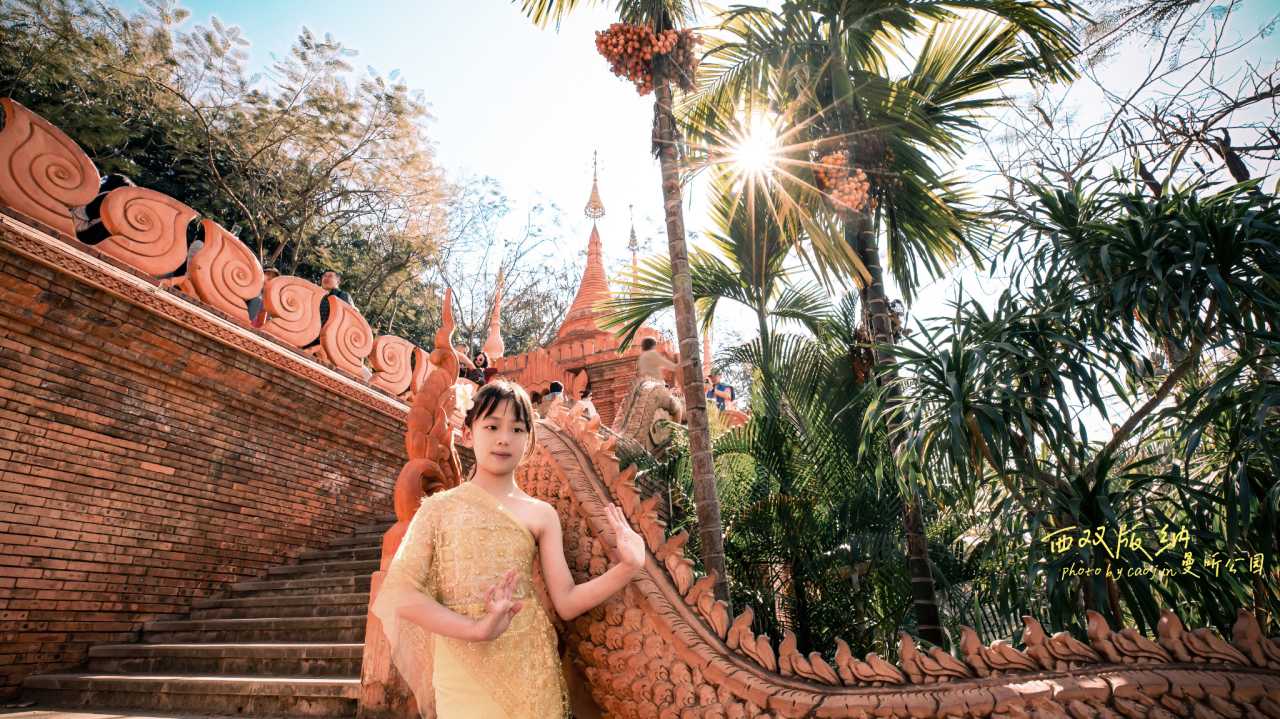
Originally the royal garden of the Dai king, Manting Park features the magnificent ruins of the Dai King's Palace, the renowned General Buddhist Temple, and a lush tropical rainforest. I highly recommend the Royal Elephant Café—one of the most photogenic spots in the park. Here are a few photo tips:
- Spot 1: The staircases on either side of the café, with the dragon heads as a backdrop.
- Spot 2: The same staircases, using the dragon body as a background wall (choose your angle to avoid the crowds).
- Spot 3: The red building in front of the café.
- Spot 4: The lawn by the river, under the tropical plants.
Walking from Manting Garden to the Buddhist cultural area, you'll pass the Octagonal Corridor Bridge, with its roof and eaves full of Dai charm. You can feed the fish from the bridge, and the kids love watching the fish swarm in the river below.
The General Buddhist Temple: The Pinnacle of Dai Architecture
The General Buddhist Temple is noticeably more refined in its architecture, with intricate ornamentation and clear details. The Thai Supreme Patriarch and the Thai Princess have both visited here. The main hall's eaves are guarded by three Buddha statues on each side, while the bell and drum towers on either side reflect Han Chinese Buddhist traditions—a testament to Xishuangbanna's historical role as a meeting point for Central Plains and South Asian cultures.
The staircase on the right side of the main hall is an excellent photo spot, with the golden walls so bright they almost hurt your eyes. The Buddha hall to the right of the main hall was built by the Thai King's sister to celebrate the birthday of King Rama IX. If you've visited the Grand Palace in Thailand, you'll notice the striking resemblance. In short, the General Buddhist Temple is the most exquisite Buddhist temple in Xishuangbanna, bar none.
Gaozhuang Fireworks: A Ritual of Saying Goodbye to the Old Year
On New Year's Eve, the Grand Golden Pagoda put on a fireworks show. We deliberately chose a restaurant in a nearby alley, and when the time came, we dropped our chopsticks and ran over. As the firecrackers rang out the old year and the spring breeze brought warmth, we watched the sky light up with fireworks and silently made wishes—hoping that after the pandemic, both our country and our families would thrive.
After the show, we headed back to the Starry Night Market. Our daughter changed into her Dai costume, added the headdress and earrings, and suddenly looked like a young lady. Walking through the market to the Mekong River Floating Market, the "five bamboo shoots" building, the Grand Golden Pagoda, the Starry Night Market, and the Mekong River formed a stunning nighttime panorama. The small pointed wooden boats along the river, filled with flowers and fruit, had a distinct Thai floating market vibe.
Wangtianshu (Sky-High Trees): Exploring the Rainforest by Land, Water, and Air
This was my favorite spot in Xishuangbanna. The ticket includes a boat ride, where you first cruise along a wide river, enjoying the breeze and the tropical rainforest views. Under the daily 30°C heat of Xishuangbanna, this kind of natural relaxation felt like pure luxury.
The highlight was the高空丛林穿越 (high-altitude jungle crossing)—a suspension bridge 34 meters high, built by connecting dozens of sky-high trees, offering a bird's-eye view of the entire rainforest. I'm not afraid of heights, so I had a blast, but if you are, I wouldn't recommend it. We saw people queuing for ages, only to flee in panic when they saw the height. At the exit, there was also a "flying through the air" costume experience over water. Due to time constraints, we missed places like the Botanical Garden, but leaving some things for next time is part of the fun.
Jianshui: The Slow Pace of an Ancient Town
Zhu Family Garden: The Grand View Garden of Southern Yunnan
Heading north from Xishuangbanna, we arrived in Jianshui. My first impression of Jianshui might have come from a documentary or a friend's social media post. What drew me in, besides the exquisite ancient architecture, was the rich cultural atmosphere and the mouthwatering aroma of local food that filled the streets.
The Zhu Family Garden is a large private garden from the late Qing Dynasty, comparable in status to the Liu Family Manor in Dayi, Chengdu. I recommend buying a combo ticket (Zhu Family Garden + Confucian Temple + Imperial Examination Hall), which also comes with a mystery box experience voucher. Unfortunately, we lost the combo ticket right after visiting the garden. Wandering through this residence of a late-Qing gentry family offered a glimpse into the rise and fall of a dynasty. With its carved beams, painted rafters, and overlapping brackets, walking through it felt like a journey through time.
Jianshui Confucian Temple: One of the Top Three Confucian Temples in China
In terms of scale, architectural quality, and preservation, the Jianshui Confucian Temple is second only to the Qufu Confucian Temple and the Beijing Confucian Temple. Half of the successful candidates in Yunnan's imperial examinations came from Lin'an Prefecture (Jianshui's historical name), a testament to the region's thriving scholarly tradition.
We arrived at the temple at sunset, and the golden rays streaming through the main gate were breathtaking, highlighting both nature's wonder and the brilliance of ancient architecture. The carved door panels in front of the Hall of the Great Sage each told a story. We searched for patterns like "Three Rams Bring Bliss" and "Carp Leaping Over the Dragon Gate" with our daughter. She tied a wish for academic success at the Hall of the Great Sage. Sitting quietly under the red walls and gray tiles, the two of us enjoyed a rare moment of parent-child bonding. We stayed until the temple closed, enjoying the peace of having the place to ourselves while secretly worrying we might get locked in—a funny mix of emotions.
Night Stroll in the Ancient Town: Slow Living Under the Chaoyang Gate
Chaoyang Tower is known as the "Little Tiananmen of the Southwest," built 28 years earlier than Beijing's Tiananmen. Sitting under this centuries-old tower, watching elderly women in traditional dress doing square dancing and old men smoking long pipes, time seemed to slow down.
In the evening, we wanted to try the steam pot chicken (汽锅鸡) at Lin'an Restaurant, but they were sold out. Hungry, we walked from the east end of town to the west just to try the grass sprout rice noodles (草芽米粉) recommended by Chef Nicholas Tse. The rolled rice noodles were tasty, but my mind was still on the steam pot chicken. Back on Hanlin Street in the east, we randomly picked a barbecue joint. The food was delicious and cheap—we ordered a huge spread for just over 60 yuan, which in Xishuangbanna would have barely covered two skewers of pork belly. Their steam pot chicken was also fantastic, tender and flavorful. One note: Jianshui food tends to be on the salty side, so you can ask for less salt when ordering.
Ant Workshop: A Collision of Color and Geometry
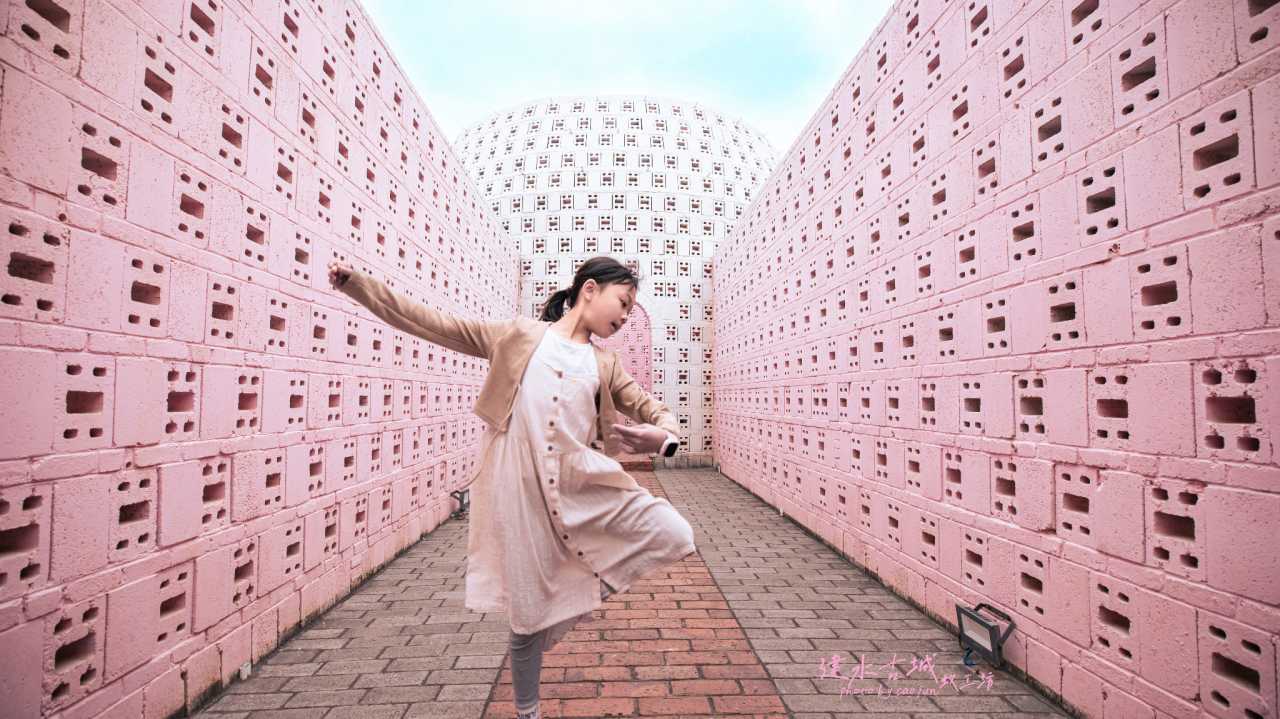
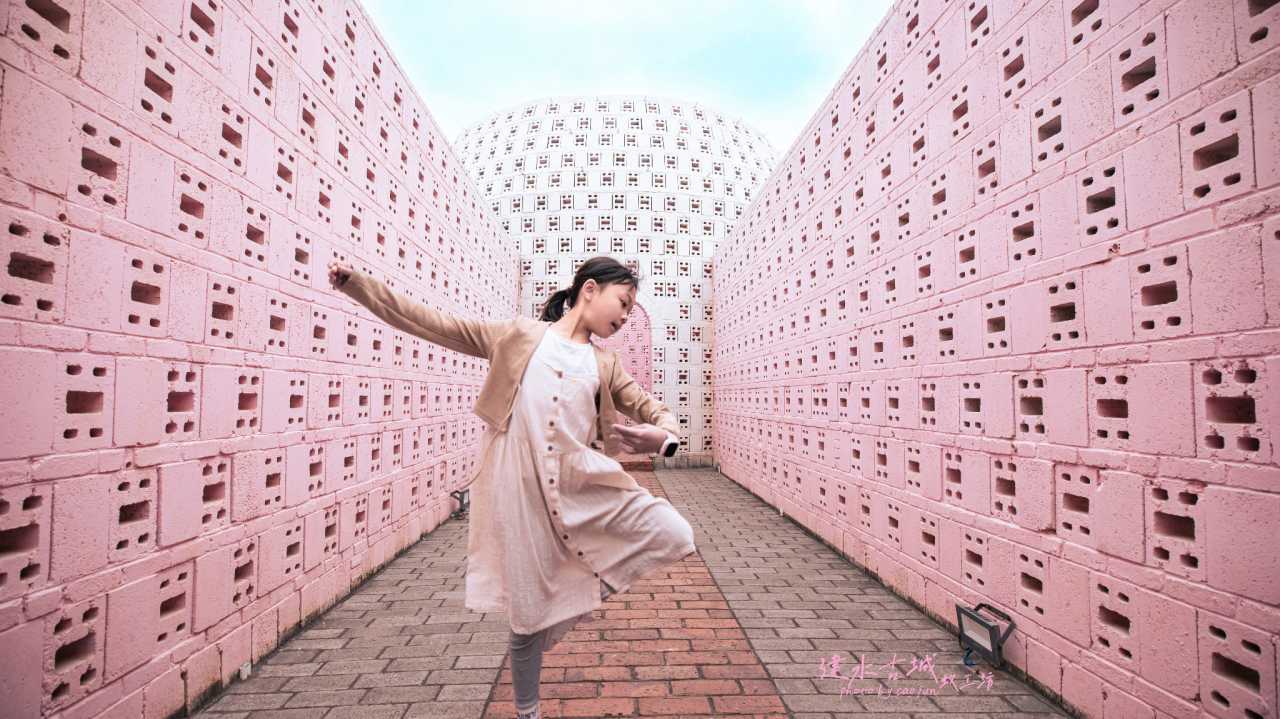
This work by Luo Xu, the same designer as Mile's Dongfengyun, is all about vibrant colors and geometric patterns. Large swaths of pink, green, yellow, and blue make up the entire landscape, like stepping into an ant planet. Pick a colorful box that catches your eye and start snapping away.
Ant Workshop actually has a complete storyline: a group of ants finds fire, multiplies, and builds a castle for their queen. The surrounding colored earth formations resemble thousands of ant nests, a purple flower sea blooms in the basin, and the Tower of Fire stands atop the earth forest. The site also includes a cafeteria, hotel, Kiln Prison Café, and Purple Pottery Art Hall—a one-stop shop for food, lodging, and activities.
Double Dragon Bridge: The Peak of Chinese Ancient Bridge Architecture
Double Dragon Bridge (Seventeen-Arch Bridge) was a place I had long admired, ever since reading about it in Mao Yisheng's History of Ancient Chinese Bridge Technology. Originally built with three arches during the Qianlong reign of the Qing Dynasty, it was later expanded to 17 arches during the Daoguang reign due to river flooding, making it the oldest bridge in Yunnan.
The stone slabs on the bridge surface, worn smooth by years of use, glistened in the sunlight. A three-story pavilion stands at the center of the bridge—a structure I've never seen elsewhere. Surrounded by natural farmland, with wheat waves rippling in the breeze, a winding river, and this magnificent ancient bridge, it's no wonder photographers love it.
Near Double Dragon Bridge is the Jianshui Small Train station. The flowering trees along the tracks reminded me of cherry blossoms in Japan. The train stops for a while at the station, and even passengers without tickets can take photos on the last carriage—a very thoughtful touch. The Xianghui Bridge Station is a French-style building, combining Chinese single-eave roofs with French facades for a unique charm. On the way back, we strolled along the riverbank, enjoying the spring breeze and the pastoral scenery—utterly delightful.
In Conclusion: The Meaning of Travel
From the fiery passion of Xishuangbanna to the timeless elegance of Jianshui and the romantic encounter by Fuxian Lake, this journey southward showed us a different side of Yunnan.
Perhaps the meaning of travel lies in seeing more of what we haven't seen and meeting more of the unknown beauty out there. And traveling with family is the perfect remedy for shedding life's distractions and savoring the joy of each other's company.
As the old saying goes: "Either read or travel—your body and soul must always be on the move." May we all embrace the spring, head south, and meet the best version of ourselves along the way.
You should also read:

God’s Abandoned Palette: A Self-Drive Journey Through Yunnan’s Dongchuan Red Land
God’s Abandoned Palette: A Self-Drive Journey Through Yunnan’s Dongchuan Red Land Travel has never been about reaching some distant geographic coordinate. It’s about encountering, along the way, the version of yourself buried beneath the rubble of daily routine. During this May Day holiday, I finally…
Continue reading...
Two Girls' Graduation Trip: Dali and Shuanglang – A Poetic Farewell to Mountains and Sea
Two Girls' Graduation Trip: Dali and Shuanglang – A Poetic Farewell to Mountains and Sea Preface: Catching the Tail of Youth, Heading South During our senior year of college, my roommate and I – two girls studying in Beijing – decided to bid farewell to…
Continue reading...
Body in Hell, Heart in Heaven: A Pilgrimage Through Tiger Leaping Gorge — A Dialogue Between Heaven and Earth
Body in Hell, Heart in Heaven: A Pilgrimage Through Tiger Leaping Gorge — A Dialogue Between Heaven and Earth Introduction: When the Gorge Splits Open Beneath Your Feet Some say Tiger Leaping Gorge is the closest place on Earth to the border between "hell" and…
Continue reading...