Southeast Yunnan: Embracing the Landscape, Finding Poetry and the Horizon
Southeast Yunnan: Embracing the Landscape, Finding Poetry and the Horizon
When the concrete and steel of the city press down until you can barely breathe, when the clatter of keyboards drowns out the songs of birds and insects, a silent call for escape stirs within us. This time, I set my sights on Southeast Yunnan — a land hailed by Chinese National Geography as "Yunnan's Last Hidden Paradise." Over seven days, from the endless lotus lakes of Puzhehei to the molten gold sunsets of Yuanyang's rice terraces, from the century-old charm of Bisezhai Station to the exotic border allure of Hekou Port, every step felt like turning the pages of a vivid, living anthology of mountain-and-water poetry.
Why Southeast Yunnan?
This was my fourth journey to Yunnan. On previous trips, I had experienced the romance of Dali's wind, flowers, snow, and moon, the ancient alleyways of Lijiang, and the sacred mystery of Shangri-La. But Southeast Yunnan remained an unfulfilled dream. Here, there is no overwhelming commercial clamor, no shoulder-to-shoulder crowds. What you find instead are the most primal landscapes, the most genuine local traditions, and corners polished smooth and warm by the passage of time.
On April 30, 2025, my friend and I set off from Guangzhou, embarking on this seven-day deep exploration. Our per-person cost was moderate, but the experience far exceeded expectations — the shift from rainy to clear skies made every scene feel as if God Himself had adjusted the colors.
Puzhehei: Stepping Into a Breathing Ink-Wash Painting
First Encounter, Mountains and Waters Enter the Dream
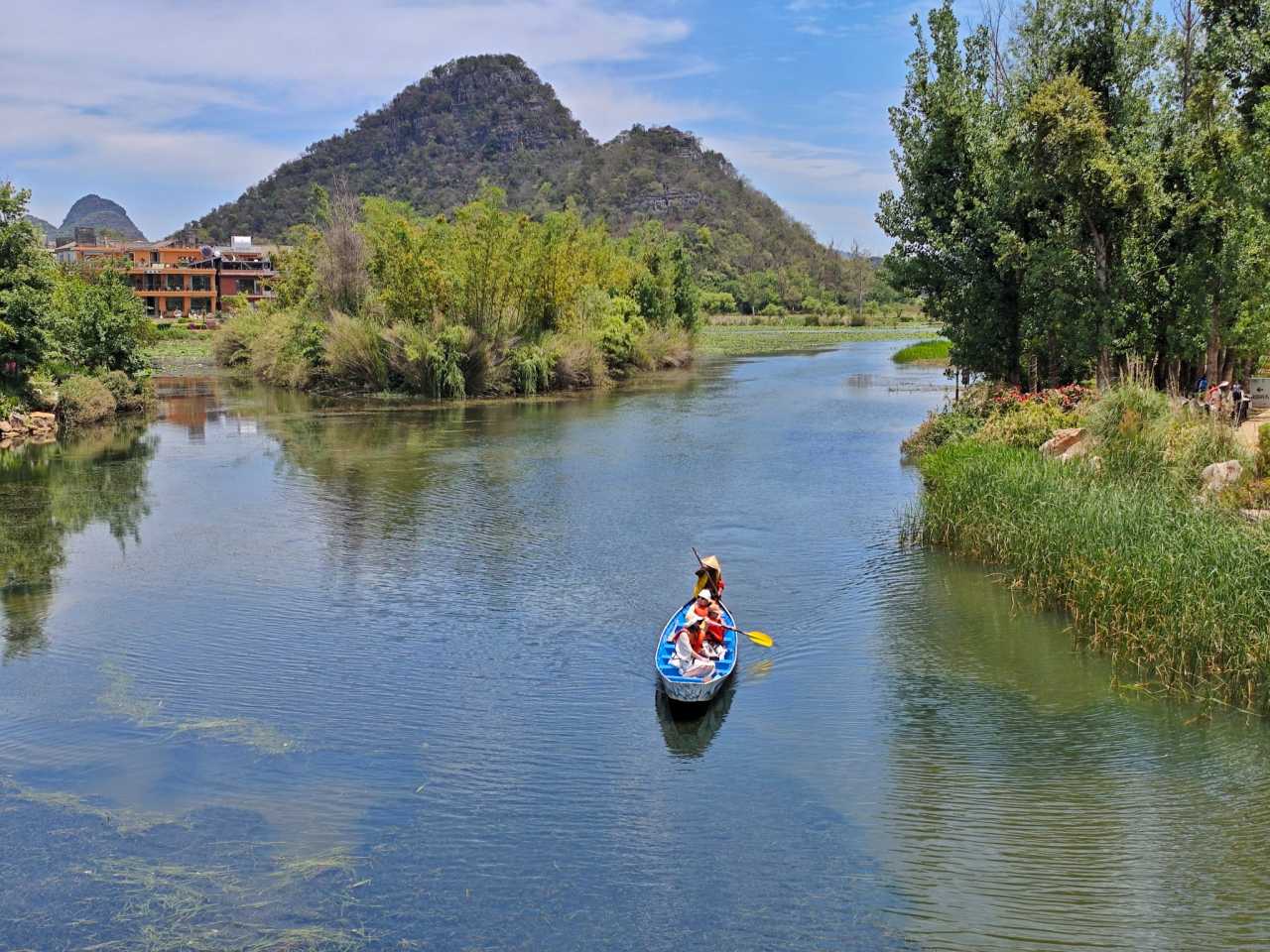
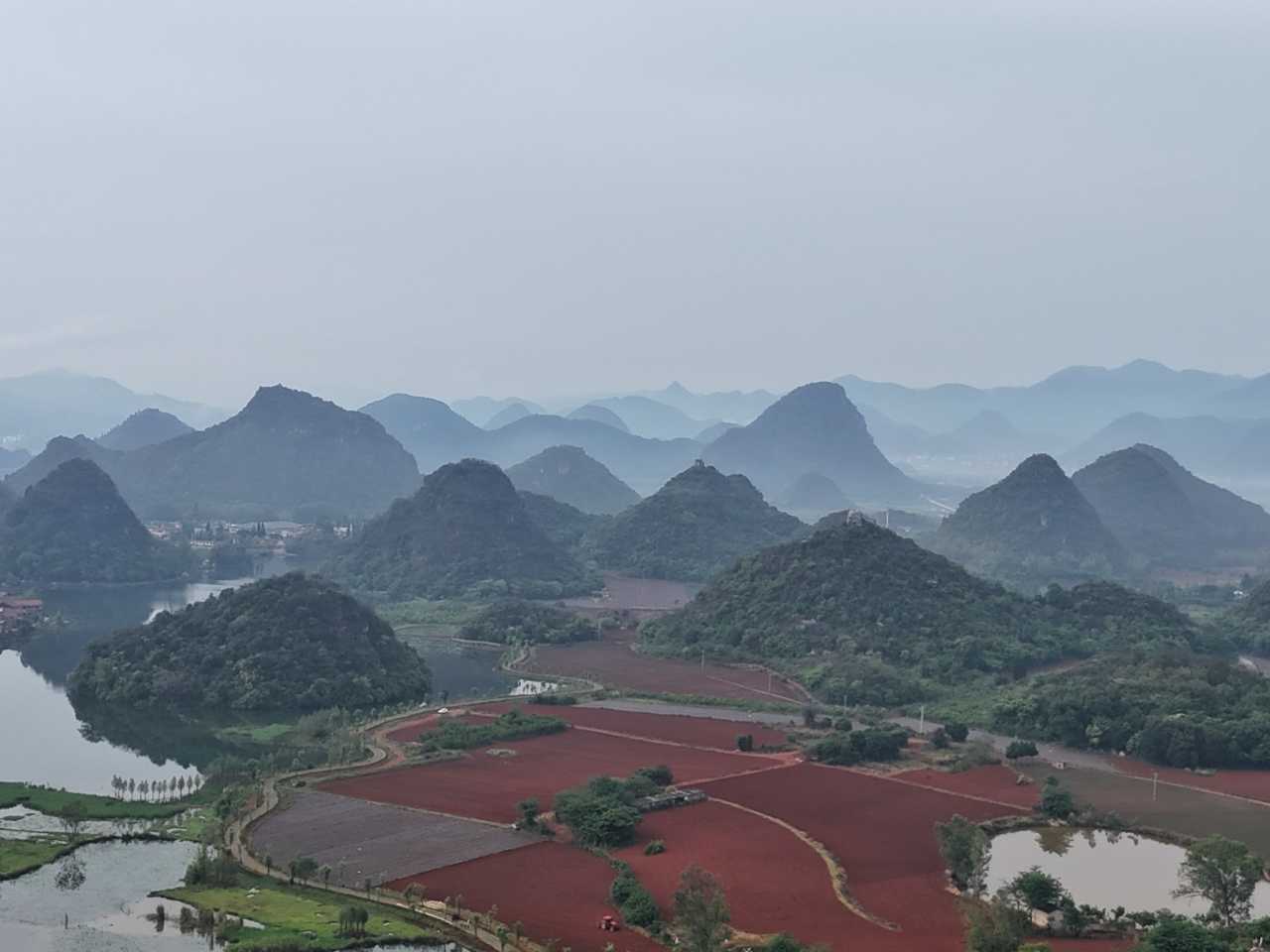
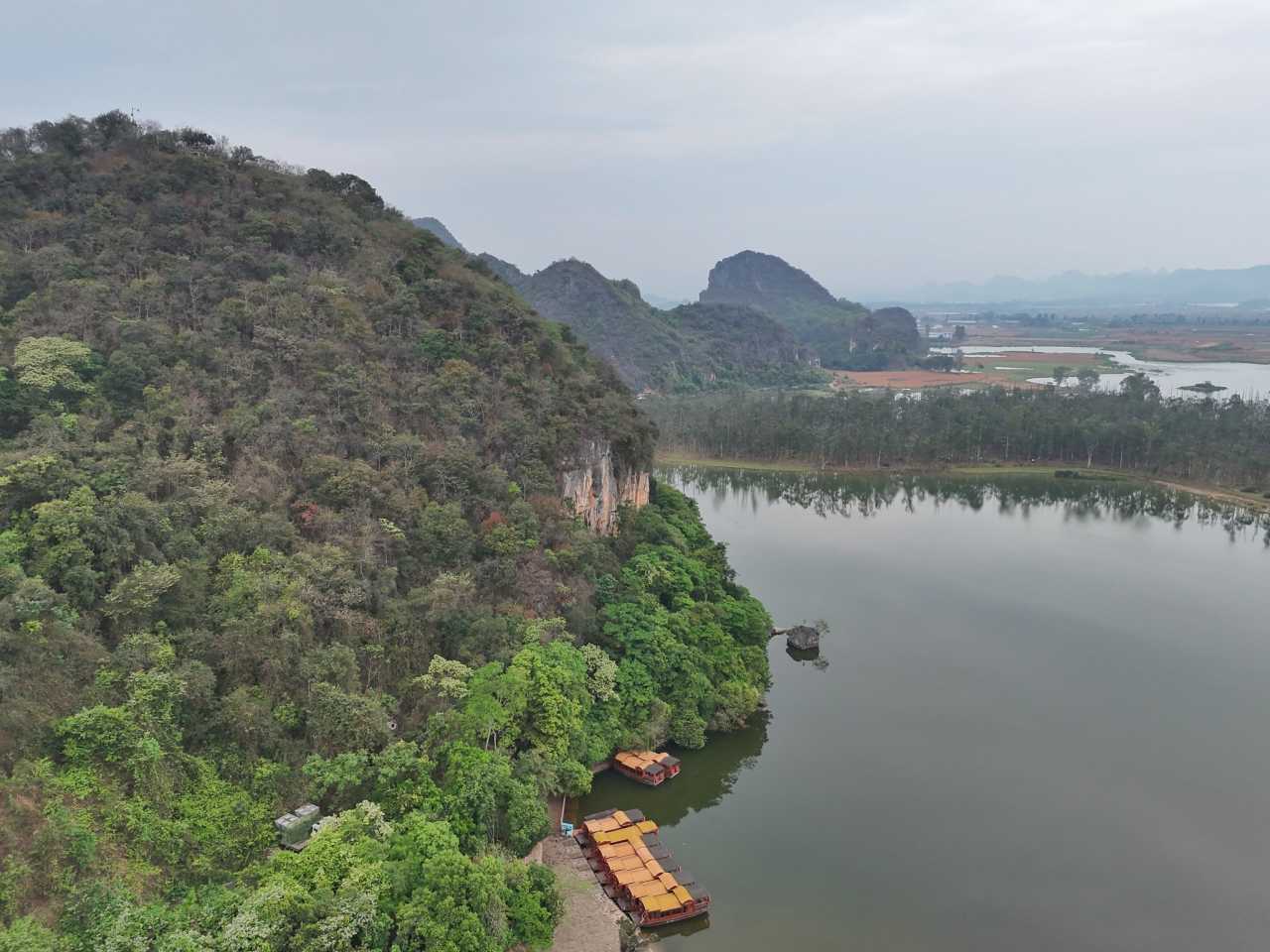
"The lotus leaves stretch to the horizon, an endless sea of green; the lotus blossoms catch the sunlight, a different shade of red." — When this line from a textbook materialized before my eyes, I stood speechless. The mountains and waters of Puzhehei are a masterpiece sketched by nature's finest hand. The rolling karst peaks stand like green giants, silently guarding this land; the lake is so clear you can see the bottom, reflecting the sky, the hills, and the trees along the shore. A gentle breeze stirs the water into a shimmer of light.
Only by drifting on the lake can you truly grasp the magic of "a boat glides on blue waves, and you wander within a painting." The small boat cuts slowly through the water, while green hills, villages, and lotus ponds unfold on both banks like a flowing landscape scroll.
Getting There: A high-speed train takes you directly to Puzhehei Station. From there, you can take a taxi or bus route 8 (5 RMB, or 10 RMB for the peak-season express). Self-driving is also a great option — the scenery along the way is breathtaking.
Best Time to Visit: June to August is the peak blooming season for the vast lotus fields, when Puzhehei is stunningly beautiful. Outside the lotus season (November to April), the scenery is relatively plain, so plan accordingly.
Heads-Up: Don't climb Green Dragon Mountain in the rain — the stone steps get dangerously slippery. Always buy tickets through official channels and ignore touts on the roadside. Bring high-SPF sunscreen, a waterproof phone pouch, seasickness medication, and mosquito repellent.
Lovers' Bridge: A Symbol of Romance
No trip to Puzhehei is complete without visiting Lovers' Bridge. This bridge spans the crystal-clear Puzhehei Lake, stretching about 100 meters in a graceful arc, with a stone pagoda at each end. The most eye-catching feature is the heart-shaped opening at the center — a sacred spot for couples to make eternal vows.
The bridge's legend is tied to the local Yi people's tradition of antiphonal singing. During festivals, unmarried young men and women gather on the bridge, singing to find their beloved. An ancient tale tells of a Sani youth who fled here to escape his enemies, adding a layer of mystery to the bridge.
Standing on the bridge, the view unfolds like a landscape painting. In summer, thousands of lotus flowers bloom below — pink and white blossoms interwoven with emerald leaves, their fragrance carried on the breeze. Take a willow-leaf boat through the lotus clusters, gliding gracefully under the bridge, feeling the gentle caress of the water. But beware — people on and off the bridge often start a joyful water fight, with cool splashes flying and laughter echoing across the lake.
Green Dragon Mountain: A God's-Eye View of Puzhehei
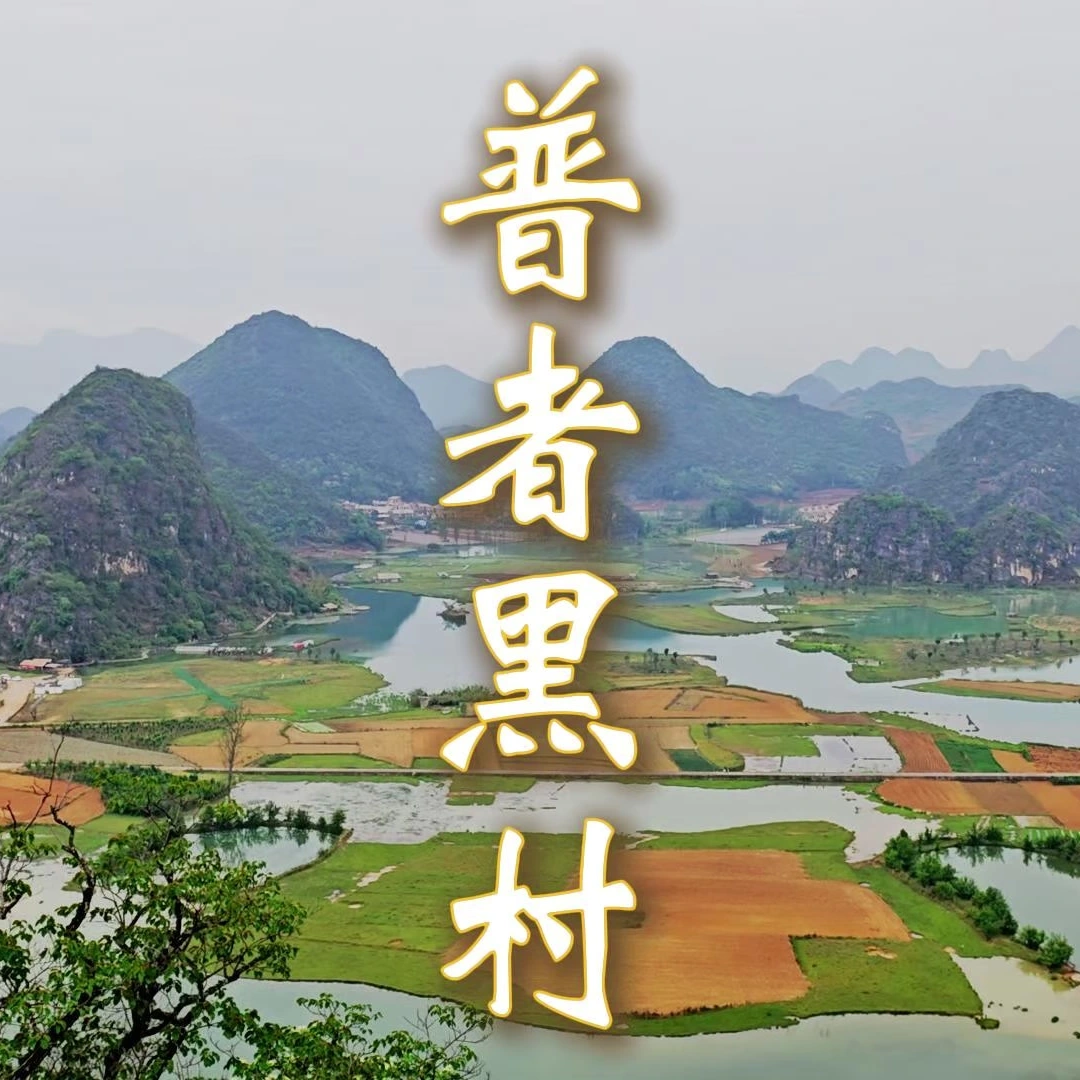
I had heard that Green Dragon Mountain offers the best panoramic view of Puzhehei, so I set off with eager anticipation. The climb takes about 30 minutes (20 if you're fit). Though the stone steps are steep, the lush vegetation along the way makes every step feel like an intimate embrace with nature. There's only one main path, so you can't get lost.
When I finally reached the summit, the scene before me stole my breath. Gazing into the distance, the entire beauty of Puzhehei lay at my feet: rolling mountain ranges stretching like winding dragons across the earth; nearby, a shimmering lake mirroring the blue sky and white clouds, with a few small boats gently swaying, the shadows of their passengers lengthened by the sunlight — a moving silhouette painting.
Time slipped away unnoticed. The sun began to set, dyeing the sky a brilliant red. Golden afterglow spilled over the mountains and waters, the lake's surface sparkling with layers of golden ripples; the peaks were gilded at their edges, looking magnificent. Lost in this poetic scene, I lingered, unwilling to leave.
Green Dragon Mountain Pier: The Starting Point of a Water Journey
The pier is small but exudes a rustic charm. The bluestone pavement, polished smooth by time, reflects the years. Several antique painted boats and willow-leaf skiffs rest quietly by the water's edge. A wooden boardwalk extends toward the lake, and red silk ribbons tied to the prows flutter gently in the breeze, as if warmly welcoming every visitor.
Ticket Info: The most popular willow-leaf skiffs seat 6 people and depart once full, costing 230 RMB per person. For more comfort, covered sightseeing boats are available. It's a good idea to look for discounted tickets on travel platforms beforehand.
From the pier, the boat glides slowly across the water, passing Lovers' Bridge, Puzhehei Village, and the Fairy Cave Village. The villages along the shore are rich in ethnic character, with ochre-yellow houses arranged in pleasing disorder, and occasional laughter drifting from the locals.
Fairy Cave Village: Where Time Slows Down
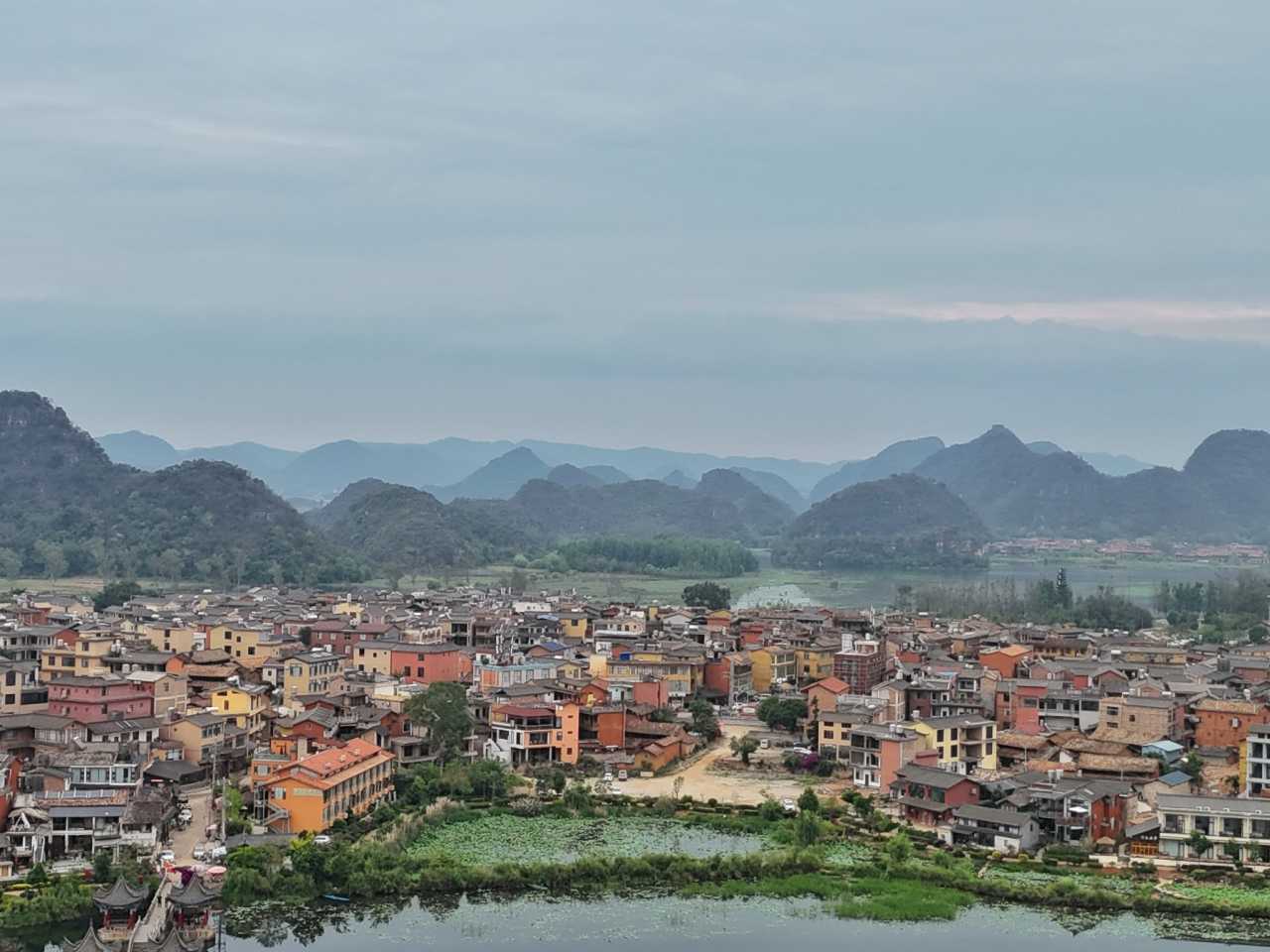
Stepping into Fairy Cave Village feels like opening an ancient landscape scroll. Rammed-earth walls in ochre yellow, topped with grayish-blue tiles, are scattered harmoniously along the lakeshore. The walls are painted with Yi ethnic totems and mythological stories — every step brings a new surprise. In the early morning mist, the white walls and dark tiles appear and disappear like a fairyland; at sunset, golden light bathes the rooftops, creating an atmosphere straight out of a dream.
Wandering along the bluestone paths, you'll see bougainvillea blooming wildly by the roadside, and Yi grandmothers with bamboo baskets on their backs walking slowly — any candid shot could be a magazine cover. The neatly arranged Yi-style flat-roofed houses are nestled among the green hills, their roofs covered in thick moss, as if time has gently slowed its pace here.
Tips: The best seasons are June to August (lotus in bloom) or November to February (migratory birds). It's a 20-minute taxi ride from Puzhehei Station. Must-visit spots include the Fairy Cave and the observation deck. The best photo times are 8:00-9:00 AM and 4:00-6:00 PM.
Mengzi's Bisezhai: A French Amber Forgotten by Time
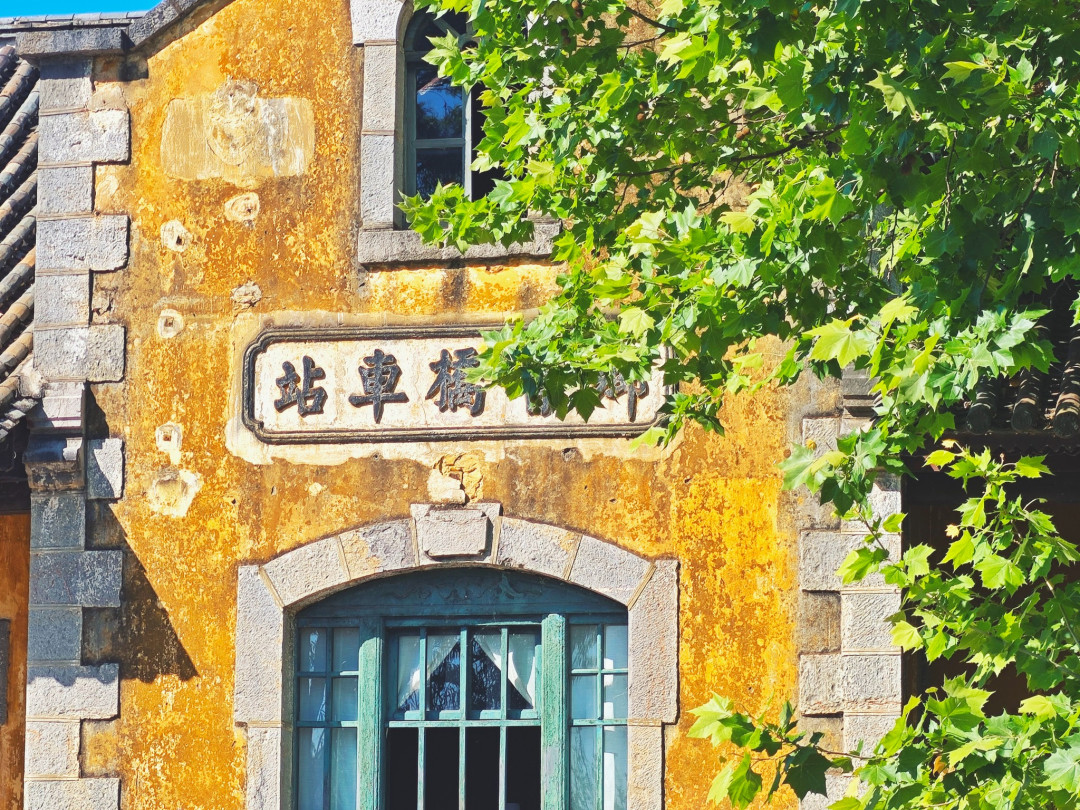
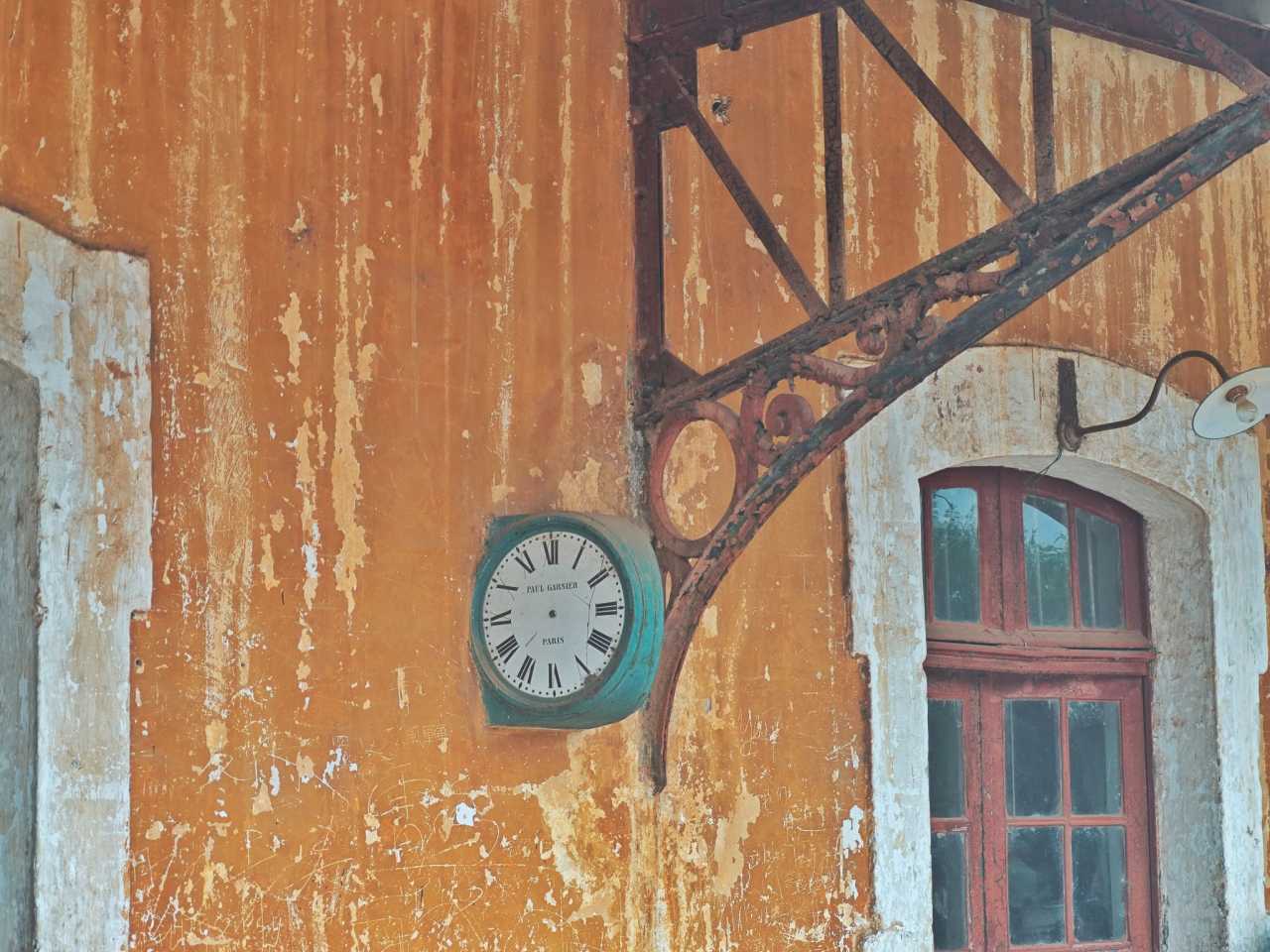
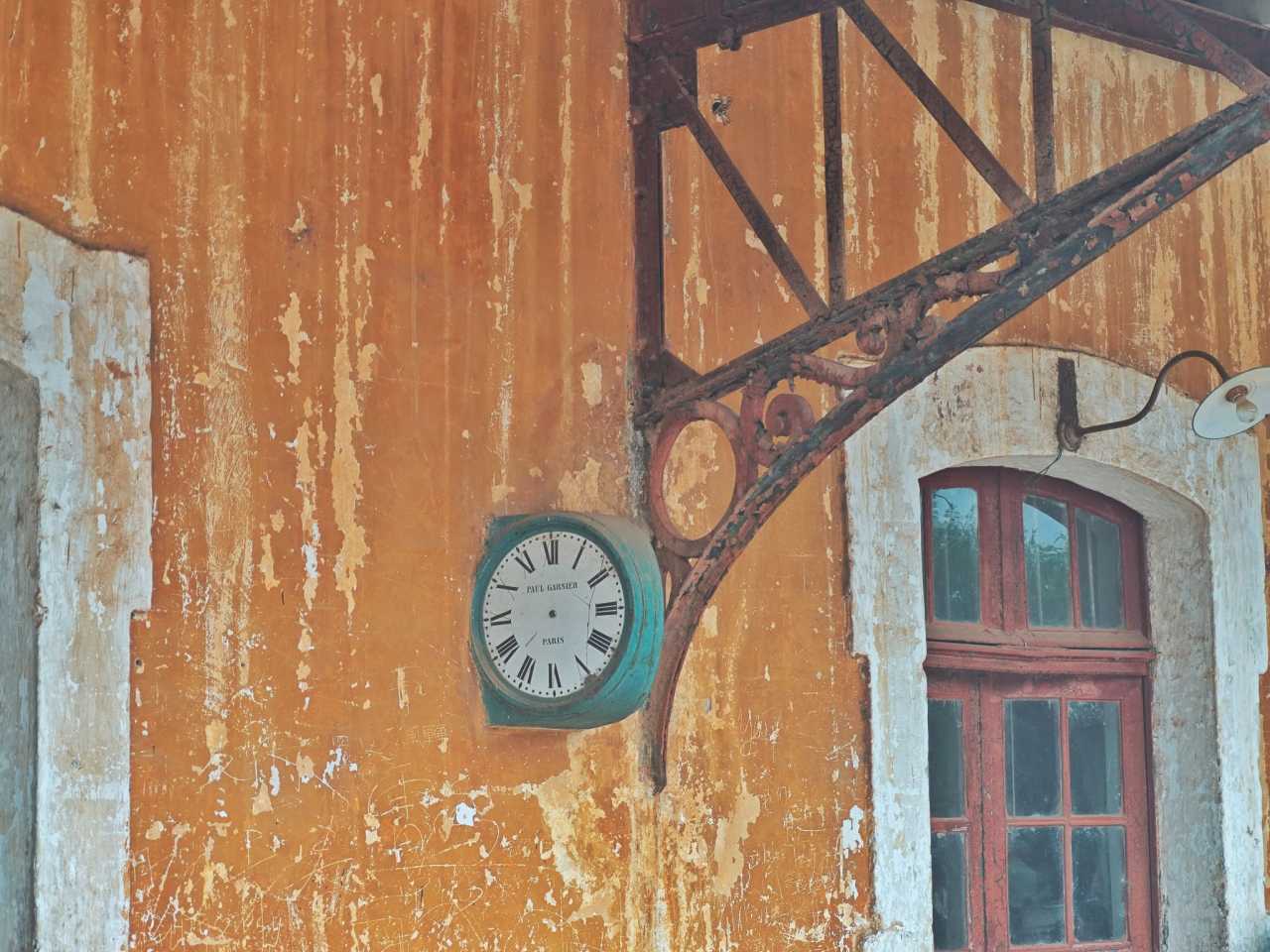
Morning sunlight slanted onto the yellow walls and red tiles as I stood beside the rusted tracks of Bisezhai Station. In a daze, I could almost hear the whistle of a steam train from a century ago. This French-style station, hidden in a valley near Mengzi, Yunnan, is like an amber fossil forgotten by time — the Gothic clock tower forever stopped at 11:20, stubborn dandelions sprouting from cracks in the tri-colored platform tiles, even the wooden shutters of the ticket window frozen at the angle they were closed one day in 1921.
Passing through the stone archway inscribed with "Bisezhai," a cluster of yellow-walled, red-roofed French buildings came into view. This is the filming location for the classic scenes in the movie Youth. Yellow walls, green wooden chairs, vintage red doors and windows, and the iconic three-faced clock — every corner exudes a unique charm. The white station sign reading "Bisezhai" on the platform is a popular photo spot.
Transport Tips: From Mengzi city center, take a taxi (about 30 minutes, ~50 RMB) or the rural bus from Mengzi to Caoba (6 RMB), get off at the Bisezhai scenic area entrance, and walk 1 kilometer. Arrive before 9:00 AM for the most atmospheric morning mist. If driving, park at the scenic area lot (10 RMB) and take the shuttle bus (20 RMB/person).
Must-Visit Spots: Bisezhai Station (clock tower, French floor tiles, wooden benches), Gélùshì Foreign Firm (red brick arches hide secret doors used by Vietnamese smugglers), the former Datong Company (French account books on the walls with ink still fresh), and the narrow-gauge locomotive shed (housing a miniature steam locomotive from 1923).
At Bisezhai, beyond sightseeing and photos, you can hike along the meter-gauge tracks of the Yunnan-Vietnam Railway and the narrow-gauge tracks of the Ge-Bi-Shi Railway, tracing history step by step.
Hekou Port: One Foot in Two Countries, Feeling the Border Vibe
Hekou Port, facing the Vietnamese town of Lao Cai across the river, is a place of unique charm. As the largest border port on Yunnan's section of the China-Vietnam border, it is not only a vital trade route but also a tourist destination where two cultures blend.
Standing at the port, watching the flow of people and vehicles crossing the border, you can deeply feel the bustling energy of cross-border trade. Behind you stand the imposing national gate and the railway bridge — a perfect spot for a commemorative photo.
External Transport: Take a bullet train to Hekou North Station (about 4.5 hours from Kunming, ~96 RMB); or a bus from Kunming East Bus Station (7-8 hours, 150-200 RMB); or fly to Hekou Bajiaotian Airport (limited flights, possibly with a transfer).
Internal Transport: Hekou city center is small, with most attractions near the port. Shared e-bikes (brands like Hellobike) are reasonably priced, charged by the minute. Taxis start at 7 RMB during the day and 8 RMB at night. Buses cost 2-3 RMB but run infrequently.
Hekou Post Office Building: A Century of Postal Service
Located at No. 7 Renmin Road in Hekou County, this well-preserved French-style building was constructed in 1937 by an Italian contractor named Basquelini. Built with blue bricks and stone, it has a two-story flat roof in an Italian style and once served as a key postal hub on the Yunnan-Vietnam border.
Photo Highlights: The French architecture is perfect for vintage-style shots. Inside, it's now a creative cultural zone where you can send postcards, buy Yunnan-Vietnam Railway souvenirs, and find a memorial wall, postal mailbox, and old-style coffee area.
Hekou Uprising Memorial Hall: Reliving Revolutionary History
The memorial hall was originally the Hekou Customs House, built in 1897. It houses a large collection of historical artifacts and photographs related to the Hekou Uprising, offering deep insight into the event's background and course.
Opening Hours: 9:00-17:00 (last entry at 16:30), closed on Mondays, open on public holidays. Free admission. Recommended visit time: 15 minutes.
Hekou Railway Station: End of the Century-Old Meter-Gauge Line
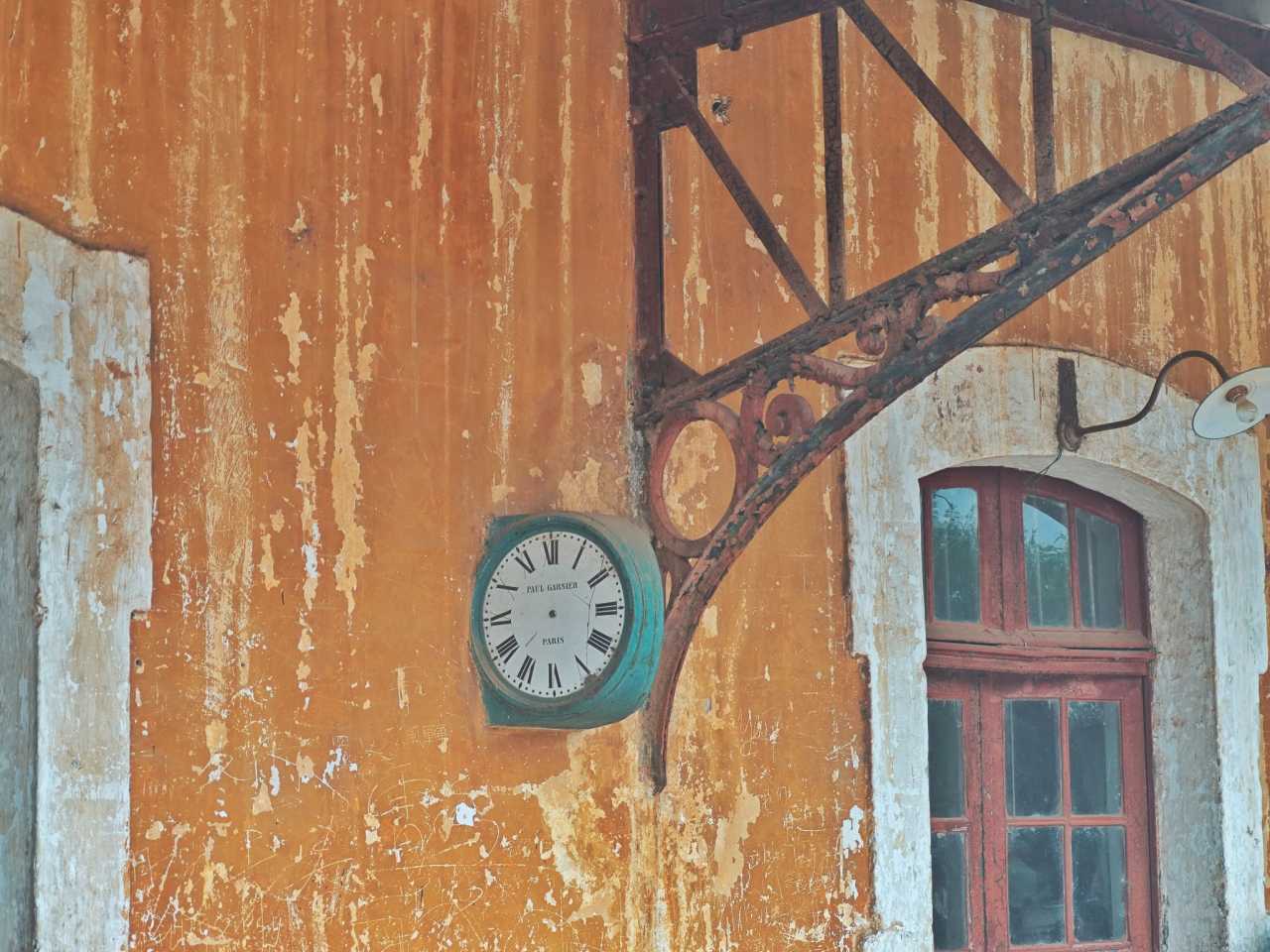
The old Hekou Railway Station was built in 1908 as the starting point of the Yunnan section of the Yunnan-Vietnam Railway. The line fully opened in 1910, becoming the first railway in Southwest China and the only meter-gauge railway still in operation worldwide.
The pale-yellow French-style building, with arched doors and windows and a vintage platform, feels like a movie set — any snapshot looks like a retro film still. Around 2:00 PM and 6:00 PM, trains usually depart from Hekou Station into Lao Cai, Vietnam (times are not fixed; check with staff in advance).
Hekou Old Pier: Relic of a Century-Old Trading Port
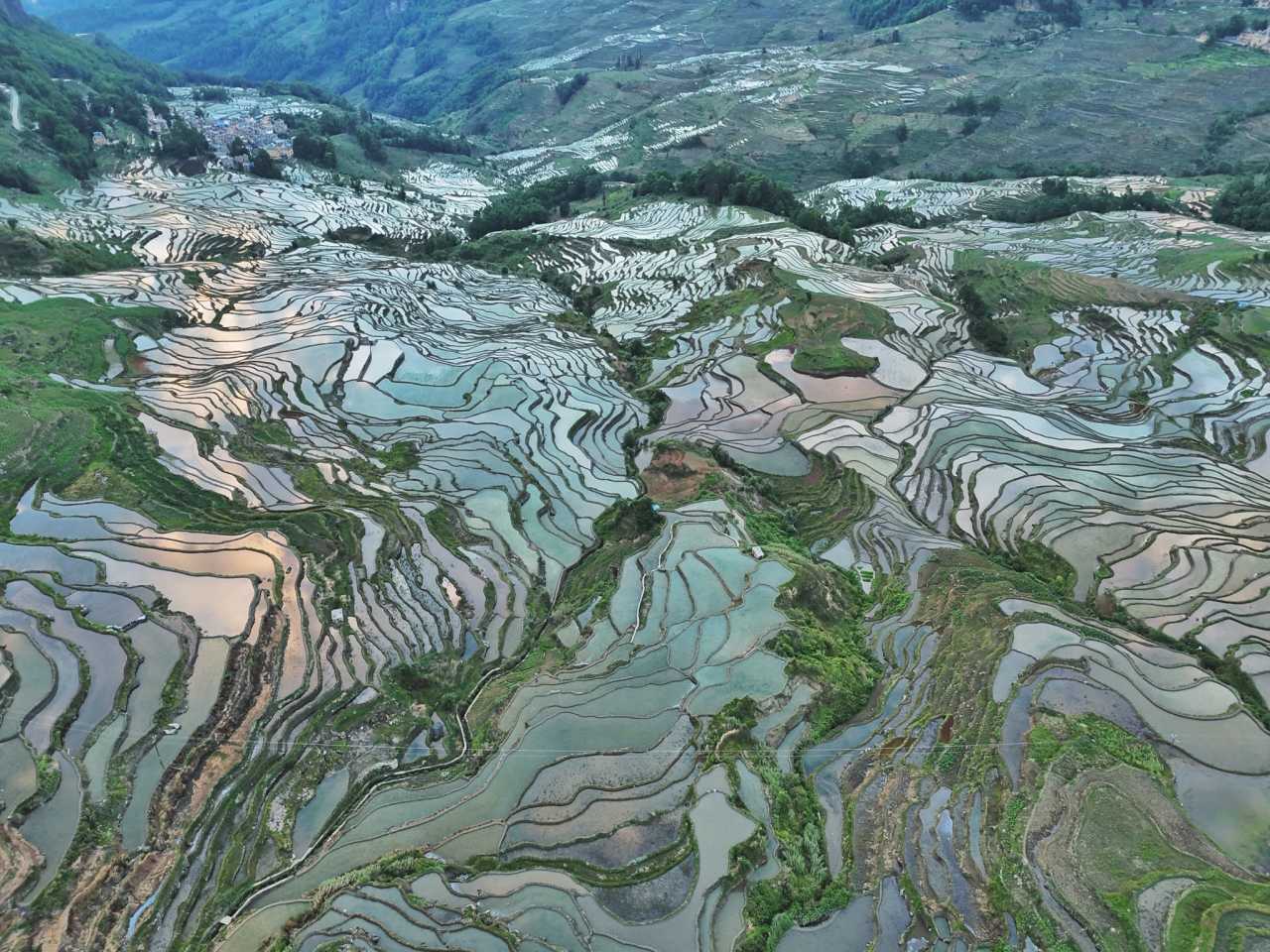
Once a major pier on the Red River shipping route, only a viewing terrace by the Nanxi River remains. Here, you'll find a sign marking the "Old Pier" and an elevation marker reading 76.4 meters above sea level — the lowest point in Yunnan. You can watch the river flow gently and get a close-up view of the China-Vietnam railway bridge.
Near the old pier, many French-style buildings — such as the former Hekou Customs House and Post Office — stand as witnesses to the area's history and变迁.
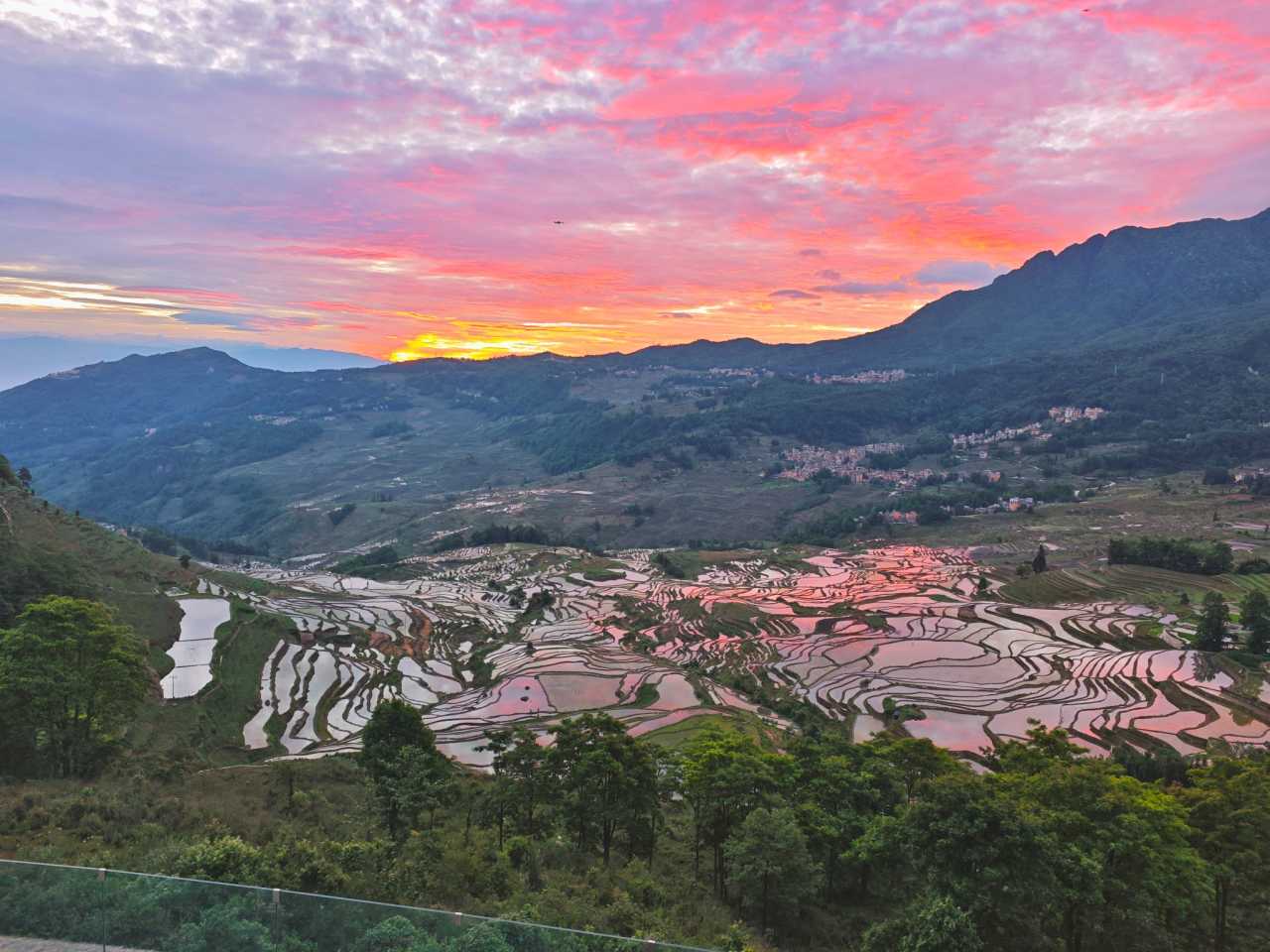
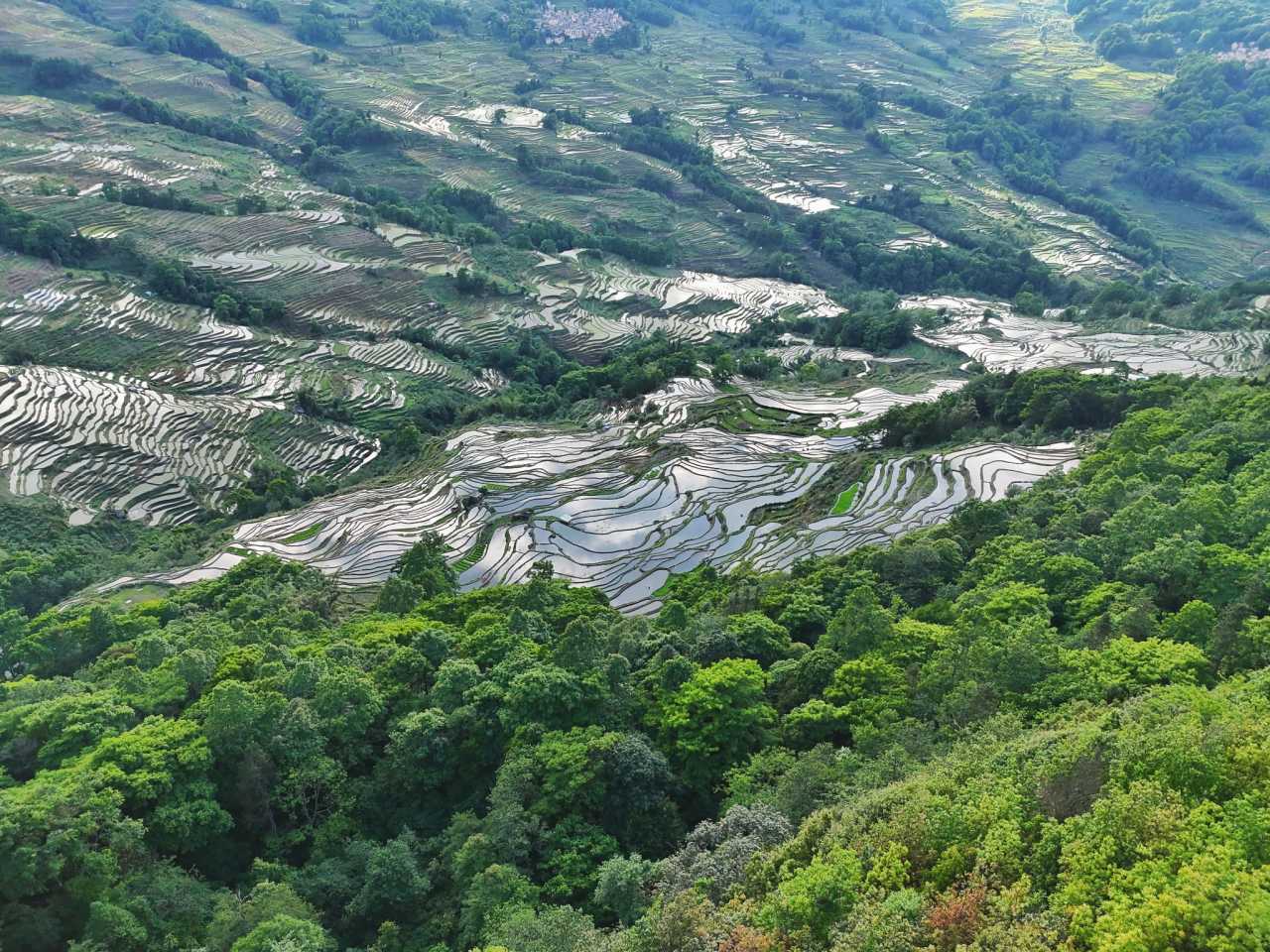
Yuanyang Rice Terraces, Bada Viewing Platform: The Shock of Sunset Like Molten Gold
The grandeur of the Yuanyang rice terraces is world-famous, and the Bada viewing platform is the ultimate spot to watch the sunset. Over 3,700 terraces shift colors with the changing light — from gold to pink to white — like "golden scales"镶嵌 in the valley.
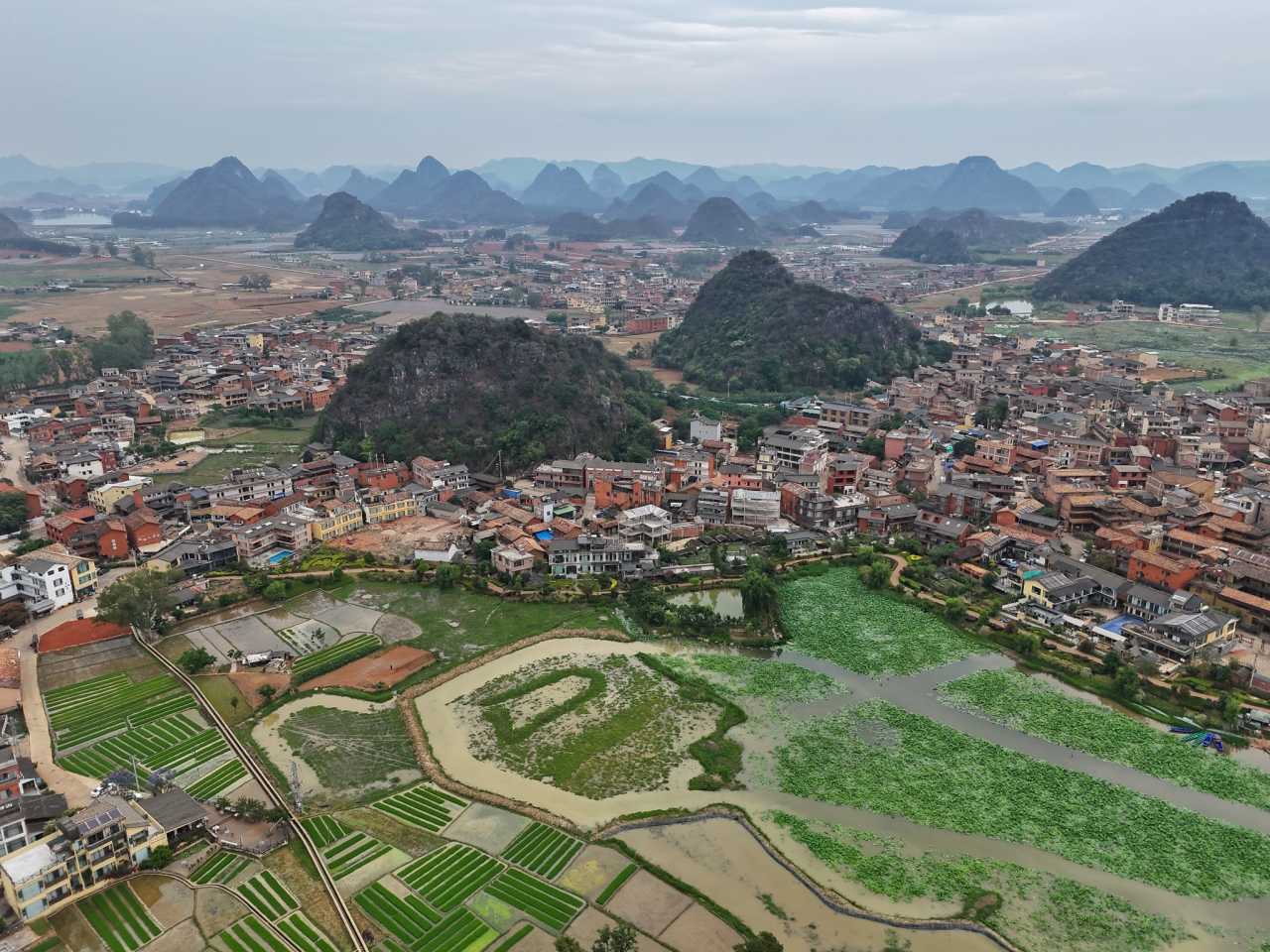
Practical Info: Ticket: 70 RMB (valid for 3 days, covering Bada, Duoyishu, and Laohuzui viewing platforms). Open all year, all day. Best season: November to April (irrigation period, when the mirror-like effect is at its best; clouds and mist are frequent in February-March).
The Bada platform actually has three main viewing points: the one farther from the entrance offers a wide view with rich terrace layering; the second is smaller with a similar angle; the third is considered the best for sunset viewing.
Final Thoughts: What Southeast Yunnan Taught Me
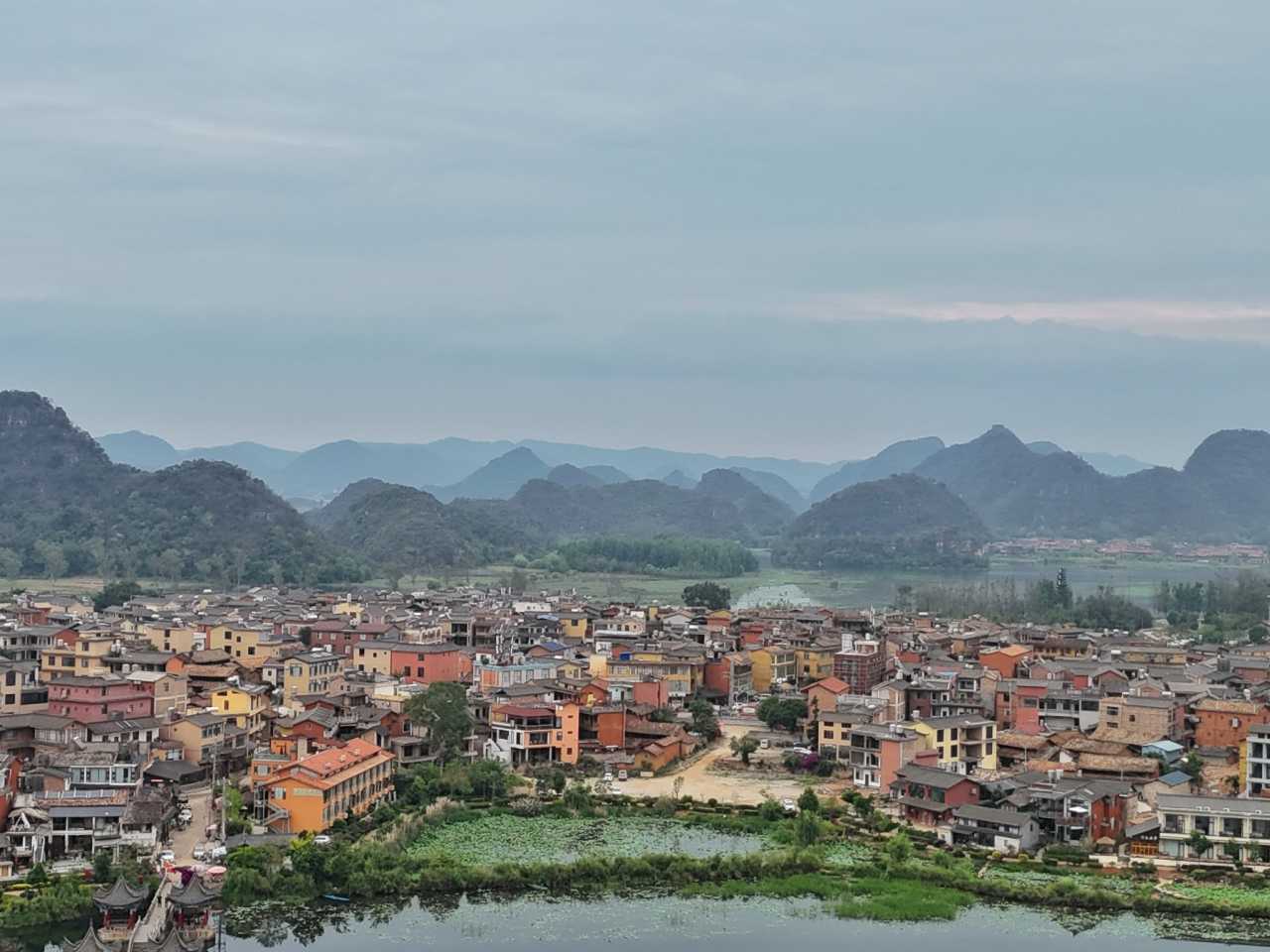
The seven-day journey is over, but the mountains and waters of Southeast Yunnan are etched deep in my heart. This land, praised by Chinese National Geography as "Yunnan's Last Hidden Paradise," waits in its most原始 form for those who are destined to find it.
In Puzhehei, I learned to slow down — watching a fisherman pole his bamboo raft home in the dusk, seeing lotus flowers bloom quietly in the morning mist, I understood: the most beautiful scenery is never on a postcard, but in the life that breathes in rhythm with these mountains and waters. In Bisezhai, I grasped the weight of time — those forgotten French buildings and rusted tracks tell the stories of an era. In Hekou, I felt the allure of the border — one foot in two countries, two cultures meeting and mingling.
Advice for Travelers: - Bring enough camera memory cards, but don't forget to bring eyes that see beauty - Learn to slow down — don't let a checklist chain you - Respect local culture; chat with locals, and you'll discover more surprises - Plan ahead, but leave room for spontaneous exploration
Southeast Yunnan is not just a trip — it's a conversation with yourself. Here, embrace the landscape as your painting, and pick up a verse of poetry and a distant horizon — you'll realize that life can be this beautiful.
You should also read:
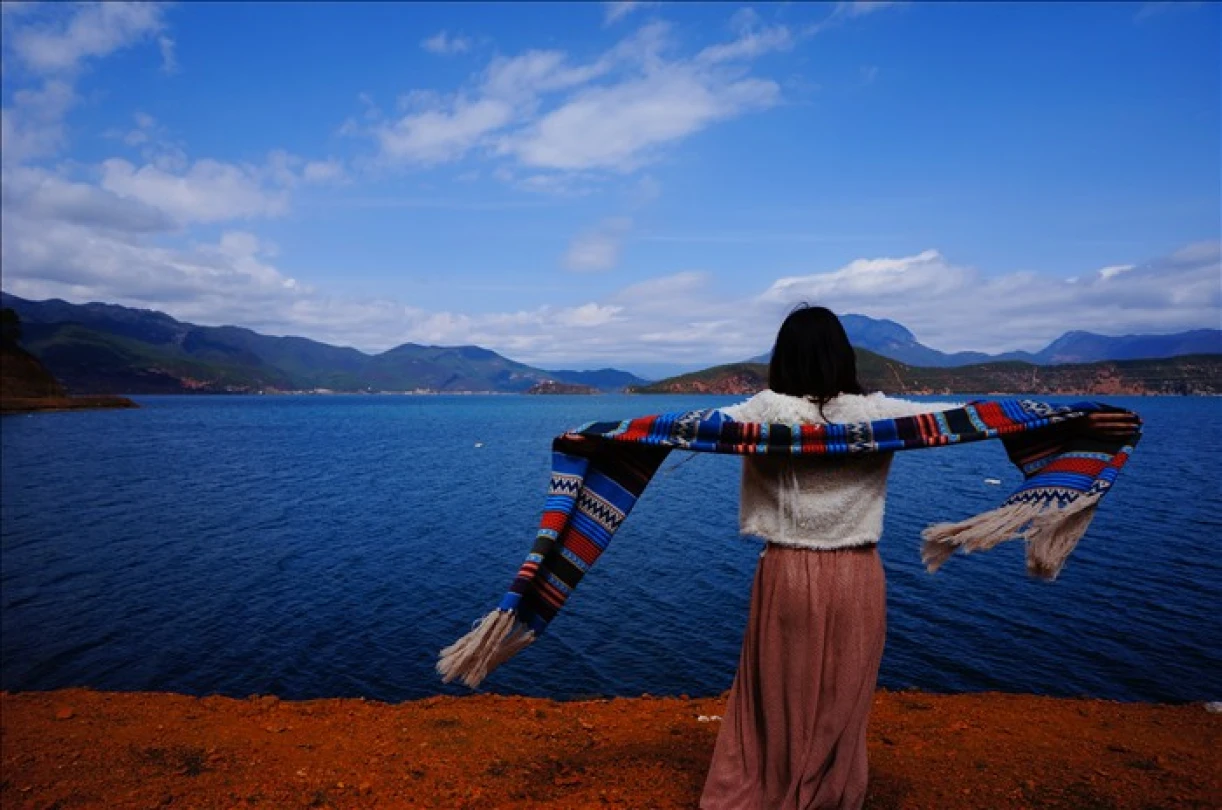
Setting Off Alone: Finding the Meaning of Travel in Lijiang
Setting Off Alone: Finding the Meaning of Travel in Lijiang Every woman should have at least two things in her life worth braving: one is cutting off her long hair without hesitation, and the other is embarking on a journey alone. In the spring of…
Continue reading...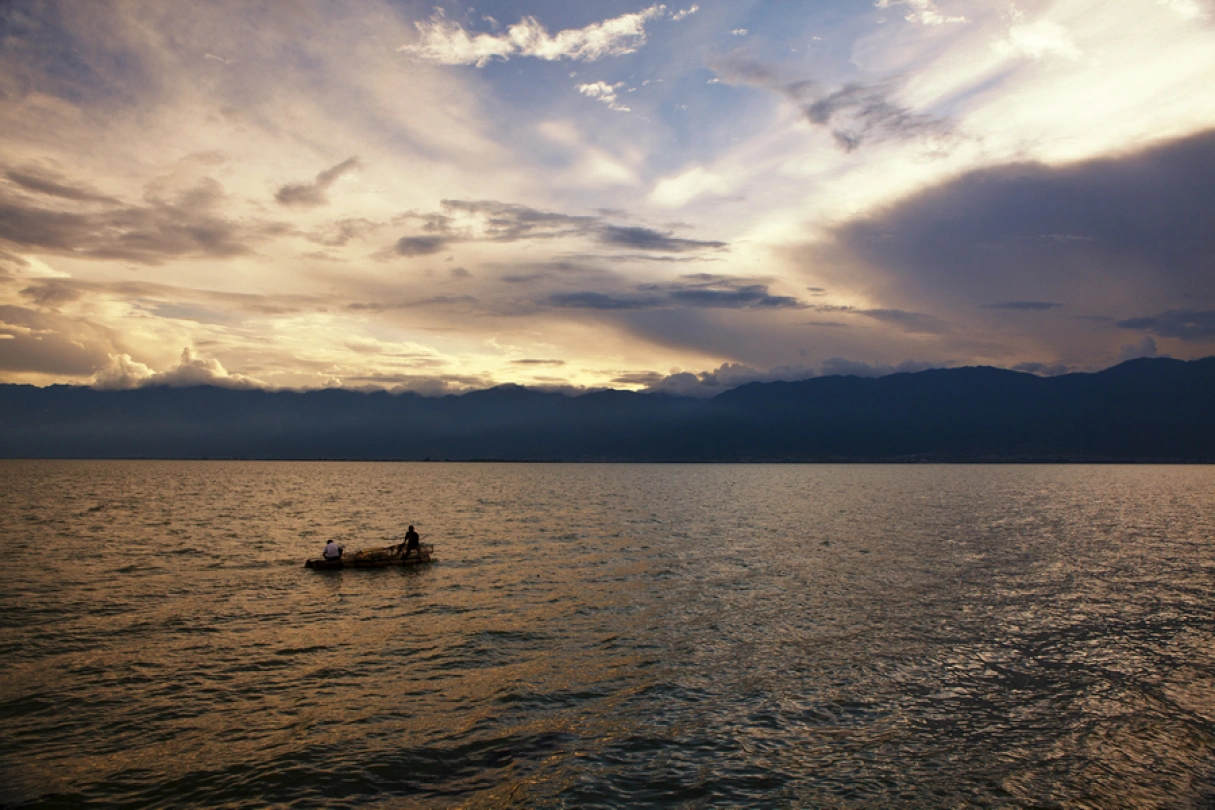
A Journey Through Shuanglang's Guesthouses: Finding Life as It Should Be on the Shores of Erhai Lake
A Journey Through Shuanglang's Guesthouses: Finding Life as It Should Be on the Shores of Erhai Lake Prologue: When Life Hits the Pause Button Have you ever had one of those moments? When the city's towering buildings press down on your chest, when you're swept…
Continue reading...
September: Finding Unexpected Warmth in Yunnan (Kunming, Dali, Shuanglang, Lijiang, Lugu Lake)
September: Finding Unexpected Warmth in Yunnan (Kunming, Dali, Shuanglang, Lijiang, Lugu Lake) Foreword: One Person's Journey, A Crowd's Story Before I set off, like every first-time solo traveler, I printed out a thick stack of travel guides and rehearsed countless possible scenarios in my head—getting…
Continue reading...