Southeast Yunnan Loop: The Mile Fire Worship Festival – A Family Journey Through Time
Southeast Yunnan Loop: The Mile Fire Worship Festival – A Family Journey Through Time
Prologue: A Seven-Year Promise Fulfilled
How many seven-year cycles does a life hold? From 2019 to 2026, our family's annual Spring Festival tradition of traveling together was shattered by unforeseen disruptions. When we finally set off again—just my parents and me—I felt an indescribable swell of emotion.
On the surface, choosing Southeast Yunnan was about chasing warmth. My mother's injured hand needed sunshine and dry air to heal. But in my heart, I quietly delayed the trip by two weeks, just to forcibly align it with that legendary, ancient, and fiery celebration—the Mile Fire Worship Festival.
Day 0: Reunion in Spring City, Where Memory and Reality Intertwine
Stepping onto Kunming's soil again, I was greeted by the same familiar blue sky. In the Spring Festival of 2018, our whole family watched red-billed gulls at Green Lake and photographed money-storage vessels at the provincial museum. Seven years later, the Spring City still welcomed us with brilliant sunshine.
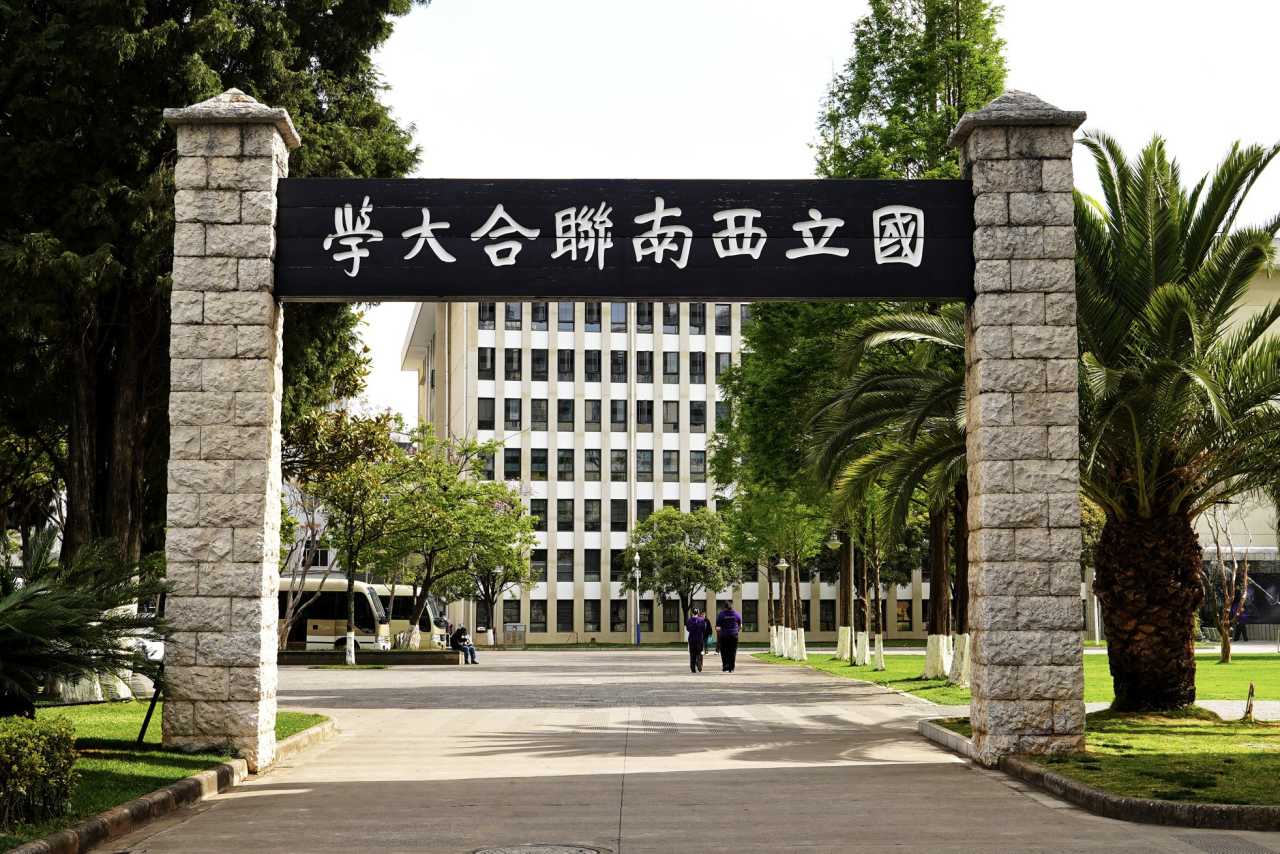
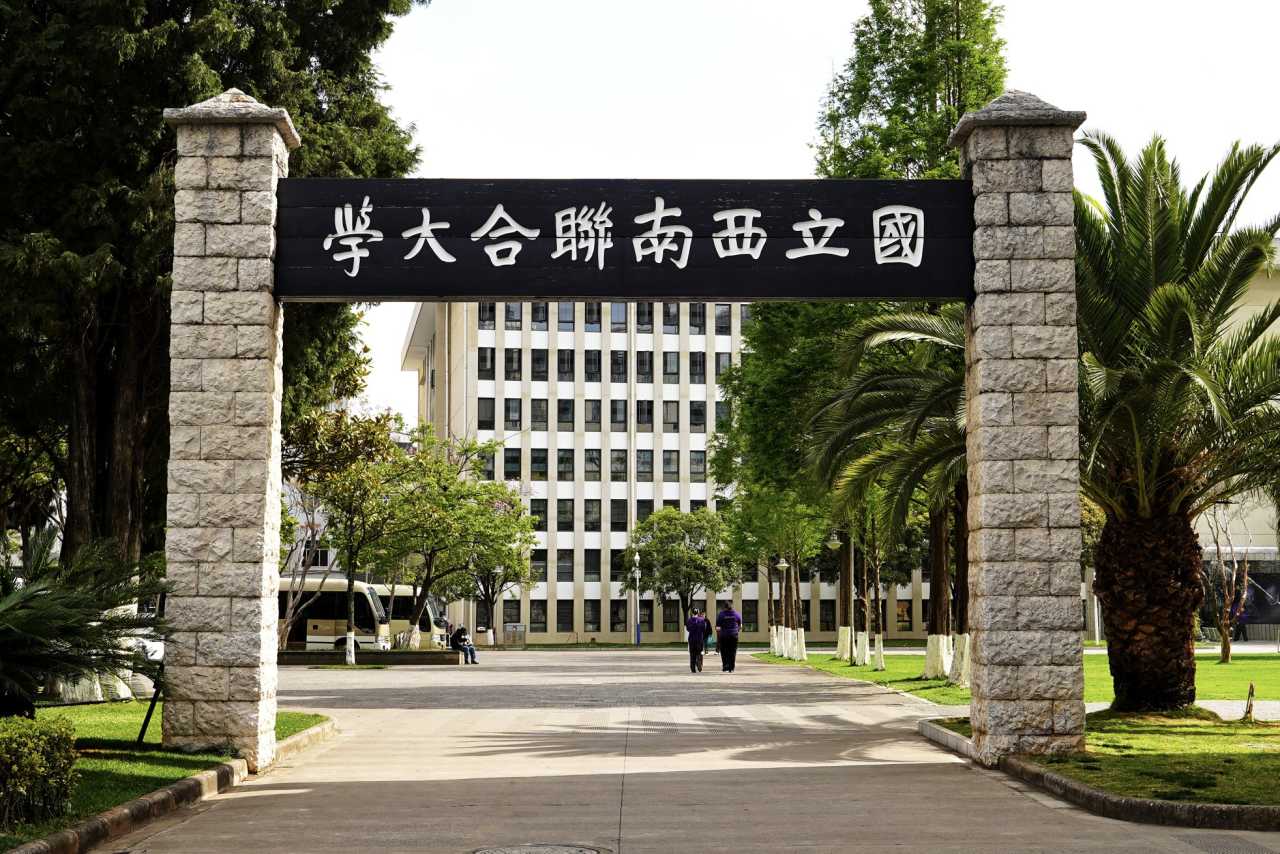
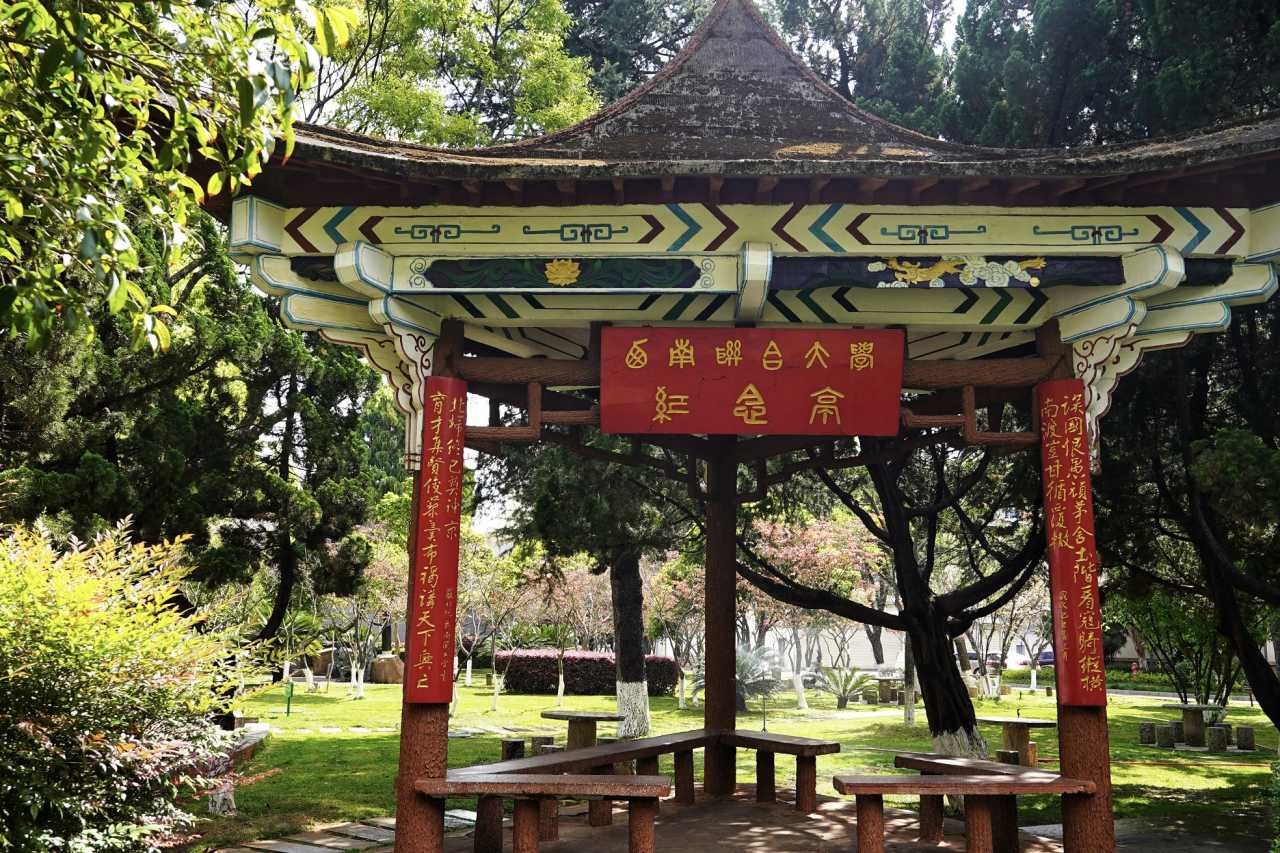
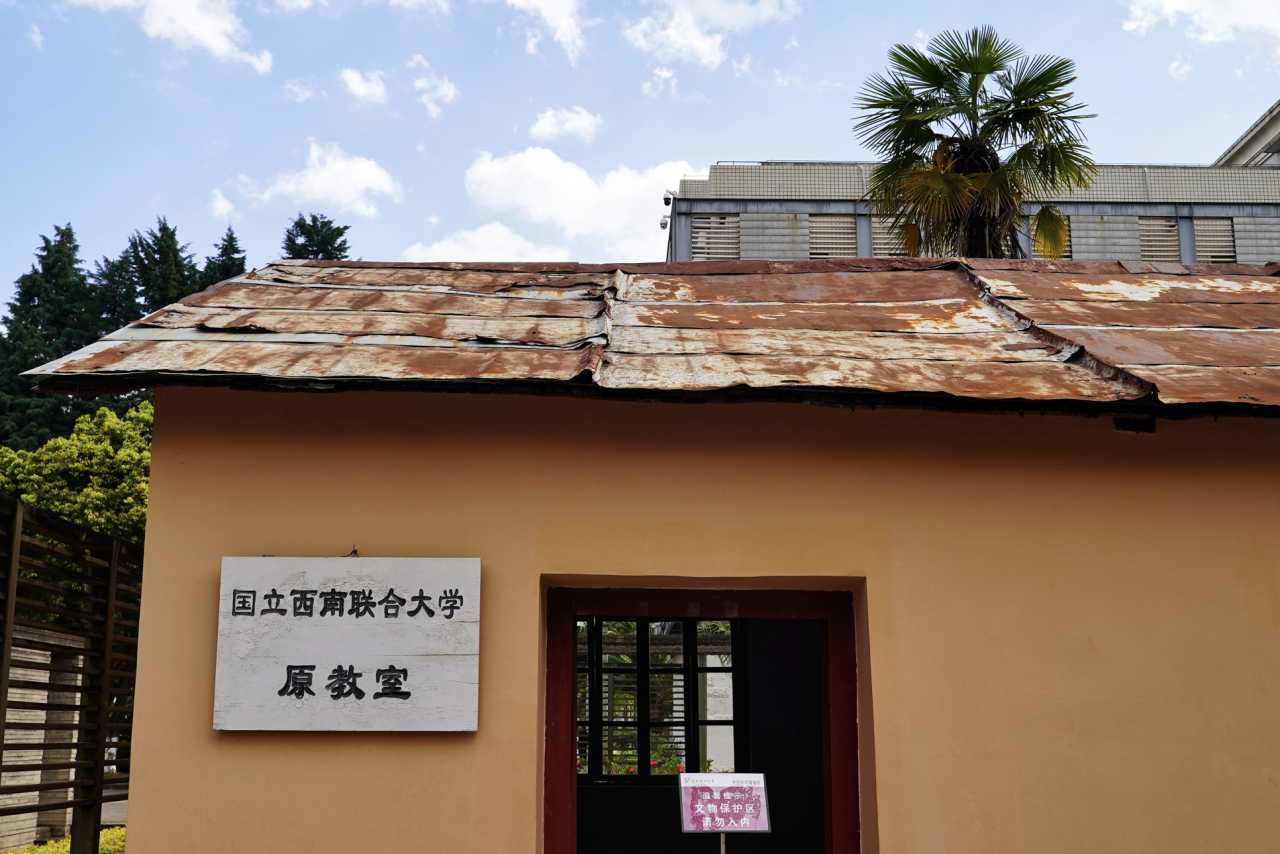
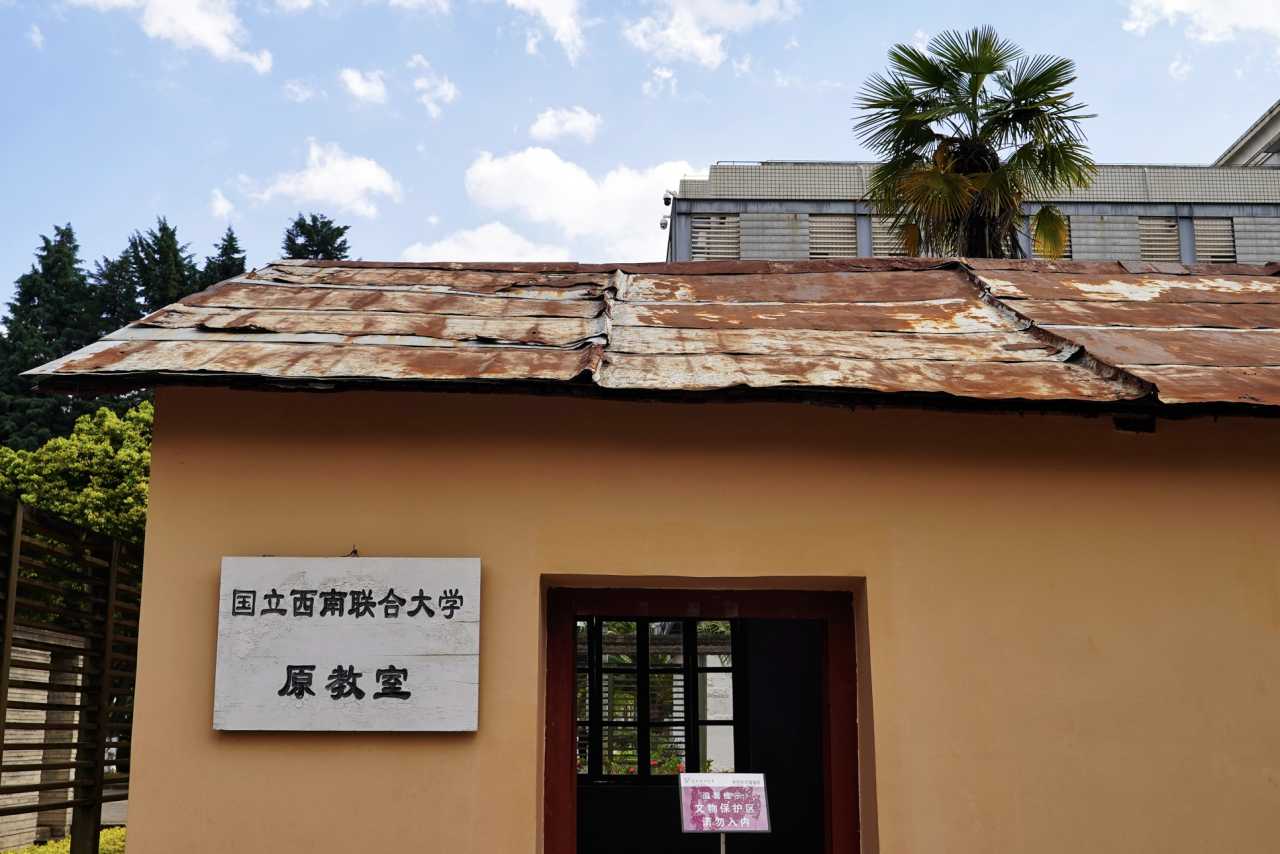
After dropping our luggage around two in the afternoon, our first stop was the site of the National Southwestern Associated University. The campus was shaded by green trees, filled with birdsong and fragrant flowers—hard to imagine the hardship and perseverance it once housed. That iron-roofed classroom, where lessons had to stop when rain made too much noise to hear—today's students can scarcely grasp that bittersweet romance.
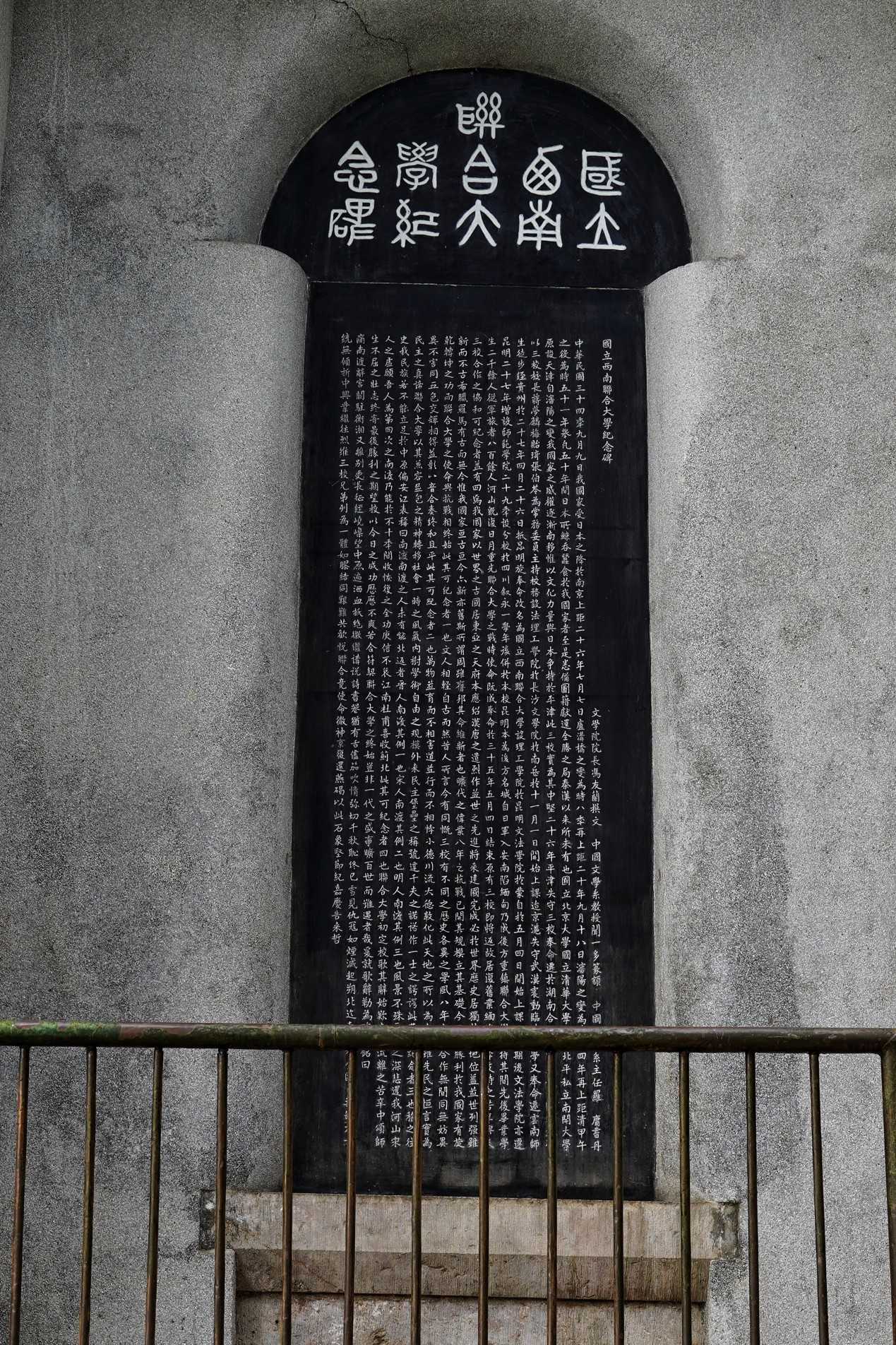
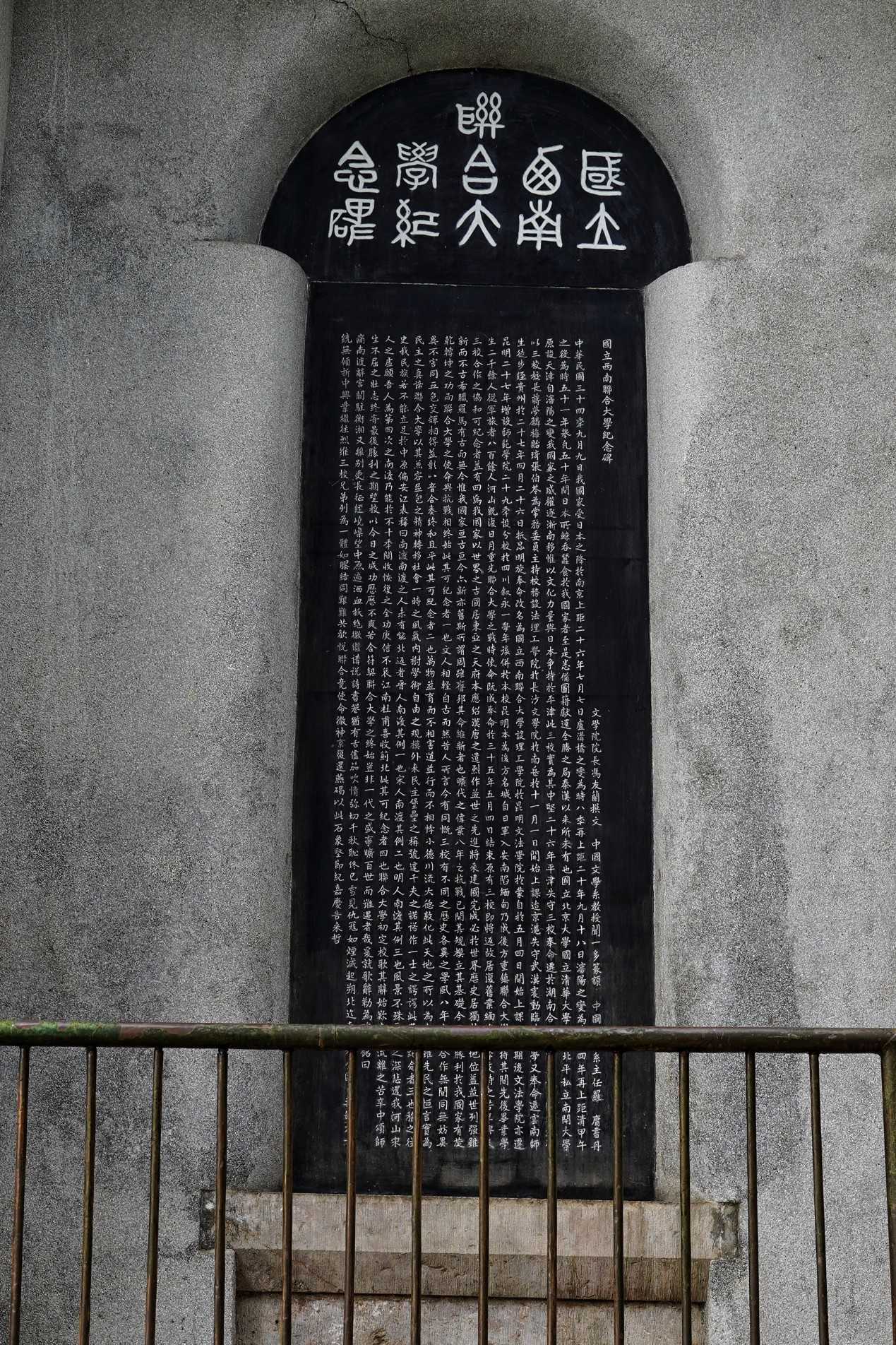
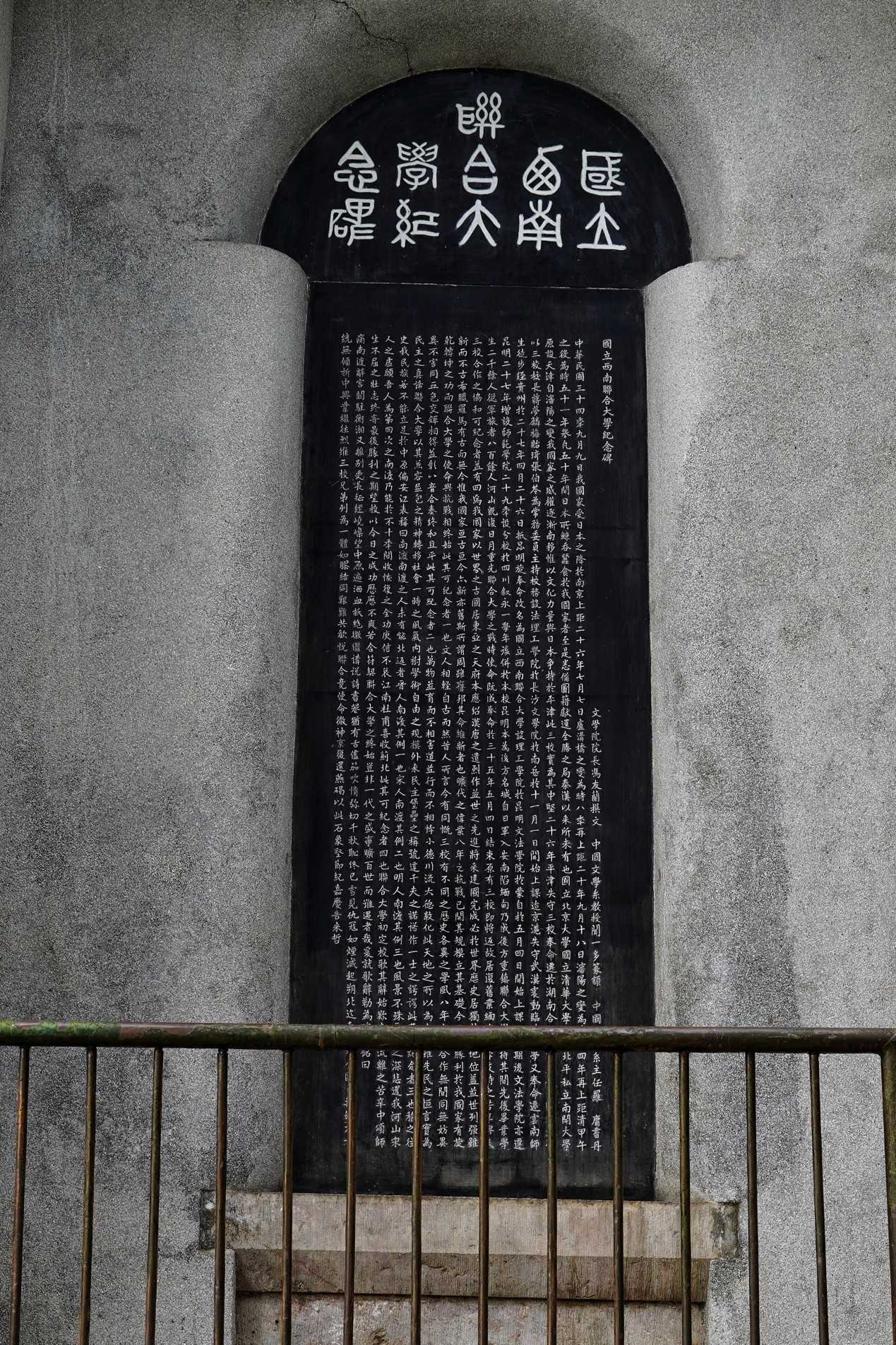
At the museum of the National Southwestern Associated University, three floors of exhibits detailed those turbulent years. And the monument inscribed by Feng Youlan (text), Wen Yiduo (seal script title), and Luo Yong (calligraphy) is hailed as a modern "Three Perfections Stele," quietly telling the story of the southern relocation's hardships and persistence.
Leaving the campus, we walked along "January 1st Street"—the street name itself is history. The cherry and crabapple blossoms at Yunnan University's East Campus had already fallen, but the roadside cherry blossoms were a bright surprise. For dinner, we found a hole-in-the-wall eatery near a market, packed with locals. The shredded potato and dried beef fried rice (洋芋干巴炒饭) was so fragrant I couldn't stop eating. For the fermented tofu and rice noodle pot (臭豆腐小锅饵丝), I specifically asked for "not spicy"—but what arrived still made us Jiangsu-Zhejiang natives break into a sweat. Kunming people's idea of "mild spice" is clearly not the same as ours.
Day 1: The Aesthetics of Disappointment at Cherry Valley and Rapeseed Fields
Our first official day with the tour group started at Yiliang Mountain Cherry Valley. A 3,800-acre park, it wins on scale, and the quality wasn't bad either. But the weather was too hot, and some blossoms were already wilting. The concrete roads were easy to walk on, and the moms in our group happily filmed videos.
In the afternoon, at Golden Chicken Peak Cluster, we hiked to the viewing platform. All we could see were green rapeseed fields full of seed pods. The flowers had faded more than half a month ago—a common travel disappointment. But we embraced the philosophy of "since we're already here." Firethorn flowers, fragrant jasmine, crofton weed... plants I couldn't name, but we photographed them with gusto anyway.
I actually preferred the Screw Terraces. Layer upon layer of rapeseed terraces, like a thick, woolly green carpet, offering more depth and texture than Golden Chicken Peak.
Day 2: Unexpected Delights at Jiulong Waterfall and Dongfengyun
The water flow at Jiulong Waterfall was decent, though it looked yellowish in direct sunlight. The shaded side of the water appeared softer and clearer. I hadn't seen a rainbow in ages—caught one by the bamboo raft and felt a surge of joy. The drone shots of the panorama were spectacular—I borrowed one from a fellow traveler and silently gave thanks.
In the afternoon, Mile's Dongfengyun was my personal favorite stop. The blend of architectural art and natural scenery was seamless. Walking along the lake, I saw shrimp-claw flowers (虾衣花) for the first time—apparently they look like lobsters, apt name. The loquats in March were already yellow; freshly picked ones were sour, and the market ones, I was told, were watery and bland.
The chimneys at Seal Pavilion looked bizarre, and the Kaleidoscope building was even more impressive. Climbing the steps, we could visit the bakery and wine exhibition hall. Inside the Kaleidoscope's dome, sunlight played with shadows in ever-changing patterns. The camera could only capture a fraction; your own eyes were needed to experience that magical kaleidoscope effect. That skull chorus sculpture—creepy at first glance, but strangely fun the longer you looked.
We took a country road back. Willow-leaved bottlebrush hung like red caterpillars on the branches. For dinner, we tried local Mile cuisine. The best dish turned out to be the local peanut and vegetable soup—not greasy, the greens not bitter, refreshingly light. Most hotels in Mile have hot springs—don't forget your swimsuit!
Day 3: The Mile Fire Worship Festival – The Most Vivid Day
Morning Rituals
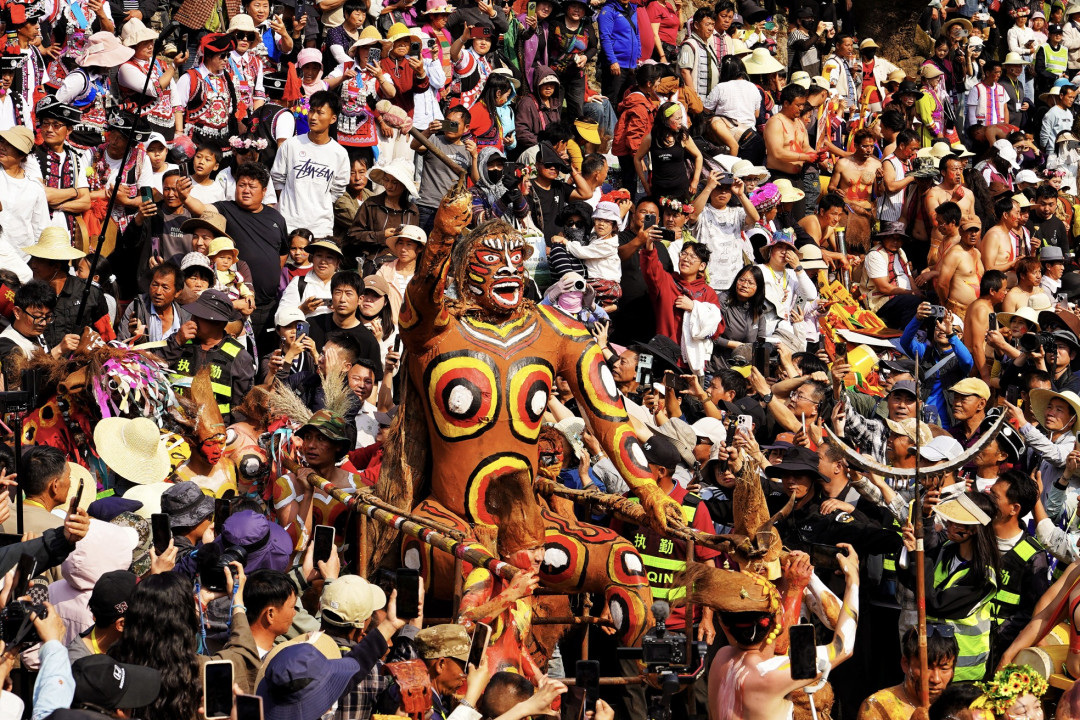
The Axi Fire Worship Festival is held in Hongwan Village, Mile County, Honghe Prefecture, on the third day of the second lunar month each year. Centered on venerating the fire god, it originates from the legend of drilling wood to make fire. It's a vital carrier of Yi ethnic culture and a provincial-level intangible cultural heritage.
We arrived early at the venue—if you're driving yourself, you can come later; the main events are in the afternoon. First, we looked at the Axi murals, their exaggerated style hiding many legendary tales. The welcome ceremony at nine o'clock was packed. No matter how high you raised your phone, all you got was the back of people's heads. Men played the two-stringed Yi instrument (彝族三大弦) while doing tap-dance steps; women clapped and sang in call-and-response—this was the legendary "Axi Moon Dance." There's also a farewell ceremony in the afternoon—strongly recommended to experience it only when leaving; the morning crowds were maddening.
Body Painting: The Truest Art

We squeezed into a narrow alley where body painting was offered—30 yuan per person. Getting an up-close look at traditional makeup and painting is an absolute must for anyone deeply interested in culture. Women got simple designs: red sparks on the cheeks and a faint crescent on the forehead. Men, however, went bare-chested, with traditional patterns painted all over their faces, bodies, and legs. The most unforgettable sight was a guy whose private area was adorned with a particularly thick phallus, complete with a bell—every step jingled, and it was impossible not to laugh.
My favorite photo of the entire Fire Worship Festival was taken here. No beauty filters, no editing—just real wrinkles, real colors. The painter's hands were also speckled with paint, clearly busy all morning.
One particularly warm and cheerful officiant (probably dressed as a "Bimo" shaman) held a long staff with a snake head and a monkey head at the top, wore eagle feathers on his head, and had gourds hanging from his ears and body. He danced and gestured with genuine enthusiasm. Many "fire priests" wore only underwear or bark-like loincloths—very traditional, and very uncomfortable. Throughout, you must maintain reverence and respect.
The Pine-Needle Feast and Fire-Drilling
Food is an unmissable part of the Fire Worship Festival. The golden, wrinkled crispy dog meat looked mouthwatering—though I don't eat dog myself. There was plenty of other food, so we headed early to the long-table feast. This year it took the form of a pine-needle banquet: pine needles spread on the ground, sit down, and enjoy simple yet hearty food. The toasting songs rang out, and the Axi sisters sang joyfully!
After lunch, we rested in the shade, waiting for the 1:30 PM fire-drilling ceremony. Under an ancient tree, bowls, dishes, and eggs had already been arranged. We didn't secure a good vantage point and could only watch from behind. The photographer was also hard at work, pushing to the front with his gear. Everyone worked together, huffing and puffing, until finally smoke appeared—fire had been successfully drilled!
Intangible Heritage Stage and the Final Revelry
After watching the fire-drilling, we didn't follow the parade but rushed straight to the intangible heritage stage. The performances started at 1:30 PM, and seats had been reserved for us in advance—otherwise, it would have been tough. The most unique act was a performer playing a leaf with his mouth—the sound was loud and clear, a novelty I'd never experienced before.
I learned a small piece of trivia on-site: the Yi people call drinking alcohol "jidu," where "du" means drink and "ji" means alcohol—an inverted word order. Singing "jidu lai, jidu lai" means "everyone, come drink together!"
At 4 PM, the cultural performances ended. The crowd carried in the huge fire god statue (Woodeng Sailu), and the most solemn part of the Fire Worship Festival was about to begin! Various deities entered one by one, circling the field. A bonfire was lit in the center, and the revelry began. People were dressed in all colors—red, yellow, white, black, and multicolored—and the main activity was simply jumping around with abandon. Everyone let loose, singing and dancing with the crowd. A little boy couldn't contain his excitement, and a tourist in white clothes behind me was already itching to join—if I hadn't been carrying my camera, I would have jumped in too!
One final tip: watch out for the little demons covered in brown mud. The pure mud in their buckets will cling to your clothes and bags, leaving an unforgettable mark. Since we were with a tour group, we left early, but the best part comes at the end—strongly recommend driving yourself and staying late! After all, as we Chinese say, since you're already here, why not have a good time?
That night, we checked into Mengzi and experienced what's billed as the most authentic Mengzi rice noodles—an ultra-luxurious bowl.
Day 4: Pingbian – A Century-Old Echo on the Yunnan-Vietnam Railway
Today we went to Pingbian to see the Yunnan-Vietnam Railway. First stop: the Renzi Bridge—officially called the Wujiazhai Railway Bridge. This iron railway bridge, shaped like the Chinese character for "person" (人), spans a deep gorge. When the Dongfeng train passed, you could hear its whistle from far away. Kunming's meter-gauge railway, as the name suggests, has tracks one meter wide—designed by the French back then.
After the train passed, we continued hiking. Through a tunnel, we stepped onto the Renzi Bridge itself. Emerging from darkness into light—that feeling is hard to describe. The rails on the bridge were different from those on the normal gravel sections. The painted characters on the inner side of the meter-gauge track recorded the line's geometry and fastener parameters. I loved this place simply because it's a living railway—still in operation. Talking about how hard it was to build the railway and how many people died doesn't compare to walking it yourself.
We completed a three-kilometer loop hike to the Baizhai Bridge, also meter-gauge. The word "whistle" (鸣) at the entrance was interesting—trains have to whistle when rounding curves, don't they?
In the afternoon, we visited Dawei Mountain National Forest Park. You have to take a shuttle bus up and down, and the winding ride takes nearly an hour one way. But the guide only gave us an hour and a half for a rushed visit—I couldn't understand what the other group members were thinking. I had to sprint the whole way. Entwined tree roots, tiny flowers of the milkwort family, red fuzzy raspberries... I didn't bother photographing the suspension bridges—there are too many in Jiangsu and Zhejiang tourist spots. I preferred to discover scenery I don't see back home.
We stayed near Drip Water Miao Village that night. The night view looked nice, but the shops were all deserted. Sigh—I was hoping for an old town to explore.
Day 5: Yuanyang Rice Terraces – God's Spilled Palette
Setting out from Drip Water Miao Village, we first visited the nearby Drip Water Layer Waterfall. The water flow was decent, but it lacked character. I saw a small snake among the bamboo—thankfully non-venomous, I think—and took a photo.
The day's highlight was the Yuanyang Rice Terraces. First stop: Aichun Blue Terraces. The timing and weather were wrong, so we didn't see the blue hue (you need a sunny morning). At Azheke Village entrance, ducks were quacking happily. A hailstorm the night before had punched holes in the greenhouse film over the terraces—the hotel's water heater and electrical system were damaged, and WiFi was out.
The distinctive mushroom-shaped houses are local dwellings. The deeper we went, the more colorful the terraces became. The guide's drone shots truly required a God's-eye view. I borrowed a panoramic shot with a mushroom house—that warm, cozy scene felt like "long trapped in a cage, returning to nature."
At Quanfuzhuang, we could walk down to the terraces for a close-up view. In a small pond, I noticed the "full river red" aquatic plants (满江红) for the first time. While waiting for teammates, I spotted a tiny green flower on the underside of a blade of grass—perhaps these little plants, though unknown, quietly enjoy their own beautiful moment of life.
The last stop was Bada for sunset. It was packed. Unfortunately, the weather didn't cooperate—most of the sun was blocked by clouds. Still, the golden light on the terraces was layered. That soft, warm glow lasted for a while—time to say goodbye to this day.
Day 6: Jianshui Ancient City – A Blend of Everyday Life and Artistic Flair
We got up early for the Duoyishu sunrise. Same as last night—the sun kept playing hide-and-seek. We did our best, but that was it.
By noon, we arrived at Shuanglong Bridge—a seventeen-arch stone bridge, three hundred years old. The pavilions on the bridge looked wonderfully aged. At the West Gate Big Board Well, the water was clear, and there were fish—proof it's a living spring. Right next to the well was the Jianshui Tofu Workshop, where they wrap, press, and serve the tofu on the spot.
Under the Chaoyang Tower, the Twelve-Eye Well had a unique fan-shaped layout. The mulberries here were different from Hangzhou's—long and caterpillar-like. The Lin'an Restaurant was closed because the owner was away studying. Oh well—I settled for a bowl of grass-shoot rice noodles (草芽米线).
Like most commercialized old towns, Lin'an Street was just so-so. But the "Creation Living Room" (造物客厅) in a small alley was full of artistic atmosphere—handicrafts, tea, baking, reading space. For the paid attractions in the old town—Zhu Family Garden, Examination Hall, Chaoyang Tower, Lin'an Government Office, and the Confucian Temple—visit according to your interests. Tianjun Temple is a Taoist site, very ancient in architecture, but photography is not allowed.
Finally, I found a treasure—I've seen all kinds of insects, but a dragonfly... and a small seahorse? For the first time. Truly, the world is full of surprises.
Day 7: Kunming – Where Street Life and Art Collide
After the tour group disbanded last night, I stayed on for two more days—since I was already here. The Kunming City Museum was quiet and uncrowded. I found a Han-dynasty eagle-headed circular bronze ornament and a "tile cat" (瓦猫)—a roof guardian beast placed on rooftops in Yunnan, also called a "cat that wards off evil"—both very interesting.
The Confucian Temple on Kunming Old Street was free to enter. I particularly loved the stone lions there—their peacock tails raised high, a distinctly local ethnic minority feature. The multicolored corn handicrafts were very creative, and all kinds of mushrooms were clearly a Kunming specialty—a visit during the rainy season would be even more rewarding.
At Daguan Park, the plaque reading "Burning Waves in a Thousand Layers" (拔浪千层) was said to be inscribed by Emperor Xianfeng. You can climb the tower for free, but bags are not allowed—not even small ones. Luggage storage is free for 15 minutes, which feels like a hidden fee. The wisteria in the park was in full bloom. I really wanted to see the jacaranda, but that won't come until late April.
Finally, I tricked my mom, who was tired of walking, into going to the Daguanguan Xinzuan Farmers' Market. I've seen green sugar apples, but purple ones were a first—too expensive! Bought a basket of goat milk fruit (羊奶果) for 10 yuan—make sure to look up how to eat them, or your mouth will be full of astringent taste, and you might almost throw them away. Thumb-sized watermelons, snake fruit, passion fruit, milk fruit—all sorts of things. Mom said snake fruit was good. Local vegetables were sold in bundles—many I didn't recognize, but it was enough to just look.
Day 8: Guandu Ancient Town – A Solo Exploration
Mom had completely given up—the hotel was too nice, the covers too warm. I went to Guandu Ancient Town alone. The Diamond Pagoda (金刚塔) is the town's landmark, built in the Ming dynasty. My favorite spot in the whole town was a small shop selling "black copper inlaid with silver or gold" (乌铜走银/走金). The surface of these gold-and-silver wares changes color based on the acidity of your sweat—the more you handle them, the more unique the tone becomes.
I had a Guandu flatbread (官渡粑粑) for myself—three yuan for a big one, cheap and delicious. Then I walked to the Yunnan Literature and Art Museum—huge space, very few people. I saw a Yi ethnic bone flute with six holes (彝族大雁骨双管六孔把乌)—in plain English, a wind instrument I'd never seen before. In the photography exhibition, the picture of someone curling their hair with a pressure cooker cracked me up—that would never fly in a salon today; regulators would cite safety hazards.
Finally, I went to Baofeng Wetland Park. Looked up—cherries? It was so hot, and I was so thirsty. Under the underwater walkway, I photographed two carefree bitterlings swimming by.
Epilogue: The Meaning of Travel
I used to write long lists of travel tips—probably no one read them anyway. This time, I'll keep it simple. When going to Yunnan, just bring plenty of SPF 50+ sunscreen. Everything else, let it be. Overplanning is exhausting, isn't it?
I also want to thank our local guide. From what she told us, her life as an ethnic minority hasn't been easy. She's a genuinely hardworking person. Keep it up.
The End. Thank you for reading.
You should also read:

God’s Abandoned Palette: A Self-Drive Journey Through Yunnan’s Dongchuan Red Land
God’s Abandoned Palette: A Self-Drive Journey Through Yunnan’s Dongchuan Red Land Travel has never been about reaching some distant geographic coordinate. It’s about encountering, along the way, the version of yourself buried beneath the rubble of daily routine. During this May Day holiday, I finally…
Continue reading...
Body in Hell, Heart in Heaven: A Pilgrimage Through Tiger Leaping Gorge — A Dialogue Between Heaven and Earth
Body in Hell, Heart in Heaven: A Pilgrimage Through Tiger Leaping Gorge — A Dialogue Between Heaven and Earth Introduction: When the Gorge Splits Open Beneath Your Feet Some say Tiger Leaping Gorge is the closest place on Earth to the border between "hell" and…
Continue reading...
Cloud Travelogue · Dali of Wind, Flowers, Snow, and Moon: A Three-Day, Two-Night Journey of a Free Spirit
Cloud Travelogue · Dali of Wind, Flowers, Snow, and Moon: A Three-Day, Two-Night Journey of a Free Spirit I am a cultured female foodie with a touch of rogue charm. I slung on my backpack, took my lover's hand, and set off on a spontaneous…
Continue reading...