Southern Yunnan Road Trip Diary: Finding Another Side of Spring Between Yuanyang Rice Terraces and Fuxian Lake
Southern Yunnan Road Trip Diary: Finding Another Side of Spring Between Yuanyang Rice Terraces and Fuxian Lake
A Belated Encounter
Some places are destined to be visited at the right time.
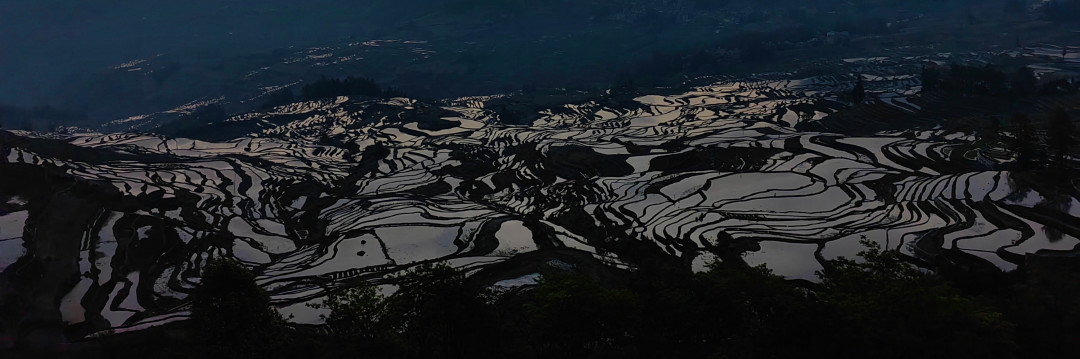
My obsession with the Yuanyang Rice Terraces began with a Spring Festival trip my friend Panzi took. In the photos he sent, layer upon layer of terraced fields were filled with water, like the fingerprints of the earth, or fragments of the sky. As for Fuxian Lake, it came up because my friend Zongguan mentioned a song by Li Jian — a love letter a singer wrote for a lake.
I had a chance to visit Yuanyang during New Year's this year, but I changed course at the last minute and went to Dali and Kunming instead. Three months later, when I learned the Yuanyang Rice Terraces were still flooded during the Qingming Festival season, I locked in southern Yunnan as my destination without hesitation.
Coincidentally, the person traveling with me, Lujie, was the same companion I'd met three months earlier on Cangshan Mountain. Fate seems to enjoy pushing similar people back together.
Pre-Trip Prep: A Game of Weather and Flight Changes
Originally, I planned to visit only Jianshui and Yuanyang — until I got a flight cancellation notice. My return flight, scheduled for 9 PM, was forced to change to 4:30 PM, which meant I couldn't take the Jianshui mini train as planned. On a whim, I canceled my last night's accommodation in Jianshui, booked a guesthouse on the south shore of Fuxian Lake instead, and extended the car rental by one day.
The weather at the Yuanyang Rice Terraces worried me most. A direct search for "Yuanyang Rice Terraces weather" showed temperatures approaching 40°C — but that was just the temperature in Yuanyang County town. The terrace area sits at a higher altitude and is much cooler. More importantly, several consecutive days of sun icons meant clear weather, which put my mind at ease.
The night before departure, Lujie messaged me when she arrived in Kunming, but I was already asleep. I had an early morning flight the next day, and the excitement woke me up before my alarm — it had been a long time since I'd felt that way.
First Impressions of Jianshui: Heat, Jacaranda, and an Unexpected Train

At 11 AM, the flight landed at Changshui Airport. This was my third time in Kunming, my fifth visit to Yunnan — and all within the past year and a half.
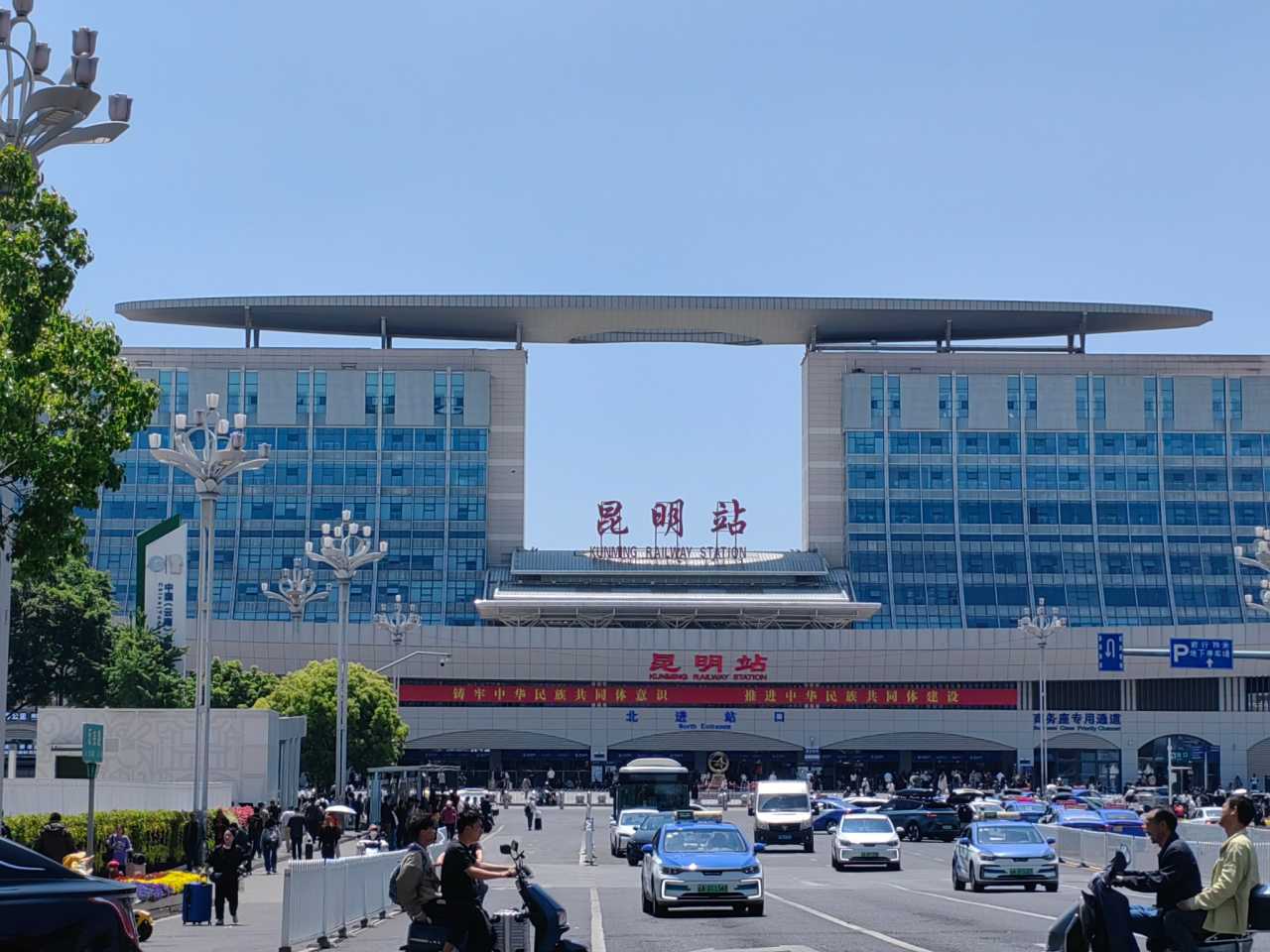
Taking the metro to Tangzixiang Station, I stepped out into a cloudless sky. This year's Qingming Festival in Yunnan was anything but "drizzly and dreary."
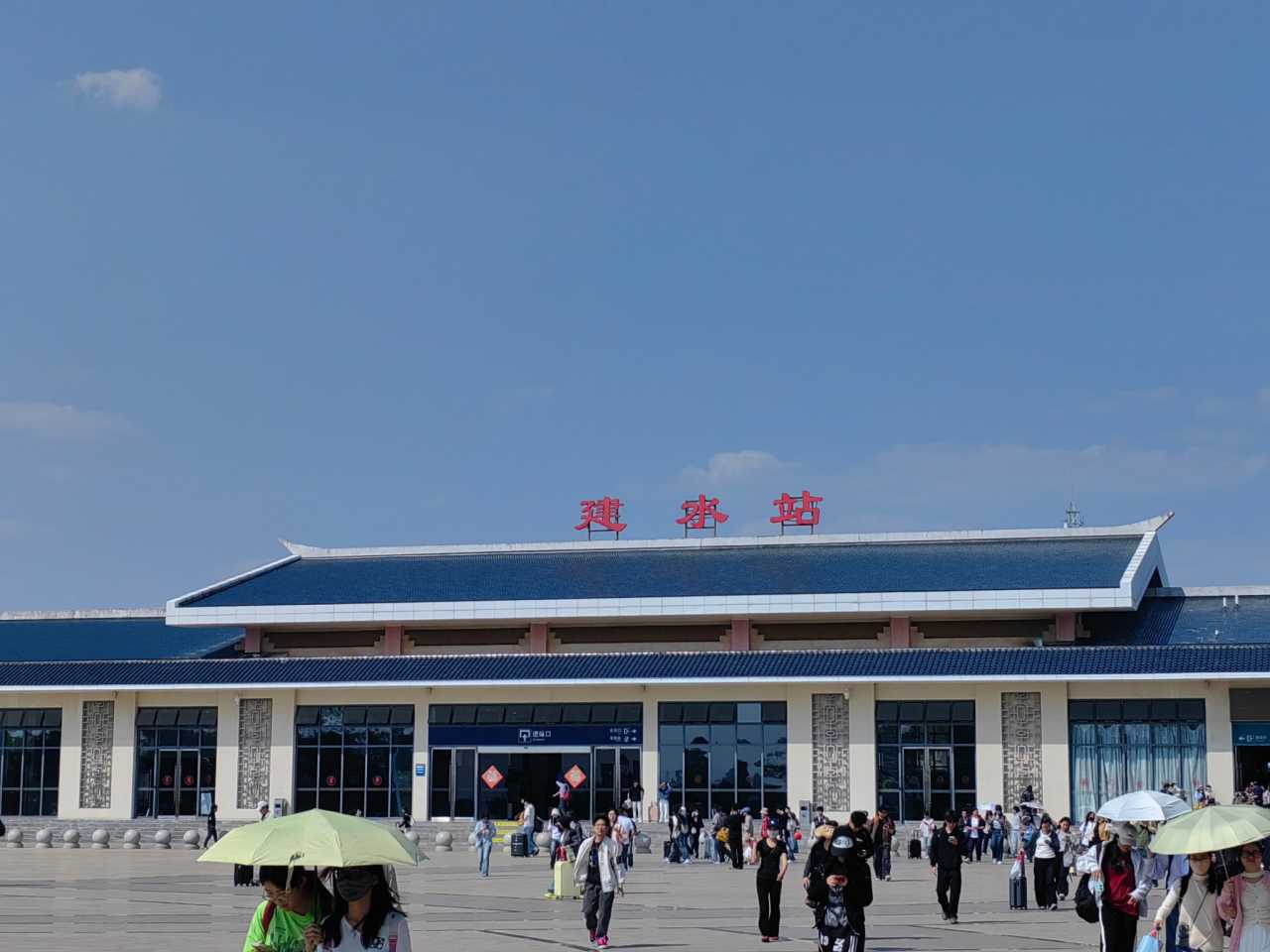
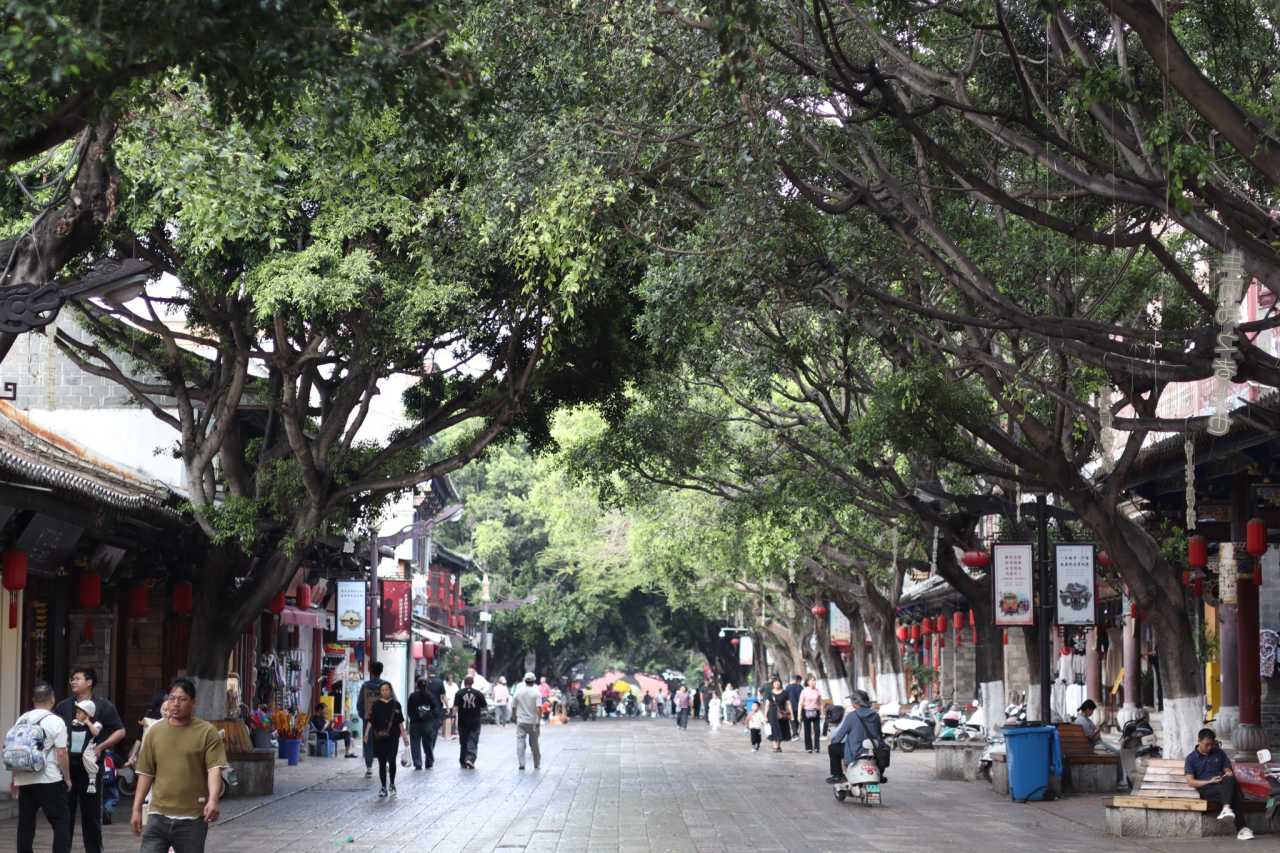
Getting off at Jianshui Station, the blast of heat instantly threw me back into summer. I took a bus to the ancient town, dropped my luggage at the guesthouse, and met up with Lujie. She had her hair tied back and was wearing light makeup — different from three months ago — but once we started talking, that familiar feeling quickly returned.
Zhu Family Garden: Same Old Gardens, Different State of Mind
The back garden of the Zhu Family Garden was decent enough, but having seen so many private gardens, I've grown tired of this kind of landscaping. Standing in the garden, I suddenly thought of Huazi, who took me to Chunhui Garden five months ago — I wonder how you're doing. I hope you're always well.
Chaoyang Gate and Shuanglong Bridge: The Ancient Town's Past and Present
Chaoyang Gate is the east gate of Jianshui Ancient Town, and its main entrance. Climbing to the top, I expected to see a full view of the ancient town's streets, but two rows of dense, towering trees blocked everything. Looking to the side, the ancient town's houses were arranged in pleasing disorder, forming a sharp contrast with the high-rises in the distance — one photo, from ancient to modern; from near to far, spanning past and present.
As evening fell, we took a taxi to Shuanglong Bridge. I thought there was only one Seventeen-Arch Bridge in the world — turns out Jianshui has one too. I was lucky enough to witness the "golden light through the arches" at the Summer Palace's Seventeen-Arch Bridge once; I wondered if this one had a similar spectacle.
Shuanglong Bridge Railway Station sits not far from the bridge — an important stop on the Jianshui meter-gauge railway. Though I didn't get to ride the mini train, just seeing the station felt like making up for the missed experience.
A purple tree appeared before us — a jacaranda. I remembered the video Paper Plane had posted a few years ago of Kunming's jacarandas, and I never expected to find them in Jianshui too.
A whistle sounded in the distance, and a train approached slowly. The "Zhuangyuan" (Number One Scholar) train didn't stop at Shuanglong Bridge Station — it passed slowly in front of us, then slowly disappeared into the distance.
Nightfall: An Unexpected Surprise of BBQ and Fried Rice
Once it got dark, the temperature became comfortable. Lujie still wanted barbecue, so we found the place a ride-share driver had recommended. The barbecue was just okay, but a seemingly simple plate of pickled cabbage and beef fried rice (酸菜牛肉炒饭 suān cài niú ròu chǎo fàn) blew me away — it was the best fried rice I've ever had!
24 Hours at Yuanyang Rice Terraces: From Anticipation to Delight, from Delight to Reflection
First Glimpse: The Refreshing Air of Huangcaoling
We picked up the car and headed for Yuanyang. The expressway was almost nothing but tunnels — one was eight kilometers long, the longest tunnel I've ever driven. After getting off the expressway, we turned onto the Yuanlv Secondary Highway, and the altitude began to climb. The external temperature display dropped from 31°C to 28°C, then slowly to 27°C, 25°C, 24°C.
By 1 PM, when we reached a roadside viewpoint, the temperature had fallen to 23°C. We parked, opened the car doors, and a refreshing coolness washed over us.
This was Huangcaoling Village, the first place we saw the terraces. Most of the fields still hadn't been planted with rice seedlings and remained flooded. No wind, no rain, no heavy fog — Lujie and I were both thrilled. It felt like the trip was already worth it.
At the viewpoint, many local vendors had set up stalls. Lujie bought a few kinds of fruit — it only cost 8 yuan (about $1.10). It seemed the bad habits of tourism hadn't reached here yet.
An Unexpected Find at a Free Viewpoint
Quanfuzhuang Viewpoint was the destination I'd set in the navigation when we left Jianshui. Though it wasn't very hot and clouds filled the sky, the altitude of nearly 2,000 meters made the sun still intense.
Malizhai Tea Factory Viewpoint was another accidental discovery — we only stopped because we saw someone taking photos there. It was farther from the terraces than the first two viewpoints, offering a wider perspective.
Here, we met an older man from Northeast China who was traveling around the country alone in retirement. Lujie's photography skills were questionable — she couldn't quite capture me and the terraces harmoniously. The older man took the camera, saying he'd take a few blind shots — and they turned out pretty good. Meeting warm-hearted people on the road always feels special.
Bada Scenic Area: A God's-Eye View of the Terraces
Bada was the first paid scenic area we reached. The 70 yuan (about $10) ticket covered three spots — Bada, Duoyishu, and Laohuzui — valid for three days. That's pretty reasonable. What made me even happier was that I could enter for free.
Bada has three viewpoints, all far from the terraces. From here, you could take in the entire hillside of terraced fields at a glance — essentially a god's-eye view. Zooming in with the camera, you could capture the multicolored terraces.
Laoyingzui: Narrow Roads and Surprises
The road to Laoyingzui Terrace wasn't easy to drive — basically a single-lane path the whole way. We drove onto a dirt slope, and the navigation announced we'd arrived. Getting out to look around, we discovered a dirt road hidden behind the slope, and a viewpoint at its end.
Laoyingzui Viewpoint was at a moderate distance from the terraces, and you could still see the colorful fields. When we tried to leave, seven or eight cars suddenly appeared from the opposite direction. The dirt slope couldn't hold that many, so we had to let the first car keep going forward, then let all the cars pass us one by one before we could head back down the mountain.
Duoyishu: A View Like No Other
Before we left, a friend who'd visited Yuanyang earlier this year said Duoyishu was pretty average. Going in with "average" expectations, I found the view anything but.
Duoyishu had just the right distance and just the right angle, with terraces arranged in a way no other viewpoint could match — their scattered layout and density were unparalleled.
We walked into the café at Duoyishu Scenic Area — completely empty. We ordered two banana milkshakes and sat by the floor-to-ceiling windows taking photos. No crowds — just the way I like it. But I couldn't understand why it was so empty. This was the Qingming Festival holiday, after all!
Pugao Laozhai: Living in a Little Yellow House
Our guesthouse was in Pugao Laozhai. The navigation said we'd arrived, but there was no sign of the place. We called the owner, who told us to wait where we were. Soon, a man on a motorcycle appeared, carrying a bamboo basket on his back. He told us to put our luggage in the basket and follow him down the mountain path.
It turned out that at the end of the parking lot, there was a relatively hidden entrance leading directly to Pugao Laozhai. I remembered when I stayed in Dali, my place was up on the mountain — I had to climb up first, then go down. This time, staying down below, I had to go down to enter and climb up to leave...
The room had floor-to-ceiling windows on the front and side, offering a 180-degree view. We couldn't see the terraces, but it was still pretty good.
Hadanpu: Expectations vs. Reality
For sunset, I'd originally planned to go to Hadanpu Viewpoint first, then Dawa Zhe Sunset Viewpoint, but time didn't allow it. I chose Hadanpu.
On the way, we passed Aichun Blue Terrace — the bluest terrace we'd seen all day.
As we neared Hadanpu Viewpoint, the road suddenly became very narrow. An old man carrying a shoulder pole saw our car and waved, signaling we were on the wrong road. We turned around and found the correct path at a fork.
I had the highest expectations for Hadanpu. But by then, we'd already visited Huangcaoling Village, Quanfuzhuang Viewpoint, Malizhai Tea Factory Viewpoint, Bada Scenic Area, Laoyingzui Viewpoint, Huangcaoling Scenic Spot, Duoyishu Scenic Area, and Aichun Blue Terrace — Hadanpu was the ninth viewpoint we'd reached in half a day. Aesthetic fatigue was inevitable. By the time I stood on the viewing platform, the scenery just felt... okay.
After Sunset: Everyday Life and Genuine Hospitality
After sunset, ours was the only car left in the parking lot. A woman carrying a small child walked over — I thought she was just saying hello. When I started the engine, she pulled a QR code out of her pocket — parking fee, 4 yuan (about $0.55). I paid 10 yuan. Lujie asked why. I said I heard 4 yuan, but I felt like paying 10...
More than the parking fee, I was concerned about the little girl in her arms. I hope that when she grows up — when their generation grows up — they can still protect these terraces. I hope this place never becomes what Jay Chou described in his song "Rice Terraces" (《梯田》).
On the way back, we passed Aichun Blue Terrace again — it wasn't as blue as before sunset. We found an open convenience store in the village and bought a bottle of sports drink and a few bags of snacks — only 6 yuan (about $0.85). The prices here were so touching. It reminded me of going to the corner store after school as a kid.
The people here are so genuine. They don't yet know they could charge tourists more. Or maybe they do know — they just don't want to.
Duoyishu Sunrise: Golden Fields at Dawn
A new day. I got up at 6:30 AM. Lujie said if she didn't wake up, not to bother — but she got up on time anyway.
We drove to Duoyishu to watch the sunrise. Walking onto the viewing platform, there were many more people than yesterday afternoon, but there were still spots by the railing.
Sunrise was at 7 AM. Before the sun appeared over the mountains, the terraces were still gray. I looked up at the sky and said we might not see the sunrise — the clouds were thick.
But there was a gap between the distant mountain ridge line and the low clouds at the horizon. A few minutes later, the sun peeked through that gap. We saw the sunrise at Duoyishu Rice Terraces!
After sunrise, the colors of the terraces began to brighten. As the sun rose higher, its light hit the fields, and the water surface turned golden. But the gold was fleeting — that gap in the sky was narrow, and the sun soon disappeared behind the clouds.
For this trip to Yuanyang Rice Terraces, I think the most beautiful spot was Duoyishu. Duoyishu, thank you for giving me this golden field at dawn. I'll remember you the same way I remember that golden sunrise over Meili Snow Mountain.
Walking Into the Terraces: Azheke's Ancient Village
At 9 AM, we arrived at Aichun Blue Terrace. It wasn't as blue as in the online photos — a bit disappointing. It seems you really should lower your expectations when traveling. And in life, too.
Today, we chose to walk into the terraces. An older woman sat at the entrance to the path leading down, charging 5 yuan (about $0.70) per person — still felt incredibly cheap.
Standing in the middle of the terraces, I had that "can't see the mountain for what it is" feeling. Terraces really are best viewed from above. Still, walking through the flooded fields was a pleasant experience.
We arrived at Azheke. Mushroom-shaped houses with thatched roofs appeared before us. This wasn't a pure tourist attraction like the Zhu Family Garden — it was an ancient village where people still lived. Watching women working on their second-floor terraces felt like traveling back in time.
Walking through the ancient village, we came upon another vast expanse of terraces — the sheer size of the Yuanyang Rice Terraces is truly mind-blowing.
Back in the village, it was almost lunchtime. We found a restaurant — again, completely empty. We ordered two dishes, and the owner said we could sit outside. He set up a table and chairs for us in a small pavilion within the scenic area.
We waited a long time, but the food was finally ready — definitely not pre-made. The taste was just average, but having lunch in that little pavilion in Azheke Ancient Village was still memorable.
Departure: A Perfect 24 Hours
At 1 PM, we drove away from the Yuanyang Rice Terraces. We'd arrived at 1 PM yesterday and left at 1 PM today — exactly 24 hours. Nine viewpoints yesterday, plus Azheke today — ten places in total. A perfect ten out of ten terrace trip.
At the end of last year, I made a domestic travel list for 2026 with ten destinations. Yuanyang Rice Terraces was one of them. In early April, on my fifth trip of 2026, I finally checked one off.
For the return route, I chose Ai Wu Duan — very few cars. A friend said the roads around Yuanyang Rice Terraces were difficult, all cliffs — but driving them felt manageable, similar to the mountain roads on the outskirts of Beijing.
The temperature went from the 20s back to the 30s Celsius, signaling we were descending the mountain. Getting on the expressway, same as yesterday — almost no cars. During the Qingming Festival holiday, enjoying such smooth traffic for free — I wonder what those who went to crowded tourist spots were thinking.
Jianshui: Jacaranda and Ant Workshop as Unexpected Bonuses
On the way back to Jianshui, the guesthouse owner from Yuanyang called to ask if I'd left an orange power bank in the room. I said no, but I knew it was Lujie — and it was! Along with her charging cable and adapter.
Two days earlier, I'd seen jacarandas in Jianshui, but only individual trees. Still feeling that obsession with jacarandas, we went to Zhilan Lane. Rows of jacarandas were in full bloom — this trip had unexpectedly given me jacarandas.
When I got home, I watched Paper Plane's jacaranda video again. The jacarandas he captured in Kunming and Xichang were slightly denser than what I saw in Jianshui, but the difference wasn't huge. From now on, I can say I've seen jacarandas too.
Final Thoughts
Four days and three nights driving through southern Yunnan — from the ancient town life of Jianshui, to the majestic tranquility of the Yuanyang Rice Terraces, to the unexpected encounter with Fuxian Lake — every stop felt like fate.
What the Yuanyang Rice Terraces taught me wasn't just the lesson of "lowering expectations," but also a sense of reverence for nature and culture. Those flooded terraces are the crystallization of generations of Hani people's wisdom. Those genuine local customs are this land's most precious treasure.
And Fuxian Lake — though I haven't described it in detail here — served as the perfect ending to this journey. The clarity and stillness of its waters felt like a period at the end of this trip.
If you're also planning a road trip through southern Yunnan, here's my advice:
- Choose the right time: The best viewing period for the Yuanyang Rice Terraces is from November to April, when they're flooded and at their most beautiful.
- Lower your expectations: Especially for Instagram-famous spots — keep an open mind and you'll find unexpected surprises.
- Drive carefully: Mountain roads have many curves; stay safe. Tunnels are numerous and long — check your car beforehand.
- Where to stay: Guesthouses in Pugao Laozhai offer great value, but you'll need to walk up and down hills, so pack light.
- Food to try: The pickled cabbage and beef fried rice (酸菜牛肉炒饭 suān cài niú ròu chǎo fàn) in Jianshui, and the Hani-style chicken soup in Yuanyang — both worth a taste.
Finally, may every journey help you meet a better version of yourself.
You should also read:

Body in Hell, Heart in Heaven: A Pilgrimage Through Tiger Leaping Gorge — A Dialogue Between Heaven and Earth
Body in Hell, Heart in Heaven: A Pilgrimage Through Tiger Leaping Gorge — A Dialogue Between Heaven and Earth Introduction: When the Gorge Splits Open Beneath Your Feet Some say Tiger Leaping Gorge is the closest place on Earth to the border between "hell" and…
Continue reading...
A Spiritual Journey to Lugu Lake in Lijiang: Experiencing the Legend of the Kingdom of Women! (Reproduction and Hotlinking Prohibited)
A Spiritual Journey to Lugu Lake in Lijiang: Experiencing the Legend of the Kingdom of Women! (Reproduction and Hotlinking Prohibited) Off-road自驾, food, hotel and民宿 reviews, Featured Traveler, Tank 300 owner, 200,000 km of self-driving experience. WeChat: y01294987 Ninglang Yi Autonomous County 2010.11.08 · 7 days…
Continue reading...
Hiking Around Lugu Lake: Measuring This Mysterious Highland Pearl on Foot
Hiking Around Lugu Lake: Measuring This Mysterious Highland Pearl on Foot Introduction: A Date with the Lake At the border between Yunnan and Sichuan provinces lies a highland lake embraced by mountains, embedded like a sapphire in the folds of the Hengduan mountain range. Here,…
Continue reading...