Splendid Yunnan: The Never-Ending Summer of Dehong (A 3-Day, 2-Night Off-the-Beaten-Path Itinerary)
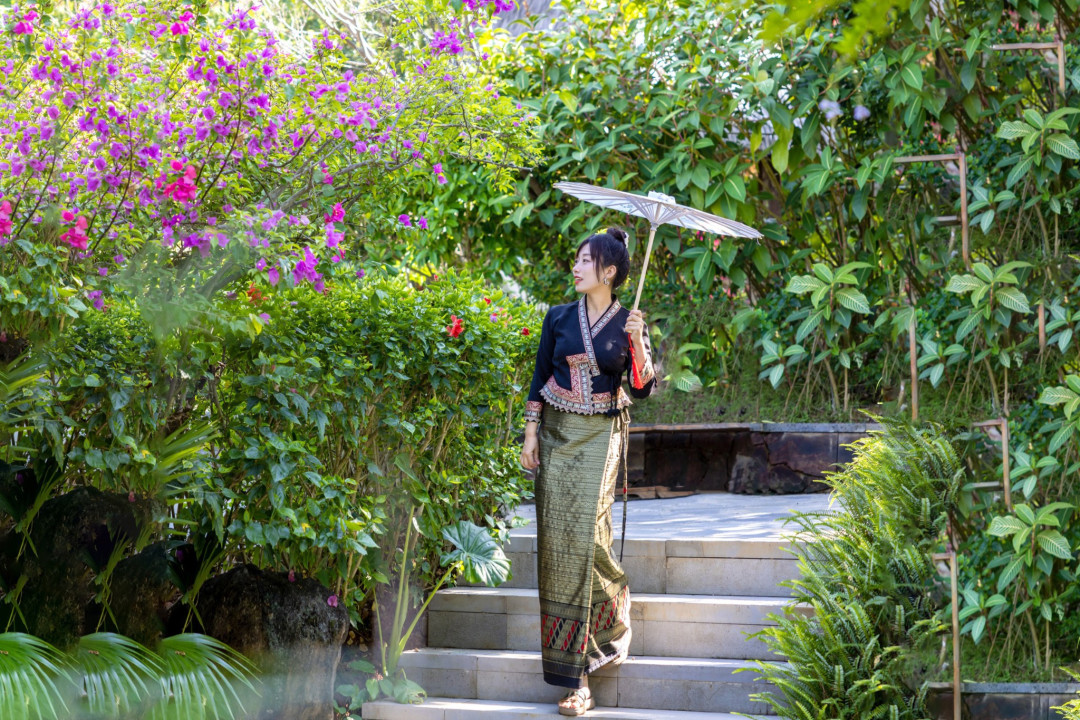
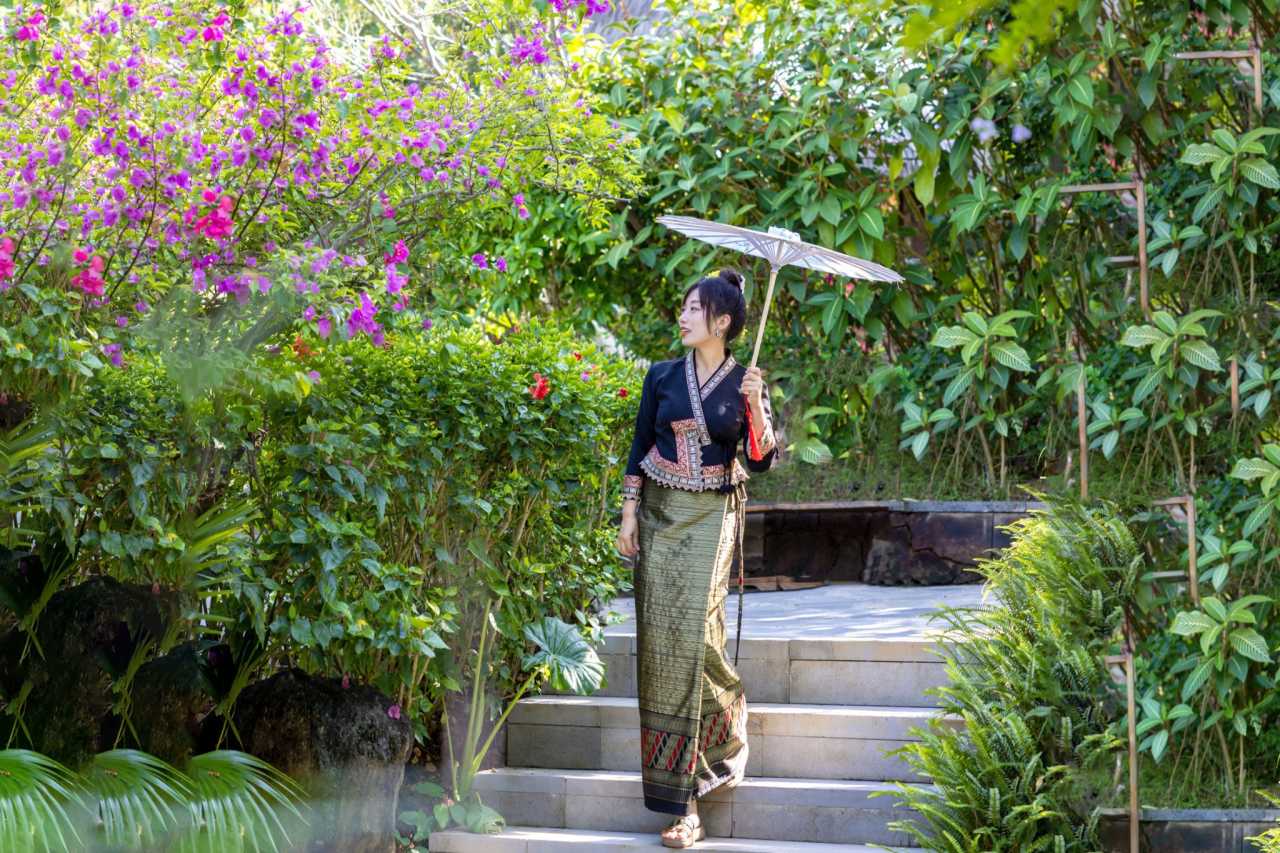
Splendid Yunnan: The Never-Ending Summer of Dehong (A 3-Day, 2-Night Off-the-Beaten-Path Itinerary)
As the northern lands began to wrap themselves in heavy winter coats, I boarded a flight to Dehong, Yunnan. The moment I stepped out of Mangshi Airport, the eight o'clock morning sun was already so intense it stung my eyes. There was no trace of autumn or winter here—only the humid embrace of the tropics. Palm trees soared into the sky, golden pagodas shimmered under the blue heavens, and the air carried an exotic fragrance I couldn't quite name. In an instant, I shed my heavy jacket, as if I had stepped straight into an eternal summer.
Dehong Dai and Jingpo Autonomous Prefecture—this hidden gem tucked away at the southwestern border of China—has countless reasons to captivate you. And Mangshi, the only county-level city in the country with a single-character name, truly lives up to its title: "City of Radiance." Everything here glows: the sun, the golden pagodas, the smiling faces, and my own heart, worn weary by urban life.
First Encounter with Dehong: A Journey That Begins with a Bowl of Rice Noodles
The young woman who picked me up from the airport was so warm it caught me off guard. Her first words were, "Come on, let me take you to breakfast!" There's almost no distance between Mangshi's airport and the city center—we rounded a corner and arrived at a steaming noodle shop on the street. The shop's doors were wide open, with low tables and stools scattered both inside and out. Local men, women, and children sat around, eating with gusto.
The first step of ordering had me stumped—the variety of noodles was dizzying: wide, thin, dry-mixed, or in broth. I settled on rice noodles (known locally as ersi), and then came the "soul moment" of the dish: a dozen toppings and condiments lined up neatly, allowing each person to create their own unique flavor. For the first time, I encountered mountain pepper root—you have to scrape off its powder with a small knife and add it to the soup. The chilies were a spectacle in themselves: red, green, chili oil, chili flakes... This wasn't just breakfast; it was a full-on taste adventure.
The 70th Anniversary: A Dazzling Multi-Ethnic Feast

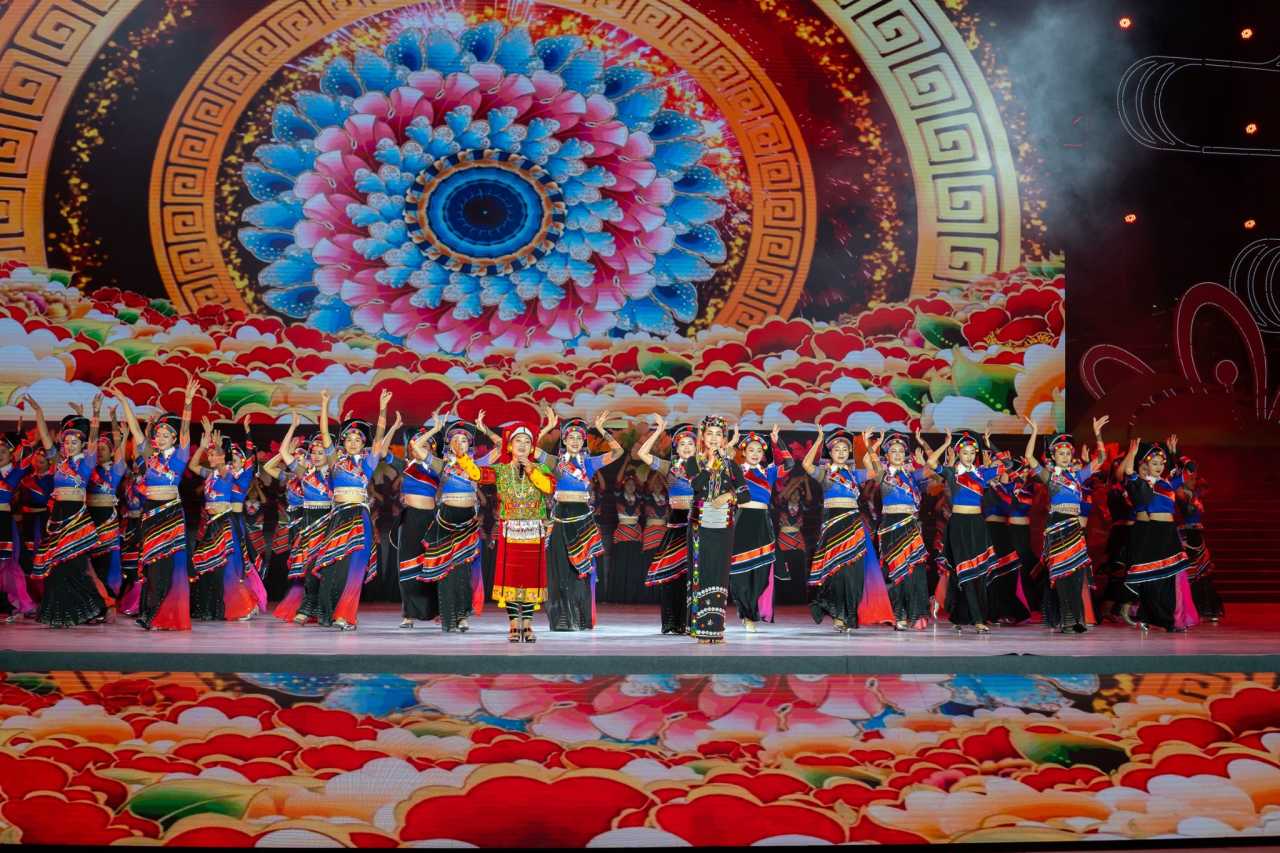
My first two days in Dehong happened to coincide with the 70th anniversary celebrations of the prefecture's founding. This land is home to five indigenous ethnic groups—the Dai, Jingpo, Achang, De'ang, and Lisu. Thousands of people from these communities donned their most resplendent traditional attire, singing and dancing, telling moving stories of Dehong's transformation over seven decades.
Standing in the crowd, I watched their faces brimming with pride and joy, and a wave of indescribable emotion washed over me. What a blessing to be born in China. When ethnic groups join hands to build dreams, may this prosperous era know no turmoil, and may peace endure forever.
The Immortal Buddha Cave: A 140-Million-Year Underground Realm
My first stop on the Dehong journey was the Immortal Buddha Cave, hailed as "the number one cave in western Yunnan." Standing at its unremarkable entrance, I had no idea what wonders lay hidden inside.
Descending the steep steps, the cave, illuminated by colored lights, seemed to open a door to another world. Massive stalactites, stalagmites, and stone pillars, bathed in multicolored light, created a breathtaking spectacle. The cave belongs to the Middle Jurassic limestone geological formation of the Mengga Group, dating back over 140 million years. As I followed the stone path, lotus-shaped rock formations bloomed overhead, and a jade-like pool of water was so clear that fish could be seen swimming inside—legend has it that their eyes have degenerated from living in perpetual darkness.
The cave twisted and turned, narrow and damp in some sections, then opening into vast, starry plazas in others. When a beam of sunlight finally streamed in at the exit, the feeling of sudden clarity was like realizing that all the darkness in life will eventually give way to light.
Practical Info: - Address: Fengchuipo, Mengga Town, Mangshi, Dehong Prefecture - Cave tour length: 2.8 km, with a vertical drop of over 200 meters - Tickets: Adult ticket 63 RMB; ticket including activities 93 RMB - Opening hours: Mon–Fri 9:00–17:00; weekends and holidays 9:00–17:30
The Mountainside Hotel at the Summit: Within the Immortal Buddha Cave scenic area, there's a guesthouse hidden among the woods. Forest cabins are scattered tastefully, their log structures seeming to grow naturally from the earth. Floor-to-ceiling windows bring the lush green mountains indoors, offering a panoramic view of Mangshi. The owner spent nearly two years renovating the place, and it now has eight hillside villas with full views, four of which come with private soaking pools. Prices range from 700 to 2,000 RMB, including breakfast, dinner, and scenic area tickets.
Ruili: A City of Heroes and Jade
The Memorial Hall of the Nanyang Chinese Mechanics Returning to Fight Against Japan
Wanting—this small city of heroes—carries a history that must not be forgotten. In 1938, when the Burma Road was completed, this place became a vital starting point for transporting international supplies and also the launchpad for the heroic saga of over 3,000 overseas Chinese mechanics from Southeast Asia who returned to fight against Japan.
The entire memorial hall is designed as a bridge that is "broken in form but connected in spirit." The broken bridge is shaped like a triangle, representing the 3,000-plus mechanics and symbolizing the three-year expedition. The triangle also resembles a victory "V." The hall's eight sections use artifacts, sculptures, photos, and audio-visual materials to vividly recount that stirring chapter of history.
Address: Nanyang Overseas Chinese Mechanics Memorial Park, Ruili, Dehong Prefecture Hours: 9:00–17:00 Admission: Free
The "Everything's Fine" Jade Live-Streaming Base
As night falls, Ruili may seem quiet, but that's when things really get started. One by one, live-streaming lights flicker on. A dense crowd of hosts gathers, shouting and introducing their wares, surrounded by eager buyers. Bargaining is bold, purchases are swift, and the air is filled with the roar of the crowd. Jade bracelets, pendants, and ornaments are quickly wrapped and shipped off after each electronic auction. In just a few months, the first phase of the live-streaming base, with its 1,300 meters of counters, was fully occupied, housing over 100 live-streaming studios and generating an average daily sales volume of around 10 million RMB.
Jiegao Border Gate and Duty-Free Shopping
The Jiegao Border Gate in Ruili is a must-visit landmark. After three years of quiet times, the square has once again come alive. Before heading to the duty-free shops, don't miss the local stalls on the square's edge—you'll find all the popular products you'd normally buy in Thailand or Indonesia, from ointments to cosmetics, snacks to alcohol, at surprisingly low prices. For example, Thai herbal balm costs just over 20 RMB for three jars.
Duty-Free Shop Guide: - China Duty Free Group: Closest to the border gate; the only shop selling cigarettes; has a Swarovski counter - Hantian Duty-Free: Farthest from the border gate; smaller in scale; cosmetics and skincare products often have discounts - Australian Mall: The largest of the three; sells imported snacks, coffee, tea, and handicrafts
Boxin Bay: Fairy-Tale Hot Spring Cabins
On the west bank of the Longchuan River in Mengyue Township, Longchuan County, lush green vegetation exudes a subtropical vibe. Hot spring cabins are scattered along the riverbank, looking like mushrooms sprouting from the forest and grass. This is Boxin Bay Resort—a scene straight out of a fairy tale.
Each cabin comes with an open-air hot spring pool filled with natural geothermal sulfur-rich water, beneficial for the body. The river is crystal clear and emerald green, with white clouds resting on the mountains. Speeding across the river on a speedboat is refreshing; the wooden lakeside boardwalk is perfect for photos; a traditional painted boat lets you soak in the scenery; and fishing boats allow you to cook your catch right on the spot.
Address: Boxin Bay Tourist Resort, Mengyue Township, Longchuan County, Dehong Prefecture Transport: 20 km east to the Hangzhou–Ruili Expressway; west to Longchuan county town; less than an hour by car
Mangshi: Golden and Silver Pagodas, Twin Glories of One City
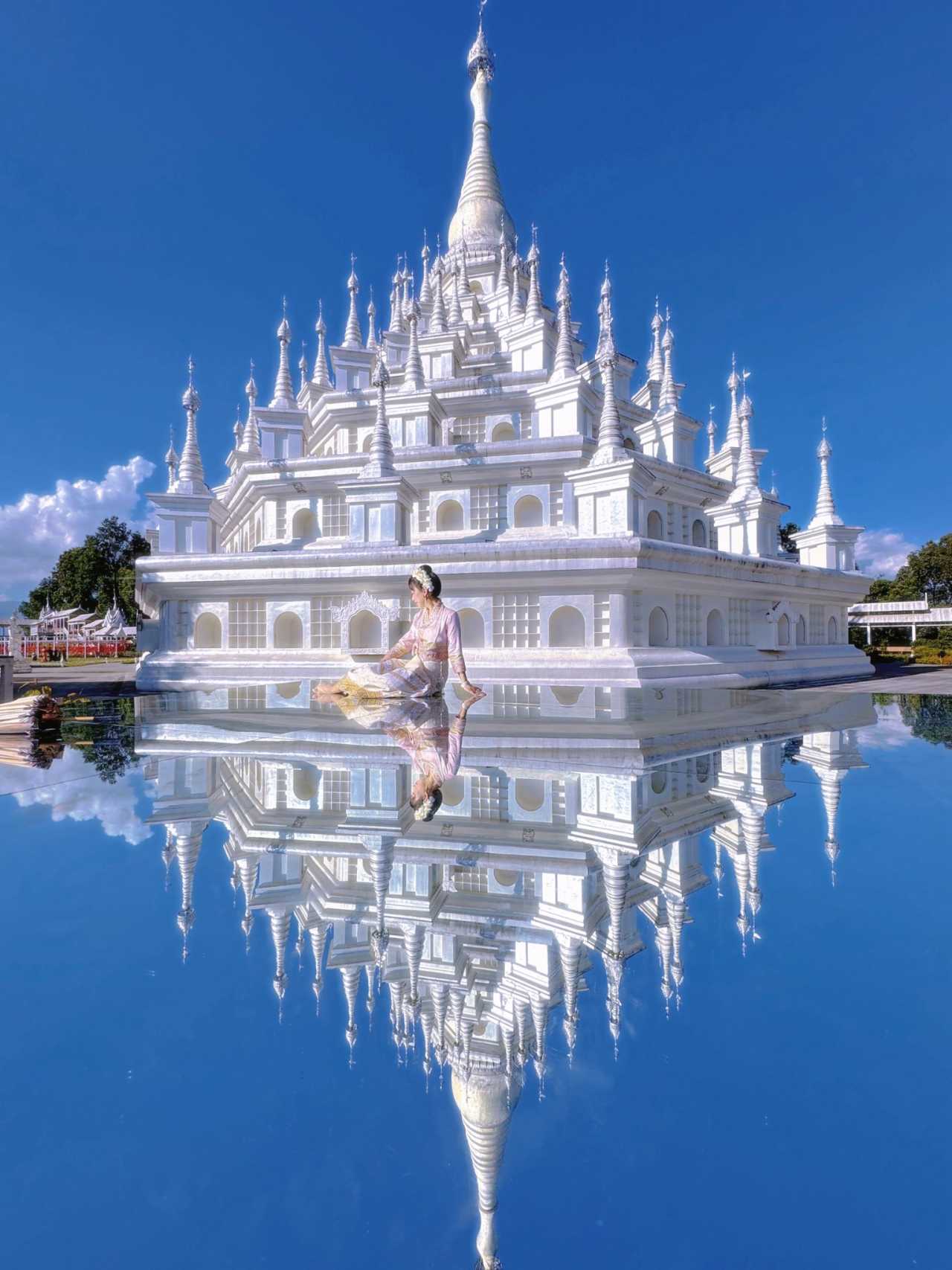
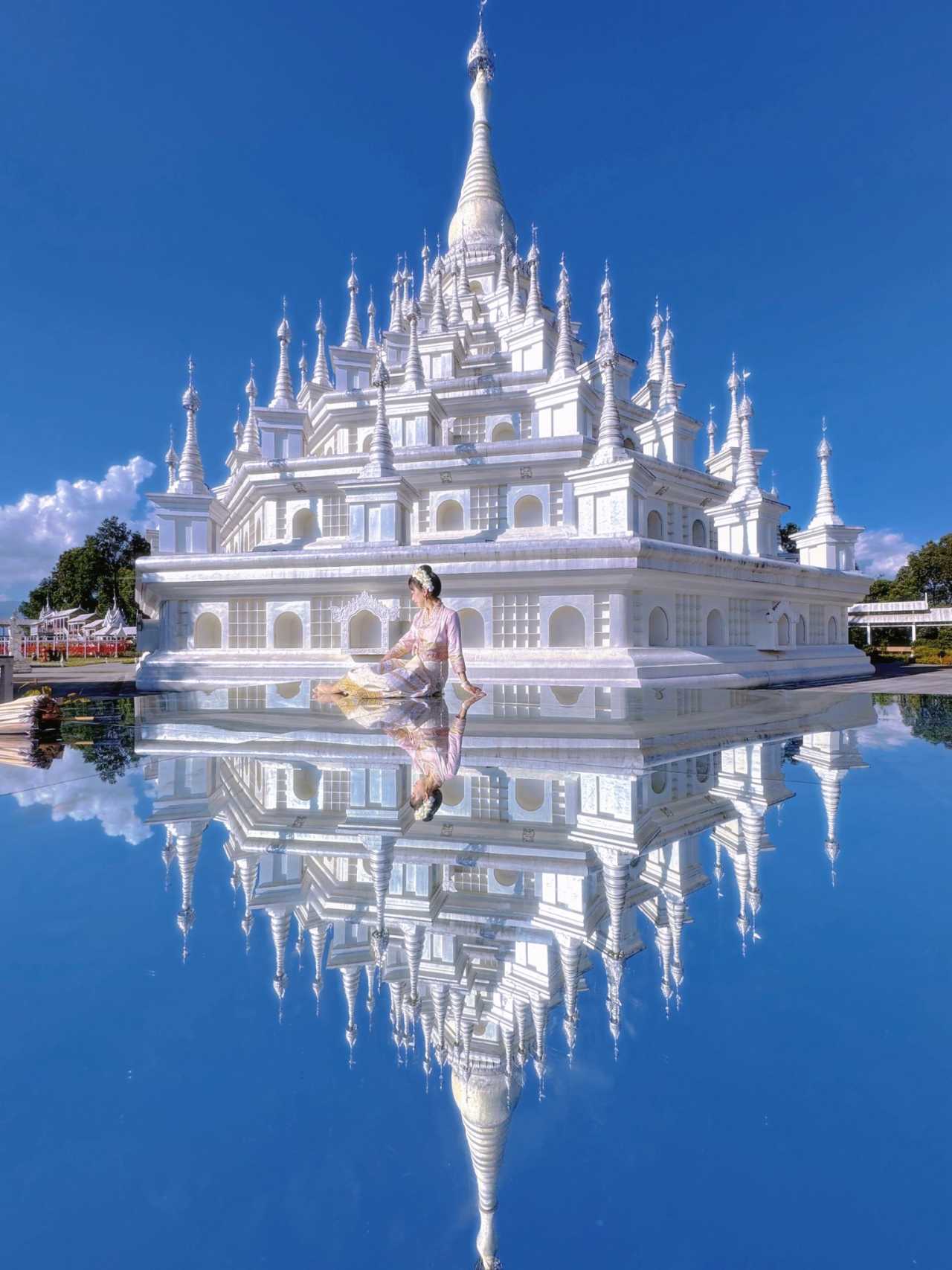
Many people don't know Mangshi by name, but they've seen images of its Golden and Silver Pagodas. One gold, one silver, they face each other across the sky, perched atop Leiya Mountain and beside Peacock Lake. One is opulent and majestic, the other elegant and serene, as if telling an ancient tale.
Meng Huan Golden Pagoda
The Golden Pagoda is Asia's largest hollow Buddha pagoda, visible from every corner of Mangshi. It sits atop Lei Ya Rang Mountain at an altitude of 1,079.6 meters. Legend has it that before his death, the Buddha was reincarnated as the golden rooster A Luan and once lived here. The pagoda's architecture follows the Southern Dai royal palace style, making you feel as if you're in Thailand. It's said that the Dai people are so devout that they sell their most valuable possessions to coat the pagoda in gold leaf.
Address: 56 Xianchi Road, Mangshi Ticket: 40 RMB (only required to enter the pagoda interior) Hours: 08:30–21:00 Tip: Remove your shoes before entering the main hall
Meng Huan Silver Pagoda
If the Golden Pagoda is the sun, then the Silver Pagoda is the moon. It is cool and luminous, pure and untainted, sacred and solemn. The Silver Pagoda is solid, so you can't enter it, but each spire is hung with wind chimes that tinkle in the breeze. Perched on the mountaintop, it's the perfect spot to watch the sunset and take in a panoramic view of Mangshi.
Address: 58 Xianchi Road, Mangshi Ticket: 35 RMB Hours: 08:00–23:00 Tour route: Sign language area, Right Mindfulness Square, Pagoda Shadow Square, main pagoda area, flower sea area, and more
Eating in Dehong: From Green Leaf Feast to Peacock Feast
Jingpo Green Leaf Feast
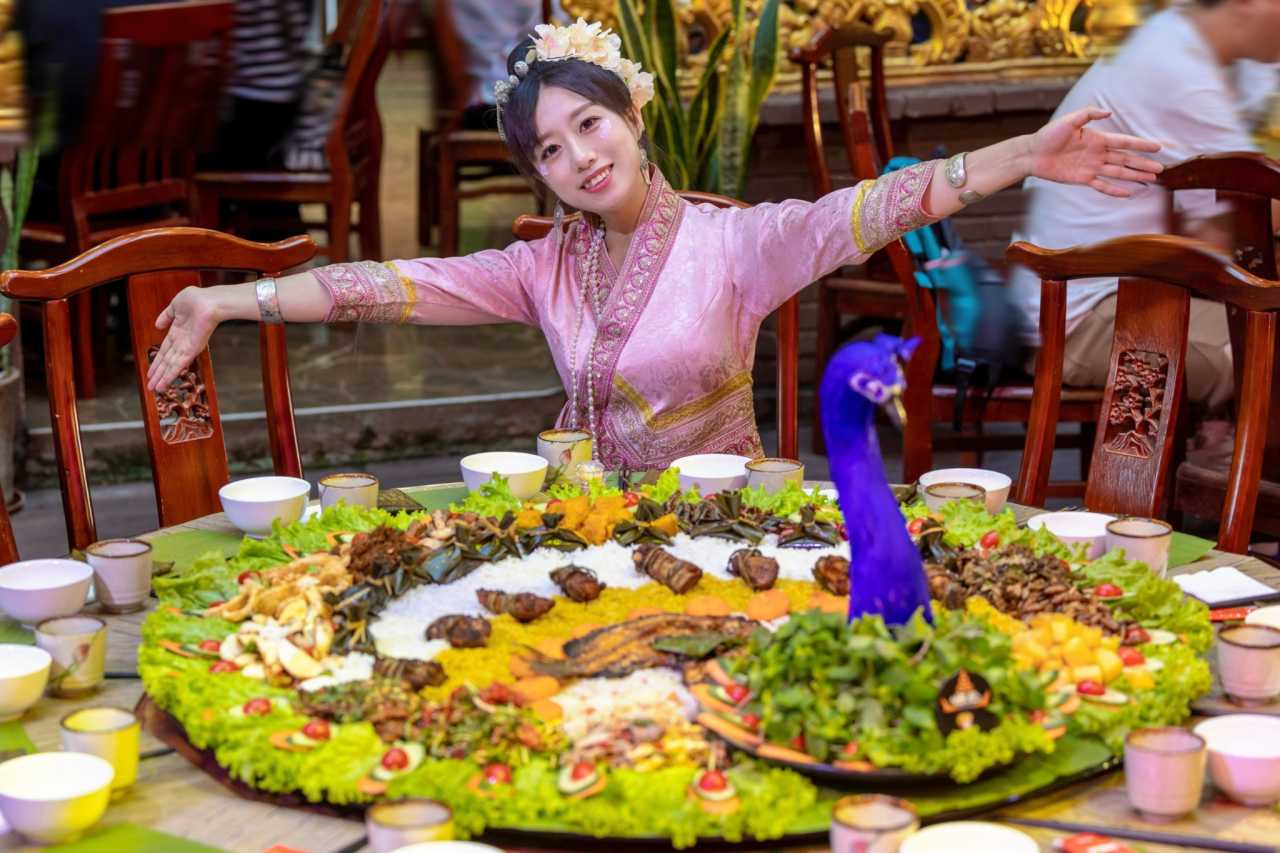
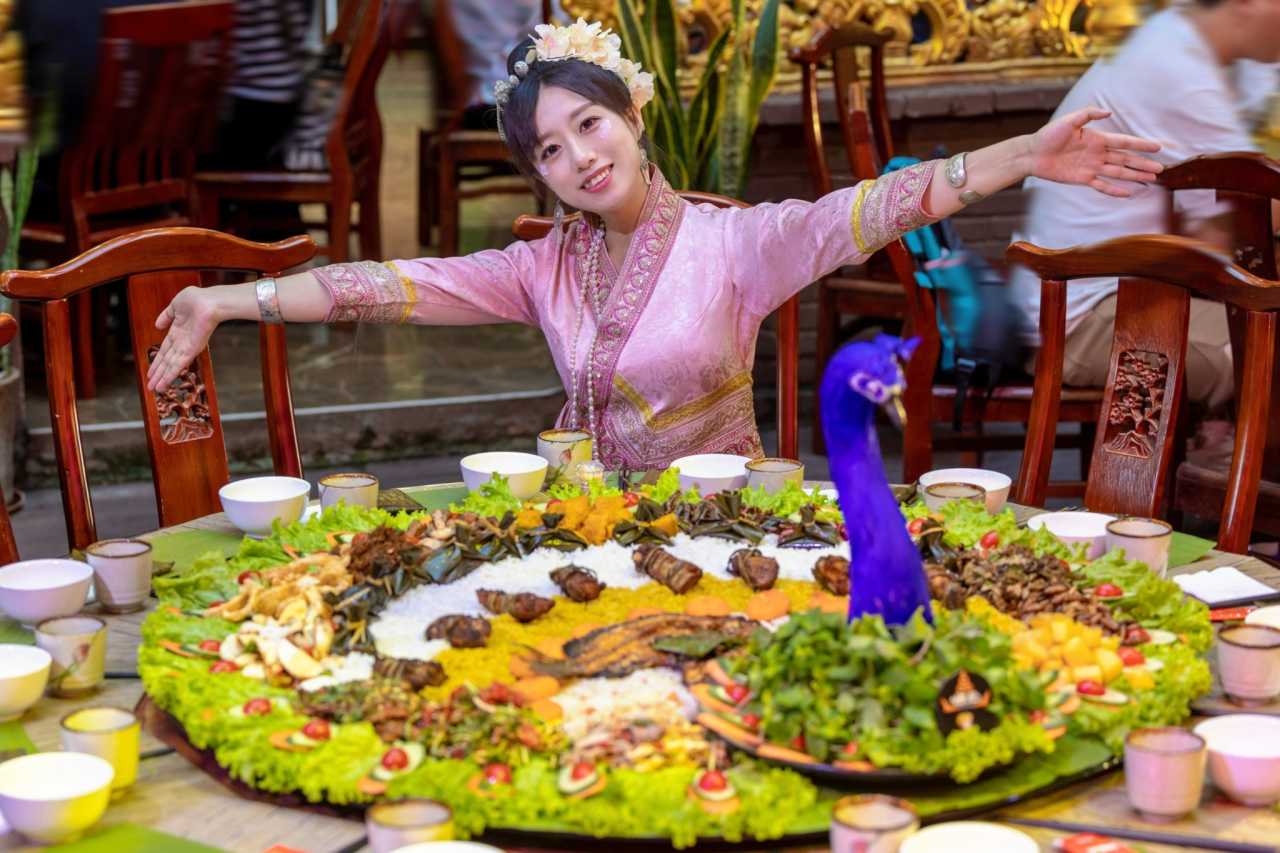
When you come to Longchuan County, you must try the traditional Jingpo cuisine—the Green Leaf Feast. Enter a courtyard with Dai ethnic charm, where bougainvillea blooms. In a bamboo pavilion, the table is covered with fresh green leaves, piled high with colorful foods. There are no plates or utensils—no chopsticks or spoons. Rice is cooked in bamboo tubes, vegetables are pounded in bamboo mortars, banana leaves serve as plates, and bamboo tubes hold rice wine. Pinch a small ball of rice, pair it with the dishes, and eat. The rice gets softer the more you knead it. The ingredients are wild mountain greens, free-range black chickens, and roasted wild boar—a truly explosive combination even in the world of natural cuisine.
This style of eating has been recorded in historical texts from the Yuan and Ming dynasties: "They have no utensils, using banana leaves as plates," "They don't use chopsticks," and "They knead food into balls and eat." Yet this ancient culinary tradition remains a daily staple for locals.
Address: Guangshan Li Peng Farmhouse, Longchuan County, Dehong Prefecture Average cost: 30 RMB per person
Dai Peacock Feast
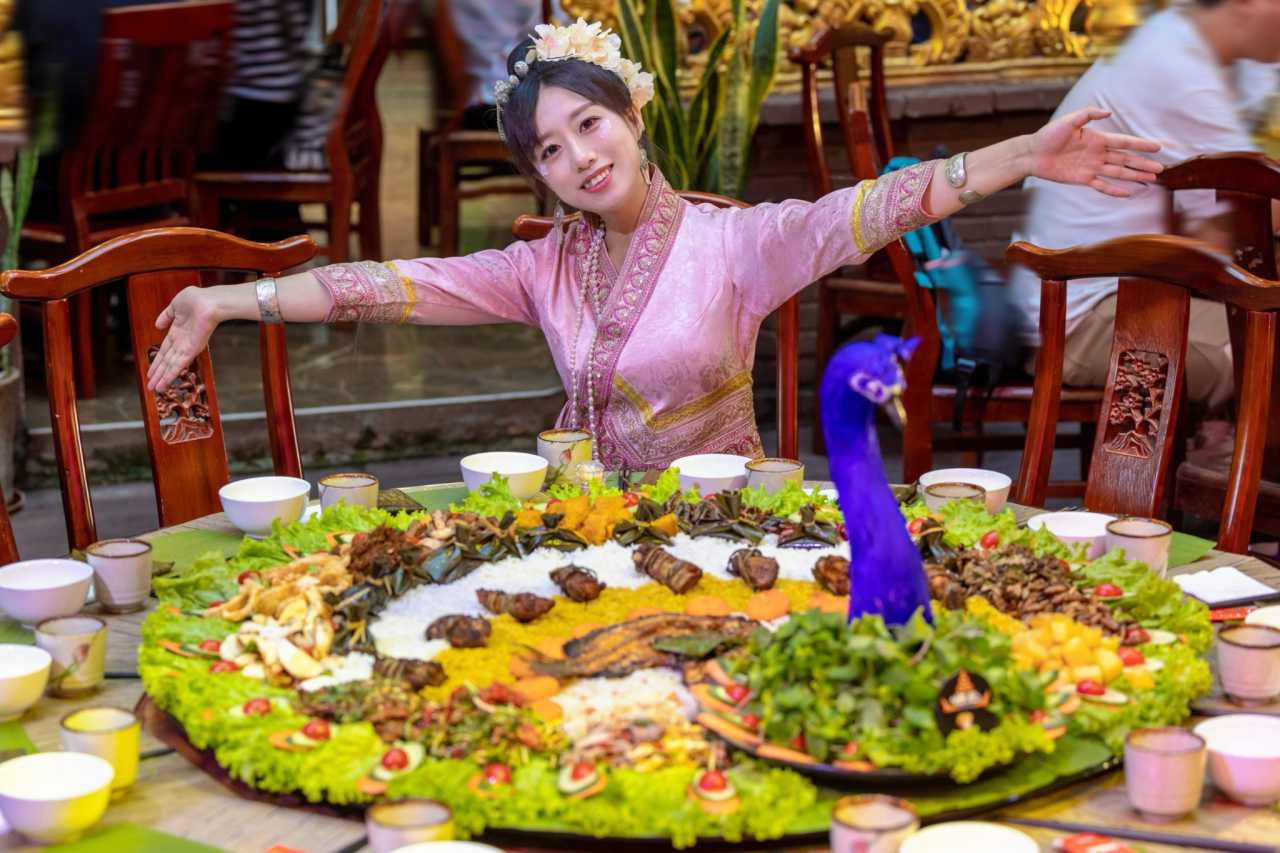
If the Green Leaf Feast was already a novelty, the Peacock Feast was a true eye-opener. Dehong's hot and humid climate leads people to favor sour, spicy, and bitter flavors to dispel dampness and cool down. Ingredients are diverse, with raw and cold dishes being common.
The Peacock Feast arranges various ingredients into the shape of a peacock spreading its tail. Basic dishes include grilled chicken, fire-roasted fish, grilled pork belly, lemon shredded chicken, cold mixed houttuynia cordata (fish mint), fried pork skin, wrapped enoki mushrooms, and mango shrimp. Our table also featured some things I'd never heard of: tree butterfly (a type of lichen), tree wool sweater (another lichen), fried grasshoppers, silkworm pupae, ghost chicken (a cold chicken salad), wild greens, and a spicy dried beef pounded with a fiery local chili. Bamboo worms and silkworm pupae are rich in protein and are highly popular healthy snacks among the Dai people.
Put on gloves, grab a bit of rice, add your favorite ingredients, and knead—this is the Dai-style sushi. With over 20 dishes, you can create thousands of flavor combinations.
Restaurant: Pin De Hong Peacock Feast Address: Building 17, Dai Ethnic Town, East Ring Road, Mangshi Average cost: 60 RMB per person Service: Extremely welcoming, with Dai brothers singing and dancing
Dai Ethnic Town: Night Market's Human Touch
Every city has its commercial street, they say, but Mangshi's Dai Ethnic Town is completely different. Built to national 4A scenic area standards, it was constructed with deep research into Dai history and culture. The golden nightscape is intoxicating, Dai girls smile and laugh, colorful lights dazzle the eyes, an array of traditional handicrafts tempt you to take them all home, and countless Dai snacks you've never heard of make your mouth water.
Address: Intersection of East Ring Road and Hanxiang Road, Mangshi, Dehong Prefecture Opening hours: Open all day, year-round
Final Thoughts
Three days and two nights were far from enough. The afterglow of Dehong lingers. Days after leaving, I still find myself savoring the memory of that bowl of rice noodles with mountain pepper root, the sunset beneath the Golden Pagoda, and that night spent stargazing from a hot spring cabin.
If you, too, want to escape the city's noise and rediscover your passion for life in a place where summer never ends—come to Dehong. There's no "busy" here, only "brilliance." The sunshine of Mangshi will heal you, the jade of Ruili will amaze you, the Green Leaf Feast of Longchuan will make you rethink food, and the night market of Dai Ethnic Town will make you lose track of time.
Recommended 3-Day, 2-Night Dehong Itinerary:
Day 1: Arrive in Mangshi → Watch the 70th Anniversary Parade of Dehong Prefecture → Immortal Buddha Cave Scenic Area → Huajiang Feihua Jinke Hot Spring Resort → Wanting Port → Memorial Hall of the Nanyang Chinese Mechanics → "Everything's Fine" Jade Live-Streaming Base
Day 2: Jiegao Border Gate Duty-Free Shopping → One Village, Two Countries → Longchuan Green Leaf Feast → Boxin Bay Resort → Mangshi Square Evening Cultural Show
Day 3: Dehong Prefecture 70th Anniversary Celebration Ceremony → Meng Huan Golden Pagoda & Silver Pagoda → Meng Banaxi Rare Garden → Peacock Feast → Dai Ethnic Town Night Market
The summer of Dehong never ends. And it's time for you to see it for yourself.
You should also read:
Yunnan: Meeting You at the Most Beautiful Time (Kunming + Dali + Shuanglang + Xizhou)
Yunnan: Meeting You at the Most Beautiful Time (Kunming + Dali + Shuanglang + Xizhou) A Note Before We Begin: A Travel Memory Long Overdue Some trips need to ferment in memory before they yield their richest flavor. In the summer of 2012, my girlfriend…
Continue reading...
The Call of Colorful Yunnan: An 11-Day Heartfelt Journey – From Beijing Through the Dreamlike Corridor of Northwest Yunnan
The Call of Colorful Yunnan: An 11-Day Heartfelt Journey – From Beijing Through the Dreamlike Corridor of Northwest Yunnan Setting Off: A Heart Ready to Go Anywhere The rapeseed flowers of Wuyuan had just finished their April bloom when my restless heart began stirring again.
Continue reading...
Leaving My Heart in Yunnan: A 9-Day Soulful Journey (Lijiang + Lugu Lake + Shangri-La)
Leaving My Heart in Yunnan: A 9-Day Soulful Journey (Lijiang + Lugu Lake + Shangri-La) Some say travel is a ritual of making peace with yourself—a chance to rediscover long-lost emotions in unfamiliar lands. When my plans for Jiuzhaigou fell through and my dreams of…
Continue reading...