Yunnan: Meeting You at the Most Beautiful Time (Kunming + Dali + Shuanglang + Xizhou)
Yunnan: Meeting You at the Most Beautiful Time (Kunming + Dali + Shuanglang + Xizhou)
A Note Before We Begin: A Travel Memory Long Overdue
Some trips need to ferment in memory before they yield their richest flavor.
In the summer of 2012, my girlfriend and I packed our bags, flew from Changzhou via Nanjing, and headed for a place we had already painted in our minds countless times—Yunnan. This trip was meant to be recorded immediately upon return, but my chronic procrastination delayed it by a full year. Looking back, perhaps that year of settling allowed the images to sharpen and the feelings to deepen.
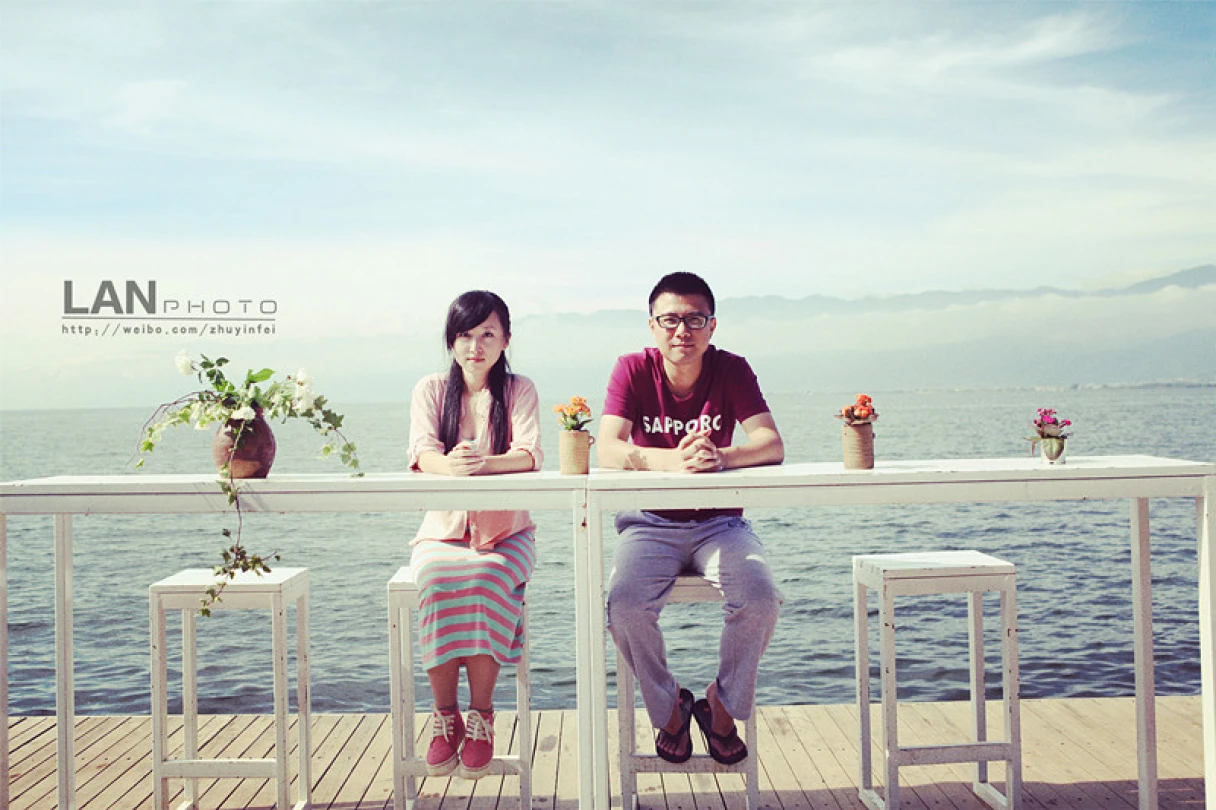
This was the first stop of our journey together, hand in hand. No Lijiang's chaos, no Shangri-La's mystery, no Lugu Lake's serenity, let alone Yubeng's ruggedness. We simply chose the most straightforward route—Kunming, Dali, Shuanglang, Xizhou. Not backpacker-style, not luxury—just an attitude toward travel and the feeling of holding hands.
Like when a rainbow appears in the sky, and you happen to be right there beside me.
I. Kunming: More Than Just a Transit Hub
Arriving in the Spring City
August 28th. From Changzhou to Nanjing, then a flight to Kunming Changshui Airport. We landed in the early hours, dragged our exhausted bodies to the hotel, and collapsed into bed. When we woke the next day, the window revealed Kunming's signature blue sky—a clarity so pure it looked like it had been washed clean.
Many people treat Kunming as a mere stopover on the way to Dali or Lijiang—arriving in a hurry, leaving in a hurry. But I want to say this: Kunming itself is a city worth lingering in.
A Bowl of Rice Noodles, a World of Flavor

For breakfast, we headed straight to the Cuihu branch of Qiaoxiangyuan (Bridge Aroma Garden). Lucky us—the sign out front read "Today's Champion Rice Noodles Half Price," so we ordered two sets without hesitation. When the bowl arrived, I was stunned—small plates and large dishes stacked layer upon layer, over a dozen toppings in total. The broth was boiling hot, the rice noodles gleaming white. This was the real deal: Guoqiao Mixian (Crossing-the-Bridge Rice Noodles).
The Hidden Railway Museum
If you ask me what Kunming's must-see is, I'll say without hesitation: the Yunnan Railway Museum.
It's tucked away on the second floor of the waiting hall at Kunming North Railway Station. Small in size—only 3,176 square meters—but what it holds is a century-old memory of railways. The Yunnan-Vietnam Railway, stretching 854 kilometers from Kunming to Haiphong in Vietnam, was built in 1910.
What struck me most was the Michelin passenger diesel multiple unit—imported from France in 1914. Its wheels weren't steel but rubber, reserved exclusively for high-ranking Chinese and French officials. Then there was the KD55 steam locomotive, built by Japan's Kawasaki factory in 1897. Though its design speed reached 100 kilometers per hour, it could only manage a few dozen in practice.
Leaving the museum, we spent 1.5 yuan on a ride on the meter-gauge train. This is the oldest surviving meter-gauge passenger service in China, and the only one operating within an urban area. The green carriages swayed gently, and outside the window, the everyday烟火气 (hustle and bustle) of Kunming's streets scrolled by—like traveling back a hundred years.
Western Hills and Dianchi Lake
We climbed the Western Hills for a view of Dianchi Lake. Many say the lake is choked with algae, but from the summit, the vast expanse of water still held a certain charm. The weather was fickle as we climbed—halfway up, a sudden rain shower caught us. We took shelter under a tree, and somehow, that moment felt even more poetic.
Guandu Ancient Town and Fuzhao Lou
The Diamond Throne Pagoda in Guandu Ancient Town was distinctive, and street snacks like roasted rice cakes (kao'erkuai), fermented rice wine, and pea flour jelly were worth trying. But what I remember most vividly was the steamed chicken soup (qiguoji) at Fuzhao Lou.
This restaurant became famous thanks to A Bite of China. The small pot of Zhaotong-style steamed chicken soup arrived at the table—the broth crystal clear, topped with a tempting layer of golden fat. The cold rice noodles (liang mixian) were outstanding—smooth and refreshing. We ordered a full table for two, and the bill came to just 170 yuan. In Yunnan, every meal was a feast.
II. Dali: A Pastoral Poem of Wind, Flowers, Snow, and Moon
Anticipation on the Night Train
From Kunming to Dali, we chose the overnight train—a seven-hour journey. I booked our sleeper tickets on 12306 and picked them up back in Changzhou. When we boarded, my blue paper ticket stood out among a sea of red ones.
The night passed in a haze of rhythmic clacking. As dawn broke, I glanced out the window—that deep blue jolted me awake. Dali. I had arrived.
First Impressions of the Old Town
We stayed at the Cat & Cat Guesthouse (Mao Mao Guo'er), where the tatami-style double bed was stylish and the common area cozy. Most hotels in Yunnan don't have air conditioning—the region's natural 20°C year-round temperature makes it unnecessary.
After settling in, our first priority was food. Following the guide, we found The Bakery No. 88, run by a German grandmother. We ordered a cheese platter with seven varieties, paired with freshly baked bread. Perfect.
Dali Old Town was a pleasure to explore—square and orderly, paved with cobblestones. Renmin Road and Yangrenjie (Foreigner Street) were the liveliest. The west gate led to Erhai Lake, the east gate to Cangshan Mountain. Walk straight out of Cangshan Gate, and you'd eventually reach the mountain itself.
Cycling Around Erhai Lake: An Unexpected Double Rainbow
The afternoon's highlight was cycling around Erhai Lake. "Cycling" might be an overstatement—we just happily pedaled along. Our route took us from the old town to Caicun Pier, then along the lakeshore to Shangshengjiu Village, and back to the old town—about 16 or 17 kilometers round trip.

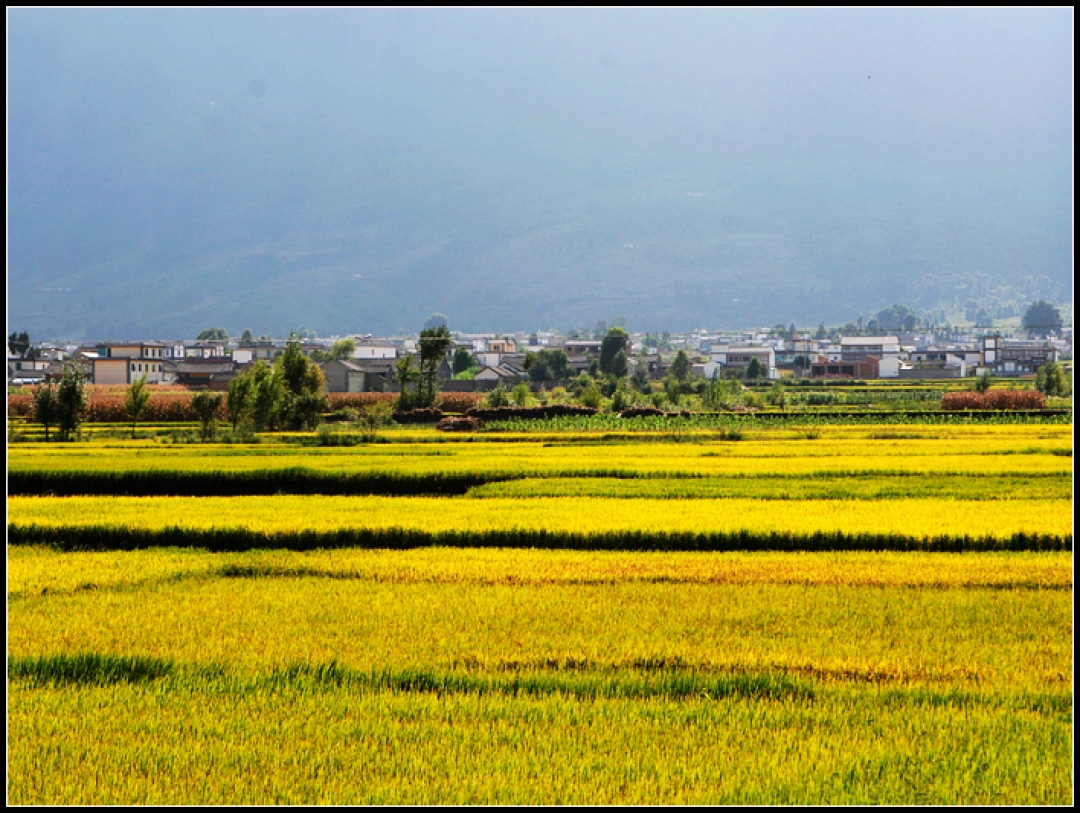
Blue skies, white clouds, endless fields, the distant Cangshan Mountain appearing and disappearing behind shifting clouds, the water meeting the sky. In the green rice paddies, farmers in hats worked the land. This was why I loved Dali—what people call rural life was right here.
Near Shangshengjiu Village, we were chatting and laughing when I turned around and froze—a double rainbow. There it was, a magnificent double rainbow hanging before us. I had never seen one in my life. Dali made that dream come true.
Love may lose its passion over time, but we will always travel hand in hand. Like when a rainbow appears in the sky, and you happen to be right there beside me.
Wuhua Tower and Rose-Flower Scrambled Eggs
At dusk, we climbed Wuhua Tower for a panoramic view of the old town. At 7:30 PM, a free movie—Five Golden Flowers—was playing in the square. Nostalgic travelers could enjoy an open-air cinema experience.
For dinner, we ordered a dish of scrambled eggs with rose petals (meiguihua chao jidan). The people of Yunnan have a gift for weaving flowers into their cuisine, making even scrambled eggs feel romantic.
III. Xizhou: A Time Capsule of Bai Architecture
Yan Family Mansion and Three-Course Tea

From Dali Old Town to Xizhou, a minibus ride took just 30 minutes and cost 5–8 yuan.
Xizhou has preserved a large number of Bai-style residential buildings from the Ming, Qing, and Republic of China periods. The Yan Family Mansion is the standout—covering 2,478 square meters, it consists of four courtyards connected by the "Six Harmonies in Spring" and "Running Horse Corner Tower" architectural styles.
The entrance fee wasn't cheap, but it included a Bai ethnic performance and the famous Three-Course Tea (sandao cha). "First bitter, second sweet, third reflective"—drinking tea as a meditation on life.
Xizhou Flatbread
No trip to Xizhou is complete without trying Xizhou Baba (Xizhou flatbread). It comes in sweet and savory varieties, baked between two fires for a crispy, flaky texture. We bought one to fill our stomachs before heading on to Shuanglang.
IV. Shuanglang: A Fishing Village Surrounded by Construction Sites
The Gap Between Expectation and Reality
Shuanglang was discovered by backpackers almost by accident. To be honest, I was lured here by photos in other travelogues.
When we arrived, I found it was basically one big construction site—digging and building everywhere, hotels and guesthouses springing up like mushrooms. Tourism development is understandable, but the scale of it felt excessive.
The White Tables and Chairs of Haidi Life
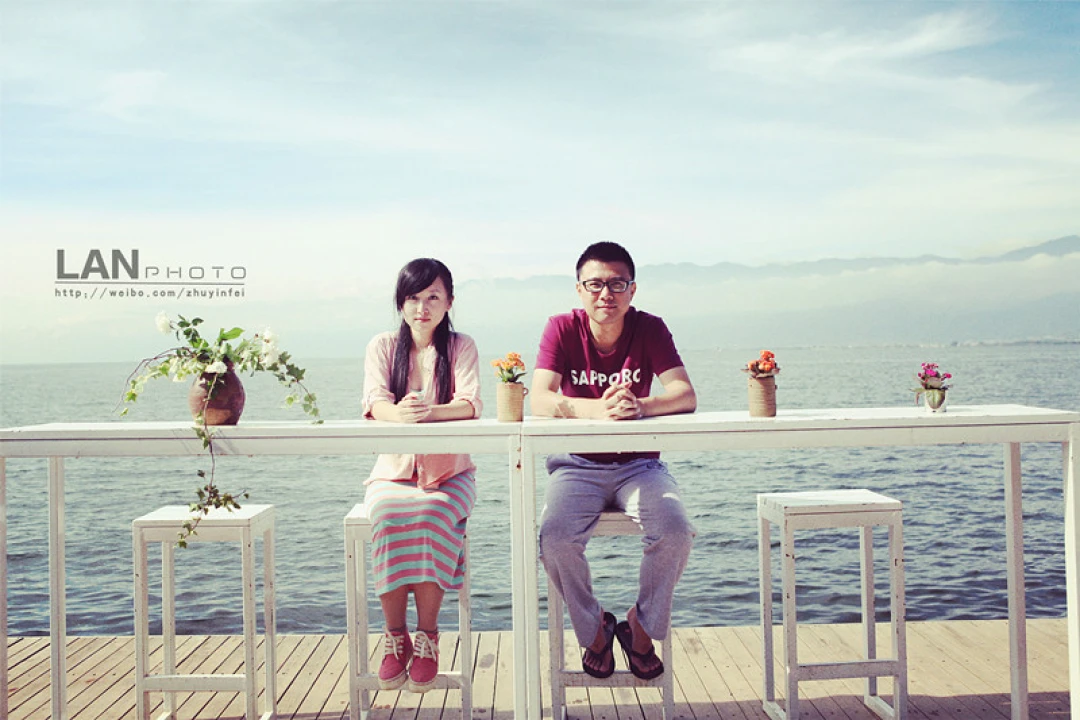
Shuanglang's guesthouses each had their own character: Haidi Life (Sea Floor Life), Bandao 63 (Peninsula 63), Nuan Nuan Garden (Warm Garden), Banyue Tuo Lan (Half Moon Trailing Blue), Qingtian Inn (Sunny Day Inn)—signs at every intersection made it impossible to get lost.
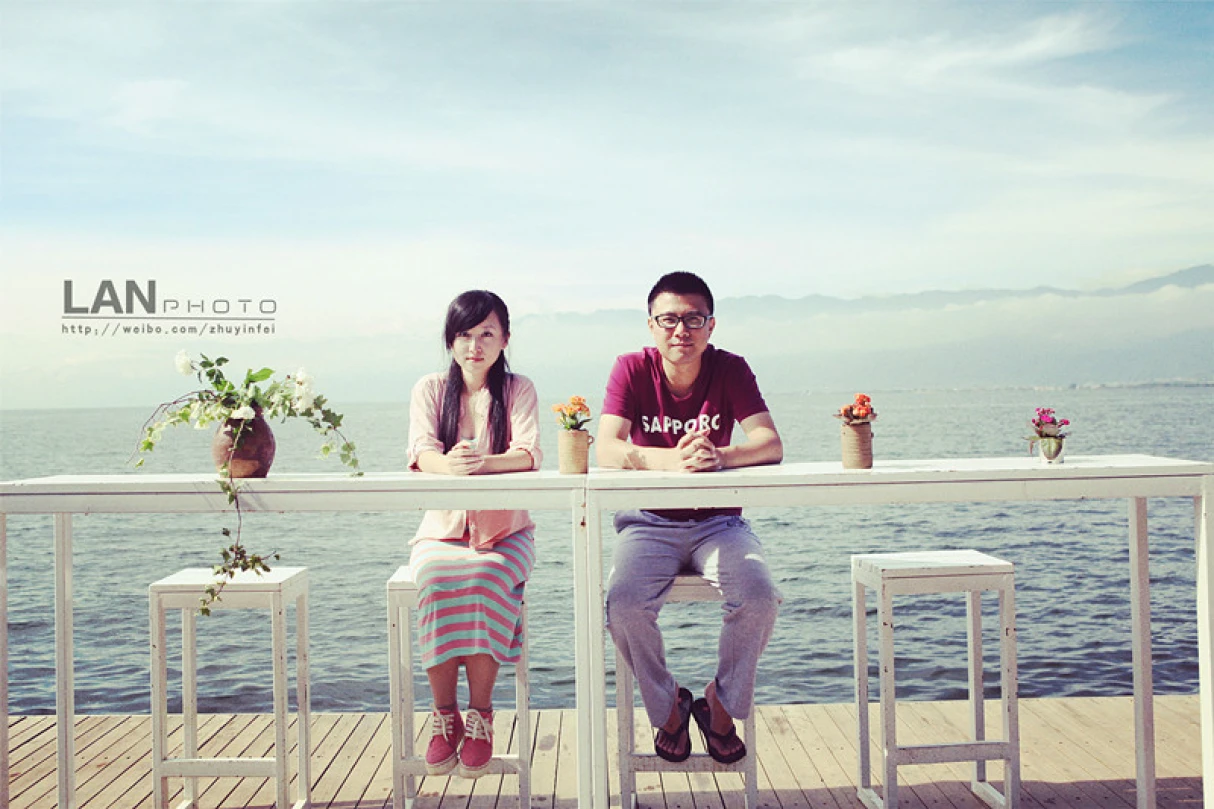
At dusk, the fiery clouds over the sea were stunning. The white tables and chairs at Haidi Life were iconic photo spots. The next morning, we grabbed a seat before the crowds arrived, enjoying a seaside breakfast while pretending we were on the Aegean Sea.
Starry Nights Over the Fishing Village
We had dinner at Haidi Life, watching a bonfire party as the sea breeze swept in. The night sky was breathtaking—this little fishing village at the foot of the mountain had no light pollution, and the Milky Way was clearly visible.
V. Farewell to Kunming: Yunnan University and the National Southwest Associated University
Yunnan University: The "Little Tsinghua" Legacy

Before heading home, we visited Kunming's universities—starting with Yunnan University. Originally called Donglu University, it was once nicknamed "Little Tsinghua." The core building, Huize Yuan (Huize Hall), was modeled after the main building of the University of Paris.
The campus was rich in plant life. The ginkgo avenue was a summer highlight. The plane trees along the path were so thick it took several people to encircle them, their canopy providing cool shade for students on hot days.
The National Southwest Associated University: A Miracle in Education History
On the campus of Yunnan Normal University, we found the旧址 (original site) of the National Southwest Associated University (Lianda). Gold characters on the wall read: "Historic Chinese University Site—National Southwest Associated University."
In one corner of the campus, a single classroom from that era was preserved. The humble conditions stood in stark contrast to the countless masters it produced. Standing there, you could almost feel the academic perseverance of those war-torn years.
In the End: Meeting You at the Most Beautiful Time
On the return flight, I participated in an activity and won a small prize. When the onboard announcement called my name, my heart tightened—I didn't want to leave Yunnan.
A few short days were never enough. I knew I would come back.
This trip had no jaw-dropping sights, no thrilling stories. It was simply about every step we took together, hand in hand. From Kunming's rice noodles to Dali's rainbow, from Xizhou's flatbread to Shuanglang's starry sky, from Yunnan University's plane trees to Lianda's classroom—these images, strung together, formed the first chapter of our journey as a couple.
Love may lose its passion over time, but we will always travel hand in hand.
Practical Tips Summary
Transportation - Kunming Changshui Airport to city center: Airport shuttle bus lines 1/2/3, 20 yuan; taxi about 110 yuan - Kunming to Dali: Overnight train, 7 hours; book in advance on 12306 - Dali Railway Station to old town: Bus No. 8 to Yeyu Road stop, about 1 hour 20 minutes - Dali Old Town to Xizhou: Minibus 5–8 yuan, 30 minutes - Xizhou to Shuanglang: Minibus, convenient
Accommodation - Dali: Cat & Cat Guesthouse (Mao Mao Guo'er), 0872-2474653, 419 Renmin Road (lower section), old town - Shuanglang: Haidi Life, Bandao 63, Nuan Nuan Garden, etc.
Food - Kunming: Qiaoxiangyuan rice noodles, Fuzhao Lou steamed chicken soup, Guandu Ancient Town snacks - Dali: No. 88 Bakery (Yangrenjie), Zaohuishou cold chicken rice noodles, grilled milk fan (kao ru shan), rose-flower scrambled eggs - Xizhou: Xizhou flatbread (Xizhou baba)
Bike Rental - Dali Old Town: 10–50 yuan per hour, negotiable
Other - Wuhua Tower climb: 2 yuan - Yunnan Railway Museum: Free, well worth a visit - Meter-gauge train ticket: 1.5 yuan, departs from Kunming North Station
You should also read:
A 9-Day Yunnan Journey: From Lijiang to Dali to Tengchong – A Trip Toward Self-Reconciliation
A 9-Day Yunnan Journey: From Lijiang to Dali to Tengchong – A Trip Toward Self-Reconciliation Some say travel is simply going from a place you're tired of to a place other people are tired of. It stings to hear, but it's painfully true. Yet there's…
Continue reading...
Solo in Yunnan: A Wanderer’s Guide to the Land of Eternal Spring
Solo in Yunnan: A Wanderer’s Guide to the Land of Eternal Spring There’s something magical about traveling alone. No compromises, no schedules to keep, no one to please but yourself. I’ve been on the road for nearly three months now, and not once have I…
Continue reading...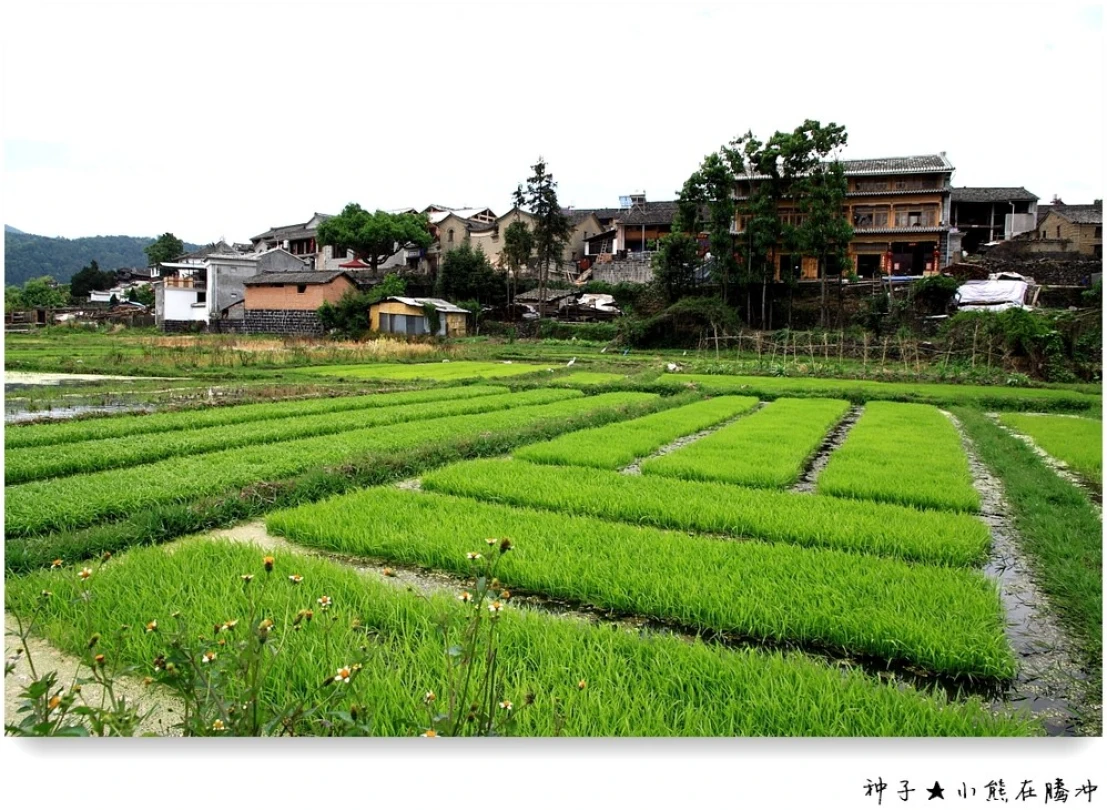
Tengchong·Heshun: Finding Life as It Should Be in a Border Town Where Time Stands Still
Tengchong·Heshun: Finding Life as It Should Be in a Border Town Where Time Stands Still The long journey of over twenty days was over. On my first day back at the office, I was still in a daze. My fingers couldn't find the keys on…
Continue reading...