Spring Festival with Parents in Yunnan: A 15-Day Self-Drive Journey Through Southeast Yunnan, A Race Against Time and a Bond of Family
Spring Festival with Parents in Yunnan: A 15-Day Self-Drive Journey Through Southeast Yunnan, A Race Against Time and a Bond of Family
Introduction: Why Take Your Parents to Yunnan for Spring Festival?
Ten years ago, I first set foot on Yunnan's soil, traveling the classic northwestern route through Kunming, Dali, Lijiang, and Shangri-La. Back then, I was young and free—a backpack slung over my shoulder, ready to roam the world. A decade later, as I planned another Yunnan trip, my role had quietly shifted. This time, I was bringing my aging parents along for a journey that felt like a race against time.
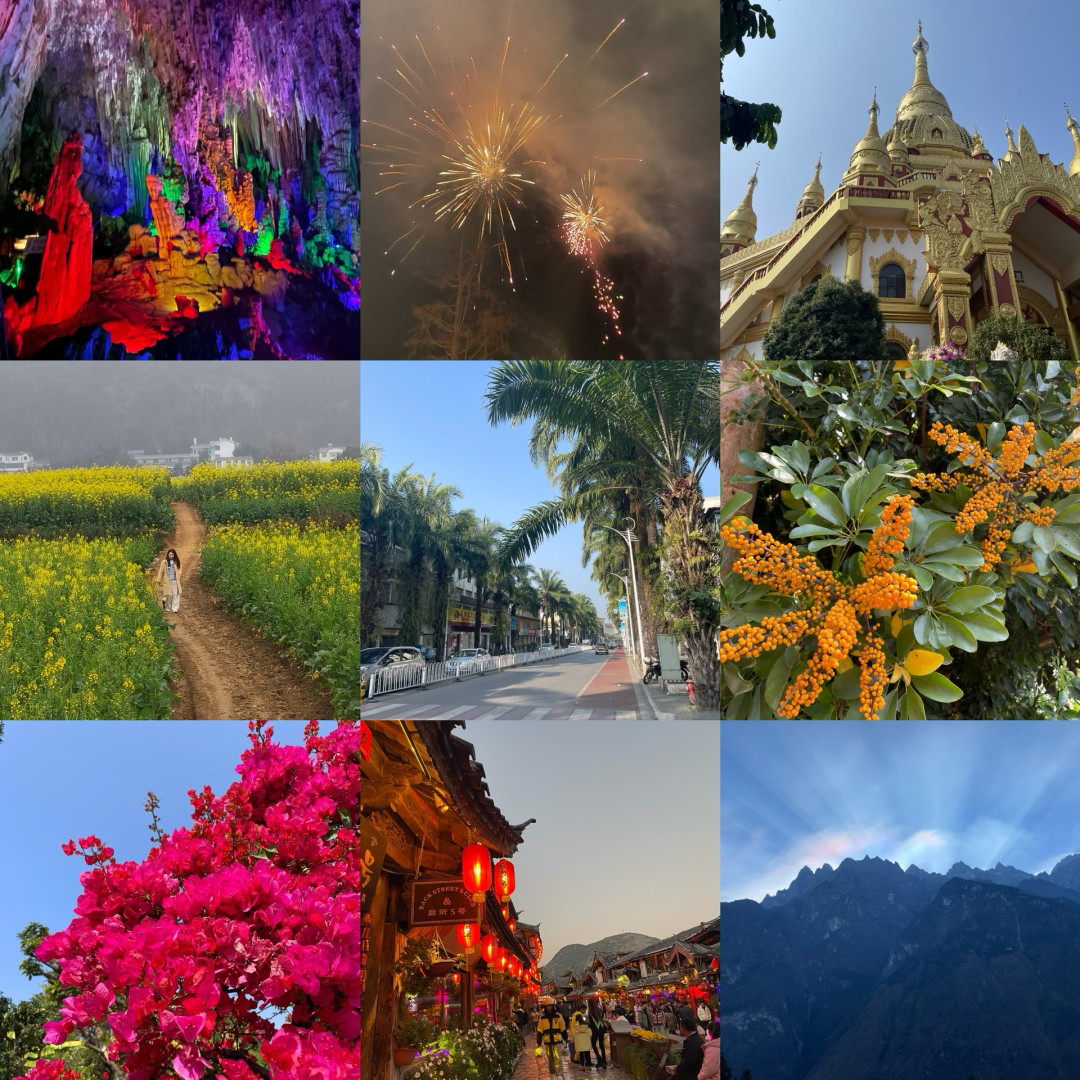
My parents are getting older. Whether they'll ever have another chance to visit Yunnan is anyone's guess. It was this sense of urgency—the feeling that this could be our "last time"—that made me abandon the idea of deep, immersive travel. Instead, I chose an "essentials route" spanning multiple regions. From the Yuanyang Rice Terraces in southeastern Yunnan, to the border town of Hekou, to the Manau Zongge Festival in Mangshi, and finally ending with the spectacular Tiger Leaping Gorge hike—15 days, six people, one car, and a journey racing against both time and the beauty of the landscape.
Chapter 1: Self-Driving Through Southeast Yunnan—From Jianshui Ancient Town to Yuanyang Rice Terraces
Jianshui Ancient Town: A Well, a Pot of Tofu, and the Lively Soul of an Old City
Two days before Chinese New Year's Eve, my parents and I arrived in Kunming a night early. The next morning, my cousin and her family of three flew in from another city. After renting a car at the airport, they picked us up, and we headed straight for Jianshui Ancient Town.
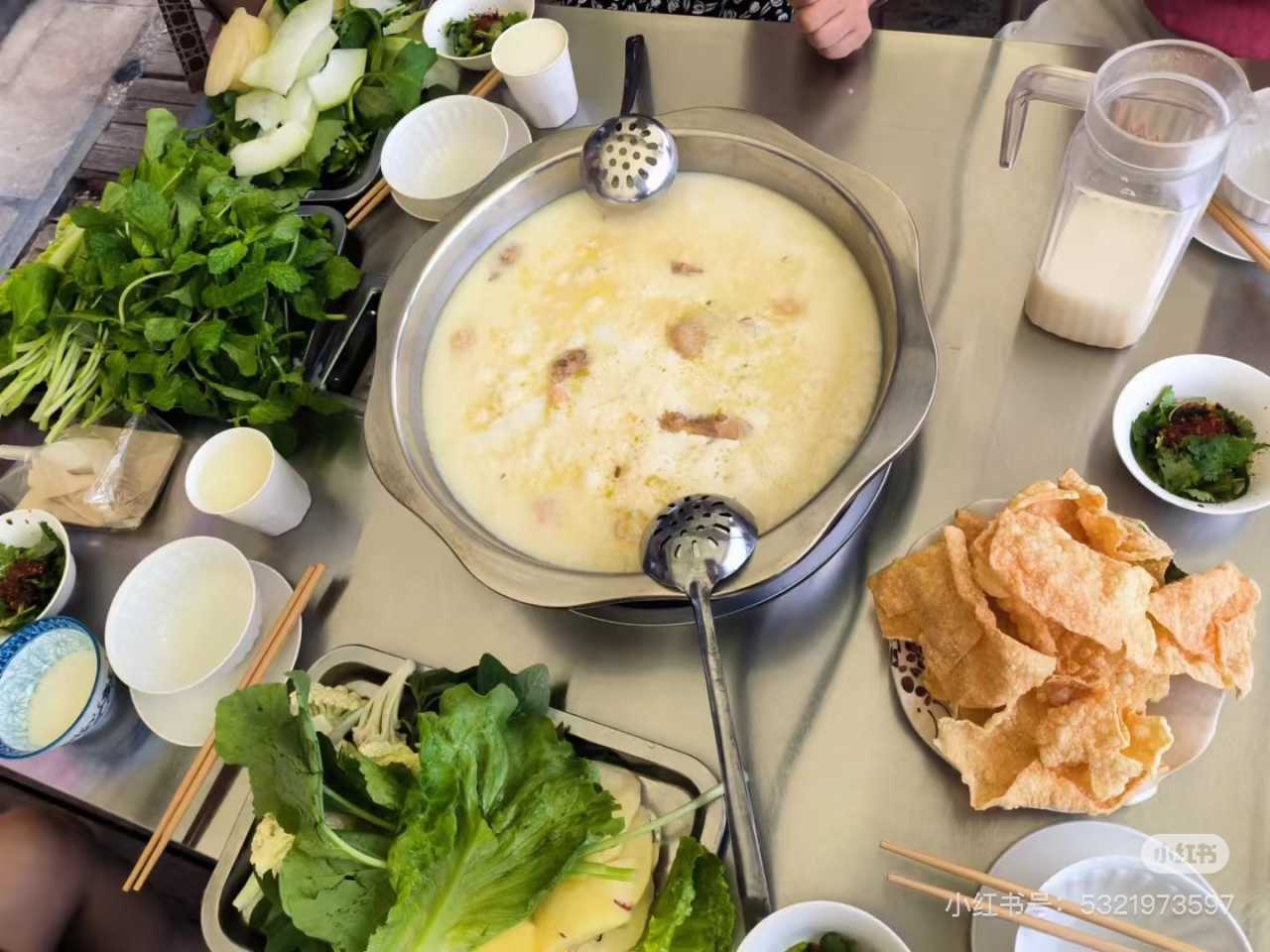
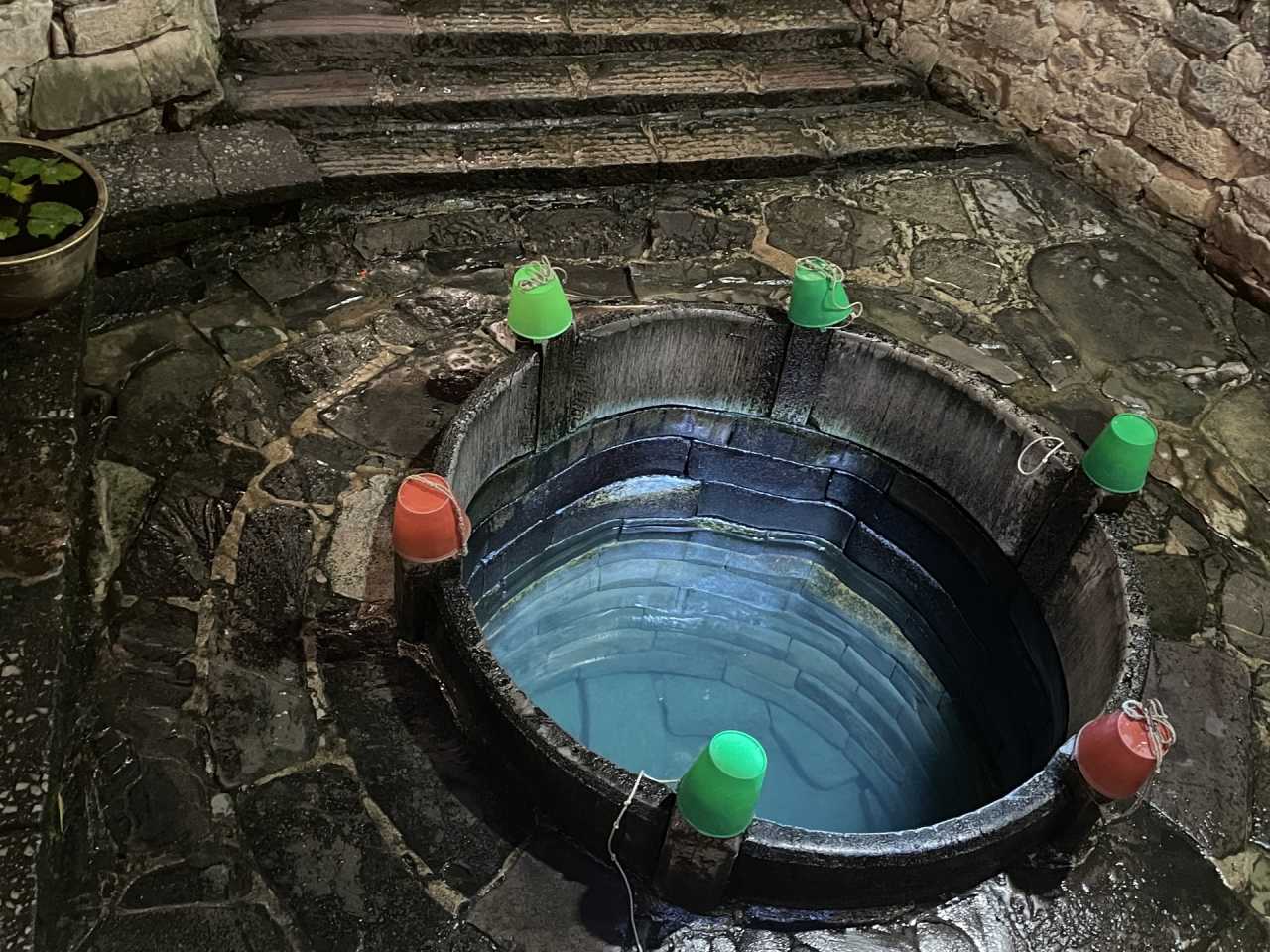
What Jianshui is most famous for is its tofu. There's a local specialty called "石斛豆浆鸡" (stone dendrobium and soybean milk chicken)—chicken cooked in soybean milk. As the heat deepens, the milk slowly curdles into silky tofu pudding, tender on the tongue with the fragrance of beans and the sweetness of chicken. The secret to this dish lies in the water from Jianshui's Daban Well. This ancient well remains crystal clear to this day, and locals have used its water to make tofu for generations, giving Jianshui tofu its unique flavor.
The next day happened to be the 29th day of the lunar month, and we caught Jianshui's big market. Stalls were piled high with ingredients I couldn't name—purple yams, spiny cactus fruit, oddly shaped mushrooms. For someone from northern China, everything here was a novelty.
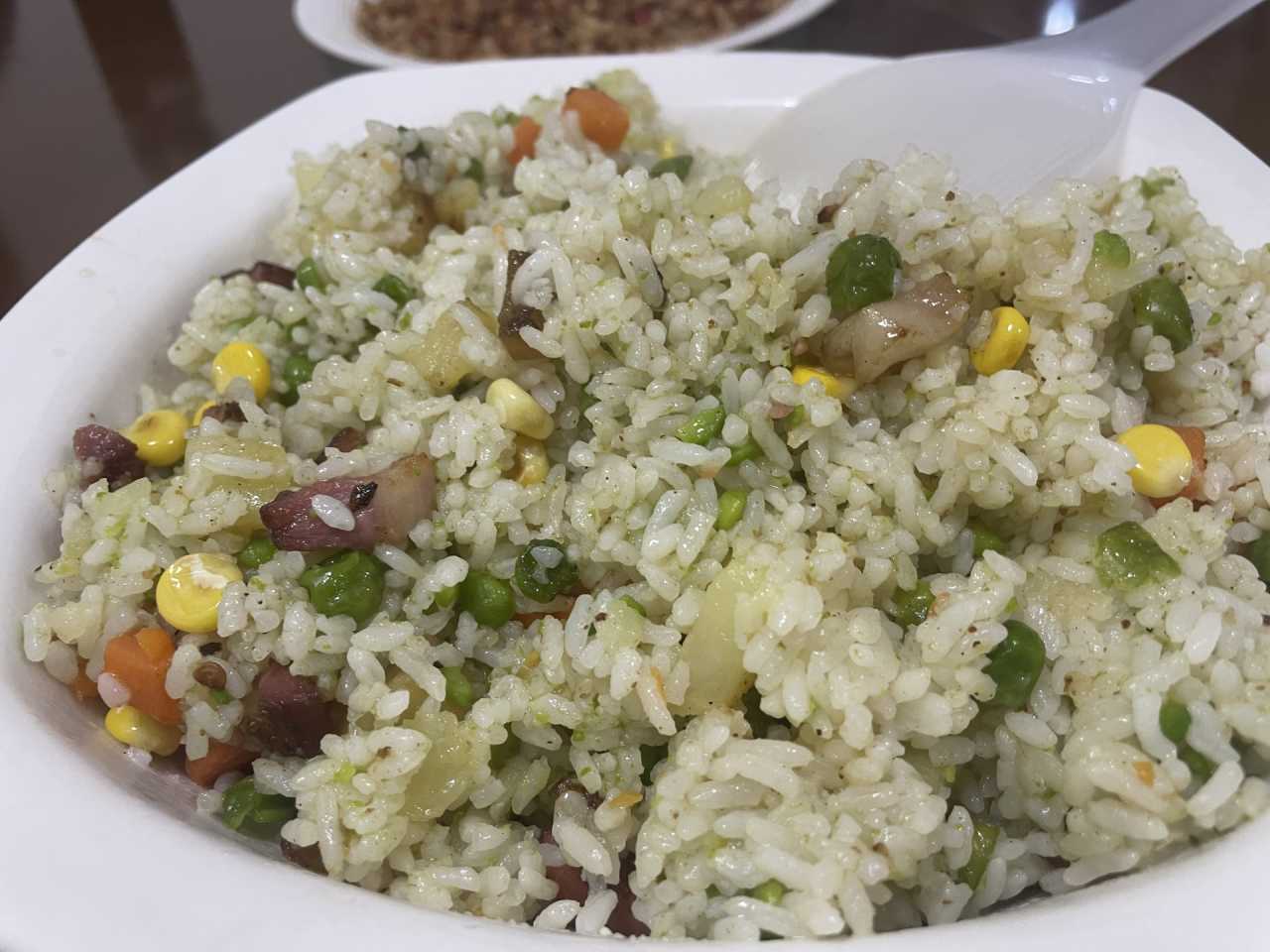
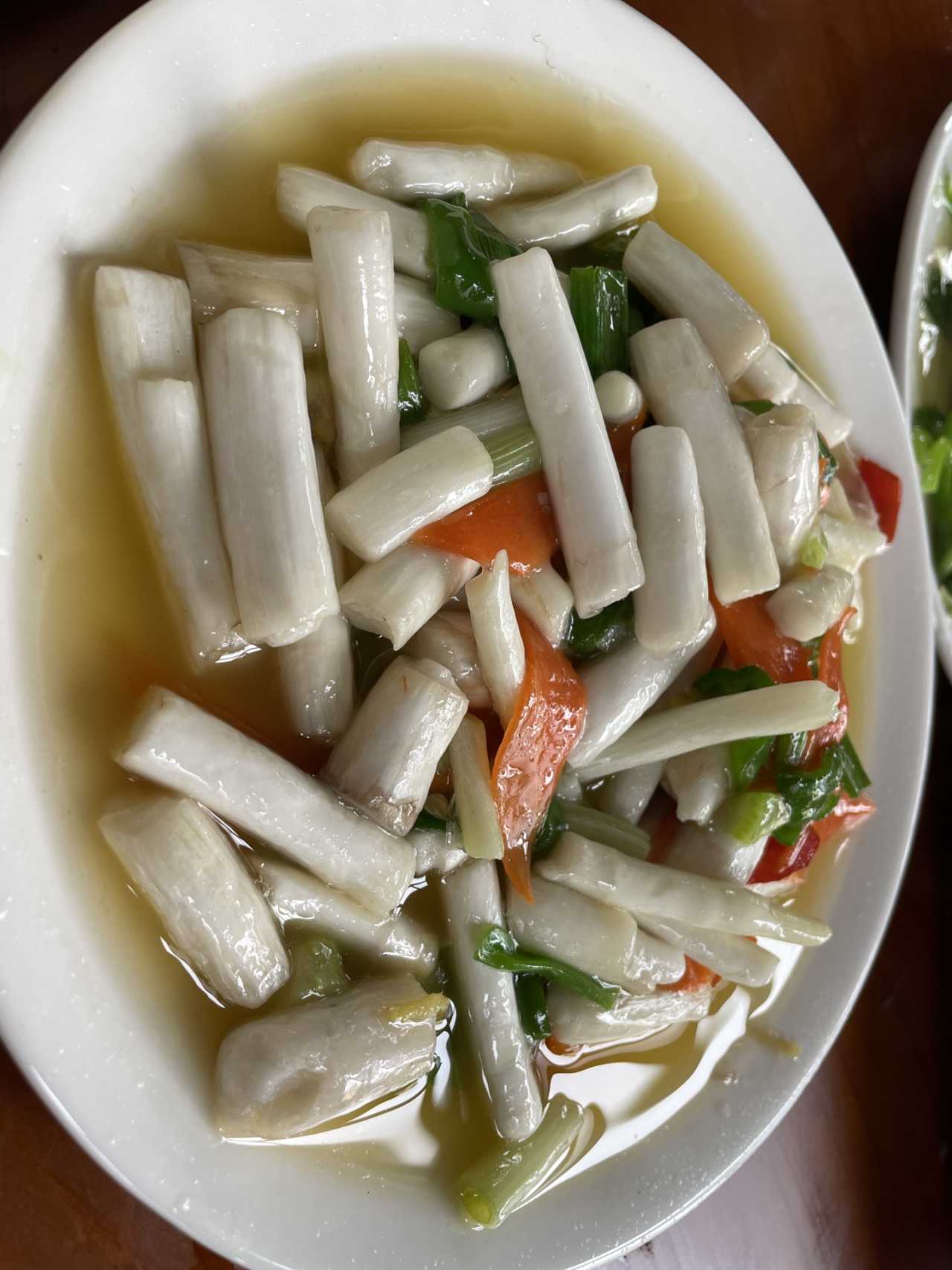
At noon, we found a local eatery with no menu. The owner pointed at the ingredient cabinet and told us to choose. Every dish was a revelation: peanut soup made from freshly ground peanuts, rich and creamy with nutty notes; stir-fried "grass shoots" (草芽), which tasted like peanut sprouts but were sweeter and more delicate; and "丕菜" (a local green) stir-fried with cured pork and dried beef jerky (牛干巴)—flavors you simply can't find outside Yunnan.
Yuanyang Rice Terraces: Seeing Through the Fog, Finding Beauty in Regret
From Jianshui, we set out for the Yuanyang Rice Terraces. The navigation system led us onto a county road that snaked through the mountains, weaving from village to village. Though it added a few hours to our trip, the scenery along the way was an unexpected gift—hillsides heavy with golden oranges, and terraces appearing and disappearing through the mist.
But the weather wasn't on our side. By the time we reached Yuanyang, the entire terrace landscape was shrouded in thick fog, visibility less than ten meters. We sat around a brazier in our guesthouse, waiting all morning, but the mist refused to lift. Not wanting to delay the rest of our itinerary, we left with a heavy heart.
But regret in travel often plants the seed for a return trip. Yuanyang Rice Terraces—we'll meet again.
Chapter 2: Borderland Charms—From Hekou to Mengzi
Hekou Port: Vietnam, Just Across the Bridge
Descending from Yuanyang, we headed straight for Hekou County on the China-Vietnam border. We arrived in the evening, checked into our hotel, and walked to the port. Standing on Chinese soil, we could see Vietnam's Lao Cai city just across the bridge—two cities so close you could almost reach out and touch them.
On New Year's Eve, most restaurants in Hekou were closed. After wandering around, we finally found one still open. Firecrackers crackled outside the door while we raised our glasses inside to toast the new year. That meal introduced us to dishes we'd never seen before—banana blossoms, pumpkin flowers, and mint-spiced pork ribs. Every bite was a surprise.
On the way back to the hotel, my cousin and I bought some "crackling whips" (摔鞭). We couldn't set off big fireworks, but hearing that pop-pop-pop sound felt like we'd done our part for the New Year's ritual.
Mengzi: Lion Dances and Crossing-the-Bridge Noodles on New Year's Day
On the first day of the new year, firecrackers rang out from every direction. In northern China, the tradition is to eat dumplings, and luckily, the hotel next door had a dumpling shop run by a couple from Henan. After breakfast, we followed the sound of drums and gongs to find a lion dance troupe. Shopkeepers would hang red envelopes high above their doorways, and the two dancers—one standing on the other's shoulders—would scramble to retrieve them, drawing cheers from the crowd.
We bought a sugarcane stalk on the street for just 7 yuan—sweet and juicy. The six of us munched on it as we browsed a Vietnamese specialty store, then settled into a café overlooking the port for coffee, sunshine, and conversation. This New Year's was far more relaxing than the usual round of visiting relatives back home.
In the afternoon, we set out for Mengzi. Darkness comes late in the south, so the sky was still bright when we arrived. We strolled through South Lake Park, visited the Dashuzhai Night Market, and wrapped up dinner with barbecue. We tried "Gejiu small skewers" (个旧小串)—meat sprinkled with powdered sugar, a sweet-savory combination that somehow worked perfectly.
The next morning, we finally tasted authentic Mengzi "Crossing-the-Bridge Noodles" (过桥米线). A massive bowl arrived with an array of toppings and a rich, deep broth—far superior to anything you'd find at chain restaurants outside Yunnan.
Chapter 3: Surprises and Detours—From Luxi to Xingyi

Luxi Ancient Cave: Three Hours of Awe
Our original plan from Mengzi was to head to Mile for hot springs, but hotel prices during Spring Festival were outrageous. So we changed course and went to Luxi instead. Along the way, we had a little mishap—we saw on Xiaohongshu (Little Red Book) that there was a White Miao "Flower Mountain Festival" (花山节) happening that day. Excited, we drove over an hour to get there, only to find it was just a rural market selling stuff that looked straight out of the year 2000. Defeated, we drove another hour back.
But Luxi Ancient Cave more than made up for it. This karst cave complex was incredible value for money—three massive caverns connected together, each one huge and filled with stalactites in every imaginable shape. We spent a full three hours exploring and still didn't want to leave.
Xingyi, Guizhou: An Unexpected Sea of Rape Flowers
From Luxi, our plan was to see the rape flowers in Luoping, but they hadn't bloomed yet. When we learned that the flowers were already out in Xingyi, Guizhou, we adjusted our itinerary on the spot. We arrived in Xingyi that afternoon and visited the Fenglin Buyi Scenic Area, a man-made town bursting with festive atmosphere—fireworks, molten iron fireworks (打铁花), drone shows, the works.
We stayed at a guesthouse near Wanfenglin Scenic Area. The next morning, I pulled back the curtains to reveal an endless sea of golden rape flowers, with distant hills that looked like they'd been lifted straight out of a Guilin landscape painting. We hurried through breakfast and stepped right into the flower fields, soaking up this early taste of spring. Though the sky was overcast, the golden blossoms lifted our spirits.
Chapter 4: Mangshi—The Wild Celebration of the Manau Zongge Festival
From Kunming to Mangshi: A New Year's Eve Flight
From Xingyi, we returned to Kunming. My cousin dropped us at the airport, and we said our goodbyes. That evening, we flew to Mangshi, landing just past midnight. But the city was still buzzing—we'd arrived right in time for the Jingpo people's Manau Zongge Festival (目瑙纵歌节), the biggest celebration of the year.
Golden Pagoda and Silver Pagoda: Overlooking Mangshi from Above
The next day, we took it slow. For breakfast, we had local beef noodle soup (牛肉粉), with so many toppings it was dizzying. We also scraped some "木姜子" (Litsea cubeba)—a spice that looks like an old tree root but has a unique, citrusy aroma.
At Mangshi Square, the festival hadn't started yet, but the surrounding area was already lined with food stalls. We first visited the Menghuan Golden Pagoda (勐焕金塔), perched on a hilltop with panoramic views of the city. We didn't go inside the pagoda itself—none of us follow Buddhism. It was too hot, so we skipped the Silver Pagoda across the way. I have to say, the management at the Golden Pagoda needs work—coming down the hill, cars and people were mixed together, with drivers honking endlessly, which was pretty frustrating.
Dancing with Ten Thousand: The Thrill of the Manau Zongge Festival
Back at Mangshi Square, the festivities had begun. We queued up to enter the square and join the mass dance—ten thousand people moving together in the Manau Zongge. The sun was blazing, but the festival's energy swept away any discomfort. My parents had smiles on their faces, and I could tell they were genuinely happy.
We danced for nearly an hour—exhilarating and exhausting. When we finally stepped out of the dance circle, we wandered along the edges of the square, sampling snacks: Burmese "甩粑粑" (rotated flatbread) that was cloyingly sweet, and pine pollen cakes (松花粉糕) that were slightly bitter and dry.
In the evening, a cultural performance began on the square. By sheer luck, we squeezed our way to the front row. Local ethnic singers performed folk songs, and there were modern pop acts too. They even handed out glow sticks—it felt like being at a music festival. After the show, there was a bonfire party, but the smell of burning gasoline was too strong, and we were exhausted from the day's fun, so we called it a night.
Chapter 5: Hot Springs and Old Streets—Slow Living in Baoshan
Hongli Market: The Lively Heart of a Border City
On our second day in Mangshi, we walked to Hongli Market to buy some Burmese specialties. Along the way, we saw plants we'd never encountered before—coconut and jackfruit trees lining both sides of the road.
Around the market, there was an open-air bazaar where prices were astonishingly low: strawberries at 9 yuan per pound, and you could pick your own. We tried pea jelly (豌豆粉) and sticky little bamboo-tube rice cakes (小竹筒饭), then bought a big haul of Burmese goods to share with friends and family back home. Lunch was also at a stall near the market—incredible value.
Balazhang Hot Springs: Soaking in a Classic
In the afternoon, we took a ride-hailing car to the Balazhang Hot Spring Resort (巴腊掌温泉度假村) in Longling County, Baoshan. The springs were open-air, and that evening, we brought my parents for a soak. They were sweating within minutes—my mom even felt a bit dizzy. I guess they're "not cut out for luxury."
The next day, my parents flatly refused to go back to the springs. So we headed into Baoshan city center and went straight for "火瓢牛肉" (fire-pot beef). The meat was generous, but the flavor was just okay.
Banqiao Town's Green Dragon Street: Surprises on an Old Street
In the afternoon, we took a taxi to Green Dragon Street (青龙街) in Banqiao Town. The street was long, but what really caught our attention were the snacks we'd never tried: "木瓜水" (papaya water) was too sweet and didn't taste like papaya at all; crispy fried cakes made from green beans; and "火烧肉米线" (fire-roasted pork rice noodles) were excellent.
I'd heard Baoshan had good tea, so we stopped at a small shop to sample some and bought a few bags of black tea. The owners were an elderly local couple, and the tea came from their own old tea trees—the real deal when it comes to "direct from the source."
Chapter 6: Lijiang and Tiger Leaping Gorge—A Hiker's Paradise
Lijiang: Tibetan Food and Bonfires in the Ancient Town
A three-hour bullet train from Baoshan brought us to Lijiang. Passing by Dali, we caught a glimpse of Cangshan Mountain and Erhai Lake, and I couldn't help but marvel at how vast Yunnan is—there really isn't enough time to visit every place.
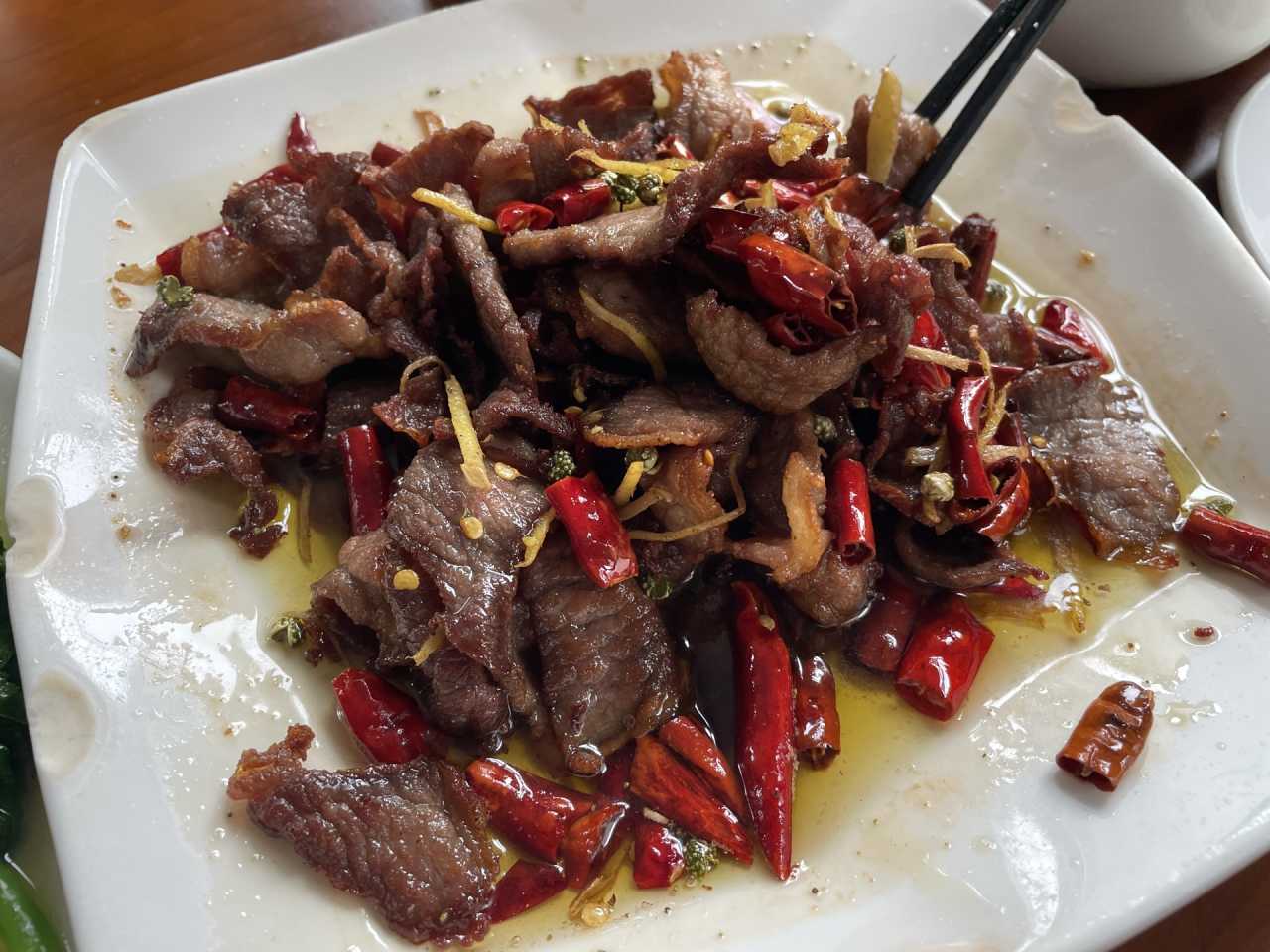
Lijiang was jam-packed with traffic. After a struggle, we finally reached our hotel, located at the north gate of the ancient town. Its elevated position offered a stunning view of the entire old city. After dropping our bags, we took my parents for Tibetan food: yak meat hotpot (牦牛肉火锅), yak meat buns (牦牛肉包子), and yak meat pies (牦牛肉馅饼)—all delicious. The milk tea, however, was watered down and lacked authenticity.
Well-fed, we wandered through the ancient town. Lijiang's old city is massive—you could never explore it all. Near Mufu (the former ruler's palace), we stumbled upon two young women performing Tibetan dances. They were fantastic. The town was even more beautiful at night. A small square hosted a bonfire party, with dancers in Naxi ethnic costumes leading the crowd. We browsed the night market, bought flower cakes (鲜花饼) and dried mushrooms, and tried "Shambhala Milk Tea" (香巴拉奶茶)—it tasted just like "Sexy Tea" (茶颜悦色), indistinguishable to me.
Tiger Leaping Gorge Hike: A Spectacle You Have to See to Believe
The reason I chose the Mangshi-Baoshan-Lijiang route was for the Tiger Leaping Gorge hike. This kind of majestic scenery can only be truly appreciated in person.
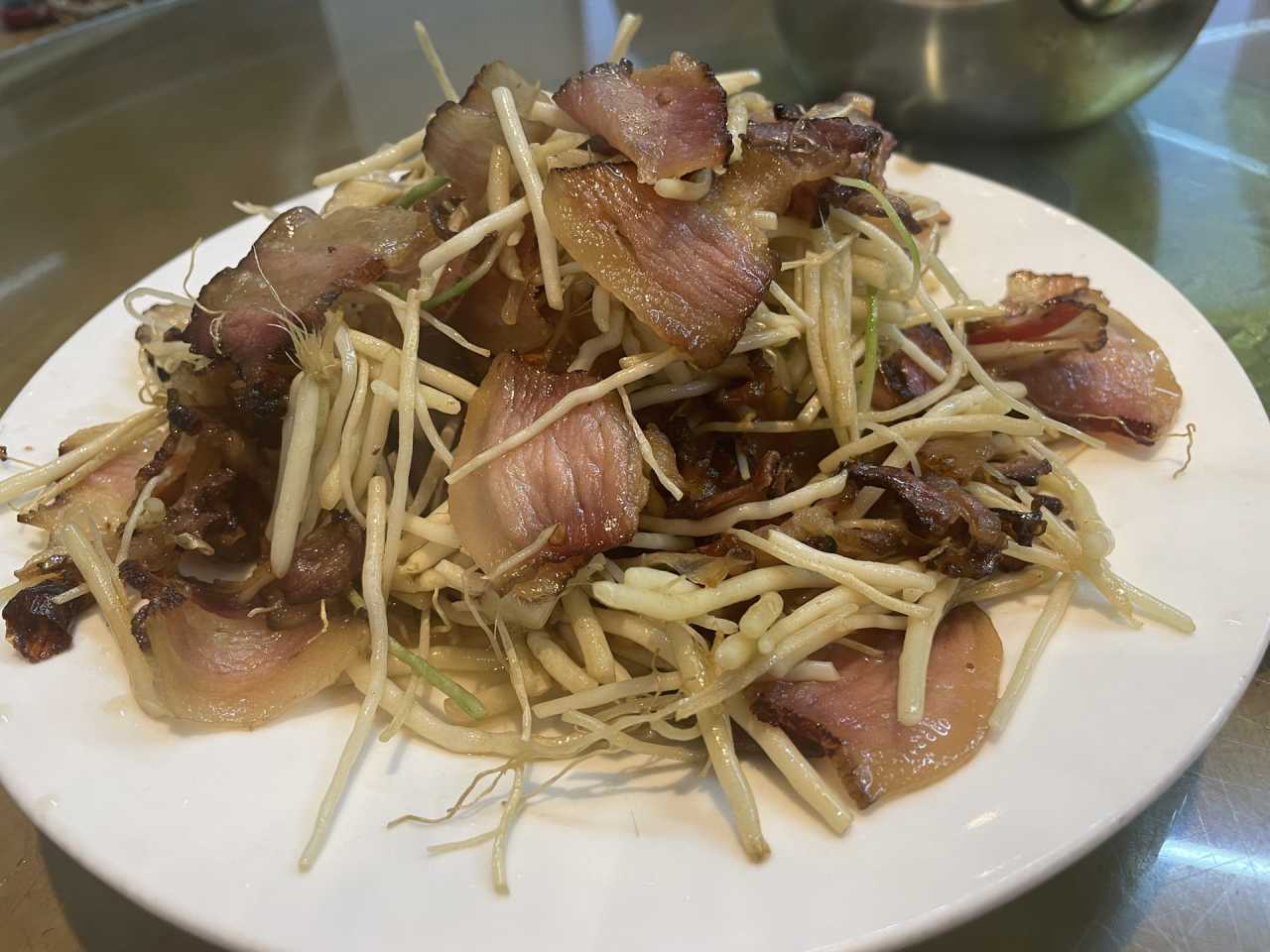
In the morning, the sun was still hidden behind the peaks, and a patch of rainbow-colored clouds appeared in the sky. We followed the hiking trail for about two hours to reach our pre-booked guesthouse. From the window, we had an unobstructed view of the Jade Dragon Snow Mountain's foothills—the visual impact was overwhelming. The owner's wife cooked us a hearty lunch using fresh vegetables from her garden and home-cured pork.
After eating, we continued hiking. We passed the Halfway Guesthouse, reached the waterfall, and then turned back. The scenery along the way was breathtaking, and we saw plenty of free-range goats. The roaring Jinsha River (Upper Yangtze) flowed through the gorge below, its emerald green water like a silk ribbon, rumbling as it went.
Back at the guesthouse, we were pretty tired. Dinner was again prepared by the owner's wife. Instead of heading straight to our rooms afterward, we gathered around the fire stove and chatted with the owners, learning about local customs and traditions.
Down to the Jinsha River: The Hardest and Most Beautiful Hike
The next day, we planned to go down to the banks of the Jinsha River. The owner's wife helped us arrange a car to the starting point. We descended to the riverbed, then climbed back up to return to Zhang's Guesthouse, where another car would take us back to Lijiang.
The previous day's hike had been on flat ground—no steep climbs or descents. Today was completely different, and it was exhausting. But there's no easy way to do this route; you just have to use your legs. With my parents, we stuck to the dirt paths. Thank goodness we had trekking poles—otherwise, my mom would never have made it back up.
But the closer we got to the Jinsha River, the more stunning the views became. The grandeur is impossible to describe in words—only photos and videos can give you a hint.
That evening, we returned to Lijiang and had the famous black goat hotpot (黑山羊火锅). The broth was savory, the meat tender, and we ordered another pound after finishing the first. After dinner, we boarded a sleeper train—by the time we woke up, we were back in Kunming.
Chapter 7: Kunming—A Final Farewell
Haigeng Dam: Seagulls and Leisurely Moments
On our last day in Kunming, we woke up late. By the time we got out, it was almost lunch. We chose a restaurant specializing in mushroom soup (菌菇汤)—but since the mushrooms were frozen, the broth wasn't particularly flavorful. The lychee shrimp balls were good, and two desserts were decent.
We took a taxi to Haigeng Dam on Dianchi Lake. The Spring Festival holiday was over, so the crowd had thinned significantly. Black-headed gulls (红嘴鸥) flew around everywhere. We'd planned to take the cable car to the Western Hills (西山) on the opposite shore for a panoramic view of Kunming, but my parents were clearly suffering from hiking fatigue—they winced with every step on the stairs. I couldn't bear to put them through more pain, so we headed back to the hotel to rest.
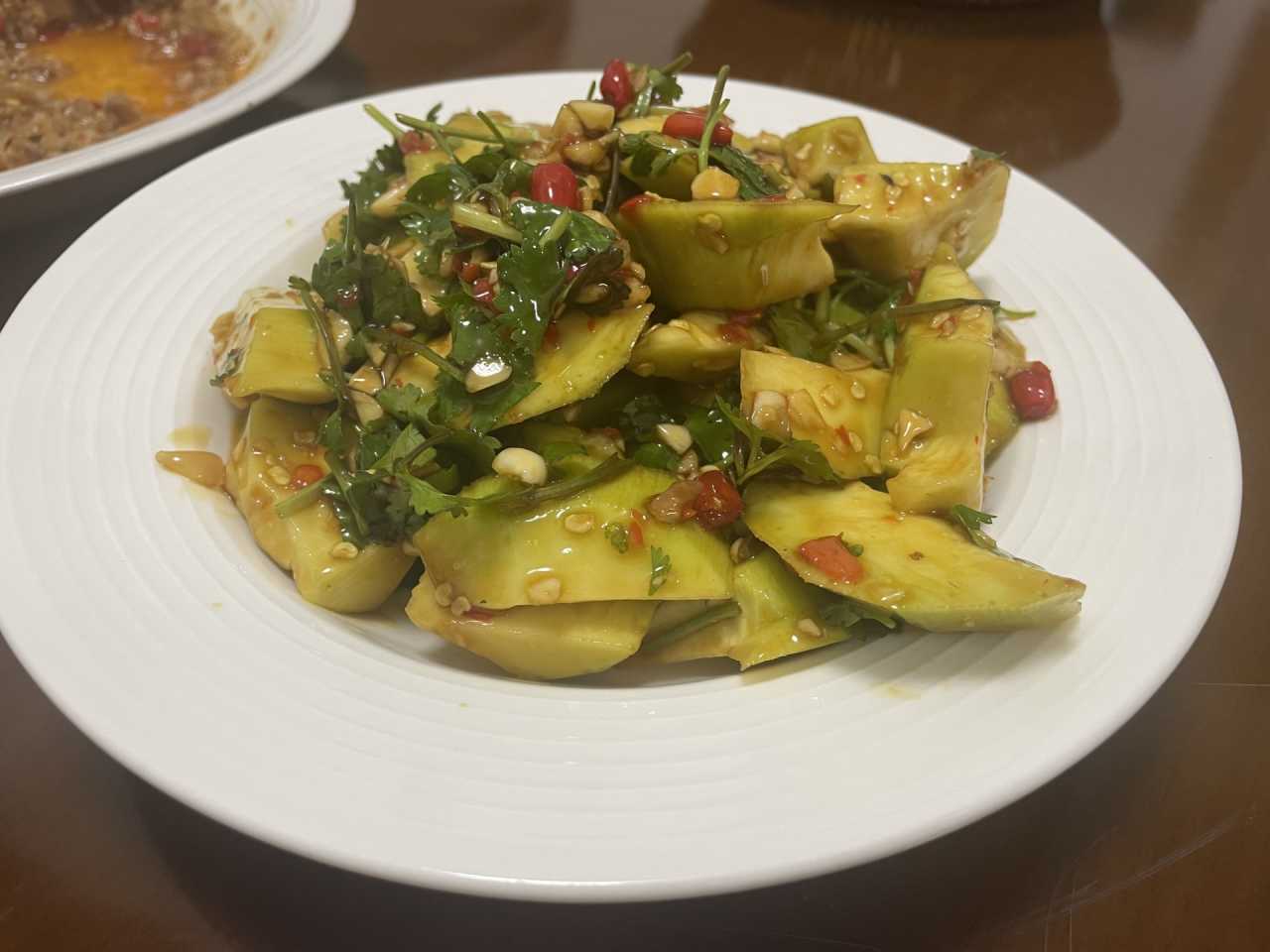
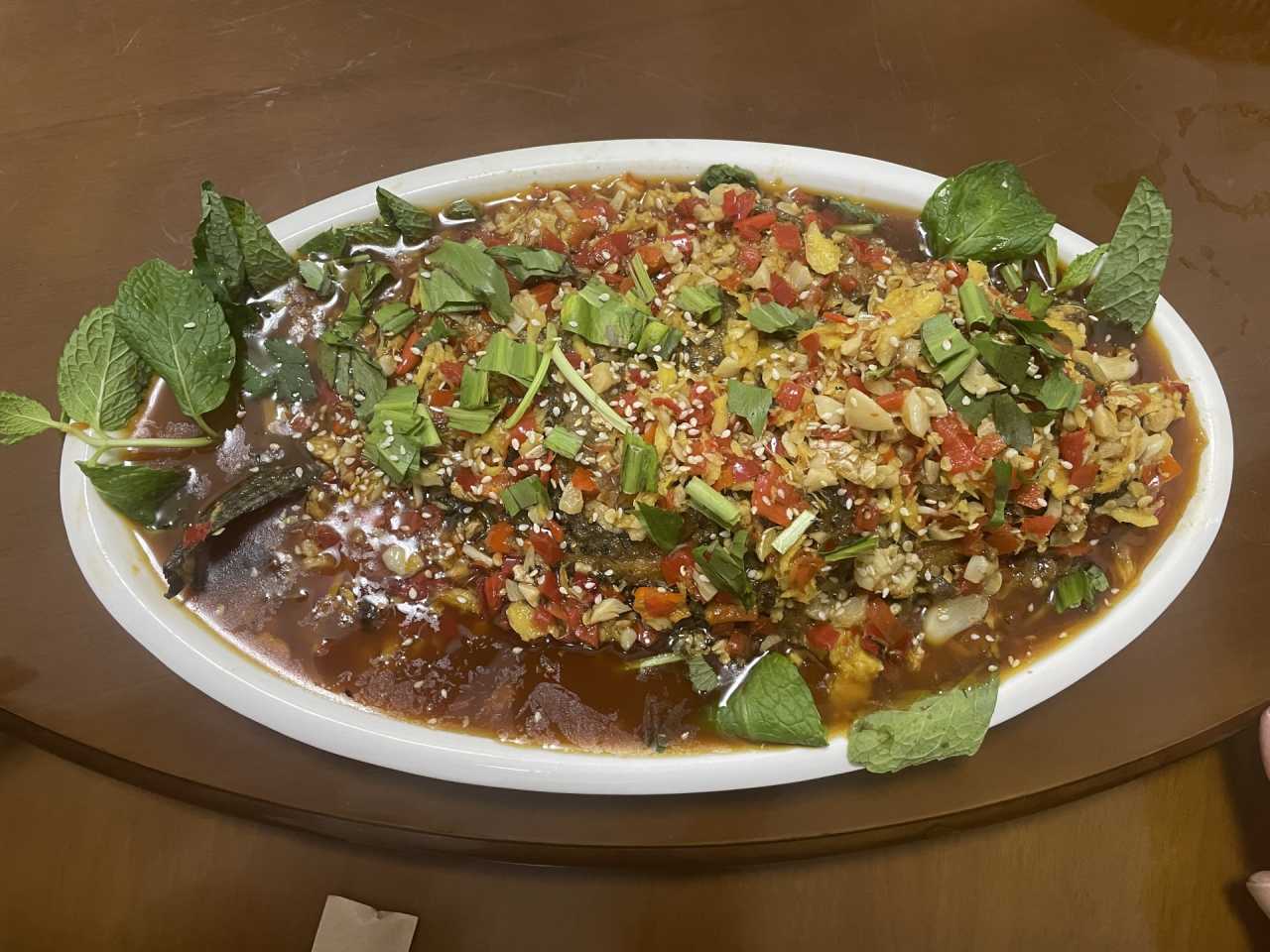
In the evening, we went out for dinner. For our last night in Kunming, we chose a small, off-the-beaten-path Dai (傣族) restaurant. Except for the stir-fried animal hearts, which had a strange taste, everything was fantastic: a cold salad of "tree flower" (凉拌树花), sour and spicy to wake up the appetite; charcoal-grilled meat with an intense smoky flavor; and water fern (水蕨菜), refreshing and sweet. My mouth waters just thinking about it.
Heading Home: Leave Some Regrets for Next Time
If we hadn't booked our flights late and missed out on better options, we could have stayed one more day to visit the Ethnic Villages (民族村) and the Dounan Flower Market. But it's good to leave a few small regrets—I'll have to come back to Yunnan again.
Next time, I want to follow the route through Yuxi, Pu'er, Xishuangbanna, Lincang, Tengchong, and the Nujiang River (Salween). I want to see the Dulong River, cross the Peacock Mountain, and then head to Deqin and Shangri-La. I'm already looking forward to that next 15-day journey.
Conclusion: Traveling with Parents Is a Race Against Time
This Spring Festival trip to Yunnan with my parents—15 days, six people, one car, crossing southeastern, southwestern, and northwestern Yunnan—was packed. But seeing my parents dance joyfully in the Manau Zongge dance circle, grit their teeth on the Tiger Leaping Gorge trail, and sweat through a hot spring soak made it all worth it.
My parents are getting older. Whether they'll ever have another chance to visit Yunnan is uncertain. But this time, we made enough memories to last a lifetime. If you're thinking about traveling with your parents, my advice is this: go while they can still walk, while they still have the energy, while they can still enjoy the joy of travel. Don't hesitate. Just go.
Because some sights only truly matter when you see them with the people you love most.
You should also read:

Cloud Travelogue · Dali of Wind, Flowers, Snow, and Moon: A Three-Day, Two-Night Journey of a Free Spirit
Cloud Travelogue · Dali of Wind, Flowers, Snow, and Moon: A Three-Day, Two-Night Journey of a Free Spirit I am a cultured female foodie with a touch of rogue charm. I slung on my backpack, took my lover's hand, and set off on a spontaneous…
Continue reading...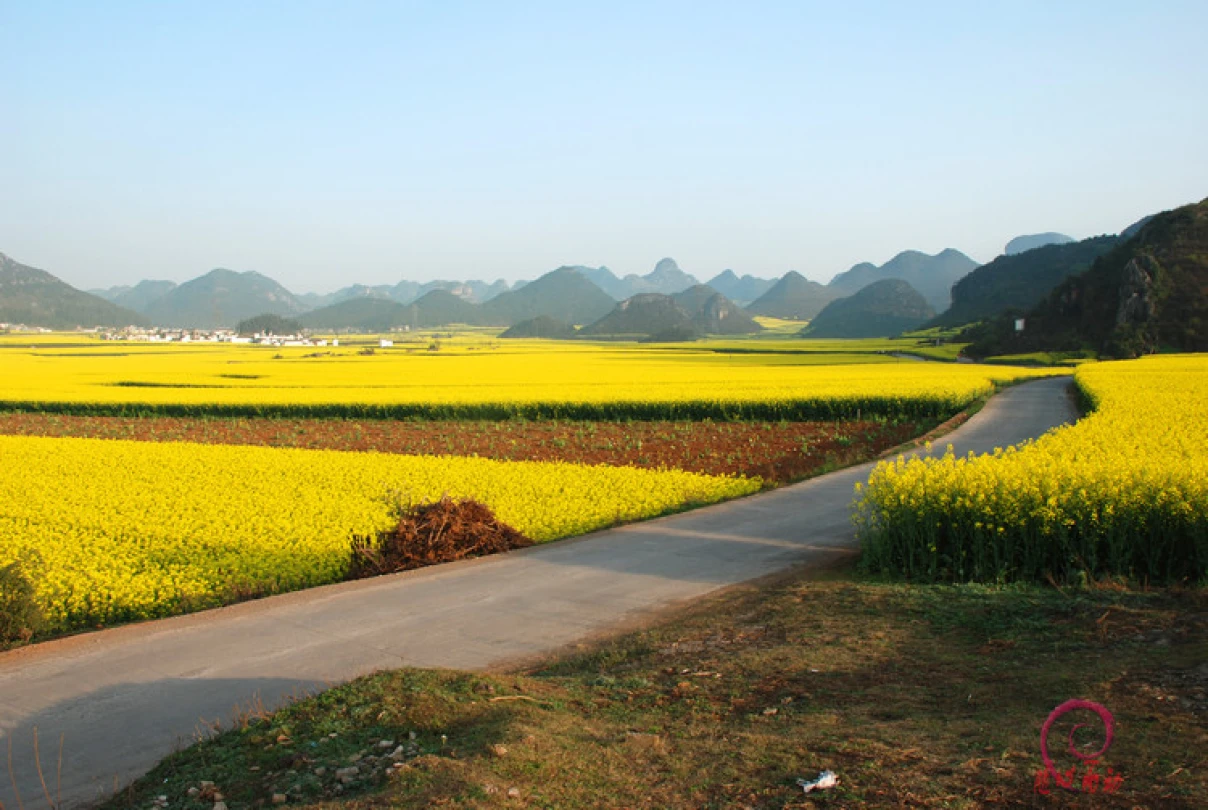
Golden Luoping: A Romantic Encounter with Sunshine and Seas of Flowers
Golden Luoping: A Romantic Encounter with Sunshine and Seas of Flowers Introduction: The Third Time's the Charm Some landscapes are destined to be seen at the right moment. For me, that was exactly the case with Luoping's rapeseed flowers. On February 22, 2011, the Luoping…
Continue reading...
The Meaning of Travel – A Tengchong Story: A Journey of the Heart and Personal Growth
The Meaning of Travel – A Tengchong Story: A Journey of the Heart and Personal Growth Setting Out, Only to Return a Better Self Some say travel is nothing more than leaving a place you're tired of, only to go to a place where others…
Continue reading...