Springtime Leisure in Jinghong, Xishuangbanna: A 6-Day, 5-Night Deep Dive into Tropical Rainforests and Dai Culture
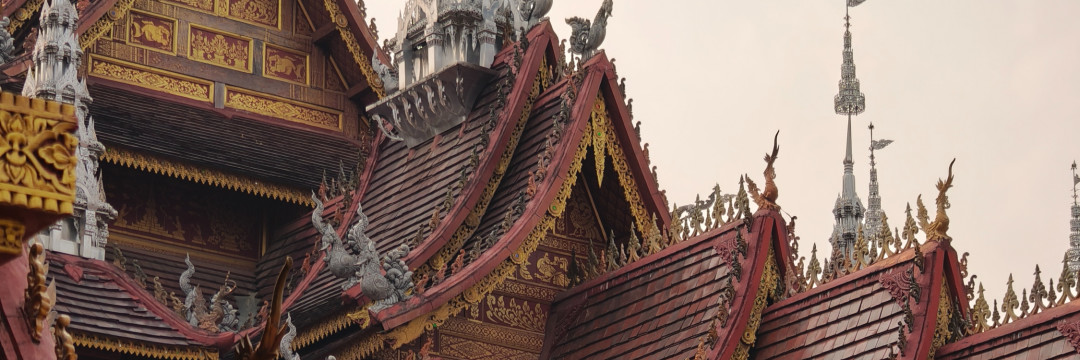
Springtime Leisure in Jinghong, Xishuangbanna: A 6-Day, 5-Night Deep Dive into Tropical Rainforests and Dai Culture
At the end of March, when the Jiangnan region was still struggling with fluctuating temperatures, Xishuangbanna welcomed our family of three with 27°C sunshine and palm trees lining every street. This trip was both a nature lover's paradise and a perfect practice of "lie-flat" vacationing — no rushing between attractions, no waiting in long lines, waking up naturally every day, zoning out in the tropical rainforest, strolling through ancient Dai villages, and eating until we couldn't move at the night market.
If this sounds like your kind of trip, this guide might be exactly what you need.
Why Choose Late March?
You might not believe it, but I actually did a statistical analysis of historical flight prices from Hangzhou to Xishuangbanna. The conclusion is simple: there are four price peaks throughout the year — Chinese New Year, the Water Splashing Festival, summer vacation, and National Day. Between Chinese New Year and the Water Splashing Festival, however, there's a clear price trough, possibly the lowest of the entire year. Taking time off to travel during this window is almost laughably cost-effective.
More importantly, late March in Xishuangbanna offers weather that's neither too hot nor too cold. There's none of the humid mugginess of the rainy season, nor the crushing crowds of peak season. Peacocks fan their tails in the sunset, elephants stroll leisurely through the rainforest, and all you need to bring is a relaxed heart.
Before You Go: Cracking Xishuangbanna's Geographic Code
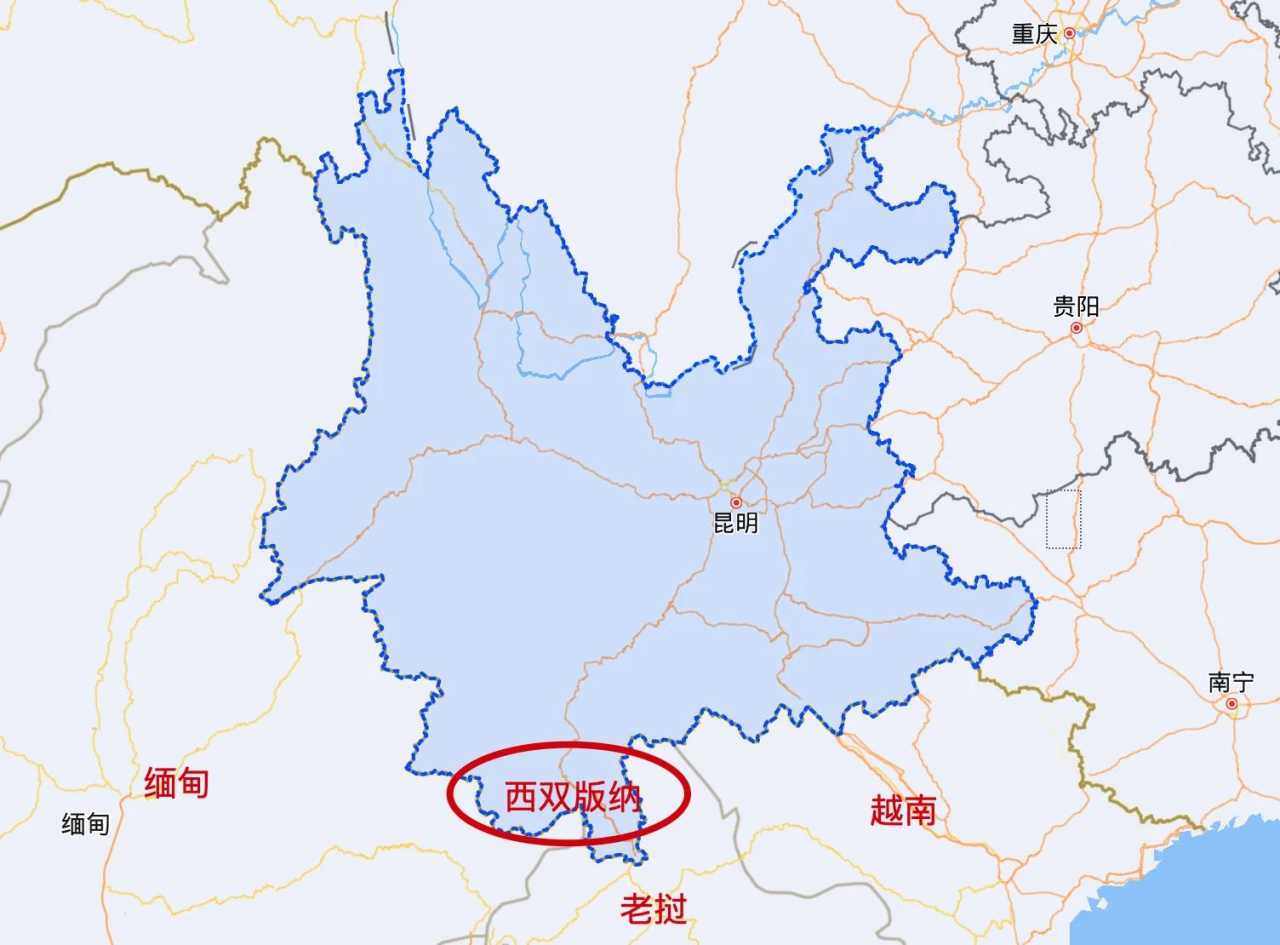
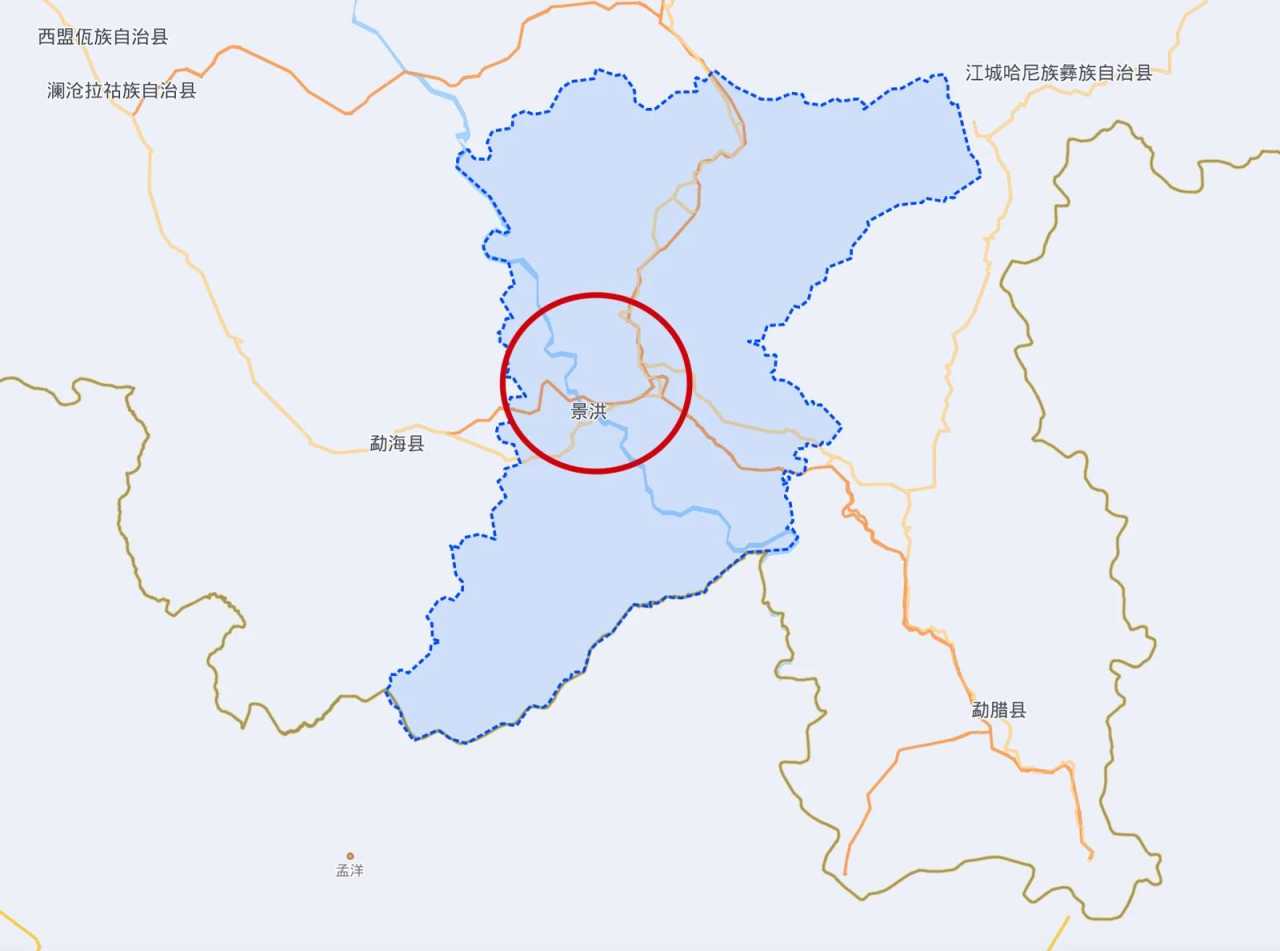
Yunnan Province's map looks like a short-legged camel, with Xishuangbanna sitting at the southernmost tip — the camel's back leg — right next to Myanmar and Laos. The entire Xishuangbanna Dai Autonomous Prefecture is quite large, governing three county-level units: Jinghong City, Menghai County, and Mengla County. Jinghong is the capital and the only location with an airport in the entire prefecture.
For first-time visitors, especially families with children, Jinghong city proper and its surrounding areas are more than enough for a week-long trip. Our furthest destination this time was Wild Elephant Valley, just an hour's drive away. Don't try to do too much — slowing down is the right way to experience Xishuangbanna.
Day 1: Arrival — The Tropics Hit You in the Face
We arrived in Xishuangbanna in the evening with no activities planned. We found a small eatery near our hotel and ordered a bowl of Dai-style rice noodles (米线). The combination of mint leaves and Sichuan peppercorns created a collision of coolness and numbing spice on the tongue — strange and wonderful. After dinner, we strolled along streets lined with palm and coconut trees. The humid air was thick with the scent of vegetation. The tropics hit us, right there and then.
Day 2: Primitive Forest Park & Gaozhuang Starry Night Market
Primitive Forest Park: The Law of the Jungle in the Rainforest
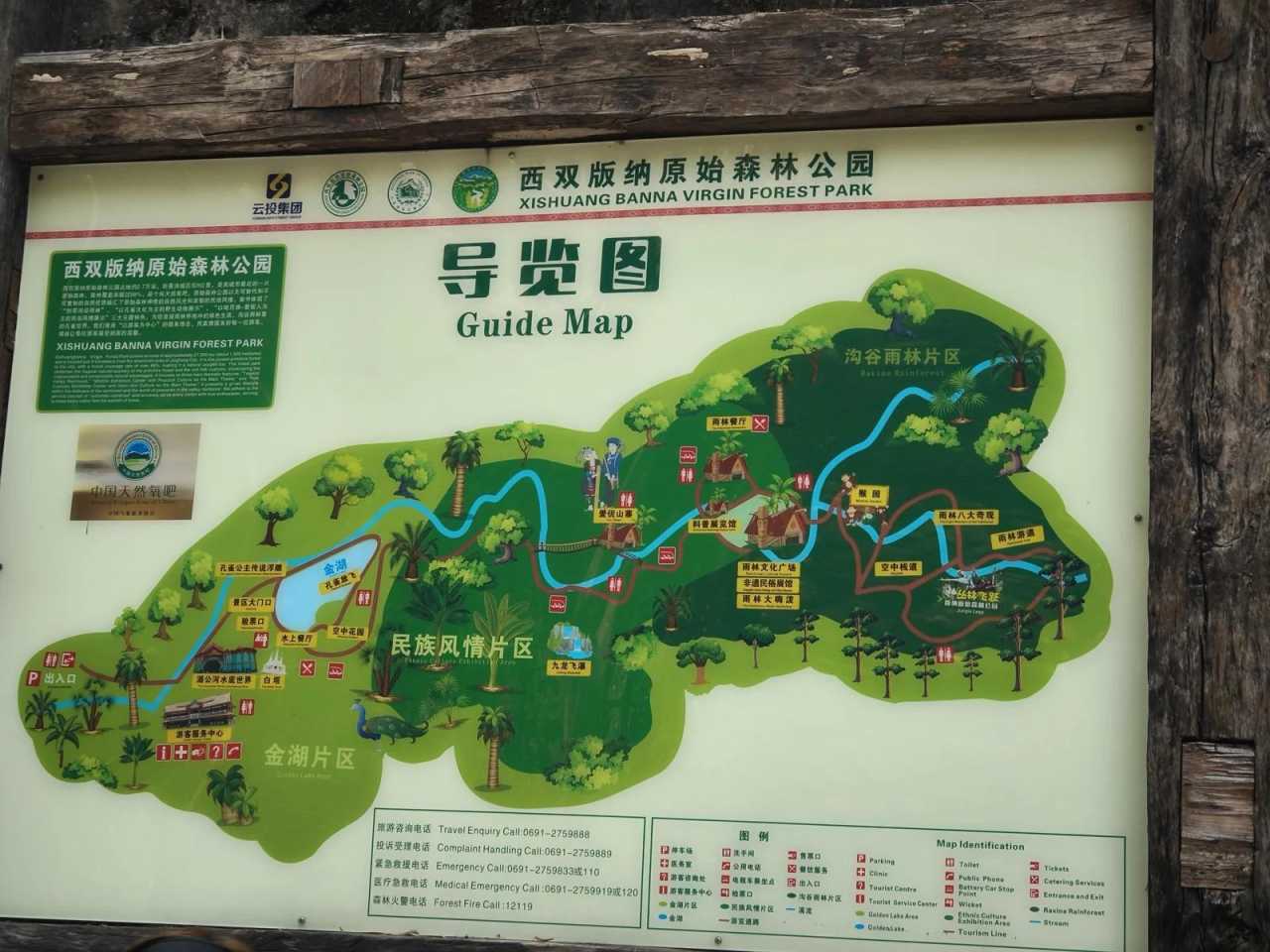
This is an attraction on the outskirts of Jinghong, elongated in shape — a single path that goes all the way to the end. From the entrance to the deepest point, you pass through three areas in sequence: Golden Lake, the Aini Village, and the Tropical Rainforest. These correspond exactly to the three stops on the sightseeing tram.
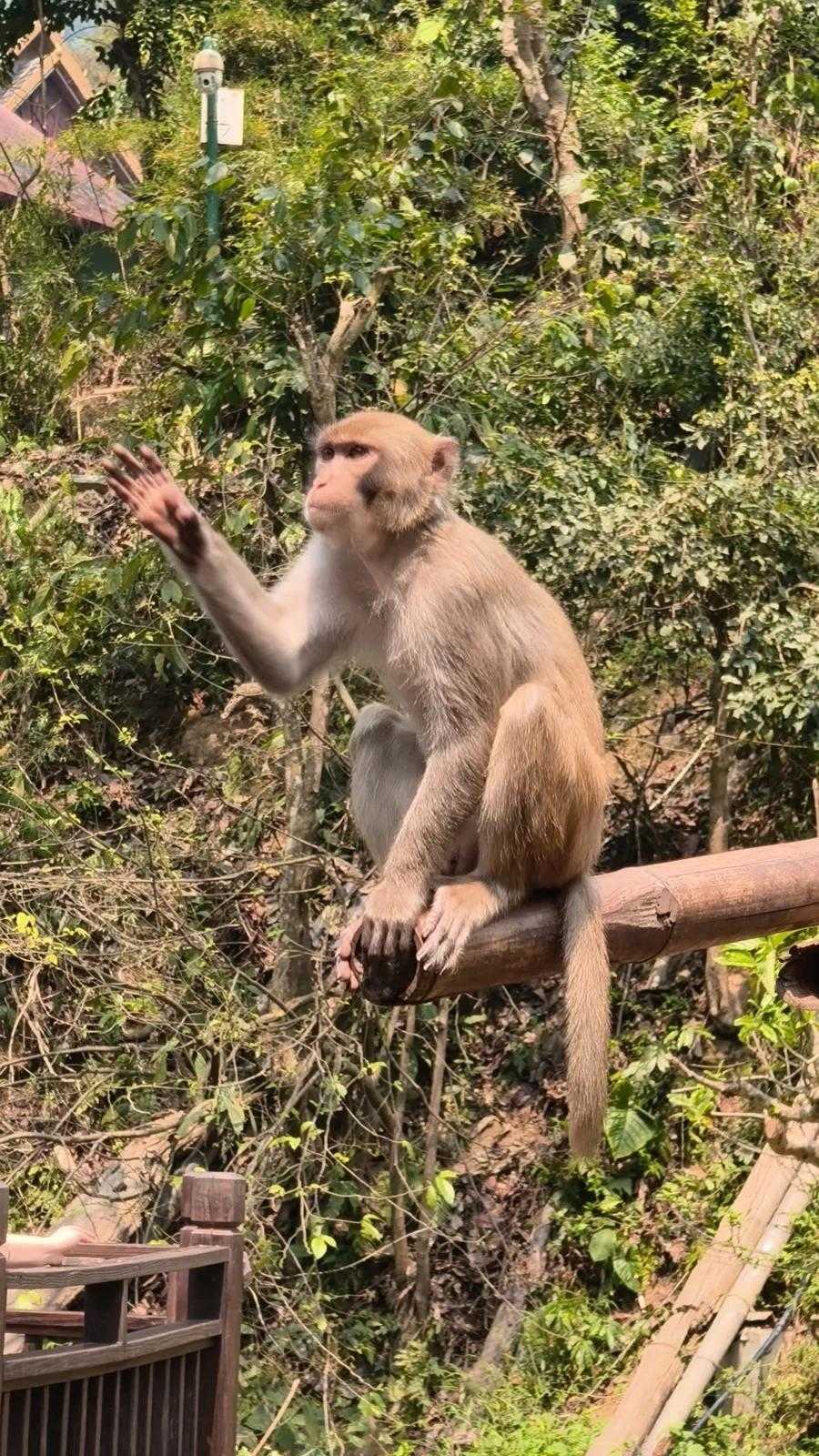
We took the tram straight to the farthest Tropical Rainforest area. Getting off, we walked through a food court and shopping area before arriving at the Monkey Garden. The macaques here have no fences — they've gathered here from long-term feeding, completely free and at ease.

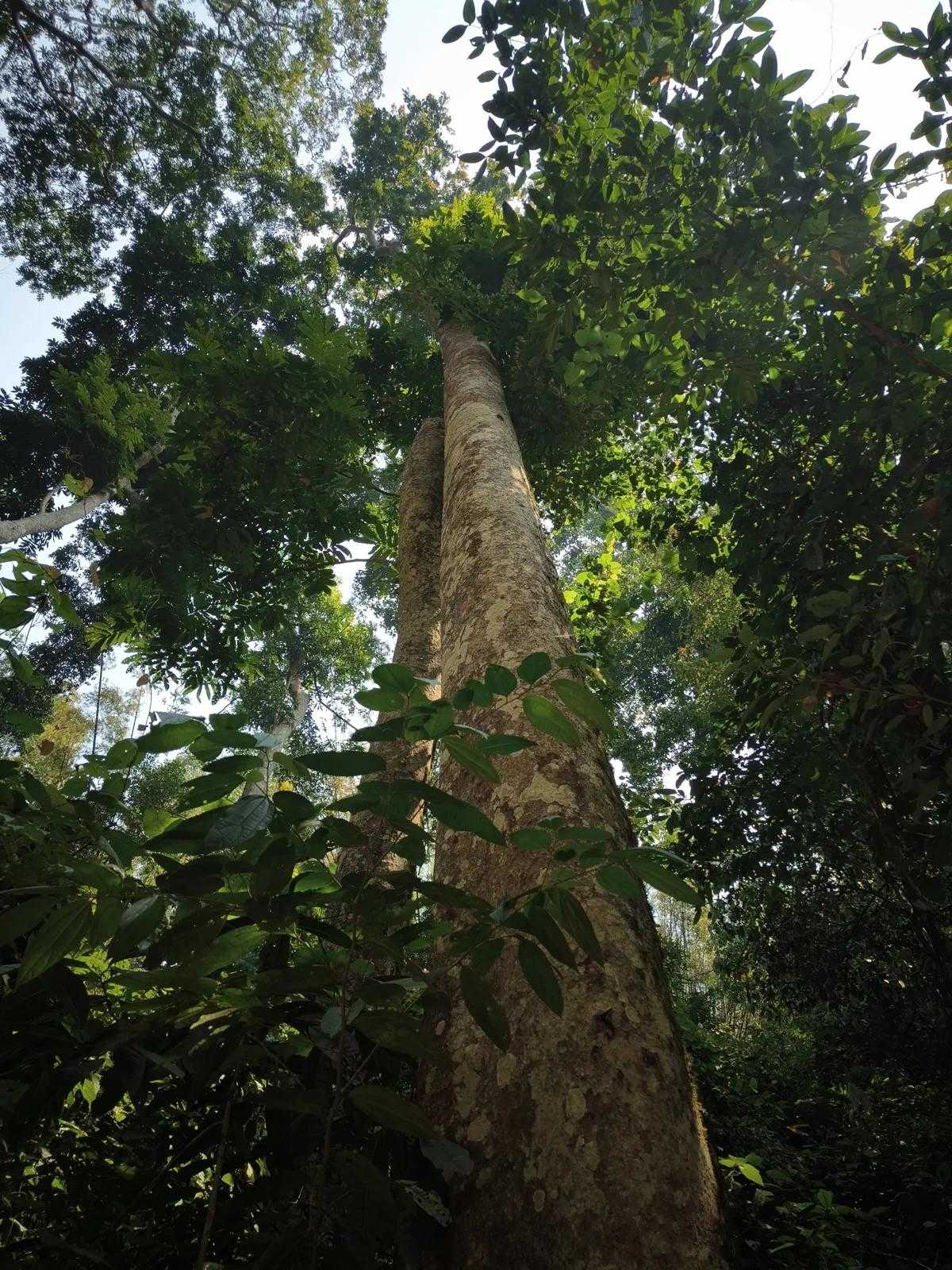
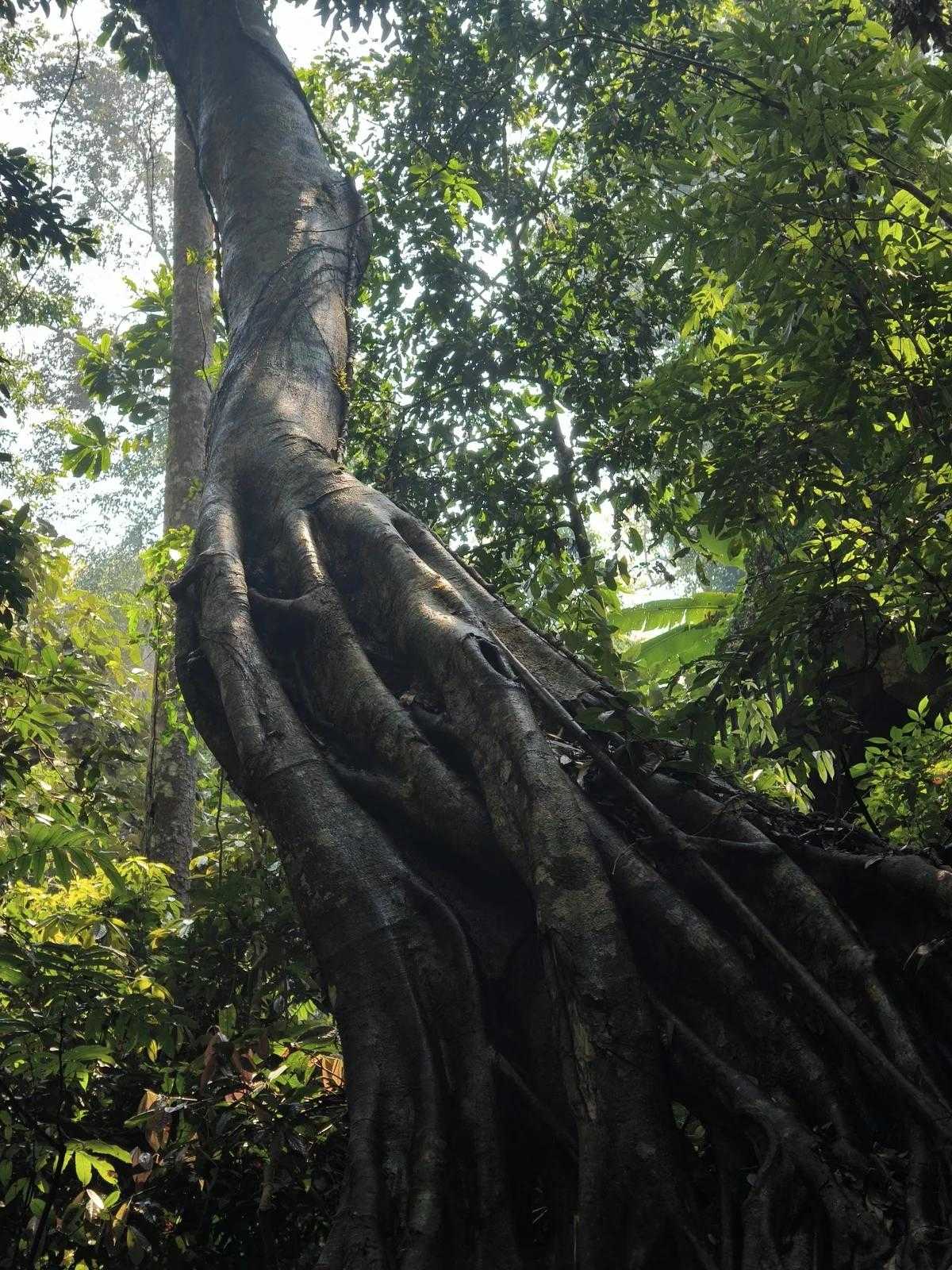
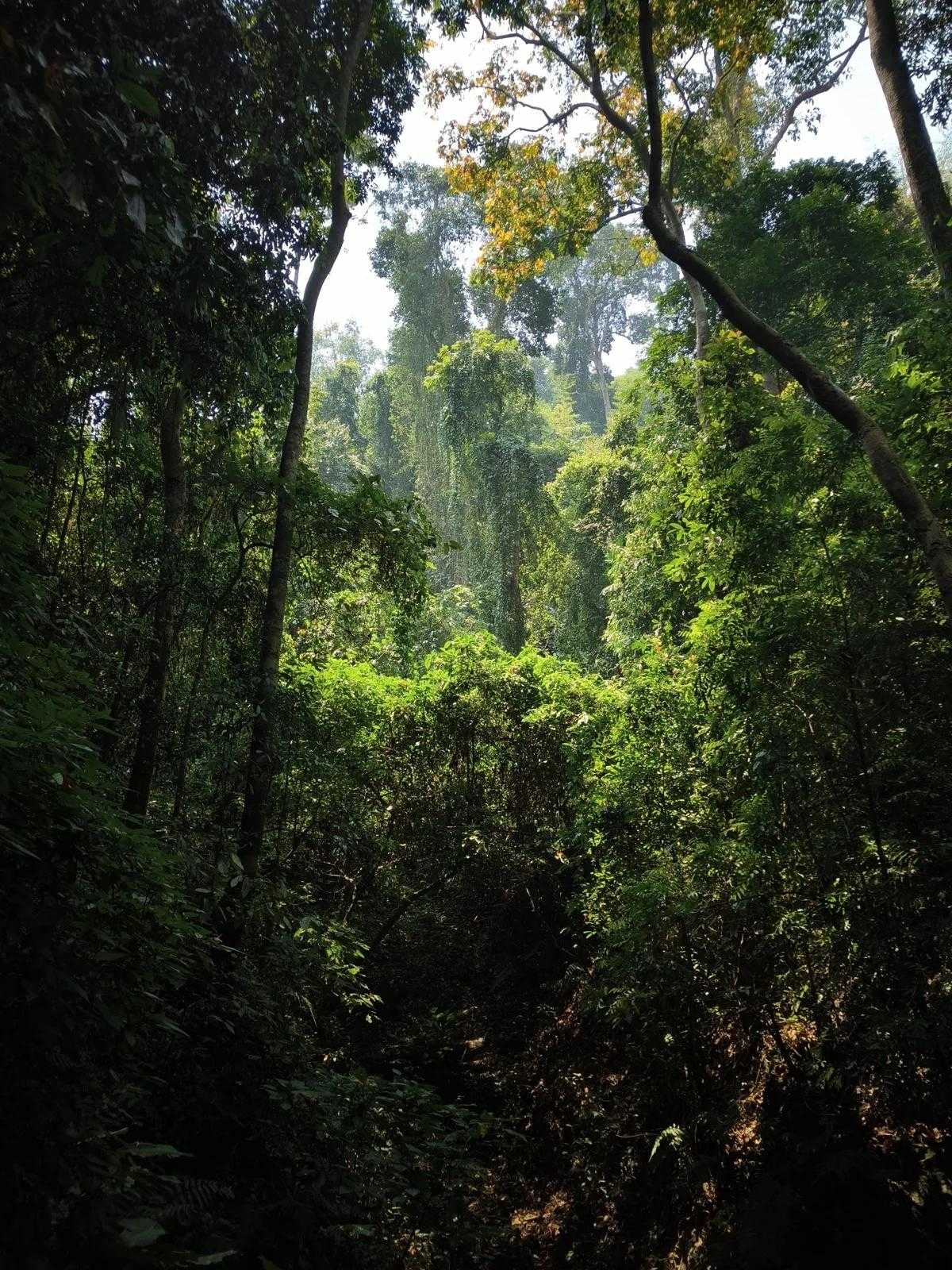
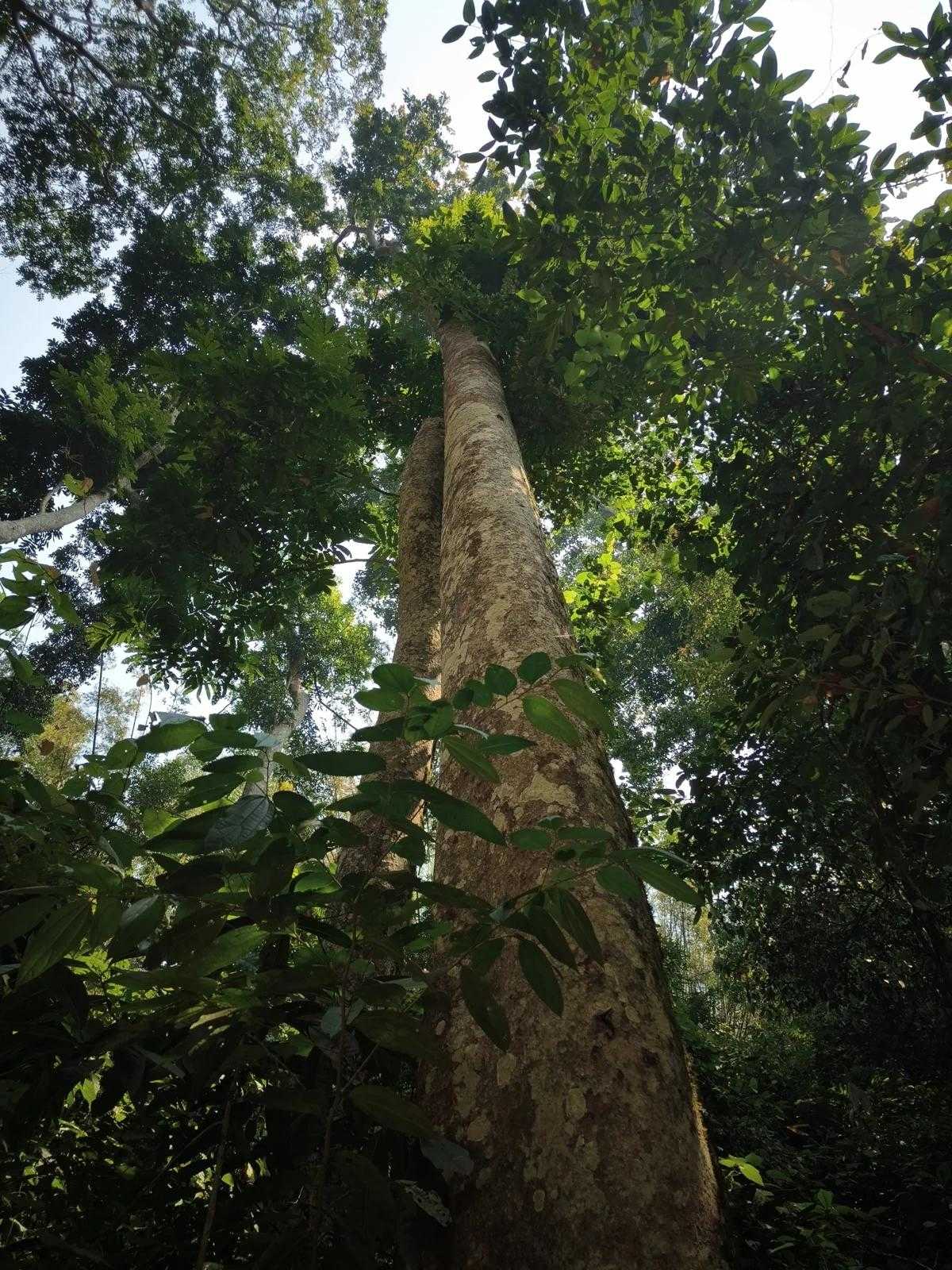
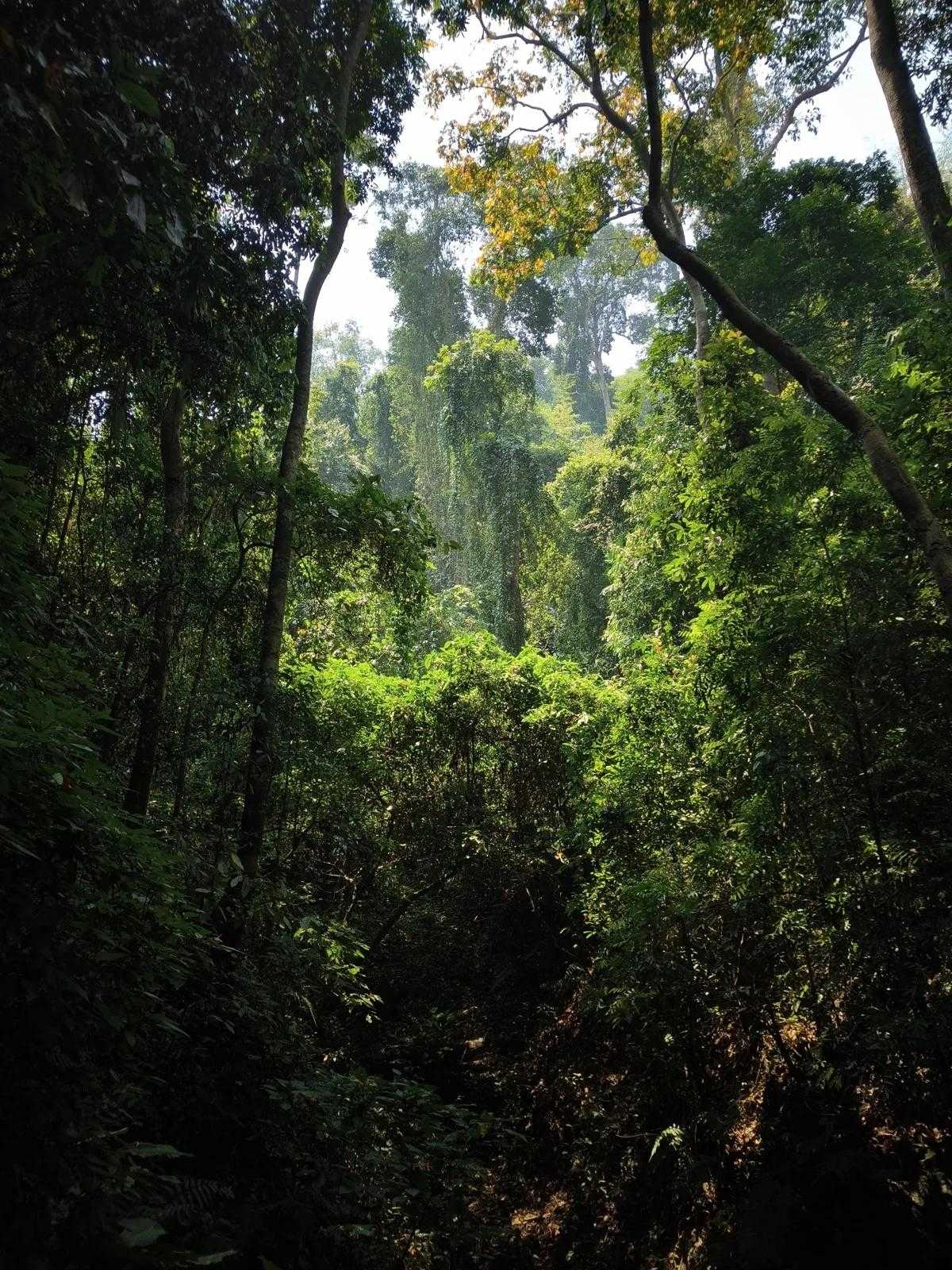
Further in was the Primitive Forest Loop Trail. The tropical rainforest is completely different from the forests of Zhejiang — with abundant sunlight and rainfall, the vegetation is incredibly dense. Trees stretch desperately upward; their canopies are far from the ground, trunks are bare, and all the leaves cluster at the top. Tall trees need extensive root systems to support their weight and absorb water, and these roots are exposed above the soil without any shame. One tree's roots even resembled the long skirt of a peacock dance.
Low-growing plants have their own survival strategies. They've evolved enormous leaves to compete for sunlight — one banana leaf was bigger than my entire daughter. Some rough-barked tree species had their trunks completely covered in moss, not wasting a single inch of space. Even though it was a sunny day, the humidity inside the rainforest was extreme, and at noon we could still see moss dripping water continuously.
Strangler figs are the most distinctive feature here. Fig seeds are carried by bird droppings to the branches of other trees, where they germinate using the humus in the branch crevices. Their aerial roots can absorb moisture from the air, constantly extending downward until they reach the ground. Once they hit the soil, they enter a growth frenzy, quickly reverting to a complete, soil-based plant. When multiple strangler fig individuals grow together, their roots can rub, squeeze, and fuse into a new union, sharing nutrients and water — a phenomenon called "natural grafting." Eventually, the host tree rots and dies inside, and the new strangler fig union grows into a hollow大树.
The next time you hear the phrase "law of the jungle," don't imagine the polite ecology of a temperate forest. Instead, picture the tropical rainforest — where plants stop at nothing, crushing each other, and the strongest wins.
Aini Village: The Mystery of the Base-13 Calendar
Leaving the tropical rainforest area, we crossed a suspension bridge to reach Aini Village. This is a Hani ethnic minority cultural exhibition area — not large, but one cultural display board stopped me in my tracks.
The board explained that the Hani people consider 13 days a complete cycle, starting and ending with the "Rat" zodiac sign. This shocked me — 13 is a prime number! For context, our modern astronomical calendar traces back to the Babylonians' base-12/base-60 counting system. They used their right thumb to count the three knuckles on each of their other four fingers — one hand could count 12. Every time the right hand finished counting 12, they'd extend one finger on the left hand to mark a carry. With five fingers on the left hand, 5 × 12 = 60 — that's where base-60 comes from.
So where does the Hani base-13 system come from? Looking more closely, I realized it reflects their calendar philosophy: a cycle must include the beginning of the next cycle to signify a new start. It's like our musical scale — Do, Re, Mi, Fa, Sol, La, Ti — only seven notes, but beginners always sing the higher octave Do as well. The Hani daily cycle still uses the 12 zodiac animals as its base; it's just that their understanding of "cycle" is slightly different.
Peacock Release: The Art of Gliding
We took the sightseeing tram back to Golden Lake, waiting for the peacock release. Before the main event, there was a water dance performance with themes like peacock dance and Dai king processions. But when a large flock of peacocks swooped down from the heights toward the viewing platform, the visual impact was genuinely stunning.
Peacocks can't actually fly — they can only glide. They can come down from high places, but they have to walk back up. Of course, they can muster enough energy to glide horizontally across the lake, no problem — still way better than chickens.
After the show, there was a paid peacock-feeding session lasting about ten minutes. My daughter had a blast. The peacocks' cyan and blue feathers shimmered brilliantly in the warm yellow sunset light. Peacocks and elephants are the two animal stars of Xishuangbanna.
Gaozhuang and the Starry Night Market
We took a taxi to Gaozhuang, had dinner, and then visited the Great Golden Pagoda Temple. This is a modern Buddhist temple that gets repainted every year, completed in 2013. Unburdened by history, it freely applies all kinds of modern techniques to a Southern Buddhist temple. The interior feels more like a luxurious high-end hotel. The extensive use of blue really gives that sense of a "cool and clear dharma realm."
Since it's a modern building, the lighting was probably designed from the start, and it looks best at night. The Great Golden Pagoda Temple is the highest point in central Gaozhuang, overlooking the bustling Starry Night Market. The outskirts of Gaozhuang are also dotted with uniquely shaped, towering hotels that often appear as Xishuangbanna landmarks in advertisements.
Day 3: Ancient Villages and Temples
Manduo Ancient Village: Off-the-Beaten-Path Tranquility
I deliberately planned this as a niche destination — it rarely appears on standard tour itineraries. We arrived just as the Dai morning market was closing and wandered in. Our family of three lingered at a fruit stall for a long time — egg fruit, milk fruit, bird's nest fruit, custard apple, tamarind — we basically turned it into a fruit buffet.
The ancient village has a well, with a newly built structure over it, but the vibe was right. "Ancient village" doesn't mean it's deep in the mountains, though — locals embrace modern life too. Many homes have been converted into restaurants and guesthouses, and several were under renovation. An elderly man sat in the distance, playing some kind of bamboo flute-like instrument.
We walked further uphill to the ancient temple at the highest point. Its outer walls had some very interesting religious murals, completely unlike the Han Chinese Buddhist style — more like medieval European religious paintings. Inside the ancient temple, there was a small blackboard, probably used for teaching Dai language or Mandarin. Dai script is also all loops and curves, but it's clearly different from Thai — even though Dai and Thai cultures share common genetic roots, they've developed independently for a very long time, and today's Dai and Thai languages are almost completely mutually unintelligible.
Outside the ancient temple stood a bodhi tree. In Buddhism, the bodhi tree represents the entrance to another world, and its shape does give you a sense of inner peace. Nearby was a small rubber tree plantation. My daughter finally got to see where tires and pacifiers come from.
Prajna Pagoda & Manting Royal Garden
Prajna Pagoda is the largest silver-white pagoda in Jinghong. There's no interior to enter — the entire place is just this one pagoda. Visiting means walking around it in a circle.
Manting Royal Garden is a popular attraction in the city center. It was the Dai king's palace, royal garden, and now serves as an elephant education center. The real reason for its popularity is photo shoots — Dai temples have dress codes (no bare shoulders or knees), but here you can photograph the beautiful Dai-style architecture without any clothing restrictions. The palace area was basically overrun by "out-of-town Dai maidens" getting their photos taken.
The historical Dai king's palace was indeed here, but what you see today is a modern reconstruction. Their love for gold far exceeds that of Ming and Qing emperors. Outside the palace, there were displays of various artifacts. True to its reputation as the "Land of Peacocks," the peacock image permeates every aspect of the culture.
A quick note on place names: "Meng" (勐) in Dai means "place," "Le" (泐) means "Dai people," so "Mengle" (勐泐) literally means "Dai place." "Man" (曼) means "village," so "Manzhang Village" (曼掌村) means "Elephant Village." In Dai, the common noun comes first, and the distinguishing part comes after — the opposite of most languages.
As for "Xishuangbanna" itself, in Dai it means "twelve thousand fields." During the Ming Dynasty, the Dai region was divided into 12 administrative districts, each called a "thousand fields," for tax calculation purposes. This very informal name, through a series of coincidences, has been used up to the present day.
The General Buddhist Temple
Manting Royal Garden connects to the General Buddhist Temple (总佛寺). We exited through the back gate to continue our visit. Viewing it during the day reveals layered details you can't see at night. One gate was clearly older than the other buildings. Next to a pagoda, there was a stone tablet with characters that didn't look like modern Dai script — perhaps related to a monk's biography. In Dai culture, even the dragon motif incorporates elephant tusks and trunks.
Day 4: Wild Elephant Valley
Wild Elephant Valley is a long, narrow scenic area stretching from southeast to northwest, roughly divided into three zones: the southeastern Elephant Zone, the central Tropical Flora and Fauna Exhibition Area with folk performances, and the northwestern vast Wild Elephant Habitat.
Elephant Education and Rainforest Elephant Herding
We had booked the Rainforest Elephant Herding experience, so we headed straight to the Elephant Zone upon arrival. While waiting, we watched another elephant education session. Here are some details I remember:
Elephants shed their teeth 5 times in a lifetime, producing a total of 6 sets. Wild elephants, constantly eating hard foods like bamboo, typically wear out all 6 sets. When the last set is gone, their lifespan is essentially over. Wild elephants live about 60 years; captive elephants, with softer food, can live past 80.
Different elephant species have different numbers of toes. Asian elephants have 5 toes on their front feet and 4 on their back. African savanna elephants have 4 front and 3 back. African forest elephants have the same toe count as Asian elephants.
An elephant's digestive system is very inefficient — only about 40% of what they eat is absorbed. During the Rainforest Elephant Herding, the fresh dung the elephant produced was full of undigested hay. Baby elephants sometimes eat their mother's dung to get the probiotics needed to digest plant fiber.
Asian elephants live in matriarchal societies — the leaders are always females. Male elephants leave the herd after reaching adulthood, living alone or in bachelor groups.
Ears are an important indicator of age — the more folded and wrinkled the ears, the older the elephant.
An elephant's trunk is all muscle, with no bones at all. The most dexterous part isn't the curling motion but a small bump at the tip called the "finger." Asian elephants have one finger; African elephants have two.
The Rainforest Elephant Herding experience involved following an elephant on a walk through the rainforest, feeding it at a designated spot, taking photos, and then returning. There was educational commentary throughout. After sending the elephant back to its enclosure, we saw a mother and baby elephant on another path. The baby was still learning to use its trunk properly — we watched it step on its own trunk while playing.
Wild Elephant Habitat: Be a Guest, Not the Master
We took a 30-minute cable car ride to the mountain top, passing through several valleys along the way. Inside the cable car, there was a map marking areas where wild elephants frequently appear. The biggest difference between tropical rainforests and other forests is the vines and lianas, which connect the entire forest like a spider's web, all species tangled together in an endless struggle.
From high above, we kept scanning for signs of wild elephants — areas near water sources had a higher probability of sightings. But we didn't see any wild elephants the entire day. "Frequent appearance" is relative; the actual probability is extremely low. Don't get your hopes up.
Here, we are the guests. Wild elephants roam freely; they're never at the service of human tourists. If you're lucky enough to see the true masters of this land, that's fortune. What we should do here is open our hearts to nature, feel the wild elephants' living environment, and observe every plant, every insect with a peaceful mind.
The downhill walking path had insect education boards all along the way. The most fascinating topic was insect mimicry — predators and prey disguising themselves as leaves, flowers, branches, the faces of larger animals, and even bird droppings, engaged in an astonishing arms race.
I even saw a mimic insect with my own eyes — the larva of a broad-winged planthopper, famously known as a "walking popcorn." They secrete waxy filaments from their abdomen, hanging on their backs several times larger than the larva itself. This acts as a decoy for predators to attack while the insect itself escapes.
Day 5: Tropical Flower Garden
This is a moderately popular attraction in downtown Jinghong. If you're not going to the Chinese Academy of Sciences Tropical Botanical Garden in Mengla County, this is the best substitute. The garden has clearly defined areas, with a trendy white sand beach at its deepest point.
The package ticket we bought included fish feeding, deer feeding, and a magical fruit tasting experience. My daughter walked around with a transparent little bag the whole time, collecting beautiful fallen flowers and fruits from the ground.
Right at the entrance was a fish pond. The fish were already voracious from being fed — when we threw in fish food, some fish were literally squeezed completely out of the water. Nearby, we encountered torch ginger — what looks like petals are actually bracts; the real flowers are hidden inside, very small.
One area had a large number of betel nut trees, with slender trunks pointing straight to the sky and sparse leaves at the crown — very easy to identify. There was also a path lined with royal palms on both sides. Even if you don't care about the plants, just walking here is a pleasure in itself.
Conclusion: Slowing Down Is the Right Way to Open Xishuangbanna
Six days and five nights — not too long, not too short. We didn't go to the botanical garden in Mengla, we didn't visit the tea mountains in Menghai, and we didn't even see wild elephants. But this trip still left us completely satisfied.
If you're planning a trip to Xishuangbanna, here are a few tips:
- Choose the right time: The window between Chinese New Year and the Water Splashing Festival is a price trough — fewer people, beautiful scenery, and the best value for money.
- Don't try to do too much: The area around Jinghong is enough for a whole week. Only by slowing down can you truly feel the tropical atmosphere.
- Respect nature: At Wild Elephant Valley, we are guests. In the rainforest, we are observers. Only with a peaceful heart can you gain genuine emotional resonance.
- Pay attention to details: The Hani calendar, the Dai place names, the insect mimicry — these seemingly "useless" pieces of knowledge are precisely the most precious memories of a trip.
Finally, let me sum up this journey in one sentence: Nature lovers rejoice, and lie-flatters are satisfied. If this kind of trip appeals to you, then go — Xishuangbanna's spring is waiting for you.
You should also read:

Days on the Clouds: This Spring, We Stumbled Into a Dream in Yunnan
Days on the Clouds: This Spring, We Stumbled Into a Dream in Yunnan One Journey, Two Hearts, Fourteen Days, Five Cities Some trips are about escape, others about discovery. Our journey to Yunnan was about celebration—celebrating the birthday gift my boyfriend gave me, and celebrating…
Continue reading...
Xishuangbanna Self-Drive Tour: Into the Tropical Wonderland at the Edge of the Sky (Complete Guide)
Xishuangbanna Self-Drive Tour: Into the Tropical Wonderland at the Edge of the Sky (Complete Guide) Introduction: A Dream Fulfilled Thirty Years Early Some journeys are destined to happen at a specific moment in time. For me, a self-drive trip to Xishuangbanna was originally the first…
Continue reading...
Dreaming of Lijiang, Dreaming of Shangri-La: A Journey That Lets Your Soul Breathe Deeply
Dreaming of Lijiang, Dreaming of Shangri-La: A Journey That Lets Your Soul Breathe Deeply Life is like a long trek. We're always rushing through the concrete jungle, searching for a glimmer of light in the monotony of our days. Then one autumn, I heard the…
Continue reading...