Days on the Clouds: This Spring, We Stumbled Into a Dream in Yunnan
Days on the Clouds: This Spring, We Stumbled Into a Dream in Yunnan
One Journey, Two Hearts, Fourteen Days, Five Cities
Some trips are about escape, others about discovery. Our journey to Yunnan was about celebration—celebrating the birthday gift my boyfriend gave me, and celebrating the first anniversary of our love. The moment the plane pierced through the clouds and touched down at Kunming Changshui Airport, I knew this dream of "Colorful Yunnan" had officially begun.
We’re not travel gurus, nor did we pack our itinerary to the brim. My boyfriend and I are easygoing souls who love stumbling upon unexpected little surprises along the way. No detailed plans, no pre-booked accommodations—just two hearts craving freedom and a pair of eyes ready to discover beauty.
Kunming: A Fleeting Glimpse of the Spring City
Plane Trees and Seagulls by Dianchi Lake
On March 28th, we flew from Beijing to Kunming. As a transit point for our Yunnan adventure, Kunming didn’t hold us for long. From the airport, we took a bus to the train station, stored our luggage, and headed straight to Haigeng Park.
For a 10-yuan ticket, we got a slice of tranquility by Dianchi Lake. The water wasn’t crystal clear, but the plane trees along the shore gleamed with vibrant green, and the bougainvillea at the entrance bloomed with reckless abandon, as if to tell us: spring has truly arrived.
By evening, we visited Cuihu Park (Green Lake Park). It’s free, right across from Yunnan University. I’d heard that in winter, flocks of black-headed gulls winter here, but by the time we arrived, the sky had darkened. We only spotted a few elegant black swans gliding across the lake.
Crossing-Bridge Rice Noodles at Qiaoxiangyuan
Since we were in Kunming, we had to try authentic crossing-bridge rice noodles (guoqiao mixian). We ordered two bowls at Qiaoxiangyuan, right next to the Jinma Biji Archway (Golden Horse and Jade Rooster Archway). To be honest, the flavor wasn’t as mind-blowing as I’d imagined, but it was worth the experience. The archway is a Kunming landmark, and when the lights come on at night, it has a certain charm.
Just after 11 p.m., we boarded the train to Dali. The rhythmic clatter of wheels on tracks felt like the overture to our journey.
Dali & Shuanglang: Facing Erhai Lake, Spring Blossoms Everywhere
First Glimpse of Shuanglang: Time Stood Still
Around 7 a.m., the train arrived at Dali Xiaguan Station. The moment we stepped out, we looked up and saw beautiful clouds drifting across the sky—Yunnan’s clouds truly live up to their reputation.
We took Bus No. 8 to the bus station, then transferred to a minibus heading to Shuanglang. An hour later, we arrived at Dajianpang Village, the heart of Shuanglang and where most travelers stay. Walking along the village entrance, we saw signs for various guesthouses.
We chose Xiaochitang (Little Pond) Inn and booked a semi-sea-view room. The courtyard was tastefully arranged, and when we opened the window, we could see a corner of Erhai Lake. In that moment, all our exhaustion melted away.
Guesthouses That Steal Your Heart
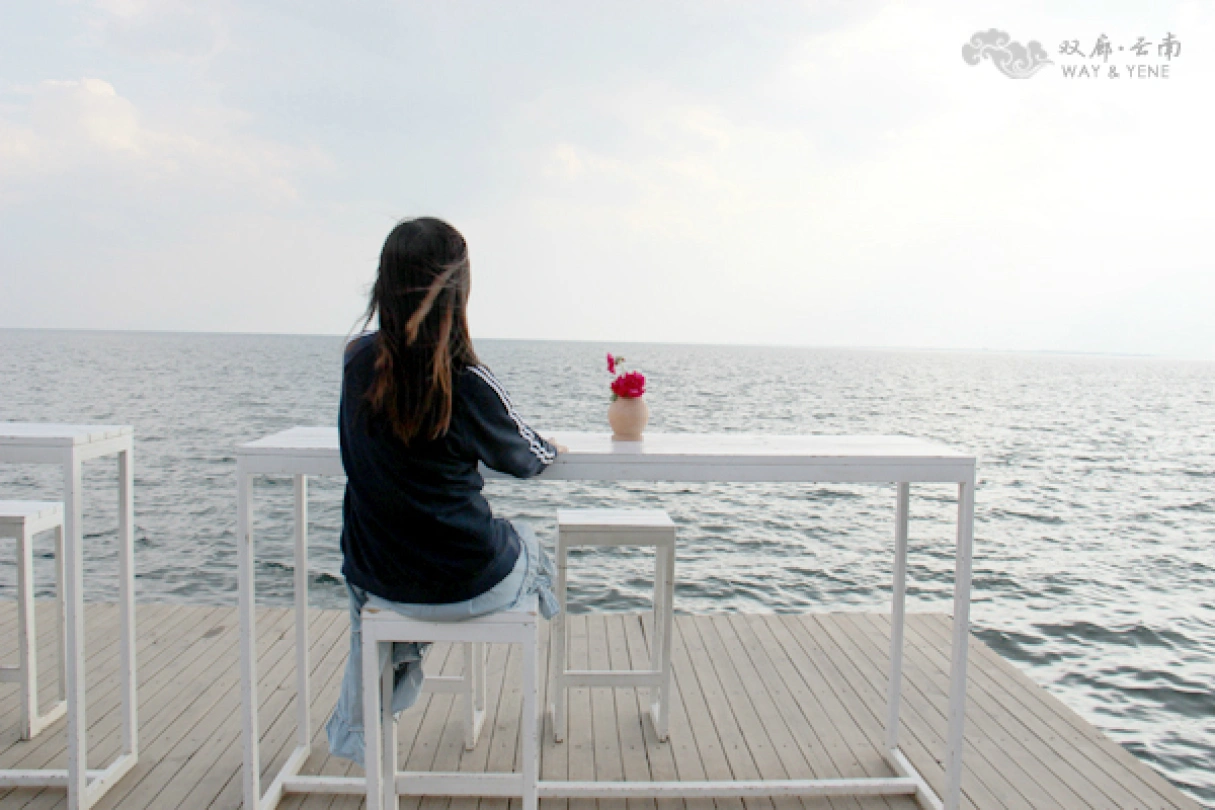
Every guesthouse in Shuanglang has its own soul. Haidi Shenghuo (Sea Life) and Bandao 63 (Peninsula 63) are the most famous, and their public spaces are open to visitors. The white tables and chairs at Haidi Shenghuo are an Instagram hotspot—long lines form every day. Bandao 63’s courtyard has a Mediterranean vibe, with blue-and-white tones that lift your spirits.
Nuannuan Huayuan (Warm Garden) is a guesthouse that “eats up your phone memory”—it’s so beautiful you can’t stop snapping photos. Then there’s Banyue Tuolan (Half Moon Trailing Blue), Qingtian Inn (Sunny Inn), Chong’er Inn (Bug Inn), Canghai Yisu (A Drop in the Ocean)—each one unique. Yang Liping’s hotel starts at over 1,000 yuan a night, while Qinglu (Green Cottage), owned by painter Zhao Qing, reportedly requires the owner’s “approval” to stay.
Slow Life by Erhai Lake
At noon, we found a small restaurant by the lake. We didn’t expect much, but the tofu was surprisingly delicious! The rice was plump and perfectly cooked, and Dali’s sour-spicy fish left us craving more. Turns out Yunnan does have great food—you just have to know where to look.

In the afternoon, I followed my boyfriend through the winding alleys, discovering things that touched our hearts: old houses with white walls and dark tiles, unique ponds and flowerpots, flowers blooming with abandon—every scene felt like a painting.
Shuanglang hasn’t been over-commercialized. Many Bai ethnic locals still live here. They wear headbands, carry bamboo baskets, and seem a bit shy. One charming detail: many doors had chalk-written notes saying, “Please come to so-and-so’s house for dinner tomorrow”—invitations! Such a simple, heartfelt way to connect.
As the sun’s last rays spilled over Erhai Lake, we sat on the guesthouse rooftop—just the two of us, a vast lake, and a sky full of stars. I read a book, listened to Xu Wei’s song “Warmth,” and thought: this is enough.
Cycling Around Erhai: Body in Hell, Heart in Heaven
The next morning, we rented two bikes and planned to ride from Dajianpang Village to Wase, about 30 kilometers round trip. No deposit needed—just 20 yuan per day. The local honesty was refreshing.
Cycling along Erhai Lake with a gentle breeze on our faces felt incredible. We stopped frequently to take photos: the lake, flowers and trees, old houses, and children waving at us. A serious cyclist in full gear nodded at us—maybe he was a little lonely.
We had lunch across from Xiaoputuo (Little Potala) Island. The sour-spicy fish was even more delicious than what we’d had in Shuanglang—20 yuan per catty, freshly caught and cooked, with a firm texture. The tomato and egg stir-fry was good too, with slightly crispy edges. The owner smiled and said, “No mint leaves this time”—finally, we could eat without worry!
At 2 p.m., we started heading back. We’d had so much fun on the way that we almost missed the last bus to Dali Old Town. We pedaled like crazy and just made it at the village entrance—close call!
Dali Old Town: Real Life in a Utopia
Little Joys at Siji Inn
After getting off at the Erhai Gate of Dali Old Town, we found a place called Siji Inn (Four Seasons Inn) on Renmin Road. The environment was pleasant—a book nook, a courtyard. Our ground-floor room was a bit dark, but it had a small private terrace, perfect for sipping tea and snacking.
In the courtyard, a little boy pushed a battered stroller around, making “didididi” sounds, utterly delighted. A French kid played ping-pong by himself. Life, in all its simplicity, was beautiful.
Art and Everyday Life in the Old Town
That evening, we wandered along Renmin Road. Street performers were singing. A young man named Lou Dawei was belting out a song by Painful Youth band: “Safina~ Safina~ Only I know how precious you are…” It moved me deeply.
In Dali Old Town, restaurants don’t have menus. They display all the dishes outside, and you just pick what you want. That’s Dali: no ideals, no money talk, no politics—just real life. The people here are open and down-to-earth. Many who’ve traveled the world end up settling here; weary travelers set up stalls to fund their journeys.
The Serenity of Caicun Pier
On the third day, we went to Caicun Pier. Since it was the spring fishing ban, we couldn’t take a small fishing boat out, so we just walked around. A long causeway stretched into the lake, and flocks of wild ducks swam on Erhai’s surface. The wetland park at Caicun Pier had a raw, untouched beauty.
Back in the old town that night, we saw Lou Dawei again, this time singing Wang Feng’s “Beijing, Beijing.” A foreign couple was performing with fire, their faces glowing in the flames.
Dinner was at the famous “Cang’erchun” restaurant. The signature dishes were decent but a bit salty. The chef was just 18 years old, handling everything from chopping to cooking—no wonder they couldn’t keep up with demand.
Lijiang: The Artistic Soul Behind Commercialization
From Dali to Lijiang
On the fifth day, we said goodbye to Dali. Our only regret was not climbing Cangshan Mountain, but we’ll be back.
At 10 a.m., we boarded a minibus to Lijiang—50 yuan per person, taking the Dali-Lijiang highway. Three hours later, we arrived. The scenery along the way was stunning: mountains, villages, farmlands, green trees, and white and pink blossoms.
Lijiang Old Town’s cobblestone streets were a nightmare for rolling suitcases. After some struggle, we checked into “Lijiang de Yun Inn” (Lijiang’s Cloud Inn), not far from Sifang Street (Square Street). It was 100 yuan per night, a wooden structure with a skylight—perfect for stargazing.
Sneaking Into Black Dragon Pool Park
After settling in, my boyfriend took me to Black Dragon Pool Park (Heilongtan Park). Entry required showing the Old Town maintenance fee (80 yuan), but my boyfriend led me through a side path—we snuck in without paying.
From the park, we could see Jade Dragon Snow Mountain (Yulong Xueshan), but there was very little snow left. Yunnan has been suffering from drought in recent years, and many parts of the lake were dry. Still, the flowers were blooming beautifully, and a photogenic child caught my eye—I couldn’t resist snapping a few shots.
Shuhe Old Town: More Lijiang Than Lijiang
On the sixth day, we visited Shuhe Old Town. We took Bus No. 18 from the old town entrance, got off at the Shuhe stop, and walked a short distance.
Shuhe felt more rustic than Lijiang Old Town, with fewer crowds. It’s free for individual travelers; only group tours or self-drive visitors need tickets. When you arrive, locals might offer to take you through a side path for 10 yuan—don’t fall for it, just walk straight in.
Shuhe was full of adorable dogs, silverware shops, fruit vendors, and elderly women selling vegetables in beautiful hats. The place oozes art and atmosphere. When you’re tired, just find any restaurant or café, sit down, listen to music, and let your mind go blank.
Clay Pot Chicken Rice Noodles at Zhongyi Market
After leaving Shuhe, my boyfriend took me to a Yunnan County clay pot chicken rice noodle shop at Zhongyi Market. It was absolutely amazing—highly recommended! Large bowl for 8 yuan, small bowl for 7 yuan, with optional chicken wings or feet. Way better than the famous Lijiang腊排骨火锅 (smoked pork rib hotpot). My advice: avoid eating in the old town—it’s overpriced and mediocre. Head to the new town where locals eat; any random place will be delicious.
Lijiang at Night
Lijiang has become overly commercialized, packed with people. But it’s also a transit hub—many destinations require passing through here. During the day, drink tea, soak up the sun, zone out. At night, hit a bar or maybe have a fling—that’s Lijiang.
Tomorrow, we’re off to Lugu Lake. We decided to skip Jade Dragon Snow Mountain—too little snow, and we’ll save ourselves for Meili Snow Mountain in the future.
Lugu Lake: The Last Pristine Paradise on Earth
A Bumpy Five Hours
On the seventh day, we boarded a tourist shuttle to Lugu Lake. The driver was great—he gave us a 20-yuan discount round trip, so it was 140 yuan per person. We departed at 8 a.m., stopping at two scenic spots for photos, including the famous “Nine Bends and Eighteen Turns.”
I had an upset stomach the whole way—the breakfast rice cake (erkuai) I bought that morning seemed unclean. But the moment I saw Lugu Lake, all the suffering was worth it.
Cycling the Lake: Body in Hell, Heart in Heaven
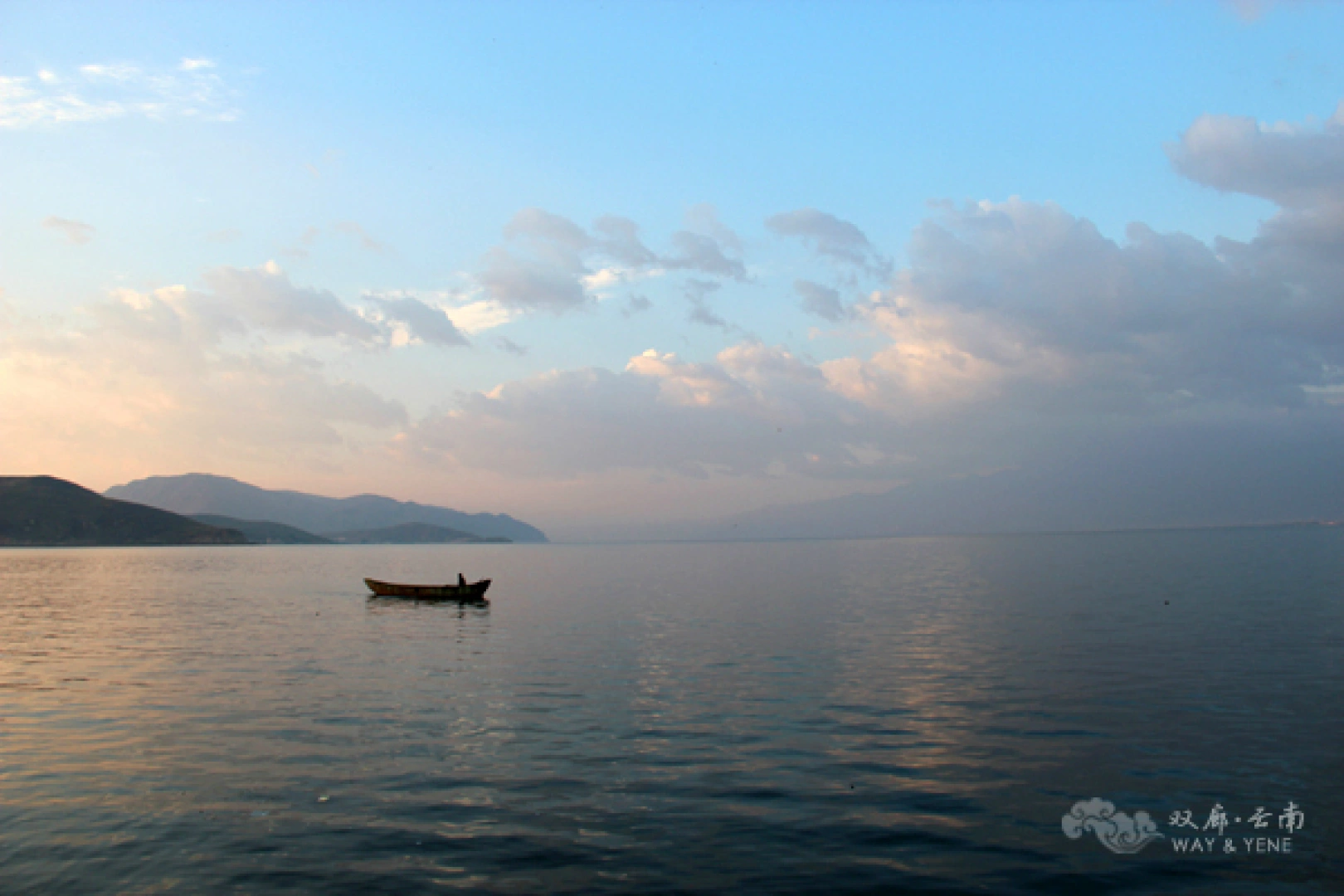
Lugu Lake is breathtakingly beautiful. If time allows, stay as long as you can. We chose to cycle the entire lake—starting at 9 a.m. and returning to our accommodation after 9 p.m., covering over 80 kilometers.
It was exhausting, but the scenery we saw was something you’d never experience from a tour car. As they say: body in hell, heart in heaven!
Yuanyang: The Grandeur of Hani Rice Terraces
The Nightmare of Sleeper Buses
On the eleventh day, we set out from Kunming to Yuanyang. There are only three buses a day; the earliest, at 10:20 a.m., is the only seated bus—the other two are sleeper buses. My advice: get the seated bus if possible. Sleeper buses are unbearable—the mix of odors nearly knocked me out!
The Awe of Hani Rice Terraces
Yuanyang’s Hani rice terraces are spectacular. The best time to visit is around Chinese New Year; we went a bit late. The main spots are Duoyishu, Bada, Qingkou, and Laohuzui (Tiger’s Mouth). Entry is 100 yuan, with a student discount at half price. There are also free spots like Longshuba, which are equally beautiful.
Final Thoughts: What This Journey Taught Me
Fourteen days—we experienced Dali’s slow life, Lijiang’s charm, Lugu Lake’s purity, and Yuanyang’s grandeur. Our bodies and feet ached, but our eyes and hearts were filled with beauty.
Total cost for two: 8,400 yuan. Camera: Canon 600D with 18-200mm lens. My takeaway: photography isn’t about gear; it’s about having eyes that can see beauty.
This trip was my boyfriend’s birthday gift to me, and a celebration of our first anniversary. This article is dedicated to En’en, who silently accompanied us along the way.
If you’re planning a trip to Yunnan, here are a few tips:
- Book guesthouses in Shuanglang and Lugu Lake in advance—especially sea-view rooms at Haidi Shenghuo, Bandao 63, and Lige Peninsula. At least two to three months ahead.
- In Dali Old Town and Lijiang Old Town, you can find accommodation on the spot—compare a few options before deciding.
- Lijiang Old Town is all cobblestone streets—suitcases are a pain.
- For Lugu Lake, take the tourist shuttle—it stops at scenic spots along the way, and the final stop is Lige.
- Visit Yuanyang rice terraces around Chinese New Year for the best views.
- Don’t eat in the old towns—go to the new town where locals eat; any random place will be delicious.
Finally, may we all find our own “days on the clouds” on our journeys.
You should also read:
A 9-Day Yunnan Journey: From Lijiang to Dali to Tengchong – A Trip Toward Self-Reconciliation
A 9-Day Yunnan Journey: From Lijiang to Dali to Tengchong – A Trip Toward Self-Reconciliation Some say travel is simply going from a place you're tired of to a place other people are tired of. It stings to hear, but it's painfully true. Yet there's…
Continue reading...
Escaping Nanning, Falling Under Lijiang's Spell: Our Four-Person, Ten-Day Yunnan Dream
Escaping Nanning, Falling Under Lijiang's Spell: Our Four-Person, Ten-Day Yunnan Dream Before We Set Off: No Pain, No Obsession Have you ever had that impulse—suddenly tired of the office fluorescent lights, the crush of the subway, the endless parade of identical takeout boxes, and just…
Continue reading...
Solo in Yunnan: A Wanderer’s Guide to the Land of Eternal Spring
Solo in Yunnan: A Wanderer’s Guide to the Land of Eternal Spring There’s something magical about traveling alone. No compromises, no schedules to keep, no one to please but yourself. I’ve been on the road for nearly three months now, and not once have I…
Continue reading...