Stealing a Half-Day of Leisure: A 6-Hour Wander in Ruili
Stealing a Half-Day of Leisure: A 6-Hour Wander in Ruili
An Unexpected Invitation from a Border Town
Some cities are destined to be nothing more than fleeting stops. Ruili, a small town tucked away in the southwestern corner of Yunnan, was for me merely an add-on to a business trip. Yet it was precisely this squeezed-out half-day of freedom that led to an unexpected encounter with this border city.
My understanding of Ruili, like most people's, began with jade. This land has witnessed a century of China-Myanmar jade trade—Burmese jade enters here and flows to every corner of the country. During the pandemic, this border town guarding the nation's gateway frequently made headlines, becoming a focal point of public attention. But when I actually set foot on this soil, I discovered its charm went far beyond that.
From the moment I landed at Mangshi Airport to the time I finished my business and headed back the next morning, I had an entire afternoon to squander. I've visited most cities and prefectures in Yunnan, but Dehong was the one blank spot on my map. Its geography, climate, and cultural landscape resemble Xishuangbanna, yet it lacks that place's noise and commercialization, offering instead a rawer, more genuine character.
A Race Against the Battery
The plane was delayed, so by the time I arrived at Mangshi Airport it was nearly noon. This dual-use military and civilian airport has a peculiar rule—all window shades must be down during landing, which only adds to its mystique. The airport is small; it takes just a few minutes to walk from the arrivals hall to the parking lot. I rented a car from a local company and prepared to embark on my half-day adventure.
Only after getting in the car did I realize my phone battery was down to 40%. I'd hoped to charge it on the road, but after rummaging through the entire cabin, I couldn't find a single USB port—only Type-C. In my haste, I hadn't brought a cigarette lighter adapter, and I couldn't even play music from my USB drive. This is the anxiety of modern life: when the battery runs low, you're stuck.
I decided to take the G320 national highway to Moli Tropical Rainforest. The highway was slower, but at least it was free, and I could stop anytime to enjoy the scenery along the way. I turned on navigation, and my phone battery slowly drained. Passing a gas station—no charging cable. Passing a village—I found a small convenience store. A shy elementary school student told me they didn't sell charging cables. Tentatively, I asked if I could borrow one for a few minutes to charge. He nodded and agreed. His mother came out, a hint of wariness in her eyes, though she said nothing. Feeling a bit embarrassed, I bought some snacks from the shop as a makeshift lunch. After charging for about ten minutes, the battery was barely enough to continue, so I hit the road again.
Moli Tropical Rainforest: A Small but Exquisite Green Sanctuary
Traffic on the G320 was sparse, and the drive was smooth. As I neared the scenic area, the road ran parallel to the Ruili River—wide, slow-moving water. There were a few viewpoints, one of which was quite elevated. I planned to check it out on the way back, but I later learned that the scenic area doesn't allow backtracking.
I'd bought my ticket online in advance. After verification at the entrance, I drove directly into the parking lot. There were two levels—upper and lower. By the time I arrived, it was nearly 1:00 PM. The lower lot was mostly full, while the upper one was still fairly empty.
The First Half: Man-Made Attractions and a Botanical Garden
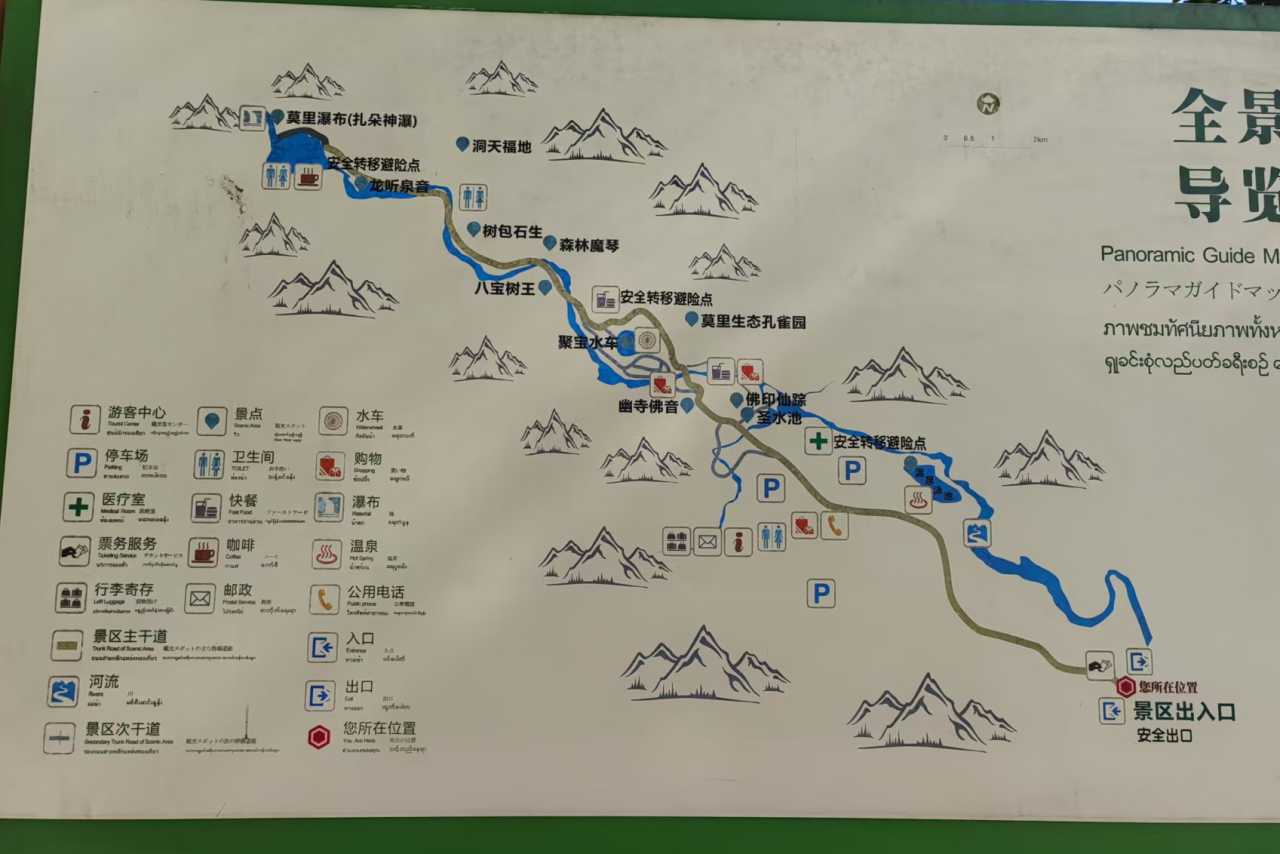
The scenic area is genuinely small. From the parking lot to the endpoint—Moli Waterfall—it's only about 1.4 kilometers. The path is entirely flat with almost no inclines, making it very accessible for elderly visitors. I divided the area into two parts, with the Banyan Tree King as the boundary. The second half is where the real magic lies.
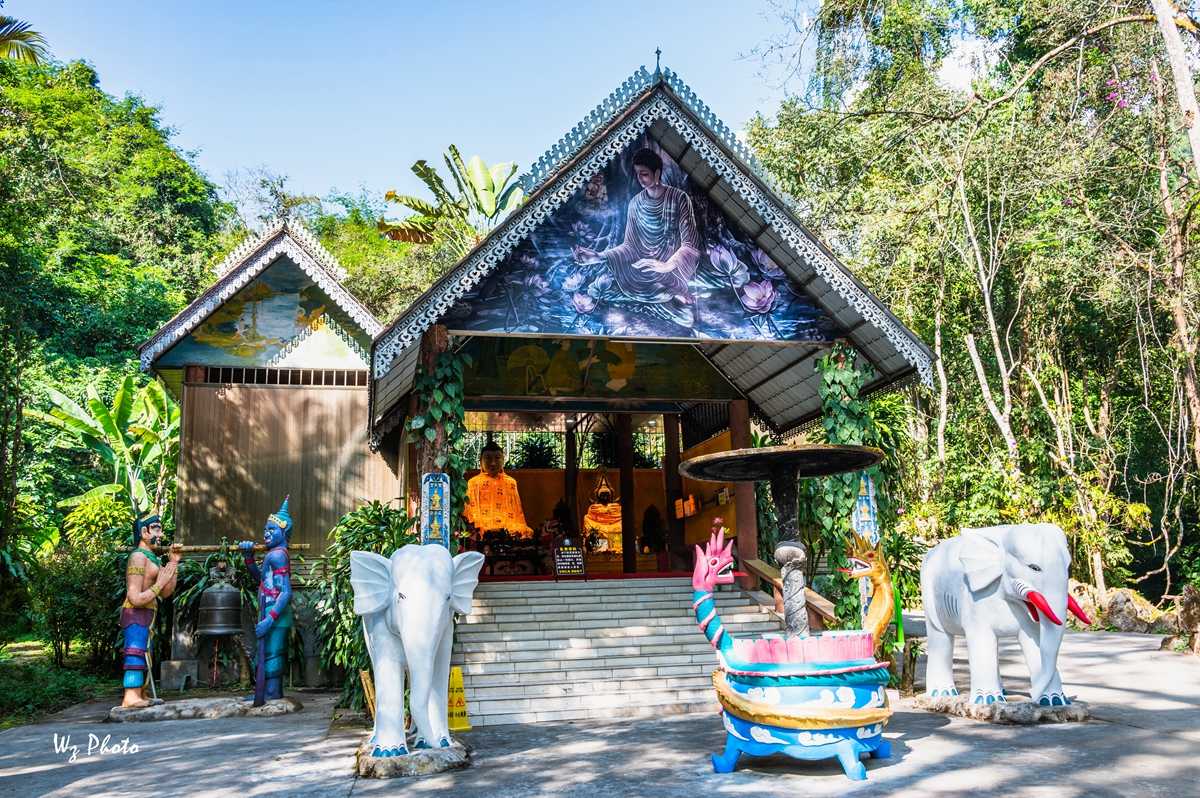
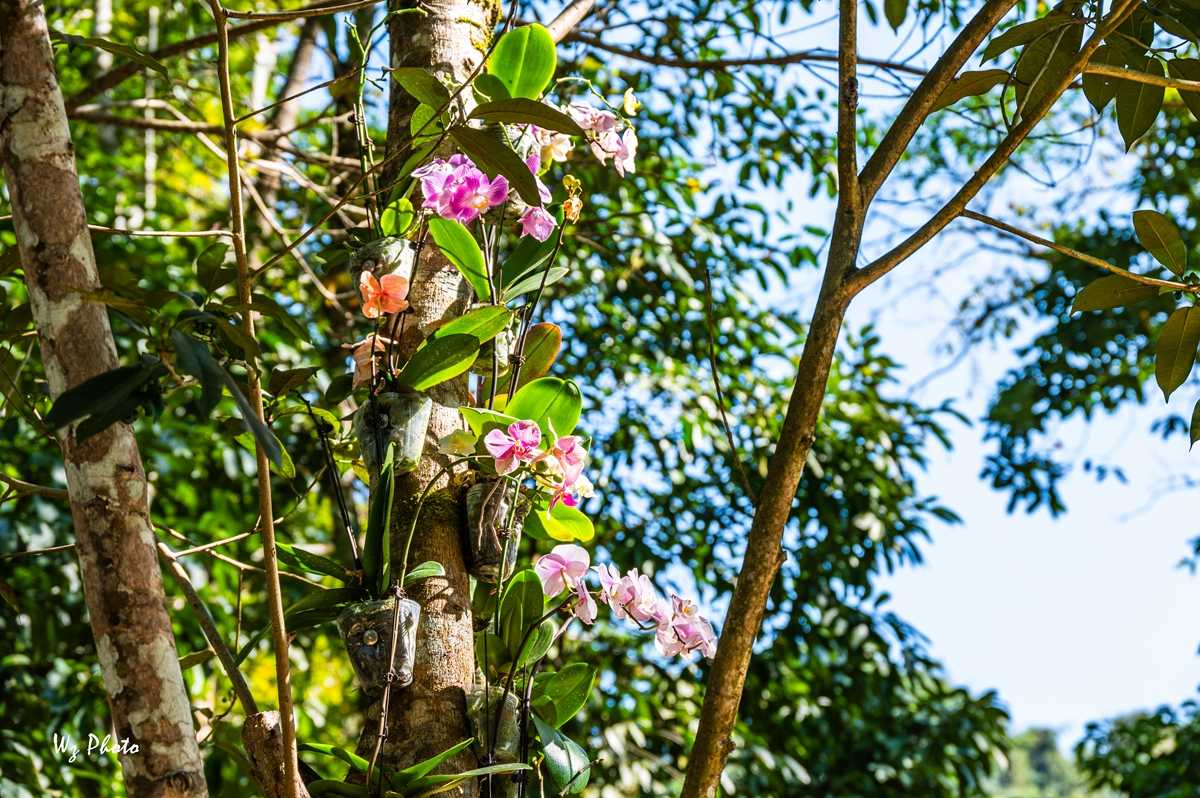
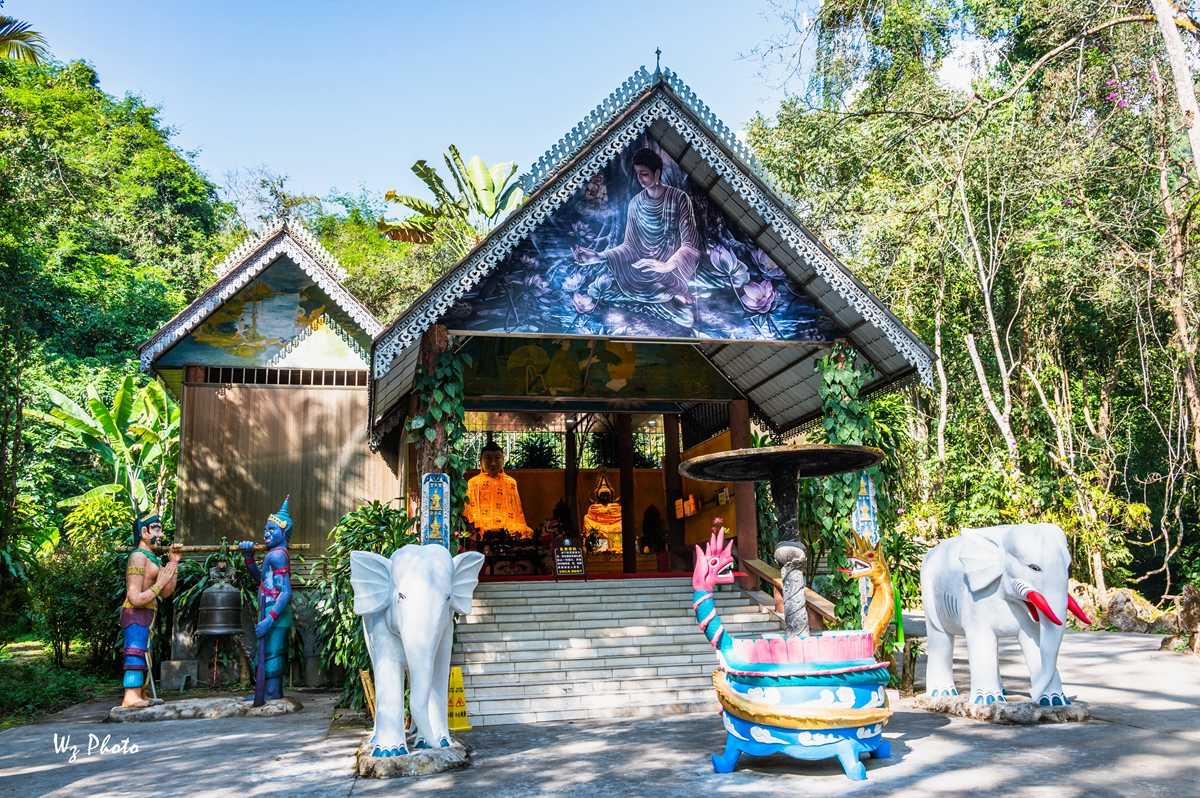
Entering from the parking lot, I first encountered some man-made attractions: orchids planted in trees, a Buddhist hall, a waterwheel. The souvenir shop was deserted, the staff chatting idly. The peacock garden owner was scrolling through his phone, utterly bored. For a moment, I doubted whether this place had anything worthwhile to offer.
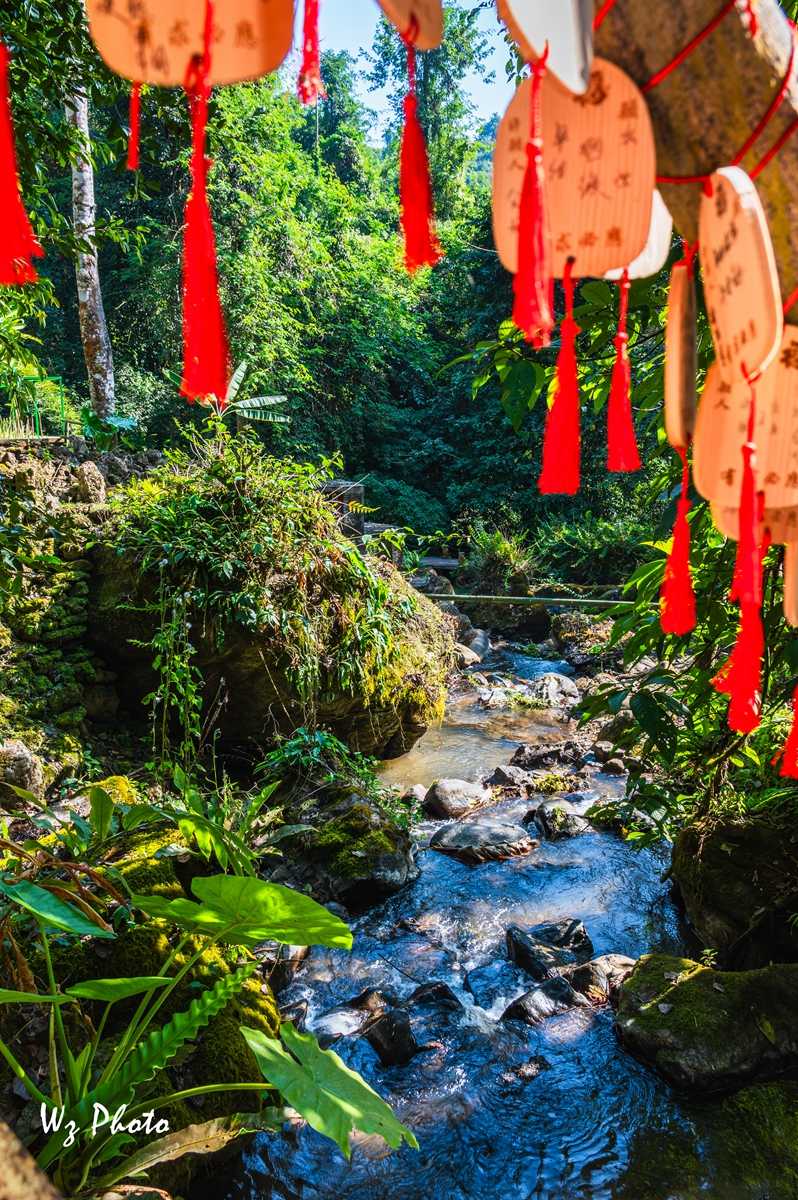
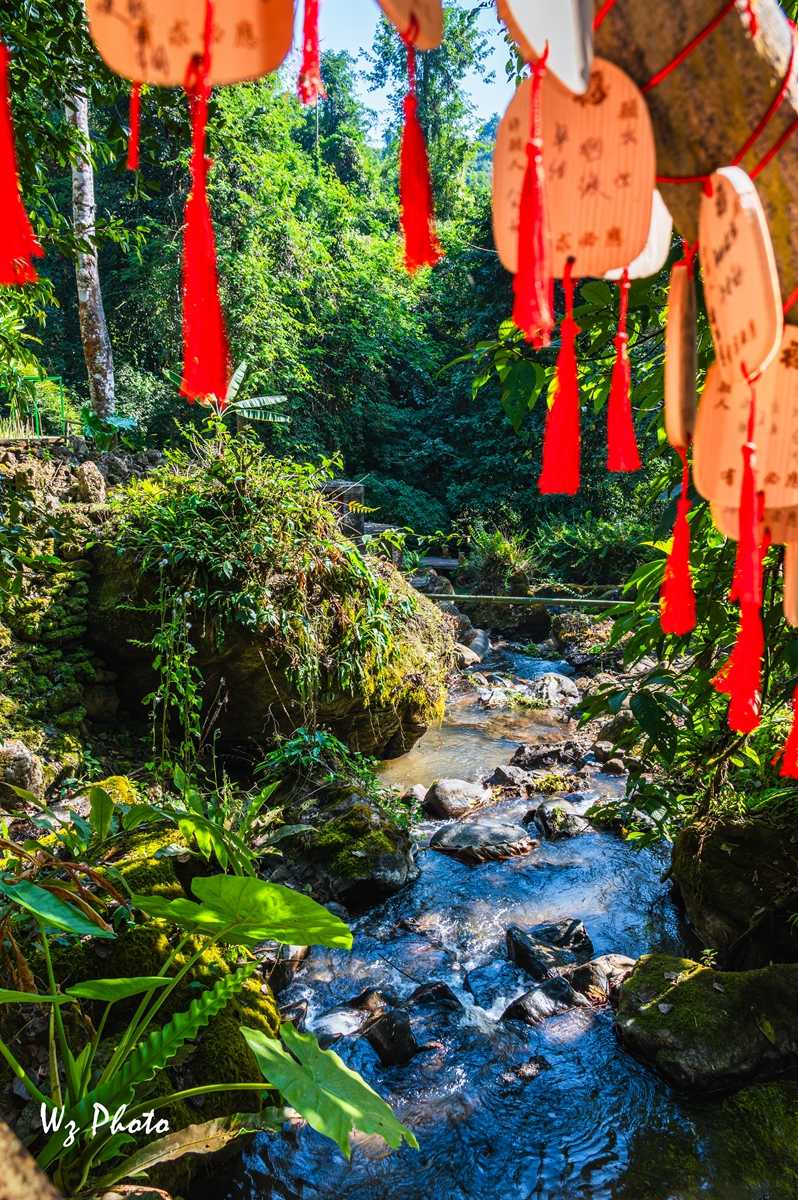
Then came the Wishing Bridge, covered in hanging plaques, with more for sale nearby. As I walked further, things started to get interesting—tropical plants along the path all had name tags, like a miniature botanical garden. The scorpion-tail heliconia had strange, striking shapes; the pendulous clerodendrum was elegant and pure; the flat, elongated rattan vines looked like natural swings. These plants made me momentarily forget the blandness of the first half.
The Banyan Tree King: Guardian of the Rainforest

Reaching the Jubaoshi Waterwheel, I saw fish-feeding activities everywhere—nothing surprising. About 500 meters further, a small bridge crossed a stream, and on the other side stood the Banyan Tree King. Banyan trees aren't rare in Yunnan and Guangdong, but few grow to such a massive scale. This one had a trunk diameter of 6 meters, its canopy spreading like a giant umbrella, standing in the dense forest like a crowned giant—majestic and solemn.
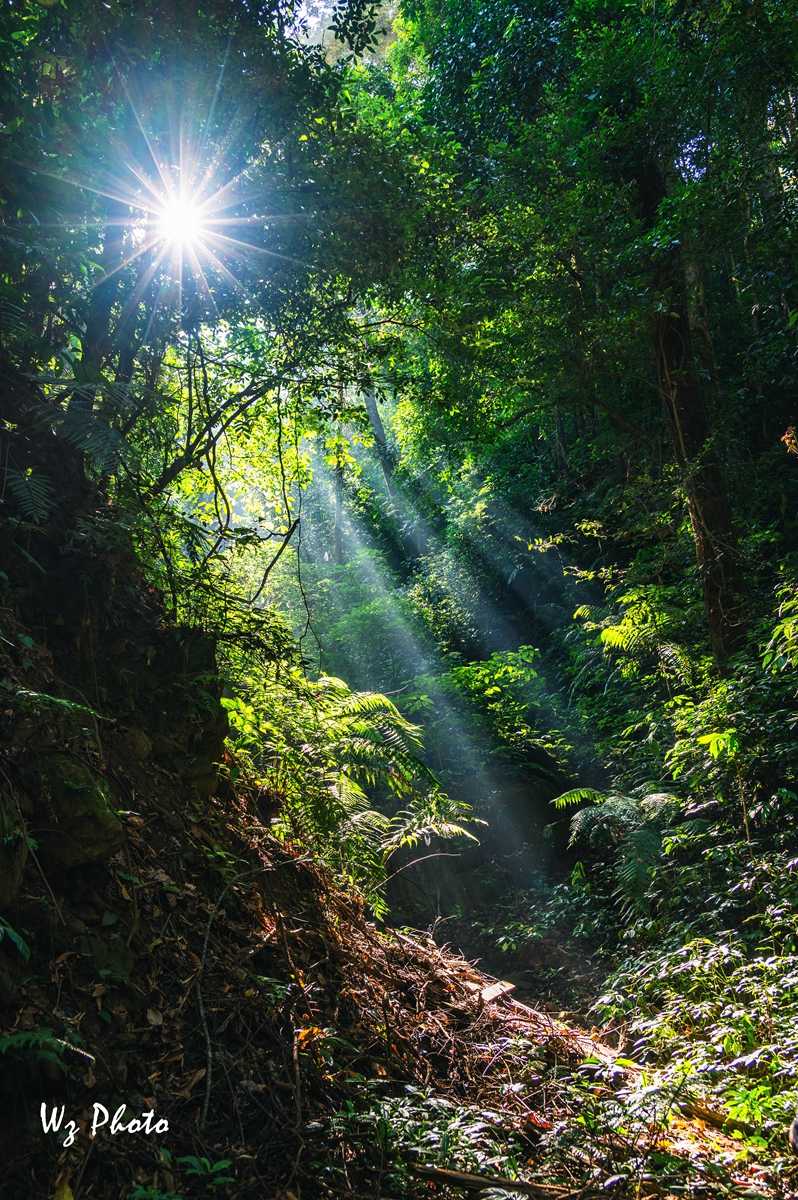
From here, a small stream accompanied the path. Its source was Moli Waterfall. The road ahead was lined with the sound of flowing water, sunlight filtering through the leaves like playful sprites—sometimes leaping on the rapids, sometimes hiding deep in the jungle. The rainforest's stillness and vitality merged perfectly in that moment. My pace unconsciously slowed, and I found myself taking dozens of photos from a single angle.
Deep in the Rainforest: Nature's Masterpiece
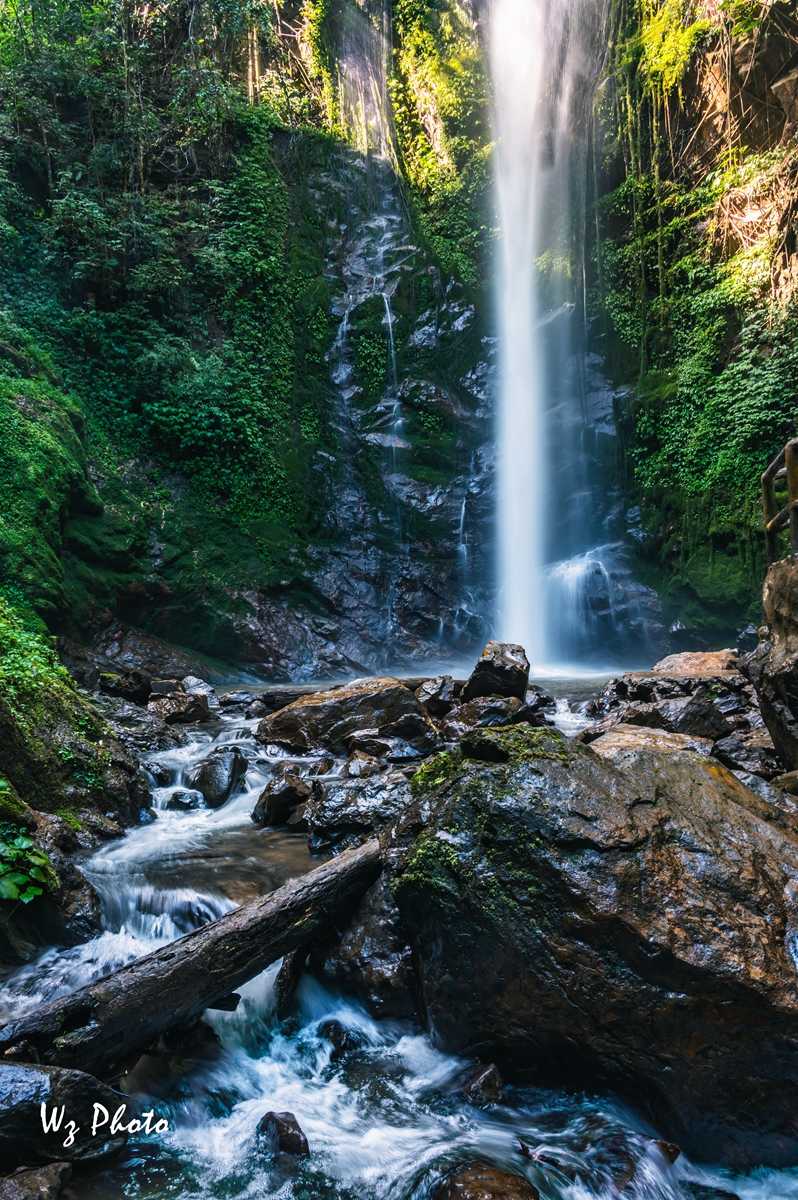
Deeper into the rainforest, the variety of plants grew richer. Common banyan trees, rare winged-seed trees, and the wonders of trees hugging trees and trees hugging rocks. After passing the "Tree Embracing Rock" spot, the path split in two: straight ahead to Moli Waterfall, and to the right to the Grotto Paradise.
Going straight and climbing a staircase, I came upon a rushing torrent called "Dragon Listening to the Sound of Spring." From the left side, I could descend to get a closer look. Further on, I could see a white ribbon hanging from the mountain in the distance—that was Moli Waterfall, also known as Zha Duo Sacred Waterfall, with a drop of 60 meters—quite spectacular.
I lingered around the waterfall for a long time, searching for different angles to photograph. The stream and rocks made excellent foreground elements. Getting close to the waterfall, I could feel the mist of water droplets, but the waterfall wasn't very wide, and the water volume was limited—no need for a raincoat or umbrella.
The Magic of Light: The Tyndall Effect
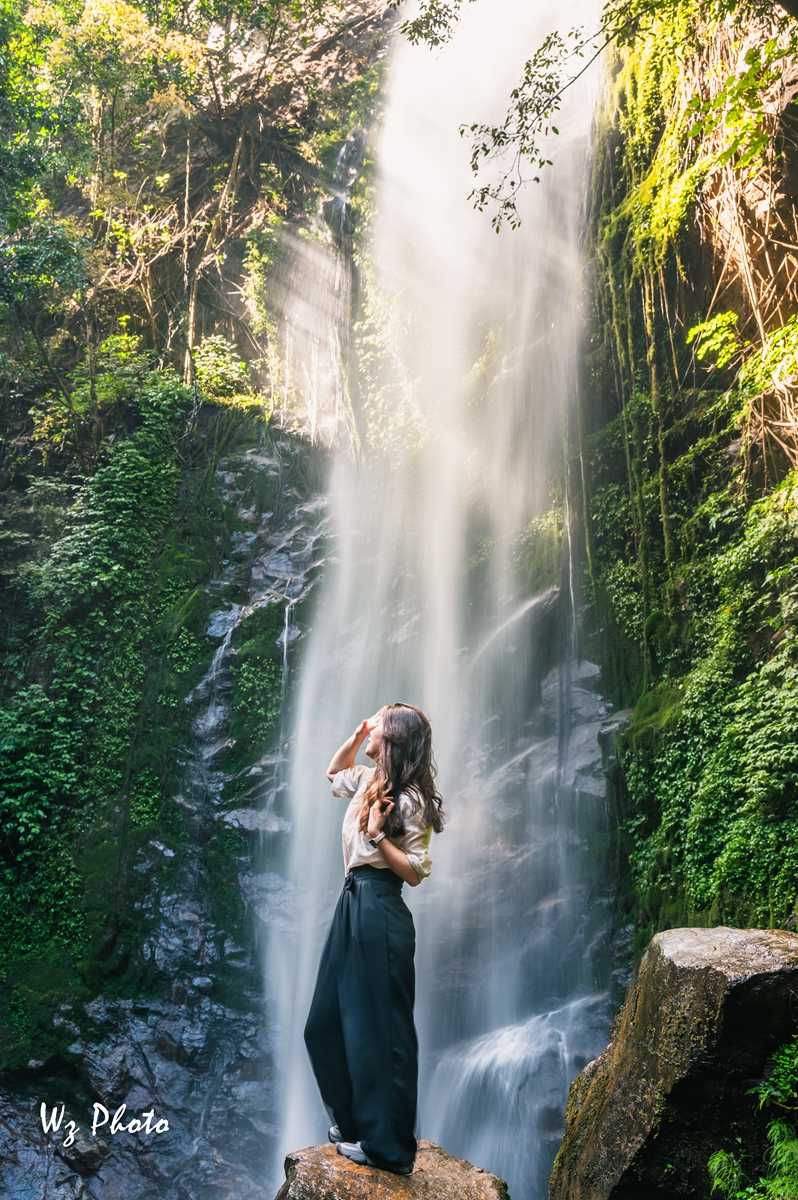
There weren't many tourists in the scenic area, but once people reached the waterfall, no one wanted to leave. On the right side of the waterfall was a rock where visitors lined up to take photos. I seized the chance to snap a few shots myself. It was around 2:00 PM, and the area around the waterfall was humid. Sunlight streamed in from the west at an angle, creating a Tyndall effect that split the waterfall into halves of light and shadow.
This timing was perfect. The sun was at its best position, and "Jesus light" beams were visible everywhere near the waterfall. Naturally, this became a photo hotspot. For many people, being able to capture a few satisfying shots for their social media feeds already made the ticket price worthwhile.
A Hidden Gem: The Grotto Paradise
Reaching Moli Waterfall doesn't mean the journey is over. Remember the fork in the road? I noticed that most people skipped that path. But in truth, it leads to a hidden wonder.
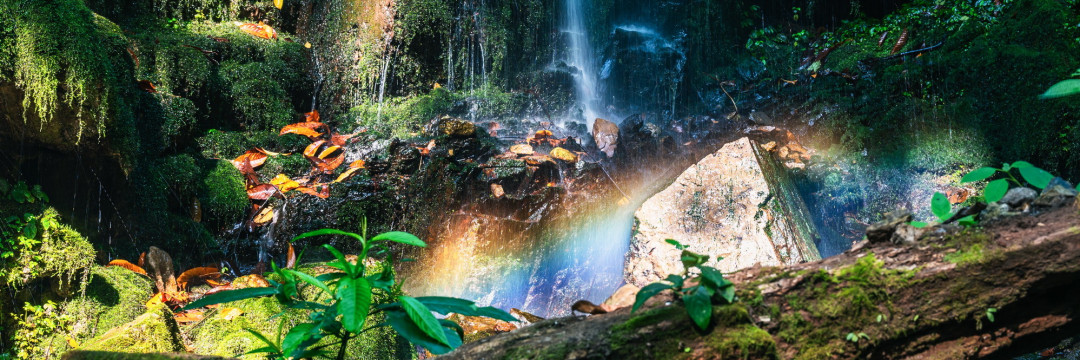
Walking back from Moli Waterfall, turning left, and climbing a slope, I soon arrived at the "Grotto Paradise." There was a statue of the Laughing Buddha here, but that wasn't the main attraction. What truly captivated me was a small waterfall. The waterfall itself wasn't particularly special, but beneath it lay a thick, fallen tree trunk, forming a unique composition with the cascading water. Sunlight hit the waterfall at just the right angle, creating a tiny rainbow that served as the perfect finishing touch. Some visitors even climbed onto the trunk to take photos, blending themselves into the scene.
Strolling Through Ruili: Dusk in a Border Town
Leaving Moli Tropical Rainforest, I drove for just over 20 minutes to reach downtown Ruili. If time allowed, a detour to the General Buddhist Temple or Jiegao Port would have been entirely feasible. For convenience, I stayed near Fortune Plaza. Accommodation here was cheap—a hotel room for just over 100 yuan was surprisingly decent.
After a short rest at the hotel, I headed out to find food. I'd only eaten a little at noon, and my stomach was growling. The temperature in Ruili was 26°C—hotter than Guangzhou—so a long-sleeved shirt was just right. I walked south toward the Ruili River and found a well-reviewed hand-grabbed rice restaurant. At 5:30 PM, the place wasn't busy. I ordered a single portion, which was generous in size and fairly authentic in flavor.
The Barbed Wire by the River and the Golden Towers
My plan was to visit the night market and square along the Ruili River after dinner. Checking the map, I saw there weren't any nearby parking lots, so I decided to walk. That turned out to be naive—parking in Ruili is incredibly casual; you can basically park anywhere on the street. If I'd known, I could have driven to Jiegao Port first, then circled back to the Ruili River Square.
Walking along Jiegang Road, I passed many shops dealing in raw jade stones. When I reached the sign for the Ruili River night market, the sky hadn't yet darkened, and the market was completely empty. Entering through a side road, I came upon a large gate in Dai-style architecture, bearing the words "Ruili River Splashing Water Square."
The square was vast—and equally empty. Crossing it, I reached the banks of the Ruili River. I've been to many small and medium-sized cities, and riverside areas are usually popular spots for locals to relax and enjoy themselves—pleasant to the eye. But here, the riverbank was blocked by tall barbed wire fences, preventing anyone from getting close. Logically, the opposite bank is still Chinese territory, so why the fortifications? The answer seemed clear enough. Later, I found online that these fences were built in 2021, reportedly stretching for 500 kilometers in total.
Right next to the river was a bar street. As dusk fell, one by one, the uniquely themed bars lit up, waiting for customers. Both sides of the riverside road were packed with parked cars, narrowing the street considerably. When darkness fully set in, I considered finding a place to sit for a while, but ultimately decided that lying in my hotel bed would be more comfortable.
Continuing south along the river, I could see Jiegao Bridge not far ahead, with two golden buildings glowing brilliantly in the sunset. I thought maybe if I walked further, I could get onto the bridge and bypass the barbed wire. But when I reached the bridge, I found there was no pedestrian walkway to get on.
The Lone Cyclist on the Bike Lane
After the sun set, I rented an electric scooter to head back to the hotel. I noticed that although the roadside had a wide bike lane (about 3 meters wide) separated from the vehicle lanes by flower beds, I was practically the only one riding on it. The reason? Some cars—and even buses—were parked on the bike lane, making the path quite narrow.
Epilogue: A Journey Worth Taking Once
The next day, after finishing my business by 10:00 AM, I drove on the expressway straight to Mangshi Airport. The airport was small but had character—you could walk out onto an open-air platform.
I don't know if I'll ever come back to Ruili. If it's not necessary, I probably won't make a special trip. This is a place you visit once, and that's enough—not because it's bad, but because it's unique enough to leave a lasting impression. That half-day of leisure felt like stolen time—brief yet precious. In the midst of a busy life, having an afternoon like this—wandering through a tropical rainforest, watching sunlight filter through the leaves, listening to the roar of a waterfall, and then, on the banks of a border town river, watching the sunset paint golden towers in brilliant hues—is more than enough.
Practical Tips: - Moli Tropical Rainforest is small; walking to the waterfall is only 1.4 km, all flat terrain, suitable for elderly visitors - Around 2:00 PM is the best time to photograph the waterfall, when sunlight creates the Tyndall effect - The "Grotto Paradise" within the scenic area is easily overlooked but worth exploring - Parking in downtown Ruili is very casual; you can basically park anywhere on the street - The Ruili River bank is blocked by barbed wire fences, so you can't get close to the water—plan your itinerary accordingly
You should also read:

Wandering Among the Clouds: A Graduation Trip as Beautiful as a Lovers' Reunion
Wandering Among the Clouds: A Graduation Trip as Beautiful as a Lovers' Reunion Some places are destined to be visited at a certain age, only then taking root in your memory. For me, Yunnan is exactly that kind of place. Time never waits. By the…
Continue reading...
Pack Your Bags, Wander Through Lijiang, Lugu Lake, and Dali: A Solo Journey Through Yunnan
Pack Your Bags, Wander Through Lijiang, Lugu Lake, and Dali: A Solo Journey Through Yunnan Prologue: Why Set Out Alone One plane ticket, one camera, one backpack, one suitcase — this was everything I brought to begin my wandering journey through Yunnan. Many people have…
Continue reading...
A Cat’s Wanderings in Yunnan: A Solo Journey of Freedom, Discovery, and a Little Madness
A Cat’s Wanderings in Yunnan: A Solo Journey of Freedom, Discovery, and a Little Madness Some people say youth is meant to be squandered. I’d argue it’s meant to be lived—not in a blur of wasted nights, but in the deliberate, sometimes chaotic pursuit of…
Continue reading...