A Cat’s Wanderings in Yunnan: A Solo Journey of Freedom, Discovery, and a Little Madness
A Cat’s Wanderings in Yunnan: A Solo Journey of Freedom, Discovery, and a Little Madness
Some people say youth is meant to be squandered. I’d argue it’s meant to be lived—not in a blur of wasted nights, but in the deliberate, sometimes chaotic pursuit of moments that make you feel fully alive. I didn’t want to write a lament about time slipping away. Instead, I wanted to create memories so vivid that regret wouldn’t stand a chance.
I love the feeling of a backpack on my shoulders, the rhythm of footsteps on unfamiliar roads, and the way travel shakes your perspective like a snow globe. I’m the kind of person who stops to photograph a patch of sunlight on a cobblestone, who lingers in a stranger’s story, who wanders like a cat—curious, independent, and utterly unapologetic.
This is the story of a 15-day solo trip through Yunnan, where I chased clouds, ate my weight in grilled fish, and discovered that the best travel companions are often the ones you meet along the way.
The Numbers: What It Cost to Wander
Before we dive into the stories, here’s the practical breakdown. I set a budget of 4,000 RMB and came home with 600 RMB to spare—mostly because I bought too many souvenirs (note to self: buy more next time).

Accommodation (11 nights): 500 RMB
Trains:
- Guangzhou–Kunming (upper bunk): 328 RMB
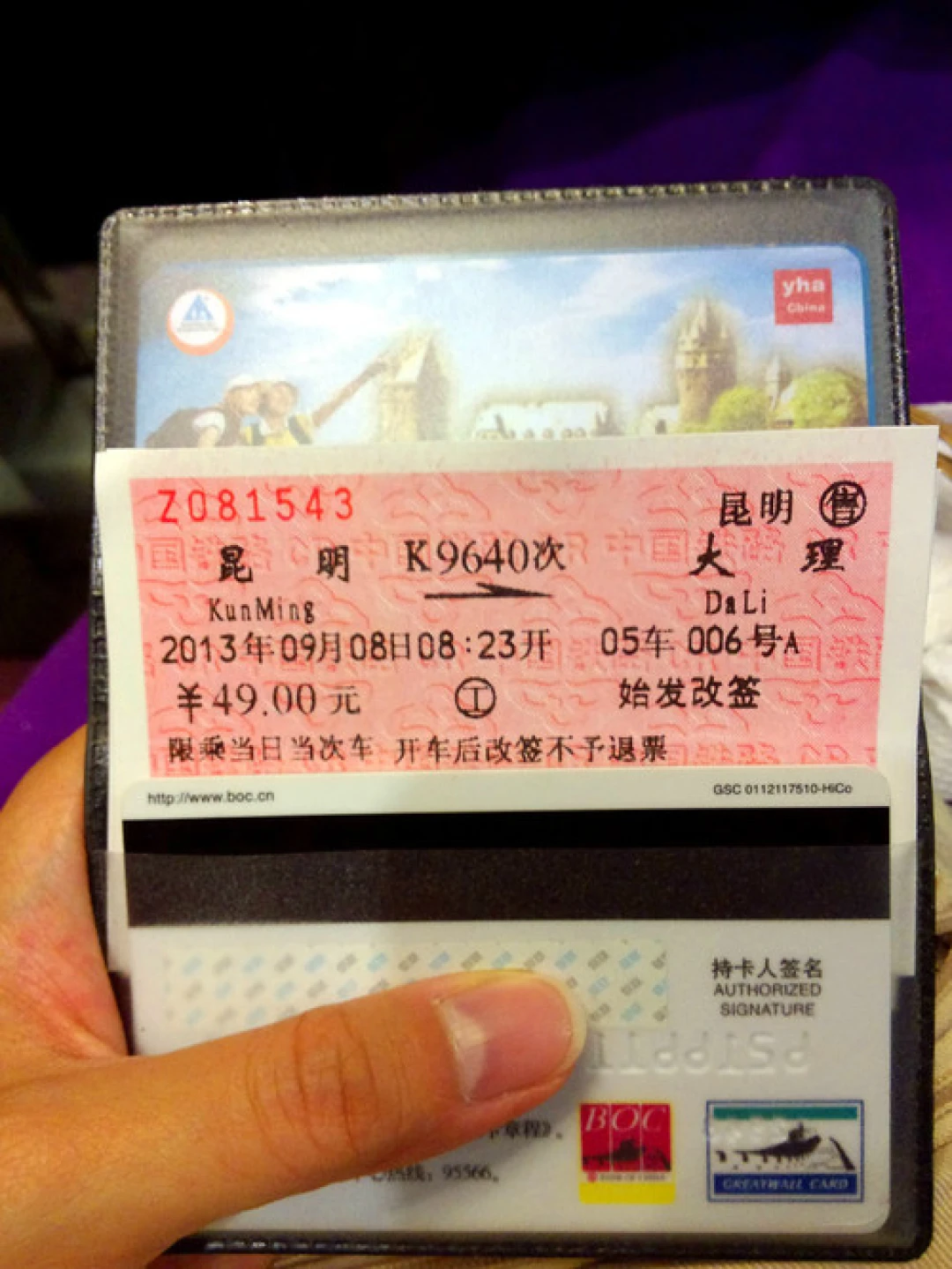
- Kunming–Dali (hard seat, due to delay): 49 RMB
- Lijiang–Kunming (hard sleeper): 141.5 RMB
- Kunming–Guangzhou (hard sleeper, middle bunk): 349 RMB
Local transport & ride-sharing: ~560 RMB
Attractions:
- Mu Mansion (student ticket): 30 RMB
- Lugu Lake entrance: 100 RMB (student discount requires ID and age verification)
- Lugu Lake home visit: 100 RMB (skip this—honestly not worth it)
Souvenirs & shipping: 550 RMB
Food & miscellaneous: 872.5 RMB
Total spent: ~3,400 RMB
I mostly stayed in youth hostel dorms—not just to save money, but because I love the communal energy. There’s something magical about sharing travel stories over instant noodles with strangers who quickly become friends.
Day 1–2: Guangzhou to Kunming—A Rocky Start
If I told you I ran to the wrong train station, would you believe me?
If I told you my 9 PM train was delayed until 2:30 AM, would you still be reading?
If I told you I had no idea where I’d sleep that night… well, that’s exactly how this trip began.
After six hours of waiting, I finally boarded the train to Kunming. The carriage smelled like old socks and regret, but I doused my blanket in Dettol and decided not to care. The train rattled and groaned, but I slept like a baby. The signal was terrible, so I either stared out the window with music in my ears or chatted with fellow passengers until my throat was dry.
Pro tip: If your train is delayed, you can exchange your ticket at the station for the same price. Ask the conductor for a delay certificate if needed.
After 25 hours, I arrived in Kunming, grabbed a quick meal, and faced another four-hour wait before catching the next train to Dali. Hard seat only. My back would not forgive me.
Day 2–4: Dali & Shuanglang—The Village That Steals Your Heart
From Dali, I hopped on Bus 8 (1.5 RMB) to the old town, then transferred to the northern bus station for a 16 RMB ride to Shuanglang. The last bus leaves around 5:30 PM, so plan accordingly.
By the time I arrived, I was exhausted. But the ride itself was a balm: crisp air, misty mountains, endless rice paddies. I checked into a cozy guesthouse called Nuan Nuan (Warm Warm) for 50 RMB a night. It was a small, quirky place that would become the heart of my trip.
Nuan Nuan had two resident dogs: Donggua, a majestic husky who looked at humans with undisguised contempt, and Nan Kan, a rescued stray whose skull had been shattered by a cruel owner. Despite his injuries, Nan Kan was gentle and loyal.
Shuanglang is a tiny fishing village—so small that even some locals from Dali haven’t heard of it. If you arrive expecting postcard perfection, you’ll be disappointed. It rained for days. The streets were muddy. Construction was everywhere. And yet… I couldn’t leave. There’s a quiet energy here, a kind of slow magic that seeps into your bones. It’s not about visual spectacle; it’s about letting go.
I met a Beijing girl named Keke and a Chengdu girl named Tutu. We joked that we were starring in a human version of Animal Planet.
Day 5–6: Lijiang—The City That Never Sleeps (Even in the Rain)
From Shuanglang, I caught a shared van to Lijiang’s Dayan Old Town (75–80 RMB). There’s no direct bus, so check with your guesthouse for ride-sharing options.
Lijiang is beautiful, but it’s also a tourist magnet. Even in the rain, the streets were packed. I arrived with a fever (note: pack warm clothes—the temperature drops fast), so I slept until evening and wandered out for food. I found a delicious clay pot dish and a side of chicken bean jelly.
The next morning, I woke at 6 AM to catch the sunrise. Instead, I got gray skies and rain. I questioned my life choices.
But Lijiang’s Naxi culture is fascinating. Unlike the matriarchal Mosuo, Naxi households are male-dominated, and women bear heavy burdens. I saw women hauling bricks and pushing carts, their hands calloused. I felt a deep respect.
I also developed an obsession with yogurt. Every time someone bought one, I’d say, “Get me one too!” My travel companions rolled their eyes. Worth it.
Day 6–7: Shuhe—The Quiet Heart of Tea Horse Road
Shuhe is Lijiang’s quieter cousin. Take Bus 11 from Dayan to the Shuhe intersection, then walk 20 minutes. Alternatively, take Bus 11 to Lijiang Homeland, then transfer to Bus 6. Shuhe doesn’t charge an entrance fee.
Here, I found stone bridges, cobblestone paths, and horses that still carry the scent of the ancient Tea Horse Road. The Naxi people don’t eat horse meat or drink horse milk—they respect the animals that carried their ancestors.
I stayed at K2 Youth Hostel (45 RMB for a dorm with private bathroom; 40 RMB if you have a youth hostel membership card, which costs 50 RMB at the hostel or 40 RMB online). I spent hours just sitting in the sun, watching dust motes dance in the light.
One evening, I said goodbye to Keke and Xiao Qi. Travel friends come and go, but the memories stay.
Day 8–10: Lugu Lake—The Sapphire of the Mountains
Getting to Lugu Lake from Lijiang takes 6–8 hours. Book a round-trip van through your guesthouse (160 RMB). Let the driver know your return date a day in advance.
I stayed at Mosho Huakai Youth Hostel in Lige Village (170 RMB for a triple room, 40 RMB for a dorm). The journey was breathtaking: winding roads, clouds hugging the mountains, and finally, a glimpse of the lake—a shade of blue so pure it didn’t seem real.
Pro tip: Bring cash. The only ATM in Lige charges 14 RMB per 1,000 RMB withdrawn.
The lake had been gray for two months due to rain. We were lucky: the clouds parted, and the sun revealed the lake’s true colors. I spent my days kayaking, eating grilled fish (delicious), and watching a puppy that refused to eat vegetables. “He only eats meat,” the owner said. Spoiled.
One morning, I woke at 6 AM to see the stars. The sky was a velvet blanket of diamonds. Later, I watched the sunrise paint the lake gold. I visited the Mosuo village, tried their food (and suffered a stomachache—pack medicine!), and learned about their matriarchal culture.
Lugu Lake is called “the mother’s lake” by the Mosuo. It’s easy to see why: it cradles you in its beauty.
Day 11–13: Back to Shuhe, Then East Sichuan’s Red Land
I returned to Shuhe, hugged my friends heading to Shangri-La, and then set off for Dongchuan’s Red Land. The journey was a nightmare: train to Kunming, bus to Dongchuan, then another bus to the Red Land. I arrived exhausted and cranky.

The Red Land is famous for its vibrant soil, but I arrived during rain. The colors were muted. I visited only two spots: Luoxia Gully and Dama Kan. On the way back, I met a photographer who had been waiting three days for the perfect shot. “Patience,” he said, “is the only way to capture beauty here.”
I didn’t capture much. But I learned something: not every destination needs to deliver. Sometimes the journey itself—the discomfort, the waiting, the unexpected gray skies—is the point.
Day 14–15: Kunming and the Long Road Home
Back in Kunming, I wandered through the Green Lake Park, watched old men playing chess and couples rowing boats shaped like swans. I ate a bowl of 过桥米线 (crossing-the-bridge rice noodles) that warmed me to the bone. I bought tea, dried mushrooms, and a small embroidered pouch that smelled of sandalwood.
On the final day, I boarded the train back to Guangzhou. My legs ached. My wallet was thin. My heart was full.
Epilogue: Why I Wander
This trip didn’t change my life. It didn’t reveal some grand truth or heal old wounds. What it did was simpler and more precious: it reminded me that the world is wide and strange and full of kindness. It reminded me that I am capable of navigating chaos, of finding warmth in cold train stations, of laughing with strangers under a gray sky.
I traveled like a cat—curious, independent, and utterly unapologetic. And I’d do it all over again.
If you have questions about the route, budget, or hostels, feel free to leave a comment. I’m happy to share more details. And if you’re thinking of taking a solo trip—just go. The road will provide.
You should also read:

Solo in Yunnan: A Wanderer’s Guide to the Land of Eternal Spring
Solo in Yunnan: A Wanderer’s Guide to the Land of Eternal Spring There’s something magical about traveling alone. No compromises, no schedules to keep, no one to please but yourself. I’ve been on the road for nearly three months now, and not once have I…
Continue reading...
Into the Hidden Valley: A Solo Journey Through the Mysterious Dulong River
Into the Hidden Valley: A Solo Journey Through the Mysterious Dulong River Deep in the northwestern corner of Yunnan Province, tucked away from the modern world, lies a place that feels like a secret whispered among mountains. The Dulong River Valley is not just a…
Continue reading...
God’s Abandoned Palette: A Self-Drive Journey Through Yunnan’s Dongchuan Red Land
God’s Abandoned Palette: A Self-Drive Journey Through Yunnan’s Dongchuan Red Land Travel has never been about reaching some distant geographic coordinate. It’s about encountering, along the way, the version of yourself buried beneath the rubble of daily routine. During this May Day holiday, I finally…
Continue reading...