Stillness and Motion: A Yunnan Journey in Golden October – A Dialogue Between Soul and Landscape
Stillness and Motion: A Yunnan Journey in Golden October – A Dialogue Between Soul and Landscape
From October 15 to 30, 2012, I embarked on a 16-day journey through Yunnan, starting in Lijiang, passing through Lugu Lake, Shangri-La, Meili Snow Mountain, and Yubeng, finally ending in Chongqing. This was no ordinary trip; it was a soul-searching quest to find balance between motion and stillness. In golden autumn, Yunnan offers both the vibrant energy of ancient towns and the serene depth of highland lakes. If you, too, long for a sanctuary amid the chaos of daily life, this travelogue may light the way forward.
Chapter One: Lijiang – The Day-Night Symphony of an Ancient Town
Arrival in Lijiang: From Bustle to Stillness
At 6 p.m. on October 15, we flew from Shanghai to Lijiang via Chongqing. The driver arranged by our guesthouse was already waiting at the airport – a 50 yuan pickup fee was far cheaper than a taxi. During the 30-minute drive, I asked the driver to take a detour past the new bus station so I could buy tickets in advance: tickets for Lugu Lake on the 17th and Shangri-La on the 21st. This is a hard-won lesson – during peak season, last-minute tickets are nearly impossible to find.
Our guesthouse sat on Lion Hill, a classic Naxi-style courtyard house with a doorway so small you could almost miss it. Yet this unassuming entrance had been a filming location for the TV drama Beijing Youth. The driver could only take us halfway up the hill. Two young women from the guesthouse carried our luggage in bamboo baskets while we followed them up stone steps, passing through the east gate of Wangu Tower, before finally reaching our mountain hideaway.
Night Stroll Through the Old Town: Revelry and Stillness in the Lantern Light

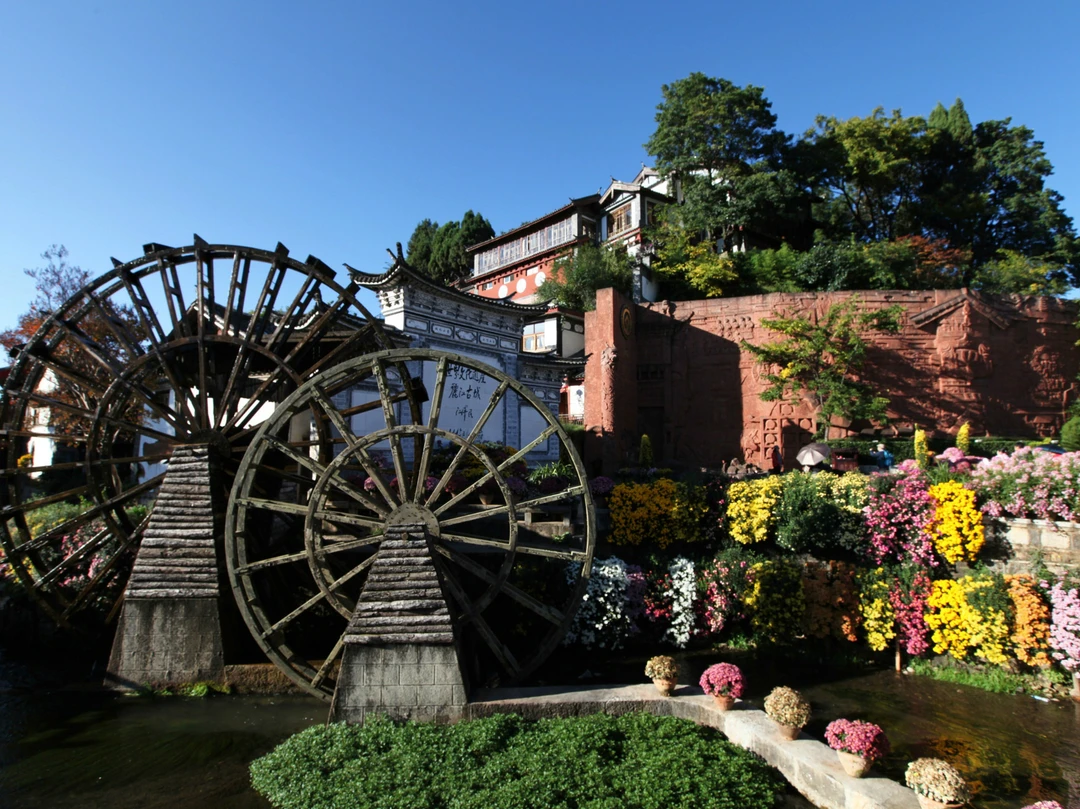
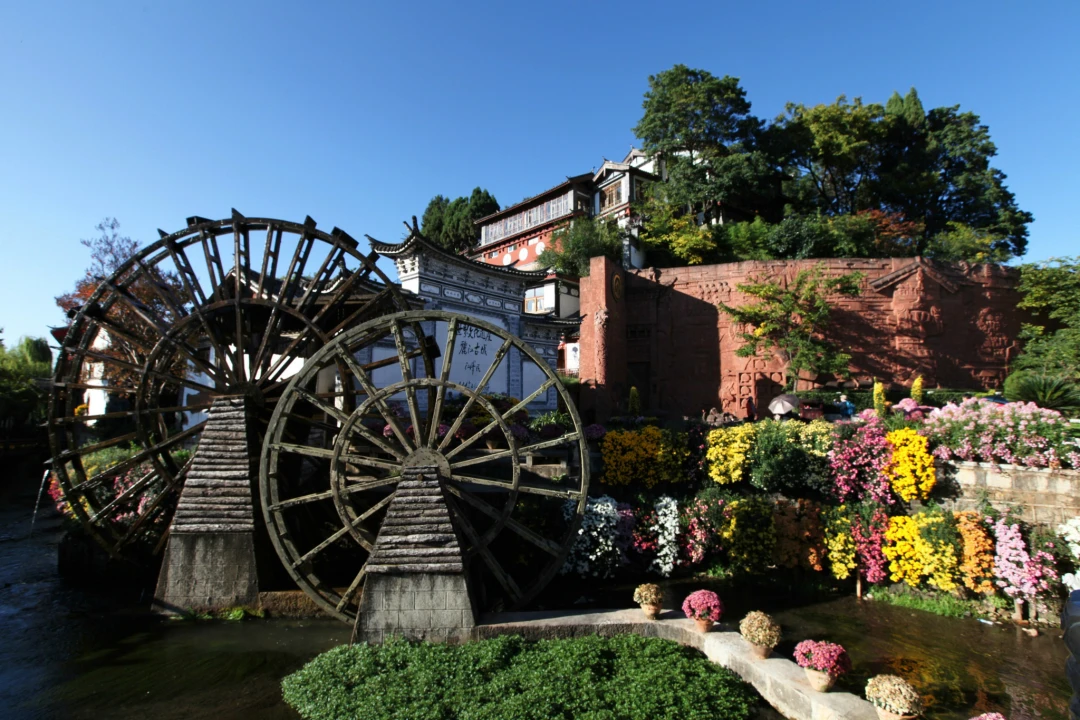
At 7 p.m., we grabbed a simple dinner nearby. Afterward, we descended the hill into Xinhua Street's famous bar district – rows of bars lined the West River canal, crowds surging, music and shouting blending into a sea of revelry. This was Lijiang in its "motion" – an infectious energy impossible to resist. We set a floating lantern adrift on the water, watching it drift with the current as we made a wish. Then we reached the Big Waterwheel, the old town's iconic landmark, surrounded by a sea of people as if all Lijiang's vitality had converged there.
To escape the crowds, we took a detour through Xinyi Street, crossed Sifang Street, and slipped back to our guesthouse via a narrow lane beside the "One Meter Sunshine" bar. Sitting on the guesthouse's viewing terrace, we gazed down at the old town's nightscape – a blur of lights, so different from its daytime bustle. But we had to fall asleep to the sound of music – Lijiang's nights grow livelier as the hours pass, and we chose a different kind of "stillness."
Black Dragon Pool: A Landscape Painting in the Morning Light
At 6:15 a.m. on October 16, we set out in the dark. Tourists were already gathered at the guesthouse entrance hoping to take photos, but the guesthouse didn't admit non-guests until 8 a.m. (2 yuan per person). We descended to Xinhua Street, where the morning quiet was almost unbelievable – the previous night's chaos felt like a dream. Following the sound of flowing water from the Big Waterwheel, we soon reached Black Dragon Pool Park. Entering through the tourist service center, no one checked for tickets – a pleasant surprise.
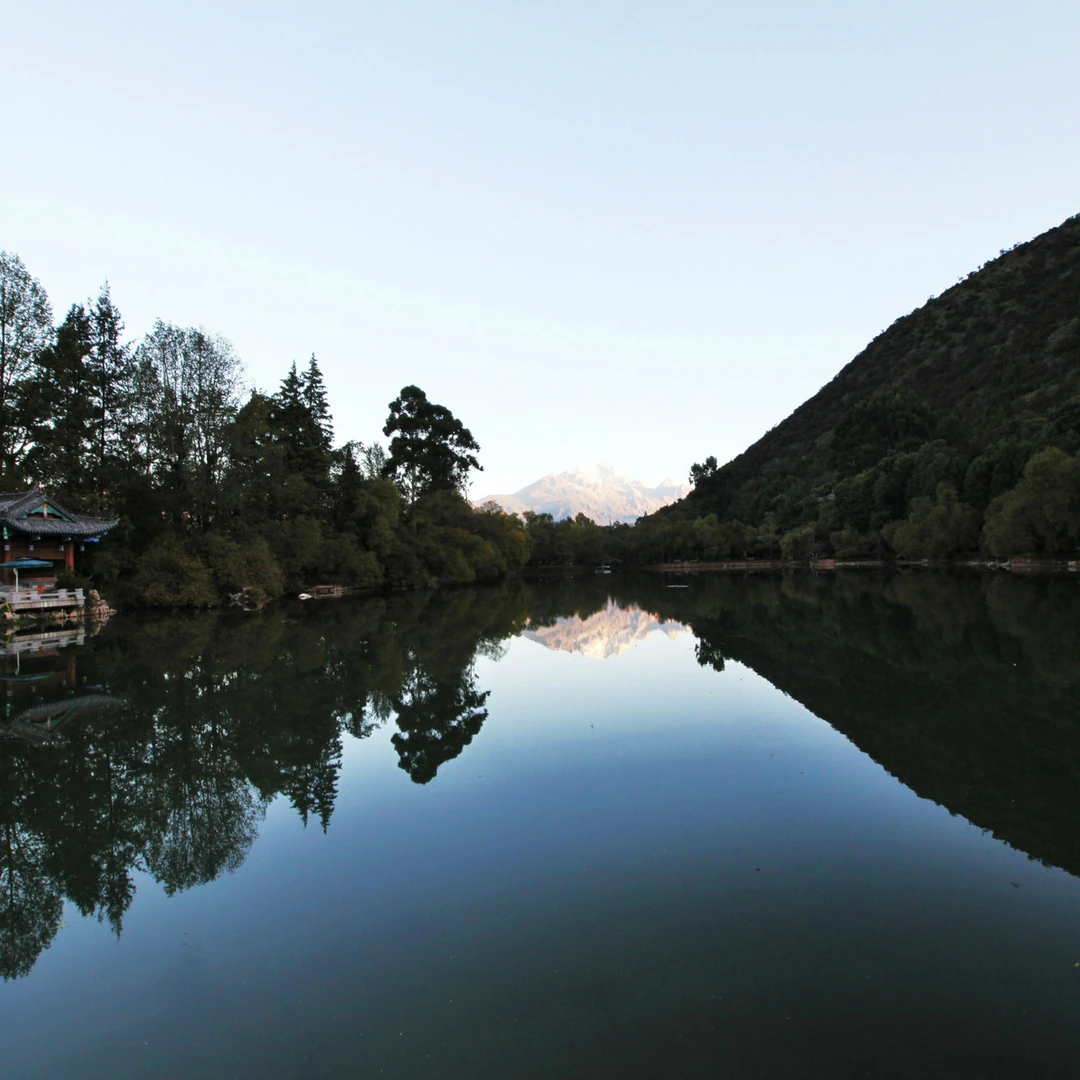
Inside, we turned right to find a five-arch stone bridge spanning the pool, dividing it into north and south sections. The five arches looked like five full moons reflected in the water. The Wen Pavilion and Deyue Pavilion stood at the centers of the inner and outer pools – Deyue's name came from the phrase "the waterside pavilion catches the moon first." The Wanshou Pavilion nestled among pines and bamboos, exquisitely delicate, its Twenty-Four Filial Exemplars paintings telling ancient stories. But the most captivating sight was the pool's crystal-clear water – tree shadows, sky light, and pavilion reflections all mirrored within. Jade Dragon Snow Mountain's reflection was so clear it seemed the mountain lay submerged in the water, water within mountain, mountain within water. The calm surface, bathed in the rising sun's glow, was so beautiful we barely dared to breathe.
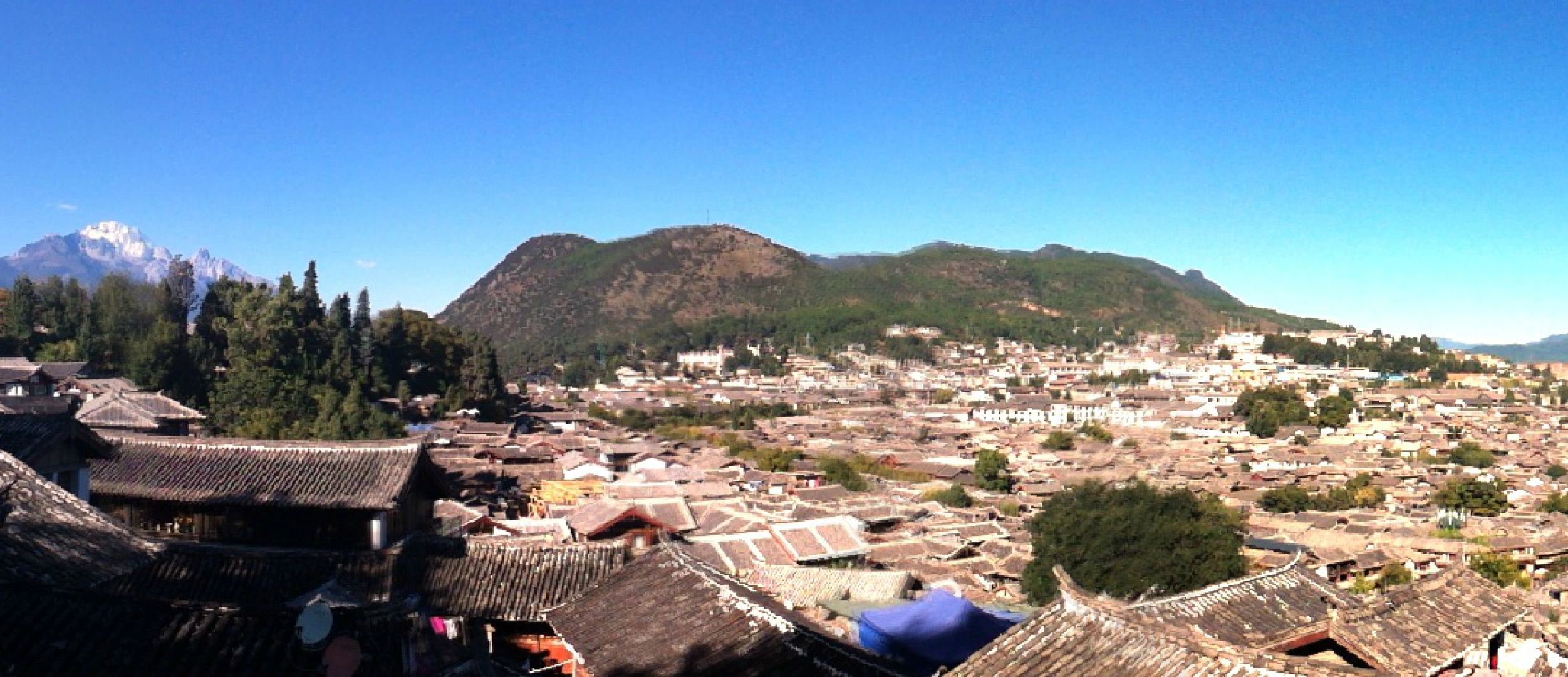
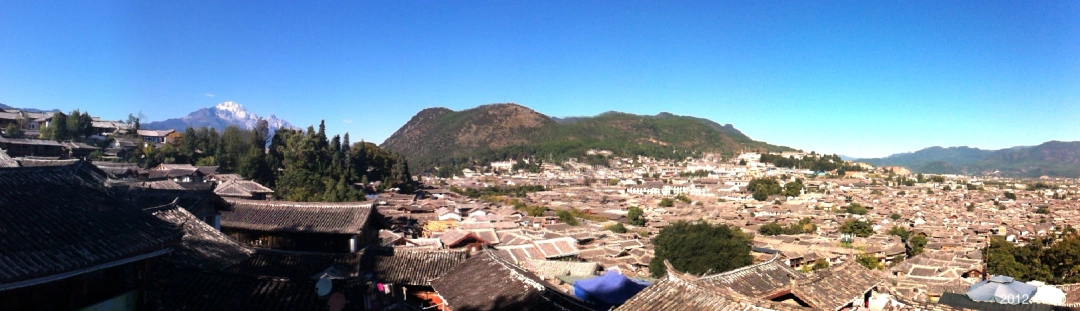
At 9 a.m., the park officially opened, and tour groups flooded in, shattering the peace. We hurried away, back to the old town entrance. Lijiang's old town has no city wall – legend says because successive rulers bore the surname "Mu" (wood), building a wall would trap the "wood" character, creating "kun" (confinement) – an unlucky omen. The Yu River, flowing from Black Dragon Pool, splits into three streams here, weaving through every street and alley.
Wandering the Old Town: Serendipity Down Winding Paths
Crossing Yulong Bridge into the town, the first thing we saw were wishing bells – strings of Naxi-style wind chimes hung from every branch, carrying countless people's hopes. We chose East Street, paved with natural wuhua stone, worn smooth and uneven by centuries of footsteps – a weathered beauty. Sifang Street, the old town's heart, had long lost its ancient tea-horse trade bustle. Now it served as a stage for local elders' "tiaotiao" dance. Tourists eagerly joined in, moving to the music's rhythm – their joy was genuine.
We passed through Qiyi Street, under Guanmenkou, and approached Mu Mansion – a Naxi-style palace modeled after the Forbidden City, once the administrative seat of Lijiang's hereditary Mu chieftains. The farther we walked toward the old town's edges, the more we tasted its authentic essence. Winding paths led to hidden wells, integral to local life. Traditional three-tier wells followed the water's flow: the first pool, at the spring source, for drinking; the second for washing vegetables; the third for laundry. From the three-tier well, we followed Guangbi Lane to White Horse Dragon Pool, where water gushed from an intricately carved dragon's mouth, bearing the marks of time.
At 11:30 a.m., we took a taxi to Shuhe Ancient Town, just 6 kilometers from Lijiang. Shuhe resembled Dayan Old Town – it also had a Sifang Street – but its tranquility was unique. Walking along smooth stone slabs, we felt transported back to the ancient Tea Horse Road's rugged days. The Great Stone Bridge over Qinglong River, built from piled stones, stood weathered and ancient after centuries of wind and rain. At Jiuding Dragon Pool beneath Longquan Mountain, green willows brushed the ground, cypresses reached for the sky, the pool's water so still that reflections and reality merged. Shuhe's days were serene – elderly people sunbathing, young women greeting visitors, fruit stalls beside the stream... time slowed here.
From Qinglong Bridge to the bar street, Shuhe felt more open than Dayan, with wider vistas. Sitting by the water, daydreaming, browsing the internet, reading, drinking tea, sunbathing – life became so simple. I'd always wanted to spend a night in Shuhe but never wanted to bother moving my luggage – which became an excuse to return someday.
Lijiang Food: A Go-with-the-Flow Culinary Experience
Leaving Shuhe, we took a taxi to Tai'an Potato Chicken near the Xiangshan Market roundabout in Lijiang's new town. A pot cost 70 yuan – local free-range chicken with potatoes, decent enough. Online recommendations for Lijiang food are plentiful; we'd tried them all on our first visit, but overall found them average value, nothing stunning. Now our principle is simple: eat wherever we are, choose restaurants crowded with locals, occasionally check online tips. This go-with-the-flow attitude actually made our culinary journey more delightful.
Chapter Two: Lugu Lake – A Sapphire in Stillness
From Lijiang to Lugu Lake: Six Hours of Bumps and Surprises
On the morning of October 17, bathed in Lijiang's first sunlight, we bid farewell to the old town and headed for Lugu Lake. Three options exist for the journey: private car, shuttle bus, or regular bus. We chose the regular bus – 74 yuan per person, departing from the new bus station at 9 a.m. Because several cyclists participating in a lake-loop race needed to load their bikes, we actually left at 9:10 a.m.
The first half of the road was rough – from 9:25 to 9:55 a.m., we bumped through muddy, potholed tracks. Then came winding mountain roads. At 10:15 a.m., we passed the famous "18 Hairpin Bends" often mentioned by online travelers, but the driver wouldn't stop because the road was too narrow – we had to snap photos from the bus. At 10:30 a.m., we reached a rest stop where we could finally get out and take pictures. The Jinsha River valley's scenery was magnificent. At 12:50 p.m., we stopped for lunch – vegetable dishes 10 yuan, meat dishes 20 yuan, cafeteria-style. We resumed at 1:15 p.m., drove about 45 minutes, then hit a traffic jam – a bulldozer was clearing a landslide ahead. We waited 20 minutes before moving again.
At 2:50 p.m., we reached the scenic area ticket booth; the driver purchased tickets for everyone. Minutes later, we arrived at the viewing platform. When that crystal-blue lake appeared before us, everyone rushed off the bus to take photos. Our final stop was Daluoshui Village. The entire journey took about 6 hours (including stops, meals, and unexpected delays). Compared to the 8-9 hours travelers reported the previous year, road conditions had improved dramatically – only about 40 minutes of bumpy sections remained. I recommend buying tickets early and choosing seats 1, 2, 3, or 4 – front-row seats offer better views, less bumping, and easier boarding.
Lige Peninsula: A Haven of Stillness and Peace
After getting off the bus, we bought return tickets for the 20th at 10 a.m. (77 yuan per person), then took a shuttle to Lige for 15 yuan per person. Lige Village consists of three parts: Lige Village, Lige Bay, and Lige Peninsula. We stayed at the "Other Shore" guesthouse on Lige Peninsula, built in traditional Mosuo timber-frame style. From our balcony, we faced Lugu Lake's water directly. Curled up on the sofa, we soaked in nature's essence. A pig trough boat drifted gently past – time seemed to stand still.
In the evening, we strolled along Lige Bay. The sun hadn't set yet, but barbecue grills were already set up, golden-skinned suckling pigs rotating over the flames. We joined a couple in their 30s who had just returned from Yubeng – our next destination too. Their shared experience proved invaluable: while hiking in Yubeng, the husband had tried to keep up with his wife, who rode a mule. He made it to Yubeng in just four and a half hours, but his knees ached terribly the next day. They advised us to bring knee braces – advice that later saved us.
As night deepened, we walked back along the lakeshore. The bridge causeway had no lights; the lake and distant mountains merged into one. Thousands of stars scattered across the black velvet sky like diamonds, radiating breathtaking brilliance. We simply wanted to savor Lugu Lake's tranquility – that was one purpose of this journey: stillness.
The Lake Circuit: A Blue Feast from Dawn to Dusk
On October 18, I opened the curtains to utter silence. A faint pink glow appeared where sky met water; a thin mist like blue smoke drifted over the lake. The sun rose above the peaks, breaking through clouds and mist to cast brilliant light. We ate breakfast at Lige Bay, met our driver at 9 a.m., and began our lake circuit.
First stop: the viewing platform for Lige's panoramic view – Lige Peninsula looked like a celestial paradise, the water so blue it seemed less like water than a translucent blue liquid. Next came Nisai Village, quiet and peaceful, where the lakeside "Lover Trees" stood side by side year after year. At 11:20 a.m., we reached the Gemu Goddess Mountain cable car – tickets 90 yuan per person. First, we rode a slide to the cable car station, then took a simple gondola up the mountain – 20 minutes one way. The descent was a bit scary; we had to lean in opposite directions to avoid being hit by the gondola's momentum. After getting off, we walked along wooden boardwalks, the scenery changing as altitude increased. At 12:15 p.m., we reached the Goddess Temple, with the best vantage point overlooking Lugu Lake.
Descending, we passed Yang Erche Namu's Museum but didn't enter. The driver said that while some online commenters disliked her, he was grateful – she had boosted local tourism and improved villagers' lives. At 2 p.m., we reached Lugu Lake's source, Luyayuan, then passed Dazui Village, Lover's Beach, and Zhaojiawan Viewing Platform (the Altar of the Gods). Climbing the steps, sacred mountains and holy water spread before us – blue, still, immaculate.
Finally, we reached the Grass Sea – Lugu Lake's sub-lake, forming a vast natural wetland. Sapphire-blue water flowed through it, autumn colors beginning to show. The Walking Marriage Bridge spanned the Grass Sea, connecting both shores. Crossing the 300-meter bridge, we continued through Shekua, Langfang, Sanjia Village, and finally Daluoshui Village. The wind was exceptionally strong today, so our plan to take a boat to Liwu Island was abandoned.
A lake circuit only offers a general impression of Lugu Lake; deeper cultural exploration requires time. Some choose to hike, others cycle, still others ride electric scooters. For us, the main purpose was simply to feel Lugu Lake's unique stillness.
Our Last Day at Lige: Dancing with Nature
On October 19, the sun was already smiling from behind Gemu Goddess Mountain. We had no plans – everything was spontaneous. After breakfast at Lige Village, we walked straight to the lakeshore. Early morning was when Lugu Lake was most still and beautiful – sunlight scattered like silver coins across the water. We boarded a pig trough boat. True to its name, it was narrow and light, gently drifting on the lake. The water hardly seemed like water – it was a translucent blue jelly; floating on it felt like drifting atop a giant jelly.
For lunch, we ate at Impression Legend on Lige Peninsula. The dishes were a bit salty, but the setting was worth recommending – backed by mountains, facing the lake, as if the water was quietly kissing your feet. The guesthouse dogs came to play with us, repeatedly dropping sticks at our feet, waiting for us to throw them, then racing to retrieve them. Around 3 p.m., we settled into the Other Shore's café – a cup of tea, a book, time frozen.
At 5 p.m., we said goodbye to the two adorable dogs and welcomed Lugu Lake's sunset. The evening water was serene and colorful – islands dotting the lake, mountains standing guard around it, small boats rocking on its surface, villages resting by its shore... purity washed over us. A full day of wandering deepened my understanding of Lige: Lige Village at the entrance had the most guesthouses and best transport access; Lige Bay was peaceful and tranquil; Lige Peninsula felt like a world apart, a celestial retreat.
Chapter Three: Shangri-La and Meili Snow Mountain – A Pilgrimage of Faith and Nature
Shangri-La: A Highland Sanctuary for the Soul
Returning from Lugu Lake to Lijiang, we took a bus to Shangri-La. Along the way, the scenery shifted from the gentle, water-town charm of the south to the rugged vastness of the highlands. Dukezong Old Town in Shangri-La, once a key post on the Tea Horse Road, had been rebuilt after a devastating fire, but its Tibetan character remained strong. The golden roofs of Songzanlin Monastery gleamed in the sunlight; monks' chanting echoed through the valley, involuntarily slowing our pace.
Meili Snow Mountain: The Awe of Golden Sunlight on Snow
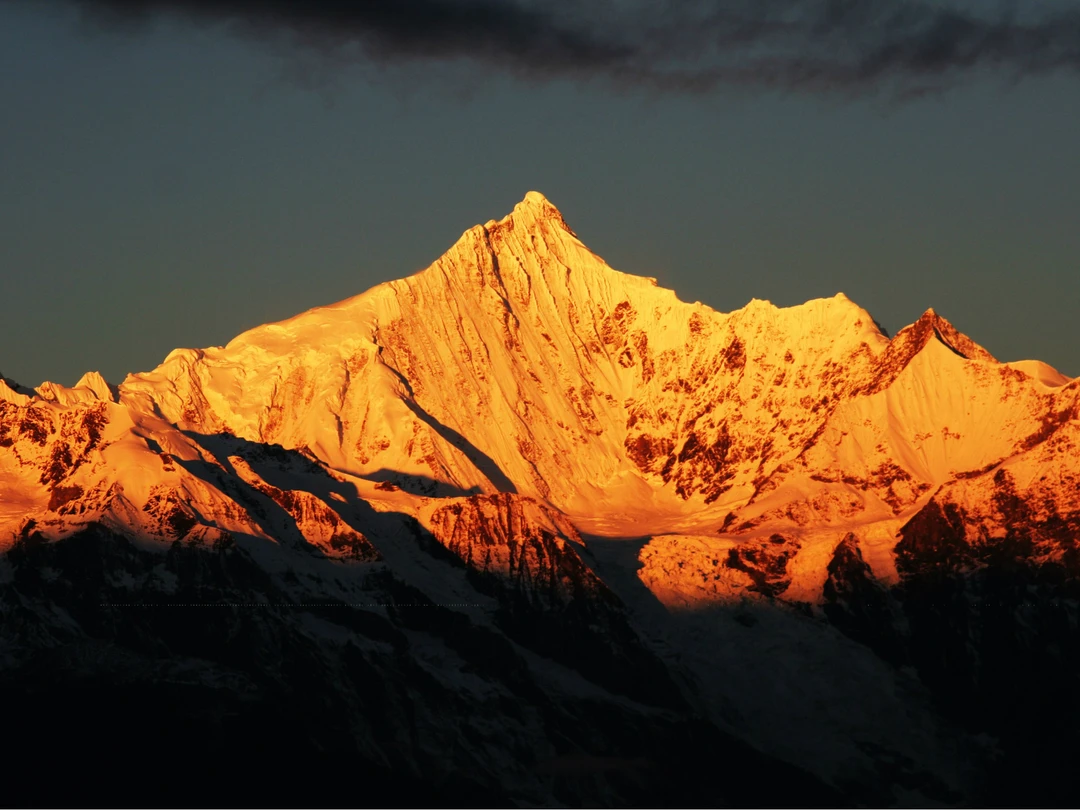
Continuing west from Shangri-La, we finally arrived at the foot of Meili Snow Mountain. Yubeng Village lay hidden deep in the mountains, accessible only by hiking or mule. We chose to hike, wearing our knee braces, following winding mountain trails. Yubeng unfolded like a pastoral poem – morning mist rising from Wunongding Village, smoke curling from chimneys, Kawagebo Peak standing like a majestic golden pyramid. When the first rays of sunlight struck Meili Snow Mountain, the spectacle of "Sunrise on Golden Mountain" left everyone breathless – a moment where faith and nature intertwined, the purest power between sacred mountains and holy waters.
Epilogue: Finding Yourself Between Motion and Stillness
Sixteen days in Yunnan – from Lijiang's ancient town bustle to Lugu Lake's tranquility, from Meili Snow Mountain's grandeur to Yubeng's pastoral poetry – I found balance between motion and stillness. Travel is not just about seeing landscapes; it's a dialogue with yourself. Every departure is for a better return.
Practical Tips: - Transport: The bus from Lijiang to Lugu Lake has improved significantly – about 6 hours. Choose front-row seats. - Accommodation: For pure relaxation, choose star-rated hotels; for sightseeing, pick unique guesthouses; in remote areas, be flexible. - Gear: For Yubeng hiking, knee braces are essential – mountain trails are steep and hard on your knees. - Mindset: Travel doesn't need to be perfect. Going with the flow often brings the best surprises.
Golden October Yunnan taught me, through its "stillness and motion," that life doesn't have to be black and white. Between the noise and the quiet lies the truest version of yourself. If you want to go – just go. Yunnan will not disappoint.
You should also read:
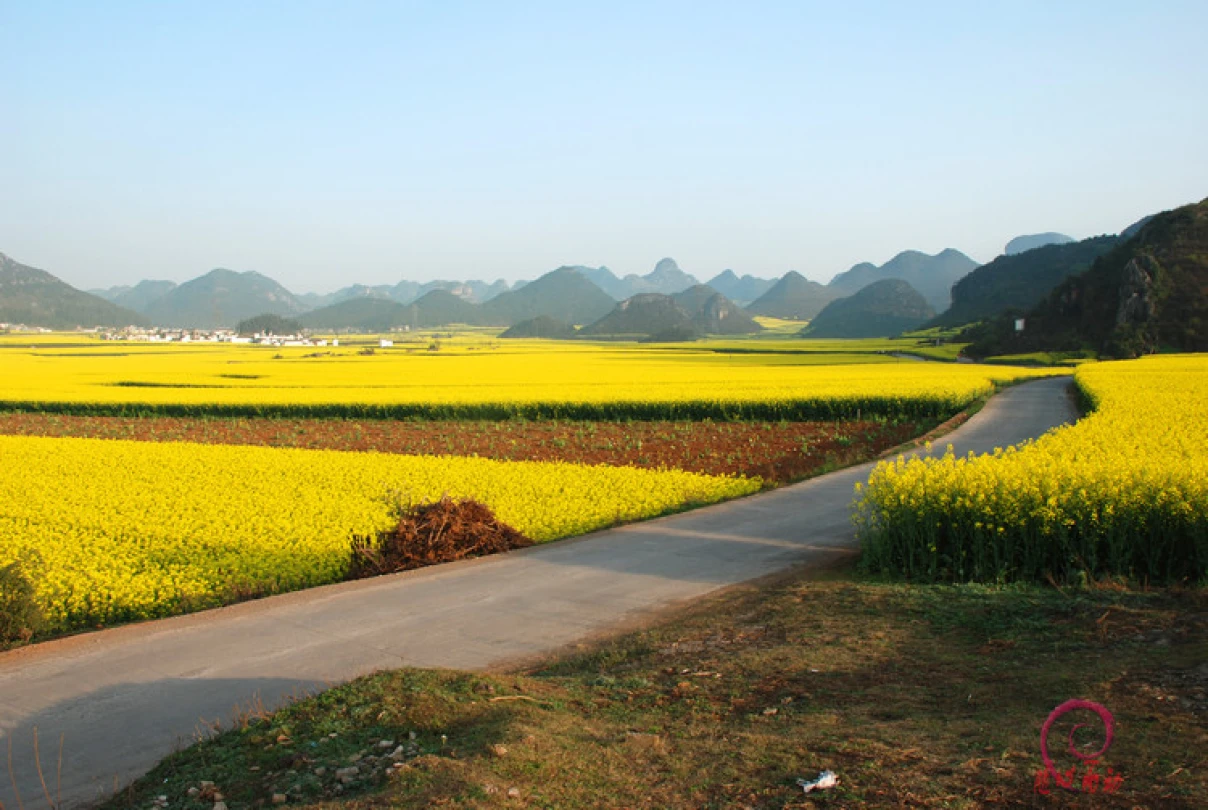
Golden Luoping: A Romantic Encounter with Sunshine and Seas of Flowers
Golden Luoping: A Romantic Encounter with Sunshine and Seas of Flowers Introduction: The Third Time's the Charm Some landscapes are destined to be seen at the right moment. For me, that was exactly the case with Luoping's rapeseed flowers. On February 22, 2011, the Luoping…
Continue reading...
The Meaning of Travel – A Tengchong Story: A Journey of the Heart and Personal Growth
The Meaning of Travel – A Tengchong Story: A Journey of the Heart and Personal Growth Setting Out, Only to Return a Better Self Some say travel is nothing more than leaving a place you're tired of, only to go to a place where others…
Continue reading...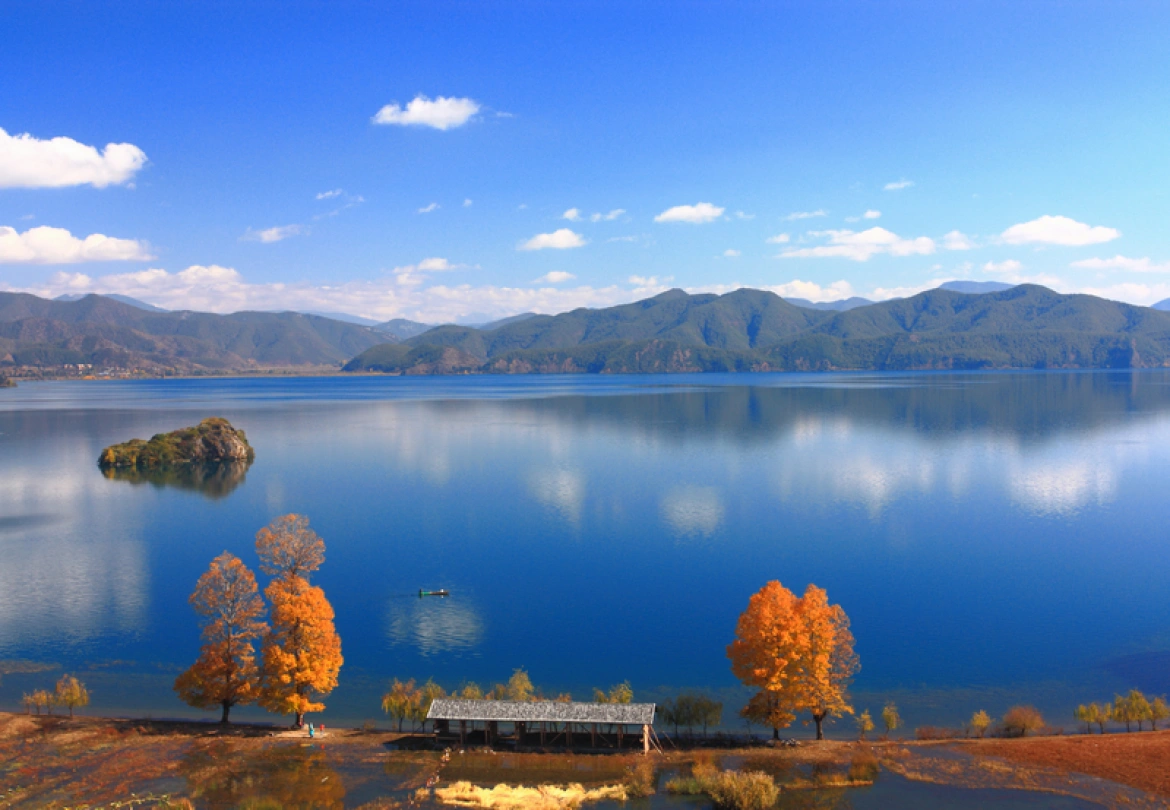
A Spiritual Journey to Lugu Lake in Lijiang: Experiencing the Legend of the Kingdom of Women! (Reproduction and Hotlinking Prohibited)
A Spiritual Journey to Lugu Lake in Lijiang: Experiencing the Legend of the Kingdom of Women! (Reproduction and Hotlinking Prohibited) Off-road自驾, food, hotel and民宿 reviews, Featured Traveler, Tank 300 owner, 200,000 km of self-driving experience. WeChat: y01294987 Ninglang Yi Autonomous County 2010.11.08 · 7 days…
Continue reading...