The Border Town of Tengchong: A Deep Journey Through Time
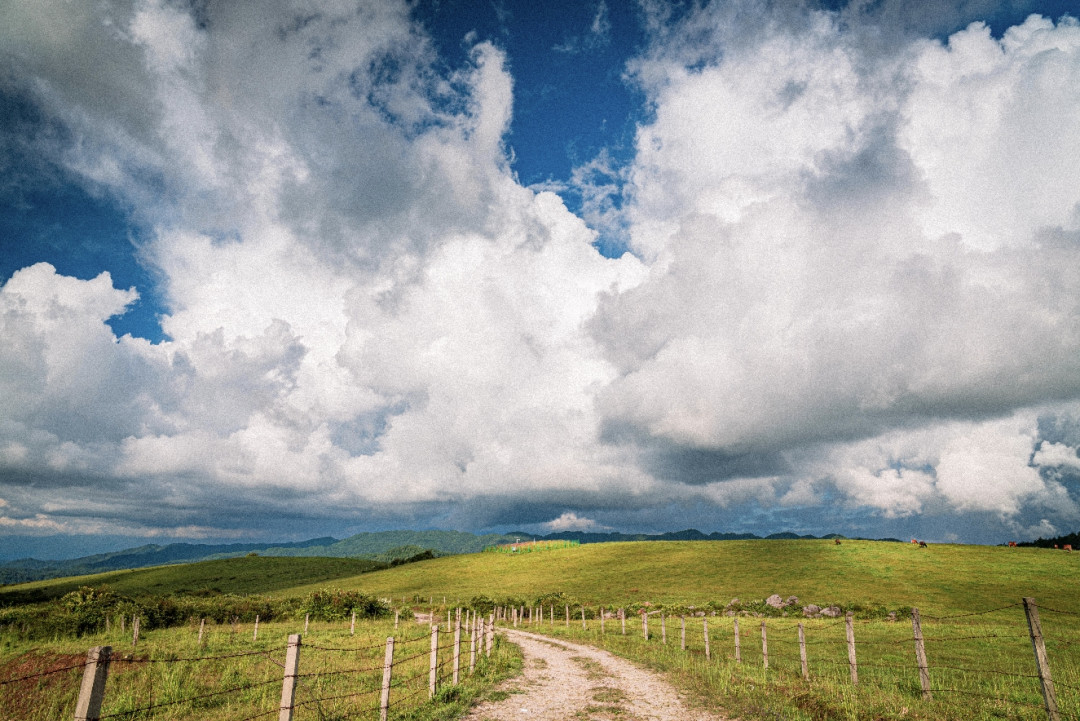
The Border Town of Tengchong: A Deep Journey Through Time
Preface: From Screen to Reality
I first learned about Tengchong from a TV series that made my blood boil and tears flow—My Chief and My Regiment (我的团长我的团). On screen, those grimy "cannon fodder" soldiers ran along the cobblestone streets of Heshun Ancient Town and fought bloody battles in the dense forests of Songshan. Back then, I was filled with curiosity about this small border town in Yunnan. What kind of place could bear such heavy history and emotion?
Later, I began searching online for everything about Tengchong: the tranquility of Heshun Ancient Town, the brutality of the Battle of Songshan, the tragedy of the Chinese Expeditionary Force, the soft chewiness of 饵丝 (rice noodle strips), the silky smoothness of 稀豆粉 (pea flour porridge), the rich depth of horse caravan tea... This small town was like an open history book, every page filled with stories.
Once upon a time, Tengchong was just a distant name to me. But just before National Day holiday, a thought suddenly popped into my head: go to Tengchong. It shouldn't be overcrowded there. It must hold unforgettable scenery and memories.
And so, a spontaneous trip began.
Transportation Guide: High-Speed Rail, Custom Buses, and the Promise of a Future Railway
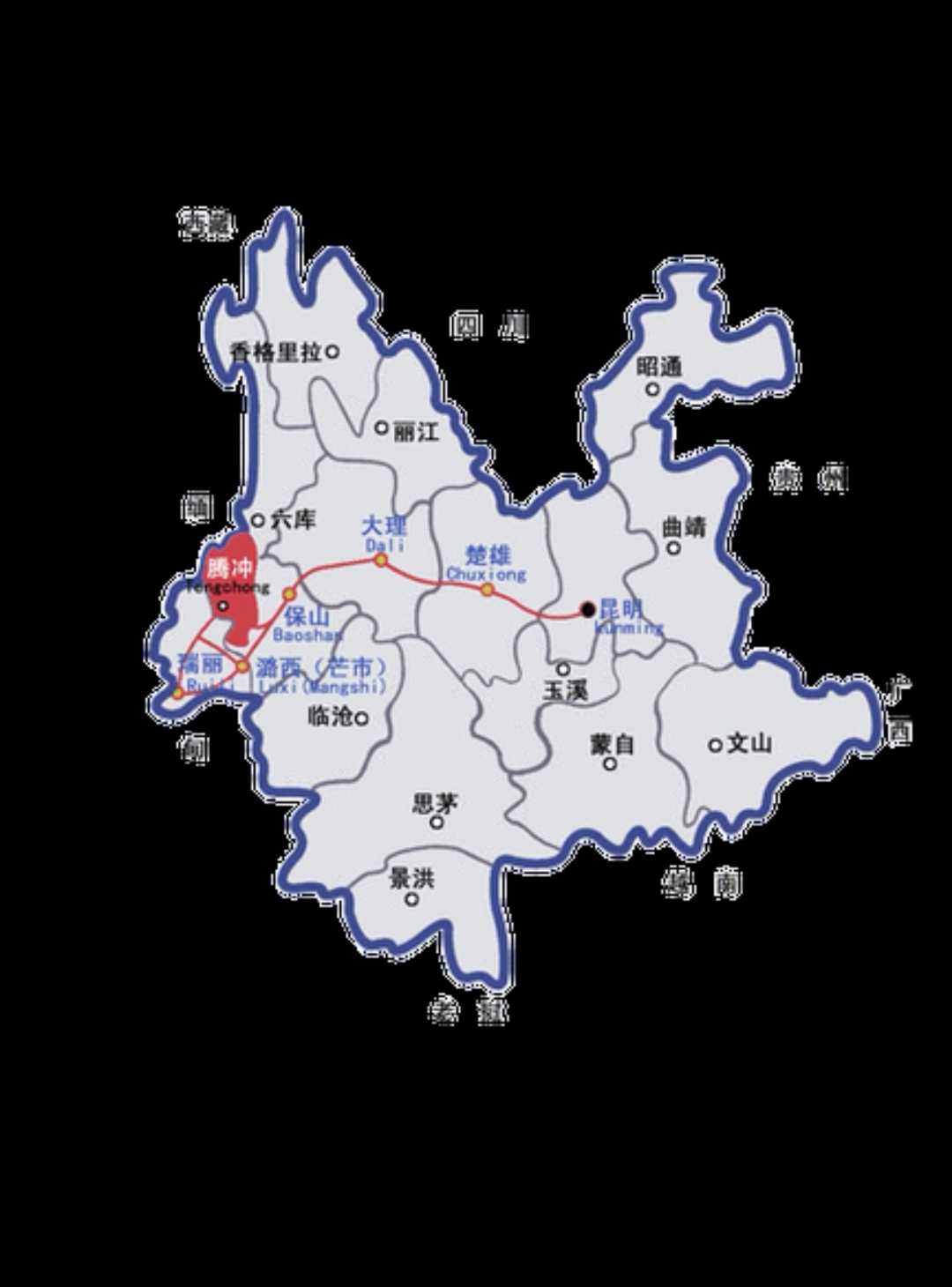
To be honest, getting from Wuhan to Tengchong isn't easy. Our route was: Wuhan (high-speed rail) → Kunming (high-speed rail) → Baoshan (custom bus) → Tengchong. If you're coming from another province, you'll basically need to get to Baoshan first, then transfer to Tengchong.
Here are some practical tips:
- Buy tickets in advance! Buy tickets in advance! Buy tickets in advance! Important things said three times. During National Day, high-speed rail tickets sell out in seconds.
- The Guiyang→Kunming section is painfully slow, averaging only 40-50 km/h (25-31 mph). Rumor has it that track damage prevents normal speeds. This stretch can be frustrating, but push through—it gets better.
- For the Baoshan to Tengchong leg, I recommend the WeChat mini-program 【保交行】. You can choose your seat and departure time. They'll drop you off anywhere in Tengchong for 92 yuan per person, about a 2-hour drive. Great value.
- Tengchong doesn't have a high-speed rail station yet, though one is reportedly in the planning stages. When it opens, getting there will save a lot of time and effort.
Of course, if your budget allows, flying directly is the most time-efficient option.
Climate and What to Wear: Unpredictable Weather, Unchanging Beauty
Tengchong sits on the Yunnan Plateau at about 1,500 meters (4,900 feet) above sea level. It has an Indian Ocean monsoon climate with distinct wet and dry seasons. The annual average temperature is around 15°C (59°F), rarely exceeding 30°C (86°F). The climate is very comfortable.
May to October is the rainy season, with higher humidity. But Tengchong's weather is like a child's face—cloudy and pouring rain in the morning, then sunny with blue skies and white clouds by noon. Even stranger, you might feel the wind in one spot while someone else is getting rained on under the sun just a short distance away!
So weather forecasts are basically useless. Just take it in stride. One thing to note: the UV rays are extremely strong. Sun protection is a must. On my first day, I spent a little too long in the rice fields and ended up with sunburned, aching skin.
Accommodation: Making the Ancient Town Your Home
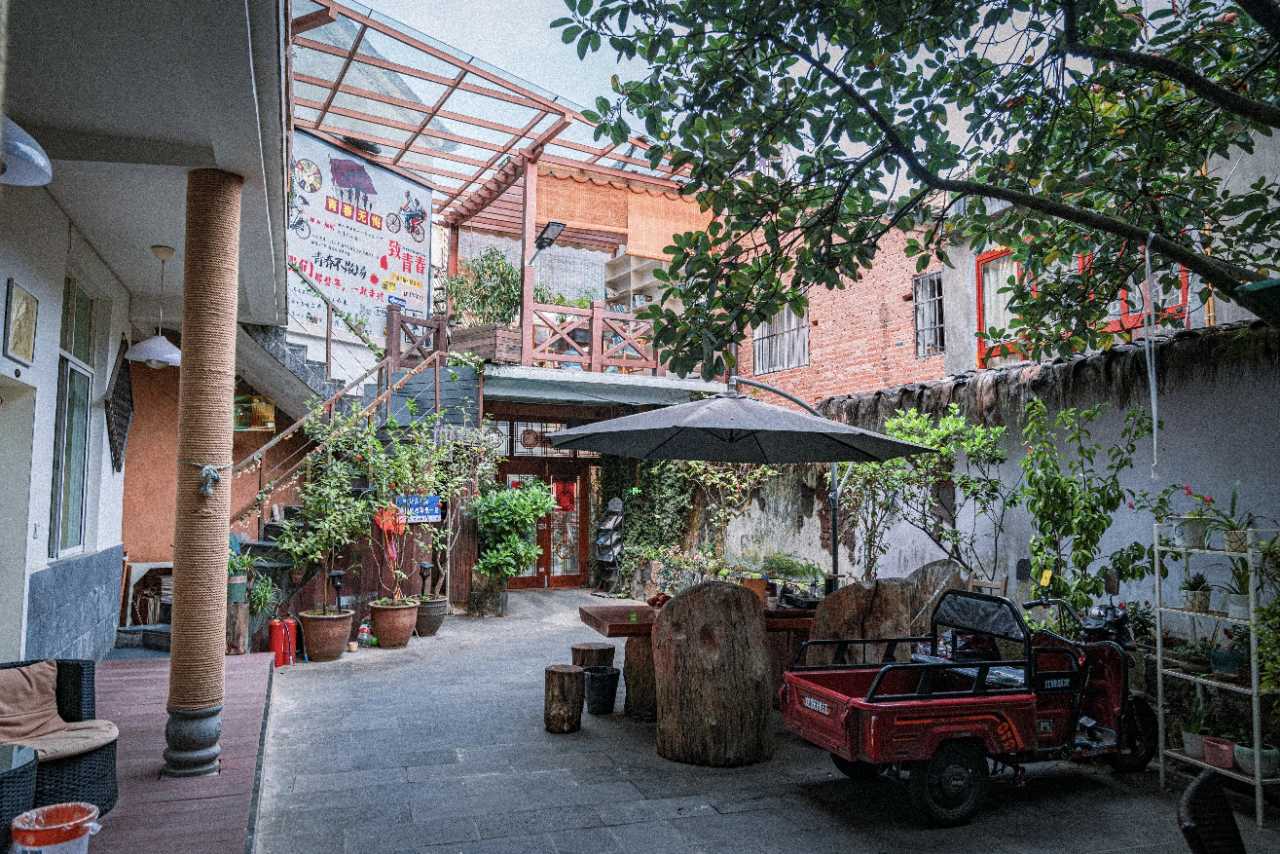
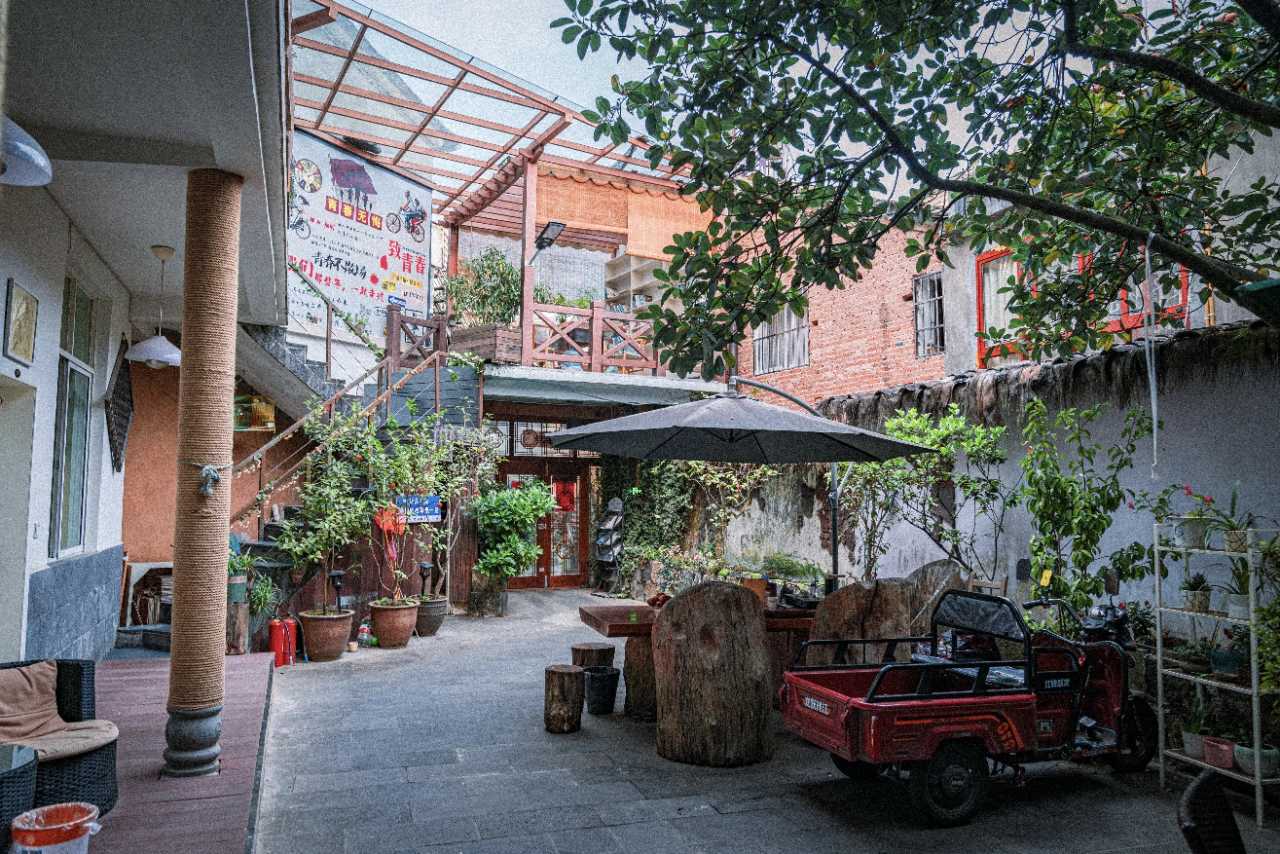
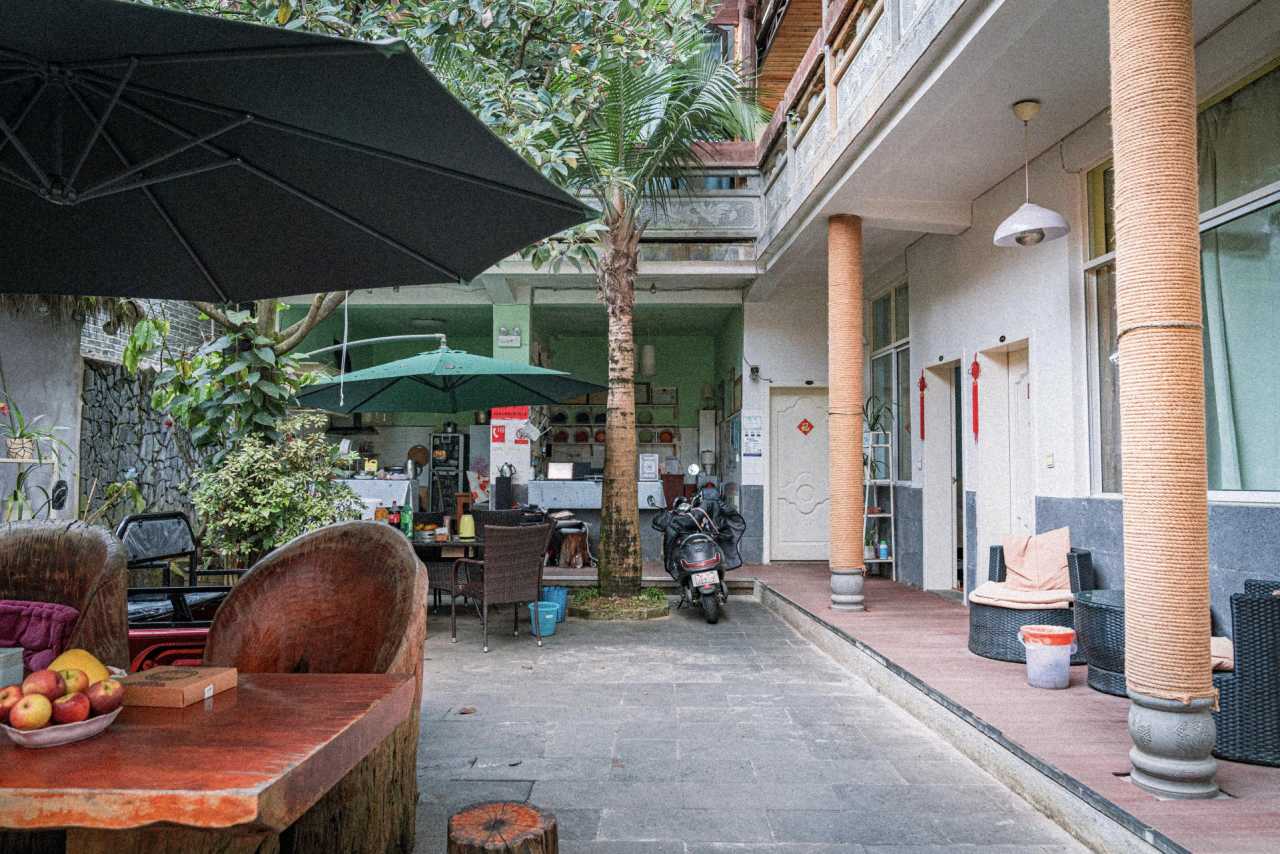
We chose a guesthouse inside Heshun Ancient Town—Tata Story Holiday Inn (他她故事度假旅馆). Staying in the town center made it easy to reach all the attractions.
We arrived at the ancient town past midnight. The innkeeper picked us up at the entrance in a three-wheeled cart. Our lodging was near the town gate, comfortable, with a terrace for tea and cool breezes. It happened to be Mid-Autumn Festival, and the innkeeper gave us Yunnan-style ham mooncakes (云腿月饼), making us feel the warmth of the holiday even in a strange place.
At dawn, looking out from the terrace, the first rays of sunlight pierced through the layered mountains, casting light on the ancient streets. The quaint buildings, arranged in pleasing disorder, seemed to lift the veil of time, revealing the weight of history and the passage of years.
Day 1: Heshun Ancient Town, Every Step a Story
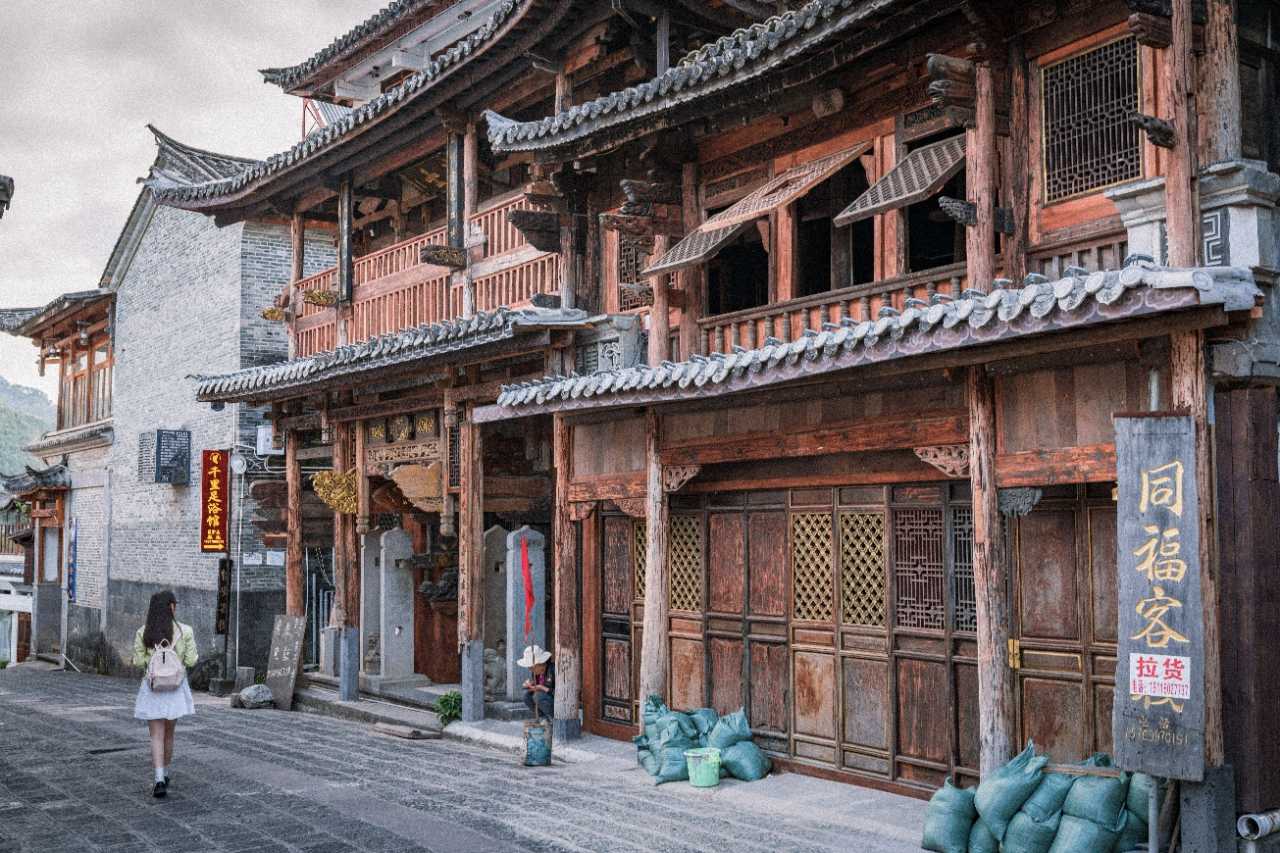
Early Morning in the Ancient Town
Following our travel habit, we got up early. In the early morning, most shops in Heshun Ancient Town were still closed. Only breakfast places were open for business. Vendors selling vegetables and fruits had already set up their stalls along the roadside.
Walking through the town, every cobblestone underfoot seemed to whisper tales of past glory and hardship.
Heshun Library
This library records Heshun's past. A calligraphy inscription by former Premier Zhu Rongji reads "Heshun Harmony" (和顺和谐), hanging quietly on the wall, speaking to the spiritual core of this ancient town.
First Breakfast: Aunt Cun's Pea Flour Porridge
For our first breakfast, we chose Aunt Cun's 稀豆粉 (pea flour porridge), served with fried dough sticks and rice noodles. This place is something of a "internet-famous" spot in the town, and there was quite a queue. The porridge was delicious, and the rice noodles were excellent too. But honestly, I'm always cautious about "internet-famous" places—good food is good food, no need to blindly follow the hype.
Following the Footsteps of My Chief and My Regiment
The ancient town is large, so we decided to explore it on foot, hunting for hidden surprises around every corner.
Near the stairs of Zhongtian Temple, a stone statue of a monk sits quietly, donated by a worshipper.
Following a slippery path, we soon reached the ancient tree grove. This is where, in the show, the cannon fodder squad passed through on their way back to the trenches after leaving the elite soldiers' base under Yu Xiaoqing. I remember the old veterinarian starting to lose his mind here, muttering, "Why is it raining on the loess slope? The air tastes sweet." Several hundred-year-old camphor trees, lush and full, seemed to still guard those memories.
Following the road, we arrived at Milong's House—the home he got through trickery and deceit. On a stone wall by the entrance hung a plaque with Shangguan's parting words to Milong. Time had blurred the writing, but we could still make out: "I believe you. One day, all six of us will live in a house like this. But you have to let me be with you. Promise me I can always be with you, okay?"
Entering the gate, the wall on the right was covered in stills from the show, recording the history this house had witnessed. Today, it's been converted into a guesthouse. Everything around it had changed from what it once was.
Lotus Pond and Coffee Bookstore

Down the road from Milong's house, there's a lotus pond. By the pond is a coffee and bookstore, peaceful and quiet. The entrance was full of succulents, thriving and vibrant. Yunnan truly is a "succulent paradise"—every plant had such vivid colors.
Zhang Family Ancestral Hall
Following the road, we came to the Zhang Family Ancestral Hall. This served as the cannon fodder squad's headquarters in the show. It's currently under renovation, but inside, you can still faintly recognize the scenes from the series.
Dai-Style Pounded Chicken Feet
We passed a stall selling Dai-style pounded chicken feet (傣式舂鸡脚). The young guy was making them fresh on the spot. Small portion 25 yuan, large 32 yuan. We ordered small. Sour and spicy, absolutely delicious. Worth a try.
Pine Flower Cake
Along the roadside, elderly women were everywhere selling 松花糕 (pine flower cake), 2 yuan a piece. The bottom layer is sweet red bean paste; the top is pine pollen, with a slight bitterness. It's decent—nothing special, but cheap and cheerful.
Wild Duck Lake
Heading left, we entered Heshun Alley, the main commercial area. There are bars, a small market, and even a McDonald's. Going deeper, you'll find a modest lake—Wild Duck Lake. The water was clear, with reflections of the shore shimmering in the light. It was deeply refreshing.
Laundry Pavilion
The laundry pavilion is one of the ancient town's landmarks, standing quietly by the lake, having witnessed countless dawns and dusks.
The Sky of Tengchong
The sky in Tengchong is pure, clear, and deep blue, dotted with cotton-white clouds—a vivid landscape painting. Back in Wuhan, I thought blue skies and white clouds were a luxury. Here in Tengchong, I realized they're just part of everyday life.
After burning through a lot of camera memory, we realized it was past lunchtime. We found a nearby restaurant serving copper pot beef (铜瓢牛肉) called "Zui Jiayao" (醉佳肴). It was excellent, and the service was very friendly. After we finished eating, the owner invited us to stay for tea, telling us to come back and sit anytime if we got tired. I suddenly felt that travel is truly beautiful—stunning scenery and warm people.
The Rice Field Comic World
Full and happy, we followed the road out of the ancient town and found ourselves in a vast rice field. At this season, the rice had turned golden, almost ready for harvest. Blue sky, white clouds, golden fields—yes, we were living in a comic book.
Shanban Coffee
I'd heard that Yunnan coffee was famous. This kind of afternoon called for a cup of coffee, a gentle breeze, and watching the sunset slowly. Shanban Coffee (山坂咖啡) is one of the better-value coffee shops in the ancient town. They have a terrace where you can sit and watch the sunset.
Ordering a coffee, I sat by the window, watching the wind blow and clouds shift, listening to wind chimes tinkling. Out of the corner of my eye, I spotted a rainbow quietly arching across the sky—there must have been a local rain shower somewhere. On the rooftop ahead, a busy tenant grabbed their phone, aiming at the colorful surprise, cheering and jumping.
In the golden light of the setting sun, a perfect row of light spots fell just right. Even the flaws in my camera lens became part of the beauty.
Late-Night Snacks
By evening, Heshun Ancient Town was bustling. Charcoal-grilled beef jerky (碳烤牛干巴) was 1 yuan a slice, pretty good. Our late-night meal was from a skewer stall, plus a grilled 饵块 (rice cake). It was okay, nothing special. Heshun Alley at night was still bright and lively, full of energy.
Day 2: History and Warmth in the Rain
Morning Rain
Just before dawn, heavy rain started. Getting up early, I saw the sky was overcast, and my mood darkened with it. Today was National Day. Hoping to catch a quiet moment before the crowds, we forced ourselves up and headed to Heshun Alley to try our luck with photos.
The mist on the mountains was about to clear, and sunlight was casting dappled shadows. But then the wind shifted, bringing another wave of clouds and rain.
Breakfast: Thin Rice Noodle Strips and Rice Noodles
After the rain stopped, we tried a different ordinary breakfast shop. Another bowl of 稀豆粉 (pea flour porridge), and a bowl of 饵丝 (rice noodle strips). Let me explain the difference between 饵丝 and 米线 (rice noodles): the texture is similar, but 饵丝 feels more like eating rice cake (年糕). This place was excellent—highly recommended.
Gaoligong Mountain Botanical Garden
With the rain, we had to change our plans. First, we went to the Gaoligong Mountain Botanical Garden (高黎贡山植物园). To be honest, it's more like a park—a nice place for seniors to take a leisurely stroll.
National Cemetery of the Fallen
The rain got heavier, making indoor visits the obvious choice. The National Cemetery of the Fallen (国殇墓园) is free—just make a reservation on-site. Highly recommended.
The first thing you see is the Museum of the Yunnan-Burma War (滇西抗战纪念馆), which is quite large. Entering the hall, the first thing that catches your eye is a wall covered in helmets used by the Chinese Expeditionary Force—German-style, British-style, American-style, some even damaged. These were marks of war. There were 1,003 helmets in total, representing the 103,000 soldiers who fought in the Expeditionary Force.
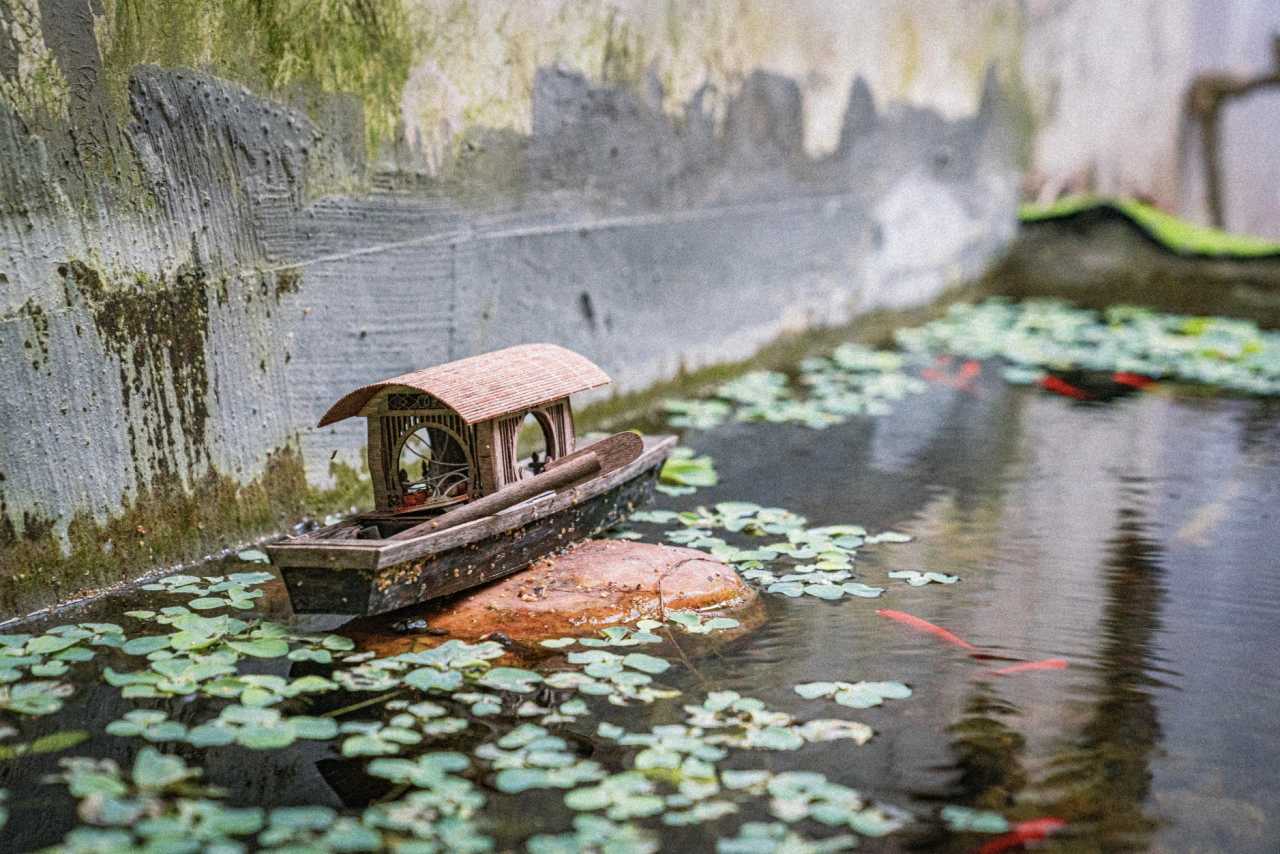
The exhibition tells the story of the Yunnan-Burma War: how the Japanese army encroached on southwestern China, how the British surrendered and abandoned their equipment, how the Americans helped establish the Hump airlift route, how the Japanese tortured and killed civilians, the details of the Battle of Songshan, and the harrowing journey through the "Wilderness" (野人山). The exhibits are numerous, including many captured items, each one shocking and heartbreaking.
At the end of the exhibition hall is a key—the key to the Japanese underground arsenal on Songshan Mountain. Behind it is a message from the museum director: "So many wartime relics scattered among the people, so many stories passed down by word of mouth—like this key, they are full of mystery, waiting for us to collect, to identify, to preserve."
The dim lighting and the weight of history in the museum made me feel deeply oppressed and sorrowful. When I walked out of the museum, the rain had stopped. The clouds parted, the sky cleared, and the sun was shining. Sunlight filtered through the leaves, casting dappled shadows. I couldn't help but think: what hopes did those people have for the future, back in that era?
Behind the museum is a small hill, covered in neatly arranged tombstones of fallen soldiers. These are only the known ones. The unknown ones may be buried forever in foreign lands.
At the central monument, visitors had placed Yunnan-style ham mooncakes—a simple, heartfelt tribute from ordinary people.
Clay Pot Stew
After the cemetery, we returned to the ancient town for lunch. We tried Tengchong's famous clay pot stew (土锅子). Small portion, 78 yuan. Not worth the price—very little content. Disappointing.
Sunshower in the Rice Fields
After the rain, the sky was exceptionally clear. We spent the entire afternoon in the rice fields. It was here that we experienced a sunshower—bright sunlight falling alongside a gentle drizzle.
Grilled Milk Fan
Back in the ancient town, we stumbled upon a grilled milk fan (烤乳扇) stall. 12 yuan, a bit pricey. It had a strong milky flavor, with a slight milky aftertaste.
Xiaozui's Home
With time to spare, we wandered down an alley and found Xiaozui's home from My Chief and My Regiment. It's in a remote spot, the house now abandoned, walls collapsed, overgrown with weeds. Peeking through the crack in the door, you could see the furnishings were still the same as in the show.
An elderly woman nearby asked us, "Are you fans of the show too? This is Xiaozui's home. When they filmed it, we were extras—50 yuan a day."
Dajiujia and Beef Jerky
Continuing on, we reached the deepest part of the ancient town and found a family-run restaurant. We ordered the famous 大救驾 (Dajiujia, stir-fried rice cakes) and 牛干巴 (beef jerky). The Dajiujia was okay. The beef jerky was... indescribable. Overpriced. Not recommended.
National Day Night
National Day evening in the ancient town was naturally full of activities: shadow puppetry, folk music performances... It was lively and bustling.
Day 3: Beihai Wetland, a Glimpse of Western Sichuan
Morning Photos
As usual, we got up early for photos. Few people around, no worries.
Beihai Wetland
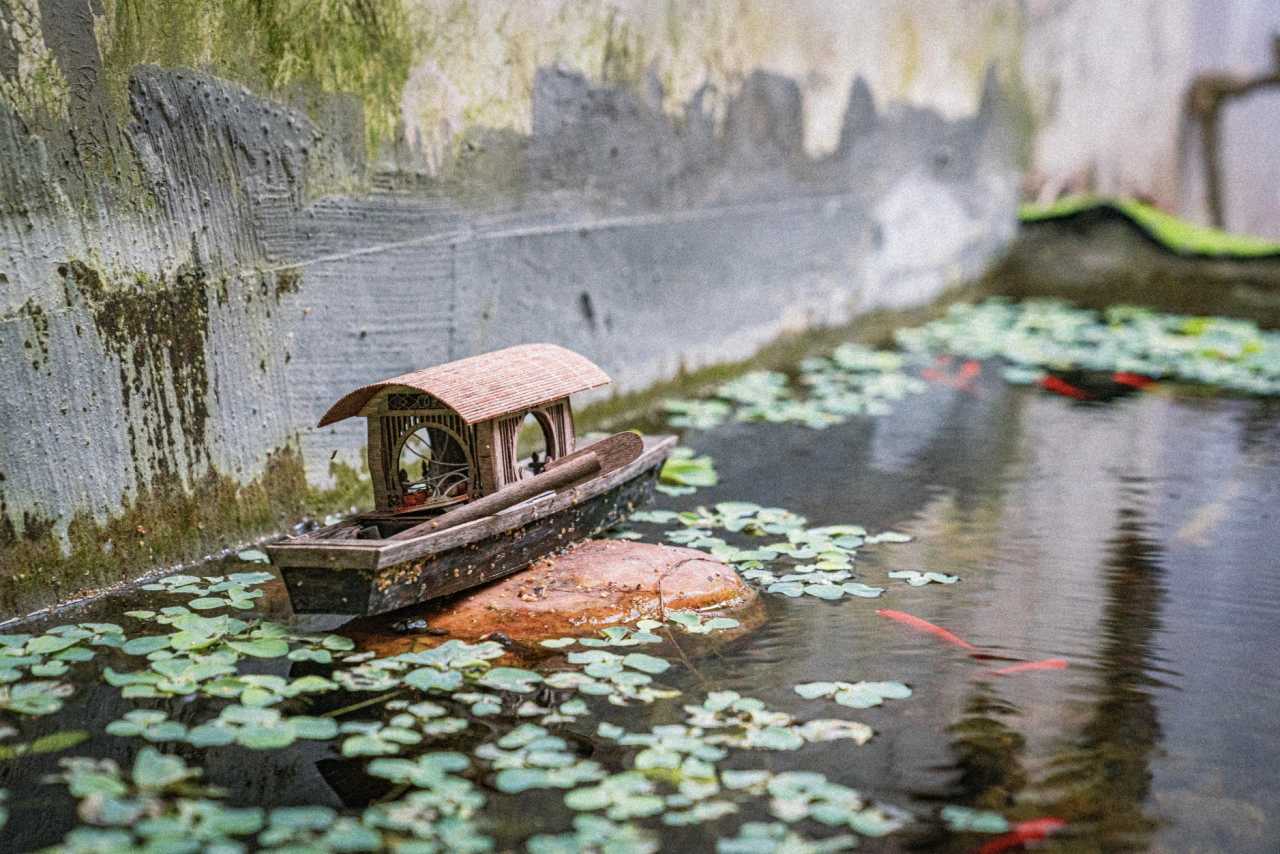
After breakfast, we took a taxi to Beihai Wetland (北海湿地). The wetland isn't large, but the scenery is beautiful. Worth a visit.
Entering the gate, we started from the right side. The view made me feel like I was in western Sichuan. To the left is the visitor center, where most activities are based: boating, fishing.
The nearby mountains, the low-hanging clouds, the emerald green water—all in perfect harmony.
Flower Cake Review
Before heading out in the morning, we bought flower cakes (鲜花饼) from Guyuexuan (古月轩) and Mizhiyu (蜜之语) as snacks. A quick note: Mizhiyu's cakes have a softer crust that deforms easily under pressure. The filling is rich and has a slightly stretchy texture, probably from tapioca or glutinous rice flour. Guyuexuan's crust is firmer, with a purer filling. We preferred Guyuexuan. But both are excellent—just a difference between 95 points and 98 points.
Beef Stew
For lunch/dinner, we had 牛趴乎 (beef stew). The dipping sauce was fantastic, and the broth was delicious too. Highly recommended.
Sunset Fire Clouds
After eating, we headed back to the rice fields hoping to catch some fiery sunset clouds. Unfortunately, the weather didn't cooperate—not enough clouds. No luck.
Day 4: Dongshan Grassland, a Prairie in the Clouds
Alpine Meadow
Dongshan Grassland (东山草场) is an alpine meadow at about 2,200 meters (7,200 feet) elevation. It's cooler and more humid than down below, with even stronger UV rays. The grassland is quite large. You can drive yourself or take the scenic shuttle (which stops on demand). We took the shuttle in and then strolled back out.
Picturesque Scenery
A wooden boardwalk stretches from near our feet to the horizon. The sky and modern architecture created an artistic painting. Cows grazed leisurely, clouds danced between the mountains... Blue sky, white clouds—scenery so beautiful it made it hard to walk away.
Rainbow and Cattle
As dusk approached, a rainbow arched across the sky. The grassland, the cattle, the rainbow—a perfect landscape painting, like being on the Hulunbuir Prairie in Inner Mongolia. The low-hanging clouds seemed within arm's reach. A pure black donkey stood there, utterly at ease.
Sunset
As the sun set, the temperature dropped rapidly. The humidity shot up, and the air felt so damp you could wring water out of your clothes. As the sun slipped below the horizon, our day came to an end.
Day 5: Simola Wa Village and a Succulent Farm
Wa Village
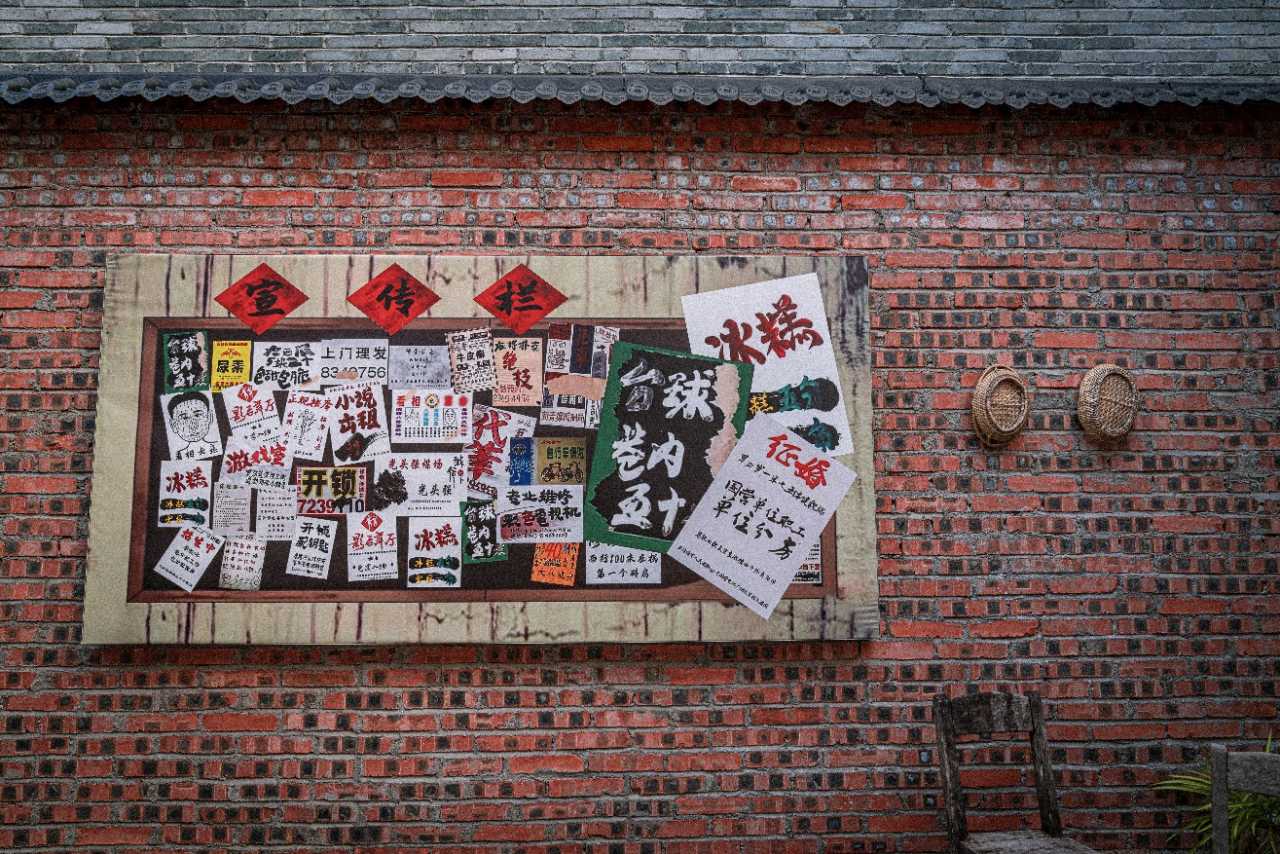
Breakfast was 饵丝 (rice noodle strips) and 米线 (rice noodles)—our second time trying them. We took a taxi to Simola Wa Village (司莫拉佤族村寨). The driver was a local. He told us not to say anything at the gate; he'd talk to them and get us in without paying for the shuttle.
The village isn't large—it's a settlement of the Wa ethnic group. President Xi Jinping once visited here, so it's become a must-see for Tengchong tourists.
Ox skulls were everywhere, apparently a totem. It felt a bit like being in the show Yunnan Insect Valley (云南虫谷). There were distinctive wood carvings, an elder performing Wa drumming, and Wa-style street lamps.
Ancient Tree Grove and Tree Fern
In the ancient tree grove, there was an altar and a 桫椤树 (tree fern)—a fern species that predates the dinosaurs, the only woody fern. I first learned about this plant from a cigarette brand (桫椤). Yunnan truly is the kingdom of plants.
Rice Field Patterns
In the rice fields, patterns were created using different varieties and colors of rice. They depicted Wa boys and girls dancing.
Succulent Farm
Leaving the village, we followed the driver to a succulent farm to pick up some "paradise zone" souvenirs. Most people probably don't know about this place—only locals come here to buy. The growing area was huge, with succulents in peak condition and very attractive prices. We added the owner on WeChat and got a 25% discount. We picked out a Chihuahua, a Silk Veil, an Ebony, an Orange Dream, and a Blue Apple.
Lemon Fish
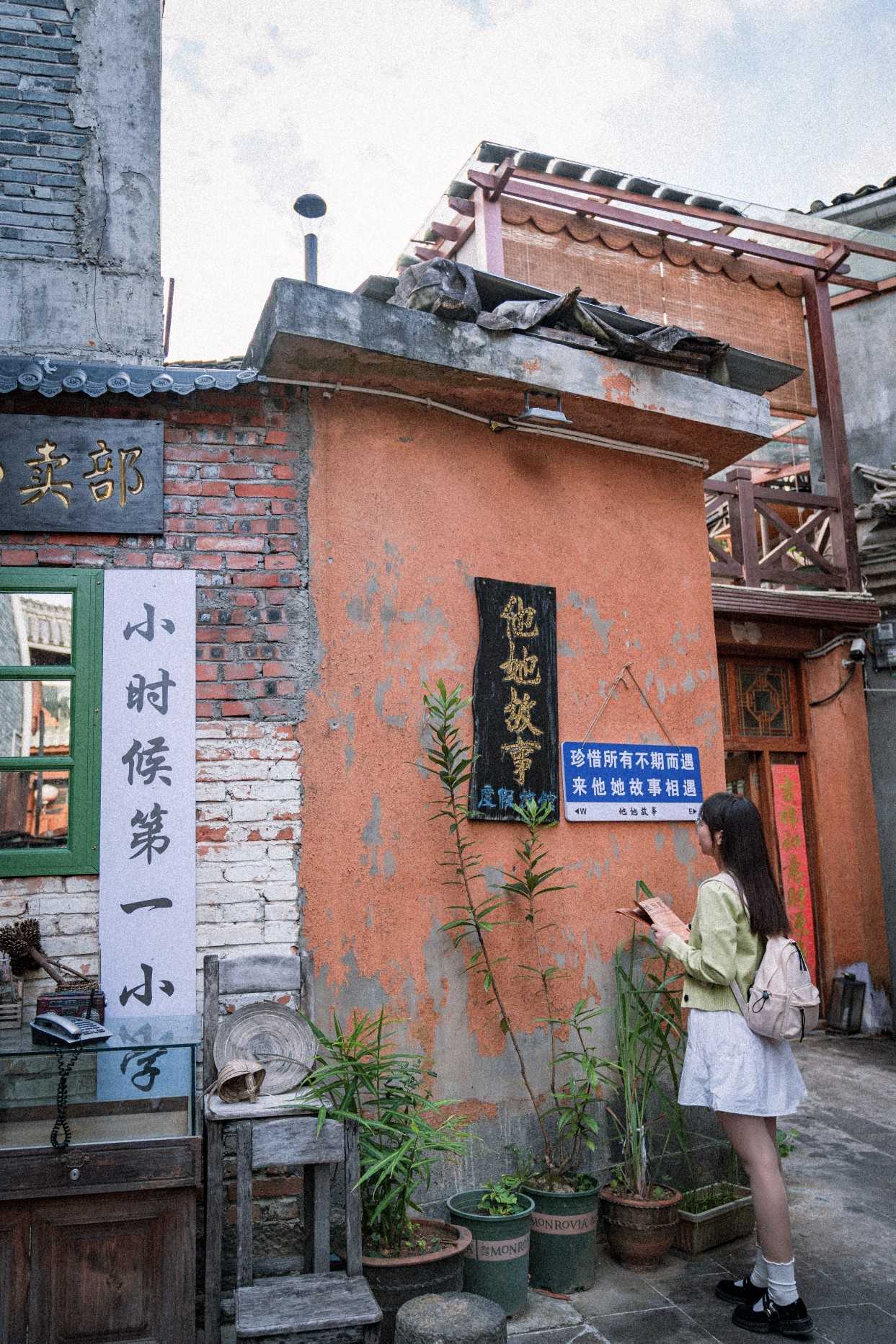
By the time we left the farm, it was well past lunch. Back at the ancient town, we randomly chose a restaurant and ordered lemon fish (柠檬鱼). Made from tilapia, the flesh was tender with almost no bones, similar to sea bass. Since both are in the order Perciformes, the similarity isn't surprising.
The Last Sunset
Before leaving Tengchong, we visited Shanban Coffee one last time for the final sunset. Ordering a latte, I sat quietly watching the ancient town gradually settle into stillness.
Late-Night Chat with the Innkeeper
On our last night, we talked a lot with the innkeeper. He was very kind and talkative. We were probably the longest-staying guests at his place during this National Day holiday.
Day 6: Kunming Transit, Flower Market, and Dianchi Lake
Dai-Style Hand-Grabbed Rice
We set off for Kunming, our transfer point back to Wuhan. Arriving at noon, we dropped off our luggage and walked to a Dai-style restaurant to try Dai-style hand-grabbed rice (傣味手抓饭).
The restaurant's decor was very distinctive. The mixed vegetable soup was excellent.
Creative Shop
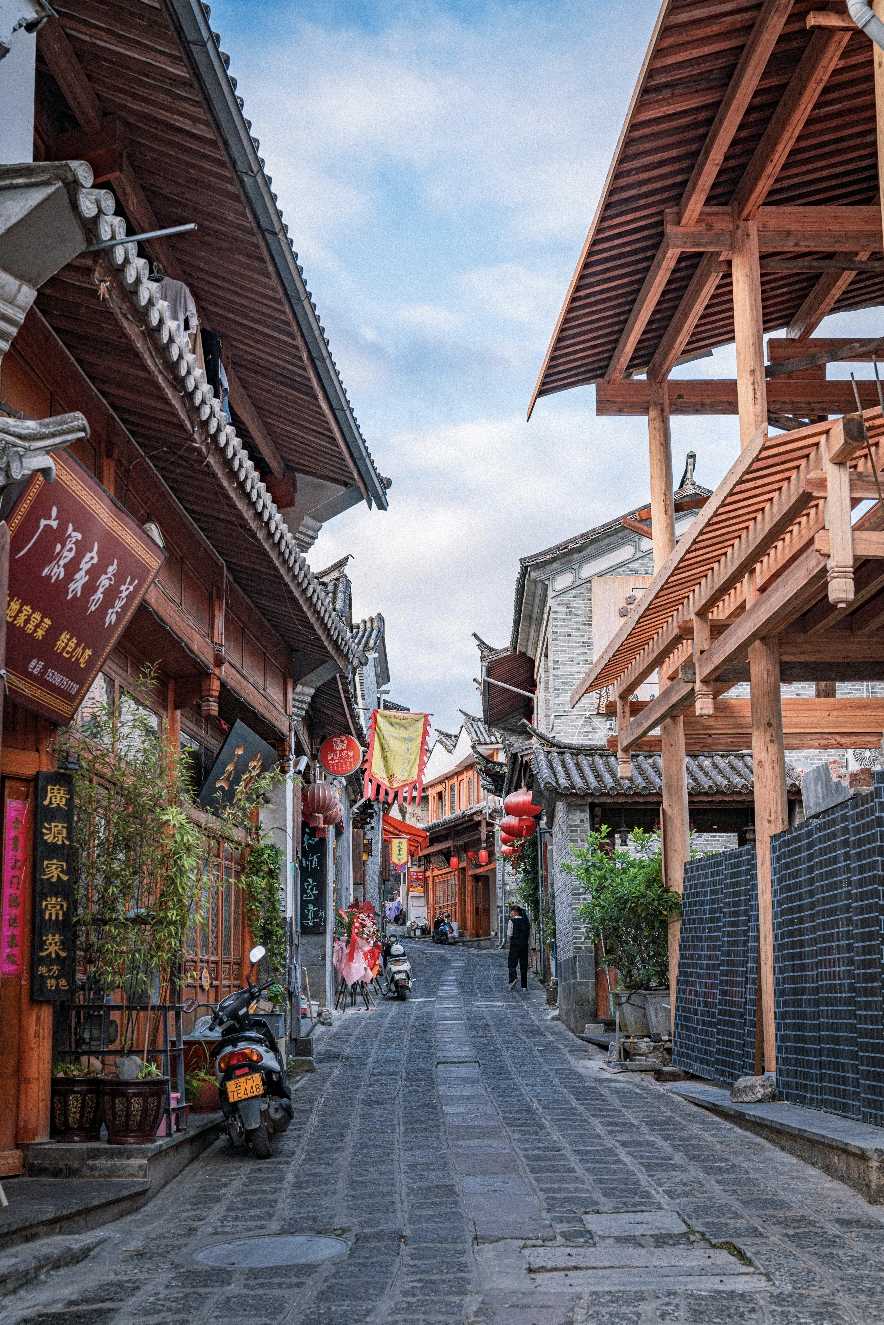
In a nearby shopping mall, we found a creative shop. They had many original handmade items—innovative designs, artistic shapes. And Kunming's mythical mascot, the 瓦猫 (tile cat).
Dianchi Lake
Since we were in Kunming, Dianchi Lake (滇池) was a must-visit. There weren't many tourists. No seagulls this time of year. The water was very green, reportedly due to excessive blue-green algae blooms. There were several oxygen-supplying boats running continuously.
The park at dusk had a unique charm. Kunming's weather is among the best in China, but in Yunnan, it's not the top. Compared to Tengchong, the atmosphere today just couldn't compare.
Dounan Flower Market
Leaving Dianchi, we headed to Kunming's largest flower market—Dounan Flower Market (斗南花市). It's said that most of China's flowers are shipped from here.
The first sight of the market was overwhelming. Flowers as far as the eye could see—every variety, fresh and vibrant, dirt cheap. We didn't buy any cut flowers; their lifespan is too short, and they always wilt. Our target was the succulent section on the second floor.
When we arrived, the market was closed for a break. It reopened at 8:30 PM. As soon as the doors opened, we surged in with the crowd and headed straight to the second floor.
There were many succulent stalls. Some sold 10 pots for 6 yuan (all common varieties), others sold single pots for 10 or 20 yuan. Many were "medicine brocade" (药锦)—succulents treated with chemicals to create bright or translucent colors, tricking customers into buying. These plants lose all their leaves and die within days. Even worse, some sellers spray paint on leaves that lack color, like "five-colored Haworthia." So be sure to look carefully when buying.
After browsing, we only picked out one pot of Taohuayuan and one of Opalina. We carried them back by hand.
Day 7: Farewell, Returning Home Full
The last day of the holiday. No fixed plans. We had a leisurely breakfast, wandered through a local market, and packed up for the return trip.
Breakfast was 米线 (rice noodles) and 饵丝 (rice noodle strips). This place served thick 饵丝, which had the texture of rice cake (年糕)—nowhere near as good as the thin kind.
Kunming's streetscape was beautiful, and Kunming South Station looked like a painting.
And with that, our Tengchong journey came to an end. It was a planned trip, but it brought unexpected surprises. No crowds, no deceit—just beautiful scenery and warm hospitality.
A thousand words can be summed up in one sentence: This city deserves all the praise!
Epilogue: Some Final Thoughts
Looking back on this seven-day journey, what Tengchong left me with goes far beyond the blue skies, white clouds, and ancient town alleys in my photos.
About history: The National Cemetery of the Fallen made me realize that some wounds, though healed, should never be forgotten. The names of the Expeditionary Force soldiers, the wartime relics scattered among the people—all remind us that peace is hard-won.
About life: Tengchong's slow pace made me rethink what "living" really means. Zoning out in a rice field, watching the sunset from a coffee shop, getting lost in the ancient town's alleys... These seemingly "wasted" moments were actually the most precious.
About human warmth: The innkeeper's ham mooncakes, the copper pot beef restaurant owner's invitation to tea, the taxi driver's "special route"... These small kindnesses gave our trip its warmth.
About nature: Tengchong's blue sky and white clouds are the purest I've ever seen. That blue can't be mixed on a palette; that white is as soft as cotton candy.
If you're thinking of going to Tengchong, my advice is: Slow down. Feel it with your heart. Don't rush from sight to sight. Don't do a checklist trip. Find a comfortable guesthouse, wake up naturally every day, then wander through the ancient town, get lost in the rice fields, and reflect at the National Cemetery.
Tengchong, this border town, is worth your time.
Finally, here's a glimpse of Tengchong's sky—a stretch of clear, translucent blue.
You should also read:

God’s Abandoned Palette: A Self-Drive Journey Through Yunnan’s Dongchuan Red Land
God’s Abandoned Palette: A Self-Drive Journey Through Yunnan’s Dongchuan Red Land Travel has never been about reaching some distant geographic coordinate. It’s about encountering, along the way, the version of yourself buried beneath the rubble of daily routine. During this May Day holiday, I finally…
Continue reading...
Body in Hell, Heart in Heaven: A Pilgrimage Through Tiger Leaping Gorge — A Dialogue Between Heaven and Earth
Body in Hell, Heart in Heaven: A Pilgrimage Through Tiger Leaping Gorge — A Dialogue Between Heaven and Earth Introduction: When the Gorge Splits Open Beneath Your Feet Some say Tiger Leaping Gorge is the closest place on Earth to the border between "hell" and…
Continue reading...
Cloud Travelogue · Dali of Wind, Flowers, Snow, and Moon: A Three-Day, Two-Night Journey of a Free Spirit
Cloud Travelogue · Dali of Wind, Flowers, Snow, and Moon: A Three-Day, Two-Night Journey of a Free Spirit I am a cultured female foodie with a touch of rogue charm. I slung on my backpack, took my lover's hand, and set off on a spontaneous…
Continue reading...