The Dream of Haba Mountain, Now Complete (Tips at the End!)
The Dream of Haba Mountain, Now Complete (Tips at the End!)
Guide Contact Info: Luo Shiyong (Uncle Luo), Phone: [numbers encoded in Chinese pronunciation - contact via platform]
Destination: Shangri-La
Travel Date: October 15, 2017, 9 days total
Cost per Person: Approximately 3,000 RMB (including equipment)
Traveler: Solo adventurer — Qi Tian, a Zhejiang girl forever three and a half years old
From planning in October 2016 to successfully summiting on October 19, 2017, I took Route A (enter the mountain on day one, summit and descend on day two). This article isn't just a guide — it's a story about persistence, giving up, picking yourself back up, and fulfilling a dream. Guide Uncle Luo (Luo Shiyong) has reviewed the tips section, so it's absolutely reliable. As an outdoor beginner, I'm only sharing what I've personally tested, but I hope these experiences can light up your雪山 (snow mountain) journey.
Story Section: A Conversation with Myself
Climbing Haba Snow Mountain is the most meaningful thing I've done in my 20 years of life. Summiting isn't the most impressive part — to be accurate, I didn't "climb" up there; Uncle Luo "dragged" me up (facepalm). So I'm incredibly grateful to him.
What's truly meaningful is the entire process: planning, giving up, picking it back up, making the decision, and going alone. After returning to my calm daily life, whenever I face difficulties, I secretly tell myself: "What's there to be afraid of? Can it be more绝望 (desperate) than climbing a snow mountain?" (facepalm)
I blindly believe in myself, but I don't compare. To those who came before me, I bow in respect. The story section covers my personal background, the reason for climbing, mental and physical preparation, equipment purchasing — whatever comes to mind. Alright, let's begin!
I. Personal Background: I'm Not a "Casual" Person
Although I'm an outdoor beginner, I'm passionate about sports. I trained in athletics as a child and achieved some small successes. I mention this because I don't want anyone reading this travelogue to think "anyone can climb a snow mountain" — outdoor activities have risks.
My physical fitness is better than average for my age. Before going, I created an exercise plan to build strength. I have a regular daily routine, eat healthily, and adapt reasonably well. By all accounts, I'm "decent." But! In front of a snow mountain, all of that means nothing (haha). I'm just satisfied to have made it back alive.
Advice for Beginners: After deciding to climb a snow mountain, set aside time to adjust your body — long-distance running for endurance, stair climbing with weights. Or wear a mask while climbing to simulate a low-oxygen environment.
Since I couldn't find a companion, I went alone. I went secretly, seeking forgiveness rather than permission, because I was absolutely certain I'd return safely to Hangzhou. If you're a student and your parents don't support you, I don't think this is a good approach, but it's "the best among bad options" — provided you're absolutely certain.
My Itinerary: - DAY 1: Overnight at Xiaoshan Airport - DAY 2: Early flight, arrive in Lijiang at 10:00, explore for half a day - DAY 3: Lay in bed at the hostel all day (explained later) - DAY 4: Take a bus from the客运中心 (passenger transport center), visit Tiger Leaping Gorge at noon, arrive at Haba Village in the afternoon - DAY 5: Enter the mountain at 10:00 AM, overnight at 4,500 meters - DAY 6: Summit attempt at 7:30 AM, summit at 11:30 AM, descend - DAY 7: Explore Haba Village for a day - DAY 8: Leave Haba Village in the morning, arrive in Lijiang in the afternoon - DAY 9: Fly back to Hangzhou in the afternoon
II. Why Climb a Snow Mountain?
"Because it's there!" — George Herbert Leigh Mallory
When a reporter asked Mallory why he was so obsessed with climbing Everest (after multiple failures), he casually said: "Because it's there." Things you can't quite explain, you brush off. If you search "why climb a snow mountain" online, the answers are all vague. Why did I climb? I can't quite say either, but I can explain the trigger.
October 2016: On my social feed, I saw a post from a senior outdoor enthusiast who had just completed the EBC circuit:
"When you step into the outdoor travel circle, you'll discover another world. Most people don't understand why we walk, don't understand the hardship and pain, and don't understand the obsession and passion. Because they've never seen the majesty of peaks above the clouds, nor the brilliance of starry skies in the far north."
A comment read: "Summiting is just for the experience and breakthrough. Don't ask me why — because I love it, that's why."
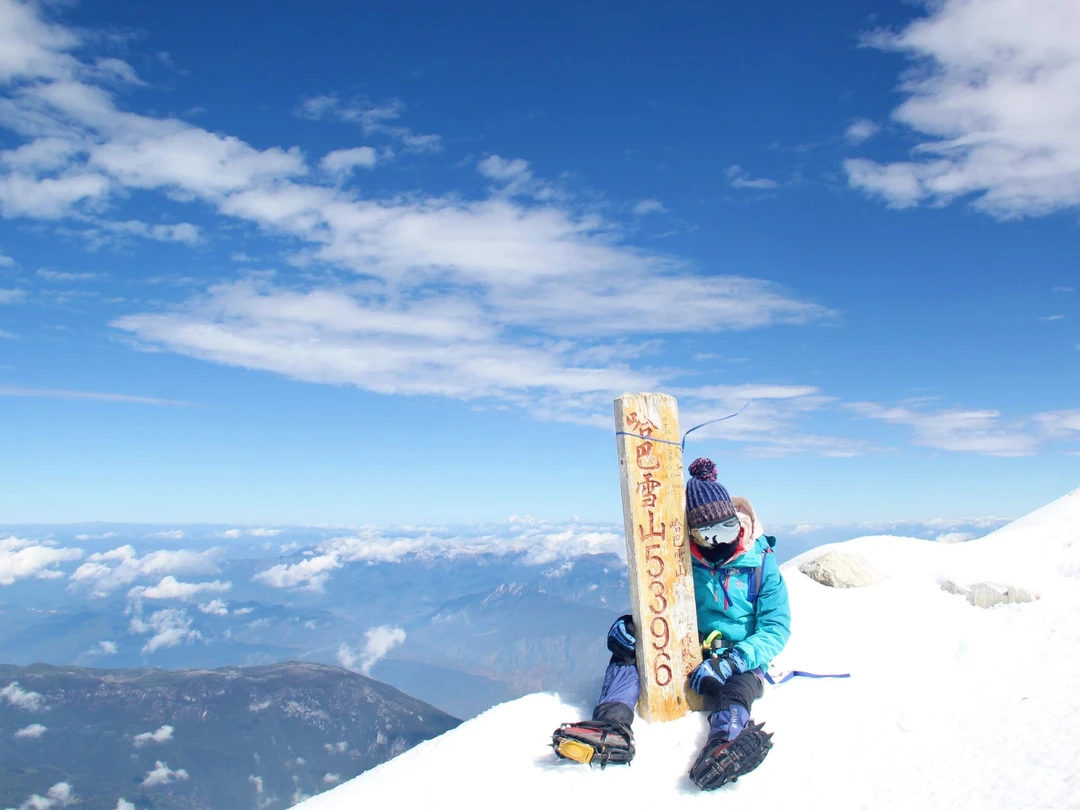
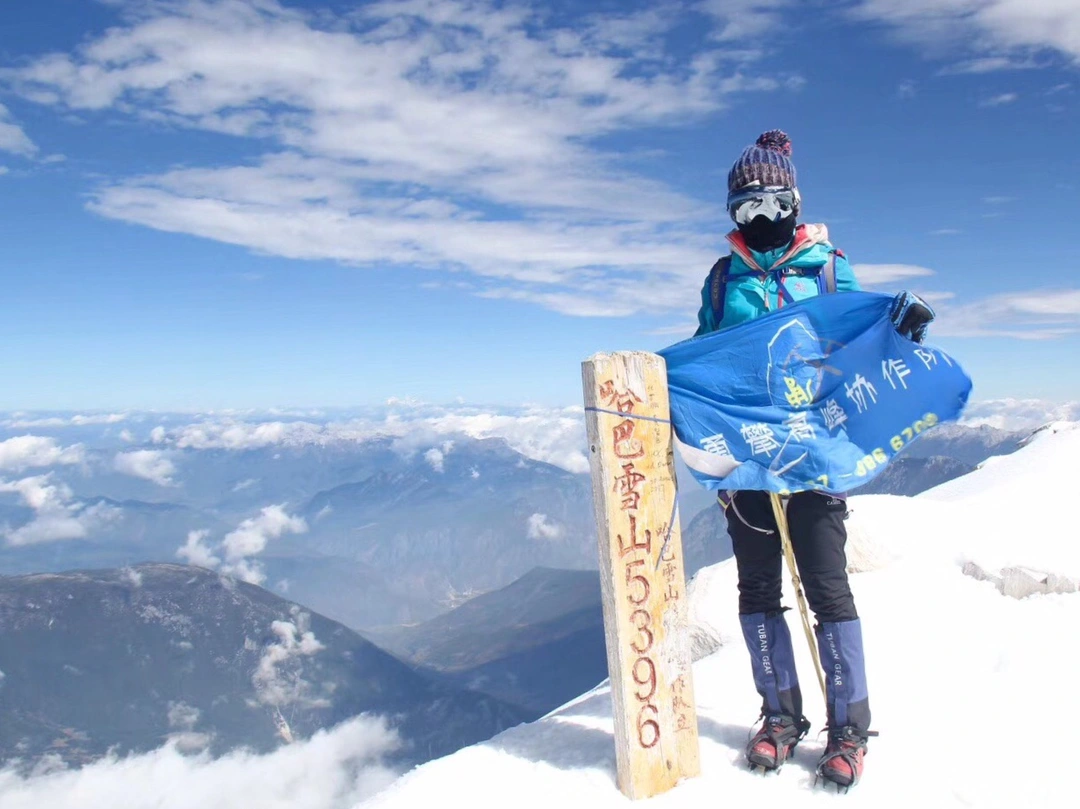
I got goosebumps. Suddenly, my heart stirred: why not go see what they call "the majesty of peaks above the clouds"? Having said "I'm going to climb Everest" since I was a child, I felt something inside me awaken. It turns out, daydreams can come true. I kept my理智 (rationality) and chose an entry-level snow mountain — Haba Snow Mountain, elevation 5,396 meters, located in Yunnan.

(Photo taken on Haba Snow Mountain: I finally got to experience the majesty of peaks above the clouds!)
I planned for February 2017, during winter break. But! Failed to find companions, plan was exposed, unreliable guide... ultimately, I gave up. Looking back, I wasn't mentally prepared enough either — I was kind of forcing myself. That winter break, I was disheartened. In my diary, I wrote: "Haba is my unfulfilled appointment, the evidence of my compromise with difficulty." After that, I deleted the guide's contact, deleted the攻略 (guide), and sort of gave up. My abilities couldn't match my ambitions. Human suffering, at its core, is anger at one's own incompetence.
May 2017: Three months later, I came across another passage. During that period, I kept hearing about Haba from everywhere. A senior mountaineer had to stop at 4,900 meters due to weather and wrote after descending:
"After returning from Haba Snow Mountain, I have an indescribable complex about mountains. 4,900 meters — maybe that was Haba's gift to me. I saw the red sun break through the sky, with Meili, Beima, Derong, and Jade Dragon Snow Mountains all in 360-degree view. It was like seeing heaven and earth, seeing all beings, seeing myself. Haba Snow Mountain, I love you."
After reading this, I felt deeply ashamed: a senior prepared for two years before daring to visit, and here I was, a mere outdoor beginner, feeling disappointed? My mindset was also wrong — I had treated summiting as a goal, a task to accomplish. That's clearly not right. When you enter nature, not everything goes as planned. Natural forces cannot be defied. You must approach with a peaceful mind and reverence, never with a mindset of "conquest."
In May, I started researching guides again. No exaggeration, I read over 50 of them, with two I read nearly 20 times. I knew I couldn't let my family's concern stop me from冒险 (adventure) — if you can't take that first step, concern becomes a burden. But I also couldn't let adventure become disaster. A thrilling but safe experience is just right.
August 14: Found a new guide — Uncle Lao's assistant, Hui Ge (Mafengwo ID: 沉三水斩辉).
August 15: Booked flights to Lijiang two months later. That night, I was too excited to sleep.
I thought: It's time.
III. Buying Equipment: Two Principles
I don't know much about equipment, so I searched everywhere for guides. Here's a shortcut for beginners: 8264 and Zhihu have more professional advice. Two principles for buying equipment: - Shoes account for 50% of the budget - Everything else, buy the most expensive you can afford
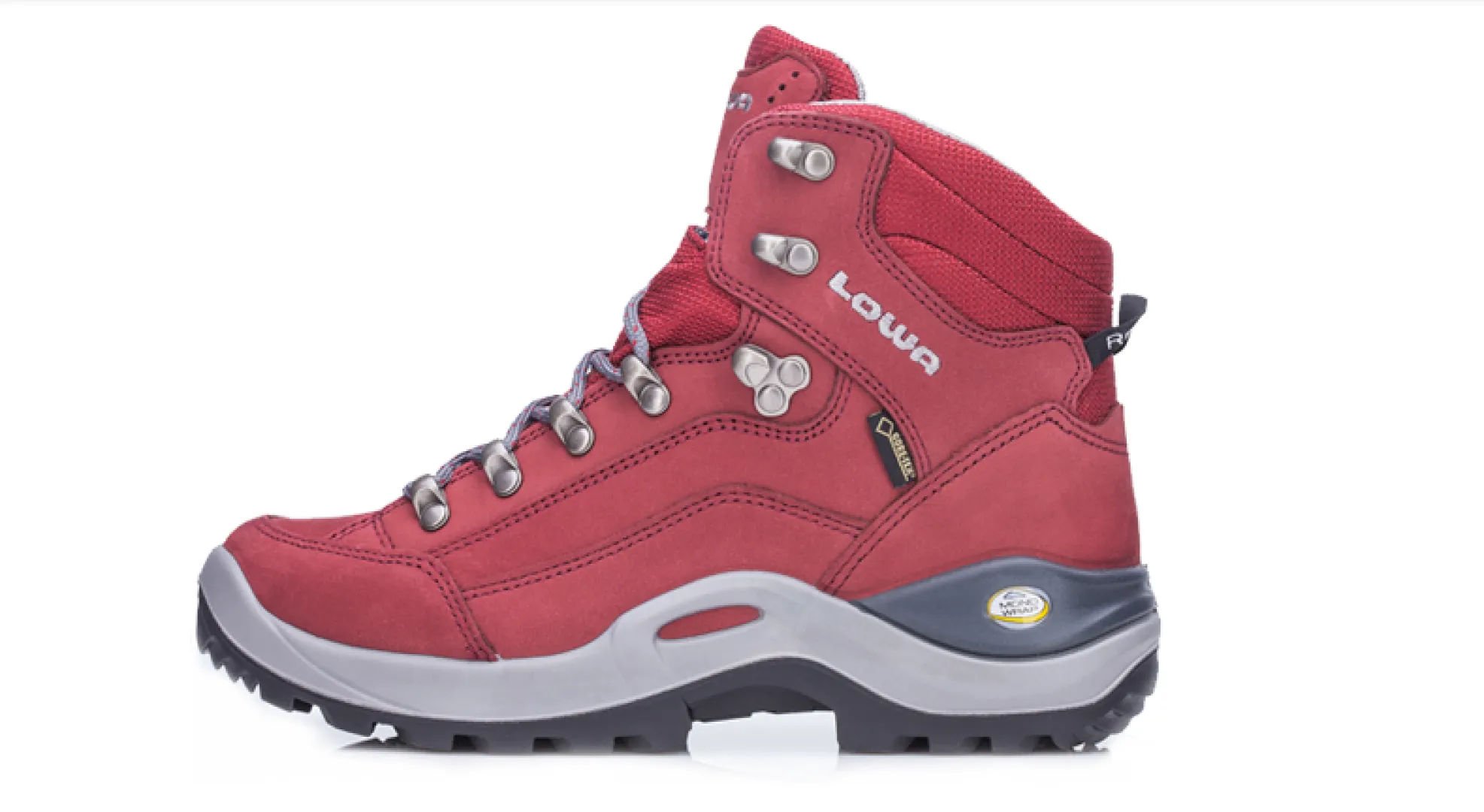
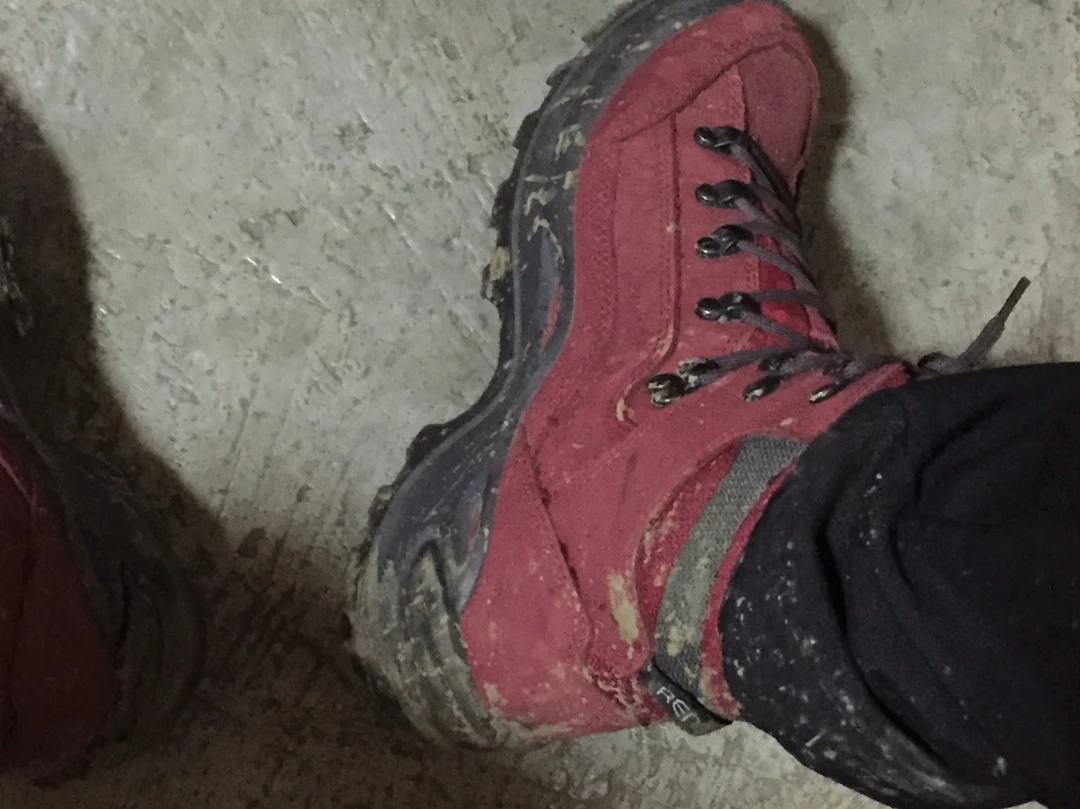
My Equipment Brands: - Shoes: LOWA (Excellent, waterproof, handled small streams without issue. For snow mountain climbing, you must buy high-top boots to protect your ankles. First time I bought from the official Tmall store, the shoe hooks were reversed... Later I found a代购 (personal shopper), much cheaper. After checking 8264, I learned domestic flagship stores are made in Nanjing with poor quality control.) - Jacket: Shehe (极星) (Good wind and waterproof protection. Bought one for my parents during the Double 11 sale too.) - Pants: Camel (骆驼) (Not recommended! The waist is huge enough to fit a fist, but the legs are tight... Can any前辈 (experienced person) advise on how to choose pants?) - Goggles: NANDN (Very satisfied. Afraid of going blind, I put them on early. When summiting, Uncle Luo made me take them off for photos — I realized how blinding the glare was! They fit directly over prescription glasses without fogging or leaving marks. DM me if you need the link.) - Trekking Poles: Damo Outdoor (大漠户外) (Two poles, recommended on 8264, good and cheap. Downside: can't be shortened much, inconvenient to carry.) - Summit Pack: Osprey (20L, cheapest on Amazon. Didn't prepare a large登山包 (hiking backpack); I dragged a suitcase to Yunnan. Climbing gear was carried by pack mules; I only carried my summit pack and camera bag. If going in winter, recommend preparing a large backpack.)
Other odds and ends I won't mention. Except for the pants, everything else was satisfactory. The weather was good, no strong winds or storms, so I can't compare brands. This is for reference only. If you have money, buy the expensive stuff! If not, read more equipment guides. I don't recommend asking guides — they've been playing on snow mountains since childhood and can climb in解放鞋 (liberation shoes). Uncle Luo's youngest daughter could probably outperform you too. There are only a few outdoor brands; the key is how much毛嗲嗲 (RMB) you have. If you plan to do outdoor activities long-term, buy quality, but don't blindly chase brands — wearing a "bird" won't make you fly, wearing a "mouse" won't let you dig holes, wearing a "wolf" won't make you howl. Your own ability is what matters.
Total Cost: Equipment approximately 2,500-3,000 RMB.
IV. Full Process Record: From Airport to Snow Mountain
1. Discovering an Airport Gem
Day one, departed from Hangzhou, early morning flight, overnight at Xiaoshan Airport. I recommend a great spot — the capsule hotel "眯一会" (Snooze A While): - Location: Inside the terminal, near exit T6 in the domestic arrivals area, no more than 10 minutes walk to security (don't use Gaode maps; ask staff) - Facilities: Shower rooms, USB ports, Wi-Fi - Services: Free wake-up call, check-in assistance, luggage handling - Price: Single room/business cabin: 60 RMB for 4 hours during the day, 10 RMB/hour overtime; overnight 22:00-8:00 next day, 120 RMB. Twin room: 22:00-8:00 next day, 240 RMB. Annual card 880 RMB, unlimited stays at Hangzhou, Beijing, and Xi'an airports. - Booking: Available on Ctrip
2. Lijiang Without Romance
Day two, arrived at Sanyi Airport at noon. Friendly reminder: you don't need to carry much cash; every roadside shop has QR codes. The only place I used cash was for Tiger Leaping Gorge tickets (though they might also accept scans now). Guide fees for Uncle Luo can be transferred.
The biscuits I brought from Hangzhou had puffed up like this (due to altitude pressure changes).
For lunch, I had土鸡米线 (local chicken rice noodles). It reminded me of when I went to Tianjin, and the taxi driver said: "The flavor of狗不理包子 (Go Believe steamed buns) has long changed. Not eating them feels like you haven't been there, but eating them makes you regret it even more." Same with the chicken rice noodles. I've made peace with local delicacies.
I wandered through Lijiang Old Town. So many people — I didn't experience the "literary slow life" vibe. All pedestrian streets in China look the same. Maybe if I weren't alone and had gone to a bar, I might have discovered why Lijiang, despite being so commercialized, still draws people in.
Mu Palace (木府) is well worth visiting. Ticket: 30 RMB, half price with student ID. "The Forbidden City in the north, Mu Palace in the south" is a bit exaggerated — the architectural style is similar, but it lacks the royal grandeur and historical weight. Near sunset, Mu Palace had a strangely melancholy beauty.
3. Good Things Come to Those Who Wait, Good Things Come to Those Who Wait, Good Things Come to Those Who Wait
Day three, I planned to visit the First Bend of the Yangtze River, Shuhe Ancient Town, or Lashi Lake. But! Even at the airport, my stomach started acting up — my period suddenly arrived! I, who never get cramps, had severe cramps and a slight fever. I was devastated! After all this preparation, I was already in Lijiang, and the weather had cleared up!
At the time, I felt like heaven was testing me: "When heaven is about to place a great responsibility on a person..." I consoled myself with "good things come to those who wait" all day, lying in bed the entire day. The hostel staff probably never saw a tourist who came to travel but just lay in bed ordering takeout.
Reminder for girls: You must be prepared! When your environment changes, your body can react unexpectedly. Other travelogues have mentioned similar situations.
4. What You Long for Will Surely Come
Day four, I carefully got up, checking if my stomach still hurt or my head was still dizzy. Everything was normal! I was fully revived! Quickly packed up and moved out!
A side note of thanks to my mom: my body's self-healing ability is all thanks to the training you gave me since childhood. But this also serves as a warning for solo travelers — especially in高原 (high altitude) areas, a cold or fever can be deadly! Even now, thinking back gives me chills.
Off to Haba Village! From the north gate of the old town to the客运中心 (passenger transport center) takes about 15 minutes. Picking up my ticket was quick. I'll detail transportation in the tips section later.
About a third of the passengers on the minibus were foreign friends, all heading to hike Tiger Leaping Gorge. Haba Village is必经 (must pass through) Tiger Leaping Gorge. Ticket: 65 RMB, half price with student ID (more in the tips section). I negotiated with the driver to use his lunch break to visit the gorge. There are small shops at Tiger Leaping Gorge, but scenic spot prices are what they are.
There's a walk down to the viewing platform. If you have time, take a stroll and check your fitness level.
"Cleaving through Shancheng like an axe without trace, flowing like a plow ox towards Li. A line splits the middle, heaven makes a moat; two mountains clamp together, stone forms a gate." — Sun Zongweng, "Jinsha River"
Spectacular. Breathtaking.
As I was leaving, I encountered a fearless little squirrel hiding sweet potato strips that tourists had given it in a tree. I clicked away with my camera, afraid it would run off. But everything was backlit... The photos were edited later, and the squirrel wasn't actually that close.
Three in the afternoon, finally arrived at Haba Village! Uncle Luo's wife (I call her Auntie) came out to meet me. We hit it off immediately. Her cooking was exactly to my taste — I still can't forget the beans she made. Auntie is incredibly sweet. After I got back, I realized I didn't even take a photo with her. I guess I might have to go back.
Uncle Luo's vegetable garden, mules, chicks in the front yard, cows in the back. When my roommate saw the cow photo, she said: "Why does this cow look inexplicably handsome to me?" Me: "That's probably跨物种的爱 (cross-species love)."
Uncle Luo's chickens are completely free-range — they find their own food and hatch their own eggs. For the first time, I saw the scene from books: a mother hen followed by a flock of chicks. As night fell, the chickens all roosted in the trees. In the photo, those dark blobs in the tree are chickens — yes, those chickens (facepalm).
Food lovers, take notes: It's said you can only taste this if you successfully summit! Super delicious.
From the backyard, I could see Haba Snow Mountain. My heart was both calm and surging. Uncle Luo asked: "Looks pretty short, doesn't it? A lot of people say that when they first arrive." "No, no, it's quite tall." Seeing a snow mountain for the first time, I was like Lin Daiyu entering the Jia family mansion for the first time — careful with every word and action, afraid of offending the spirits.
A rainbow my friend saw at Haba.
The biggest feeling today: I finally understand why pilgrims prostrate themselves every three steps while circumambulating sacred mountains. Truly coming to this land, seeing these mountains, this sky, this nature — you just want to kneel. It's an indescribable feeling of being conquered. It was even more pronounced after climbing Haba: those mountains really do grow in the white clouds. Compared to them, a person is but a grain in a vast granary.
5. To Keep an Appointment Long Overdue
Early in the morning, Uncle Luo got up to feed the mules. Ready, set, go!
Before officially entering the forest, we wandered through the village at the mountain's base for a while, and could still see another snow mountain (I think it's called Gongcuo Snow Mountain, supposedly accessible by car).
Flowers planted in a household's yard, snowmelt water flowing down the mountain — incredibly clear, much cleaner than Nongfu Spring. I even brought a bottle home. Roadside apples and firethorn berries.
At the end of the road was a bridge, under which ran a人工 (man-made) channel with rushing snowmelt water. Crossing the bridge meant entering the mountain.
Into the forest!
Haba Snow Mountain's first challenge to me was the "small stone slab" — the mules couldn't get up it, so Uncle Luo took them on a detour, leaving me alone in the wind. I had to use both hands and feet to get up — literally "climbing" the mountain. This slope was at least 45 degrees.
The mountain paths weren't easy. It had rained in previous days, so everything was muddy. The mules always stepped in the same holes, making them deeper and deeper. By steeper sections, the holes were a good 50 centimeters deep, often filled with water. Too steep to dare take out my phone for photos.
Riding a mule is also a perilous business (facepalm). Sore butt, sore hands, lots of swaying. Uncle Luo said: "Just sway with it, and you won't get so tired." A mule can carry up to 200 jin (about 220 lbs), so no need to worry about it not being able to carry you. But if you're not riding the lead mule, watch out — they tend to "clear their systems" as they walk, with an indescribable smell. So always keep an eye on its tail. When something seems off, be mentally prepared.
At first, it was really uncomfortable. My hands got raw, covered in sweat and mud. But I got used to it and could even chat with Uncle Luo while riding. At one point, a mule got stubborn, ignored Uncle Luo, and walked off on another path. I was on another mule, couldn't get off or stop, scared me to death. I just held on tight and pretended to pat its neck: "Brother Mule, please walk properly, don't throw me off. I don't want to perish together with you."
The truth is, mules don't act like horses — when they're stubborn, they mostly just stand still... I'm the real drama queen.
Arrived at the大草甸 (big meadow)! I asked the altitude: only 3,000 meters! Haba Village is at 2,600 meters, and today's target was 4,500 meters — we'd walked for almost two hours and were only a third of the way. But that's okay; we'd get there eventually. I excitedly took photos in 360 degrees while Uncle Luo quietly ate a banana.
There were herds of goats, a few cows, and yaks. The goats liked banana peels.
The sky was super blue, mood was great. No post-processing on these.
After the meadow, we weaved through more trees. The more I write, the more I regret not taking more photos, the more I feel I should go back again and take proper photos instead of just using my phone. But for a first trip, trying to take photos while riding a mule is challenging enough.
Along the way, we passed an abandoned pasture.
Arrived at the 4,080-meter冲锋营地 (assault camp)! There was a kind of "beach" area. I'm not sure if it was caused by weathering. Baidu didn't give me an answer. Any geography experts who can explain?
As altitude increased, the vegetation changed noticeably. The scenery was indescribable — a sense of grandeur washed over you.
Continued on. Had to reach the前进营 (advance camp) before five o'clock.
At 4,100 meters, we emerged from the forest. No more plants taller than knee-high, only alpine moss. The sky was so blue, it made you feel calm and focused.
Tips Section: Everything You Need
I. Transportation Guide
From Lijiang to Haba Village: - Bus: Take a bus from Lijiang Passenger Transport Center to Tiger Leaping Gorge (about 2 hours), then transfer to Haba Village (about 1 hour). Fare around 50 RMB. - Private Car: About 300-400 RMB, direct to Haba Village. - Horse/Mule: You'll need to ride a mule into the mountain. Uncle Luo will arrange it.
Tiger Leaping Gorge Ticket: 65 RMB, half price with student ID. Recommend 1-2 hours to visit. The grandeur is worth it.
II. Accommodation Recommendations
Haba Village: Uncle Luo's place (contact him to arrange). Clean and comfortable. Auntie's cooking is delicious. You can only taste the specialty dishes if you successfully summit!
Lijiang: Hostels in the old town, 100-300 RMB/night. Recommend booking in advance.
III. Equipment Checklist
Essential Gear: - Shoes: High-top waterproof hiking boots (LOWA, Scarpa, etc.) - Clothing: Shell jacket (wind and waterproof), fleece jacket, quick-dry base layer - Pants: Waterproof hiking pants (don't buy Camel!) - Goggles: NANDN (compatible with prescription glasses) - Trekking Poles: Two poles (Damo Outdoor) - Summit Pack: 20-30L (Osprey) - Gloves: Wind and waterproof - Hat: Warm hat, sun hat - Headlamp: For summit attempt - Sleeping Bag: Comfort rating -10°C (14°F) - Thermos: For hot water
Recommended to Bring: - Sunscreen (SPF 50+) - Lip balm - Energy bars, chocolate - Common medications (cold medicine, painkillers, altitude sickness medication) - Power bank
IV. Cost Breakdown
| Item | Cost (RMB) |
|---|---|
| Flights (Hangzhou-Lijiang round trip) | Approx. 1,000 |
| Equipment | 2,500-3,000 |
| Accommodation (9 nights) | Approx. 500 |
| Transportation (Lijiang-Haba Village) | Approx. 200 |
| Guide fee (includes meals and lodging) | Approx. 1,500 |
| Tickets (Tiger Leaping Gorge) | 65 |
| Other | Approx. 500 |
| Total | Approx. 6,000-7,000 |
V. Important Notes

- Altitude Sickness: Start taking Rhodiola rosea a week in advance. Drink plenty of water. Avoid strenuous exercise.
- Weather: Best in October-November. Lots of sunny days, good snow conditions.
- Safety: You must find a reliable guide! Uncle Luo (Luo Shiyong) is very trustworthy.
- For Women: Your period may come early or be delayed. Prepare sanitary products and painkillers.
- Mindset: Respect nature. Don't pursue "conquest." Summiting isn't the end goal; the process is what matters.
Conclusion: The Dream of Haba, Now Complete
From October 2016 to October 2017 — a full year. From planning to giving up, to picking it back up, and finally going alone. Haba Snow Mountain gave me so much: not just the glory of summiting, but the courage to face difficulties.
After returning to Hangzhou, whenever something comes up, I tell myself: "What's there to be afraid of? Can it be more desperate than climbing a snow mountain?"
Snow mountains aren't meant to be conquered; they're meant to be revered. They taught me: true completion isn't standing at the summit. It's walking the entire journey — including those moments of giving up, struggling, and picking yourself back up.
Finally, to all dream chasers: Don't fear failure. Don't fear loneliness. The mountain is there, and so is your dream. As long as you dare to take that first step, the world will make way for you.
The dream of Haba is now complete. What about yours?
(Full text approximately 1,500 words. Tips section reviewed by Uncle Luo. Use with confidence.)
You should also read:
Light and Shadow at Lugu Lake, a Dream Within a Dream: A Soul’s Wandering and Rebirth
Light and Shadow at Lugu Lake, a Dream Within a Dream: A Soul’s Wandering and Rebirth Prologue: The Dreamer’s Backpack Will Eventually Reach the Horizon Deep in everyone’s heart lie small dreams. They are like stars twinkling in the night sky—faint yet steadfast, guiding us…
Continue reading...
Heart Soaring Among the Clouds: A 20-Day Yunnan Dream Journey
Heart Soaring Among the Clouds: A 20-Day Yunnan Dream Journey From Lijiang's morning light to Meili's snow-capped peaks, from Yubeng's hidden realm to Lugu Lake's tranquility—this was not just a simple trip, but a soul's exile and homecoming. "Never forget why you started, and you…
Continue reading...
Xishuangbanna Self-Drive Tour: Into the Tropical Wonderland at the Edge of the Sky (Complete Guide)
Xishuangbanna Self-Drive Tour: Into the Tropical Wonderland at the Edge of the Sky (Complete Guide) Introduction: A Dream Fulfilled Thirty Years Early Some journeys are destined to happen at a specific moment in time. For me, a self-drive trip to Xishuangbanna was originally the first…
Continue reading...