The Eternal Rice Terraces: A Year in Yuanyang
The Eternal Rice Terraces: A Year in Yuanyang
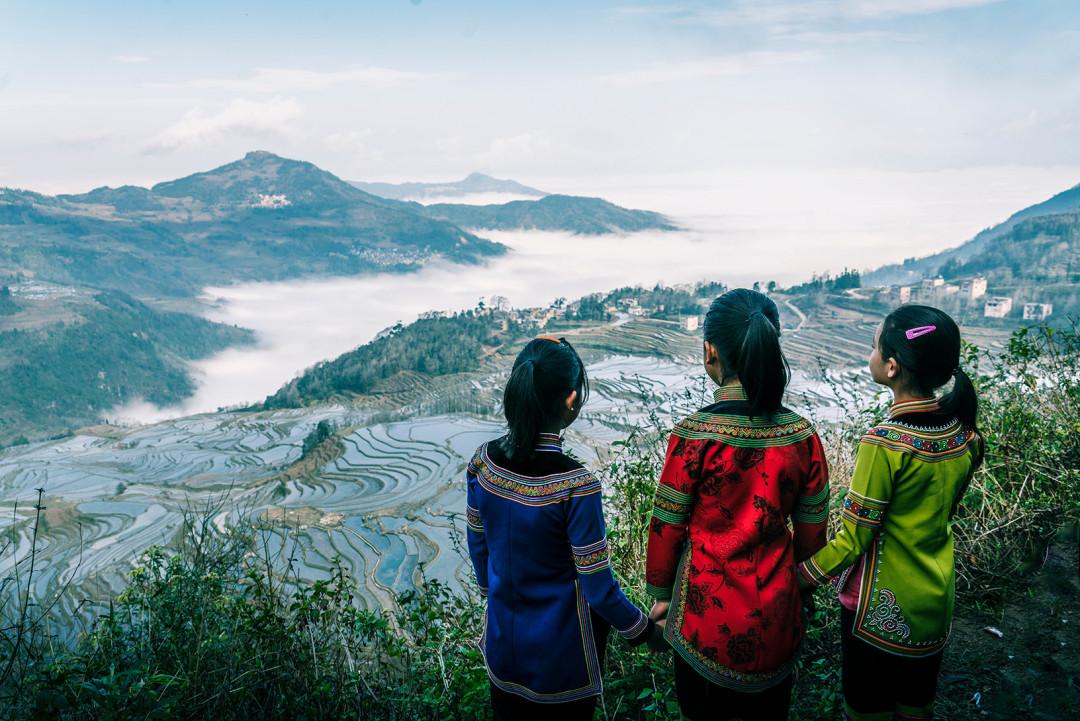
There are places that photograph well, and then there are places that live in your bones. Yuanyang, tucked away in Honghe Prefecture of Yunnan Province, is the latter. It doesn't shout for attention—it doesn't need to. Its silence is its loudest statement, carved into hillsides over centuries by hands that understood something we've forgotten: that the earth, if treated with patience, will give back beauty beyond measure.
My mother was born here. When the opportunity came to work in this border county, I didn't hesitate. For one full year, I watched the terraced fields cycle through their seasons—each phase a different painting, each day a new lesson in patience. This isn't just a travel guide. It's an invitation to sit at the table before the feast begins.
The Four Faces of the Terraces
If you ask a local which season is best for visiting the Hani Rice Terraces, they'll answer without a second thought: winter. But don't let that fool you into skipping the rest. Each season has its own soul.
❄️ Winter: The Mirror of the Sky
Late winter mornings carry a bite. I remember stepping outside to find the world erased—white fog so thick I couldn't see my own hand. The driver navigated by memory alone, his fog lights cutting through the mist like swords. Horns echoed between the hills, the only human sound swallowed quickly by insects and silence.
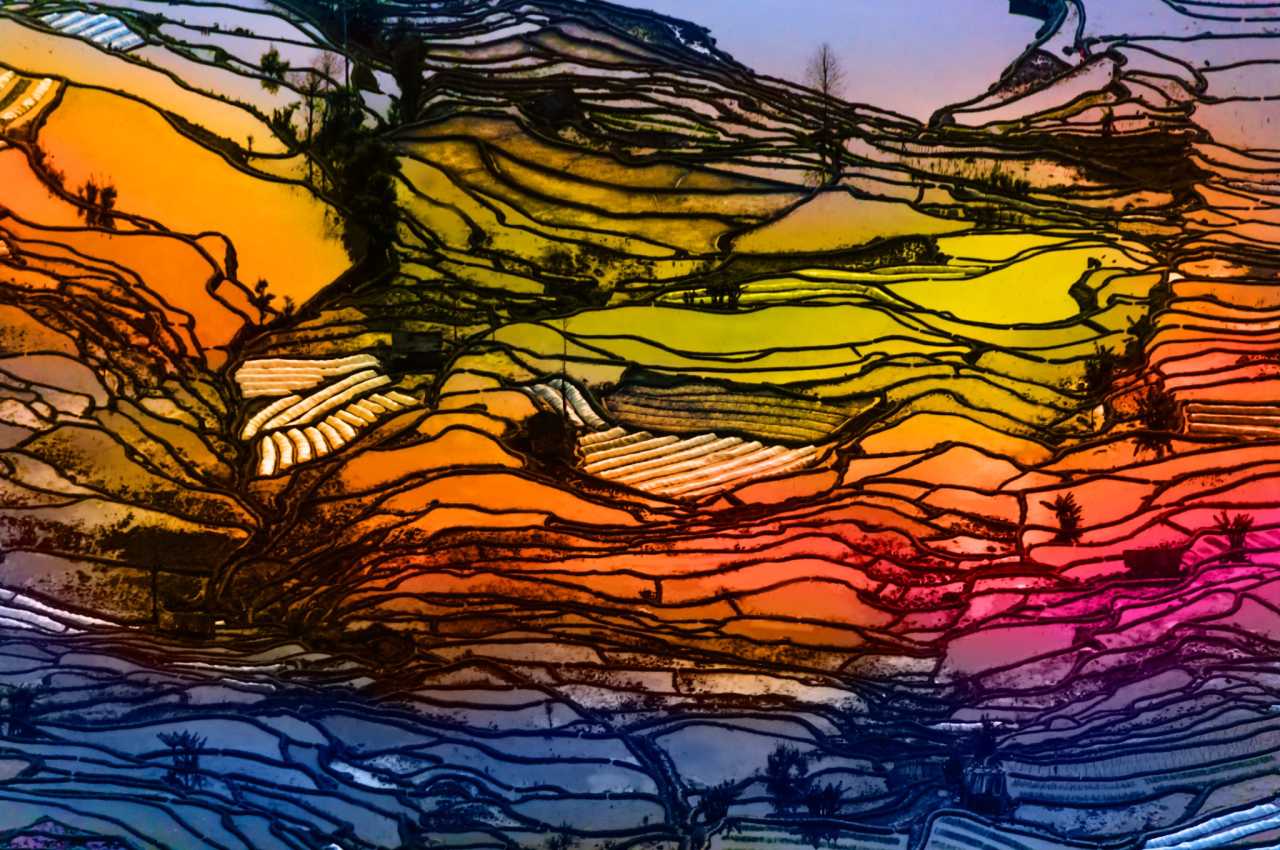
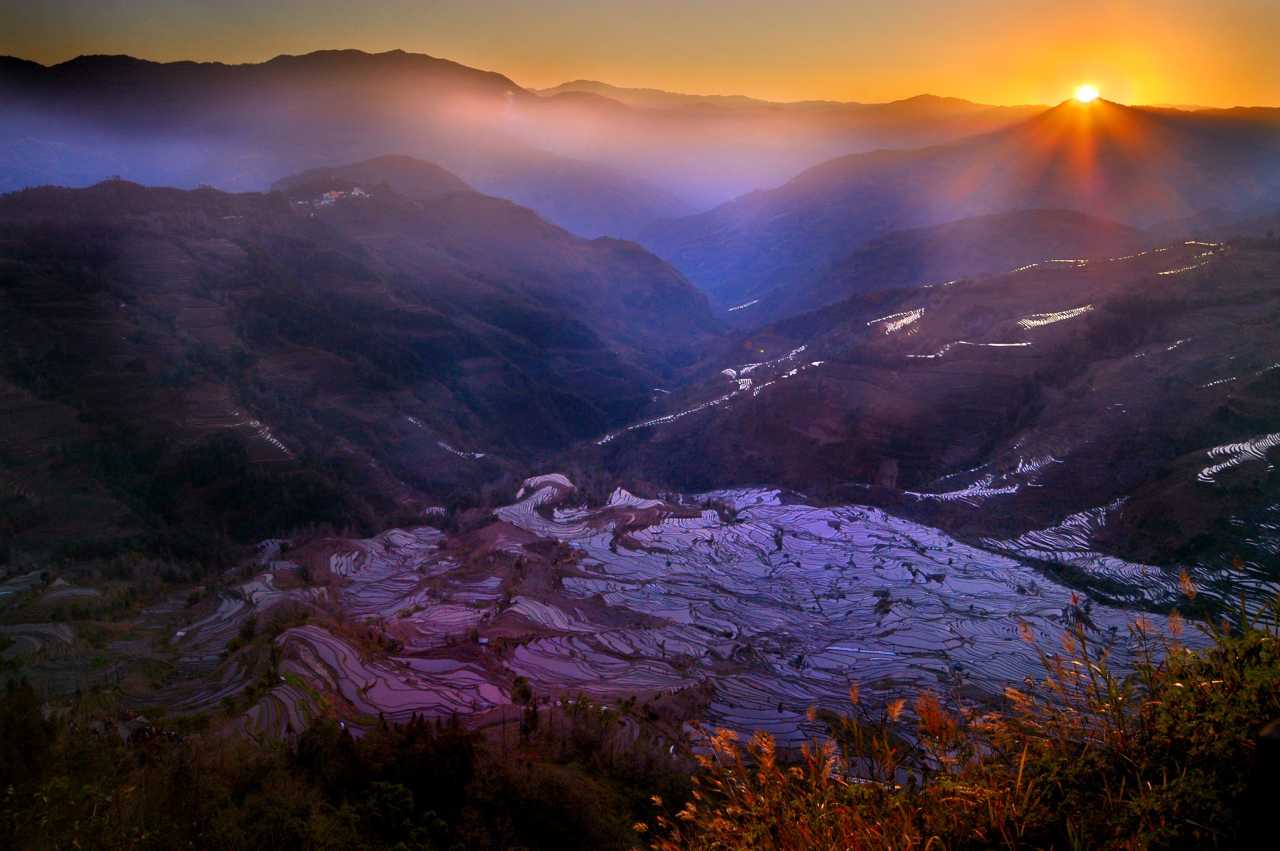
We raced the sunrise. By the time we set up our gear, the sun had just peeked over the horizon. The fog didn't retreat—it lingered, like a shy bride lifting her veil only halfway. That half-hidden beauty was more captivating than any full reveal.
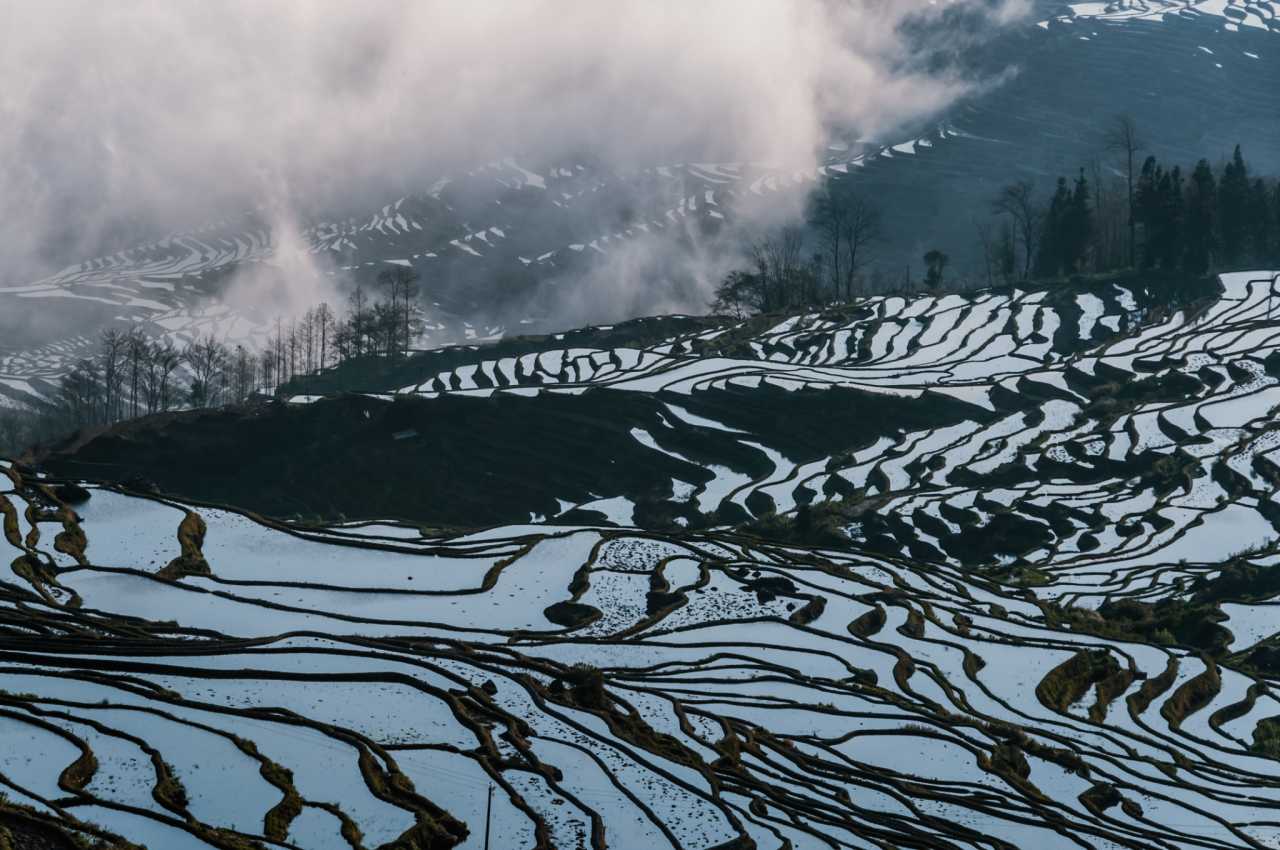
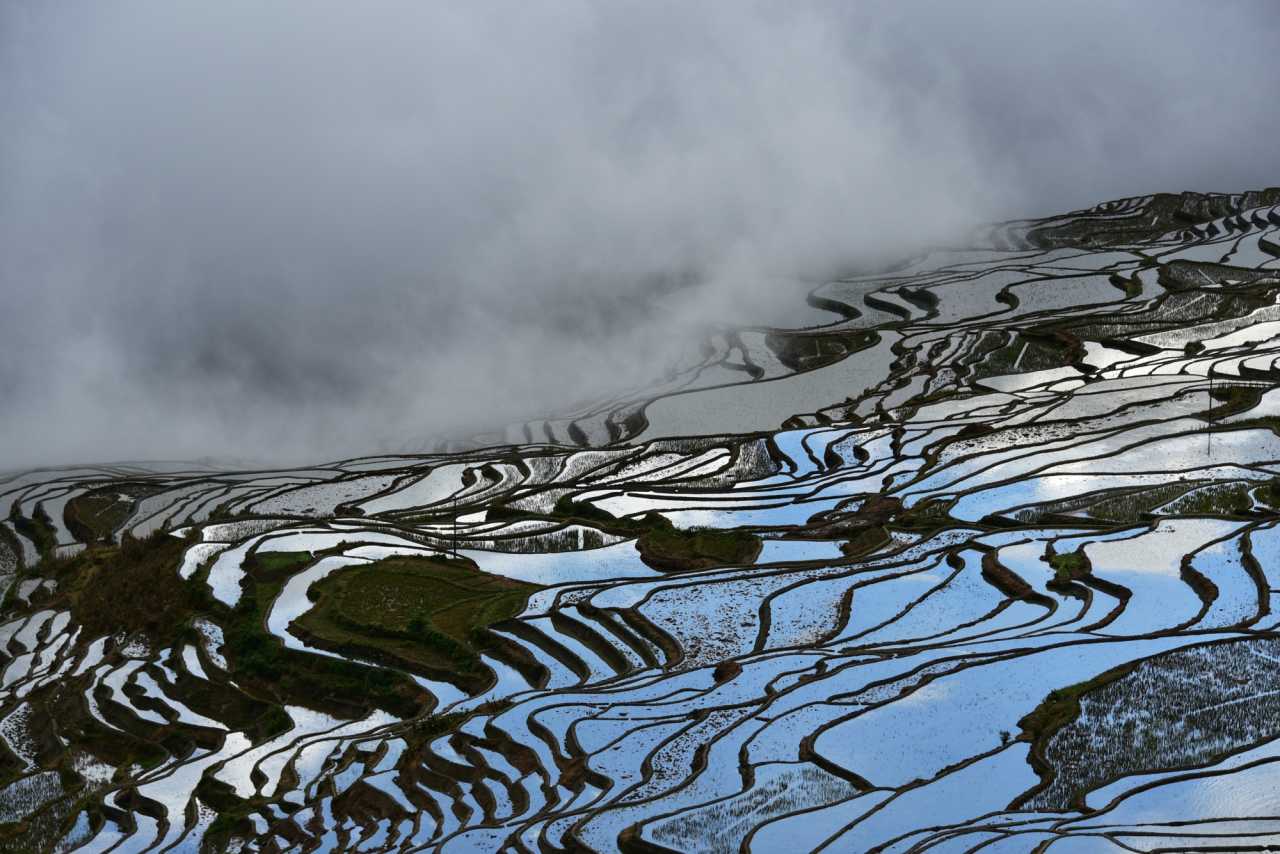
Then the light grew stronger. The mist, as if sensing its cue, began to pull back. And there they were: thousands of mirrors, from mountaintop to valley floor, filled with nothing but water. No crops. Just reflections.
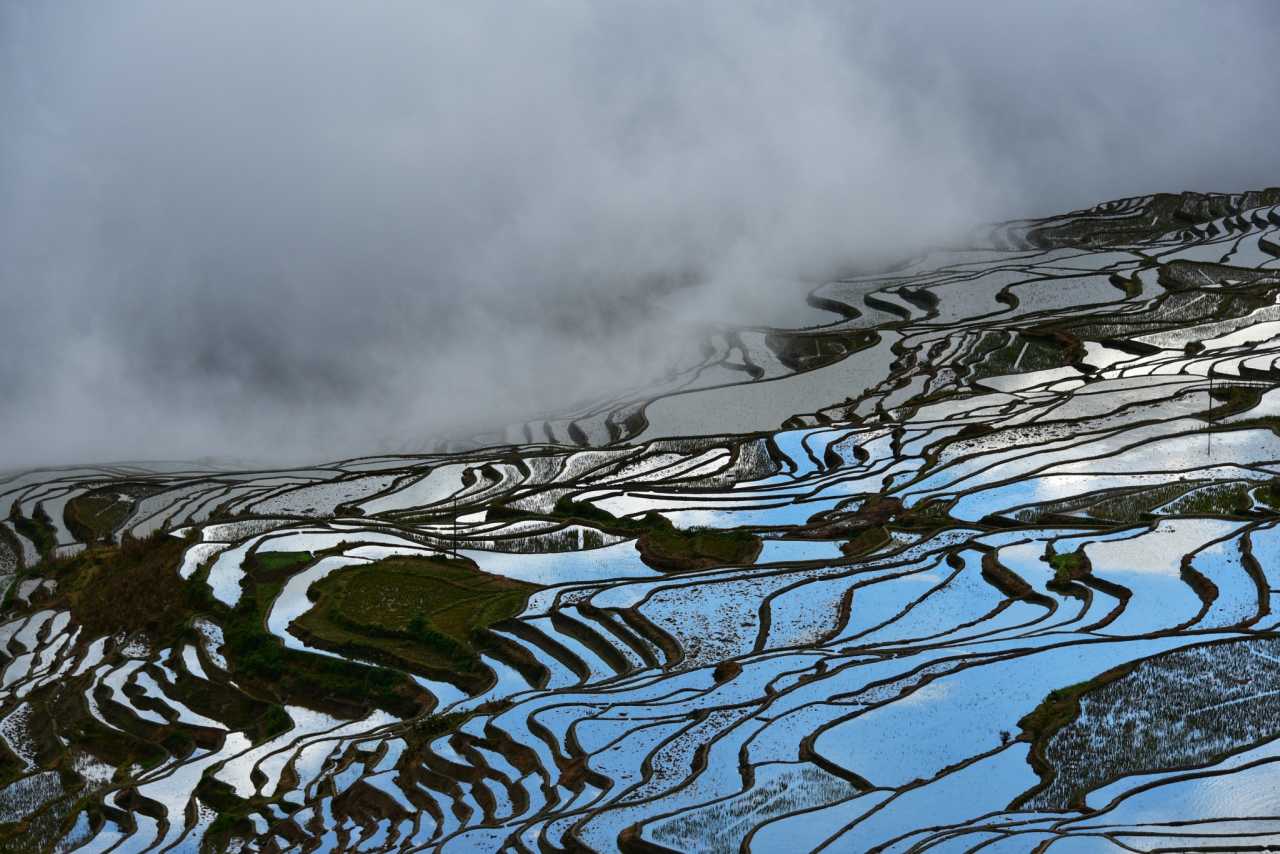
The sun cast its image into every pool. Light and shadow danced in shifting patterns—a living kaleidoscope. At noon, the sky turned a flawless blue, and the terraces answered back in kind, deepening the color until heaven and earth held a silent conversation only they understood.
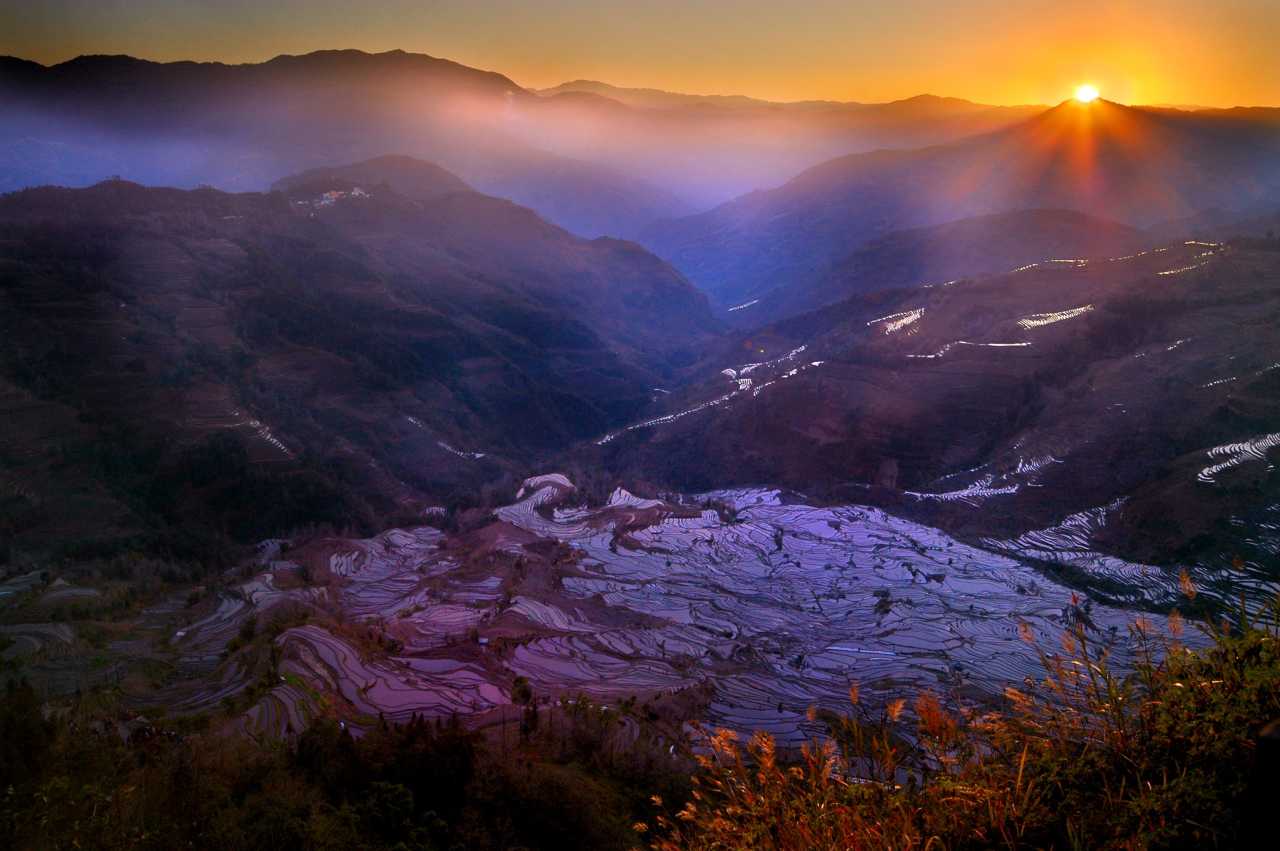
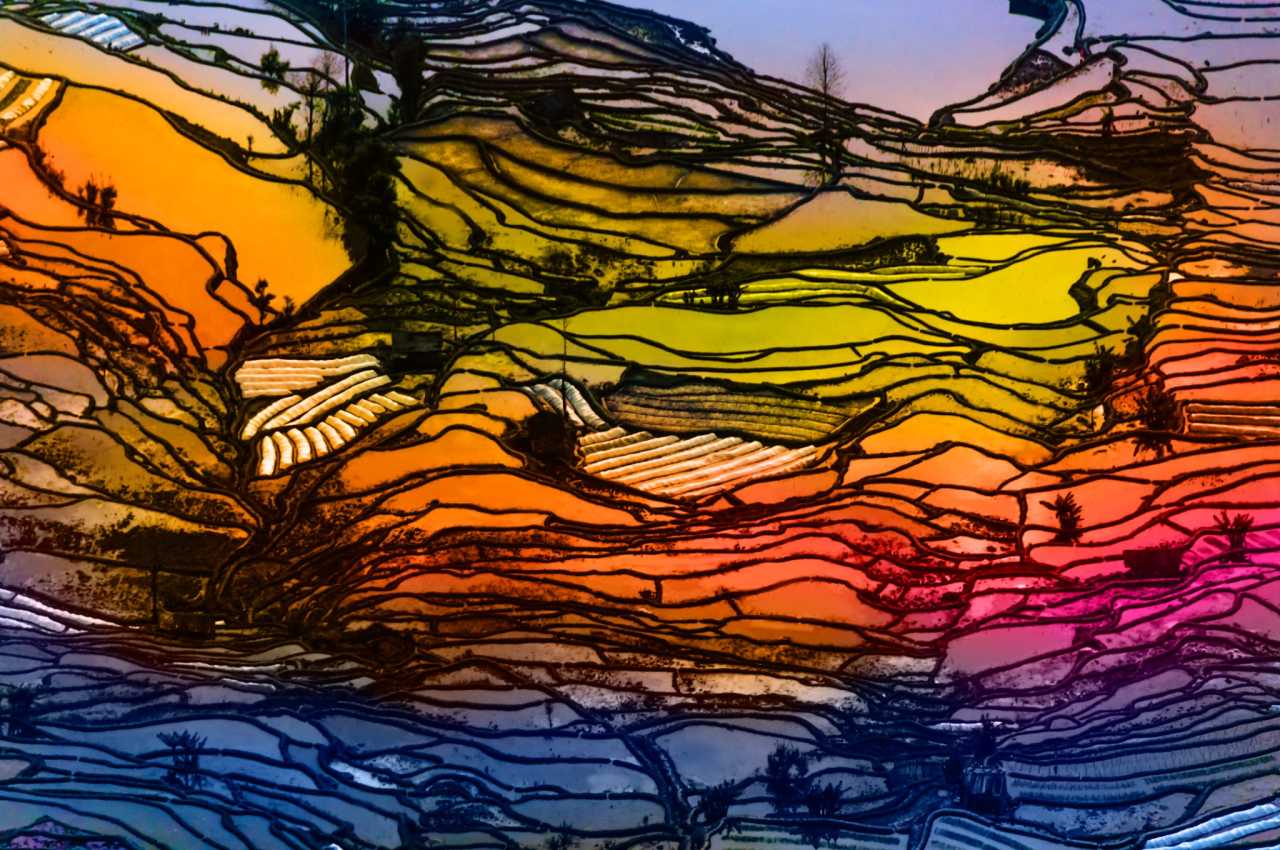
Wait for sunset. I promise it's worth it. The western sky ignites with crimson, orange, pink, and gold. The water doubles it all. It's like watching a woman display her most treasured jewelry collection—dazzling, overwhelming, unforgettable.
Then, as night falls, the villages in the distance dim their lights. The terraces return to stillness. Peace settles like a blanket.
🌱 Spring: Where the Work Begins
By May, the rice seedlings go in. The terraces lose their mirror-like quality, but gain something richer: life.
The villages perched on the hillsides wake early. Smoke from cooking fires mingles with morning mist. Farmers finish breakfast quickly—there's work to do. Their fields lie below the village, a deceptive distance that demands real effort to traverse.
Watch them plant. Each seedling placed by hand, yet spaced as if measured by machine. Perfect rows. After planting comes fertilizing, pest control. A farmer stands on the ridge, scattering nutrients, staring at his work. He's not just looking—he's hoping. Hoping the rains come right. Hoping the price holds. Hoping his children will have enough.
Spring is also celebration season. Villages slaughter a buffalo together—a communal ritual. Young men carry the head on a pole, swinging it casually. Elders butcher with the precision of surgeons. Women lay out their handcrafted goods by the roadside: embroidered cushions, wallets, hats. Each stitch carries generations of memory.
What is ethnic is universal. I saw that truth in every thread.
☀️ Summer: The Green Invasion

Summer heat smothers the lowlands, but up in the terraces, we found refuge. Through a dense pine forest, we reached a ranger's home. Cicadas screamed about the heat outside, but inside the cabin, we needed a fire to stay warm. Yes—summer, and we were huddling around flames.
I stepped out to walk. A trail lined with stacked logs, their bark furry with moss. Cypress trees stood like soldiers awaiting inspection. From this vantage point—the highest in the Hani Terraces—I surveyed my domain.
The rice was in its growth spurt. Green so intense it looked like spilled paint, blurring every boundary between fields. A winding mountain road cut through the verdant canvas like a child's careless doodle—or perhaps a master's deliberate stroke. I promised myself I'd return in another season. Then I climbed down.
🍂 Autumn: The Golden Harvest
No one dislikes harvest season. When autumn arrives, the terraces turn gold—not gradually, but suddenly. One moment you're smoking a pipe, listening to stream water and duck calls. The next, the rice has ripened.
The grains inside each stalk are a deep, reddish hue—the signature of terrace red rice. They beckon you to write a poem in their honor.
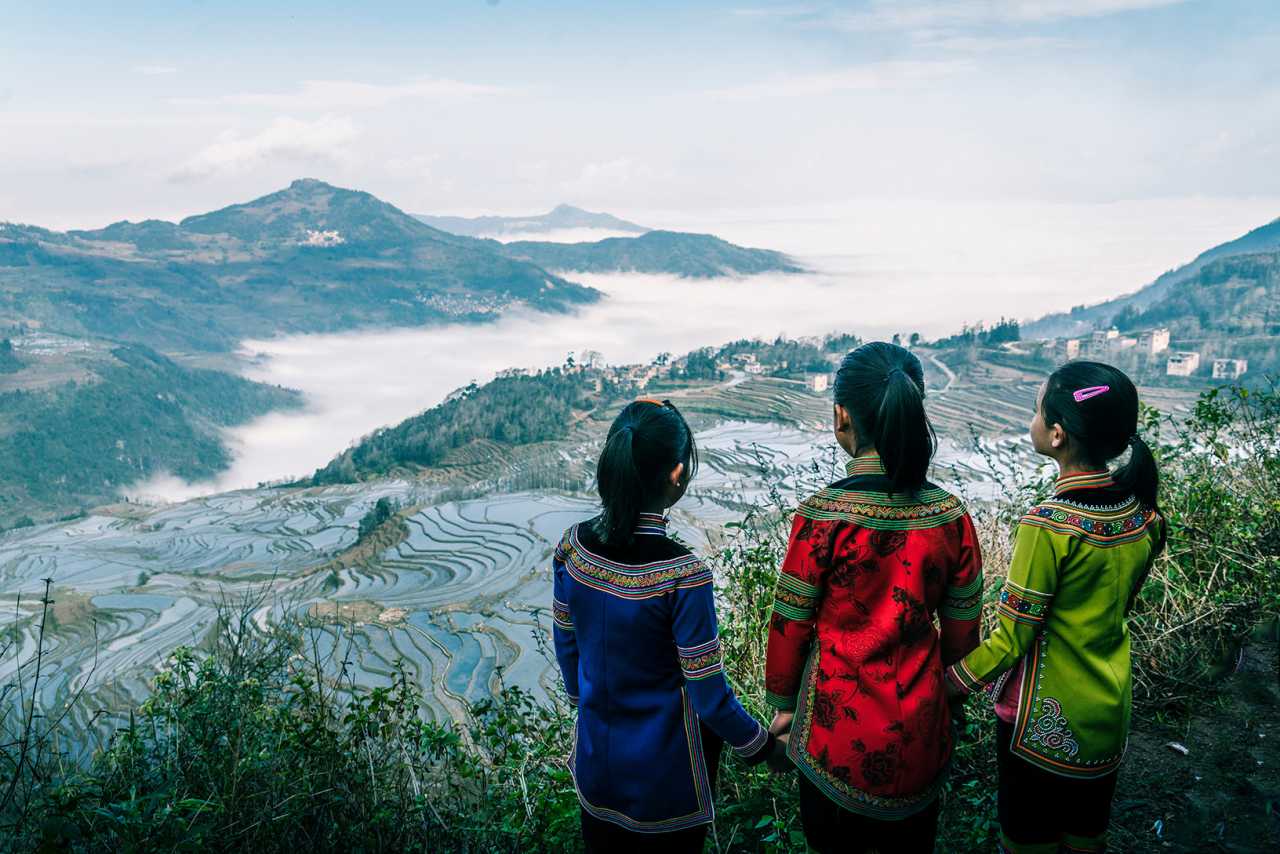
But there's no time for poetry. You grab your sickle and your bag and head down. Transporting the harvest is brutal. Donkeys and cattle can't manage these slopes; everything rides on human backs. Men sweat and whistle as they climb. Women tie bundles to their foreheads with cloth straps, leaving deep marks after unloading.
This is a season of urgency. The sooner you harvest, the better the price. Every moment counts.
In the afternoons, farmers burn field residue. Smoke rises in columns, turning the sky gray. It's like watching a fireworks display made of ash. When the last fire dies, the terraces enter their dormant phase—and the cycle begins again.
🏘️ A Visit to Azheke: The Mushroom Village
Legend says the Hani people once lived in caves. When they migrated to a place called "Reruo," they saw giant mushrooms covering the hills—sturdy, weather-resistant, sheltering insects beneath their caps. So they built homes to match.
These "mushroom houses" rest on stone foundations, with wooden pillars, mud-brick walls, and thatched roofs. Three stories: livestock below, people and grain in the middle, storage above. Few remain today. Most have been replaced by modern concrete structures dressed up for tourists.
But Azheke is different.
The name means "the most prosperous and auspicious little place." Follow the stone path downhill from the village gate, and you'll find them: genuine mushroom houses with thick brown thatch and yellow walls. Bamboo fences surround them. Forest rises behind.
Corn dries on rooftop balconies, gleaming gold. Children peek at strangers, then return to their games. An old woman tosses rice to her chickens; a hen leads her chicks down the steps for breakfast. Three roosters gossip on a log, falling silent when they notice me watching. A dog follows its owner without barking—it's seen tourists before. A water buffalo flicks its ears, posing for a photo.
Spring water flows from dragon-head spouts into stone troughs, then into channels that feed the fields. The Hani understand water better than most.
Walking through Azheke, I felt like I'd stepped into Tao Yuanming's poem: "Warm distance in the village, smoke in the air. Dogs bark in the alleys, crows call from mulberry trees."
I found a small bar. The owner insisted I try his homemade liquor—freshly brewed, fragrant. He puffed on his water pipe, the bubbles gurgling like boiling water. Under dim light, slightly drunk, I felt a warmth that could only be called home.
🎋 Bamboo Shoots and Muddy Knees
Children today grow up with screens and concrete. They've lost touch with the earth. But in Yuanyang, that connection is still alive.
In May, bamboo leaves rustle—the signal that shoot season has arrived. We grabbed baskets and headed up the mountain. Wild yellow berries hung like lanterns under the leaves. Locals call them "yellow robes." They look tempting but taste purely sour—enough to make a child squeeze their eyes shut. At least they keep you awake.
There was no real path, just a faint trail worn by feet over generations. We pushed through undergrowth, our hands grabbing at branches for balance. The bamboo shoots hid beneath fallen leaves, waiting to be discovered. Finding one felt like uncovering treasure. You dig carefully, working the soil loose with your fingers, then pull—a clean snap, and the shoot comes free, pale and tender.
Back in the village, the shoots were peeled, sliced, and boiled. Some went into a pot with pork ribs; others were pickled for the months ahead. The taste was simple—earthy, slightly sweet, with a crunch that spoke of mountain mornings.
That evening, sitting on a wooden stool, my knees still caked with dried mud, I understood something. This wasn't tourism. This was living. The mud under my fingernails, the calluses forming on my palms, the ache in my lower back—these were not inconveniences. They were proof of participation. I had touched the earth, and the earth had touched me back.
📍 Practical Notes for the Visitor
Getting There: Fly into Kunming, then take a bus or drive to Yuanyang County. The journey takes about six hours through winding mountain roads. Prepare for motion sickness if you're prone to it.
Best Time to Visit: December through March for the mirror reflections. April to May for planting season. September to October for the golden harvest. Summer offers lush greenery but frequent rain and clouds.
Where to Stay: Guesthouses in the villages of Duoyishu and Bada offer the best sunrise views. For a more authentic experience, stay in Azheke's mushroom houses—several have been converted into homestays.
What to Eat: Don't miss the red rice grown right in the terraces—nutty, chewy, and deeply satisfying. Bamboo shoots in season. And if offered homemade liquor, accept. It's a gesture of friendship.
Photography Tips: Bring a telephoto lens for the distant terraces. A wide-angle lens captures the scale. Sunrise at Duoyishu and sunset at Bada are the classic shots—for good reason. But don't forget the details: a farmer's hands, a child's smile, a water buffalo's patient eyes.
Respect the Land: These terraces are not a theme park. They are working farms, the lifeblood of the Hani people. Stay on paths. Don't trample crops. Ask before photographing people. A smile and a nod go a long way.
Epilogue: The Cycle Continues
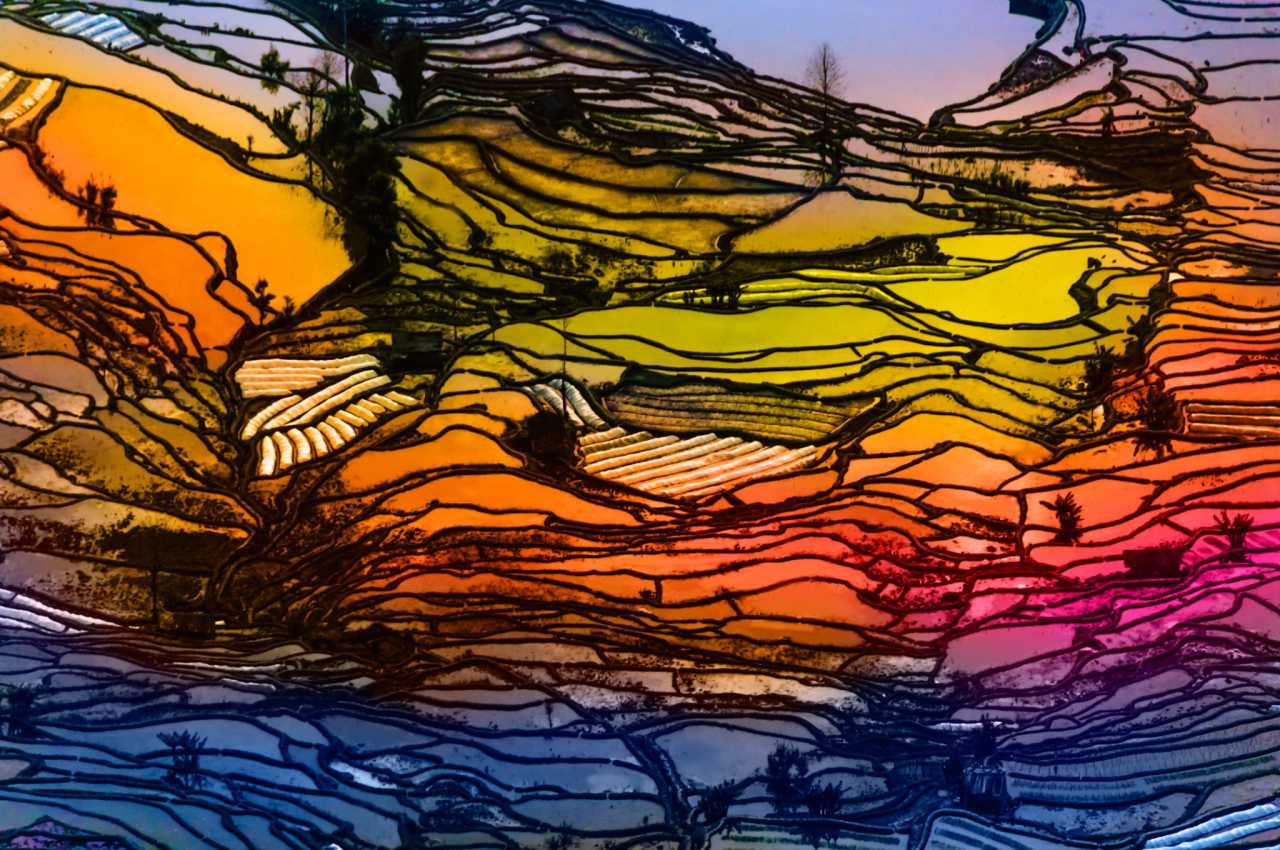
I left Yuanyang when my year was up, but part of me never did. I still dream of those mornings—the fog lifting, the light breaking, the mirrors igniting. I dream of the farmers bent over their seedlings, their movements as old as the hills themselves.
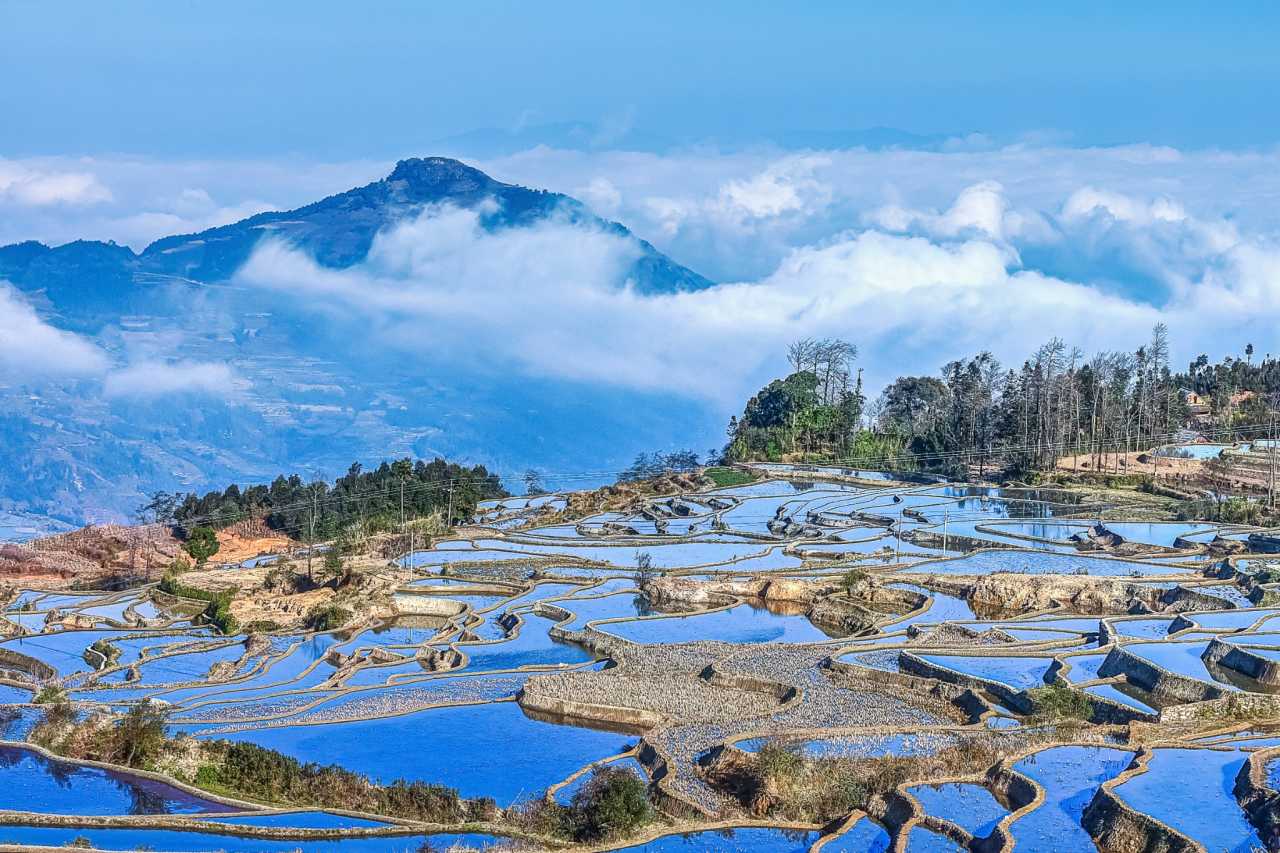
The terraces don't change. They don't need to. They've been here for over a thousand years, shaped by hands that understood what we've forgotten: that the earth, if treated with patience, will give back beauty beyond measure.
And so the cycle continues. Winter mirrors. Spring planting. Summer green. Autumn gold. And always, always, the water flowing down, carrying life from one generation to the next.
I hope you go. I hope you see. And I hope you leave a piece of yourself there, as I did—not lost, but found.
You should also read:
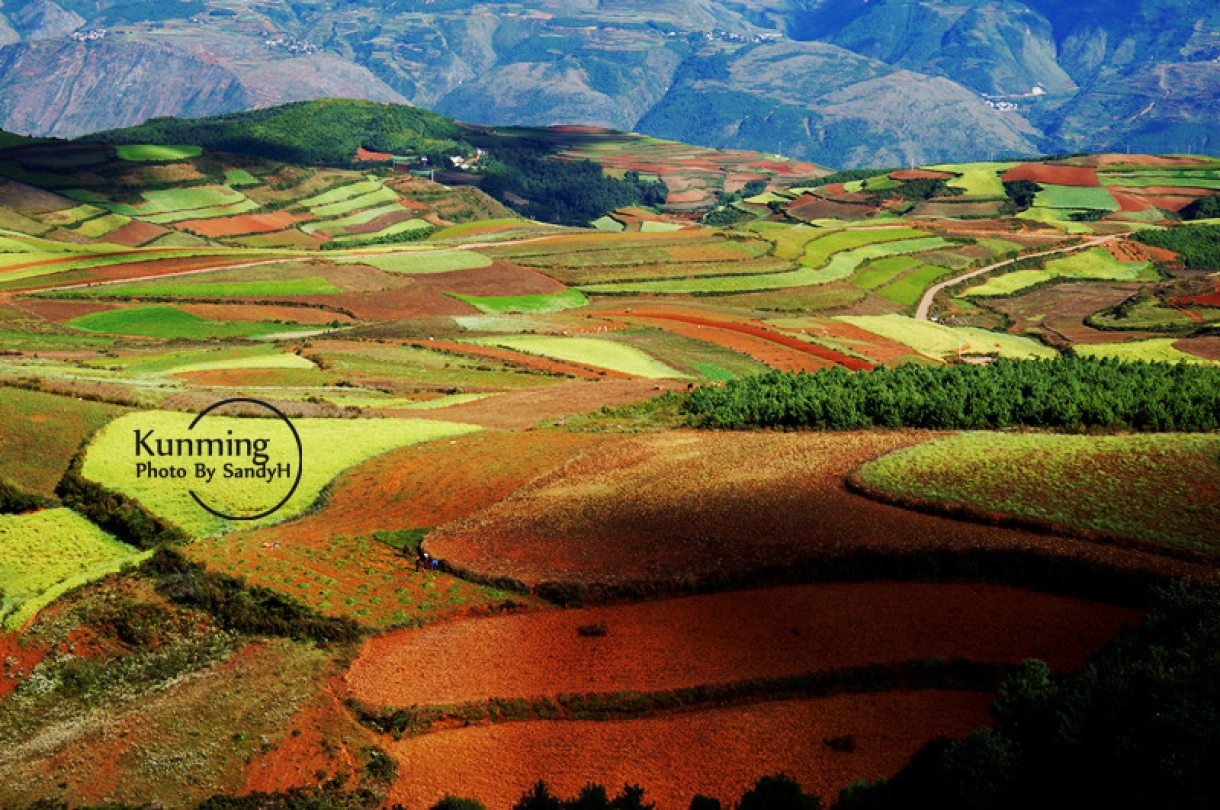
A Silver Wedding Journey to Yunnan: Celebrating 25 Years with My Parents
A Silver Wedding Journey to Yunnan: Celebrating 25 Years with My Parents Preface: A Long-Planned Warm Journey In the golden autumn of October 2014, my father and mother celebrated their twenty-fifth anniversary together — their silver wedding. As their "naughty daughter" who grew up cradled…
Continue reading...
Racing Through Yunnan: A Seven-Day Odyssey Through Rice Terraces and Ancient Towns
Racing Through Yunnan: A Seven-Day Odyssey Through Rice Terraces and Ancient Towns "Either read, or travel — your body and soul must be on the road." That quote sounds beautiful in theory, but in reality, most of us have neither finished many books nor traveled…
Continue reading...
Crossing from 13 to 14: My New Year's Eve at Lugu Lake, Where I Met Starry Skies, Sunrise, Shooting Stars, and the Milky Way
Crossing from 13 to 14: My New Year's Eve at Lugu Lake, Where I Met Starry Skies, Sunrise, Shooting Stars, and the Milky Way Life is a long journey, and some trips are destined to become the brightest stars in our memories. In early 2014,…
Continue reading...